COMM 202:
Career Fundamentals
T18 & T19 with Natiqa Babar
Let’s start off!
1) Assignment Collection
2) Info Collection: www.tinyurl.com/202tinder
3) Pay course fees : https://webforms.sauder.ubc.ca/students/pay-fees
3) Introductions
Our Agenda for Today
1. Getting to know your TA
2. Course expectations
3. Putting together a Skills Matrix
1. Getting to know your TA
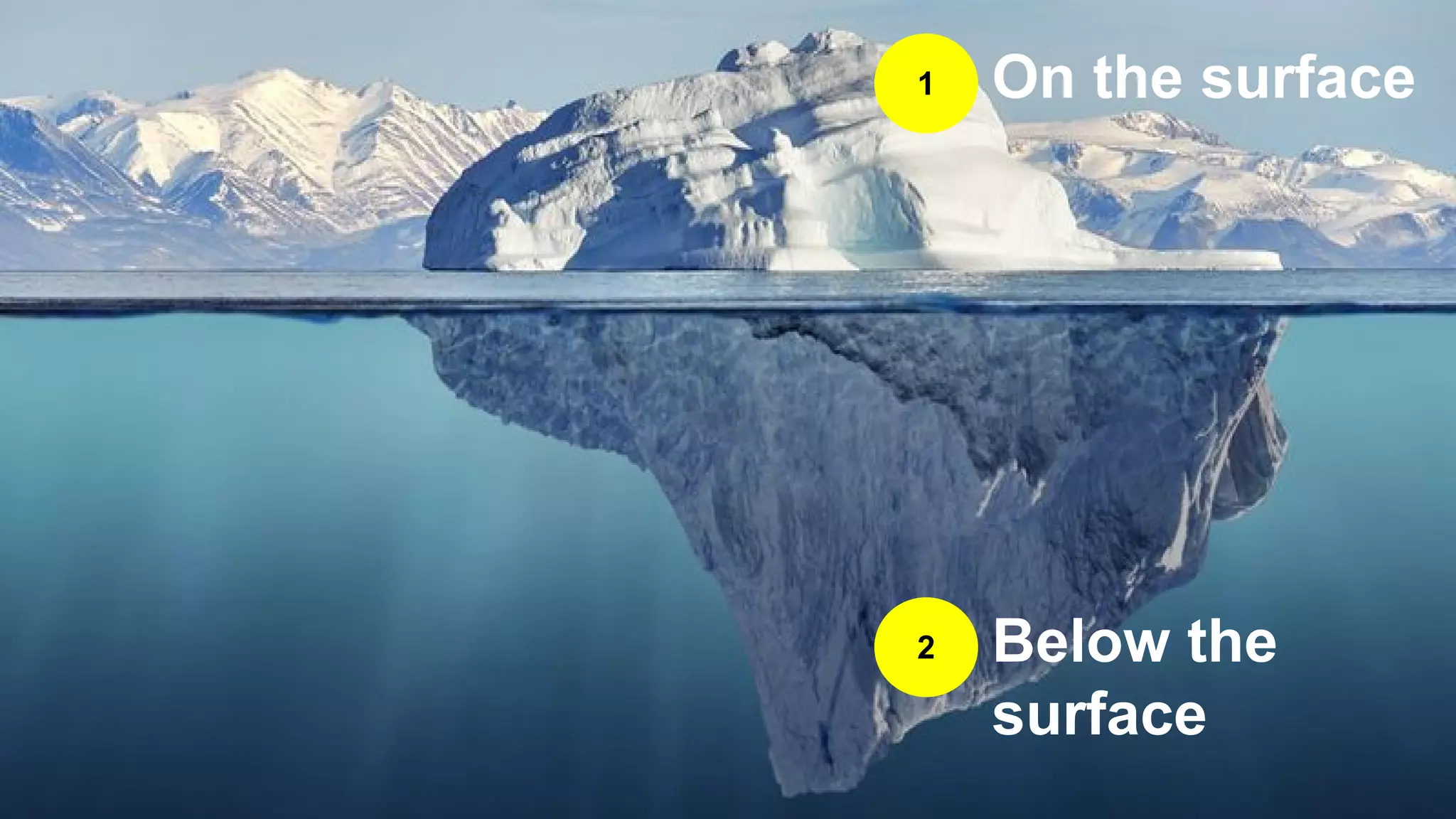
On the surface1
2 Below the
surface
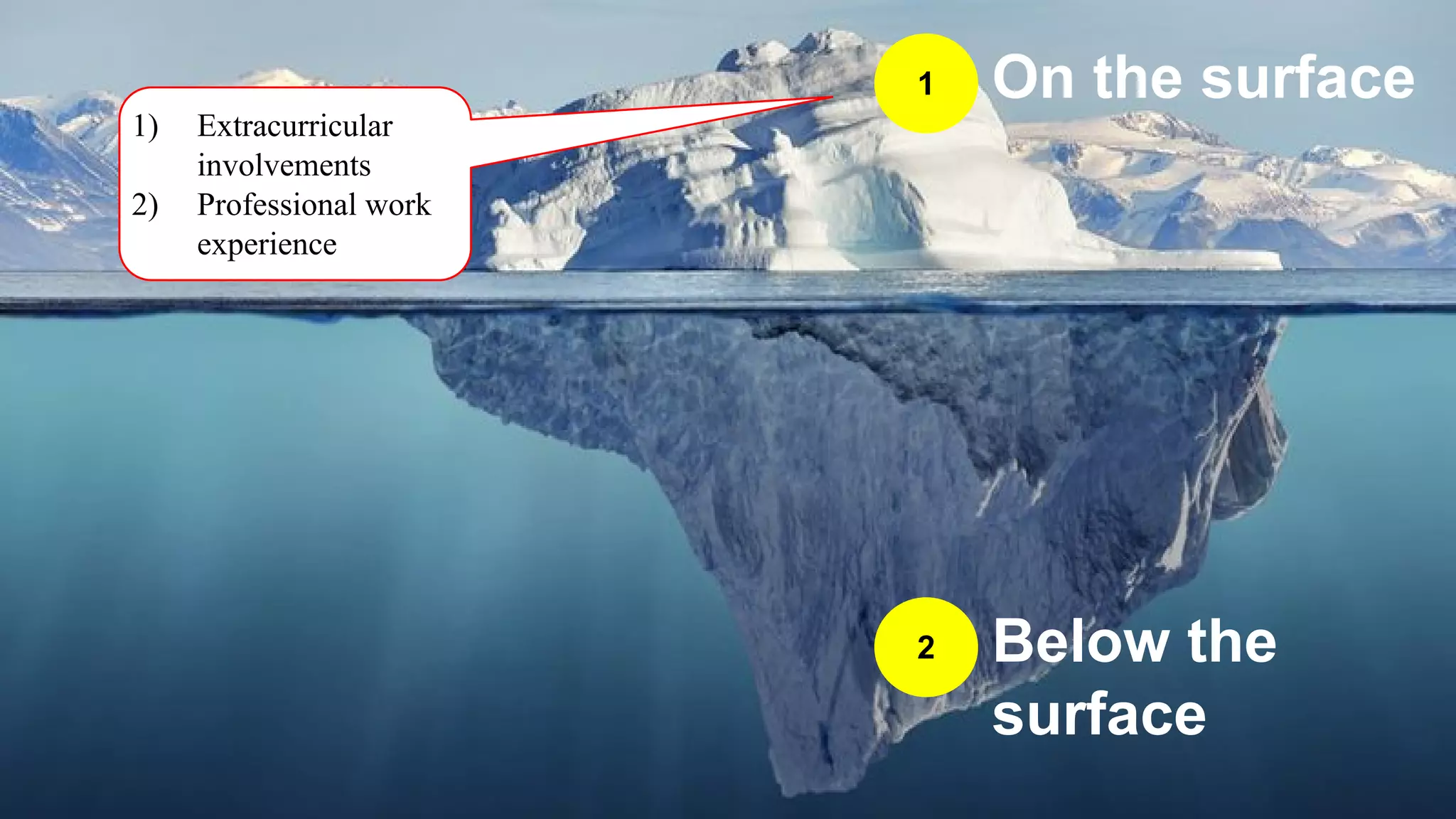
On the surface1
2 Below the
surface
1) Extracurricular
involvements
2) Professional work
experience
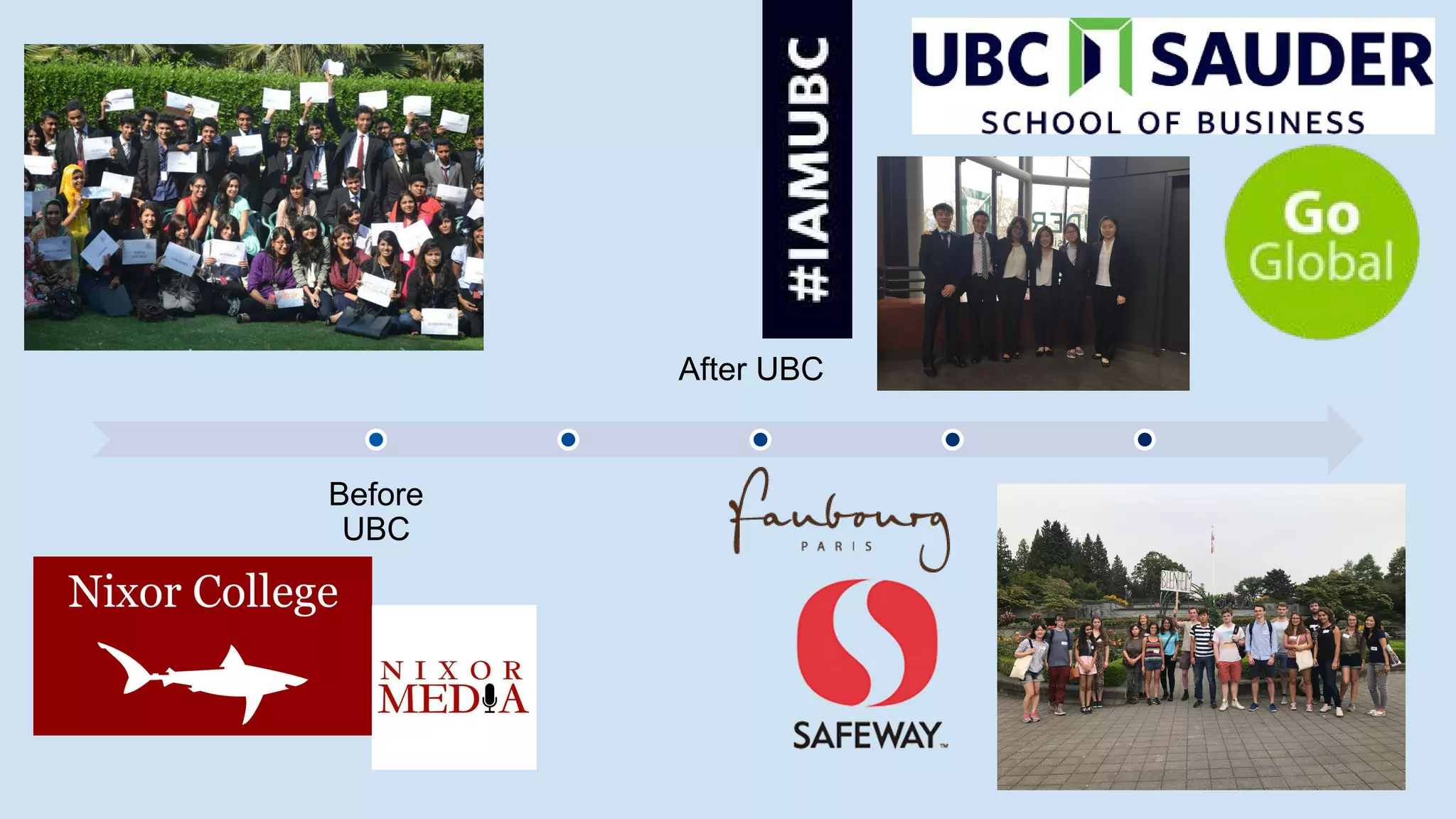
Before
UBC
After UBC
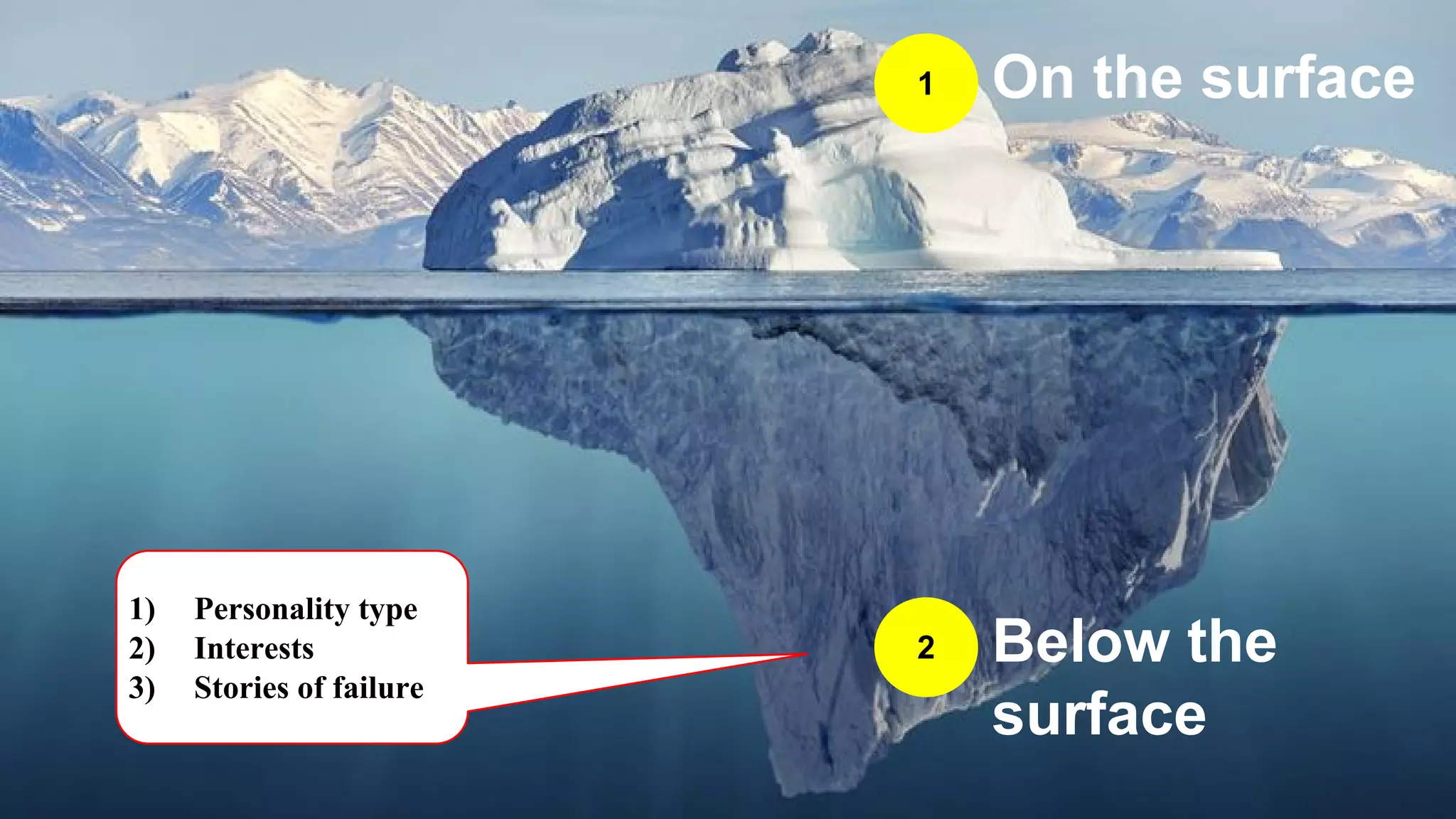
On the surface1
2 Below the
surface
1) Personality type
2) Interests
3) Stories of failure
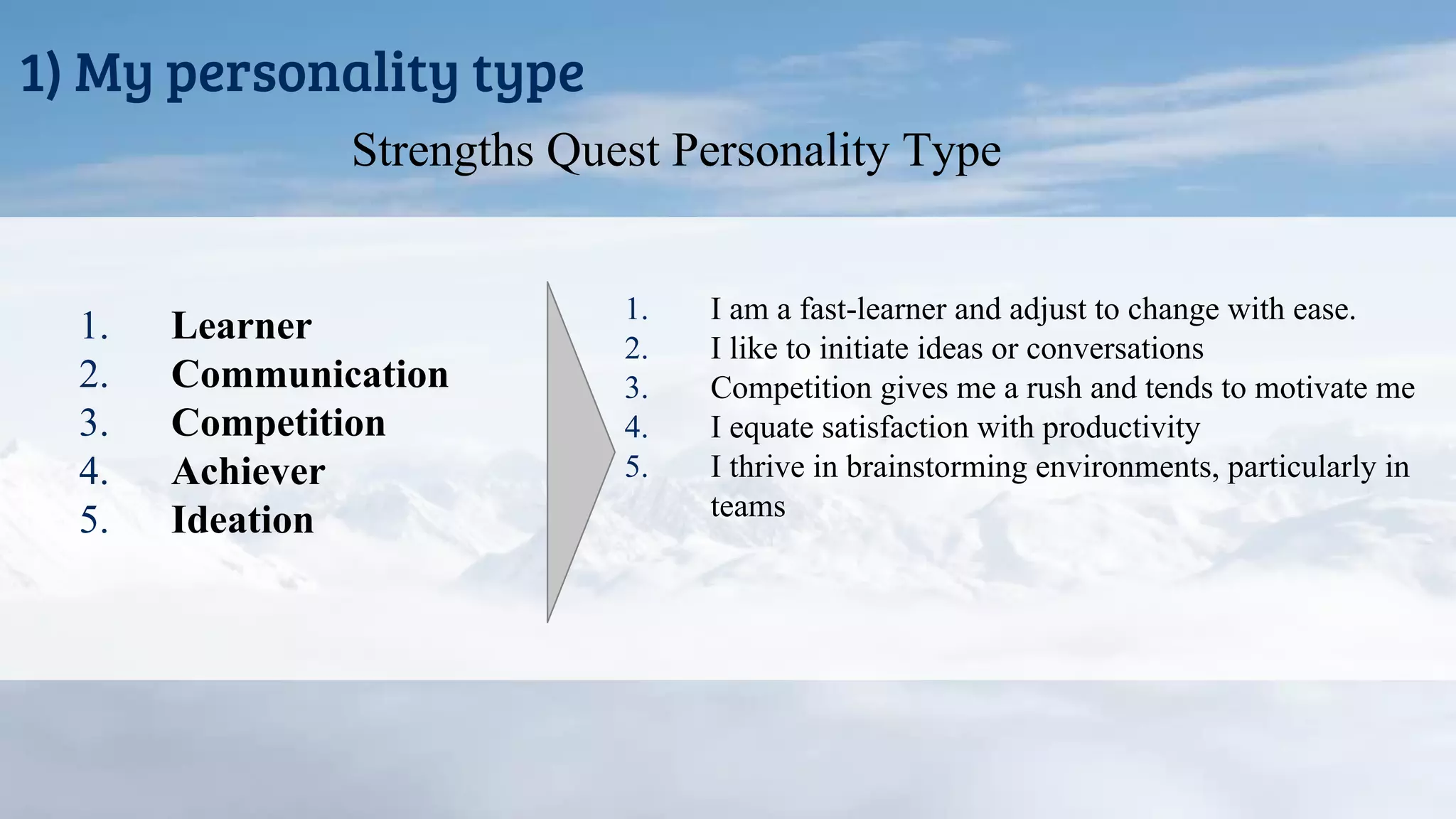
1) My personality type
Strengths Quest Personality Type
1. Learner
2. Communication
3. Competition
4. Achiever
5. Ideation
1. I am a fast-learner and adjust to change with ease.
2. I like to initiate ideas or conversations
3. Competition gives me a rush and tends to motivate me
4. I equate satisfaction with productivity
5. I thrive in brainstorming environments, particularly in
teams
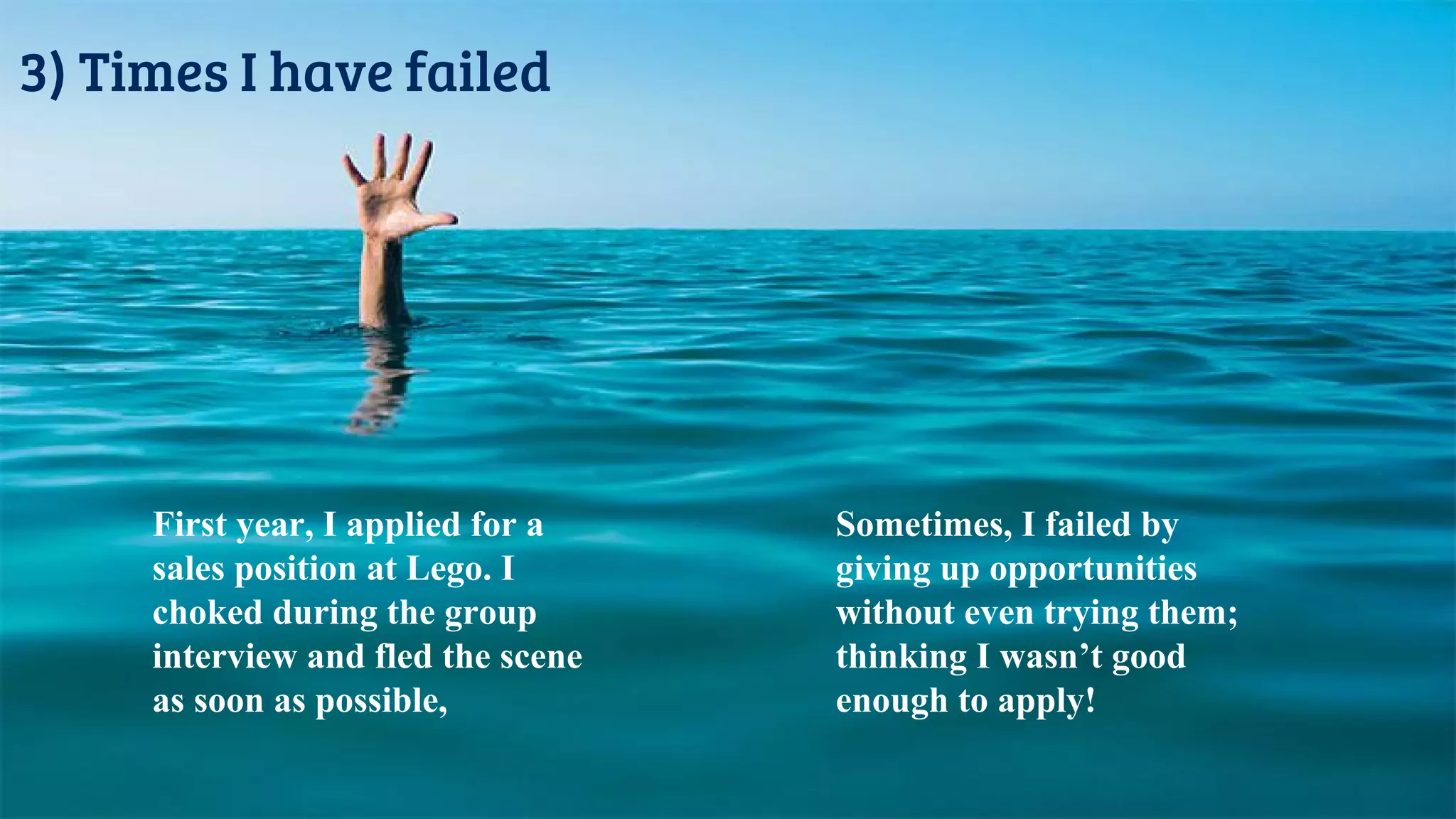
3) Times I have failed
First year, I applied for a
sales position at Lego. I
choked during the group
interview and fled the scene
as soon as possible,
Sometimes, I failed by
giving up opportunities
without even trying them;
thinking I wasn’t good
enough to apply!
“Success is not final, failure is not fatal: it is the
courage to continue that counts.”
- Winston Churchill
2. Course Expectations
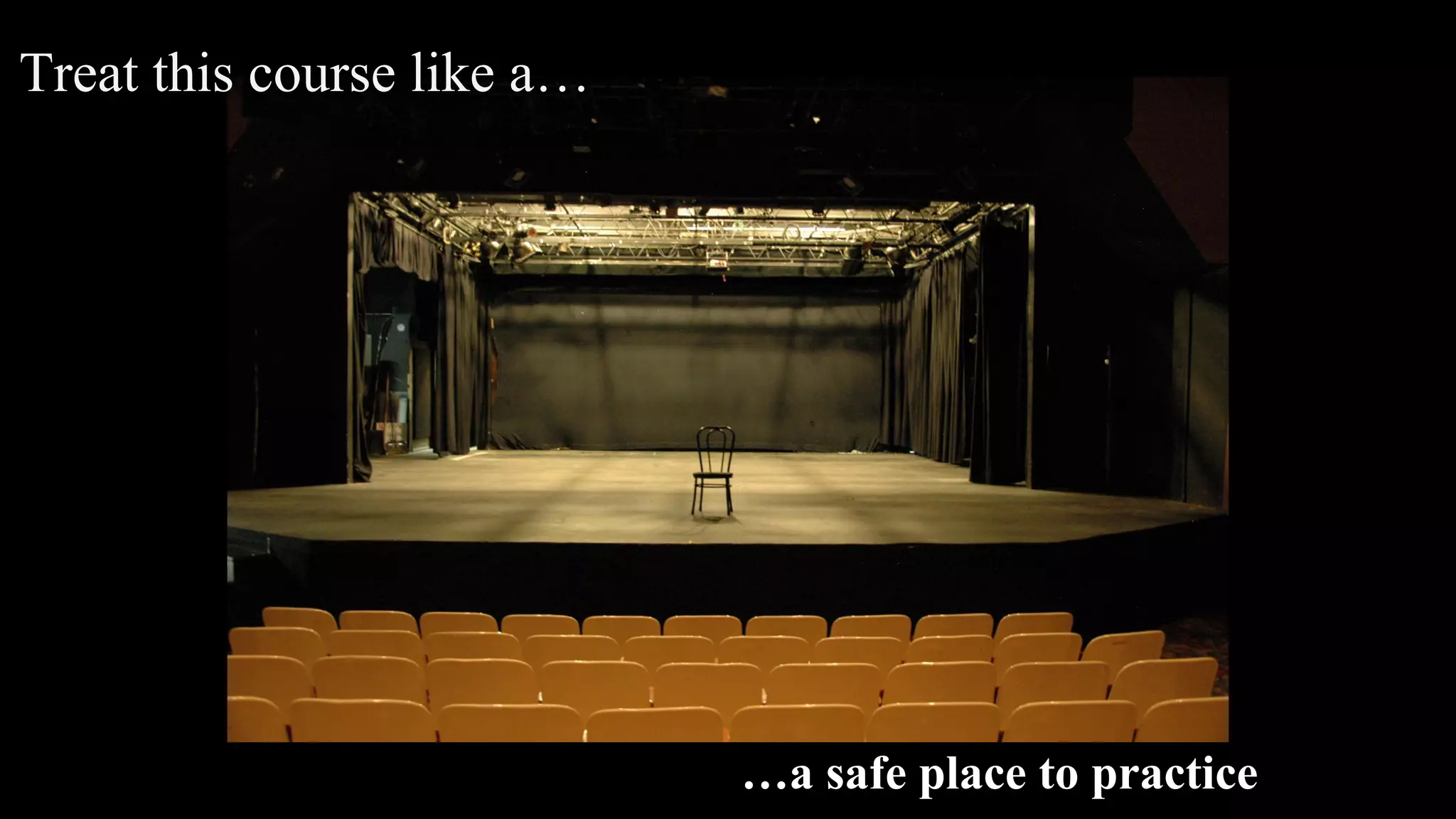
Treat this course like a…
…a safe place to practice
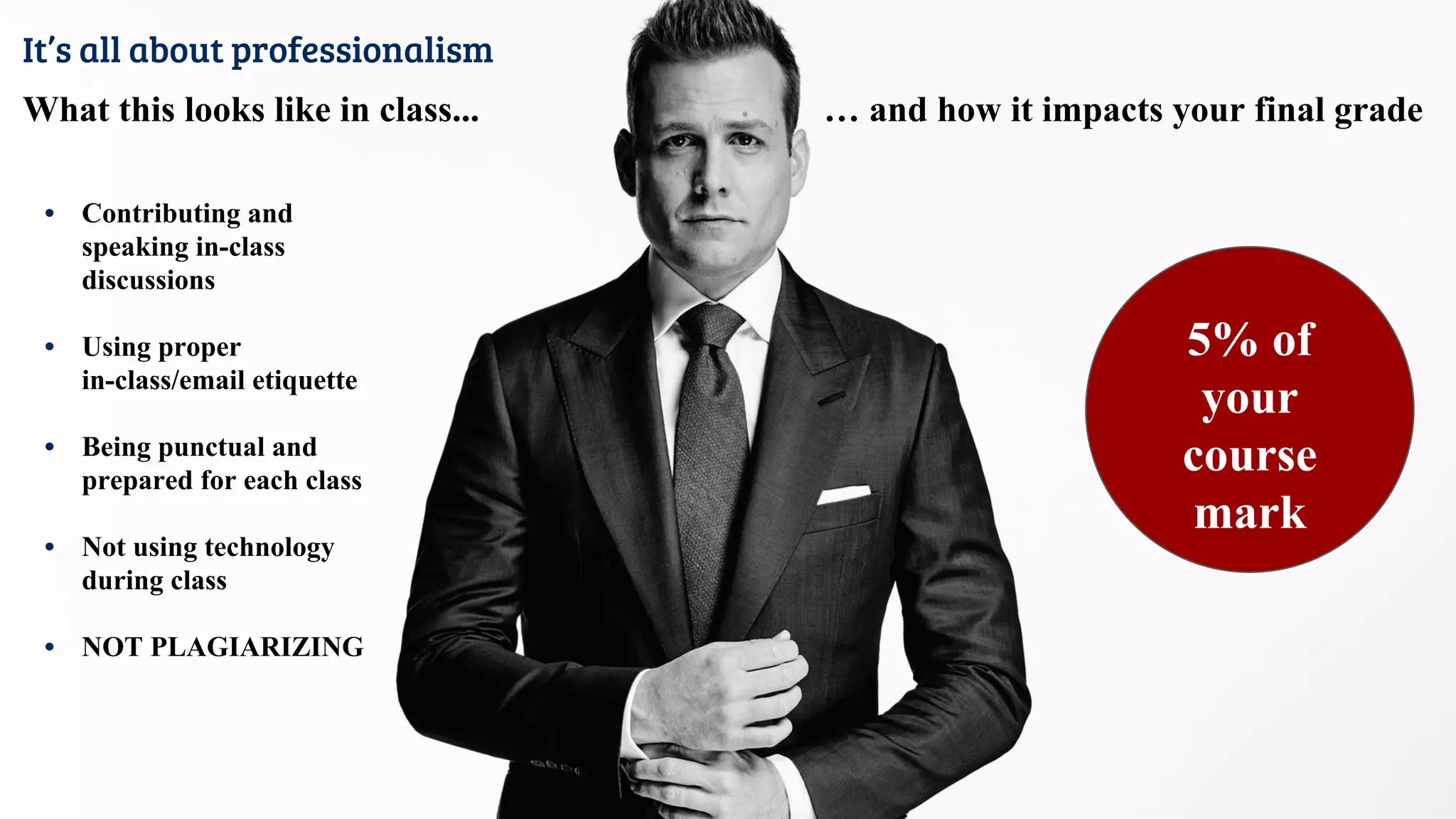
It’s all about professionalism
What this looks like in class...
• Contributing and
speaking in-class
discussions
• Using proper
in-class/email etiquette
• Being punctual and
prepared for each class
• Not using technology
during class
• NOT PLAGIARIZING
… and how it impacts your final grade
5% of
your
course
mark
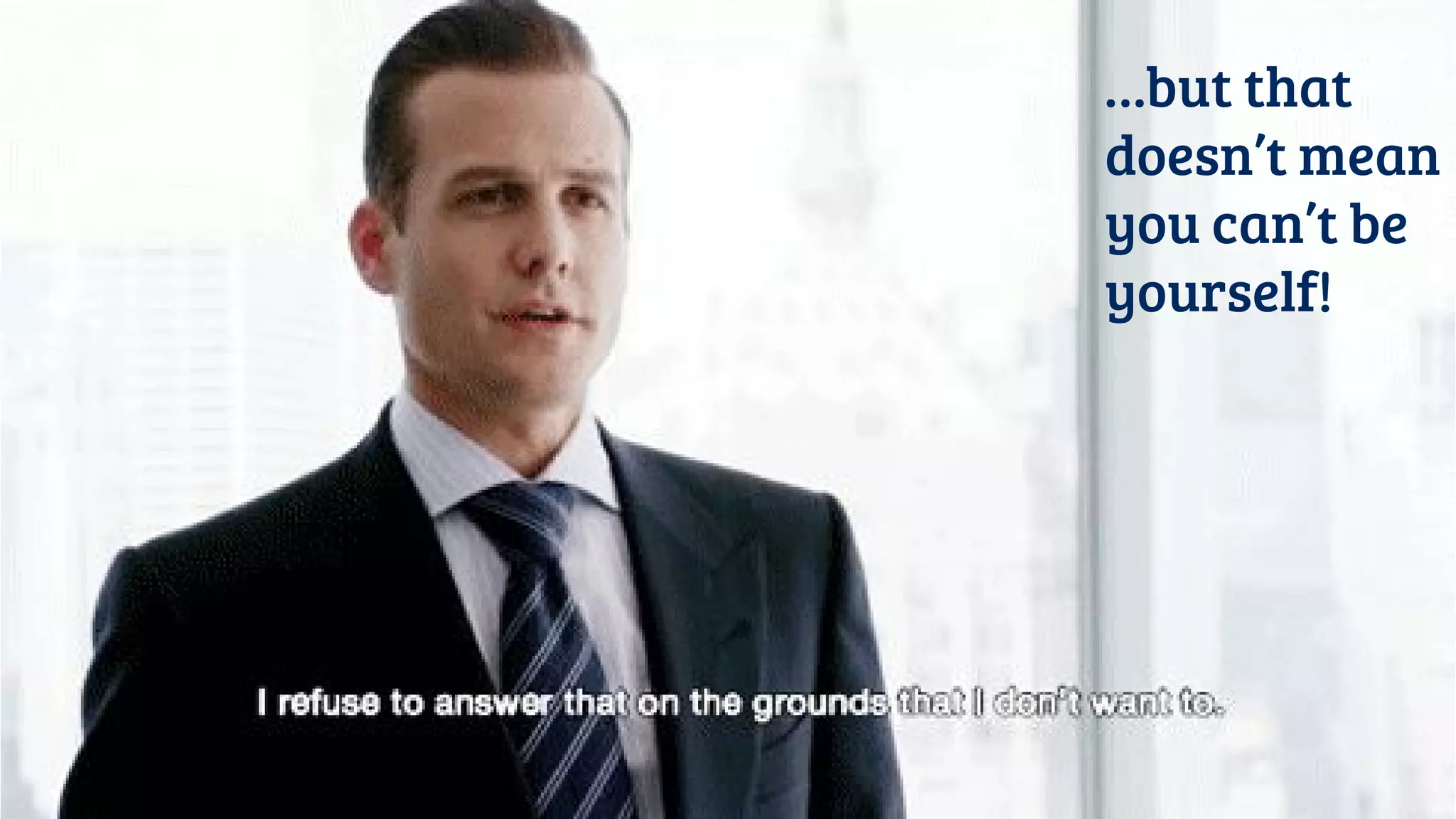
…but that
doesn’t mean
you can’t be
yourself!
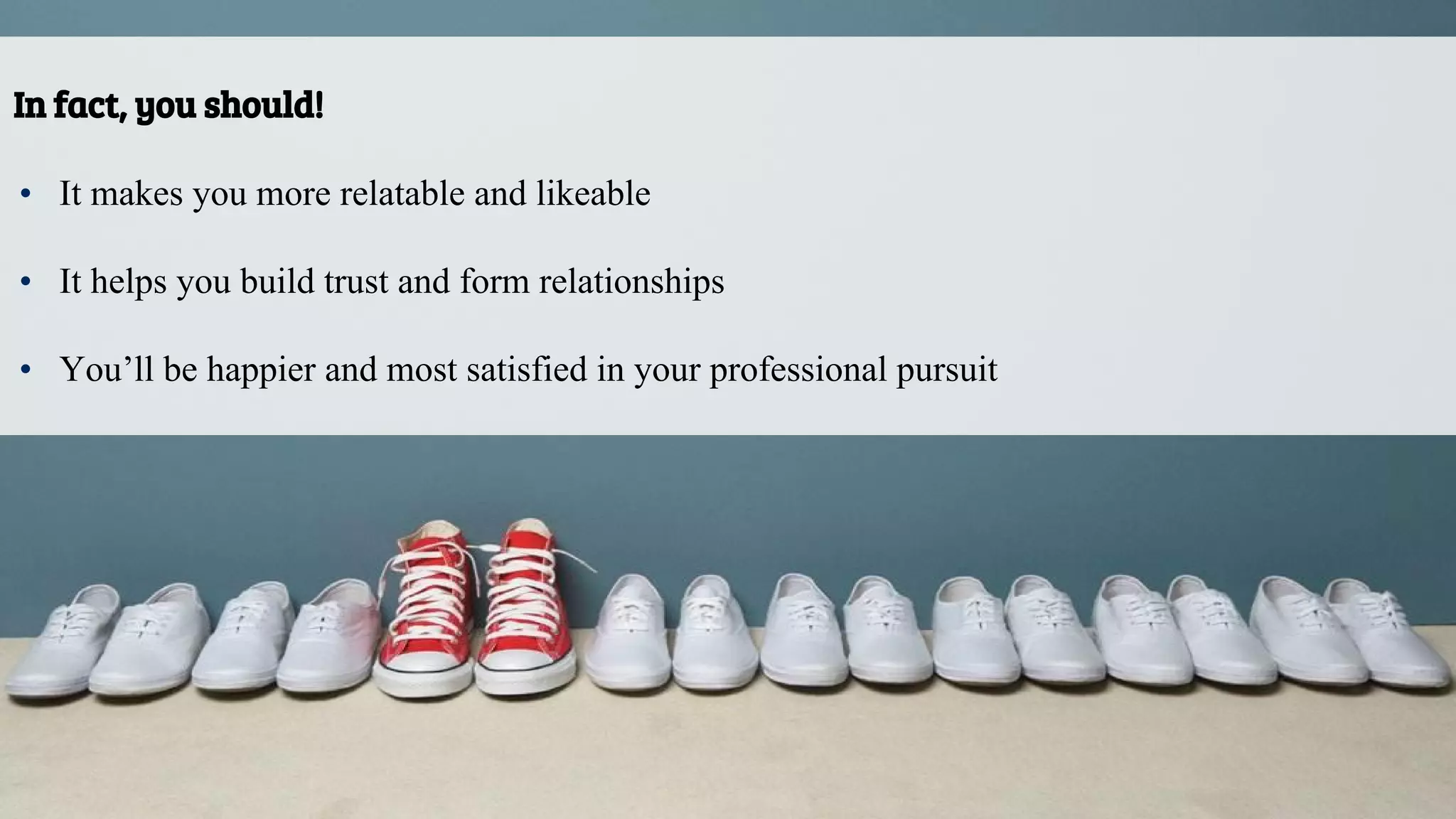
In fact, you should!
• It makes you more relatable and likeable
• It helps you build trust and form relationships
• You’ll be happier and most satisfied in your professional pursuit
Most tutorials, you will have to
prepare one assignment, such
as…
• BCC coaching
appointment
• LinkedIn Profile
• Job Posting Research
• Cover Letter draft
• Interview Stream
Each assignment is worth
~2% for a total of 10% in the
course
Weekly tutorial assignments
Assignments will be collected in the first 5 minutes of class. All
assignments handed in late will receive a grade of zero!
3. Putting Together a Skills
Matrix
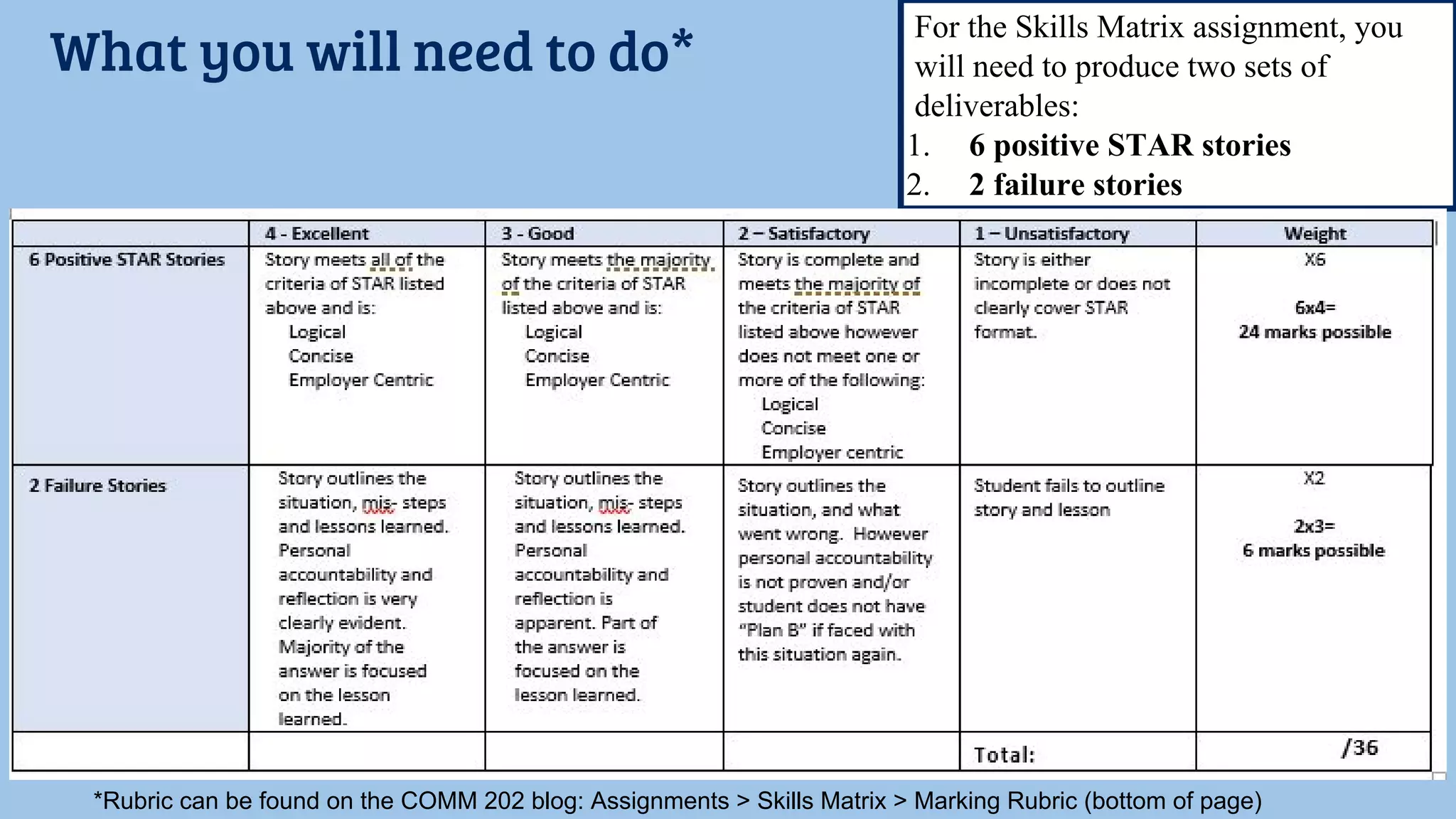
What you will need to do*
For the Skills Matrix assignment, you
will need to produce two sets of
deliverables:
1. 6 positive STAR stories
2. 2 failure stories
*Rubric can be found on the COMM 202 blog: Assignments > Skills Matrix > Marking Rubric (bottom of page)
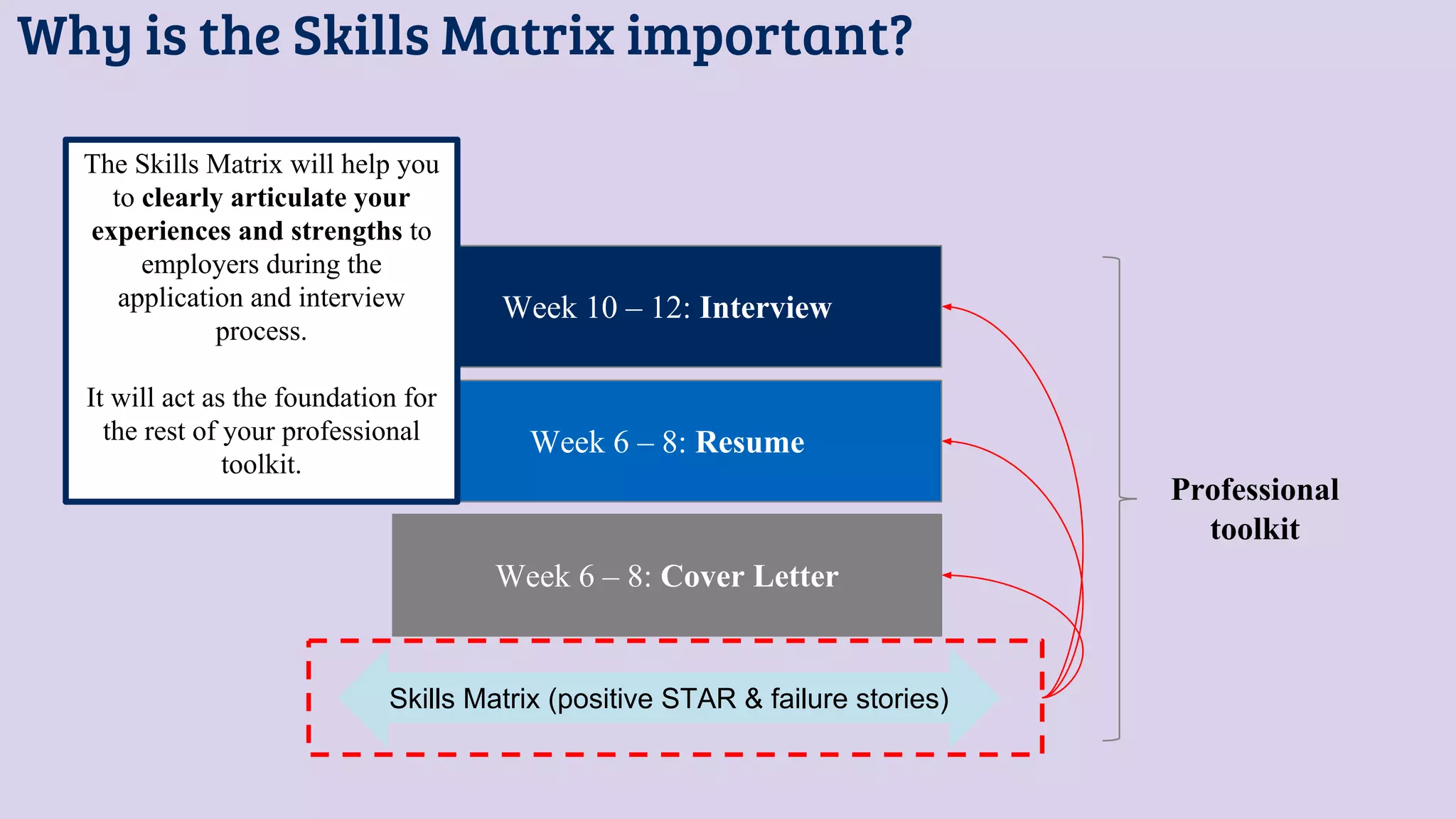
Why is the Skills Matrix important?
Skills Matrix (positive STAR & failure stories)
Week 6 – 8: Cover Letter
Week 6 – 8: Resume
Week 10 – 12: Interview
The Skills Matrix will help you
to clearly articulate your
experiences and strengths to
employers during the
application and interview
process.
It will act as the foundation for
the rest of your professional
toolkit.
Professional
toolkit
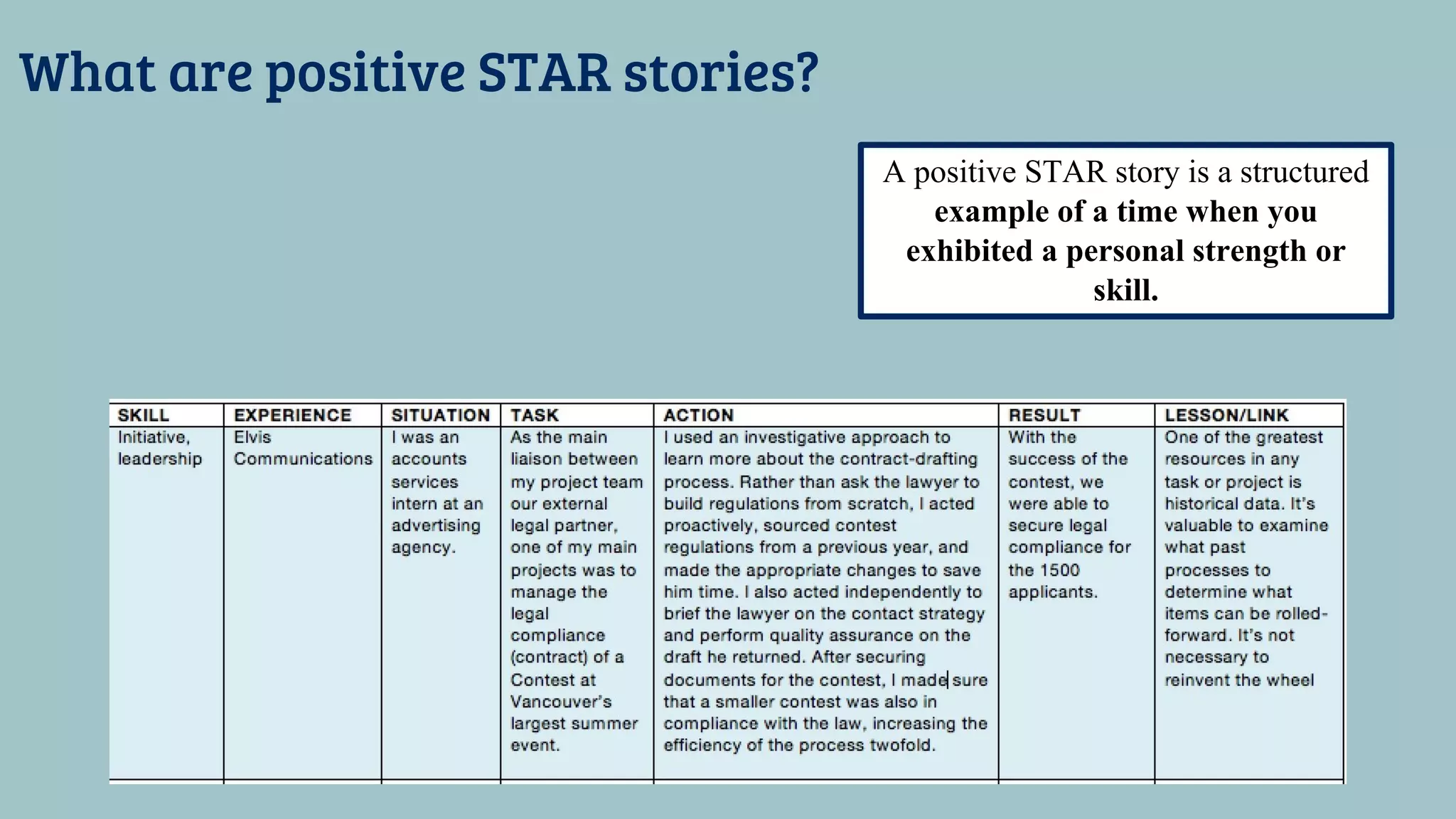
What are positive STAR stories?
A positive STAR story is a structured
example of a time when you
exhibited a personal strength or
skill.
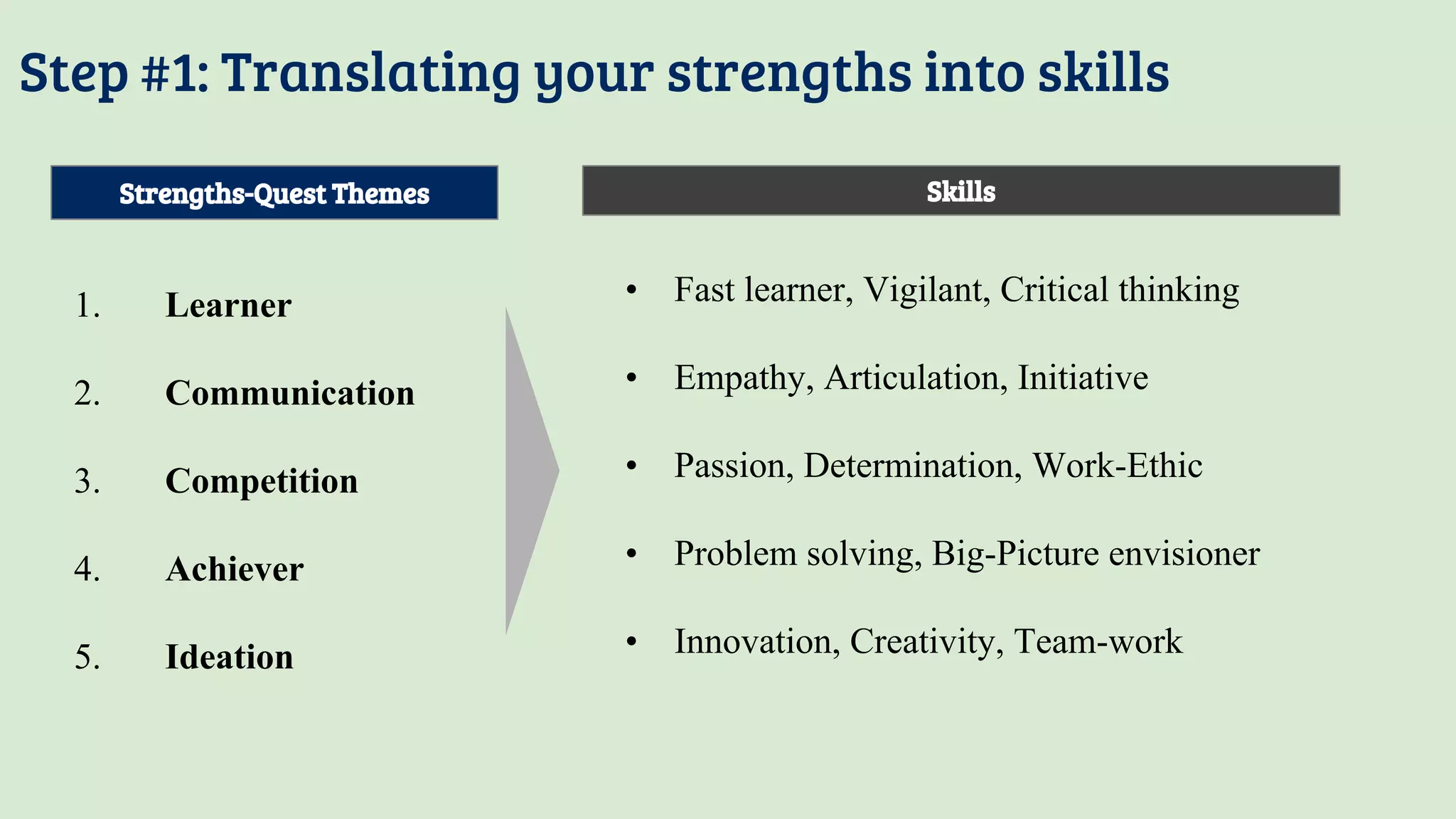
Step #1: Translating your strengths into skills
1. Learner
2. Communication
3. Competition
4. Achiever
5. Ideation
Strengths-Quest Themes Skills
• Fast learner, Vigilant, Critical thinking
• Empathy, Articulation, Initiative
• Passion, Determination, Work-Ethic
• Problem solving, Big-Picture envisioner
• Innovation, Creativity, Team-work
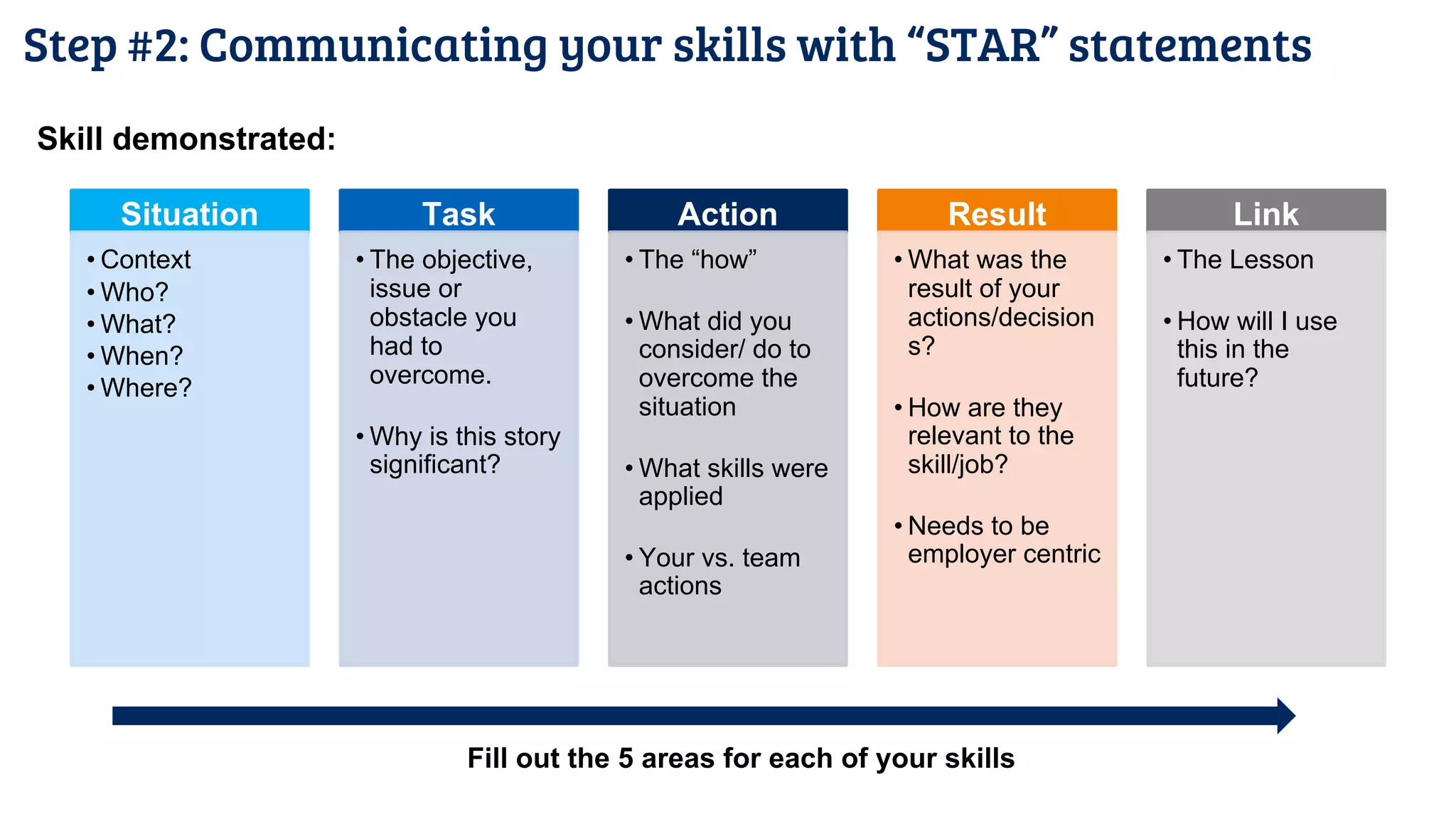
Step #2: Communicating your skills with “STAR” statements
Situation
• Context
• Who?
• What?
• When?
• Where?
Task
• The objective,
issue or
obstacle you
had to
overcome.
• Why is this story
significant?
Action
• The “how”
• What did you
consider/ do to
overcome the
situation
• What skills were
applied
• Your vs. team
actions
Result
• What was the
result of your
actions/decision
s?
• How are they
relevant to the
skill/job?
• Needs to be
employer centric
Link
• The Lesson
• How will I use
this in the
future?
Skill demonstrated:
Fill out the 5 areas for each of your skills
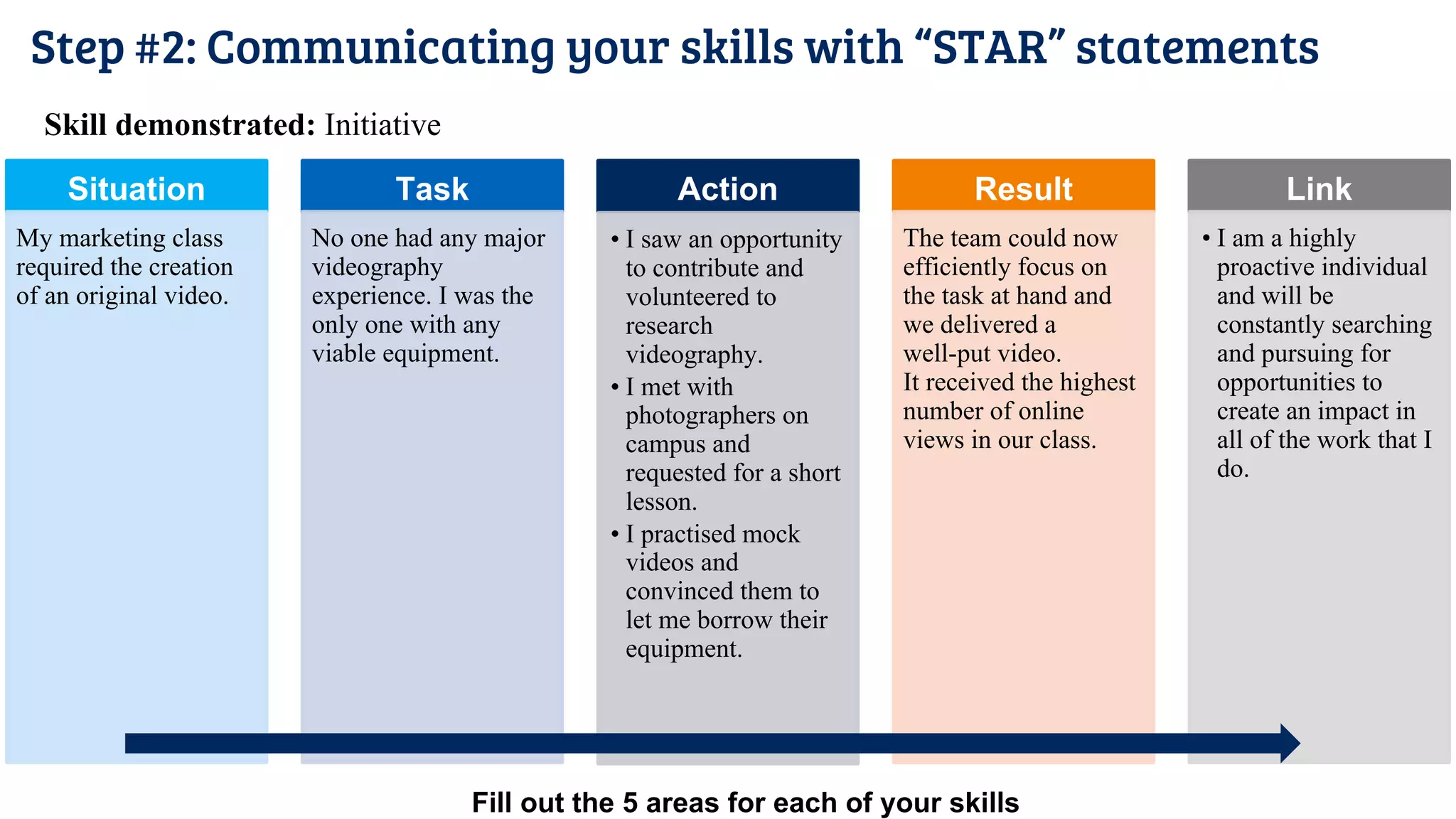
Step #2: Communicating your skills with “STAR” statements
Situation
My marketing class
required the creation
of an original video.
Task
No one had any major
videography
experience. I was the
only one with any
viable equipment.
Action
• I saw an opportunity
to contribute and
volunteered to
research
videography.
• I met with
photographers on
campus and
requested for a short
lesson.
• I practised mock
videos and
convinced them to
let me borrow their
equipment.
Result
The team could now
efficiently focus on
the task at hand and
we delivered a
well-put video.
It received the highest
number of online
views in our class.
Link
• I am a highly
proactive individual
and will be
constantly searching
and pursuing for
opportunities to
create an impact in
all of the work that I
do.
Fill out the 5 areas for each of your skills
Skill demonstrated: Initiative
What is a failure story?
A failure story is an example of a time
when something went wrong and the
lessons you learned and steps you took to
correct the issue.
These types of questions are very likely
to come up in interviews – and ones that
you definitely need to prepare ahead of
time for!
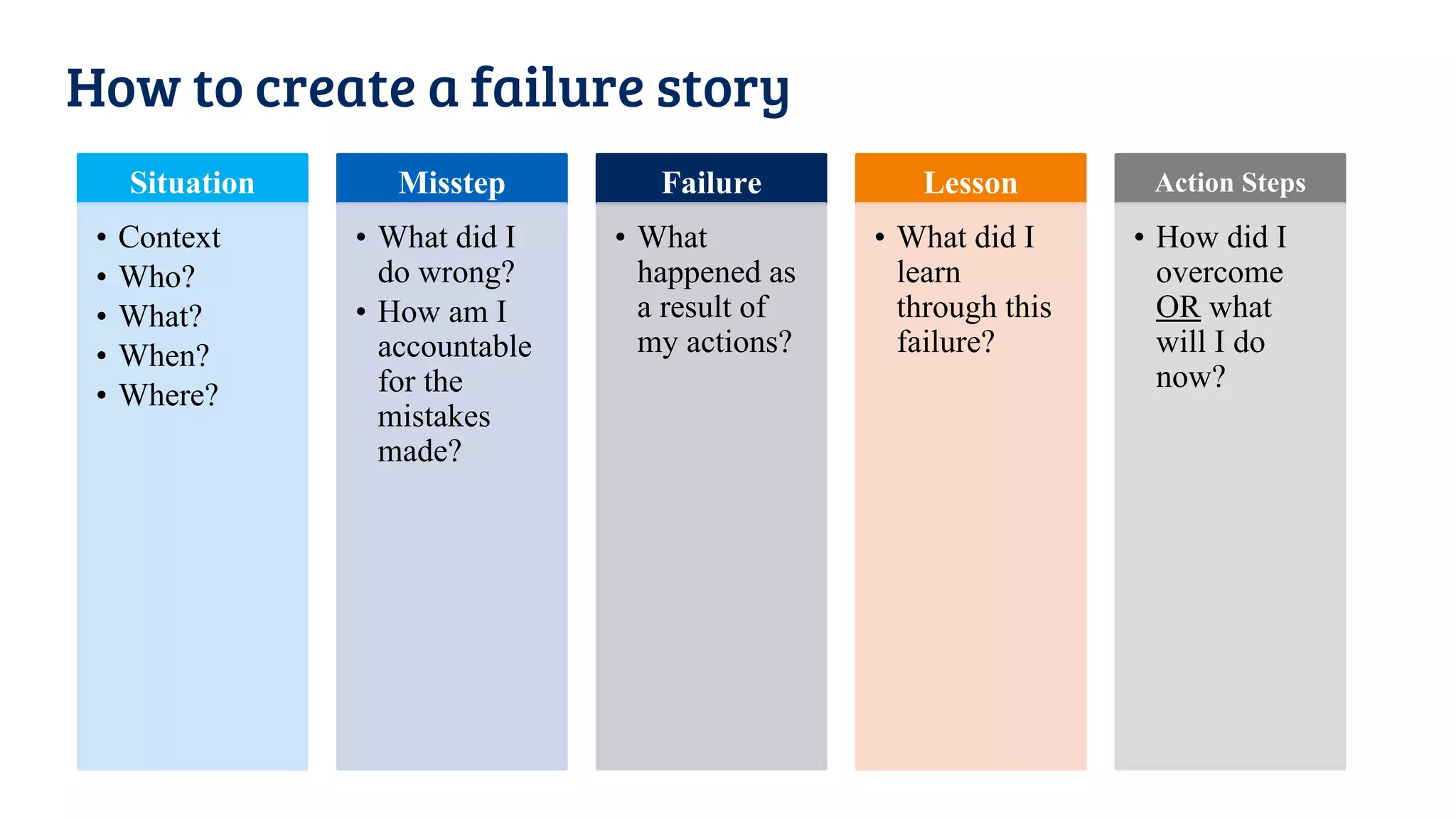
How to create a failure story
Situation
• Context
• Who?
• What?
• When?
• Where?
Misstep
• What did I
do wrong?
• How am I
accountable
for the
mistakes
made?
Failure
• What
happened as
a result of
my actions?
Lesson
• What did I
learn
through this
failure?
Action Steps
• How did I
overcome
OR what
will I do
now?
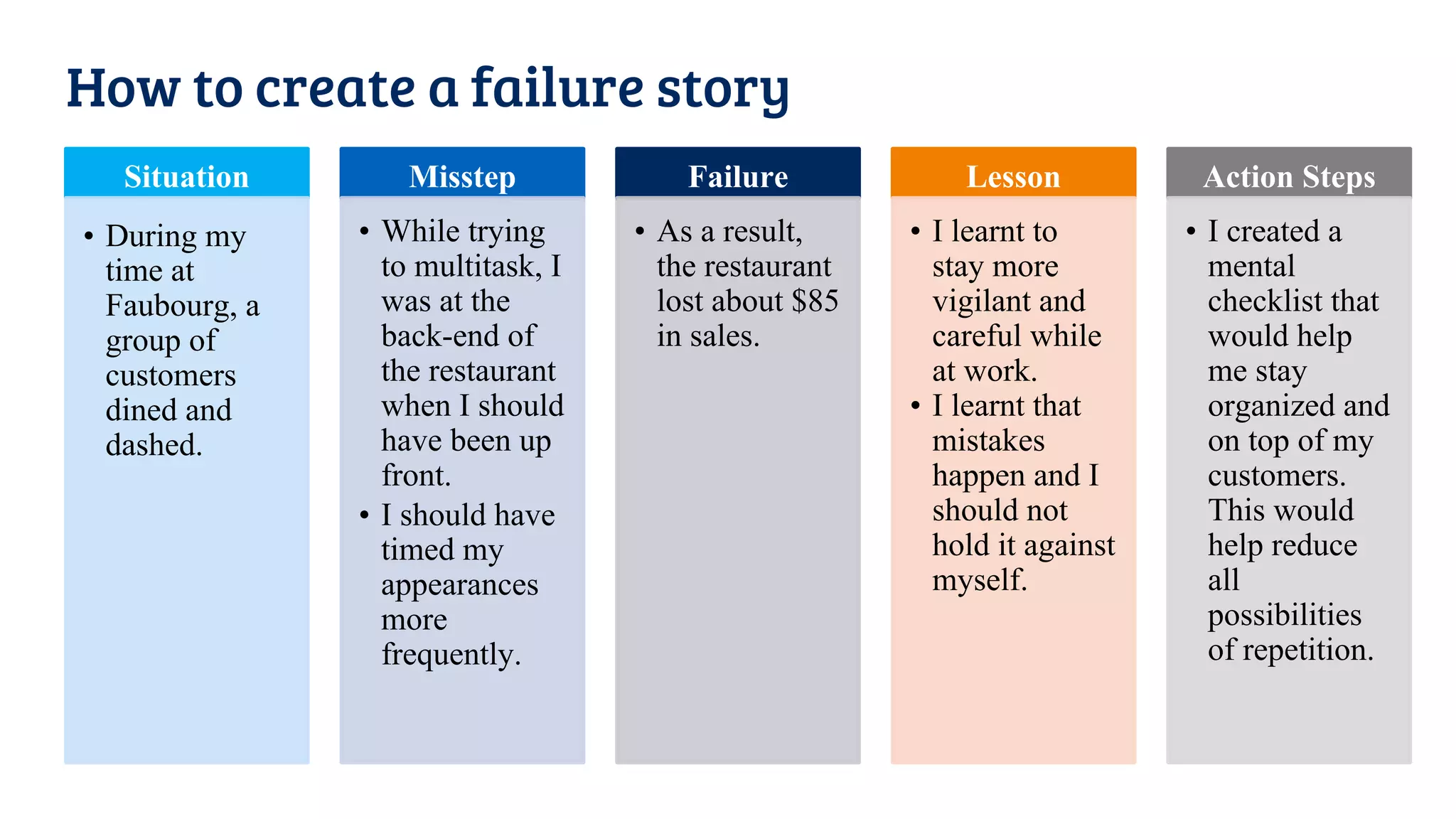
How to create a failure story
Situation
• During my
time at
Faubourg, a
group of
customers
dined and
dashed.
Misstep
• While trying
to multitask, I
was at the
back-end of
the restaurant
when I should
have been up
front.
• I should have
timed my
appearances
more
frequently.
Failure
• As a result,
the restaurant
lost about $85
in sales.
Lesson
• I learnt to
stay more
vigilant and
careful while
at work.
• I learnt that
mistakes
happen and I
should not
hold it against
myself.
Action Steps
• I created a
mental
checklist that
would help
me stay
organized and
on top of my
customers.
This would
help reduce
all
possibilities
of repetition.
What a good failure story will demonstrate
Resilience Ability to Learn
✓ ✓ ✓
Authenticity
1. One on one signups (optional) with me for next
week
2. Skills Matrix drafts due on October 6th
at the
start of class: 2 positive and 1 failure stories
3. Final Skills Matrix due October 13th
on
Turnitin: 6 positive and 2 failure stories
Action items for next week
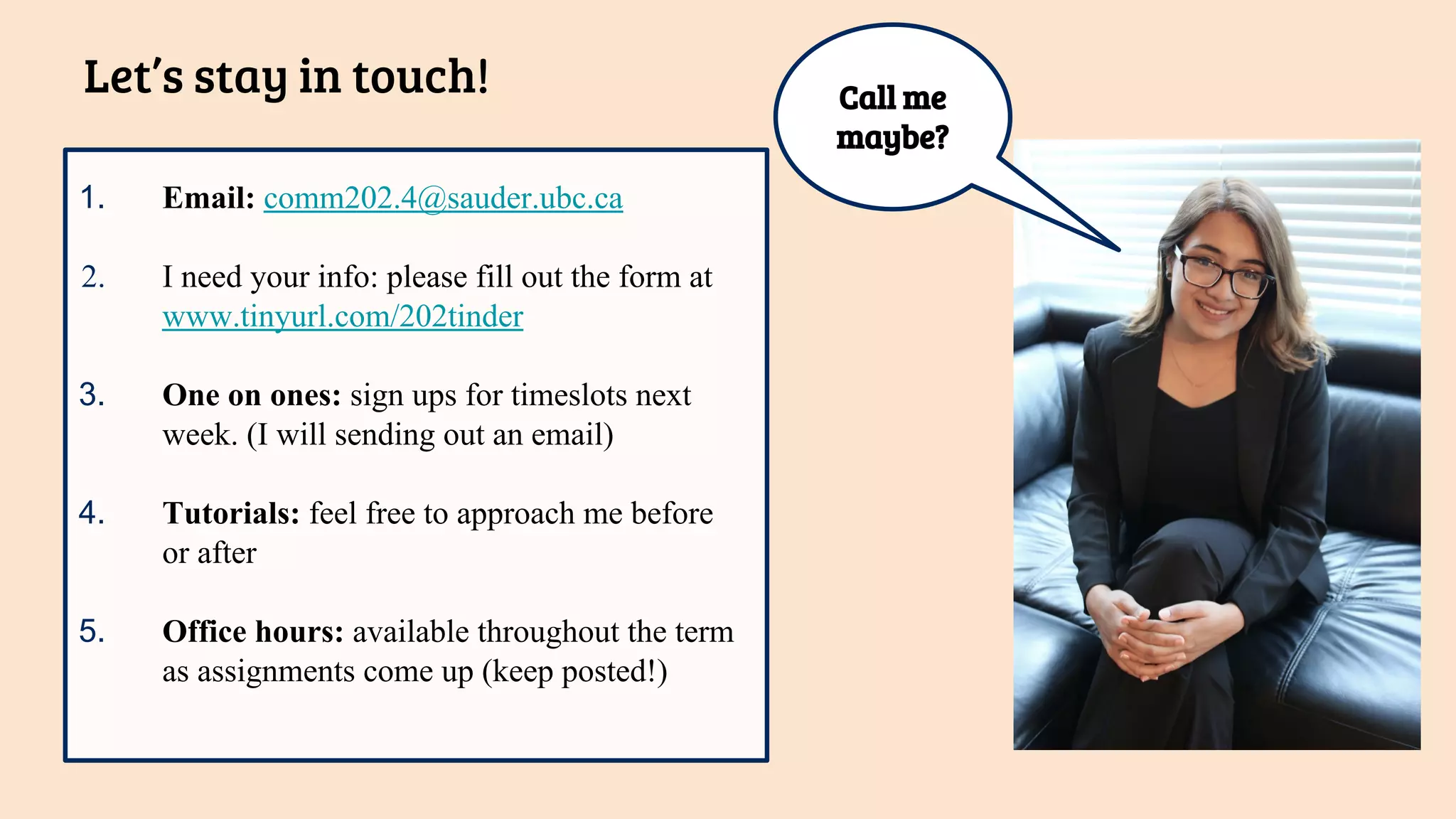
1. Email: comm202.4@sauder.ubc.ca
2. I need your info: please fill out the form at
www.tinyurl.com/202tinder
3. One on ones: sign ups for timeslots next
week. (I will sending out an email)
4. Tutorials: feel free to approach me before
or after
5. Office hours: available throughout the term
as assignments come up (keep posted!)
Let’s stay in touch! Call me
maybe?
Questions?
Have a nice day!

Natiqa Babar Tutorial 1 :COMM 202 T18,19

  • 1.
    COMM 202: Career Fundamentals T18& T19 with Natiqa Babar
  • 2.
    Let’s start off! 1)Assignment Collection 2) Info Collection: www.tinyurl.com/202tinder 3) Pay course fees : https://webforms.sauder.ubc.ca/students/pay-fees 3) Introductions
  • 3.
    Our Agenda forToday 1. Getting to know your TA 2. Course expectations 3. Putting together a Skills Matrix
  • 4.
    1. Getting toknow your TA
  • 5.
    On the surface1 2Below the surface
  • 6.
    On the surface1 2Below the surface 1) Extracurricular involvements 2) Professional work experience
  • 7.
  • 8.
    On the surface1 2Below the surface 1) Personality type 2) Interests 3) Stories of failure
  • 9.
    1) My personalitytype Strengths Quest Personality Type 1. Learner 2. Communication 3. Competition 4. Achiever 5. Ideation 1. I am a fast-learner and adjust to change with ease. 2. I like to initiate ideas or conversations 3. Competition gives me a rush and tends to motivate me 4. I equate satisfaction with productivity 5. I thrive in brainstorming environments, particularly in teams
  • 10.
    3) Times Ihave failed First year, I applied for a sales position at Lego. I choked during the group interview and fled the scene as soon as possible, Sometimes, I failed by giving up opportunities without even trying them; thinking I wasn’t good enough to apply!
  • 11.
    “Success is notfinal, failure is not fatal: it is the courage to continue that counts.” - Winston Churchill
  • 12.
  • 13.
    Treat this courselike a… …a safe place to practice
  • 14.
    It’s all aboutprofessionalism What this looks like in class... • Contributing and speaking in-class discussions • Using proper in-class/email etiquette • Being punctual and prepared for each class • Not using technology during class • NOT PLAGIARIZING … and how it impacts your final grade 5% of your course mark
  • 15.
    …but that doesn’t mean youcan’t be yourself!
  • 16.
    In fact, youshould! • It makes you more relatable and likeable • It helps you build trust and form relationships • You’ll be happier and most satisfied in your professional pursuit
  • 17.
    Most tutorials, youwill have to prepare one assignment, such as… • BCC coaching appointment • LinkedIn Profile • Job Posting Research • Cover Letter draft • Interview Stream Each assignment is worth ~2% for a total of 10% in the course Weekly tutorial assignments Assignments will be collected in the first 5 minutes of class. All assignments handed in late will receive a grade of zero!
  • 18.
    3. Putting Togethera Skills Matrix
  • 19.
    What you willneed to do* For the Skills Matrix assignment, you will need to produce two sets of deliverables: 1. 6 positive STAR stories 2. 2 failure stories *Rubric can be found on the COMM 202 blog: Assignments > Skills Matrix > Marking Rubric (bottom of page)
  • 20.
    Why is theSkills Matrix important? Skills Matrix (positive STAR & failure stories) Week 6 – 8: Cover Letter Week 6 – 8: Resume Week 10 – 12: Interview The Skills Matrix will help you to clearly articulate your experiences and strengths to employers during the application and interview process. It will act as the foundation for the rest of your professional toolkit. Professional toolkit
  • 21.
    What are positiveSTAR stories? A positive STAR story is a structured example of a time when you exhibited a personal strength or skill.
  • 22.
    Step #1: Translatingyour strengths into skills 1. Learner 2. Communication 3. Competition 4. Achiever 5. Ideation Strengths-Quest Themes Skills • Fast learner, Vigilant, Critical thinking • Empathy, Articulation, Initiative • Passion, Determination, Work-Ethic • Problem solving, Big-Picture envisioner • Innovation, Creativity, Team-work
  • 23.
    Step #2: Communicatingyour skills with “STAR” statements Situation • Context • Who? • What? • When? • Where? Task • The objective, issue or obstacle you had to overcome. • Why is this story significant? Action • The “how” • What did you consider/ do to overcome the situation • What skills were applied • Your vs. team actions Result • What was the result of your actions/decision s? • How are they relevant to the skill/job? • Needs to be employer centric Link • The Lesson • How will I use this in the future? Skill demonstrated: Fill out the 5 areas for each of your skills
  • 24.
    Step #2: Communicatingyour skills with “STAR” statements Situation My marketing class required the creation of an original video. Task No one had any major videography experience. I was the only one with any viable equipment. Action • I saw an opportunity to contribute and volunteered to research videography. • I met with photographers on campus and requested for a short lesson. • I practised mock videos and convinced them to let me borrow their equipment. Result The team could now efficiently focus on the task at hand and we delivered a well-put video. It received the highest number of online views in our class. Link • I am a highly proactive individual and will be constantly searching and pursuing for opportunities to create an impact in all of the work that I do. Fill out the 5 areas for each of your skills Skill demonstrated: Initiative
  • 25.
    What is afailure story? A failure story is an example of a time when something went wrong and the lessons you learned and steps you took to correct the issue. These types of questions are very likely to come up in interviews – and ones that you definitely need to prepare ahead of time for!
  • 26.
    How to createa failure story Situation • Context • Who? • What? • When? • Where? Misstep • What did I do wrong? • How am I accountable for the mistakes made? Failure • What happened as a result of my actions? Lesson • What did I learn through this failure? Action Steps • How did I overcome OR what will I do now?
  • 27.
    How to createa failure story Situation • During my time at Faubourg, a group of customers dined and dashed. Misstep • While trying to multitask, I was at the back-end of the restaurant when I should have been up front. • I should have timed my appearances more frequently. Failure • As a result, the restaurant lost about $85 in sales. Lesson • I learnt to stay more vigilant and careful while at work. • I learnt that mistakes happen and I should not hold it against myself. Action Steps • I created a mental checklist that would help me stay organized and on top of my customers. This would help reduce all possibilities of repetition.
  • 28.
    What a goodfailure story will demonstrate Resilience Ability to Learn ✓ ✓ ✓ Authenticity
  • 29.
    1. One onone signups (optional) with me for next week 2. Skills Matrix drafts due on October 6th at the start of class: 2 positive and 1 failure stories 3. Final Skills Matrix due October 13th on Turnitin: 6 positive and 2 failure stories Action items for next week
  • 30.
    1. Email: comm202.4@sauder.ubc.ca 2.I need your info: please fill out the form at www.tinyurl.com/202tinder 3. One on ones: sign ups for timeslots next week. (I will sending out an email) 4. Tutorials: feel free to approach me before or after 5. Office hours: available throughout the term as assignments come up (keep posted!) Let’s stay in touch! Call me maybe?
  • 31.
  • 32.