COMM 202:
Career Fundamentals
T05 & T15 with Samyta Rai
Today’s Agenda:
1. Get to know your TA
2. Course Expectations
3. Putting together a skills matrix
Getting to know your
TA
Hi, I’m Samyta!
1
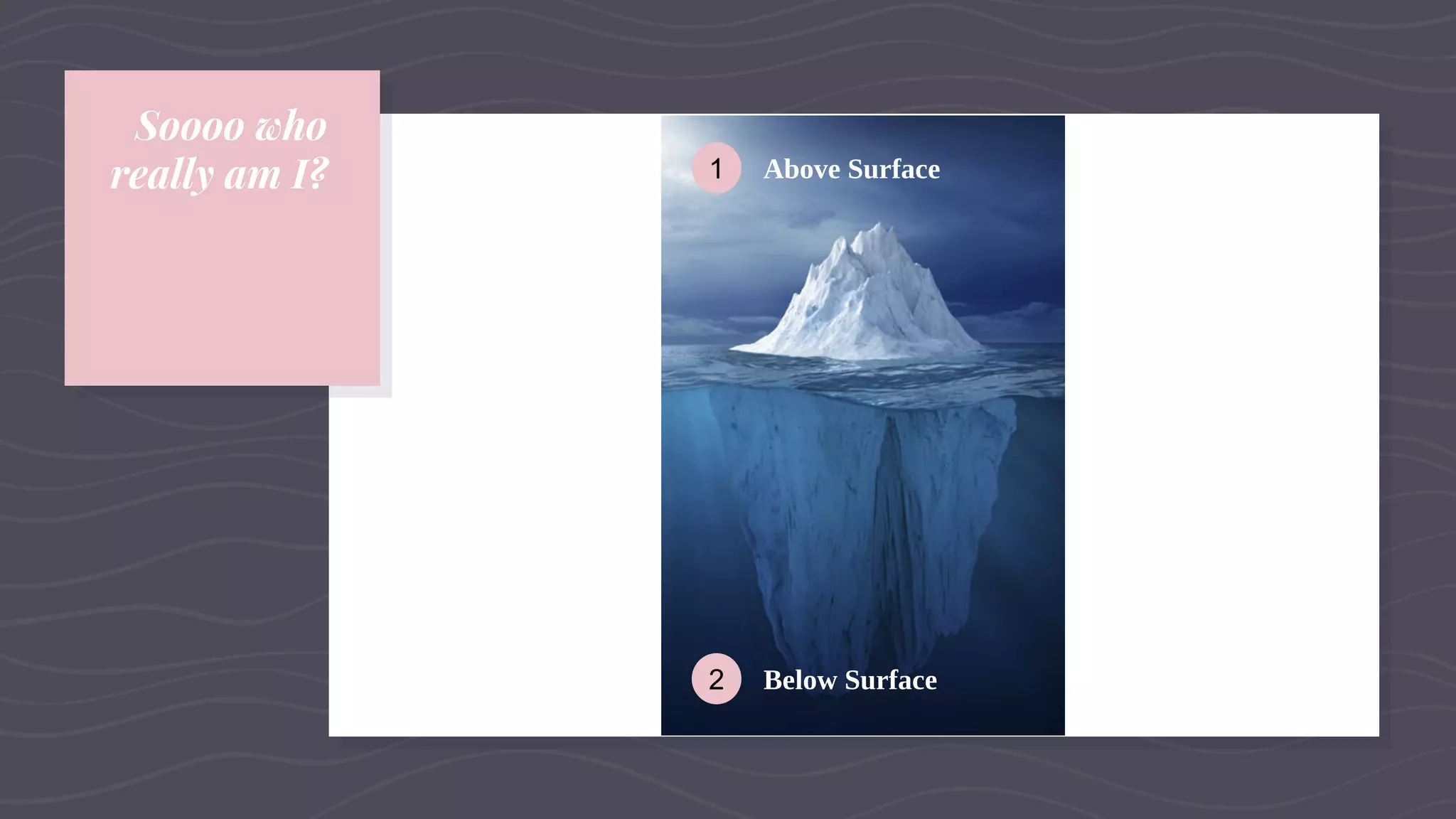
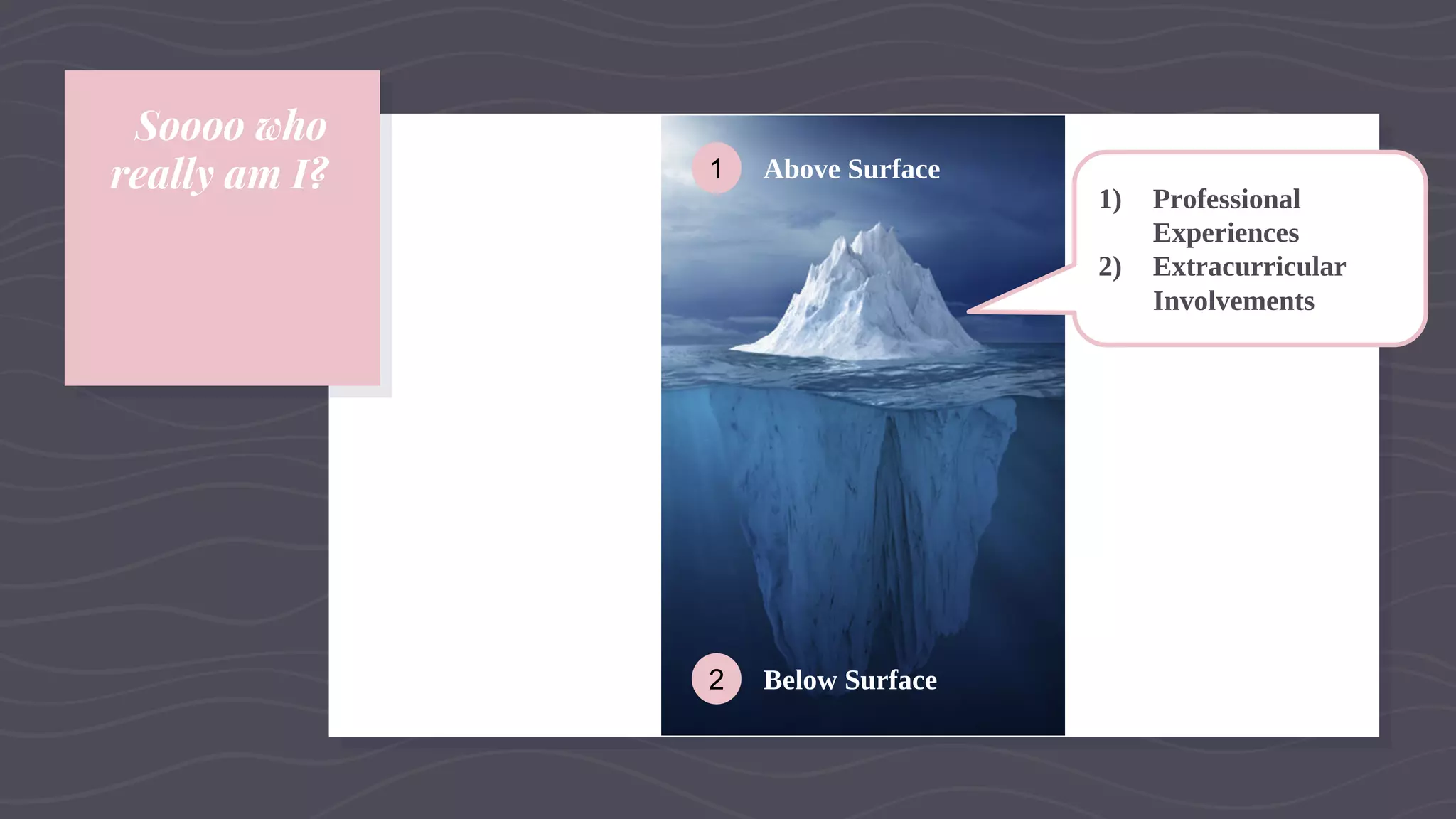
Soooo who
really am I? 1
2
Above Surface
Below Surface
Soooo who
really am I? 1
2
Above Surface
Below Surface
1) Professional
Experiences
2) Extracurricular
Involvements
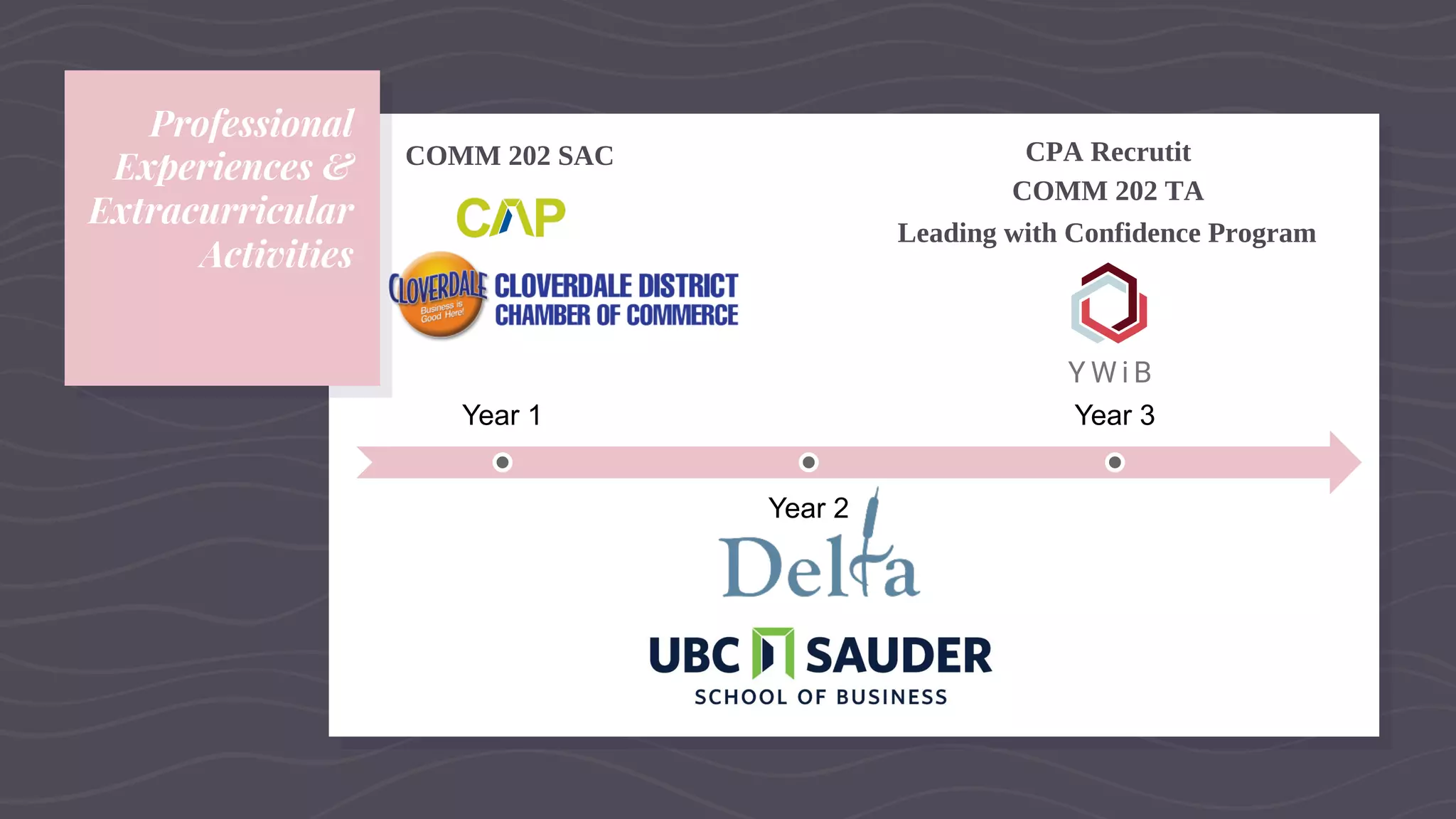
Professional
Experiences &
Extracurricular
Activities
Year 1
Year 2
Year 3
COMM 202 SAC
Leading with Confidence Program
COMM 202 TA
CPA Recrutit
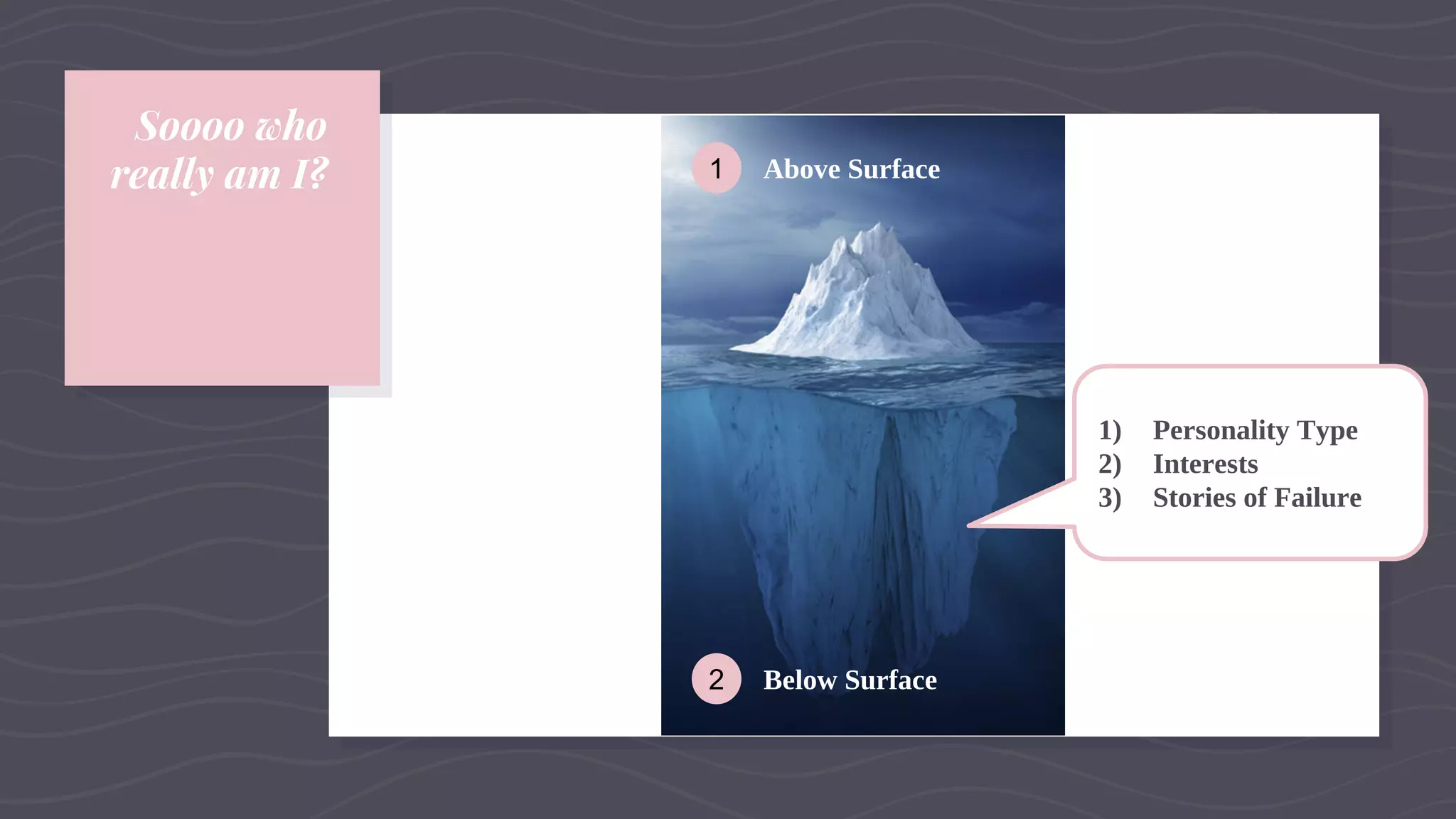
Soooo who
really am I? 1
2
Above Surface
Below Surface
1) Personality Type
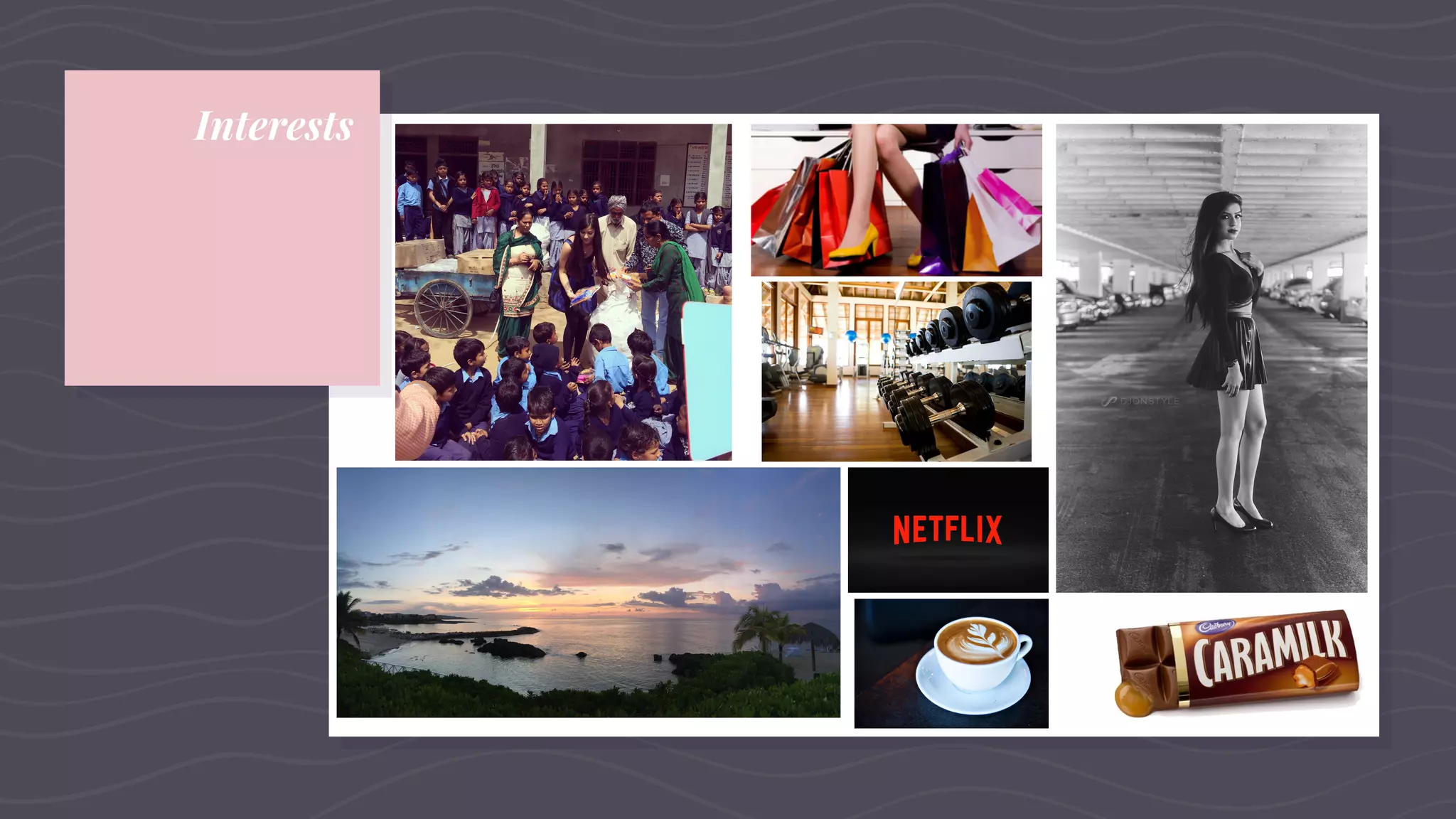
2) Interests
3) Stories of Failure
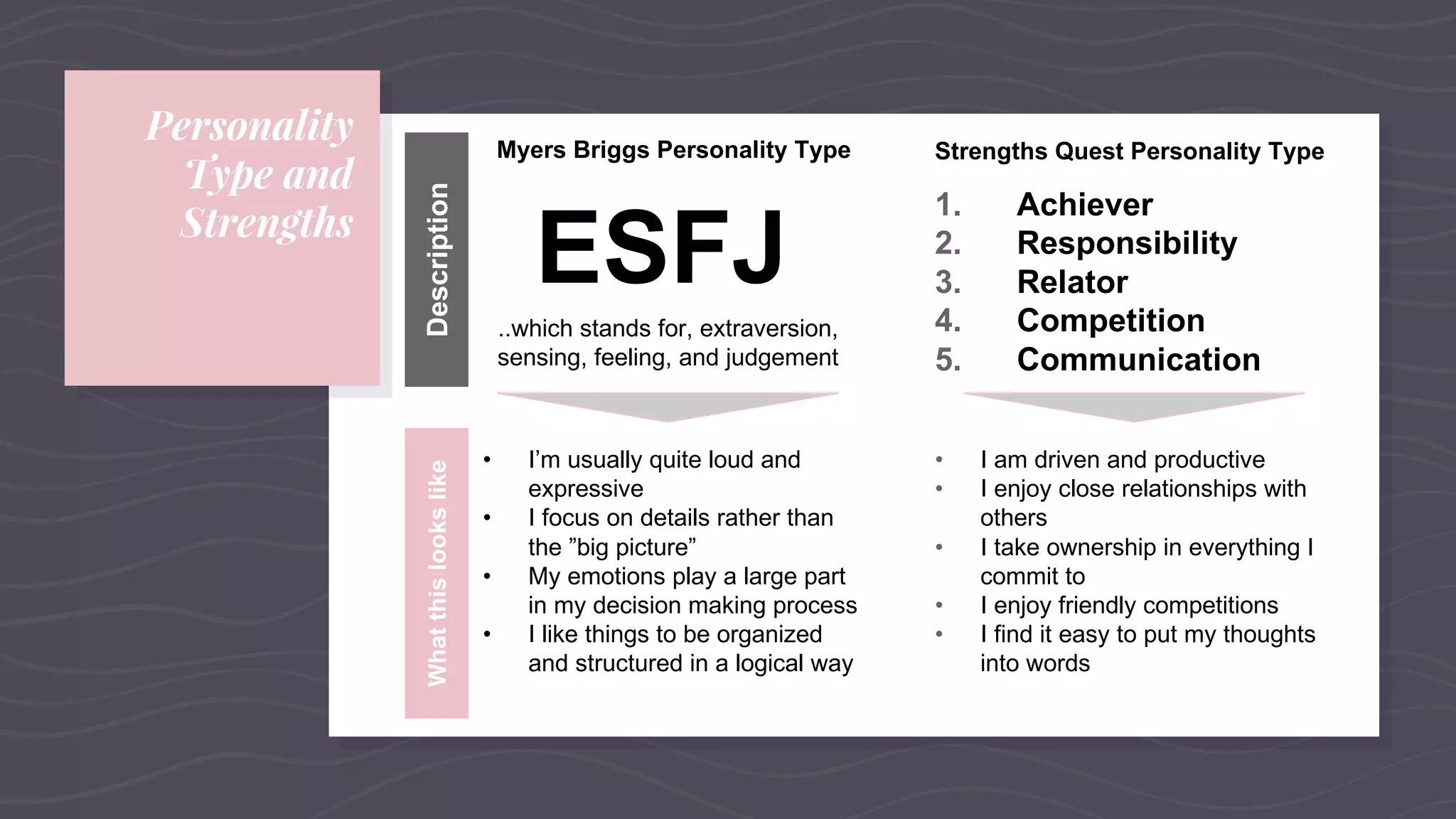
Personality
Type and
Strengths
Description
Myers Briggs Personality Type
ESFJ
..which stands for, extraversion,
sensing, feeling, and judgement
Whatthislookslike
• I’m usually quite loud and
expressive
• I focus on details rather than
the ”big picture”
• My emotions play a large part
in my decision making process
• I like things to be organized
and structured in a logical way
Strengths Quest Personality Type
1. Achiever
2. Responsibility
3. Relator
4. Competition
5. Communication
• I am driven and productive
• I enjoy close relationships with
others
• I take ownership in everything I
commit to
• I enjoy friendly competitions
• I find it easy to put my thoughts
into words
Interests
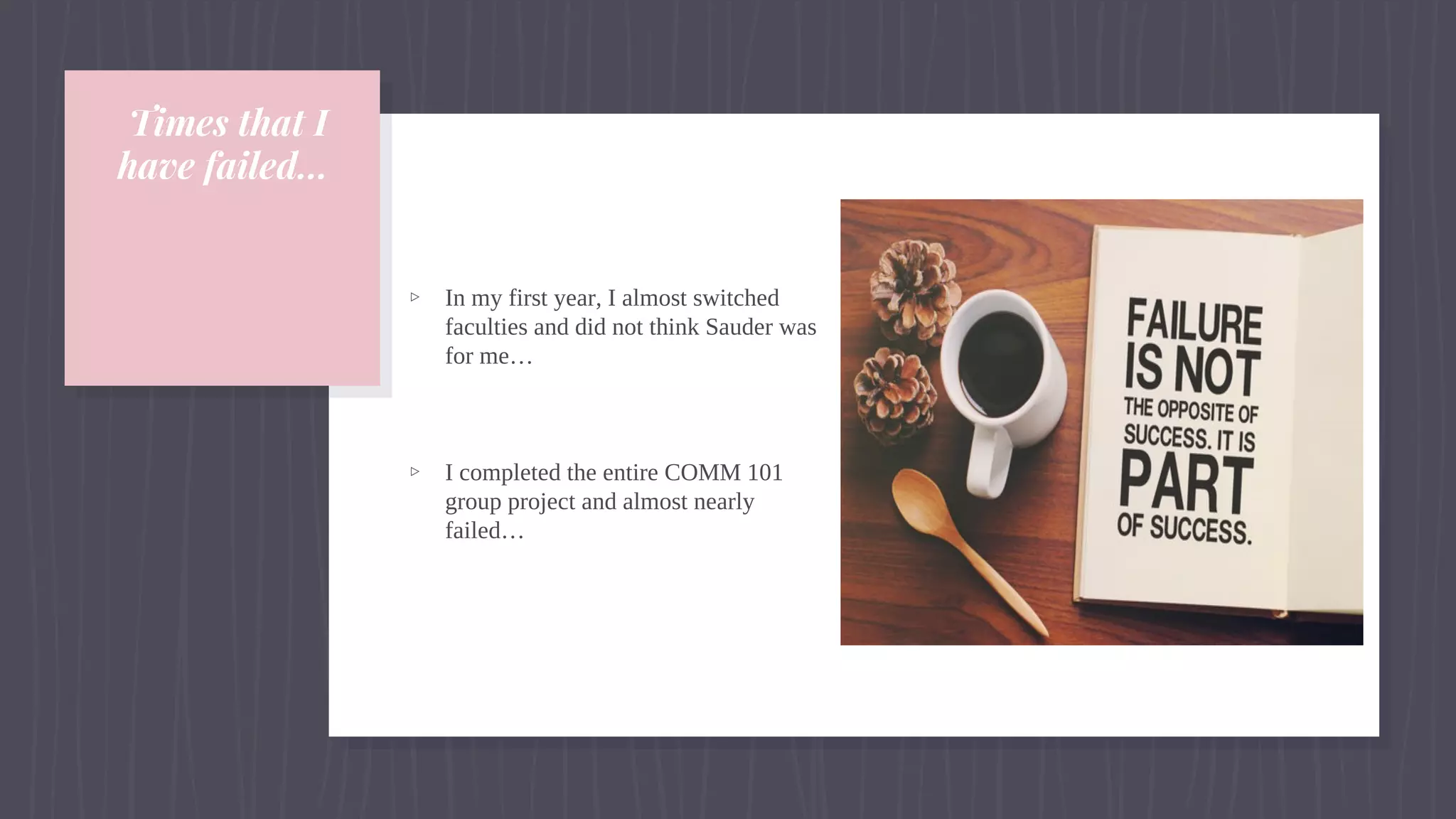
Times that I
have failed…
▹ In my first year, I almost switched
faculties and did not think Sauder was
for me…
▹ I completed the entire COMM 101
group project and almost nearly
failed…
… and how I
got back up
on my feet
afterwards ▹ In my first year, I almost switched
faculties and did not think Sauder was
for me…
▹ I completed the entire COMM 101
group project by myself and almost
nearly failed…
▹ I pushed myself and got involved in
clubs, which made me resilient
▹ Although my group was not willing to
help, I took this group project as a
learning opportunity and started to
speak up for myself. The following
semester, I had a group project and we
got 95% just because we
communicated well.
“
Success is most often achieved by those who
don’t know that failure is inevitable.
- Coco Chanel
Course Expectations
2
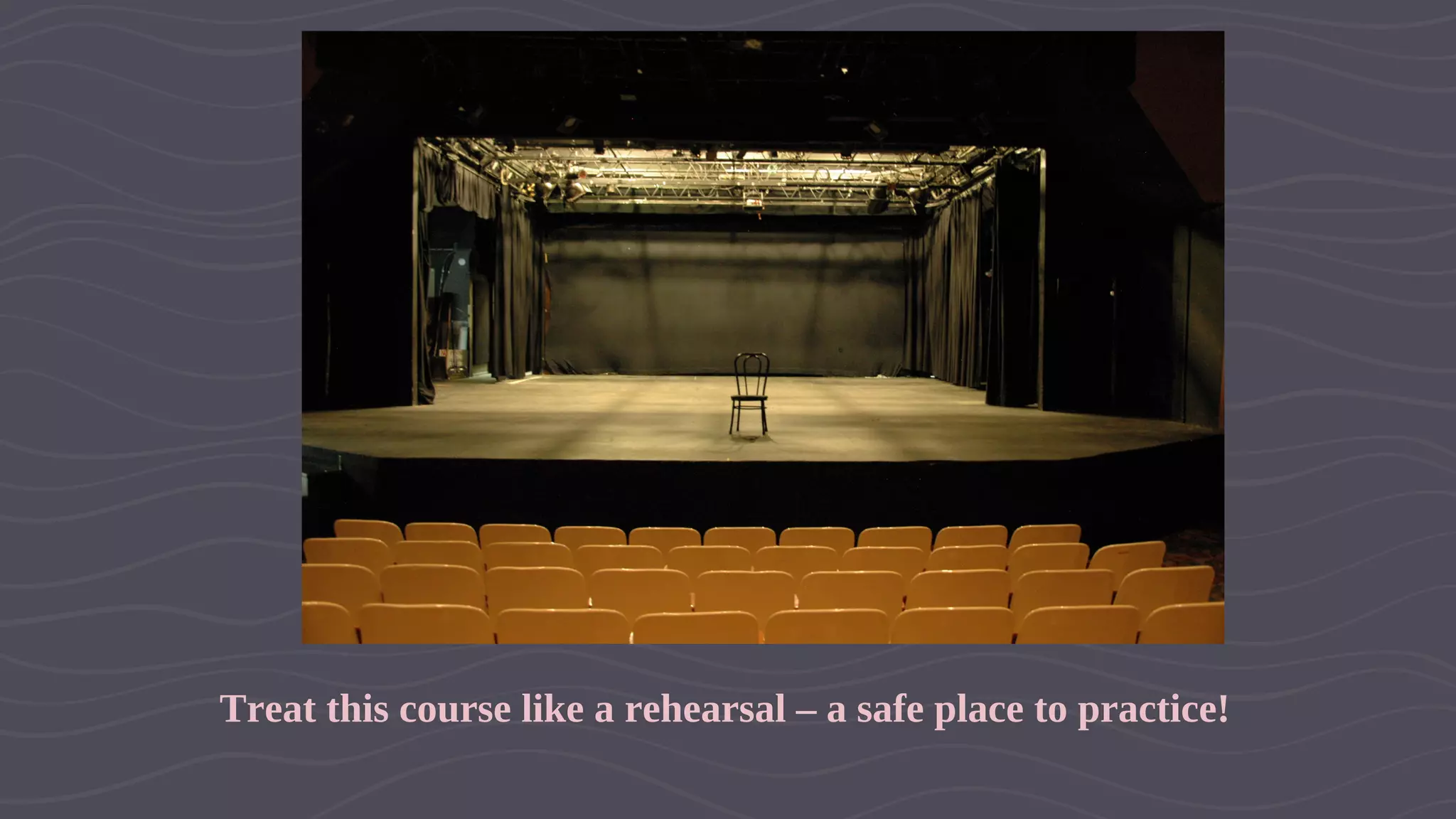
Treat this course like a rehearsal – a safe place to practice!
What it looks like in class…
▹ Contributing and sparking in-class
discussions
▹ Using proper in-class/email etiquette
▹ Being punctual and prepared for each
class
▹ Not using technology during class
▹ NOT PLAGARIZING
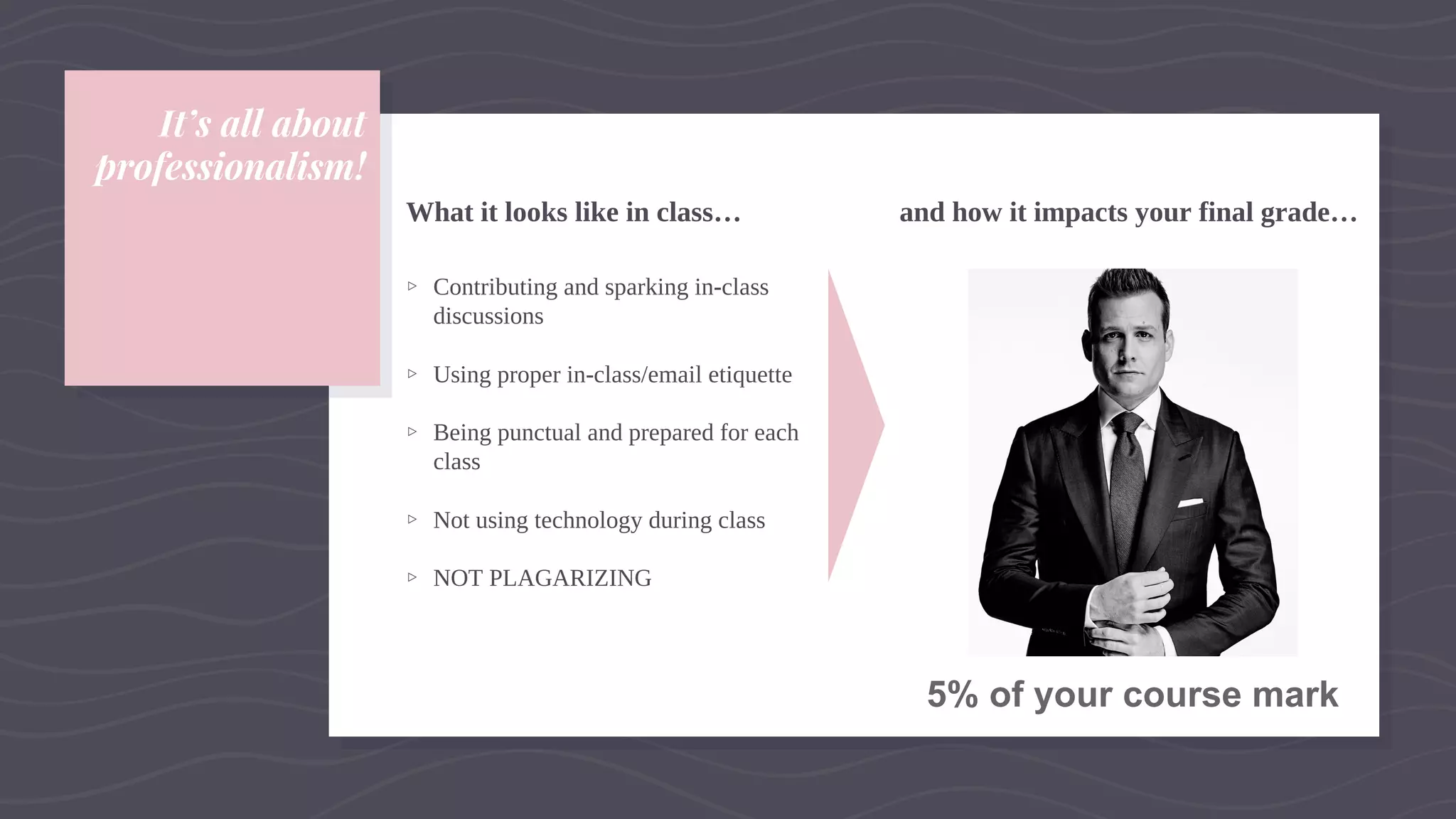
It’s all about
professionalism!
and how it impacts your final grade…
5% of your course mark
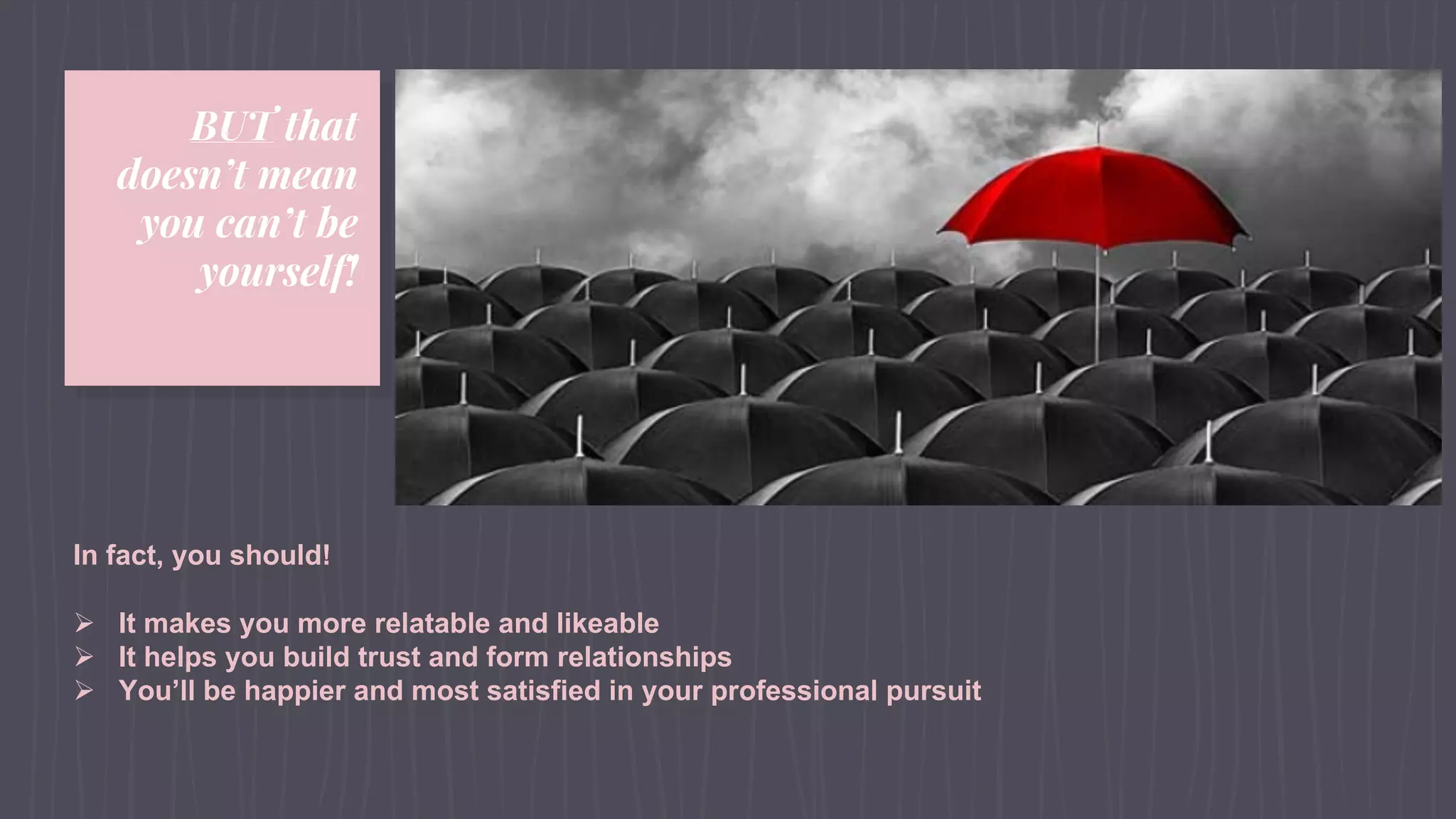
BUT that
doesn’t mean
you can’t be
yourself!
In fact, you should!
Ø It makes you more relatable and likeable
Ø It helps you build trust and form relationships
Ø You’ll be happier and most satisfied in your professional pursuit
Weekly
Tutorial
Assignments
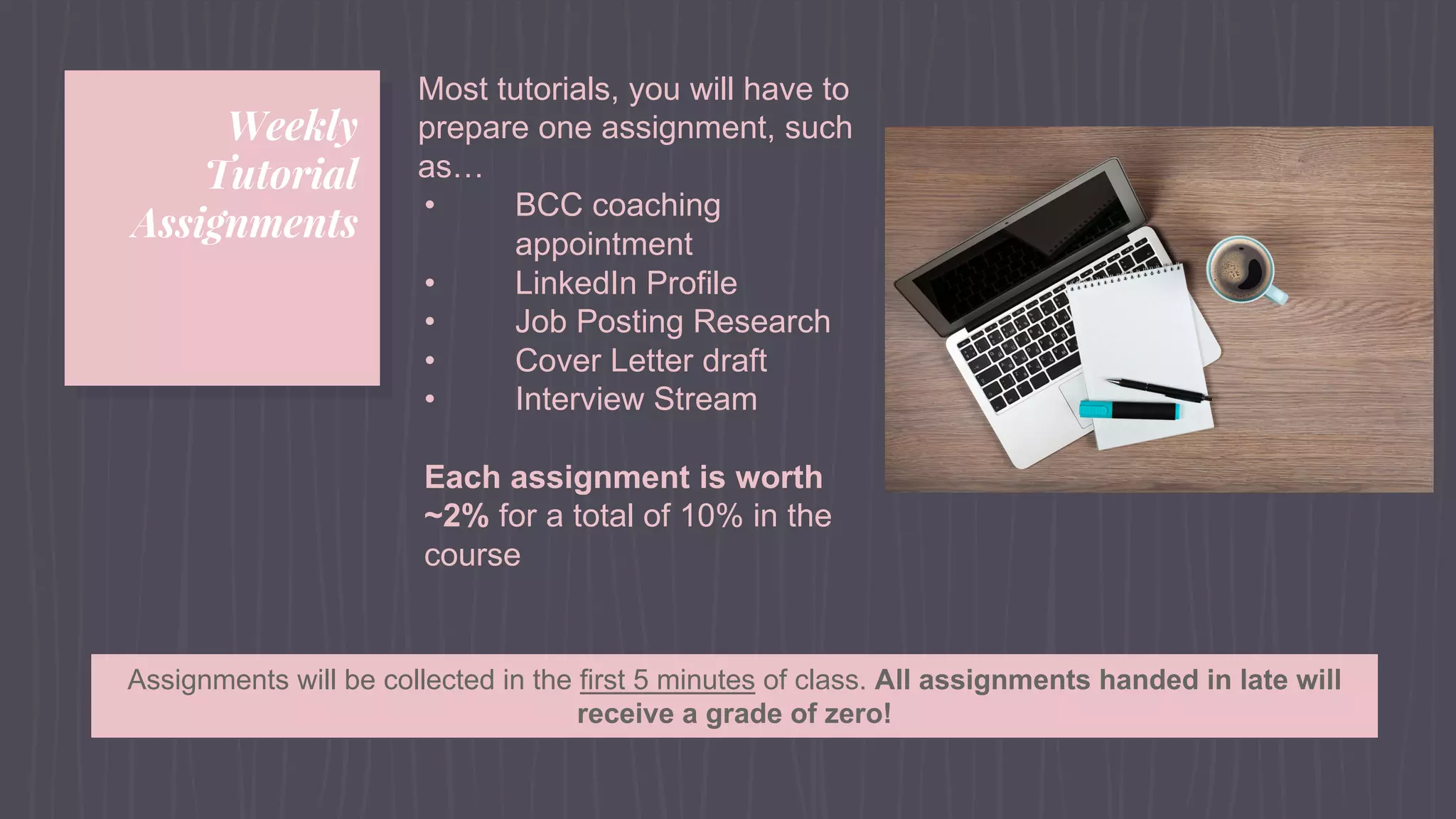
Most tutorials, you will have to
prepare one assignment, such
as…
• BCC coaching
appointment
• LinkedIn Profile
• Job Posting Research
• Cover Letter draft
• Interview Stream
Each assignment is worth
~2% for a total of 10% in the
course
Assignments will be collected in the first 5 minutes of class. All assignments handed in late will
receive a grade of zero!
Skills Matrix
3
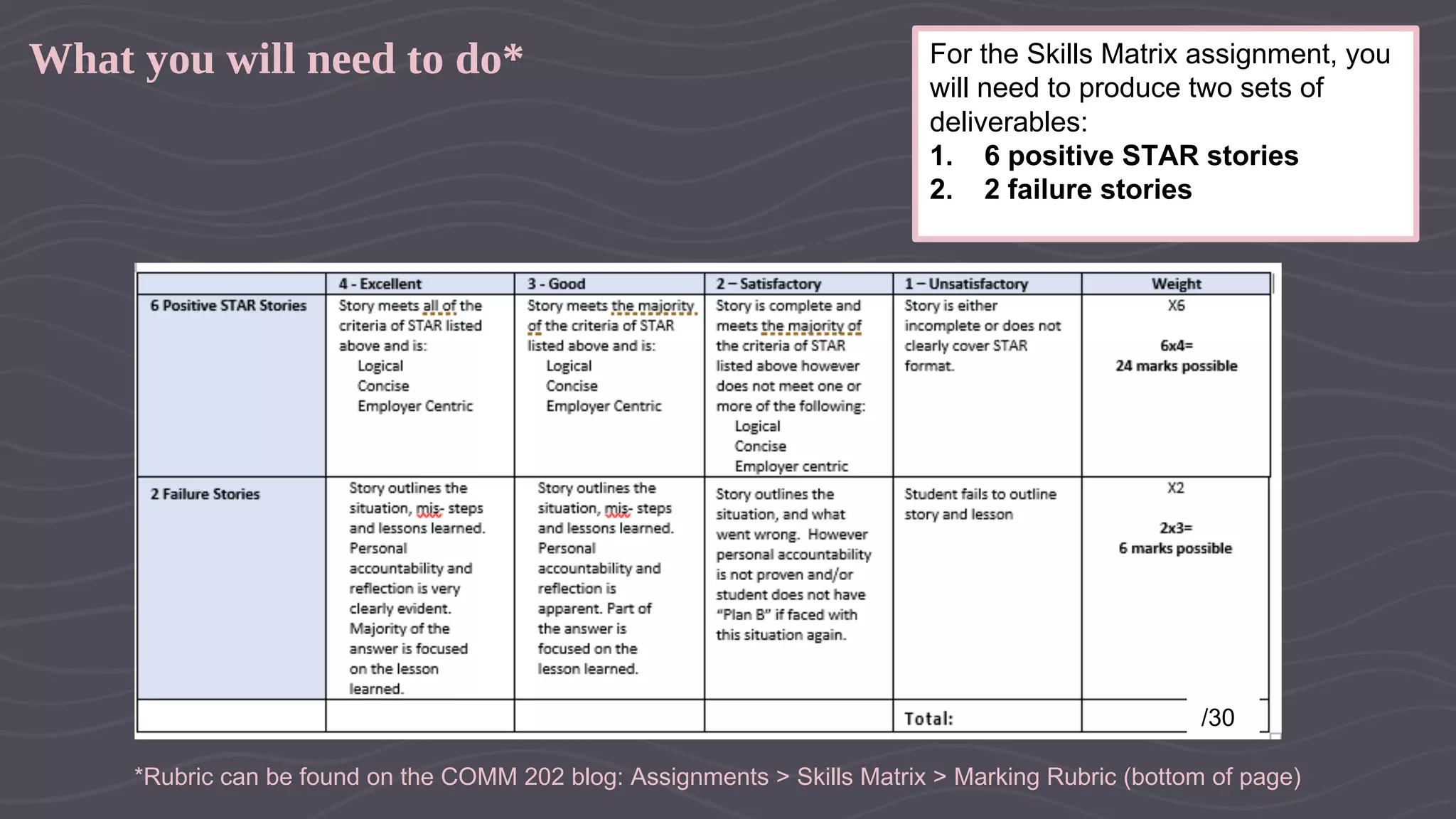
What you will need to do* For the Skills Matrix assignment, you
will need to produce two sets of
deliverables:
1. 6 positive STAR stories
2. 2 failure stories
*Rubric can be found on the COMM 202 blog: Assignments > Skills Matrix > Marking Rubric (bottom of page)
/30
Why is the Skills Matrix important?
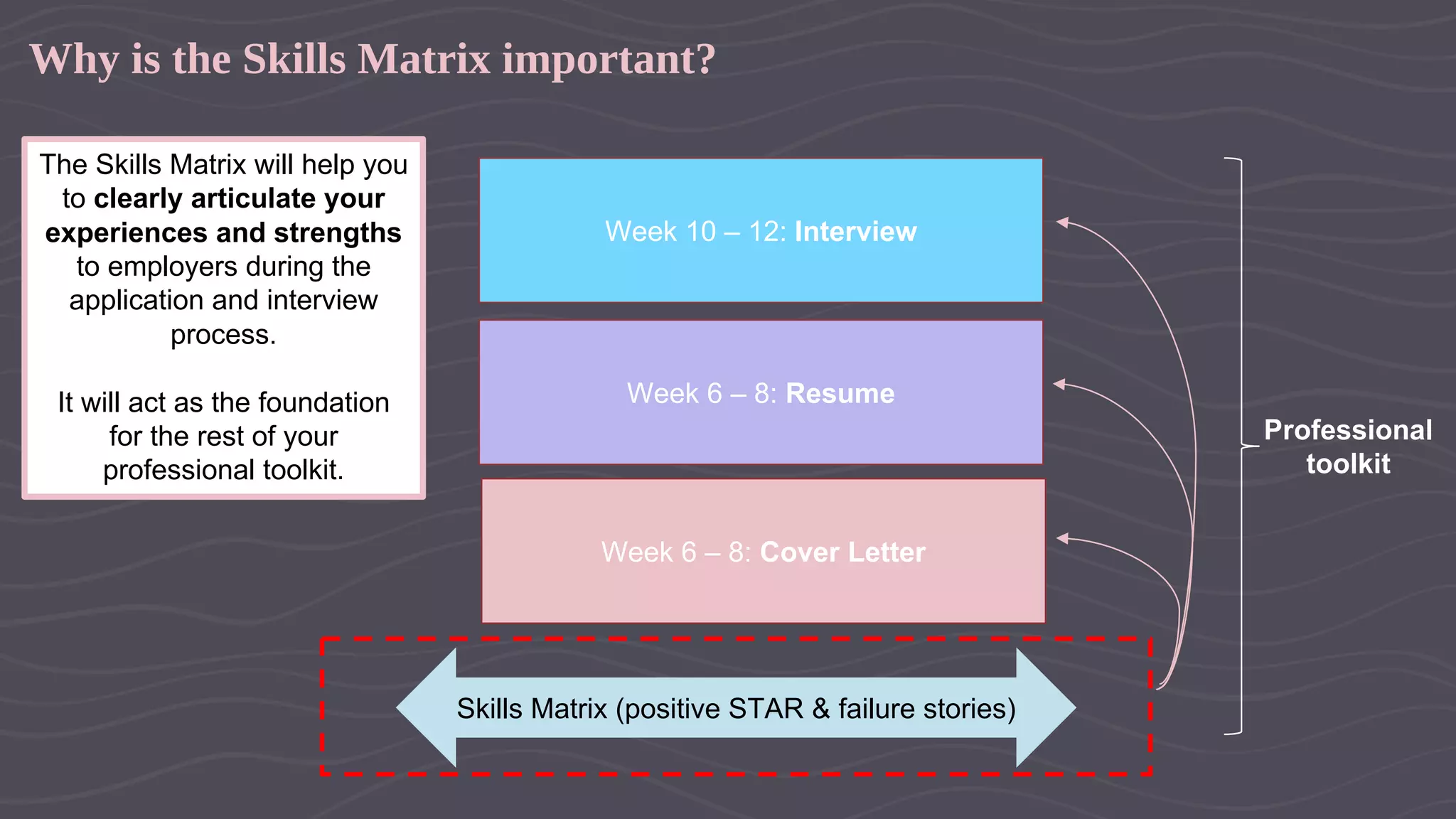
The Skills Matrix will help you
to clearly articulate your
experiences and strengths
to employers during the
application and interview
process.
It will act as the foundation
for the rest of your
professional toolkit.
Skills Matrix (positive STAR & failure stories)
Week 6 – 8: Cover Letter
Week 6 – 8: Resume
Week 10 – 12: Interview
Professional
toolkit
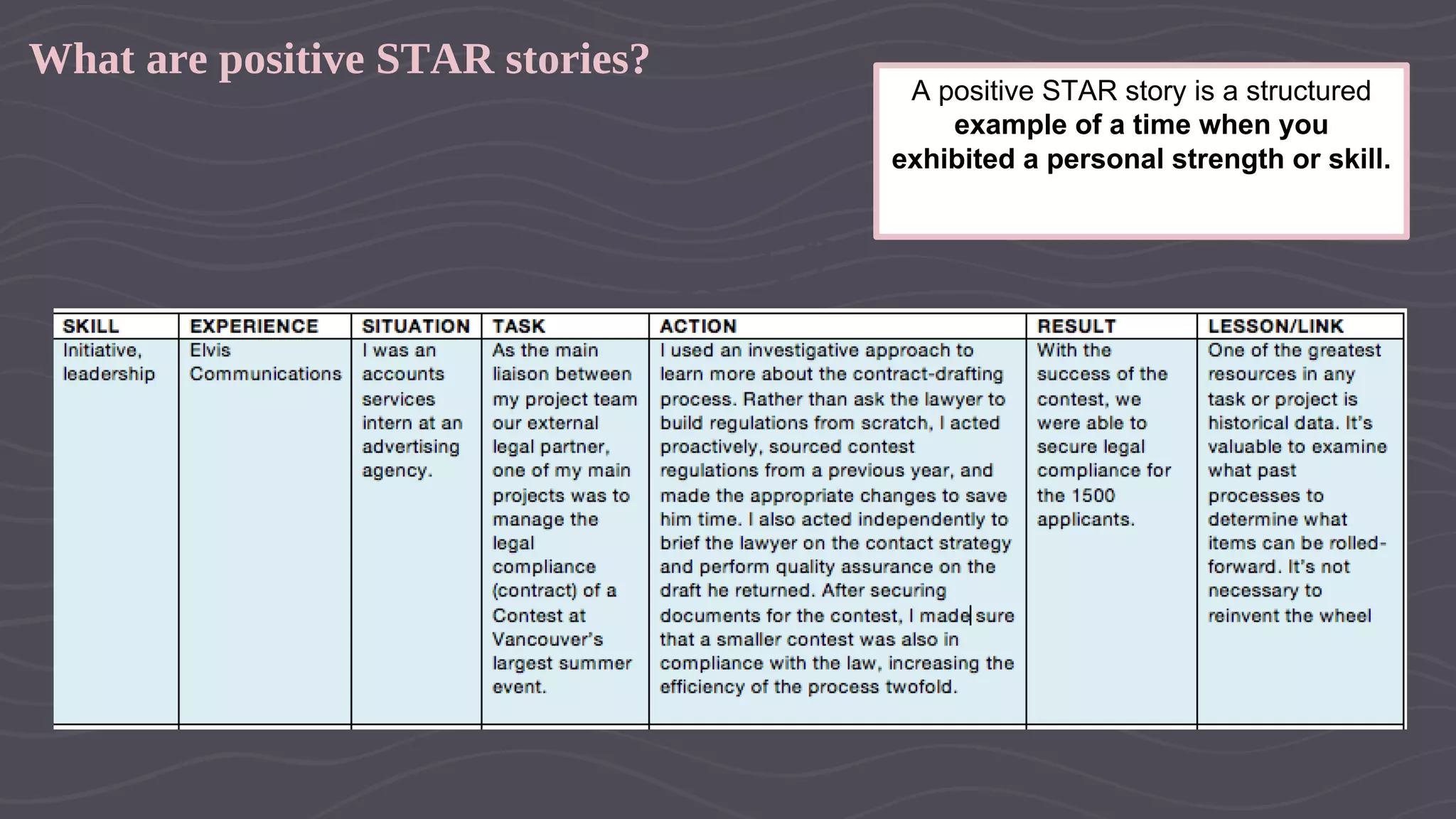
What are positive STAR stories?
A positive STAR story is a structured
example of a time when you
exhibited a personal strength or skill.
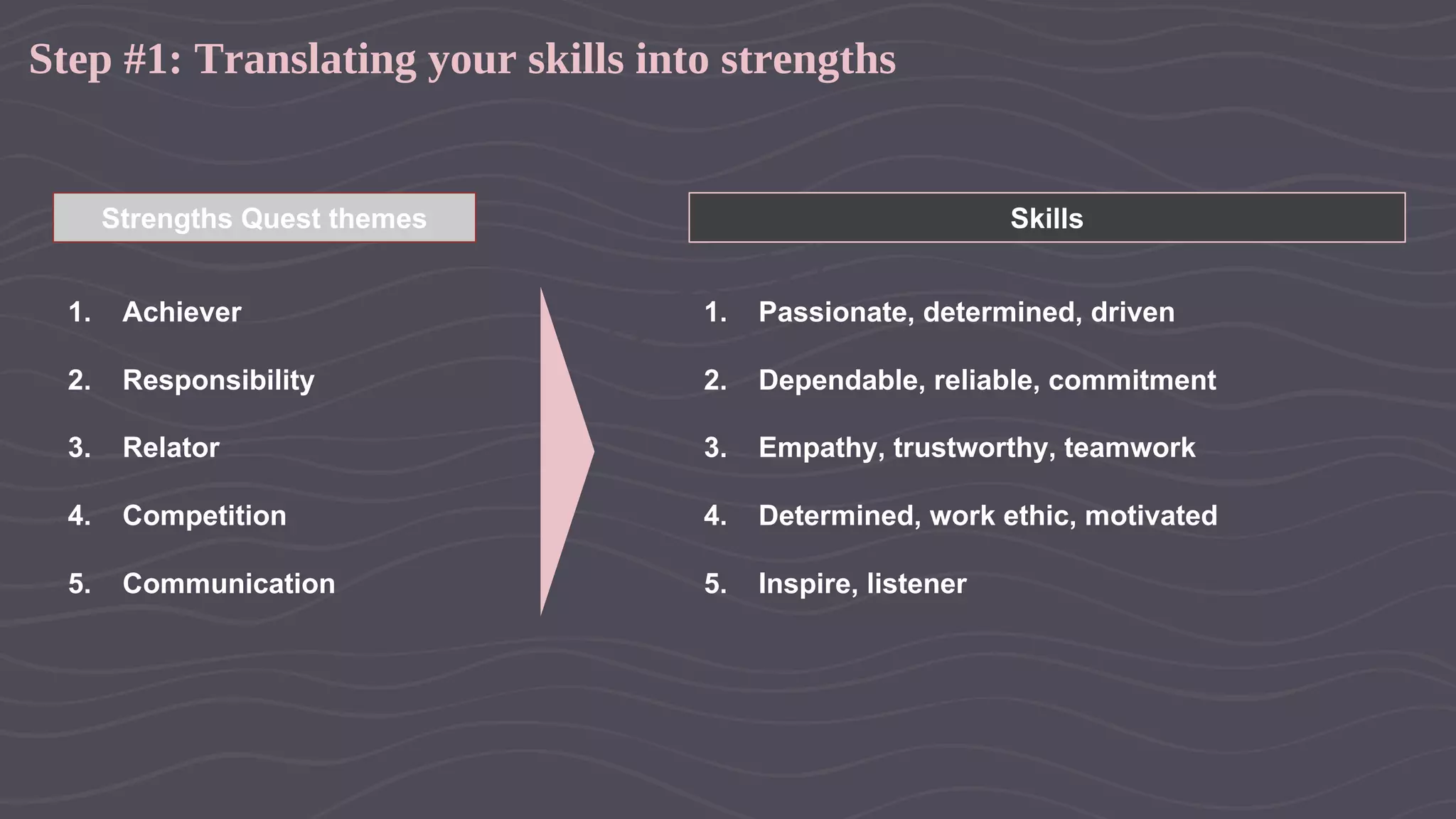
Step #1: Translating your skills into strengths
Strengths Quest themes
1. Achiever
2. Responsibility
3. Relator
4. Competition
5. Communication
Skills
1. Passionate, determined, driven
2. Dependable, reliable, commitment
3. Empathy, trustworthy, teamwork
4. Determined, work ethic, motivated
5. Inspire, listener
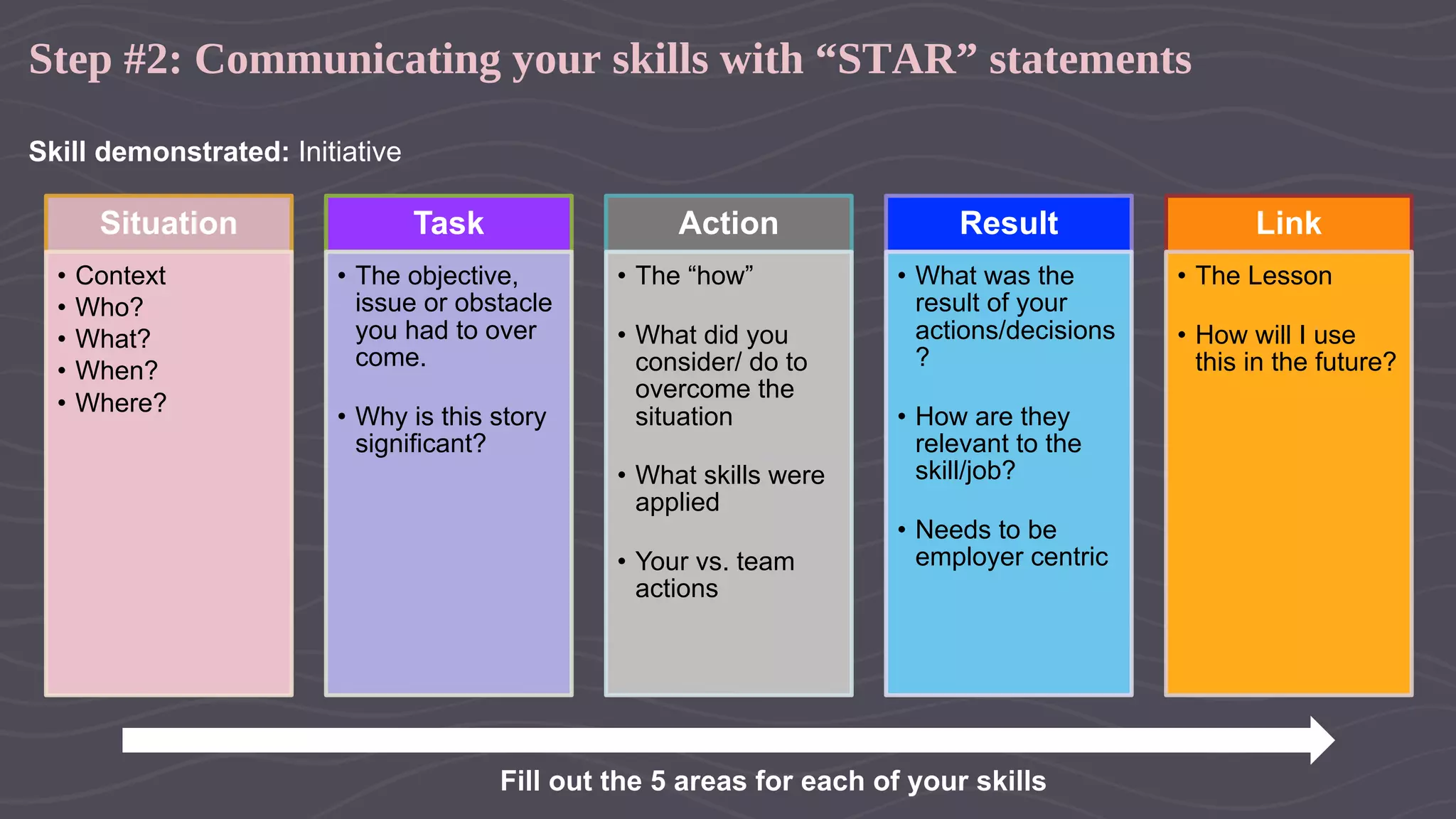
Step #2: Communicating your skills with “STAR” statements
Skill demonstrated: Initiative
Situation
• Context
• Who?
• What?
• When?
• Where?
Task
• The objective,
issue or obstacle
you had to over
come.
• Why is this story
significant?
Action
• The “how”
• What did you
consider/ do to
overcome the
situation
• What skills were
applied
• Your vs. team
actions
Result
• What was the
result of your
actions/decisions
?
• How are they
relevant to the
skill/job?
• Needs to be
employer centric
Link
• The Lesson
• How will I use
this in the future?
Fill out the 5 areas for each of your skills
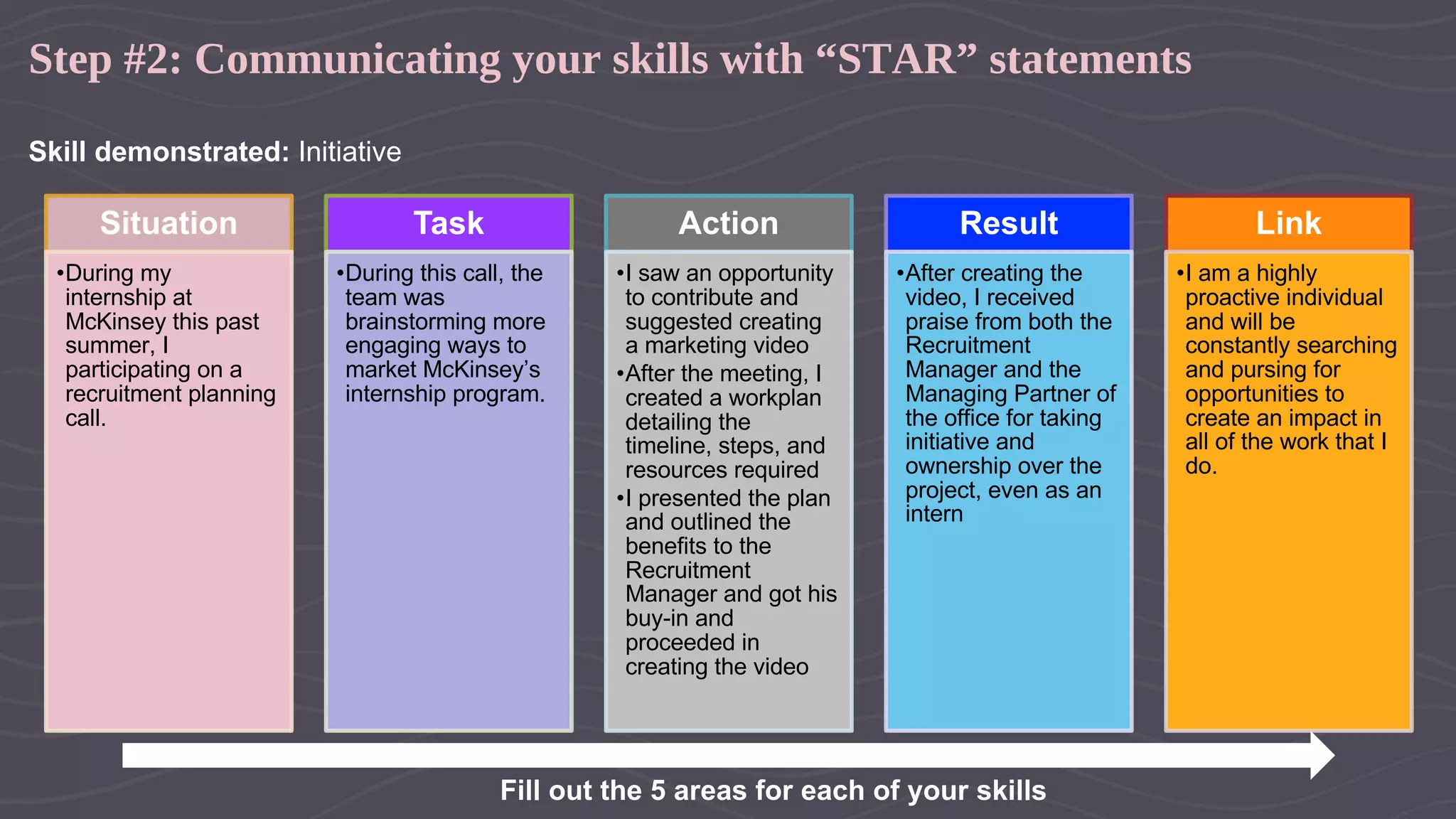
Step #2: Communicating your skills with “STAR” statements
Skill demonstrated: Initiative
Situation
•During my
internship at
McKinsey this past
summer, I
participating on a
recruitment planning
call.
Task
•During this call, the
team was
brainstorming more
engaging ways to
market McKinsey’s
internship program.
Action
•I saw an opportunity
to contribute and
suggested creating
a marketing video
•After the meeting, I
created a workplan
detailing the
timeline, steps, and
resources required
•I presented the plan
and outlined the
benefits to the
Recruitment
Manager and got his
buy-in and
proceeded in
creating the video
Result
•After creating the
video, I received
praise from both the
Recruitment
Manager and the
Managing Partner of
the office for taking
initiative and
ownership over the
project, even as an
intern
Link
•I am a highly
proactive individual
and will be
constantly searching
and pursing for
opportunities to
create an impact in
all of the work that I
do.
Fill out the 5 areas for each of your skills
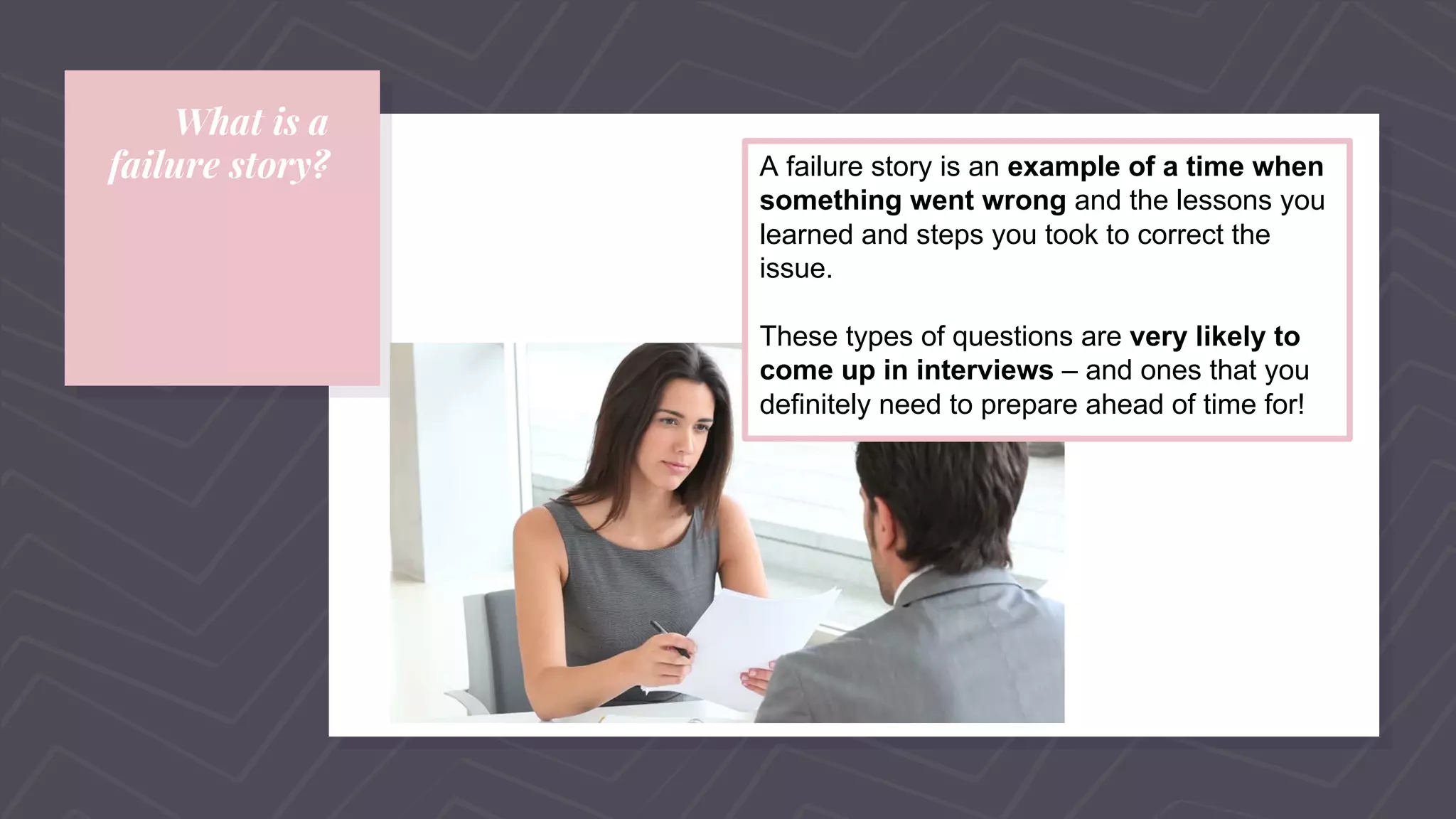
What is a
failure story? A failure story is an example of a time when
something went wrong and the lessons you
learned and steps you took to correct the
issue.
These types of questions are very likely to
come up in interviews – and ones that you
definitely need to prepare ahead of time for!
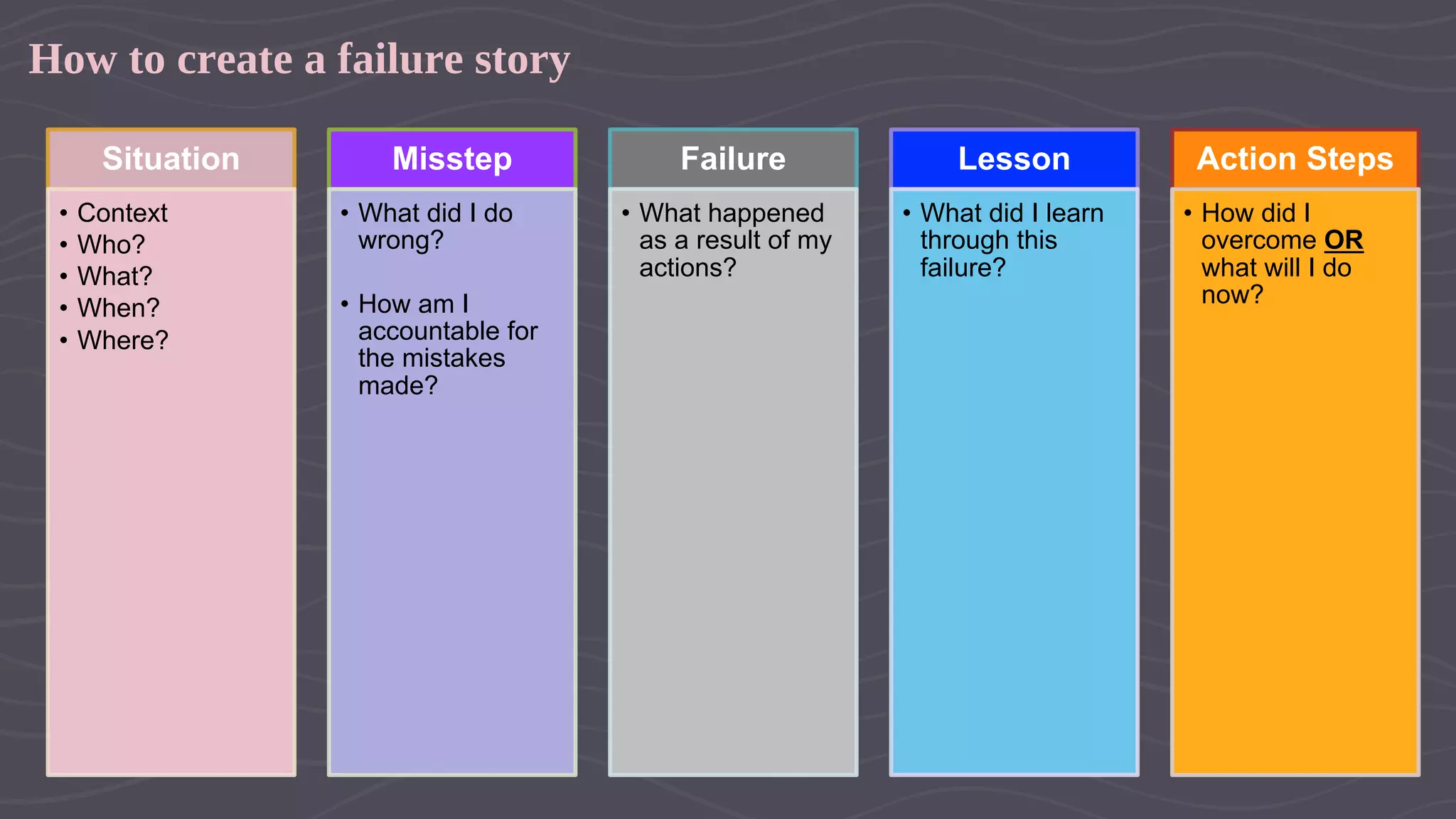
How to create a failure story
Situation
• Context
• Who?
• What?
• When?
• Where?
Misstep
• What did I do
wrong?
• How am I
accountable for
the mistakes
made?
Failure
• What happened
as a result of my
actions?
Lesson
• What did I learn
through this
failure?
Action Steps
• How did I
overcome OR
what will I do
now?
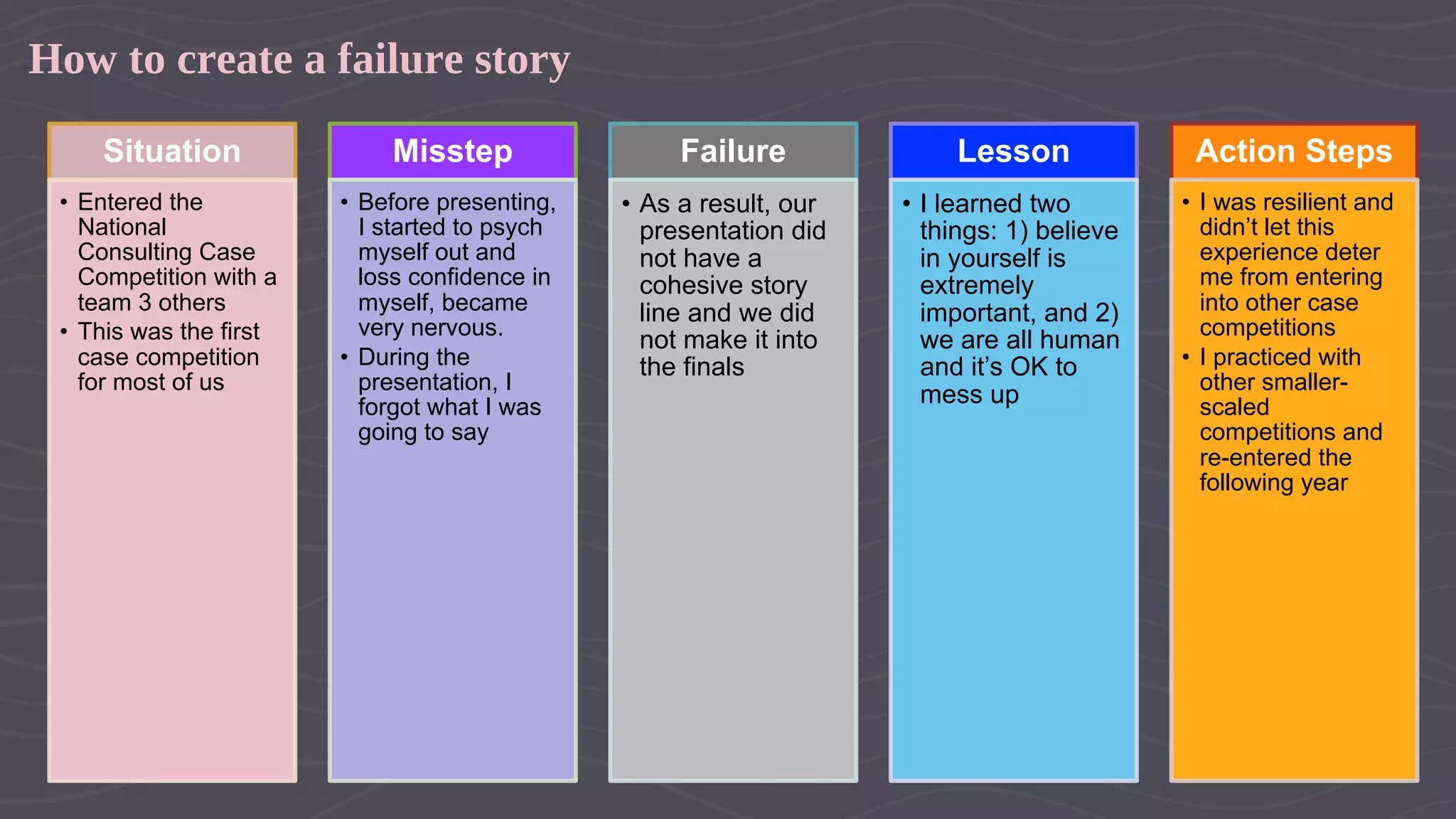
How to create a failure story
Situation
• Entered the
National
Consulting Case
Competition with a
team 3 others
• This was the first
case competition
for most of us
Misstep
• Before presenting,
I started to psych
myself out and
loss confidence in
myself, became
very nervous.
• During the
presentation, I
forgot what I was
going to say
Failure
• As a result, our
presentation did
not have a
cohesive story
line and we did
not make it into
the finals
Lesson
• I learned two
things: 1) believe
in yourself is
extremely
important, and 2)
we are all human
and it’s OK to
mess up
Action Steps
• I was resilient and
didn’t let this
experience deter
me from entering
into other case
competitions
• I practiced with
other smaller-
scaled
competitions and
re-entered the
following year
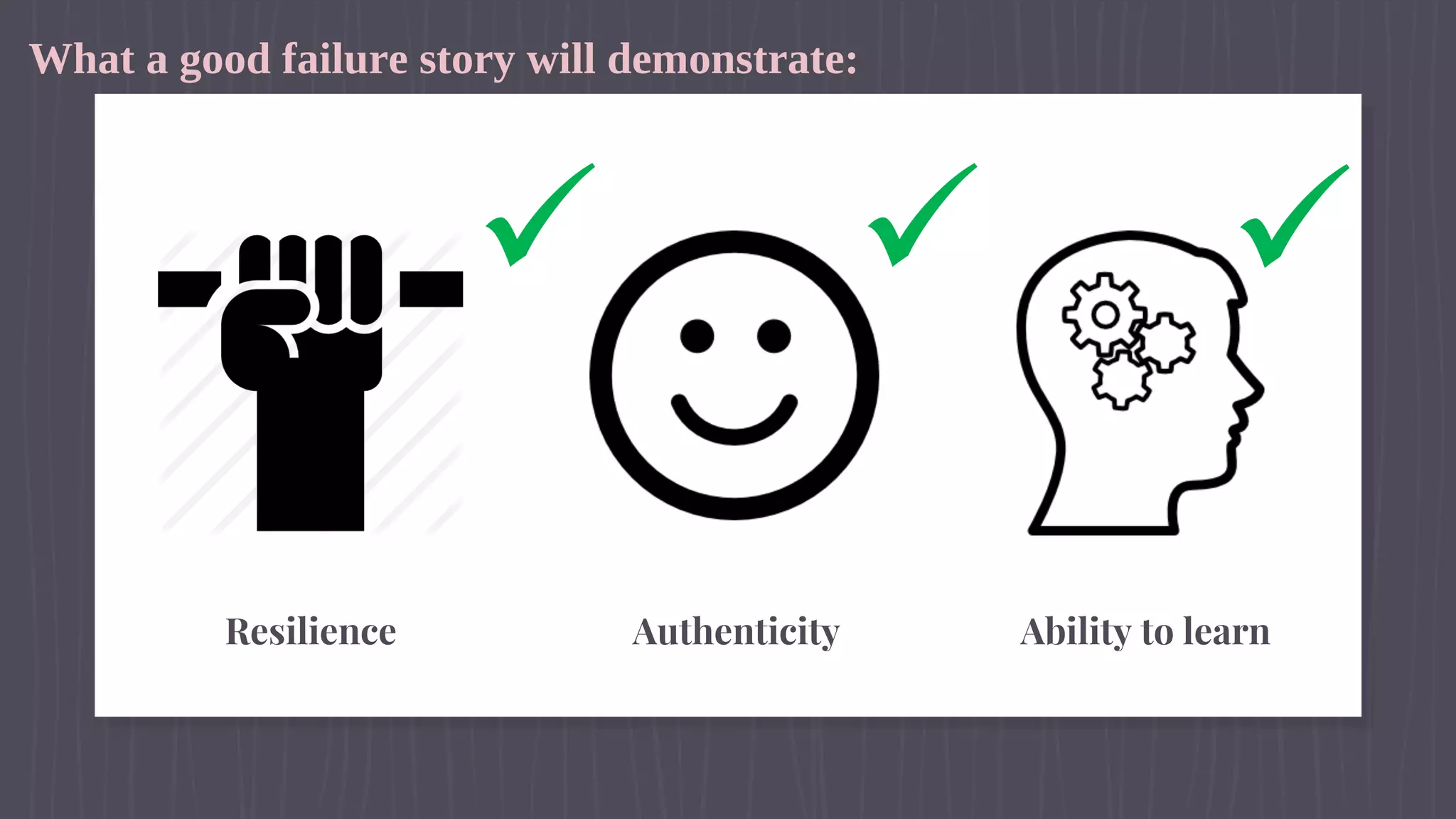
What a good failure story will demonstrate:
AuthenticityResilience Ability to learn
ü ü ü
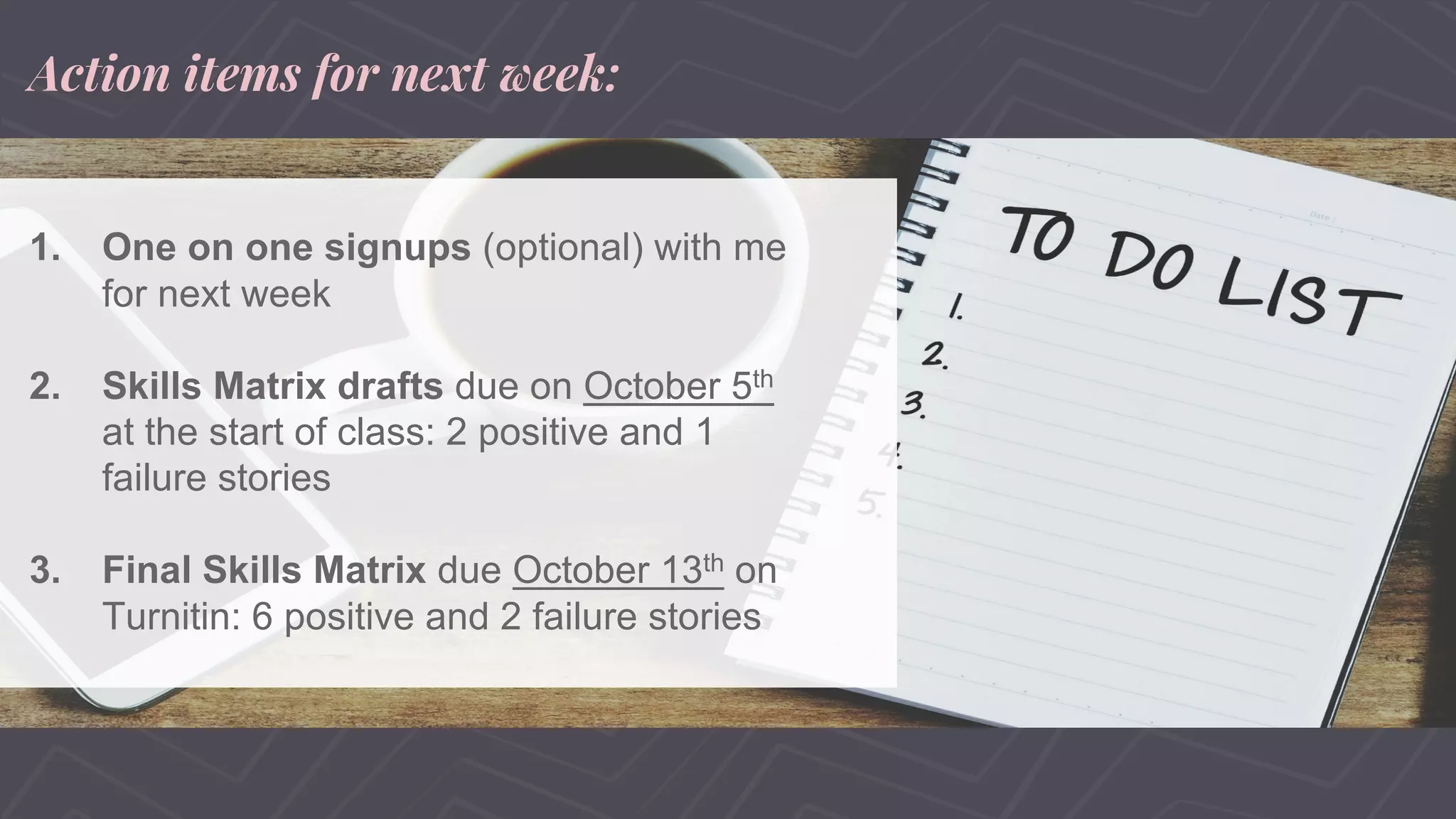
Action items for next week:
1. One on one signups (optional) with me
for next week
2. Skills Matrix drafts due on October 5th
at the start of class: 2 positive and 1
failure stories
3. Final Skills Matrix due October 13th on
Turnitin: 6 positive and 2 failure stories
1. Email: comm202.7@sauder.ubc.ca
2. One on ones: Sign up available here for timeslots next
week
3. Tutorials: Approach me before or after tutorial
4. Office hours: Available throughout the term as
assignments come up (stay tuned)
How to get in touch with me:
Thanks!
Any questions?
Have a great day!

Comm 202 Tutorial 1 - T05&T15

  • 1.
    COMM 202: Career Fundamentals T05& T15 with Samyta Rai
  • 2.
    Today’s Agenda: 1. Getto know your TA 2. Course Expectations 3. Putting together a skills matrix
  • 3.
    Getting to knowyour TA Hi, I’m Samyta! 1
  • 4.
    Soooo who really amI? 1 2 Above Surface Below Surface
  • 5.
    Soooo who really amI? 1 2 Above Surface Below Surface 1) Professional Experiences 2) Extracurricular Involvements
  • 6.
    Professional Experiences & Extracurricular Activities Year 1 Year2 Year 3 COMM 202 SAC Leading with Confidence Program COMM 202 TA CPA Recrutit
  • 7.
    Soooo who really amI? 1 2 Above Surface Below Surface 1) Personality Type 2) Interests 3) Stories of Failure
  • 8.
    Personality Type and Strengths Description Myers BriggsPersonality Type ESFJ ..which stands for, extraversion, sensing, feeling, and judgement Whatthislookslike • I’m usually quite loud and expressive • I focus on details rather than the ”big picture” • My emotions play a large part in my decision making process • I like things to be organized and structured in a logical way Strengths Quest Personality Type 1. Achiever 2. Responsibility 3. Relator 4. Competition 5. Communication • I am driven and productive • I enjoy close relationships with others • I take ownership in everything I commit to • I enjoy friendly competitions • I find it easy to put my thoughts into words
  • 9.
  • 12.
    Times that I havefailed… ▹ In my first year, I almost switched faculties and did not think Sauder was for me… ▹ I completed the entire COMM 101 group project and almost nearly failed…
  • 13.
    … and howI got back up on my feet afterwards ▹ In my first year, I almost switched faculties and did not think Sauder was for me… ▹ I completed the entire COMM 101 group project by myself and almost nearly failed… ▹ I pushed myself and got involved in clubs, which made me resilient ▹ Although my group was not willing to help, I took this group project as a learning opportunity and started to speak up for myself. The following semester, I had a group project and we got 95% just because we communicated well.
  • 14.
    “ Success is mostoften achieved by those who don’t know that failure is inevitable. - Coco Chanel
  • 15.
  • 16.
    Treat this courselike a rehearsal – a safe place to practice!
  • 17.
    What it lookslike in class… ▹ Contributing and sparking in-class discussions ▹ Using proper in-class/email etiquette ▹ Being punctual and prepared for each class ▹ Not using technology during class ▹ NOT PLAGARIZING It’s all about professionalism! and how it impacts your final grade… 5% of your course mark
  • 18.
    BUT that doesn’t mean youcan’t be yourself! In fact, you should! Ø It makes you more relatable and likeable Ø It helps you build trust and form relationships Ø You’ll be happier and most satisfied in your professional pursuit
  • 19.
    Weekly Tutorial Assignments Most tutorials, youwill have to prepare one assignment, such as… • BCC coaching appointment • LinkedIn Profile • Job Posting Research • Cover Letter draft • Interview Stream Each assignment is worth ~2% for a total of 10% in the course Assignments will be collected in the first 5 minutes of class. All assignments handed in late will receive a grade of zero!
  • 20.
  • 21.
    What you willneed to do* For the Skills Matrix assignment, you will need to produce two sets of deliverables: 1. 6 positive STAR stories 2. 2 failure stories *Rubric can be found on the COMM 202 blog: Assignments > Skills Matrix > Marking Rubric (bottom of page) /30
  • 22.
    Why is theSkills Matrix important? The Skills Matrix will help you to clearly articulate your experiences and strengths to employers during the application and interview process. It will act as the foundation for the rest of your professional toolkit. Skills Matrix (positive STAR & failure stories) Week 6 – 8: Cover Letter Week 6 – 8: Resume Week 10 – 12: Interview Professional toolkit
  • 23.
    What are positiveSTAR stories? A positive STAR story is a structured example of a time when you exhibited a personal strength or skill.
  • 24.
    Step #1: Translatingyour skills into strengths Strengths Quest themes 1. Achiever 2. Responsibility 3. Relator 4. Competition 5. Communication Skills 1. Passionate, determined, driven 2. Dependable, reliable, commitment 3. Empathy, trustworthy, teamwork 4. Determined, work ethic, motivated 5. Inspire, listener
  • 25.
    Step #2: Communicatingyour skills with “STAR” statements Skill demonstrated: Initiative Situation • Context • Who? • What? • When? • Where? Task • The objective, issue or obstacle you had to over come. • Why is this story significant? Action • The “how” • What did you consider/ do to overcome the situation • What skills were applied • Your vs. team actions Result • What was the result of your actions/decisions ? • How are they relevant to the skill/job? • Needs to be employer centric Link • The Lesson • How will I use this in the future? Fill out the 5 areas for each of your skills
  • 26.
    Step #2: Communicatingyour skills with “STAR” statements Skill demonstrated: Initiative Situation •During my internship at McKinsey this past summer, I participating on a recruitment planning call. Task •During this call, the team was brainstorming more engaging ways to market McKinsey’s internship program. Action •I saw an opportunity to contribute and suggested creating a marketing video •After the meeting, I created a workplan detailing the timeline, steps, and resources required •I presented the plan and outlined the benefits to the Recruitment Manager and got his buy-in and proceeded in creating the video Result •After creating the video, I received praise from both the Recruitment Manager and the Managing Partner of the office for taking initiative and ownership over the project, even as an intern Link •I am a highly proactive individual and will be constantly searching and pursing for opportunities to create an impact in all of the work that I do. Fill out the 5 areas for each of your skills
  • 27.
    What is a failurestory? A failure story is an example of a time when something went wrong and the lessons you learned and steps you took to correct the issue. These types of questions are very likely to come up in interviews – and ones that you definitely need to prepare ahead of time for!
  • 28.
    How to createa failure story Situation • Context • Who? • What? • When? • Where? Misstep • What did I do wrong? • How am I accountable for the mistakes made? Failure • What happened as a result of my actions? Lesson • What did I learn through this failure? Action Steps • How did I overcome OR what will I do now?
  • 29.
    How to createa failure story Situation • Entered the National Consulting Case Competition with a team 3 others • This was the first case competition for most of us Misstep • Before presenting, I started to psych myself out and loss confidence in myself, became very nervous. • During the presentation, I forgot what I was going to say Failure • As a result, our presentation did not have a cohesive story line and we did not make it into the finals Lesson • I learned two things: 1) believe in yourself is extremely important, and 2) we are all human and it’s OK to mess up Action Steps • I was resilient and didn’t let this experience deter me from entering into other case competitions • I practiced with other smaller- scaled competitions and re-entered the following year
  • 30.
    What a goodfailure story will demonstrate: AuthenticityResilience Ability to learn ü ü ü
  • 31.
    Action items fornext week: 1. One on one signups (optional) with me for next week 2. Skills Matrix drafts due on October 5th at the start of class: 2 positive and 1 failure stories 3. Final Skills Matrix due October 13th on Turnitin: 6 positive and 2 failure stories
  • 32.
    1. Email: comm202.7@sauder.ubc.ca 2.One on ones: Sign up available here for timeslots next week 3. Tutorials: Approach me before or after tutorial 4. Office hours: Available throughout the term as assignments come up (stay tuned) How to get in touch with me:
  • 33.