



Copyright 2023. All Rights Reserved. Contact Presenter for Permission.
University Veterinarian & Director
Laboratory Animal Resources Center
The University of Texas at San Antonio (UTSA)
Marcel Perret-Gentil, DVM, MS
Simple Tips to
Significantly
Improve Rodent
Surgical Outcomes
6 Simple Tips
that will Significantly Improve
Rodent Surgical Outcomes
University Veterinarian & Director
The University of Texas at San
Antonio
marcel.perret@utsa.edu
https://research.utsa.edu/complia
nce/larc/training.html
Marcel Perret-Gentil
President
PLAVS (Perret-Gentil Lab Animal
Veterinary Services)
mperret1@gmail.com
www.plavs.net
3
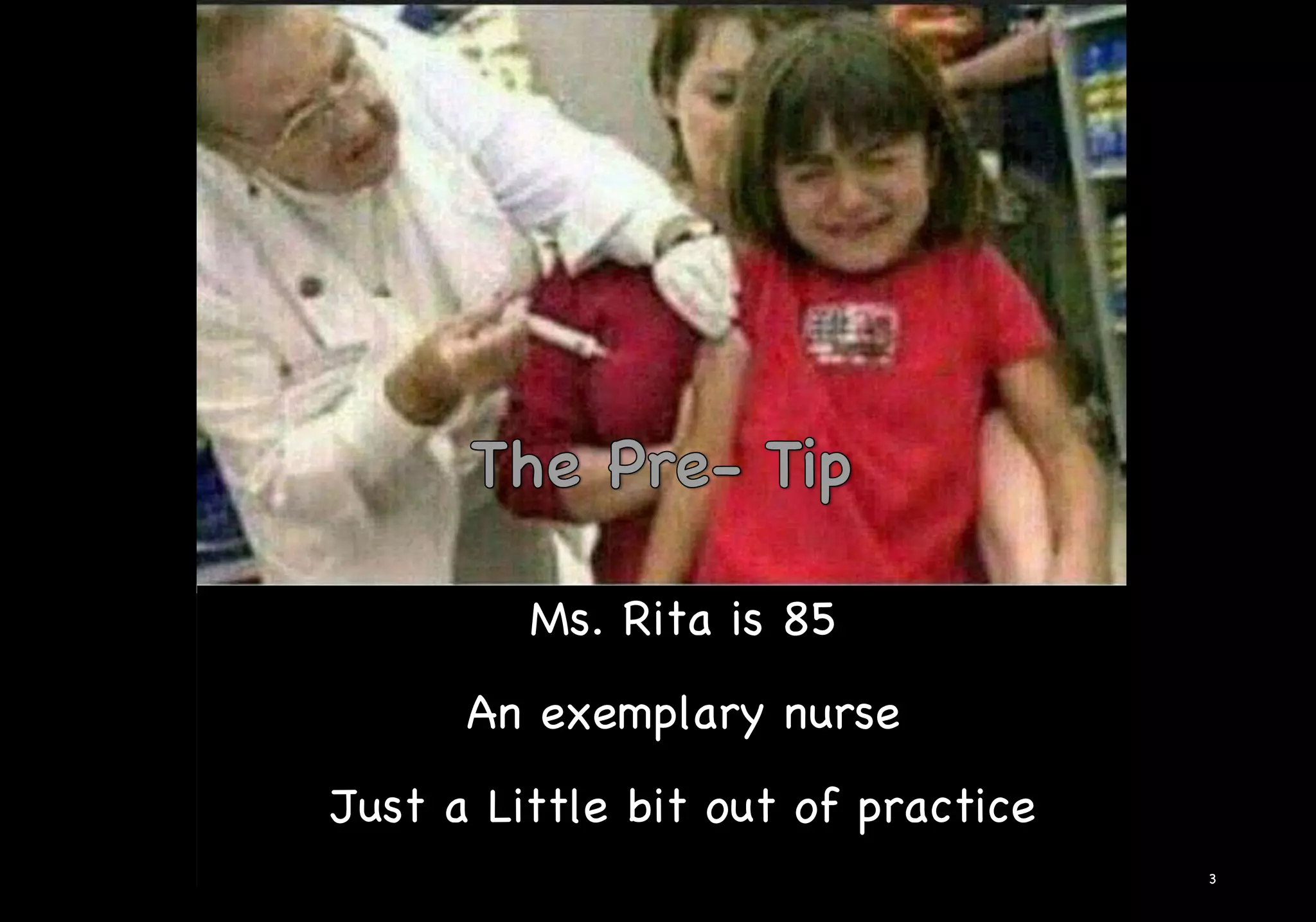
Ms. Rita is 85
An exemplary nurse
Just a Little bit out of practice
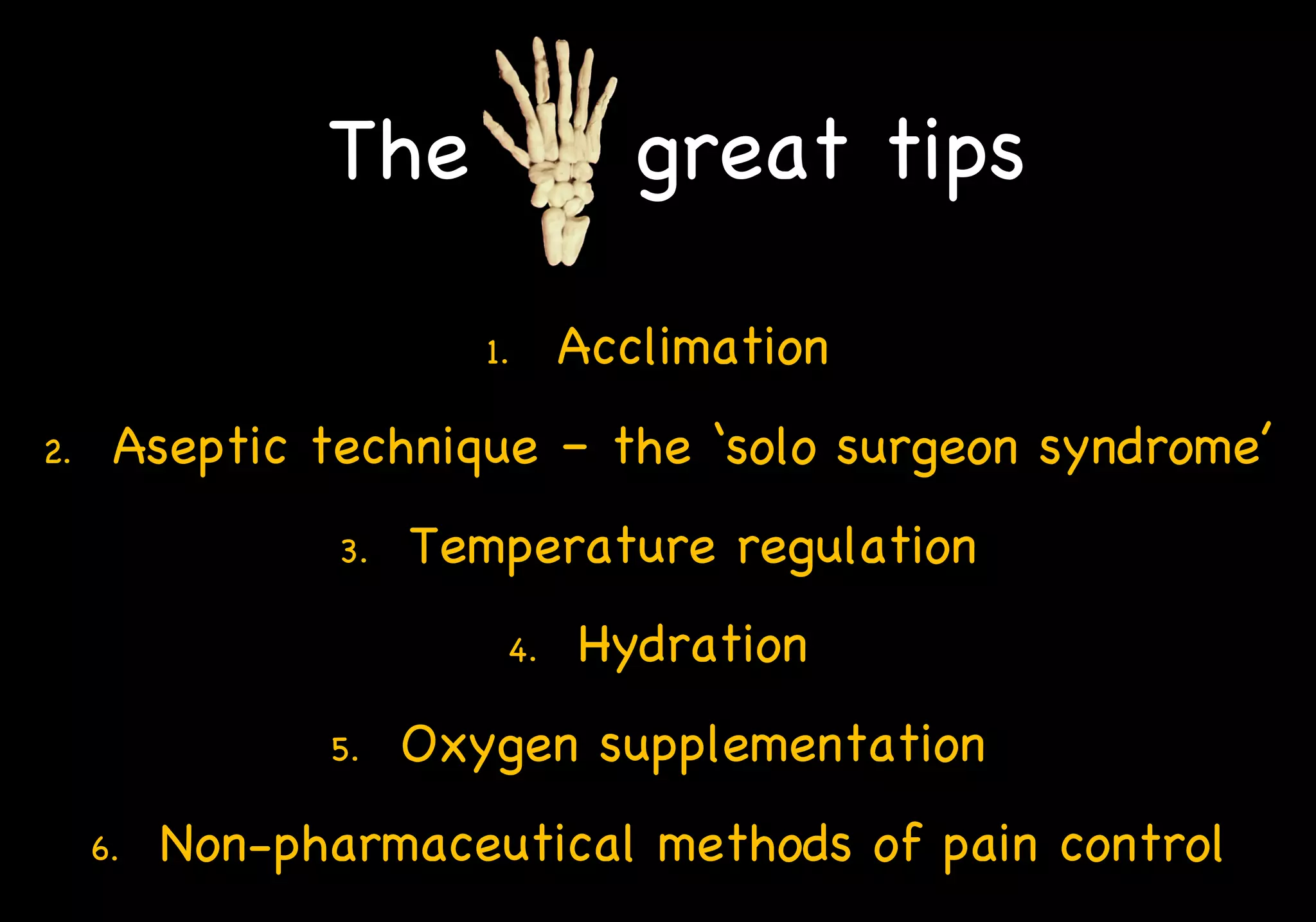
The great tips
1. Acclimation
2. Aseptic technique – the ‘solo surgeon syndrome’
3. Temperature regulation
4. Hydration
5. Oxygen supplementation
6. Non-pharmaceutical methods of pain control
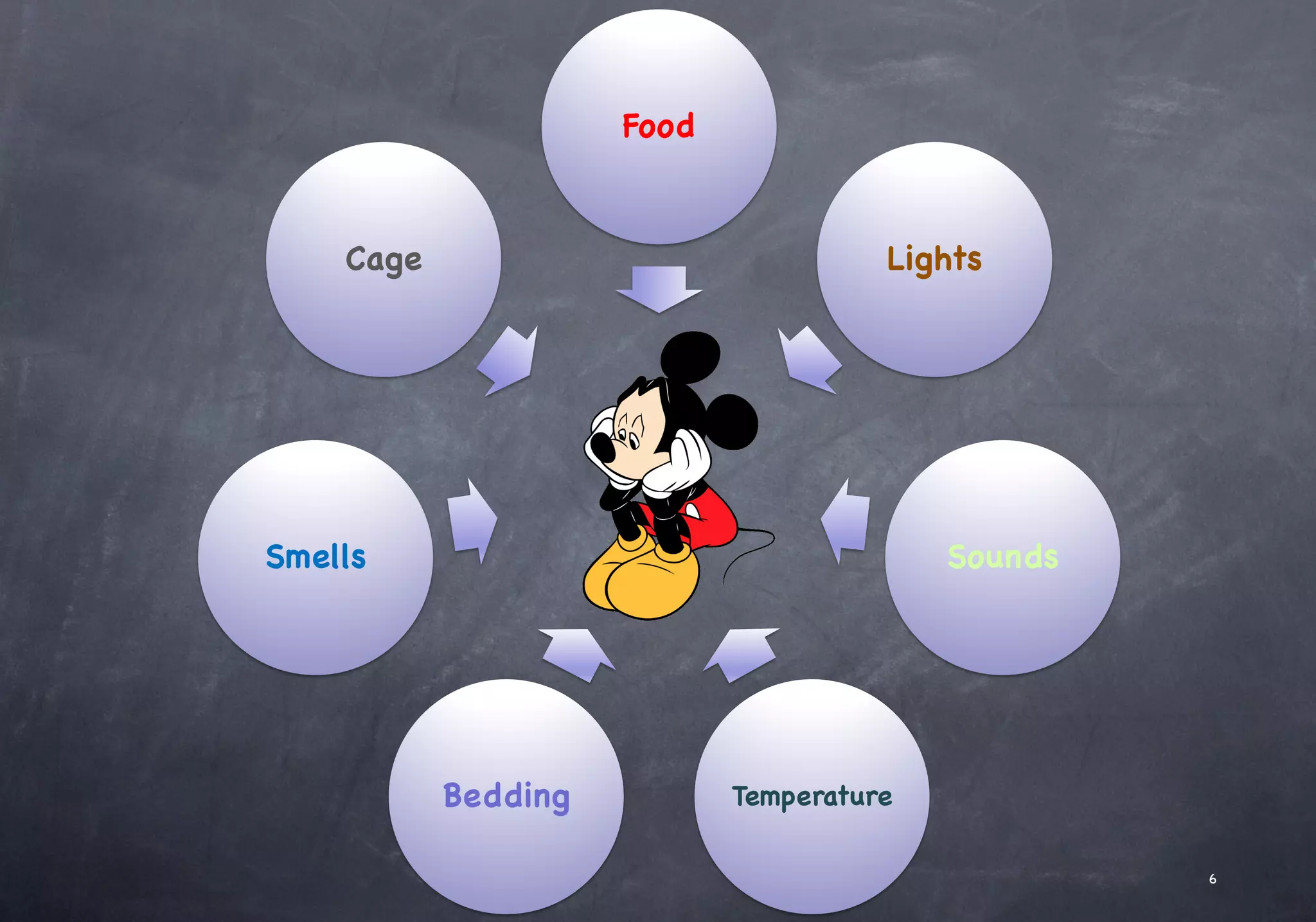
Tip 1 – Acclimation
Food
Lights
Sounds
Temperature
Bedding
Smells
Cage
6
The acclimated mouse
7
Tip 2 – Aseptic Surgery?
Survival alone not a valid
criterion for success
Success should be based on absence of
altered physiological function, immune
responses and behavioral changes
(Cunliffe-Beamer, 1993)
9
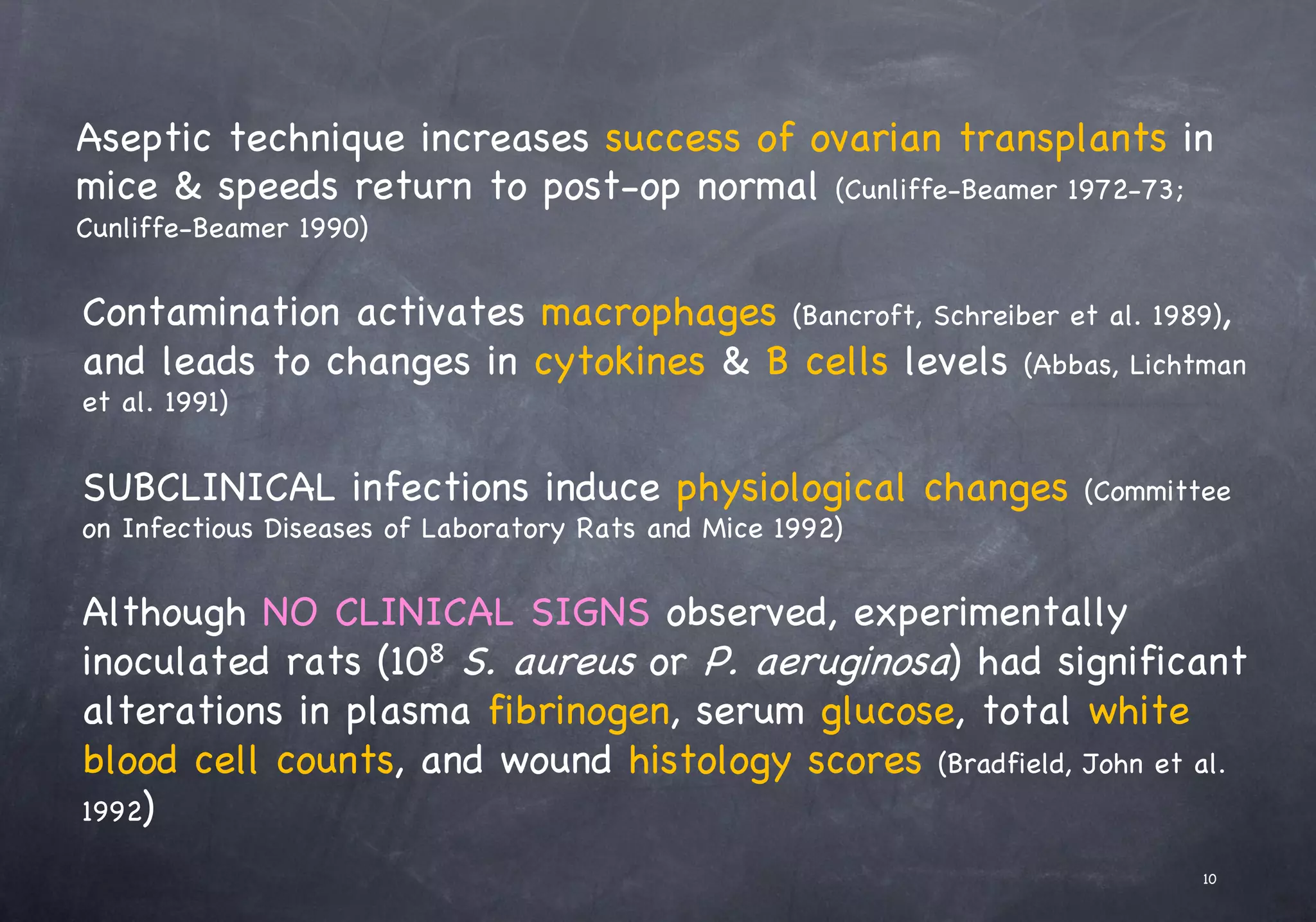
Aseptic technique increases success of ovarian transplants in
mice & speeds return to post-op normal (Cunliffe-Beamer 1972-73;
Cunliffe-Beamer 1990)
Contamination activates macrophages (Bancroft, Schreiber et al. 1989),
and leads to changes in cytokines & B cells levels (Abbas, Lichtman
et al. 1991)
SUBCLINICAL infections induce physiological changes (Committee
on Infectious Diseases of Laboratory Rats and Mice 1992)
Although NO CLINICAL SIGNS observed, experimentally
inoculated rats (108 S. aureus or P. aeruginosa) had significant
alterations in plasma fibrinogen, serum glucose, total white
blood cell counts, and wound histology scores (Bradfield, John et al.
1992)
10
Summary
• Delays to post-op normality
• Physiological changes
• Alterations in immunity
• Affects data yield
Poor rodent aseptic surgery results in:
11
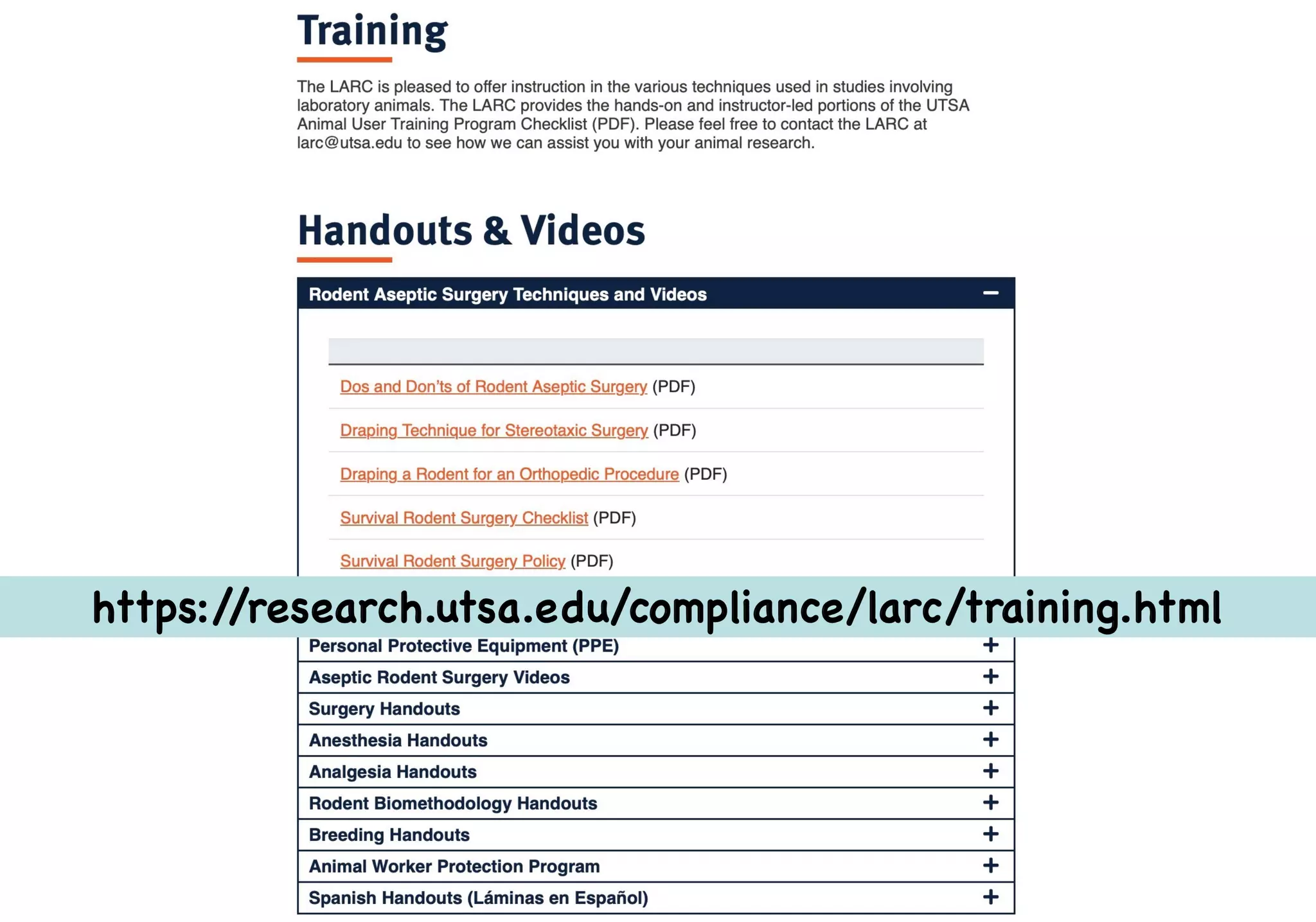
A few easy tips on aseptic
technique
https://research.utsa.edu/compliance/larc/t
raining.html for many easy tips
12
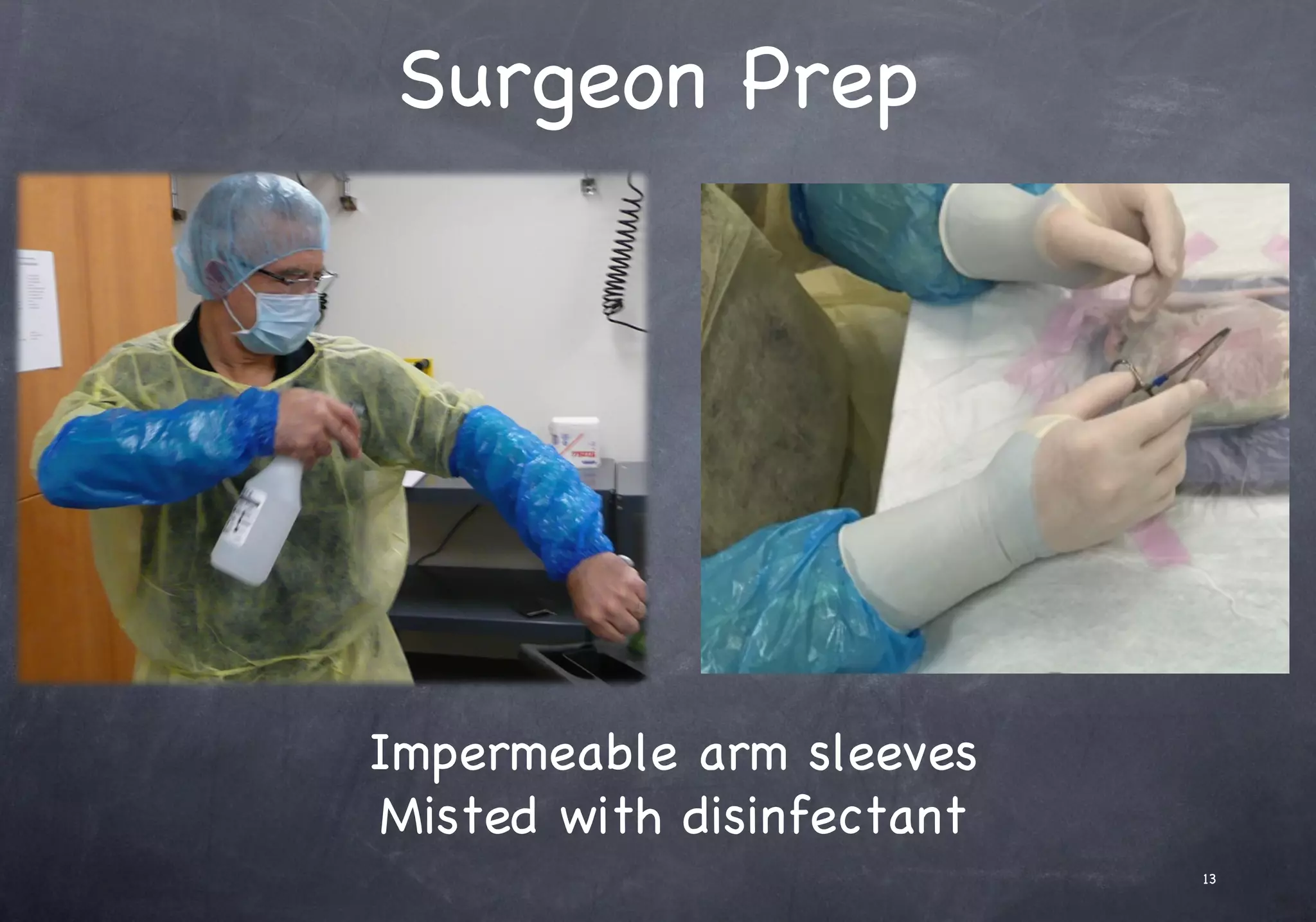
Surgeon Prep
Impermeable arm sleeves
Misted with disinfectant
13
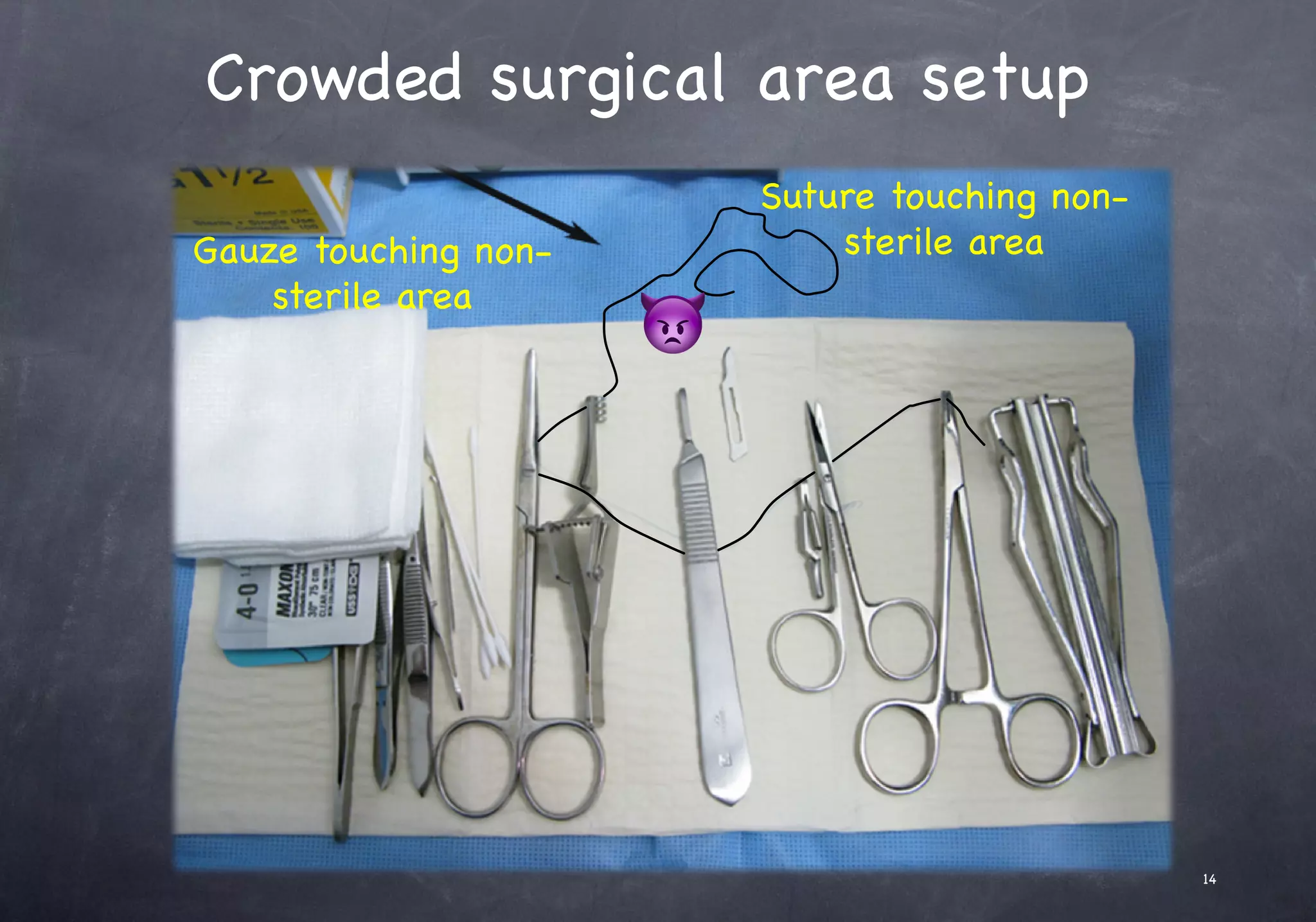
Crowded surgical area setup
Correct
setup
A bit
crowded
Suture touching non-
sterile area
👿
14
Gauze touching non-
sterile area
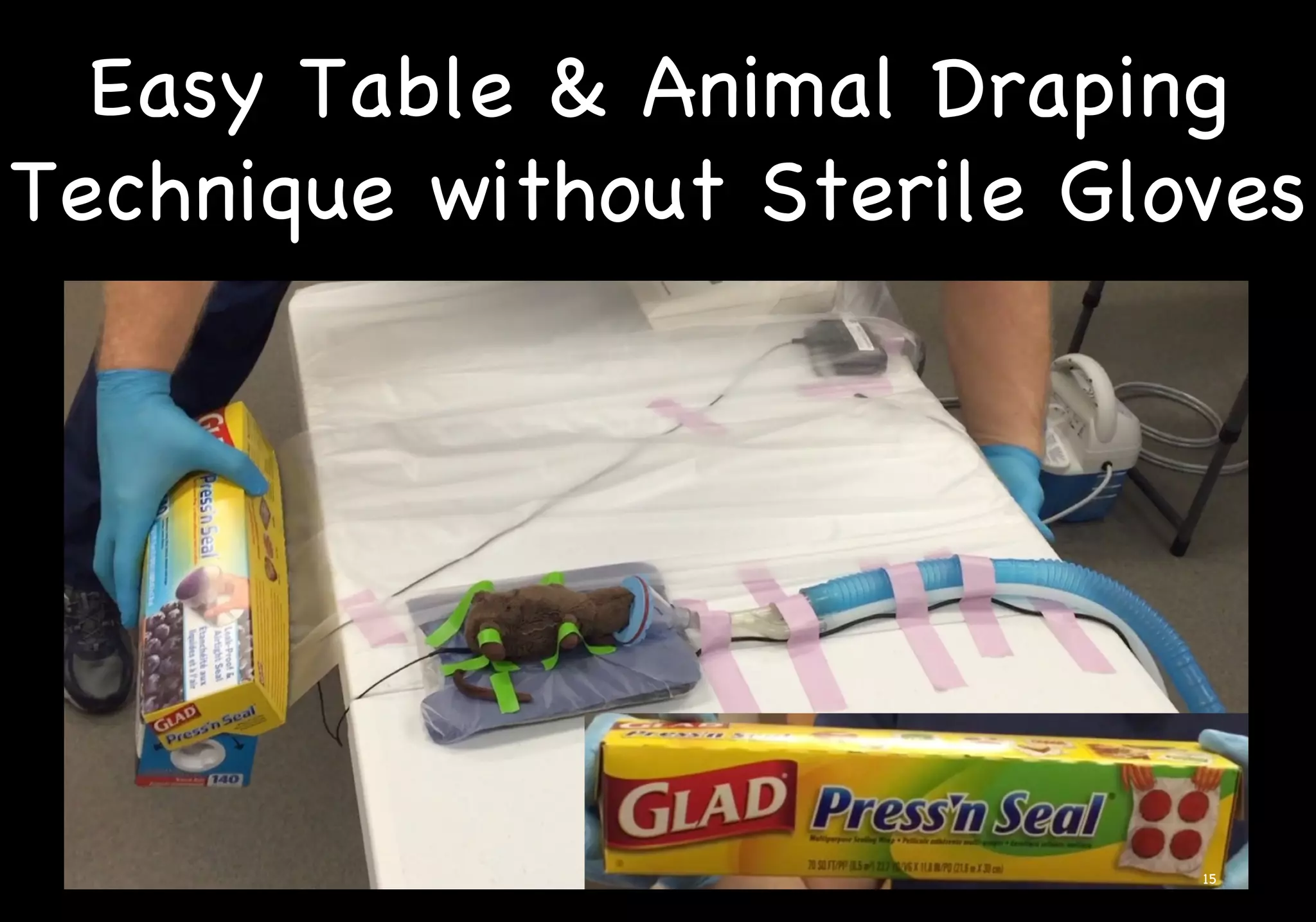
Easy Table & Animal Draping
Technique without Sterile Gloves
15
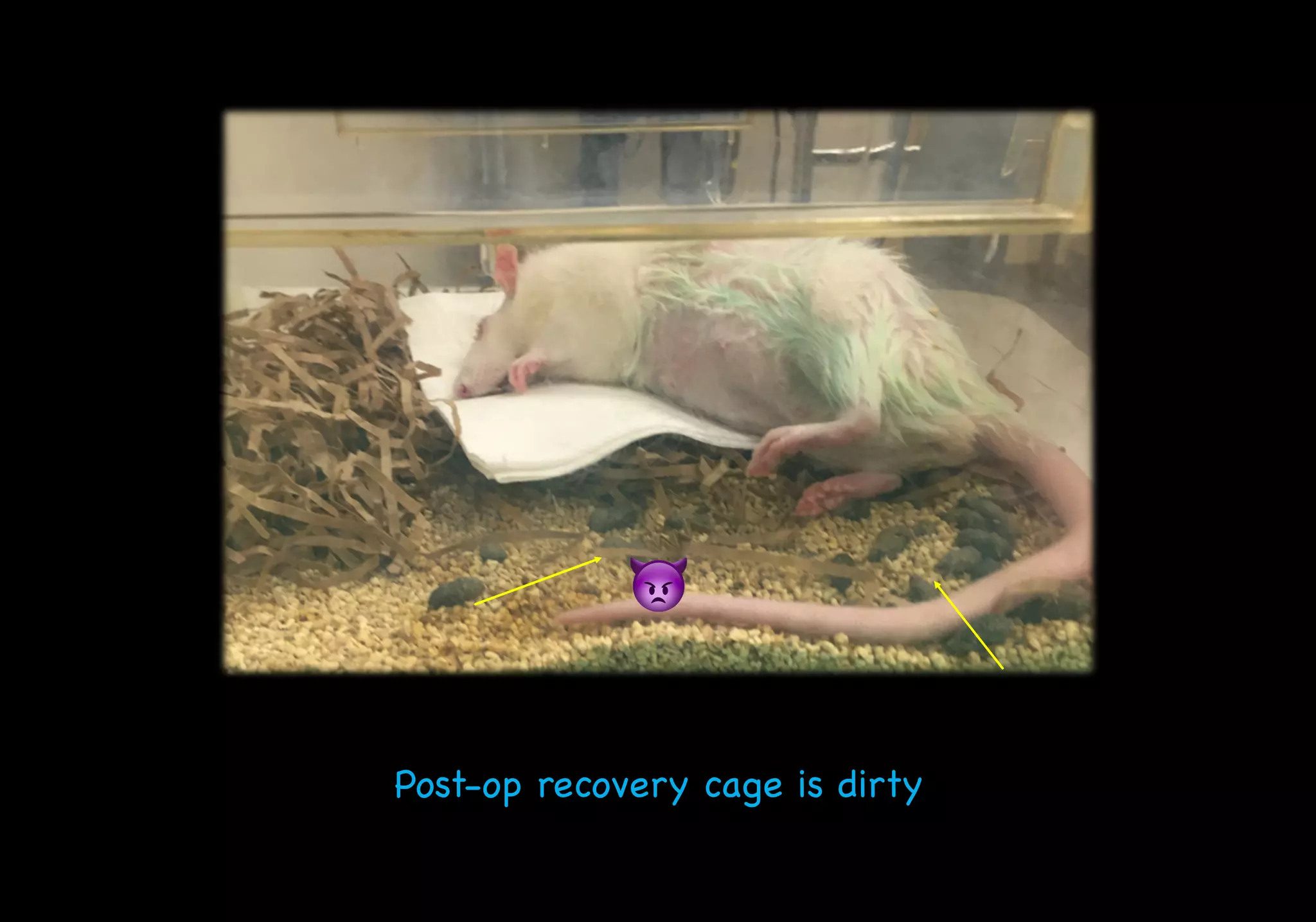
Post-op recovery cage is dirty
👿
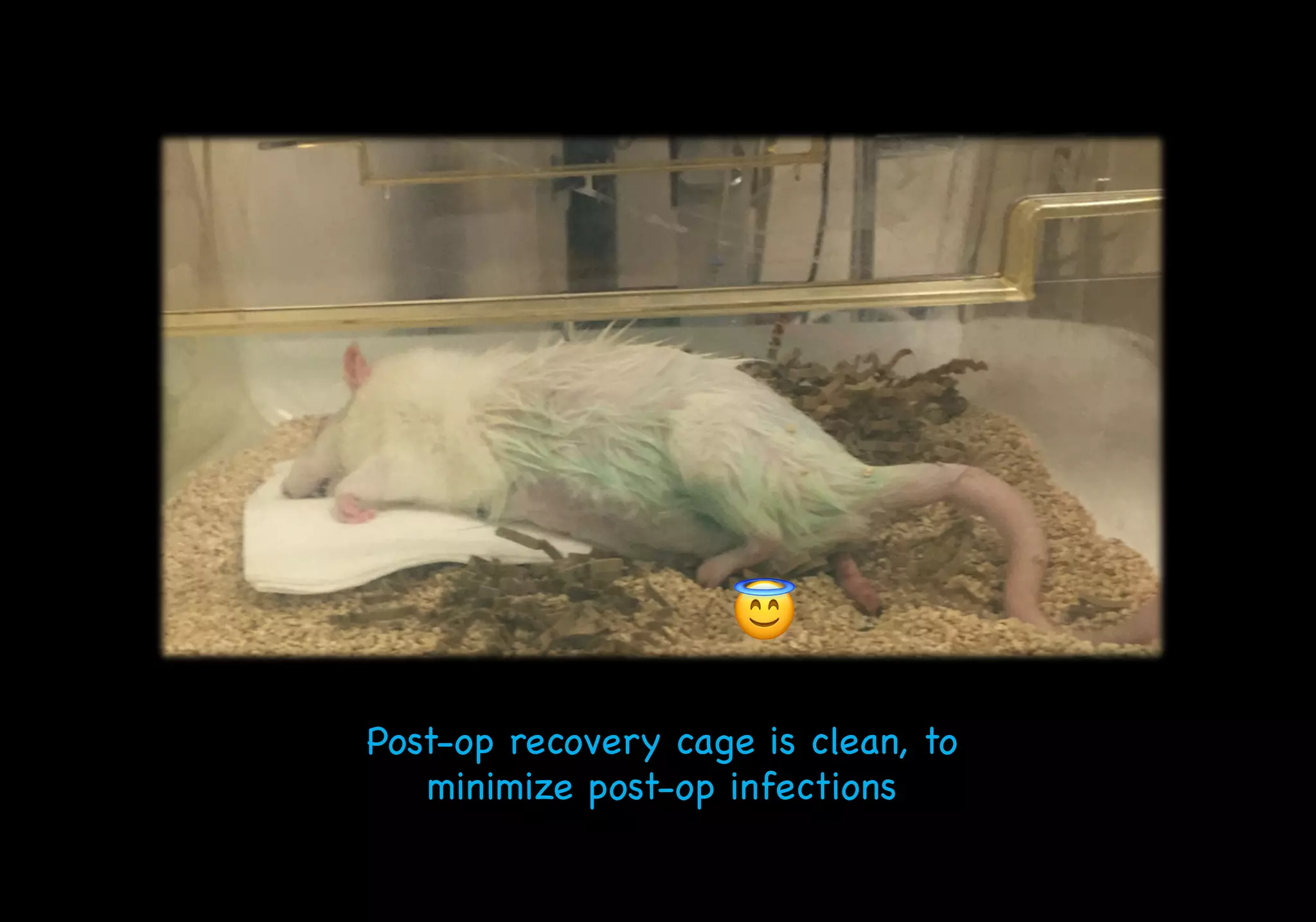
Post-op recovery cage is clean, to
minimize post-op infections
😇
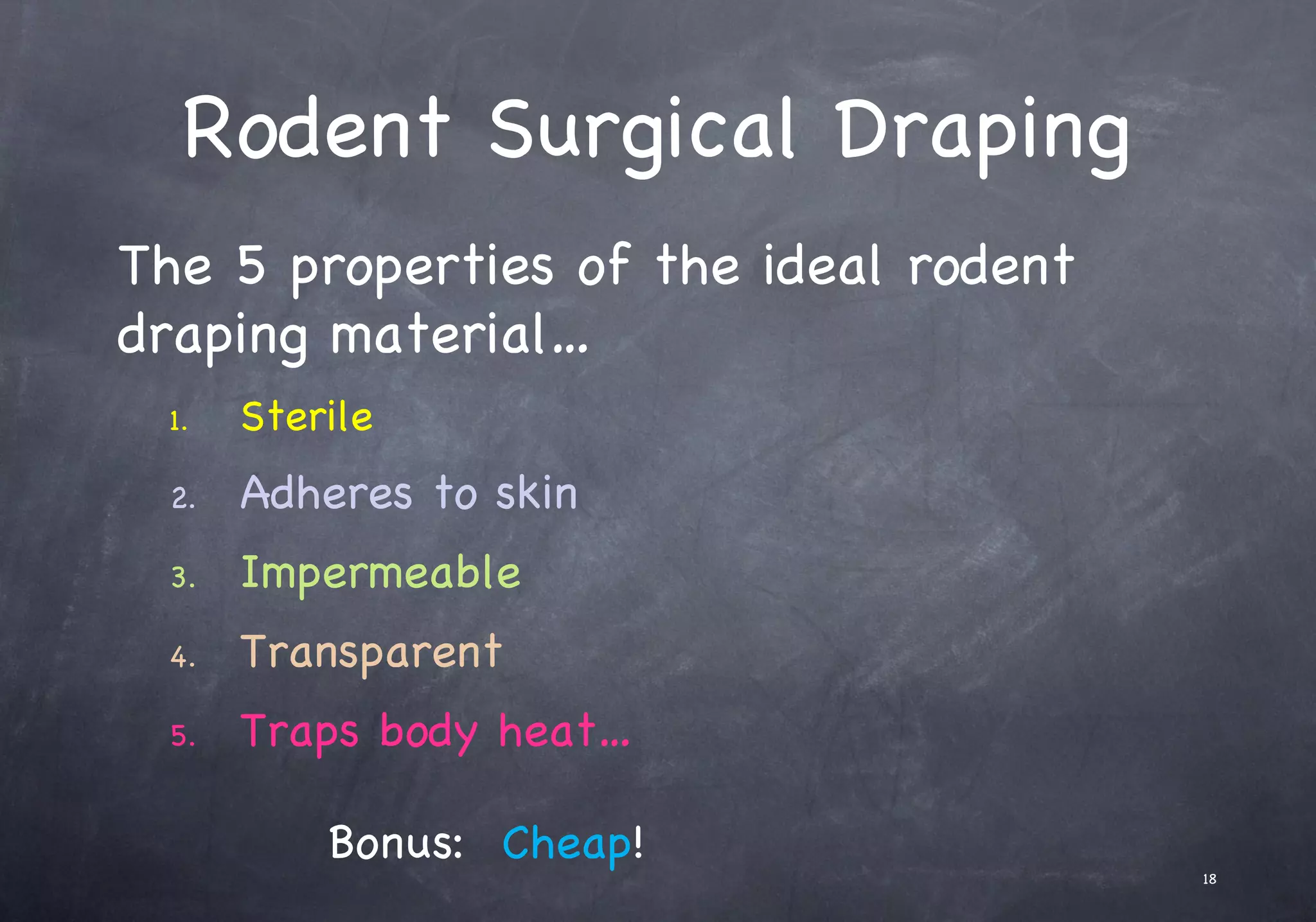
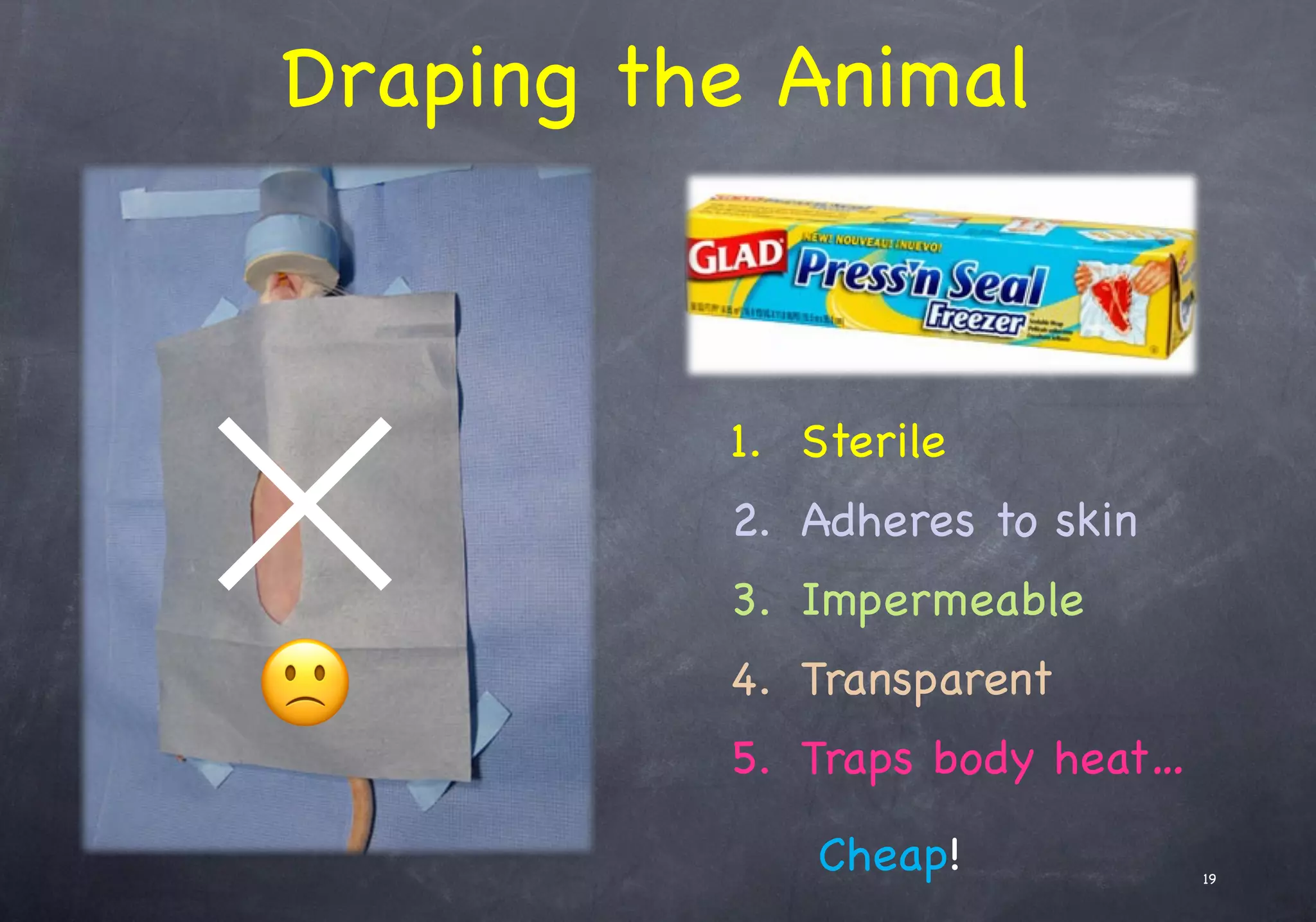
Rodent Surgical Draping
The 5 properties of the ideal rodent
draping material…
1. Sterile
2. Adheres to skin
3. Impermeable
4. Transparent
5. Traps body heat…
18
Bonus: Cheap!
Draping the Animal
✕
1. Sterile
2. Adheres to skin
3. Impermeable
4. Transparent
5. Traps body heat…
19
Cheap!
🙁
The Solo Surgeon
One person does everything
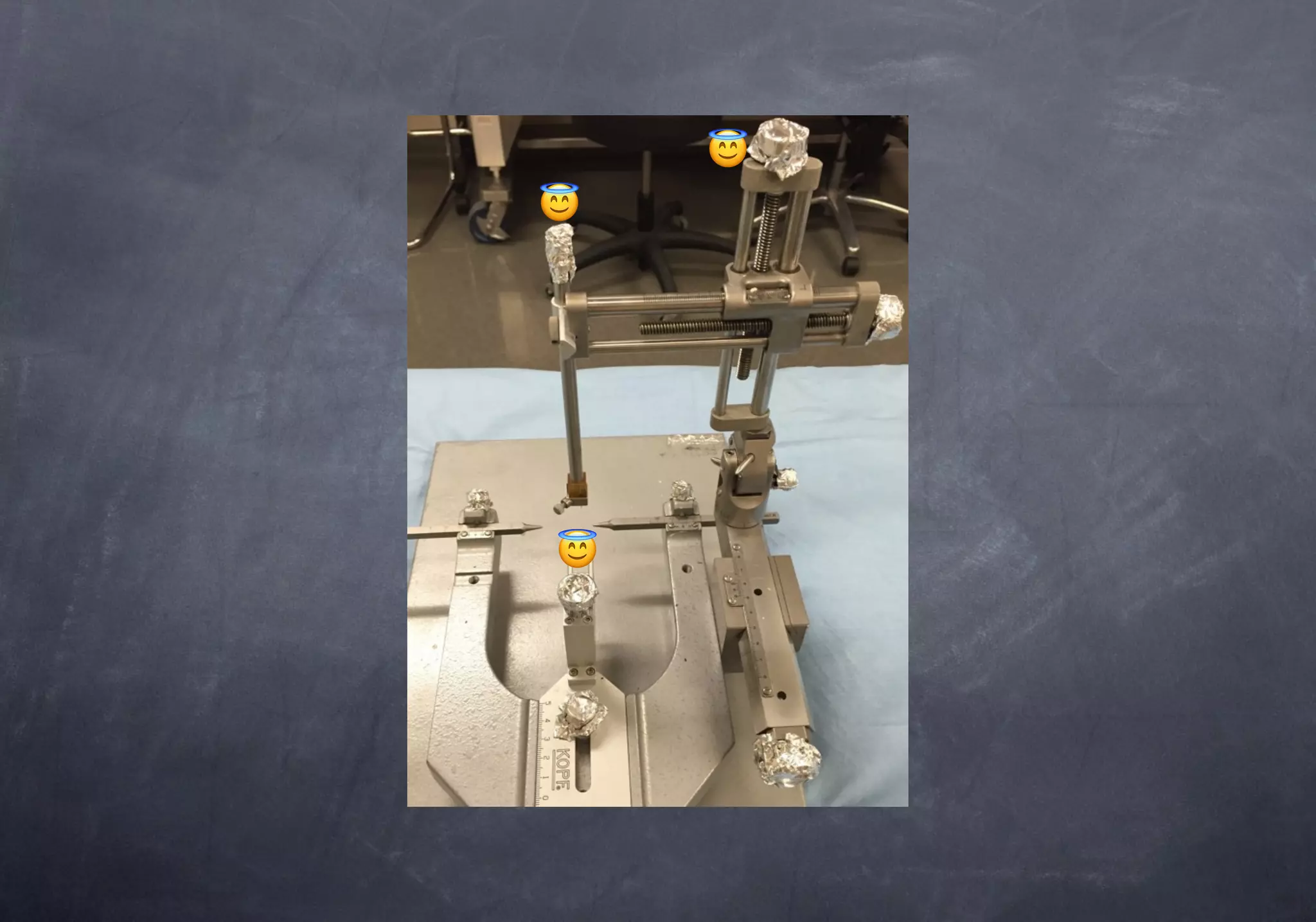
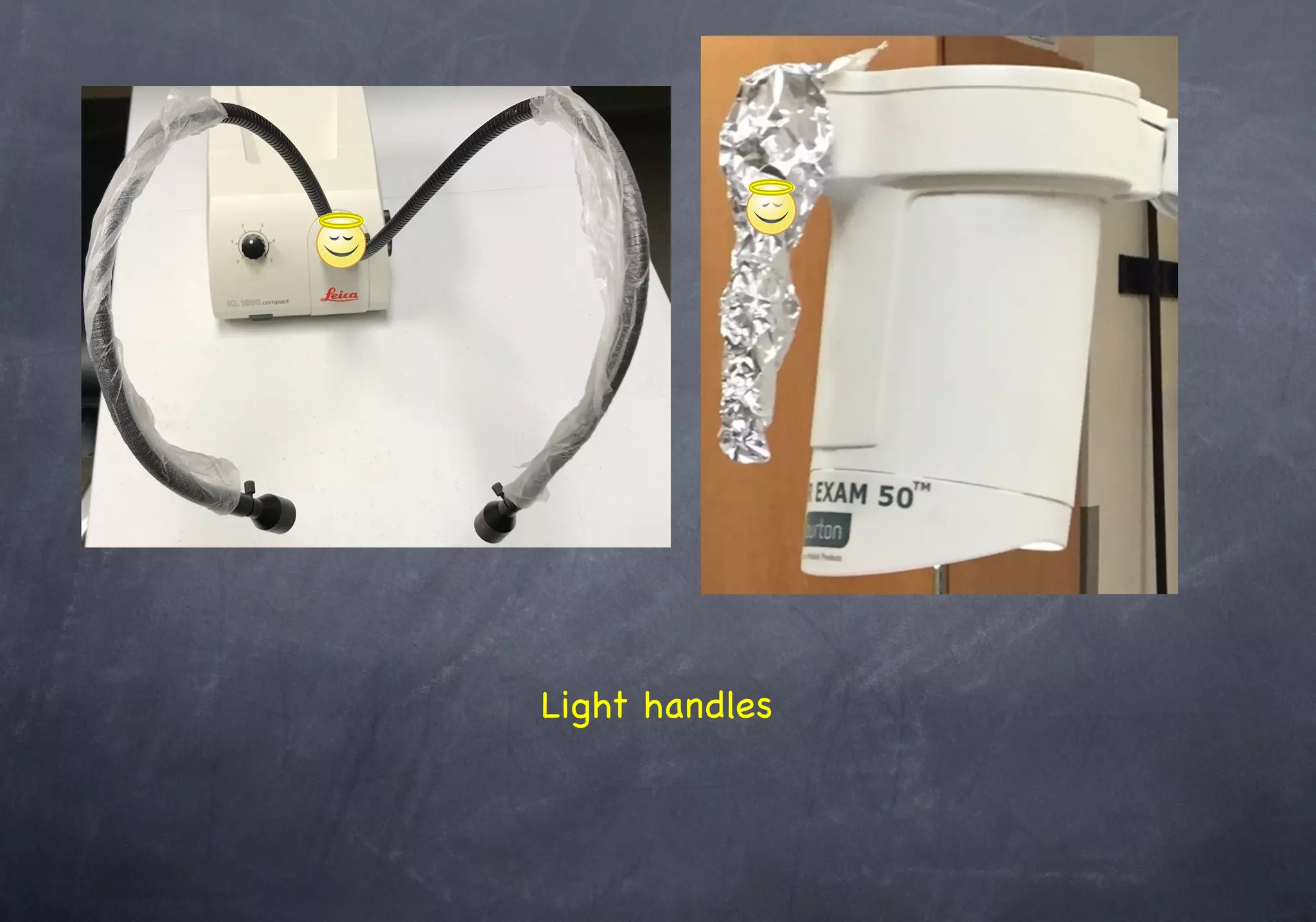
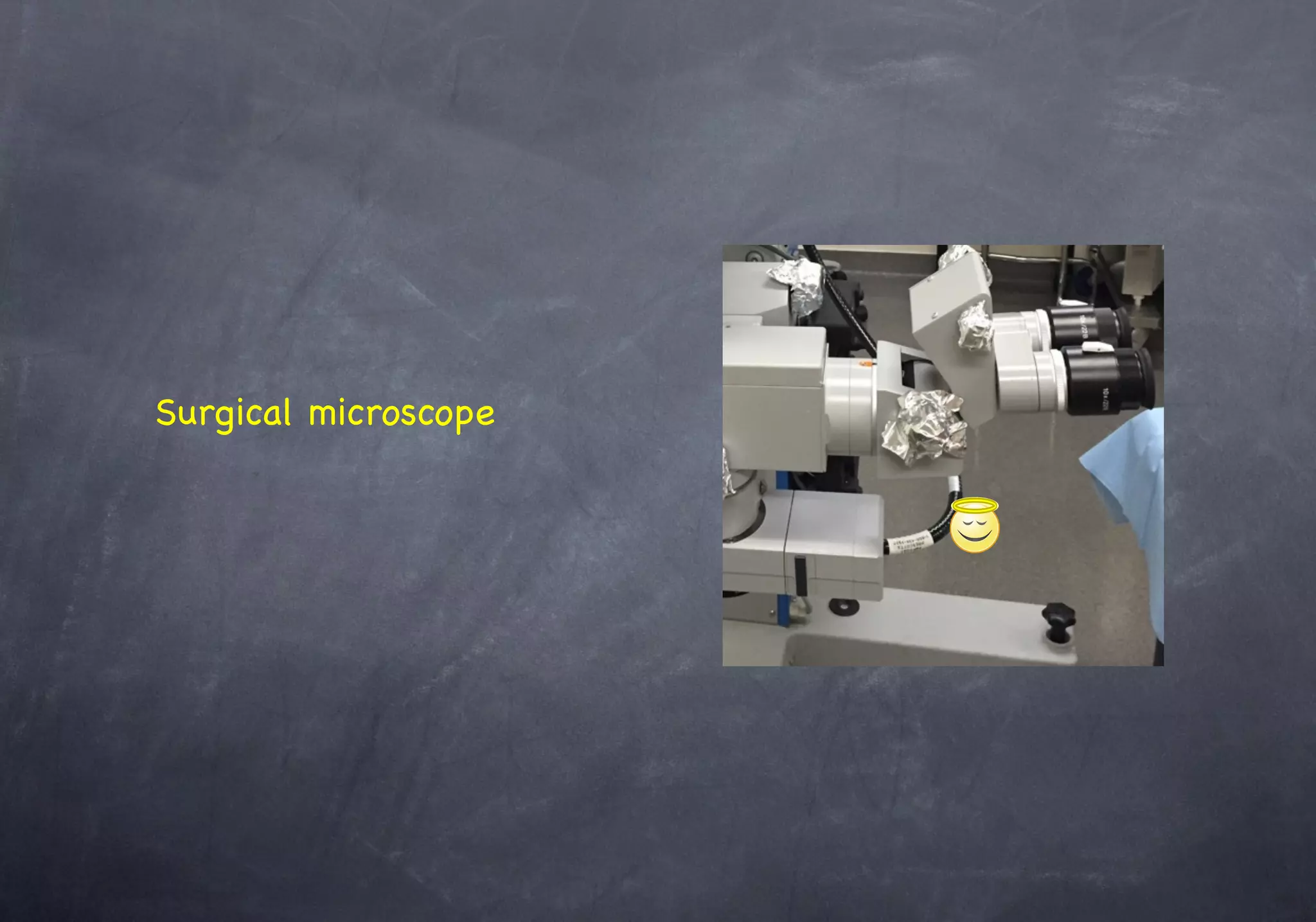
What happens if non-sterile items such as the
anesthesia dials, stereotaxic apparatus knobs, light
handles and microscope dials have to be manipulated
during surgery?
The next slides provide practical solutions to the “Solo
Surgeon” problem
20
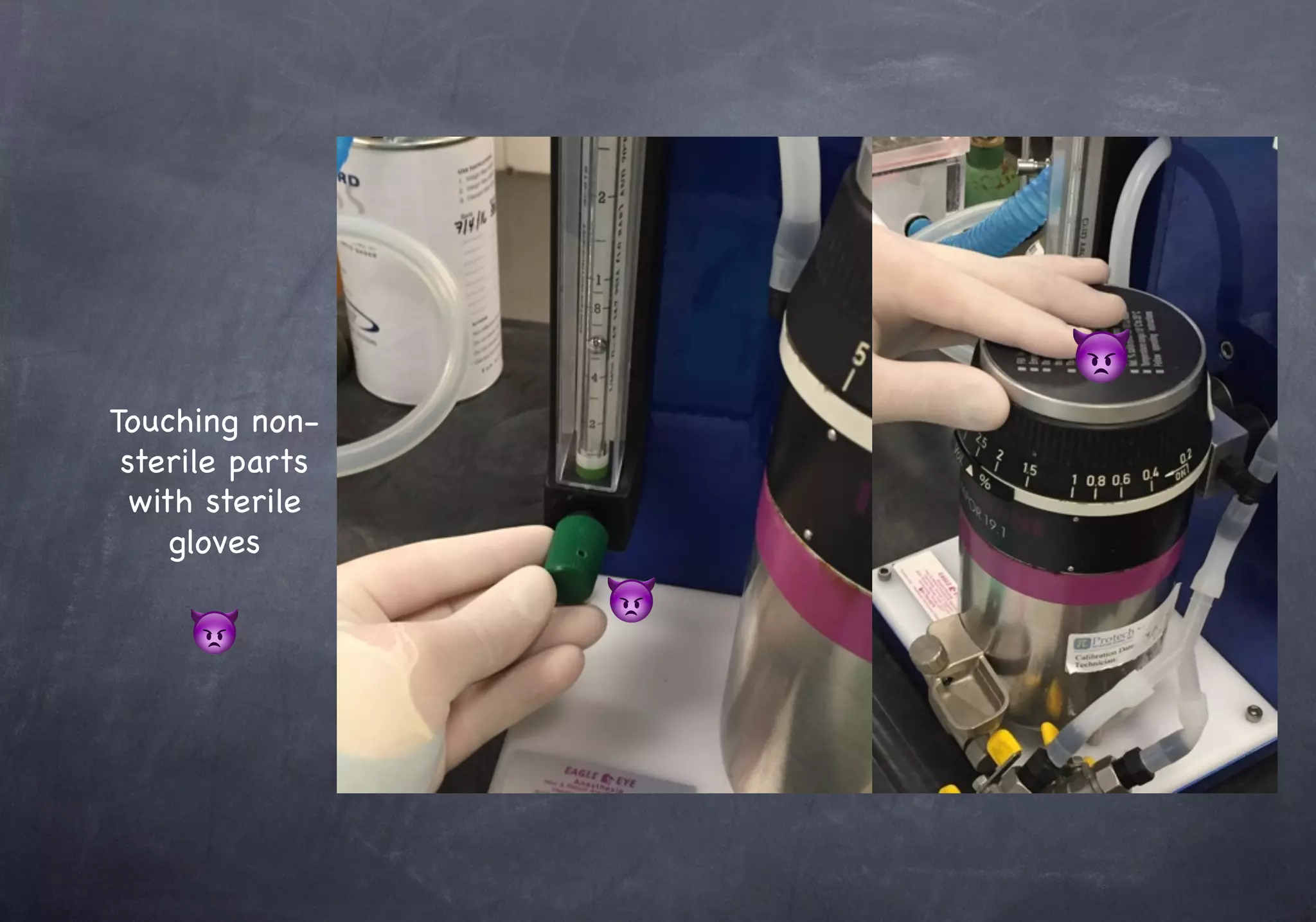
Touching non-
sterile parts
with sterile
gloves
👿
👿
👿
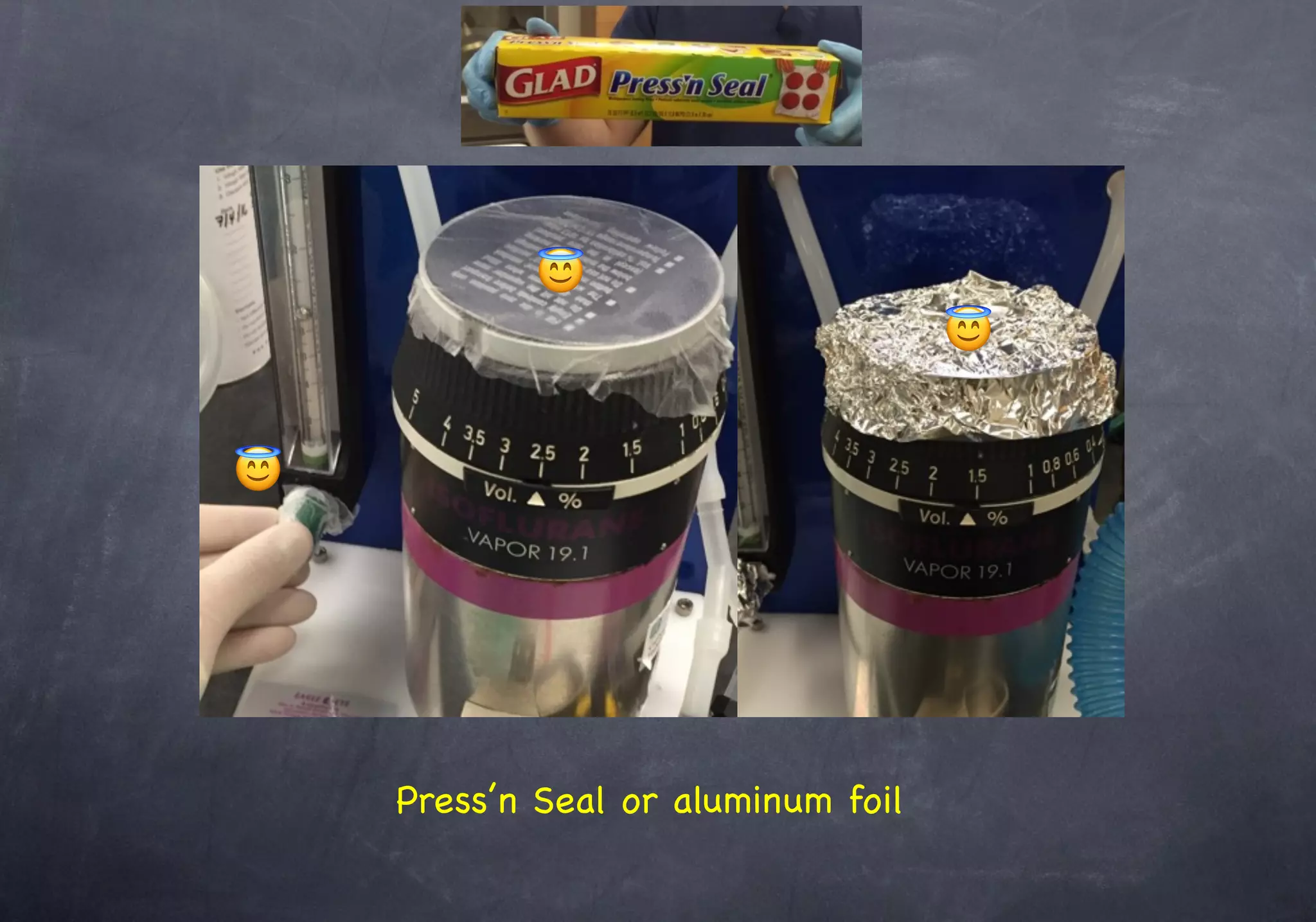
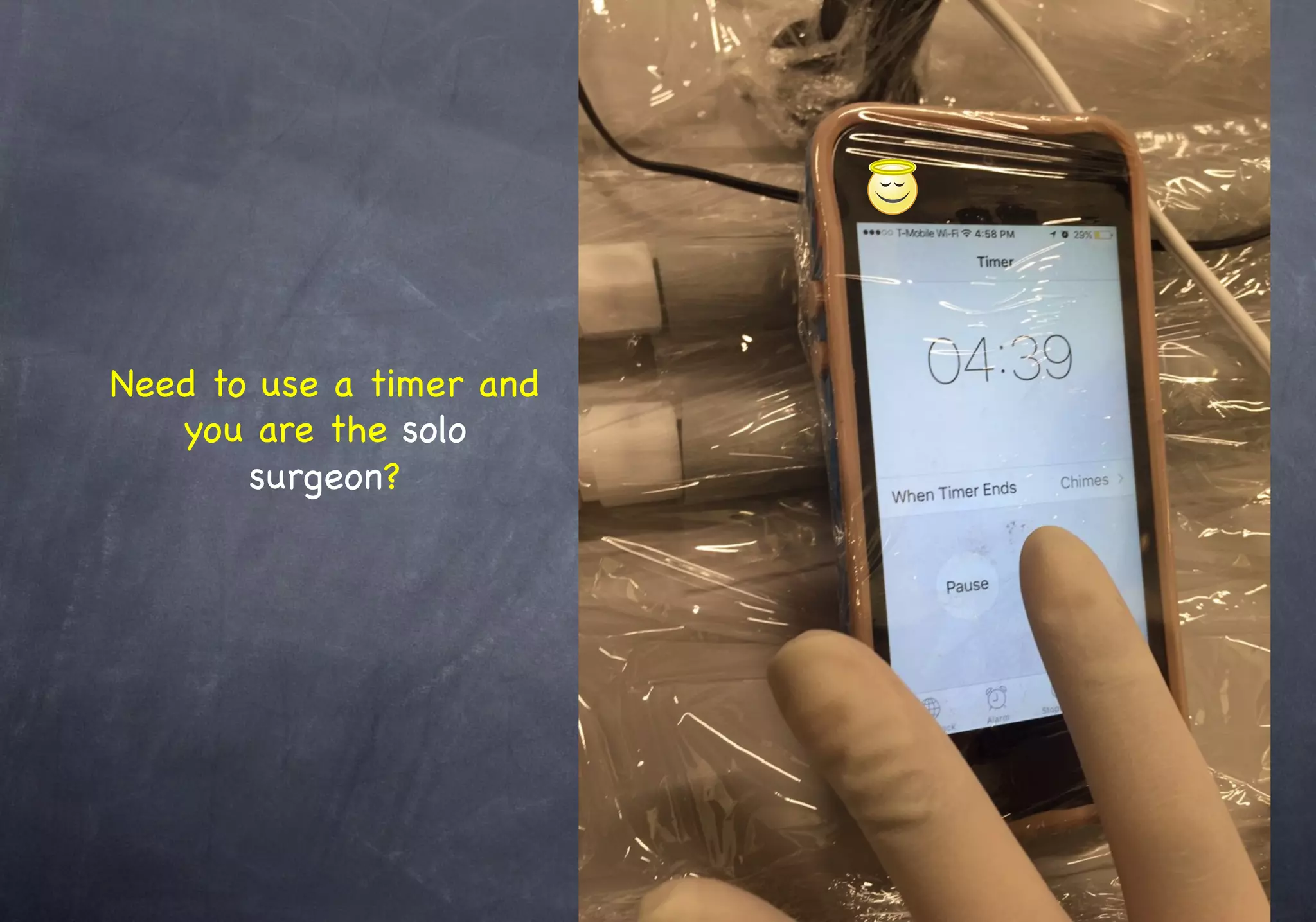
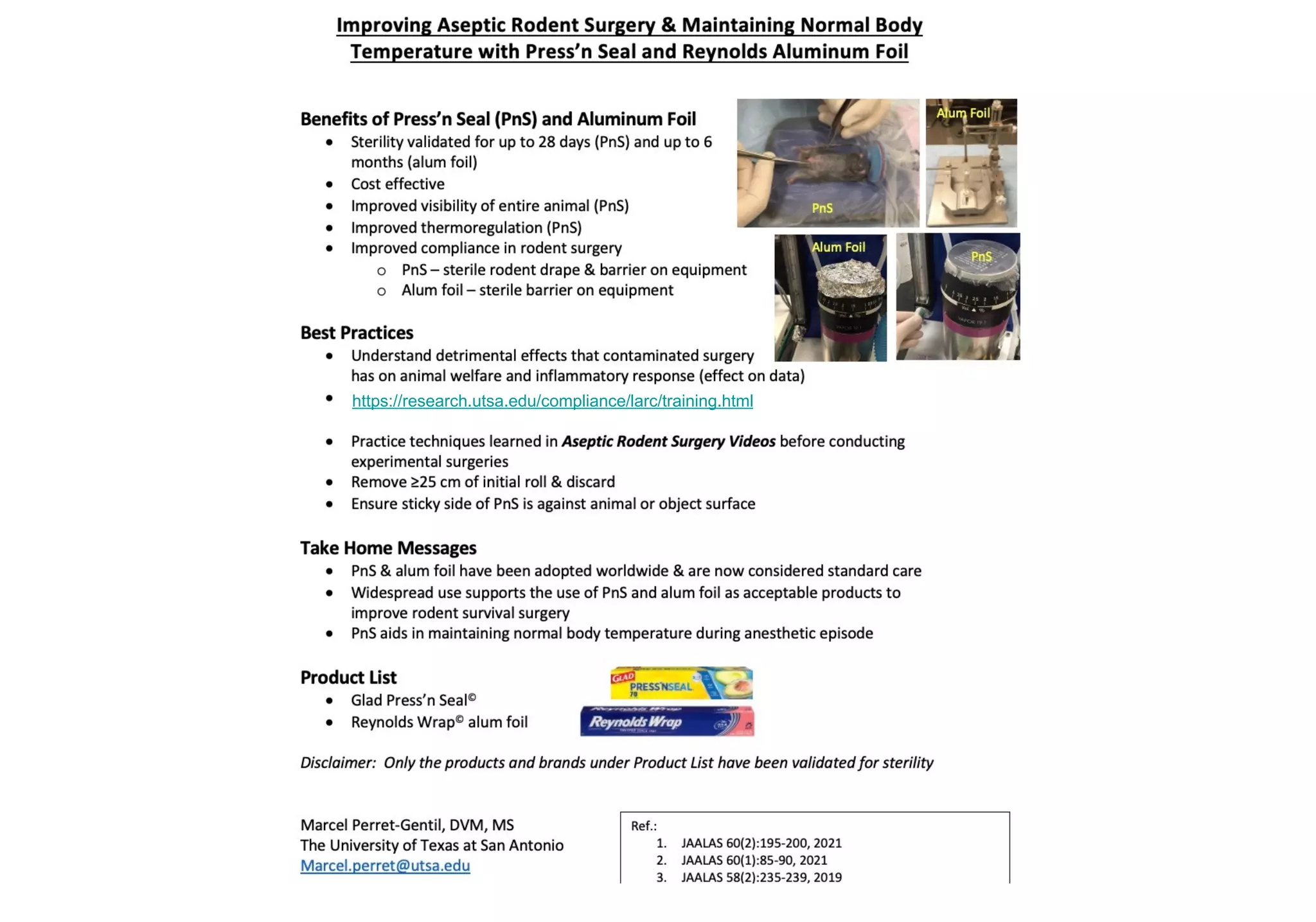
Press’n Seal or aluminum foil
😇
😇
😇
😇
😇
😇
Light handles
Surgical microscope
Need to use a timer and
you are the solo
surgeon?
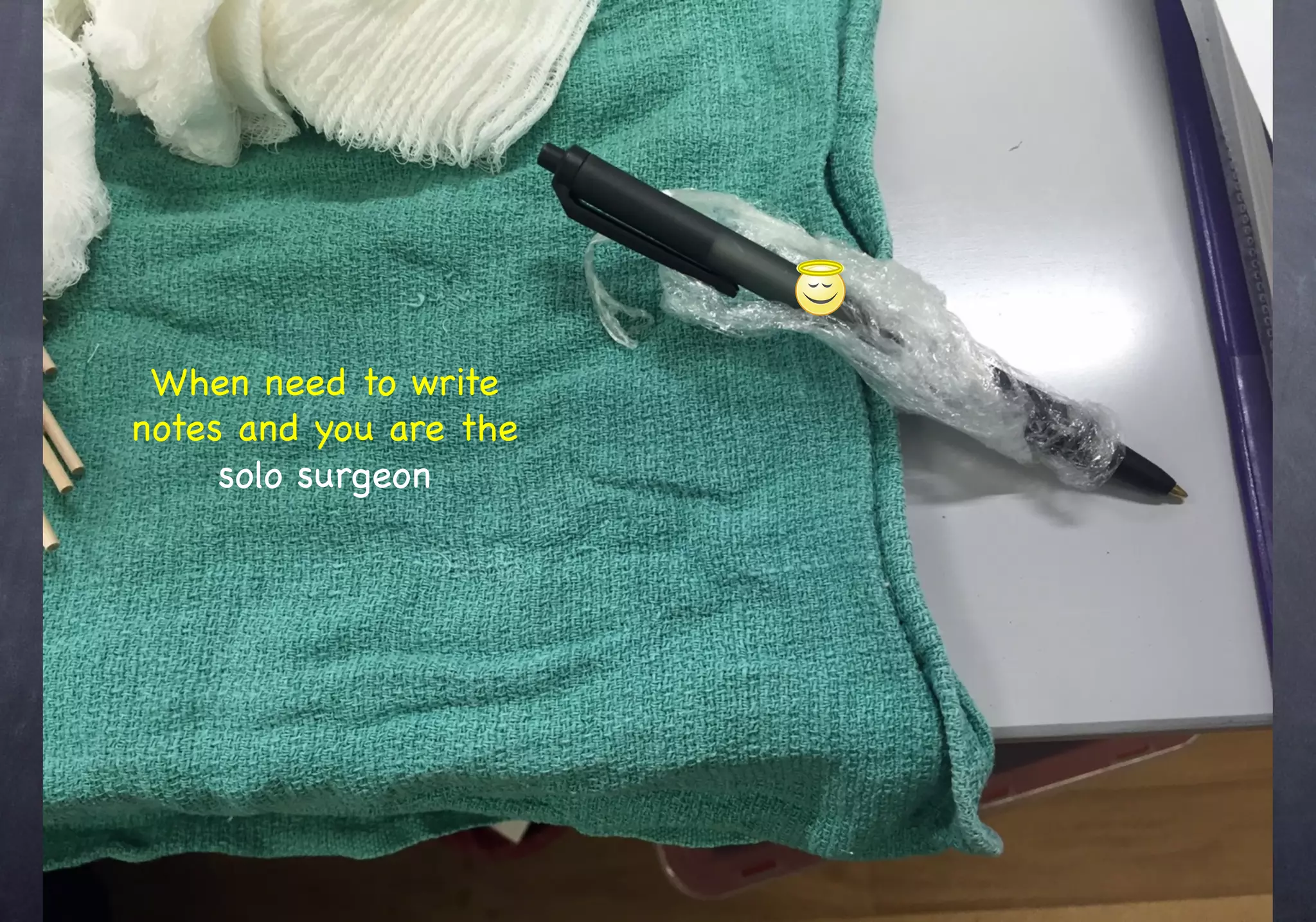
When need to write
notes and you are the
solo surgeon
Tip 3 – Temperature
Regulation
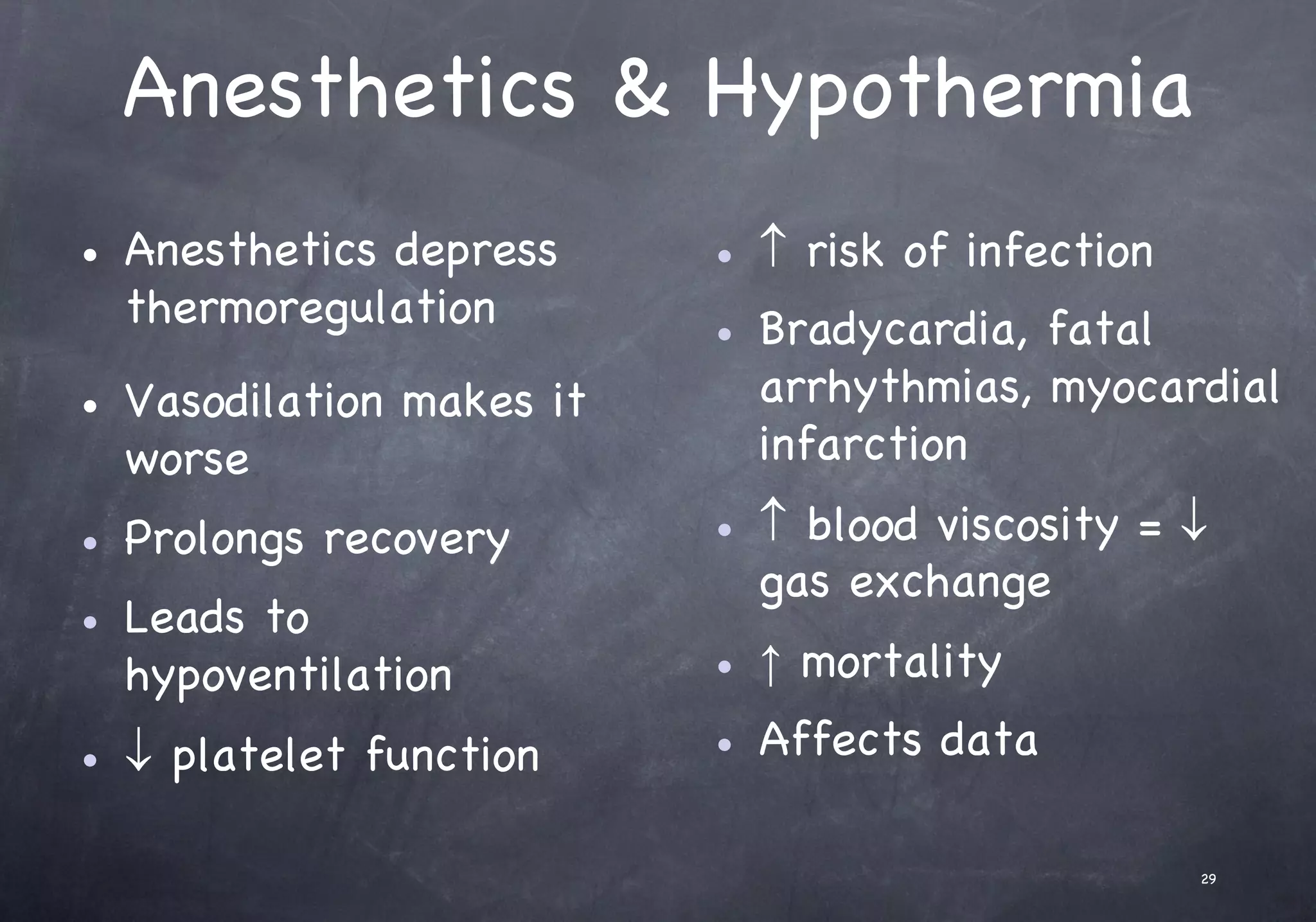
Anesthetics & Hypothermia
• Anesthetics depress
thermoregulation
• Vasodilation makes it
worse
• Prolongs recovery
• Leads to
hypoventilation
• ¯ platelet function
• ­ risk of infection
• Bradycardia, fatal
arrhythmias, myocardial
infarction
• ­ blood viscosity = ¯
gas exchange
• ↑ mortality
• Affects data
29
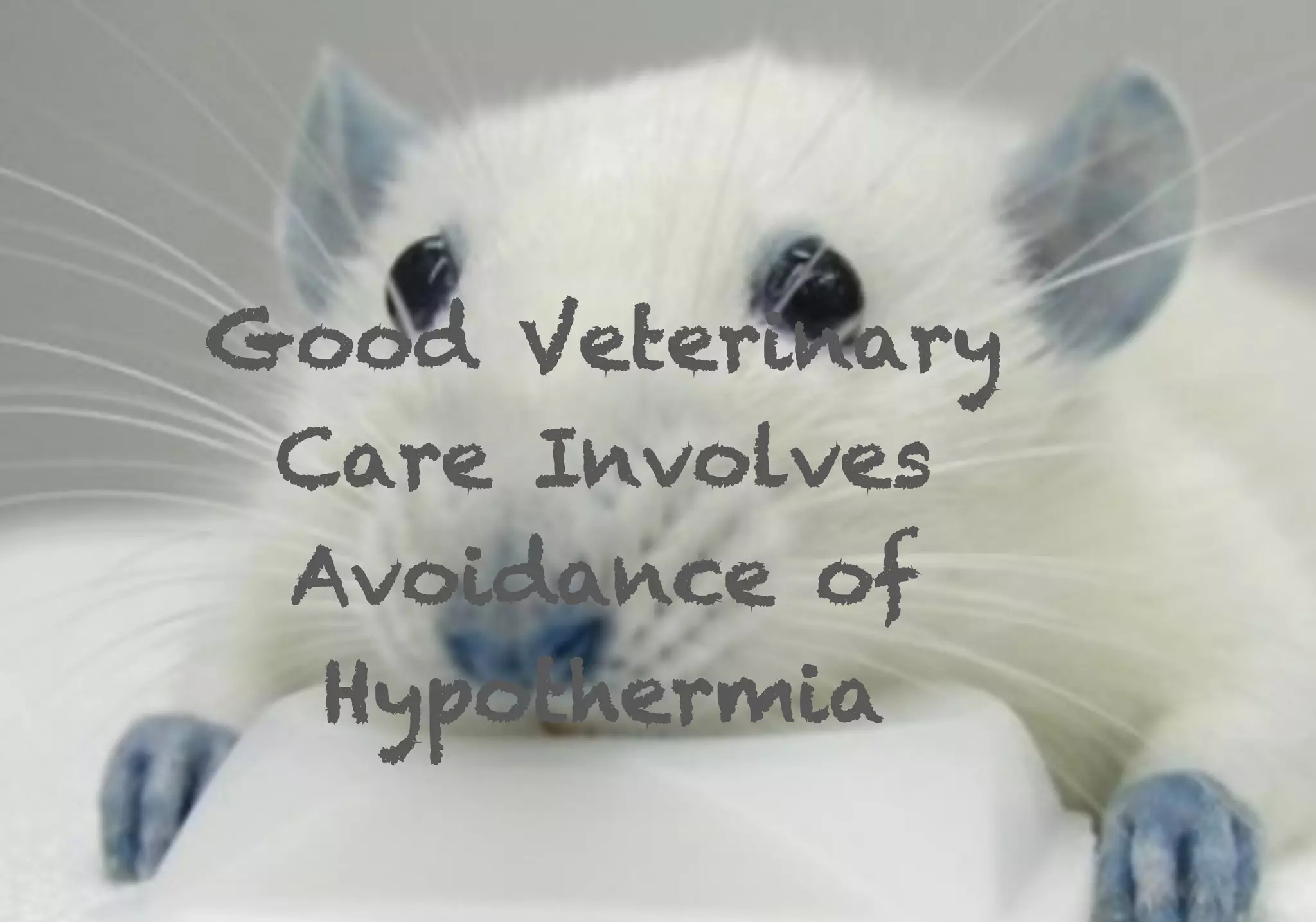
Good Veterinary
Care Involves
Avoidance of
Hypothermia
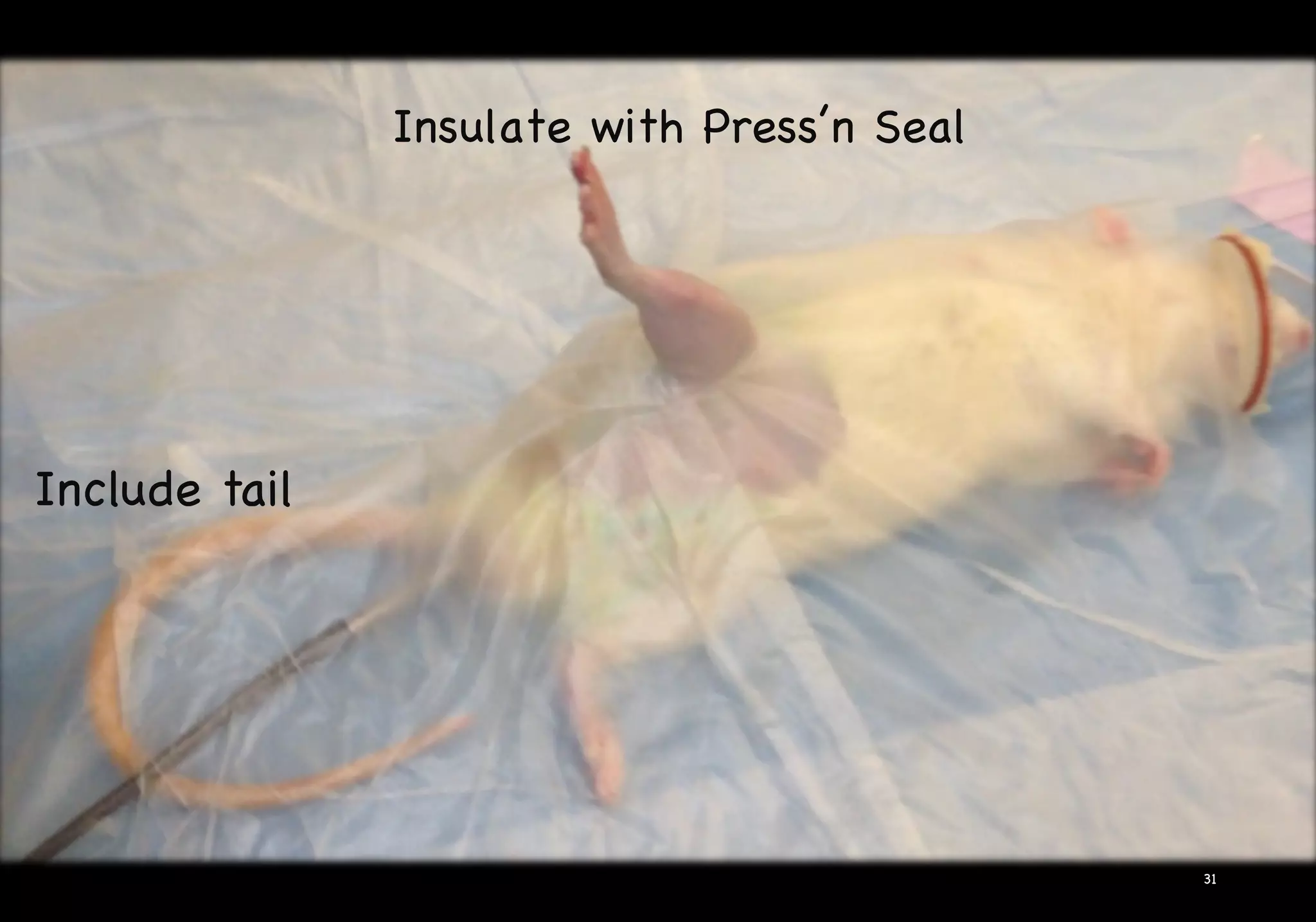
Insulate with Press’n Seal
31
Include tail
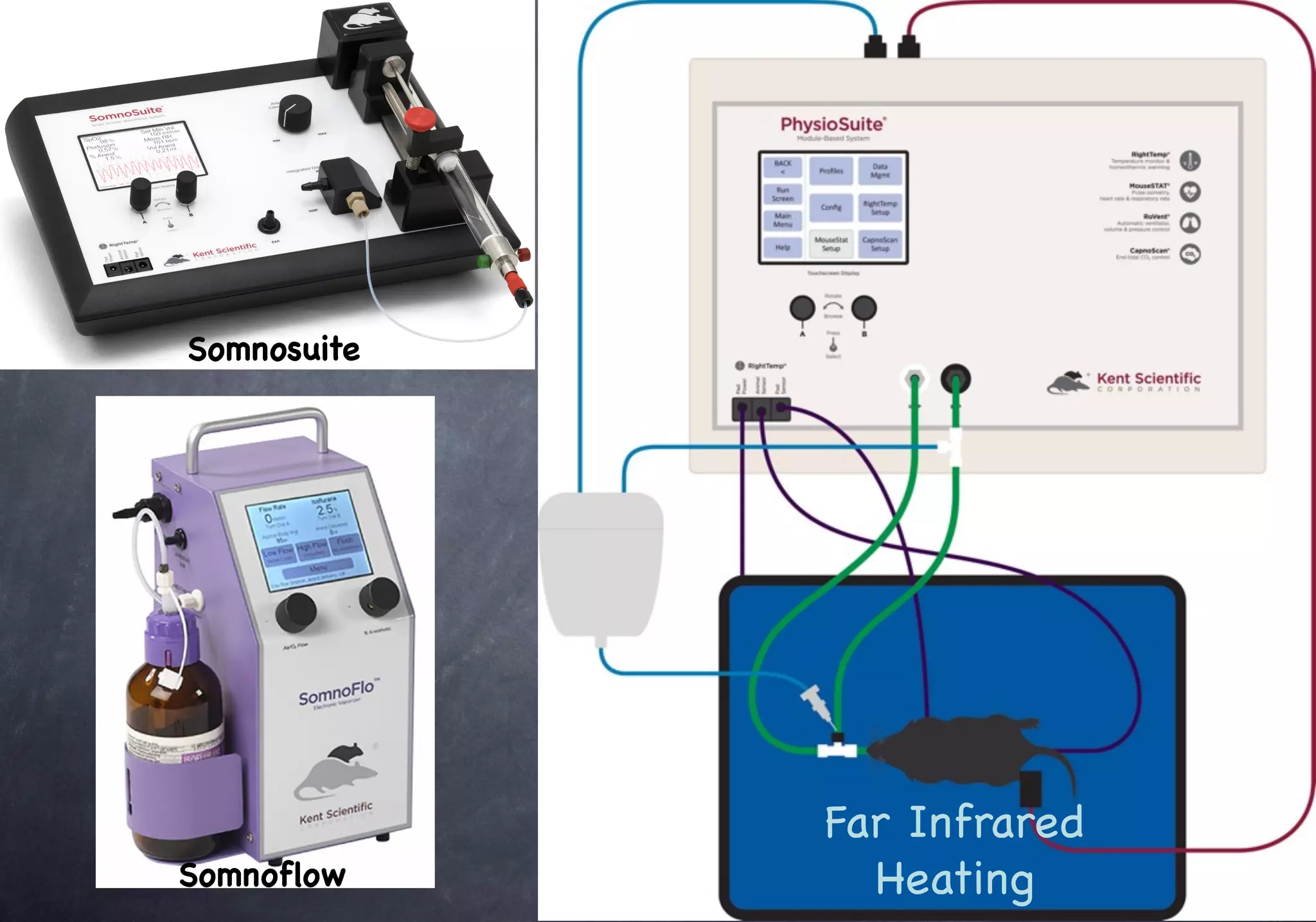
Far Infrared
Heating
Somnosuite
Somnoflow
33
https://research.utsa.edu/compliance/larc/training.html
Tip 4 - Hydration
34
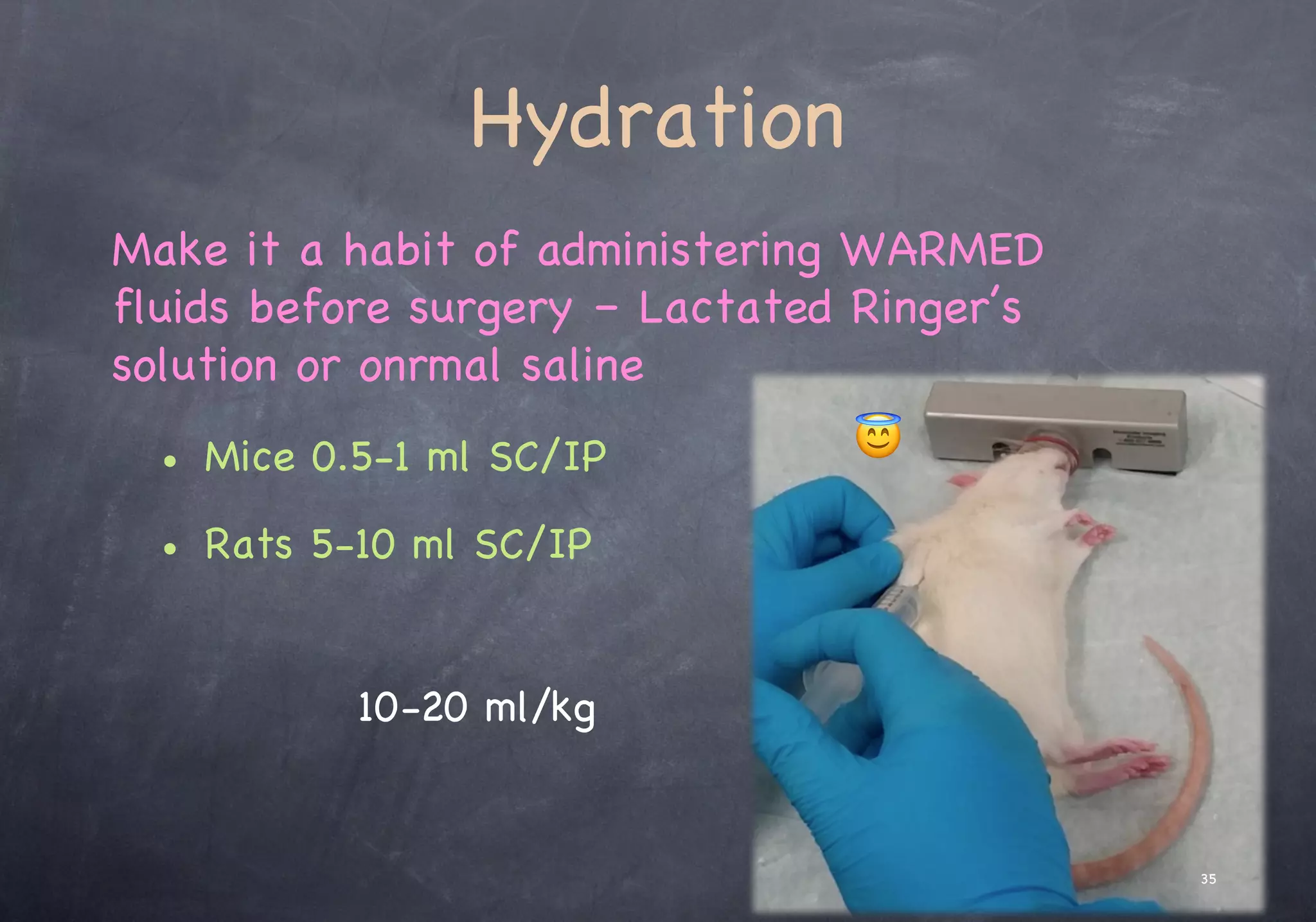
Hydration
Make it a habit of administering WARMED
fluids before surgery – Lactated Ringer’s
solution or onrmal saline
• Mice 0.5-1 ml SC/IP
• Rats 5-10 ml SC/IP
😇
35
10-20 ml/kg
Tip 5 – Oxygen
Supplementation
36
Injectable Anesthesia
= Hypoxia = O2 saturation in 80s & 70s (dose dependent)*
Not consistent with acceptable veterinary practice
Malpractice?
UTSA requires O2 supplementation
37
*Blevins et al, 2021
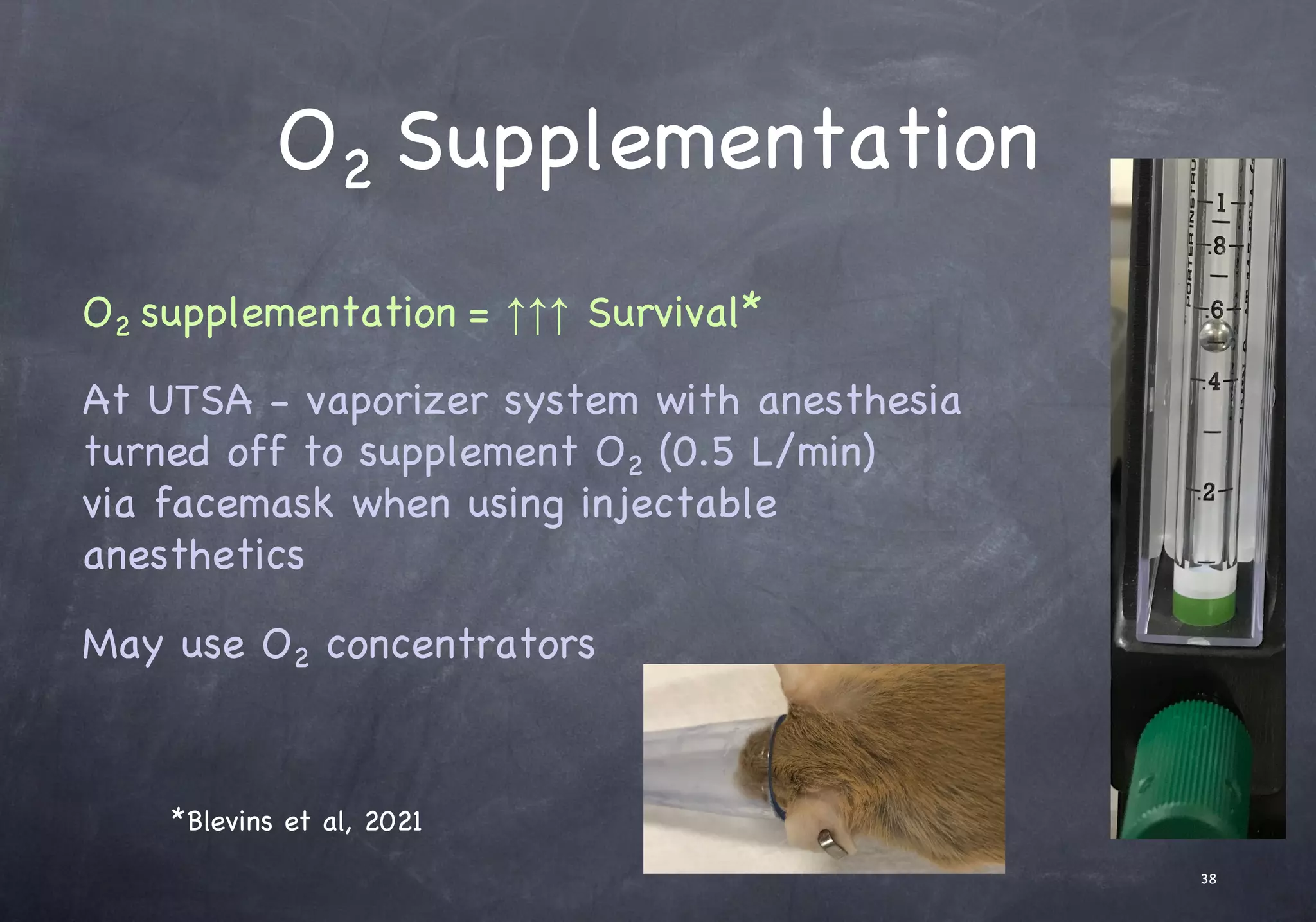
O2 Supplementation
O2 supplementation = ↑↑↑ Survival*
At UTSA - vaporizer system with anesthesia
turned off to supplement O2 (0.5 L/min)
via facemask when using injectable
anesthetics
May use O2 concentrators
38
*Blevins et al, 2021
Tip 6 – Non-Pharmacological
Methods of Pain Control
39
Treating the Mind
and Other Parts
Simkin & O’hara, 2002; Chia et al, 2017
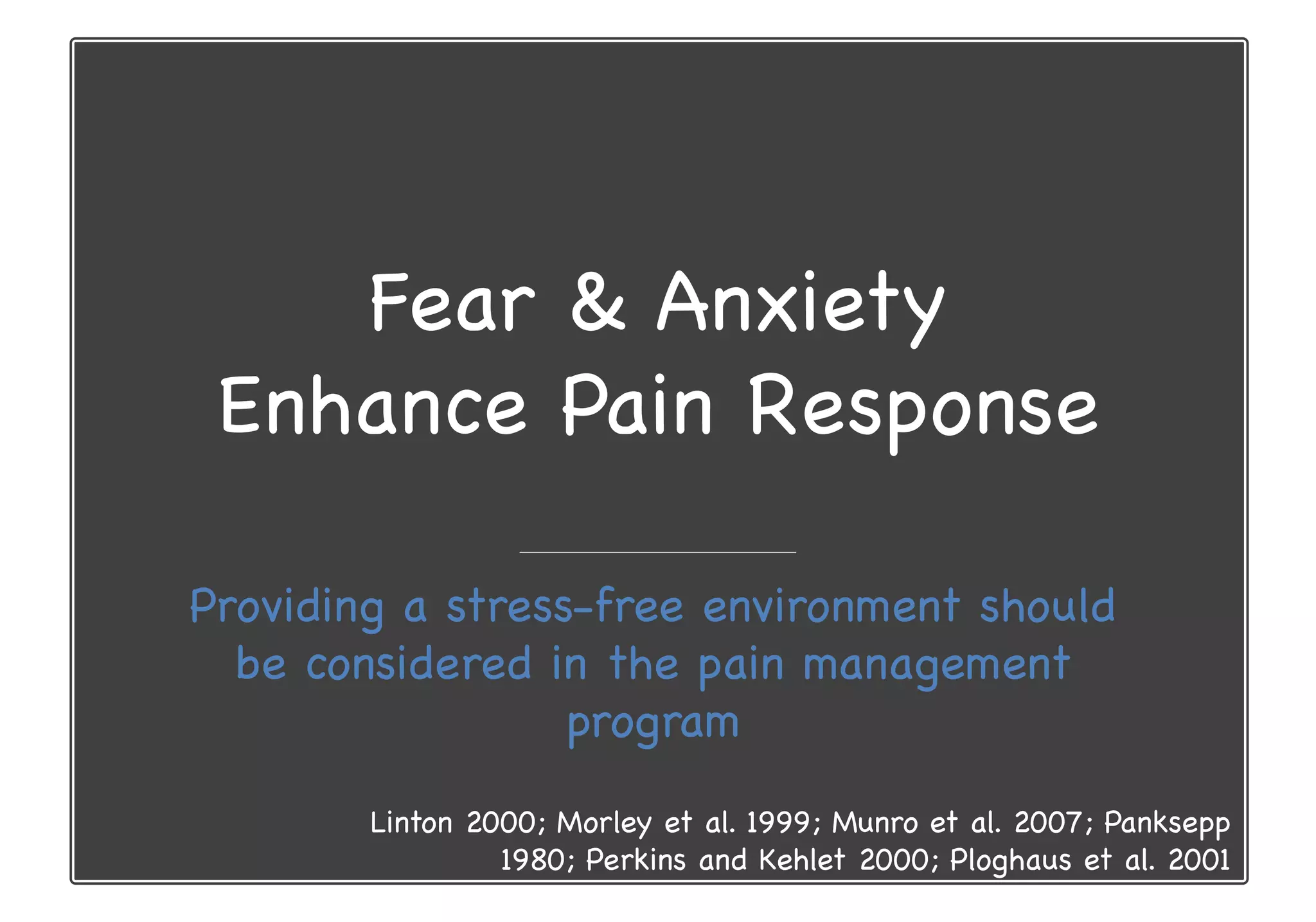
Fear & Anxiety
Enhance Pain Response
Providing a stress-free environment should
be considered in the pain management
program
Linton 2000; Morley et al. 1999; Munro et al. 2007; Panksepp
1980; Perkins and Kehlet 2000; Ploghaus et al. 2001
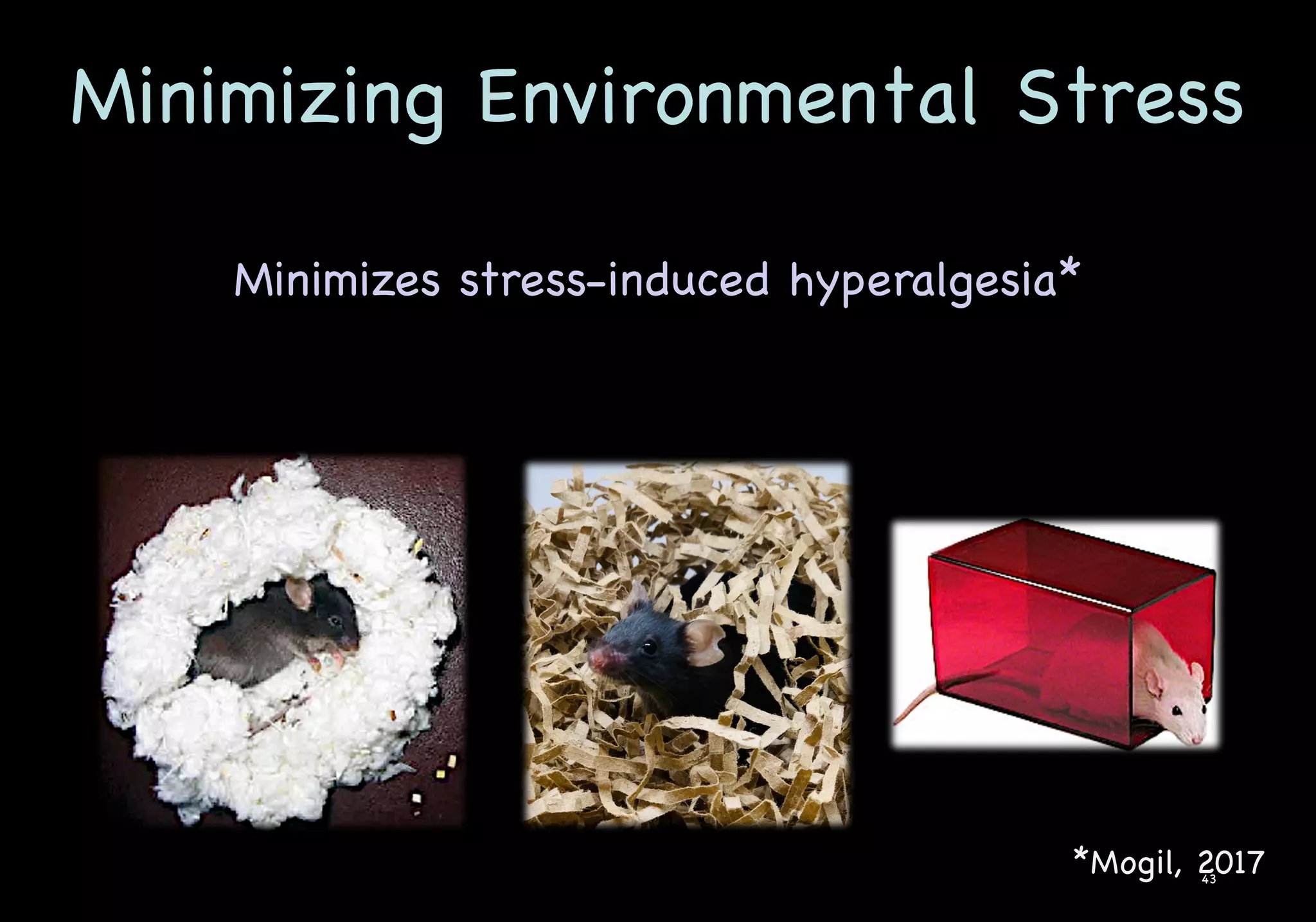
Minimizing Environmental Stress
43
Minimizes stress-induced hyperalgesia*
*Mogil, 2017
Tasty & Energy Dense
Supplementation
Bacon Softies
bio-Serv.com
DietGel
clearh2o.com 44
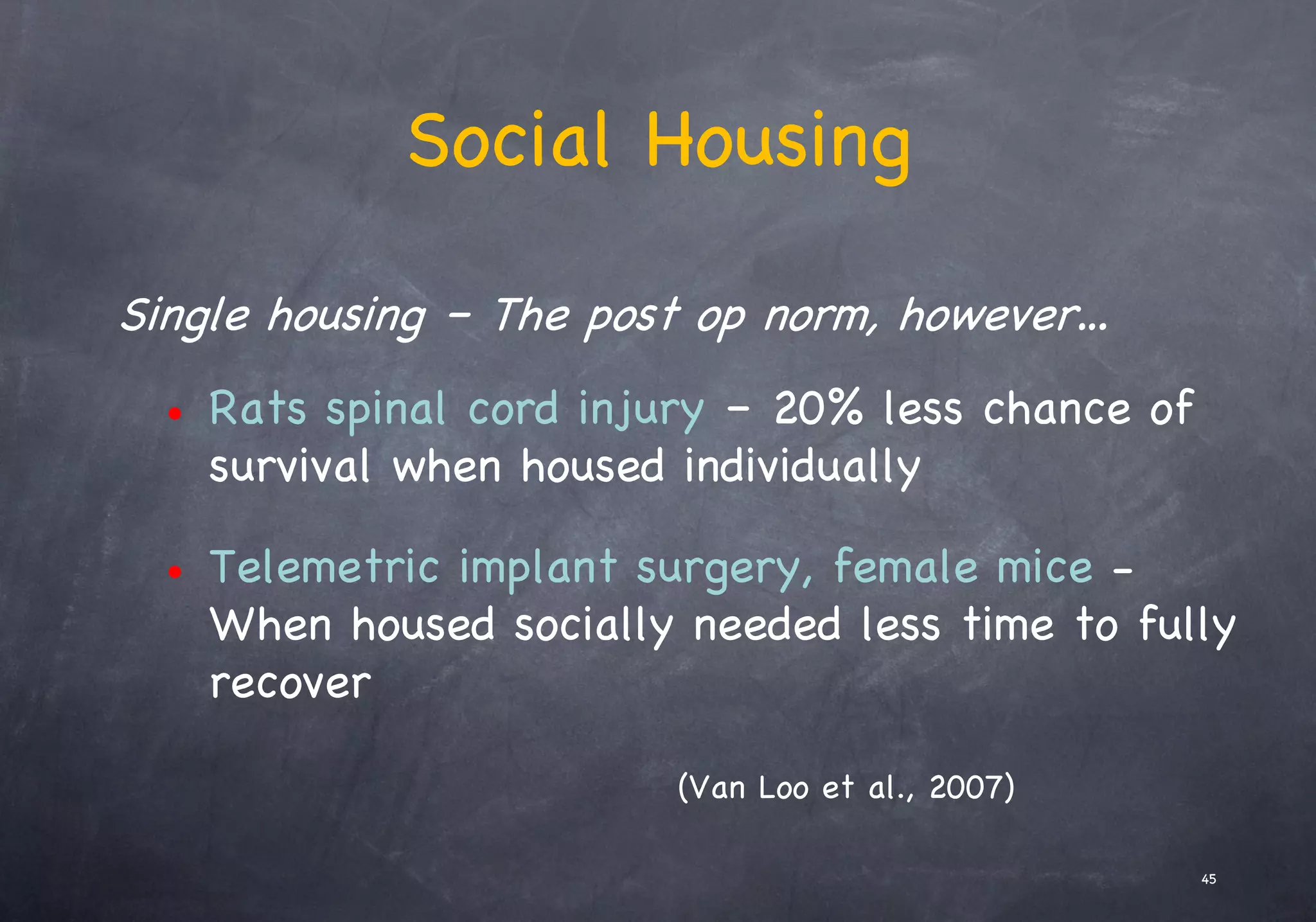
Social Housing
Single housing – The post op norm, however…
• Rats spinal cord injury – 20% less chance of
survival when housed individually
• Telemetric implant surgery, female mice -
When housed socially needed less time to fully
recover
(Van Loo et al., 2007)
45
Soon!!
Overview of Refinements in Rodent
Surgical Practices (JAALAS)
46
 Simple Tips to Significantly Improve Rodent Surgical Outcomes

Simple Tips to Significantly Improve Rodent Surgical Outcomes

  • 1.
    Copyright 2023. AllRights Reserved. Contact Presenter for Permission. University Veterinarian & Director Laboratory Animal Resources Center The University of Texas at San Antonio (UTSA) Marcel Perret-Gentil, DVM, MS Simple Tips to Significantly Improve Rodent Surgical Outcomes
  • 2.
    6 Simple Tips thatwill Significantly Improve Rodent Surgical Outcomes University Veterinarian & Director The University of Texas at San Antonio marcel.perret@utsa.edu https://research.utsa.edu/complia nce/larc/training.html Marcel Perret-Gentil President PLAVS (Perret-Gentil Lab Animal Veterinary Services) mperret1@gmail.com www.plavs.net
  • 3.
    3 Ms. Rita is85 An exemplary nurse Just a Little bit out of practice
  • 4.
    The great tips 1.Acclimation 2. Aseptic technique – the ‘solo surgeon syndrome’ 3. Temperature regulation 4. Hydration 5. Oxygen supplementation 6. Non-pharmaceutical methods of pain control
  • 5.
    Tip 1 –Acclimation
  • 6.
  • 7.
  • 8.
    Tip 2 –Aseptic Surgery?
  • 9.
    Survival alone nota valid criterion for success Success should be based on absence of altered physiological function, immune responses and behavioral changes (Cunliffe-Beamer, 1993) 9
  • 10.
    Aseptic technique increasessuccess of ovarian transplants in mice & speeds return to post-op normal (Cunliffe-Beamer 1972-73; Cunliffe-Beamer 1990) Contamination activates macrophages (Bancroft, Schreiber et al. 1989), and leads to changes in cytokines & B cells levels (Abbas, Lichtman et al. 1991) SUBCLINICAL infections induce physiological changes (Committee on Infectious Diseases of Laboratory Rats and Mice 1992) Although NO CLINICAL SIGNS observed, experimentally inoculated rats (108 S. aureus or P. aeruginosa) had significant alterations in plasma fibrinogen, serum glucose, total white blood cell counts, and wound histology scores (Bradfield, John et al. 1992) 10
  • 11.
    Summary • Delays topost-op normality • Physiological changes • Alterations in immunity • Affects data yield Poor rodent aseptic surgery results in: 11
  • 12.
    A few easytips on aseptic technique https://research.utsa.edu/compliance/larc/t raining.html for many easy tips 12
  • 13.
    Surgeon Prep Impermeable armsleeves Misted with disinfectant 13
  • 14.
    Crowded surgical areasetup Correct setup A bit crowded Suture touching non- sterile area 👿 14 Gauze touching non- sterile area
  • 15.
    Easy Table &Animal Draping Technique without Sterile Gloves 15
  • 16.
    Post-op recovery cageis dirty 👿
  • 17.
    Post-op recovery cageis clean, to minimize post-op infections 😇
  • 18.
    Rodent Surgical Draping The5 properties of the ideal rodent draping material… 1. Sterile 2. Adheres to skin 3. Impermeable 4. Transparent 5. Traps body heat… 18 Bonus: Cheap!
  • 19.
    Draping the Animal ✕ 1.Sterile 2. Adheres to skin 3. Impermeable 4. Transparent 5. Traps body heat… 19 Cheap! 🙁
  • 20.
    The Solo Surgeon Oneperson does everything What happens if non-sterile items such as the anesthesia dials, stereotaxic apparatus knobs, light handles and microscope dials have to be manipulated during surgery? The next slides provide practical solutions to the “Solo Surgeon” problem 20
  • 21.
    Touching non- sterile parts withsterile gloves 👿 👿 👿
  • 22.
    Press’n Seal oraluminum foil 😇 😇 😇
  • 23.
  • 24.
  • 25.
  • 26.
    Need to usea timer and you are the solo surgeon?
  • 27.
    When need towrite notes and you are the solo surgeon
  • 28.
    Tip 3 –Temperature Regulation
  • 29.
    Anesthetics & Hypothermia •Anesthetics depress thermoregulation • Vasodilation makes it worse • Prolongs recovery • Leads to hypoventilation • ¯ platelet function • ­ risk of infection • Bradycardia, fatal arrhythmias, myocardial infarction • ­ blood viscosity = ¯ gas exchange • ↑ mortality • Affects data 29
  • 30.
  • 31.
    Insulate with Press’nSeal 31 Include tail
  • 32.
  • 33.
  • 34.
    Tip 4 -Hydration 34
  • 35.
    Hydration Make it ahabit of administering WARMED fluids before surgery – Lactated Ringer’s solution or onrmal saline • Mice 0.5-1 ml SC/IP • Rats 5-10 ml SC/IP 😇 35 10-20 ml/kg
  • 36.
    Tip 5 –Oxygen Supplementation 36
  • 37.
    Injectable Anesthesia = Hypoxia= O2 saturation in 80s & 70s (dose dependent)* Not consistent with acceptable veterinary practice Malpractice? UTSA requires O2 supplementation 37 *Blevins et al, 2021
  • 38.
    O2 Supplementation O2 supplementation= ↑↑↑ Survival* At UTSA - vaporizer system with anesthesia turned off to supplement O2 (0.5 L/min) via facemask when using injectable anesthetics May use O2 concentrators 38 *Blevins et al, 2021
  • 39.
    Tip 6 –Non-Pharmacological Methods of Pain Control 39
  • 40.
    Treating the Mind andOther Parts Simkin & O’hara, 2002; Chia et al, 2017
  • 42.
    Fear & Anxiety EnhancePain Response Providing a stress-free environment should be considered in the pain management program Linton 2000; Morley et al. 1999; Munro et al. 2007; Panksepp 1980; Perkins and Kehlet 2000; Ploghaus et al. 2001
  • 43.
    Minimizing Environmental Stress 43 Minimizesstress-induced hyperalgesia* *Mogil, 2017
  • 44.
    Tasty & EnergyDense Supplementation Bacon Softies bio-Serv.com DietGel clearh2o.com 44
  • 45.
    Social Housing Single housing– The post op norm, however… • Rats spinal cord injury – 20% less chance of survival when housed individually • Telemetric implant surgery, female mice - When housed socially needed less time to fully recover (Van Loo et al., 2007) 45
  • 46.
    Soon!! Overview of Refinementsin Rodent Surgical Practices (JAALAS) 46