In this module we will learn about resins and its isolation along with its identification test analysis and uses.
This module will cover:
Podophylotoxin
Curcumin
Anubhav Gupta 1
ASHOKAINSTITUTE OF TECHNOLOGY & MANAGEMENT
DEPARTMENT OF PHARMACY
Ashoka Engineering Chauraha, Paharia, Sarnath, Varanasi
Name Of Unit
General introduction, composition, chemistry &
chemical classes, bio -sources, therapeutic uses and
commercial applications of certain secondary
metabolites.
Subject /Course Pharmacognosy and Photochemistry-II
Subject/Course ID BP 504T
Unit 3rd
Class: B.Pharm. Semester 5th
Course Coordinator Mr. Anubhav Gupta
Learning Outcome
To outline the isolation, identification and analysis of phytoconstituents.
Anubhav Gupta 3
RESINS
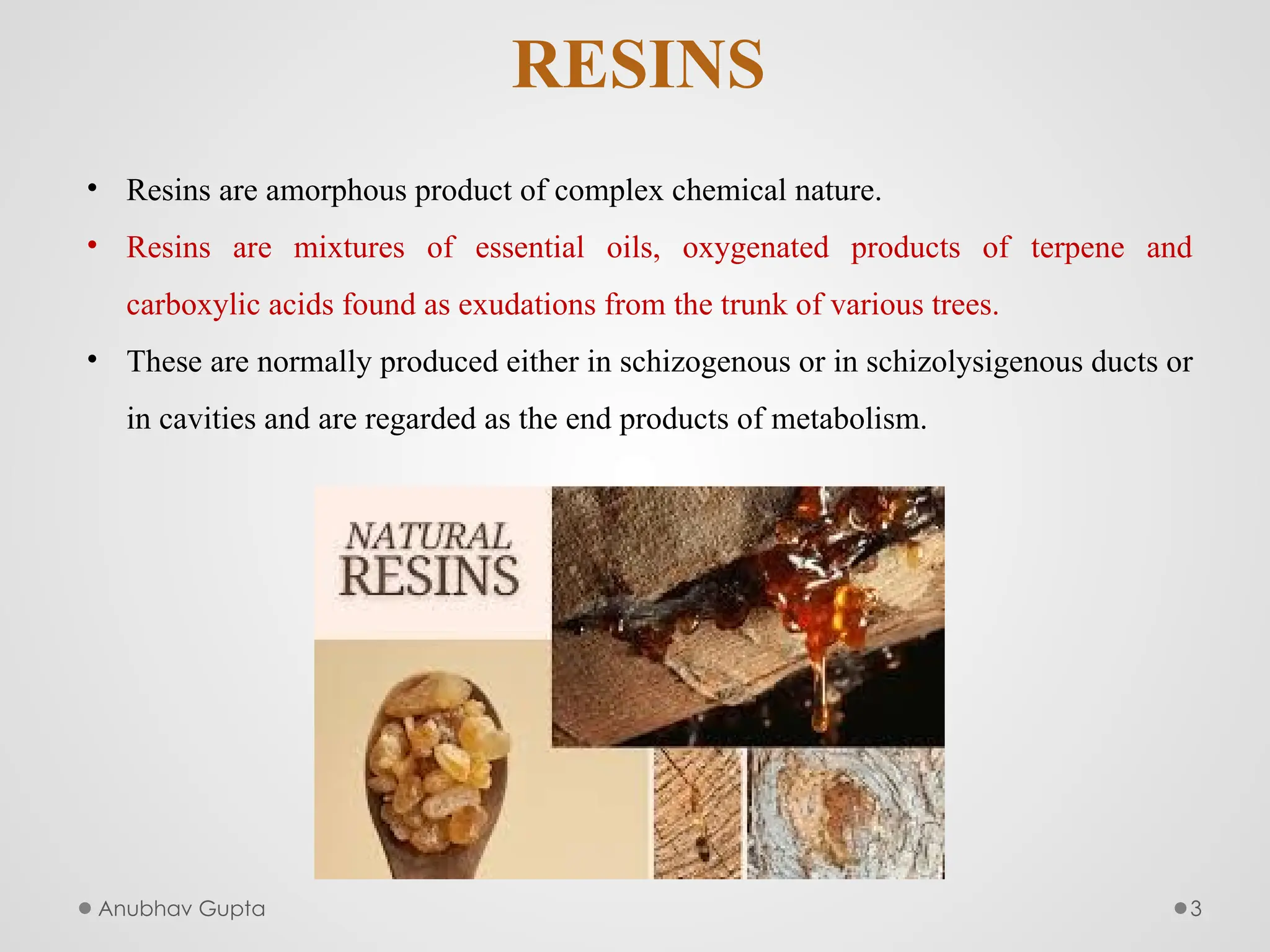
•Resins are amorphous product of complex chemical nature.
• Resins are mixtures of essential oils, oxygenated products of terpene and
carboxylic acids found as exudations from the trunk of various trees.
• These are normally produced either in schizogenous or in schizolysigenous ducts or
in cavities and are regarded as the end products of metabolism.
4.
Anubhav Gupta 4
RESINS
GENERALPROPERTIES:
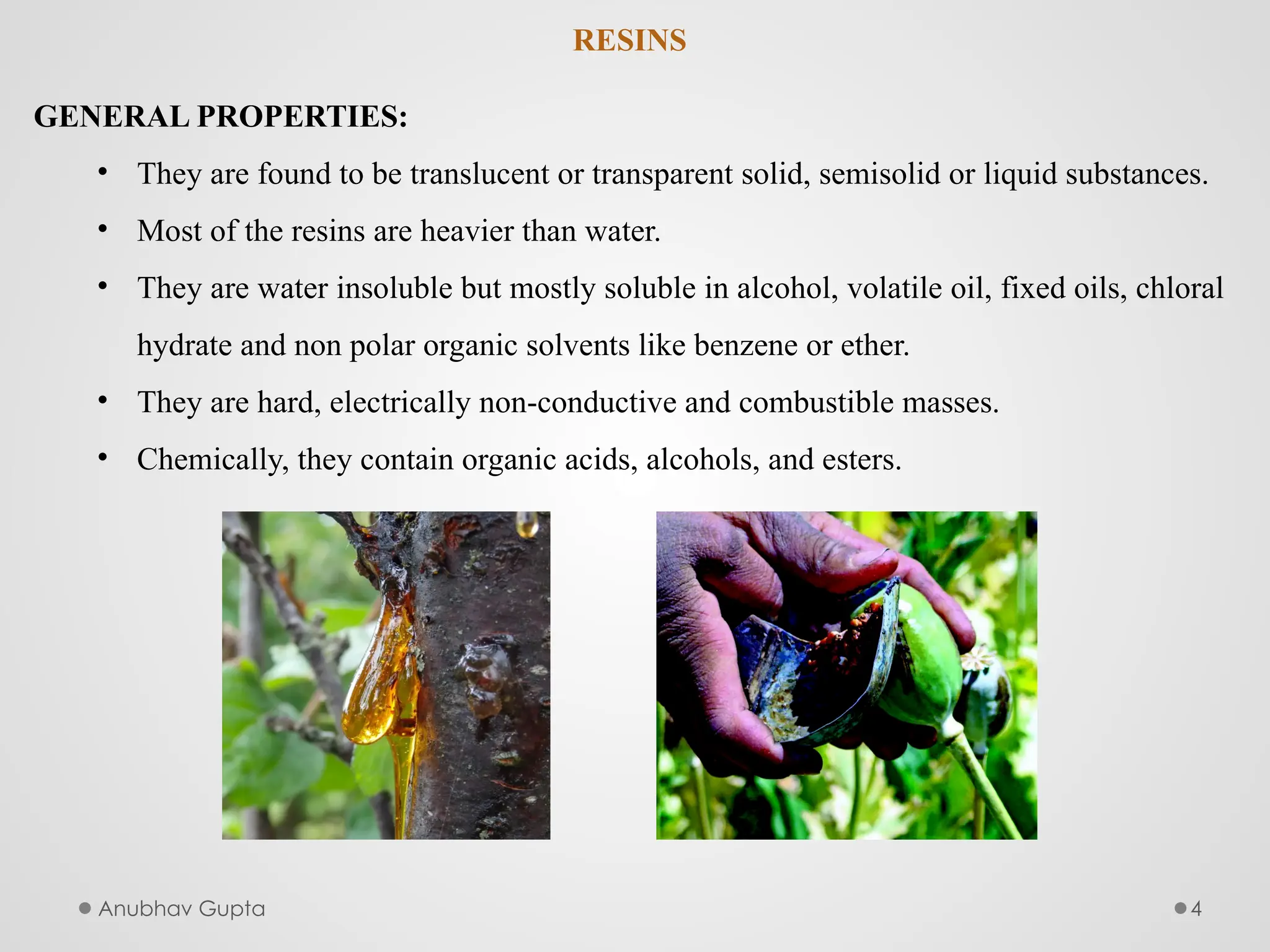
• They are found to be translucent or transparent solid, semisolid or liquid substances.
• Most of the resins are heavier than water.
• They are water insoluble but mostly soluble in alcohol, volatile oil, fixed oils, chloral
hydrate and non polar organic solvents like benzene or ether.
• They are hard, electrically non-conductive and combustible masses.
• Chemically, they contain organic acids, alcohols, and esters.
5.
Anubhav Gupta 5
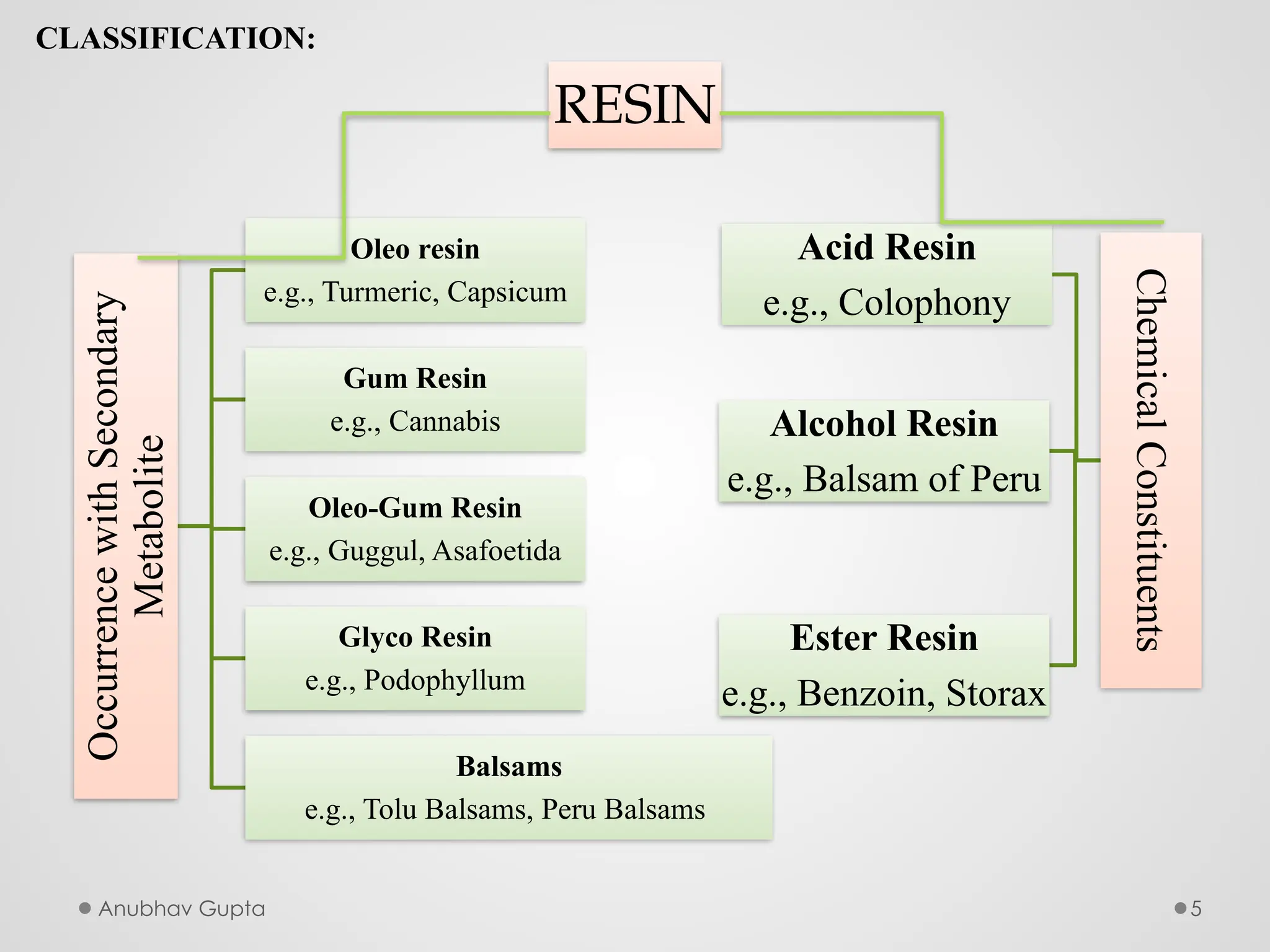
CLASSIFICATION:
RESIN
Occurrence
with
Secondary
Metabolite
Oleoresin
e.g., Turmeric, Capsicum
Gum Resin
e.g., Cannabis
Oleo-Gum Resin
e.g., Guggul, Asafoetida
Glyco Resin
e.g., Podophyllum
Balsams
e.g., Tolu Balsams, Peru Balsams
Chemical
Constituents
Acid Resin
e.g., Colophony
Alcohol Resin
e.g., Balsam of Peru
Ester Resin
e.g., Benzoin, Storax
6.
Anubhav Gupta 6
PODOPHYLOTOXIN
BIOLOGICALSOURCE:
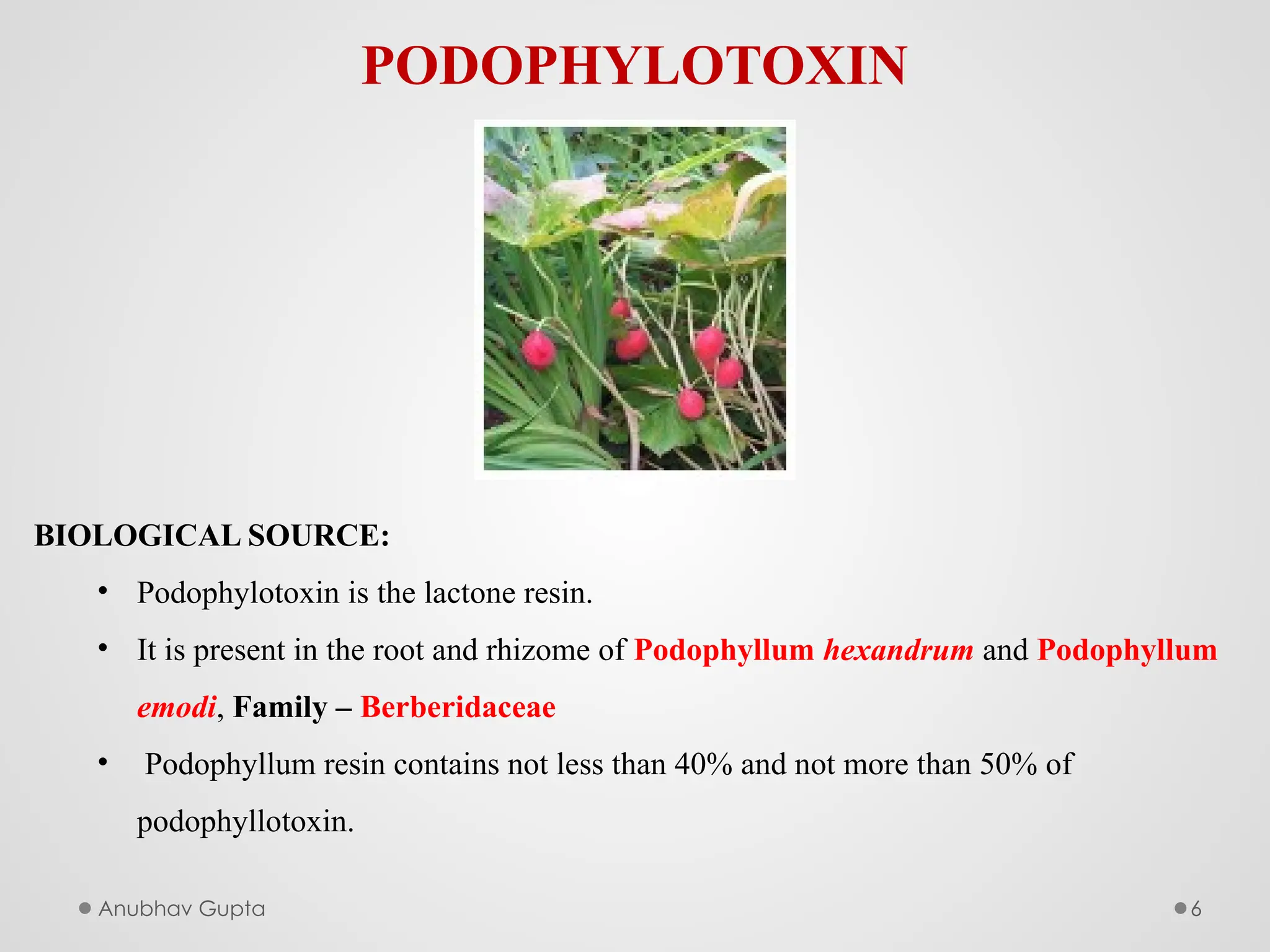
• Podophylotoxin is the lactone resin.
• It is present in the root and rhizome of Podophyllum hexandrum and Podophyllum
emodi, Family – Berberidaceae
• Podophyllum resin contains not less than 40% and not more than 50% of
podophyllotoxin.
7.
Anubhav Gupta 7
PODOPHYLOTOXIN
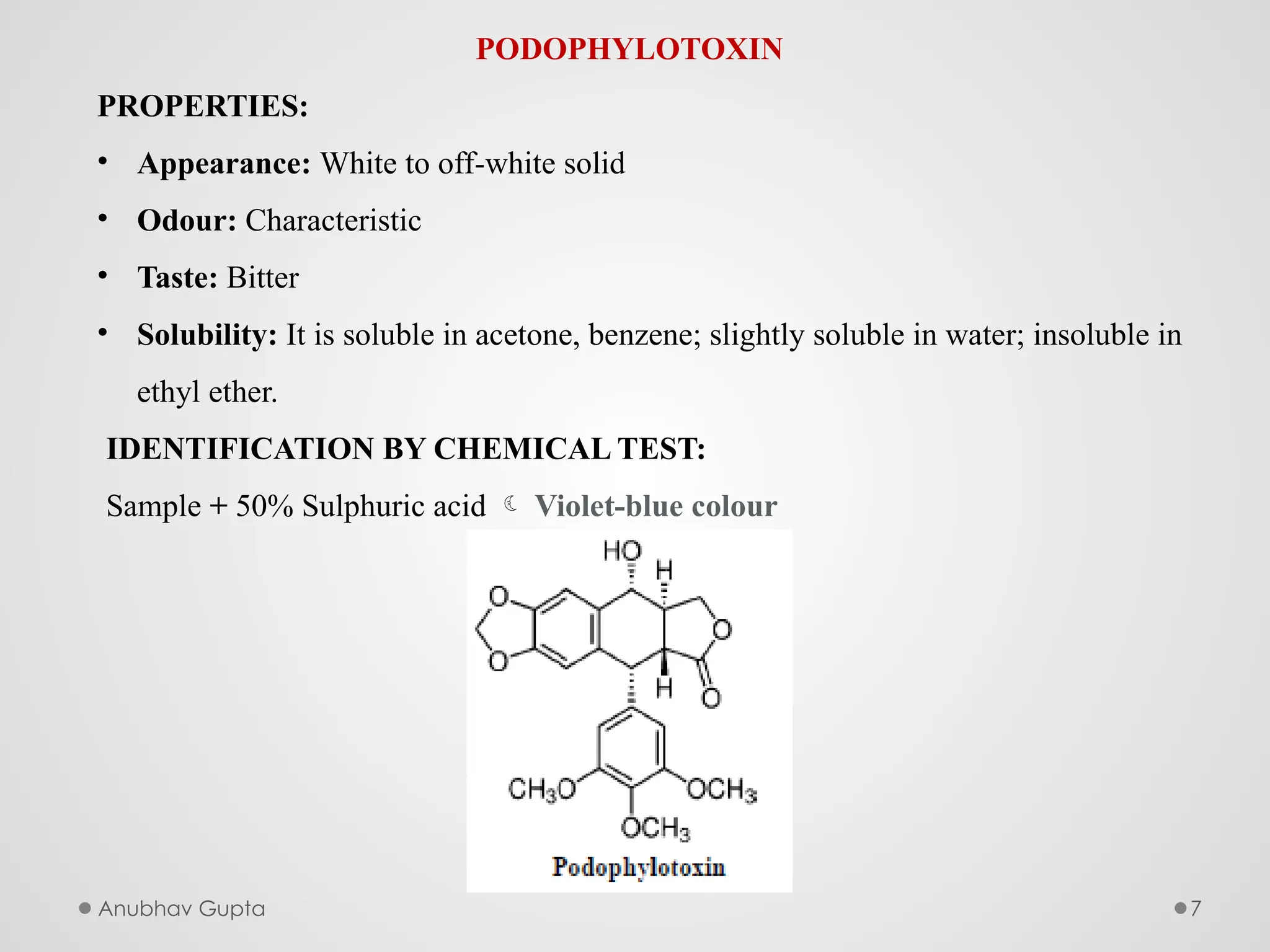
PROPERTIES:
•Appearance: White to off-white solid
• Odour: Characteristic
• Taste: Bitter
• Solubility: It is soluble in acetone, benzene; slightly soluble in water; insoluble in
ethyl ether.
IDENTIFICATION BY CHEMICAL TEST:
Sample + 50% Sulphuric acid Violet-blue colour
8.
Anubhav Gupta 8
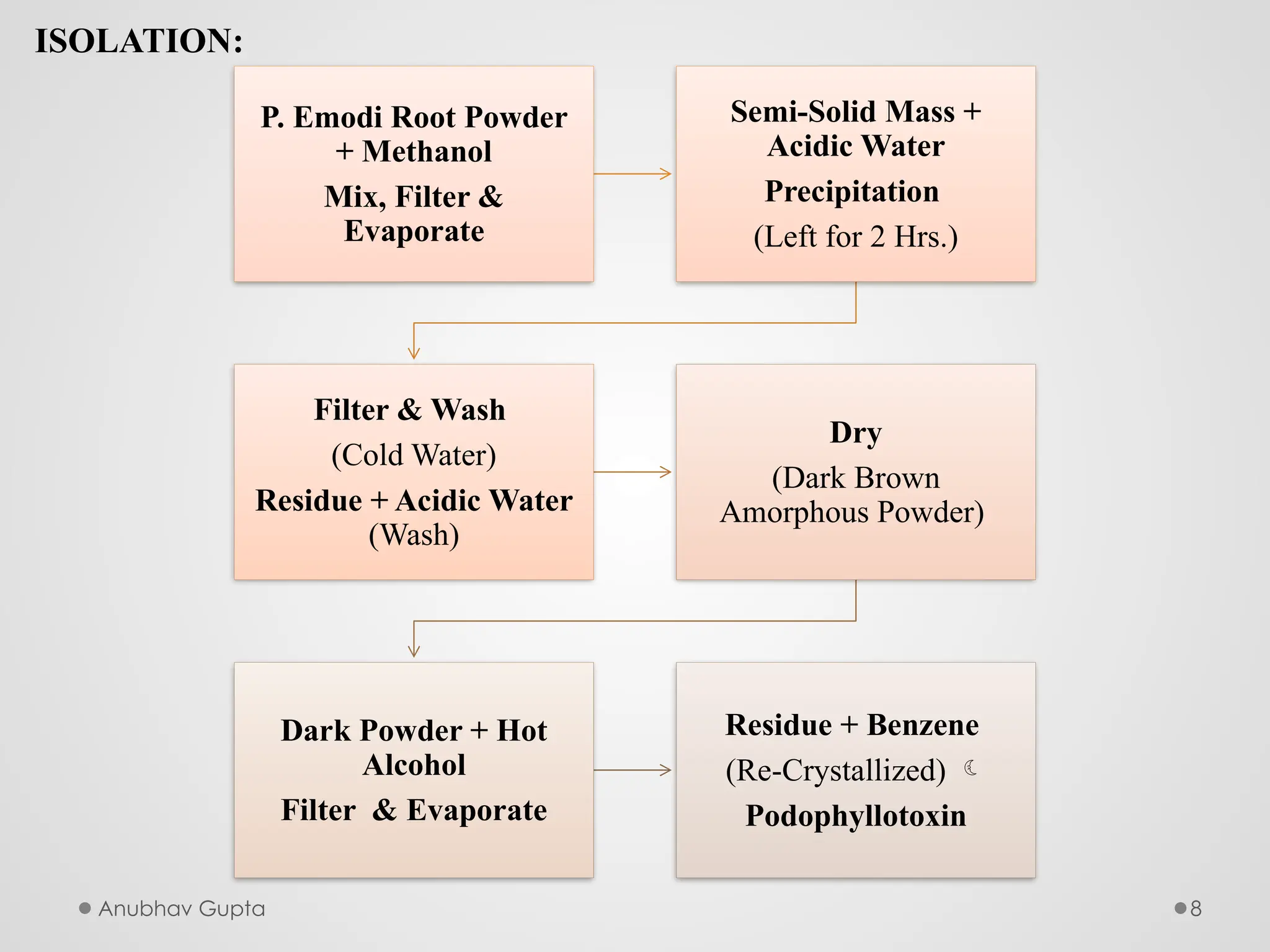
ISOLATION:
P.Emodi Root Powder
+ Methanol
Mix, Filter &
Evaporate
Semi-Solid Mass +
Acidic Water
Precipitation
(Left for 2 Hrs.)
Filter & Wash
(Cold Water)
Residue + Acidic Water
(Wash)
Dry
(Dark Brown
Amorphous Powder)
Dark Powder + Hot
Alcohol
Filter & Evaporate
Residue + Benzene
(Re-Crystallized)
Podophyllotoxin
9.
Anubhav Gupta 9
PODOPHYLOTOXIN
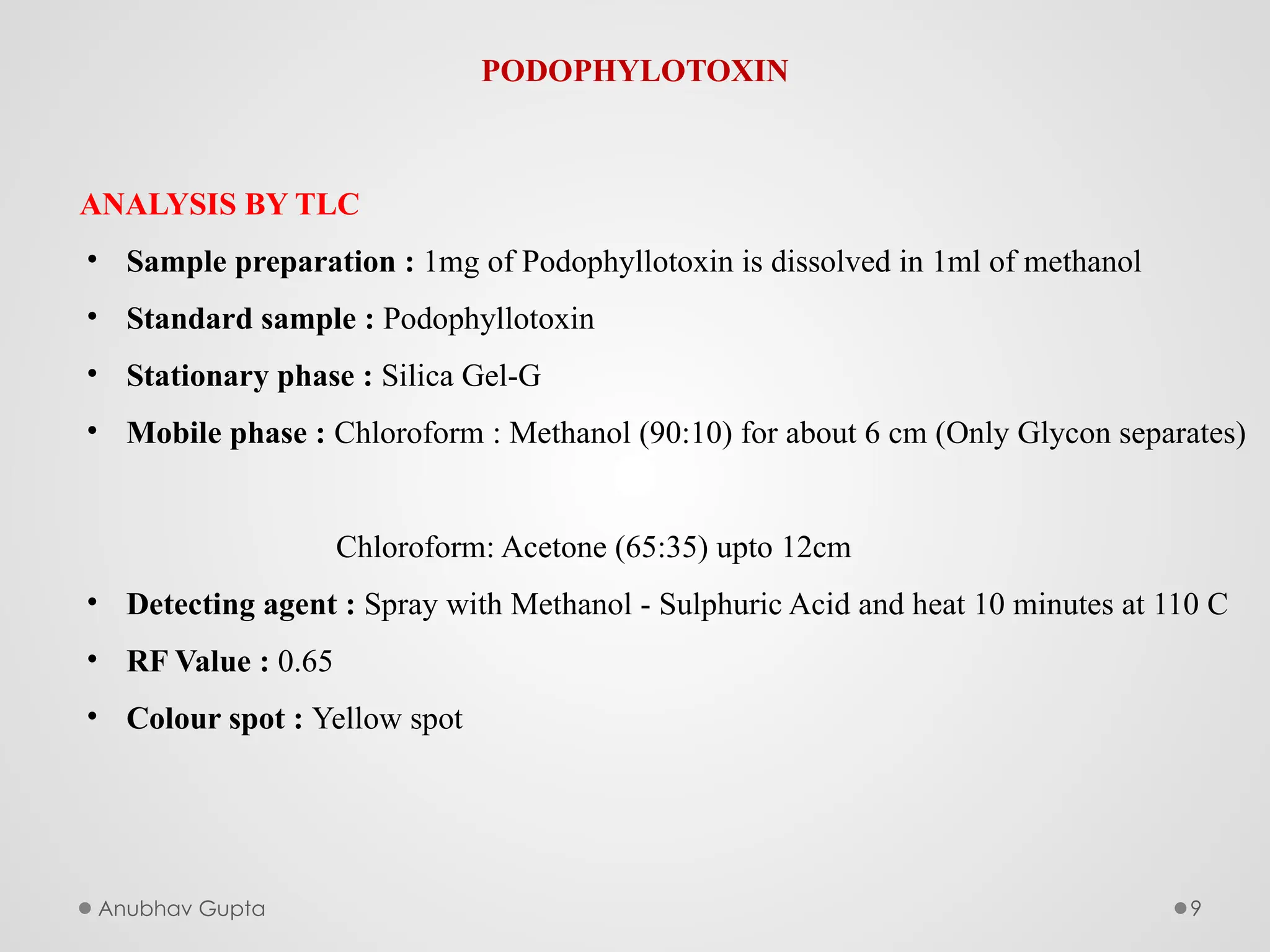
ANALYSISBY TLC
• Sample preparation : 1mg of Podophyllotoxin is dissolved in 1ml of methanol
• Standard sample : Podophyllotoxin
• Stationary phase : Silica Gel-G
• Mobile phase : Chloroform : Methanol (90:10) for about 6 cm (Only Glycon separates)
Chloroform: Acetone (65:35) upto 12cm
• Detecting agent : Spray with Methanol - Sulphuric Acid and heat 10 minutes at 110 C
• RF Value : 0.65
• Colour spot : Yellow spot
10.
Anubhav Gupta 10
PODOPHYLOTOXIN
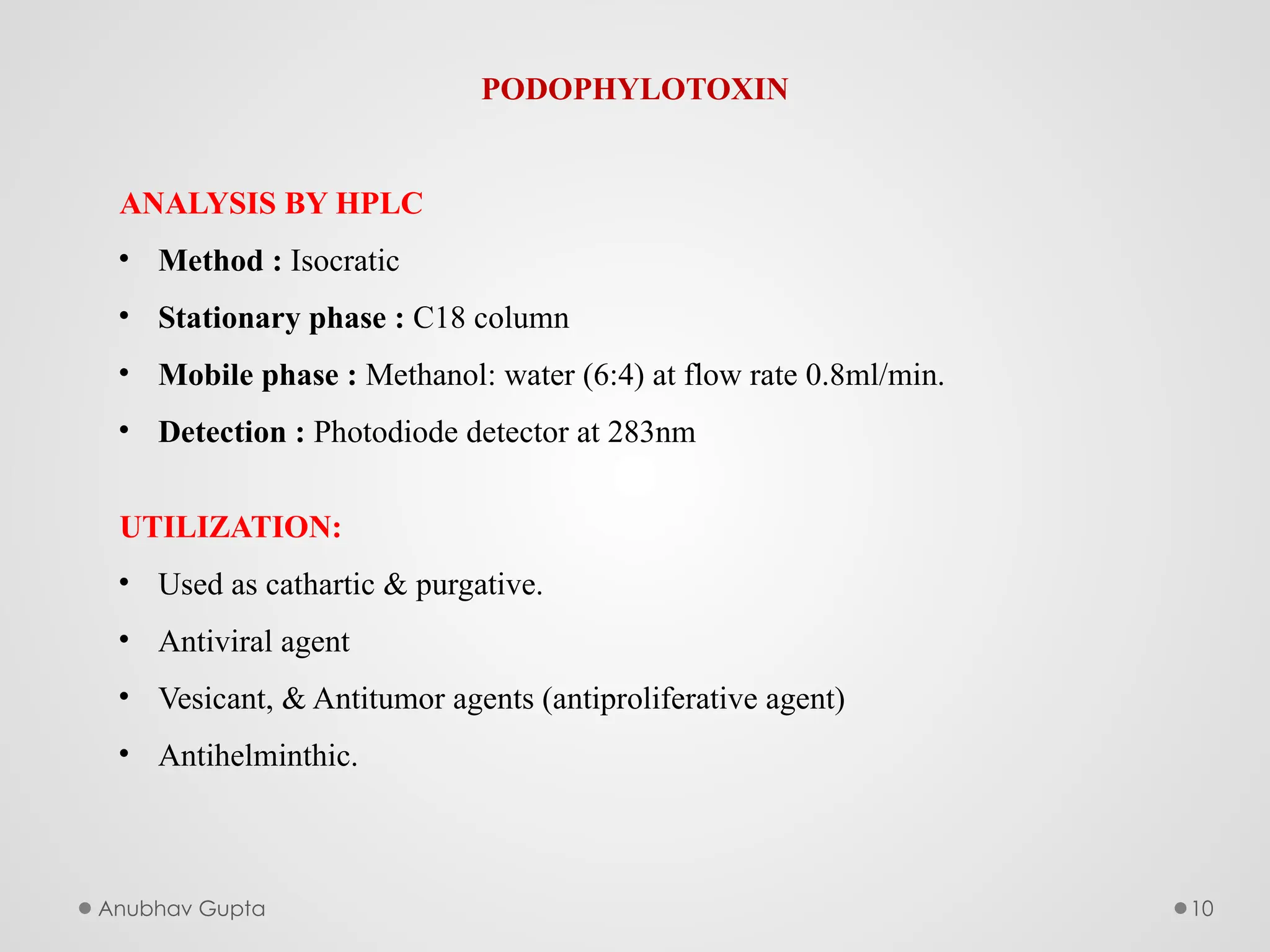
ANALYSISBY HPLC
• Method : Isocratic
• Stationary phase : C18 column
• Mobile phase : Methanol: water (6:4) at flow rate 0.8ml/min.
• Detection : Photodiode detector at 283nm
UTILIZATION:
• Used as cathartic & purgative.
• Antiviral agent
• Vesicant, & Antitumor agents (antiproliferative agent)
• Antihelminthic.
11.
Anubhav Gupta 11
CURCUMIN
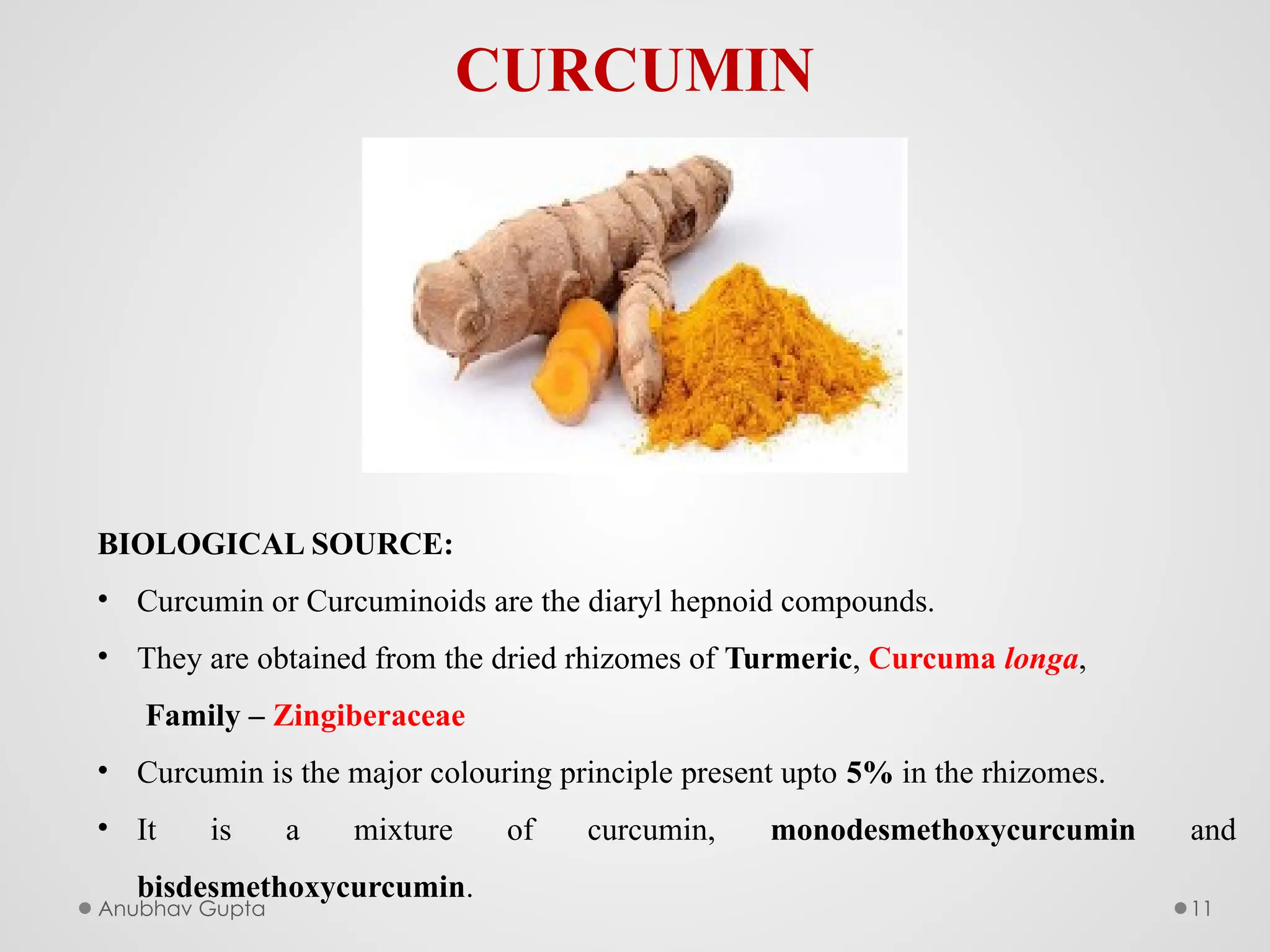
BIOLOGICALSOURCE:
• Curcumin or Curcuminoids are the diaryl hepnoid compounds.
• They are obtained from the dried rhizomes of Turmeric, Curcuma longa,
Family – Zingiberaceae
• Curcumin is the major colouring principle present upto 5% in the rhizomes.
• It is a mixture of curcumin, monodesmethoxycurcumin and
bisdesmethoxycurcumin.
12.
Anubhav Gupta 12
CURCUMIN
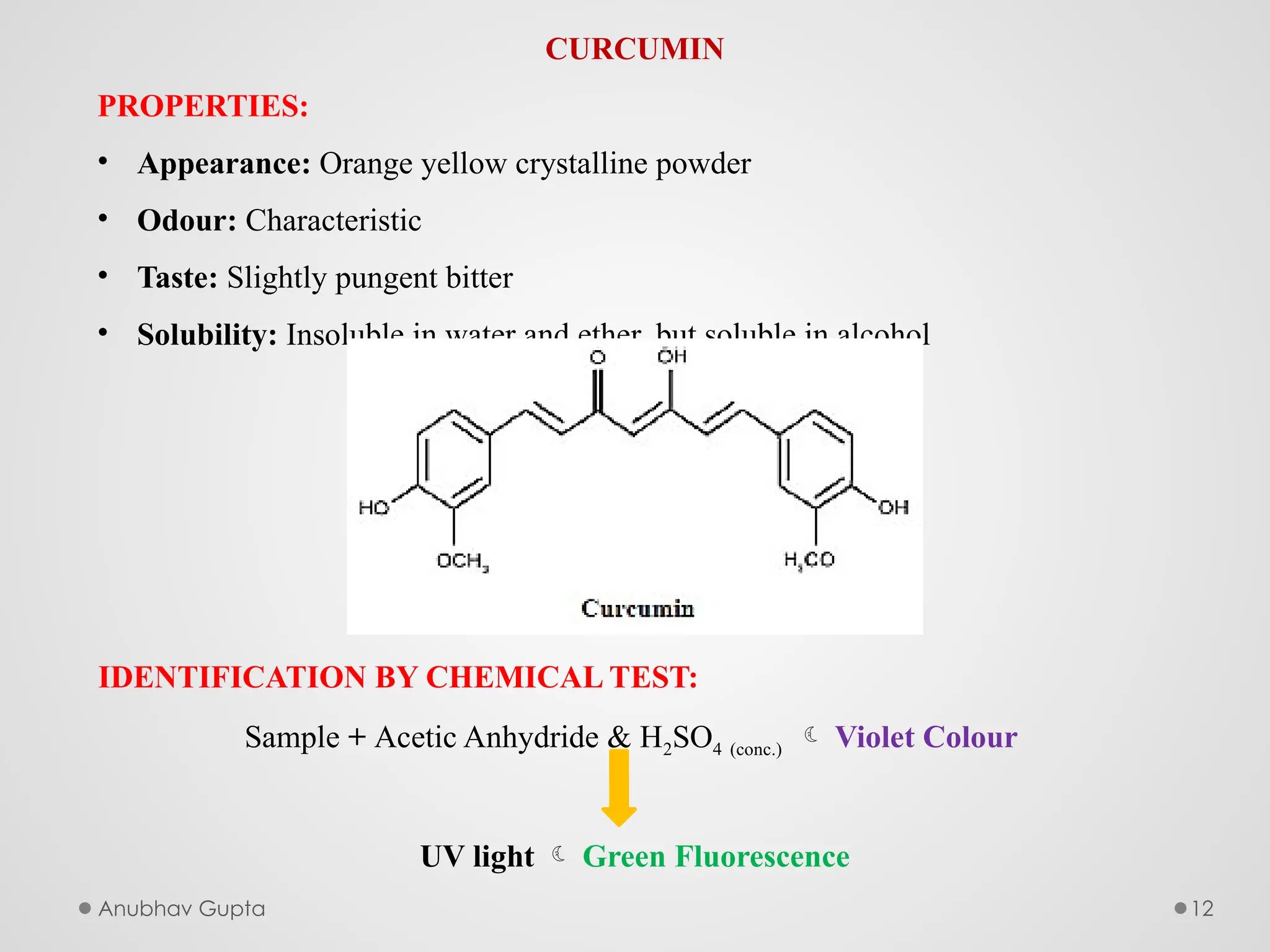
PROPERTIES:
•Appearance: Orange yellow crystalline powder
• Odour: Characteristic
• Taste: Slightly pungent bitter
• Solubility: Insoluble in water and ether, but soluble in alcohol
IDENTIFICATION BY CHEMICAL TEST:
Sample + Acetic Anhydride & H2SO4 (conc.) Violet Colour
UV light Green Fluorescence
13.
Anubhav Gupta 13
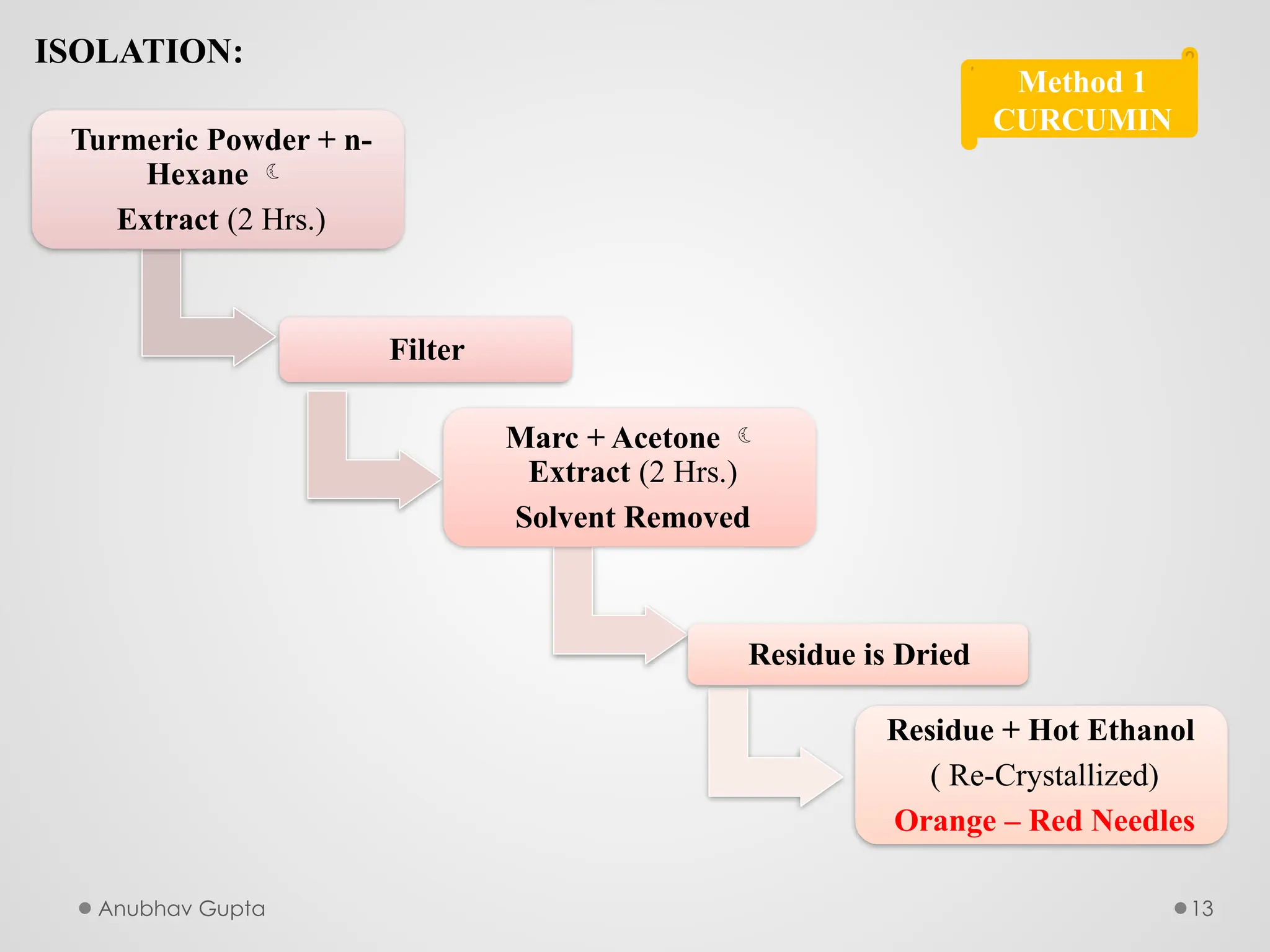
ISOLATION:
TurmericPowder + n-
Hexane
Extract (2 Hrs.)
Filter
Marc + Acetone
Extract (2 Hrs.)
Solvent Removed
Residue is Dried
Residue + Hot Ethanol
( Re-Crystallized)
Orange – Red Needles
Method 1
CURCUMIN
Anubhav Gupta 15
CURCUMIN
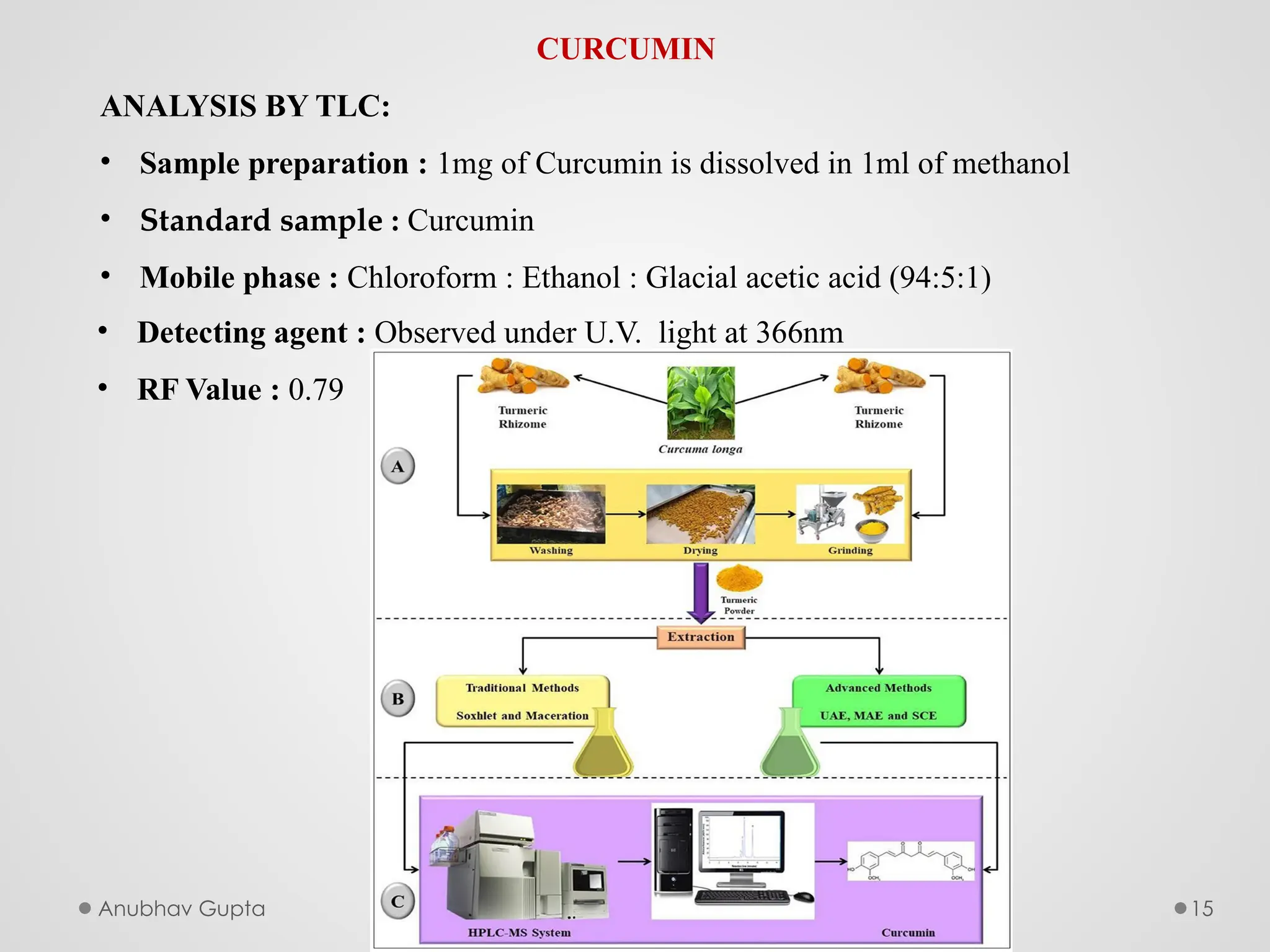
ANALYSISBY TLC:
• Sample preparation : 1mg of Curcumin is dissolved in 1ml of methanol
• Standard sample : Curcumin
• Mobile phase : Chloroform : Ethanol : Glacial acetic acid (94:5:1)
• Detecting agent : Observed under U.V. light at 366nm
• RF Value : 0.79
16.
Anubhav Gupta 16
CURCUMIN
ANALYSISBY HPLC:
• Method : Isocratic
• Stationary phase : C18 Column
• Mobile phase : Methanol: 2% Acetic acid and Acetonitrile
• Detection : UV -Visible detection 425nm
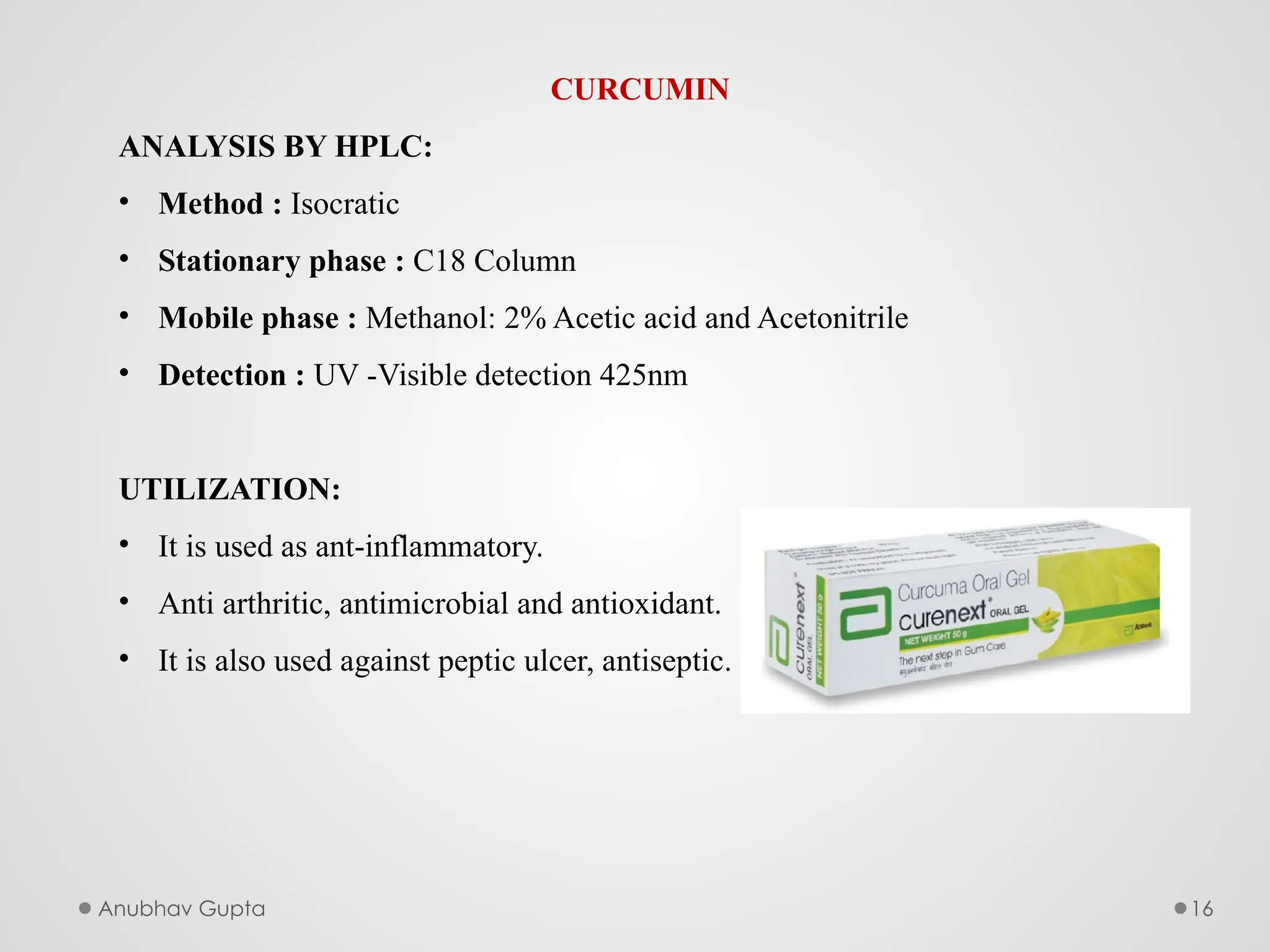
UTILIZATION:
• It is used as ant-inflammatory.
• Anti arthritic, antimicrobial and antioxidant.
• It is also used against peptic ulcer, antiseptic.