Laboratory Animal
Handling Technique
BY
Yogesh K.Chaudhari
M Pharm(2nd
) (Pharmacology)
MUMBAI UNIVERSITY,
MUMBAI
Laboratory Animal
Handling Technique
Mouse
- Rat
- Rabbit
Objective
To comply with the Animal Welfare
Ordinance and avoid mishandling of animal
in research
To provide basic concepts of animal handling
technique to new animal user
While offering our concept and techniques to
our animal user, we also encourage
comments from experienced animal users.
By doing so, we would enrich our knowledge
in the field of laboratory animal research on
both sides and further benefit animal welfare
as well as the credibility of research result in
our university
Laboratory Animal
Handling Technique -
Mouse
A. Blood collection from tail vein
B. Blood collection from orbital sinus
C. Blood collection from cardiac puncture
D. Blood collection from saphenous vein
E. Intraperitoneal injection
F.Subcutaneous injection
G. Oral Feeding
H. Sexing
Blood Collection From
Tail in Mouse
For collection of small amount of
blood (Approximate 0.1 ml )
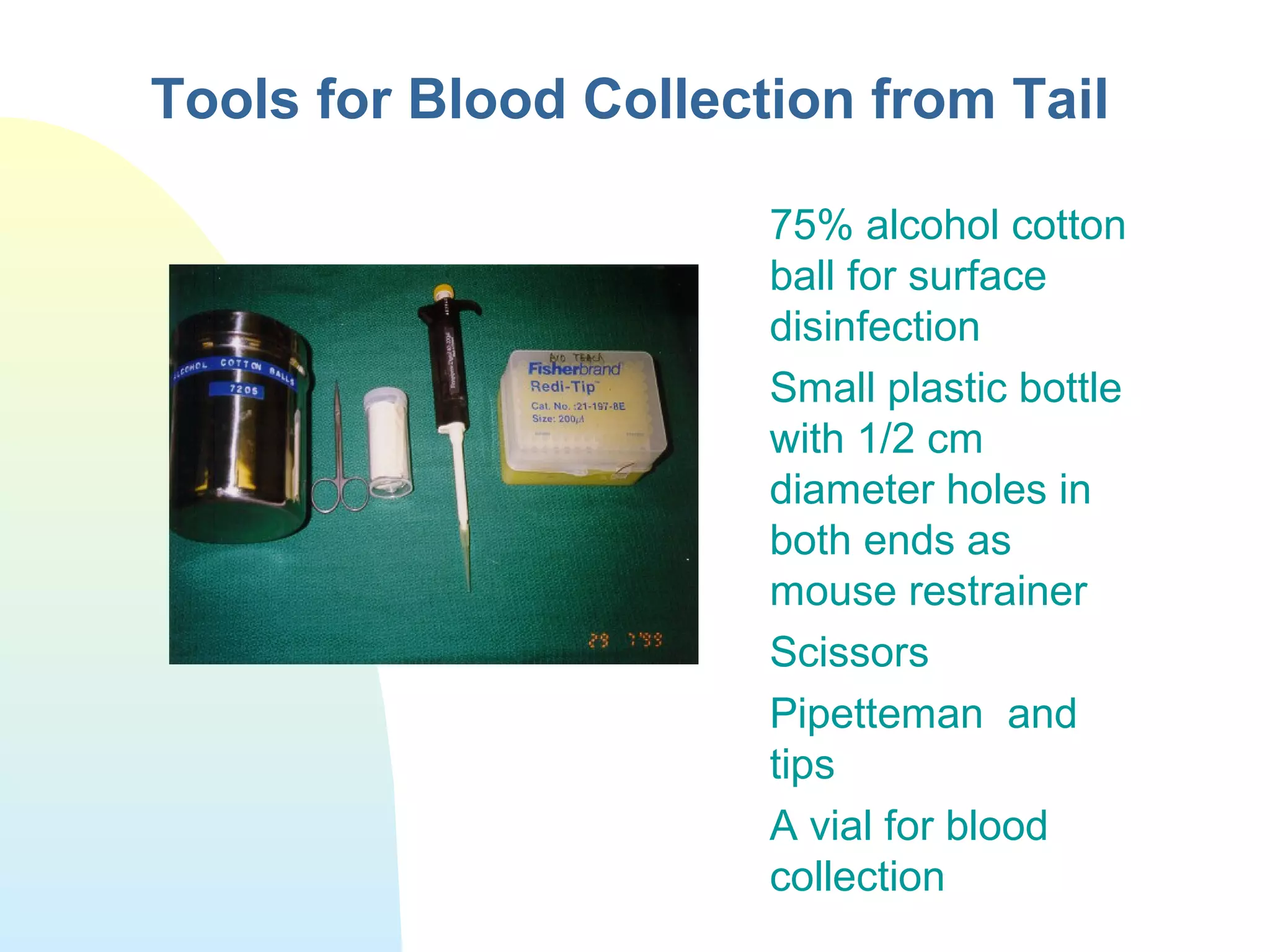
Tools for Blood Collection from Tail
75% alcohol cotton
ball for surface
disinfection
Small plastic bottle
with 1/2 cm
diameter holes in
both ends as
mouse restrainer
Scissors
Pipetteman and
tips
A vial for blood
collection
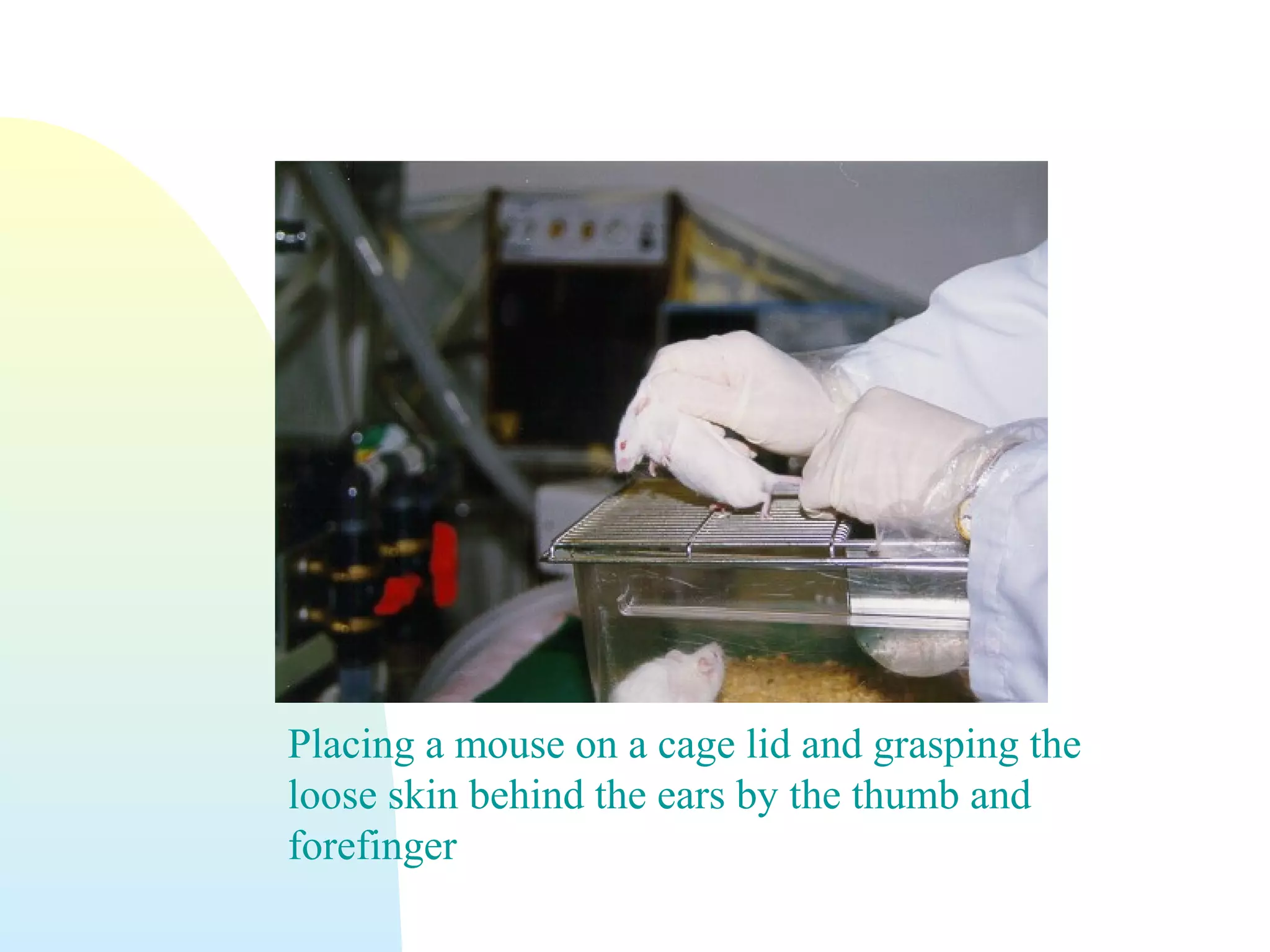
Placing a mouse on a cage lid and grasping the
loose skin behind the ears by the thumb and
forefinger
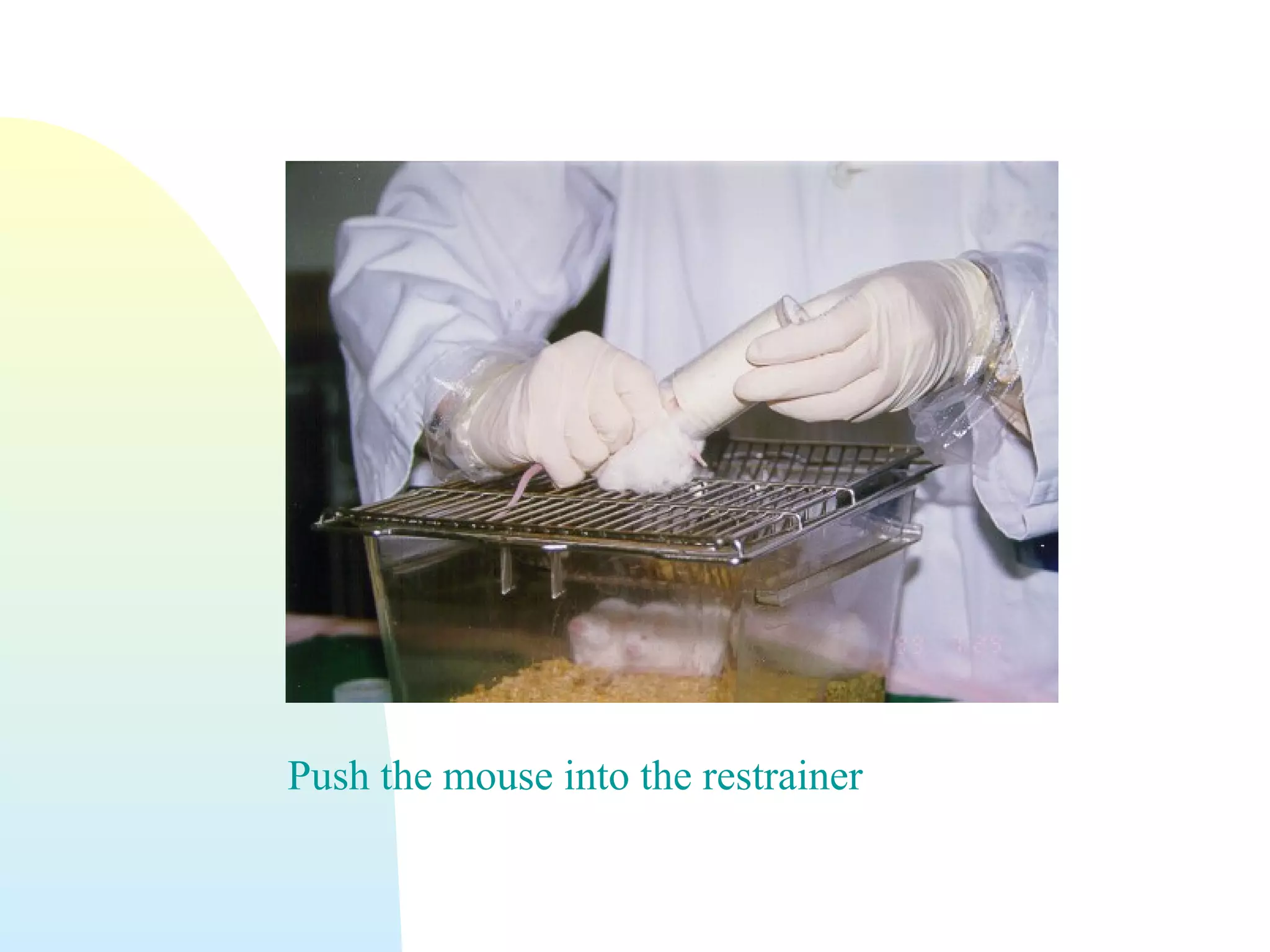
Push the mouse into the restrainer
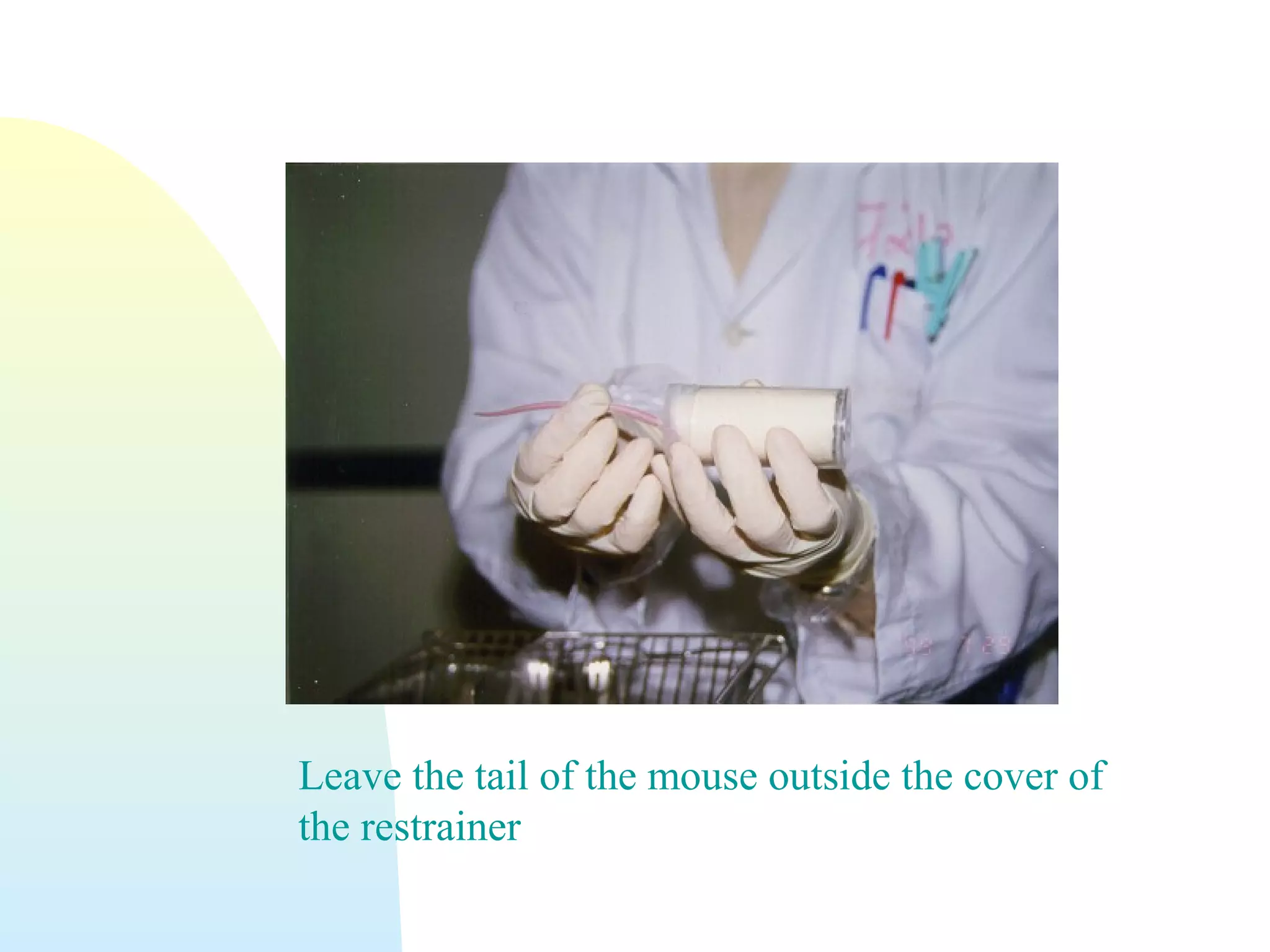
Leave the tail of the mouse outside the cover of
the restrainer
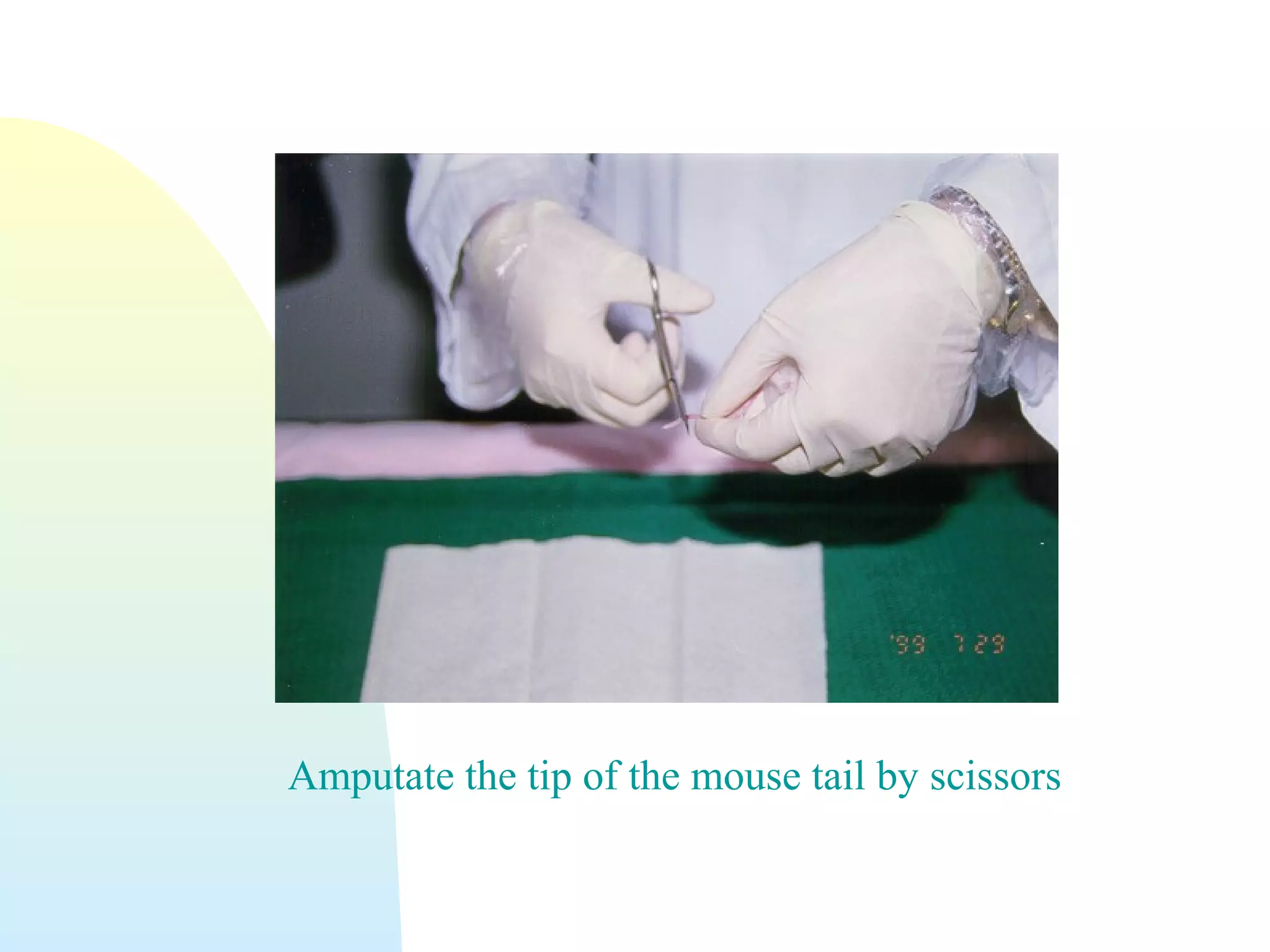
Amputate the tip of the mouse tail by scissors
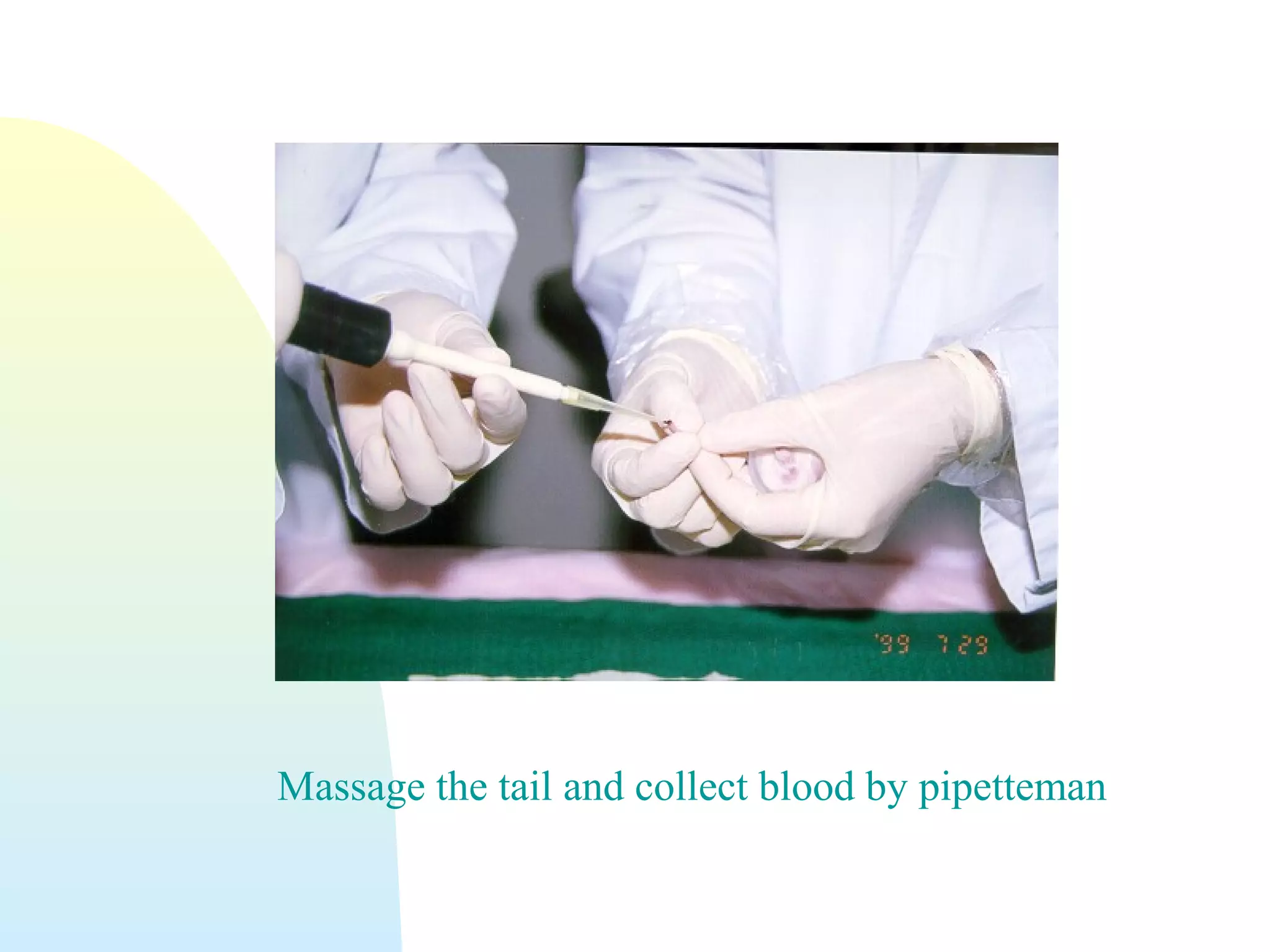
Massage the tail and collect blood by pipetteman
Blood Collection From
Orbital Sinus in Mouse
Should apply anesthetic before blood
withdraw
A convenience and easy apply
method for blood collection in mouse
Collect amount up to 0.5 ml
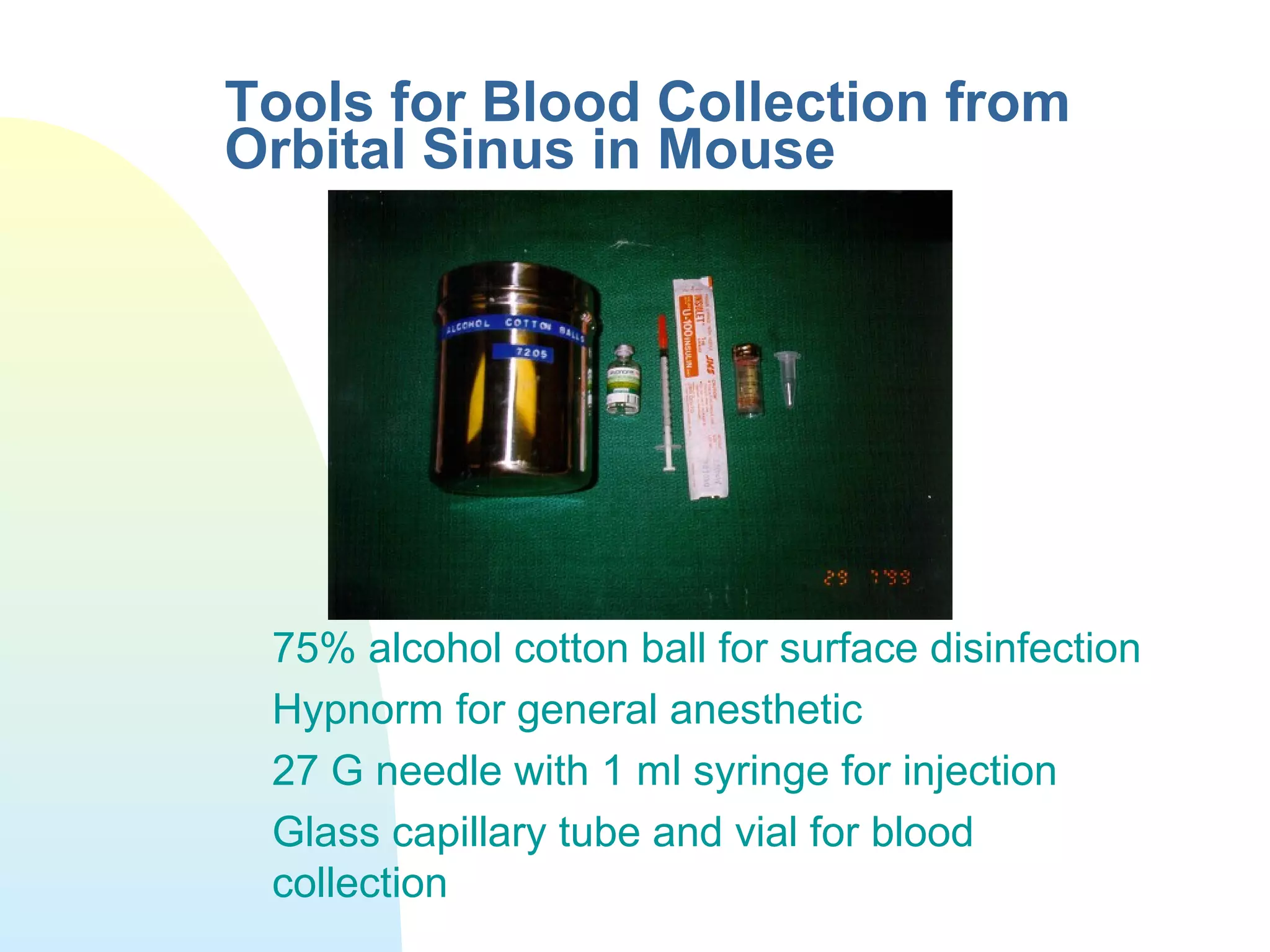
Tools for Blood Collection from
Orbital Sinus in Mouse
75% alcohol cotton ball for surface disinfection
Hypnorm for general anesthetic
27 G needle with 1 ml syringe for injection
Glass capillary tube and vial for blood
collection
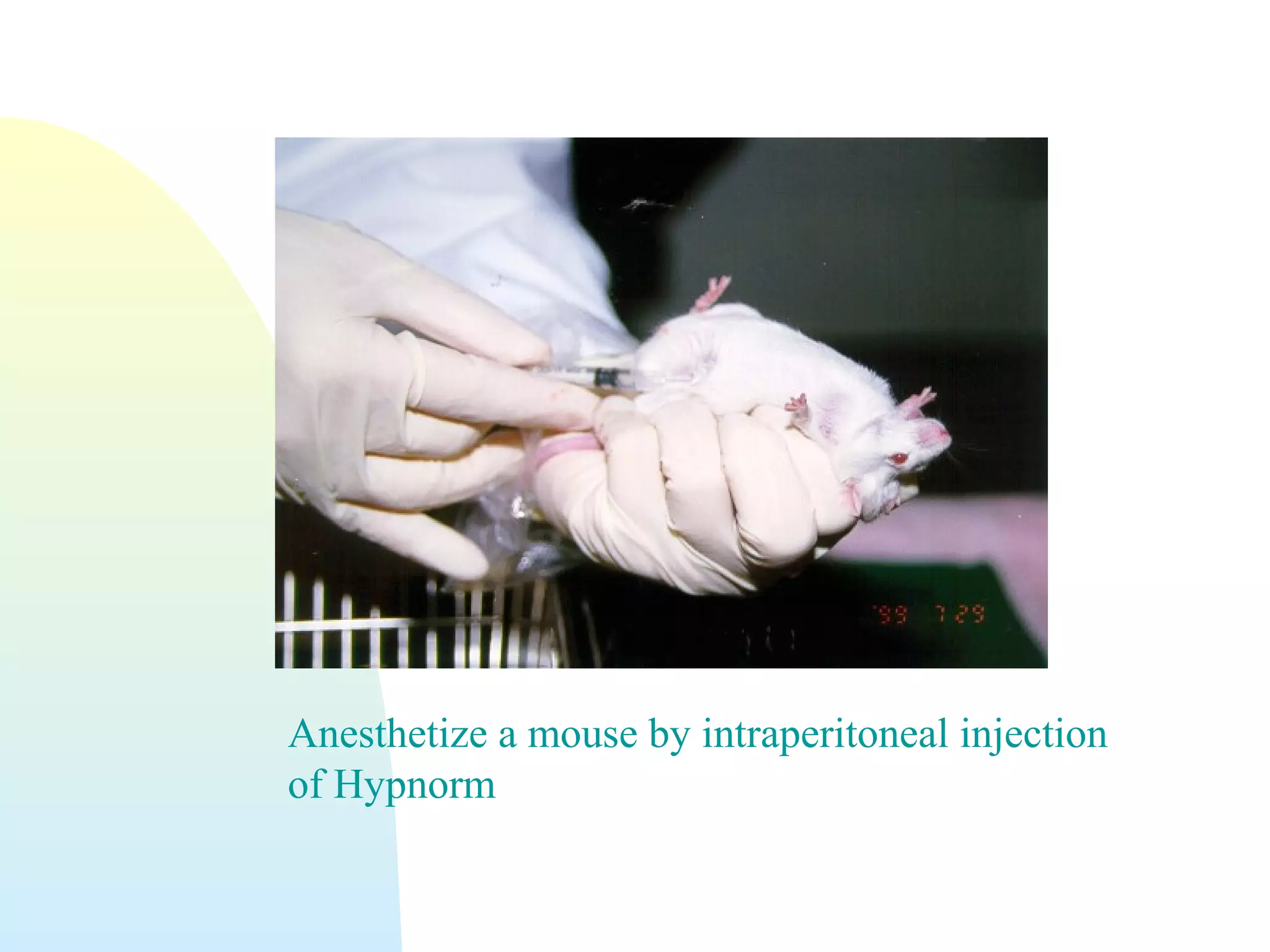
Anesthetize a mouse by intraperitoneal injection
of Hypnorm
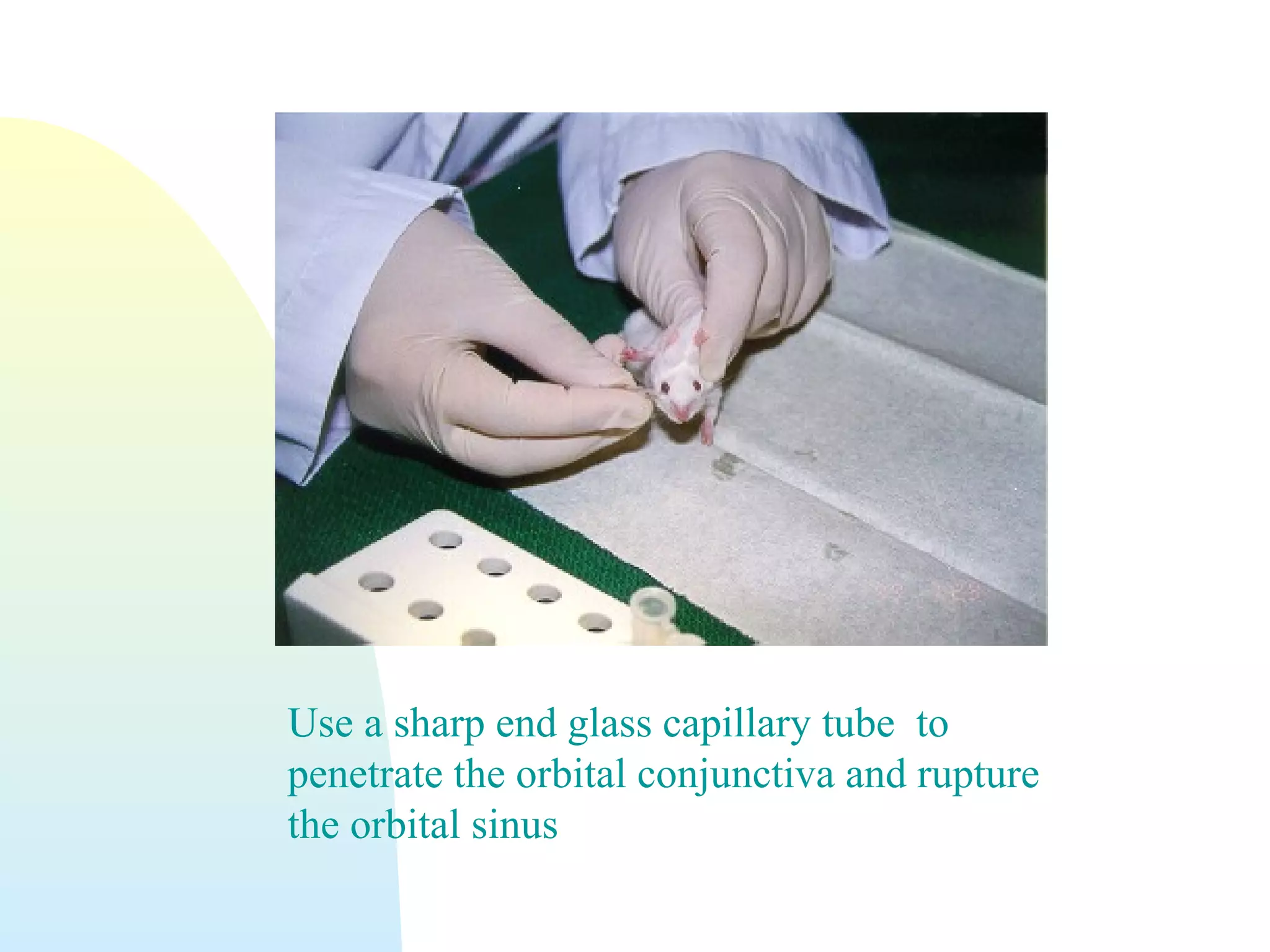
Use a sharp end glass capillary tube to
penetrate the orbital conjunctiva and rupture
the orbital sinus
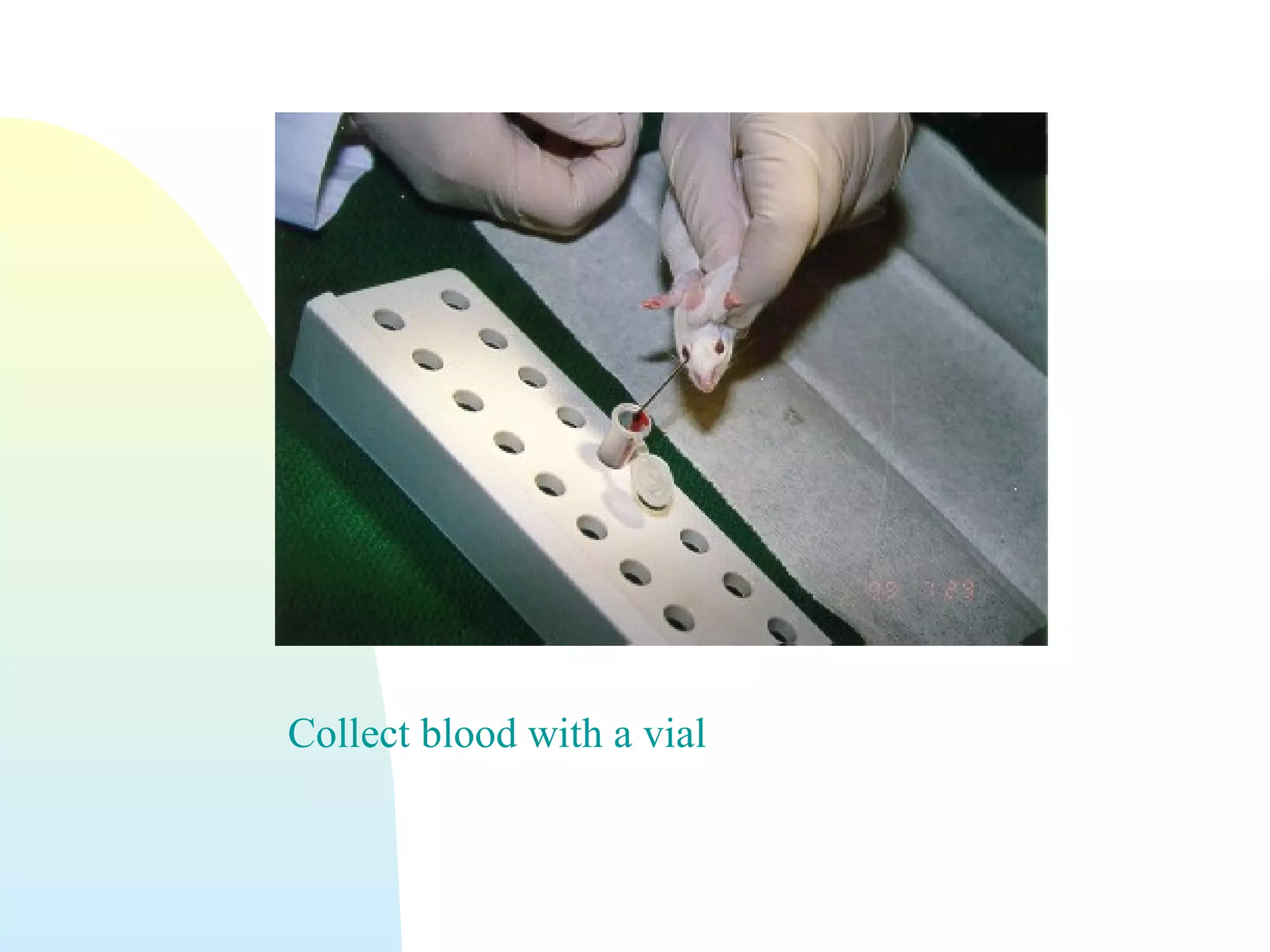
Collect blood with a vial
Blood Collection From
Cardiac Puncture in
Mouse
For collect up to 1 ml of blood within
a short period of time
Must be performed under general
anesthetic
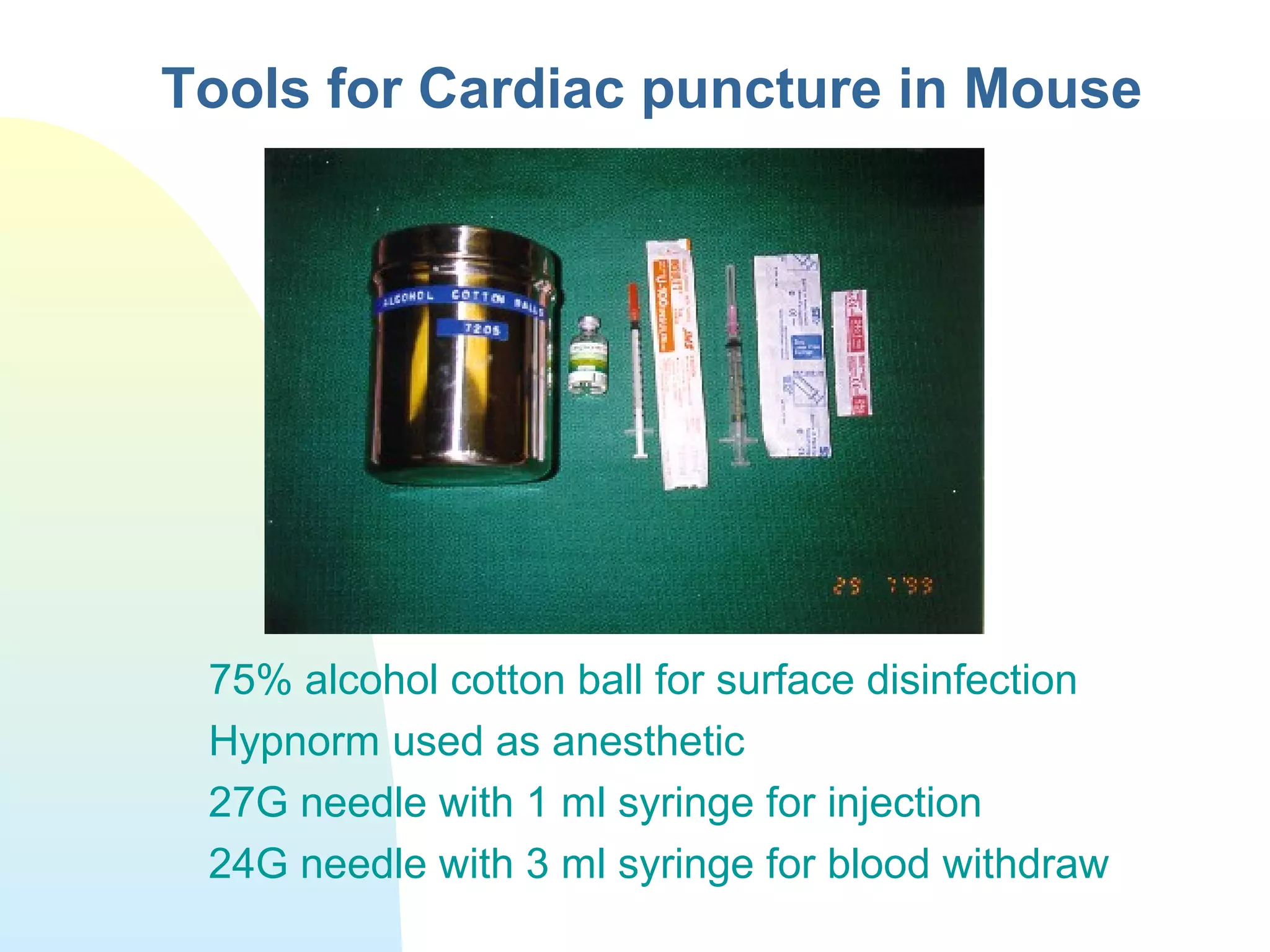
Tools for Cardiac puncture in Mouse
75% alcohol cotton ball for surface disinfection
Hypnorm used as anesthetic
27G needle with 1 ml syringe for injection
24G needle with 3 ml syringe for blood withdraw
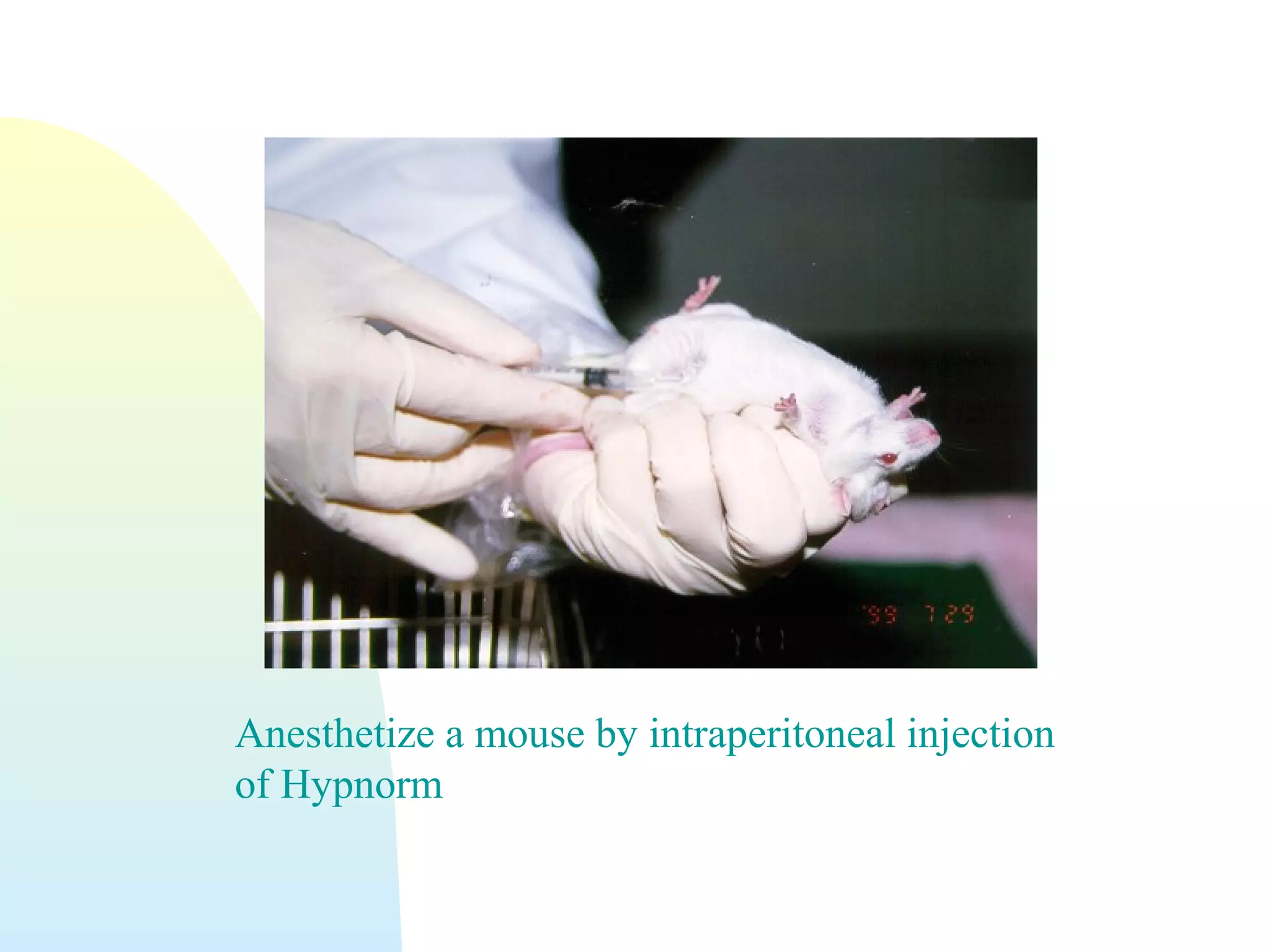
Anesthetize a mouse by intraperitoneal injection
of Hypnorm
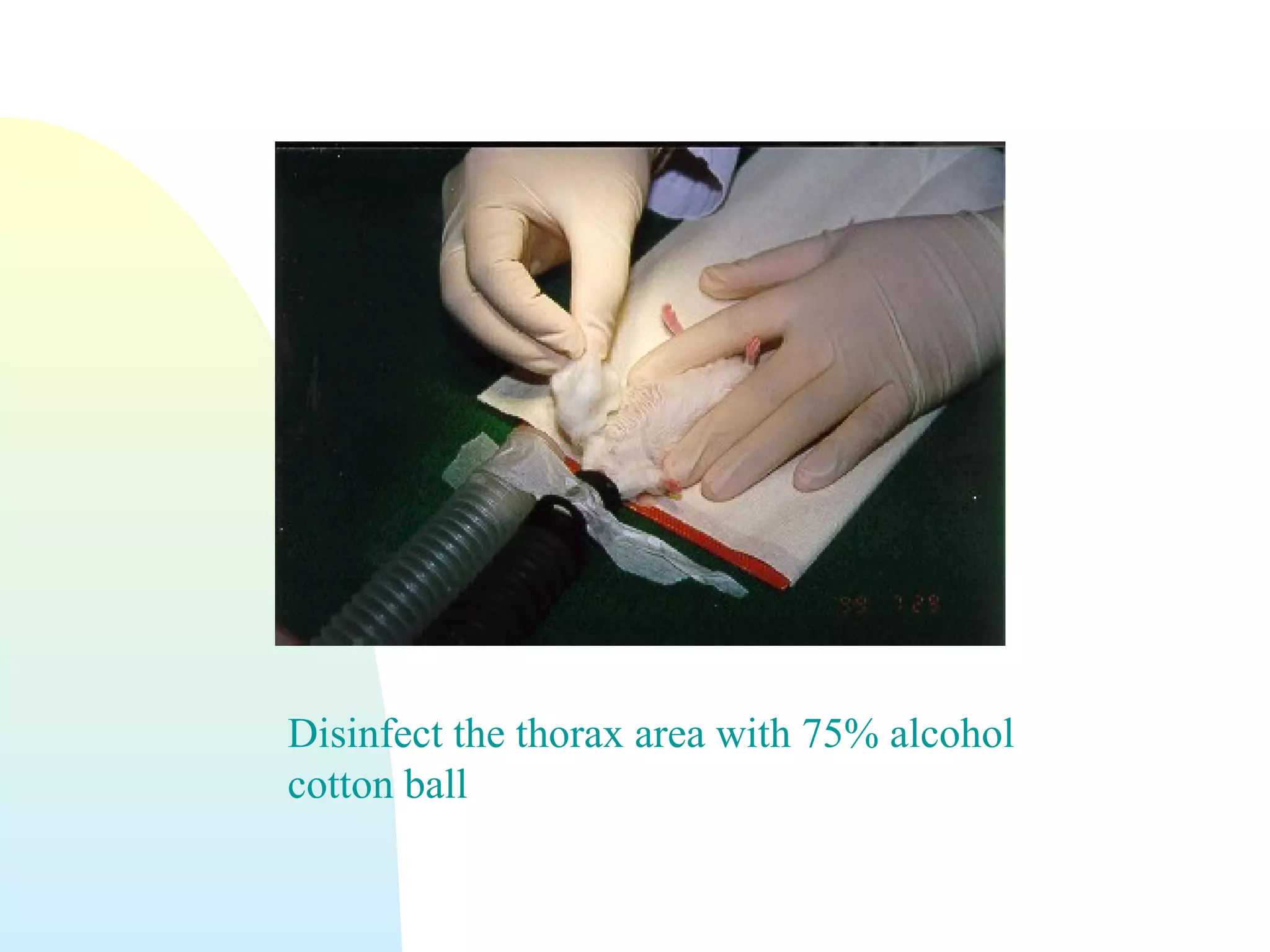
Disinfect the thorax area with 75% alcohol
cotton ball
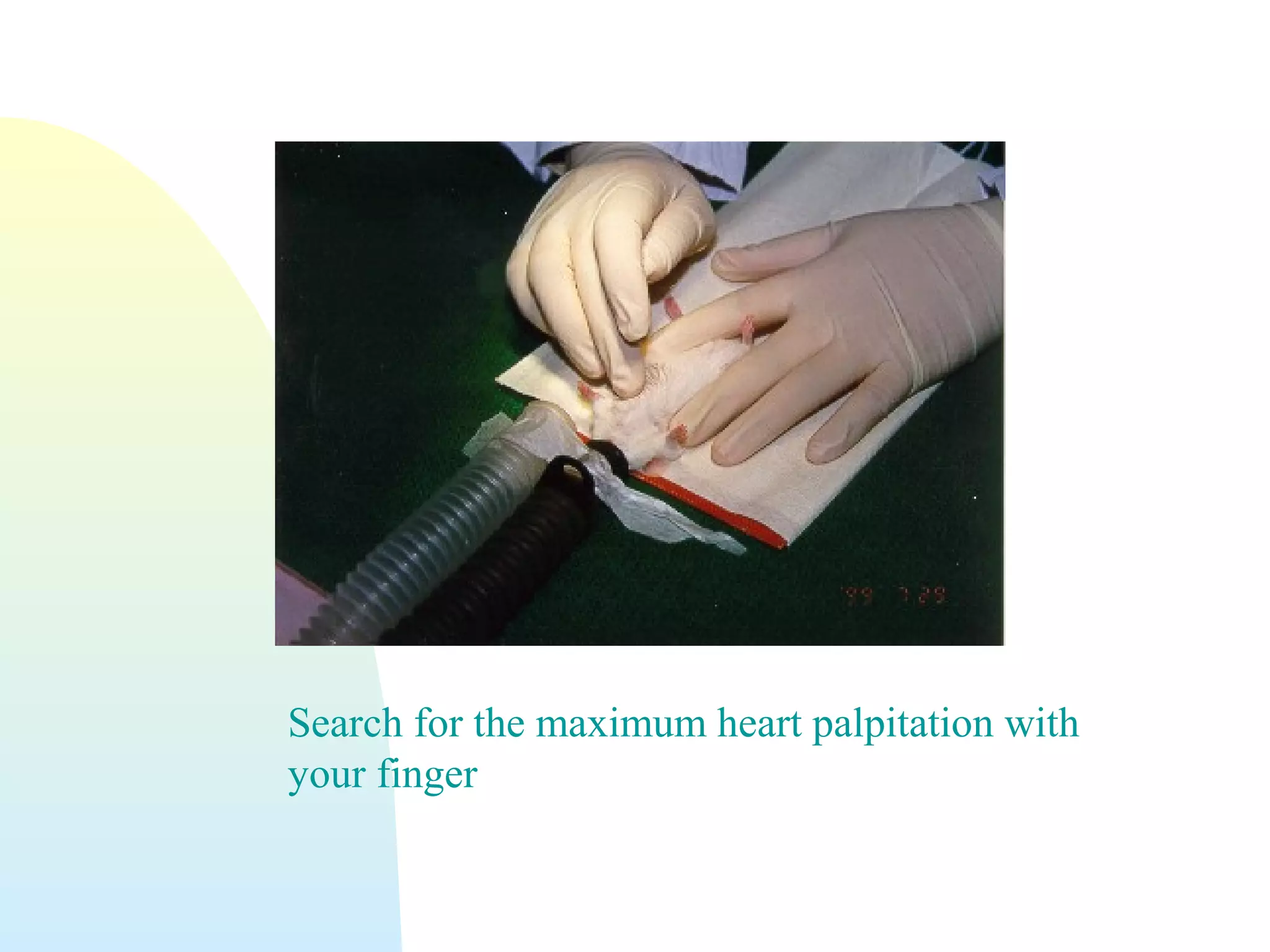
Search for the maximum heart palpitation with
your finger
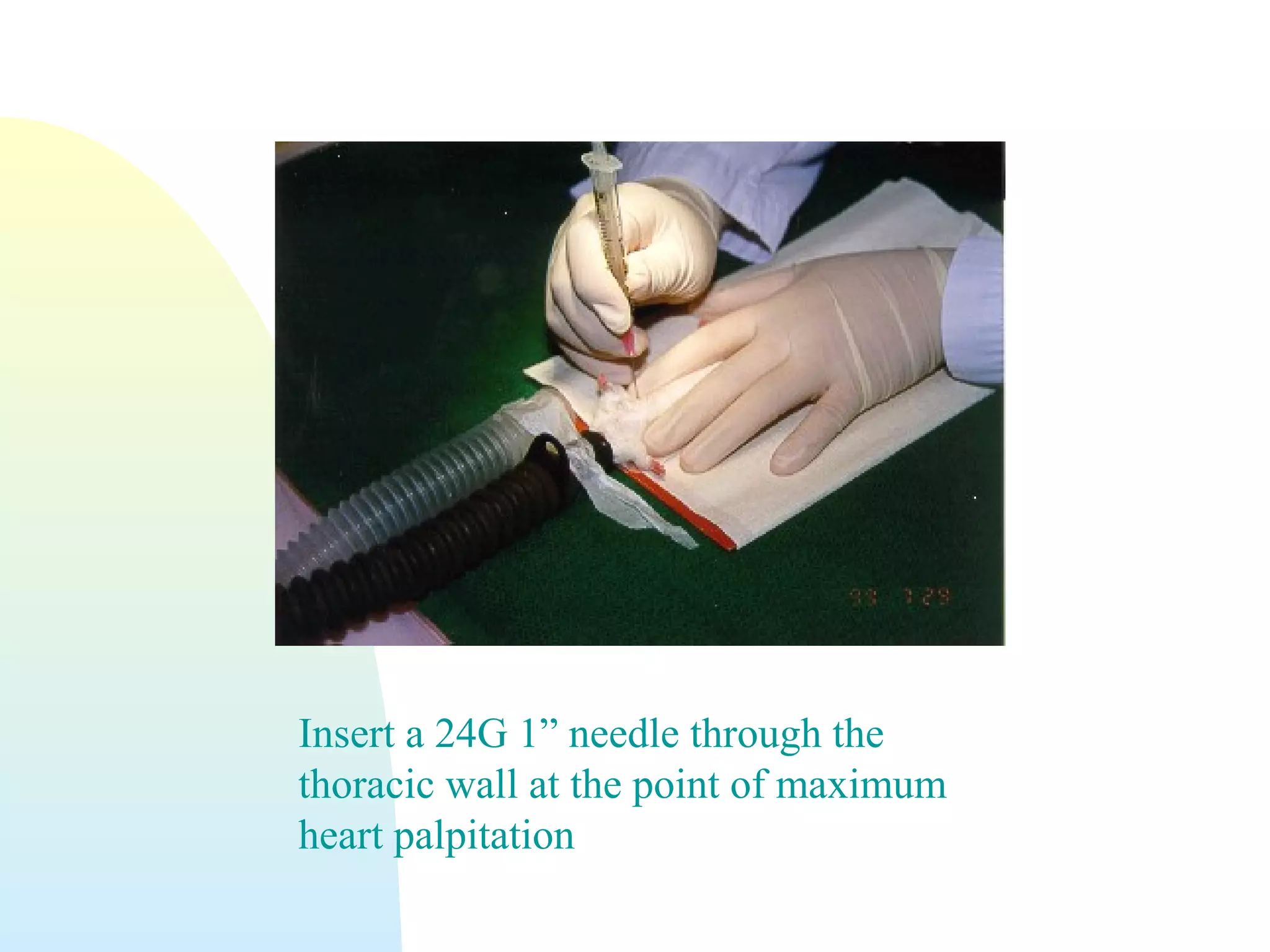
Insert a 24G 1” needle through the
thoracic wall at the point of maximum
heart palpitation
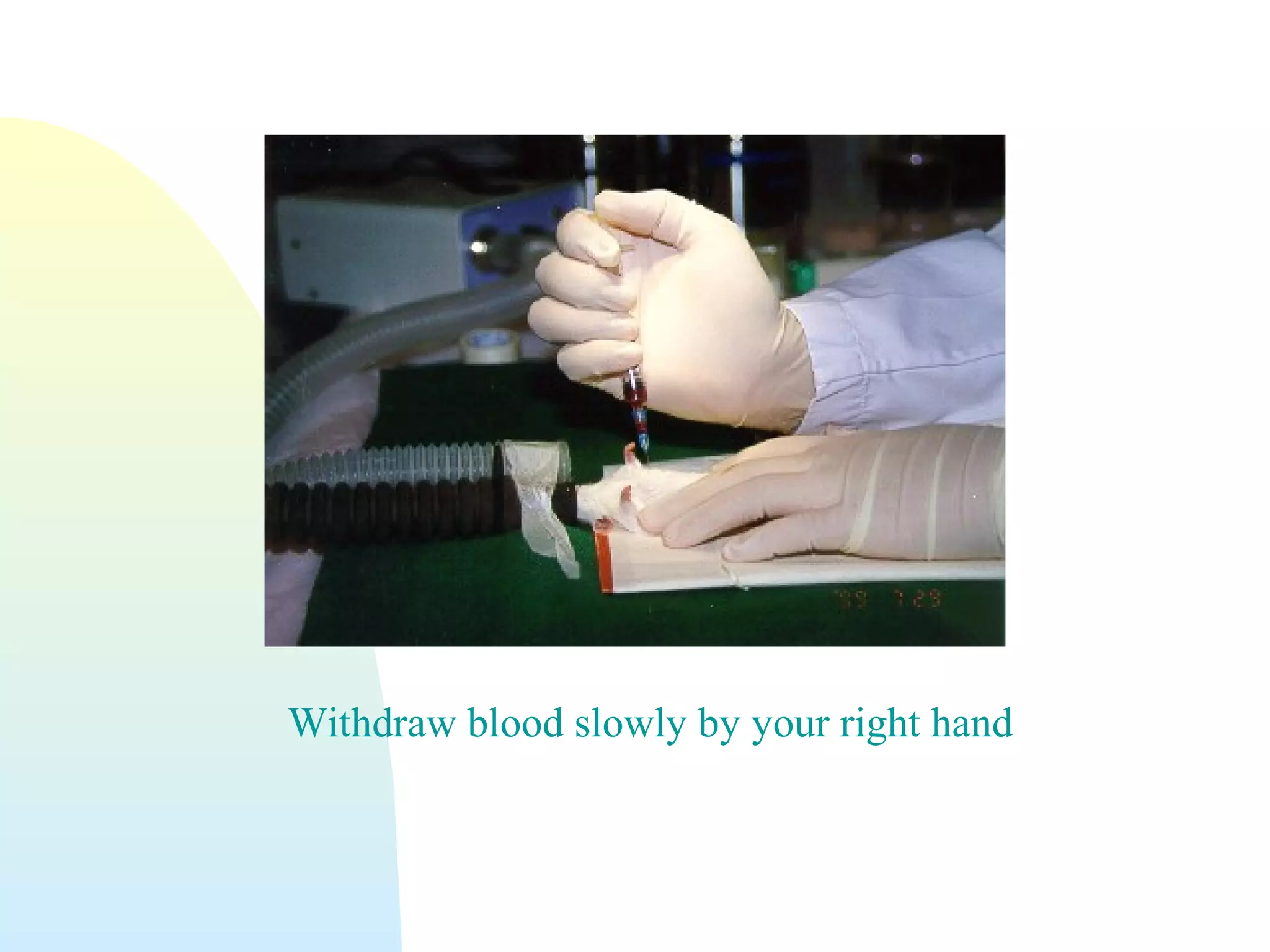
Withdraw blood slowly by your right hand
Blood Collection From
Saphenous Vein in
Mouse
This method is used of multiple
samples are taken in the course of a
day
It can also be applied on rats,
hamsters, gerbils and guinea-pigs
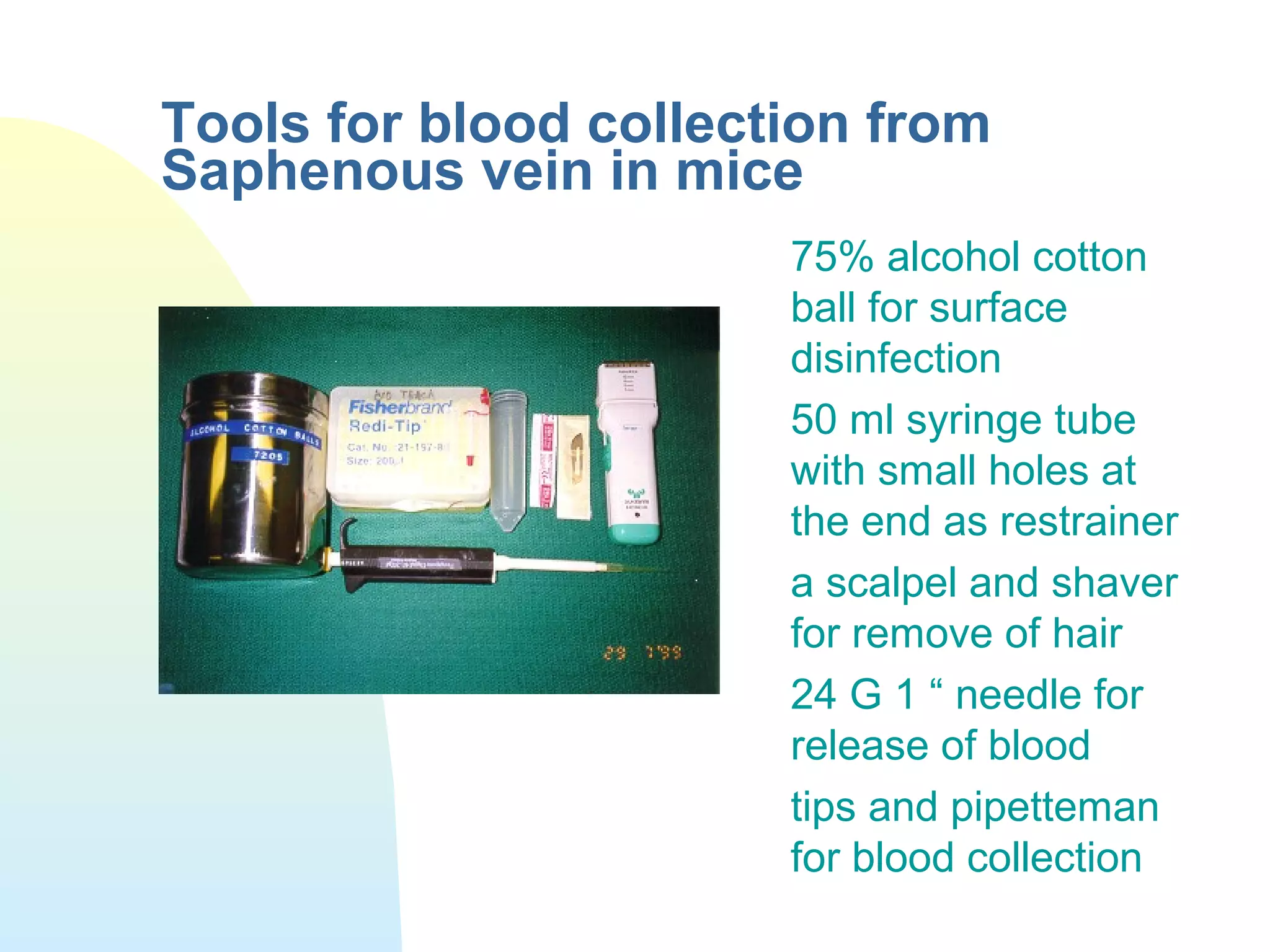
Tools for blood collection from
Saphenous vein in mice
75% alcohol cotton
ball for surface
disinfection
50 ml syringe tube
with small holes at
the end as restrainer
a scalpel and shaver
for remove of hair
24 G 1 “ needle for
release of blood
tips and pipetteman
for blood collection
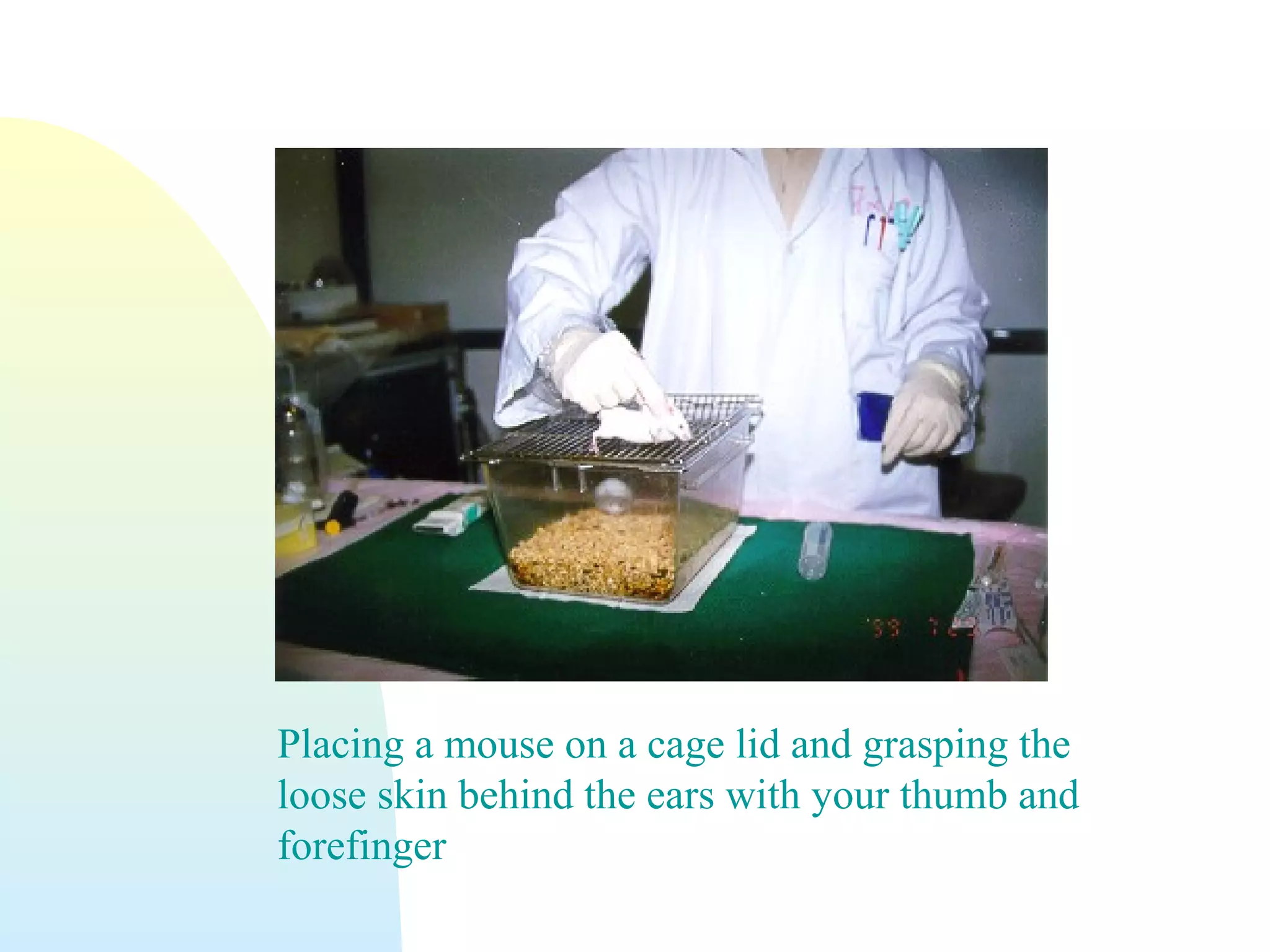
Placing a mouse on a cage lid and grasping the
loose skin behind the ears with your thumb and
forefinger
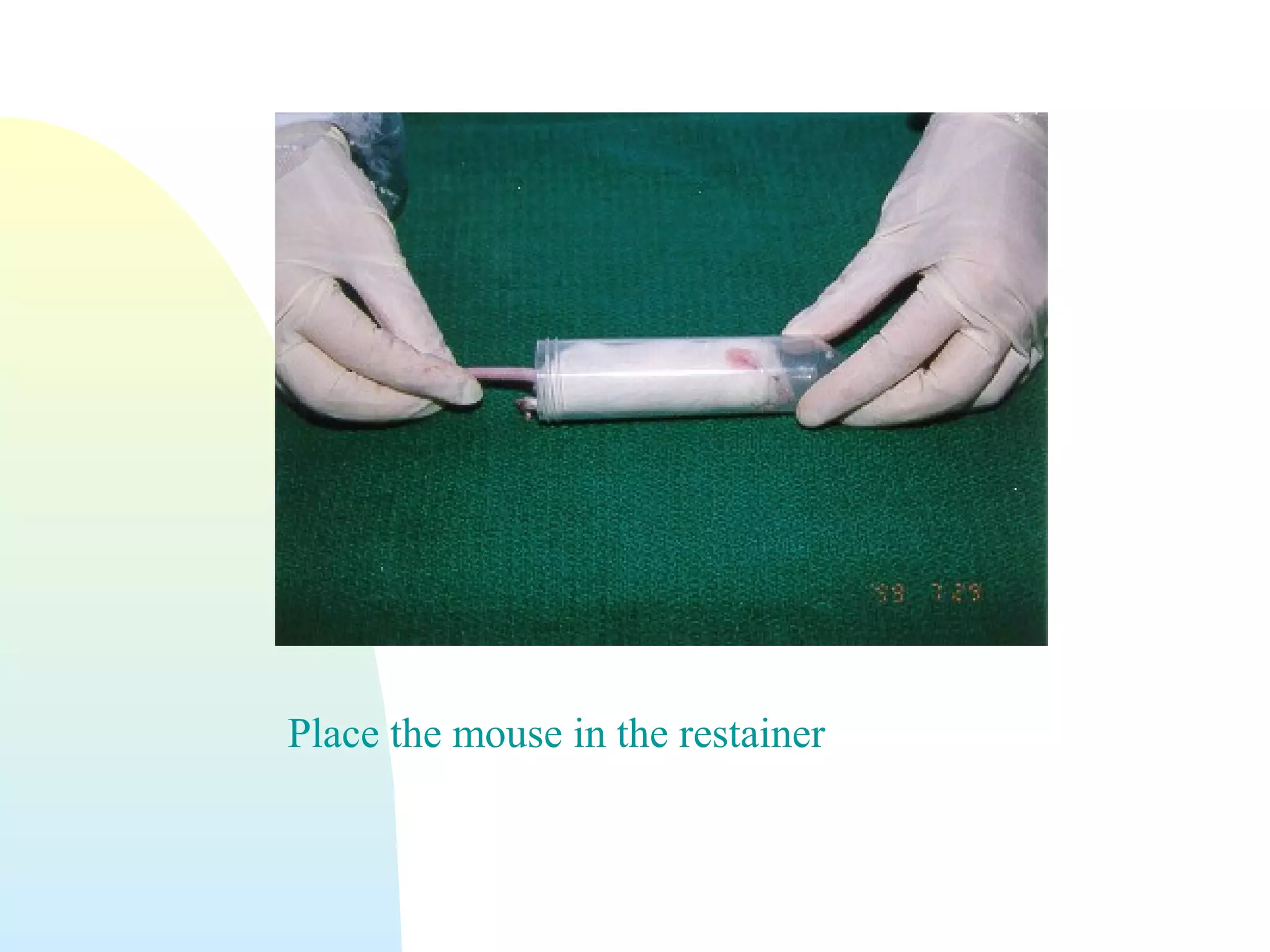
Place the mouse in the restainer
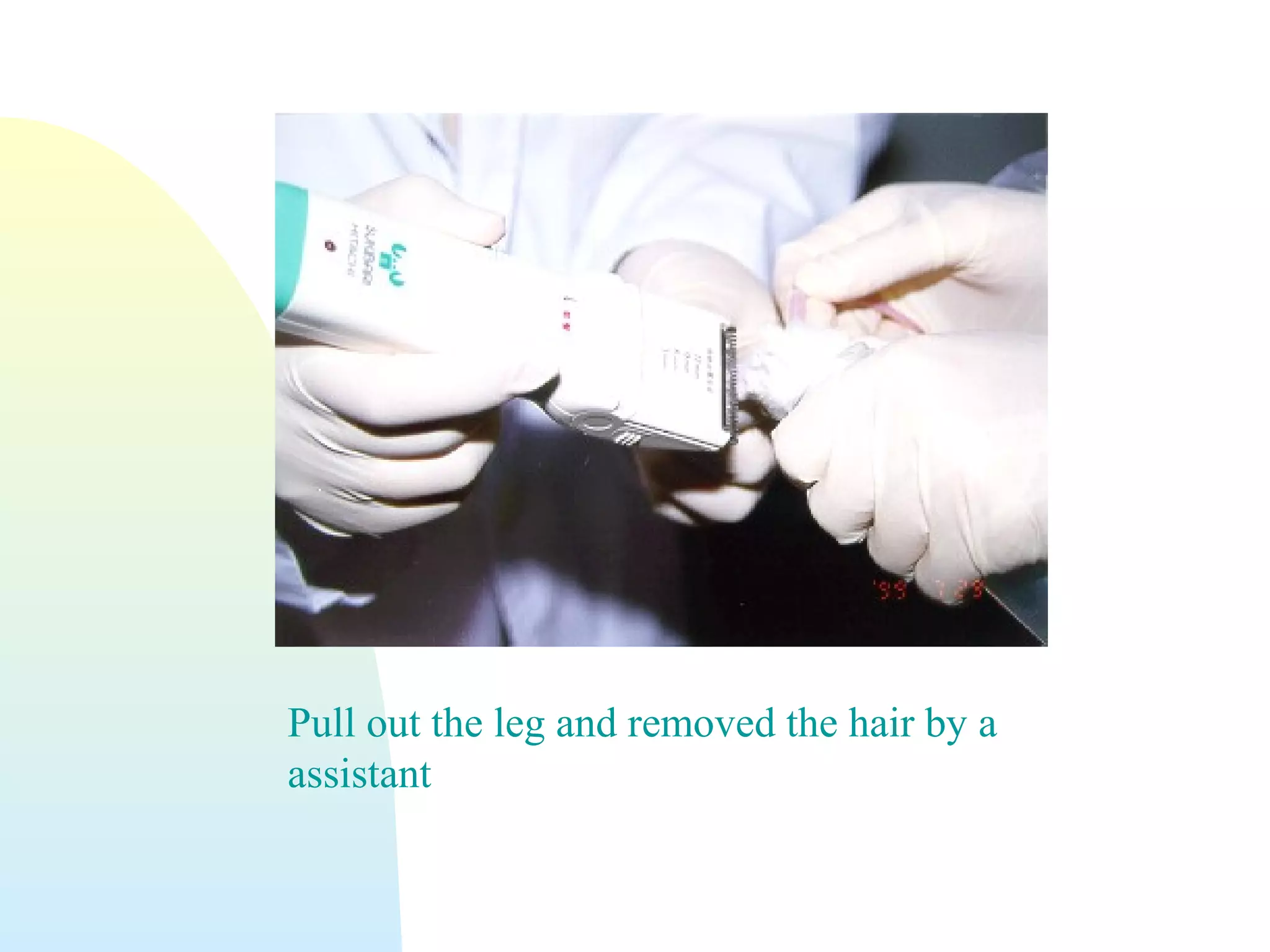
Pull out the leg and removed the hair by a
assistant
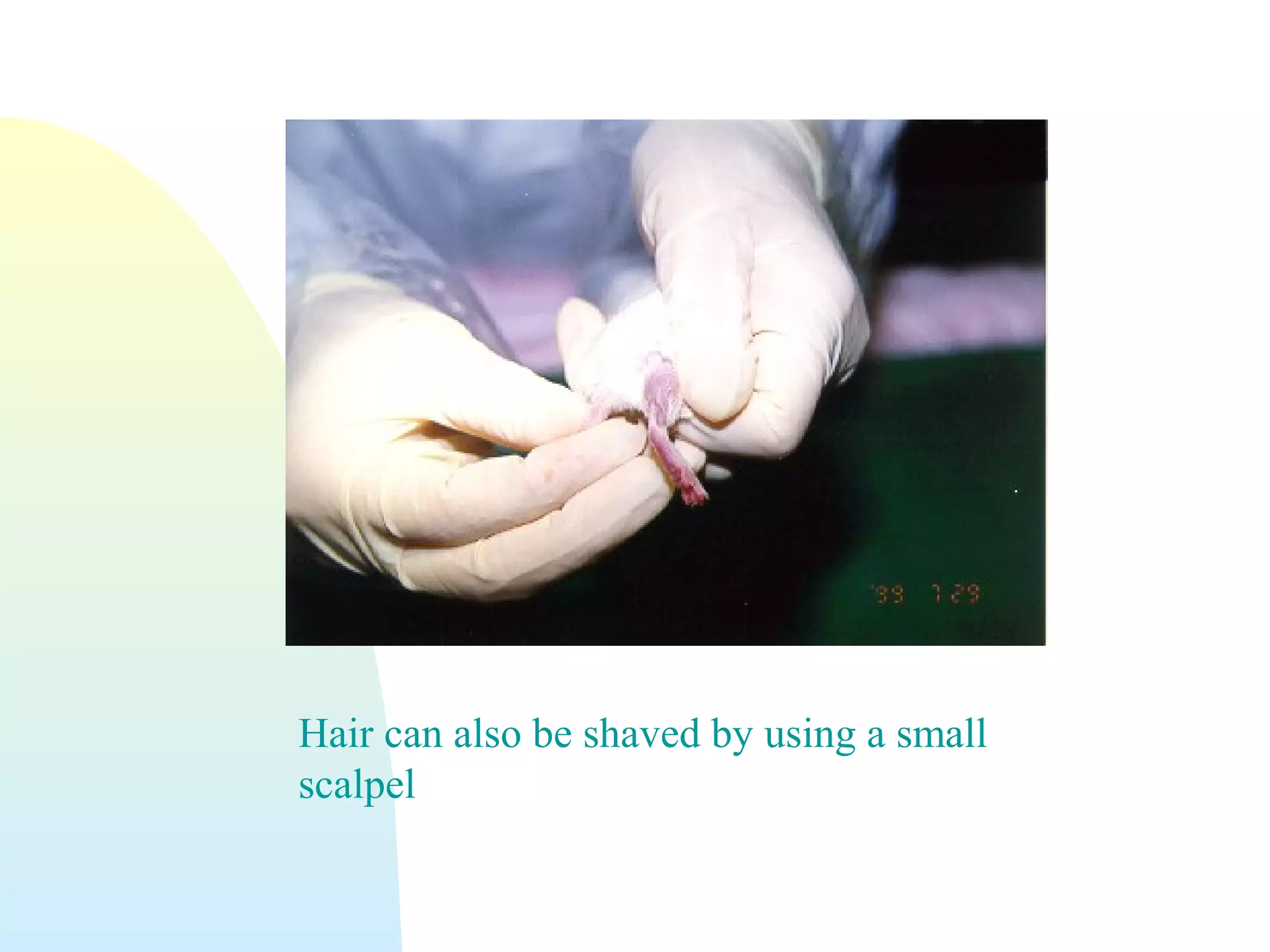
Hair can also be shaved by using a small
scalpel
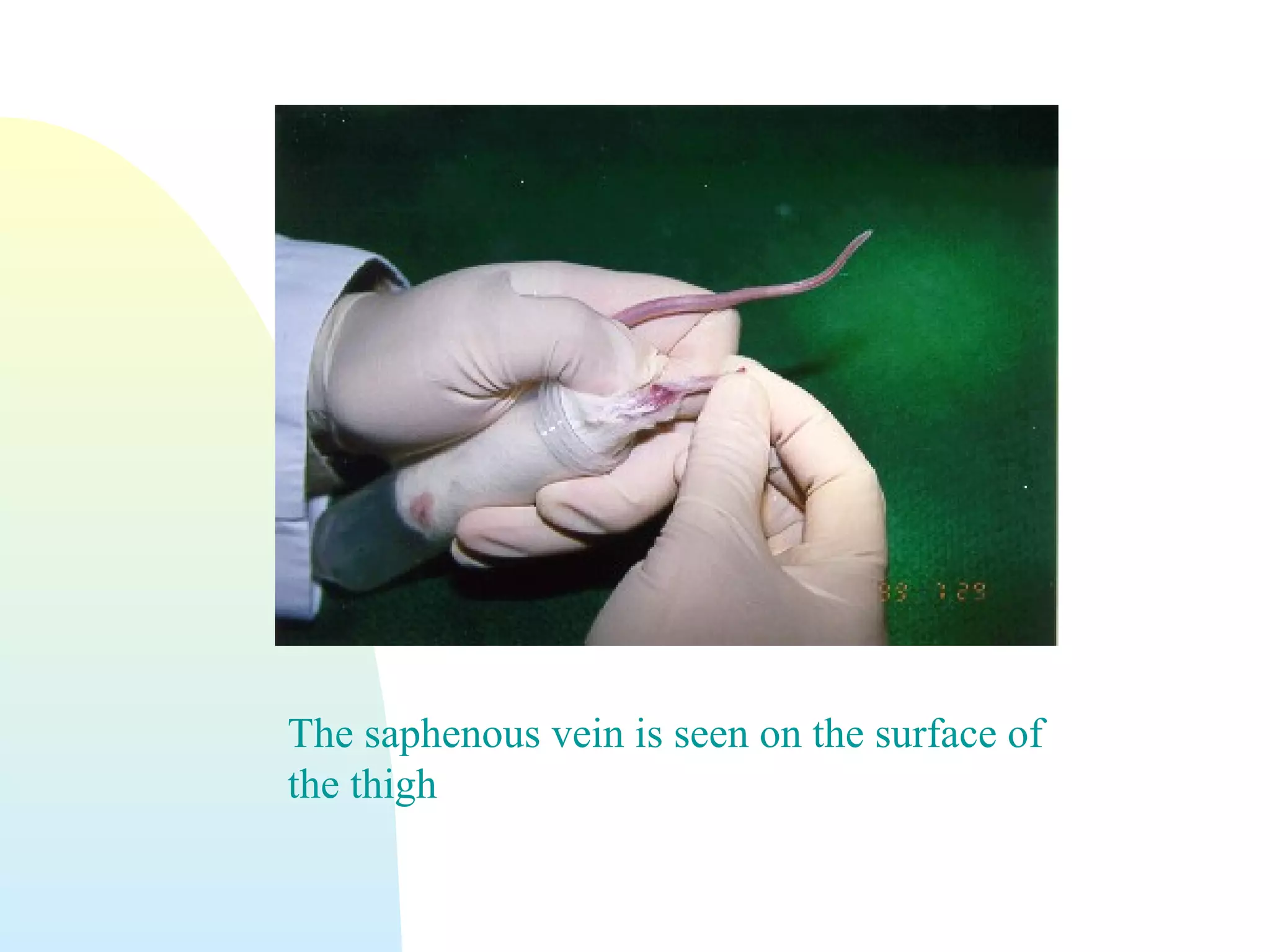
The saphenous vein is seen on the surface of
the thigh
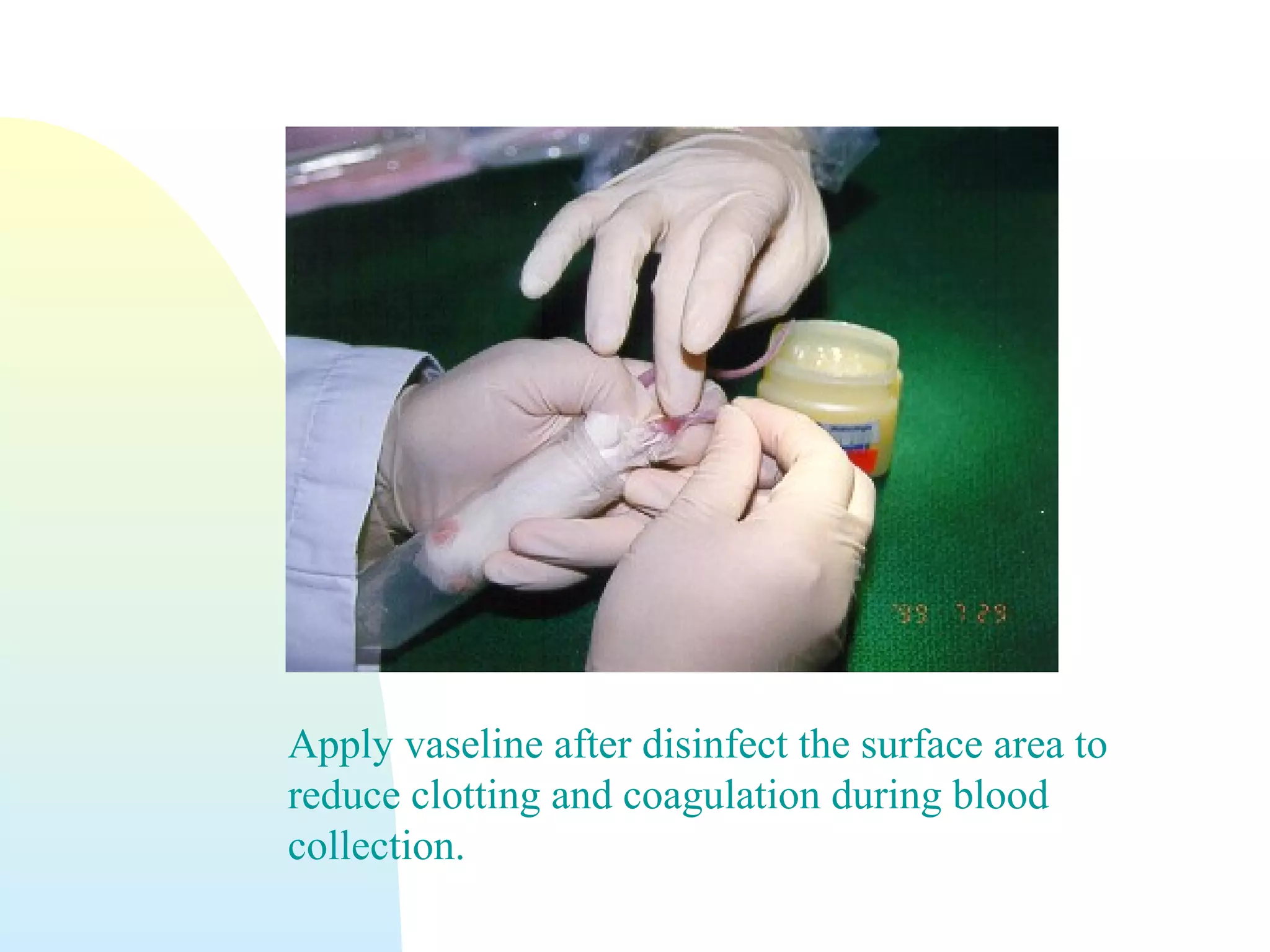
Apply vaseline after disinfect the surface area to
reduce clotting and coagulation during blood
collection.
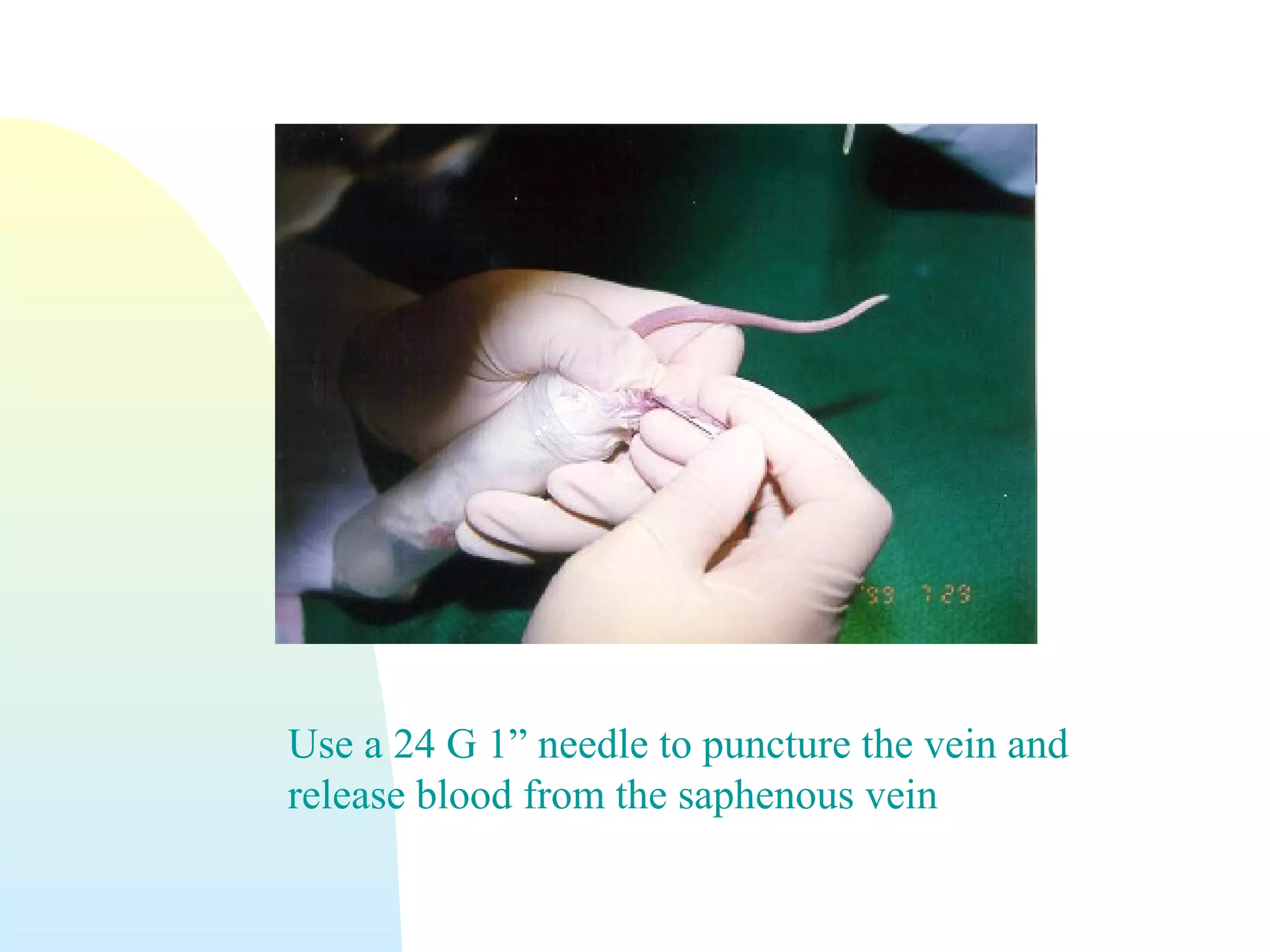
Use a 24 G 1” needle to puncture the vein and
release blood from the saphenous vein
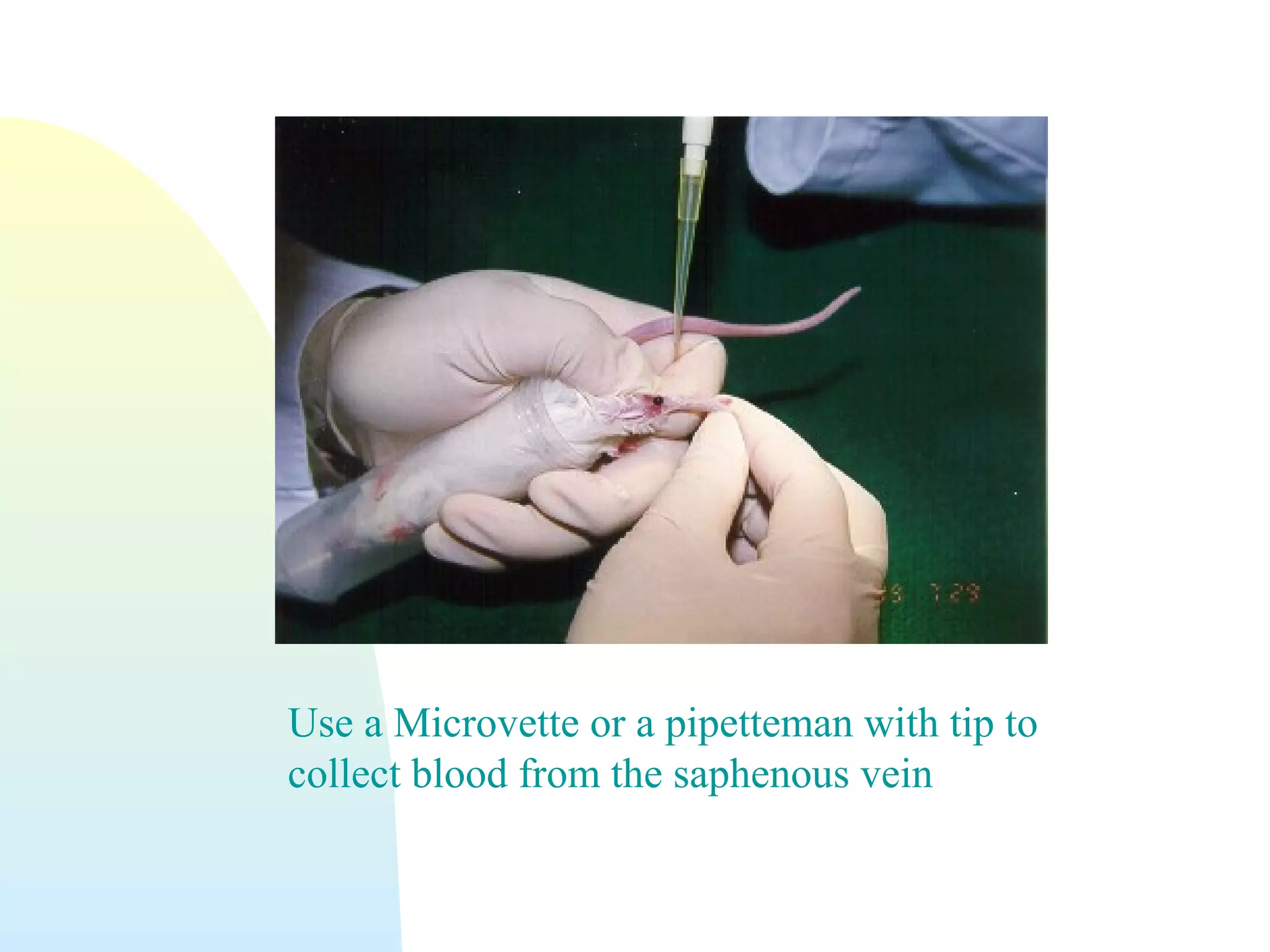
Use a Microvette or a pipetteman with tip to
collect blood from the saphenous vein
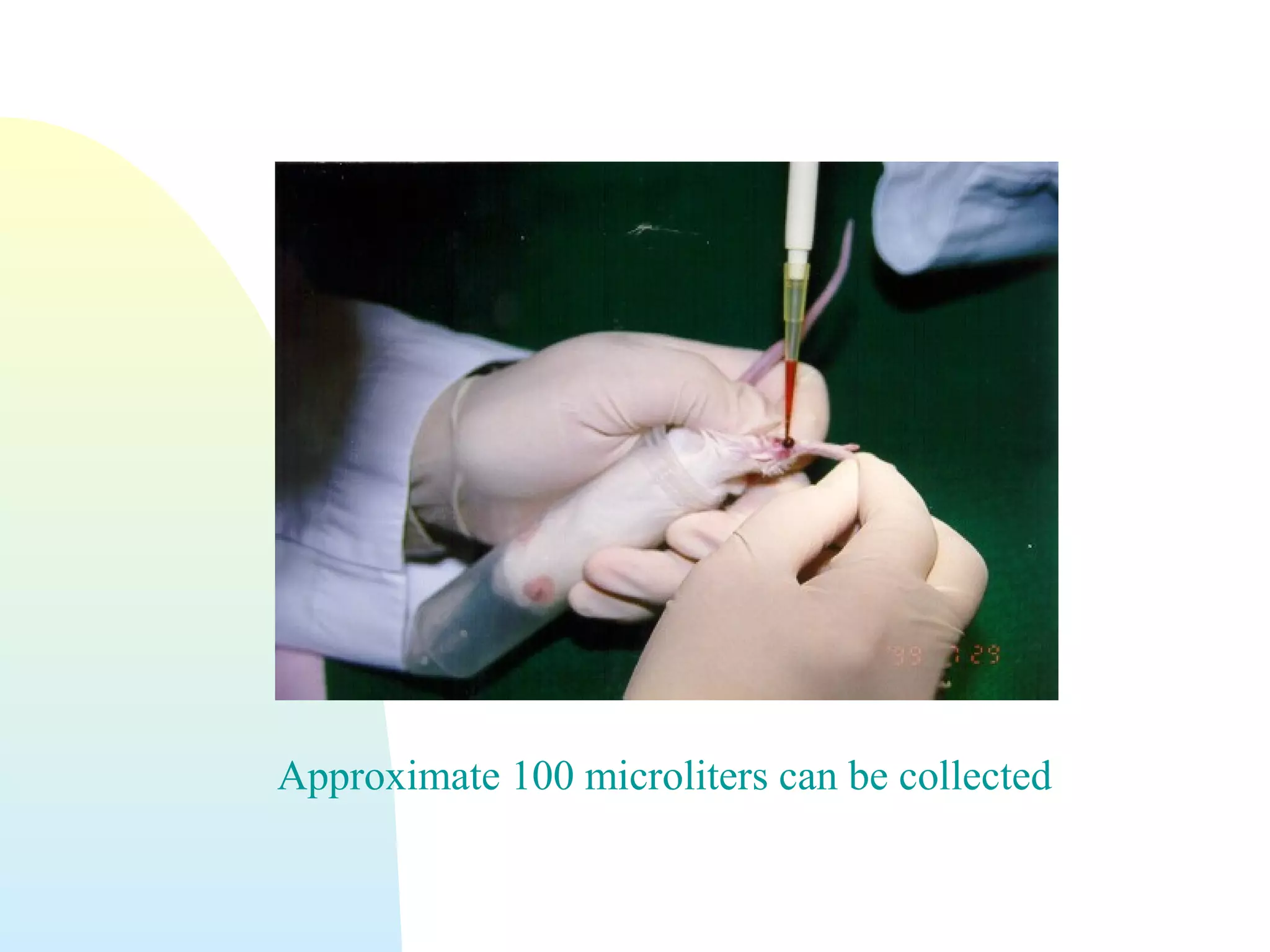
Approximate 100 microliters can be collected
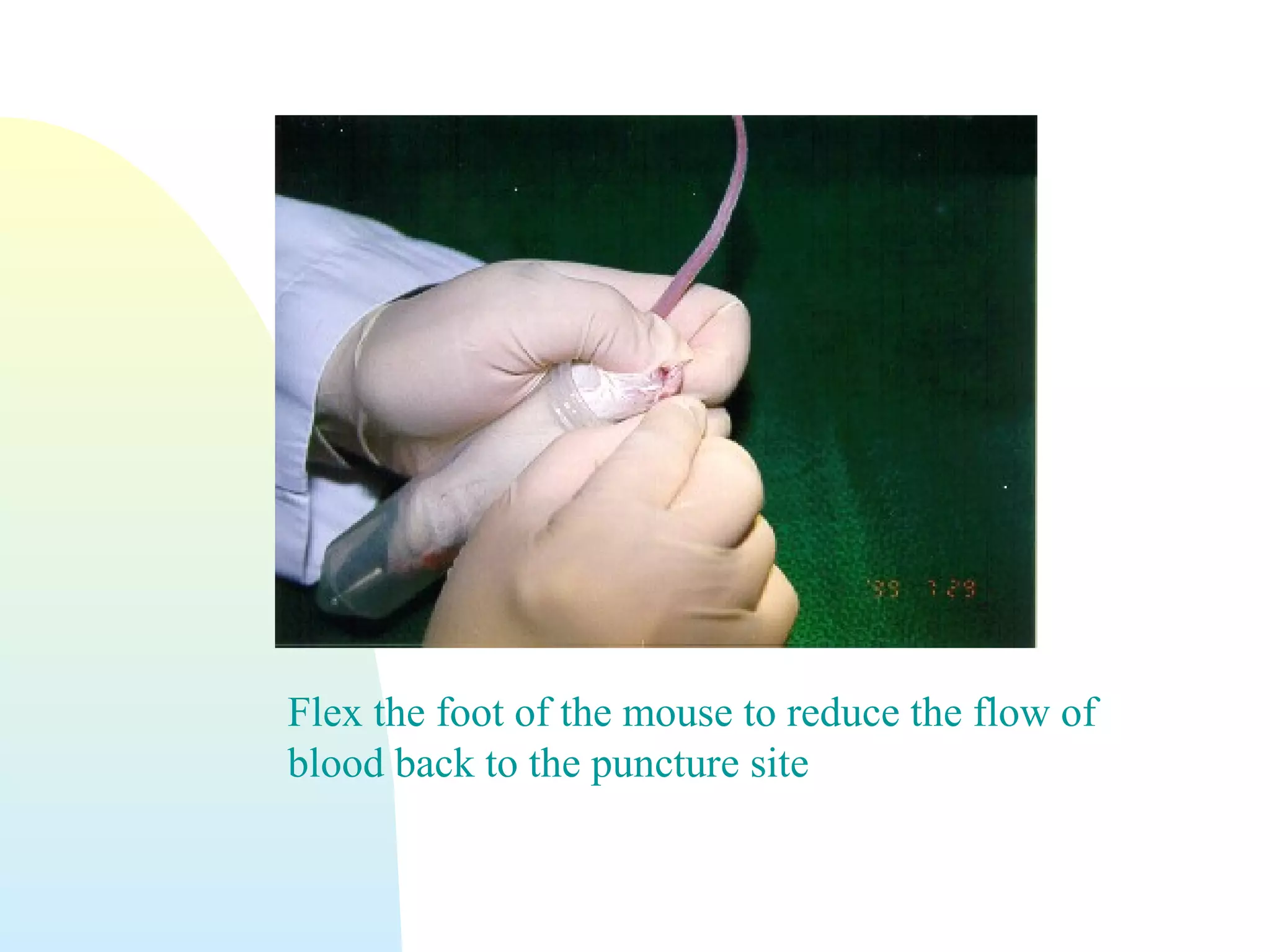
Flex the foot of the mouse to reduce the flow of
blood back to the puncture site
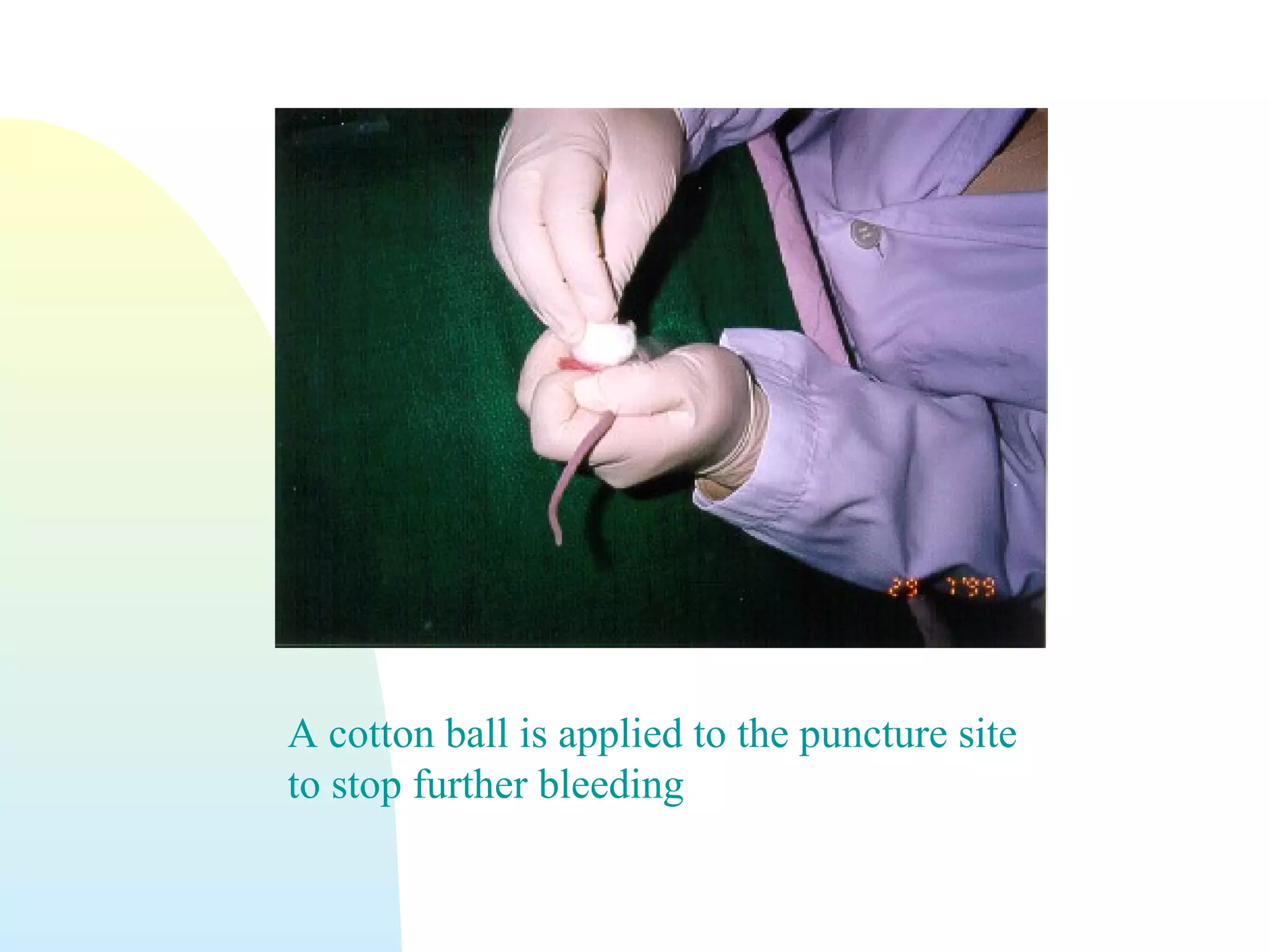
A cotton ball is applied to the puncture site
to stop further bleeding
Intraperitoneal
Injection in Mouse
A common method of
administering drugs to rodents
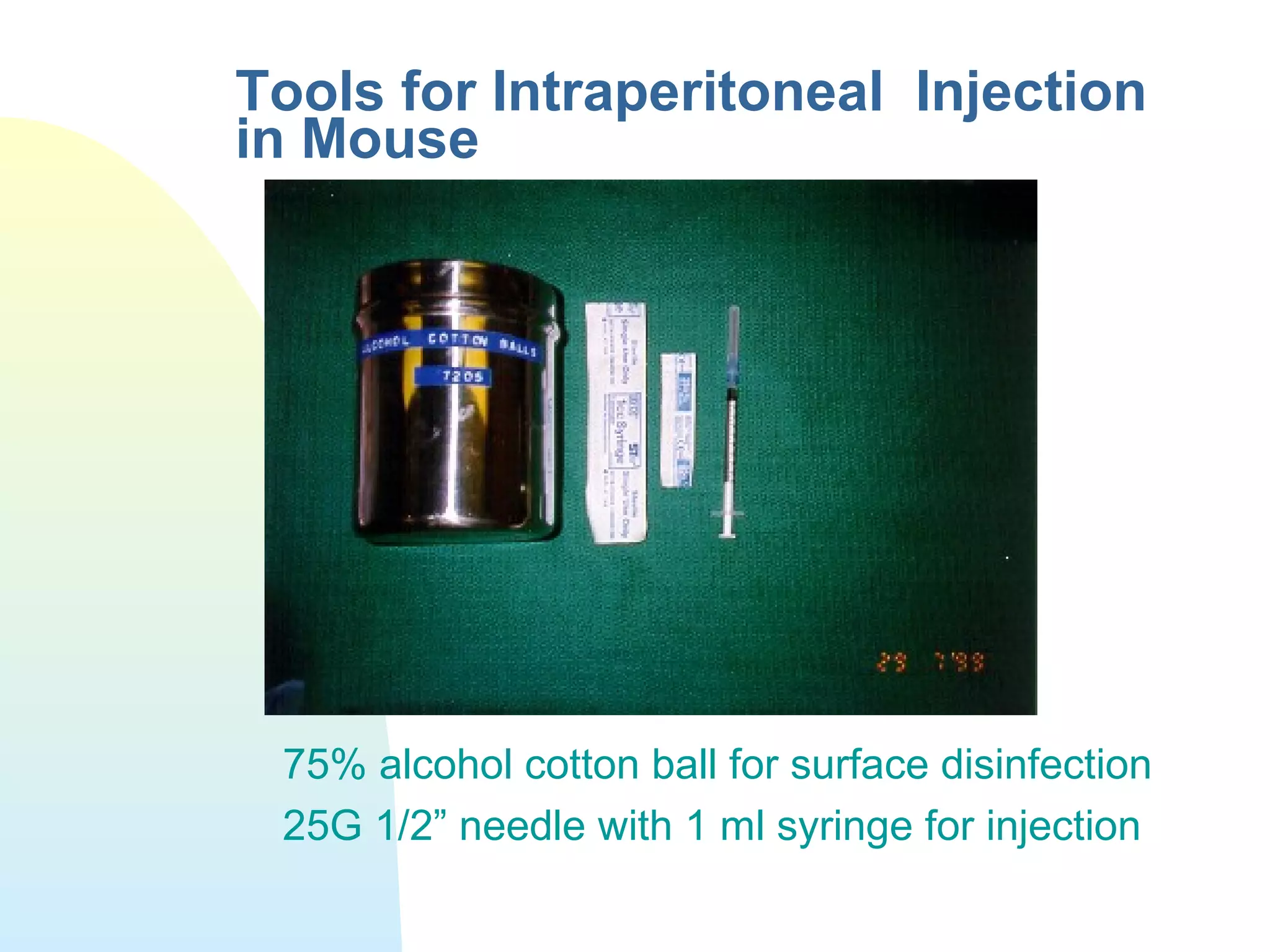
Tools for Intraperitoneal Injection
in Mouse
75% alcohol cotton ball for surface disinfection
25G 1/2” needle with 1 ml syringe for injection
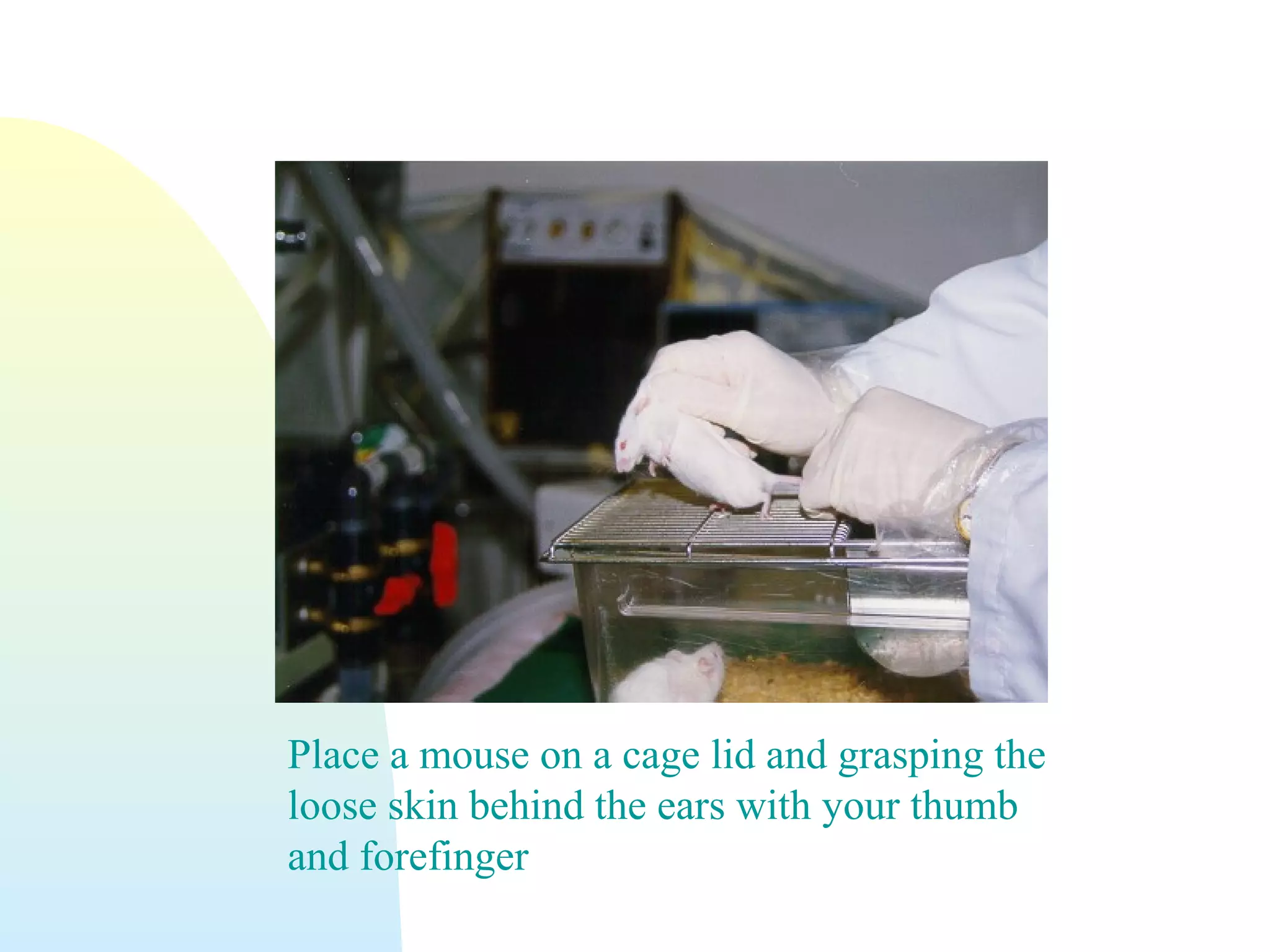
Place a mouse on a cage lid and grasping the
loose skin behind the ears with your thumb
and forefinger
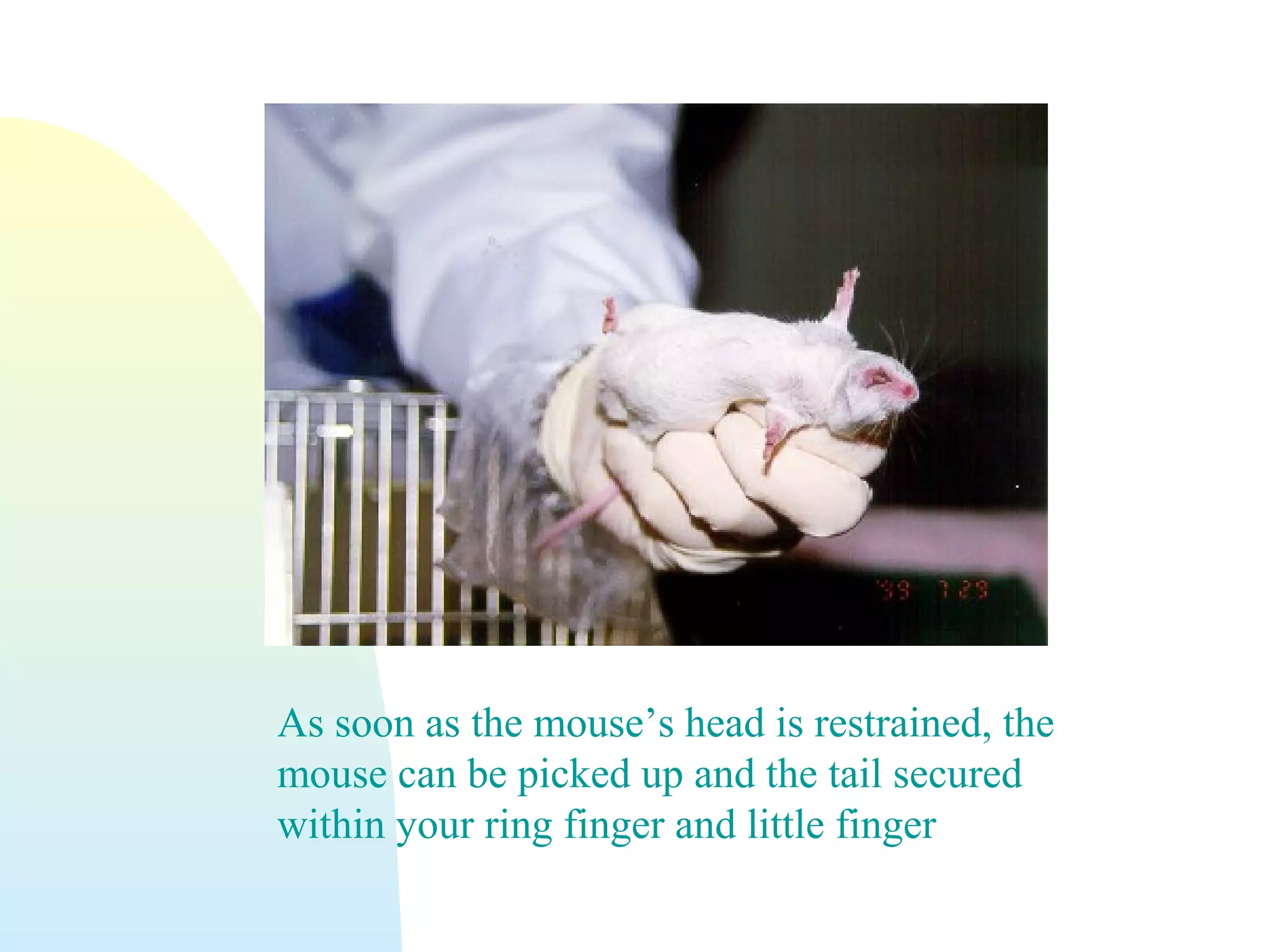
As soon as the mouse’s head is restrained, the
mouse can be picked up and the tail secured
within your ring finger and little finger
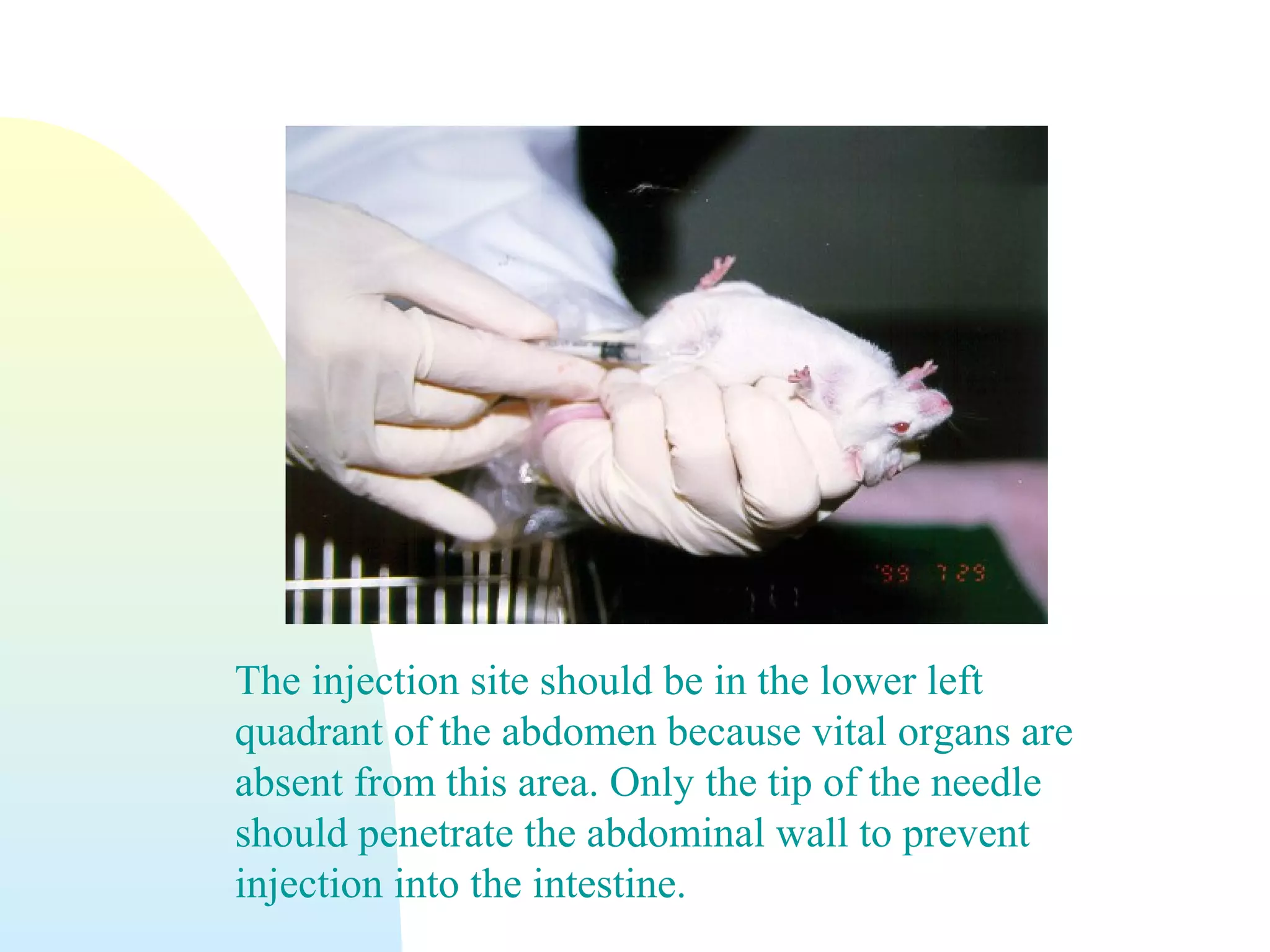
The injection site should be in the lower left
quadrant of the abdomen because vital organs are
absent from this area. Only the tip of the needle
should penetrate the abdominal wall to prevent
injection into the intestine.
Subcutaneous
Injection in Mouse
The most common method for
immunology studies
Tools for Subcutaneous Injection
in Mouse
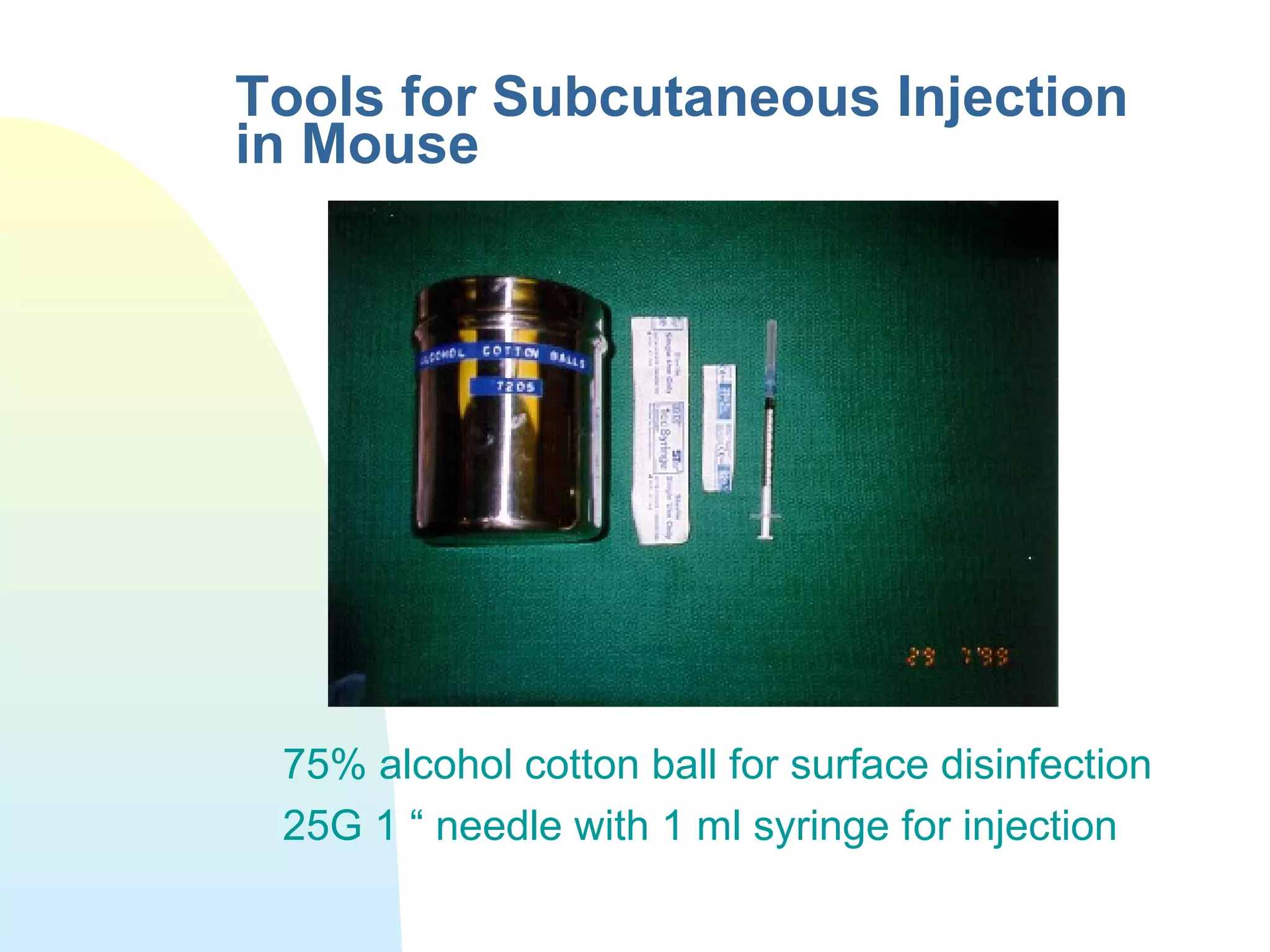
75% alcohol cotton ball for surface disinfection
25G 1 “ needle with 1 ml syringe for injection
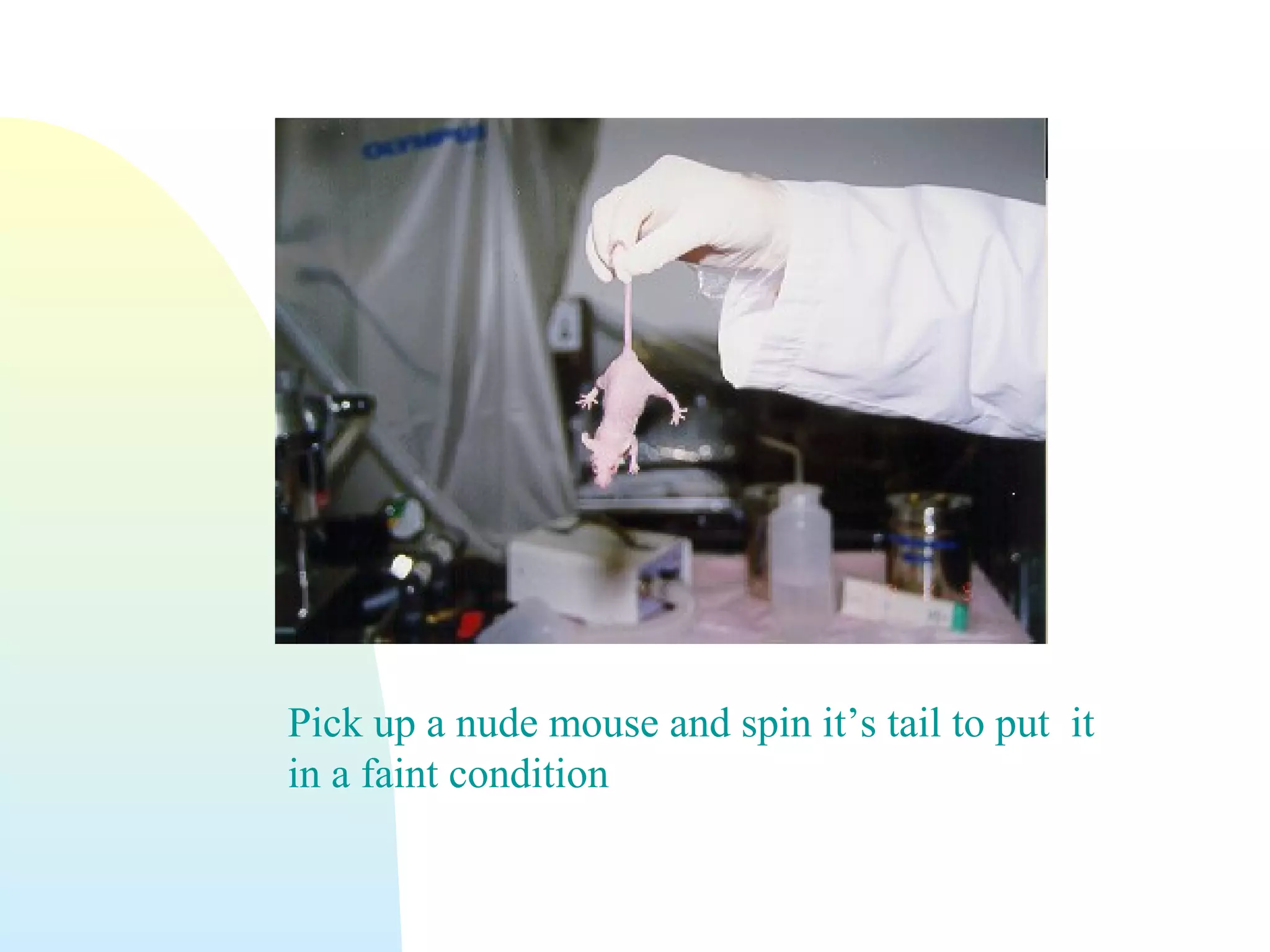
Pick up a nude mouse and spin it’s tail to put it
in a faint condition
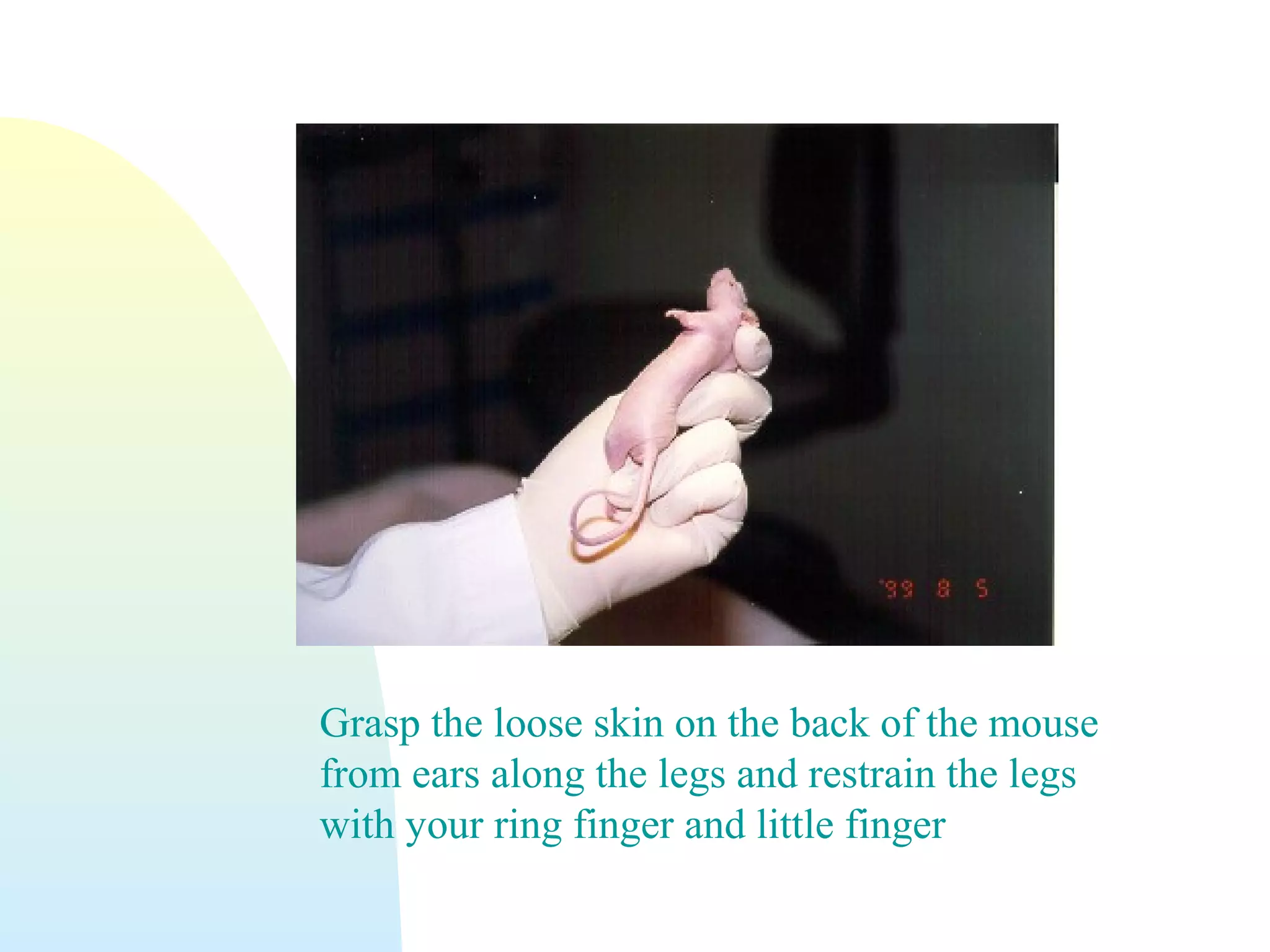
Grasp the loose skin on the back of the mouse
from ears along the legs and restrain the legs
with your ring finger and little finger
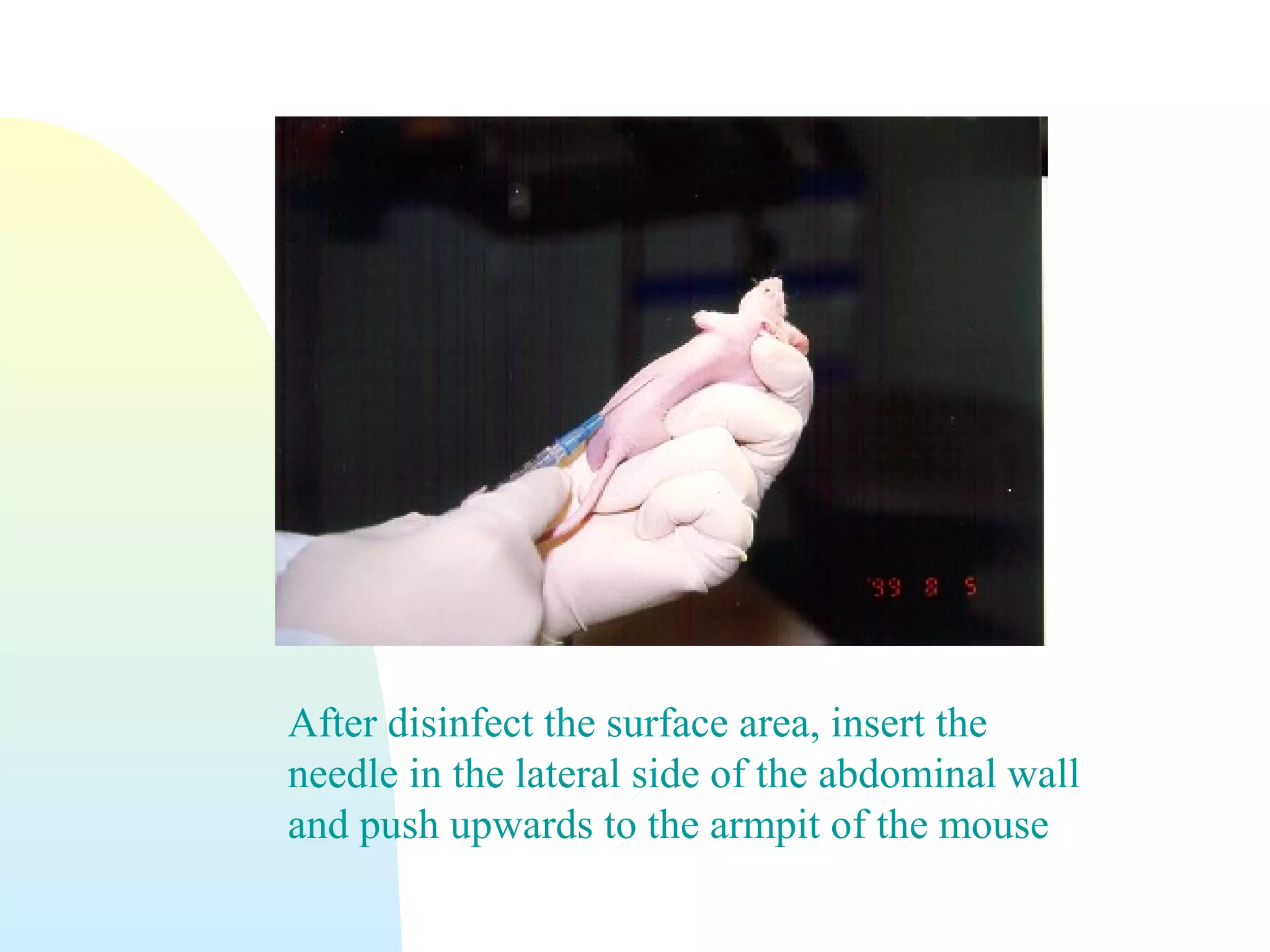
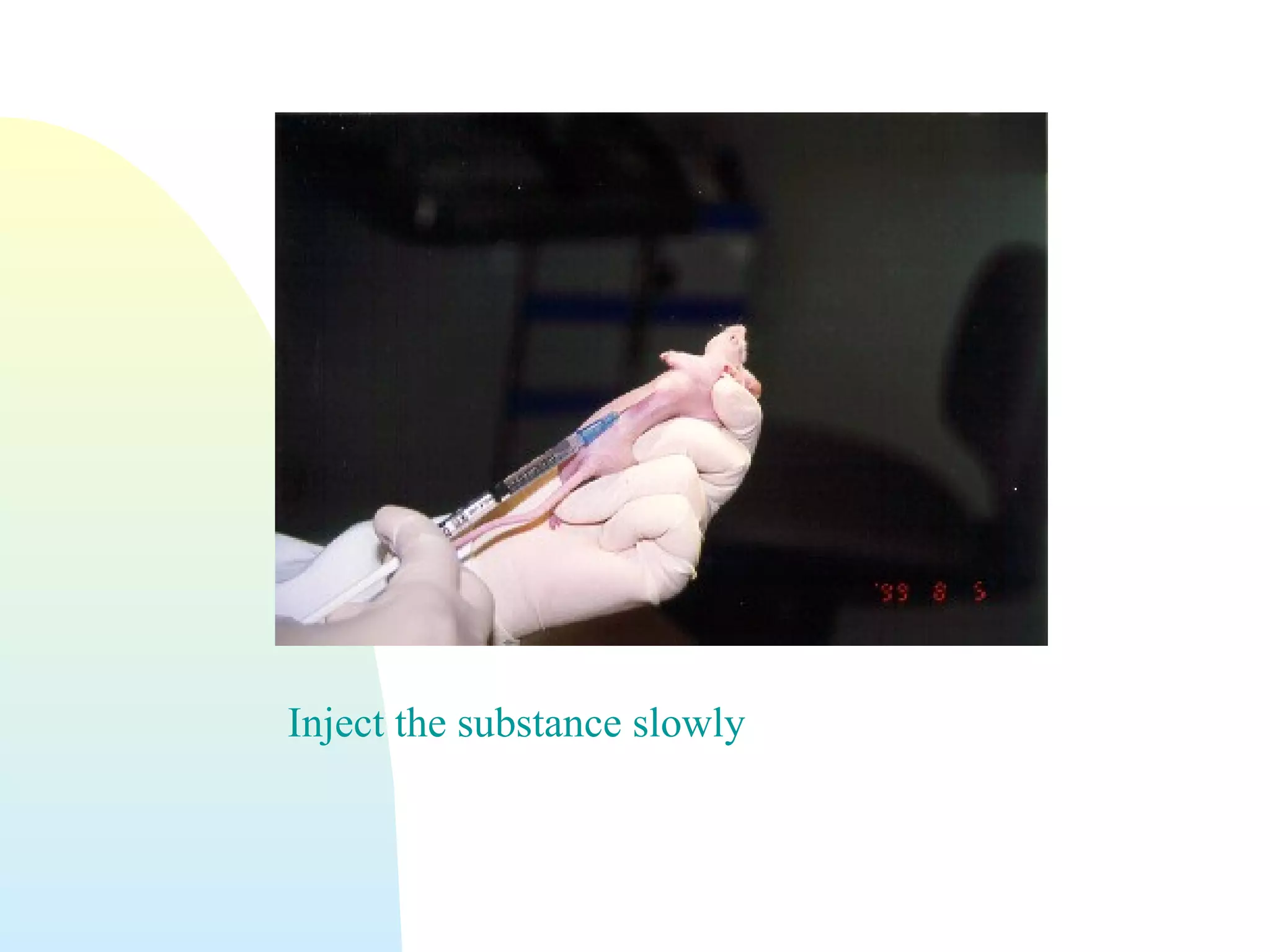
After disinfect the surface area, insert the
needle in the lateral side of the abdominal wall
and push upwards to the armpit of the mouse
Inject the substance slowly
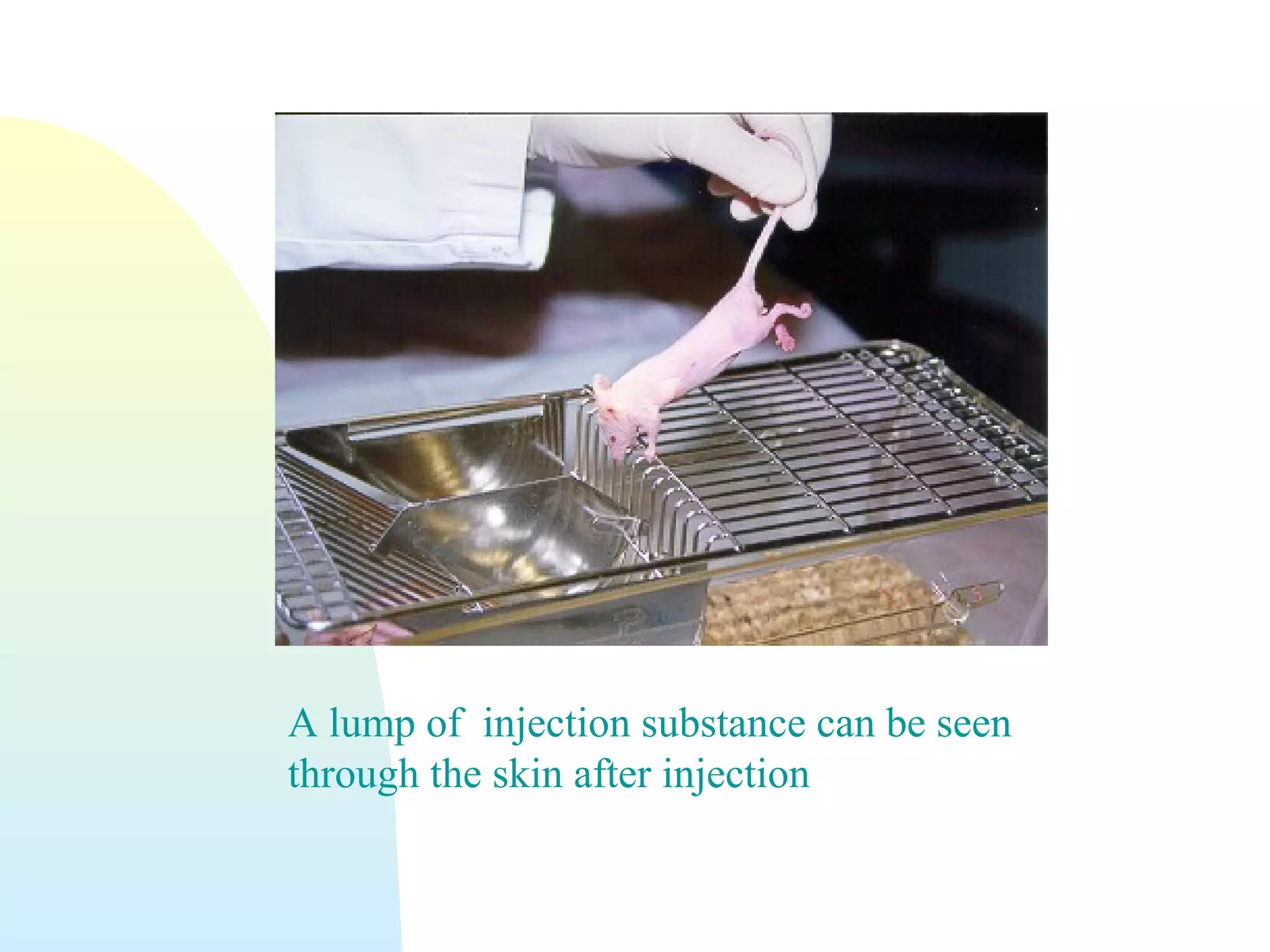
A lump of injection substance can be seen
through the skin after injection
Oral Feeding in
Mouse
Gastric intubation ensures that all the
material was administered
Feeding amount limited to 1% of
body weight
Tools for Oral Feeding in Mouse
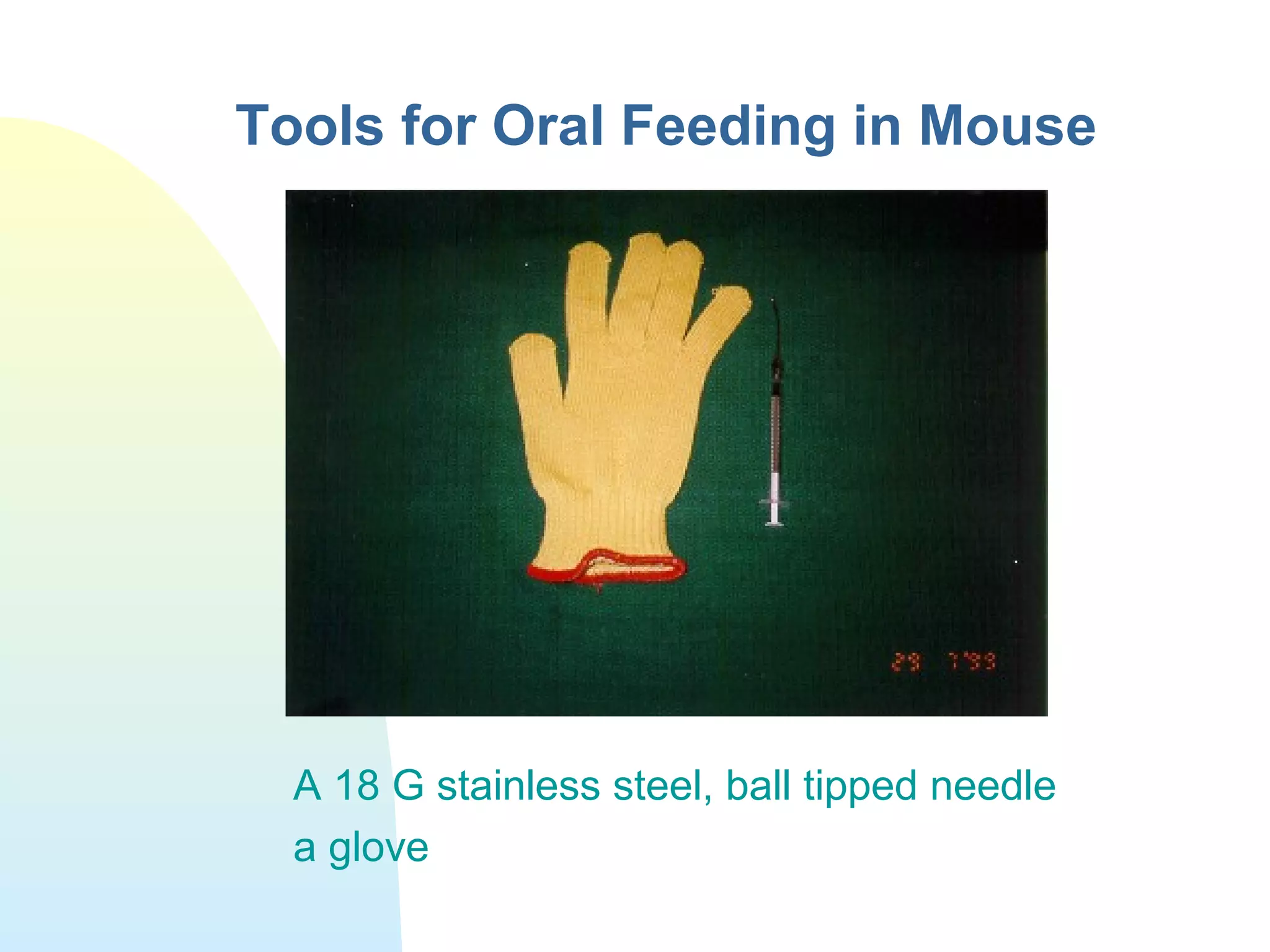
A 18 G stainless steel, ball tipped needle
a glove
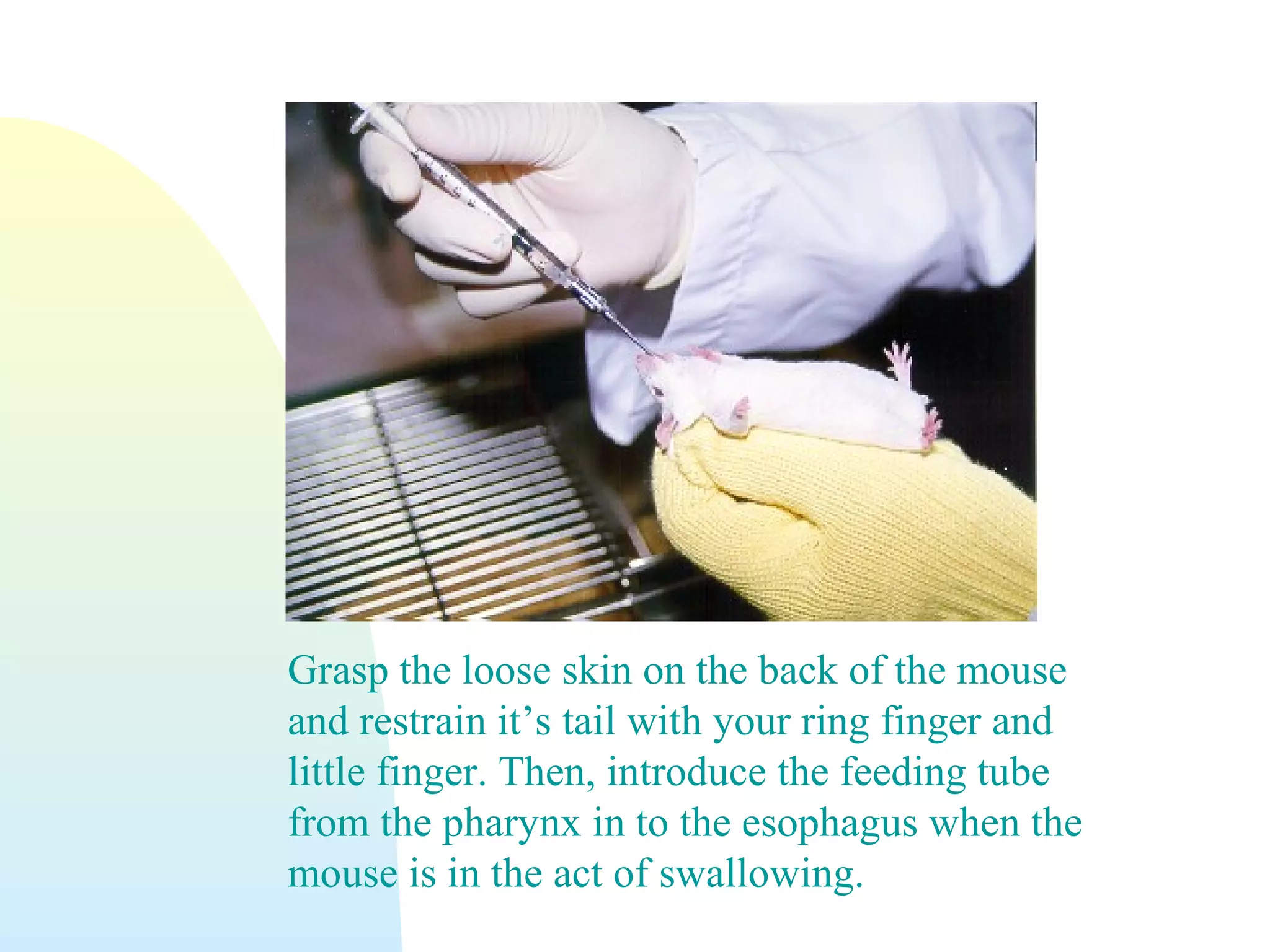
Grasp the loose skin on the back of the mouse
and restrain it’s tail with your ring finger and
little finger. Then, introduce the feeding tube
from the pharynx in to the esophagus when the
mouse is in the act of swallowing.
Common complications associated
with gastric intubation are damage to
the esophagus and administration of
substance into the trachea. Careful and
gentle passage of the feeding needle
will greatly reduce these possibilities.
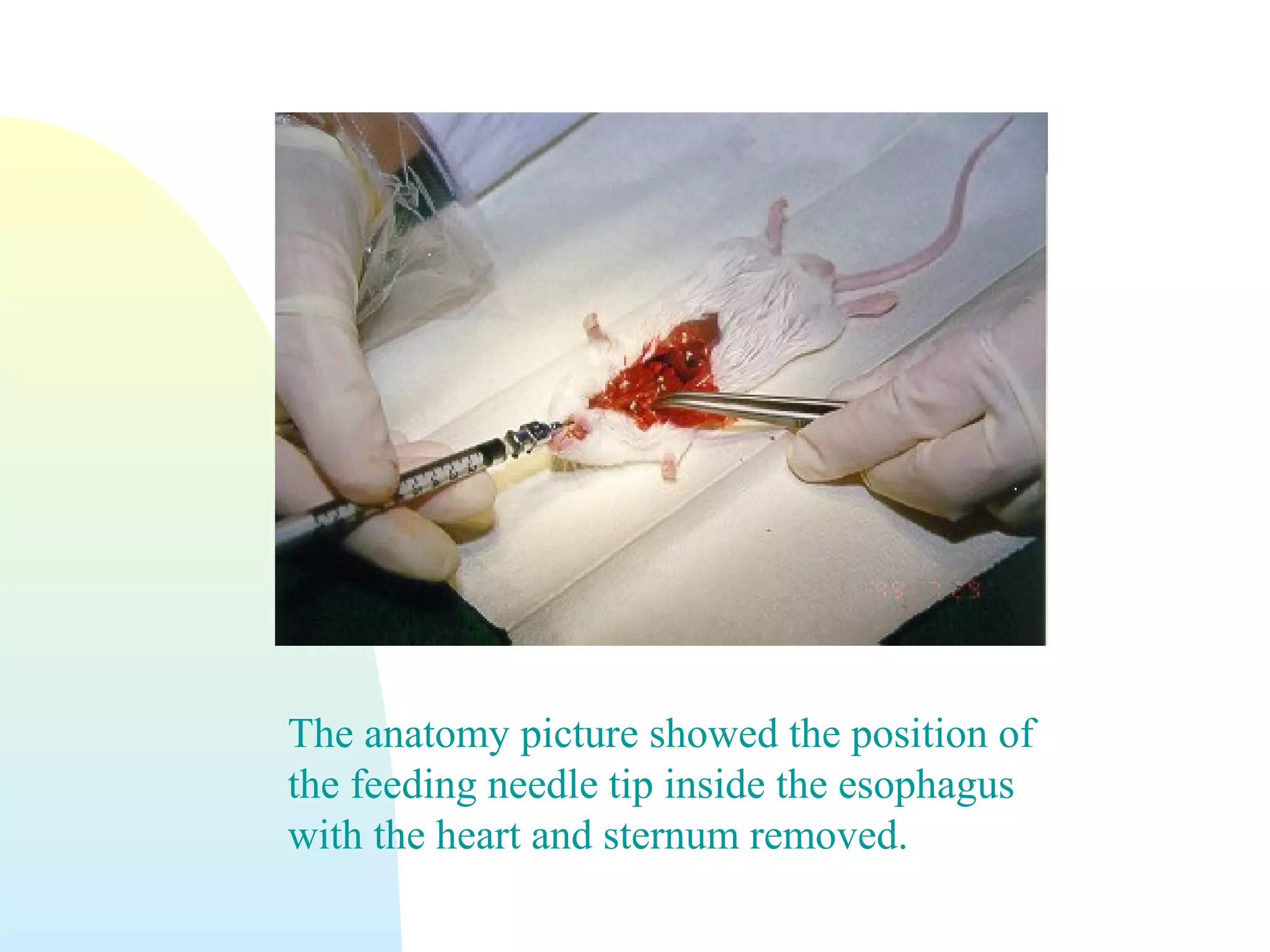
The anatomy picture showed the position of
the feeding needle tip inside the esophagus
with the heart and sternum removed.
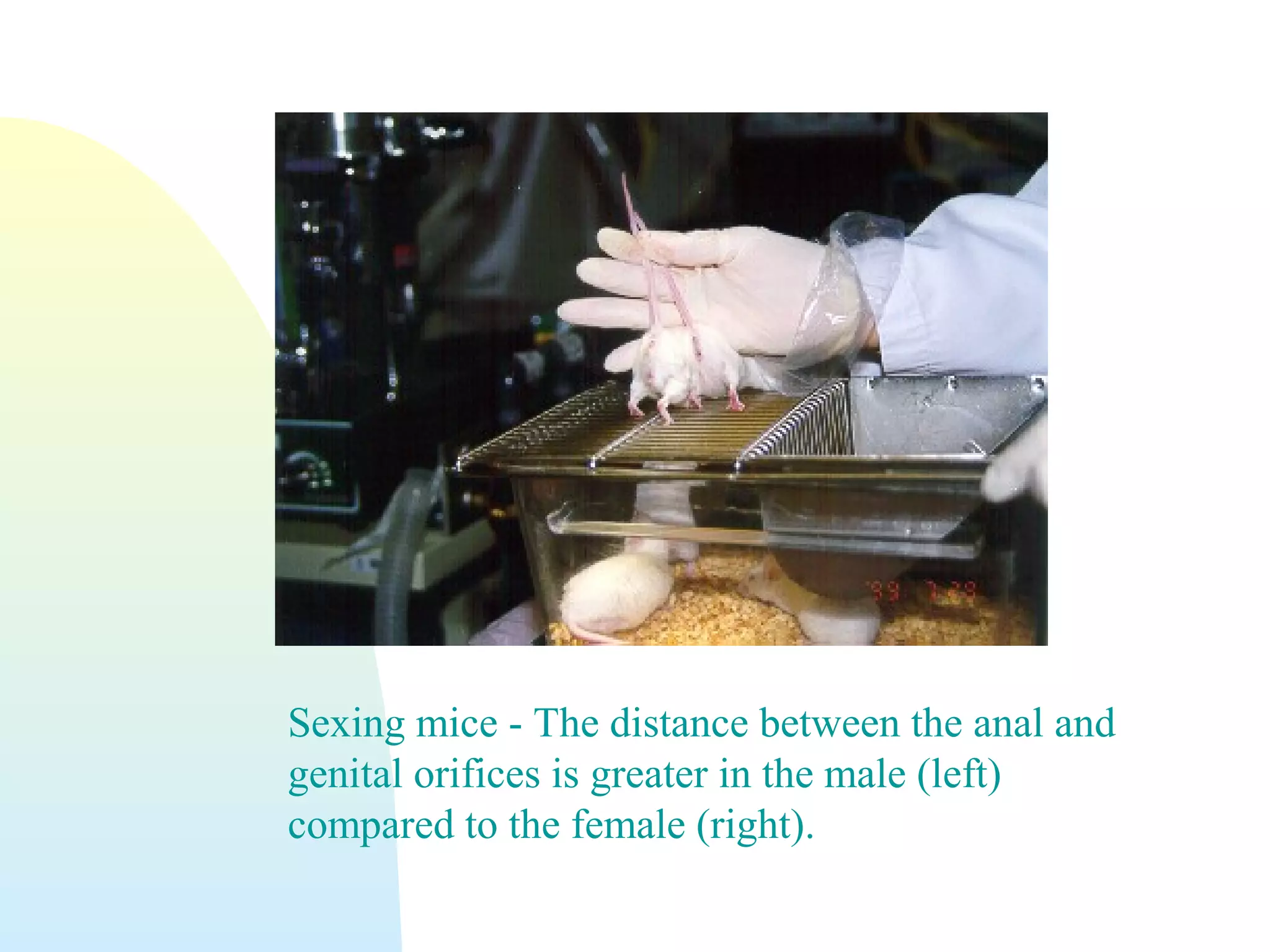
Sexing mice - The distance between the anal and
genital orifices is greater in the male (left)
compared to the female (right).

Animal Handling Program

  • 1.
    Laboratory Animal Handling Technique BY YogeshK.Chaudhari M Pharm(2nd ) (Pharmacology) MUMBAI UNIVERSITY, MUMBAI
  • 2.
  • 3.
    Objective To comply withthe Animal Welfare Ordinance and avoid mishandling of animal in research To provide basic concepts of animal handling technique to new animal user While offering our concept and techniques to our animal user, we also encourage comments from experienced animal users. By doing so, we would enrich our knowledge in the field of laboratory animal research on both sides and further benefit animal welfare as well as the credibility of research result in our university
  • 4.
    Laboratory Animal Handling Technique- Mouse A. Blood collection from tail vein B. Blood collection from orbital sinus C. Blood collection from cardiac puncture D. Blood collection from saphenous vein E. Intraperitoneal injection F.Subcutaneous injection G. Oral Feeding H. Sexing
  • 5.
    Blood Collection From Tailin Mouse For collection of small amount of blood (Approximate 0.1 ml )
  • 6.
    Tools for BloodCollection from Tail 75% alcohol cotton ball for surface disinfection Small plastic bottle with 1/2 cm diameter holes in both ends as mouse restrainer Scissors Pipetteman and tips A vial for blood collection
  • 7.
    Placing a mouseon a cage lid and grasping the loose skin behind the ears by the thumb and forefinger
  • 8.
    Push the mouseinto the restrainer
  • 9.
    Leave the tailof the mouse outside the cover of the restrainer
  • 10.
    Amputate the tipof the mouse tail by scissors
  • 11.
    Massage the tailand collect blood by pipetteman
  • 12.
    Blood Collection From OrbitalSinus in Mouse Should apply anesthetic before blood withdraw A convenience and easy apply method for blood collection in mouse Collect amount up to 0.5 ml
  • 13.
    Tools for BloodCollection from Orbital Sinus in Mouse 75% alcohol cotton ball for surface disinfection Hypnorm for general anesthetic 27 G needle with 1 ml syringe for injection Glass capillary tube and vial for blood collection
  • 14.
    Anesthetize a mouseby intraperitoneal injection of Hypnorm
  • 15.
    Use a sharpend glass capillary tube to penetrate the orbital conjunctiva and rupture the orbital sinus
  • 16.
  • 17.
    Blood Collection From CardiacPuncture in Mouse For collect up to 1 ml of blood within a short period of time Must be performed under general anesthetic
  • 18.
    Tools for Cardiacpuncture in Mouse 75% alcohol cotton ball for surface disinfection Hypnorm used as anesthetic 27G needle with 1 ml syringe for injection 24G needle with 3 ml syringe for blood withdraw
  • 19.
    Anesthetize a mouseby intraperitoneal injection of Hypnorm
  • 20.
    Disinfect the thoraxarea with 75% alcohol cotton ball
  • 21.
    Search for themaximum heart palpitation with your finger
  • 22.
    Insert a 24G1” needle through the thoracic wall at the point of maximum heart palpitation
  • 23.
    Withdraw blood slowlyby your right hand
  • 24.
    Blood Collection From SaphenousVein in Mouse This method is used of multiple samples are taken in the course of a day It can also be applied on rats, hamsters, gerbils and guinea-pigs
  • 25.
    Tools for bloodcollection from Saphenous vein in mice 75% alcohol cotton ball for surface disinfection 50 ml syringe tube with small holes at the end as restrainer a scalpel and shaver for remove of hair 24 G 1 “ needle for release of blood tips and pipetteman for blood collection
  • 26.
    Placing a mouseon a cage lid and grasping the loose skin behind the ears with your thumb and forefinger
  • 27.
    Place the mousein the restainer
  • 28.
    Pull out theleg and removed the hair by a assistant
  • 29.
    Hair can alsobe shaved by using a small scalpel
  • 30.
    The saphenous veinis seen on the surface of the thigh
  • 31.
    Apply vaseline afterdisinfect the surface area to reduce clotting and coagulation during blood collection.
  • 32.
    Use a 24G 1” needle to puncture the vein and release blood from the saphenous vein
  • 33.
    Use a Microvetteor a pipetteman with tip to collect blood from the saphenous vein
  • 34.
  • 35.
    Flex the footof the mouse to reduce the flow of blood back to the puncture site
  • 36.
    A cotton ballis applied to the puncture site to stop further bleeding
  • 37.
    Intraperitoneal Injection in Mouse Acommon method of administering drugs to rodents
  • 38.
    Tools for IntraperitonealInjection in Mouse 75% alcohol cotton ball for surface disinfection 25G 1/2” needle with 1 ml syringe for injection
  • 39.
    Place a mouseon a cage lid and grasping the loose skin behind the ears with your thumb and forefinger
  • 40.
    As soon asthe mouse’s head is restrained, the mouse can be picked up and the tail secured within your ring finger and little finger
  • 41.
    The injection siteshould be in the lower left quadrant of the abdomen because vital organs are absent from this area. Only the tip of the needle should penetrate the abdominal wall to prevent injection into the intestine.
  • 42.
    Subcutaneous Injection in Mouse Themost common method for immunology studies
  • 43.
    Tools for SubcutaneousInjection in Mouse 75% alcohol cotton ball for surface disinfection 25G 1 “ needle with 1 ml syringe for injection
  • 44.
    Pick up anude mouse and spin it’s tail to put it in a faint condition
  • 45.
    Grasp the looseskin on the back of the mouse from ears along the legs and restrain the legs with your ring finger and little finger
  • 46.
    After disinfect thesurface area, insert the needle in the lateral side of the abdominal wall and push upwards to the armpit of the mouse
  • 47.
  • 48.
    A lump ofinjection substance can be seen through the skin after injection
  • 49.
    Oral Feeding in Mouse Gastricintubation ensures that all the material was administered Feeding amount limited to 1% of body weight
  • 50.
    Tools for OralFeeding in Mouse A 18 G stainless steel, ball tipped needle a glove
  • 51.
    Grasp the looseskin on the back of the mouse and restrain it’s tail with your ring finger and little finger. Then, introduce the feeding tube from the pharynx in to the esophagus when the mouse is in the act of swallowing.
  • 52.
    Common complications associated withgastric intubation are damage to the esophagus and administration of substance into the trachea. Careful and gentle passage of the feeding needle will greatly reduce these possibilities.
  • 53.
    The anatomy pictureshowed the position of the feeding needle tip inside the esophagus with the heart and sternum removed.
  • 54.
    Sexing mice -The distance between the anal and genital orifices is greater in the male (left) compared to the female (right).