Faults in Digital Systems
Failures and Faults
• A failure is said to have occured in a circuit or system if it deviates
from its specified behavior
• A fault is a physical defect that may or may not cause a failure.
A fault is characterised by its nature,
value,extent and duration.
Nature:
logical fault--opposite value
non logical fault like power failure,malfunction of clock signal
Value:
creates fixed or varying errorneous values
Extent:
Effect of the fault is localized or distributed
Duration:
of a fault refers to whether the fault is permanent or temporary
Modeling of faults
• The effect of a fault is represented by a model, which represents the
change the fault produces in circuit signals.
• The fault models are
• 1.Stuck at fault
• 2Bridging fault
• 3.Stuck open fault
Stuck at faults
• classical fault model
• represents most common model for logical faults
• A fault in a logic gate results in one of its inputs or the output being
fixed to either
a logic 0 (stuck-at-0 --->s-a-0) or
a logic 1( stuck- at- 1-----> s-a-1)
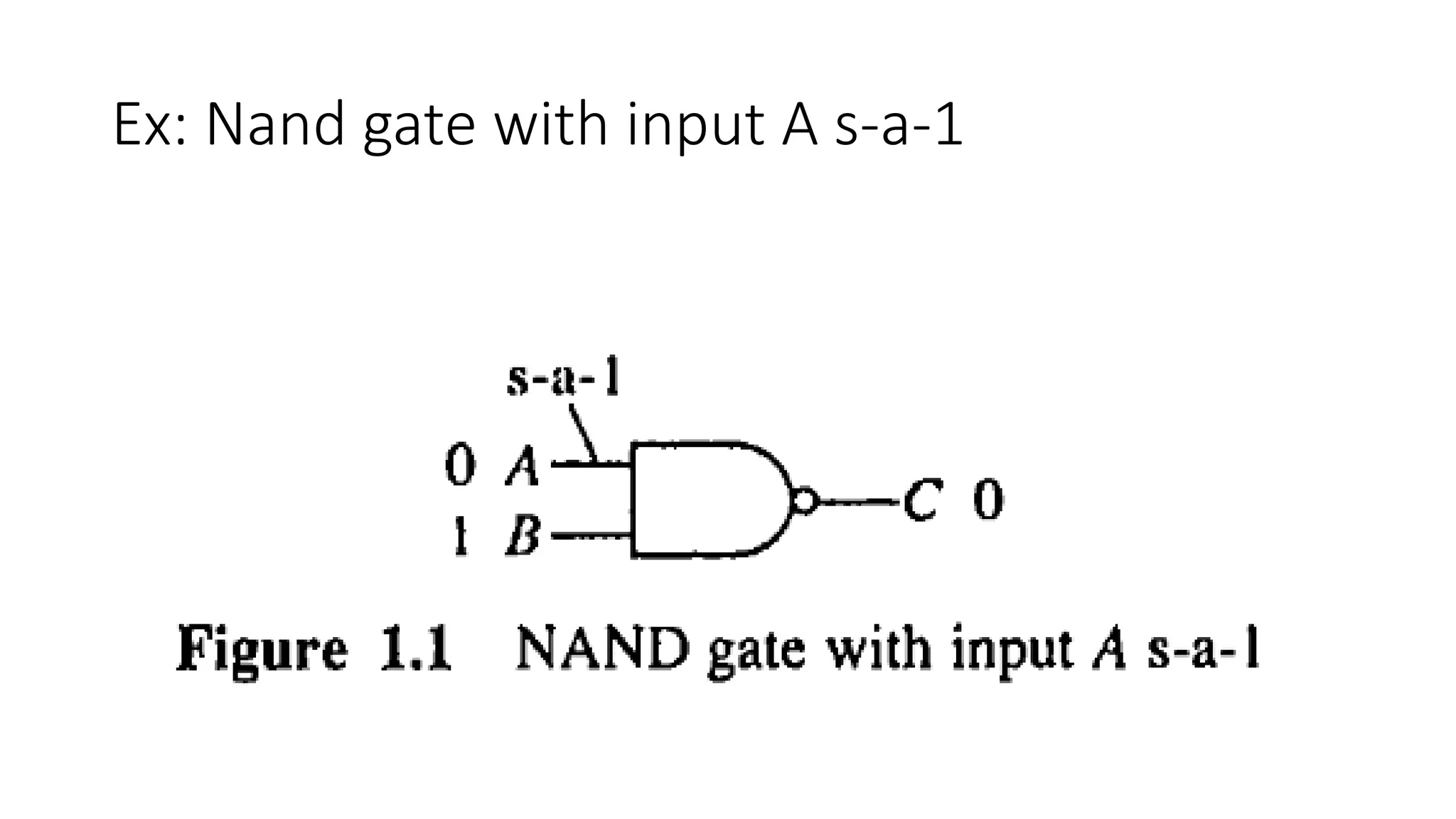
Ex: Nand gate with input A s-a-1
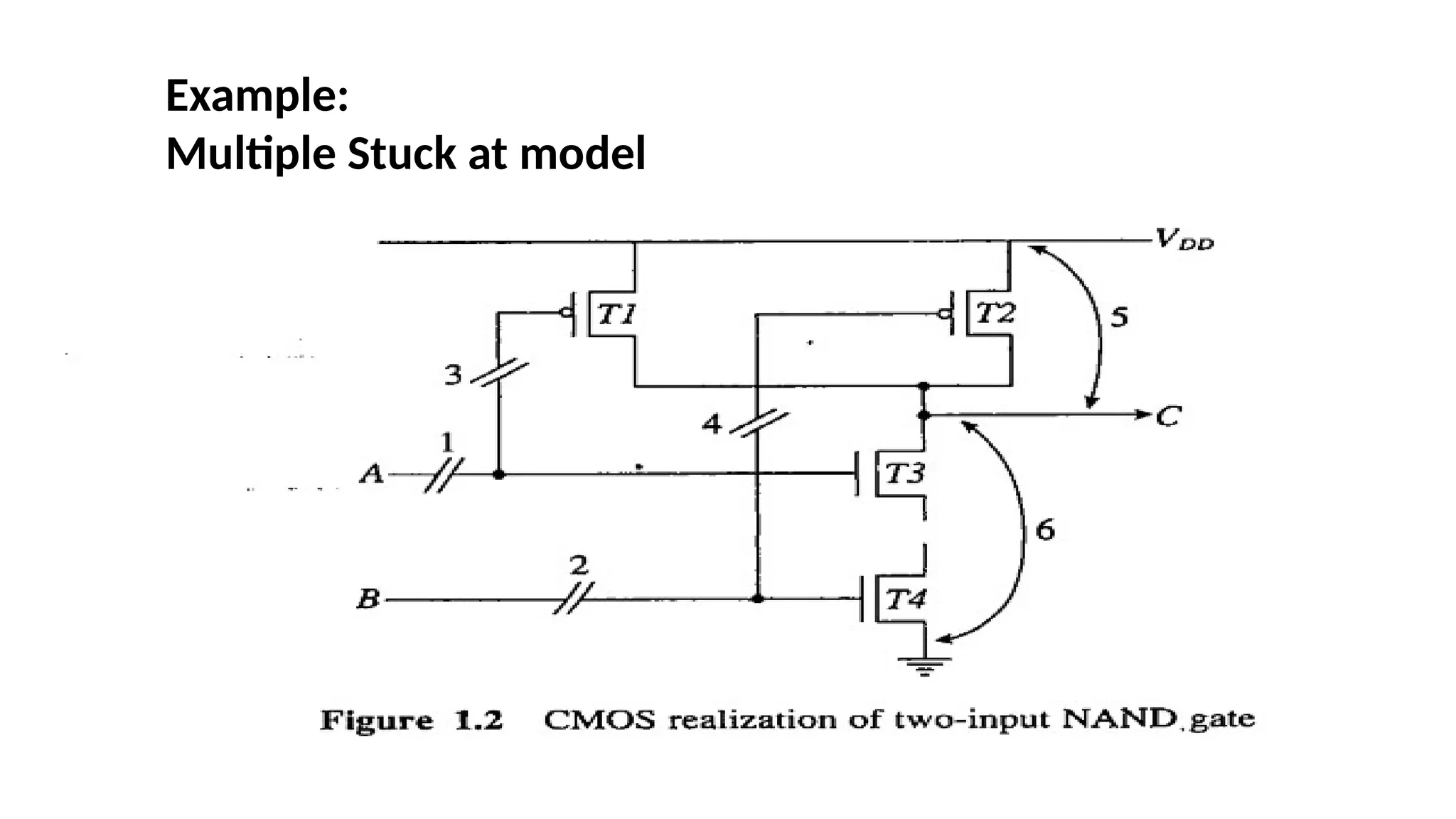
Example:
Multiple Stuck at model
Bridging Faults
• Unintended shorts between the lines form a class of permanent faults
known as bridging faults, which cannot be modelled as stuck-at-faults.
• Physical defects in MOS are manifested as bridging faults.
• Three Categories:
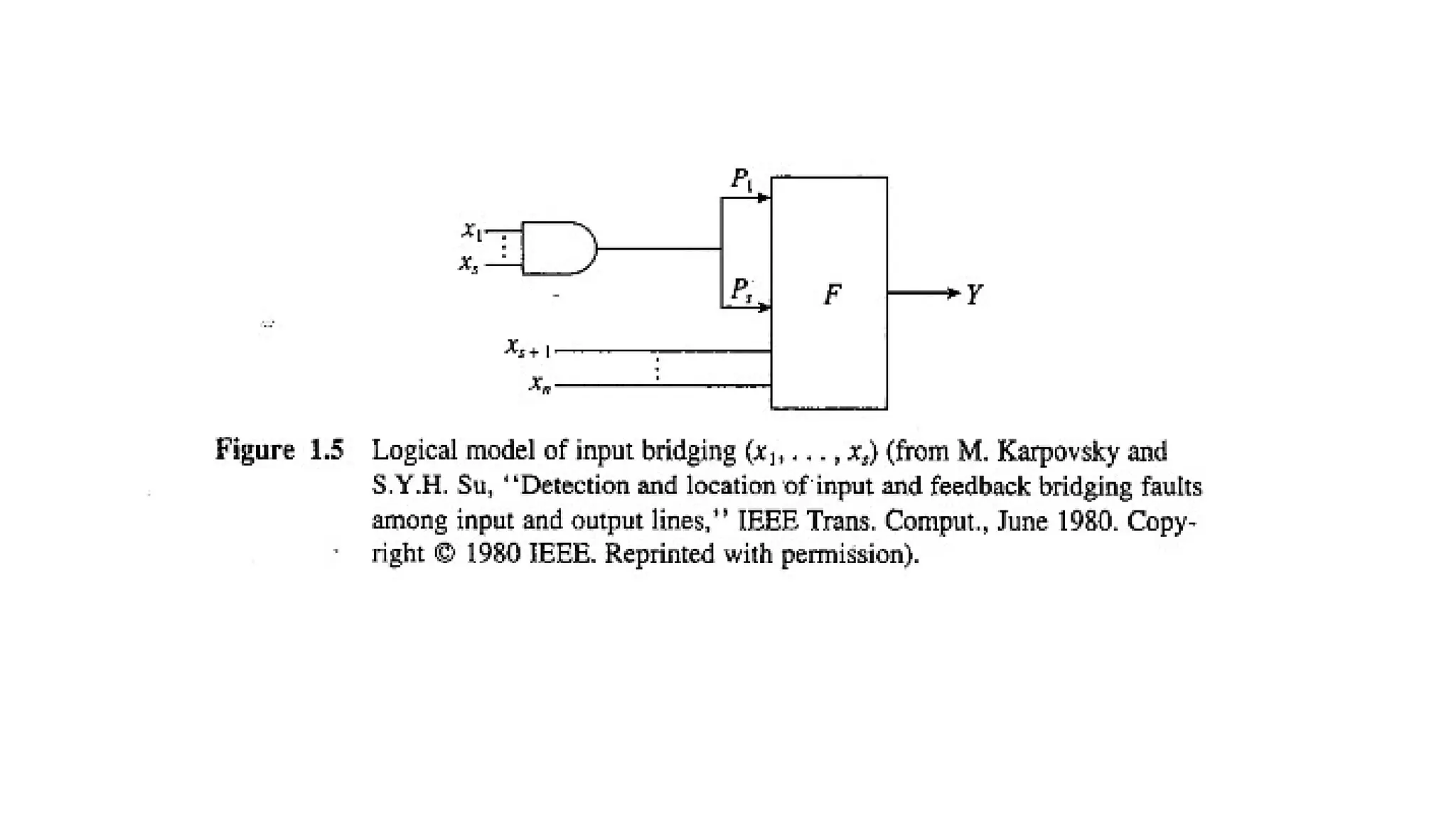
Input bridging
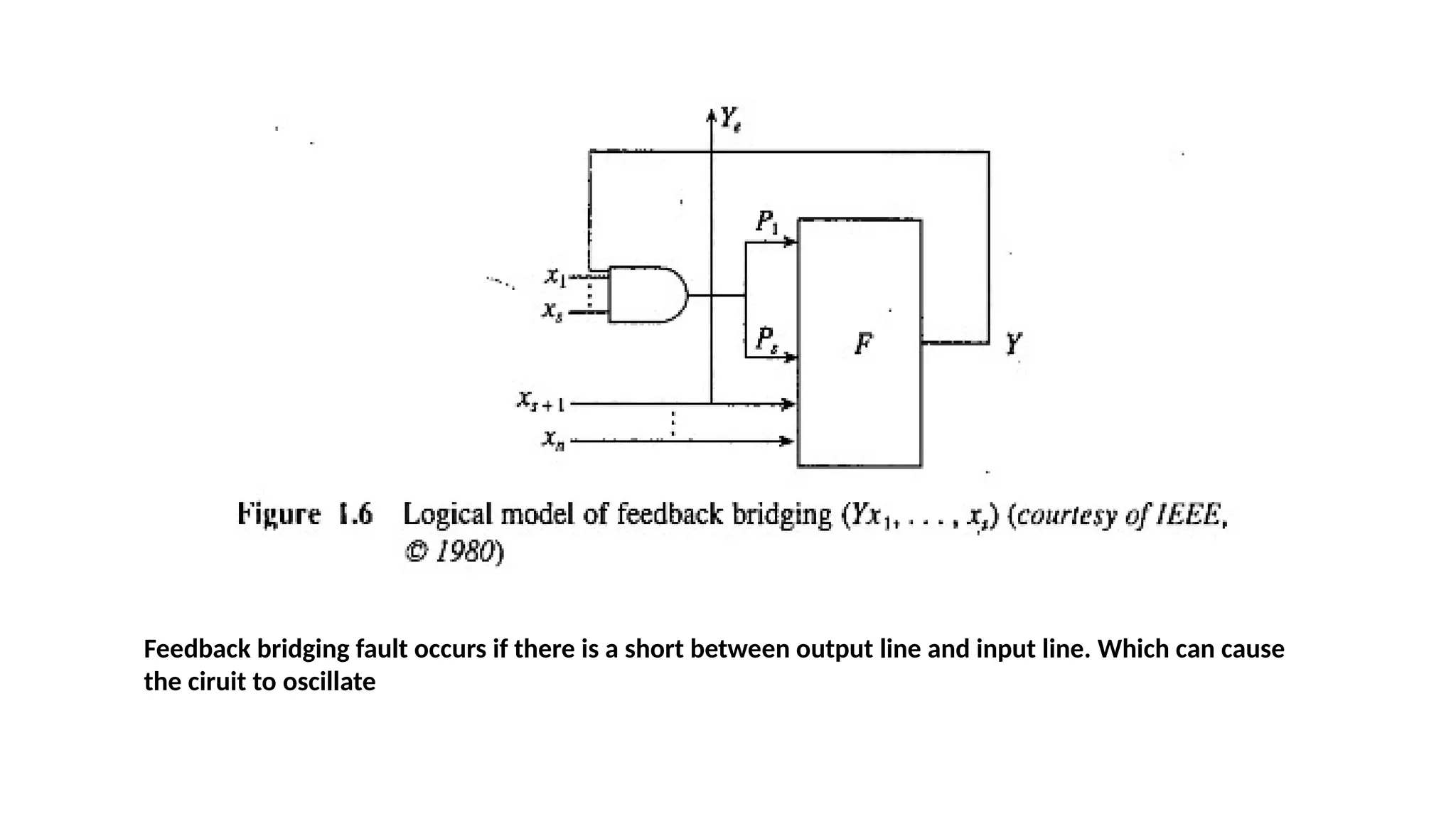
Feed back Bridging
Non Feedback bridging
Feedback bridging fault occurs if there is a short between output line and input line. Which can cause
the ciruit to oscillate
Breaks and Transistor stck on open faults
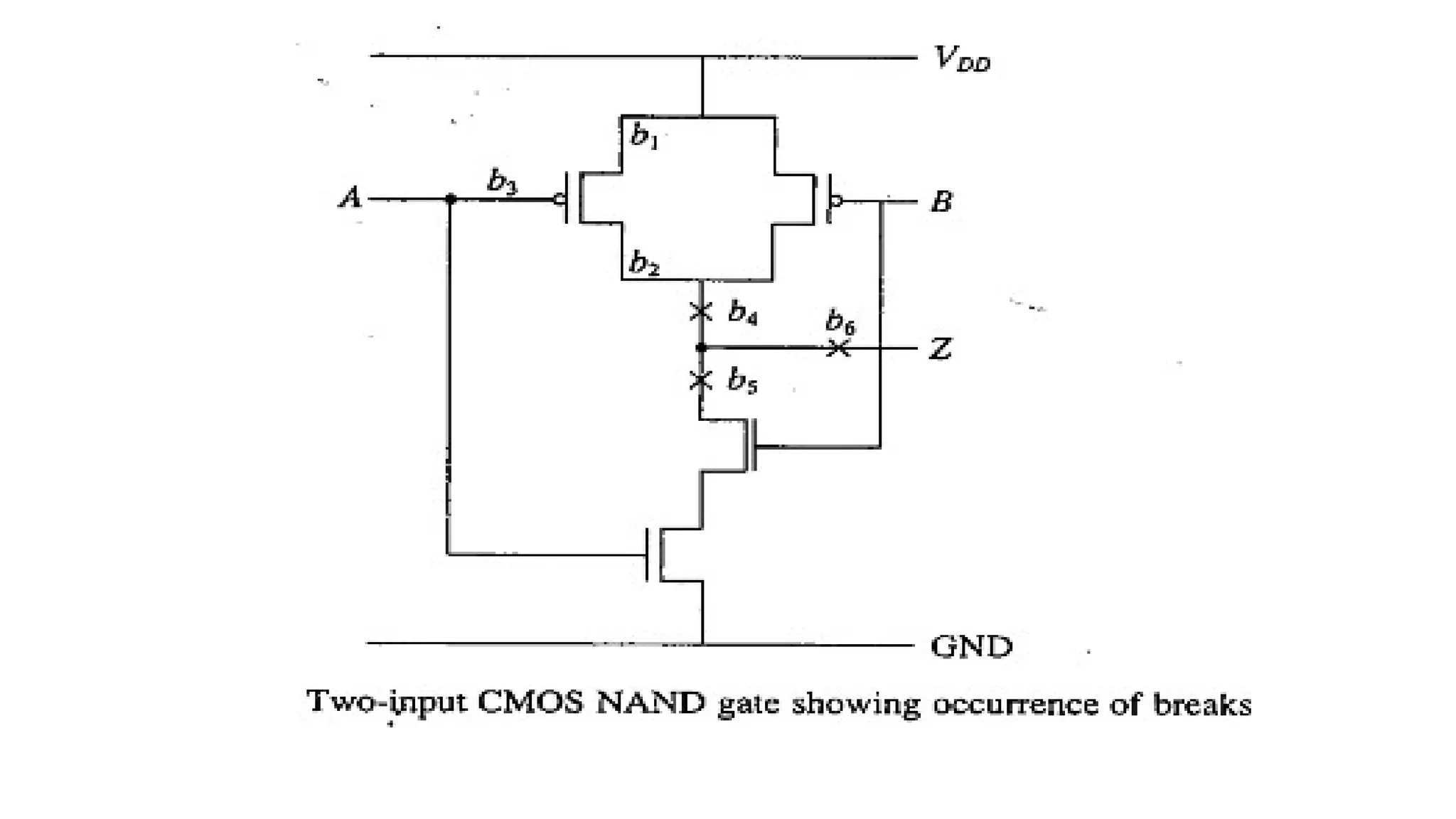
Intragate breaks
• An intragate break occurs internal to a gate .
• Such a break can disconnect the source, the drain, or tne gate from
the transistor (b1,b2,b3 in figure)
• An intragate can also disconnect the p-newtwork or the n network,
or both networks from the circuit (b4,b5,b6 in figure)
Stuck-on and stuck-open faults
• Circuits should be tested for shorts and opens at the transistor level
for realistic modelling.
• A short corresponds to a stuck-on transistor
• An open corresponds to stuck-open transistor
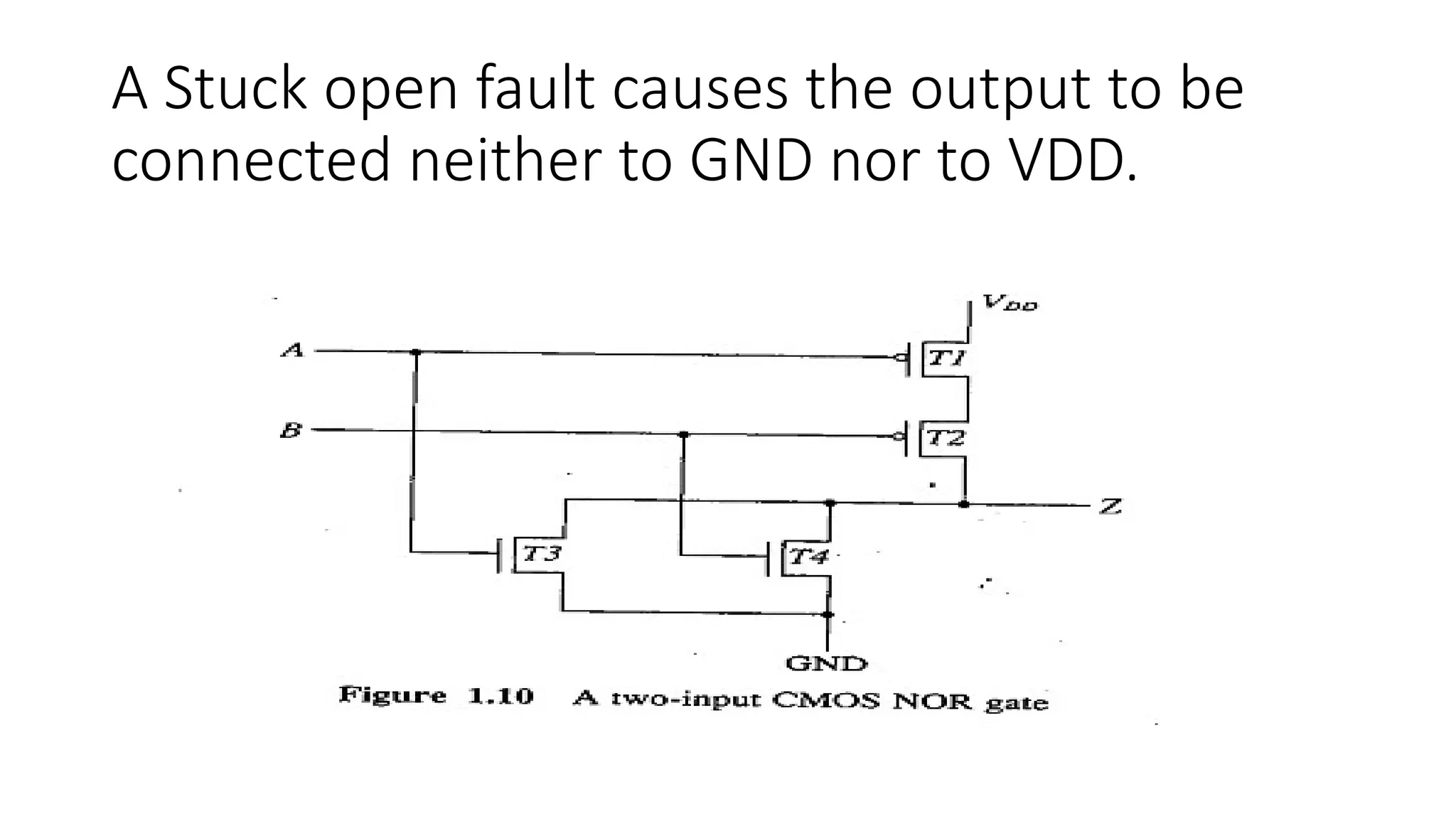
A Stuck open fault causes the output to be
connected neither to GND nor to VDD.
Delay faults
• Smaller defects (partial open or short) result in the failure of a
circuit to meet its timing specification.
• A small defect may delay the transition of a signal on a line either
from 0 to 1or vice versa.
• Two types
--- Gate delay fault
( model defects that cause propagation delay of faulty gate)
---- path delay fault( isolated & distributed defects)
Temporary Faults
90% of total maintenance expence
Difficult detect and isolate
2 categories
1.Transient temporary faults --
non recurring
α prticle radiation or power supply fluctuation
2.Intermittent faults:
Reappear on a regular basis
due to loose connections ,faulty components,environmental
conditions

VLSI testing.failures andFaults in digital ciruits

  • 1.
  • 2.
    Failures and Faults •A failure is said to have occured in a circuit or system if it deviates from its specified behavior • A fault is a physical defect that may or may not cause a failure.
  • 3.
    A fault ischaracterised by its nature, value,extent and duration. Nature: logical fault--opposite value non logical fault like power failure,malfunction of clock signal Value: creates fixed or varying errorneous values Extent: Effect of the fault is localized or distributed Duration: of a fault refers to whether the fault is permanent or temporary
  • 4.
    Modeling of faults •The effect of a fault is represented by a model, which represents the change the fault produces in circuit signals. • The fault models are • 1.Stuck at fault • 2Bridging fault • 3.Stuck open fault
  • 5.
    Stuck at faults •classical fault model • represents most common model for logical faults • A fault in a logic gate results in one of its inputs or the output being fixed to either a logic 0 (stuck-at-0 --->s-a-0) or a logic 1( stuck- at- 1-----> s-a-1)
  • 6.
    Ex: Nand gatewith input A s-a-1
  • 7.
  • 8.
    Bridging Faults • Unintendedshorts between the lines form a class of permanent faults known as bridging faults, which cannot be modelled as stuck-at-faults. • Physical defects in MOS are manifested as bridging faults. • Three Categories: Input bridging Feed back Bridging Non Feedback bridging
  • 10.
    Feedback bridging faultoccurs if there is a short between output line and input line. Which can cause the ciruit to oscillate
  • 11.
    Breaks and Transistorstck on open faults
  • 12.
    Intragate breaks • Anintragate break occurs internal to a gate . • Such a break can disconnect the source, the drain, or tne gate from the transistor (b1,b2,b3 in figure) • An intragate can also disconnect the p-newtwork or the n network, or both networks from the circuit (b4,b5,b6 in figure)
  • 14.
    Stuck-on and stuck-openfaults • Circuits should be tested for shorts and opens at the transistor level for realistic modelling. • A short corresponds to a stuck-on transistor • An open corresponds to stuck-open transistor
  • 15.
    A Stuck openfault causes the output to be connected neither to GND nor to VDD.
  • 16.
    Delay faults • Smallerdefects (partial open or short) result in the failure of a circuit to meet its timing specification. • A small defect may delay the transition of a signal on a line either from 0 to 1or vice versa. • Two types --- Gate delay fault ( model defects that cause propagation delay of faulty gate) ---- path delay fault( isolated & distributed defects)
  • 17.
    Temporary Faults 90% oftotal maintenance expence Difficult detect and isolate 2 categories 1.Transient temporary faults -- non recurring α prticle radiation or power supply fluctuation 2.Intermittent faults: Reappear on a regular basis due to loose connections ,faulty components,environmental conditions