Healthcare
Anthony P. Carnevale, Nicole Smith, Artem Gulish,
Bennett H. Beach
June 21, 2012
Overview
•  Healthcare accounts for 18 percent of the U.S.
economy, twice as high as in other countries
•  Demand for postsecondary education in healthcare
professional and technical occupations is third fastest
growing after science, technology, engineering and
mathematics (STEM) and education
Demand
•  Americans are living longer. Adults 75 to 84 use three
times as much healthcare as everyone else combined
•  Due to the growing demand for services and low
productivity, the demand for healthcare services over
the next decade will grow nearly twice as fast as the
national economy
Demand (cont.)
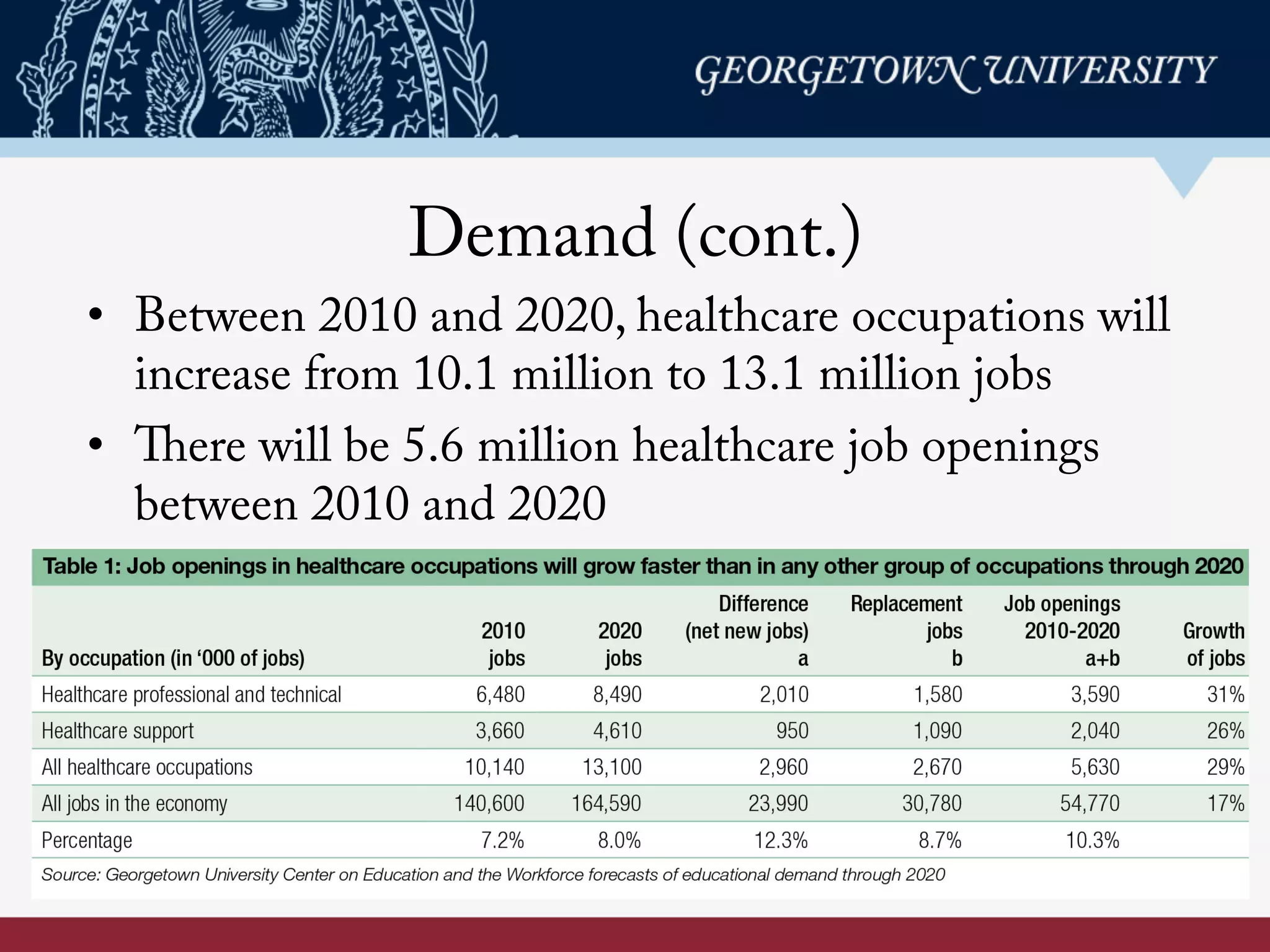
•  Between 2010 and 2020, healthcare occupations will
increase from 10.1 million to 13.1 million jobs
•  There will be 5.6 million healthcare job openings
between 2010 and 2020
Labor Force
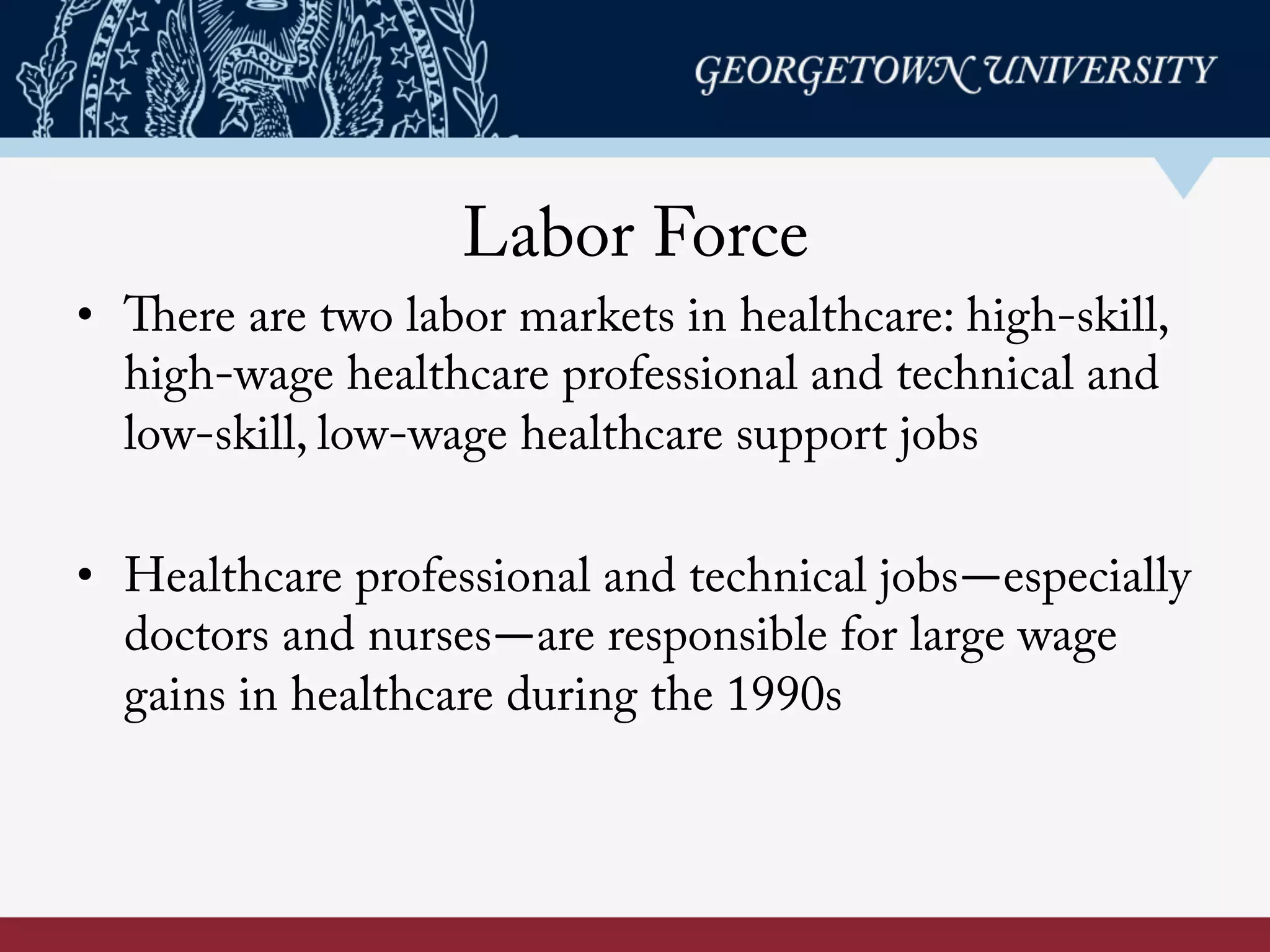
•  There are two labor markets in healthcare: high-skill,
high-wage healthcare professional and technical and
low-skill, low-wage healthcare support jobs
•  Healthcare professional and technical jobs—especially
doctors and nurses—are responsible for large wage
gains in healthcare during the 1990s
Labor Force
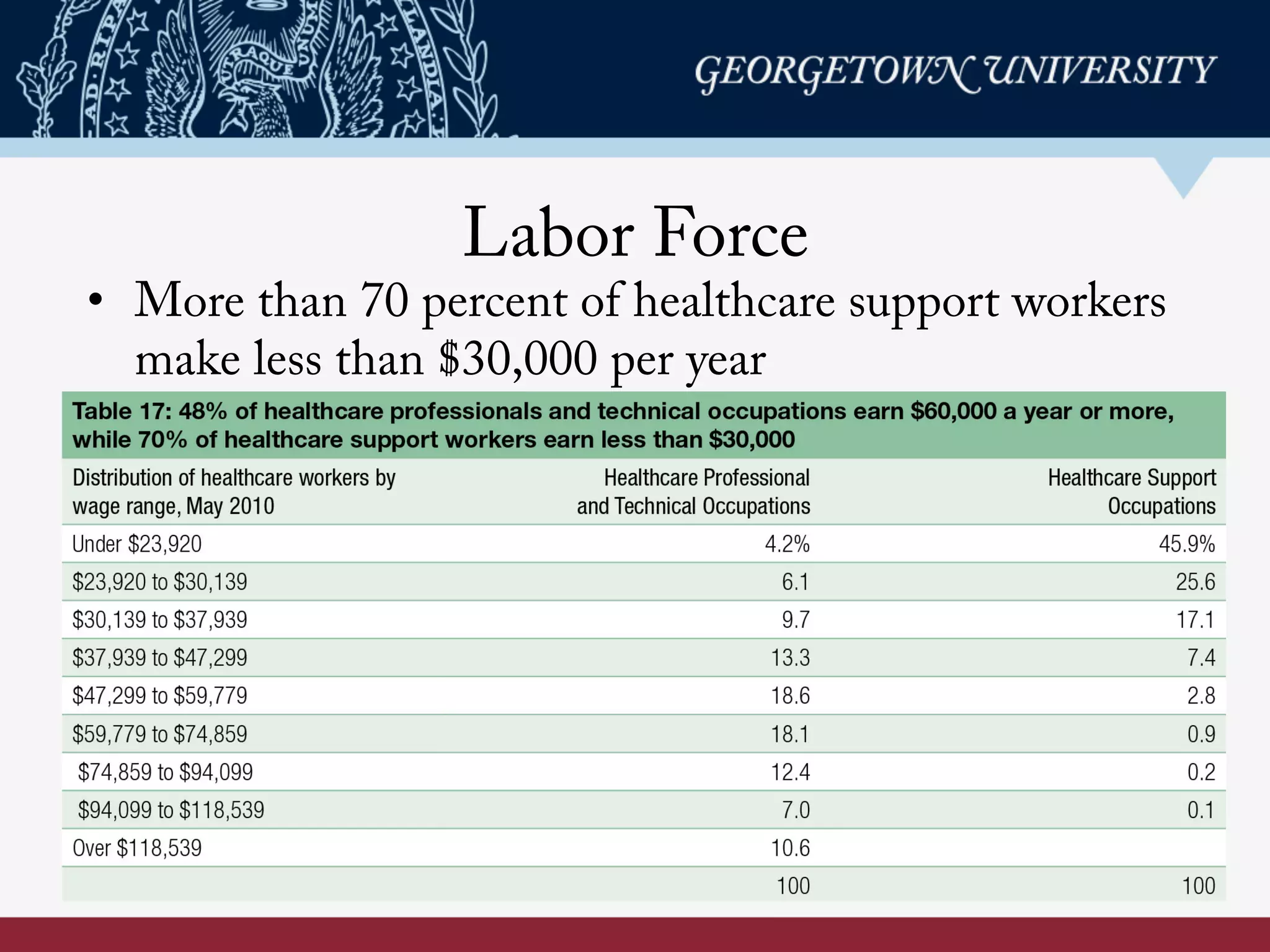
•  More than 70 percent of healthcare support workers
make less than $30,000 per year
Labor Force (cont.)
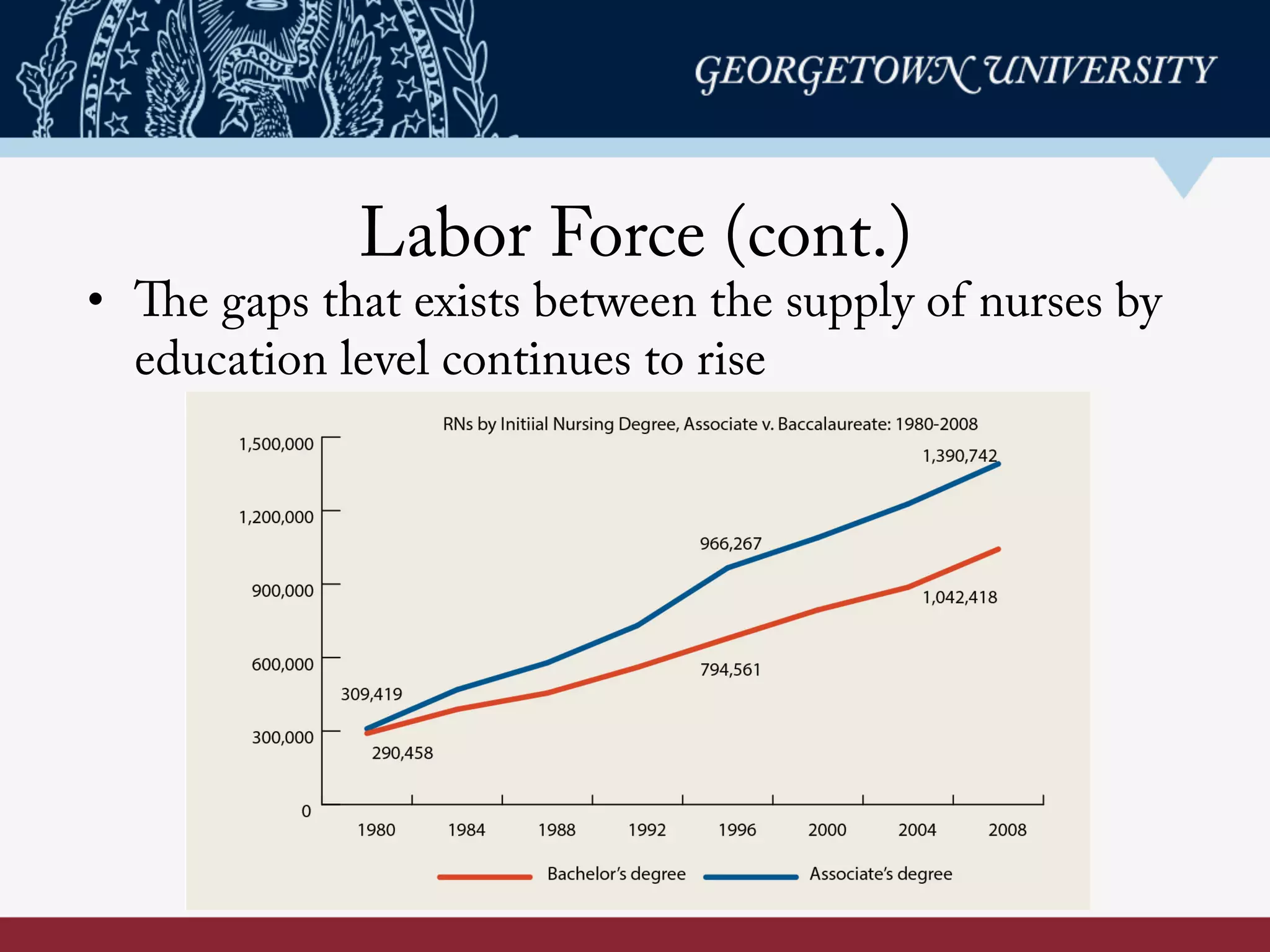
•  The gaps that exists between the supply of nurses by
education level continues to rise
Skills Required
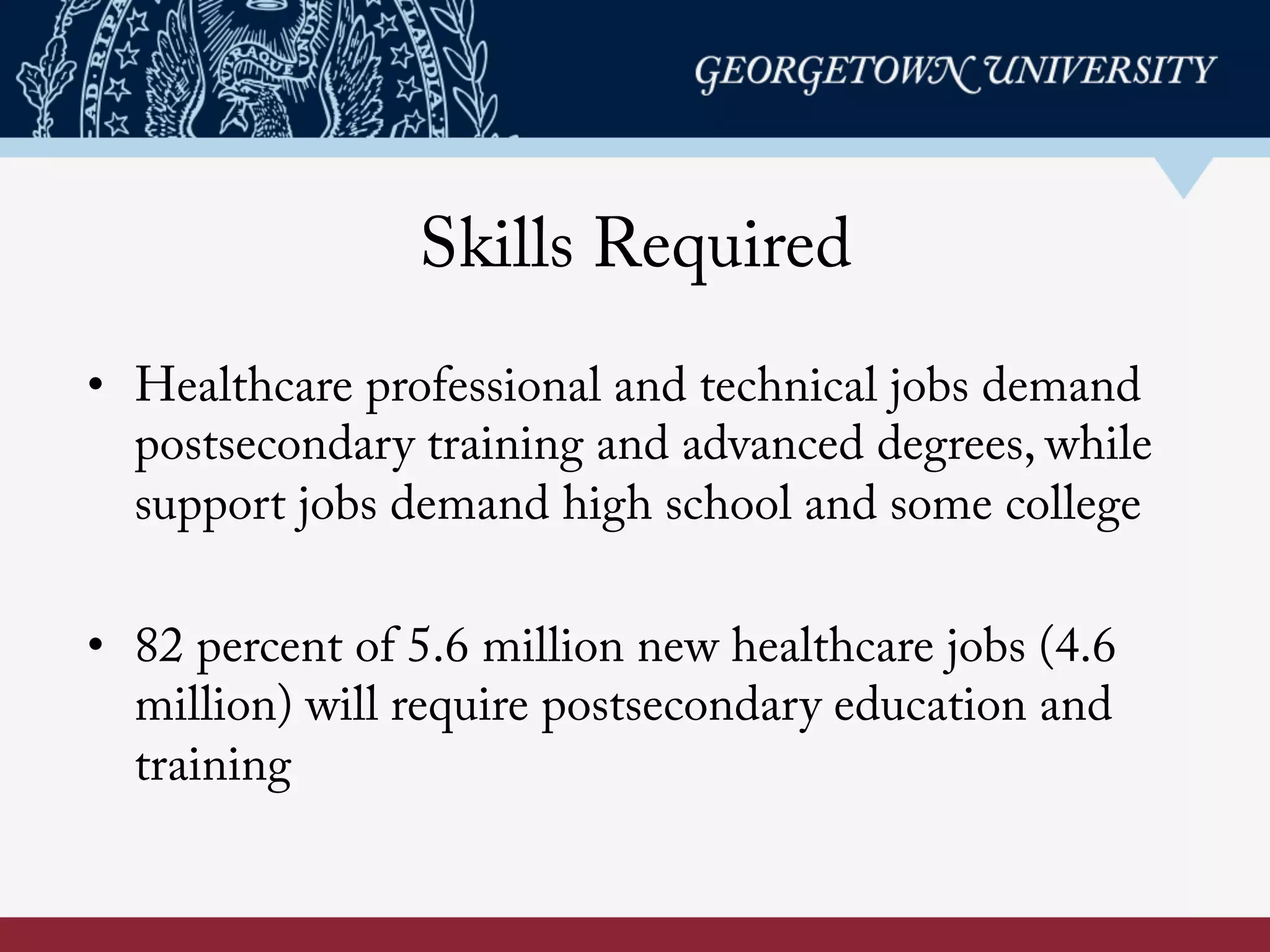
•  Healthcare professional and technical jobs demand
postsecondary training and advanced degrees, while
support jobs demand high school and some college
•  82 percent of 5.6 million new healthcare jobs (4.6
million) will require postsecondary education and
training
Trend
•  Upskilling is growing fast, especially in nursing
•  Rising Bachelor’s degree requirements hinder
minorities from securing nursing employment
•  Healthcare has 22 percent foreign born workers
compared to 13 percent of all workers nationally
Conclusion
•  Healthcare will continue to grow fast and provide
some of the best-paying jobs in the nation—but the
people in these jobs will increasingly require higher
levels of education to enter the field and continuous
life-time learning and training once they are part of
the industry
For more information:
Email Us | cewgeorgetown@georgetown.edu
Follow Us on Twitter | @GeorgetownCEW
Find us on Facebook | Facebook.com/GeorgetownCEW
Follow us on LinkedIn | linkedin.com/company/georgetowncew
See the full report at: cew.georgetown.edu/healthcare/	


Healthcare

  • 1.
    Healthcare Anthony P. Carnevale,Nicole Smith, Artem Gulish, Bennett H. Beach June 21, 2012
  • 2.
    Overview •  Healthcare accountsfor 18 percent of the U.S. economy, twice as high as in other countries •  Demand for postsecondary education in healthcare professional and technical occupations is third fastest growing after science, technology, engineering and mathematics (STEM) and education
  • 3.
    Demand •  Americans areliving longer. Adults 75 to 84 use three times as much healthcare as everyone else combined •  Due to the growing demand for services and low productivity, the demand for healthcare services over the next decade will grow nearly twice as fast as the national economy
  • 4.
    Demand (cont.) •  Between2010 and 2020, healthcare occupations will increase from 10.1 million to 13.1 million jobs •  There will be 5.6 million healthcare job openings between 2010 and 2020
  • 5.
    Labor Force •  Thereare two labor markets in healthcare: high-skill, high-wage healthcare professional and technical and low-skill, low-wage healthcare support jobs •  Healthcare professional and technical jobs—especially doctors and nurses—are responsible for large wage gains in healthcare during the 1990s
  • 6.
    Labor Force •  Morethan 70 percent of healthcare support workers make less than $30,000 per year
  • 7.
    Labor Force (cont.) • The gaps that exists between the supply of nurses by education level continues to rise
  • 8.
    Skills Required •  Healthcareprofessional and technical jobs demand postsecondary training and advanced degrees, while support jobs demand high school and some college •  82 percent of 5.6 million new healthcare jobs (4.6 million) will require postsecondary education and training
  • 9.
    Trend •  Upskilling isgrowing fast, especially in nursing •  Rising Bachelor’s degree requirements hinder minorities from securing nursing employment •  Healthcare has 22 percent foreign born workers compared to 13 percent of all workers nationally
  • 10.
    Conclusion •  Healthcare willcontinue to grow fast and provide some of the best-paying jobs in the nation—but the people in these jobs will increasingly require higher levels of education to enter the field and continuous life-time learning and training once they are part of the industry
  • 11.
    For more information: EmailUs | cewgeorgetown@georgetown.edu Follow Us on Twitter | @GeorgetownCEW Find us on Facebook | Facebook.com/GeorgetownCEW Follow us on LinkedIn | linkedin.com/company/georgetowncew See the full report at: cew.georgetown.edu/healthcare/