By: Anthony P. Carnevale, Ban Cheah, Neil Ridley,
Jeff Strohl, and Kathryn Peltier Campbell
June 25, 2019
Overview
• After reaching its peak of economic output in the
1940s, American manufacturing transformed
dramatically through 2016.
• Increased foreign trade and offshoring contributed
to steep manufacturing job losses, especially after
China entered the World Trade Organization in
2001.
• Despite declines in manufacturing employment,
output increased as a result of automation and
other factors.
• The geographic center of manufacturing shifted
from the Northeast, Great Lakes, and mid-Atlantic
states to southern and central states. 2
The turn of the 20th century marked
the shift to a services economy
• Manufacturing’s share of US economic output shrank
from 39% in 1947 to just 18% in 2016.
• Over the same period, the services sector more than
doubled its output share from 20% to 49%.
• The share of all workers employed in manufacturing
declined between 1940 and 2016 from 23% to 10%.
• Despite its smaller share of the US economy,
manufacturing produced $5.6 trillion in economic output
in 2016, compared to only $1.6 trillion in 1947.
3 Georgetown University Center on Education and the Workforce
Manufacturing was originally
concentrated in the Northeast
4 Georgetown University Center on Education and the Workforce
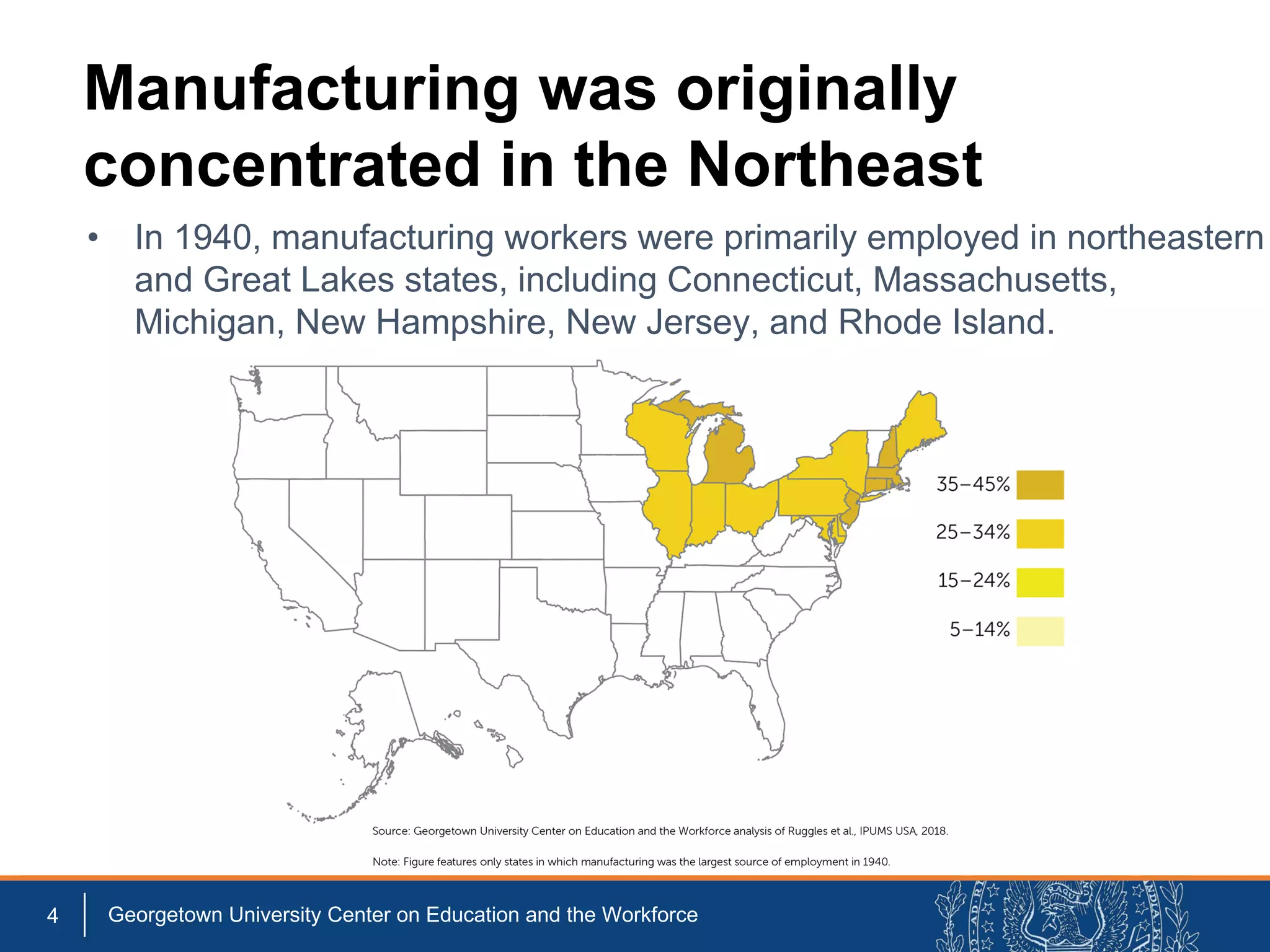
• In 1940, manufacturing workers were primarily employed in northeastern
and Great Lakes states, including Connecticut, Massachusetts,
Michigan, New Hampshire, New Jersey, and Rhode Island.
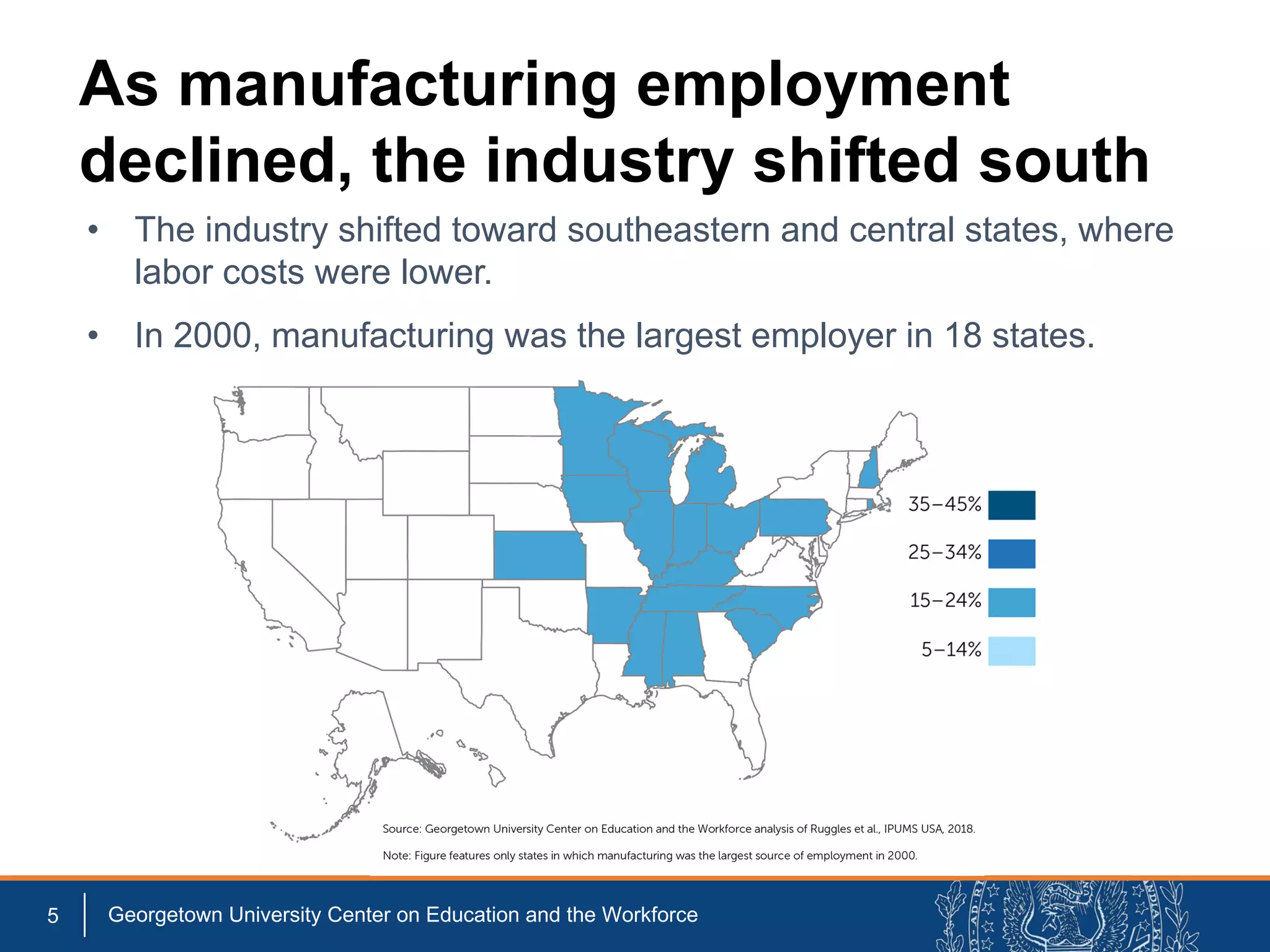
• The industry shifted toward southeastern and central states, where
labor costs were lower.
• In 2000, manufacturing was the largest employer in 18 states.
5 Georgetown University Center on Education and the Workforce
As manufacturing employment
declined, the industry shifted south
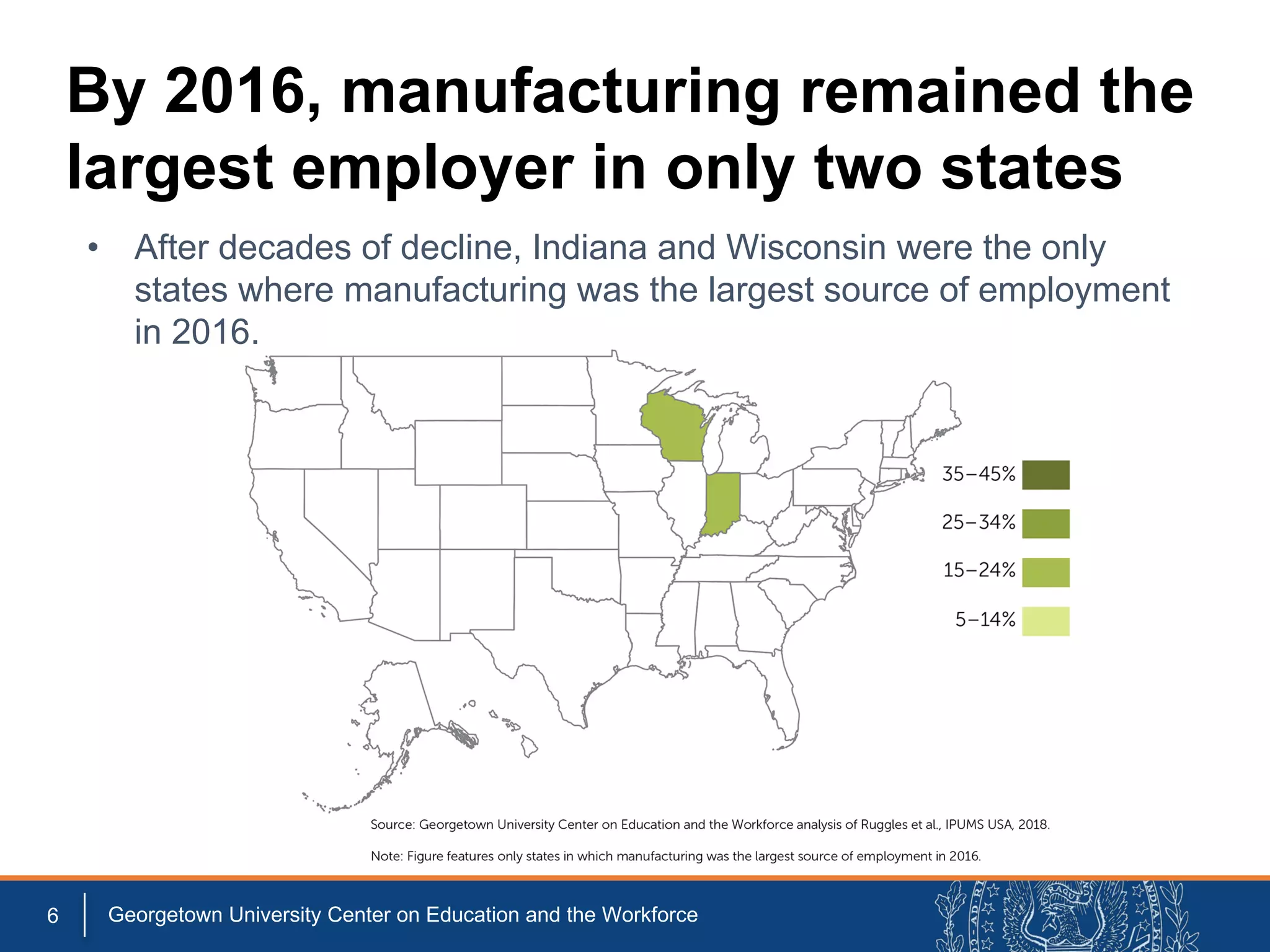
• After decades of decline, Indiana and Wisconsin were the only
states where manufacturing was the largest source of employment
in 2016.
6 Georgetown University Center on Education and the Workforce
By 2016, manufacturing remained the
largest employer in only two states
Conclusion
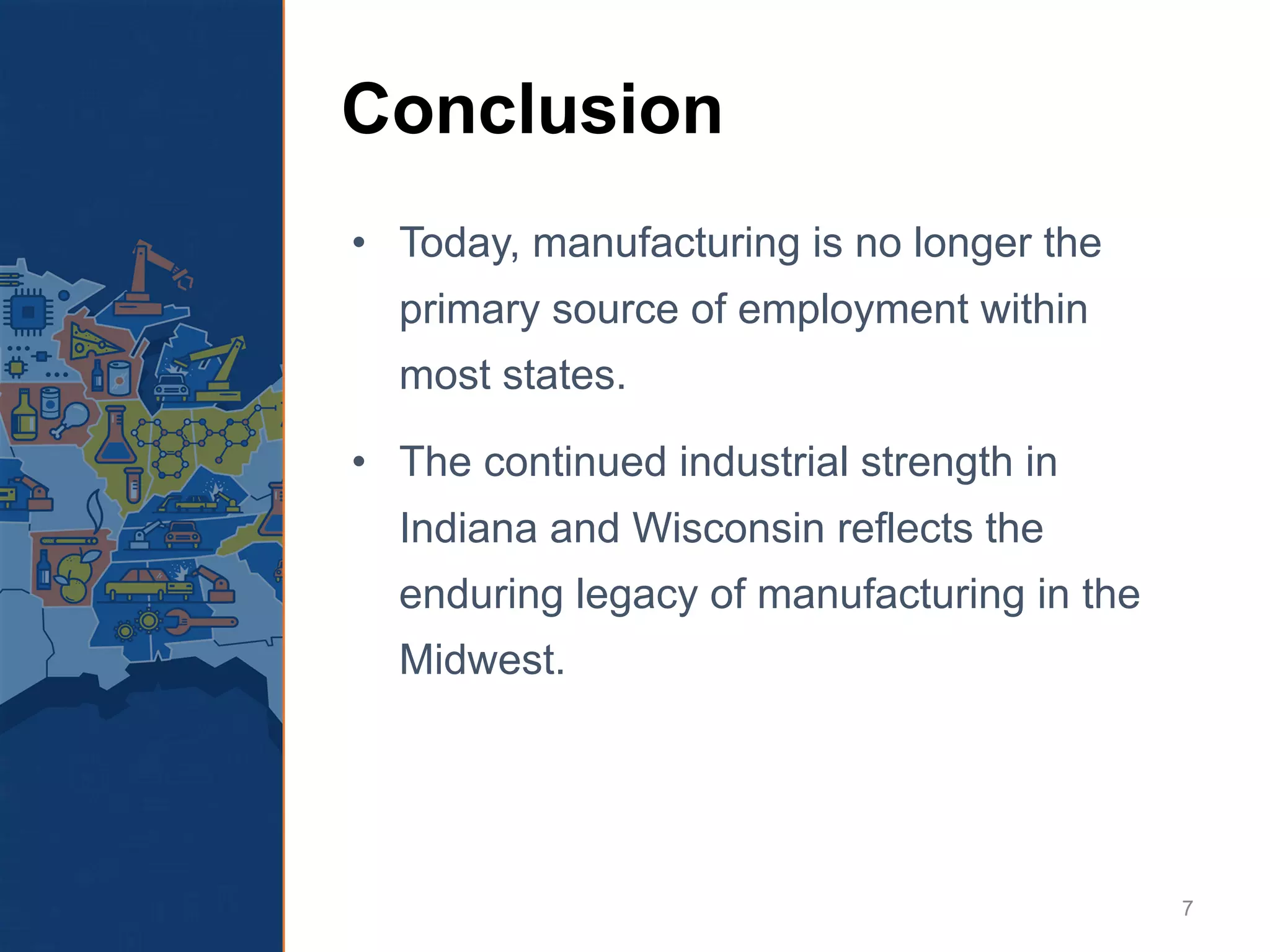
• Today, manufacturing is no longer the
primary source of employment within
most states.
• The continued industrial strength in
Indiana and Wisconsin reflects the
enduring legacy of manufacturing in the
Midwest.
7
8
cew.georgetown.edu/manufacturingstates
More Information
cewgeorgetown@georgetown.edu
Facebook.com/
GeorgetownCEW
linkedin.com/company/
georgetowncew
@GeorgetownCEW Slideshare.net/
CEWGeorgetown
YouTube.com/
CEWGeorgetown

The Way We Were: The Changing Geography of US Manufacturing from 1940 to 2016

  • 1.
    By: Anthony P.Carnevale, Ban Cheah, Neil Ridley, Jeff Strohl, and Kathryn Peltier Campbell June 25, 2019
  • 2.
    Overview • After reachingits peak of economic output in the 1940s, American manufacturing transformed dramatically through 2016. • Increased foreign trade and offshoring contributed to steep manufacturing job losses, especially after China entered the World Trade Organization in 2001. • Despite declines in manufacturing employment, output increased as a result of automation and other factors. • The geographic center of manufacturing shifted from the Northeast, Great Lakes, and mid-Atlantic states to southern and central states. 2
  • 3.
    The turn ofthe 20th century marked the shift to a services economy • Manufacturing’s share of US economic output shrank from 39% in 1947 to just 18% in 2016. • Over the same period, the services sector more than doubled its output share from 20% to 49%. • The share of all workers employed in manufacturing declined between 1940 and 2016 from 23% to 10%. • Despite its smaller share of the US economy, manufacturing produced $5.6 trillion in economic output in 2016, compared to only $1.6 trillion in 1947. 3 Georgetown University Center on Education and the Workforce
  • 4.
    Manufacturing was originally concentratedin the Northeast 4 Georgetown University Center on Education and the Workforce • In 1940, manufacturing workers were primarily employed in northeastern and Great Lakes states, including Connecticut, Massachusetts, Michigan, New Hampshire, New Jersey, and Rhode Island.
  • 5.
    • The industryshifted toward southeastern and central states, where labor costs were lower. • In 2000, manufacturing was the largest employer in 18 states. 5 Georgetown University Center on Education and the Workforce As manufacturing employment declined, the industry shifted south
  • 6.
    • After decadesof decline, Indiana and Wisconsin were the only states where manufacturing was the largest source of employment in 2016. 6 Georgetown University Center on Education and the Workforce By 2016, manufacturing remained the largest employer in only two states
  • 7.
    Conclusion • Today, manufacturingis no longer the primary source of employment within most states. • The continued industrial strength in Indiana and Wisconsin reflects the enduring legacy of manufacturing in the Midwest. 7
  • 8.