Five Rules of the College
and Career Game
By: Anthony P. Carnevale and Ban Cheah
May 16, 2018
Overview
•  The investment students and their families make in higher
education has become crucial and life-changing.
•  College degrees are now worth almost twice as much in
the workplace as high school diplomas.
•  The increased complexity of the college landscape has
diminished transparency about student outcomes.
•  College is less about what institution you attend and more
about the returns of individual college programs.
•  Students and educators need to learn the five rules of the
college and career game.
Rule 1: More education is usually better
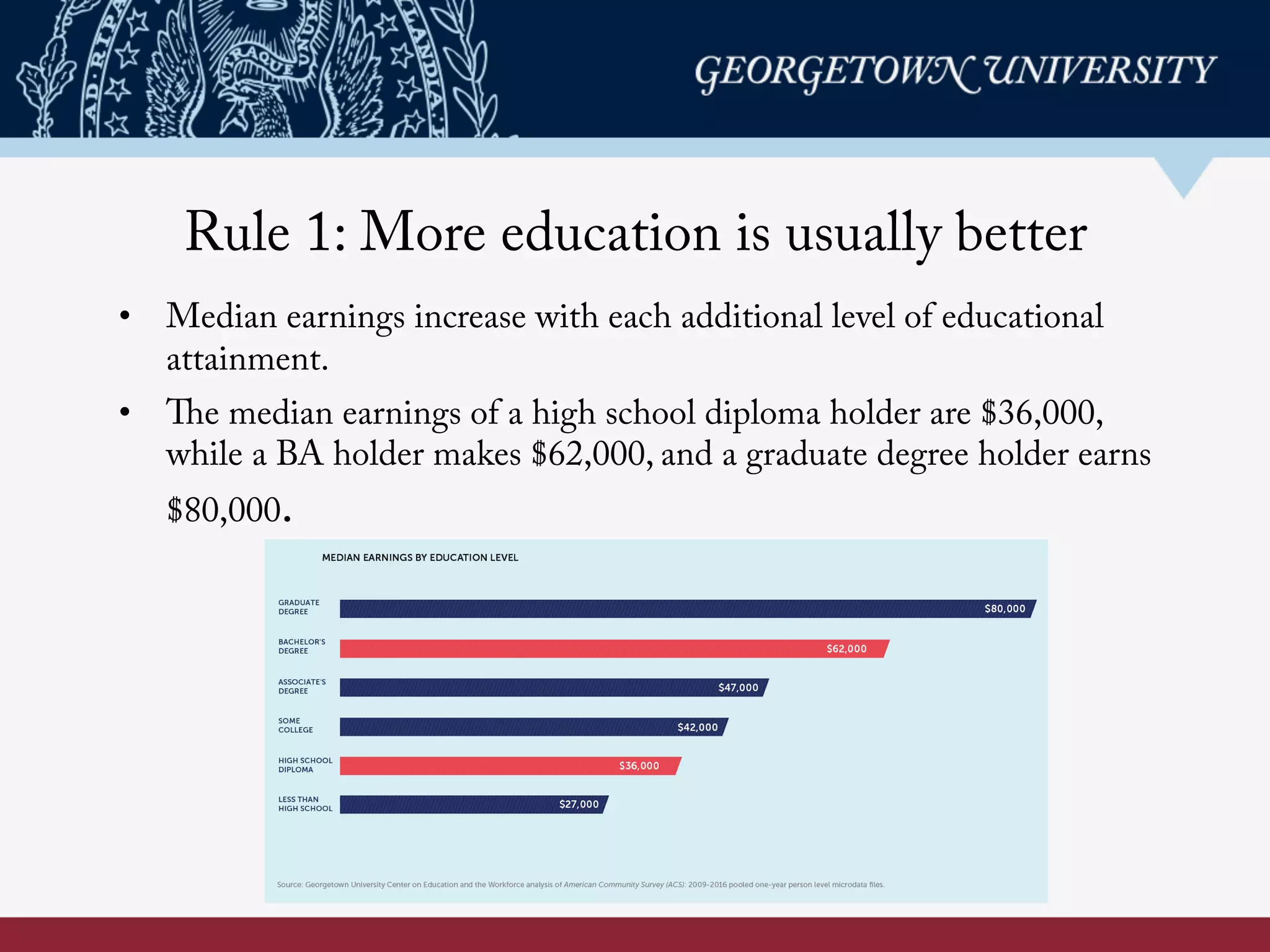
•  Median earnings increase with each additional level of educational
attainment.
•  The median earnings of a high school diploma holder are $36,000,
while a BA holder makes $62,000, and a graduate degree holder earns
$80,000.
Rule 2: Majors matter more
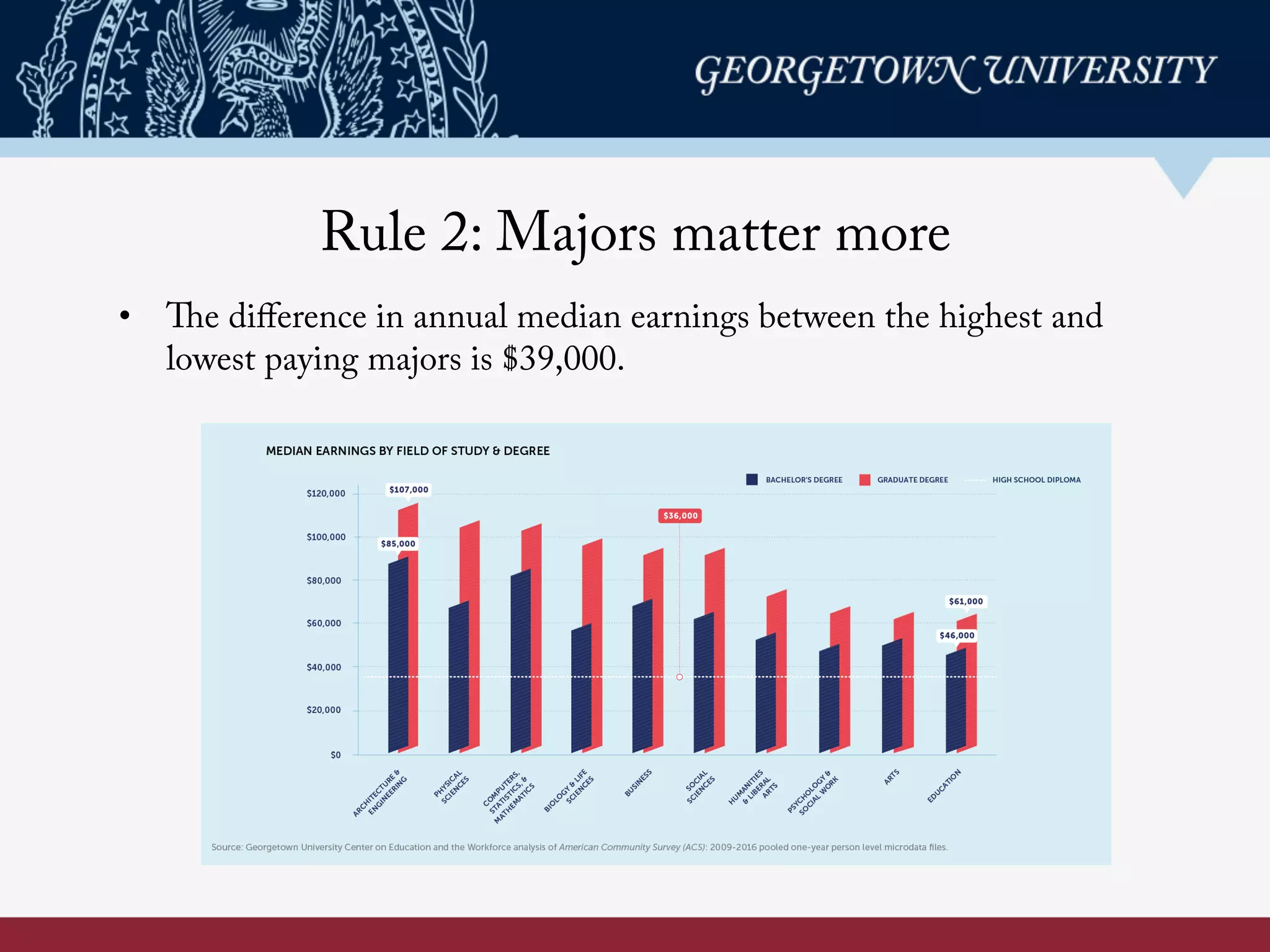
•  The difference in annual median earnings between the highest and
lowest paying majors is $39,000.
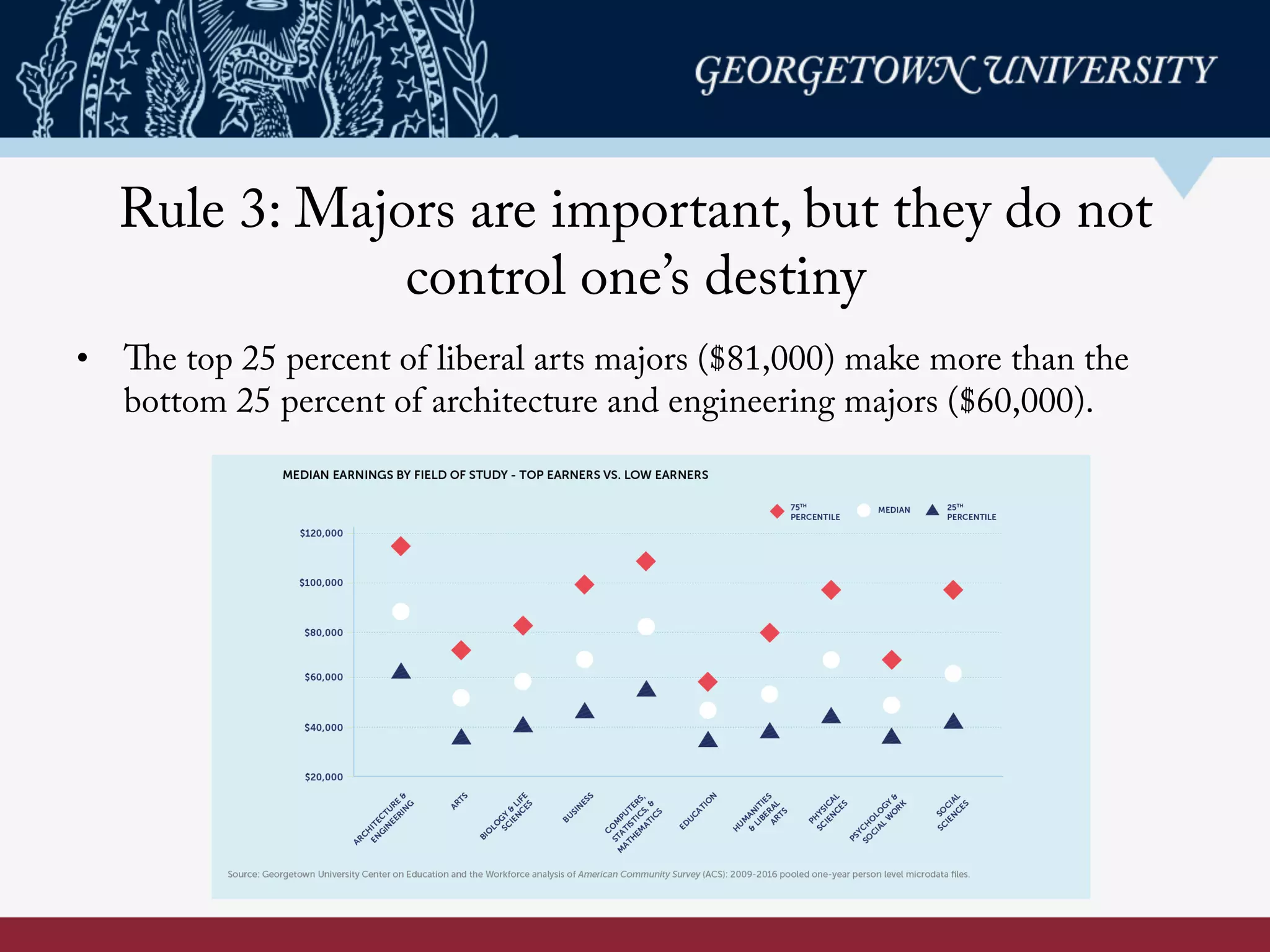
•  The top 25 percent of liberal arts majors ($81,000) make more than the
bottom 25 percent of architecture and engineering majors ($60,000).
Rule 3: Majors are important, but they do not
control one’s destiny
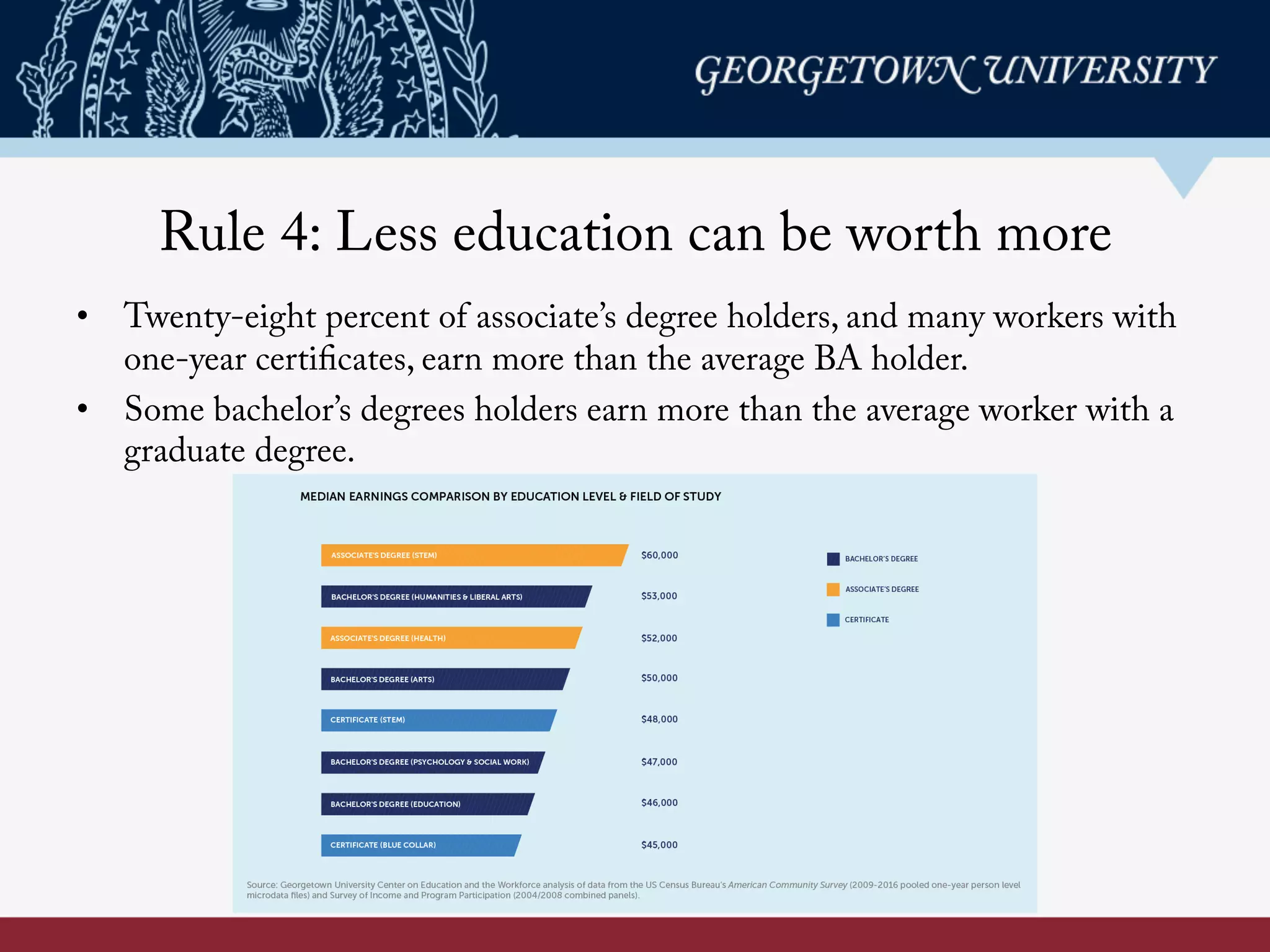
Rule 4: Less education can be worth more
•  Twenty-eight percent of associate’s degree holders, and many workers with
one-year certificates, earn more than the average BA holder.
•  Some bachelor’s degrees holders earn more than the average worker with a
graduate degree.
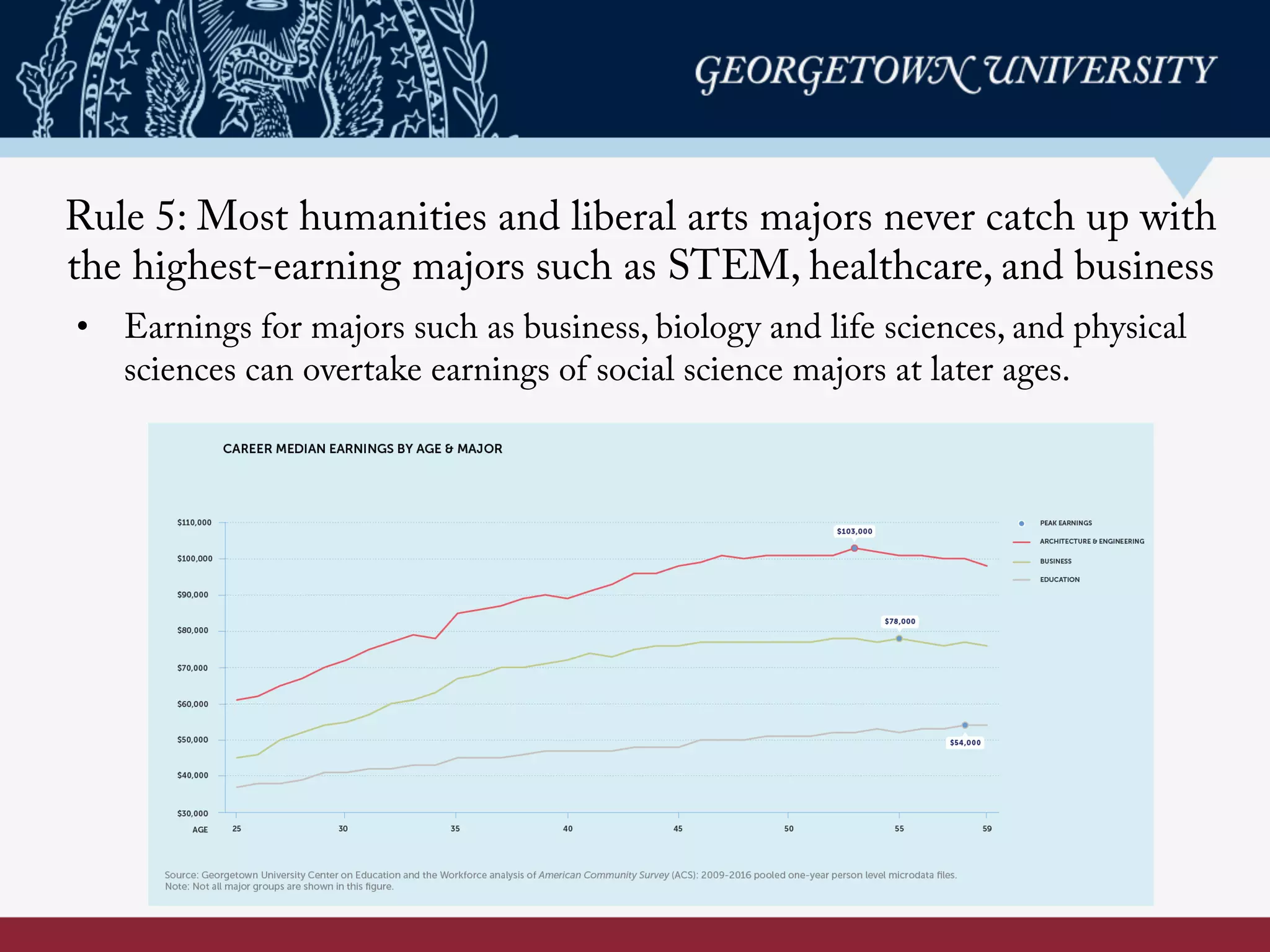
Rule 5: Most humanities and liberal arts majors never catch up with
the highest-earning majors such as STEM, healthcare, and business
•  Earnings for majors such as business, biology and life sciences, and physical
sciences can overtake earnings of social science majors at later ages.
Conclusion
•  American higher education is a risky undertaking for both
students and taxpayers because of low overall graduation rates.
•  It has also gotten more complicated with the increasing
number of programs and occupations.
•  Since the 1980s, 60 percent to 70 percent of the increase in
earnings inequality has been due to differences in access to
college programs with labor market value.
•  The five rules in the college and career game are sometimes
contradictory, but enable students, their families, and educators
to make informed decisions.
For more information:
Email Us | cewgeorgetown@georgetown.edu
Follow Us on Twitter | @GeorgetownCEW
Find Us on Facebook | Facebook.com/GeorgetownCEW
Follow Us on LinkedIn | linkedin.com/company/georgetowncew
See the full report at: cew.georgetown.edu/5rules	
  

Five Rules of the College and Career Game

  • 1.
    Five Rules ofthe College and Career Game By: Anthony P. Carnevale and Ban Cheah May 16, 2018
  • 2.
    Overview •  The investmentstudents and their families make in higher education has become crucial and life-changing. •  College degrees are now worth almost twice as much in the workplace as high school diplomas. •  The increased complexity of the college landscape has diminished transparency about student outcomes. •  College is less about what institution you attend and more about the returns of individual college programs. •  Students and educators need to learn the five rules of the college and career game.
  • 3.
    Rule 1: Moreeducation is usually better •  Median earnings increase with each additional level of educational attainment. •  The median earnings of a high school diploma holder are $36,000, while a BA holder makes $62,000, and a graduate degree holder earns $80,000.
  • 4.
    Rule 2: Majorsmatter more •  The difference in annual median earnings between the highest and lowest paying majors is $39,000.
  • 5.
    •  The top25 percent of liberal arts majors ($81,000) make more than the bottom 25 percent of architecture and engineering majors ($60,000). Rule 3: Majors are important, but they do not control one’s destiny
  • 6.
    Rule 4: Lesseducation can be worth more •  Twenty-eight percent of associate’s degree holders, and many workers with one-year certificates, earn more than the average BA holder. •  Some bachelor’s degrees holders earn more than the average worker with a graduate degree.
  • 7.
    Rule 5: Mosthumanities and liberal arts majors never catch up with the highest-earning majors such as STEM, healthcare, and business •  Earnings for majors such as business, biology and life sciences, and physical sciences can overtake earnings of social science majors at later ages.
  • 8.
    Conclusion •  American highereducation is a risky undertaking for both students and taxpayers because of low overall graduation rates. •  It has also gotten more complicated with the increasing number of programs and occupations. •  Since the 1980s, 60 percent to 70 percent of the increase in earnings inequality has been due to differences in access to college programs with labor market value. •  The five rules in the college and career game are sometimes contradictory, but enable students, their families, and educators to make informed decisions.
  • 9.
    For more information: EmailUs | cewgeorgetown@georgetown.edu Follow Us on Twitter | @GeorgetownCEW Find Us on Facebook | Facebook.com/GeorgetownCEW Follow Us on LinkedIn | linkedin.com/company/georgetowncew See the full report at: cew.georgetown.edu/5rules