Integrating
Digital Tools
into Today’s
classroom
Science
Science for Grades 6-8
 Since Science is a requirement for all
students in grades 6-8, it makes sense to
meet the needs of all students.
 As a way to meet the needs of all
students, web 2.0 tools can help teachers
and students
What are Web 2.0 Tools?
 Digital Tools ranging online to tablets
 Tools that create or support a virtual
learning environment.
 Tools that support communication and
cultivate relationships.
 Resources to support teaching and
learning.
 Tools enabling students to showcase work
and take pride in their learning.
How will these tools help my
science curriculum?
 Open lines of communication
 Provide collaboration opportunities
 Enhance the learning experience
 Showcase students’ work
 Differentiate & Meet all students’ needs
 Motivate students and teachers
 Make learning EASY!!!
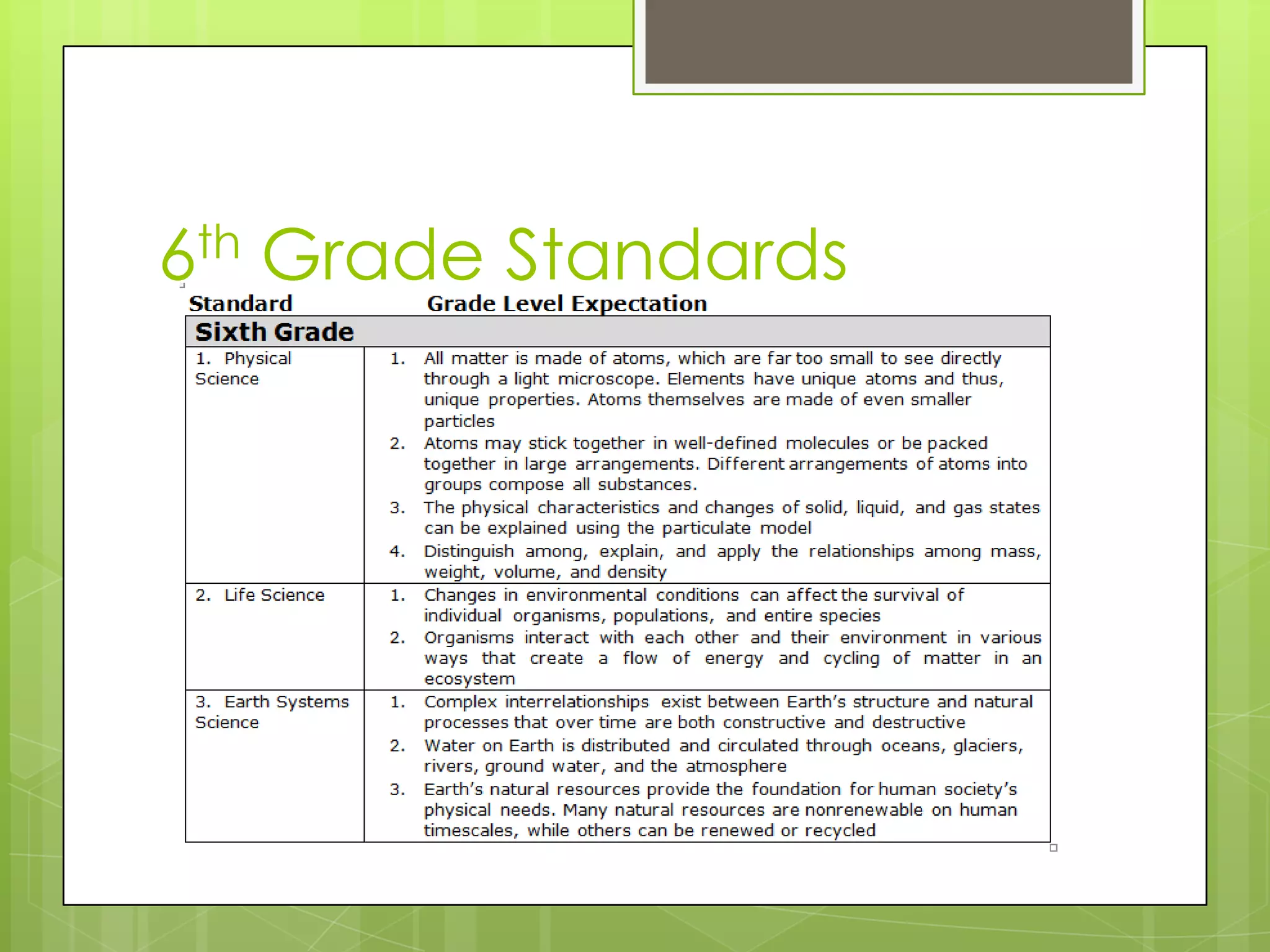
6th Grade Standards
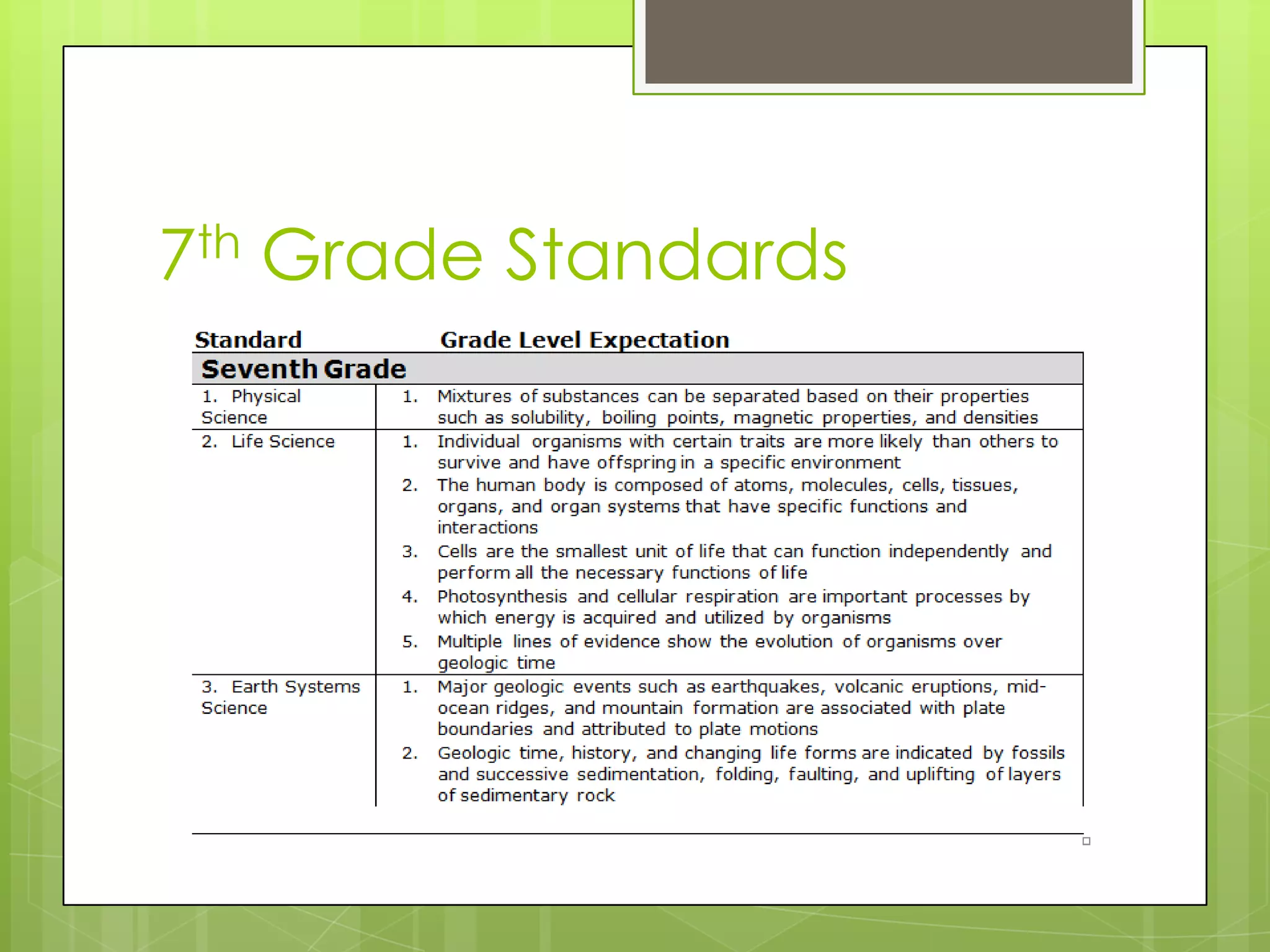
7th Grade Standards
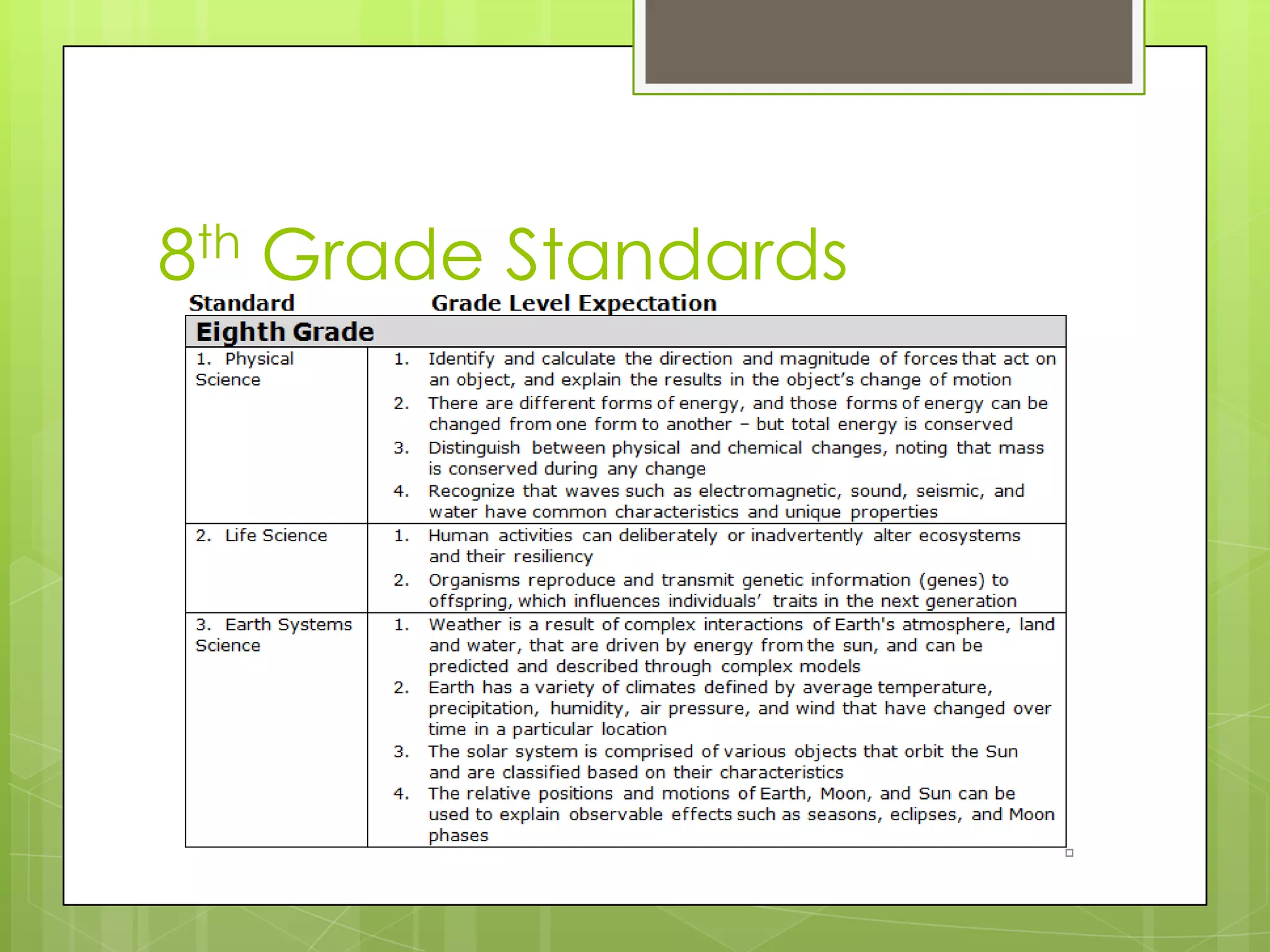
8th Grade Standards
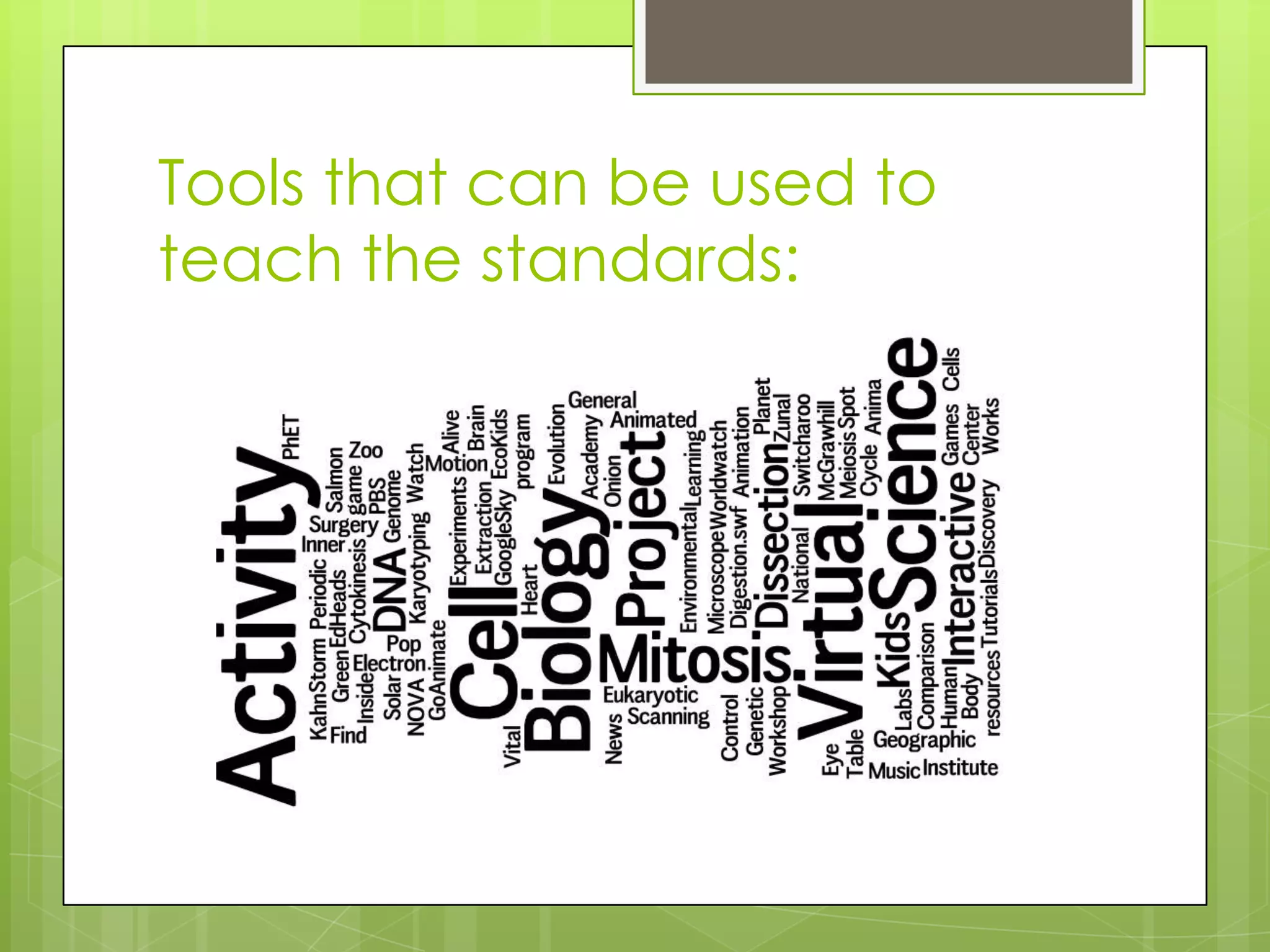
Tools that can be used to
teach the standards:
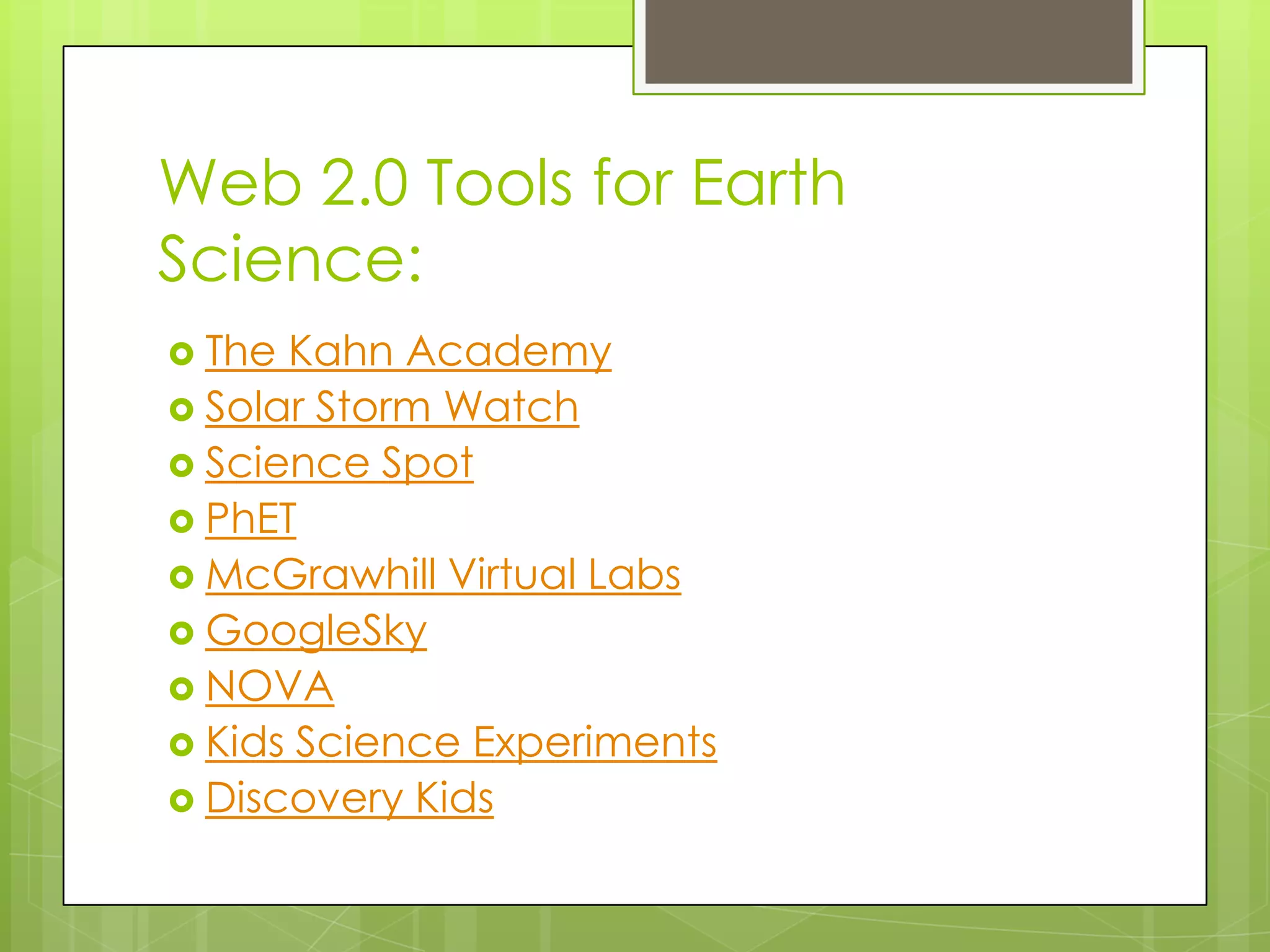
Web 2.0 Tools for Earth
Science:
 The Kahn Academy
 Solar Storm Watch
 Science Spot
 PhET
 McGrawhill Virtual Labs
 GoogleSky
 NOVA
 Kids Science Experiments
 Discovery Kids
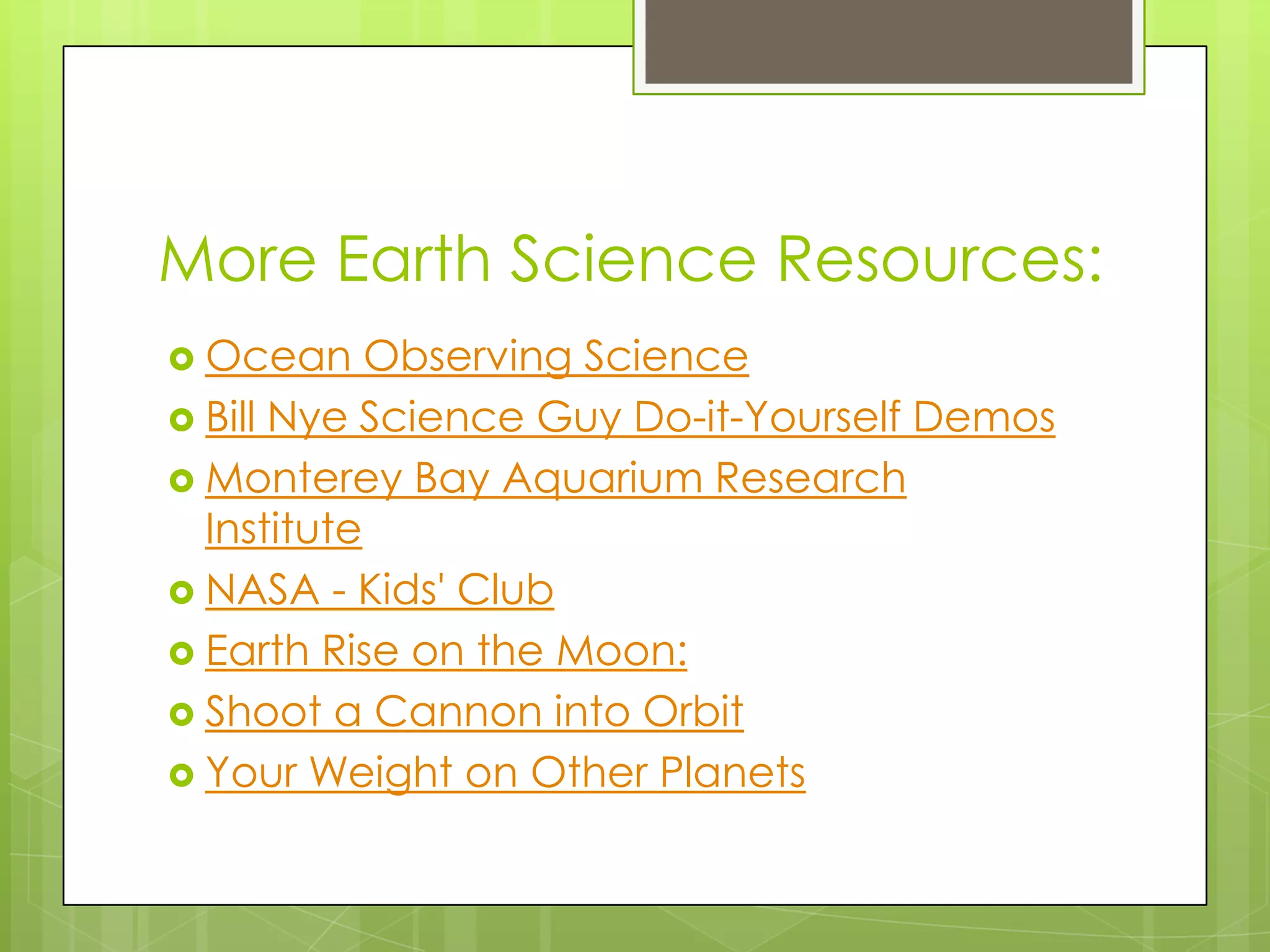
More Earth Science Resources:
 Ocean Observing Science
 Bill Nye Science Guy Do-it-Yourself Demos
 Monterey Bay Aquarium Research
Institute
 NASA - Kids' Club
 Earth Rise on the Moon:
 Shoot a Cannon into Orbit
 Your Weight on Other Planets
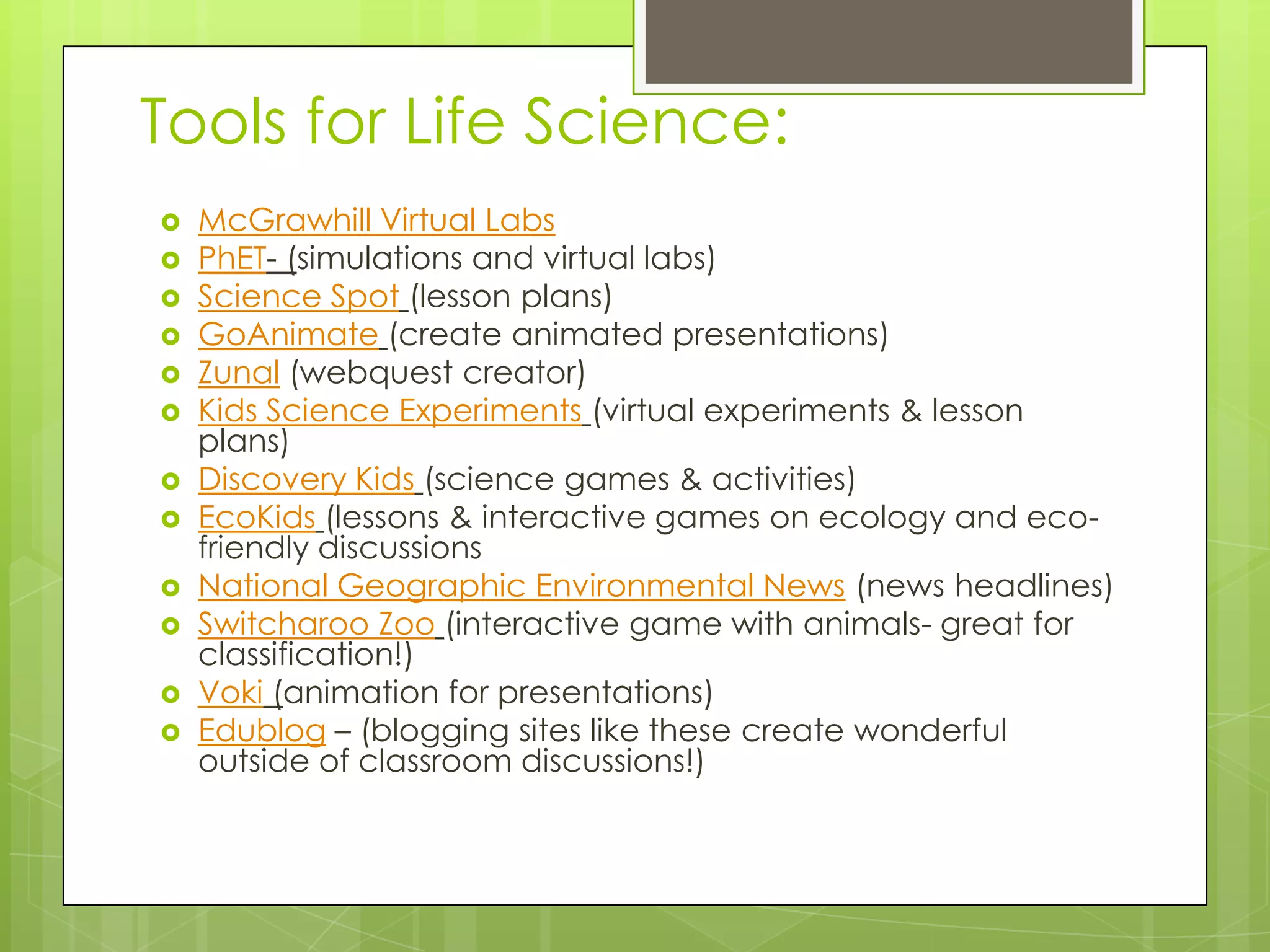
Tools for Life Science:
 McGrawhill Virtual Labs
 PhET- (simulations and virtual labs)
 Science Spot (lesson plans)
 GoAnimate (create animated presentations)
 Zunal (webquest creator)
 Kids Science Experiments (virtual experiments & lesson
plans)
 Discovery Kids (science games & activities)
 EcoKids (lessons & interactive games on ecology and eco-
friendly discussions
 National Geographic Environmental News (news headlines)
 Switcharoo Zoo (interactive game with animals- great for
classification!)
 Voki (animation for presentations)
 Edublog – (blogging sites like these create wonderful
outside of classroom discussions!)
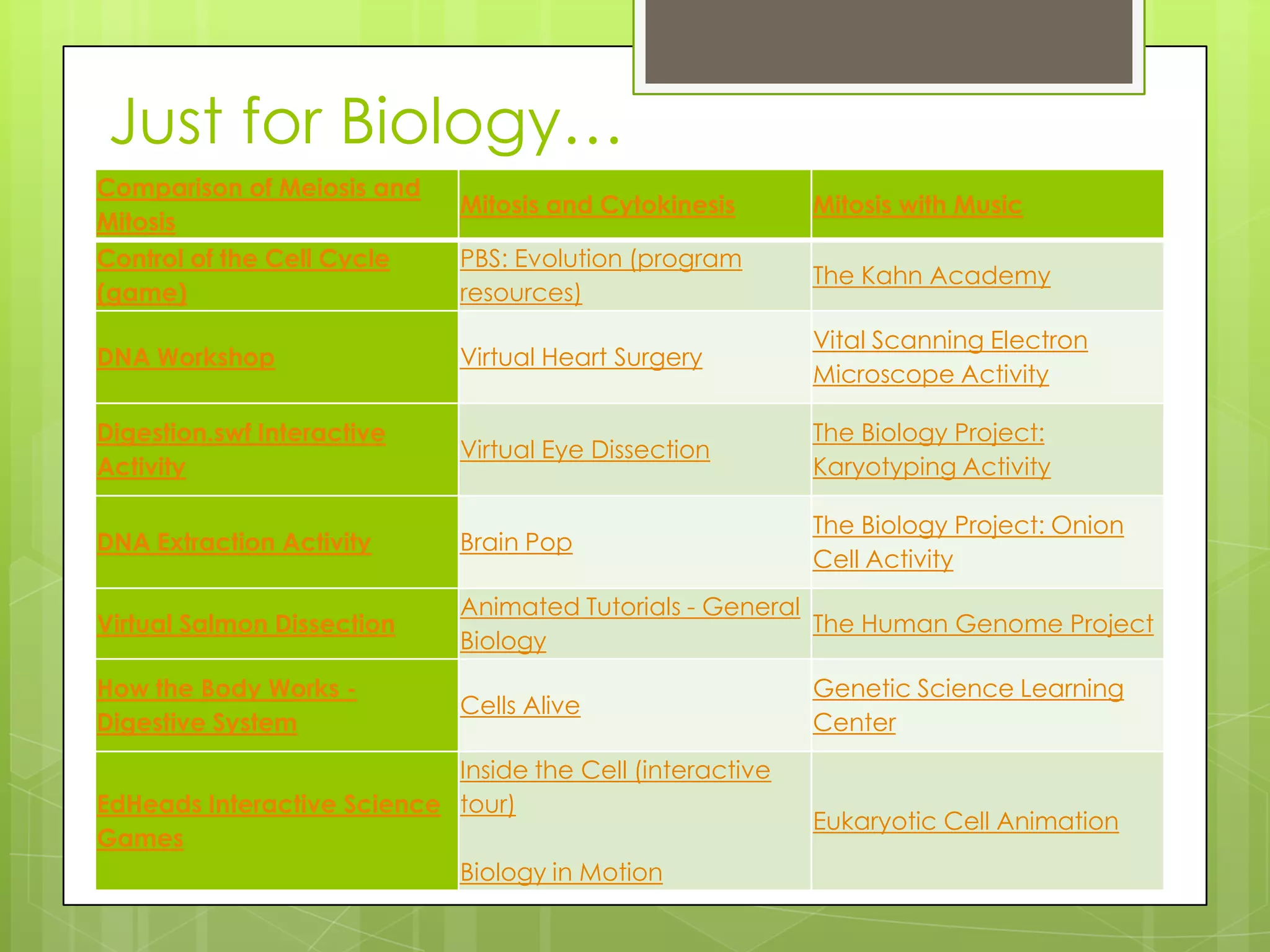
Just for Biology…
Comparison of Meiosis and
Mitosis
Mitosis and Cytokinesis Mitosis with Music
Control of the Cell Cycle
(game)
PBS: Evolution (program
resources)
The Kahn Academy
DNA Workshop Virtual Heart Surgery
Vital Scanning Electron
Microscope Activity
Digestion.swf Interactive
Activity
Virtual Eye Dissection
The Biology Project:
Karyotyping Activity
DNA Extraction Activity Brain Pop
The Biology Project: Onion
Cell Activity
Virtual Salmon Dissection
Animated Tutorials - General
Biology
The Human Genome Project
How the Body Works -
Digestive System
Cells Alive
Genetic Science Learning
Center
EdHeads Interactive Science
Games
Inside the Cell (interactive
tour)
Biology in Motion
Eukaryotic Cell Animation
Let’s Get Physical…
 Fear of Physics
(Laws of Physics)
 FreezeRay
(Animations and simulations)
 My Physics Lab
(Interactive Physical Science simulations)
 PhET
(simulations and labs)
iPad Apps
 Science 360
 VideoScience
 Quick Graph
 Brain Pop
 DataAnalysis
 Science Lab
 Frog Dissection
 Rat Dissection
 iCell
 Mitosis
 DiseaseGame
 Prognosis
 MindMash
 The Rock
Cycle
 eQuakeMap
 Human Body
 My Heart Rate
 3D Brain
 Virtual Heart
 Build a Body
 Food Web
 Little Preds
 Creatures of
the Light
So how do I use these
resources?
The links in the other slides can be used to
enhance already designed lessons or
created new curriculum!
Example:
The link: DNA Extraction Activity provides a
lesson on how to extract DNA with students
OR has a “virtual” extraction activity!
Some more examples…
Using GoAnimate allows you to create
research projects for students. Instead of
presenting research in front of the class with
a poster or power point, the students
created an animated video explaining
information.
See link for lesson plan example:
https://docs.google.com/document/d/1Iv2CpmWRflJZDQzWsf11eoHJPtrW
R-M4B_sQH61u2LM/edit?usp=drive_web
And…
 Zunal (webquest creator) is a great tool
that allows you to create your own
webquests to teach material OR “borrow”
someone else’s already created
webquest!
Example of a Webquest I created:
http://zunal.com/webquest.php?w=136064%20
What about the apps??
 Rat Dissection App for iPads instead of
dissecting a preserved rat. Saves money and
time!! (I actually use the Frog Dissection app
for students to use as a resource when
dissecting a preserved frog!!)
 QRReader can be used to read QR codes for
notes (I have my students go on a “scavenger
hunt” around the school to find the codes
which are definitions to vocabulary terms)
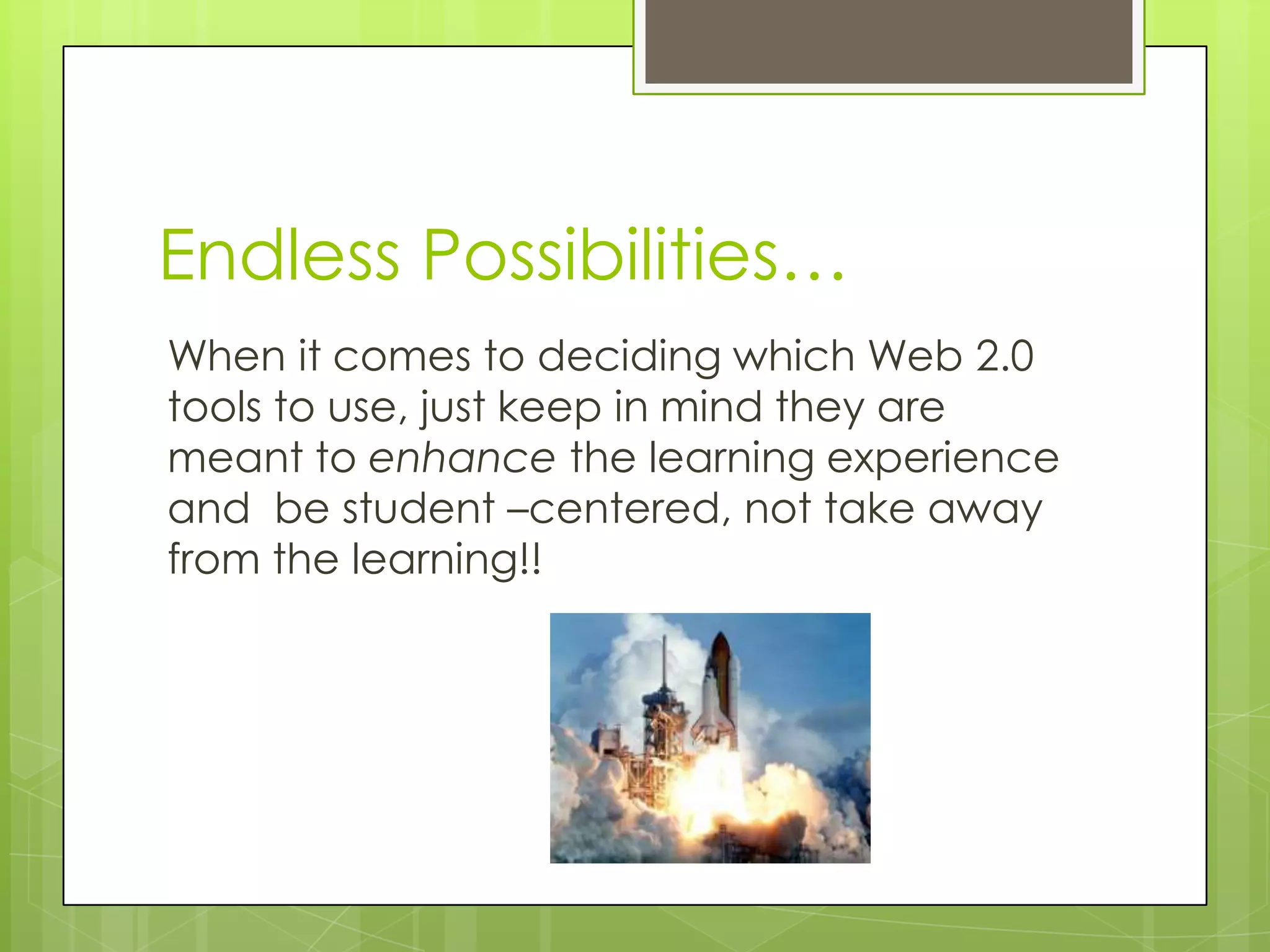
Endless Possibilities…
When it comes to deciding which Web 2.0
tools to use, just keep in mind they are
meant to enhance the learning experience
and be student –centered, not take away
from the learning!!
One more thing…
In addition to all the resources mentioned, there
are even more found in the following links:
http://www.protopage.com/egaunce#Untitled/Bookmarks
https://delicious.com/#eringaunce2
Also, due to my experience as a 7th grade
science teacher, my classroom wiki may also
come in hand:
http://gauncesscienceclass.wikispaces.com/home

Web 2.0 tools for science

  • 1.
  • 2.
    Science for Grades6-8  Since Science is a requirement for all students in grades 6-8, it makes sense to meet the needs of all students.  As a way to meet the needs of all students, web 2.0 tools can help teachers and students
  • 3.
    What are Web2.0 Tools?  Digital Tools ranging online to tablets  Tools that create or support a virtual learning environment.  Tools that support communication and cultivate relationships.  Resources to support teaching and learning.  Tools enabling students to showcase work and take pride in their learning.
  • 4.
    How will thesetools help my science curriculum?  Open lines of communication  Provide collaboration opportunities  Enhance the learning experience  Showcase students’ work  Differentiate & Meet all students’ needs  Motivate students and teachers  Make learning EASY!!!
  • 5.
  • 6.
  • 7.
  • 8.
    Tools that canbe used to teach the standards:
  • 9.
    Web 2.0 Toolsfor Earth Science:  The Kahn Academy  Solar Storm Watch  Science Spot  PhET  McGrawhill Virtual Labs  GoogleSky  NOVA  Kids Science Experiments  Discovery Kids
  • 10.
    More Earth ScienceResources:  Ocean Observing Science  Bill Nye Science Guy Do-it-Yourself Demos  Monterey Bay Aquarium Research Institute  NASA - Kids' Club  Earth Rise on the Moon:  Shoot a Cannon into Orbit  Your Weight on Other Planets
  • 11.
    Tools for LifeScience:  McGrawhill Virtual Labs  PhET- (simulations and virtual labs)  Science Spot (lesson plans)  GoAnimate (create animated presentations)  Zunal (webquest creator)  Kids Science Experiments (virtual experiments & lesson plans)  Discovery Kids (science games & activities)  EcoKids (lessons & interactive games on ecology and eco- friendly discussions  National Geographic Environmental News (news headlines)  Switcharoo Zoo (interactive game with animals- great for classification!)  Voki (animation for presentations)  Edublog – (blogging sites like these create wonderful outside of classroom discussions!)
  • 12.
    Just for Biology… Comparisonof Meiosis and Mitosis Mitosis and Cytokinesis Mitosis with Music Control of the Cell Cycle (game) PBS: Evolution (program resources) The Kahn Academy DNA Workshop Virtual Heart Surgery Vital Scanning Electron Microscope Activity Digestion.swf Interactive Activity Virtual Eye Dissection The Biology Project: Karyotyping Activity DNA Extraction Activity Brain Pop The Biology Project: Onion Cell Activity Virtual Salmon Dissection Animated Tutorials - General Biology The Human Genome Project How the Body Works - Digestive System Cells Alive Genetic Science Learning Center EdHeads Interactive Science Games Inside the Cell (interactive tour) Biology in Motion Eukaryotic Cell Animation
  • 13.
    Let’s Get Physical… Fear of Physics (Laws of Physics)  FreezeRay (Animations and simulations)  My Physics Lab (Interactive Physical Science simulations)  PhET (simulations and labs)
  • 14.
    iPad Apps  Science360  VideoScience  Quick Graph  Brain Pop  DataAnalysis  Science Lab  Frog Dissection  Rat Dissection  iCell  Mitosis  DiseaseGame  Prognosis  MindMash  The Rock Cycle  eQuakeMap  Human Body  My Heart Rate  3D Brain  Virtual Heart  Build a Body  Food Web  Little Preds  Creatures of the Light
  • 15.
    So how doI use these resources? The links in the other slides can be used to enhance already designed lessons or created new curriculum! Example: The link: DNA Extraction Activity provides a lesson on how to extract DNA with students OR has a “virtual” extraction activity!
  • 16.
    Some more examples… UsingGoAnimate allows you to create research projects for students. Instead of presenting research in front of the class with a poster or power point, the students created an animated video explaining information. See link for lesson plan example: https://docs.google.com/document/d/1Iv2CpmWRflJZDQzWsf11eoHJPtrW R-M4B_sQH61u2LM/edit?usp=drive_web
  • 17.
    And…  Zunal (webquestcreator) is a great tool that allows you to create your own webquests to teach material OR “borrow” someone else’s already created webquest! Example of a Webquest I created: http://zunal.com/webquest.php?w=136064%20
  • 18.
    What about theapps??  Rat Dissection App for iPads instead of dissecting a preserved rat. Saves money and time!! (I actually use the Frog Dissection app for students to use as a resource when dissecting a preserved frog!!)  QRReader can be used to read QR codes for notes (I have my students go on a “scavenger hunt” around the school to find the codes which are definitions to vocabulary terms)
  • 19.
    Endless Possibilities… When itcomes to deciding which Web 2.0 tools to use, just keep in mind they are meant to enhance the learning experience and be student –centered, not take away from the learning!!
  • 20.
    One more thing… Inaddition to all the resources mentioned, there are even more found in the following links: http://www.protopage.com/egaunce#Untitled/Bookmarks https://delicious.com/#eringaunce2 Also, due to my experience as a 7th grade science teacher, my classroom wiki may also come in hand: http://gauncesscienceclass.wikispaces.com/home