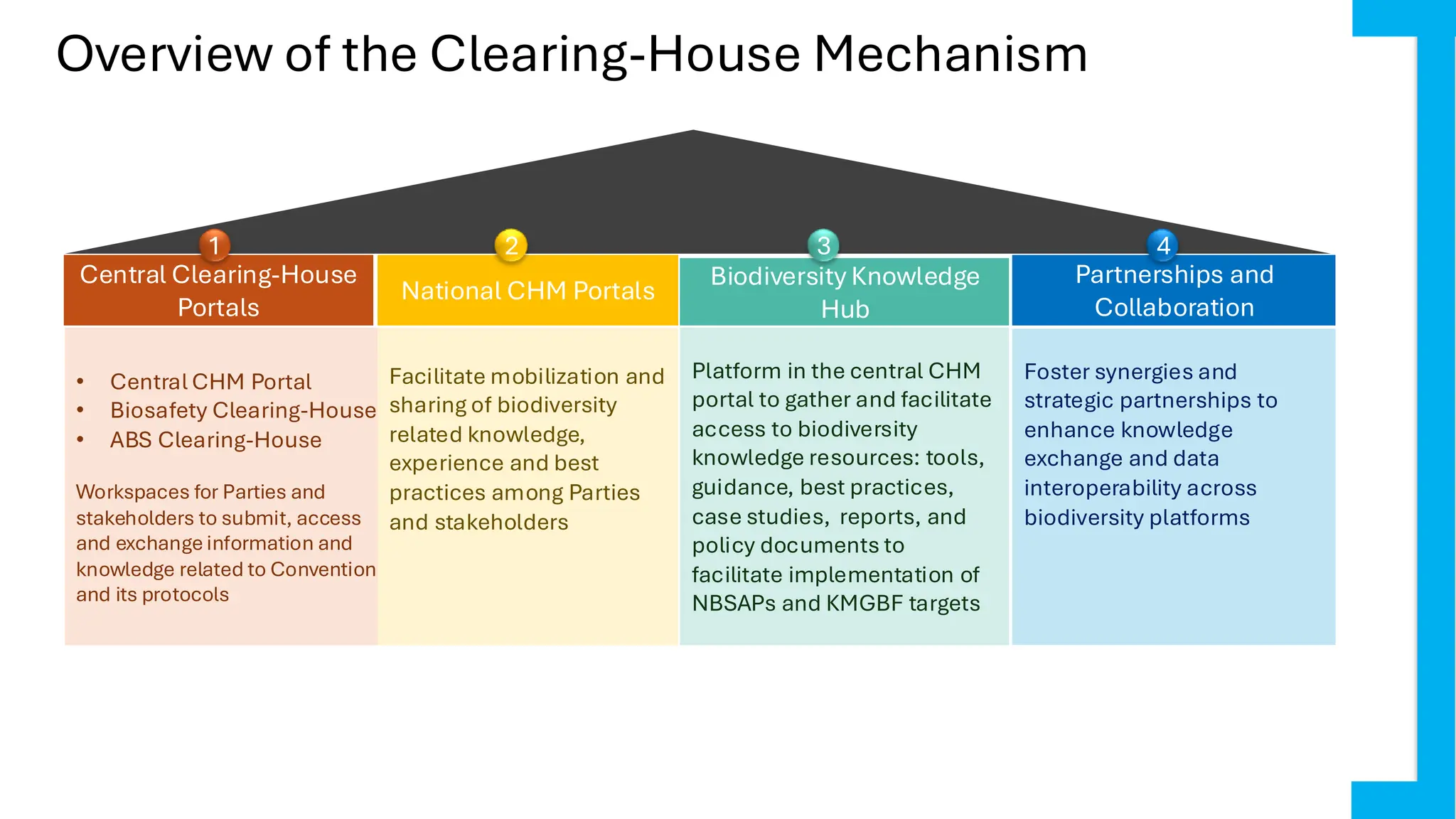
Overview of theClearing-House Mechanism
Central Clearing-House
Portals
National CHM Portals
Biodiversity Knowledge
Hub
Partnerships and
Collaboration
1 2 3 4
• Central CHM Portal
• Biosafety Clearing-House
• ABS Clearing-House
Workspaces for Parties and
stakeholders to submit, access
and exchange information and
knowledge related to Convention
and its protocols
Facilitate mobilization and
sharing of biodiversity
related knowledge,
experience and best
practices among Parties
and stakeholders
Platform in the central CHM
portal to gather and facilitate
access to biodiversity
knowledge resources: tools,
guidance, best practices,
case studies, reports, and
policy documents to
facilitate implementation of
NBSAPs and KMGBF targets
Foster synergies and
strategic partnerships to
enhance knowledge
exchange and data
interoperability across
biodiversity platforms
3.
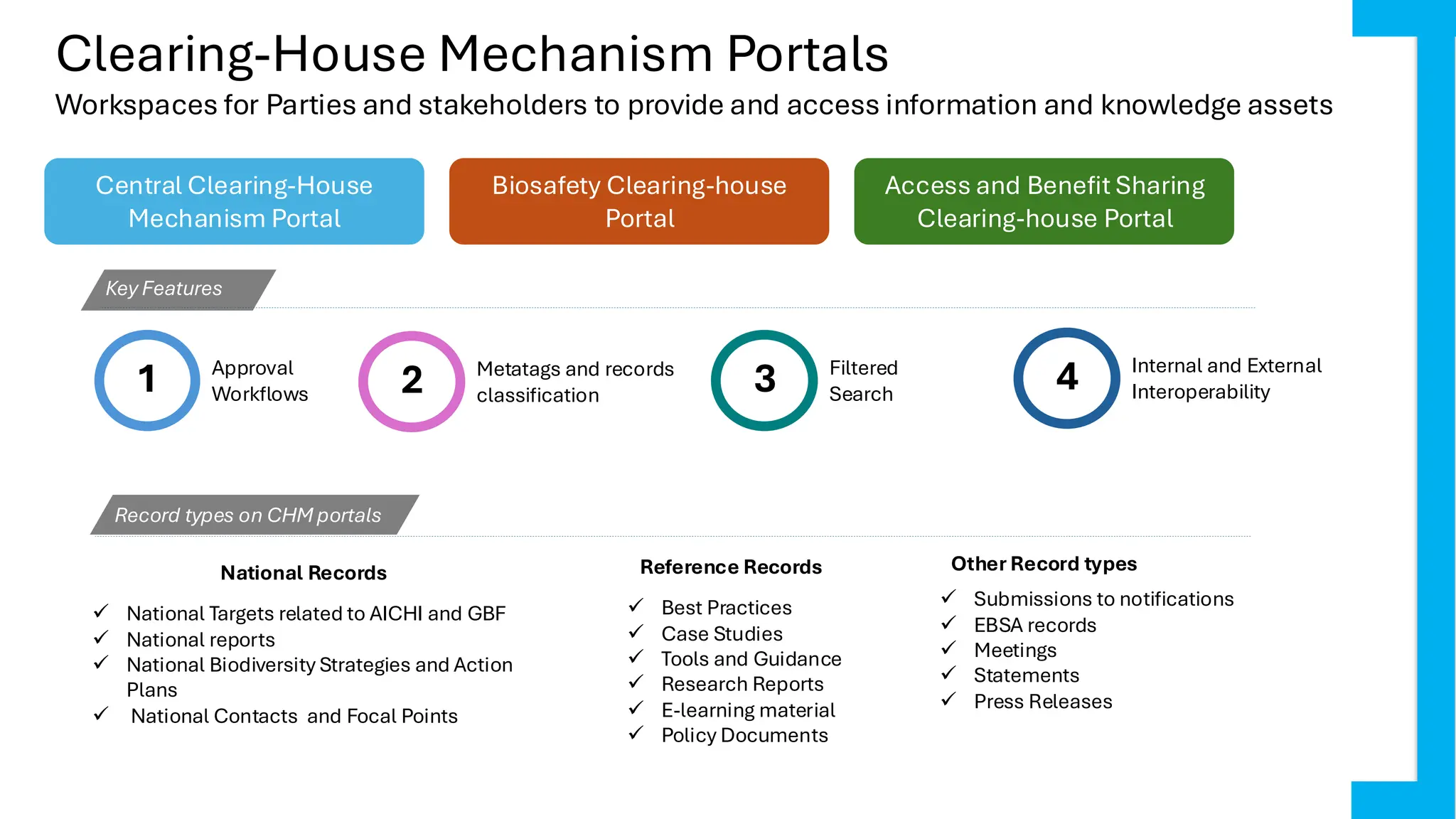
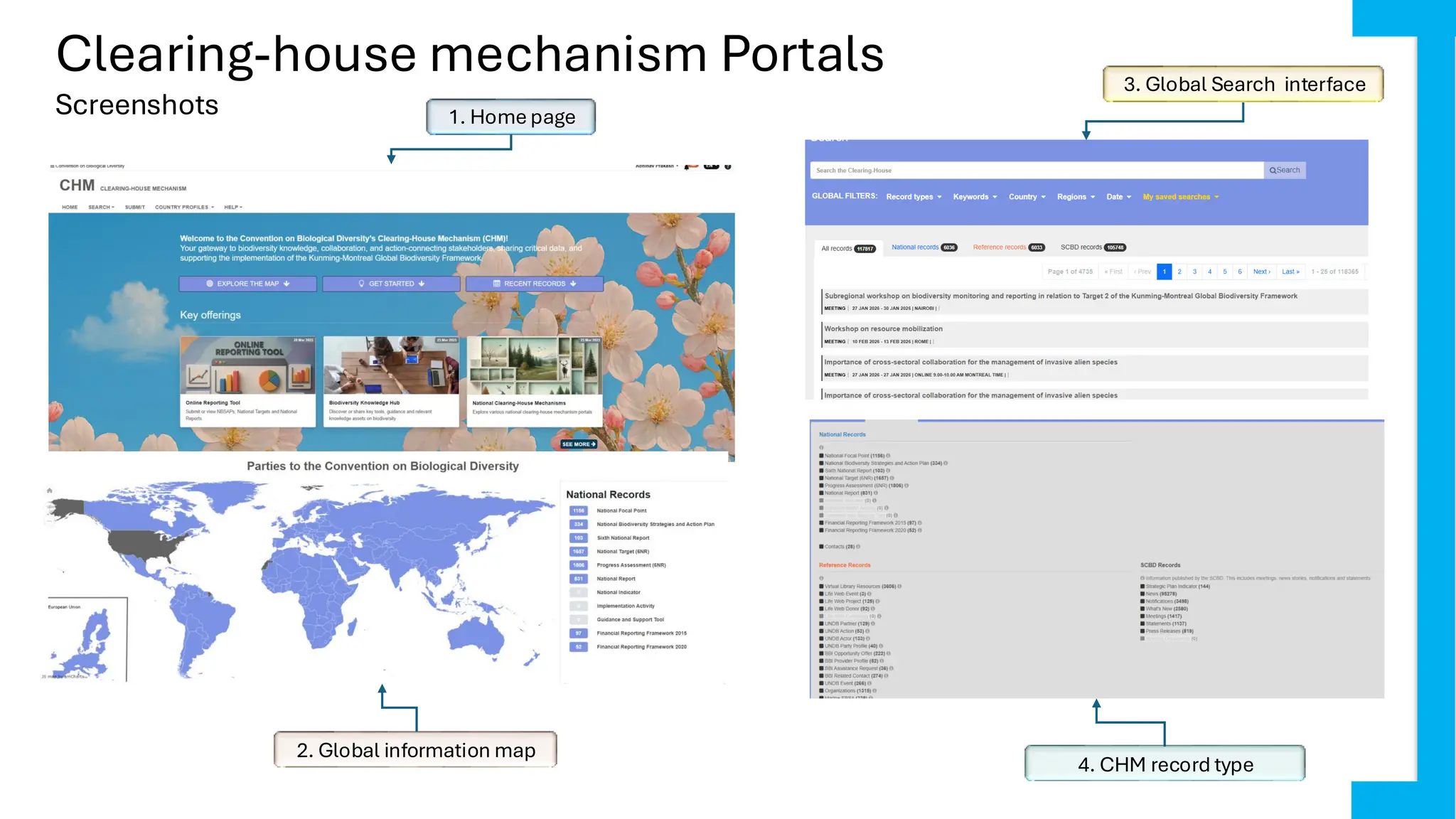
Clearing-House Mechanism Portals
Workspacesfor Parties and stakeholders to provide and access information and knowledge assets
Central Clearing-House
Mechanism Portal
Biosafety Clearing-house
Portal
Access and Benefit Sharing
Clearing-house Portal
1 Approval
Workflows 2 Metatags and records
classification 3 Filtered
Search
4 Internal and External
Interoperability
Key Features
Record types on CHM portals
✓ National Targets related to AICHI and GBF
✓ National reports
✓ National Biodiversity Strategies and Action
Plans
✓ National Contacts and Focal Points
✓ Best Practices
✓ Case Studies
✓ Tools and Guidance
✓ Research Reports
✓ E-learning material
✓ Policy Documents
National Records Reference Records Other Record types
✓ Submissions to notifications
✓ EBSA records
✓ Meetings
✓ Statements
✓ Press Releases
4.
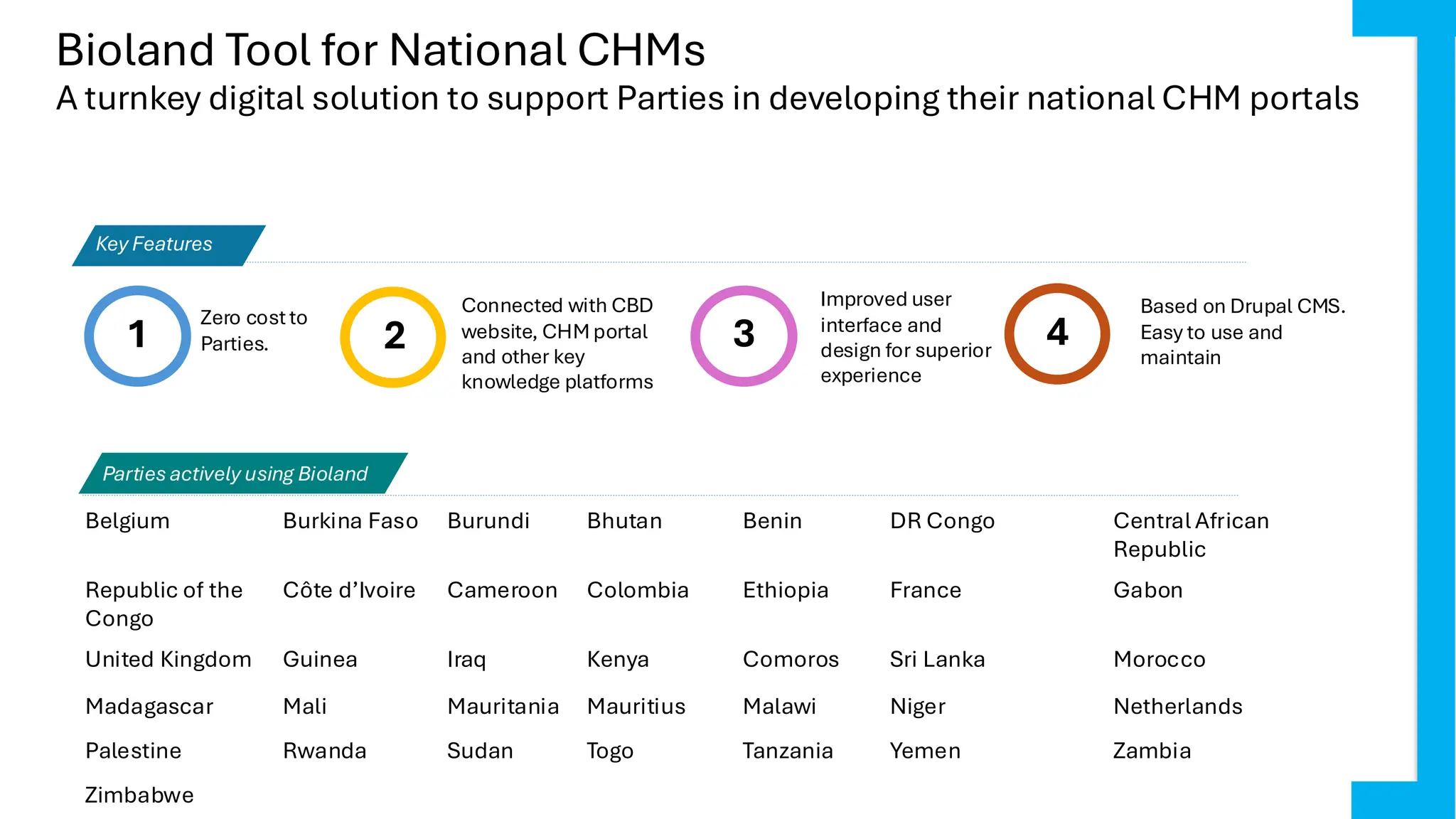
Bioland Tool forNational CHMs
1
Zero costto
Parties. 2
Connected with CBD
website, CHM portal
and other key
knowledge platforms
3
Improved user
interface and
design for superior
experience
4
Based on Drupal CMS.
Easy to use and
maintain
Key Features
Partiesactively using Bioland
A turnkey digital solution to support Parties in developing their national CHM portals
Belgium Burkina Faso Burundi Bhutan Benin DR Congo Central African
Republic
Republic of the
Congo
Côte d’Ivoire Cameroon Colombia Ethiopia France Gabon
United Kingdom Guinea Iraq Kenya Comoros Sri Lanka Morocco
Madagascar Mali Mauritania Mauritius Malawi Niger Netherlands
Palestine Rwanda Sudan Togo Tanzania Yemen Zambia
Zimbabwe
5.
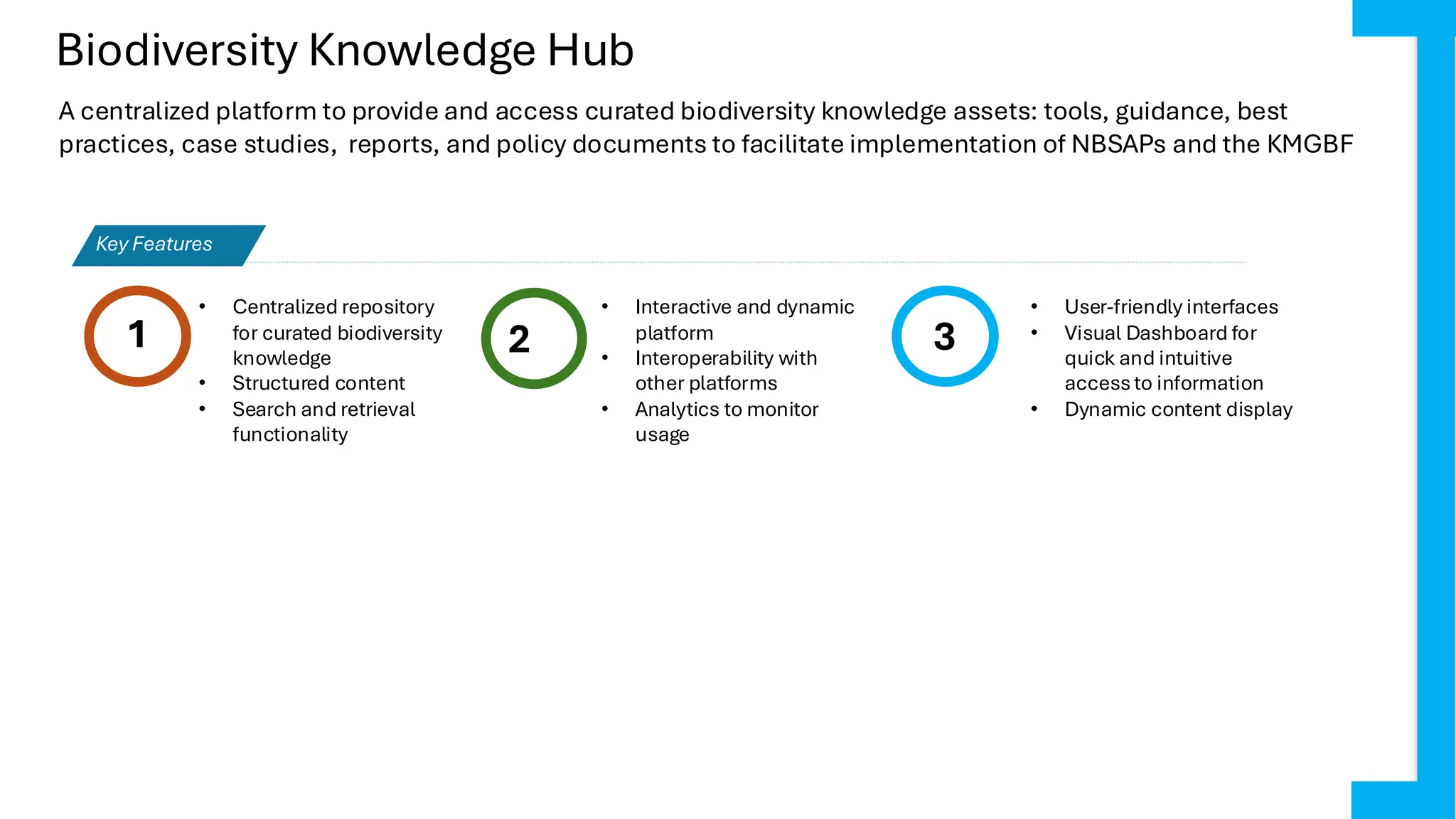
Biodiversity Knowledge Hub
12
• Interactive and dynamic
platform
• Interoperability with
other platforms
• Analytics to monitor
usage
3
Key Features
A centralized platform to provide and access curated biodiversity knowledge assets: tools, guidance, best
practices, case studies, reports, and policy documents to facilitate implementation of NBSAPs and the KMGBF
• Centralized repository
for curated biodiversity
knowledge
• Structured content
• Search and retrieval
functionality
• User-friendly interfaces
• Visual Dashboard for
quick and intuitive
accessto information
• Dynamic content display
6.
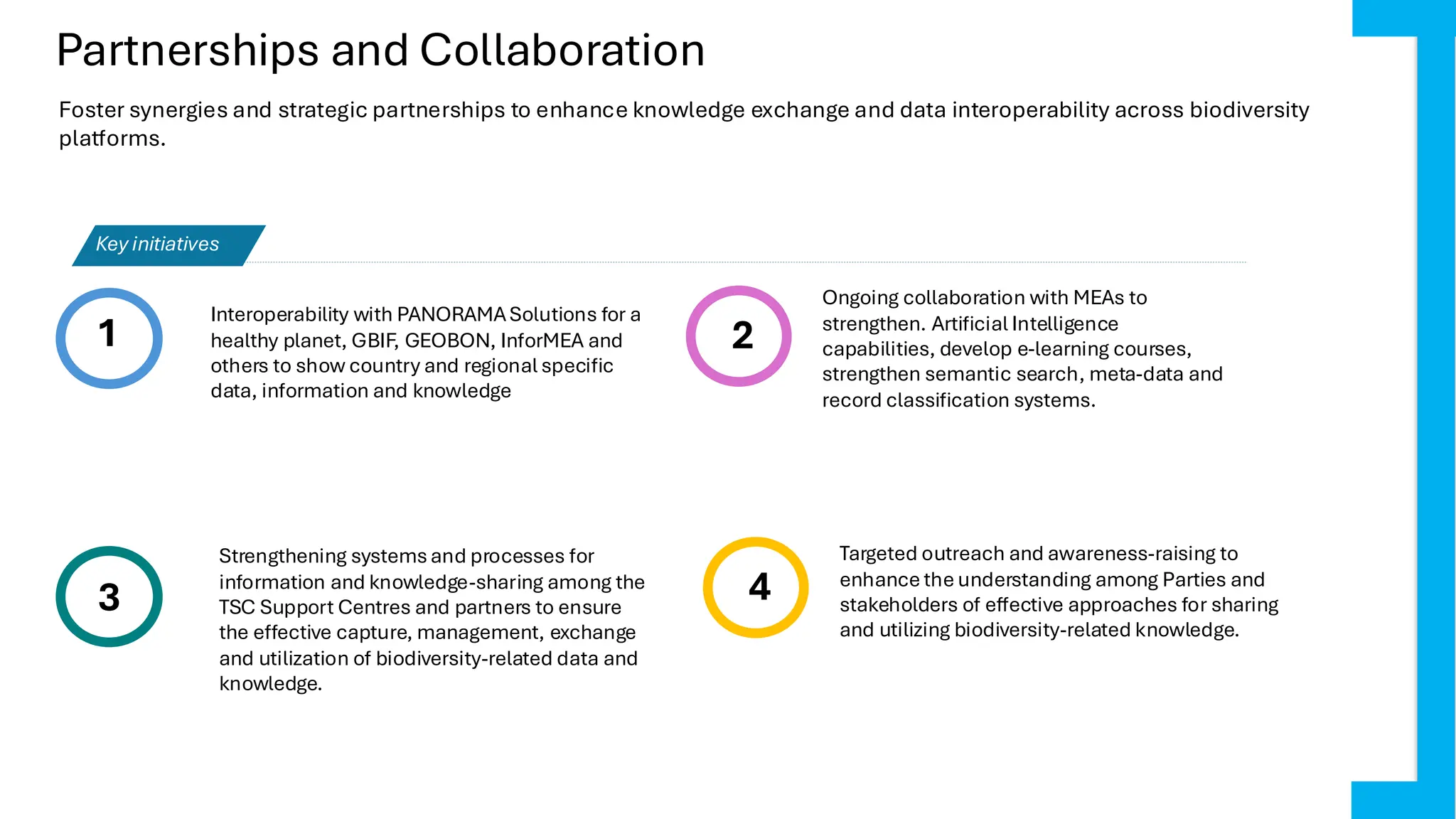
Partnerships and Collaboration
12
Ongoing collaboration with MEAs to
strengthen. Artificial Intelligence
capabilities, develop e-learning courses,
strengthen semantic search, meta-data and
record classification systems.
3
Key initiatives
Foster synergies and strategic partnerships to enhance knowledge exchange and data interoperability across biodiversity
platforms.
Interoperability with PANORAMASolutions for a
healthy planet, GBIF, GEOBON, InforMEA and
others to show country and regional specific
data, information and knowledge
Strengthening systemsand processes for
information and knowledge-sharing among the
TSC Support Centres and partners to ensure
the effective capture, management, exchange
and utilization of biodiversity-related data and
knowledge.
4
Targeted outreach and awareness-raising to
enhance the understanding among Parties and
stakeholders of effective approaches for sharing
and utilizing biodiversity-related knowledge.
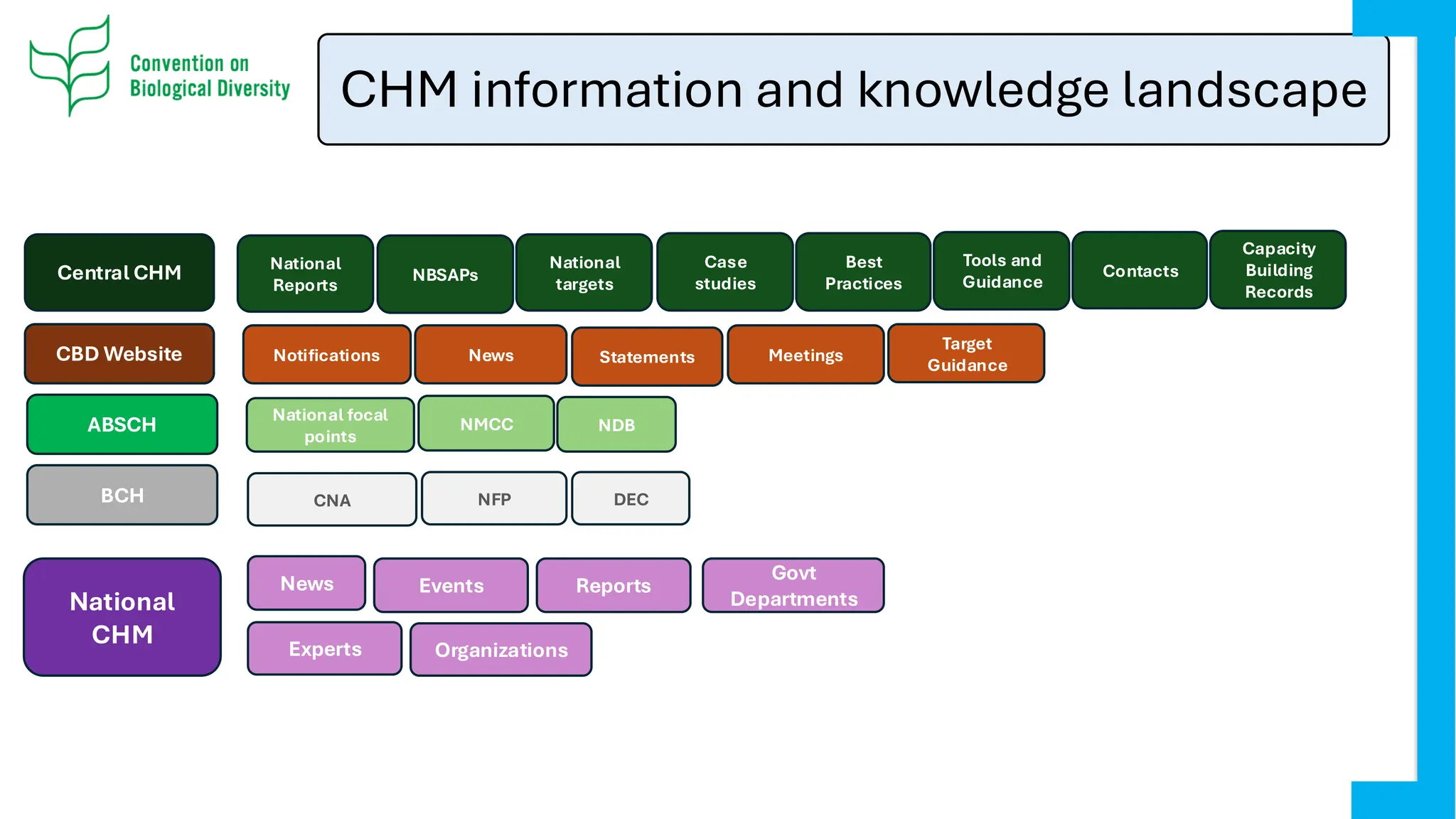
CHM information andknowledge landscape
Central CHM
Case
studies
Best
Practices
Tools and
Guidance
National
Reports
NBSAPs
CBD Website
National
targets
Notifications News Meetings
Statements
National
CHM
ABSCH
BCH
National focal
points
Contacts
CNA
NMCC NDB
NFP DEC
News Events Reports
Govt
Departments
Experts
Capacity
Building
Records
Organizations
Target
Guidance
9.
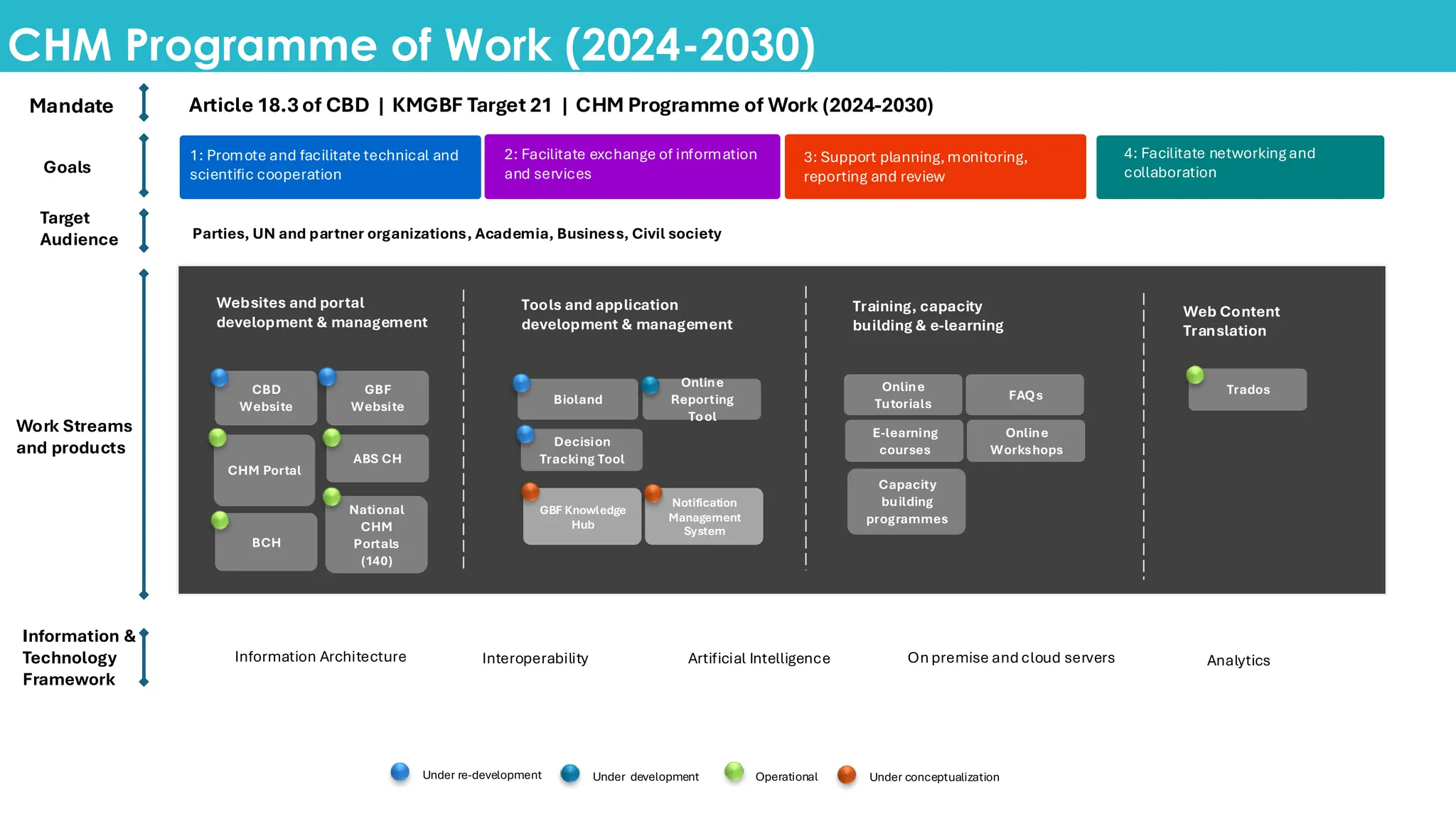
CHM Programme ofWork (2024-2030)
Mandate Article 18.3 of CBD | KMGBF Target 21 | CHM Programme of Work (2024-2030)
Goals
1: Promote and facilitate technical and
scientific cooperation
2: Facilitate exchange of information
and services
3: Support planning,monitoring,
reporting and review
4: Facilitate networking and
collaboration
Information &
Technology
Framework
Websites and portal
development & management
Tools and application
development & management
Training, capacity
building & e-learning
Target
Audience Parties, UN and partner organizations, Academia, Business, Civil society
Web Content
Translation
CBD
Website
GBF
Website
CHM Portal
ABS CH
BCH
National
CHM
Portals
(140)
Bioland
Online
Reporting
Tool
Decision
Tracking Tool
GBF Knowledge
Hub
Notification
Management
System
Online
Tutorials
FAQs
E-learning
courses
Online
Workshops
Capacity
building
programmes
Under development Operational Under conceptualization
Under re-development
Trados
Information Architecture Interoperability Artificial Intelligence
Work Streams
and products
On premise and cloud servers Analytics
10.
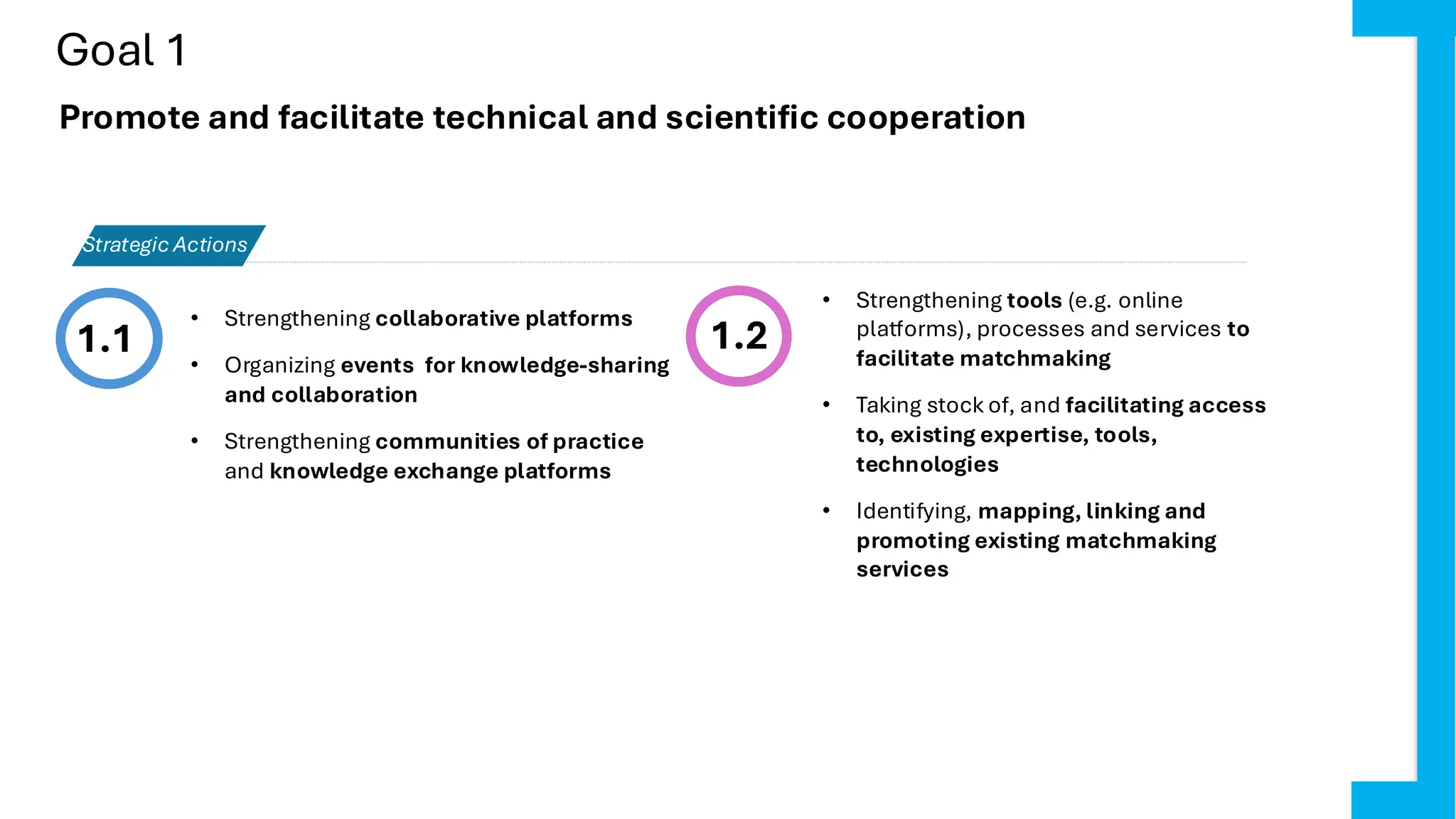
Goal 1
1.1 1.2
•Strengthening tools (e.g. online
platforms), processes and services to
facilitate matchmaking
• Taking stock of, and facilitating access
to, existing expertise, tools,
technologies
• Identifying, mapping, linking and
promoting existing matchmaking
services
Strategic Actions
Promote and facilitate technical and scientific cooperation
• Strengthening collaborative platforms
• Organizing events for knowledge-sharing
and collaboration
• Strengthening communities of practice
and knowledge exchange platforms
11.
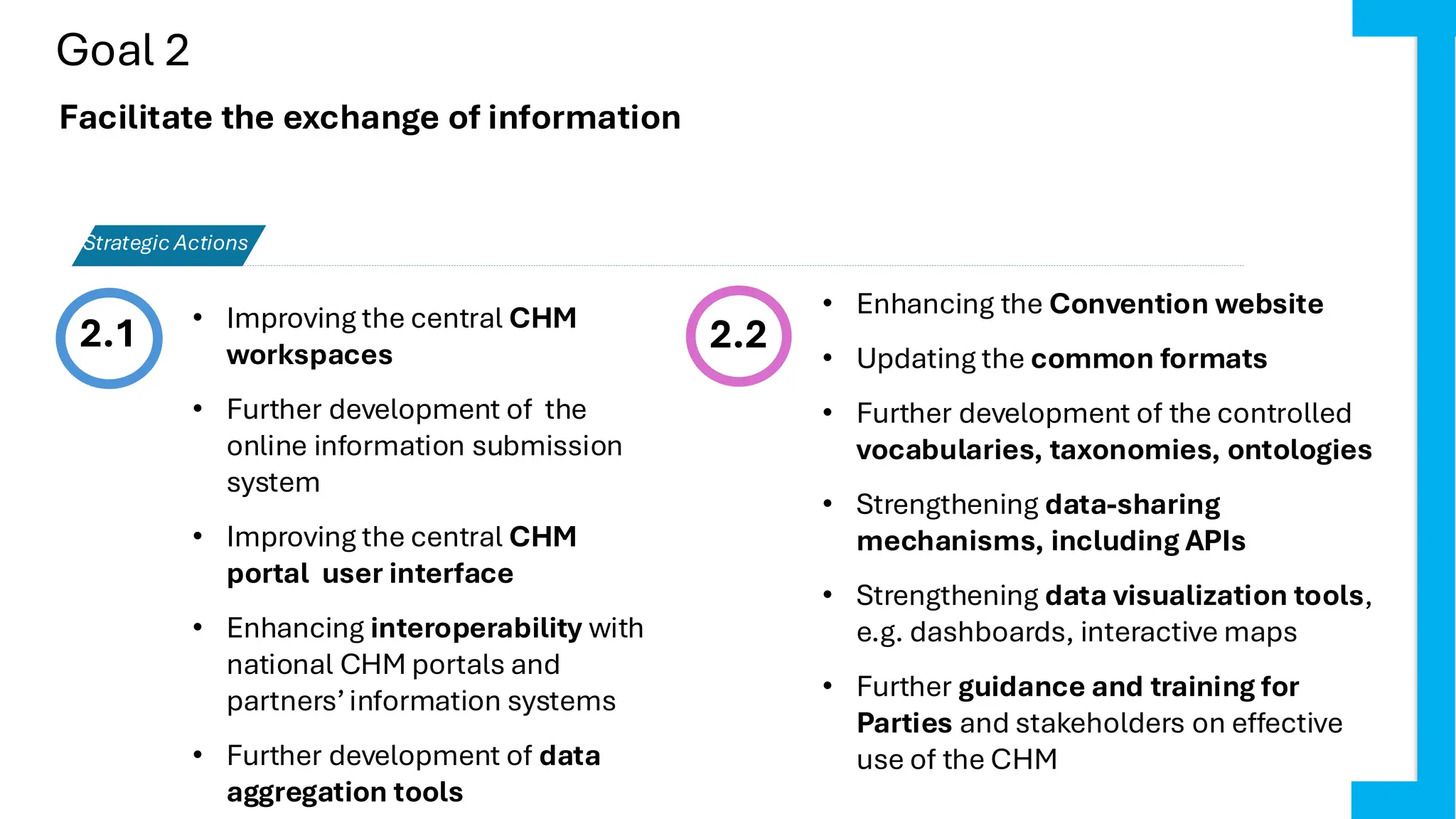
Goal 2
2.1 2.2
•Enhancing the Convention website
• Updating the common formats
• Further development of the controlled
vocabularies, taxonomies, ontologies
• Strengthening data-sharing
mechanisms, including APIs
• Strengthening data visualization tools,
e.g. dashboards, interactive maps
• Further guidance and training for
Parties and stakeholders on effective
use of the CHM
Strategic Actions
Facilitate the exchange of information
• Improving the central CHM
workspaces
• Further development of the
online information submission
system
• Improving the central CHM
portal user interface
• Enhancing interoperability with
national CHM portals and
partners’information systems
• Further development of data
aggregation tools
12.
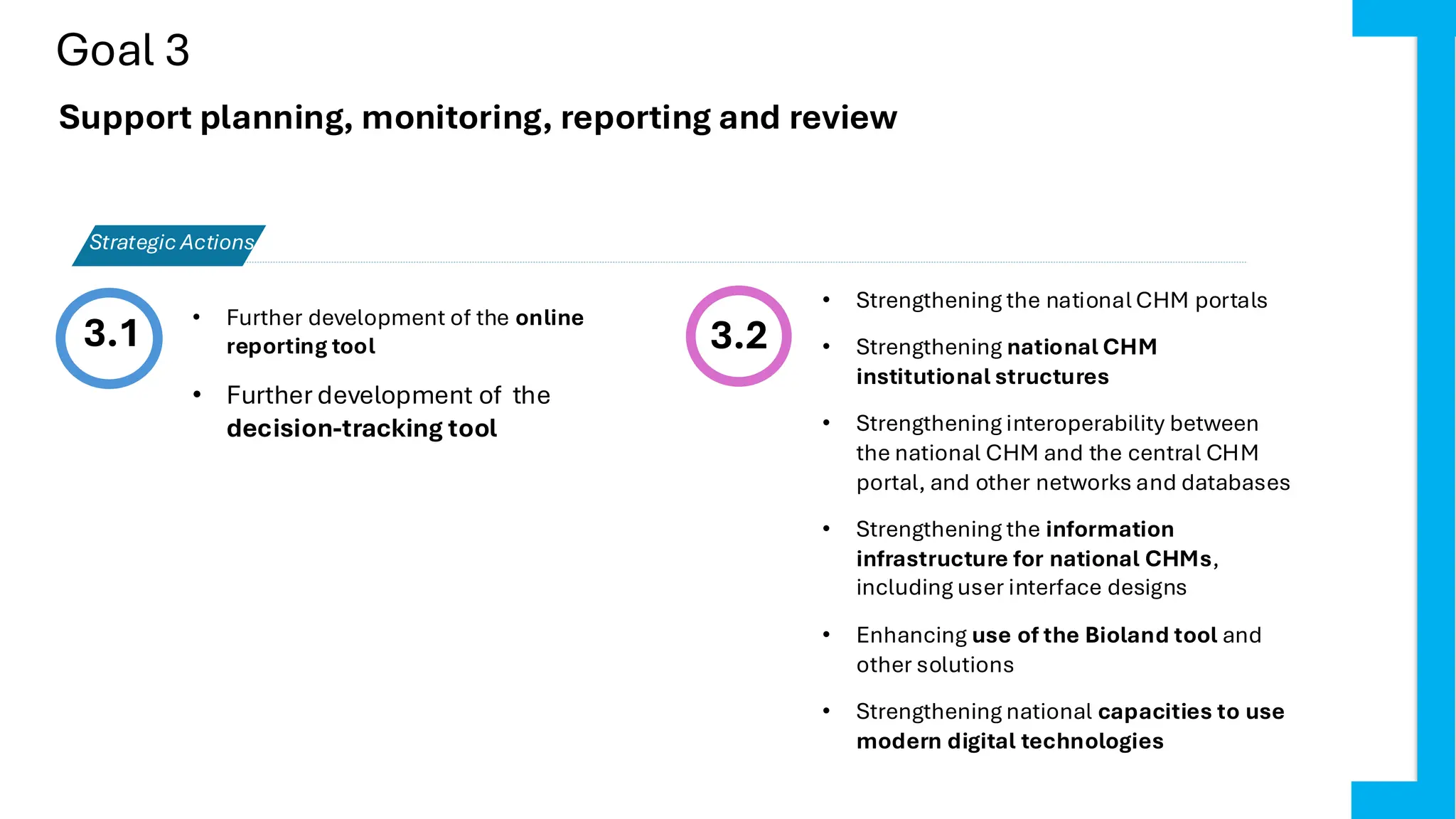
Goal 3
3.1 3.2
•Strengthening the national CHM portals
• Strengthening national CHM
institutional structures
• Strengthening interoperability between
the national CHM and the central CHM
portal, and other networks and databases
• Strengthening the information
infrastructure for national CHMs,
including user interface designs
• Enhancing use of the Bioland tool and
other solutions
• Strengthening national capacities to use
modern digital technologies
Strategic Actions
Support planning, monitoring, reporting and review
• Further development of the online
reporting tool
• Further development of the
decision-tracking tool
13.
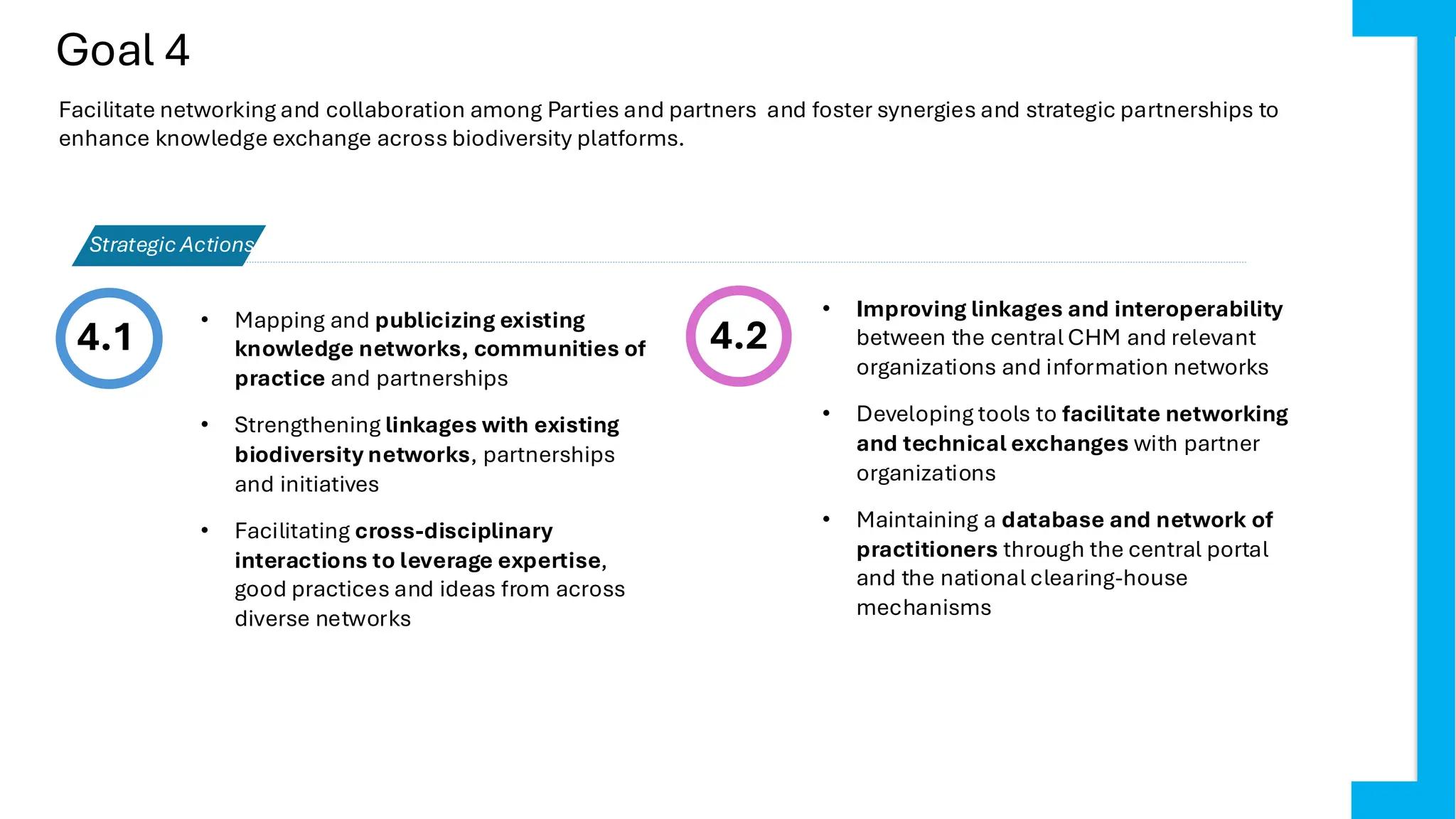
Goal 4
4.1 4.2
•Improving linkages and interoperability
between the central CHM and relevant
organizations and information networks
• Developing tools to facilitate networking
and technical exchanges with partner
organizations
• Maintaining a database and network of
practitioners through the central portal
and the national clearing-house
mechanisms
Strategic Actions
Facilitate networking and collaboration among Parties and partners and foster synergies and strategic partnerships to
enhance knowledge exchange across biodiversity platforms.
• Mapping and publicizing existing
knowledge networks, communities of
practice and partnerships
• Strengthening linkages with existing
biodiversity networks, partnerships
and initiatives
• Facilitating cross-disciplinary
interactions to leverage expertise,
good practices and ideas from across
diverse networks
14.
Secretariat of theConvention
on Biological Diversity
secretariat@cbd.int
www.cbd.int
Thank You