












































COMPLEXITY


simplicity
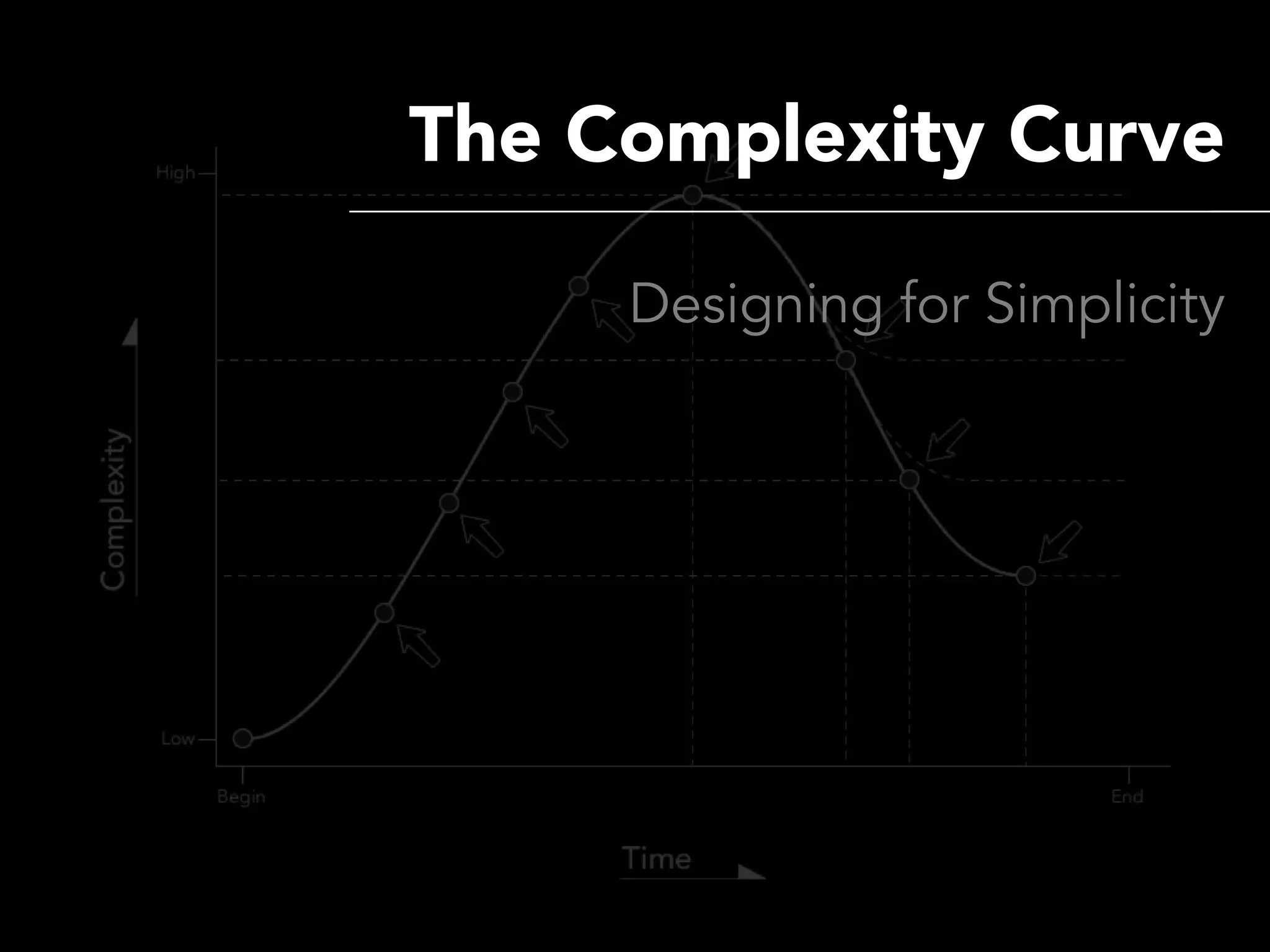
The Complexity Curve

     Designing for Simplicity


              @DaveHogue
              #SXsimplerUX
Welcome
David M. Hogue, Ph.D.
VP XD at Fluid
San Francisco
Complexity is easy.

We can make anything complex.
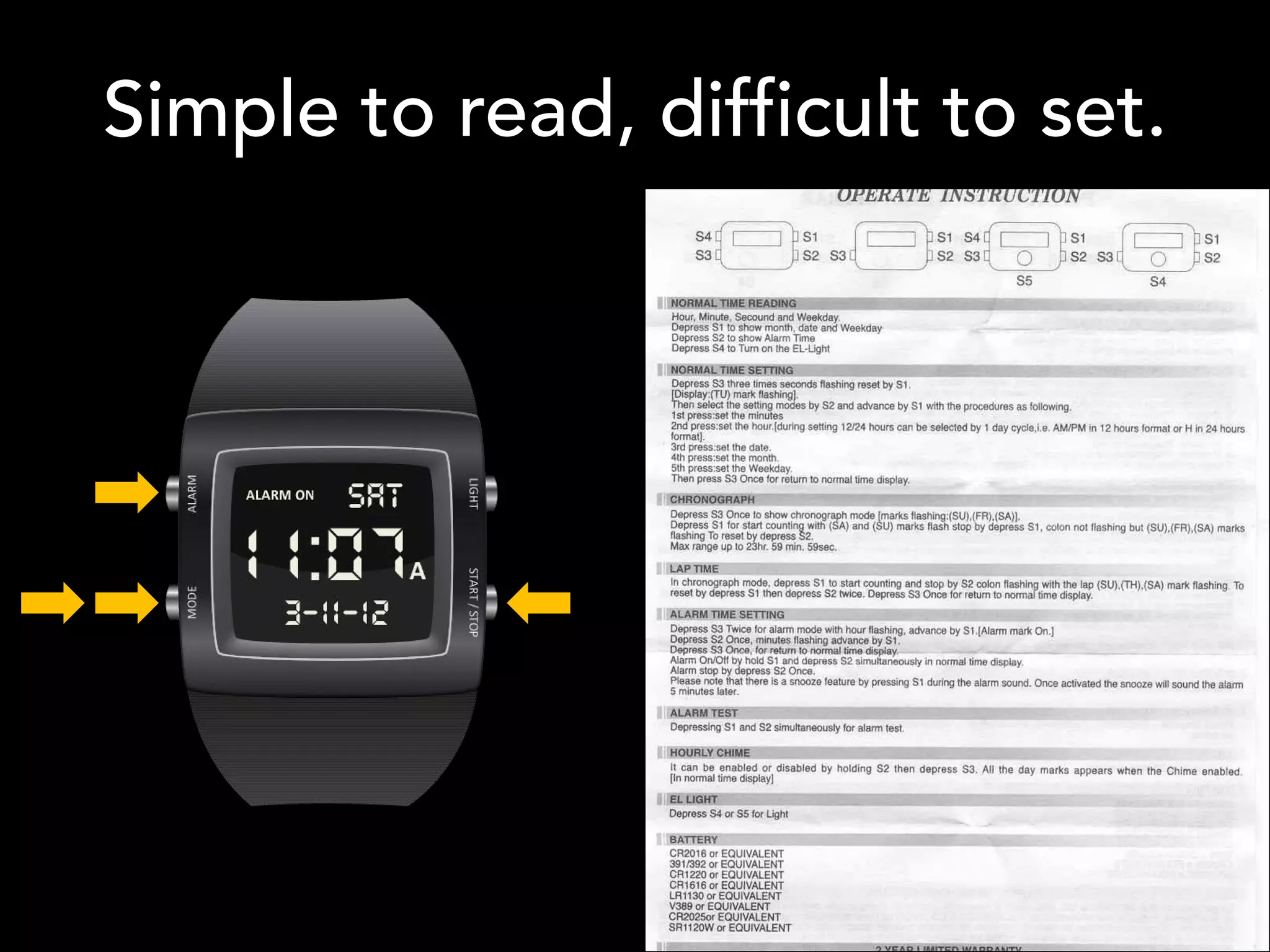
Even our wristwatches.
Simple to read, difficult to set.
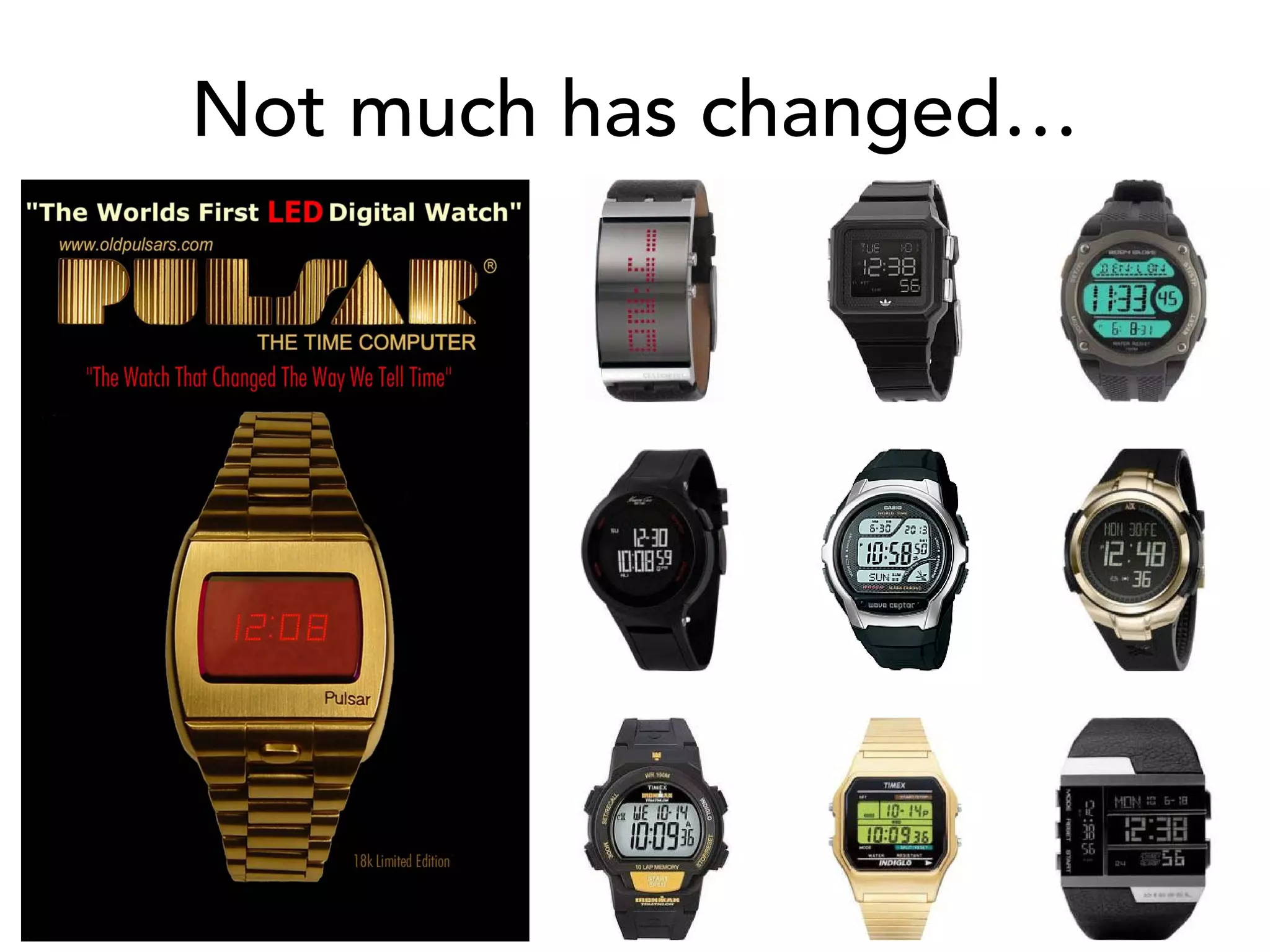
Not much has changed…
Daylight Saving Time

     Starts tonight at 2:00 am.

Do you know how to set your watch?
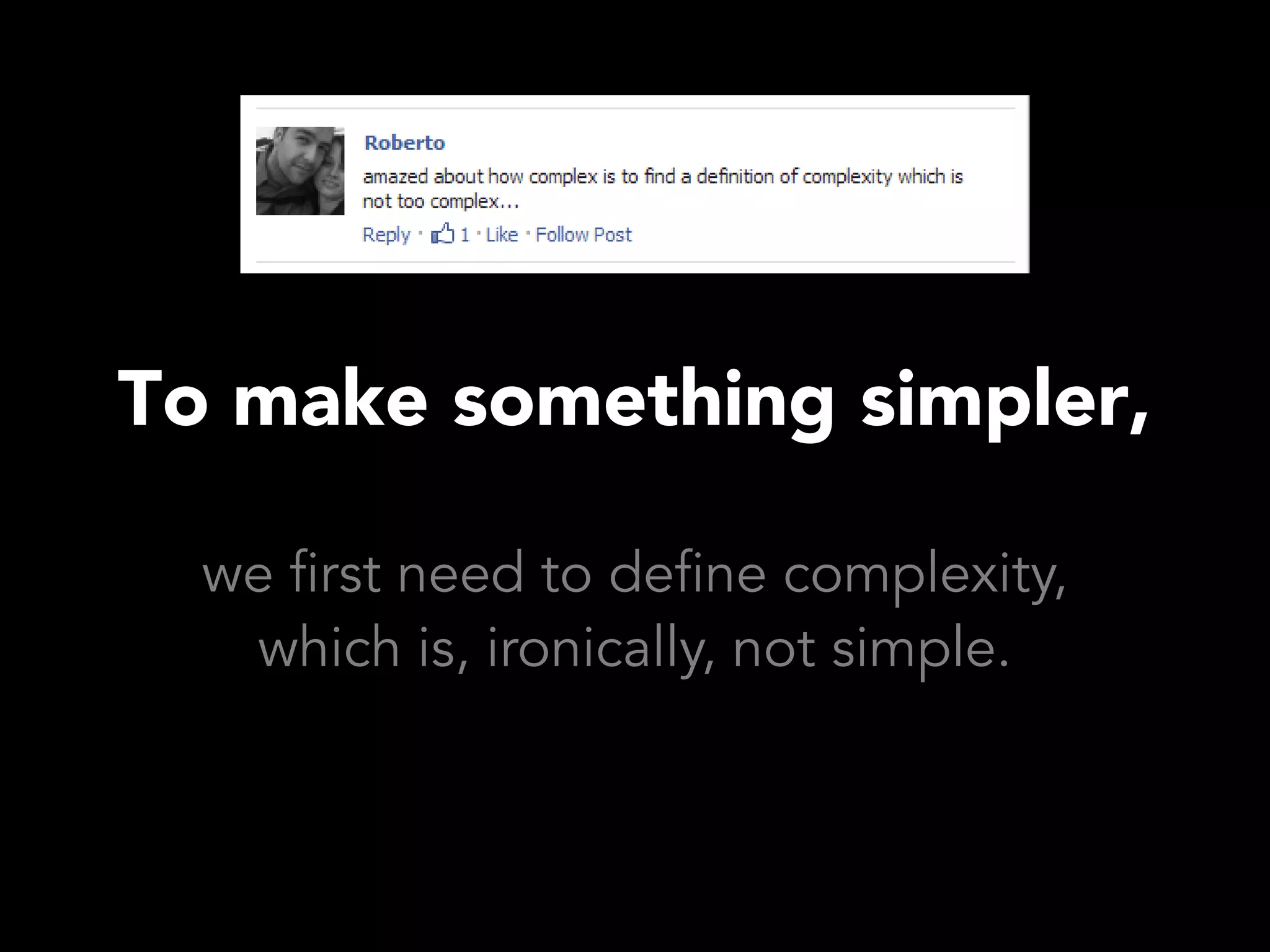
To make something simpler,

  we first need to define complexity,
   which is, ironically, not simple.
What is complexity?
complexus

entwined; twisted together
          (Latin)
“… I know it when I see it …”


Supreme Court Justice Potter Stewart
(Jacobellis v. Ohio, 1964)
Three perspectives:

      Designers
    People (Users)
      Scientists
Designers

 Appearance
  Aesthetics
       Style
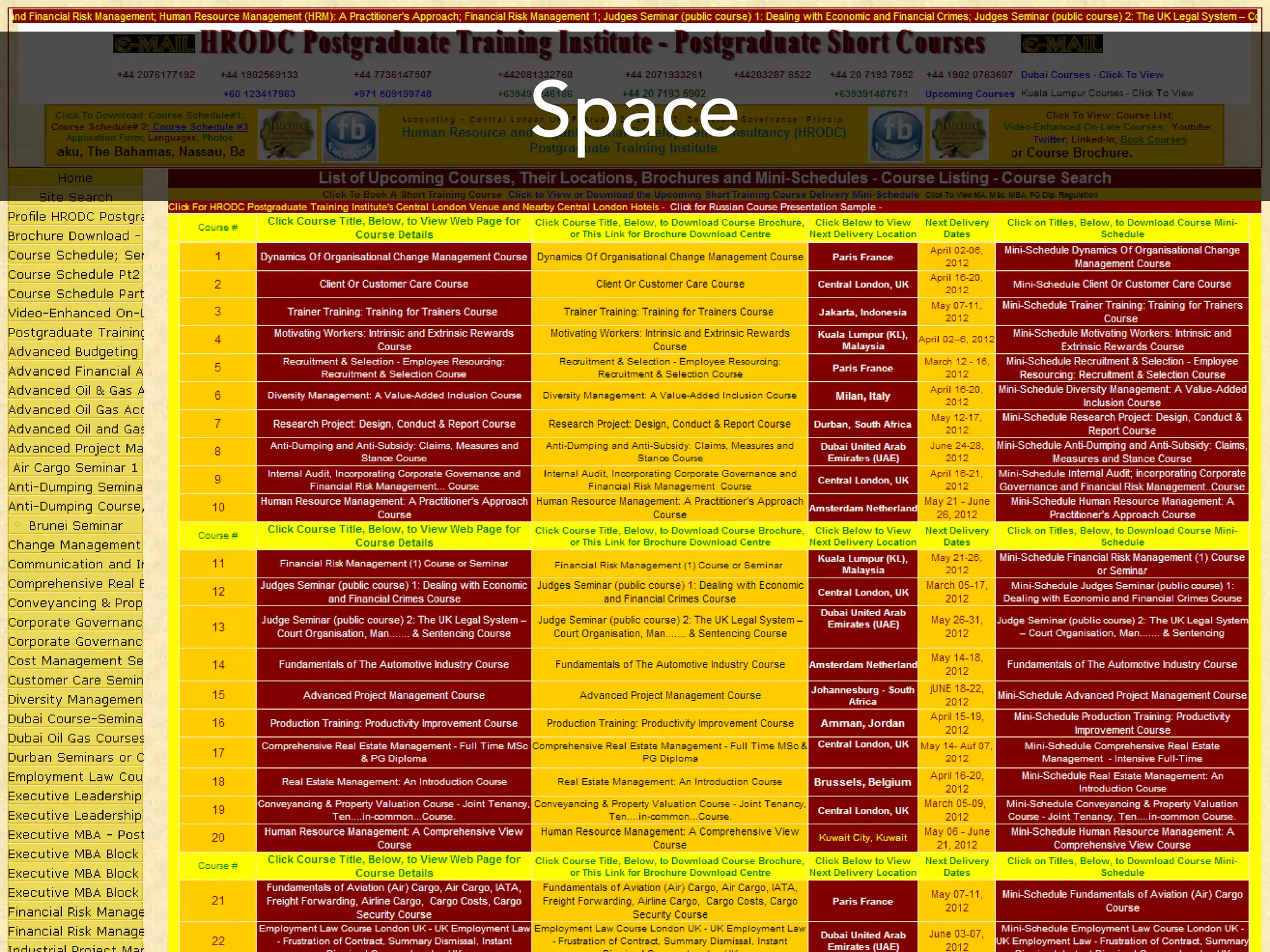
Space
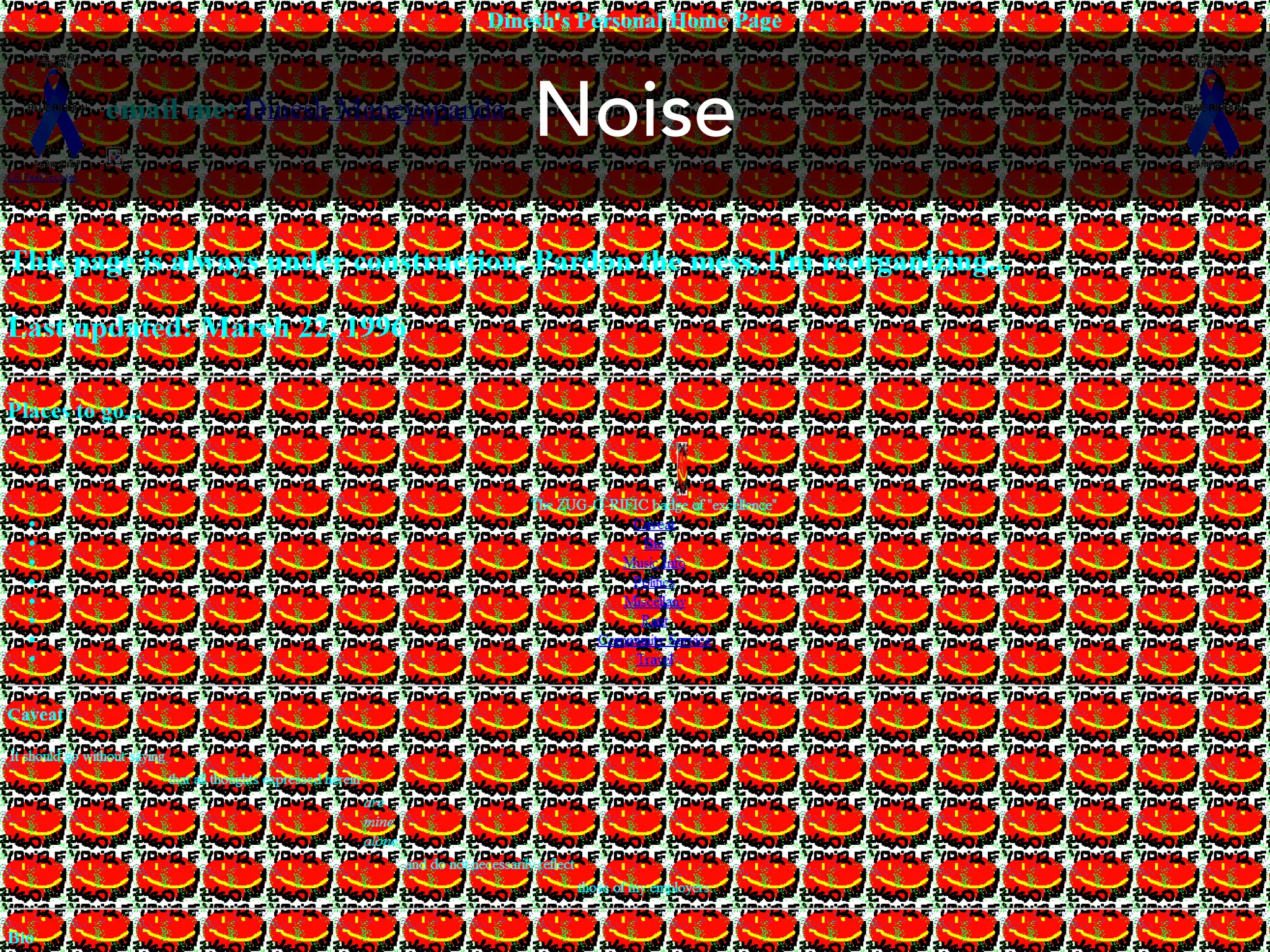
Noise
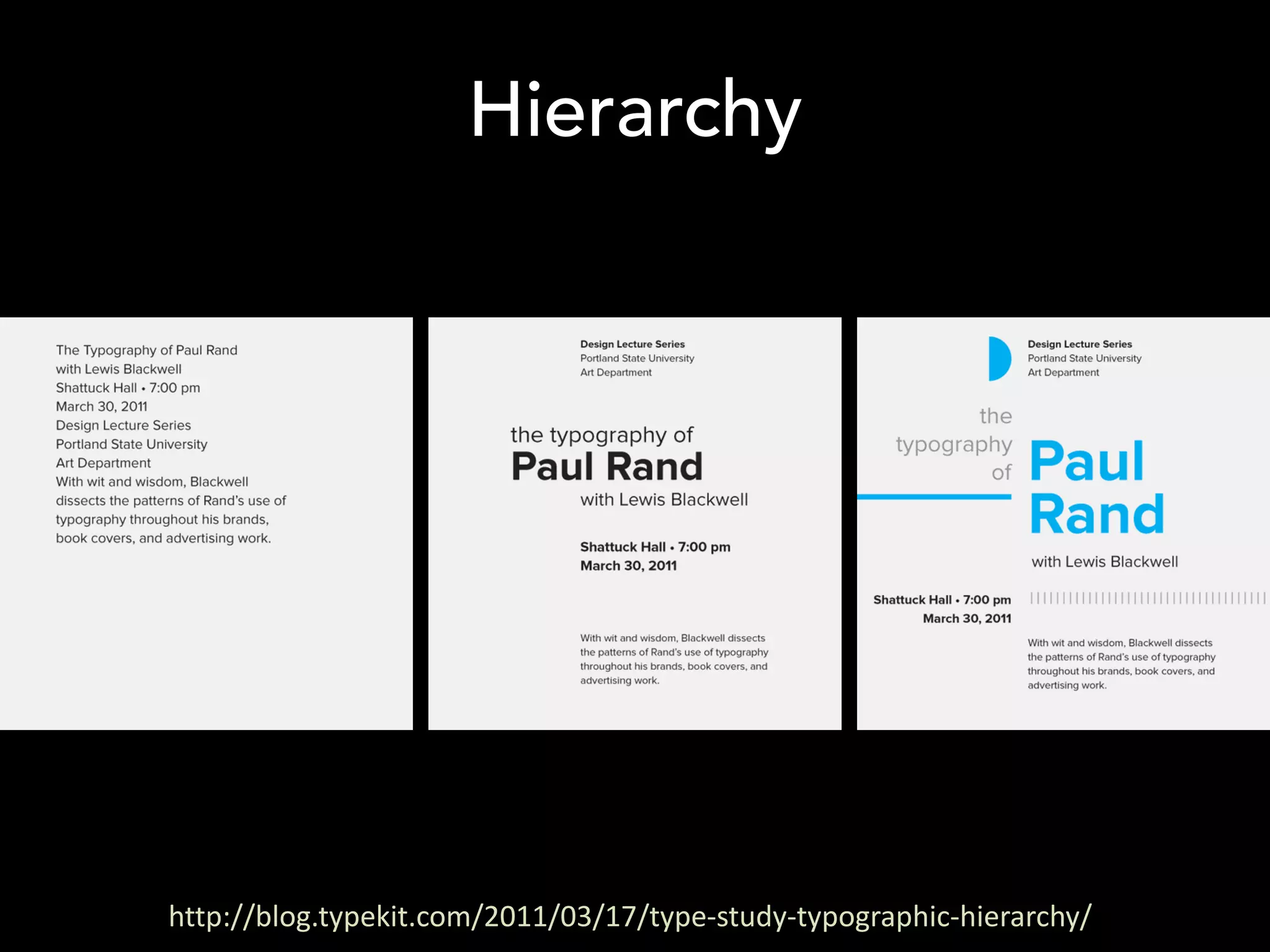
Hierarchy


http://blog.typekit.com/2011/03/17/type-study-typographic-hierarchy/
Designers

 Functionality
     Context
        Flow
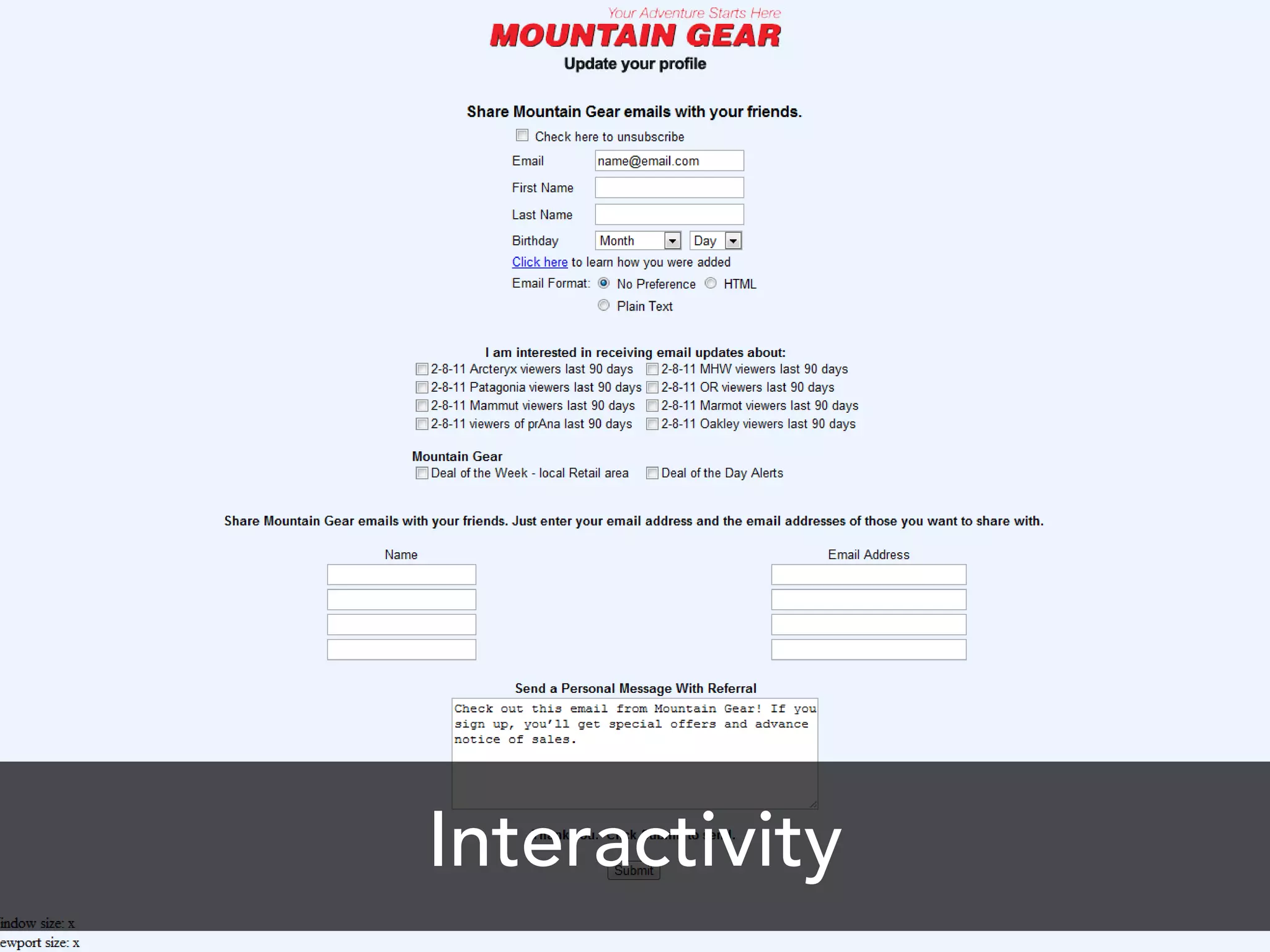
Interactivity
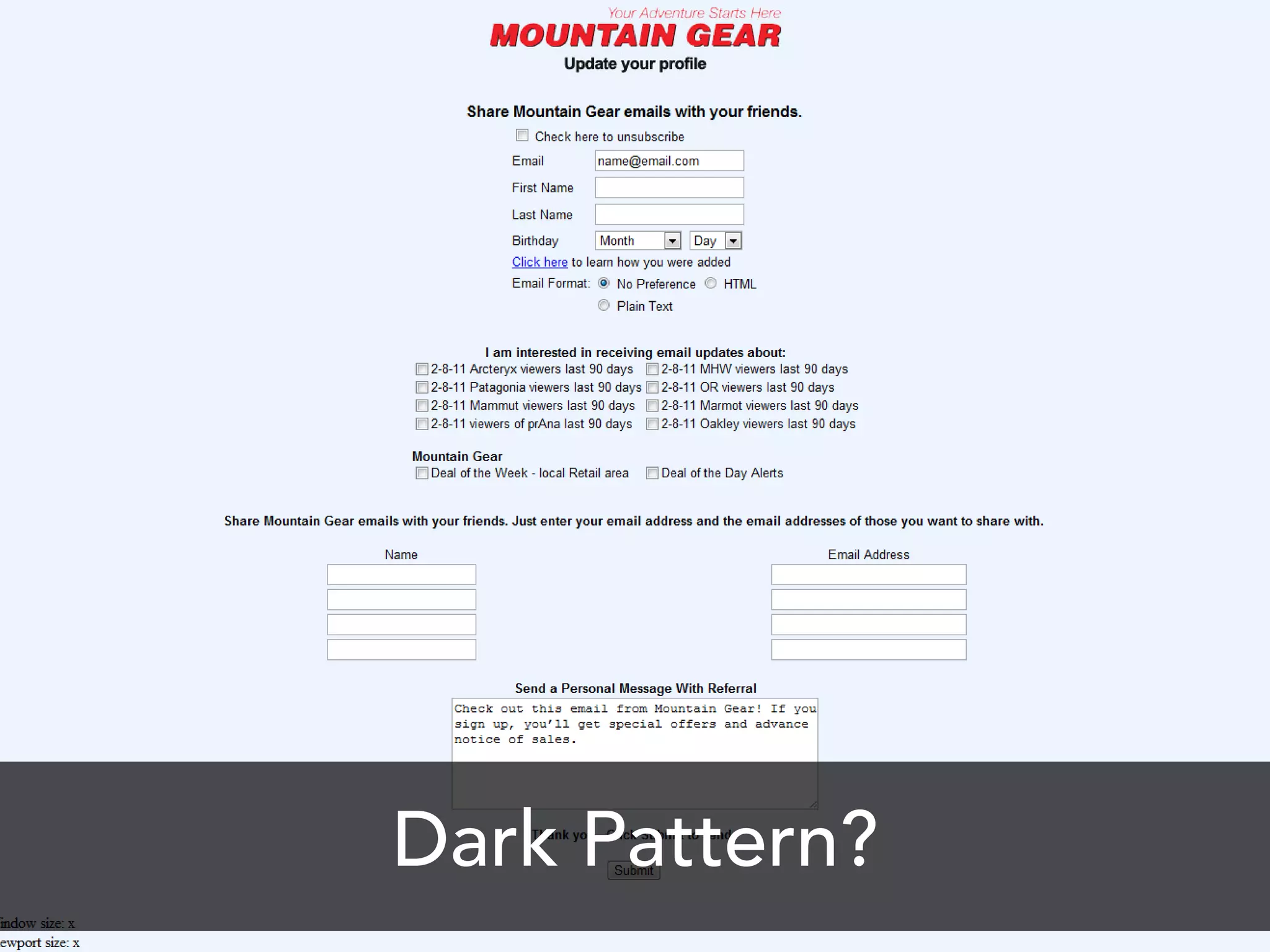
Dark Pattern?
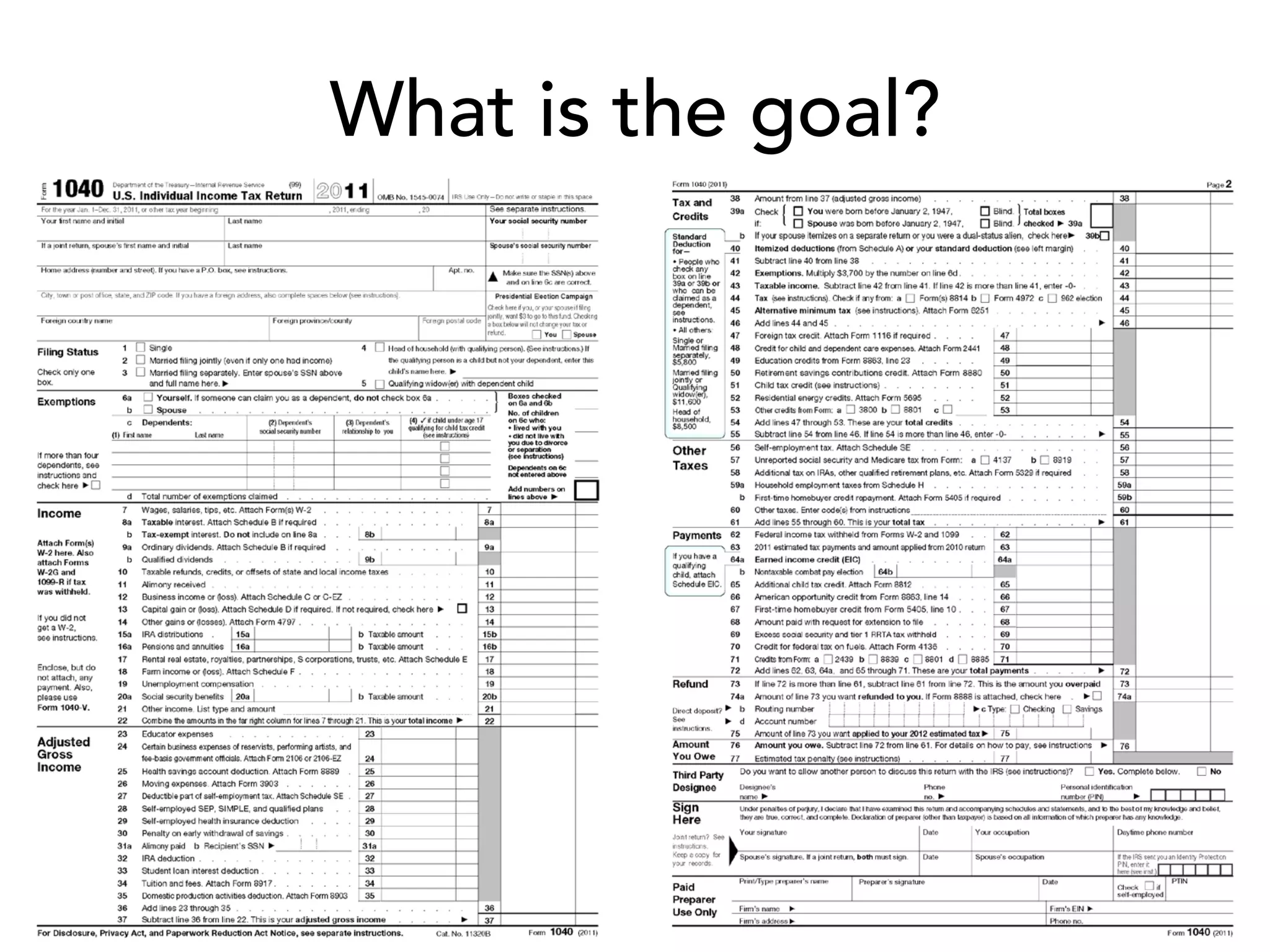
What is the goal?
Structure
Flow
People

Relevance
 Difficulty
    Clarity
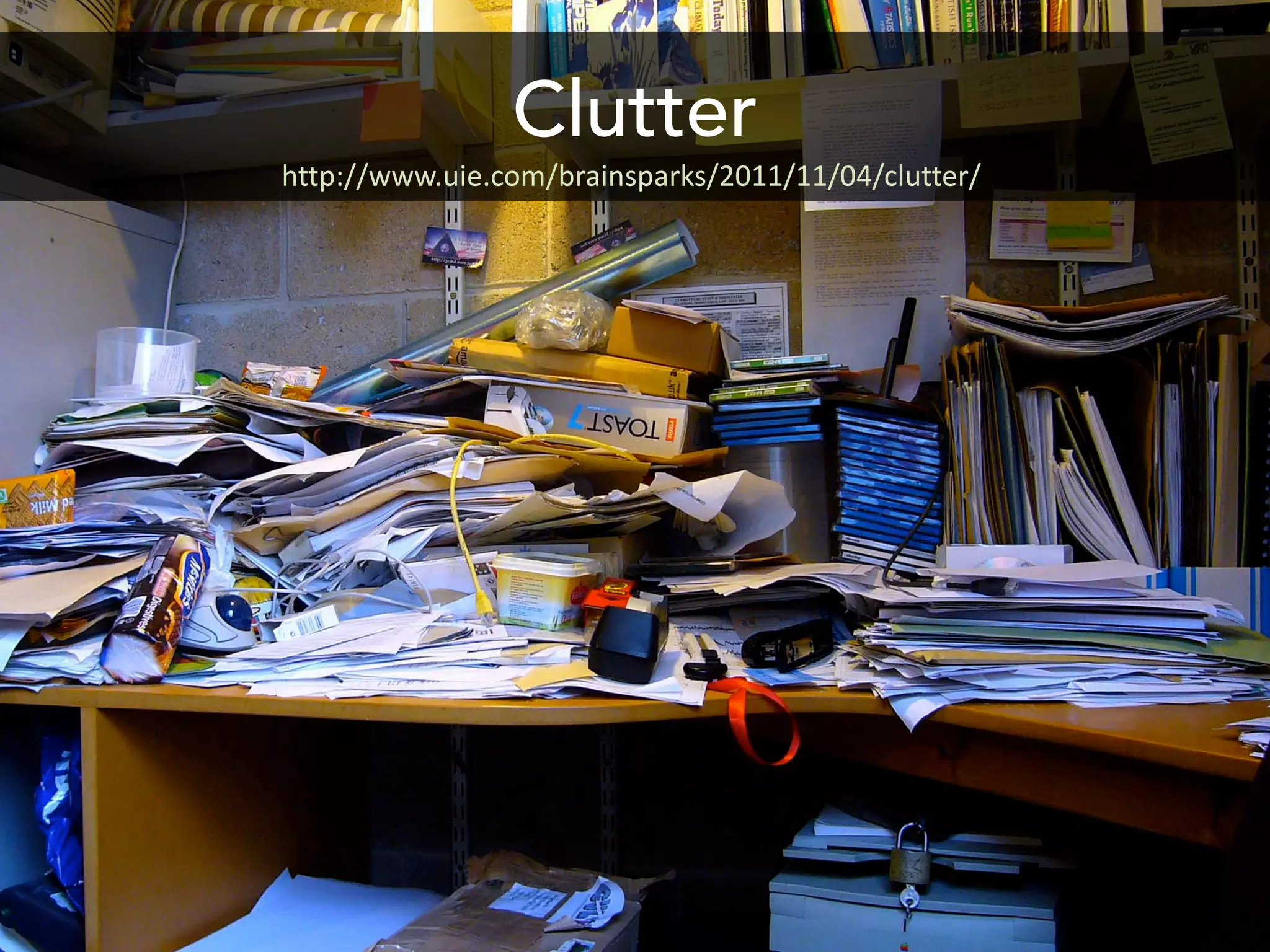
Clutter
http://www.uie.com/brainsparks/2011/11/04/clutter/
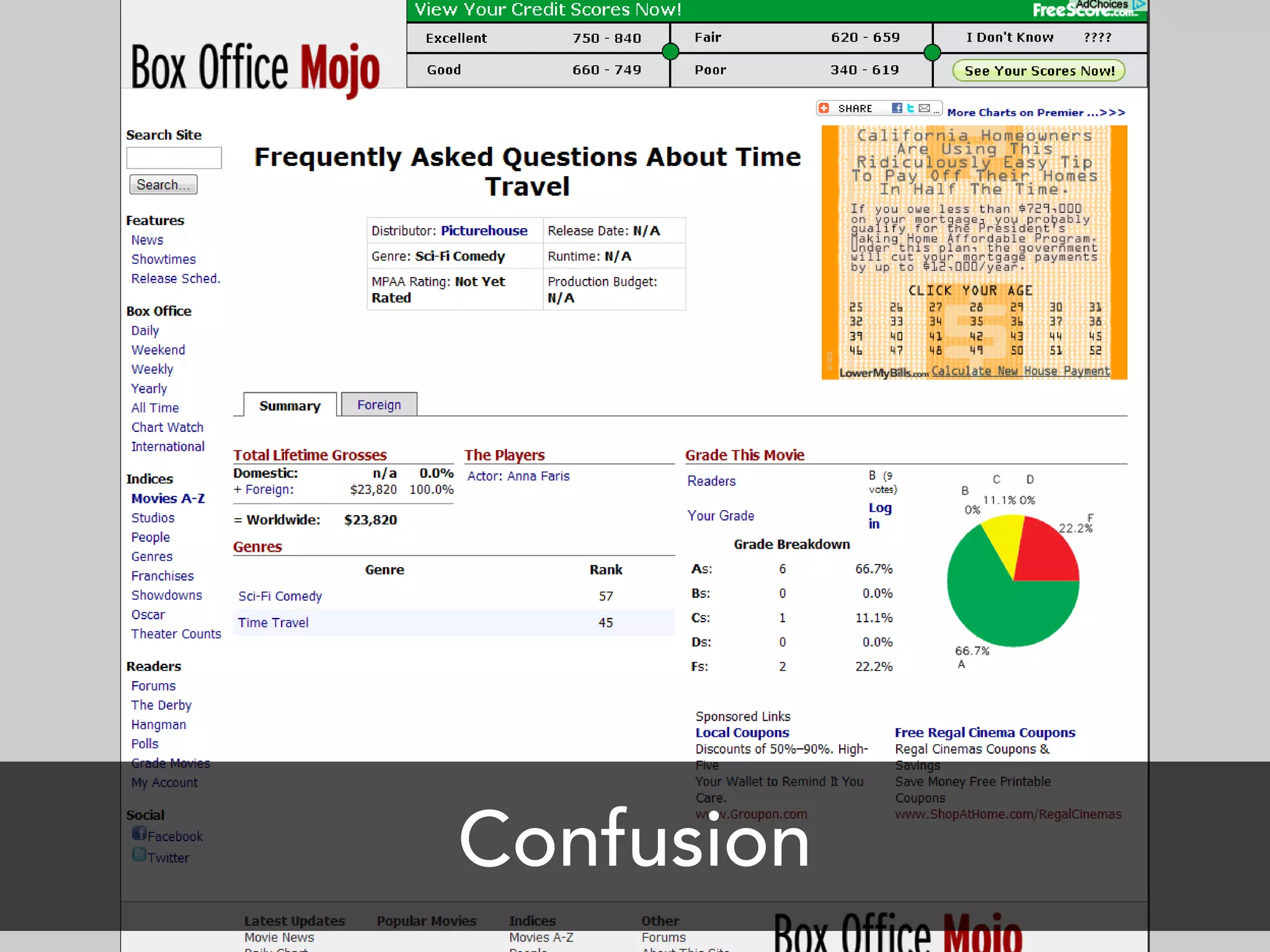
Difficulty
Confusion
Scientists

     Chaos
Weather
Edward Lorenz, Sc.D.

     dt/dx = σ(y−x)
    dt/dy = x(τ−z)−y
     dt/dz = xy− βz
Lorenz Attractor
Chaos

Dynamical systems
  Deterministic
 Not predictable
Chaos

     Self-organizing
  Emergent structure
Sensitivity to perturbation
Butterfly Effect
Some things are
naturally complex.
 So why discuss chaos?
Complex systems that appear
to have an impossibly large
number of variables can actually
be described and understood
with remarkably few.
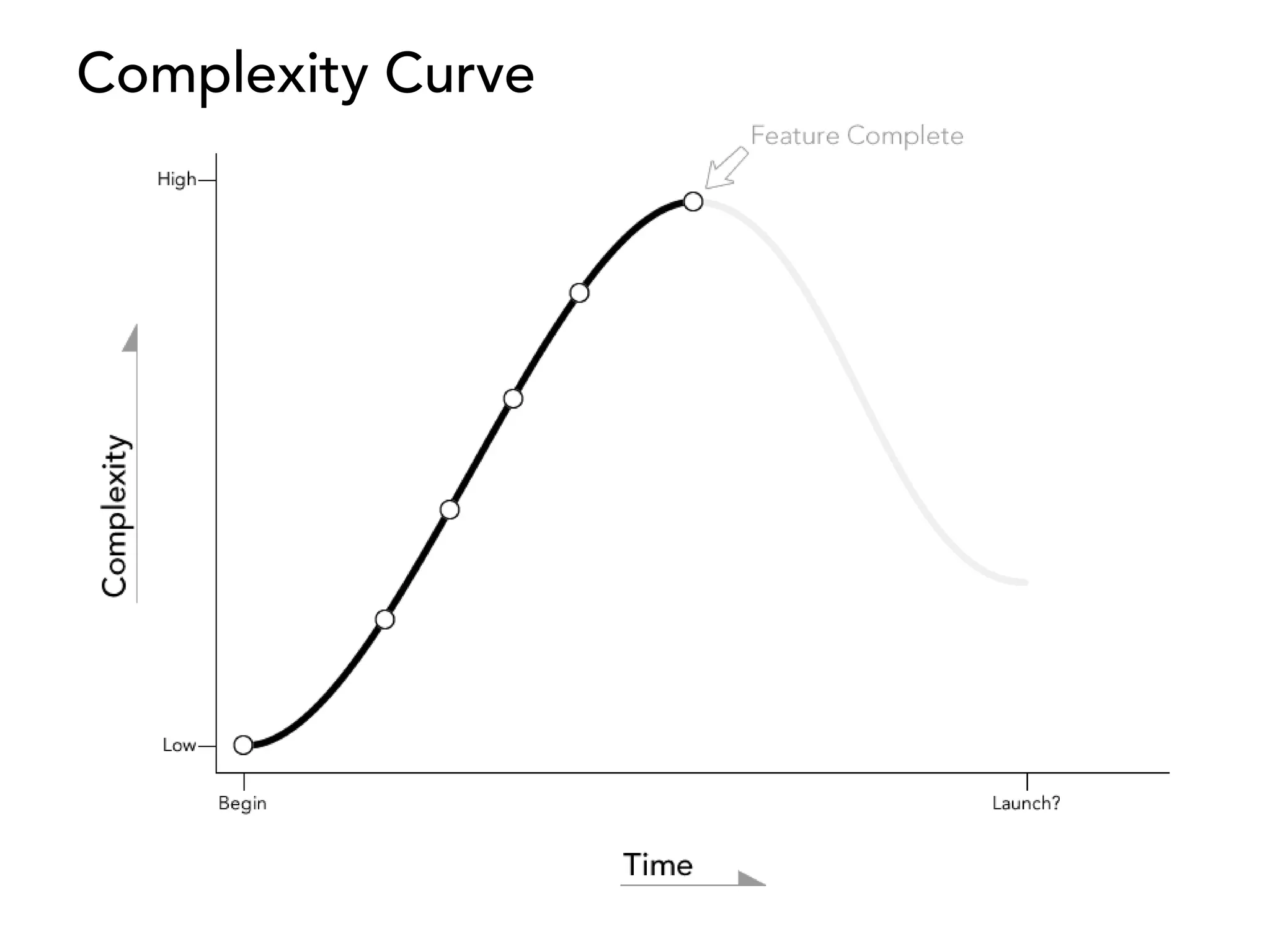
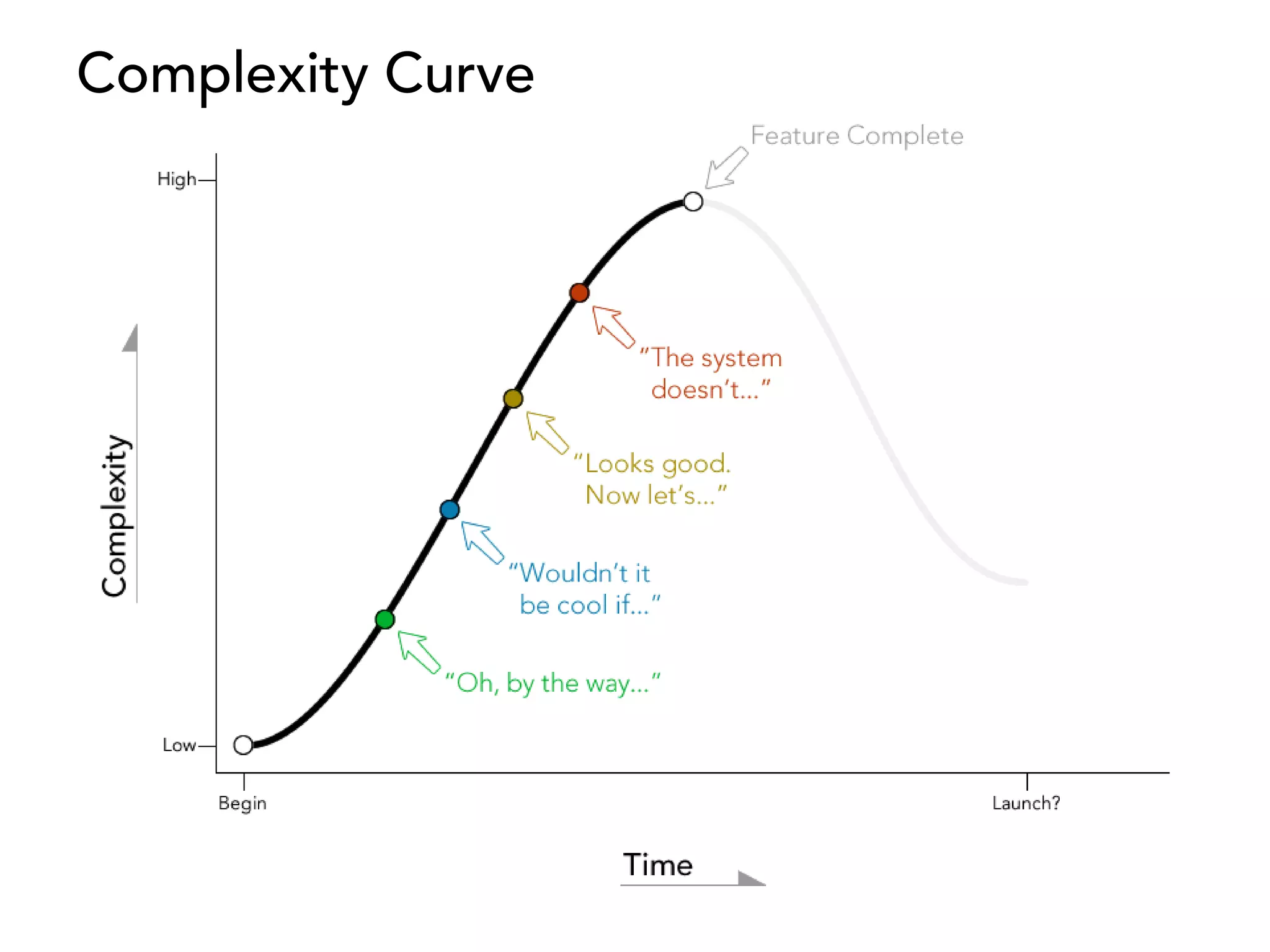
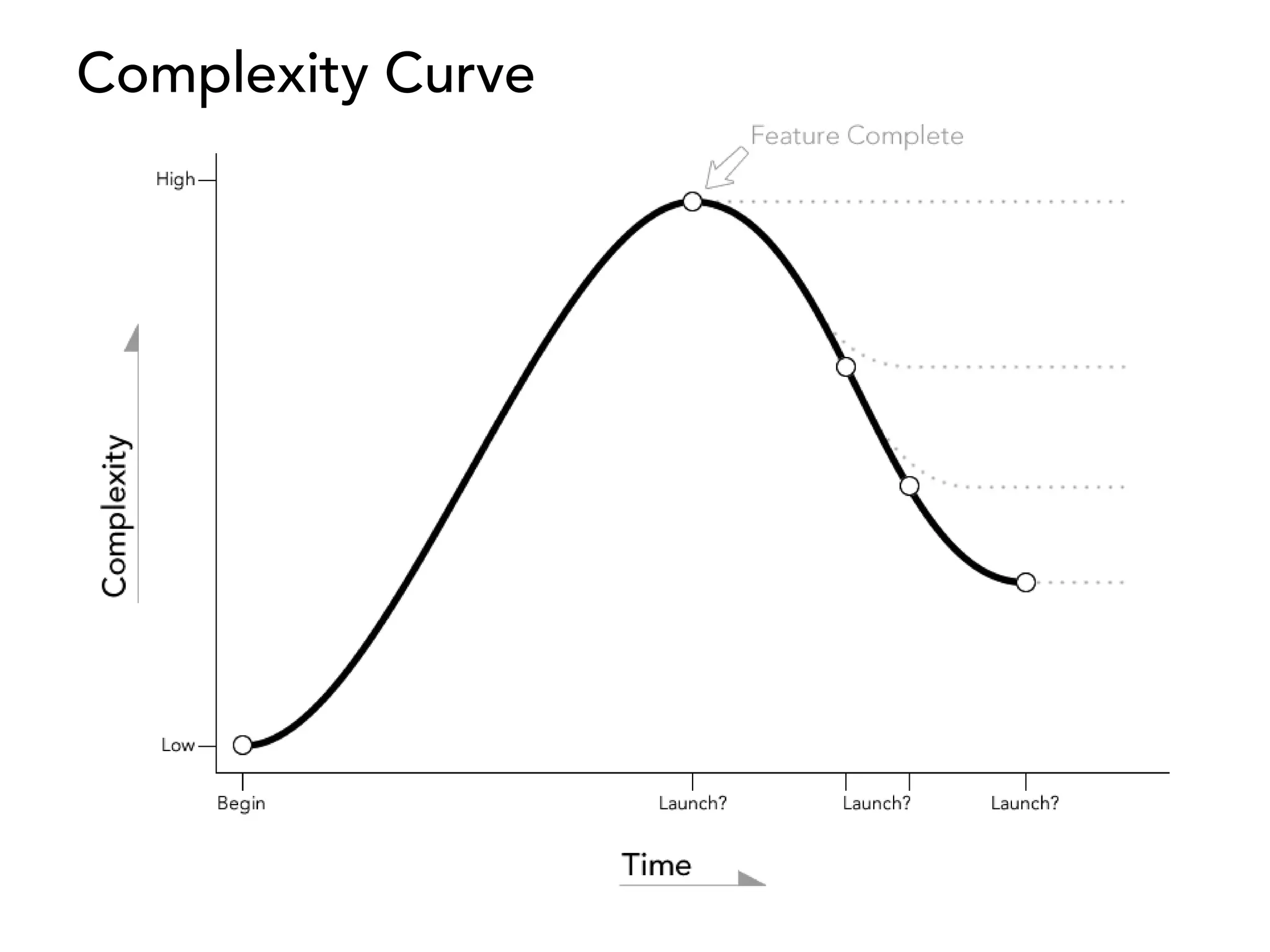
The Complexity Curve

In which the level of complexity
    increases the further we get
           into a design project.
Complexity Curve
Complexity Curve
Where does complexity
          come from?
Let’s skip the obvious:
Disregard for design
www.webpagesthatsuck.com
   790 Flickr groups with
 “bad design” in the name
Designers

                    Models
                   Patterns
               Scope Creep
Constraints & Requirements
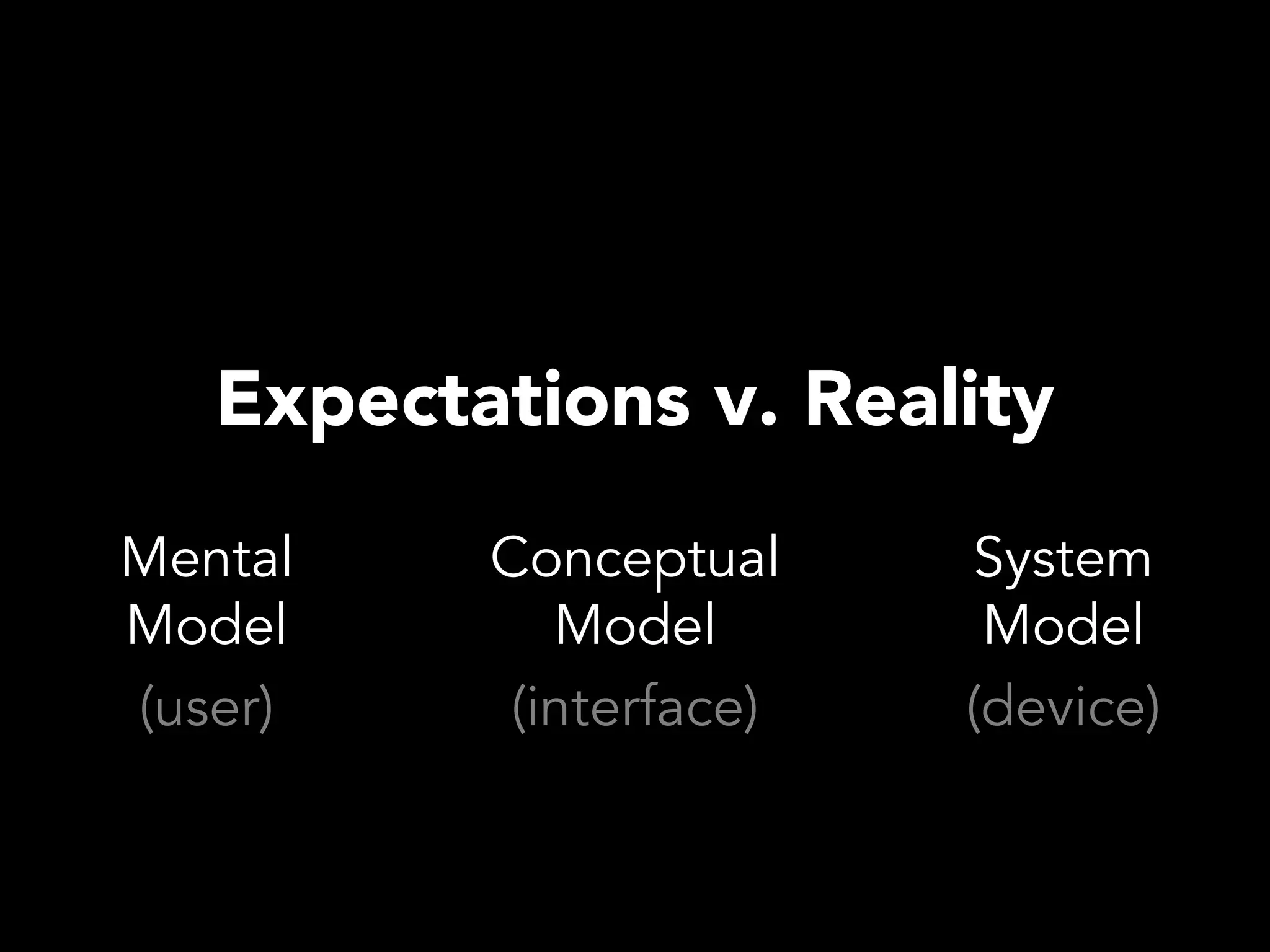
Expectations v. Reality
Mental    Conceptual     System
Model        Model        Model
(user)     (interface)   (device)
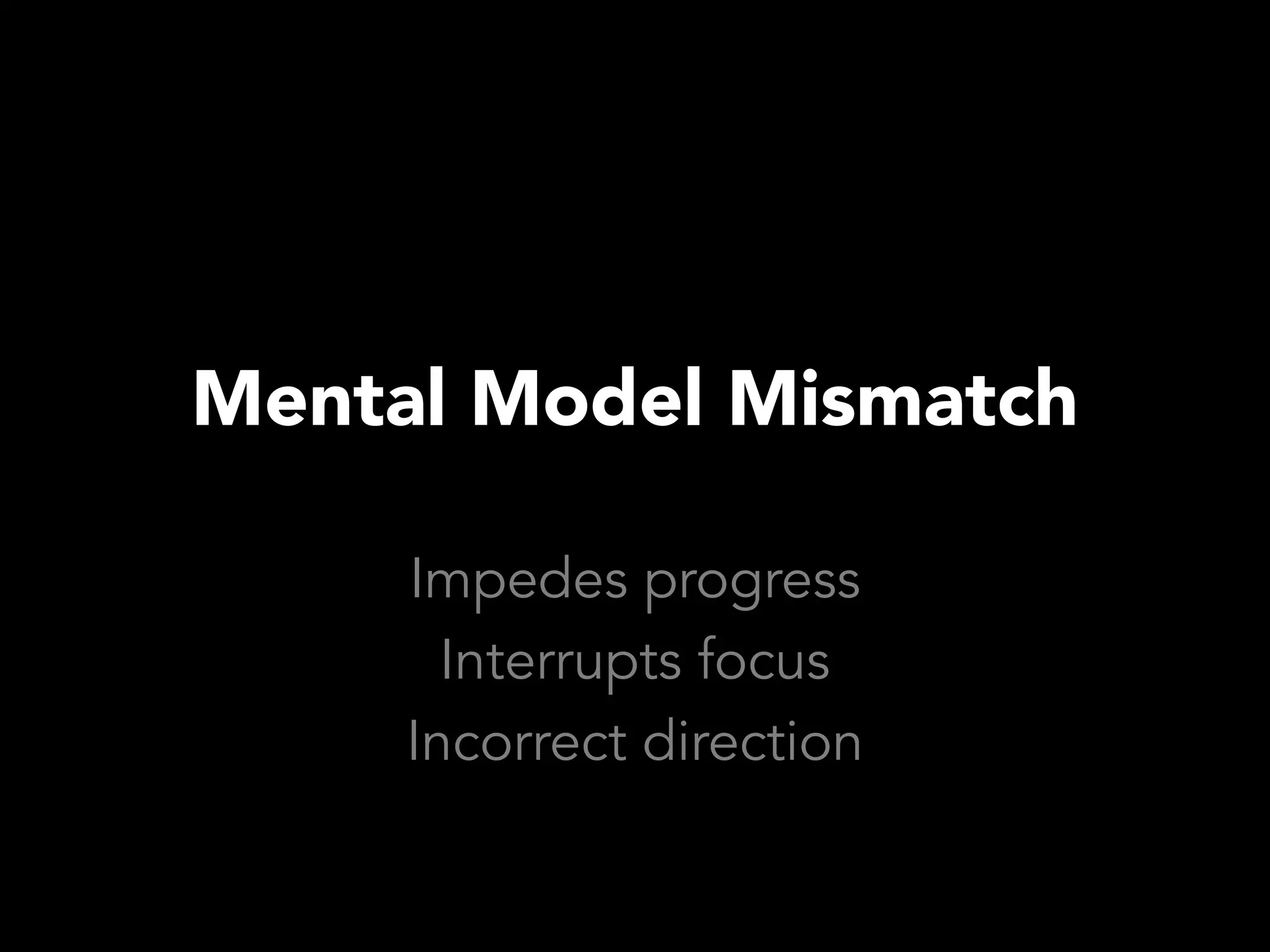
Mental Model Mismatch

     Impedes progress
       Interrupts focus
     Incorrect direction
Designers

                    Models
                   Patterns
               Scope Creep
Constraints & Requirements
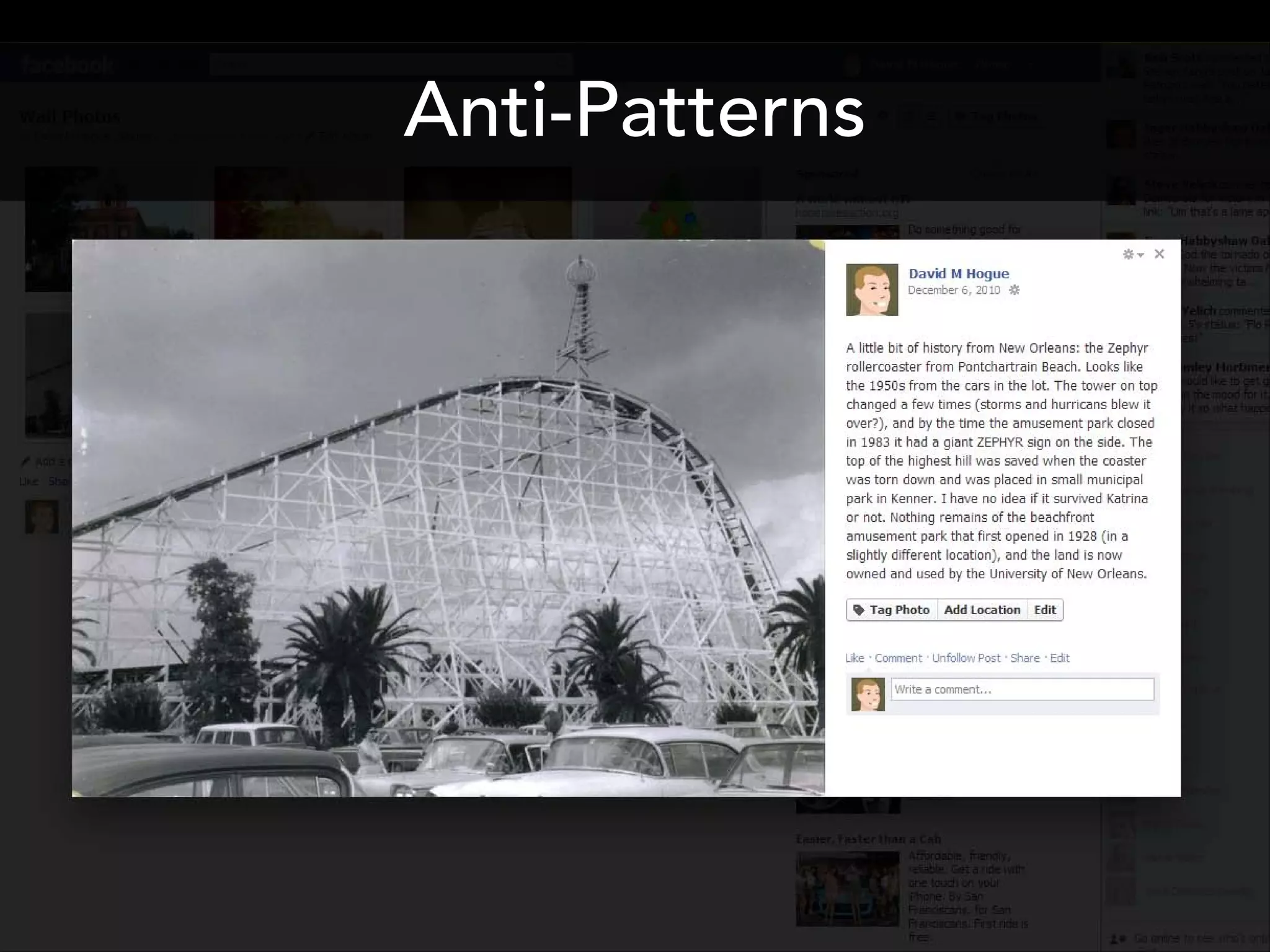
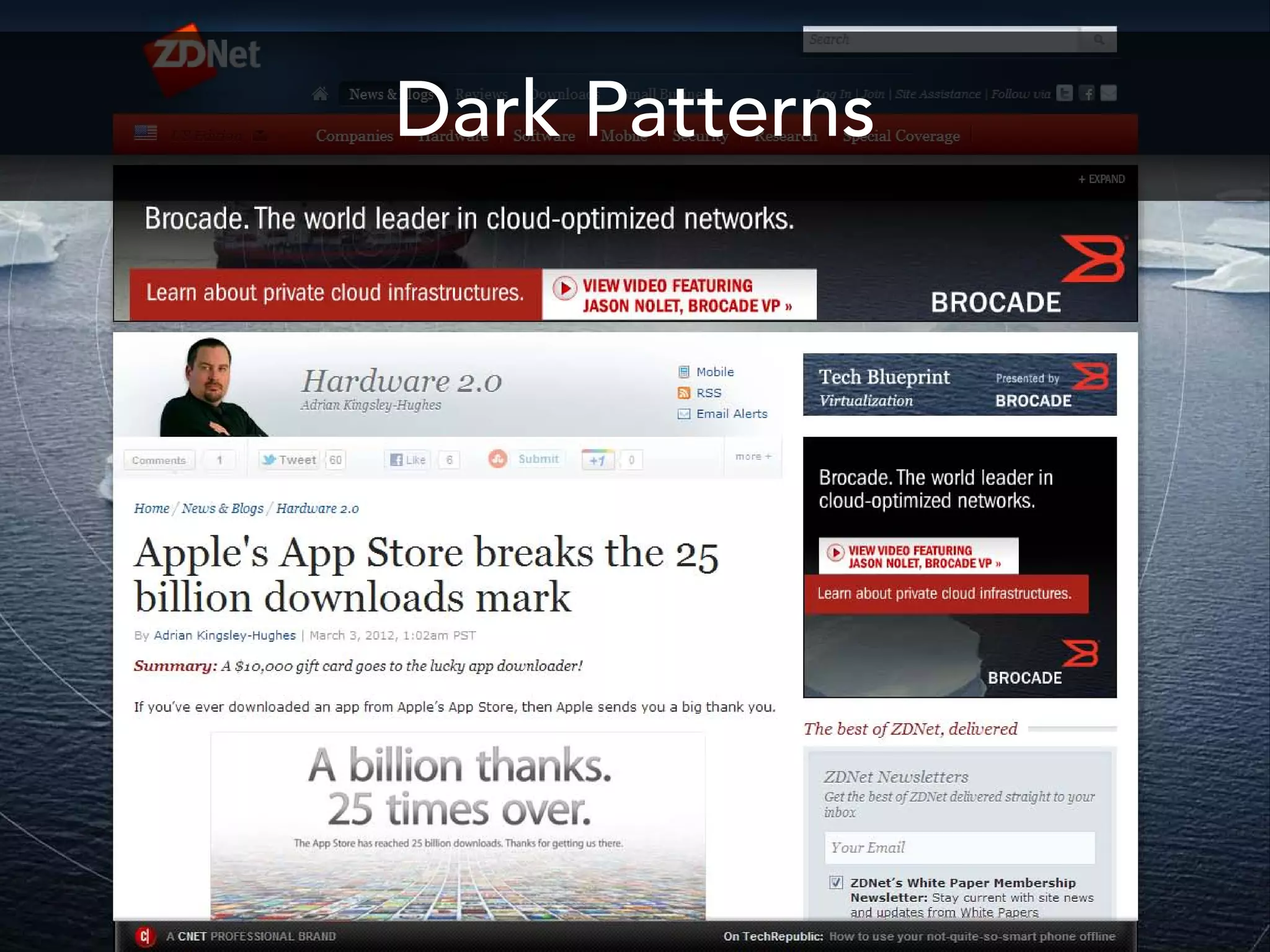
Copying Patterns
Anti-Patterns
Dark Patterns
New and different
Designers

                    Models
                   Patterns
               Scope Creep
Constraints & Requirements
Scope Creep (Jog or Run)

      Forgotten features
     Absent stakeholders
       Vendor systems
Executive Bungee-Jumping
Designers

                    Models
                   Patterns
               Scope Creep
Constraints & Requirements

      Technical constraints
       Legal requirements
    Business unit requirements
System Model Exposure


Where is the current price per share?
Why can't I buy a certain total value?
People

Difficulty
Expertise
Do not conflate
complexity with difficulty.
Difficult tasks often appear complex
      only until we have learned
the necessary knowledge and skills.
High cognitive loads
      feel difficult.
    Understanding and memory
Problem-solving and decision-making
    Associations and connections
People

Difficulty
Expertise
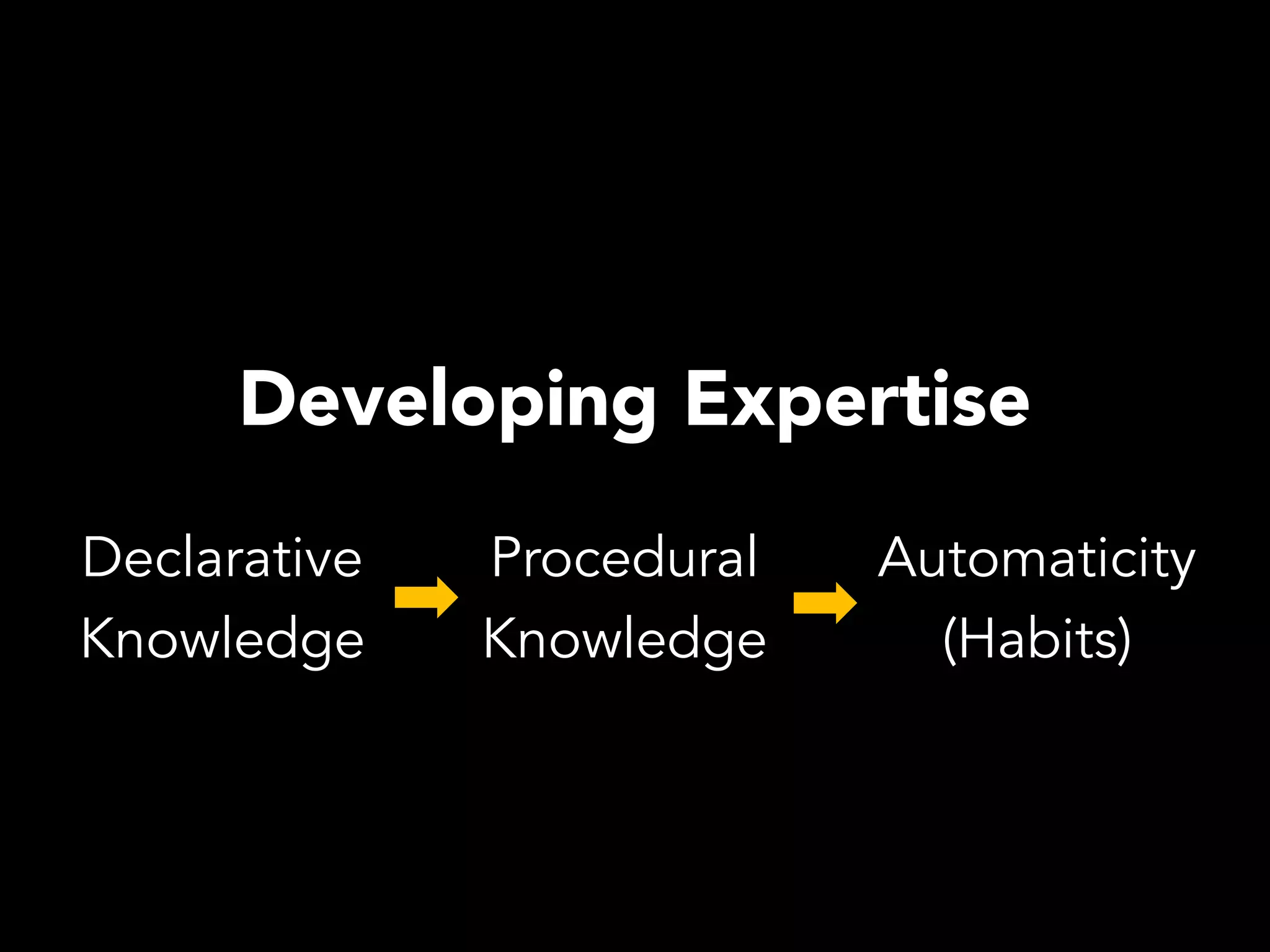
Developing Expertise
Declarative   Procedural   Automaticity
Knowledge     Knowledge      (Habits)
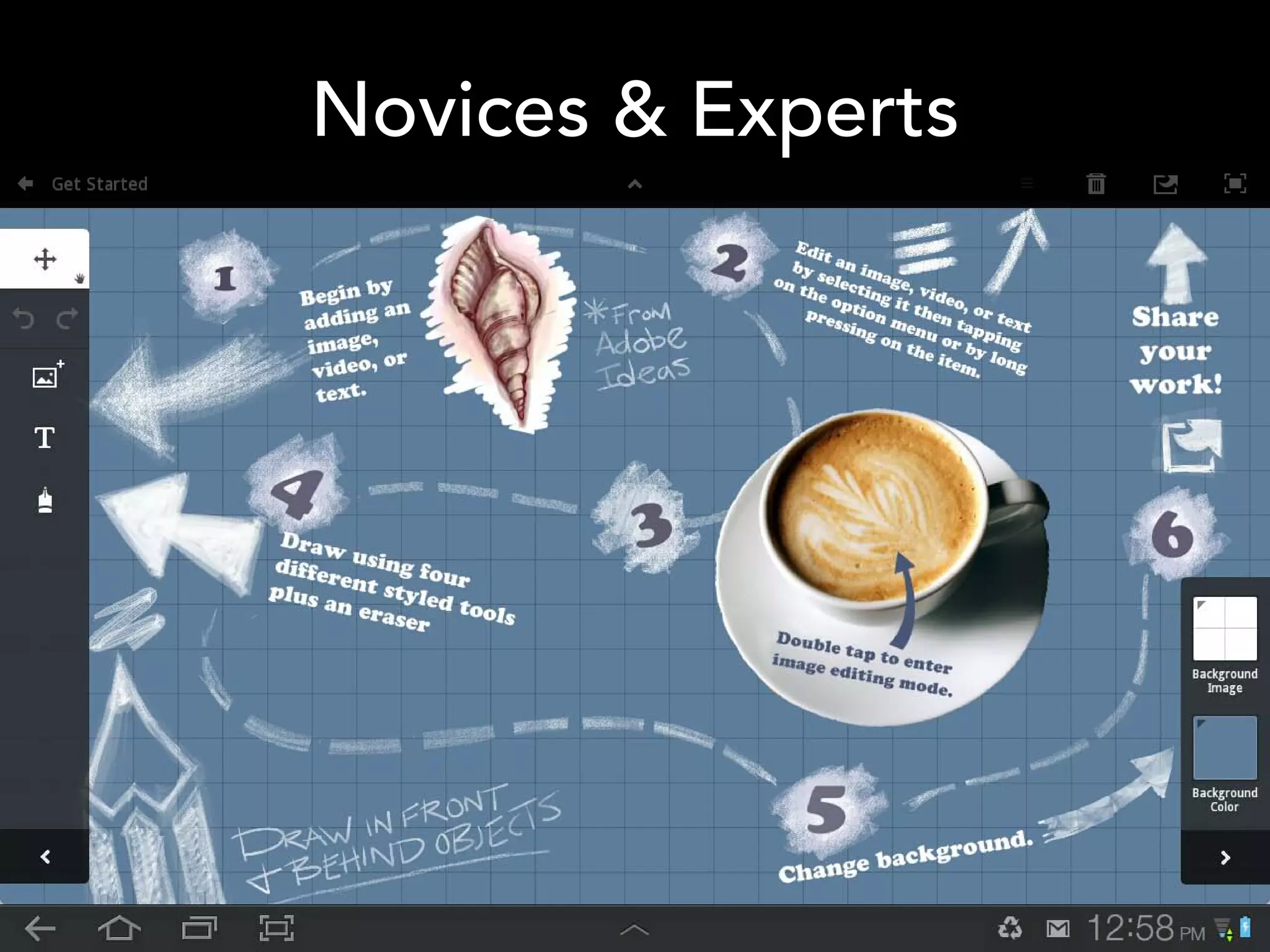
Novices & Experts
Technology

   Limitations
Limitations

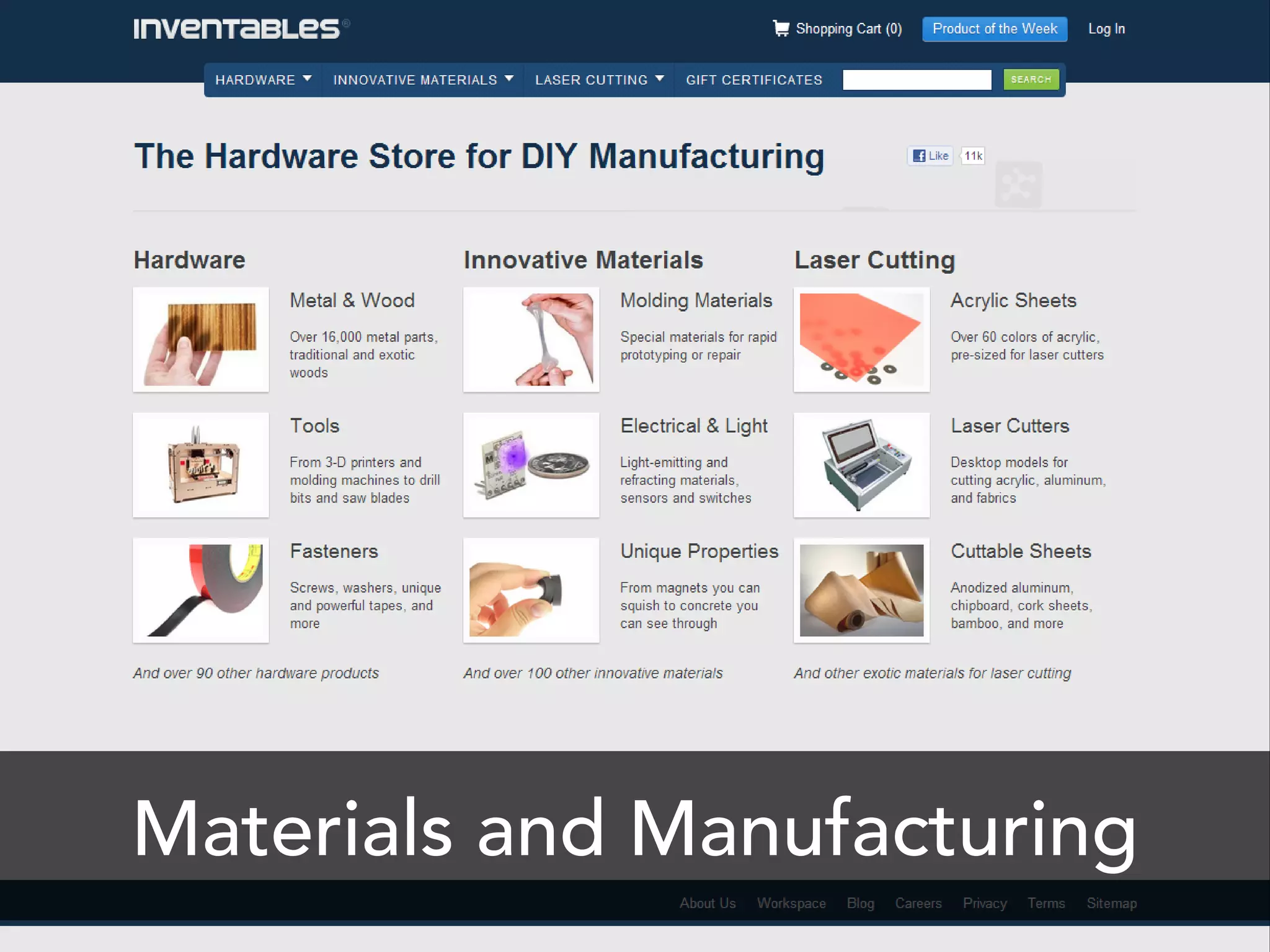
      Materials
    Manufacturing
Technological capability
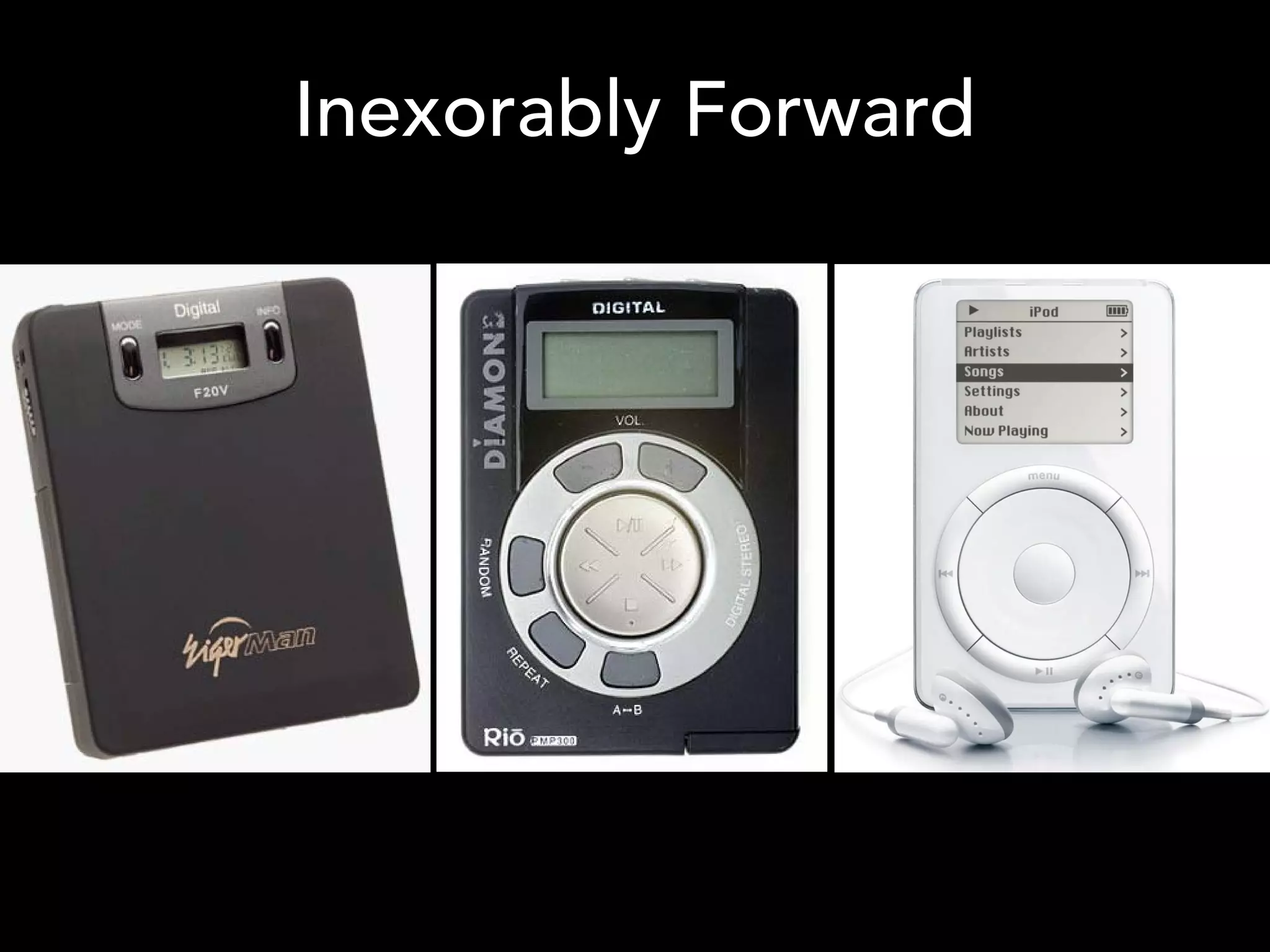
Inexorably Forward
What can be done about
           complexity?
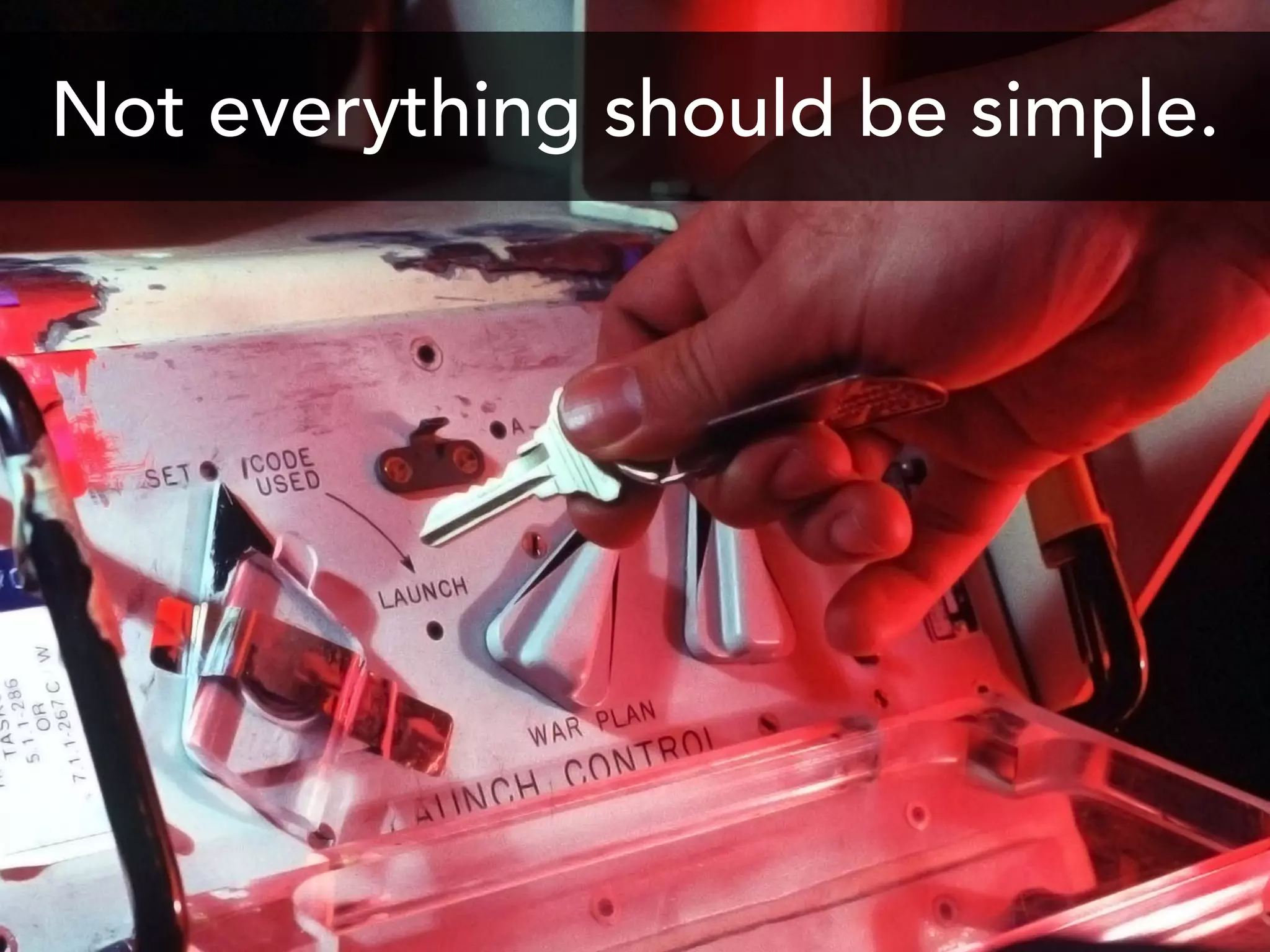
Not everything should be simple.
Law of Parsimony

All things being equal, simpler solutions
are generally better than complex ones.
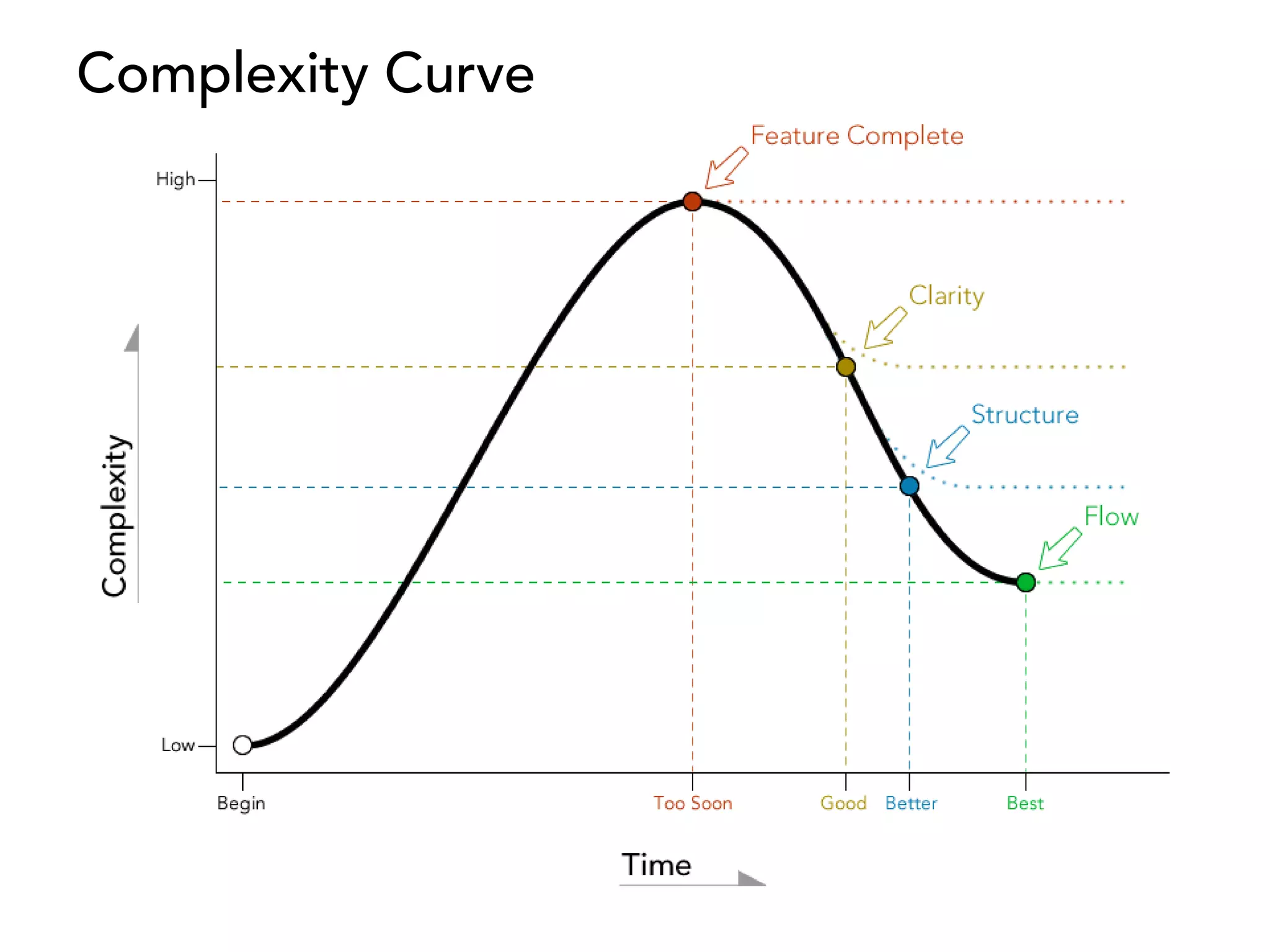
The Complexity Curve

 In which the level of complexity
may be decreased if we continue
 to iterate and refine the design.
Complexity Curve
Complexity Curve
Technology

    Advances
Materials and Manufacturing
Patience
Forward Forces
People

Motivation
  Transfer
  Support
A sufficiently motivated
  person will tolerate:
        Complexity
         Difficulty
        Confusion
Sometimes we need to
   teach people,
    because we cannot
    make it any simpler.
Transfer of
knowledge and skills
      Instruction
     Demonstration
       Analogy
Design

Leverage our ignorance
      Place people first
    Use mental models
       Focus & Reduce
                Iterate
Leverage our ignorance.

 Often our best ideas arise before we
have become shackled by constraints.
  Write them down before we know
        why we can’t do them.
         Then return to them.
Put people first.

    Motivation
    Behavior
     Emotion
    Creativity
Use mental models.

  Match conceptual and
     mental models
   Hide system models
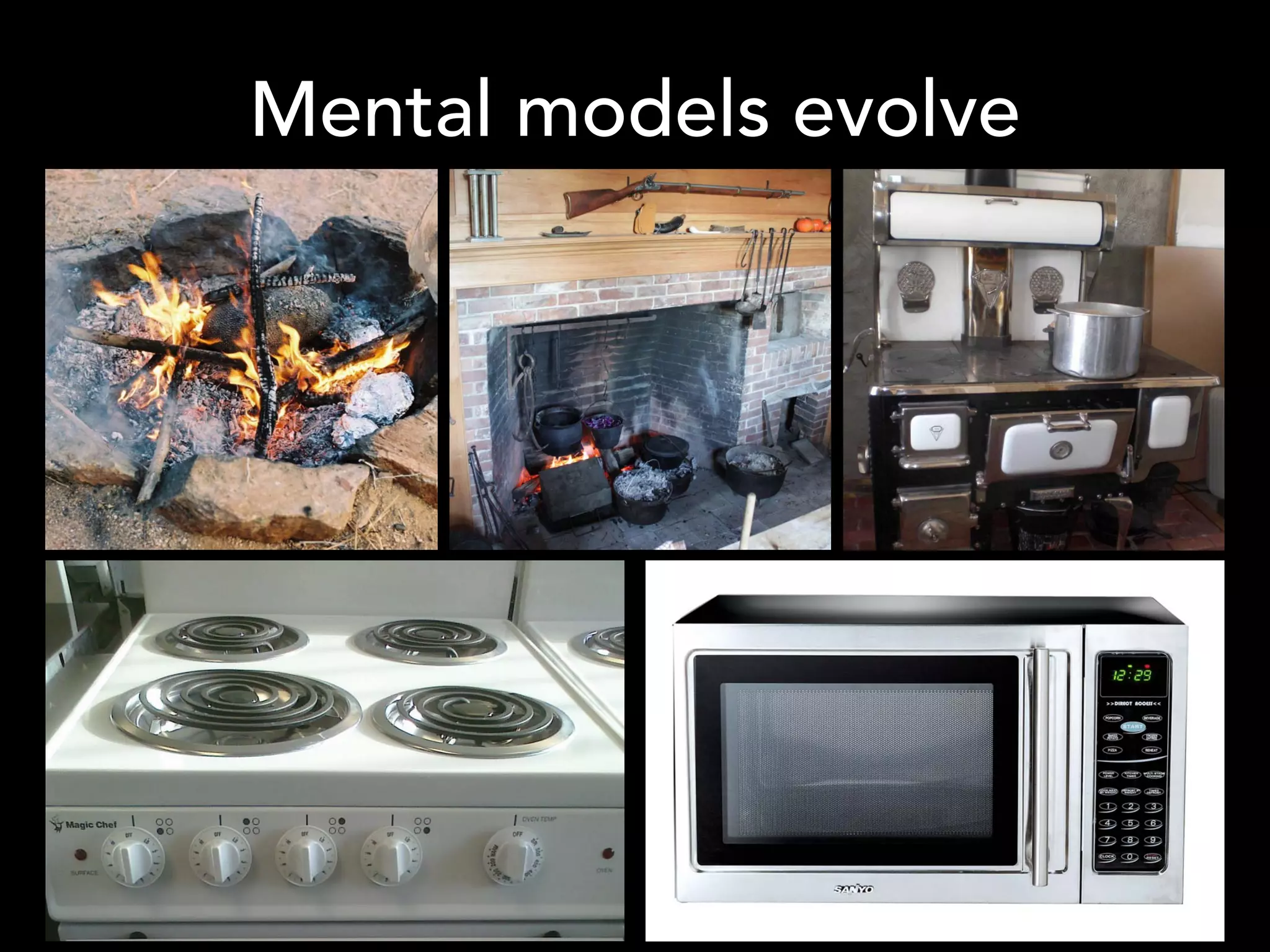
Mental models evolve
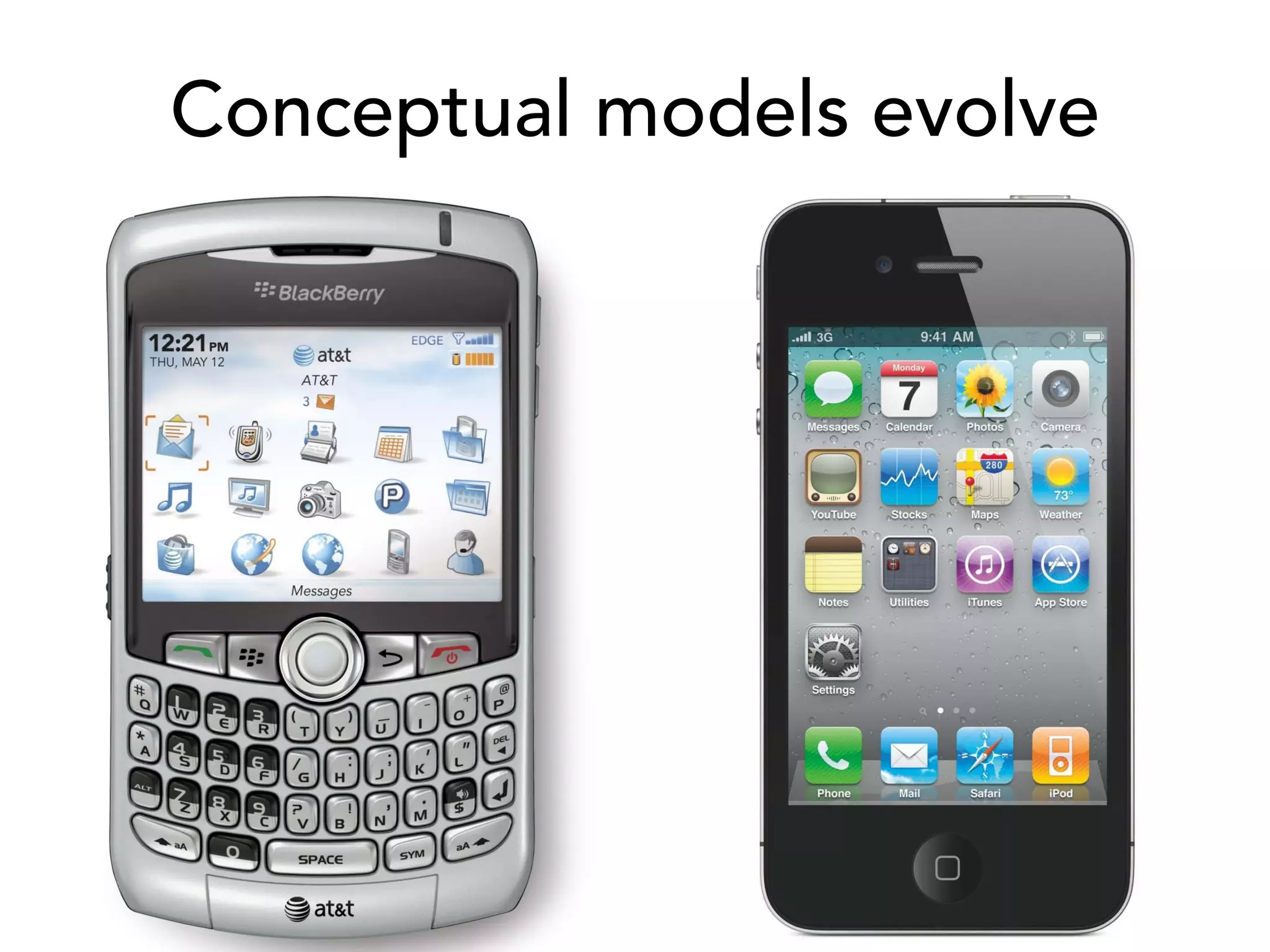
Conceptual models evolve
Focus       Reduce

Attention    Effort
  Flow       Time
             Errors
However,

     Simplicity is not
  just about reduction.
Do not confuse subtraction
    with simplification.
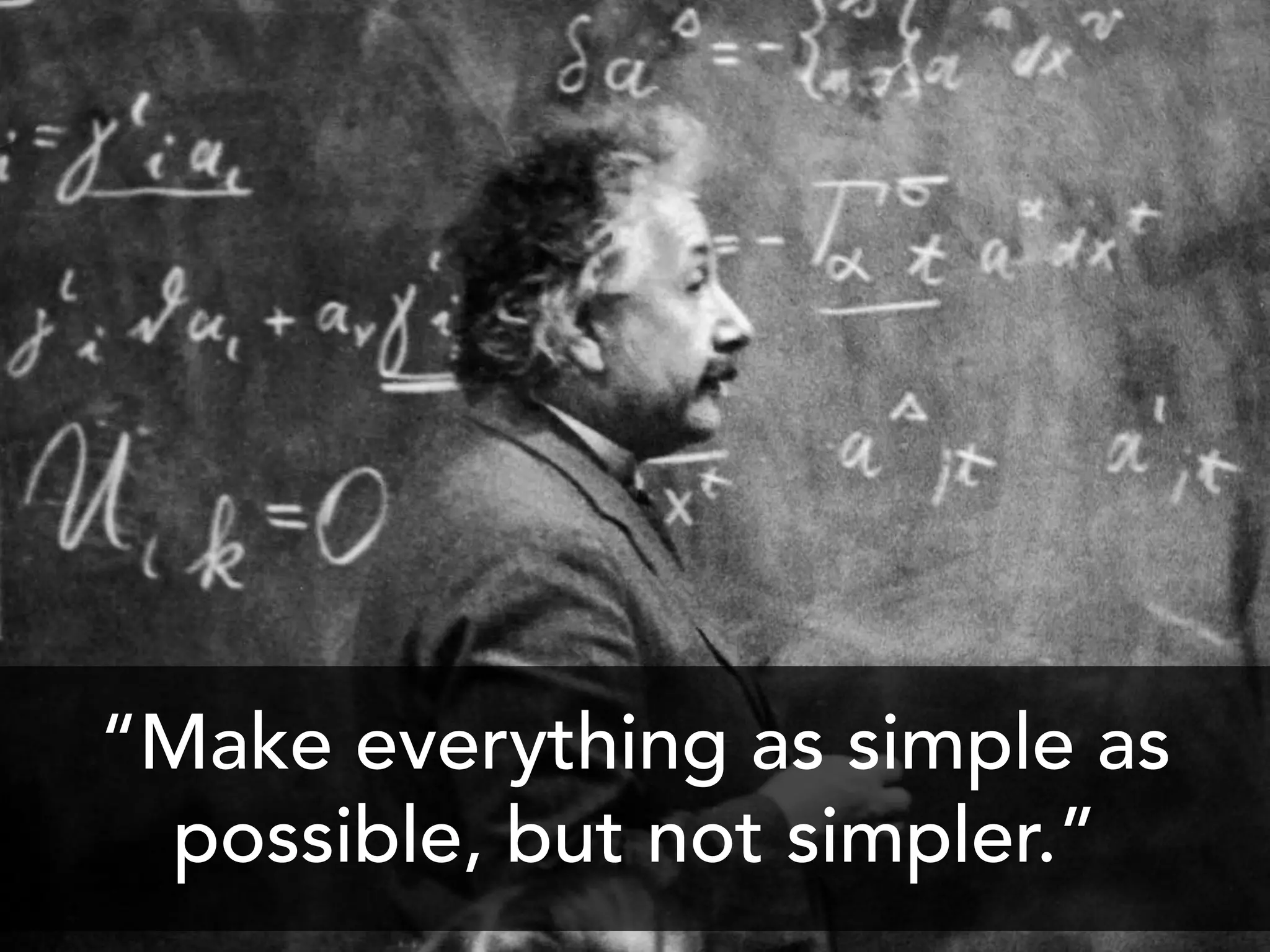
“Make everything as simple as
 possible, but not simpler.”
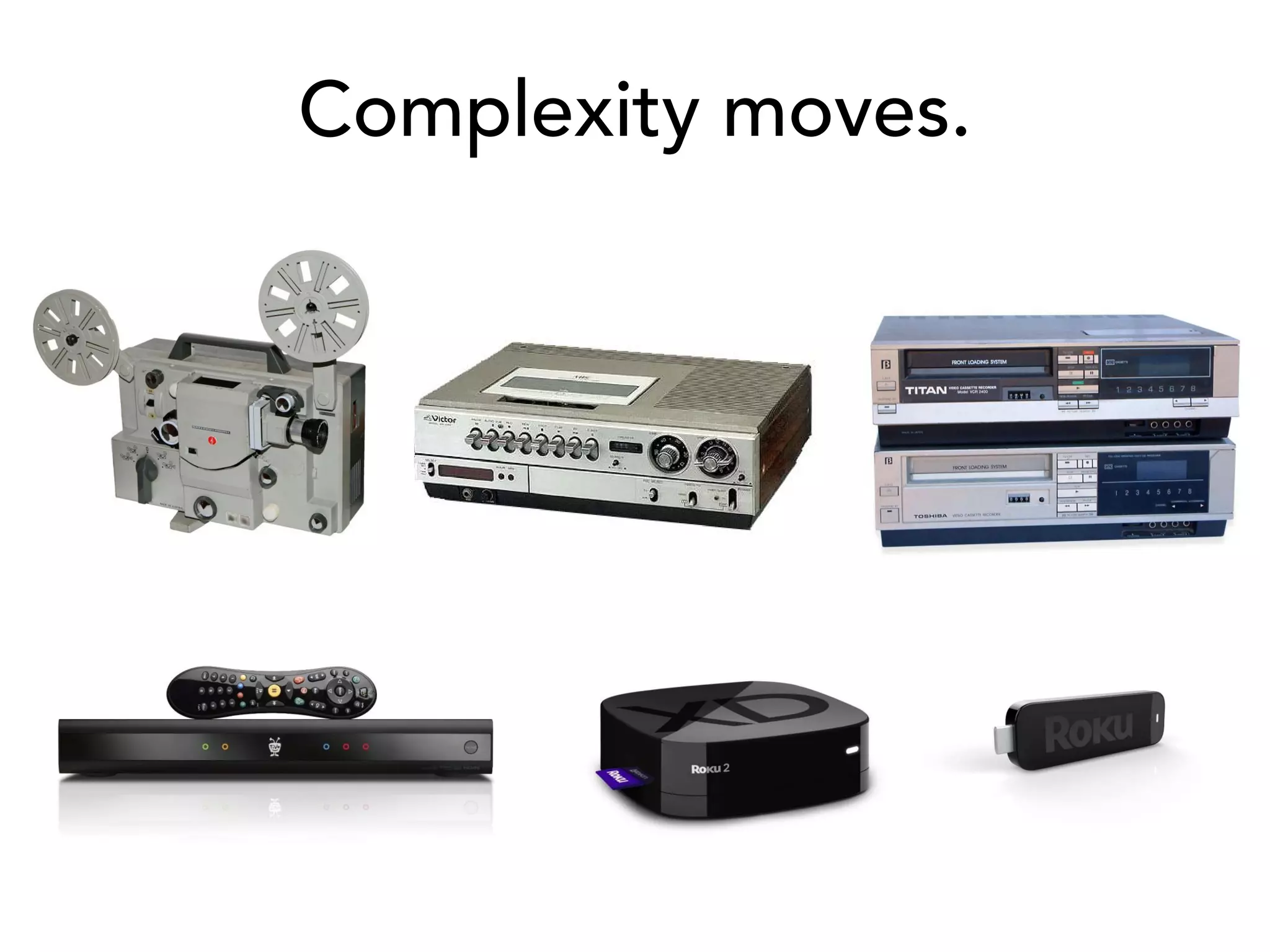
Complexity moves.
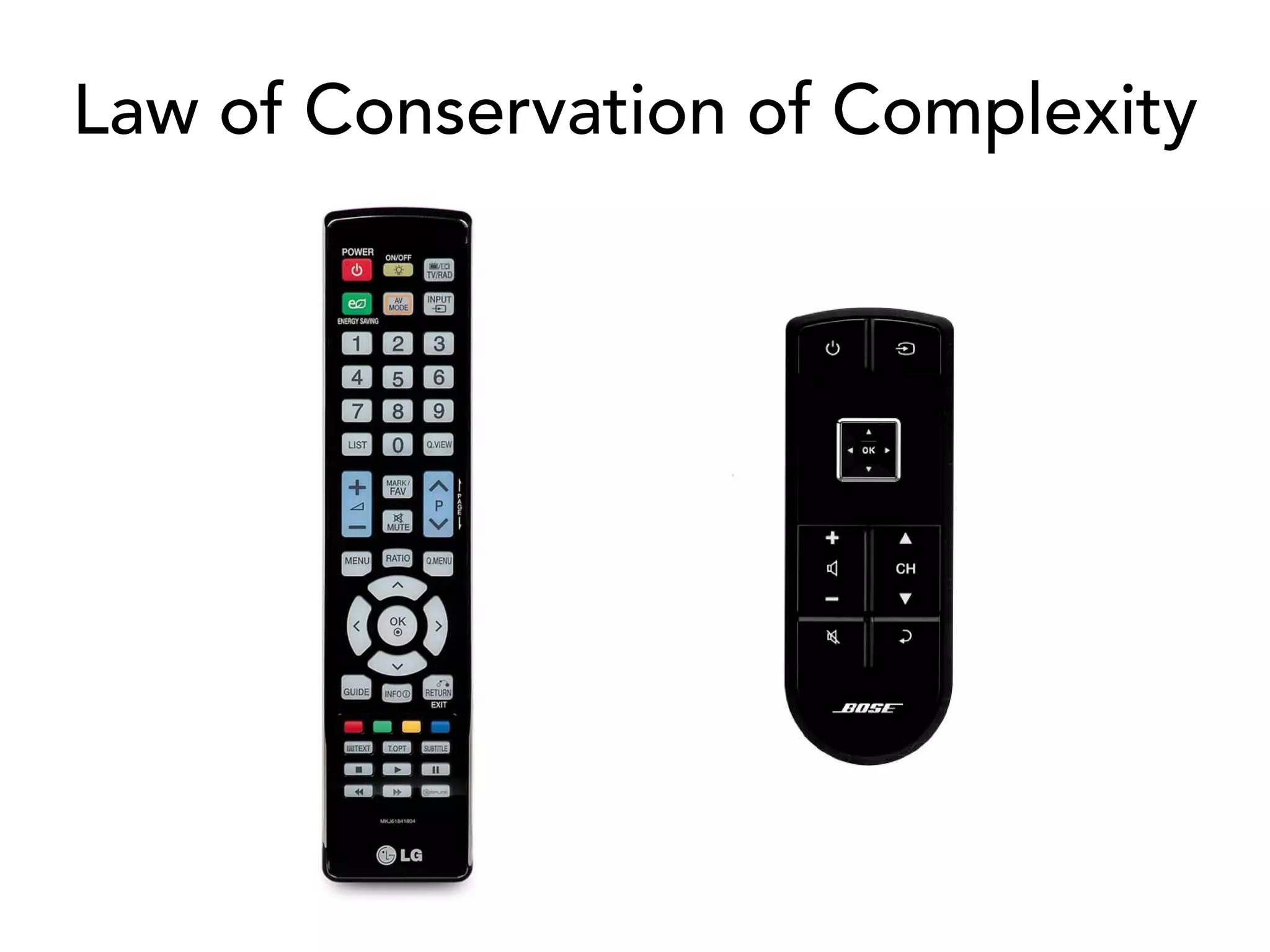
Shift the complexity…
…away from the person.
Law of Conservation of Complexity
Feature complete


is not experience optimized.
Iteration

   Incubation
Cross-pollination
  Observation
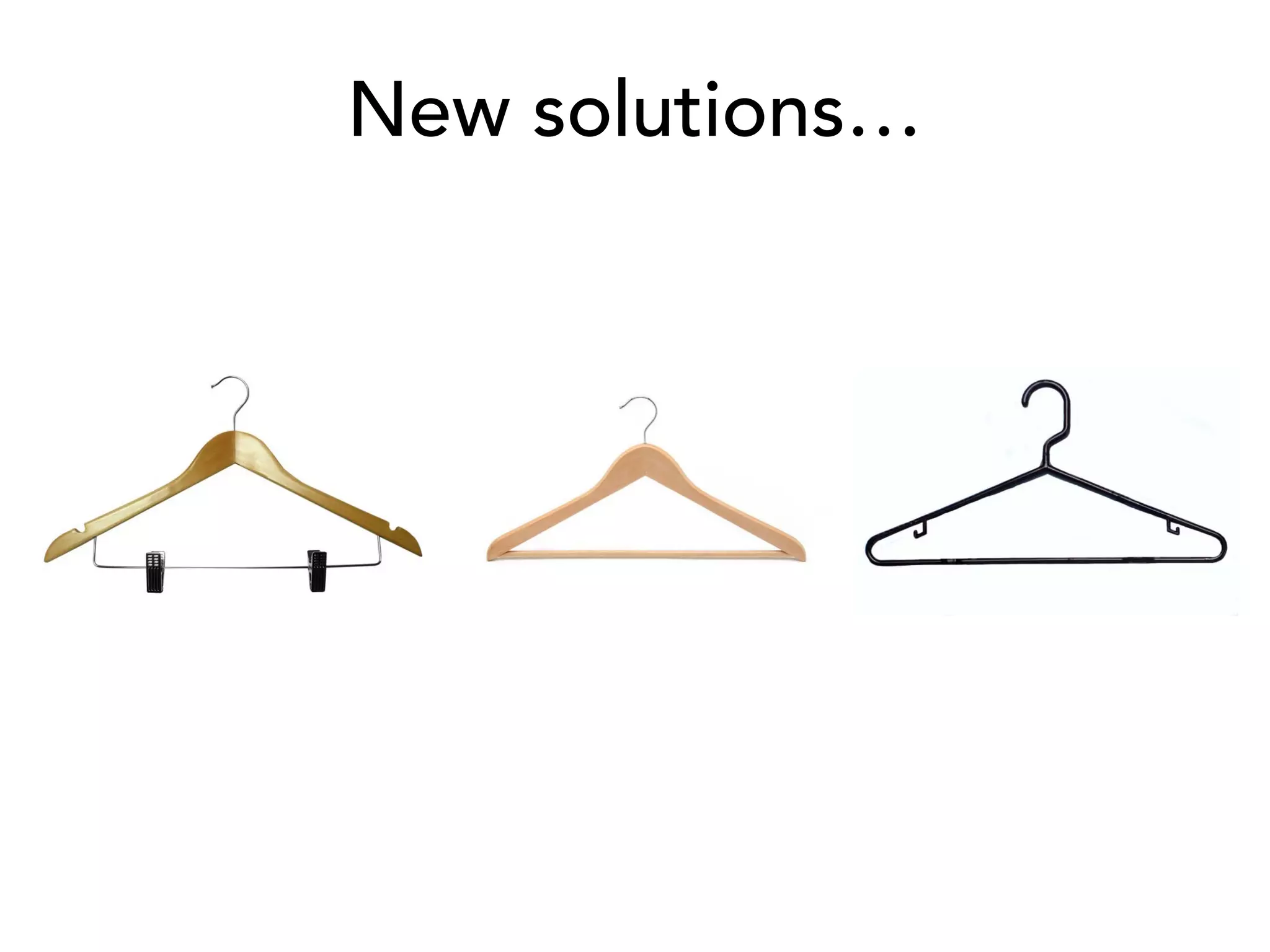
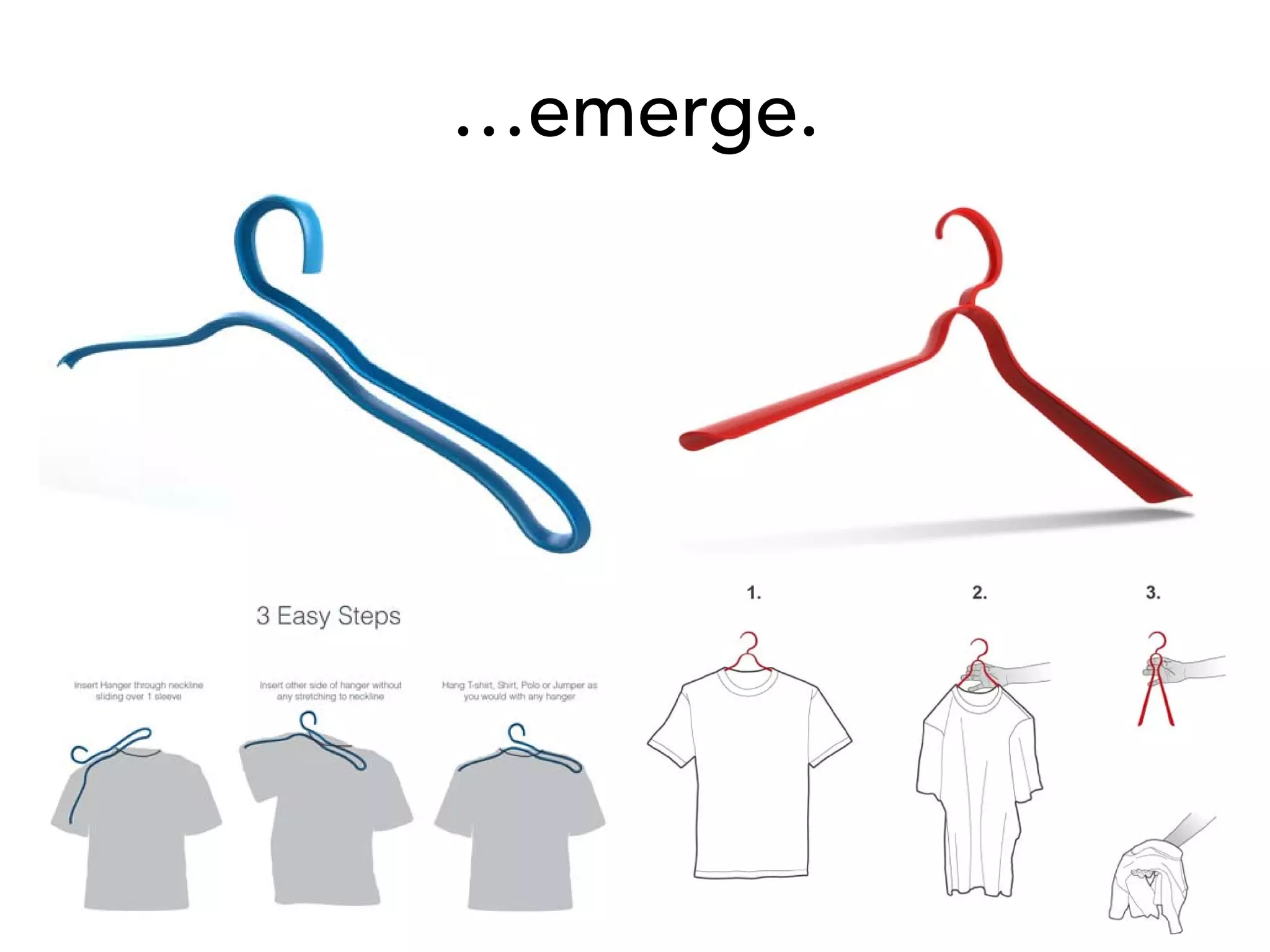
New solutions…
…emerge.
None of these solutions,
advances, and innovations
could have been possible
       without...
Critical Thinking

A persistent effort to examine any
   belief, idea, or fact in terms
    of the available evidence.
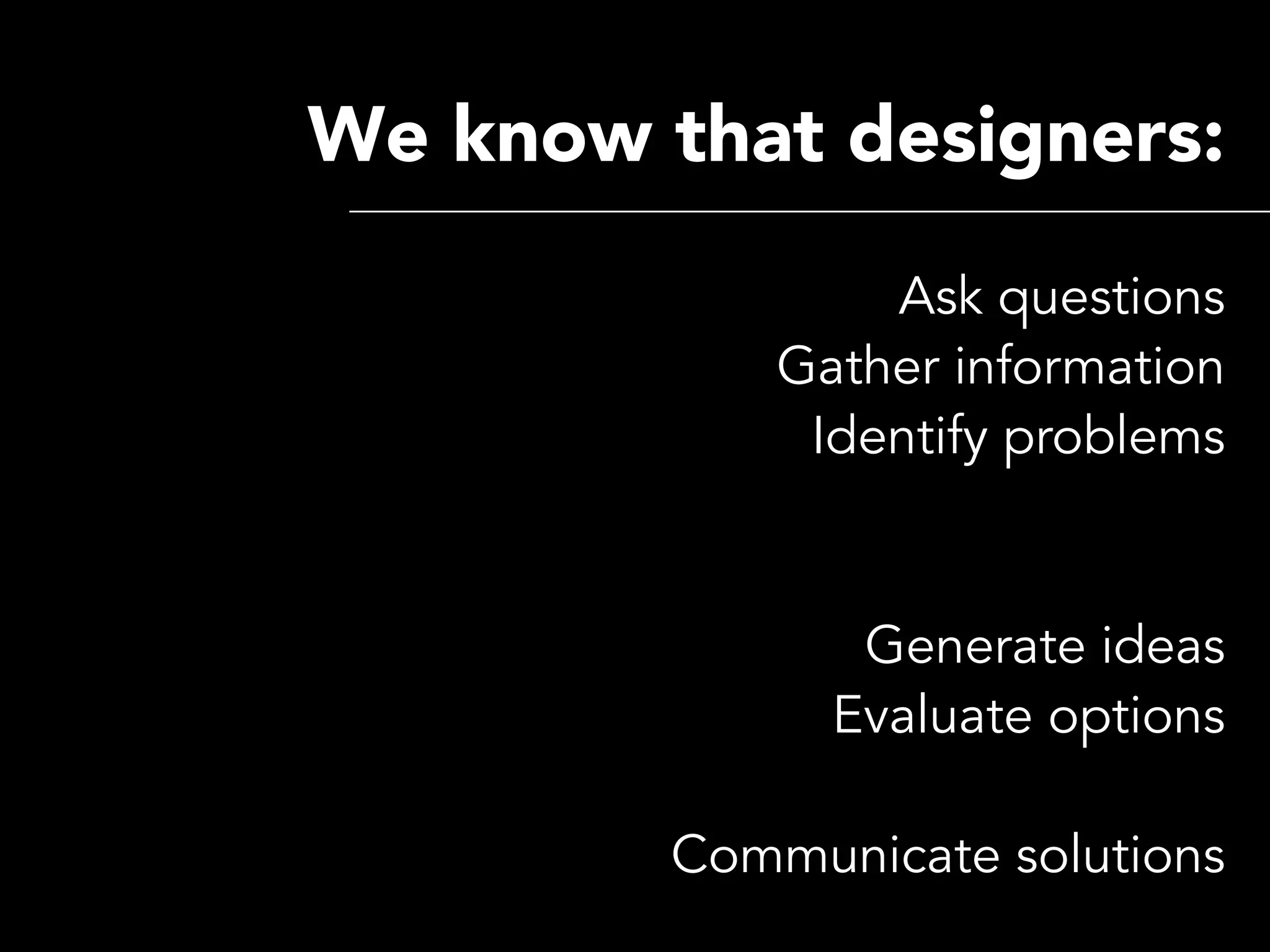
We know that designers:
                 Ask questions
             Gather information
              Identify problems


                Generate ideas
               Evaluate options

         Communicate solutions
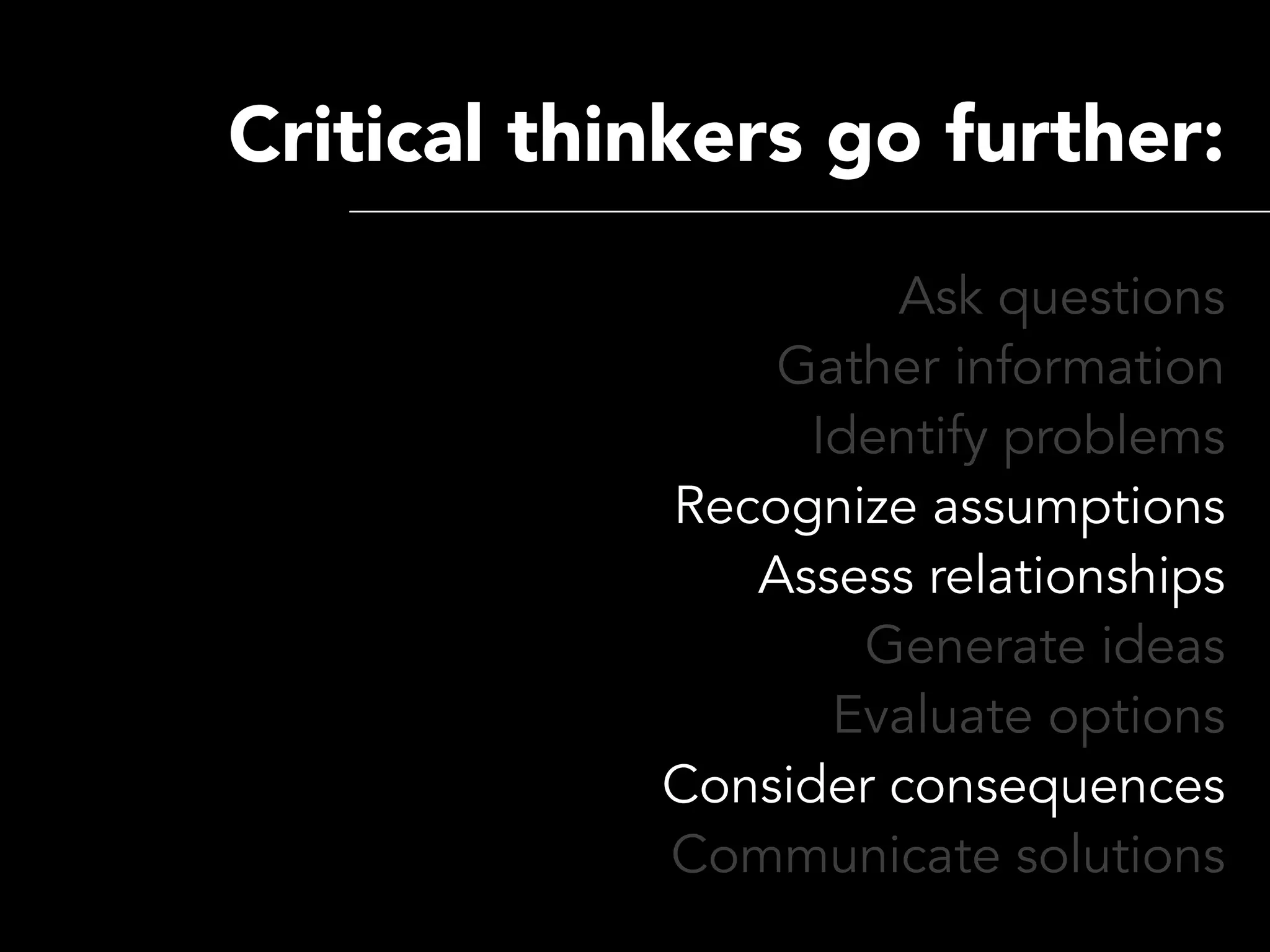
Critical thinkers go further:
                     Ask questions
                Gather information
                  Identify problems
            Recognize assumptions
               Assess relationships
                    Generate ideas
                   Evaluate options
            Consider consequences
            Communicate solutions
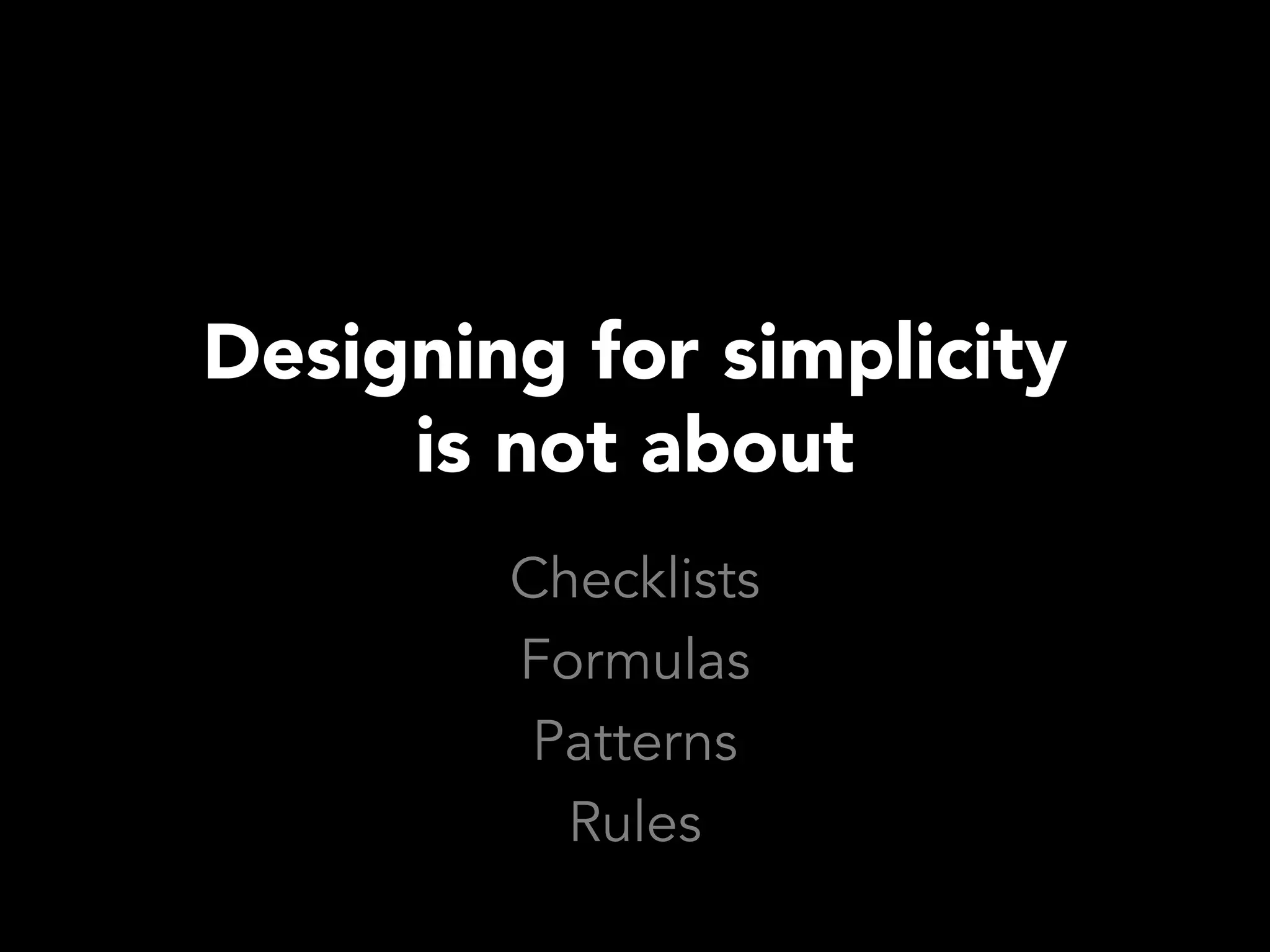
Designing for simplicity
     is not about
        Checklists
        Formulas
         Patterns
          Rules
It is about

 Thinking and reasoning
Understanding the problem
 Analyzing and optimizing
So, how do we make
    stuff simpler?
Ten Opportunities
   to Simplify
“Messy & Confusing”

      Irrelevance
    Disorganization
      Ambiguity
Indirect Action

       Abstracted
     Disconnected
Increased cognitive load
Everything to Everyone

     Too many variables
       Too little focus
Design by Consensus

     Scope creep
     (or worse…)
“Nice to have…”

     Noise
     Clutter
     Excess
Copying Solutions

  Misapplied patterns
Map Structure to
Organization or Technology
    Exposes the system model
Leading with Technology

        Solving the wrong
   (or non-existent) problems
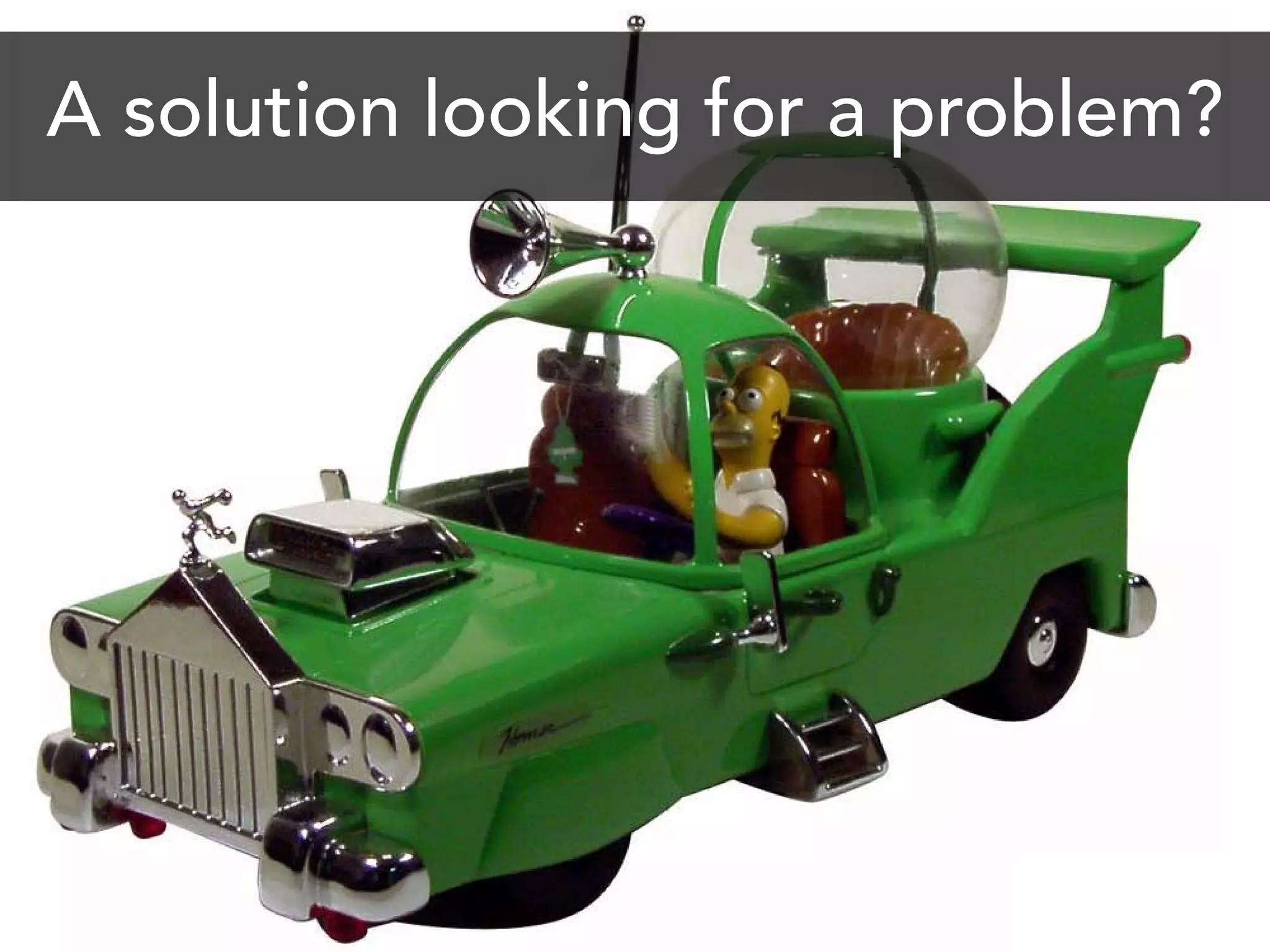
A solution looking for a problem?
Or a tremendous opportunity?
Designing for Yourself

   Ignoring the person’s
      mental models
Accepting Assumptions

     Not collecting data
  Absence of critical thinking
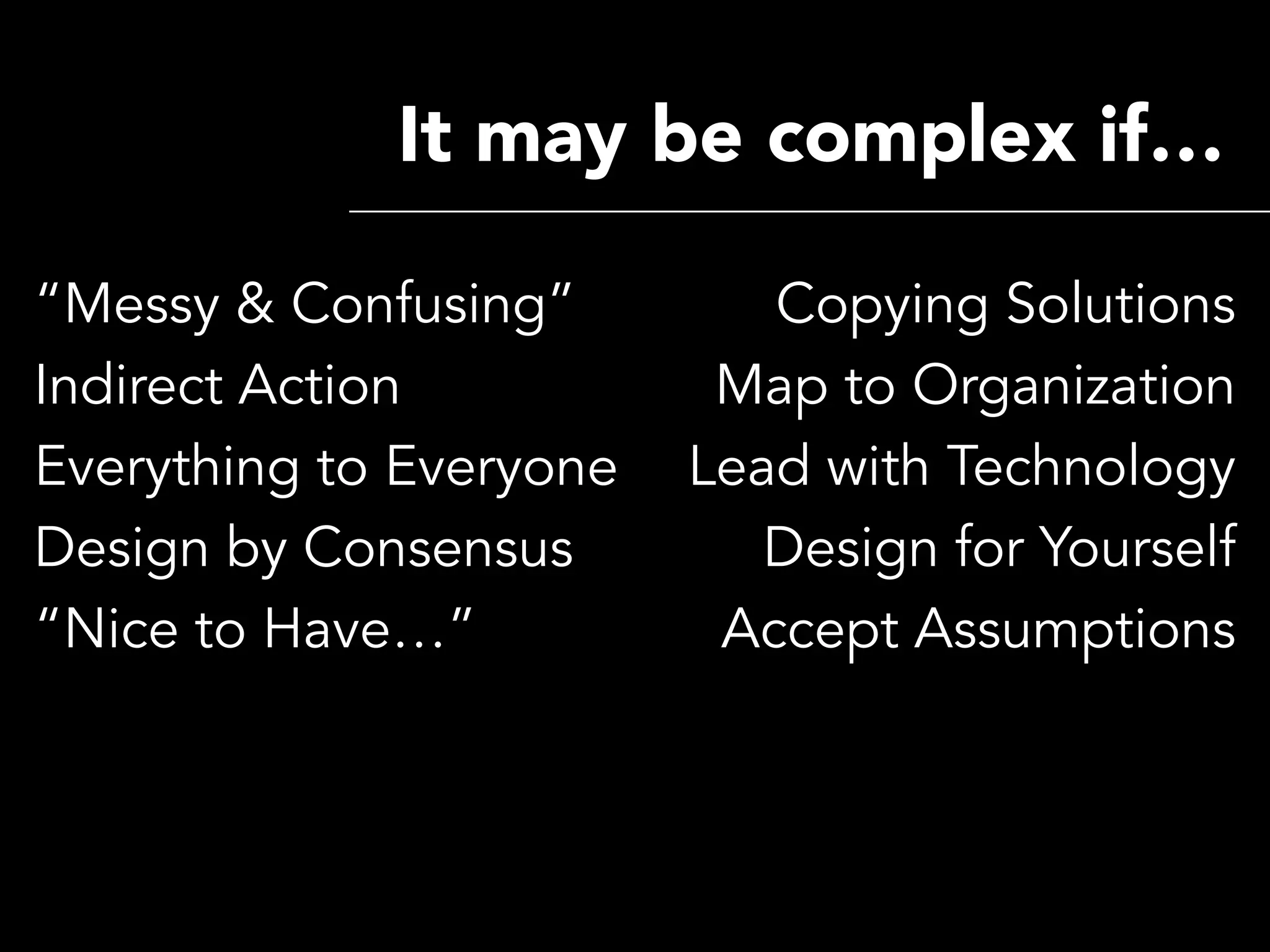
It may be complex if…

“Messy & Confusing”         Copying Solutions
Indirect Action           Map to Organization
Everything to Everyone   Lead with Technology
Design by Consensus         Design for Yourself
“Nice to Have…”           Accept Assumptions
Thanks!
David M. Hogue, Ph.D.
VP XD at Fluid
San Francisco
The Complexity Curve

     Designing for Simplicity
Credits
The Complexity Curve: How to Design for Simplicity (SXSW, March 2012)

The Complexity Curve: How to Design for Simplicity (SXSW, March 2012)