Social Media: transforming the way
       nonprofits communicate

     Leave a Legacy: Non-Profit Education Day
                 March 12, 2010


Farra Trompeter
farra@bigducknyc.com
What is
social media?
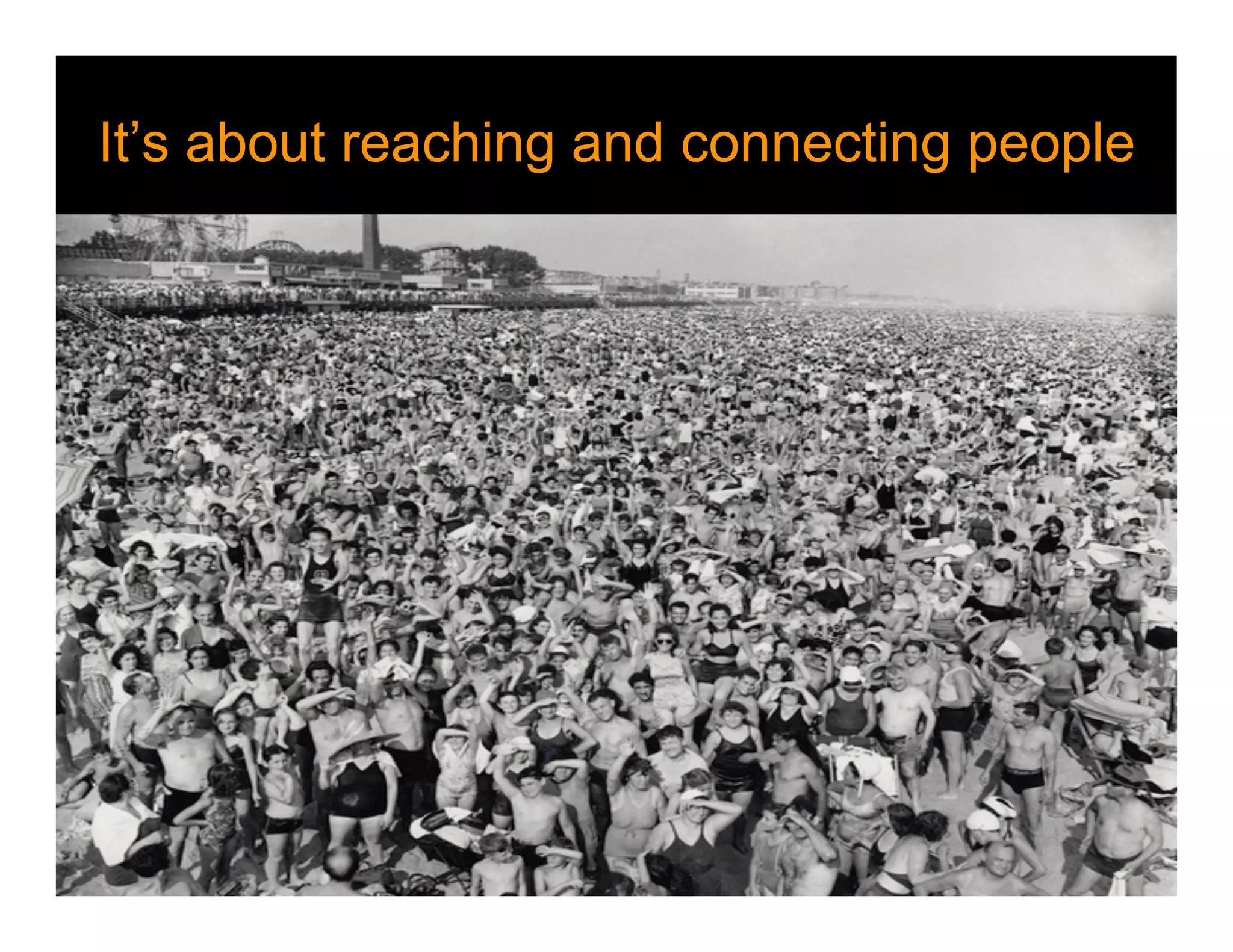
It’s about reaching and connecting people
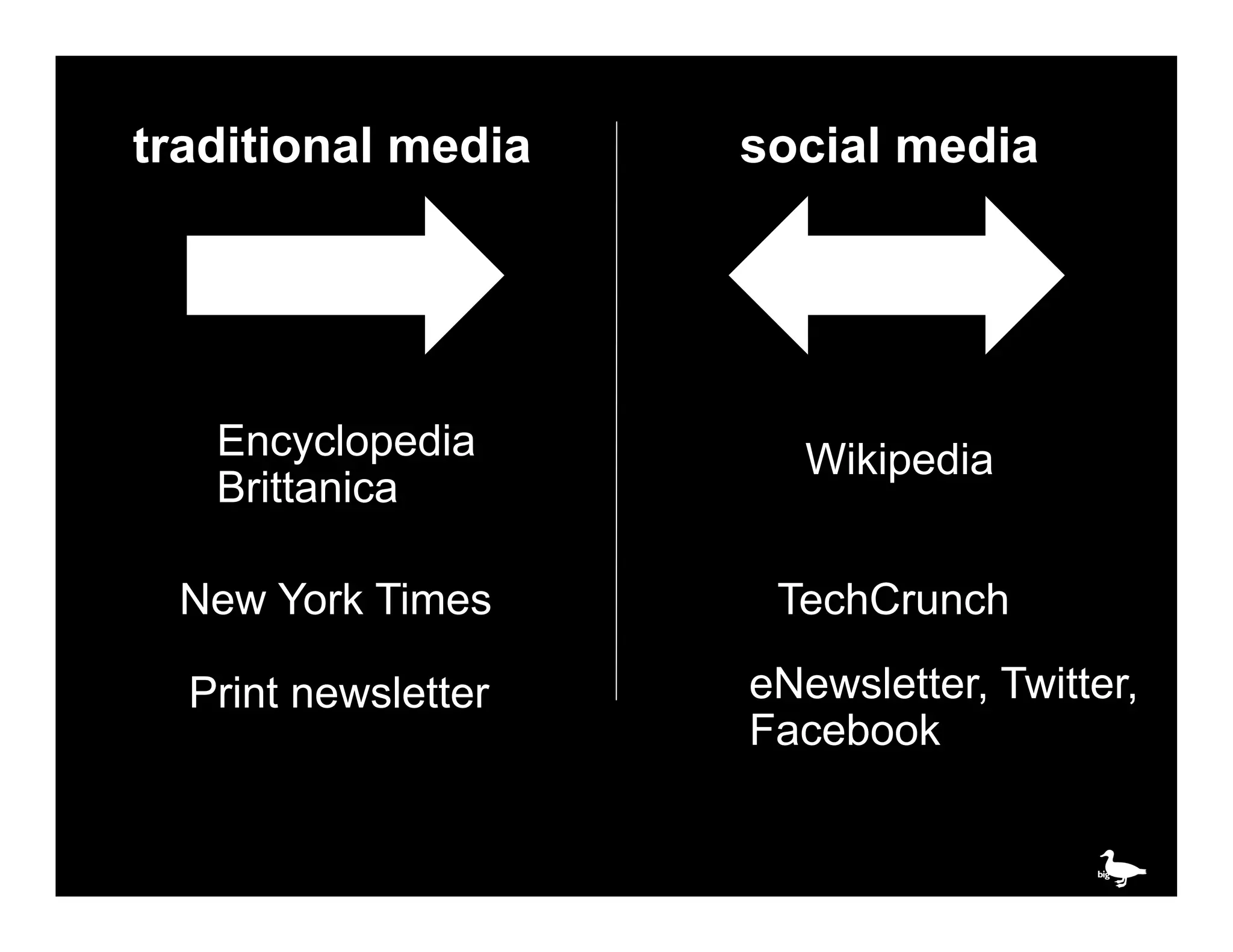
traditional media    social media


   Encyclopedia         Wikipedia
   Brittanica

 New York Times       TechCrunch

  Print newsletter   eNewsletter, Twitter,
                     Facebook
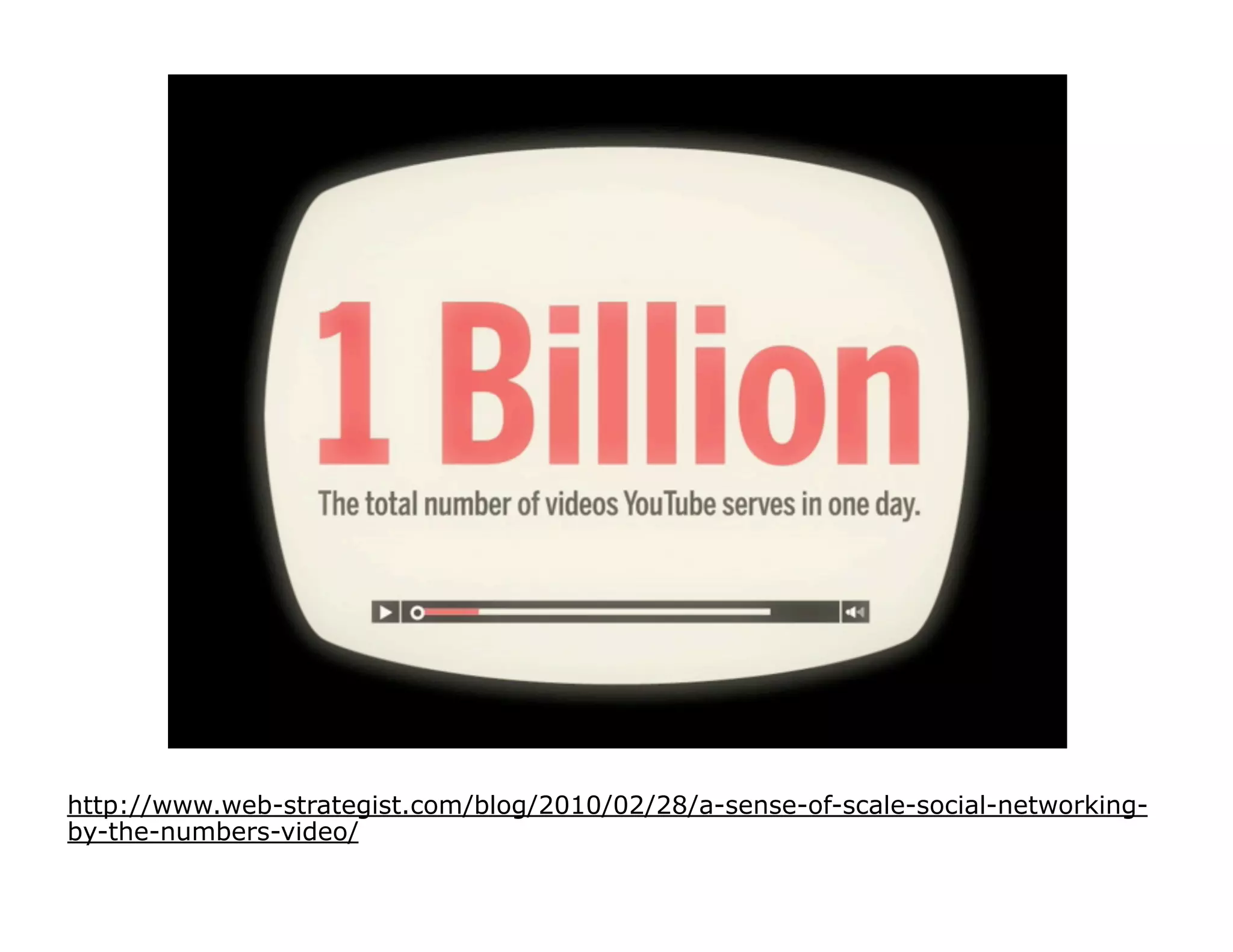
http://www.web-strategist.com/blog/2010/02/28/a-sense-of-scale-social-networking-
by-the-numbers-video/
Why should my
nonprofit care?
Maybe you shouldn’t…
Social media is not…
•  Free
•  A silver bullet for fundraising
•  An opportunity to control your message
•  An opportunity to tell everyone what you think
•  Inherently appealing and cool to millenials
•  An alternative to clear messaging/mission
That said…
Social media is…
•  Pretty low cost
•  Growing by leaps and bounds
•  An opportunity for conversation
•  A great way to reach certain audiences
•  A complement to the messages you’re sharing
   through other channels
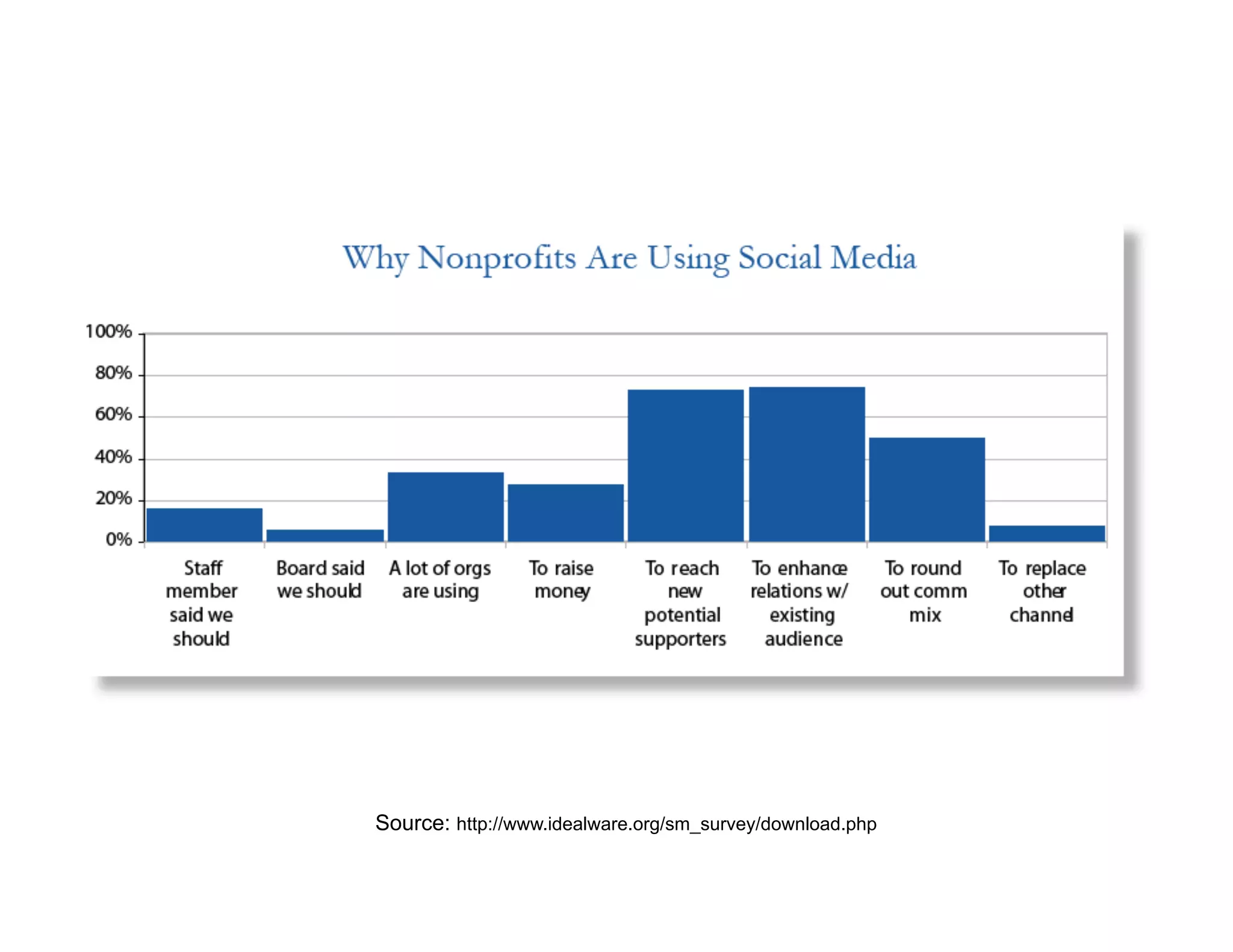
Source: http://www.idealware.org/sm_survey/download.php
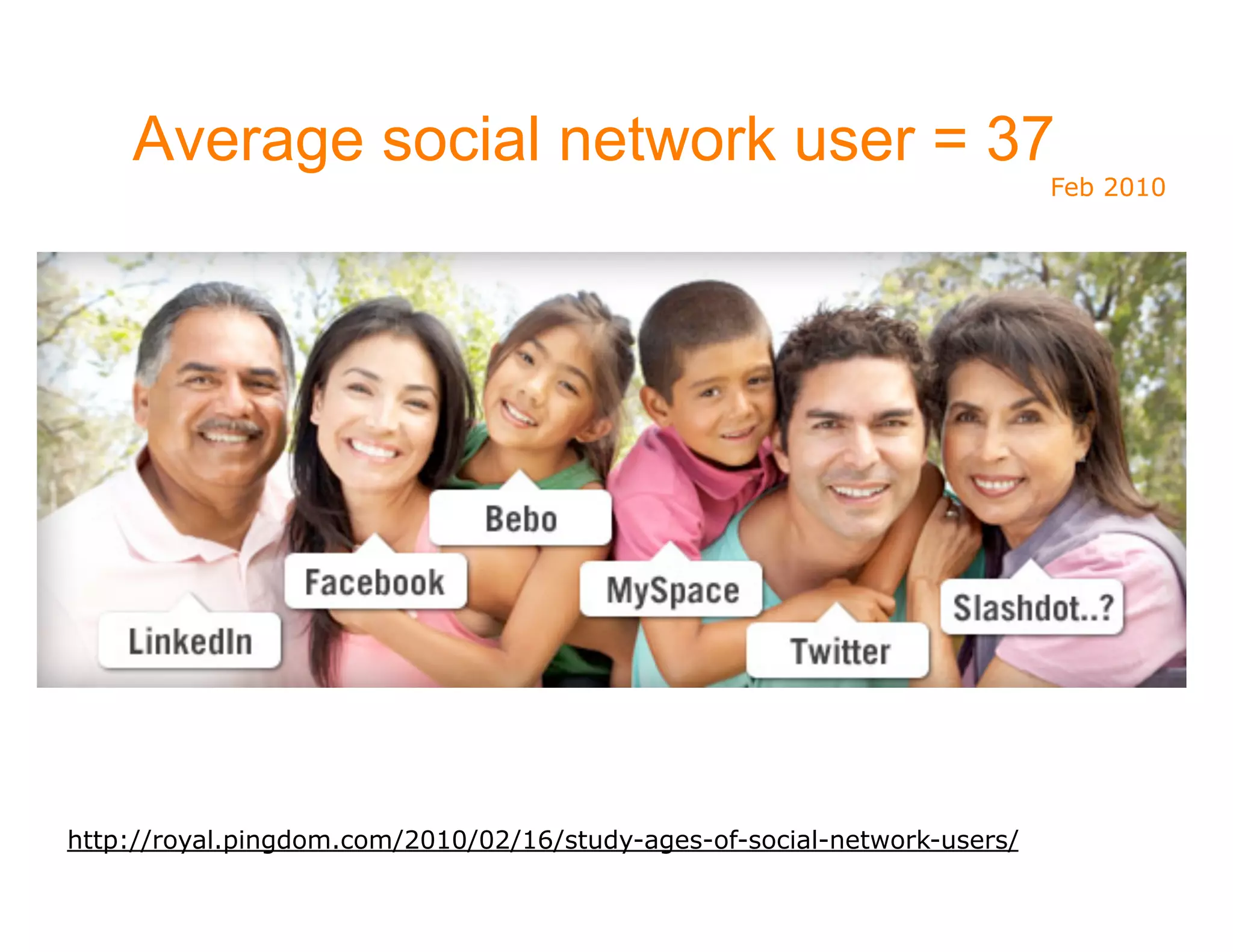
Average social network user = 37
                                                                          Feb 2010


http://royal.pingdom.com/2010/02/16/study-ages-of-social-network-users/
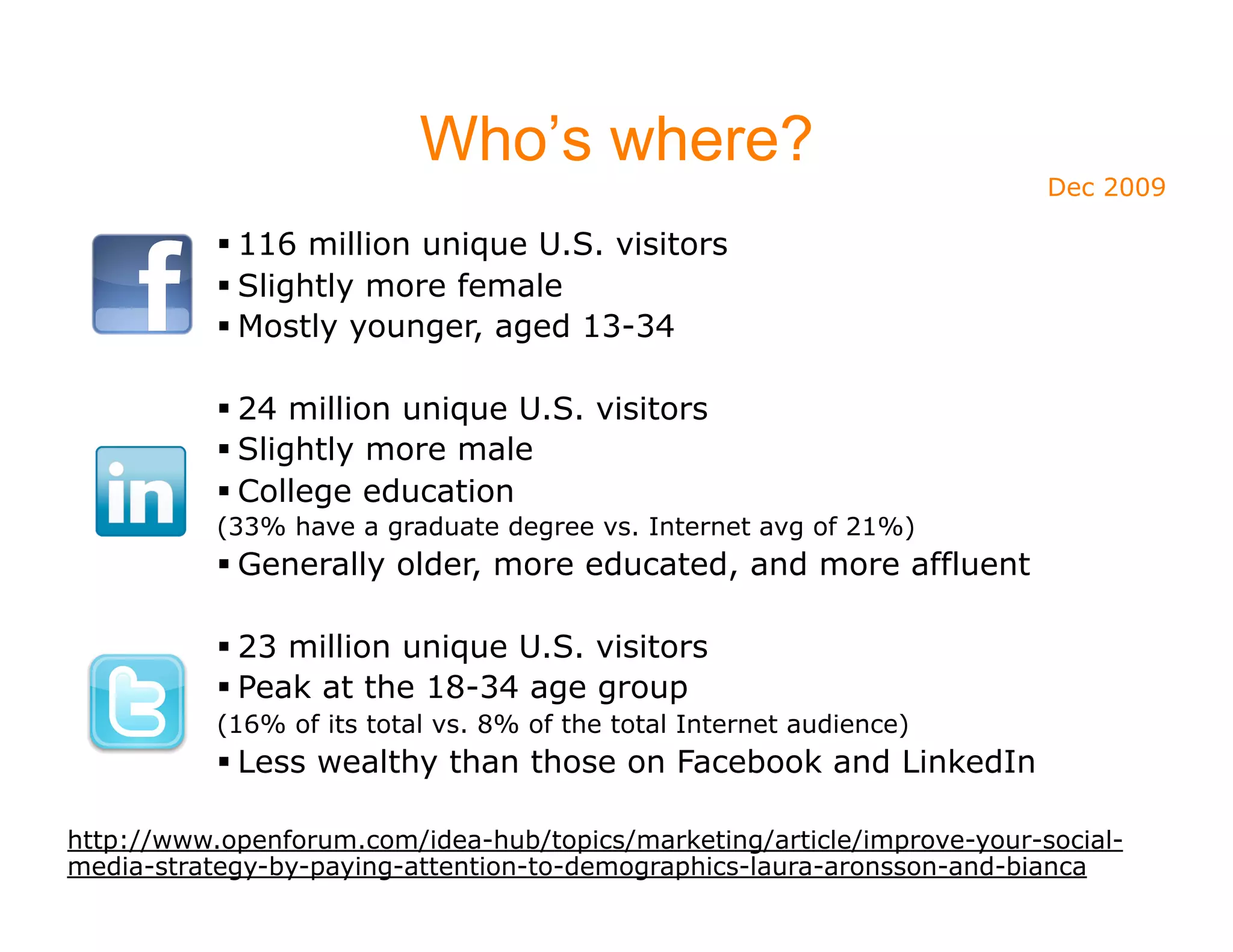
Who’s where?
                                                                         Dec 2009

            116 million unique U.S. visitors
            Slightly more female
            Mostly younger, aged 13-34

            24 million unique U.S. visitors
            Slightly more male
            College education
           (33% have a graduate degree vs. Internet avg of 21%)
            Generally older, more educated, and more affluent

            23 million unique U.S. visitors
            Peak at the 18-34 age group
           (16% of its total vs. 8% of the total Internet audience)
            Less wealthy than those on Facebook and LinkedIn

http://www.openforum.com/idea-hub/topics/marketing/article/improve-your-social-
media-strategy-by-paying-attention-to-demographics-laura-aronsson-and-bianca
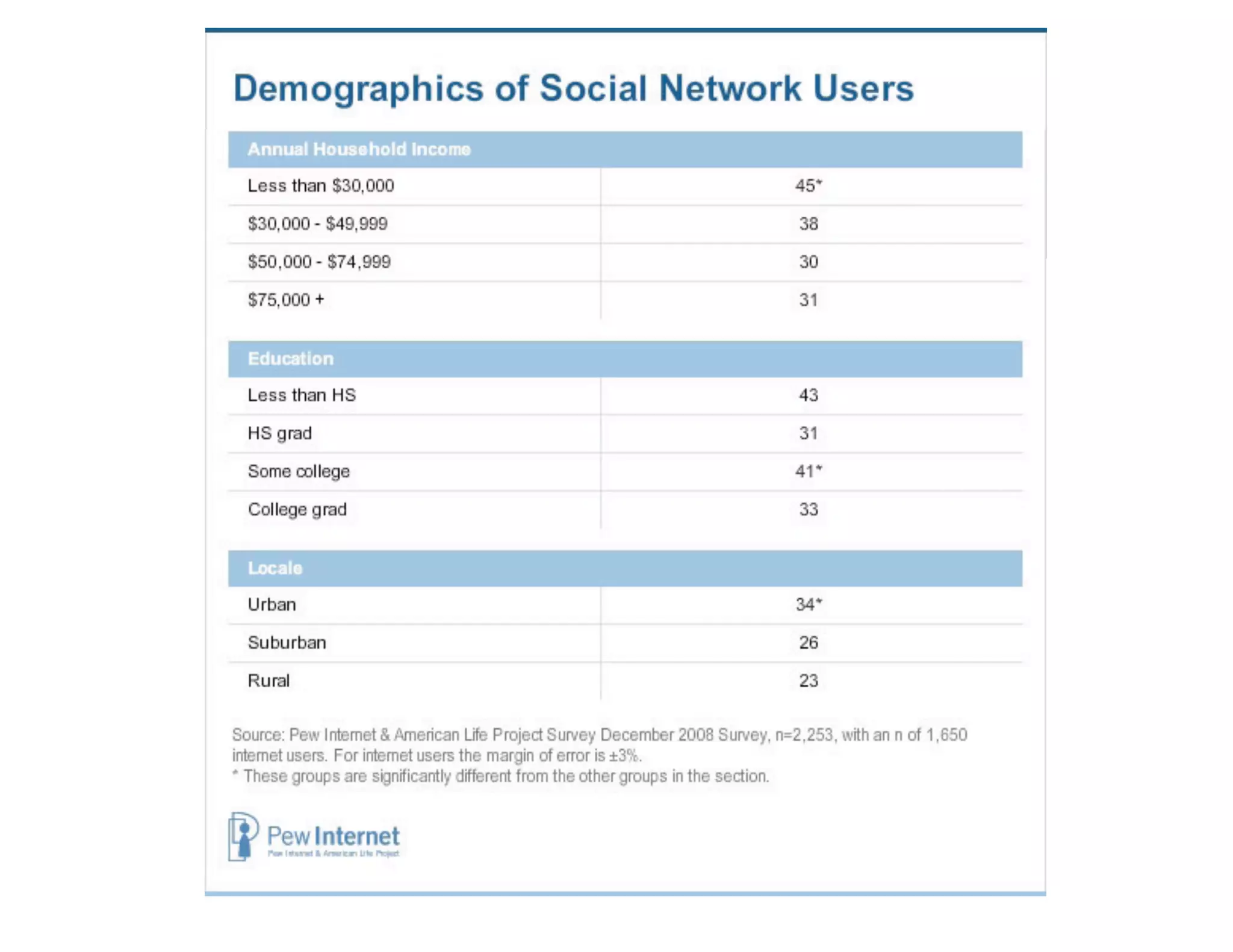
http://www.pewinternet.org/Reports/2009/Adults-and-Social-Network-Websites.aspx
Why do people participate?
•  Keeping up with friendships
•  Making new friends
•  Succumbing to social pressure from
   existing friendships
•  Paying it forward
•  The altruistic impulse
•  The prurient impulse
•  The creative impulse
•  The validation impulse
•  The affinity impulse
                                        Source: Groundswell (book)
How do people participate?


© http://blogs.forrester.com/groundswell/2010/01/conversationalists-get-onto-the-ladder.html
Great!
So now what do I do?
Start by listening


                     © robertcarlsen
Listening Online

•  Set up Google alerts, Technorati search, Twitter search, etc.
  http://socialmedia-listening.wikispaces.com/Tools

   •  Your name and people connected to your organization
   •  Your organization’s name
   •  Program or event names
   •  Peer/competitor names and program/event names
   •  Your tagline or other key phrases
   •  URL for any web properties (main website, blog)
   •  Related issues/topics
   •  Common misspellings
                                                      Source: Beth’s Blog, Beth Kanter
Select the tools based on goals + audience,
          and what you can manage.


                                      © BoomeraATV
Source: Beth's Blog: How Nonprofits Can Use Social Media
 http://beth.typepad.com/beths_blog/2008/10/how-much-time-d.html
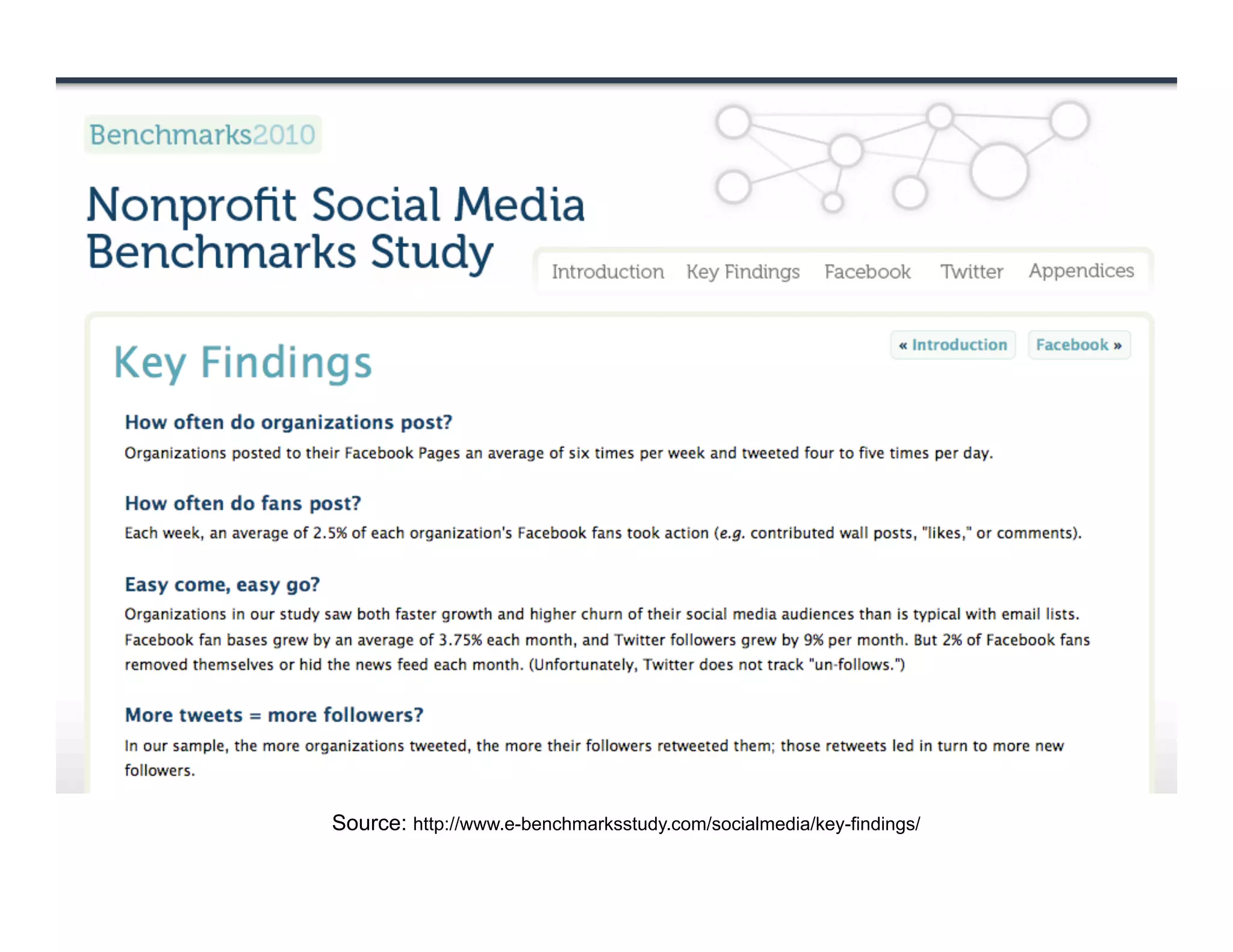
Source: http://www.e-benchmarksstudy.com/socialmedia/key-findings/
Be nice, share, and say thank you.


                                © OMP Production
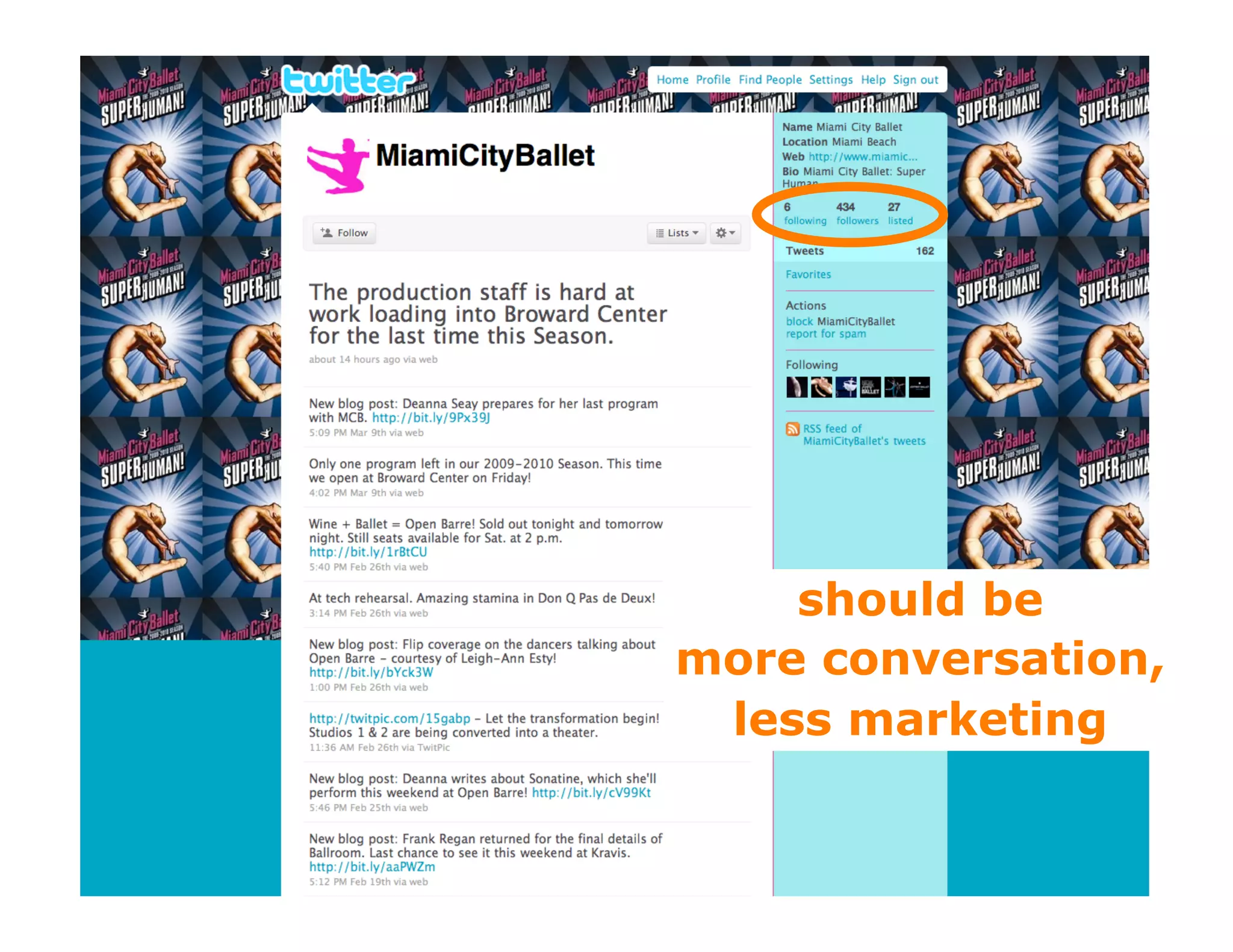
should be
more conversation,
 less marketing
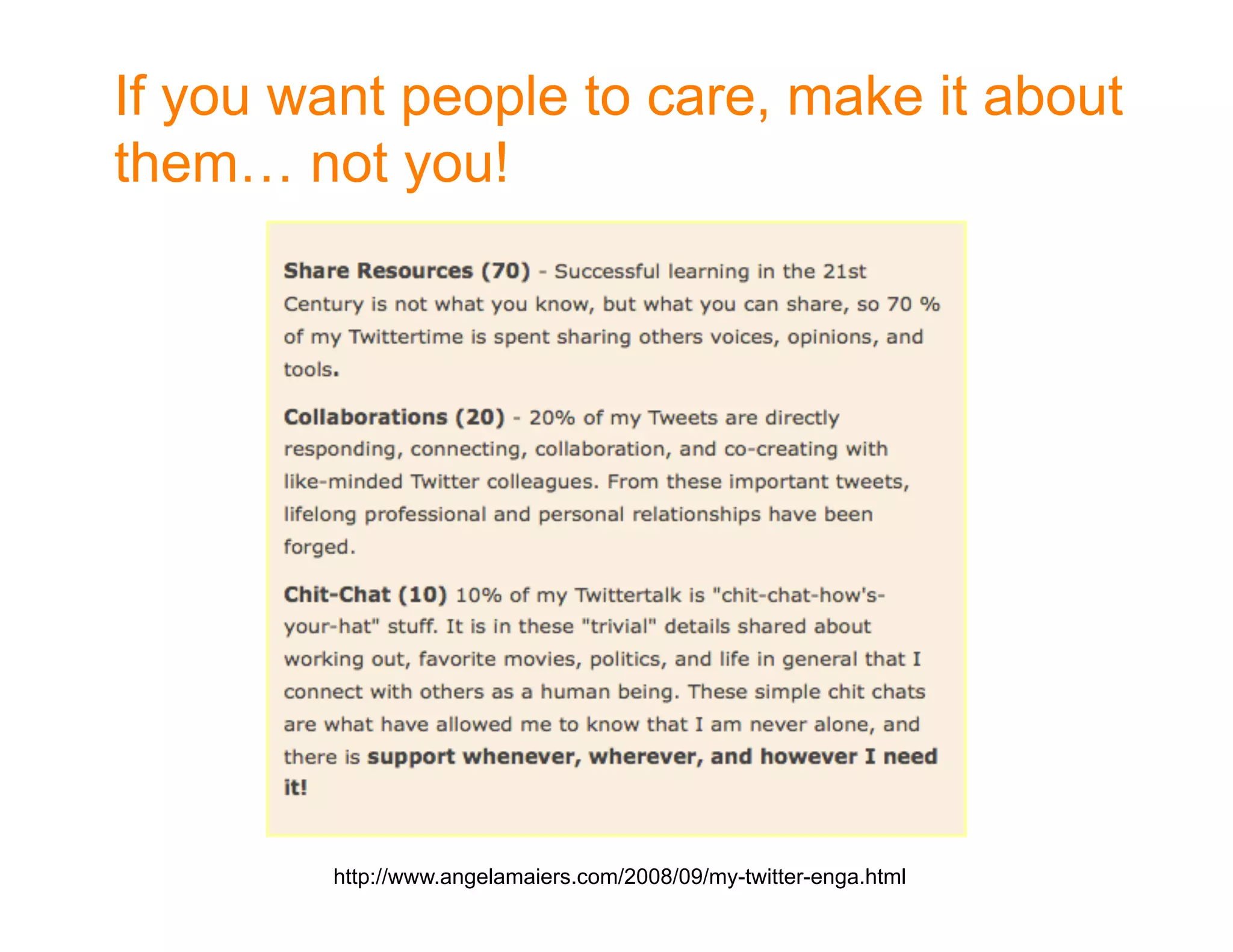
If you want people to care, make it about
them… not you!


        http://www.angelamaiers.com/2008/09/my-twitter-enga.html
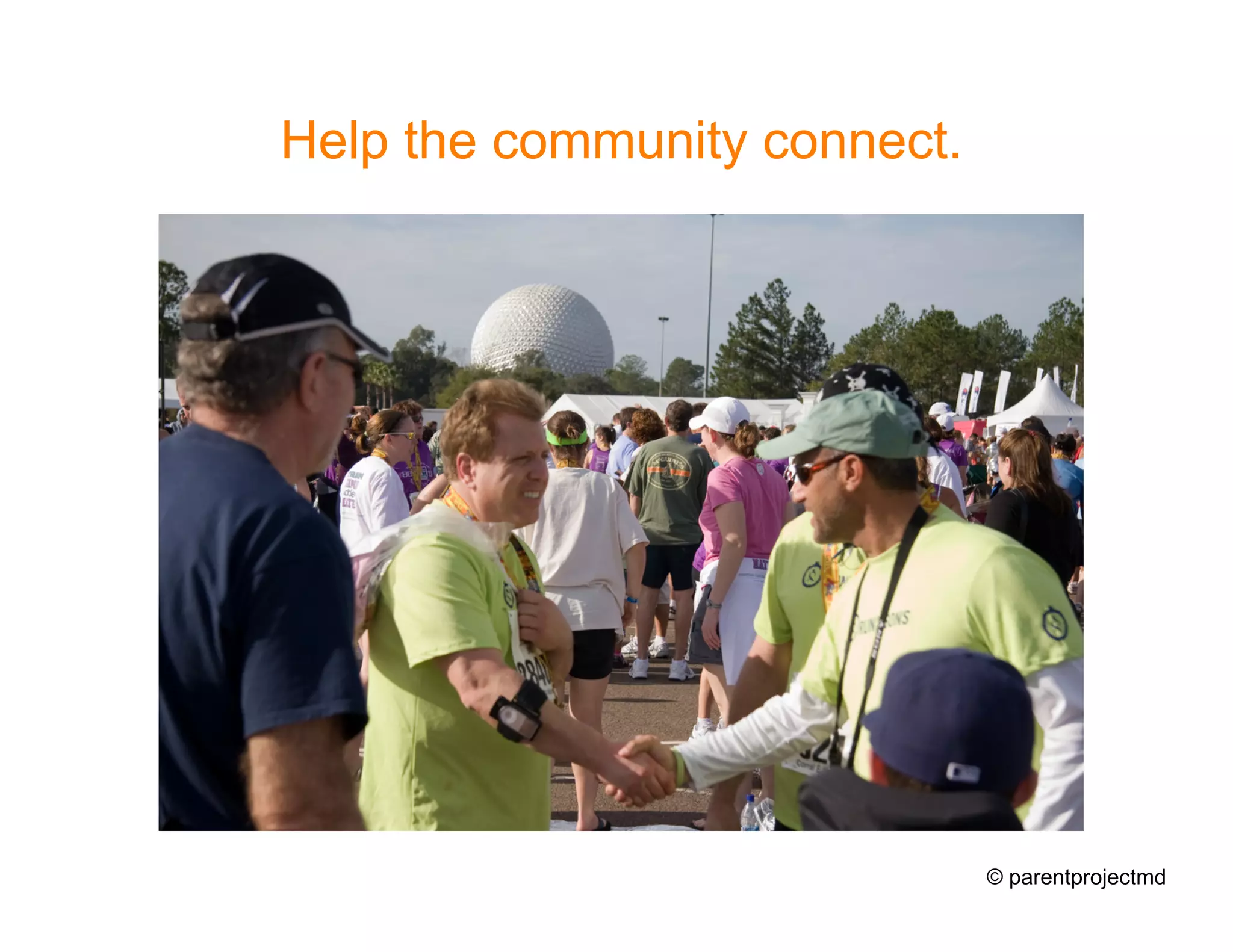
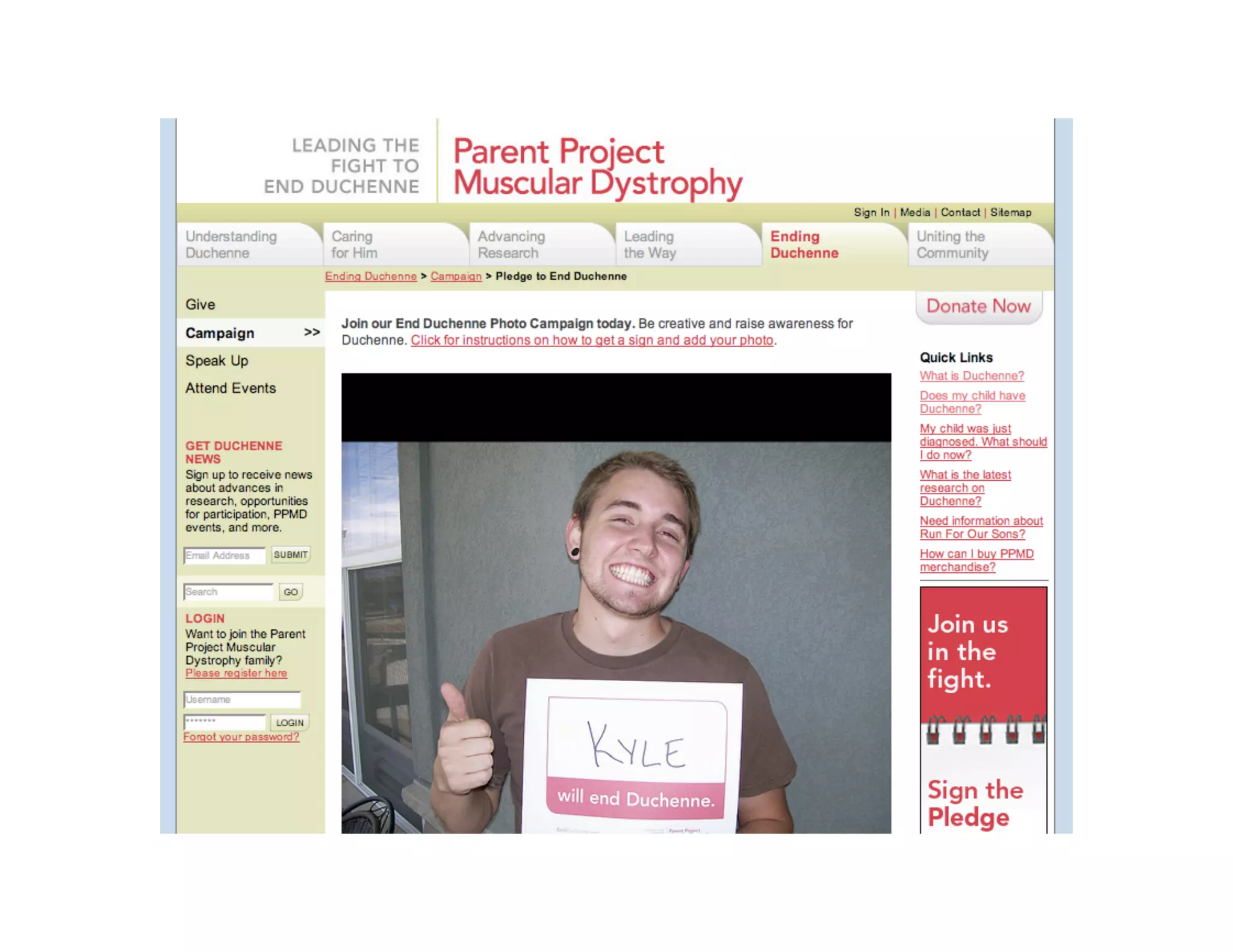
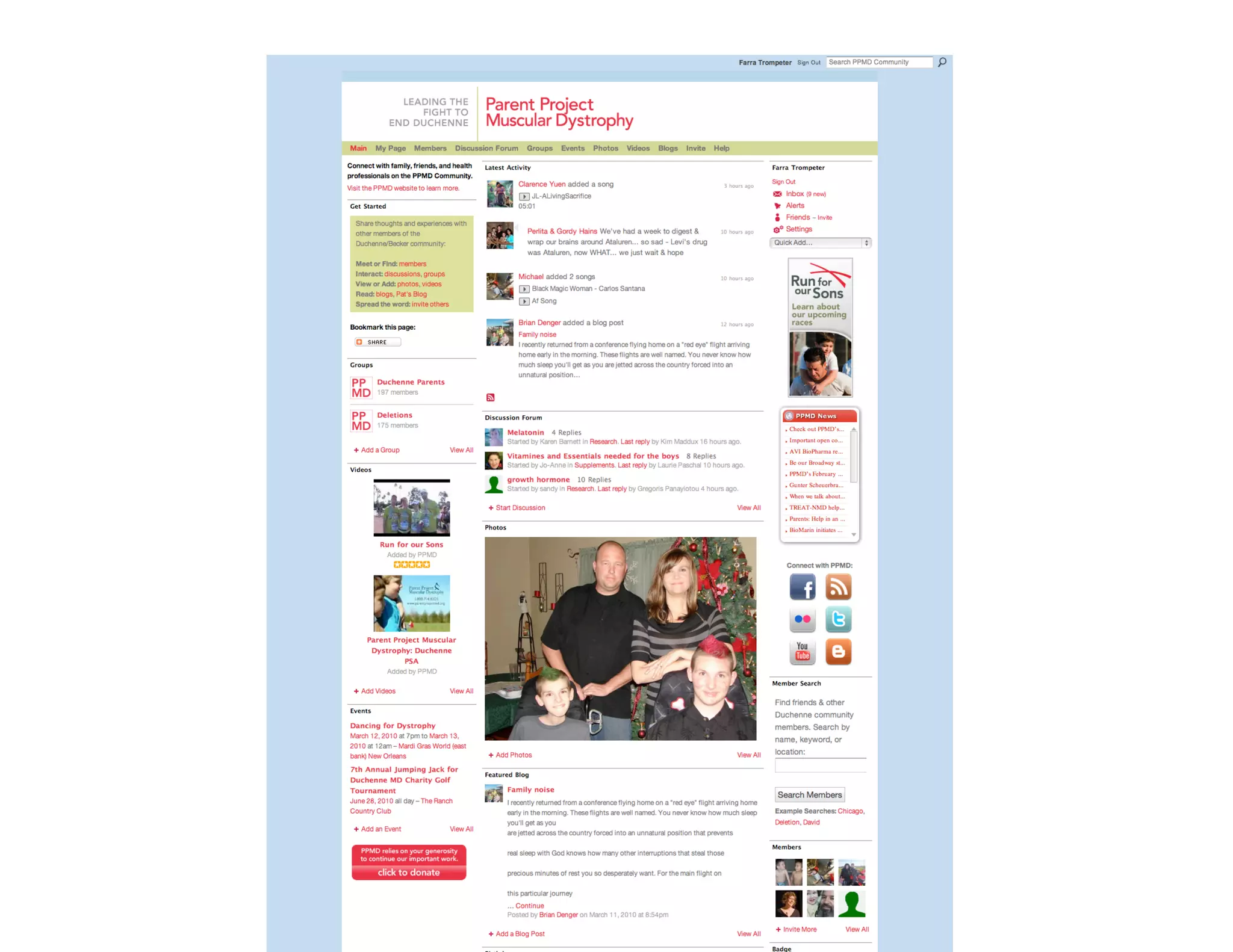
Help the community connect.


                              © parentprojectmd
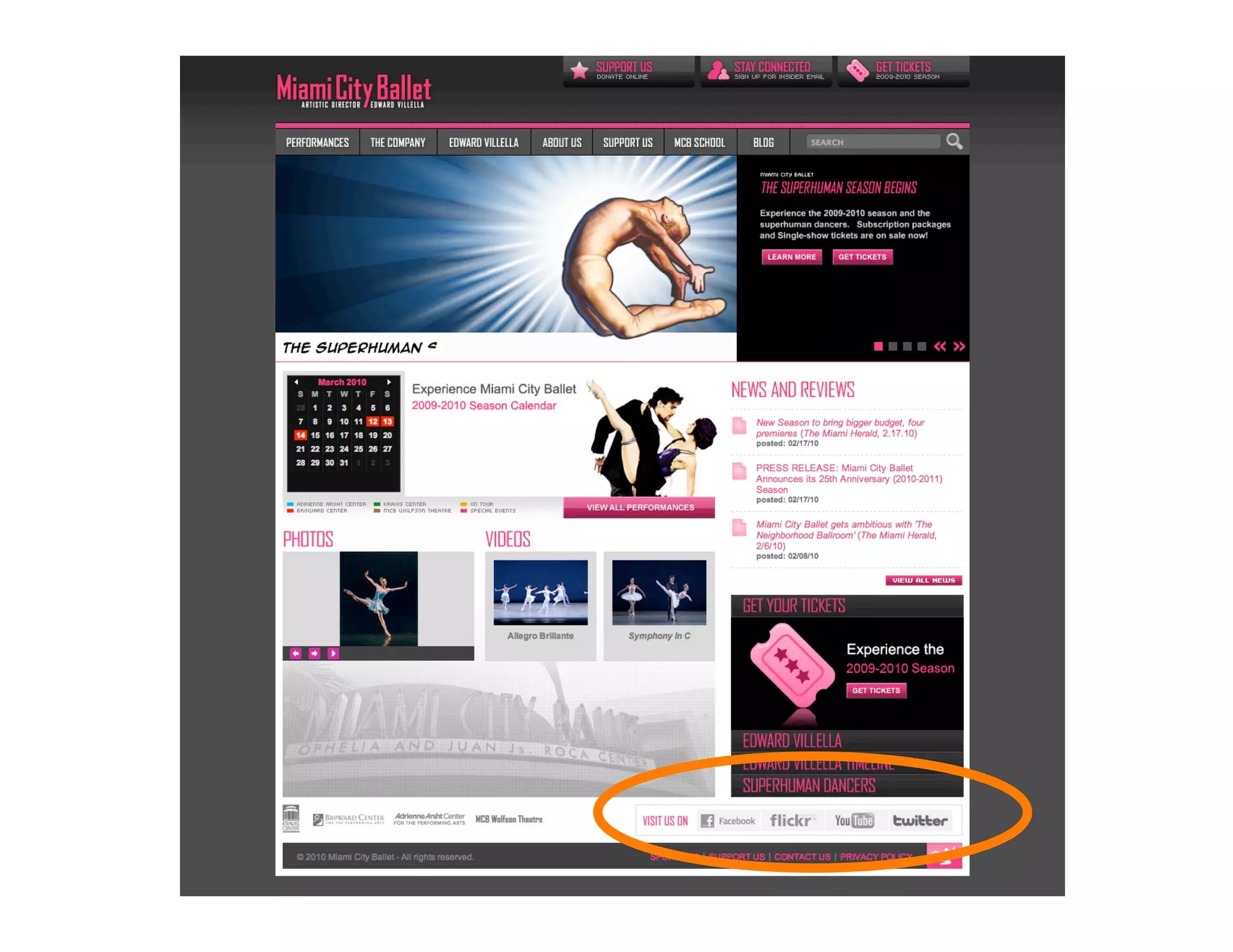
Bring all your online communications together.


                                         © fhoke.com
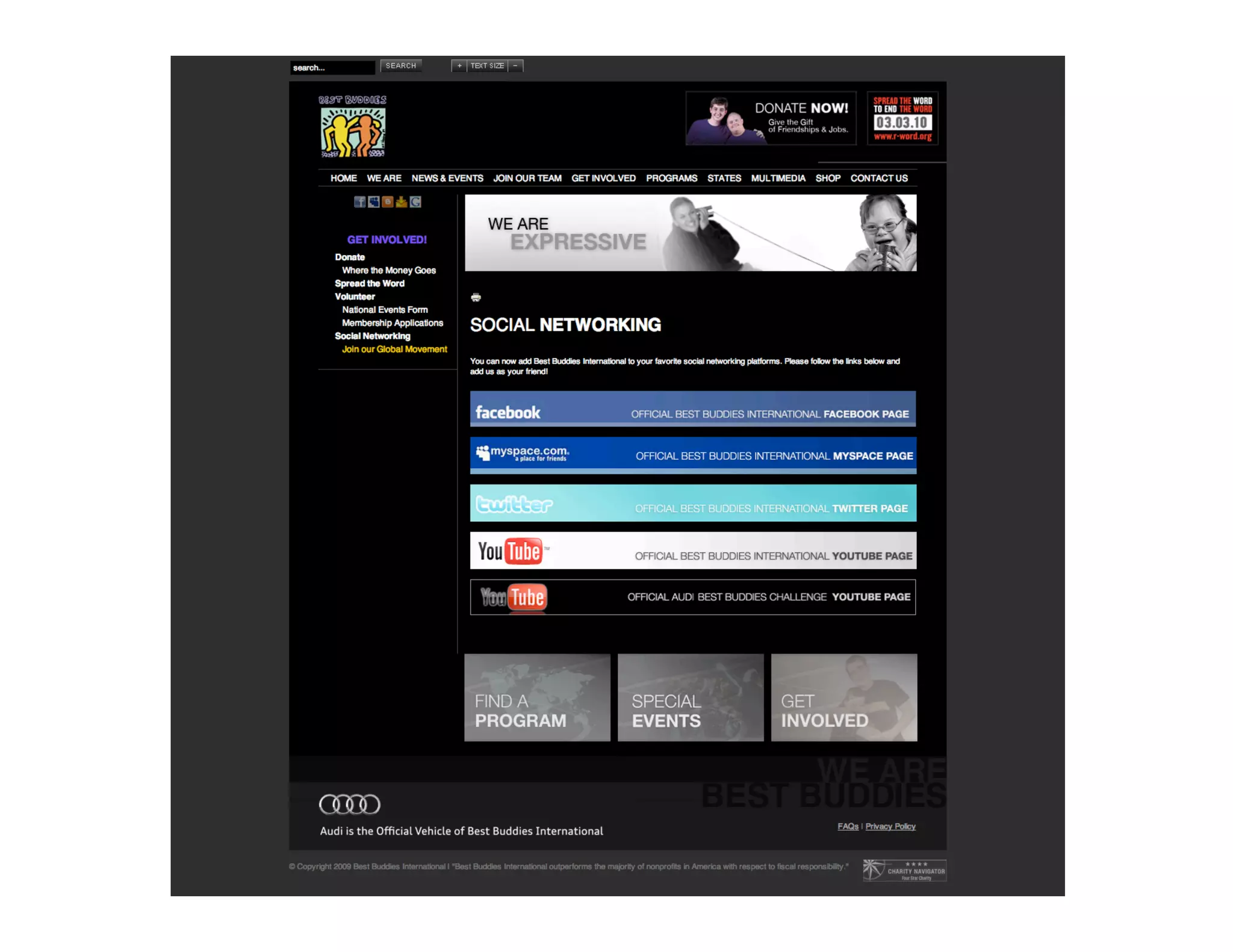
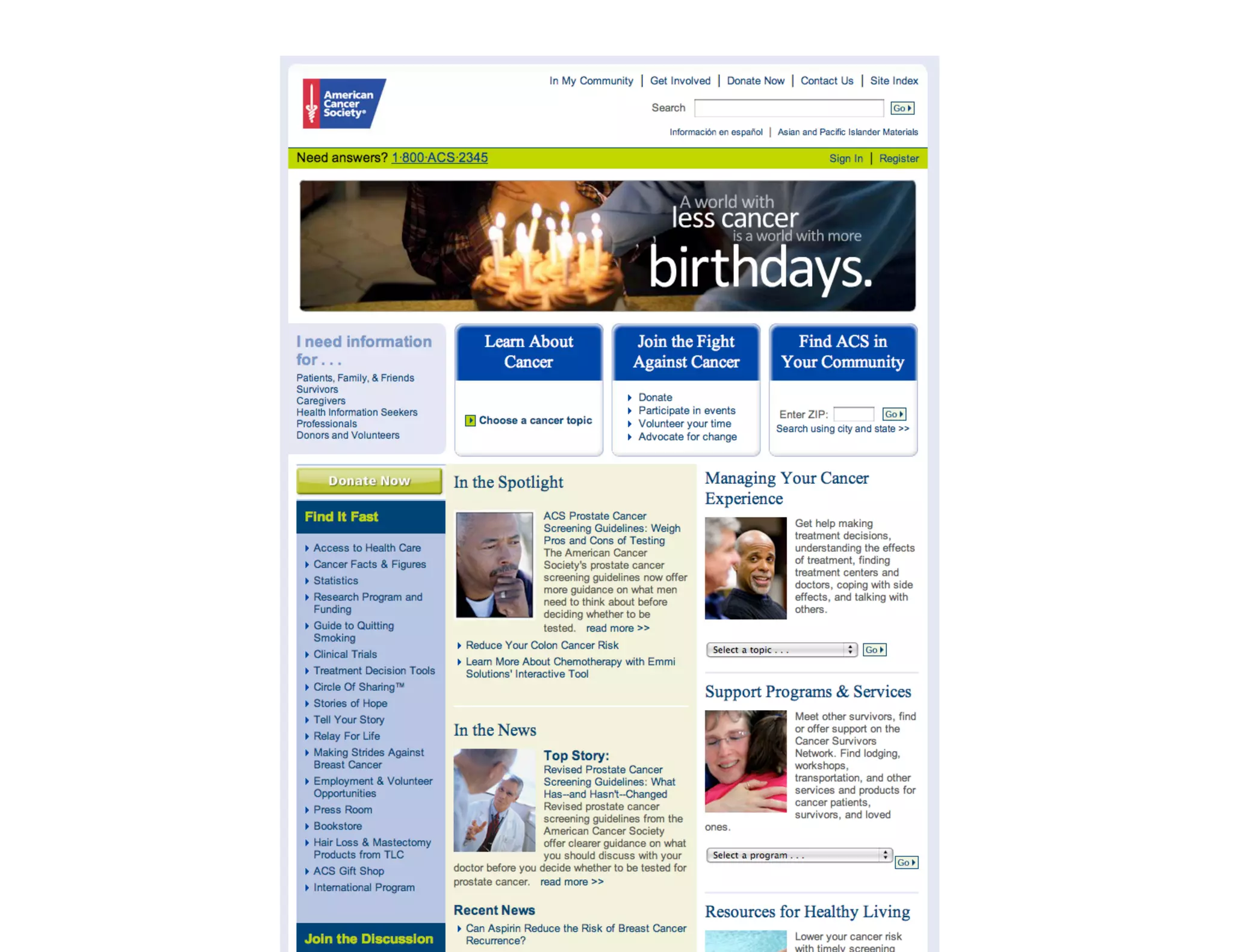
Don’t forget about other online listings.
Expand your definition of success
•    Increased awareness of your cause
•    Shift in your org’s reputation
•    New and repeat program participants, activists, donors
•    Increased requests for your programs
•    Pageviews/clicks/comments/fans/etc.
•    New email addresses/contact info
•    Signatures/actions taken
•    Dollars raised
•    Mentions online
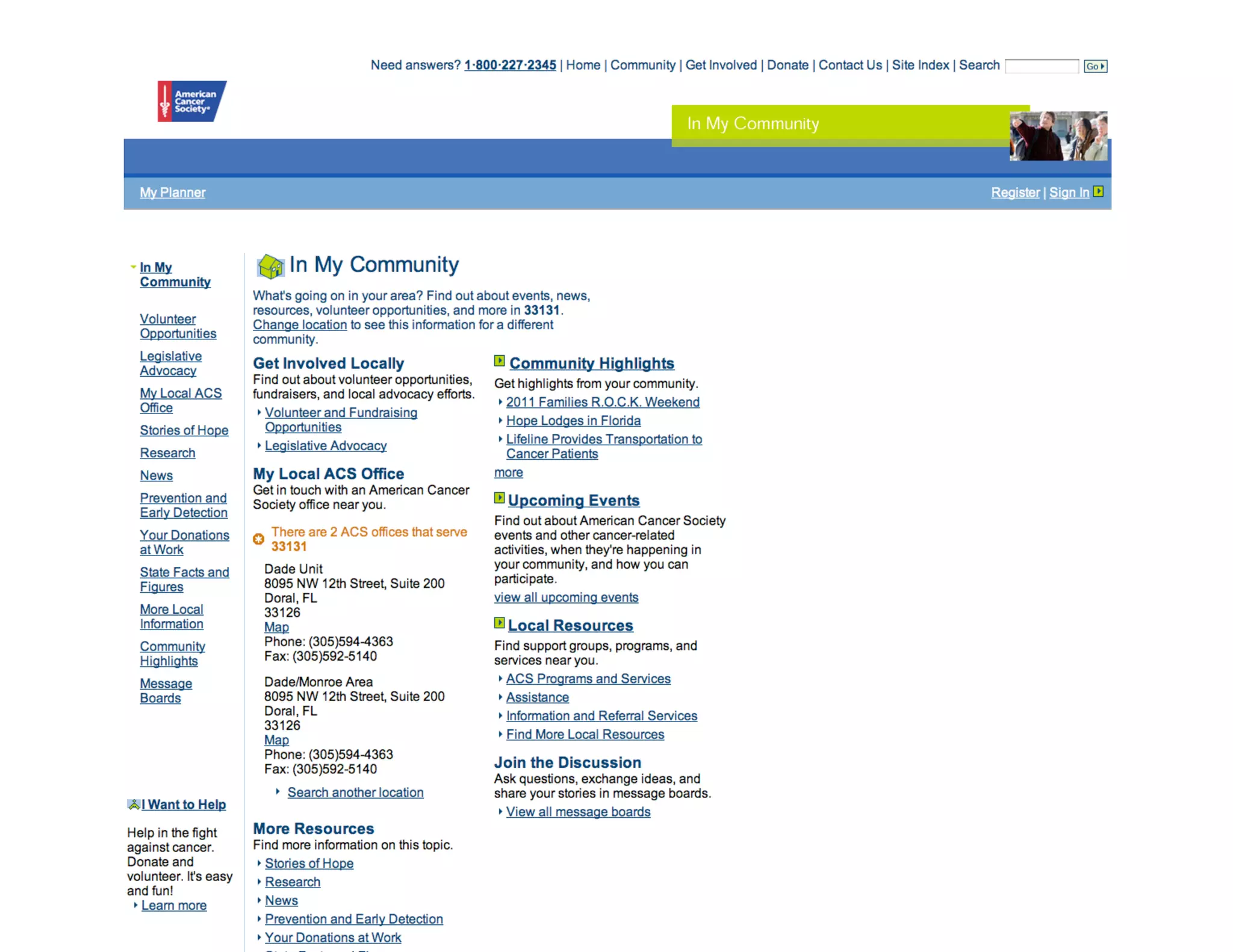
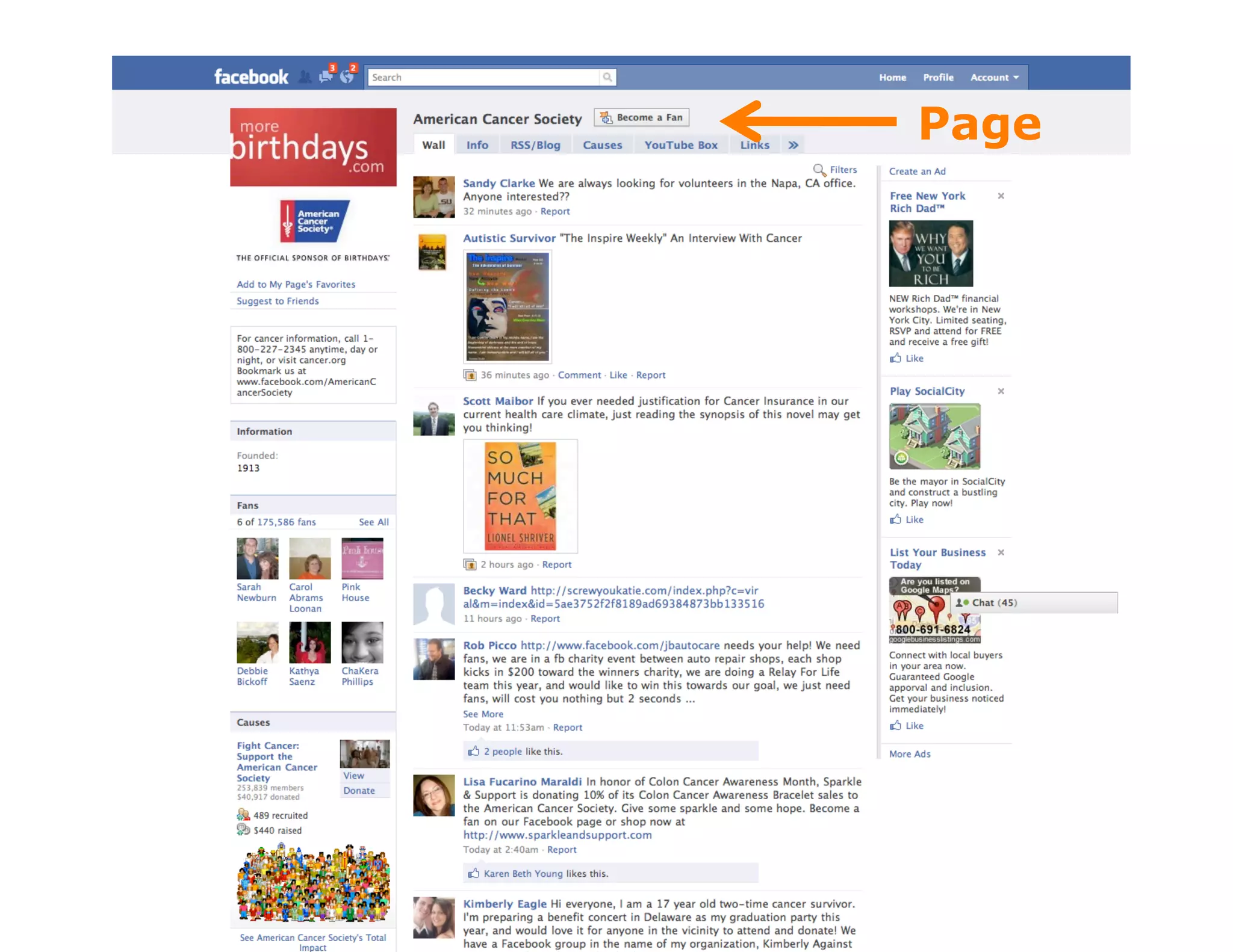
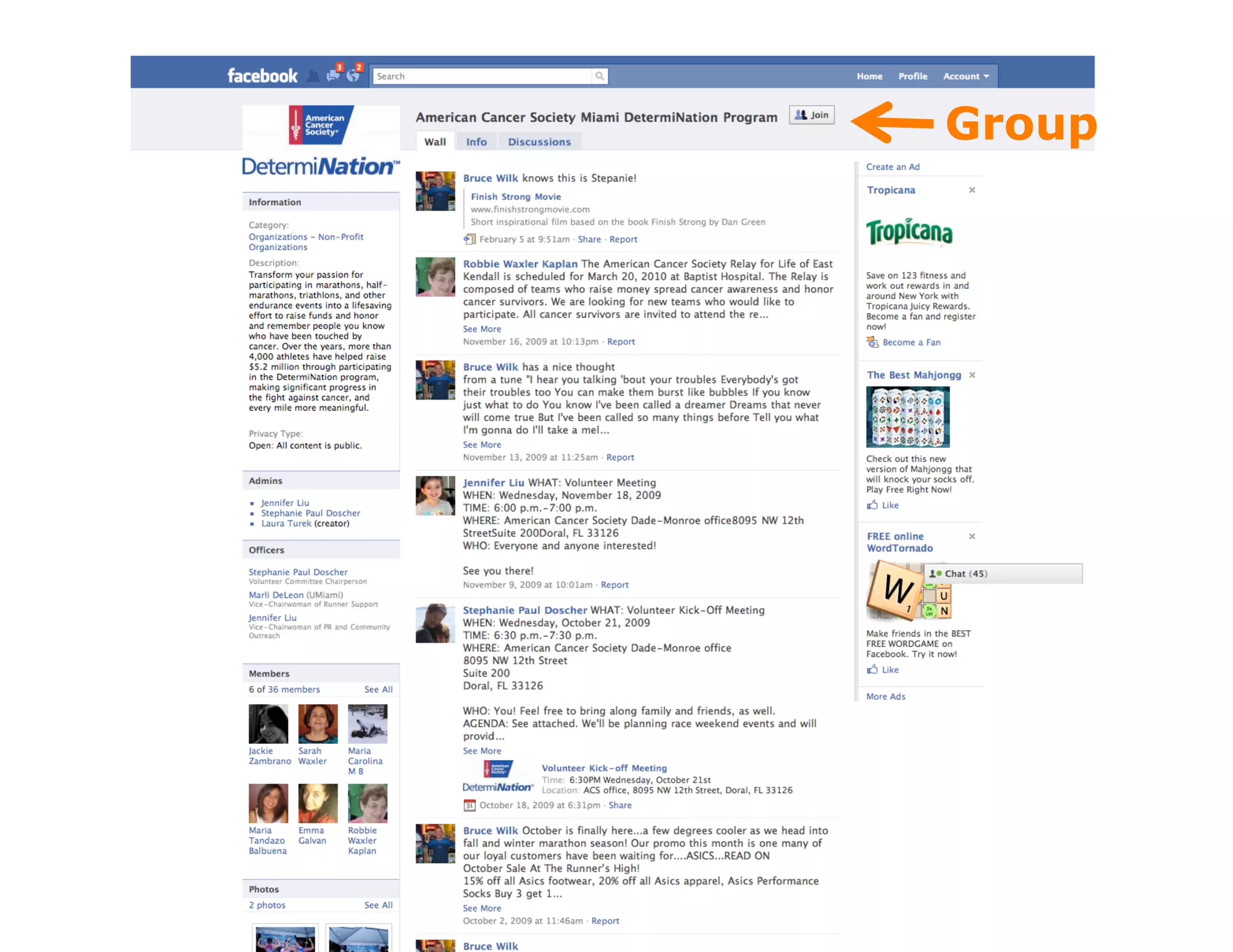
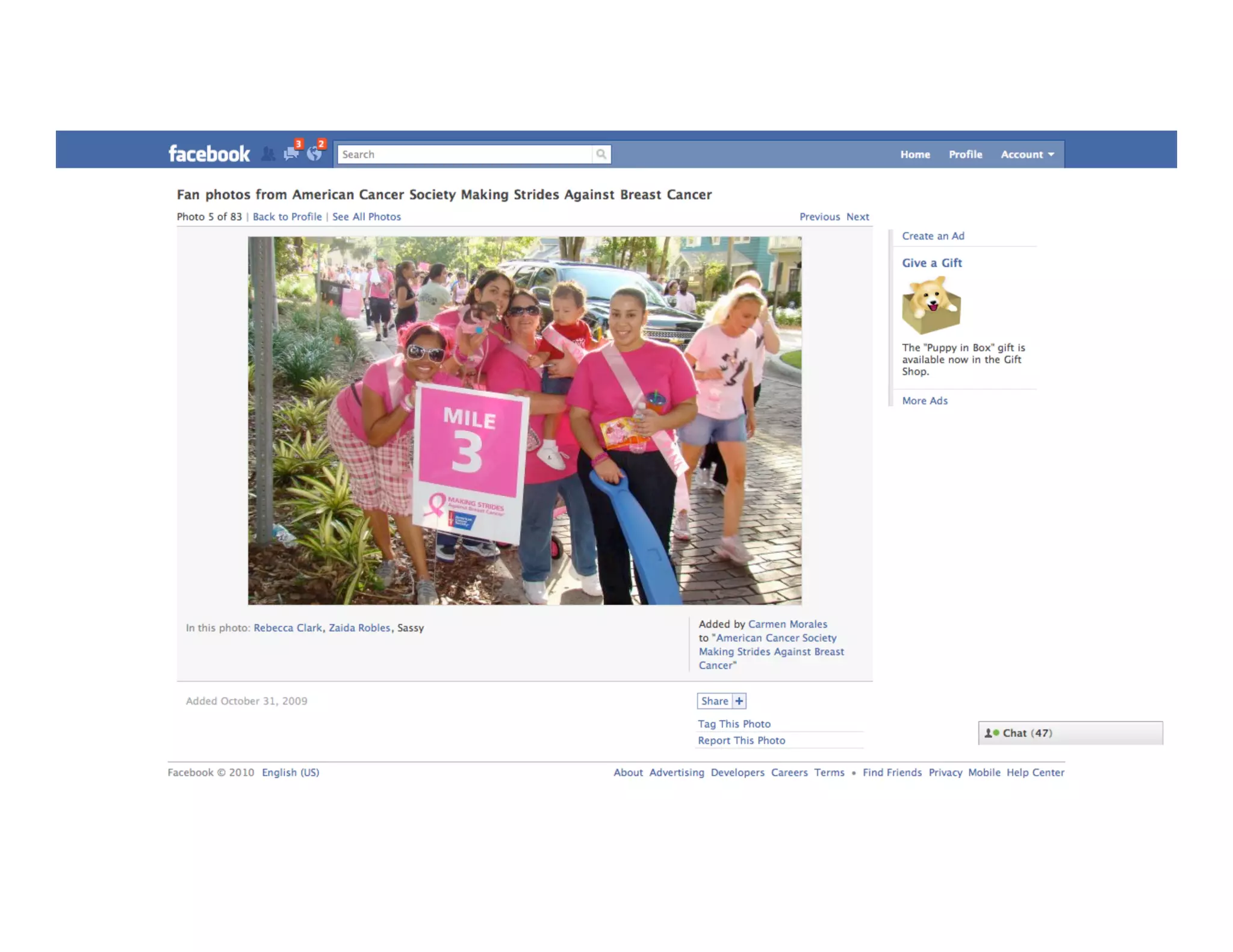
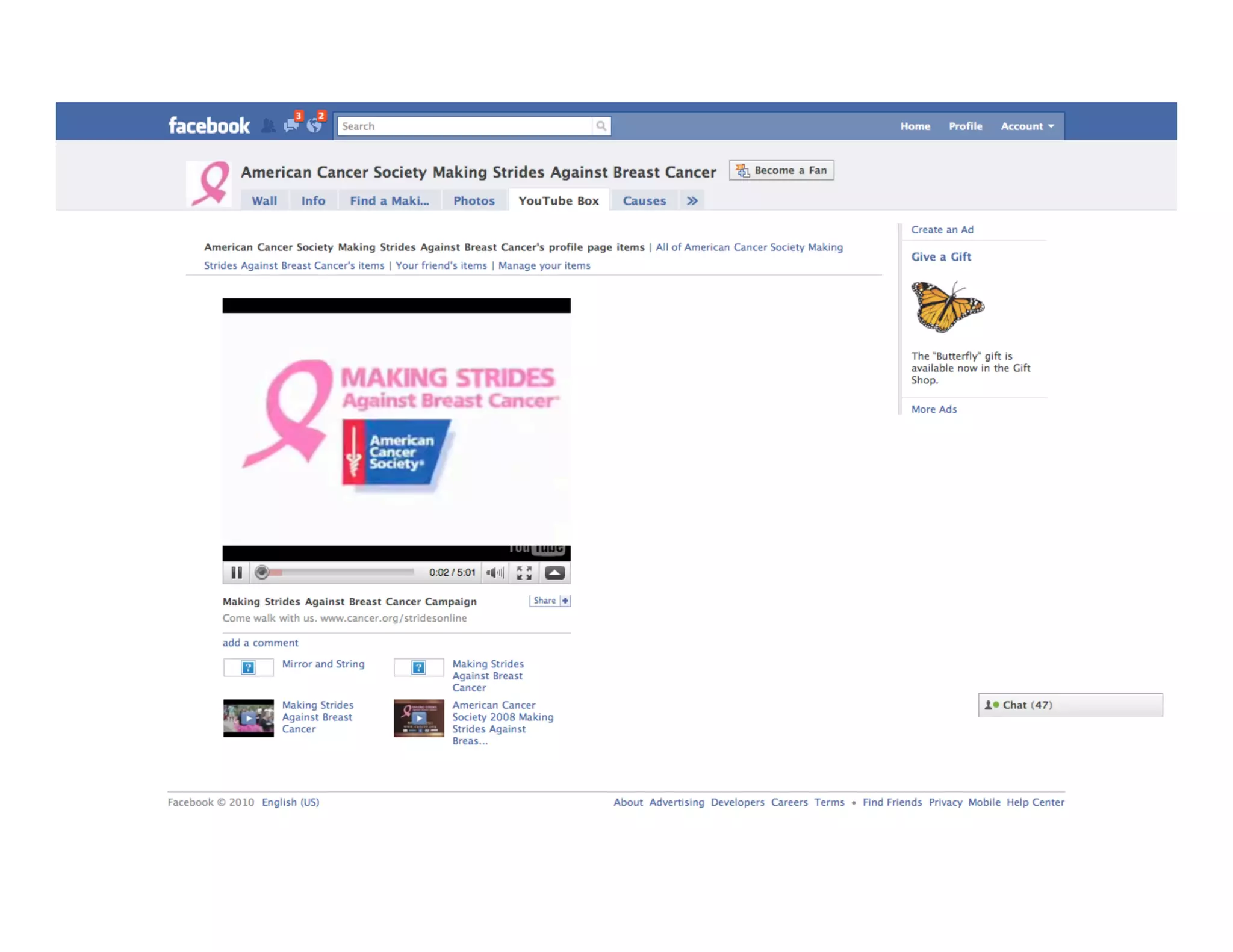
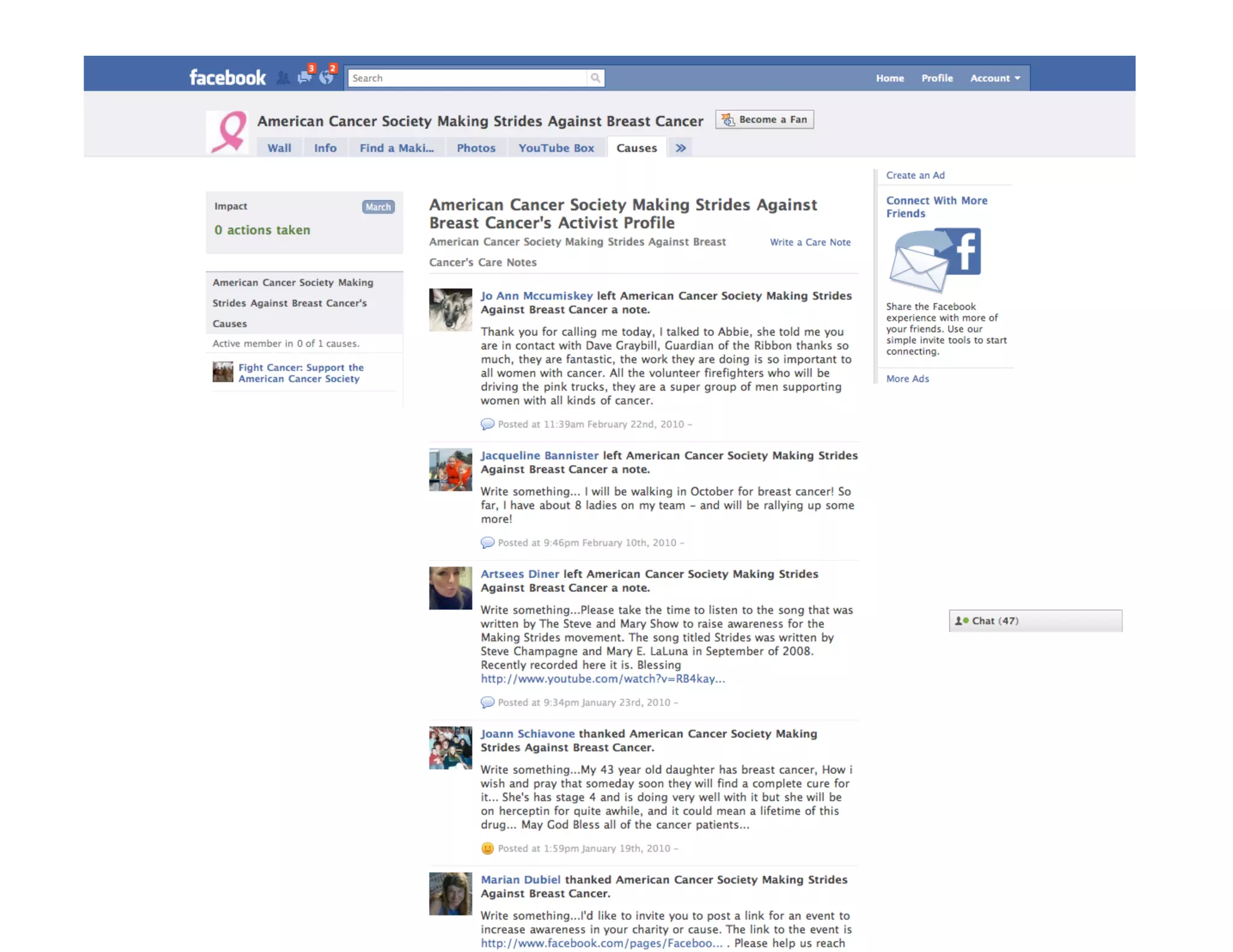
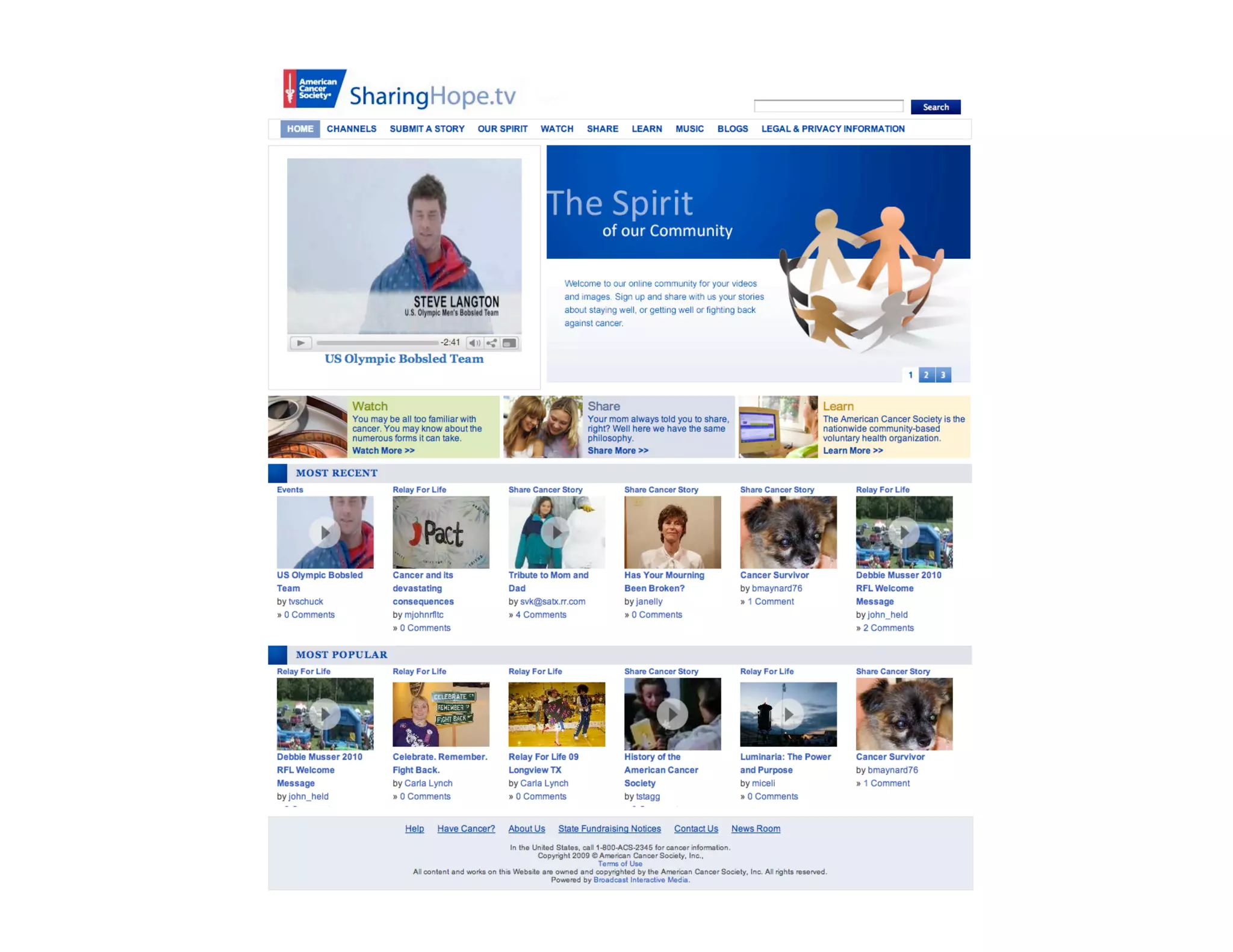
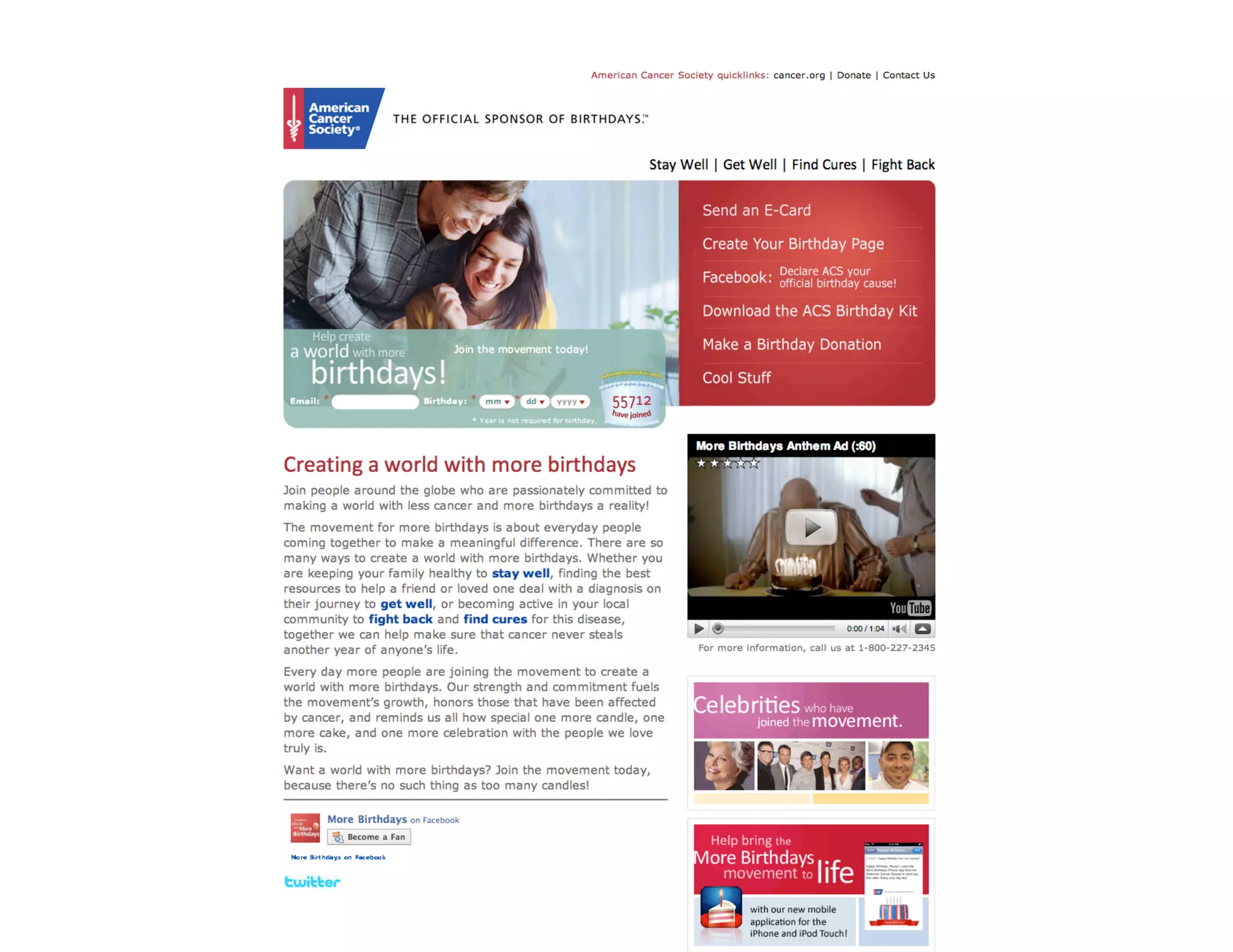
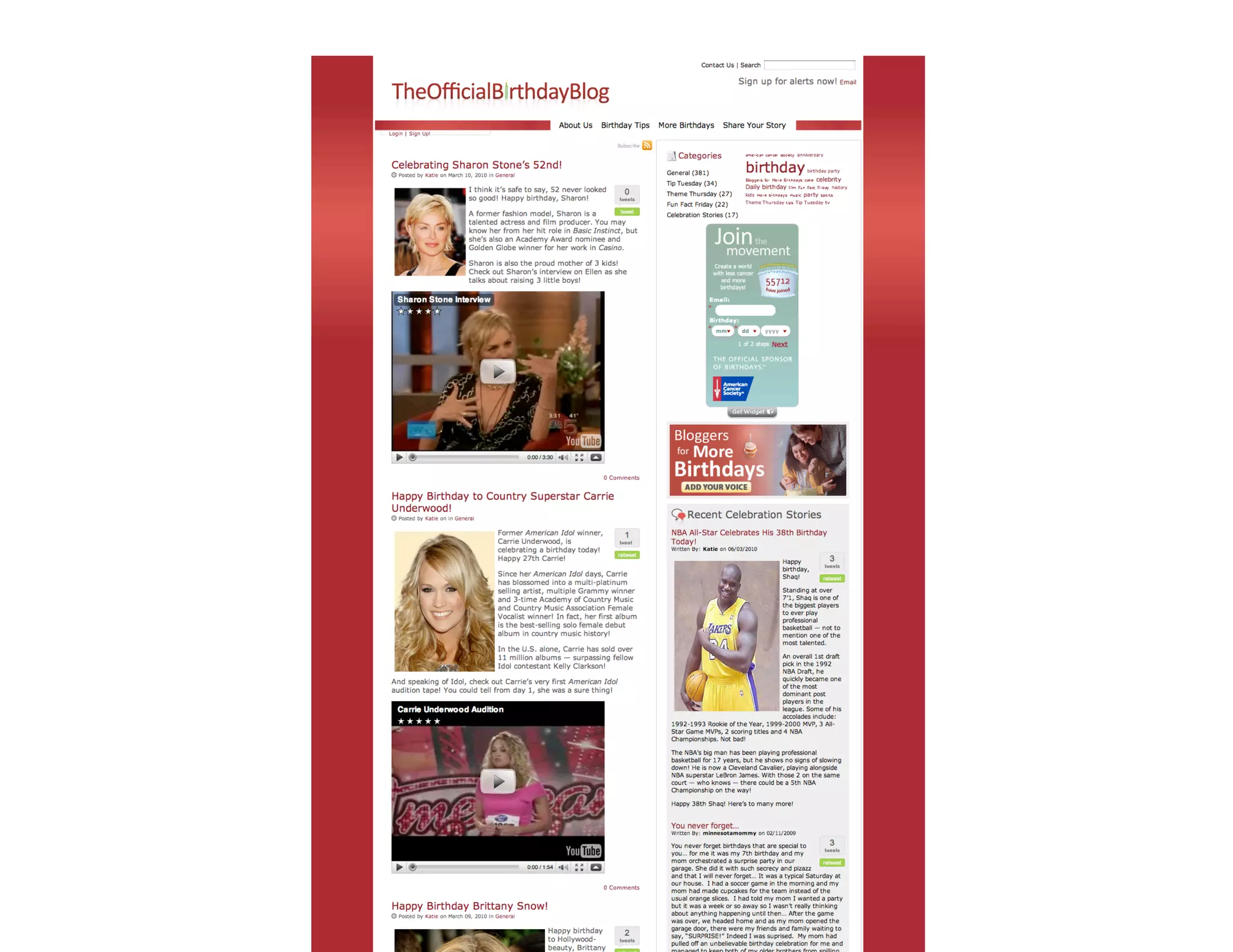
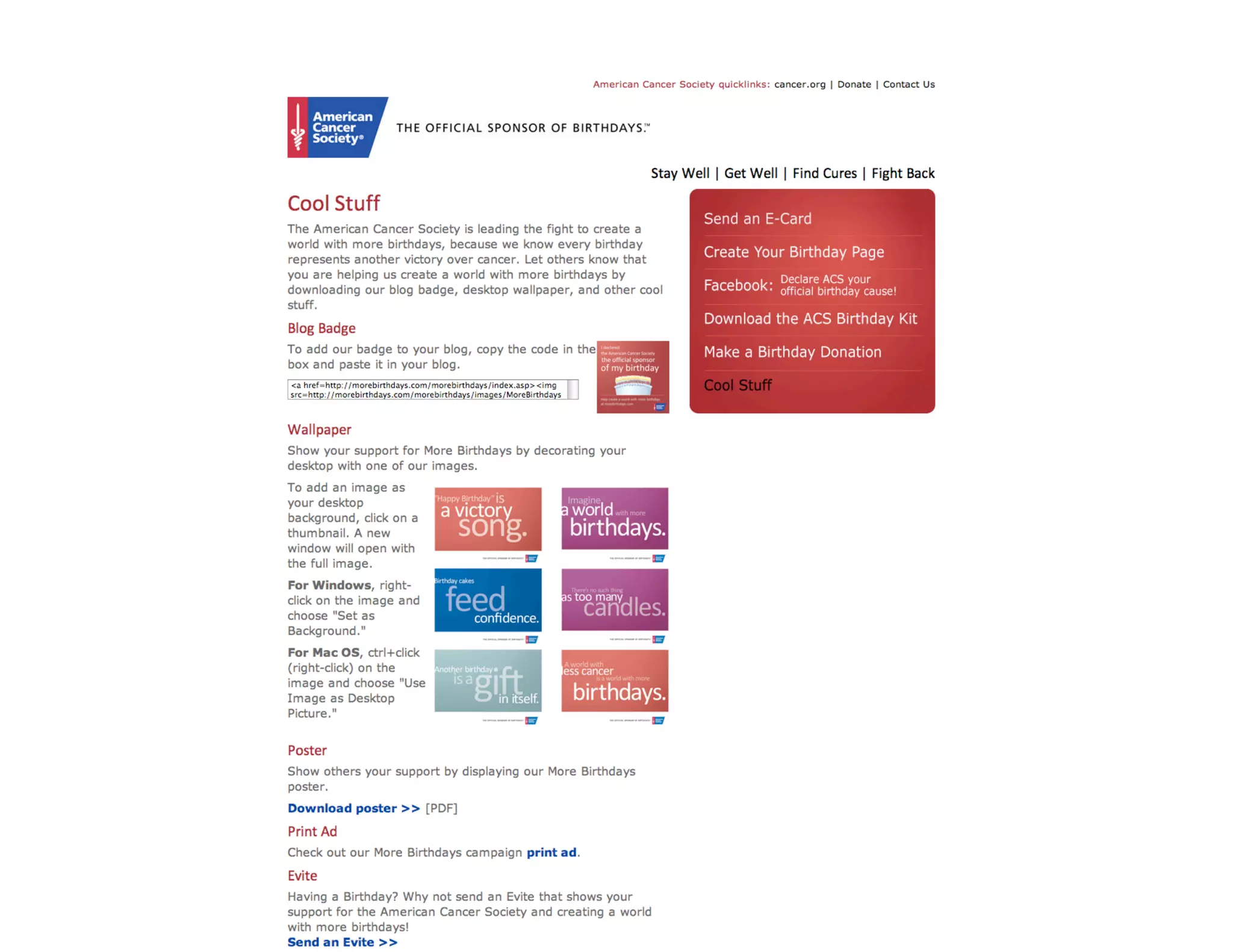
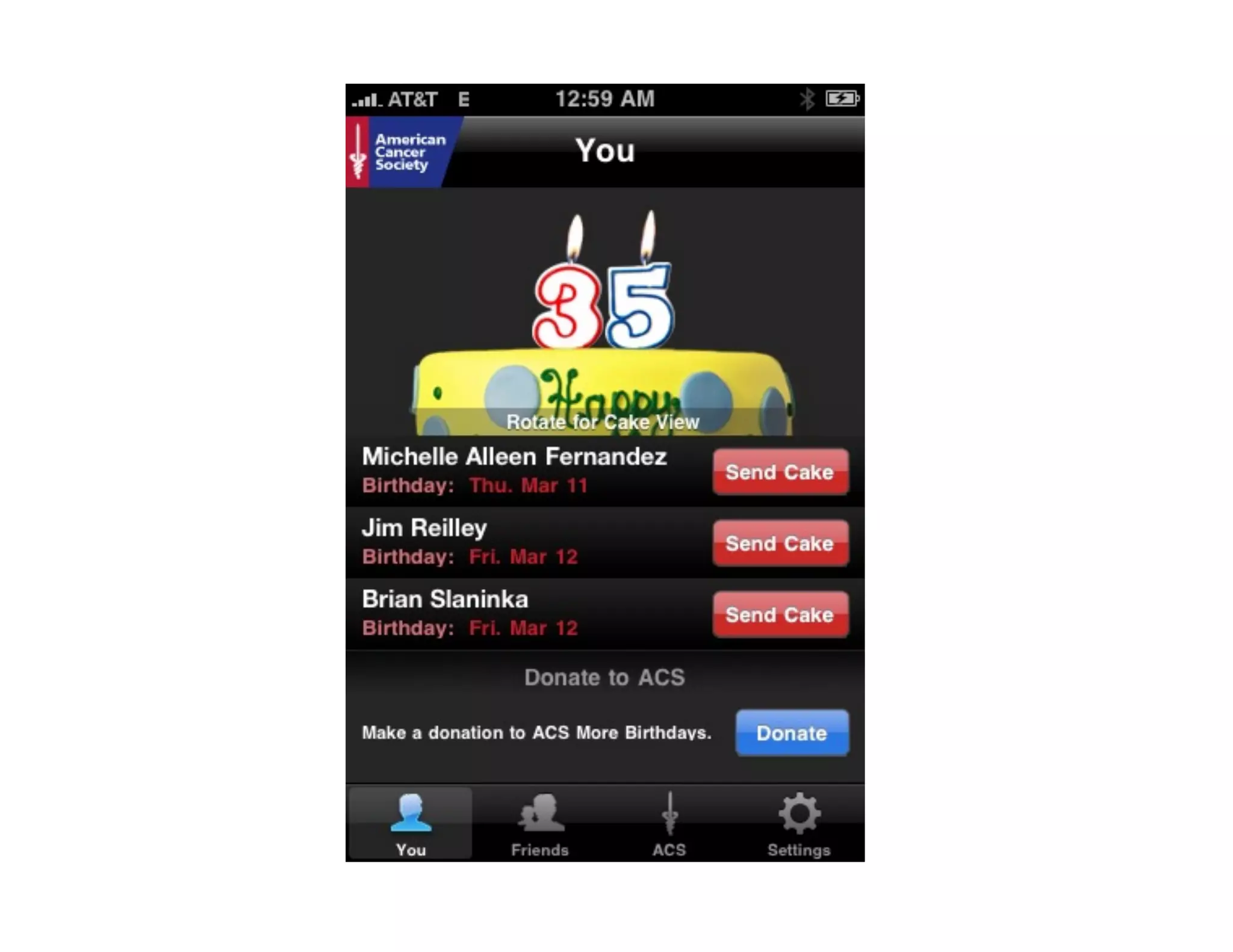
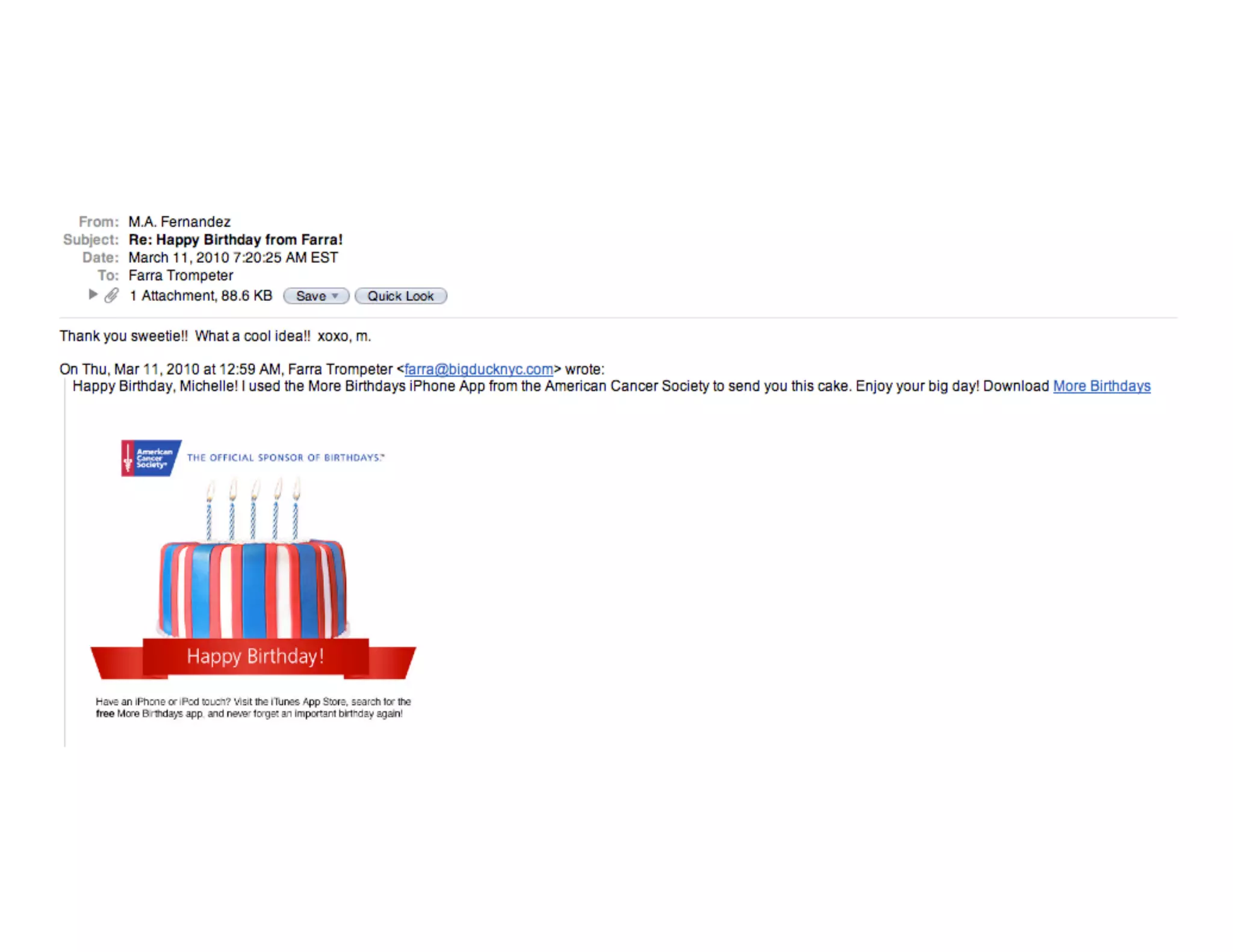
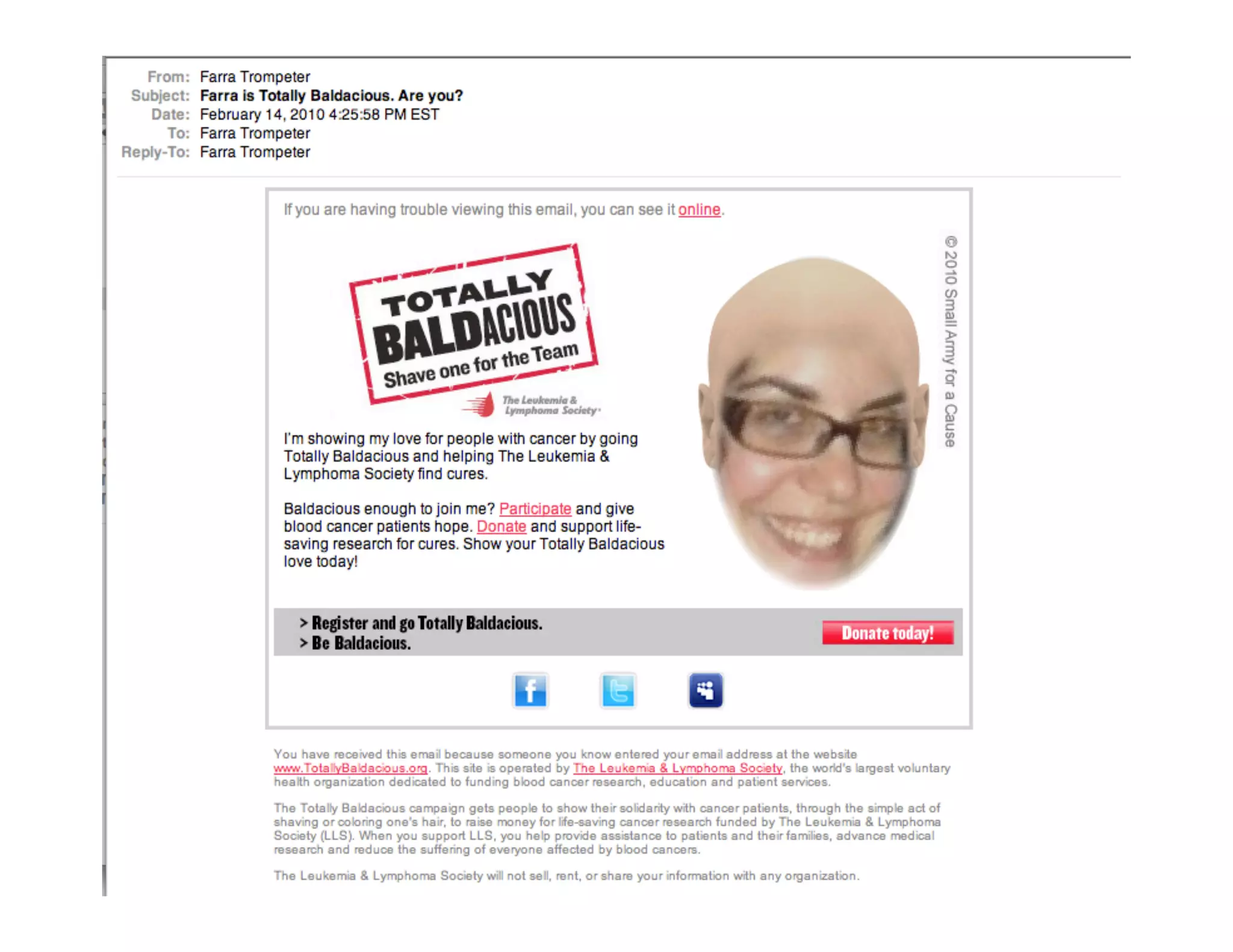
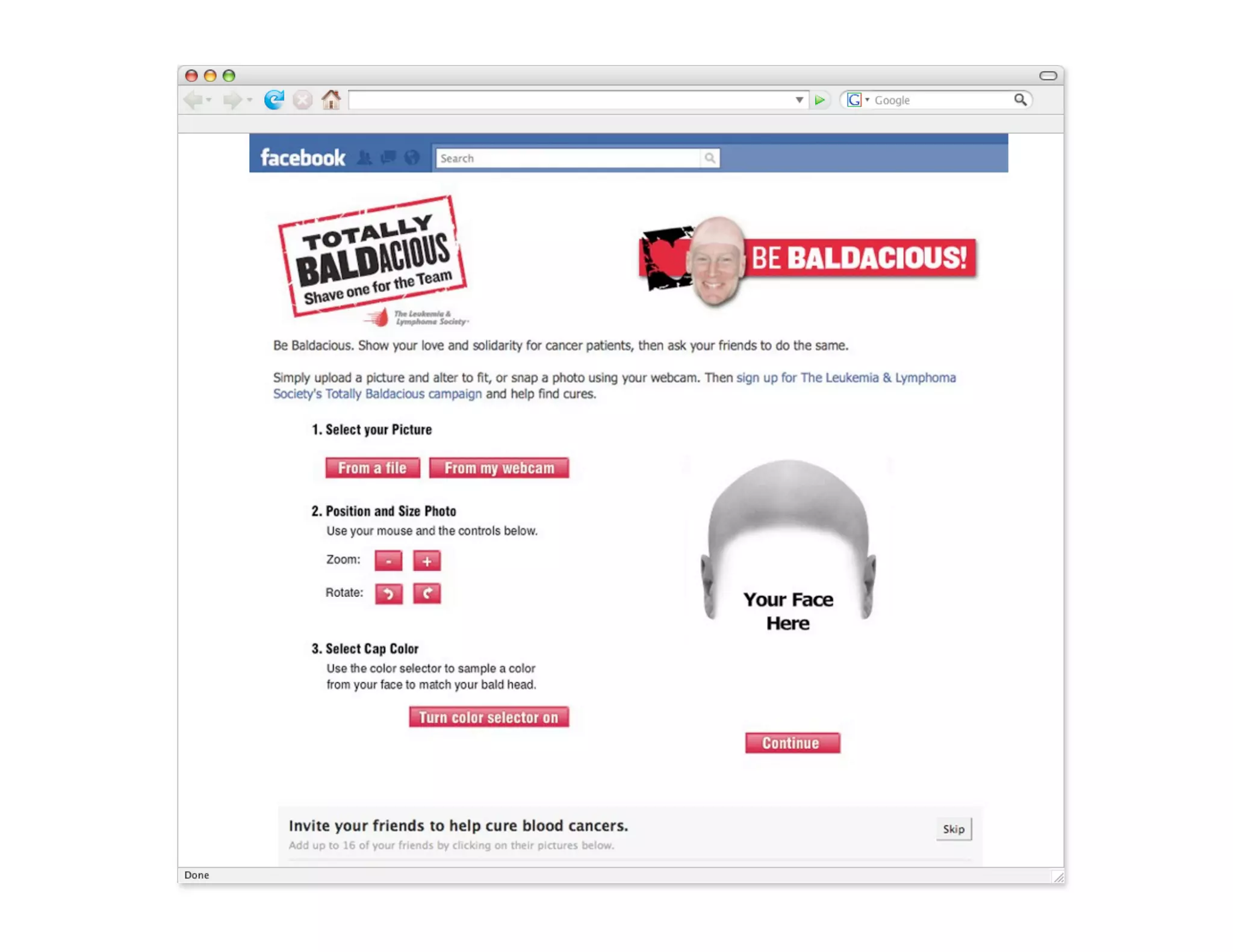
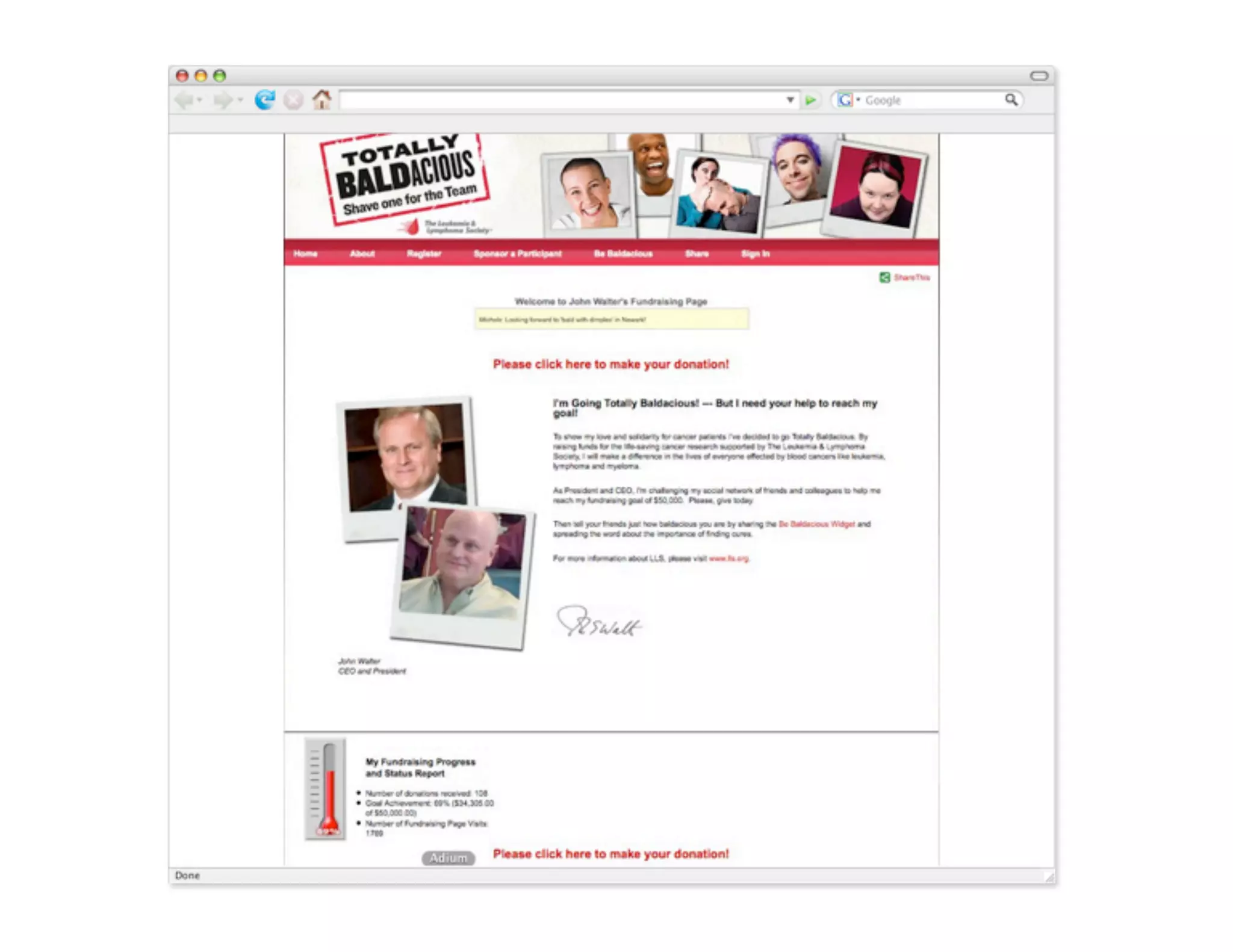
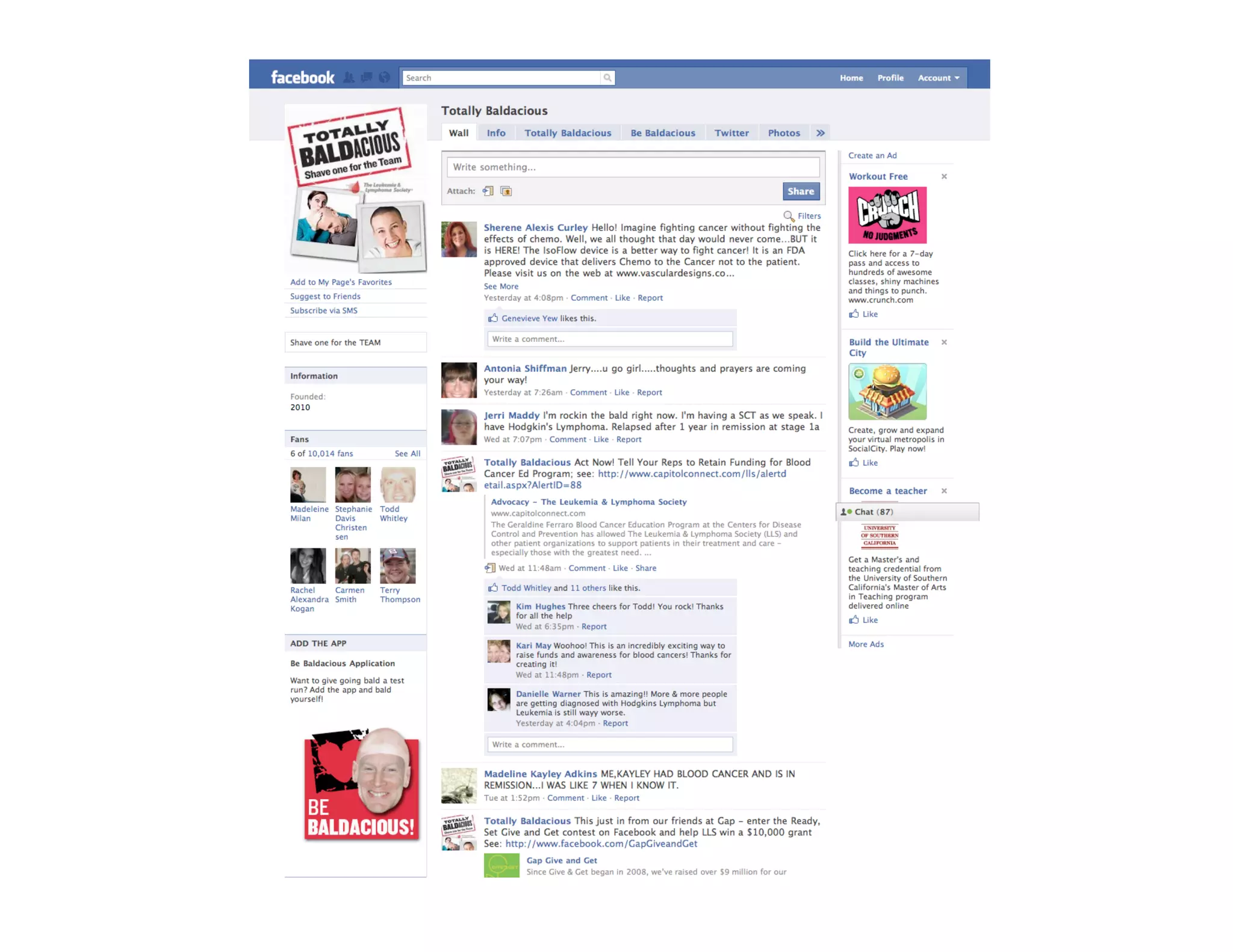
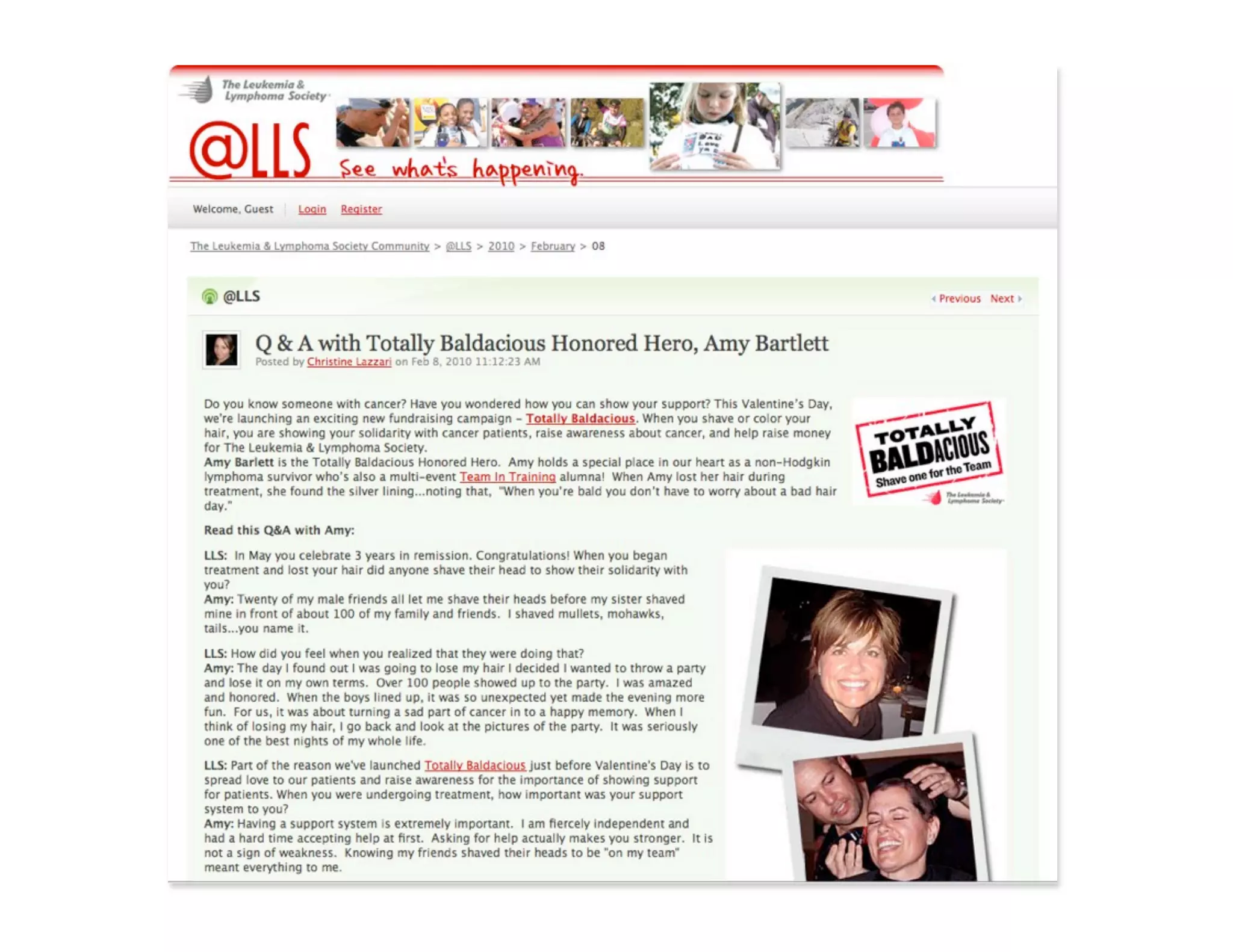
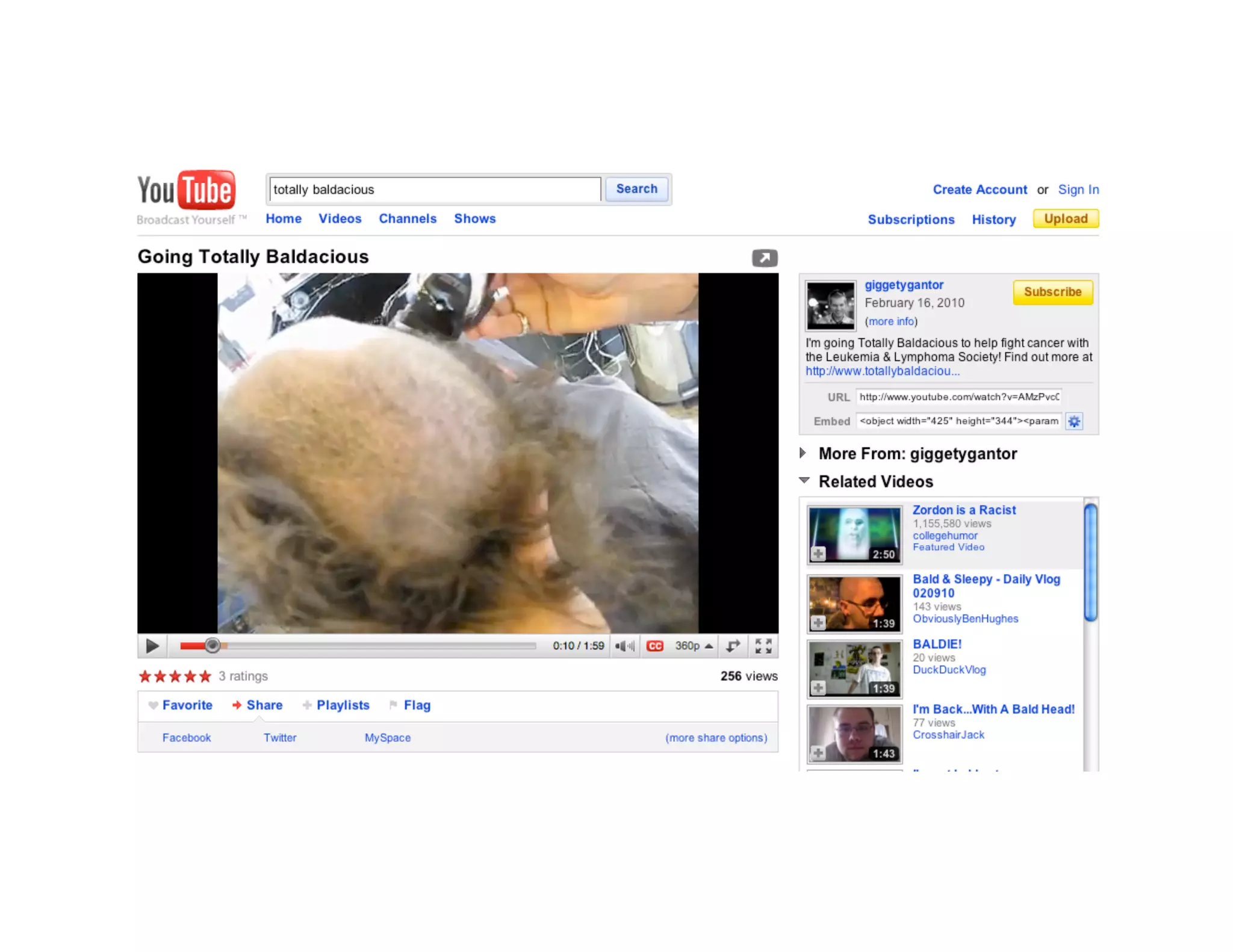
Examples
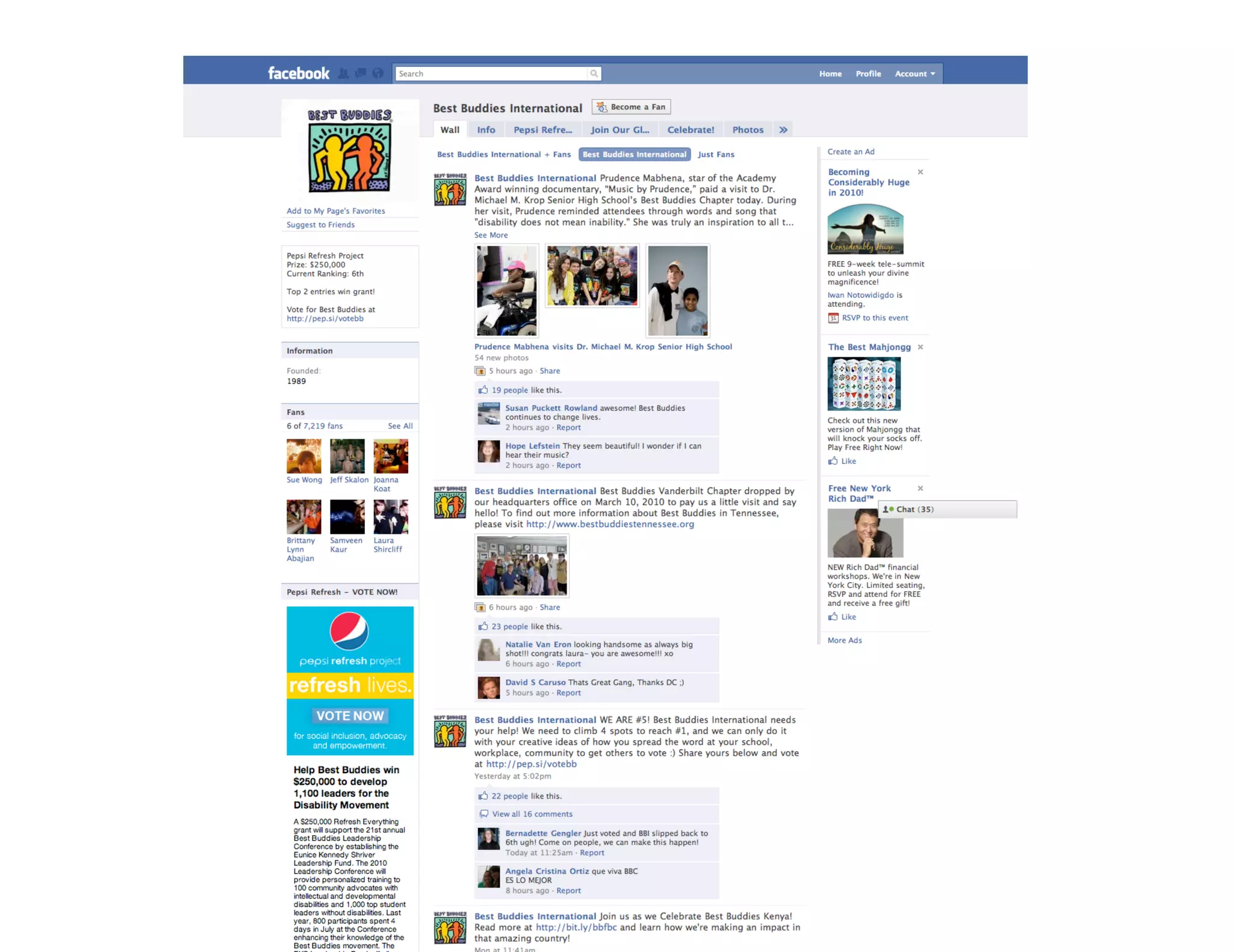
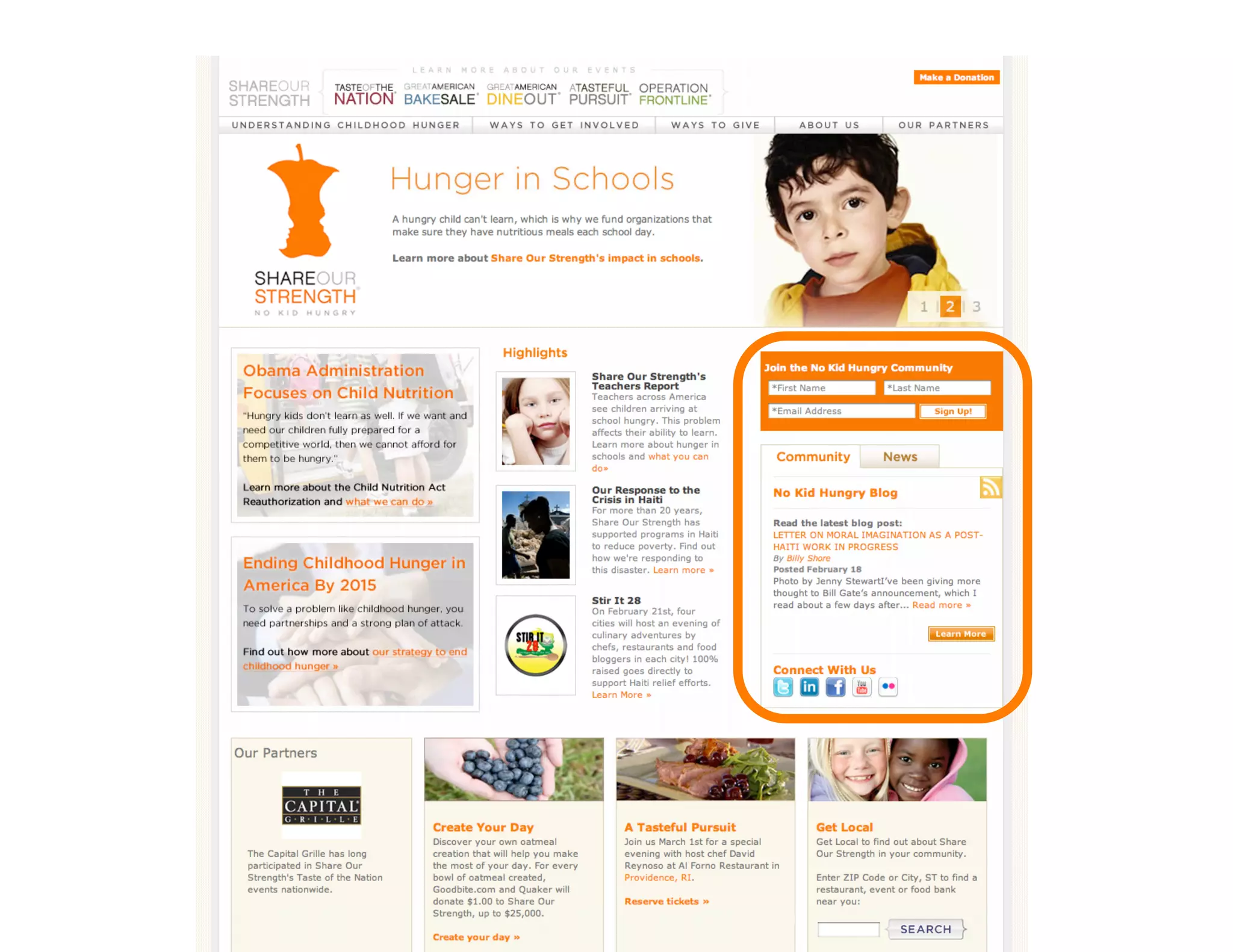
Page
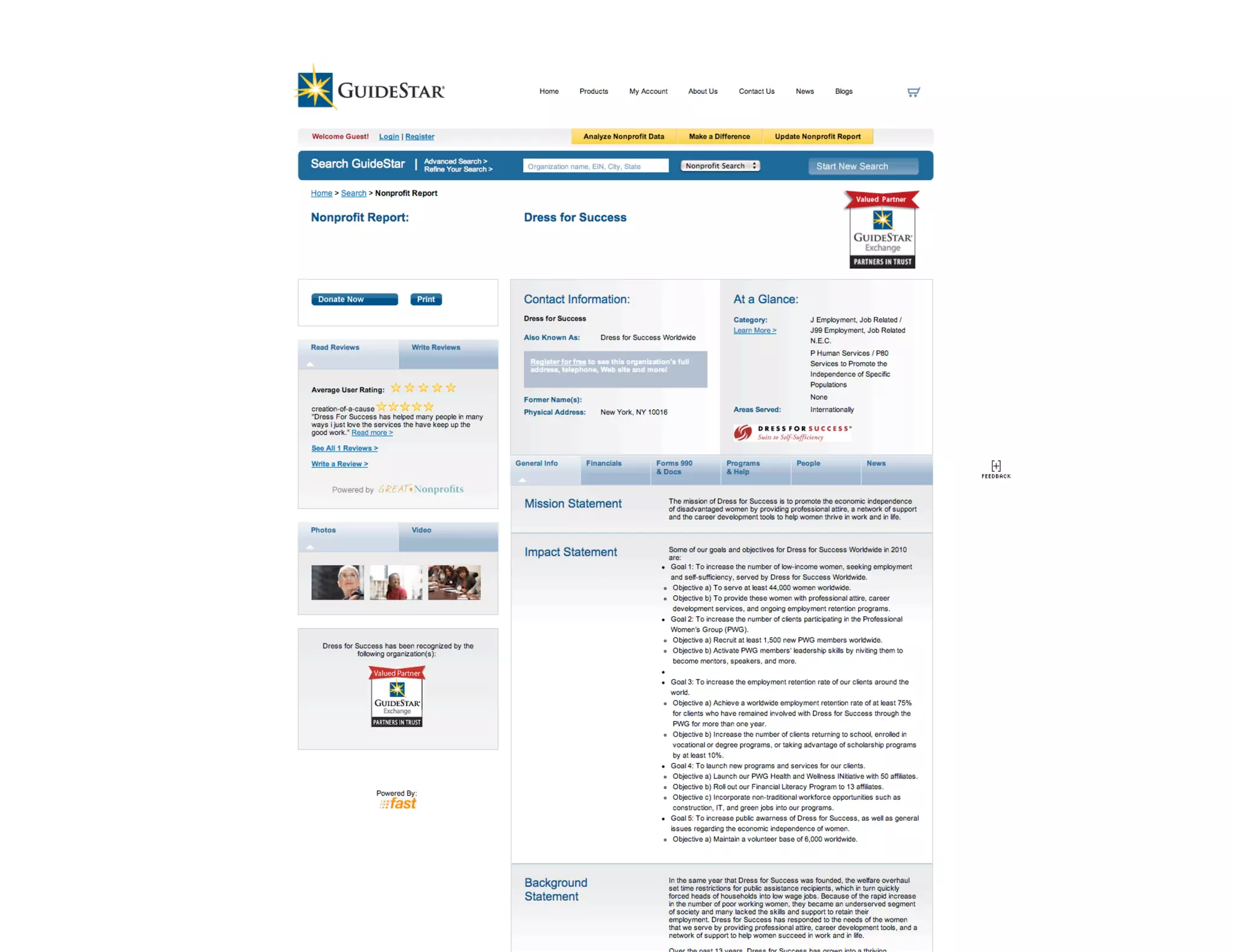
Group
- Resources -
Resources
• NTEN: We Are Media
    http://www.wearemedia.org
•   Social Technographics
    http://blogs.forrester.com/groundswell/
•   Beth’s Blog: How Nonprofits Can Use Social Media
    http://beth.typepad.com
•   Frog Loop: Build Your Own Listening Dashboard
    http://bit.ly/3JIwZ
•   Using Social Media To Meet Nonprofit Goals
    http://www.idealware.org/sm_survey/download.php
•   Nonprofit Social Media Benchmarks Study
    http://www.e-benchmarksstudy.com/socialmedia/
Let’s stay in touch
     bigducknyc.com/blog
     bigducknyc.com/blog/?author=6

     linkedin.com/in/farra

     facebook.com/bigduck
     facebook.com/farratrompeter
     twitter.com/bigduck
     twitter.com/farra

     farra@bigducknyc.com
Questions?


© Jeremy Crow

Social Media: transforming the way nonprofits communicate

  • 1.
    Social Media: transformingthe way nonprofits communicate Leave a Legacy: Non-Profit Education Day March 12, 2010 Farra Trompeter farra@bigducknyc.com
  • 2.
  • 3.
    It’s about reachingand connecting people
  • 4.
    traditional media social media Encyclopedia Wikipedia Brittanica New York Times TechCrunch Print newsletter eNewsletter, Twitter, Facebook
  • 5.
  • 6.
  • 7.
    Maybe you shouldn’t… Socialmedia is not… •  Free •  A silver bullet for fundraising •  An opportunity to control your message •  An opportunity to tell everyone what you think •  Inherently appealing and cool to millenials •  An alternative to clear messaging/mission
  • 8.
    That said… Social mediais… •  Pretty low cost •  Growing by leaps and bounds •  An opportunity for conversation •  A great way to reach certain audiences •  A complement to the messages you’re sharing through other channels
  • 9.
  • 10.
    Average social networkuser = 37 Feb 2010 http://royal.pingdom.com/2010/02/16/study-ages-of-social-network-users/
  • 11.
    Who’s where? Dec 2009  116 million unique U.S. visitors  Slightly more female  Mostly younger, aged 13-34  24 million unique U.S. visitors  Slightly more male  College education (33% have a graduate degree vs. Internet avg of 21%)  Generally older, more educated, and more affluent  23 million unique U.S. visitors  Peak at the 18-34 age group (16% of its total vs. 8% of the total Internet audience)  Less wealthy than those on Facebook and LinkedIn http://www.openforum.com/idea-hub/topics/marketing/article/improve-your-social- media-strategy-by-paying-attention-to-demographics-laura-aronsson-and-bianca
  • 12.
  • 14.
    Why do peopleparticipate? •  Keeping up with friendships •  Making new friends •  Succumbing to social pressure from existing friendships •  Paying it forward •  The altruistic impulse •  The prurient impulse •  The creative impulse •  The validation impulse •  The affinity impulse Source: Groundswell (book)
  • 15.
    How do peopleparticipate? © http://blogs.forrester.com/groundswell/2010/01/conversationalists-get-onto-the-ladder.html
  • 16.
  • 18.
    Start by listening © robertcarlsen
  • 19.
    Listening Online •  Setup Google alerts, Technorati search, Twitter search, etc. http://socialmedia-listening.wikispaces.com/Tools •  Your name and people connected to your organization •  Your organization’s name •  Program or event names •  Peer/competitor names and program/event names •  Your tagline or other key phrases •  URL for any web properties (main website, blog) •  Related issues/topics •  Common misspellings Source: Beth’s Blog, Beth Kanter
  • 21.
    Select the toolsbased on goals + audience, and what you can manage. © BoomeraATV
  • 22.
    Source: Beth's Blog:How Nonprofits Can Use Social Media http://beth.typepad.com/beths_blog/2008/10/how-much-time-d.html
  • 23.
  • 24.
    Be nice, share,and say thank you. © OMP Production
  • 28.
  • 29.
    If you wantpeople to care, make it about them… not you! http://www.angelamaiers.com/2008/09/my-twitter-enga.html
  • 30.
    Help the communityconnect. © parentprojectmd
  • 34.
    Bring all youronline communications together. © fhoke.com
  • 39.
    Don’t forget aboutother online listings.
  • 41.
    Expand your definitionof success •  Increased awareness of your cause •  Shift in your org’s reputation •  New and repeat program participants, activists, donors •  Increased requests for your programs •  Pageviews/clicks/comments/fans/etc. •  New email addresses/contact info •  Signatures/actions taken •  Dollars raised •  Mentions online
  • 42.
  • 45.
  • 46.
  • 71.
  • 72.
    Resources • NTEN: WeAre Media http://www.wearemedia.org • Social Technographics http://blogs.forrester.com/groundswell/ • Beth’s Blog: How Nonprofits Can Use Social Media http://beth.typepad.com • Frog Loop: Build Your Own Listening Dashboard http://bit.ly/3JIwZ • Using Social Media To Meet Nonprofit Goals http://www.idealware.org/sm_survey/download.php • Nonprofit Social Media Benchmarks Study http://www.e-benchmarksstudy.com/socialmedia/
  • 73.
    Let’s stay intouch bigducknyc.com/blog bigducknyc.com/blog/?author=6 linkedin.com/in/farra facebook.com/bigduck facebook.com/farratrompeter twitter.com/bigduck twitter.com/farra farra@bigducknyc.com
  • 74.