Evaluation of Anti-
Obesity Drugs
Dr. Nishtha Khatri
Guide: Dr. Raakhi Tripathi
Flow of seminar
 Introduction
 Pathophysiology
 Current treatment and it’s limitations
 Preclinical evaluation
• In vitro
• In vivo
 Clinical evaluation
 Drugs in the pipeline
 Conclusion
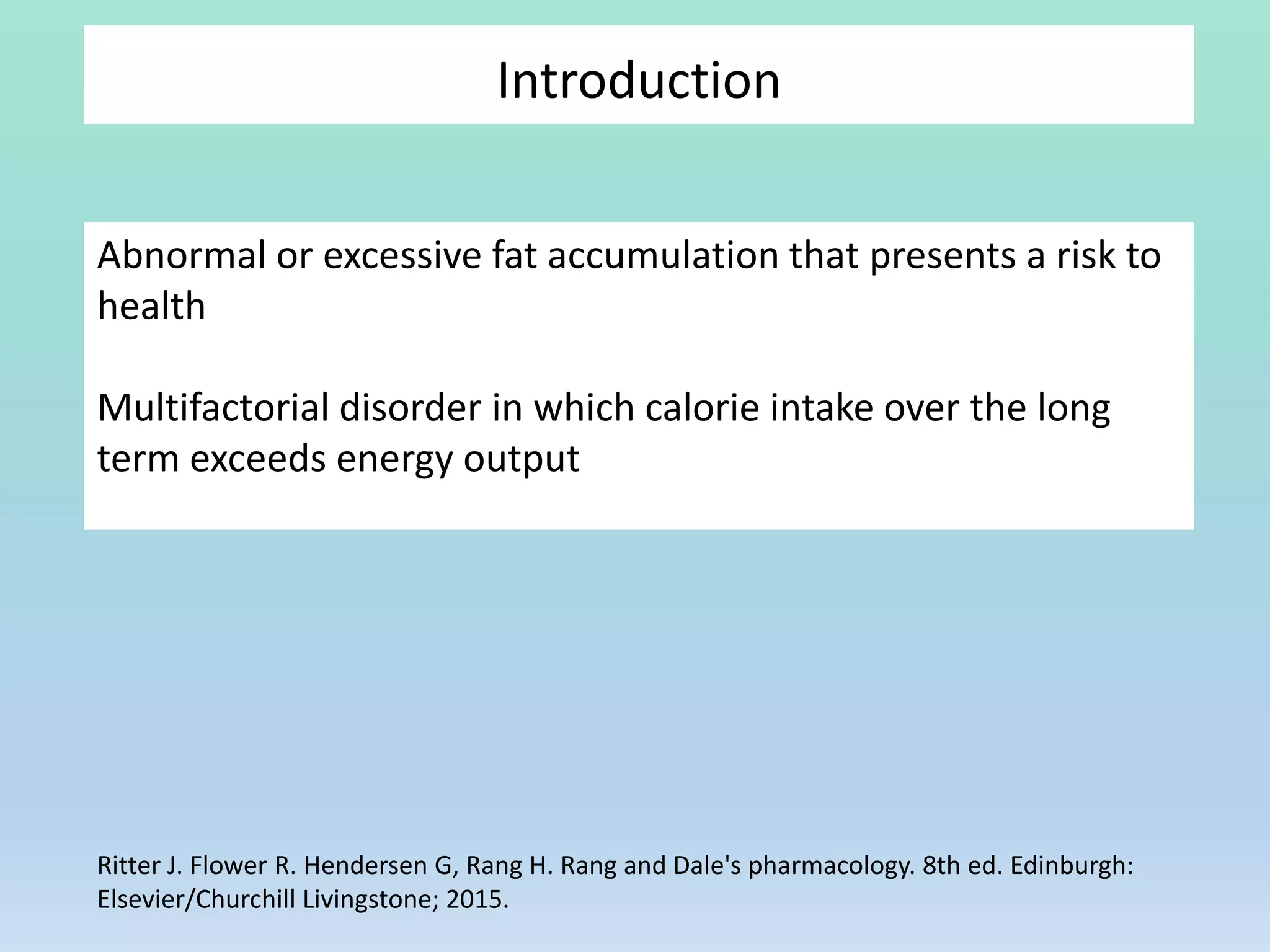
Abnormal or excessive fat accumulation that presents a risk to
health
Multifactorial disorder in which calorie intake over the long
term exceeds energy output
Introduction
Ritter J. Flower R. Hendersen G, Rang H. Rang and Dale's pharmacology. 8th ed. Edinburgh:
Elsevier/Churchill Livingstone; 2015.
WHO- “Epidemic of the 21st century”
Obesity rates
2016- 1.9 billion overweight and 650 million obese individuals1
Obesity prevalence: 2
Women: 13% (2006) to 21% (2016)
Men: 9% (2006) to 19% (2016)
Past 10 years  Doubled
1.WHO fact sheets: Obesity and Overweight. 2017 [Accessed on 28 May 2018]. Available from:
http://www.who.int/news-room/fact-sheets/detail/obesity-and-overweight
2.National Family Health Survey (NFHS-4). 2015-2016 [Accessed on 28 May 2018]. Availble
from: http://rchiips.org/nfhs/NFHS-4Reports/India.pdf
Classification BMI
Underweight < 18.5 kg/m2
Normal weight 18.5 kg/m2 – 24.9 kg/m2
Overweight 25 kg/m2 – 29.9 kg/m2
Obesity (class 1) 30 kg/m2 – 34.9 kg/m2
Obesity (class 2) 35 kg/m2 – 39.9 kg/m2
Extreme obesity (class 3) > 40 kg/m2
Obesity: identification, assessment and management. NICE Guidelines.2014 [Accessed on 26th May, 2018].
Available from: https://www.nice.org.uk/guidance/cg189
Classification of obesity
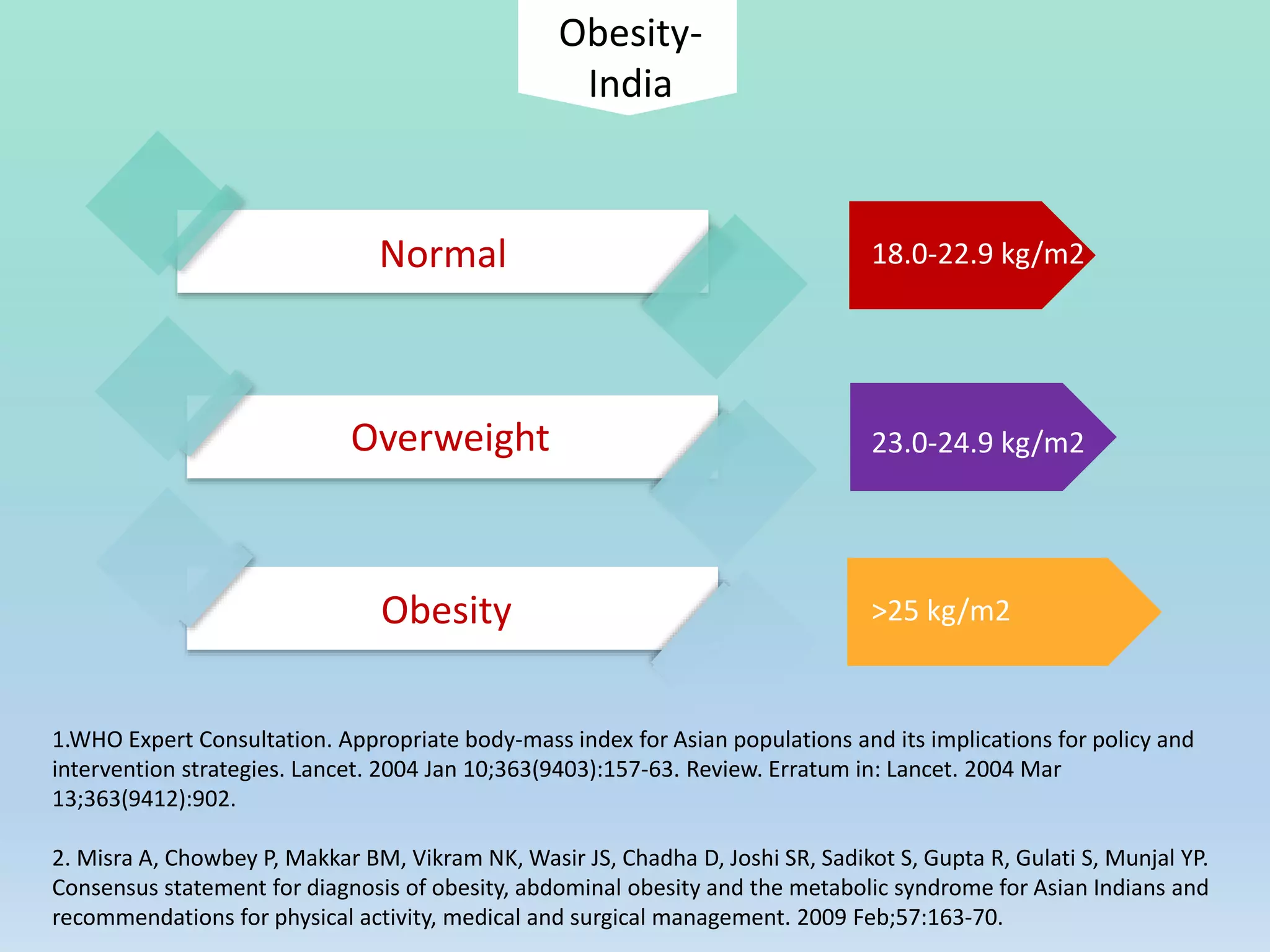
Obesity-
India
Normal
Overweight
Obesity
18.0-22.9 kg/m2
23.0-24.9 kg/m2
>25 kg/m2
1.WHO Expert Consultation. Appropriate body-mass index for Asian populations and its implications for policy and
intervention strategies. Lancet. 2004 Jan 10;363(9403):157-63. Review. Erratum in: Lancet. 2004 Mar
13;363(9412):902.
2. Misra A, Chowbey P, Makkar BM, Vikram NK, Wasir JS, Chadha D, Joshi SR, Sadikot S, Gupta R, Gulati S, Munjal YP.
Consensus statement for diagnosis of obesity, abdominal obesity and the metabolic syndrome for Asian Indians and
recommendations for physical activity, medical and surgical management. 2009 Feb;57:163-70.
Ritter J. Flower R. Hendersen G, Rang H. Rang and Dale's pharmacology. 8th ed. Edinburgh:
Elsevier/Churchill Livingstone; 2015.
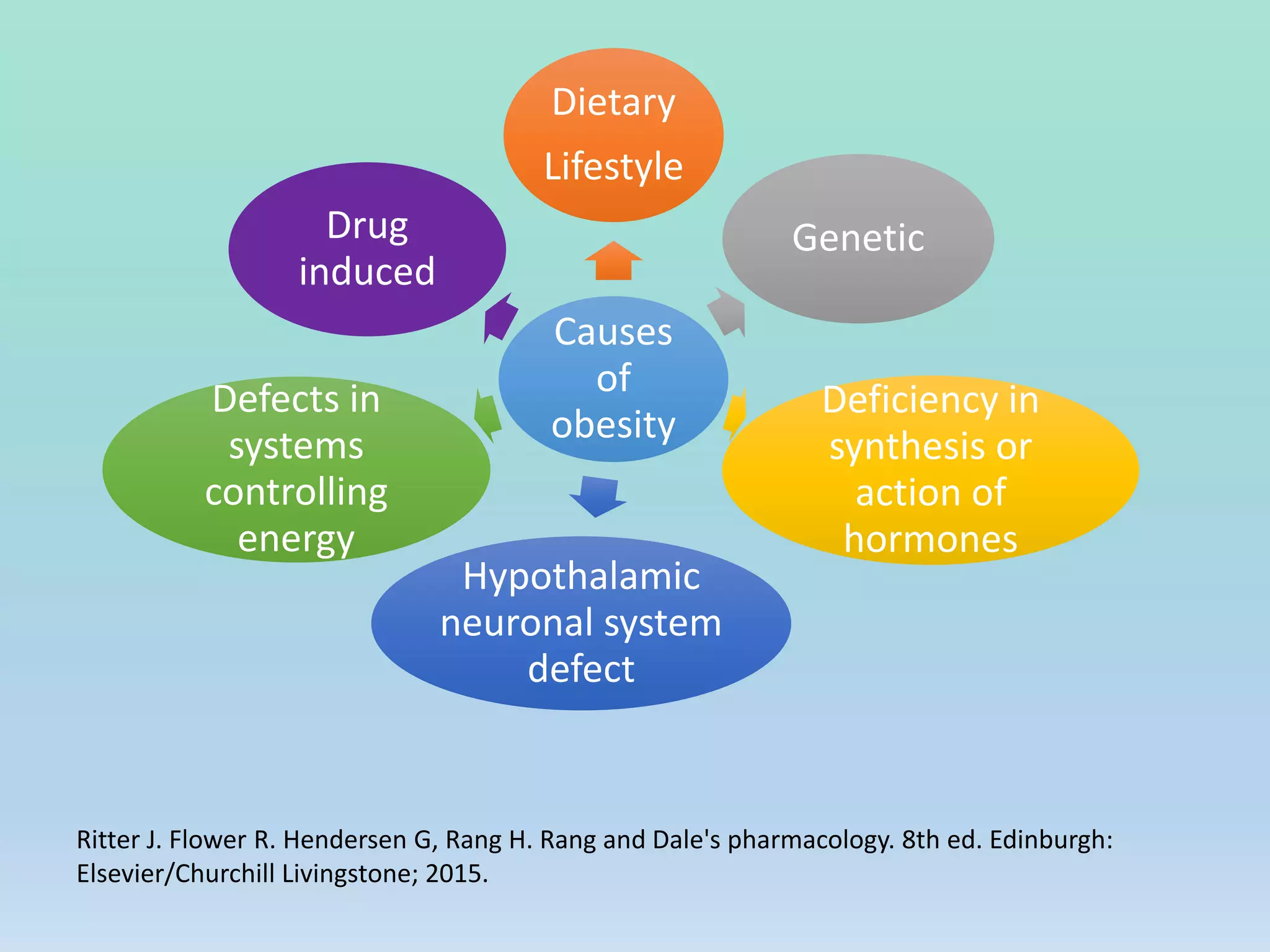
Causes
of
obesity
Dietary
Lifestyle
Genetic
Deficiency in
synthesis or
action of
hormones
Hypothalamic
neuronal system
defect
Defects in
systems
controlling
energy
Drug
induced
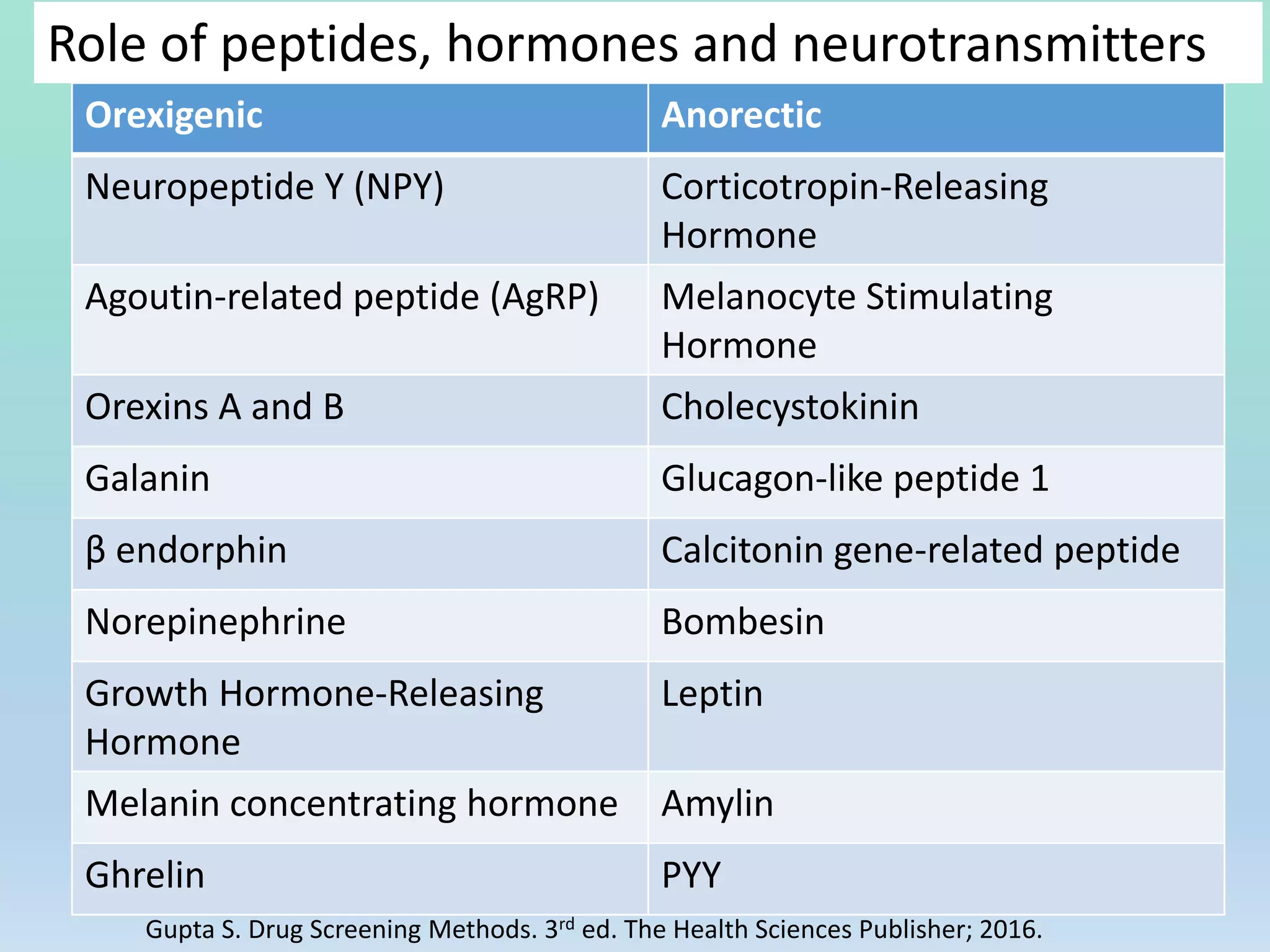
Orexigenic Anorectic
Neuropeptide Y (NPY) Corticotropin-Releasing
Hormone
Agoutin-related peptide (AgRP) Melanocyte Stimulating
Hormone
Orexins A and B Cholecystokinin
Galanin Glucagon-like peptide 1
β endorphin Calcitonin gene-related peptide
Norepinephrine Bombesin
Growth Hormone-Releasing
Hormone
Leptin
Melanin concentrating hormone Amylin
Ghrelin PYY
Gupta S. Drug Screening Methods. 3rd ed. The Health Sciences Publisher; 2016.
Role of peptides, hormones and neurotransmitters
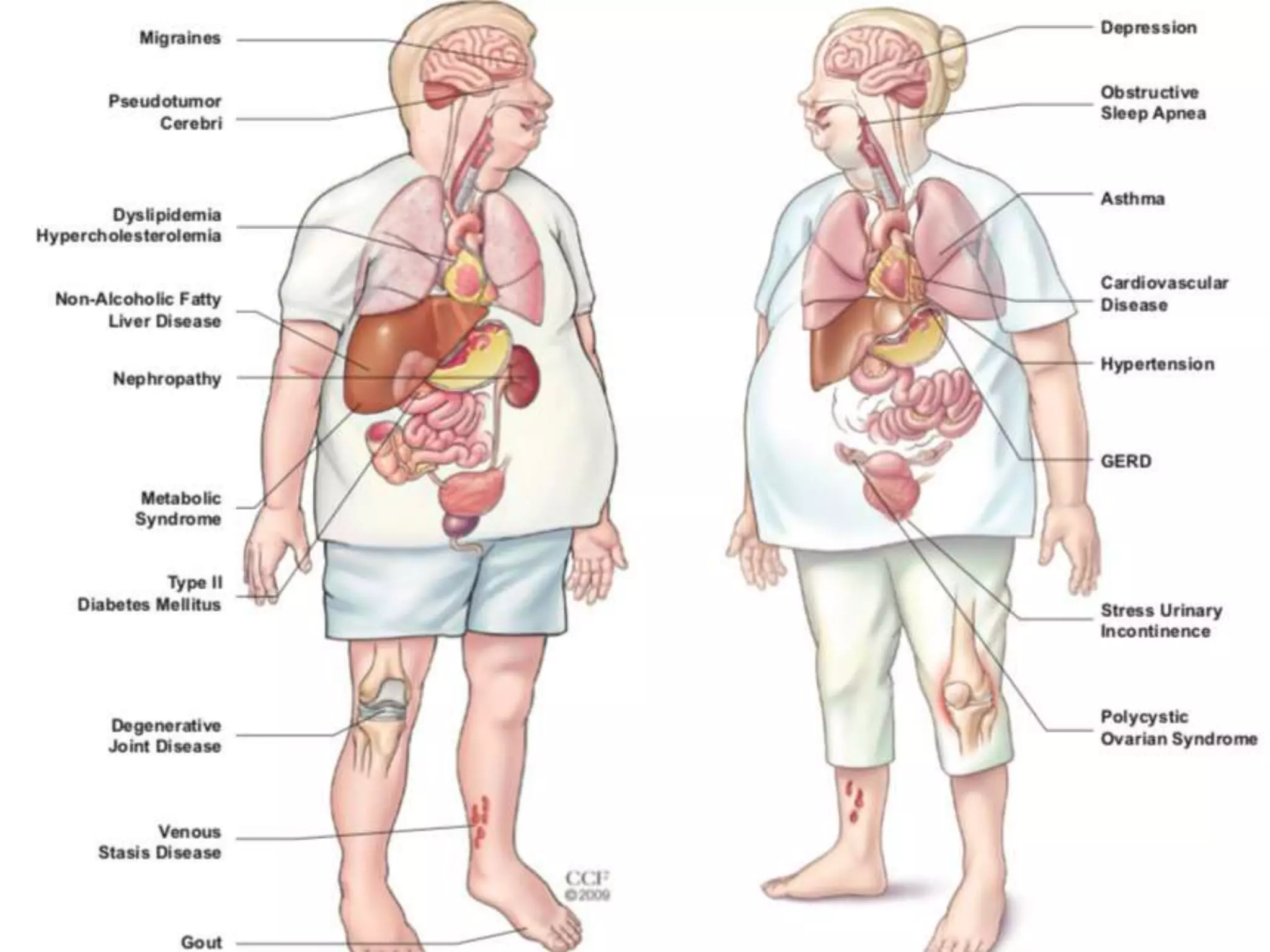
Risk of comorbidities
Brunton L, Hilal-Dandan R, Knollmann B. Goodman and Gilman's The pharmacological basics
of therapeutics. 13th ed. New York: Mcgraw-Hill; 2018.
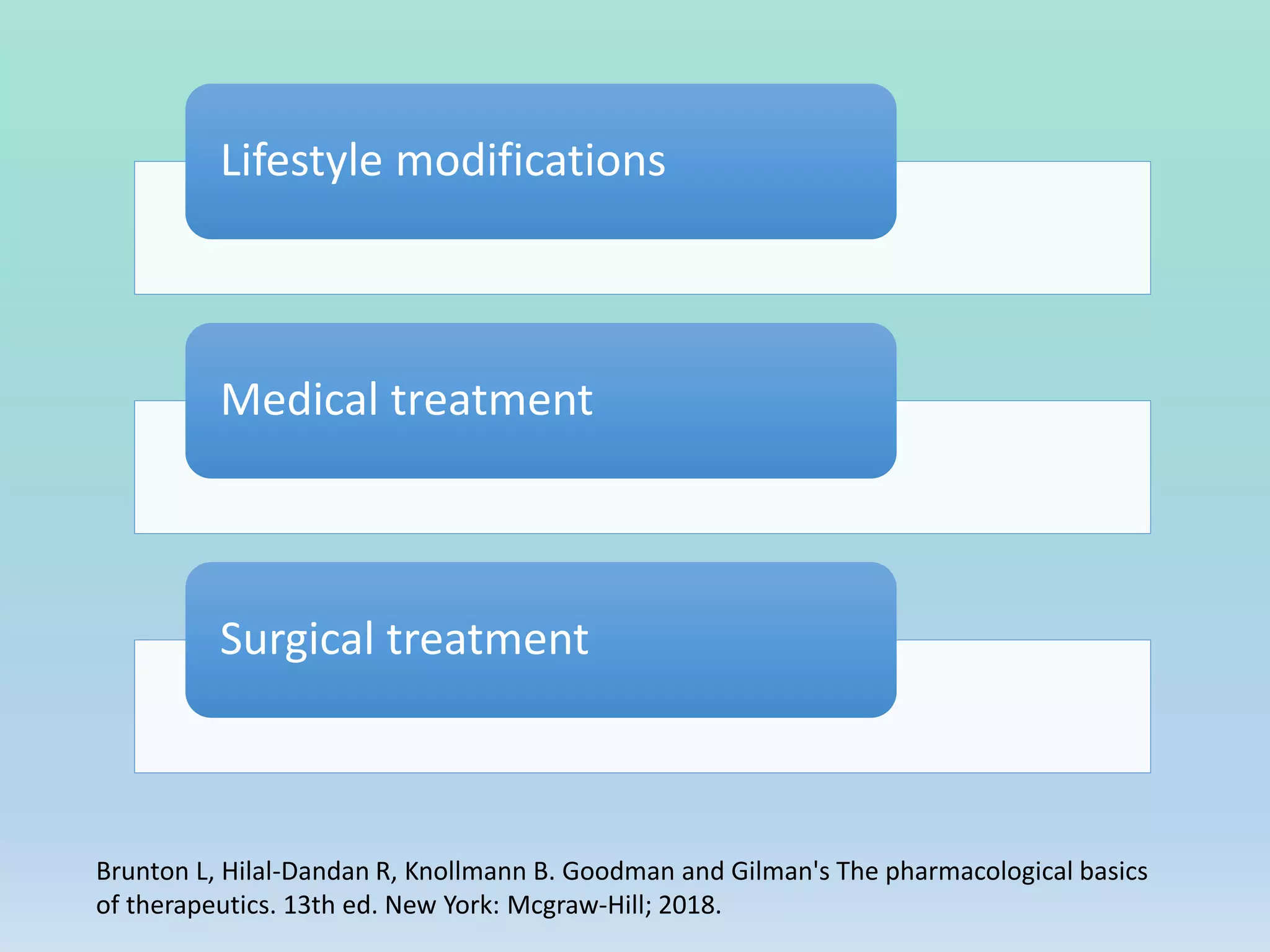
Lifestyle modifications
Medical treatment
Surgical treatment
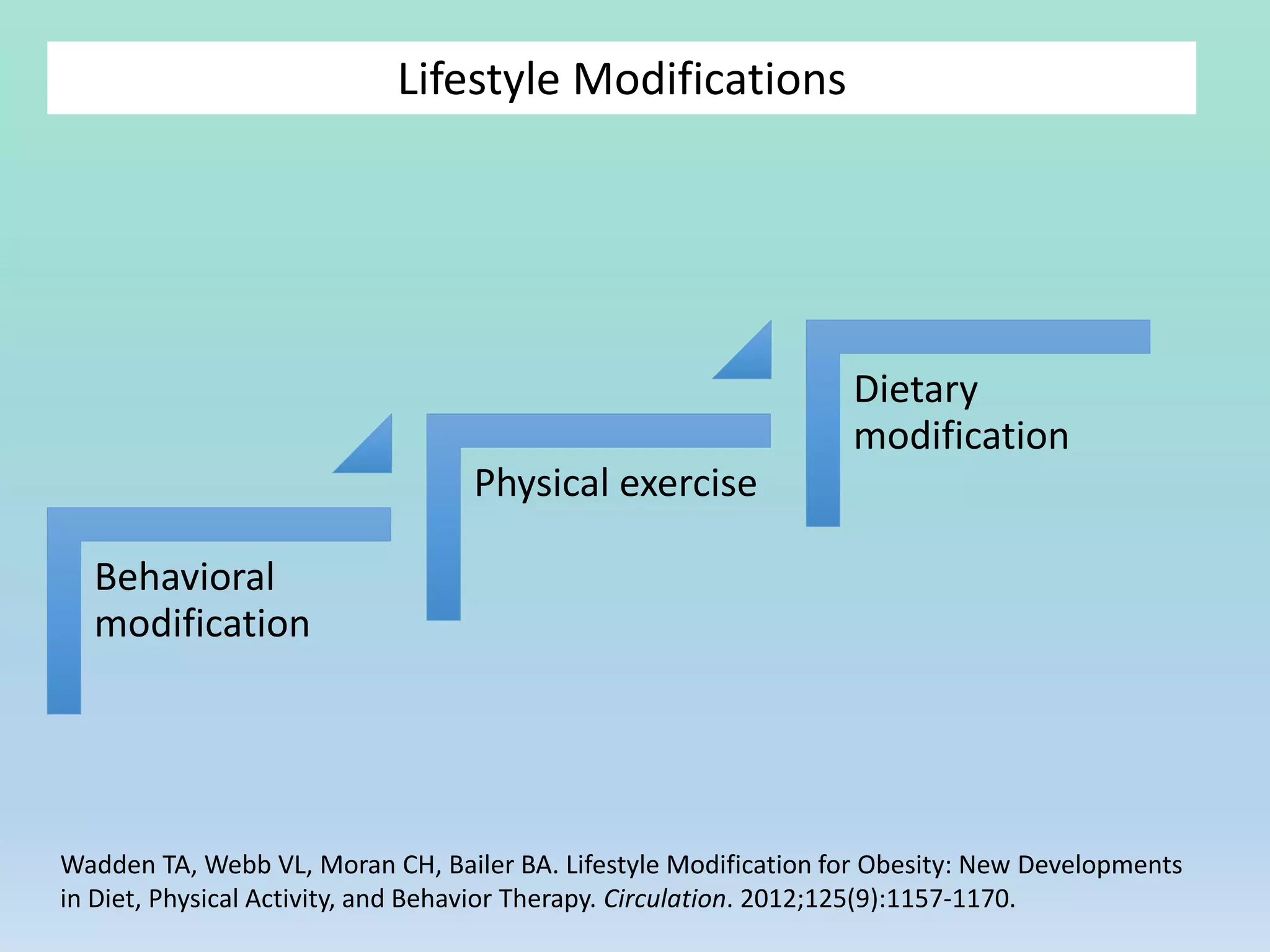
Lifestyle Modifications
Behavioral
modification
Physical exercise
Dietary
modification
Wadden TA, Webb VL, Moran CH, Bailer BA. Lifestyle Modification for Obesity: New Developments
in Diet, Physical Activity, and Behavior Therapy. Circulation. 2012;125(9):1157-1170.
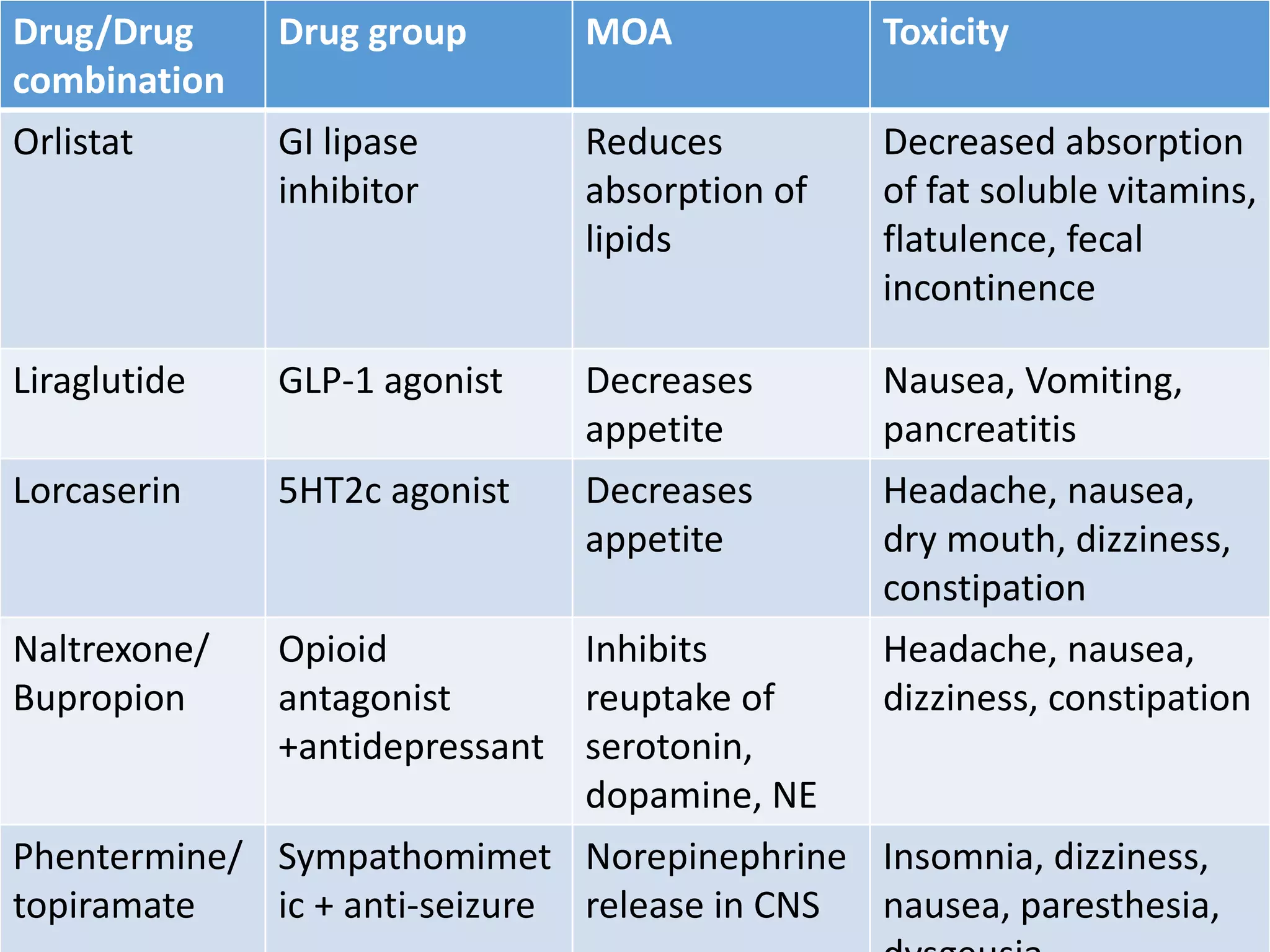
Drug/Drug
combination
Drug group MOA Toxicity
Orlistat GI lipase
inhibitor
Reduces
absorption of
lipids
Decreased absorption
of fat soluble vitamins,
flatulence, fecal
incontinence
Liraglutide GLP-1 agonist Decreases
appetite
Nausea, Vomiting,
pancreatitis
Lorcaserin 5HT2c agonist Decreases
appetite
Headache, nausea,
dry mouth, dizziness,
constipation
Naltrexone/
Bupropion
Opioid
antagonist
+antidepressant
Inhibits
reuptake of
serotonin,
dopamine, NE
Headache, nausea,
dizziness, constipation
Phentermine/
topiramate
Sympathomimet
ic + anti-seizure
Norepinephrine
release in CNS
Insomnia, dizziness,
nausea, paresthesia,
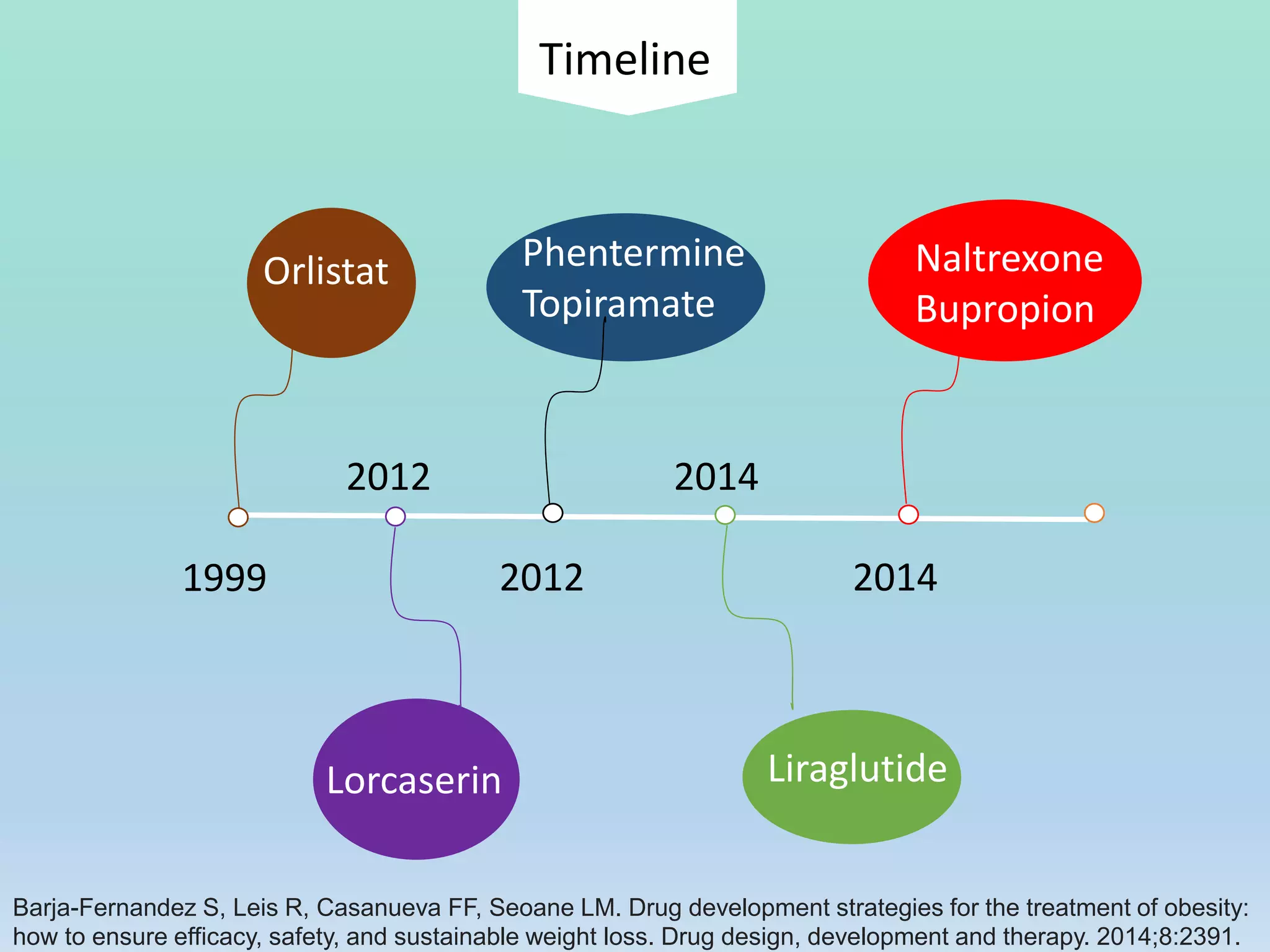
Timeline
1999
2012
2012 2014
2014
Orlistat Phentermine
Topiramate
Liraglutide
Lorcaserin
Naltrexone
Bupropion
Barja-Fernandez S, Leis R, Casanueva FF, Seoane LM. Drug development strategies for the treatment of obesity:
how to ensure efficacy, safety, and sustainable weight loss. Drug design, development and therapy. 2014;8:2391.
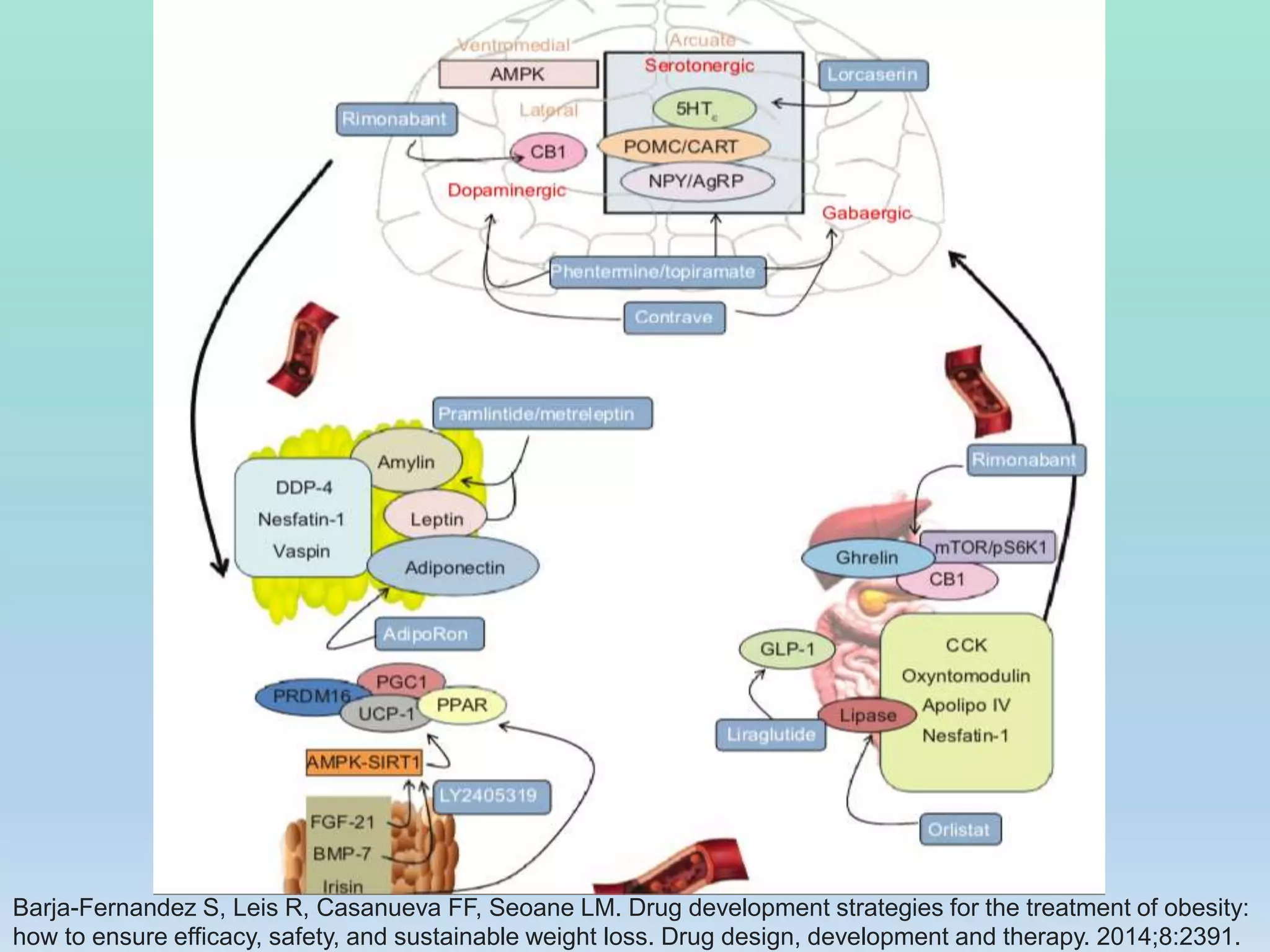
Barja-Fernandez S, Leis R, Casanueva FF, Seoane LM. Drug development strategies for the treatment of obesity:
how to ensure efficacy, safety, and sustainable weight loss. Drug design, development and therapy. 2014;8:2391.
Bariatric surgery
O'Brien P. Surgical Treatment of Obesity. [Updated 2016 Jan 19]. In: De Groot LJ, Chrousos G, Dungan K, et al.,
editors. Endotext [Internet]. South Dartmouth (MA): MDText.com, Inc.; 2000. Available from:
https://www.ncbi.nlm.nih.gov/books/NBK279090/
Indication: BMI > 40 kg/m2 or > 35 kg/m2 with comorbidities
 Roux-en-Y gastric bypass
Vertical-sleeve gastrectomy
 High costs
 Weight regain risk- 5 to 20 % patients
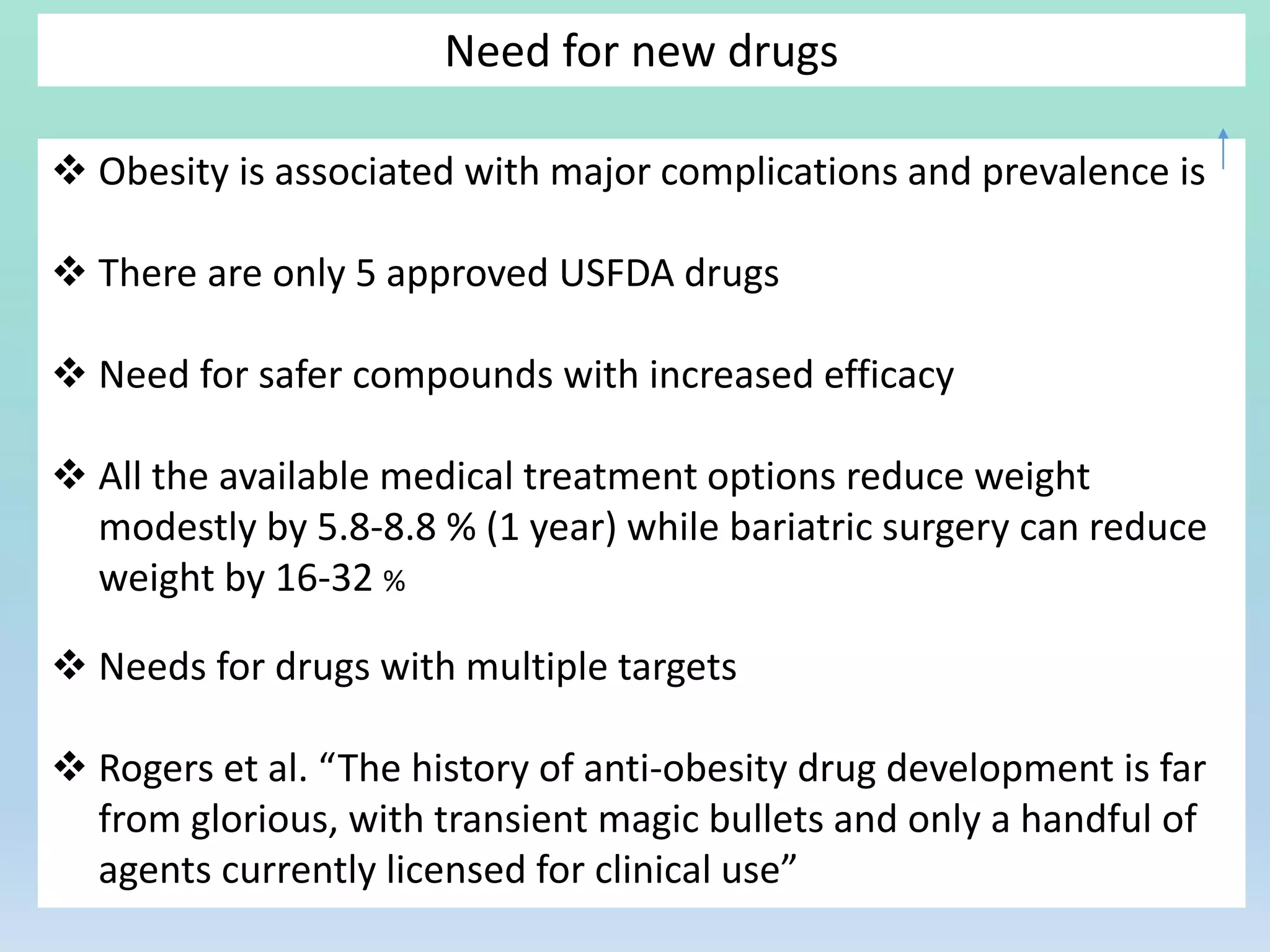
Need for new drugs
 Obesity is associated with major complications and prevalence is
 There are only 5 approved USFDA drugs
 Need for safer compounds with increased efficacy
 All the available medical treatment options reduce weight
modestly by 5.8-8.8 % (1 year) while bariatric surgery can reduce
weight by 16-32 %
 Needs for drugs with multiple targets
 Rogers et al. “The history of anti-obesity drug development is far
from glorious, with transient magic bullets and only a handful of
agents currently licensed for clinical use”
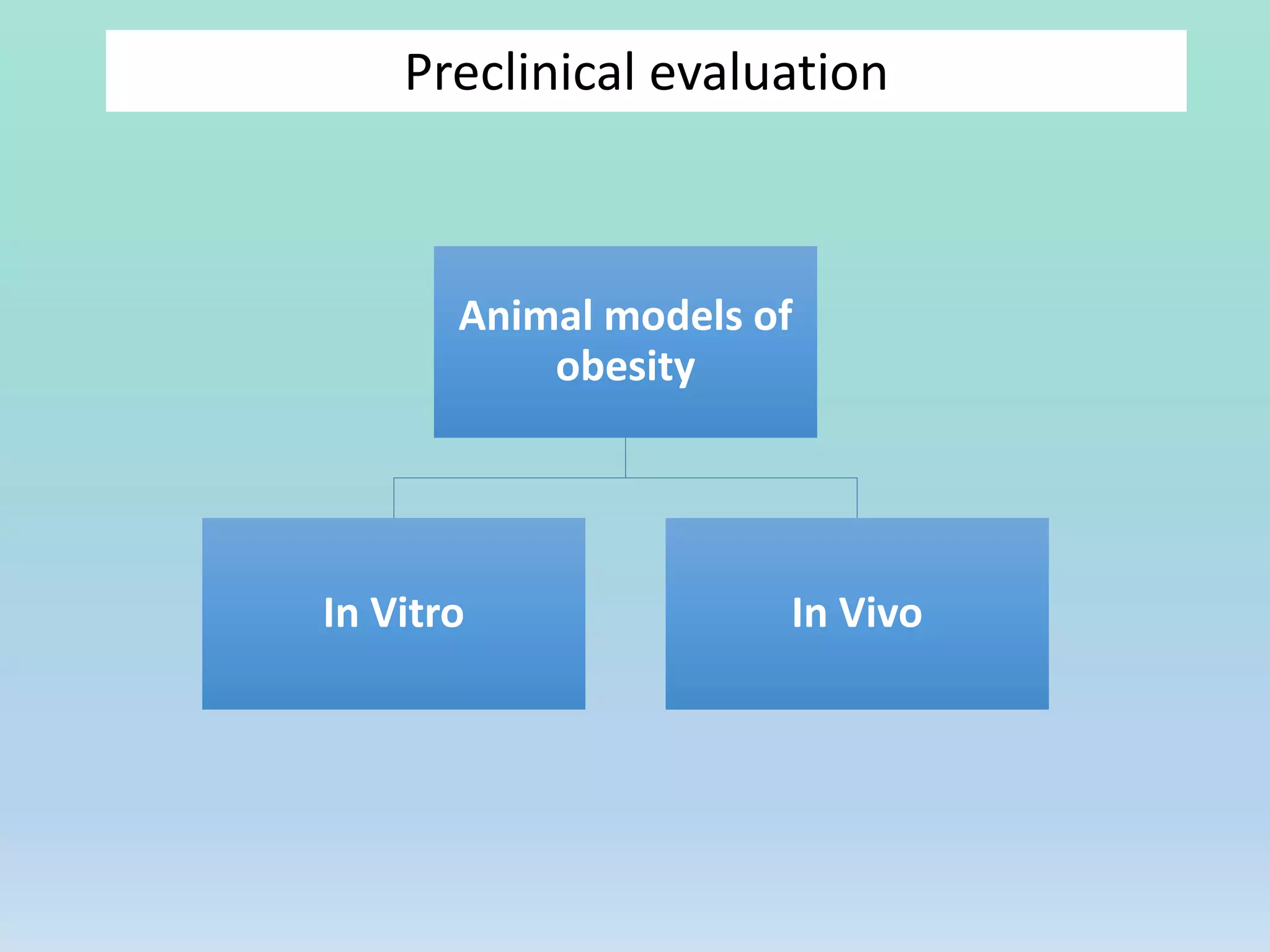
Animal models of
obesity
In Vitro In Vivo
Preclinical evaluation
In Vitro models
1.Determination of plasma leptin
2.Receptor assay for neuropeptide Y
3.Receptor assay of orexin
4.Receptor assay of galanin
5.Adipsin expression in mice
6.β3-adrenoceptor activity
Vogel H. Drug discovery and evaluation. 3rd ed. Berlin: Springer; 2008.
Advantages:
1. A large number of compounds can evaluated in a short period
of time
2. Limited amount of material required
3. Less number of animals required
Disadvantages:
1. Limit discovery of mechanically novel substance
2. Complicated procedures
3. Require technical expertise
4. Costly
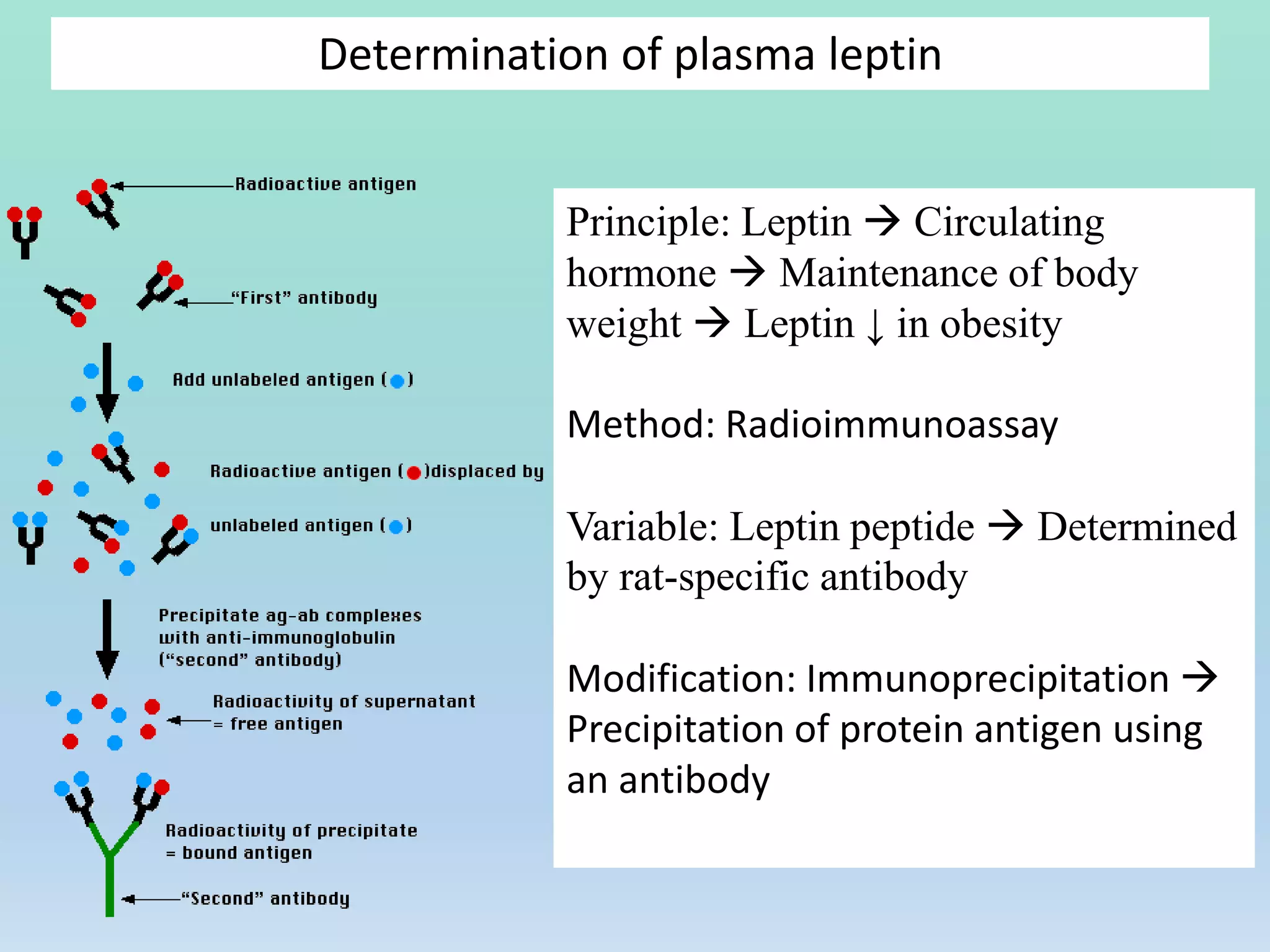
Determination of plasma leptin
Principle: Leptin  Circulating
hormone  Maintenance of body
weight  Leptin ↓ in obesity
Method: Radioimmunoassay
Variable: Leptin peptide  Determined
by rat-specific antibody
Modification: Immunoprecipitation 
Precipitation of protein antigen using
an antibody
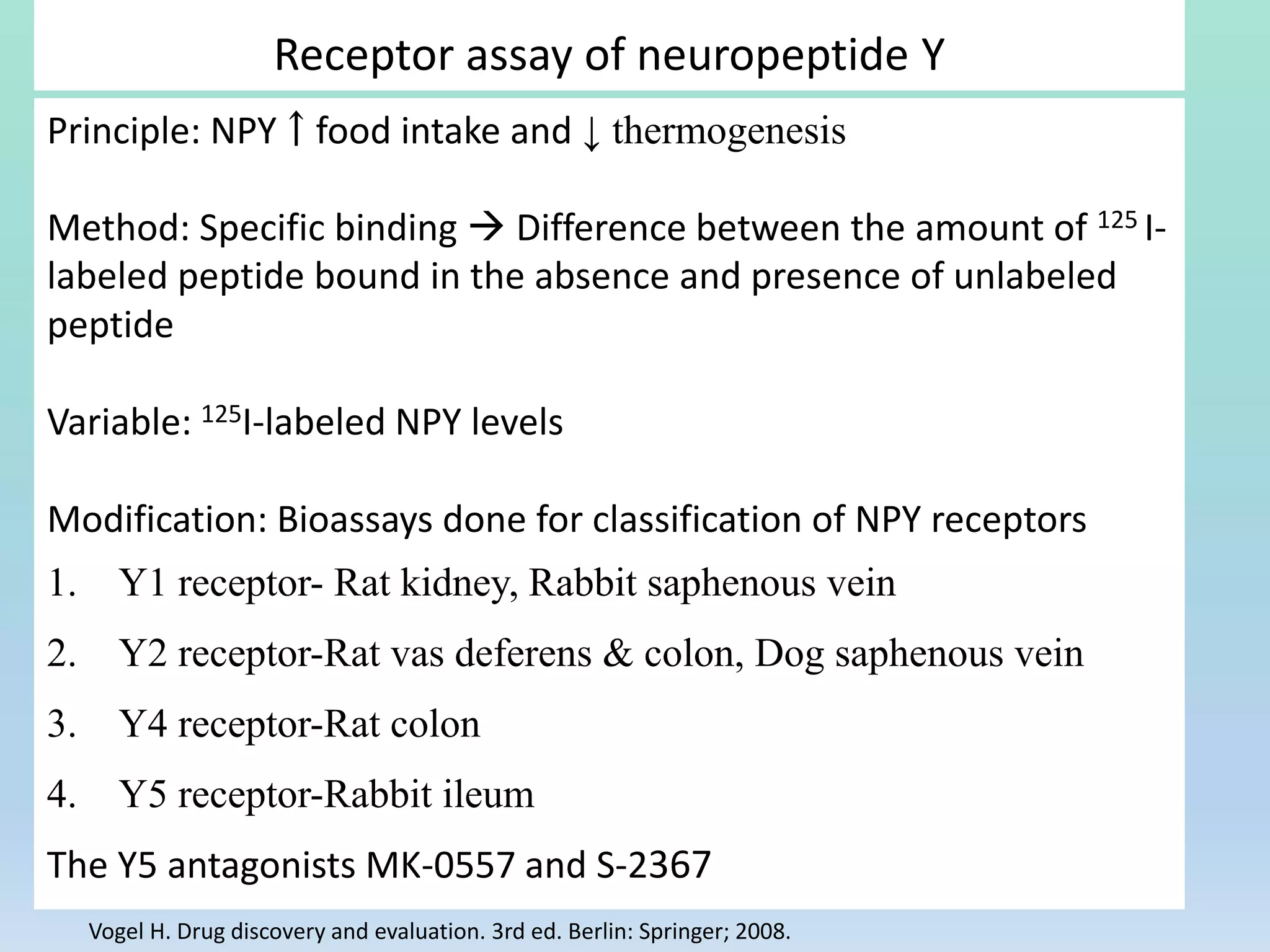
Receptor assay of neuropeptide Y
Principle: NPY ↑ food intake and ↓ thermogenesis
Method: Specific binding  Difference between the amount of 125 I-
labeled peptide bound in the absence and presence of unlabeled
peptide
Variable: 125I-labeled NPY levels
Modification: Bioassays done for classification of NPY receptors
1. Y1 receptor- Rat kidney, Rabbit saphenous vein
2. Y2 receptor-Rat vas deferens & colon, Dog saphenous vein
3. Y4 receptor-Rat colon
4. Y5 receptor-Rabbit ileum
The Y5 antagonists MK-0557 and S-2367
Vogel H. Drug discovery and evaluation. 3rd ed. Berlin: Springer; 2008.
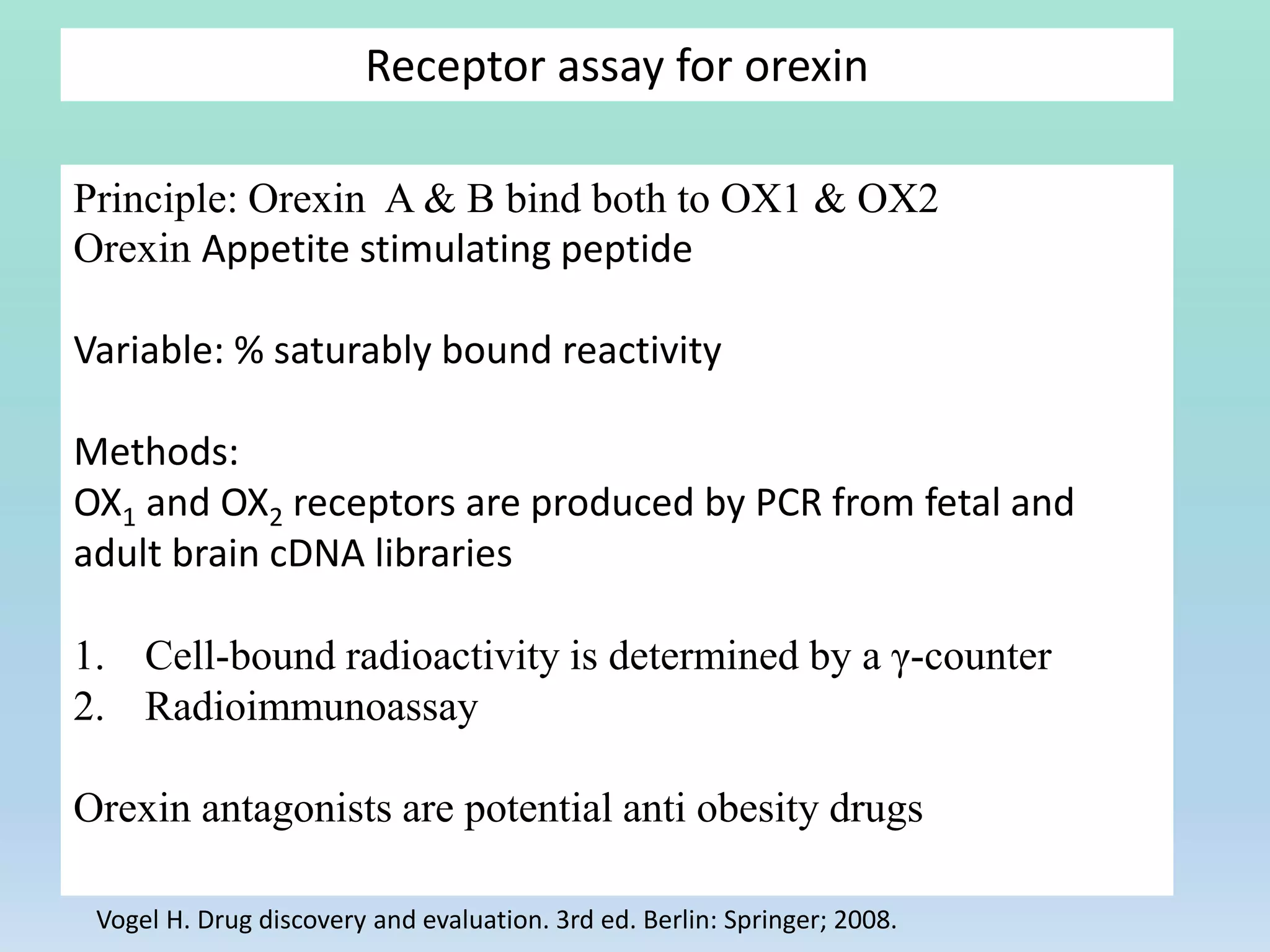
Receptor assay for orexin
Principle: Orexin A & B bind both to OX1 & OX2
Orexin Appetite stimulating peptide
Variable: % saturably bound reactivity
Methods:
OX1 and OX2 receptors are produced by PCR from fetal and
adult brain cDNA libraries
1. Cell-bound radioactivity is determined by a γ-counter
2. Radioimmunoassay
Orexin antagonists are potential anti obesity drugs
Vogel H. Drug discovery and evaluation. 3rd ed. Berlin: Springer; 2008.
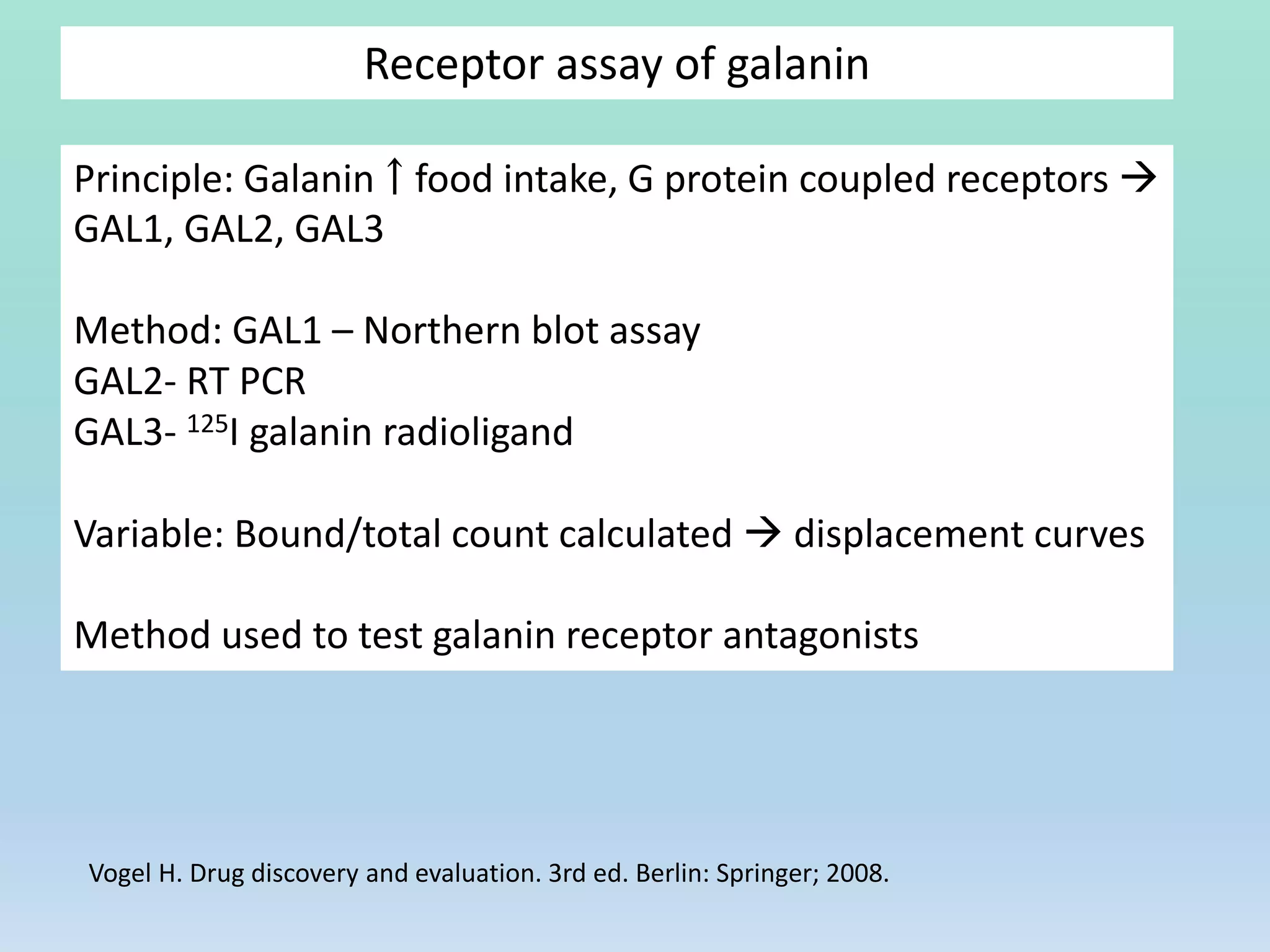
Receptor assay of galanin
Principle: Galanin ↑ food intake, G protein coupled receptors 
GAL1, GAL2, GAL3
Method: GAL1 – Northern blot assay
GAL2- RT PCR
GAL3- 125I galanin radioligand
Variable: Bound/total count calculated  displacement curves
Method used to test galanin receptor antagonists
Vogel H. Drug discovery and evaluation. 3rd ed. Berlin: Springer; 2008.
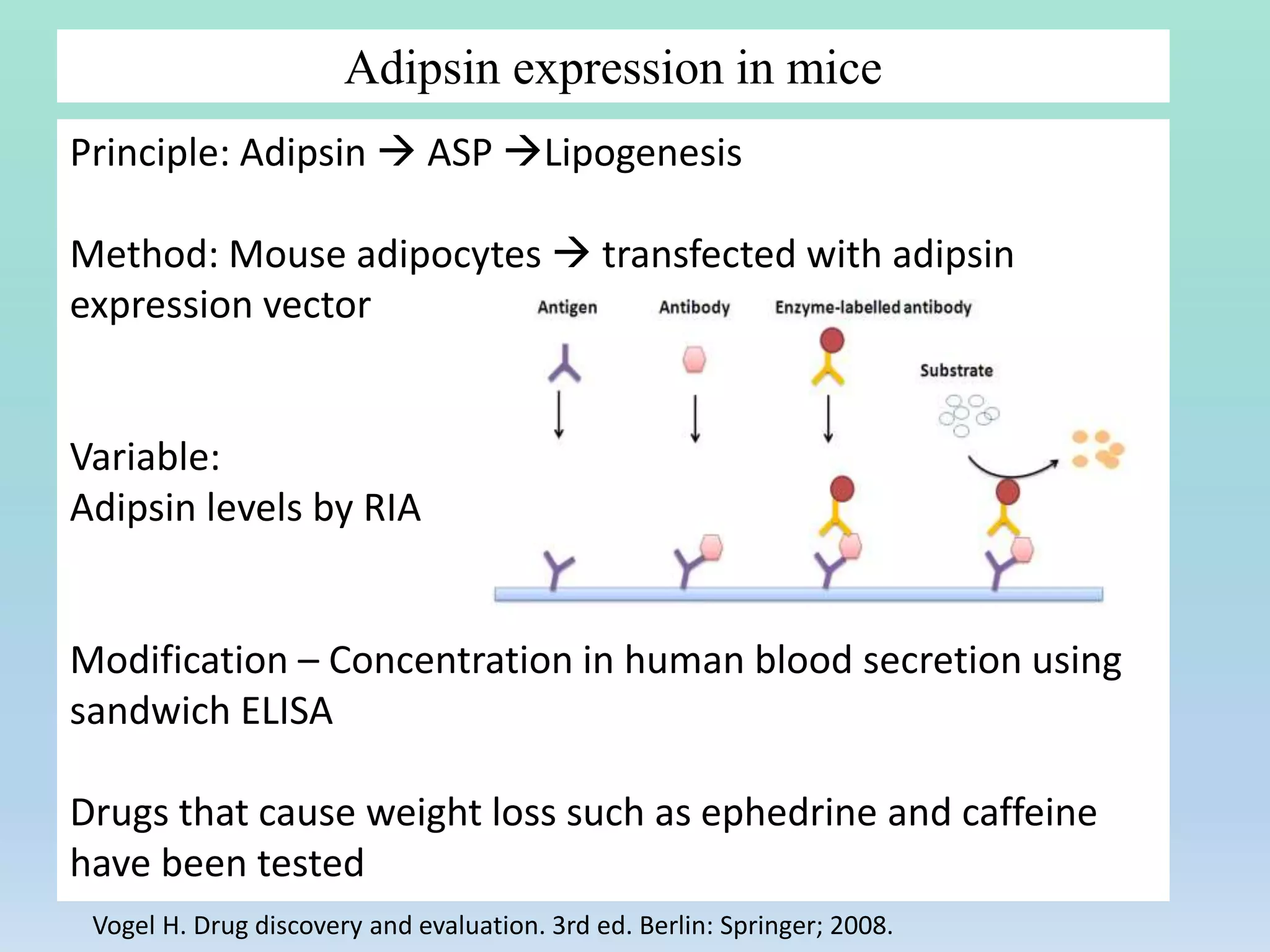
Adipsin expression in mice
Principle: Adipsin  ASP Lipogenesis
Method: Mouse adipocytes  transfected with adipsin
expression vector
Variable:
Adipsin levels by RIA
Modification – Concentration in human blood secretion using
sandwich ELISA
Drugs that cause weight loss such as ephedrine and caffeine
have been tested
Vogel H. Drug discovery and evaluation. 3rd ed. Berlin: Springer; 2008.
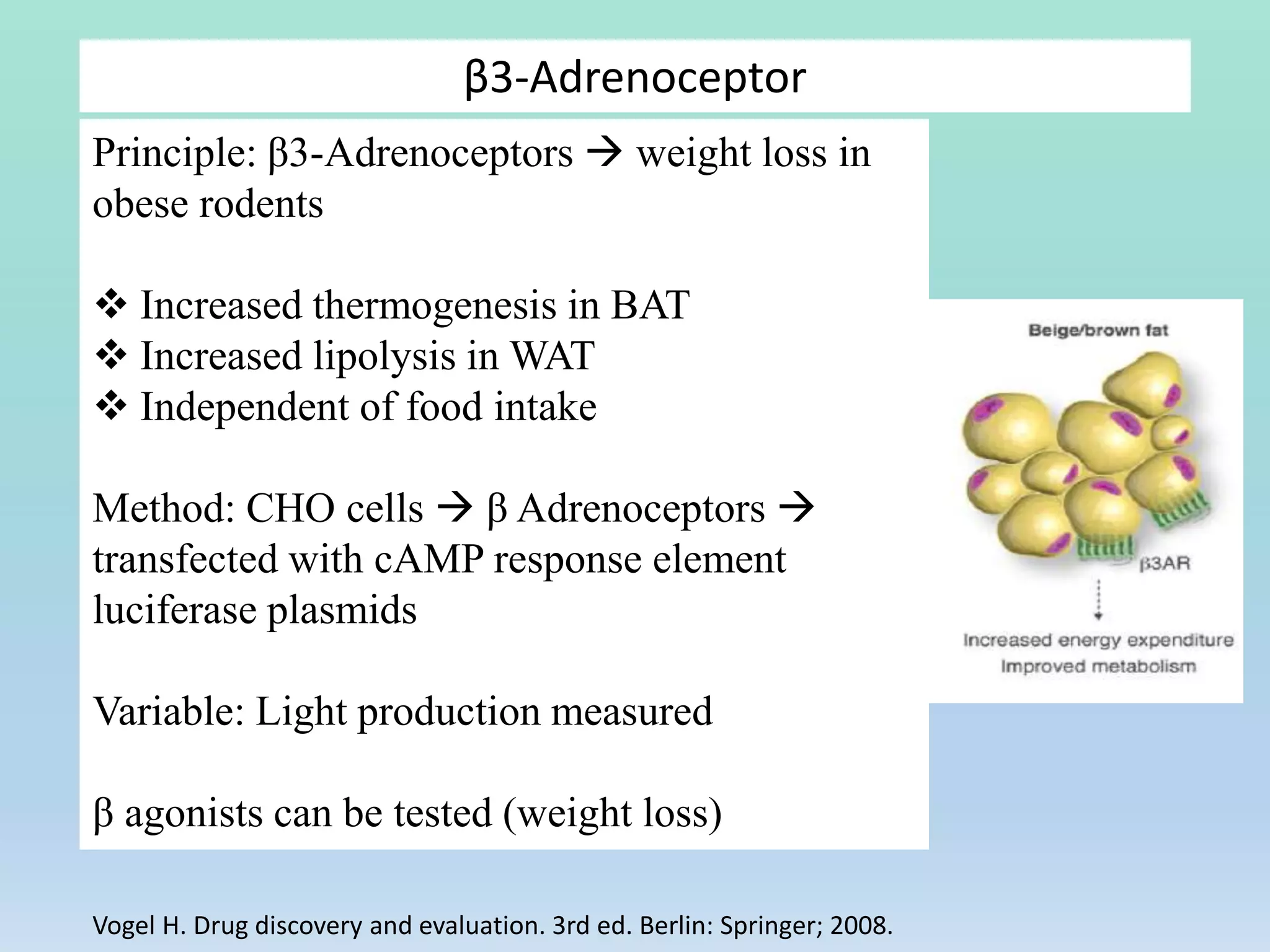
β3-Adrenoceptor
Principle: β3-Adrenoceptors  weight loss in
obese rodents
 Increased thermogenesis in BAT
 Increased lipolysis in WAT
 Independent of food intake
Method: CHO cells  β Adrenoceptors 
transfected with cAMP response element
luciferase plasmids
Variable: Light production measured
β agonists can be tested (weight loss)
Vogel H. Drug discovery and evaluation. 3rd ed. Berlin: Springer; 2008.
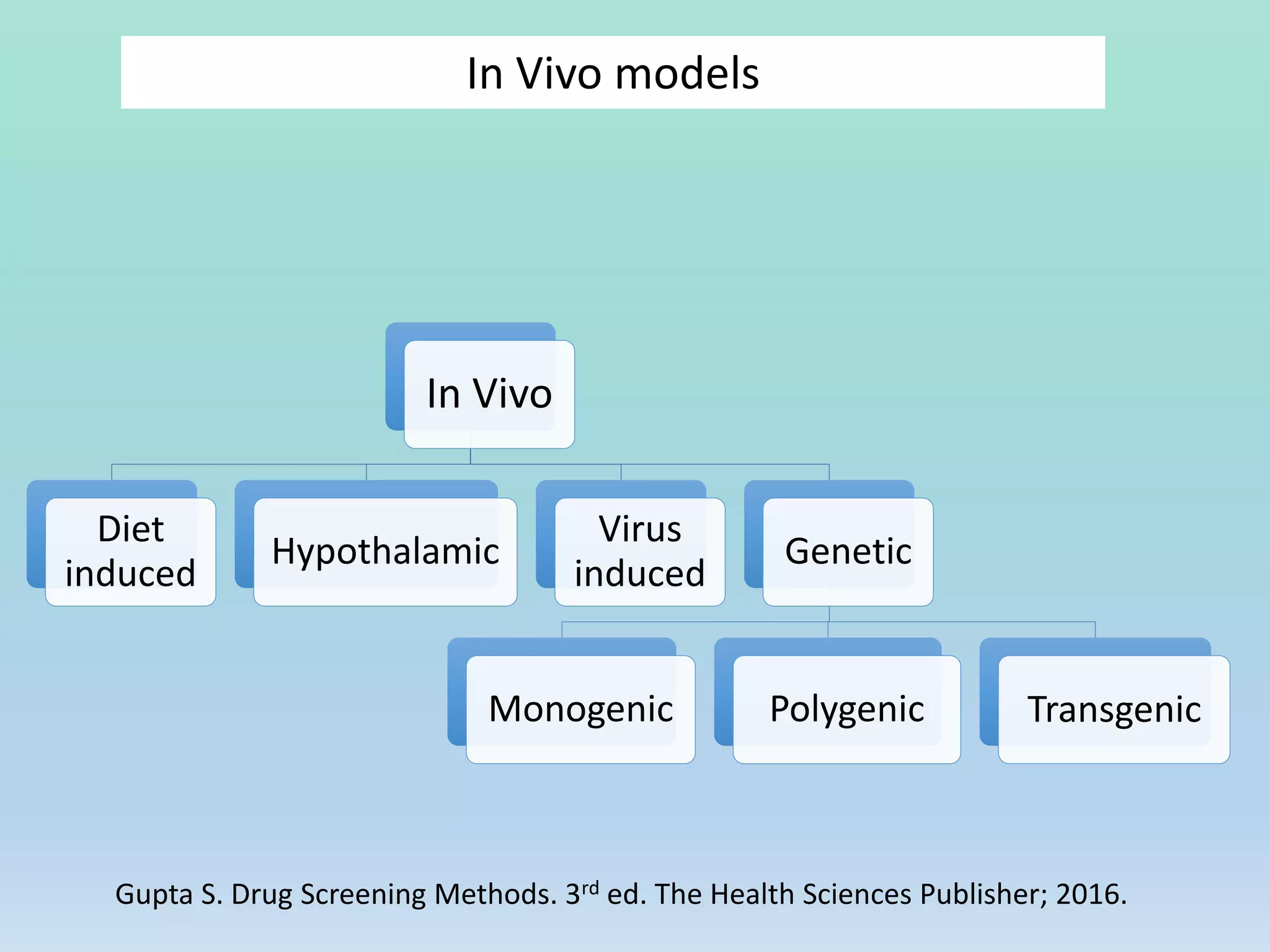
In Vivo models
In Vivo
Diet
induced
Hypothalamic
Virus
induced
Genetic
Monogenic Polygenic Transgenic
Gupta S. Drug Screening Methods. 3rd ed. The Health Sciences Publisher; 2016.
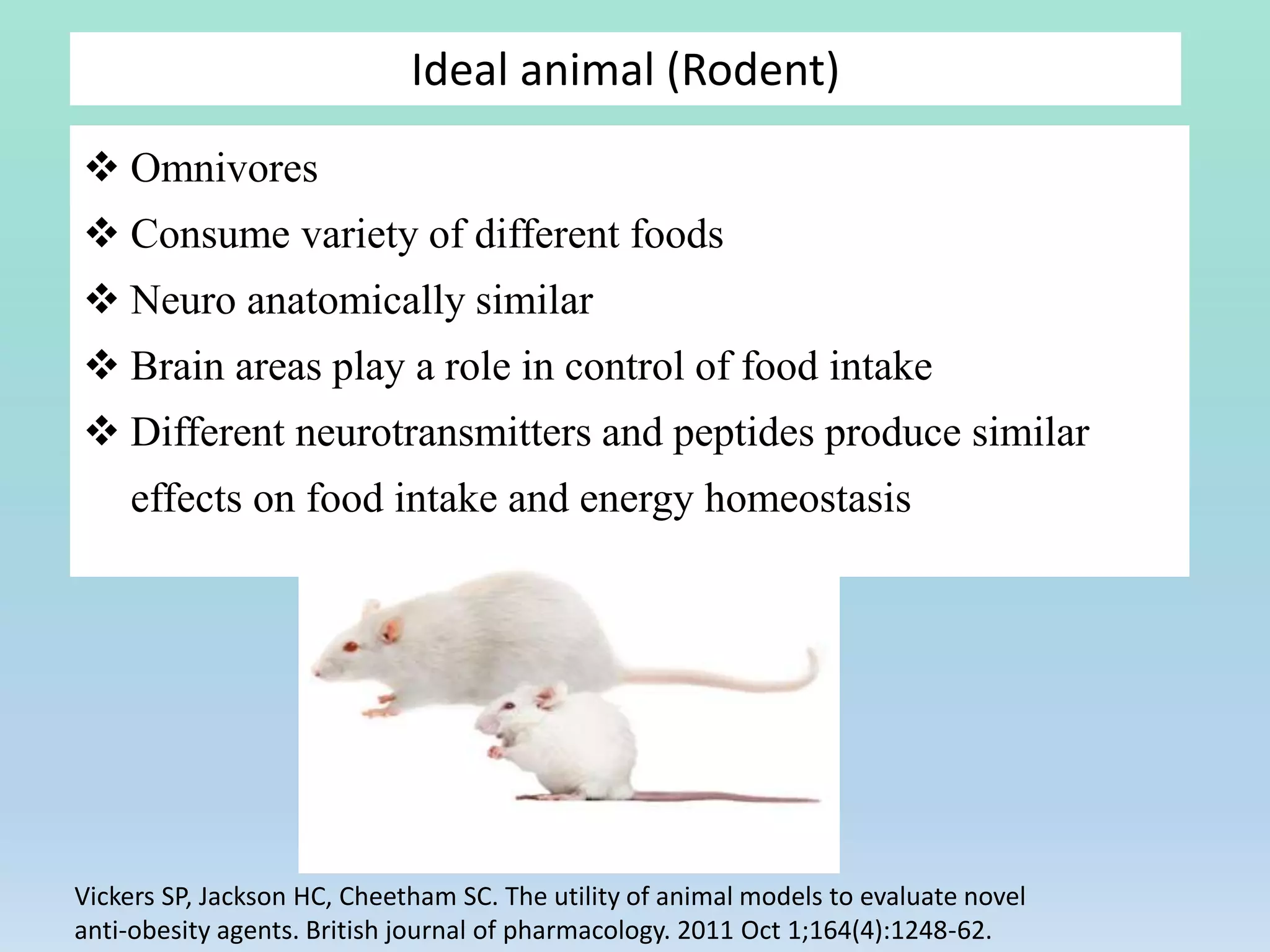
 Omnivores
 Consume variety of different foods
 Neuro anatomically similar
 Brain areas play a role in control of food intake
 Different neurotransmitters and peptides produce similar
effects on food intake and energy homeostasis
Ideal animal (Rodent)
Vickers SP, Jackson HC, Cheetham SC. The utility of animal models to evaluate novel
anti‐obesity agents. British journal of pharmacology. 2011 Oct 1;164(4):1248-62.
Disadvantages
 Phylogenetically not closely related to humans
 Difference in physiology of rodents and human (rats do not
have a vomit reflex or gall bladder)
 Feeding and housing environment different (20–23°C)
Energy to keep warm
 Complex psychological factors not taken into account
Vickers SP, Jackson HC, Cheetham SC. The utility of animal models to evaluate novel
anti‐obesity agents. British journal of pharmacology. 2011 Oct 1;164(4):1248-62.
 Construct validity  Cause of disorder mimicked
 Face validity  Characteristics and specific symptoms
mimicked
 Predictive validity  Effects of pharmacological manipulation
identical
Ideal animal model of obesity
Vickers SP, Jackson HC, Cheetham SC. The utility of animal models to evaluate novel
anti‐obesity agents. British journal of pharmacology. 2011 Oct 1;164(4):1248-62.
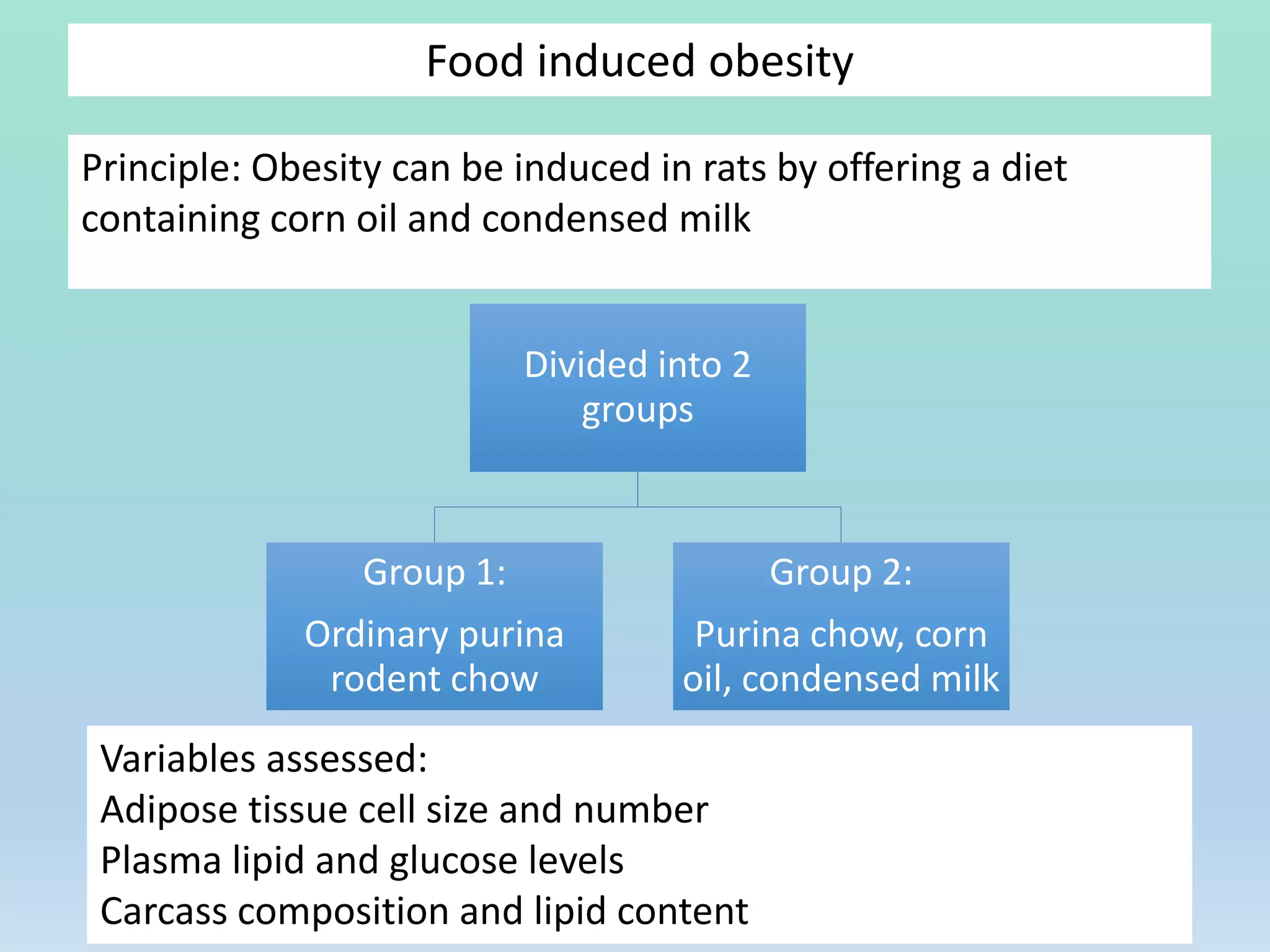
Food induced obesity
Divided into 2
groups
Group 1:
Ordinary purina
rodent chow
Group 2:
Purina chow, corn
oil, condensed milk
Principle: Obesity can be induced in rats by offering a diet
containing corn oil and condensed milk
Variables assessed:
Adipose tissue cell size and number
Plasma lipid and glucose levels
Carcass composition and lipid content
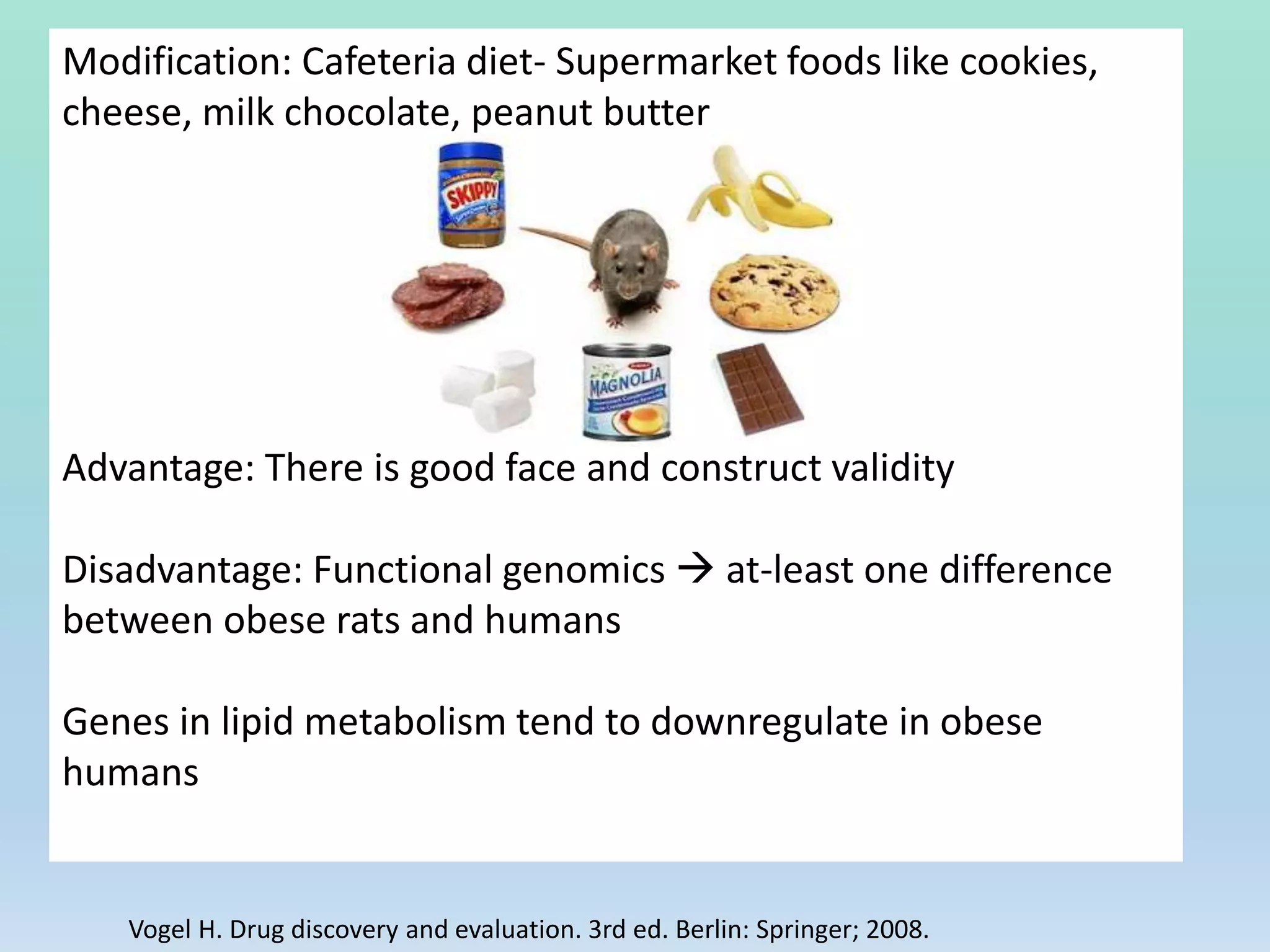
Modification: Cafeteria diet- Supermarket foods like cookies,
cheese, milk chocolate, peanut butter
Advantage: There is good face and construct validity
Disadvantage: Functional genomics  at-least one difference
between obese rats and humans
Genes in lipid metabolism tend to downregulate in obese
humans
Vogel H. Drug discovery and evaluation. 3rd ed. Berlin: Springer; 2008.
Food consumption
Principle: Anorectic activity
Method: Manzidol 3 mg/kg i.p. or 10 mg/kg p.o. standard
Treatment continued for 7 days
Variables assessed:
Individual food intakes in grams at specified time
Average food intake and body weight each day
Oral administration results to be confirmed by parenteral route
 To avoid palatability
Vogel H. Drug discovery and evaluation. 3rd ed. Berlin: Springer; 2008.
Modifications:
Frequency, amount & duration of feed
Stimulation for eating by food deprived technique
Automated feeding monitors
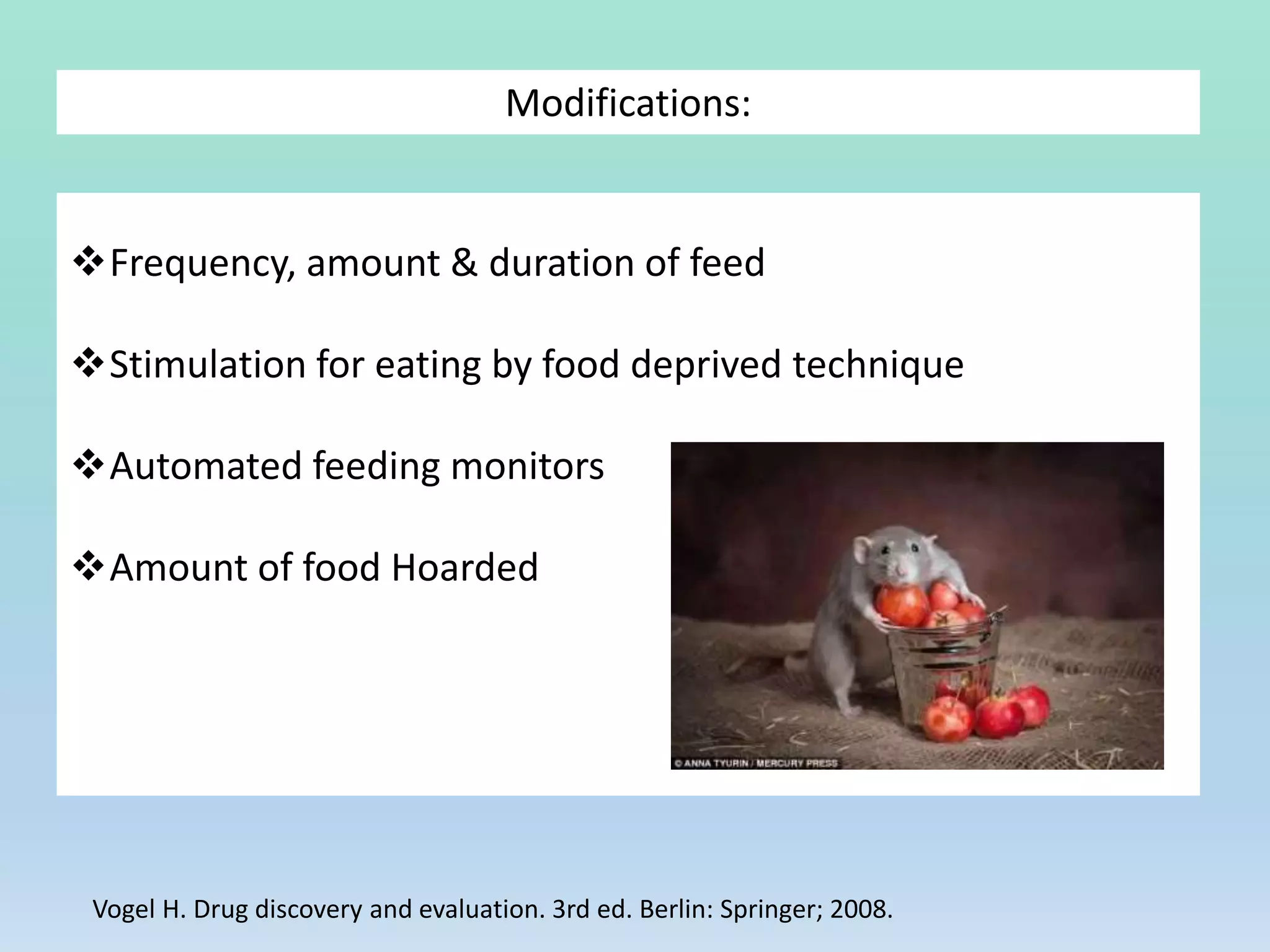
Amount of food Hoarded
Vogel H. Drug discovery and evaluation. 3rd ed. Berlin: Springer; 2008.
Acute models of food intake
• Lean rodents
• Re-feeding models vs freely-feeding
• Mice preferred since amount of compound less
• 5HT6 agonists  Rats
• Duration- 1 week
Chronic models of food intake
• Obese rodents
• Duration- 2-3 months
• More representative of humans
Vogel H. Drug discovery and evaluation. 3rd ed. Berlin: Springer; 2008.
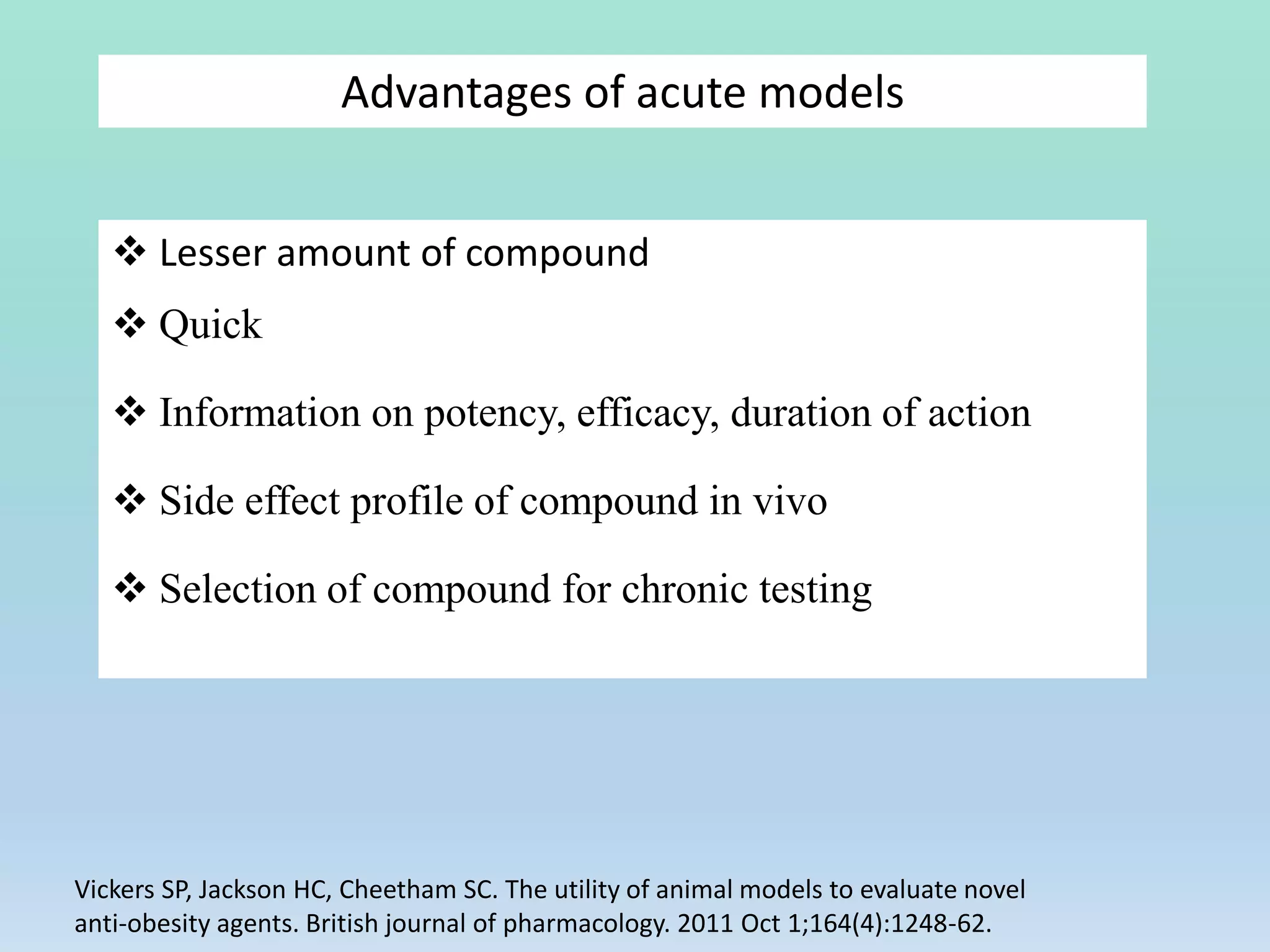
Advantages of acute models
 Lesser amount of compound
 Quick
 Information on potency, efficacy, duration of action
 Side effect profile of compound in vivo
 Selection of compound for chronic testing
Vickers SP, Jackson HC, Cheetham SC. The utility of animal models to evaluate novel
anti‐obesity agents. British journal of pharmacology. 2011 Oct 1;164(4):1248-62.
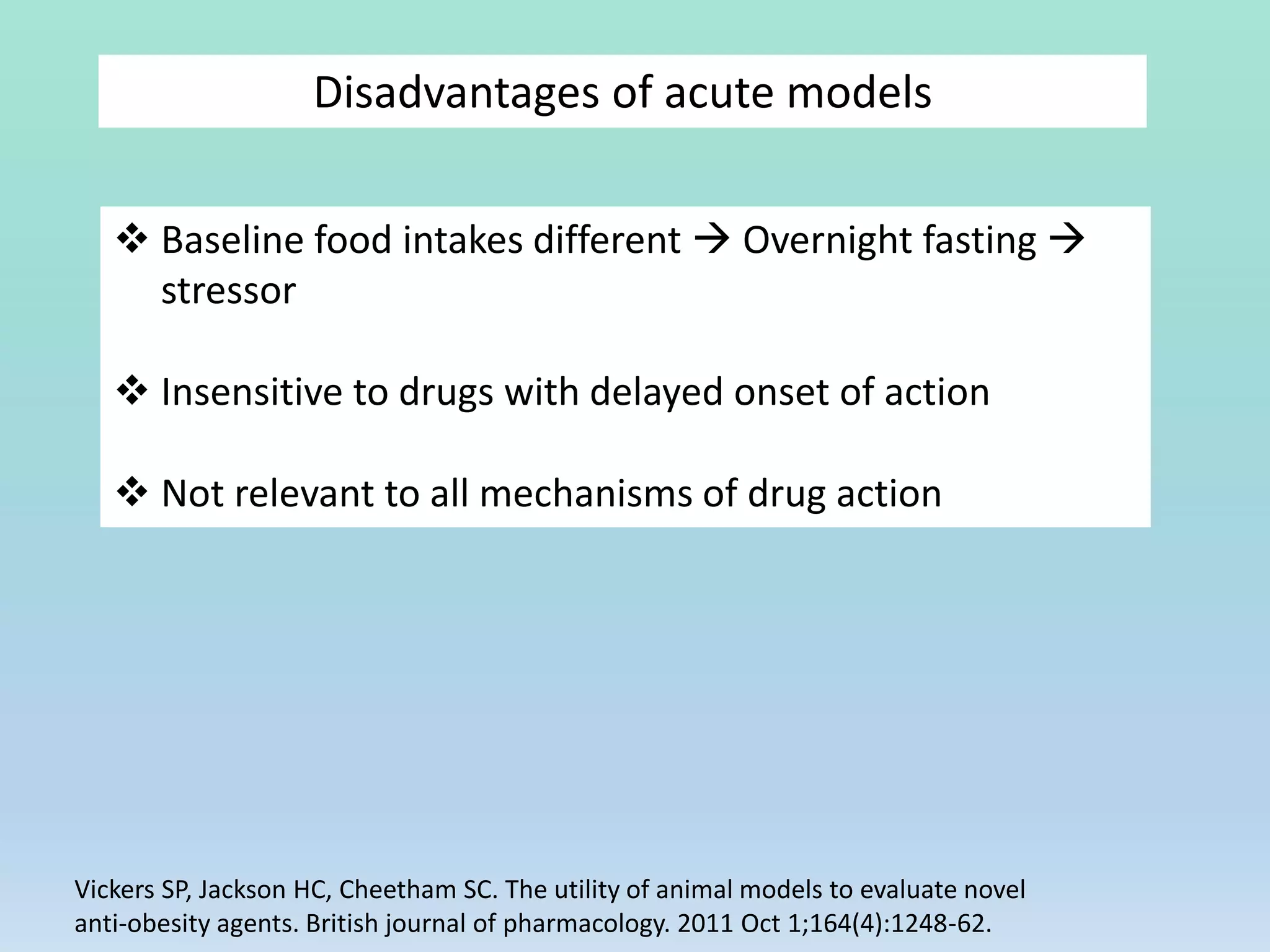
Disadvantages of acute models
 Baseline food intakes different  Overnight fasting 
stressor
 Insensitive to drugs with delayed onset of action
 Not relevant to all mechanisms of drug action
Vickers SP, Jackson HC, Cheetham SC. The utility of animal models to evaluate novel
anti‐obesity agents. British journal of pharmacology. 2011 Oct 1;164(4):1248-62.
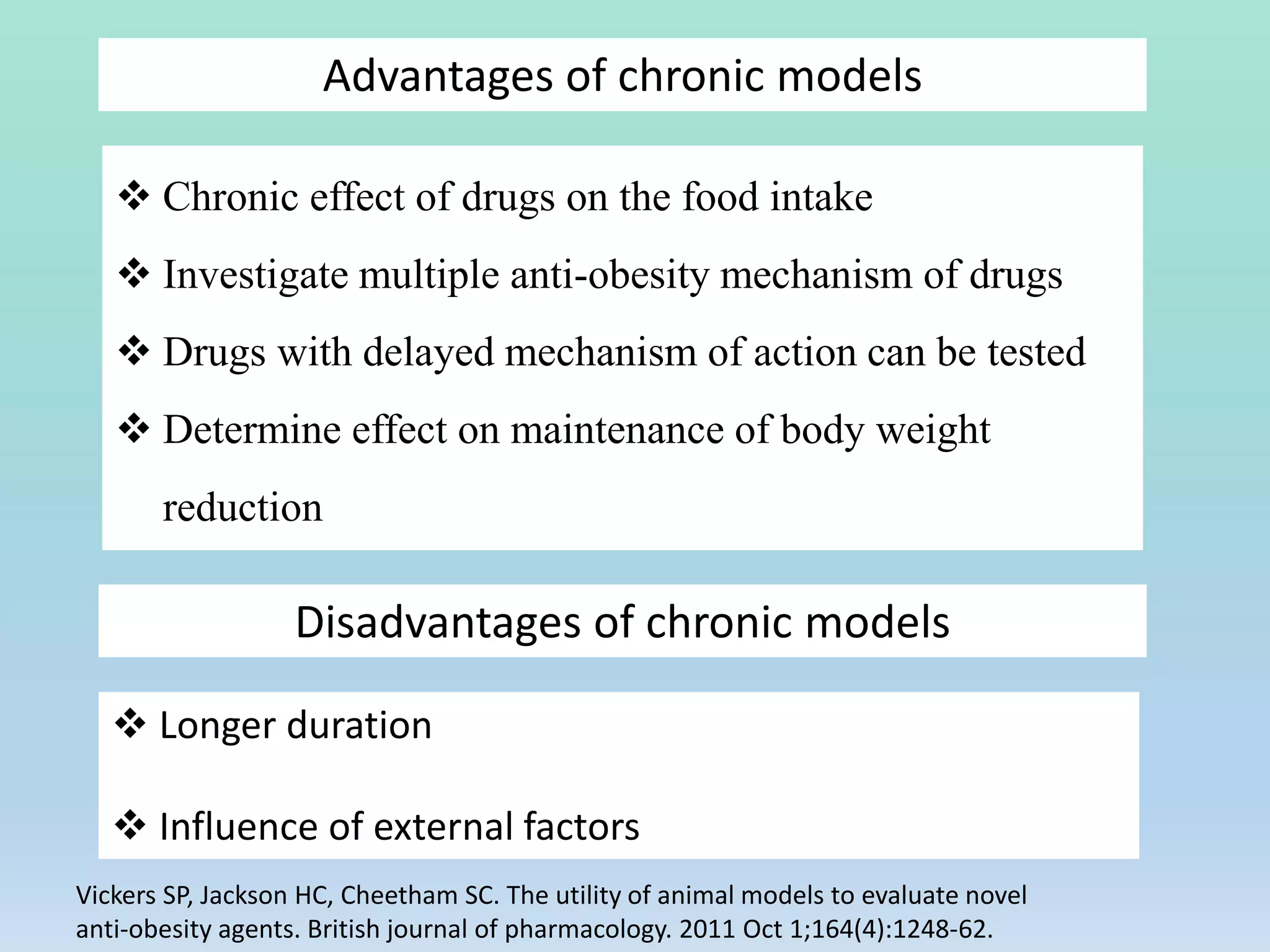
Advantages of chronic models
 Chronic effect of drugs on the food intake
 Investigate multiple anti-obesity mechanism of drugs
 Drugs with delayed mechanism of action can be tested
 Determine effect on maintenance of body weight
reduction
Disadvantages of chronic models
 Longer duration
 Influence of external factors
Vickers SP, Jackson HC, Cheetham SC. The utility of animal models to evaluate novel
anti‐obesity agents. British journal of pharmacology. 2011 Oct 1;164(4):1248-62.
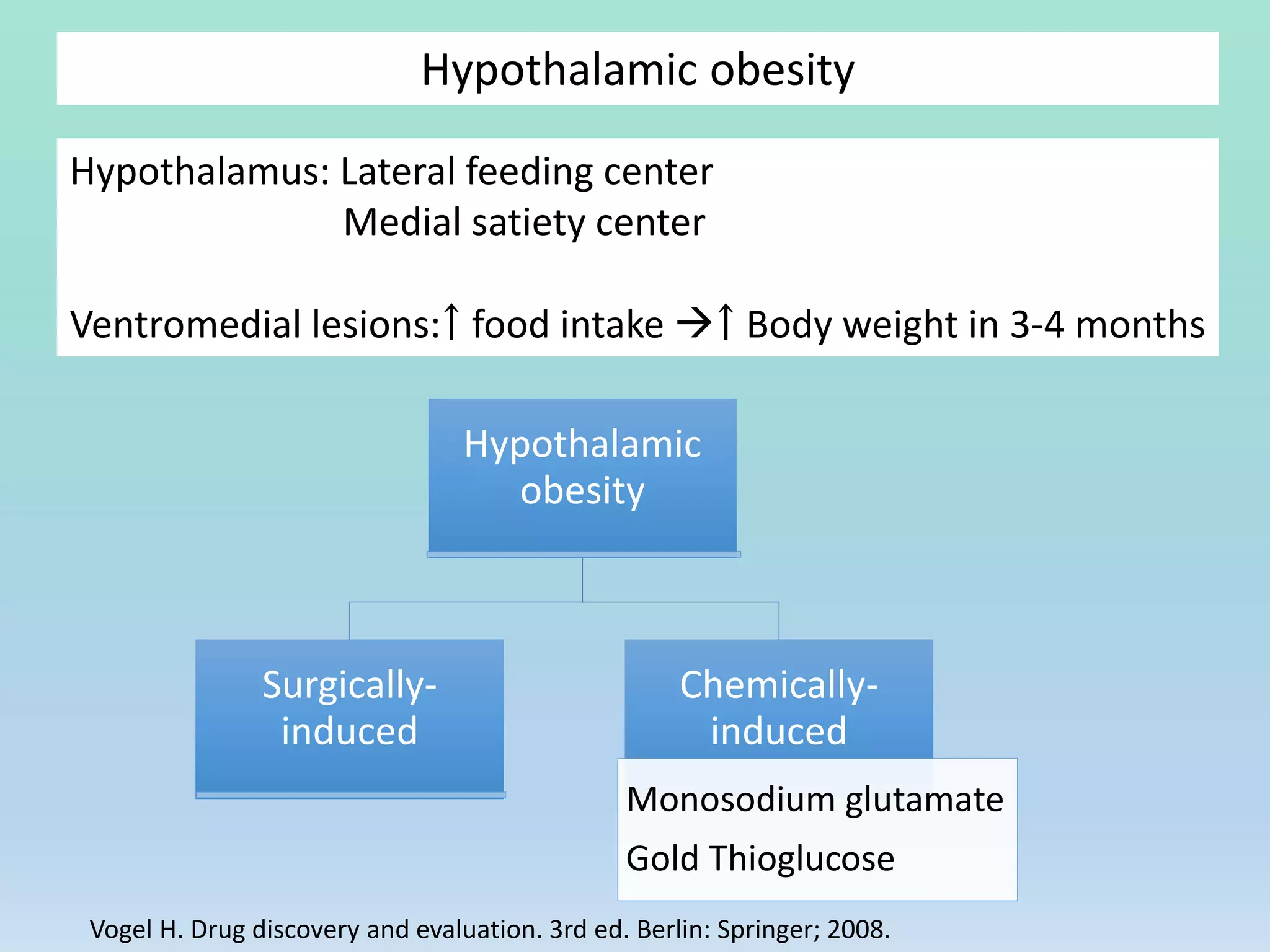
Hypothalamic obesity
Hypothalamus: Lateral feeding center
Medial satiety center
Ventromedial lesions:↑ food intake ↑ Body weight in 3-4 months
Hypothalamic
obesity
Surgically-
induced
Chemically-
induced
Monosodium glutamate
Gold Thioglucose
Vogel H. Drug discovery and evaluation. 3rd ed. Berlin: Springer; 2008.
Surgically induced hypothalamic obesity
Principle: Hyperphagia in rats has been reported after
hypothalamic lesions
Methods: Ventromedial hypothalamus Partial lesions induced
sterotaxically
Variables assessed:
Body weight
Brown adipose tissue enzymes
Guanosine diphosphate binding to brown adipose tissue
Modification: Enhanced expression of rat obese (ob) gene in
adipose tissue of ventromedial hypothalamus (VMH) lesioned
rats
Vogel H. Drug discovery and evaluation. 3rd ed. Berlin: Springer; 2008.
Chemically induced hypothalamic obesity
Monosodium glutamate-induced obesity
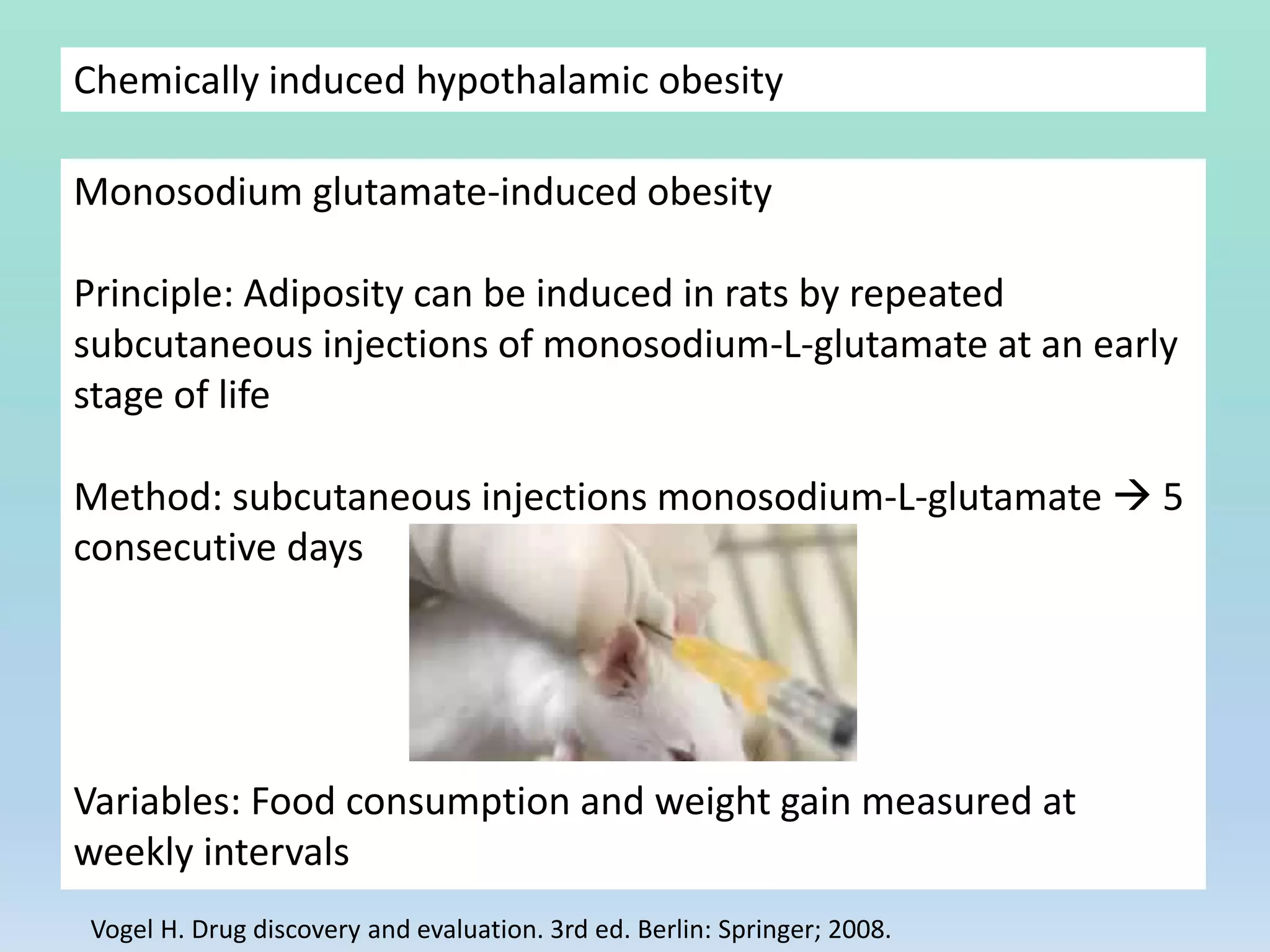
Principle: Adiposity can be induced in rats by repeated
subcutaneous injections of monosodium-L-glutamate at an early
stage of life
Method: subcutaneous injections monosodium-L-glutamate  5
consecutive days
Variables: Food consumption and weight gain measured at
weekly intervals
Vogel H. Drug discovery and evaluation. 3rd ed. Berlin: Springer; 2008.
Chemically induced hypothalamic obesity
Goldthioglucose induced obesity
Principle: Intraperitoneal or intramuscular injection of
Goldthioglucose  obesity in mice  Fragmentary disruption of
hypothalamic and extra-hypothalamic areas of the brain
Method: Single intraperitoneal injection of Goldthioglucose
Variables: Food intake registered (2 weeks) and body weight (3
months)
Modifications:
Bipiperidyl mustard  Rats
Obesity in mice  Single intracerebral injection with 4-
nitorquinolone-l-oxide
Virus- Induced obesity
Principle: Canine distemper virus  Disruption of
catecholamine pathways  Obesity (8-10 weeks)
Methodology: Virus inoculated in mice intranasally
Variable: Body weight
Adipose cell size and number
Modification: Borna disease virus in rats
Gupta S. Drug Screening Methods. 3rd ed. The Health Sciences Publisher; 2016.
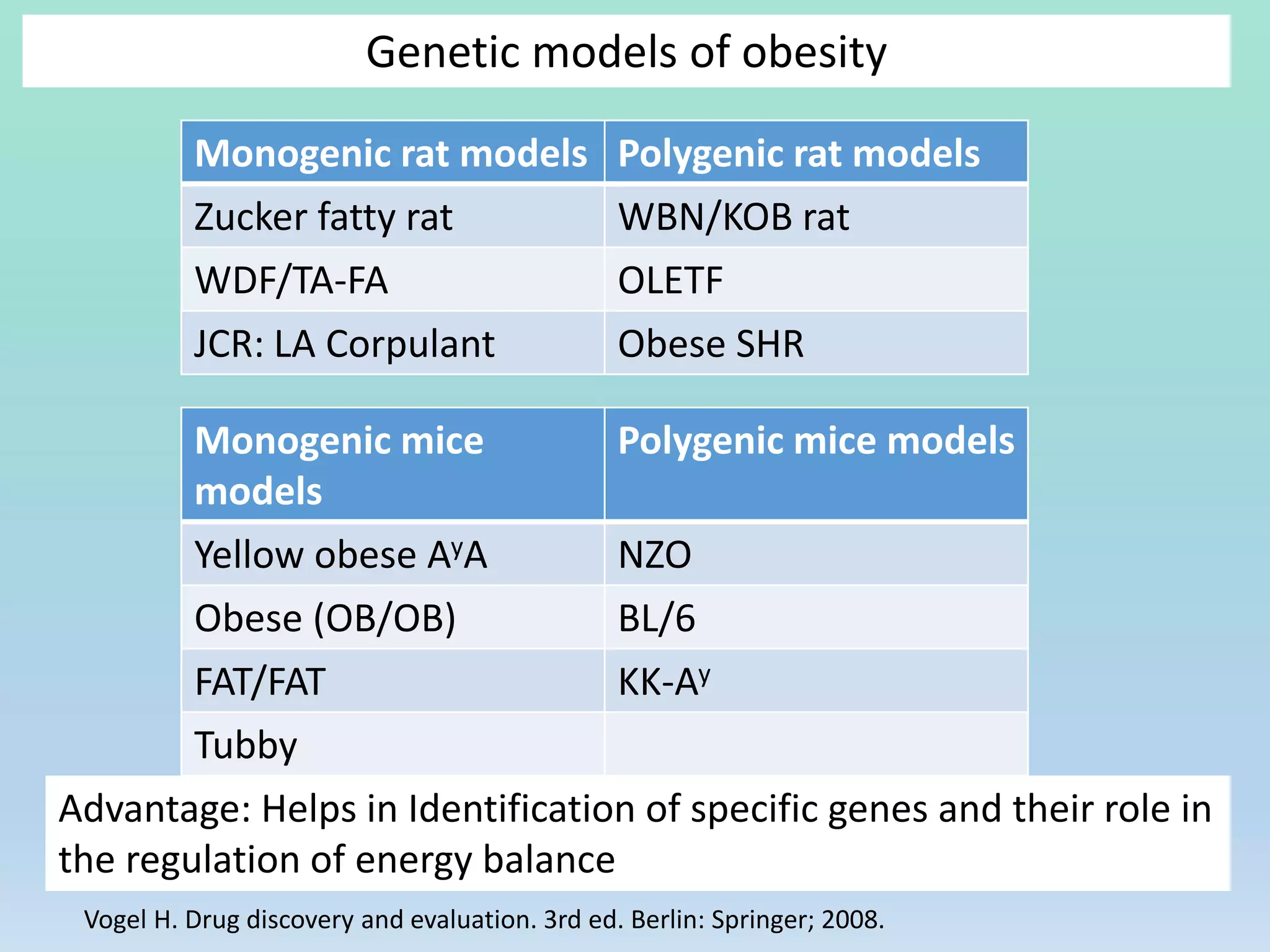
Genetic models of obesity
Monogenic rat models Polygenic rat models
Zucker fatty rat WBN/KOB rat
WDF/TA-FA OLETF
JCR: LA Corpulant Obese SHR
Monogenic mice
models
Polygenic mice models
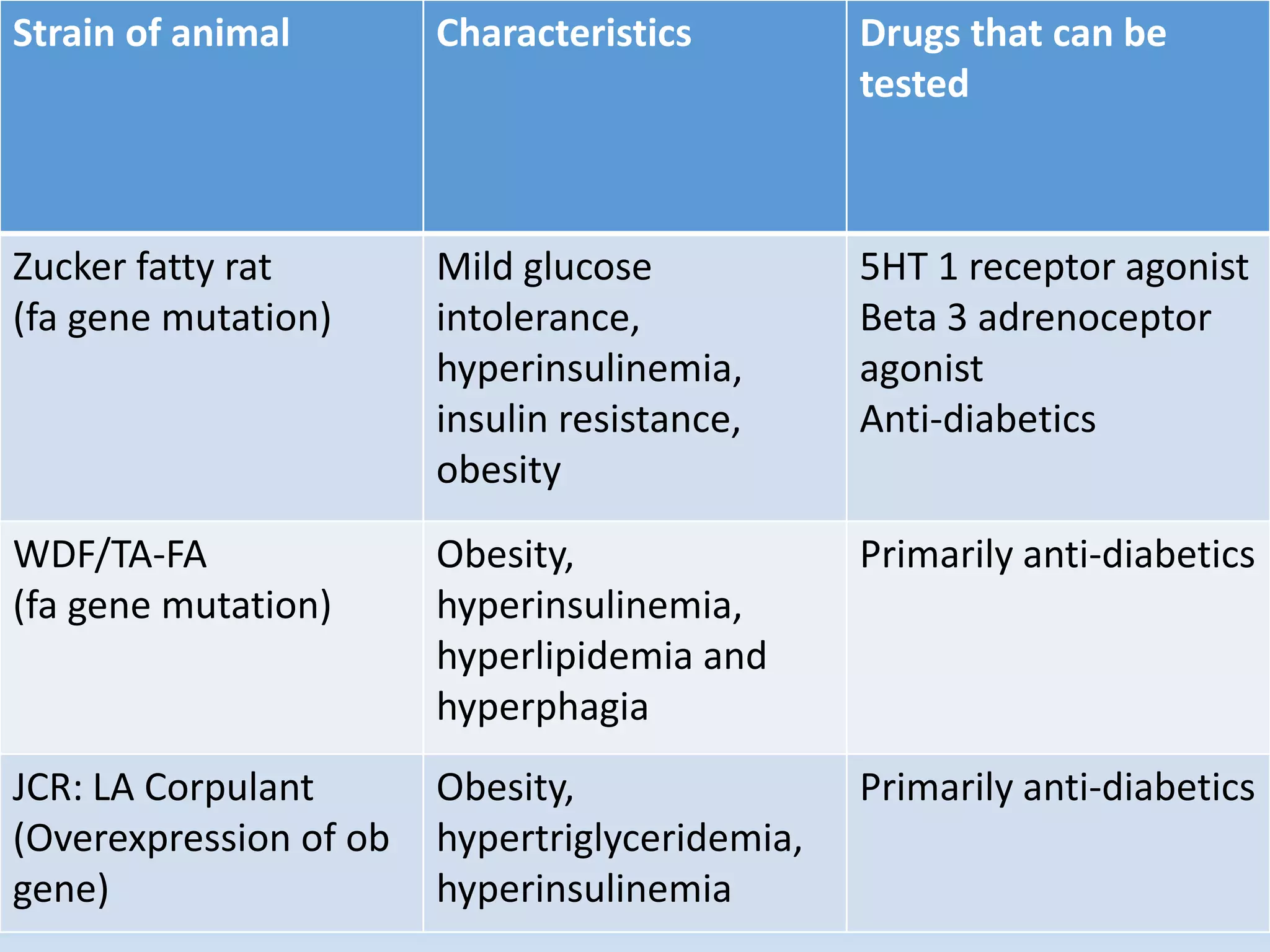
Yellow obese AyA NZO
Obese (OB/OB) BL/6
FAT/FAT KK-Ay
Tubby
Advantage: Helps in Identification of specific genes and their role in
the regulation of energy balance
Vogel H. Drug discovery and evaluation. 3rd ed. Berlin: Springer; 2008.
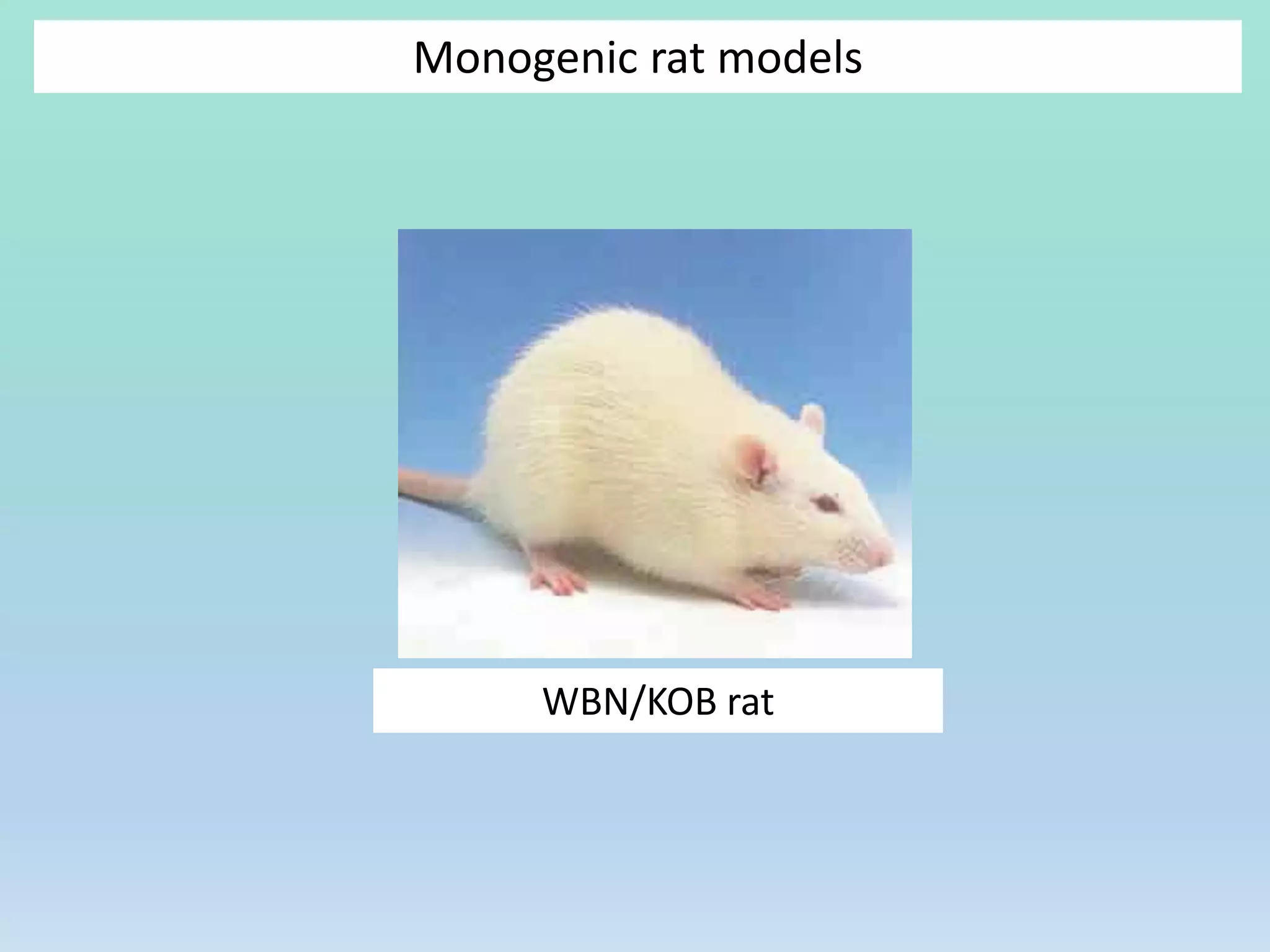
Monogenic rat models
WBN/KOB rat
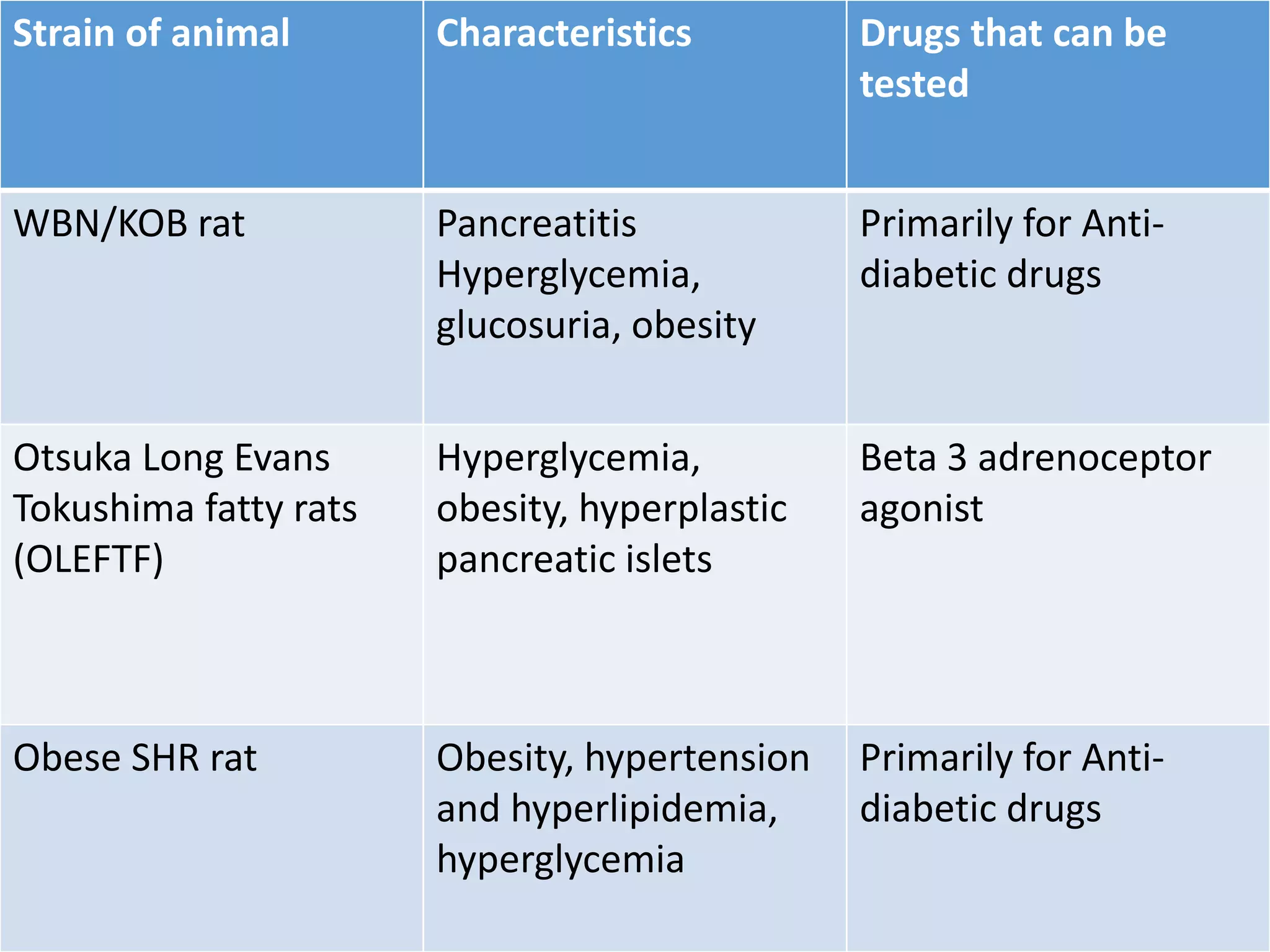
Strain of animal Characteristics Drugs that can be
tested
WBN/KOB rat Pancreatitis
Hyperglycemia,
glucosuria, obesity
Primarily for Anti-
diabetic drugs
Otsuka Long Evans
Tokushima fatty rats
(OLEFTF)
Hyperglycemia,
obesity, hyperplastic
pancreatic islets
Beta 3 adrenoceptor
agonist
Obese SHR rat Obesity, hypertension
and hyperlipidemia,
hyperglycemia
Primarily for Anti-
diabetic drugs
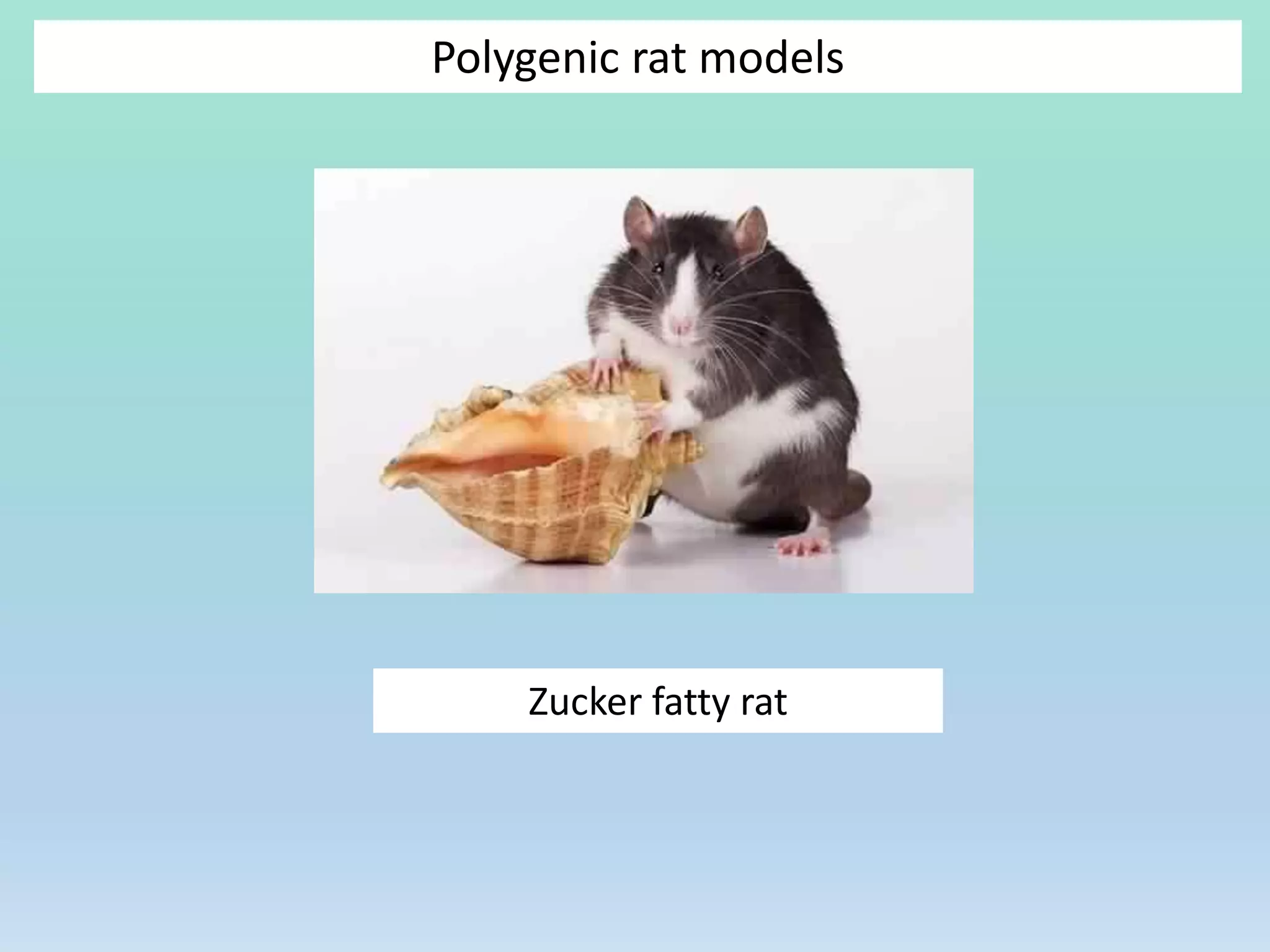
Polygenic rat models
Zucker fatty rat
Strain of animal Characteristics Drugs that can be
tested
Zucker fatty rat
(fa gene mutation)
Mild glucose
intolerance,
hyperinsulinemia,
insulin resistance,
obesity
5HT 1 receptor agonist
Beta 3 adrenoceptor
agonist
Anti-diabetics
WDF/TA-FA
(fa gene mutation)
Obesity,
hyperinsulinemia,
hyperlipidemia and
hyperphagia
Primarily anti-diabetics
JCR: LA Corpulant
(Overexpression of ob
gene)
Obesity,
hypertriglyceridemia,
hyperinsulinemia
Primarily anti-diabetics
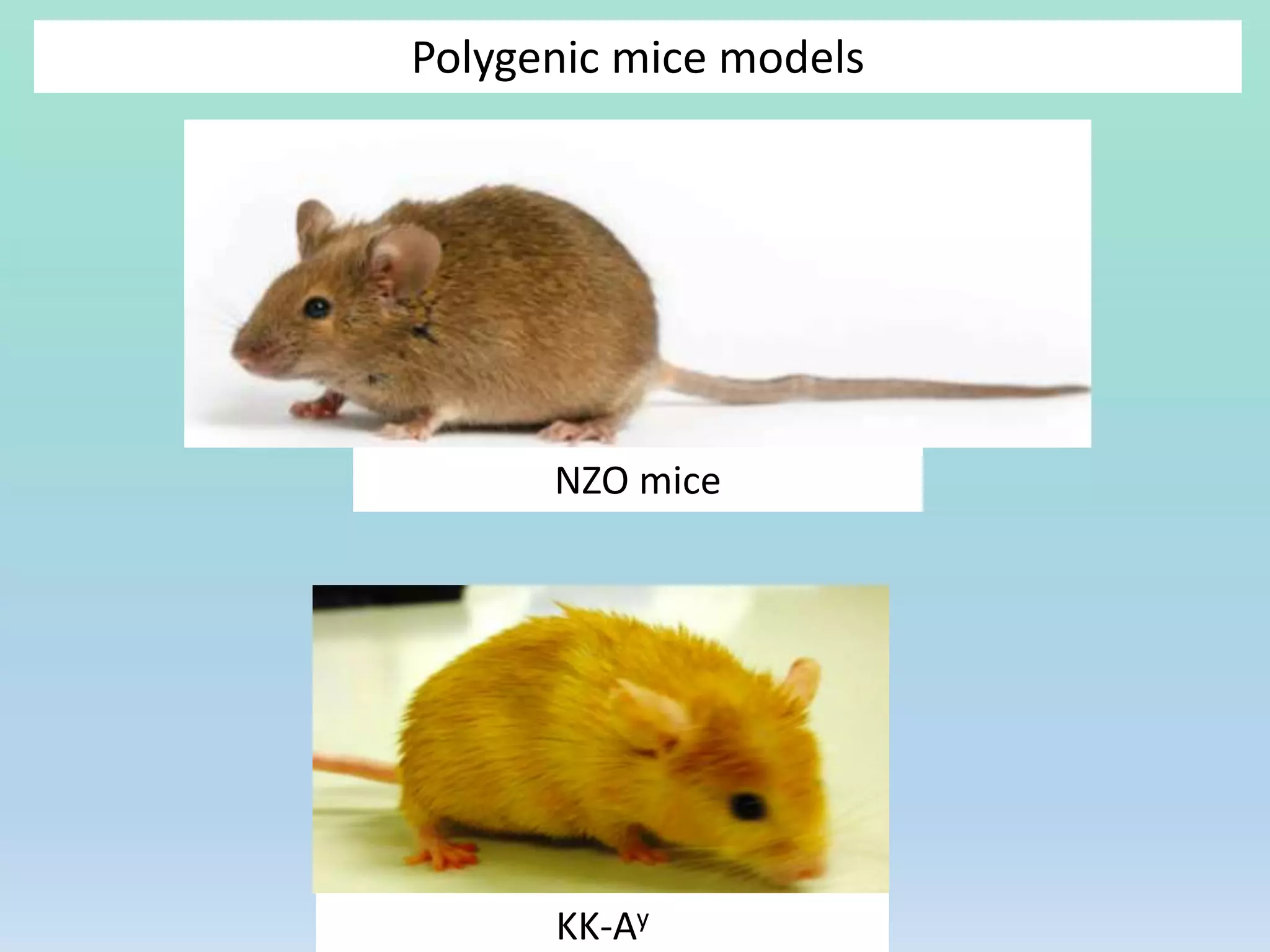
Polygenic mice models
NZO mice
KK-Ay
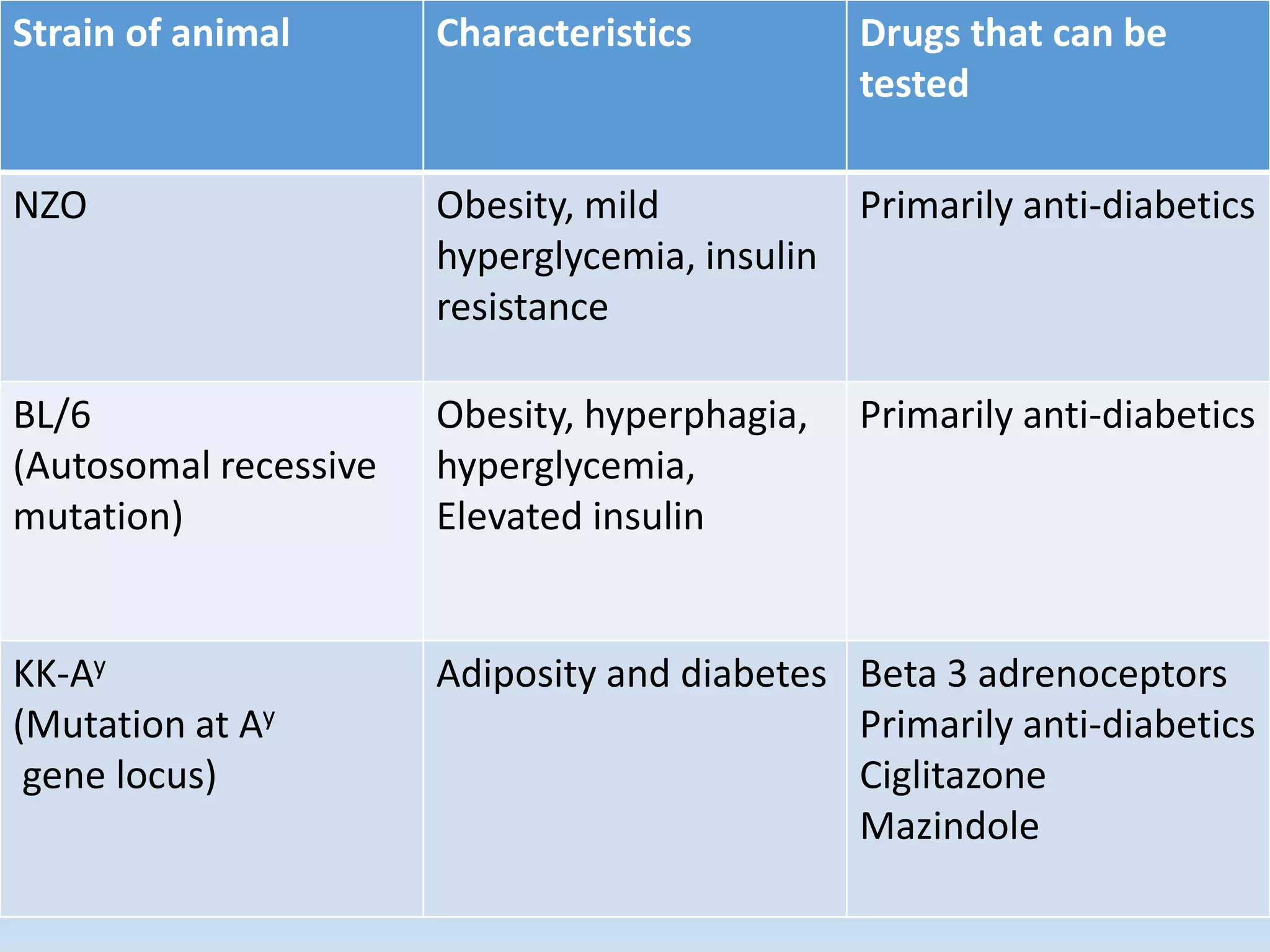
Strain of animal Characteristics Drugs that can be
tested
NZO Obesity, mild
hyperglycemia, insulin
resistance
Primarily anti-diabetics
BL/6
(Autosomal recessive
mutation)
Obesity, hyperphagia,
hyperglycemia,
Elevated insulin
Primarily anti-diabetics
KK-Ay
(Mutation at Ay
gene locus)
Adiposity and diabetes Beta 3 adrenoceptors
Primarily anti-diabetics
Ciglitazone
Mazindole
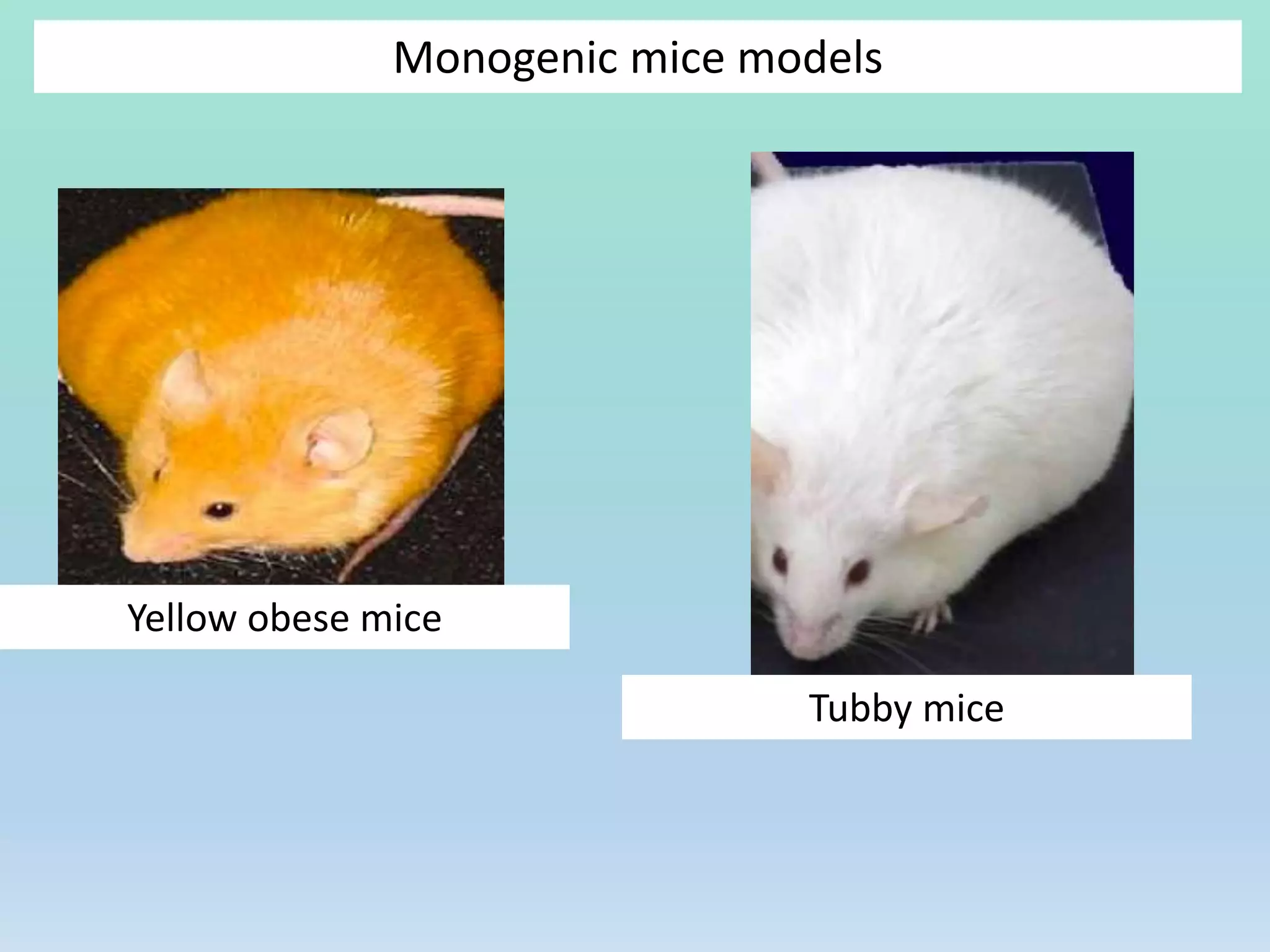
Monogenic mice models
Yellow obese mice
Tubby mice
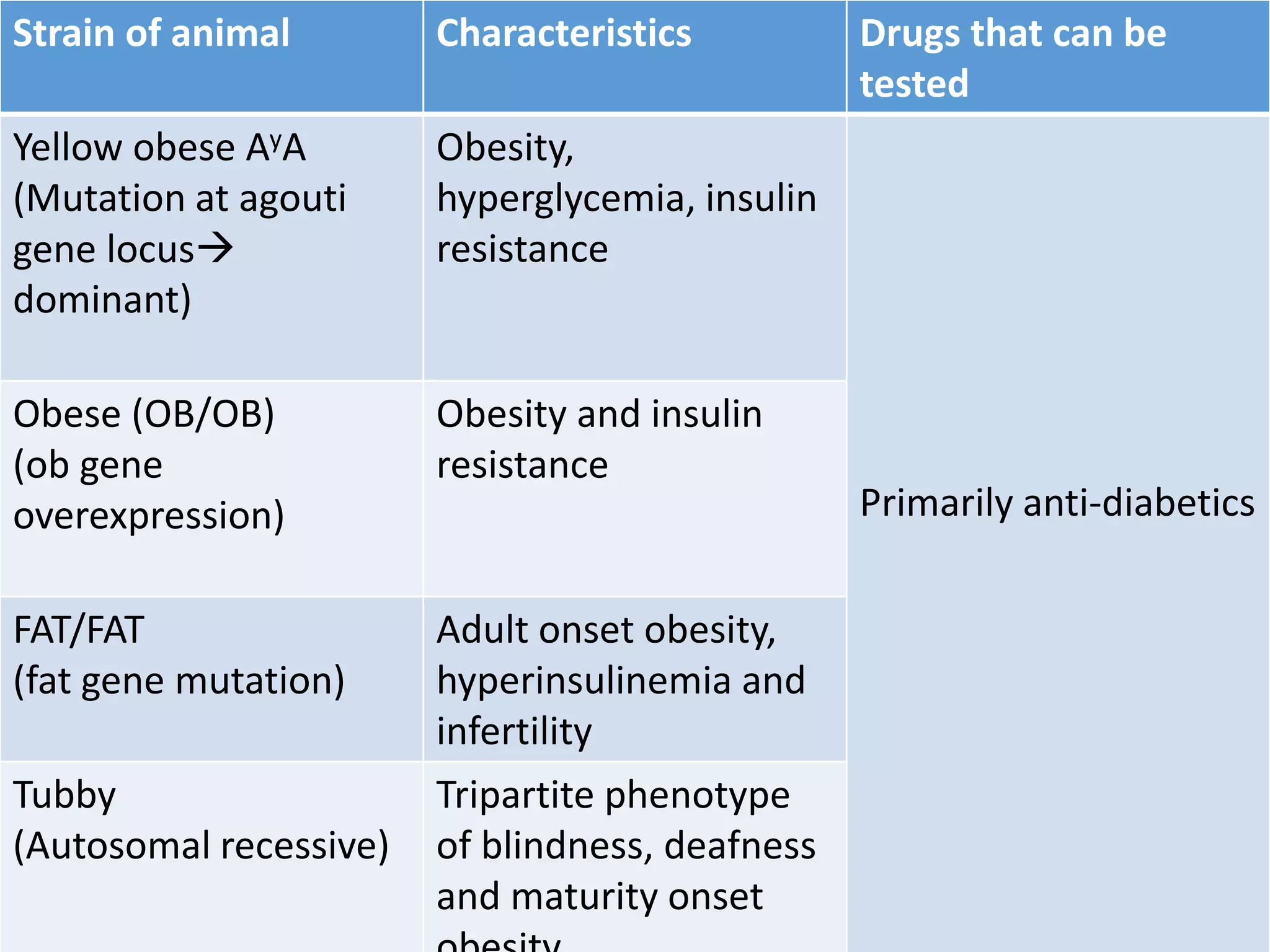
Strain of animal Characteristics Drugs that can be
tested
Yellow obese AyA
(Mutation at agouti
gene locus
dominant)
Obesity,
hyperglycemia, insulin
resistance
Primarily anti-diabetics
Obese (OB/OB)
(ob gene
overexpression)
Obesity and insulin
resistance
FAT/FAT
(fat gene mutation)
Adult onset obesity,
hyperinsulinemia and
infertility
Tubby
(Autosomal recessive)
Tripartite phenotype
of blindness, deafness
and maturity onset
Transgenic models
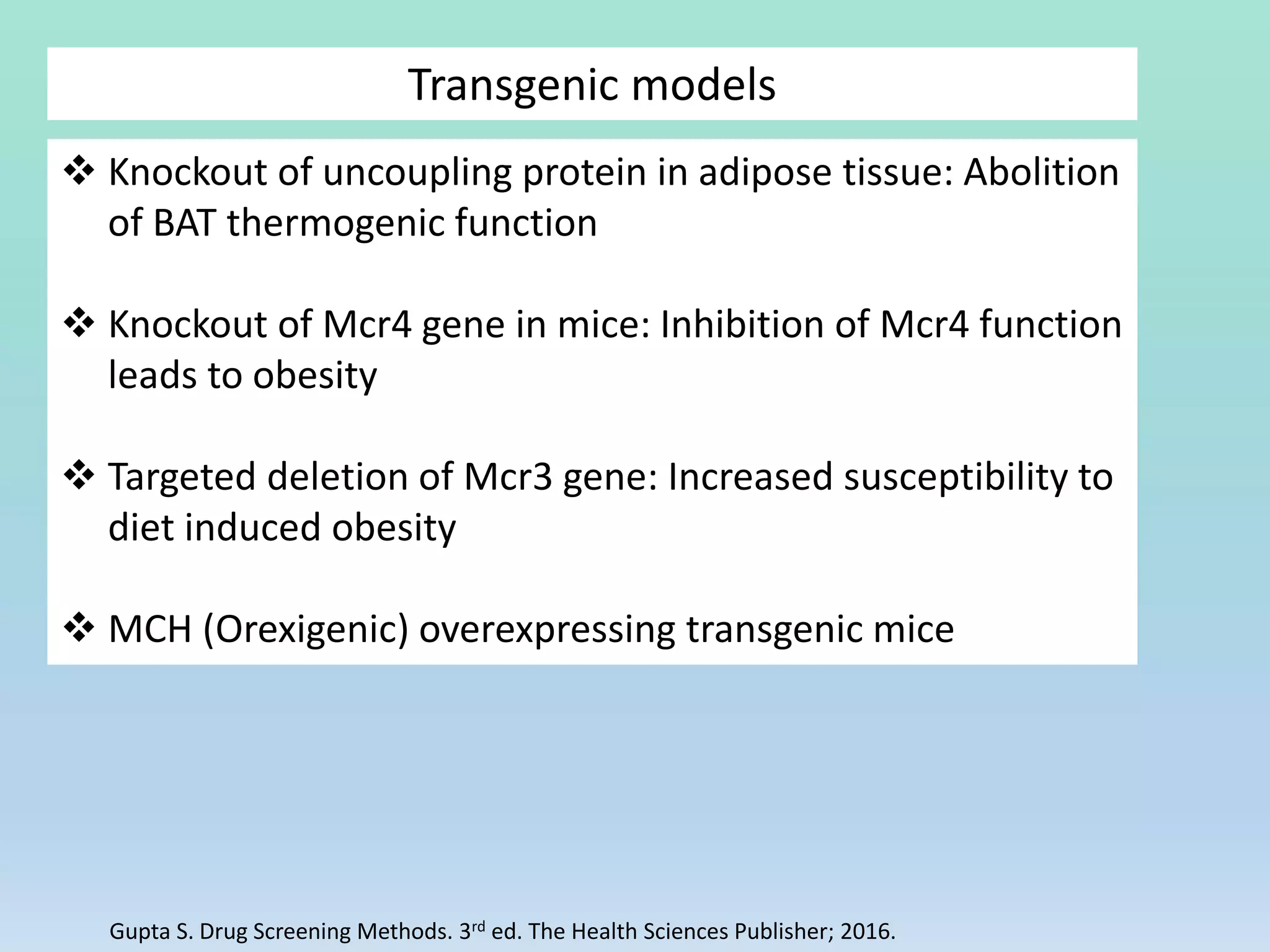
 Knockout of uncoupling protein in adipose tissue: Abolition
of BAT thermogenic function
 Knockout of Mcr4 gene in mice: Inhibition of Mcr4 function
leads to obesity
 Targeted deletion of Mcr3 gene: Increased susceptibility to
diet induced obesity
 MCH (Orexigenic) overexpressing transgenic mice
Gupta S. Drug Screening Methods. 3rd ed. The Health Sciences Publisher; 2016.
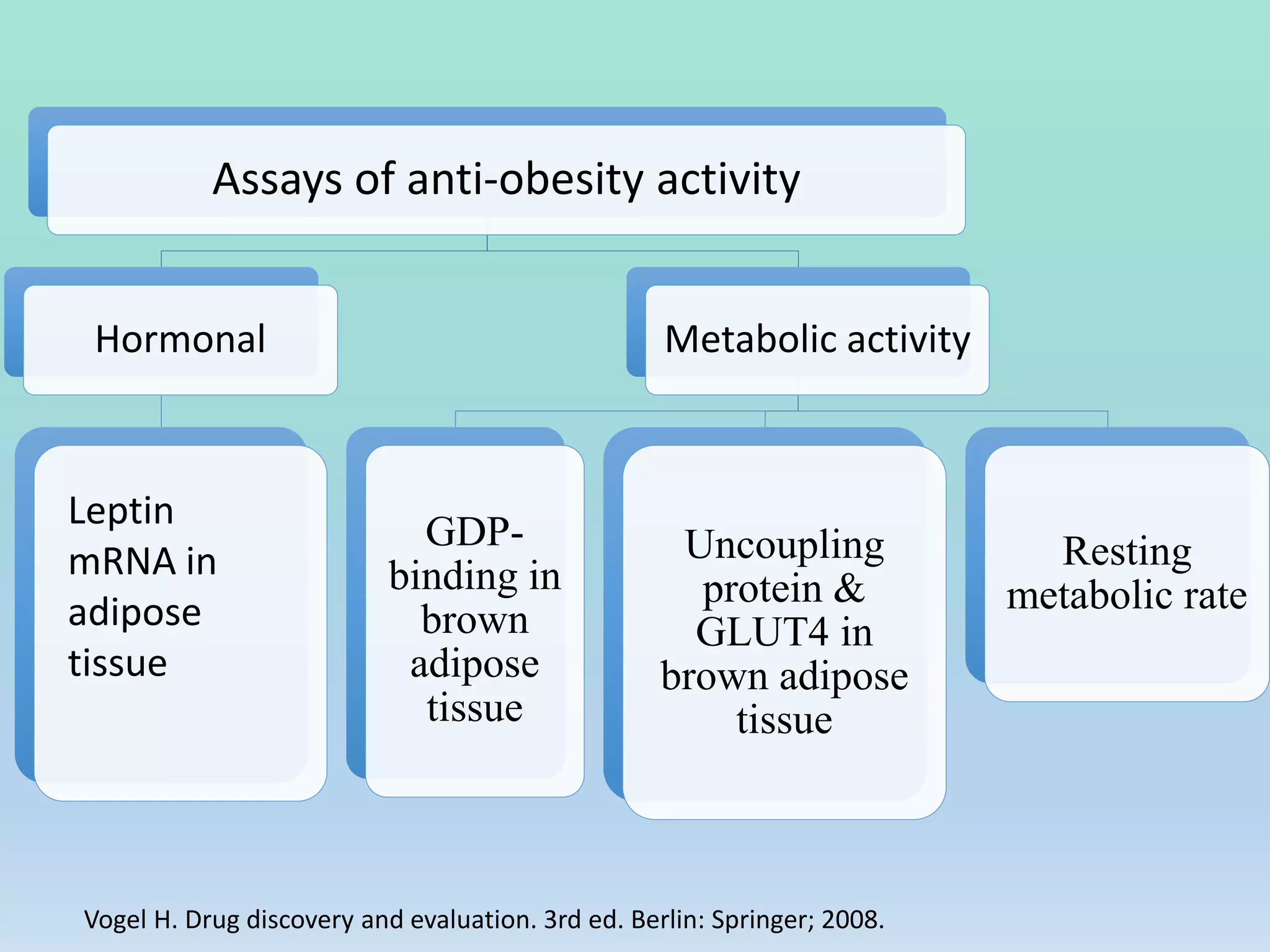
Assays of anti-obesity activity
Hormonal Metabolic activity
GDP-
binding in
brown
adipose
tissue
Uncoupling
protein &
GLUT4 in
brown adipose
tissue
Resting
metabolic rate
Leptin
mRNA in
adipose
tissue
Vogel H. Drug discovery and evaluation. 3rd ed. Berlin: Springer; 2008.
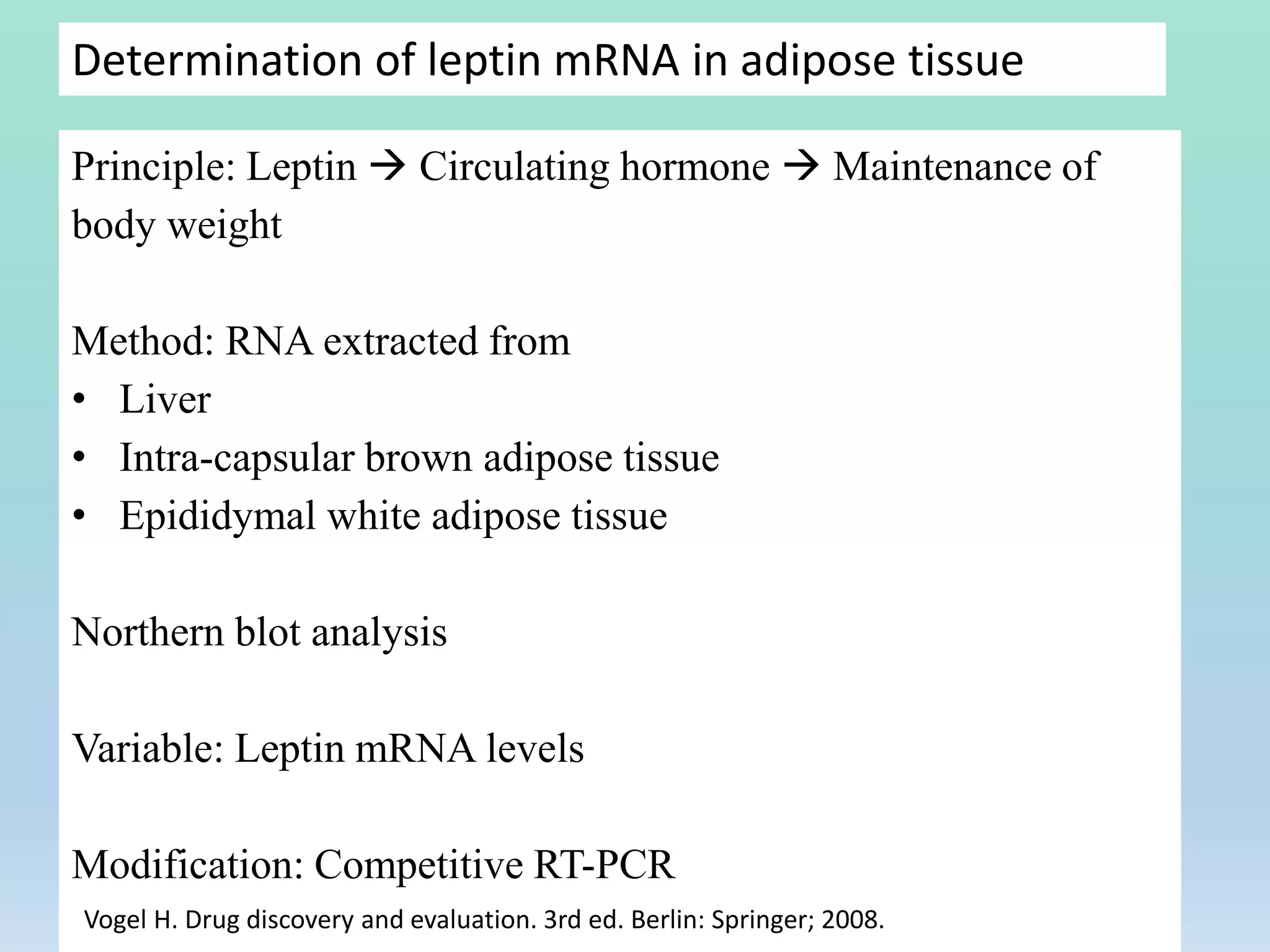
Determination of leptin mRNA in adipose tissue
Principle: Leptin  Circulating hormone  Maintenance of
body weight
Method: RNA extracted from
• Liver
• Intra-capsular brown adipose tissue
• Epididymal white adipose tissue
Northern blot analysis
Variable: Leptin mRNA levels
Modification: Competitive RT-PCR
Vogel H. Drug discovery and evaluation. 3rd ed. Berlin: Springer; 2008.
Uncoupling protein and GLUT4 in brown adipose
tissue
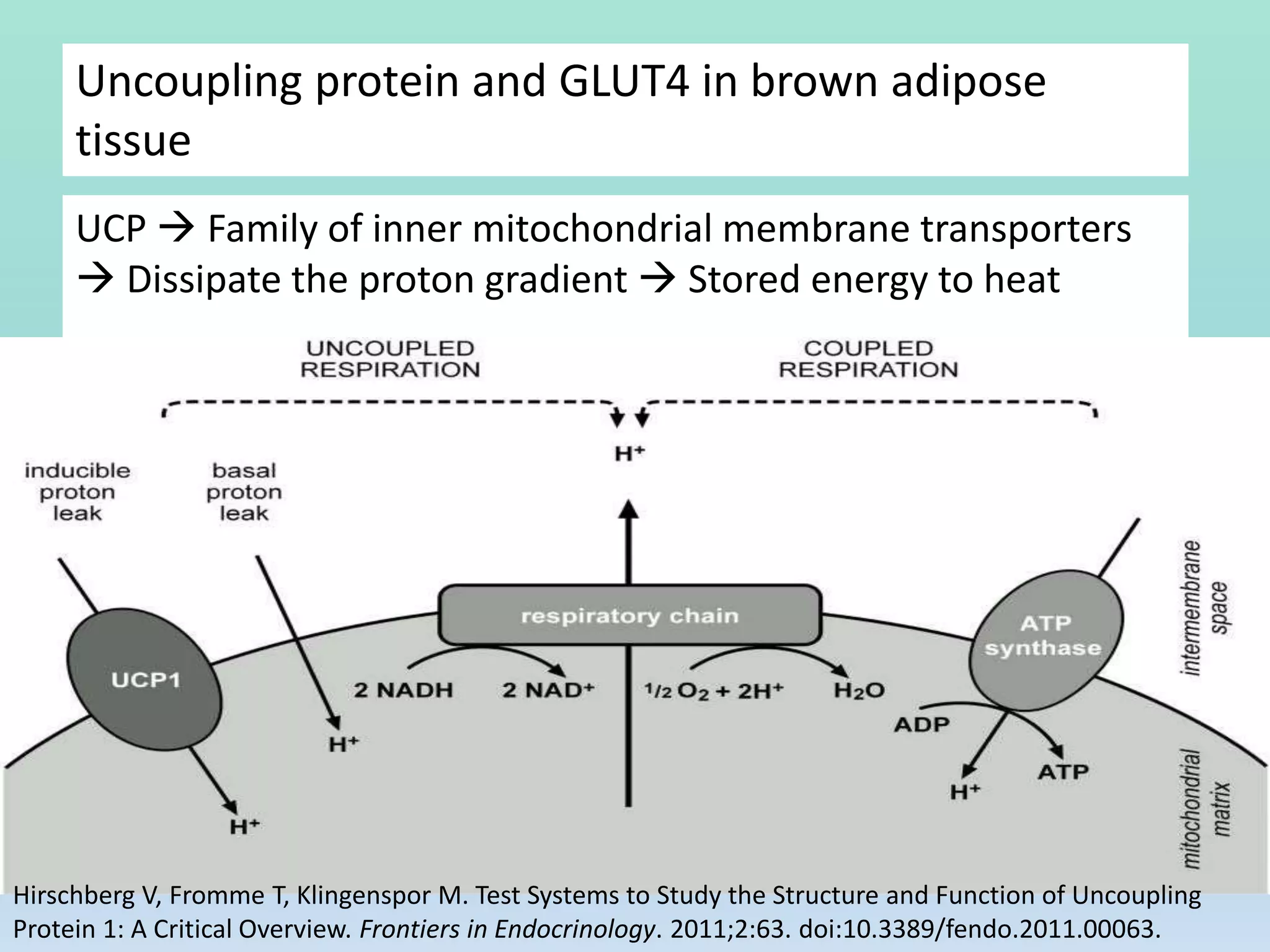
UCP  Family of inner mitochondrial membrane transporters
 Dissipate the proton gradient  Stored energy to heat
Hirschberg V, Fromme T, Klingenspor M. Test Systems to Study the Structure and Function of Uncoupling
Protein 1: A Critical Overview. Frontiers in Endocrinology. 2011;2:63. doi:10.3389/fendo.2011.00063.
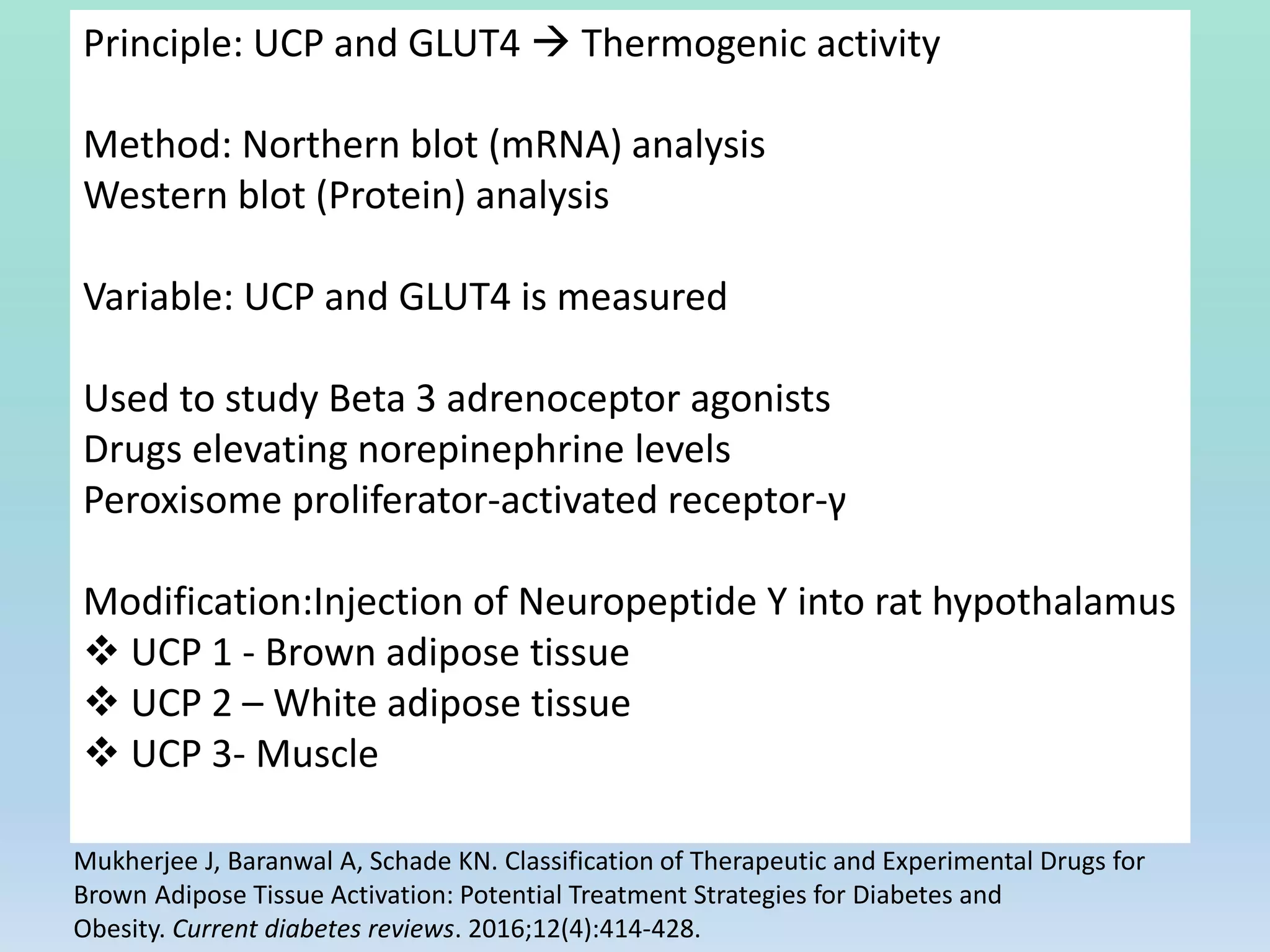
Principle: UCP and GLUT4  Thermogenic activity
Method: Northern blot (mRNA) analysis
Western blot (Protein) analysis
Variable: UCP and GLUT4 is measured
Used to study Beta 3 adrenoceptor agonists
Drugs elevating norepinephrine levels
Peroxisome proliferator-activated receptor-γ
Modification:Injection of Neuropeptide Y into rat hypothalamus
 UCP 1 - Brown adipose tissue
 UCP 2 – White adipose tissue
 UCP 3- Muscle
Mukherjee J, Baranwal A, Schade KN. Classification of Therapeutic and Experimental Drugs for
Brown Adipose Tissue Activation: Potential Treatment Strategies for Diabetes and
Obesity. Current diabetes reviews. 2016;12(4):414-428.
GDP-binding in brown adipose tissue
Brown adipose tissue is the major site for non-shivering
thermogenesis in rodents
Binding of nucleotide guanosine diphosphate to uncoupling
protein or thermogenin:
Indicator of thermogenic activity
Variable assessed:
GDP binding from 3H radioactivity
Vogel H. Drug discovery and evaluation. 3rd ed. Berlin: Springer; 2008.
Resting metabolic rate
Principle: Resting metabolic rate  influenced by various drugs in
normal and obese animals
Method: Closed circuit metabolic system  pressure drop
activates the pressure sensor for O2 replacement  Cycle
repeats
Variable: Consumption of O2
Vogel H. Drug discovery and evaluation. 3rd ed. Berlin: Springer; 2008.
Behavioural model
• Increased or decreased motor activity
• Induction of motor behaviour
Interfere with ability of animal to eat
Vickers SP, Jackson HC, Cheetham SC. The utility of animal models to evaluate novel
anti‐obesity agents. British journal of pharmacology. 2011 Oct 1;164(4):1248-62.
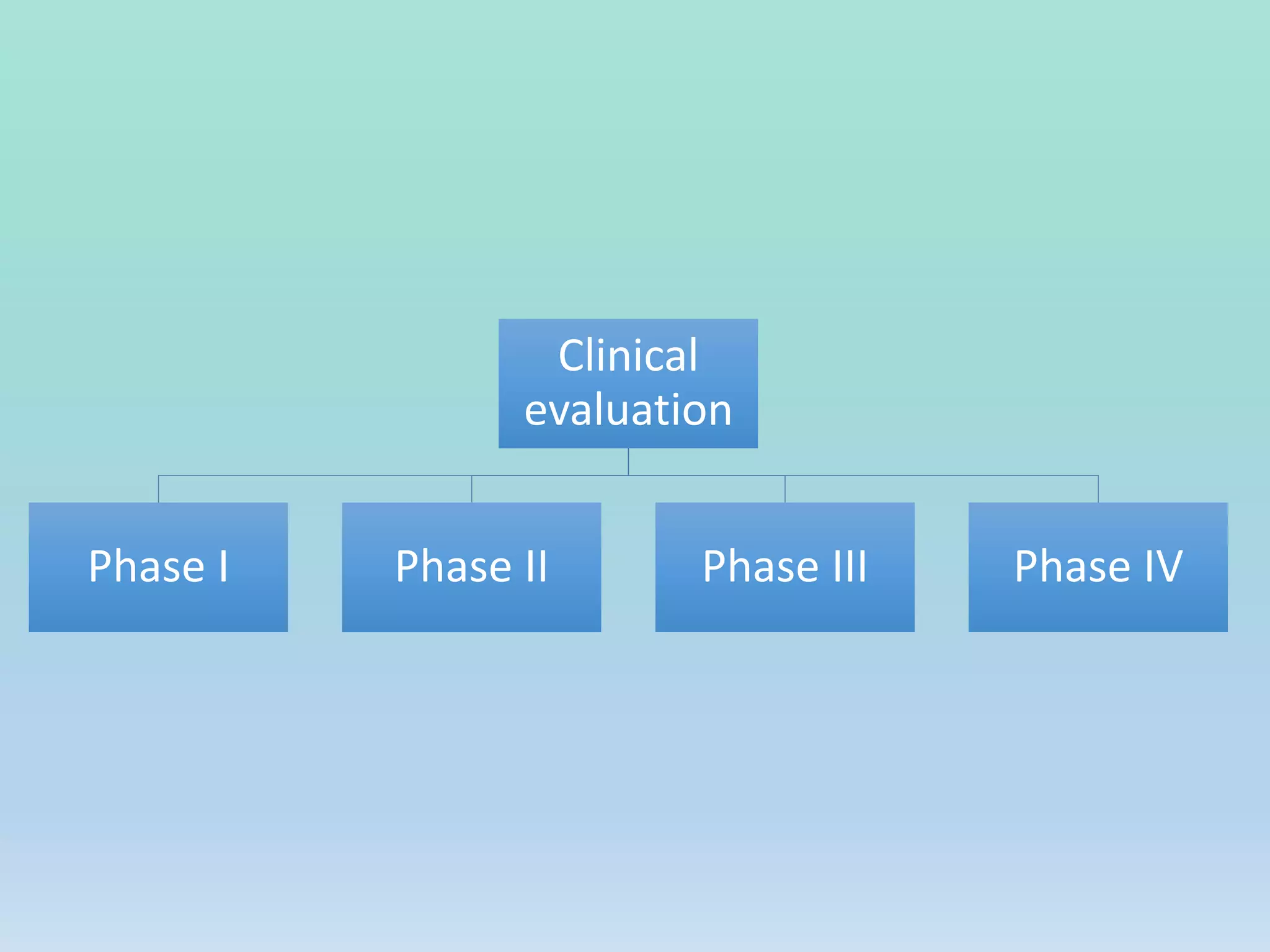
Clinical
evaluation
Phase I Phase II Phase III Phase IV
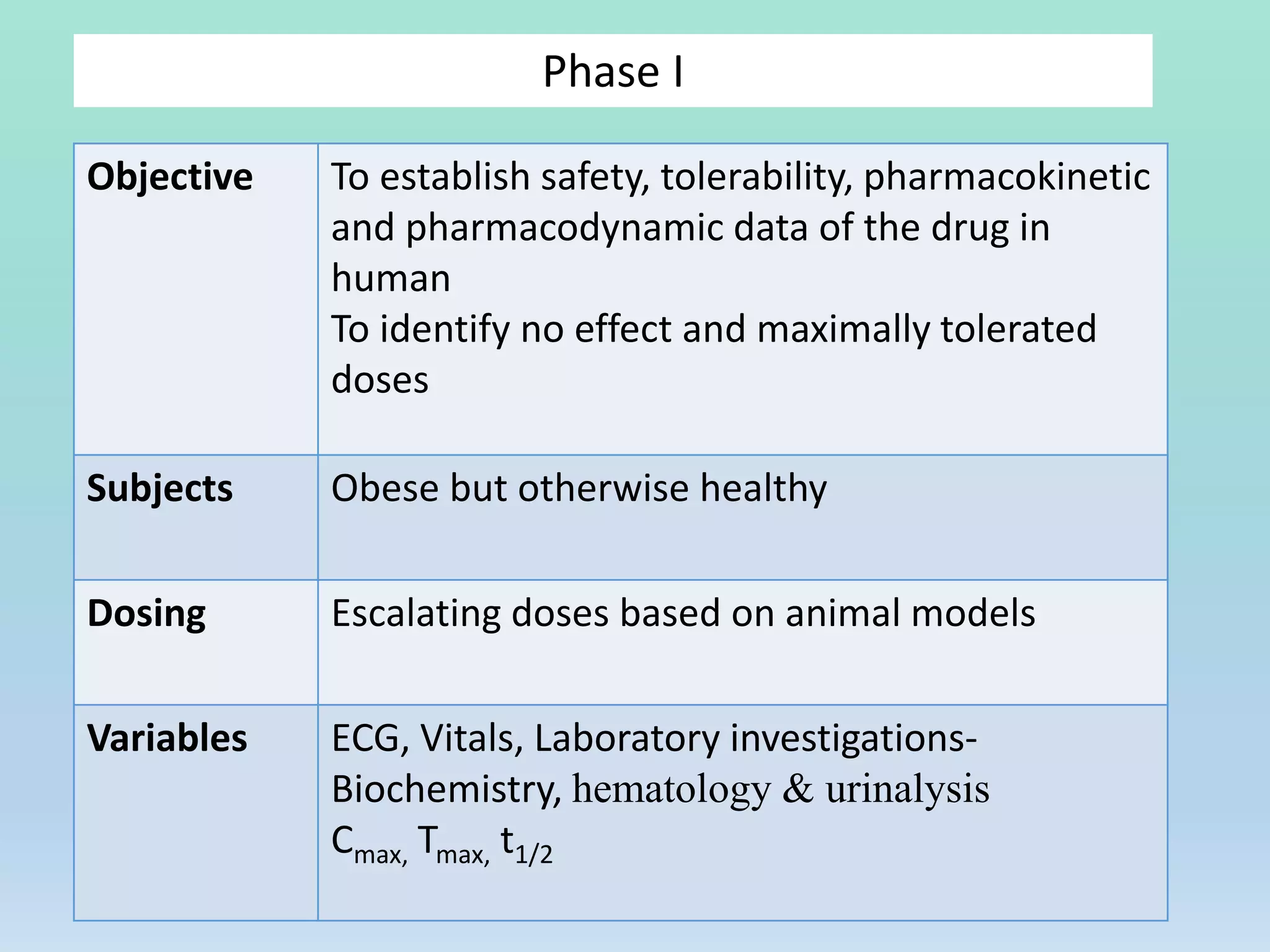
Phase I
Objective To establish safety, tolerability, pharmacokinetic
and pharmacodynamic data of the drug in
human
To identify no effect and maximally tolerated
doses
Subjects Obese but otherwise healthy
Dosing Escalating doses based on animal models
Variables ECG, Vitals, Laboratory investigations-
Biochemistry, hematology & urinalysis
Cmax, Tmax, t1/2
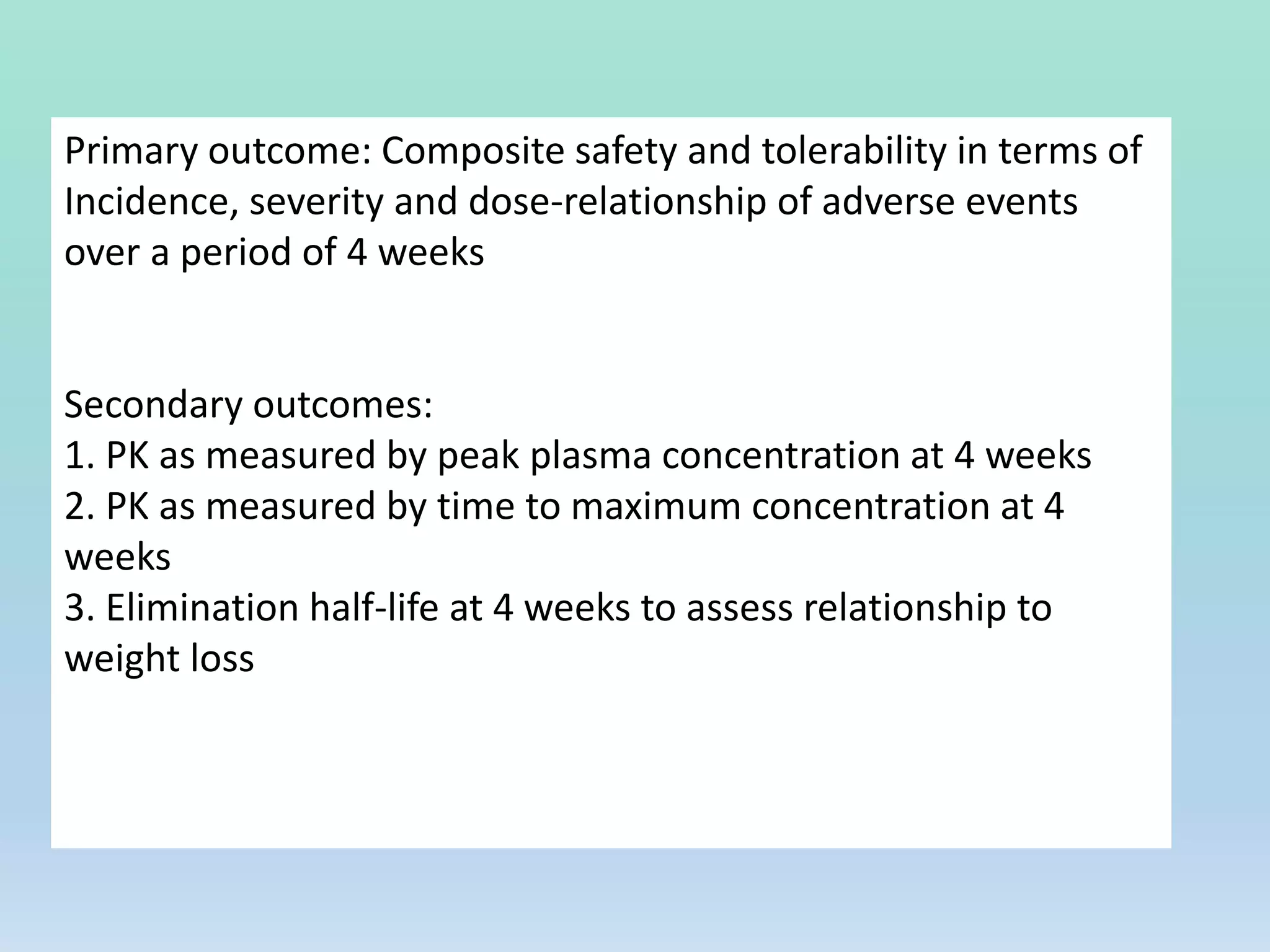
Primary outcome: Composite safety and tolerability in terms of
Incidence, severity and dose-relationship of adverse events
over a period of 4 weeks
Secondary outcomes:
1. PK as measured by peak plasma concentration at 4 weeks
2. PK as measured by time to maximum concentration at 4
weeks
3. Elimination half-life at 4 weeks to assess relationship to
weight loss
Phase II
Objective To establish safety and preliminary efficacy
Proof of concept
Blinding Double blind
Dosing Range of doses
Variables Change in body weight
Change in waist circumference,
Waist to hip ratio
ECG, Vitals, Laboratory investigations-
Biochemistry, hematology & urinalysis
1.Guideline on clinical evaluation of medicinal products used in weight management. European medical
agency. 2016 [Accessed on 29 May, 2018]. Available from:
http://www.ema.europa.eu/docs/en_GB/document_library/Scientific_guideline/2016/07/WC500209942.pdf
2.Guidance for Industry Developing Products for Weight Management. FDA.2007 [Accessed on 29 May,
2018]. Available from:
https://www.fda.gov/downloads/Drugs/Guidances/ucm071612.pdf
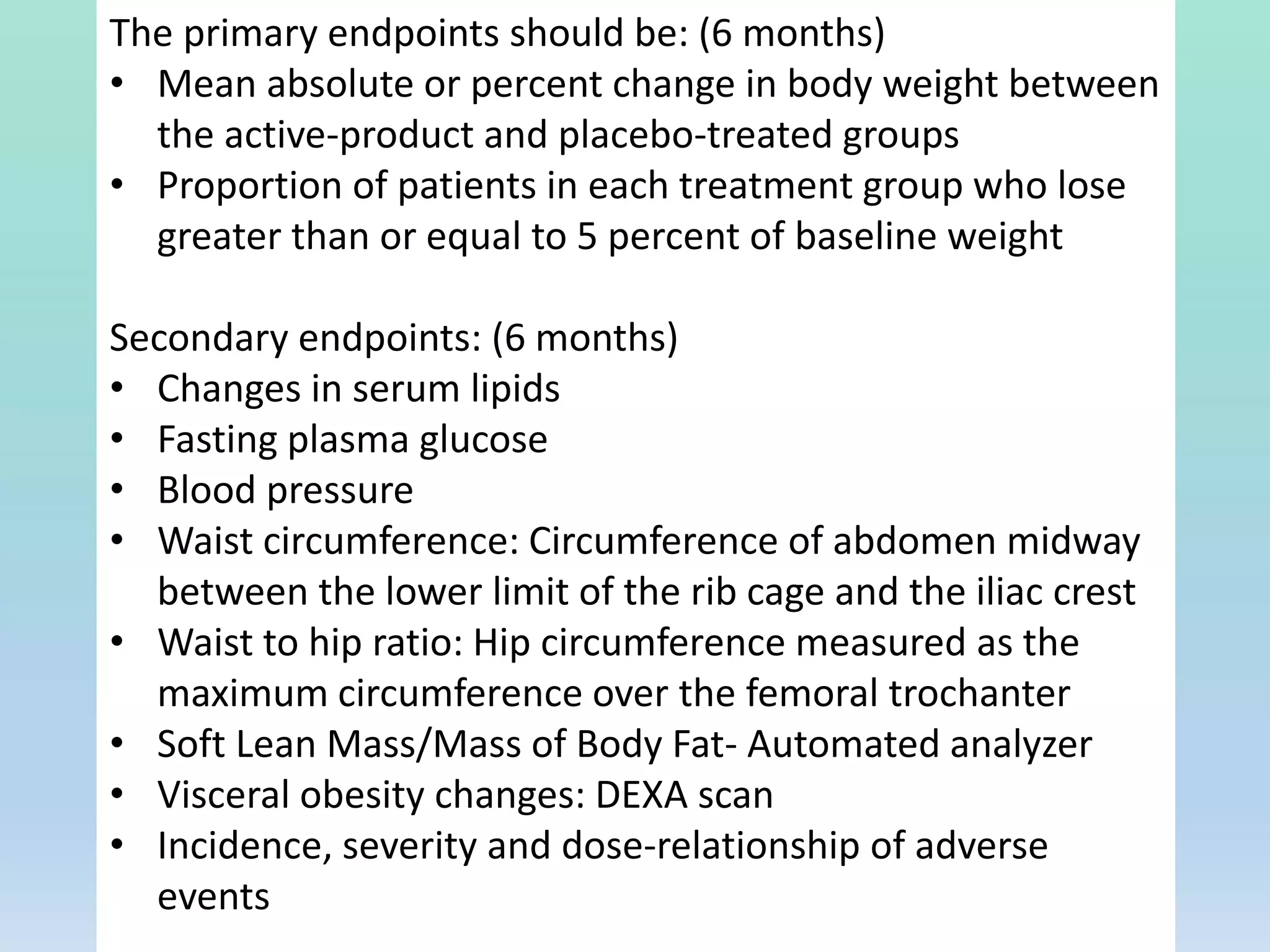
The primary endpoints should be: (6 months)
• Mean absolute or percent change in body weight between
the active-product and placebo-treated groups
• Proportion of patients in each treatment group who lose
greater than or equal to 5 percent of baseline weight
Secondary endpoints: (6 months)
• Changes in serum lipids
• Fasting plasma glucose
• Blood pressure
• Waist circumference: Circumference of abdomen midway
between the lower limit of the rib cage and the iliac crest
• Waist to hip ratio: Hip circumference measured as the
maximum circumference over the femoral trochanter
• Soft Lean Mass/Mass of Body Fat- Automated analyzer
• Visceral obesity changes: DEXA scan
• Incidence, severity and dose-relationship of adverse
events
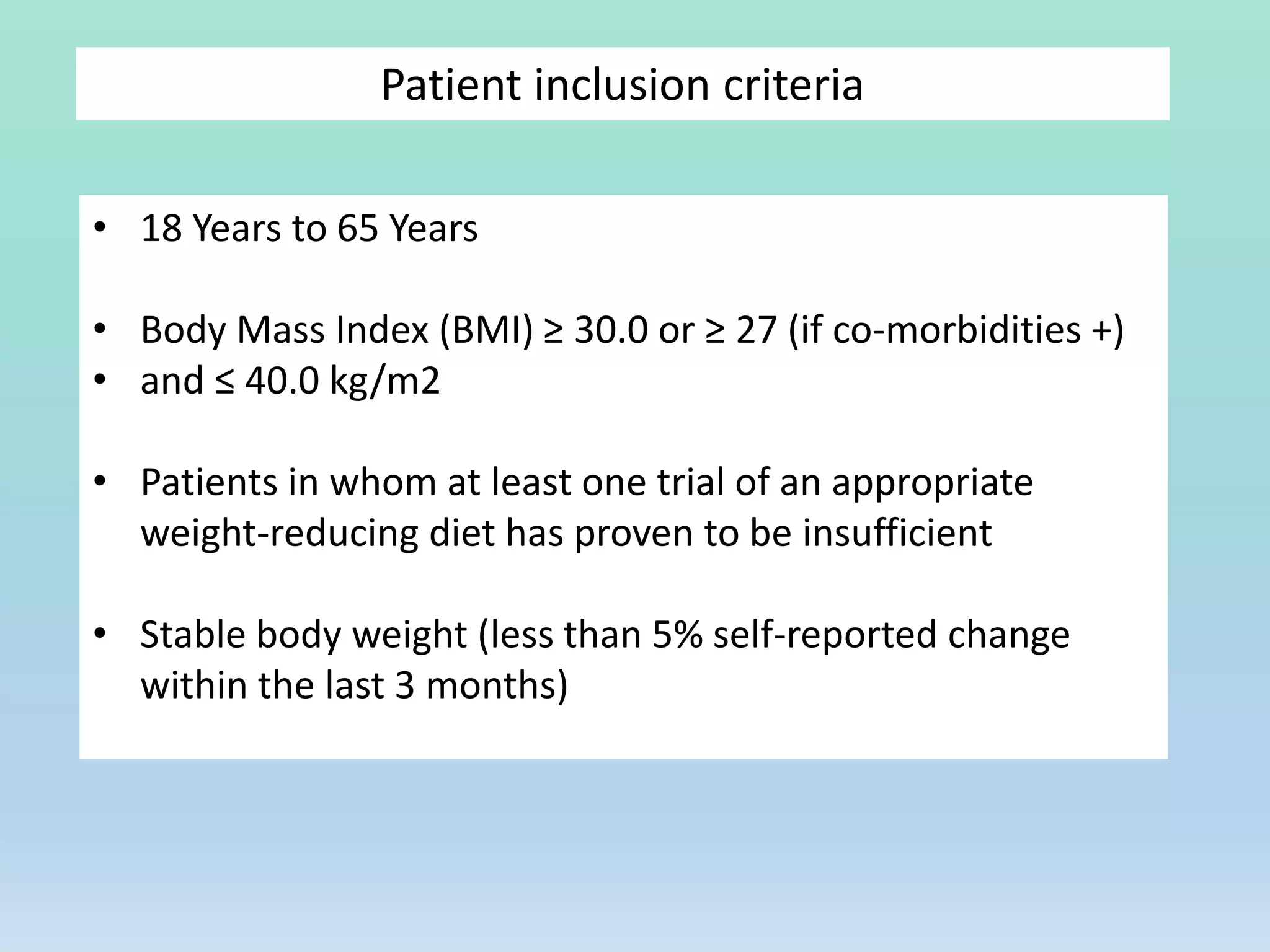
Patient inclusion criteria
• 18 Years to 65 Years
• Body Mass Index (BMI) ≥ 30.0 or ≥ 27 (if co-morbidities +)
• and ≤ 40.0 kg/m2
• Patients in whom at least one trial of an appropriate
weight-reducing diet has proven to be insufficient
• Stable body weight (less than 5% self-reported change
within the last 3 months)
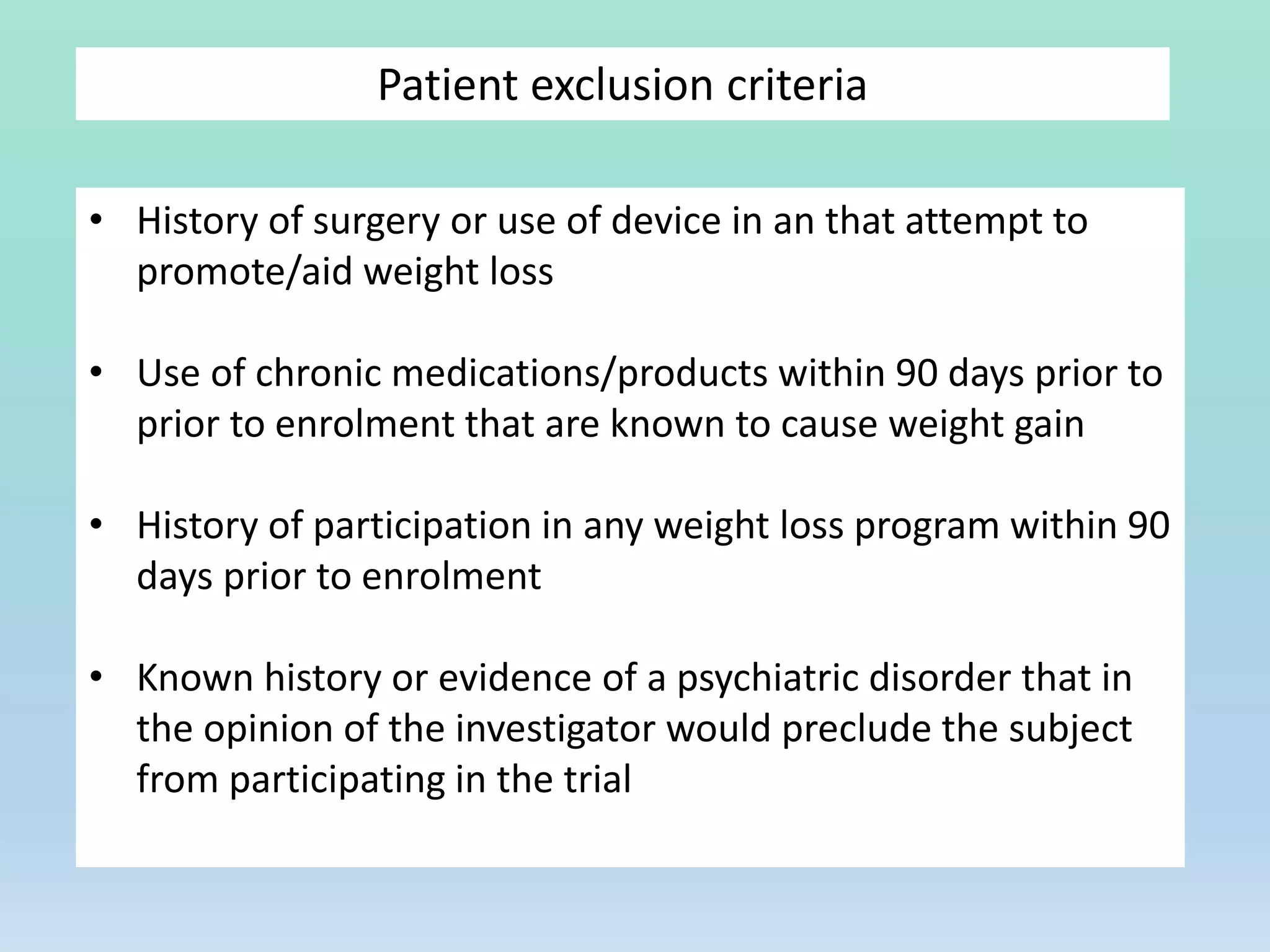
Patient exclusion criteria
• History of surgery or use of device in an that attempt to
promote/aid weight loss
• Use of chronic medications/products within 90 days prior to
prior to enrolment that are known to cause weight gain
• History of participation in any weight loss program within 90
days prior to enrolment
• Known history or evidence of a psychiatric disorder that in
the opinion of the investigator would preclude the subject
from participating in the trial
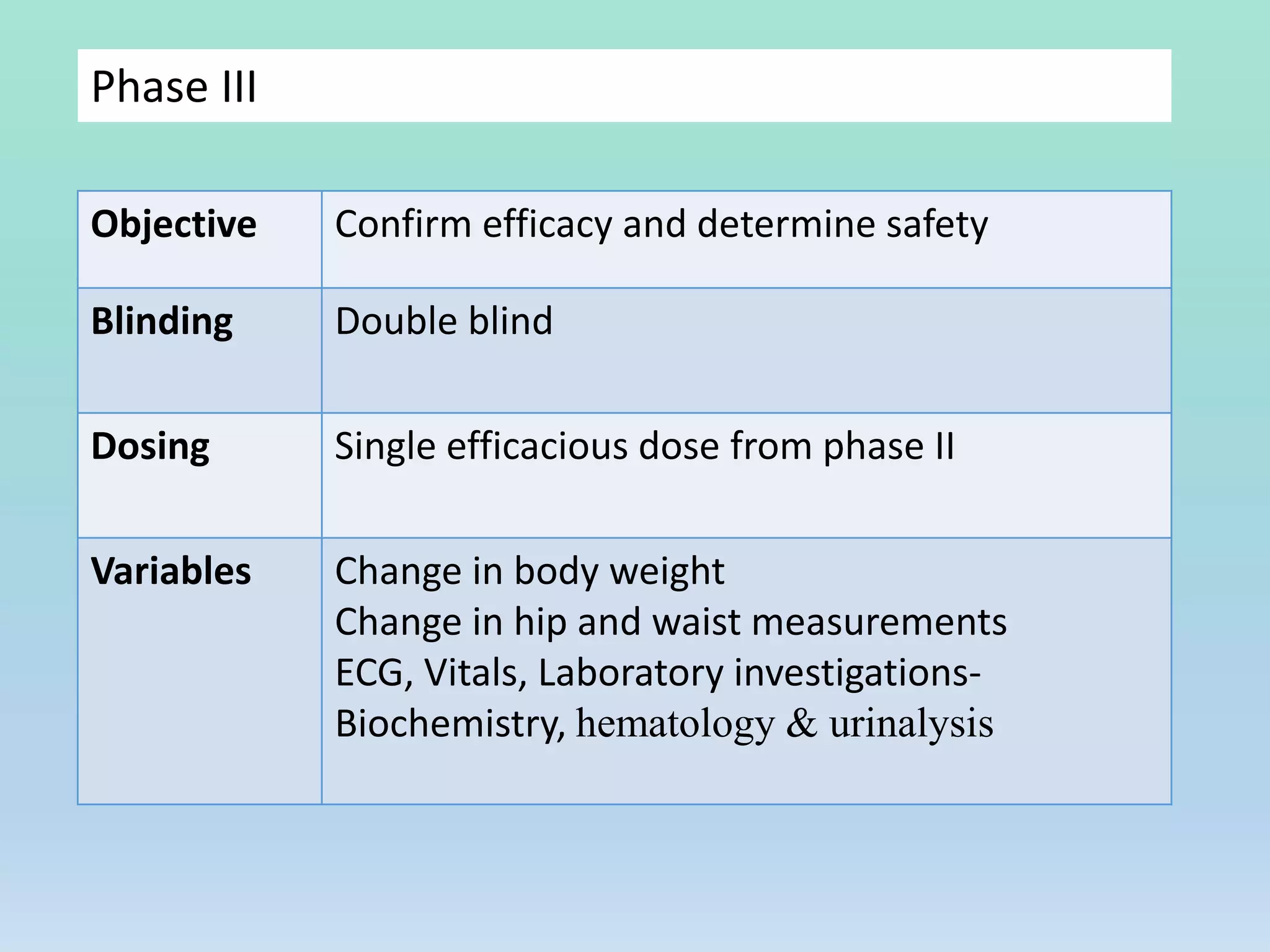
Phase III
Objective Confirm efficacy and determine safety
Blinding Double blind
Dosing Single efficacious dose from phase II
Variables Change in body weight
Change in hip and waist measurements
ECG, Vitals, Laboratory investigations-
Biochemistry, hematology & urinalysis
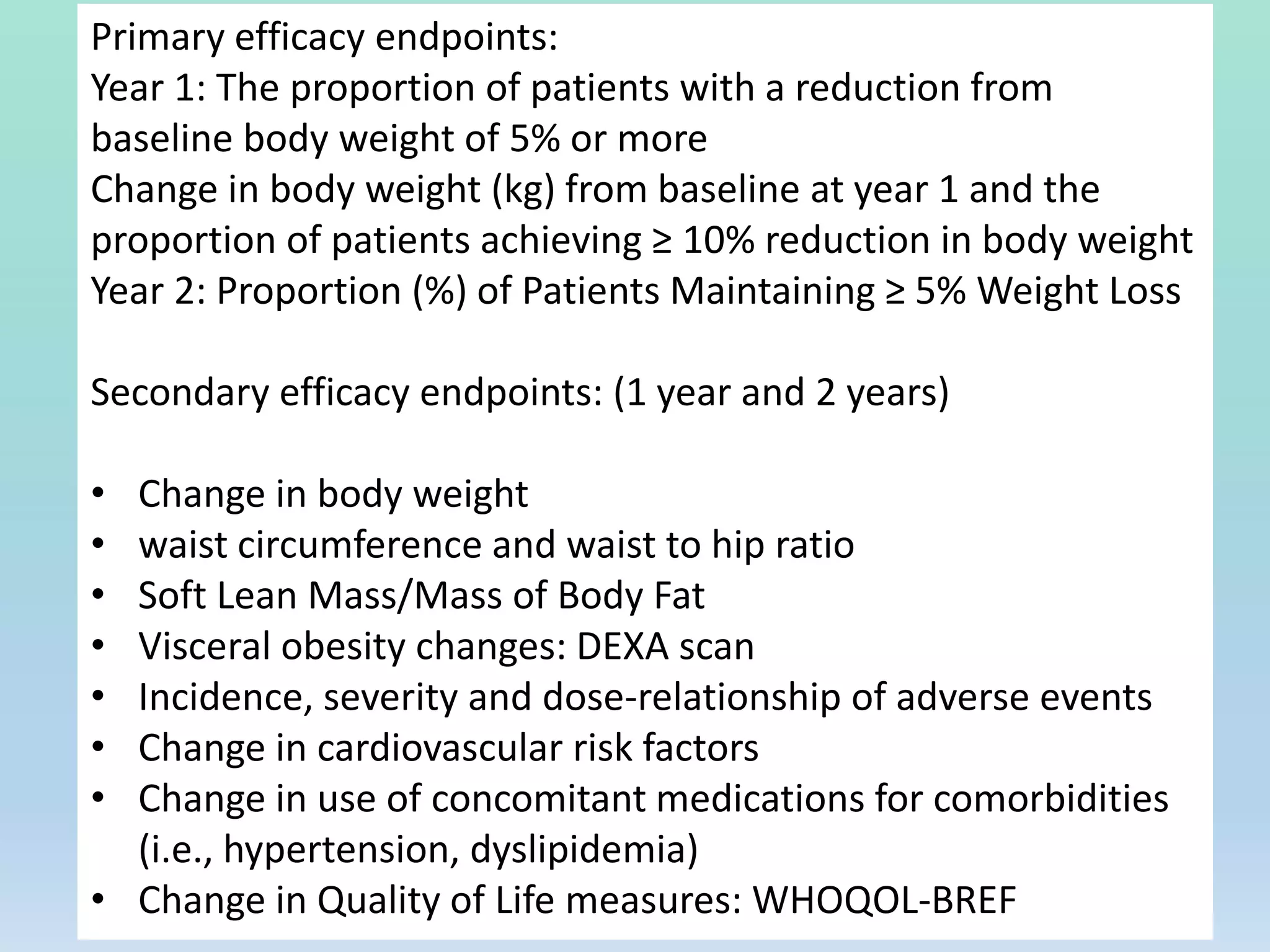
Primary efficacy endpoints:
Year 1: The proportion of patients with a reduction from
baseline body weight of 5% or more
Change in body weight (kg) from baseline at year 1 and the
proportion of patients achieving ≥ 10% reduction in body weight
Year 2: Proportion (%) of Patients Maintaining ≥ 5% Weight Loss
Secondary efficacy endpoints: (1 year and 2 years)
• Change in body weight
• waist circumference and waist to hip ratio
• Soft Lean Mass/Mass of Body Fat
• Visceral obesity changes: DEXA scan
• Incidence, severity and dose-relationship of adverse events
• Change in cardiovascular risk factors
• Change in use of concomitant medications for comorbidities
(i.e., hypertension, dyslipidemia)
• Change in Quality of Life measures: WHOQOL-BREF
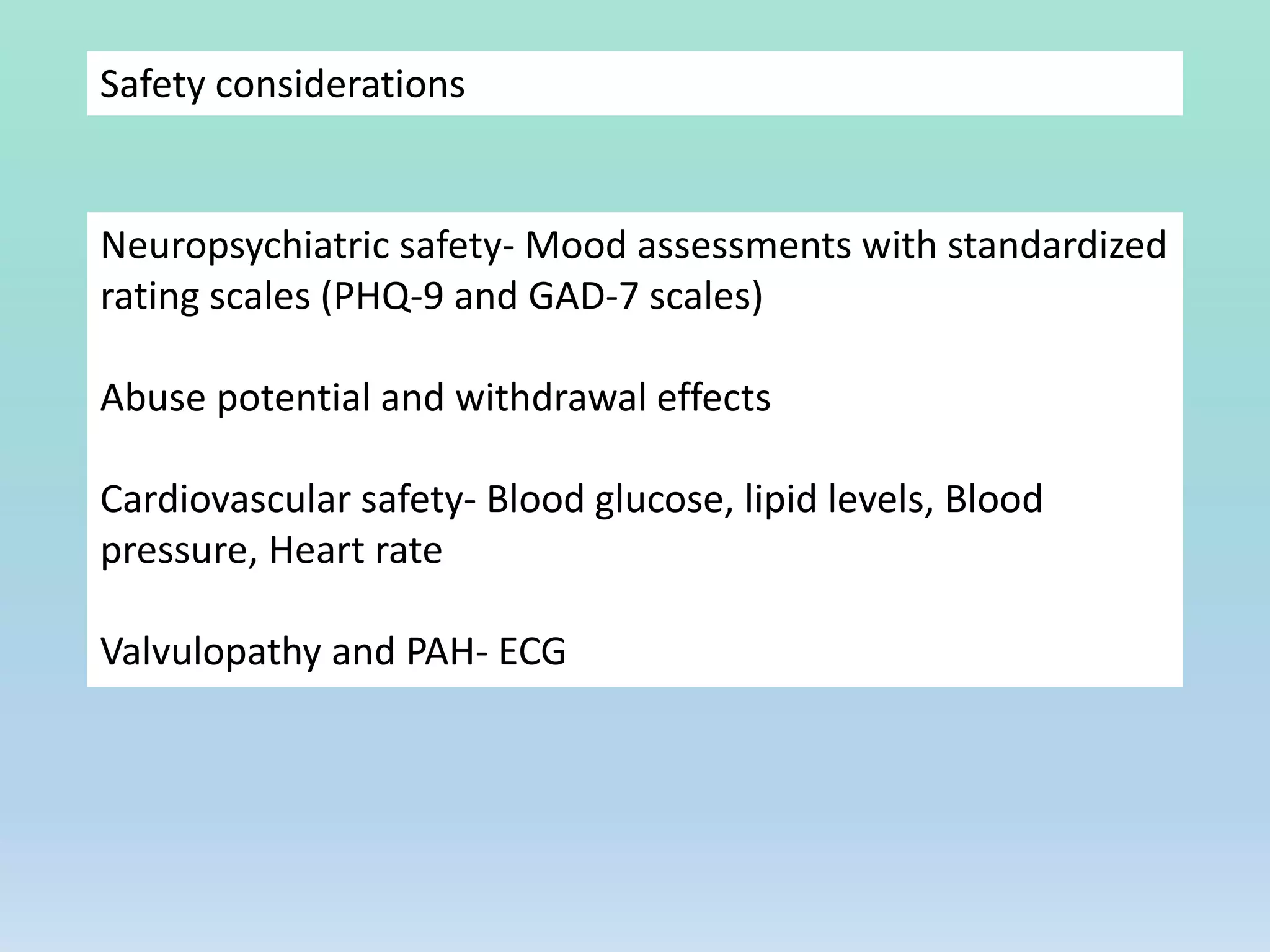
Safety considerations
Neuropsychiatric safety- Mood assessments with standardized
rating scales (PHQ-9 and GAD-7 scales)
Abuse potential and withdrawal effects
Cardiovascular safety- Blood glucose, lipid levels, Blood
pressure, Heart rate
Valvulopathy and PAH- ECG
Pediatric population
Pharmacokinetics and dose-ranging studies generally should
include patients with age- and sex-matched BMIs greater than
or equal to the 95th percentile
Initial pediatric studies be limited to adolescents (i.e., 12 to 16
year olds)
The primary efficacy parameter - Change in BMI (e.g., the
mean percent change in BMI and the proportion of patients
who lose greater than or equal to 5 percent of baseline BMI).
Validated assessments of neuropsychiatric function.
Post-marketing surveillance
Aim:- Safety
Information on drug interaction
Effect on obesity complications like Diabetes
Phase IV
Mirabegon: Beta 3 receptor agonist1
Adiponectin receptor agonists  improves insulin
sensitivity, lowers body weight and increases energy
expenditure2
Tesofensine: Inhibits dopamine, norepinephrine and
serotonin) presynaptic reuptake3
Drugs in Pipeline
1.Brunton L, Hilal-Dandan R, Knollmann B. Goodman and Gilman's The pharmacological
basics of therapeutics. 13th ed. New York: Mcgraw-Hill; 2018.
2.Turer AT, Scherer PE. Adiponectin: mechanistic insights and clinical implications.
Diabetologia. 2012;55:2319–2326.
3.Martins A, Morgado S, Morgado M. Anti-obesity drugs currently used and new
compounds in clinical development. World J Meta-Anal. 2014;2(4):135-53.
Drugs in Pipeline
Lactoferrin- Reduce visceral body fat and body weight 1
Metformin- Decreases food consumption and induces small
weight losses in diabetic and non diabetics 2
Cetilistat- GI lipase inhibitor 3
1.Zapata RC, Pezeshki A, Singh A, Chelikani PK. 0700 Anti-obesity and antidiabetic properties of
lactoferrin are independent of calorie intake. Journal of Animal Science. 2016 Oct 1;94:335
2.Martins A, Morgado S, Morgado M. Anti-obesity drugs currently used and new compounds in
clinical development. World J Meta-Anal. 2014;2(4):135-53
3.Gras J. Cetilistat for the treatment of obesity. Drugs Today (Barc). 2013 Dec;49(12):755-9.
Summary
 Obesity is a multifactorial disease associated with
comorbidities
 Multi modality approach is ideal for treatment of obesity
 Animal models have provided an invaluable insight into the
pathophysiology of the obesity
 There is a need to develop newer anti-obesity drugs and
researchers can bear the torch of discovery in this field
THANK YOU

Evaluation of anti-obesity drugs

  • 1.
    Evaluation of Anti- ObesityDrugs Dr. Nishtha Khatri Guide: Dr. Raakhi Tripathi
  • 2.
    Flow of seminar Introduction  Pathophysiology  Current treatment and it’s limitations  Preclinical evaluation • In vitro • In vivo  Clinical evaluation  Drugs in the pipeline  Conclusion
  • 3.
    Abnormal or excessivefat accumulation that presents a risk to health Multifactorial disorder in which calorie intake over the long term exceeds energy output Introduction Ritter J. Flower R. Hendersen G, Rang H. Rang and Dale's pharmacology. 8th ed. Edinburgh: Elsevier/Churchill Livingstone; 2015.
  • 4.
    WHO- “Epidemic ofthe 21st century” Obesity rates 2016- 1.9 billion overweight and 650 million obese individuals1 Obesity prevalence: 2 Women: 13% (2006) to 21% (2016) Men: 9% (2006) to 19% (2016) Past 10 years  Doubled 1.WHO fact sheets: Obesity and Overweight. 2017 [Accessed on 28 May 2018]. Available from: http://www.who.int/news-room/fact-sheets/detail/obesity-and-overweight 2.National Family Health Survey (NFHS-4). 2015-2016 [Accessed on 28 May 2018]. Availble from: http://rchiips.org/nfhs/NFHS-4Reports/India.pdf
  • 5.
    Classification BMI Underweight <18.5 kg/m2 Normal weight 18.5 kg/m2 – 24.9 kg/m2 Overweight 25 kg/m2 – 29.9 kg/m2 Obesity (class 1) 30 kg/m2 – 34.9 kg/m2 Obesity (class 2) 35 kg/m2 – 39.9 kg/m2 Extreme obesity (class 3) > 40 kg/m2 Obesity: identification, assessment and management. NICE Guidelines.2014 [Accessed on 26th May, 2018]. Available from: https://www.nice.org.uk/guidance/cg189 Classification of obesity
  • 6.
    Obesity- India Normal Overweight Obesity 18.0-22.9 kg/m2 23.0-24.9 kg/m2 >25kg/m2 1.WHO Expert Consultation. Appropriate body-mass index for Asian populations and its implications for policy and intervention strategies. Lancet. 2004 Jan 10;363(9403):157-63. Review. Erratum in: Lancet. 2004 Mar 13;363(9412):902. 2. Misra A, Chowbey P, Makkar BM, Vikram NK, Wasir JS, Chadha D, Joshi SR, Sadikot S, Gupta R, Gulati S, Munjal YP. Consensus statement for diagnosis of obesity, abdominal obesity and the metabolic syndrome for Asian Indians and recommendations for physical activity, medical and surgical management. 2009 Feb;57:163-70.
  • 7.
    Ritter J. FlowerR. Hendersen G, Rang H. Rang and Dale's pharmacology. 8th ed. Edinburgh: Elsevier/Churchill Livingstone; 2015. Causes of obesity Dietary Lifestyle Genetic Deficiency in synthesis or action of hormones Hypothalamic neuronal system defect Defects in systems controlling energy Drug induced
  • 8.
    Orexigenic Anorectic Neuropeptide Y(NPY) Corticotropin-Releasing Hormone Agoutin-related peptide (AgRP) Melanocyte Stimulating Hormone Orexins A and B Cholecystokinin Galanin Glucagon-like peptide 1 β endorphin Calcitonin gene-related peptide Norepinephrine Bombesin Growth Hormone-Releasing Hormone Leptin Melanin concentrating hormone Amylin Ghrelin PYY Gupta S. Drug Screening Methods. 3rd ed. The Health Sciences Publisher; 2016. Role of peptides, hormones and neurotransmitters
  • 9.
  • 10.
    Brunton L, Hilal-DandanR, Knollmann B. Goodman and Gilman's The pharmacological basics of therapeutics. 13th ed. New York: Mcgraw-Hill; 2018. Lifestyle modifications Medical treatment Surgical treatment
  • 11.
    Lifestyle Modifications Behavioral modification Physical exercise Dietary modification WaddenTA, Webb VL, Moran CH, Bailer BA. Lifestyle Modification for Obesity: New Developments in Diet, Physical Activity, and Behavior Therapy. Circulation. 2012;125(9):1157-1170.
  • 12.
    Drug/Drug combination Drug group MOAToxicity Orlistat GI lipase inhibitor Reduces absorption of lipids Decreased absorption of fat soluble vitamins, flatulence, fecal incontinence Liraglutide GLP-1 agonist Decreases appetite Nausea, Vomiting, pancreatitis Lorcaserin 5HT2c agonist Decreases appetite Headache, nausea, dry mouth, dizziness, constipation Naltrexone/ Bupropion Opioid antagonist +antidepressant Inhibits reuptake of serotonin, dopamine, NE Headache, nausea, dizziness, constipation Phentermine/ topiramate Sympathomimet ic + anti-seizure Norepinephrine release in CNS Insomnia, dizziness, nausea, paresthesia,
  • 13.
    Timeline 1999 2012 2012 2014 2014 Orlistat Phentermine Topiramate Liraglutide Lorcaserin Naltrexone Bupropion Barja-FernandezS, Leis R, Casanueva FF, Seoane LM. Drug development strategies for the treatment of obesity: how to ensure efficacy, safety, and sustainable weight loss. Drug design, development and therapy. 2014;8:2391.
  • 14.
    Barja-Fernandez S, LeisR, Casanueva FF, Seoane LM. Drug development strategies for the treatment of obesity: how to ensure efficacy, safety, and sustainable weight loss. Drug design, development and therapy. 2014;8:2391.
  • 15.
    Bariatric surgery O'Brien P.Surgical Treatment of Obesity. [Updated 2016 Jan 19]. In: De Groot LJ, Chrousos G, Dungan K, et al., editors. Endotext [Internet]. South Dartmouth (MA): MDText.com, Inc.; 2000. Available from: https://www.ncbi.nlm.nih.gov/books/NBK279090/ Indication: BMI > 40 kg/m2 or > 35 kg/m2 with comorbidities  Roux-en-Y gastric bypass Vertical-sleeve gastrectomy  High costs  Weight regain risk- 5 to 20 % patients
  • 16.
    Need for newdrugs  Obesity is associated with major complications and prevalence is  There are only 5 approved USFDA drugs  Need for safer compounds with increased efficacy  All the available medical treatment options reduce weight modestly by 5.8-8.8 % (1 year) while bariatric surgery can reduce weight by 16-32 %  Needs for drugs with multiple targets  Rogers et al. “The history of anti-obesity drug development is far from glorious, with transient magic bullets and only a handful of agents currently licensed for clinical use”
  • 17.
    Animal models of obesity InVitro In Vivo Preclinical evaluation
  • 18.
    In Vitro models 1.Determinationof plasma leptin 2.Receptor assay for neuropeptide Y 3.Receptor assay of orexin 4.Receptor assay of galanin 5.Adipsin expression in mice 6.β3-adrenoceptor activity Vogel H. Drug discovery and evaluation. 3rd ed. Berlin: Springer; 2008.
  • 19.
    Advantages: 1. A largenumber of compounds can evaluated in a short period of time 2. Limited amount of material required 3. Less number of animals required Disadvantages: 1. Limit discovery of mechanically novel substance 2. Complicated procedures 3. Require technical expertise 4. Costly
  • 20.
    Determination of plasmaleptin Principle: Leptin  Circulating hormone  Maintenance of body weight  Leptin ↓ in obesity Method: Radioimmunoassay Variable: Leptin peptide  Determined by rat-specific antibody Modification: Immunoprecipitation  Precipitation of protein antigen using an antibody
  • 21.
    Receptor assay ofneuropeptide Y Principle: NPY ↑ food intake and ↓ thermogenesis Method: Specific binding  Difference between the amount of 125 I- labeled peptide bound in the absence and presence of unlabeled peptide Variable: 125I-labeled NPY levels Modification: Bioassays done for classification of NPY receptors 1. Y1 receptor- Rat kidney, Rabbit saphenous vein 2. Y2 receptor-Rat vas deferens & colon, Dog saphenous vein 3. Y4 receptor-Rat colon 4. Y5 receptor-Rabbit ileum The Y5 antagonists MK-0557 and S-2367 Vogel H. Drug discovery and evaluation. 3rd ed. Berlin: Springer; 2008.
  • 22.
    Receptor assay fororexin Principle: Orexin A & B bind both to OX1 & OX2 Orexin Appetite stimulating peptide Variable: % saturably bound reactivity Methods: OX1 and OX2 receptors are produced by PCR from fetal and adult brain cDNA libraries 1. Cell-bound radioactivity is determined by a γ-counter 2. Radioimmunoassay Orexin antagonists are potential anti obesity drugs Vogel H. Drug discovery and evaluation. 3rd ed. Berlin: Springer; 2008.
  • 23.
    Receptor assay ofgalanin Principle: Galanin ↑ food intake, G protein coupled receptors  GAL1, GAL2, GAL3 Method: GAL1 – Northern blot assay GAL2- RT PCR GAL3- 125I galanin radioligand Variable: Bound/total count calculated  displacement curves Method used to test galanin receptor antagonists Vogel H. Drug discovery and evaluation. 3rd ed. Berlin: Springer; 2008.
  • 24.
    Adipsin expression inmice Principle: Adipsin  ASP Lipogenesis Method: Mouse adipocytes  transfected with adipsin expression vector Variable: Adipsin levels by RIA Modification – Concentration in human blood secretion using sandwich ELISA Drugs that cause weight loss such as ephedrine and caffeine have been tested Vogel H. Drug discovery and evaluation. 3rd ed. Berlin: Springer; 2008.
  • 25.
    β3-Adrenoceptor Principle: β3-Adrenoceptors weight loss in obese rodents  Increased thermogenesis in BAT  Increased lipolysis in WAT  Independent of food intake Method: CHO cells  β Adrenoceptors  transfected with cAMP response element luciferase plasmids Variable: Light production measured β agonists can be tested (weight loss) Vogel H. Drug discovery and evaluation. 3rd ed. Berlin: Springer; 2008.
  • 26.
    In Vivo models InVivo Diet induced Hypothalamic Virus induced Genetic Monogenic Polygenic Transgenic Gupta S. Drug Screening Methods. 3rd ed. The Health Sciences Publisher; 2016.
  • 27.
     Omnivores  Consumevariety of different foods  Neuro anatomically similar  Brain areas play a role in control of food intake  Different neurotransmitters and peptides produce similar effects on food intake and energy homeostasis Ideal animal (Rodent) Vickers SP, Jackson HC, Cheetham SC. The utility of animal models to evaluate novel anti‐obesity agents. British journal of pharmacology. 2011 Oct 1;164(4):1248-62.
  • 28.
    Disadvantages  Phylogenetically notclosely related to humans  Difference in physiology of rodents and human (rats do not have a vomit reflex or gall bladder)  Feeding and housing environment different (20–23°C) Energy to keep warm  Complex psychological factors not taken into account Vickers SP, Jackson HC, Cheetham SC. The utility of animal models to evaluate novel anti‐obesity agents. British journal of pharmacology. 2011 Oct 1;164(4):1248-62.
  • 29.
     Construct validity Cause of disorder mimicked  Face validity  Characteristics and specific symptoms mimicked  Predictive validity  Effects of pharmacological manipulation identical Ideal animal model of obesity Vickers SP, Jackson HC, Cheetham SC. The utility of animal models to evaluate novel anti‐obesity agents. British journal of pharmacology. 2011 Oct 1;164(4):1248-62.
  • 30.
    Food induced obesity Dividedinto 2 groups Group 1: Ordinary purina rodent chow Group 2: Purina chow, corn oil, condensed milk Principle: Obesity can be induced in rats by offering a diet containing corn oil and condensed milk Variables assessed: Adipose tissue cell size and number Plasma lipid and glucose levels Carcass composition and lipid content
  • 31.
    Modification: Cafeteria diet-Supermarket foods like cookies, cheese, milk chocolate, peanut butter Advantage: There is good face and construct validity Disadvantage: Functional genomics  at-least one difference between obese rats and humans Genes in lipid metabolism tend to downregulate in obese humans Vogel H. Drug discovery and evaluation. 3rd ed. Berlin: Springer; 2008.
  • 32.
    Food consumption Principle: Anorecticactivity Method: Manzidol 3 mg/kg i.p. or 10 mg/kg p.o. standard Treatment continued for 7 days Variables assessed: Individual food intakes in grams at specified time Average food intake and body weight each day Oral administration results to be confirmed by parenteral route  To avoid palatability Vogel H. Drug discovery and evaluation. 3rd ed. Berlin: Springer; 2008.
  • 33.
    Modifications: Frequency, amount &duration of feed Stimulation for eating by food deprived technique Automated feeding monitors Amount of food Hoarded Vogel H. Drug discovery and evaluation. 3rd ed. Berlin: Springer; 2008.
  • 34.
    Acute models offood intake • Lean rodents • Re-feeding models vs freely-feeding • Mice preferred since amount of compound less • 5HT6 agonists  Rats • Duration- 1 week Chronic models of food intake • Obese rodents • Duration- 2-3 months • More representative of humans Vogel H. Drug discovery and evaluation. 3rd ed. Berlin: Springer; 2008.
  • 35.
    Advantages of acutemodels  Lesser amount of compound  Quick  Information on potency, efficacy, duration of action  Side effect profile of compound in vivo  Selection of compound for chronic testing Vickers SP, Jackson HC, Cheetham SC. The utility of animal models to evaluate novel anti‐obesity agents. British journal of pharmacology. 2011 Oct 1;164(4):1248-62.
  • 36.
    Disadvantages of acutemodels  Baseline food intakes different  Overnight fasting  stressor  Insensitive to drugs with delayed onset of action  Not relevant to all mechanisms of drug action Vickers SP, Jackson HC, Cheetham SC. The utility of animal models to evaluate novel anti‐obesity agents. British journal of pharmacology. 2011 Oct 1;164(4):1248-62.
  • 37.
    Advantages of chronicmodels  Chronic effect of drugs on the food intake  Investigate multiple anti-obesity mechanism of drugs  Drugs with delayed mechanism of action can be tested  Determine effect on maintenance of body weight reduction Disadvantages of chronic models  Longer duration  Influence of external factors Vickers SP, Jackson HC, Cheetham SC. The utility of animal models to evaluate novel anti‐obesity agents. British journal of pharmacology. 2011 Oct 1;164(4):1248-62.
  • 38.
    Hypothalamic obesity Hypothalamus: Lateralfeeding center Medial satiety center Ventromedial lesions:↑ food intake ↑ Body weight in 3-4 months Hypothalamic obesity Surgically- induced Chemically- induced Monosodium glutamate Gold Thioglucose Vogel H. Drug discovery and evaluation. 3rd ed. Berlin: Springer; 2008.
  • 39.
    Surgically induced hypothalamicobesity Principle: Hyperphagia in rats has been reported after hypothalamic lesions Methods: Ventromedial hypothalamus Partial lesions induced sterotaxically Variables assessed: Body weight Brown adipose tissue enzymes Guanosine diphosphate binding to brown adipose tissue Modification: Enhanced expression of rat obese (ob) gene in adipose tissue of ventromedial hypothalamus (VMH) lesioned rats Vogel H. Drug discovery and evaluation. 3rd ed. Berlin: Springer; 2008.
  • 40.
    Chemically induced hypothalamicobesity Monosodium glutamate-induced obesity Principle: Adiposity can be induced in rats by repeated subcutaneous injections of monosodium-L-glutamate at an early stage of life Method: subcutaneous injections monosodium-L-glutamate  5 consecutive days Variables: Food consumption and weight gain measured at weekly intervals Vogel H. Drug discovery and evaluation. 3rd ed. Berlin: Springer; 2008.
  • 41.
    Chemically induced hypothalamicobesity Goldthioglucose induced obesity Principle: Intraperitoneal or intramuscular injection of Goldthioglucose  obesity in mice  Fragmentary disruption of hypothalamic and extra-hypothalamic areas of the brain Method: Single intraperitoneal injection of Goldthioglucose Variables: Food intake registered (2 weeks) and body weight (3 months) Modifications: Bipiperidyl mustard  Rats Obesity in mice  Single intracerebral injection with 4- nitorquinolone-l-oxide
  • 42.
    Virus- Induced obesity Principle:Canine distemper virus  Disruption of catecholamine pathways  Obesity (8-10 weeks) Methodology: Virus inoculated in mice intranasally Variable: Body weight Adipose cell size and number Modification: Borna disease virus in rats Gupta S. Drug Screening Methods. 3rd ed. The Health Sciences Publisher; 2016.
  • 43.
    Genetic models ofobesity Monogenic rat models Polygenic rat models Zucker fatty rat WBN/KOB rat WDF/TA-FA OLETF JCR: LA Corpulant Obese SHR Monogenic mice models Polygenic mice models Yellow obese AyA NZO Obese (OB/OB) BL/6 FAT/FAT KK-Ay Tubby Advantage: Helps in Identification of specific genes and their role in the regulation of energy balance Vogel H. Drug discovery and evaluation. 3rd ed. Berlin: Springer; 2008.
  • 44.
  • 45.
    Strain of animalCharacteristics Drugs that can be tested WBN/KOB rat Pancreatitis Hyperglycemia, glucosuria, obesity Primarily for Anti- diabetic drugs Otsuka Long Evans Tokushima fatty rats (OLEFTF) Hyperglycemia, obesity, hyperplastic pancreatic islets Beta 3 adrenoceptor agonist Obese SHR rat Obesity, hypertension and hyperlipidemia, hyperglycemia Primarily for Anti- diabetic drugs
  • 46.
  • 47.
    Strain of animalCharacteristics Drugs that can be tested Zucker fatty rat (fa gene mutation) Mild glucose intolerance, hyperinsulinemia, insulin resistance, obesity 5HT 1 receptor agonist Beta 3 adrenoceptor agonist Anti-diabetics WDF/TA-FA (fa gene mutation) Obesity, hyperinsulinemia, hyperlipidemia and hyperphagia Primarily anti-diabetics JCR: LA Corpulant (Overexpression of ob gene) Obesity, hypertriglyceridemia, hyperinsulinemia Primarily anti-diabetics
  • 48.
  • 49.
    Strain of animalCharacteristics Drugs that can be tested NZO Obesity, mild hyperglycemia, insulin resistance Primarily anti-diabetics BL/6 (Autosomal recessive mutation) Obesity, hyperphagia, hyperglycemia, Elevated insulin Primarily anti-diabetics KK-Ay (Mutation at Ay gene locus) Adiposity and diabetes Beta 3 adrenoceptors Primarily anti-diabetics Ciglitazone Mazindole
  • 50.
    Monogenic mice models Yellowobese mice Tubby mice
  • 51.
    Strain of animalCharacteristics Drugs that can be tested Yellow obese AyA (Mutation at agouti gene locus dominant) Obesity, hyperglycemia, insulin resistance Primarily anti-diabetics Obese (OB/OB) (ob gene overexpression) Obesity and insulin resistance FAT/FAT (fat gene mutation) Adult onset obesity, hyperinsulinemia and infertility Tubby (Autosomal recessive) Tripartite phenotype of blindness, deafness and maturity onset
  • 52.
    Transgenic models  Knockoutof uncoupling protein in adipose tissue: Abolition of BAT thermogenic function  Knockout of Mcr4 gene in mice: Inhibition of Mcr4 function leads to obesity  Targeted deletion of Mcr3 gene: Increased susceptibility to diet induced obesity  MCH (Orexigenic) overexpressing transgenic mice Gupta S. Drug Screening Methods. 3rd ed. The Health Sciences Publisher; 2016.
  • 53.
    Assays of anti-obesityactivity Hormonal Metabolic activity GDP- binding in brown adipose tissue Uncoupling protein & GLUT4 in brown adipose tissue Resting metabolic rate Leptin mRNA in adipose tissue Vogel H. Drug discovery and evaluation. 3rd ed. Berlin: Springer; 2008.
  • 54.
    Determination of leptinmRNA in adipose tissue Principle: Leptin  Circulating hormone  Maintenance of body weight Method: RNA extracted from • Liver • Intra-capsular brown adipose tissue • Epididymal white adipose tissue Northern blot analysis Variable: Leptin mRNA levels Modification: Competitive RT-PCR Vogel H. Drug discovery and evaluation. 3rd ed. Berlin: Springer; 2008.
  • 55.
    Uncoupling protein andGLUT4 in brown adipose tissue UCP  Family of inner mitochondrial membrane transporters  Dissipate the proton gradient  Stored energy to heat Hirschberg V, Fromme T, Klingenspor M. Test Systems to Study the Structure and Function of Uncoupling Protein 1: A Critical Overview. Frontiers in Endocrinology. 2011;2:63. doi:10.3389/fendo.2011.00063.
  • 56.
    Principle: UCP andGLUT4  Thermogenic activity Method: Northern blot (mRNA) analysis Western blot (Protein) analysis Variable: UCP and GLUT4 is measured Used to study Beta 3 adrenoceptor agonists Drugs elevating norepinephrine levels Peroxisome proliferator-activated receptor-γ Modification:Injection of Neuropeptide Y into rat hypothalamus  UCP 1 - Brown adipose tissue  UCP 2 – White adipose tissue  UCP 3- Muscle Mukherjee J, Baranwal A, Schade KN. Classification of Therapeutic and Experimental Drugs for Brown Adipose Tissue Activation: Potential Treatment Strategies for Diabetes and Obesity. Current diabetes reviews. 2016;12(4):414-428.
  • 57.
    GDP-binding in brownadipose tissue Brown adipose tissue is the major site for non-shivering thermogenesis in rodents Binding of nucleotide guanosine diphosphate to uncoupling protein or thermogenin: Indicator of thermogenic activity Variable assessed: GDP binding from 3H radioactivity Vogel H. Drug discovery and evaluation. 3rd ed. Berlin: Springer; 2008.
  • 58.
    Resting metabolic rate Principle:Resting metabolic rate  influenced by various drugs in normal and obese animals Method: Closed circuit metabolic system  pressure drop activates the pressure sensor for O2 replacement  Cycle repeats Variable: Consumption of O2 Vogel H. Drug discovery and evaluation. 3rd ed. Berlin: Springer; 2008.
  • 59.
    Behavioural model • Increasedor decreased motor activity • Induction of motor behaviour Interfere with ability of animal to eat Vickers SP, Jackson HC, Cheetham SC. The utility of animal models to evaluate novel anti‐obesity agents. British journal of pharmacology. 2011 Oct 1;164(4):1248-62.
  • 60.
    Clinical evaluation Phase I PhaseII Phase III Phase IV
  • 61.
    Phase I Objective Toestablish safety, tolerability, pharmacokinetic and pharmacodynamic data of the drug in human To identify no effect and maximally tolerated doses Subjects Obese but otherwise healthy Dosing Escalating doses based on animal models Variables ECG, Vitals, Laboratory investigations- Biochemistry, hematology & urinalysis Cmax, Tmax, t1/2
  • 62.
    Primary outcome: Compositesafety and tolerability in terms of Incidence, severity and dose-relationship of adverse events over a period of 4 weeks Secondary outcomes: 1. PK as measured by peak plasma concentration at 4 weeks 2. PK as measured by time to maximum concentration at 4 weeks 3. Elimination half-life at 4 weeks to assess relationship to weight loss
  • 63.
    Phase II Objective Toestablish safety and preliminary efficacy Proof of concept Blinding Double blind Dosing Range of doses Variables Change in body weight Change in waist circumference, Waist to hip ratio ECG, Vitals, Laboratory investigations- Biochemistry, hematology & urinalysis 1.Guideline on clinical evaluation of medicinal products used in weight management. European medical agency. 2016 [Accessed on 29 May, 2018]. Available from: http://www.ema.europa.eu/docs/en_GB/document_library/Scientific_guideline/2016/07/WC500209942.pdf 2.Guidance for Industry Developing Products for Weight Management. FDA.2007 [Accessed on 29 May, 2018]. Available from: https://www.fda.gov/downloads/Drugs/Guidances/ucm071612.pdf
  • 64.
    The primary endpointsshould be: (6 months) • Mean absolute or percent change in body weight between the active-product and placebo-treated groups • Proportion of patients in each treatment group who lose greater than or equal to 5 percent of baseline weight Secondary endpoints: (6 months) • Changes in serum lipids • Fasting plasma glucose • Blood pressure • Waist circumference: Circumference of abdomen midway between the lower limit of the rib cage and the iliac crest • Waist to hip ratio: Hip circumference measured as the maximum circumference over the femoral trochanter • Soft Lean Mass/Mass of Body Fat- Automated analyzer • Visceral obesity changes: DEXA scan • Incidence, severity and dose-relationship of adverse events
  • 65.
    Patient inclusion criteria •18 Years to 65 Years • Body Mass Index (BMI) ≥ 30.0 or ≥ 27 (if co-morbidities +) • and ≤ 40.0 kg/m2 • Patients in whom at least one trial of an appropriate weight-reducing diet has proven to be insufficient • Stable body weight (less than 5% self-reported change within the last 3 months)
  • 66.
    Patient exclusion criteria •History of surgery or use of device in an that attempt to promote/aid weight loss • Use of chronic medications/products within 90 days prior to prior to enrolment that are known to cause weight gain • History of participation in any weight loss program within 90 days prior to enrolment • Known history or evidence of a psychiatric disorder that in the opinion of the investigator would preclude the subject from participating in the trial
  • 67.
    Phase III Objective Confirmefficacy and determine safety Blinding Double blind Dosing Single efficacious dose from phase II Variables Change in body weight Change in hip and waist measurements ECG, Vitals, Laboratory investigations- Biochemistry, hematology & urinalysis
  • 68.
    Primary efficacy endpoints: Year1: The proportion of patients with a reduction from baseline body weight of 5% or more Change in body weight (kg) from baseline at year 1 and the proportion of patients achieving ≥ 10% reduction in body weight Year 2: Proportion (%) of Patients Maintaining ≥ 5% Weight Loss Secondary efficacy endpoints: (1 year and 2 years) • Change in body weight • waist circumference and waist to hip ratio • Soft Lean Mass/Mass of Body Fat • Visceral obesity changes: DEXA scan • Incidence, severity and dose-relationship of adverse events • Change in cardiovascular risk factors • Change in use of concomitant medications for comorbidities (i.e., hypertension, dyslipidemia) • Change in Quality of Life measures: WHOQOL-BREF
  • 69.
    Safety considerations Neuropsychiatric safety-Mood assessments with standardized rating scales (PHQ-9 and GAD-7 scales) Abuse potential and withdrawal effects Cardiovascular safety- Blood glucose, lipid levels, Blood pressure, Heart rate Valvulopathy and PAH- ECG
  • 70.
    Pediatric population Pharmacokinetics anddose-ranging studies generally should include patients with age- and sex-matched BMIs greater than or equal to the 95th percentile Initial pediatric studies be limited to adolescents (i.e., 12 to 16 year olds) The primary efficacy parameter - Change in BMI (e.g., the mean percent change in BMI and the proportion of patients who lose greater than or equal to 5 percent of baseline BMI). Validated assessments of neuropsychiatric function.
  • 71.
    Post-marketing surveillance Aim:- Safety Informationon drug interaction Effect on obesity complications like Diabetes Phase IV
  • 72.
    Mirabegon: Beta 3receptor agonist1 Adiponectin receptor agonists  improves insulin sensitivity, lowers body weight and increases energy expenditure2 Tesofensine: Inhibits dopamine, norepinephrine and serotonin) presynaptic reuptake3 Drugs in Pipeline 1.Brunton L, Hilal-Dandan R, Knollmann B. Goodman and Gilman's The pharmacological basics of therapeutics. 13th ed. New York: Mcgraw-Hill; 2018. 2.Turer AT, Scherer PE. Adiponectin: mechanistic insights and clinical implications. Diabetologia. 2012;55:2319–2326. 3.Martins A, Morgado S, Morgado M. Anti-obesity drugs currently used and new compounds in clinical development. World J Meta-Anal. 2014;2(4):135-53.
  • 73.
    Drugs in Pipeline Lactoferrin-Reduce visceral body fat and body weight 1 Metformin- Decreases food consumption and induces small weight losses in diabetic and non diabetics 2 Cetilistat- GI lipase inhibitor 3 1.Zapata RC, Pezeshki A, Singh A, Chelikani PK. 0700 Anti-obesity and antidiabetic properties of lactoferrin are independent of calorie intake. Journal of Animal Science. 2016 Oct 1;94:335 2.Martins A, Morgado S, Morgado M. Anti-obesity drugs currently used and new compounds in clinical development. World J Meta-Anal. 2014;2(4):135-53 3.Gras J. Cetilistat for the treatment of obesity. Drugs Today (Barc). 2013 Dec;49(12):755-9.
  • 74.
    Summary  Obesity isa multifactorial disease associated with comorbidities  Multi modality approach is ideal for treatment of obesity  Animal models have provided an invaluable insight into the pathophysiology of the obesity  There is a need to develop newer anti-obesity drugs and researchers can bear the torch of discovery in this field
  • 75.

Editor's Notes

  • #6 In 2004, a WHO expert Consultative Committee opined that Asian populations have different associations between BMI, percentage of body fat and health risks than do European populations and suggested BMI cut-offs as ≥23–24.9 kg/m2 and ≥25 kg/m2 for overweight and obesity, respectively
  • #8 Genetic mutations eg: MCR 4 mutation is the most common cause of mutation in humans in 2-5 % children Defects in energy controlling: Eg reduction in beta adrenoceptors leading to decreased thermogenesis or dysfunction of the proteins that uncouple phosphorylation Drug induced: Corticosteoids like beta and dexamethasone…Antipsychotics like olanzapine, quetiapine..antidepressants likeTCAs, lithium, beta blocker- propranolol, anti-diabetics like sulphonylureas,
  • #10 Ratio of waist measurement to body height  cardiovascular risk is lower if this ratio is less than 0.5
  • #11 Tolerance to appetite suppression develops rapidly Continuous weight reduction usually not observed in obese individuals without dietary restriction
  • #13 Daneschvar HL, Aronson MD, Smetana GW. FDA-approved anti-obesity drugs in the United States. The American journal of medicine. 2016 Aug 1;129(8):879.e1-e6 Phentermine, ephedrine, diehtylproprion approved in few countries for short term i.e, 3 months use (restricted for use)
  • #14 Rimonabant banned due to suicidal ideation Fenfluramine and dexfenfluramine – PAH and cardiac valvulopathy Sibutramine- Heart attack and stroke
  • #15 Central and peripheral receptors 1) suppression of food intake in the CNS, 2) decreased gut absorption of nutrients, and 3) increased energy expenditure or oxidation of nutrients
  • #22 NPY is the most widely distributed neuropeptide in the brain as well as In PNS Extracted from the hippocampus of Danish strain pigs
  • #23 The orexins have a broad range of physiological functions, including the control of feeding and energy metabolism, modulation of neuroendocrine function, regulation of the sleep wake cycle stress and anxiety, behavioral activitie, cardiovascular, sexual and reproductive functions Eg: Sovorexant
  • #24 Antagonists: Galantide
  • #25 ASP  Acylation stimulating protein Mouse adipocytes from epididymal adipose tissue and brown interscapular adipose tissue
  • #31 Dorsal subcutaneous (inguinal) pad, the retroperitoneal pad, and epididymal fat pad are sampled for determination of lipid content. The method consists of homogenizing the tissue with a 2:1 chloroform-methanol mixture and washing the extract by addition to it of 0.2 its volume of water. The resulting mixture separates into two phases. The lower phase is the total pure lipid extract. Cell number in each pad is determined by osmium fixation method Effect of beta 3 agonist in diet induced obesity
  • #32 Fenfluramine, sibutramine , rimonabant, orlistat tested by this method
  • #33 Spilled food to be collected & air dried and weight measured
  • #35 d-fenfluramine, sibutramine, rimonabant and lorcaserin all reduce food intake when given acutely to lean rats or mice
  • #40 Female Sprague Dawley Rats  190 gm  Parasagittal cuts are made between in between the lateral and medial hypothalamus Sham operated rats serve as control
  • #41 Male Charles River mice  Daily subcutaneous injections of 2g/kg monosodium-L-glutamate  5 consecutive days Control group  Physiological saline
  • #42 Swiss albino mice (6 weeks)  Single intraperitoneal injection of 30-40 mg/kg gold-thioglucose
  • #44 Spontaneously obese rat and mice
  • #52 Ob gene encodes leptin
  • #54 GDP binding and UCP/GLUT 4 done invivo (since drug injected in animal for 10 days prior to removal of BAT tissue, but as per modification, drug can also be tested in vitro
  • #55 Mutation in leptin recptors  obesity (db mice and fa rats) Male wistar rats treated with the drugs for 14 days sacrificed. Liver, epididymal white tissue and intracapsular brown tissue removed Metreleptin is the approved form of leptin used for lipodystrophy
  • #56 Male fatty rats at the age of 10 weeks given subcut injection of test compund or solvent After 14 weeks, rats sacrificed and brown and white adipose tissue samples removed
  • #57 Beta 3 adrenorecptor agonists eg: Mirabegon elevating norepinephrine levels: Sibutramine, norepineprine PPAR- Rosiglitazone etc..increase brown tissue adipogenesis and imporved GLUT 4 expression
  • #58 Obese male zucker rats receive test compounds for14 days in drinking water at 13 weeks sacrificed and interscapular brown adipose tissue is dissected in surrounding tissue
  • #60 Activating feeding circuits with electromagnetic waves?? How (not mentioned) Exentide
  • #65 Weight loss has often been observed to plateau after 5 to 6 months of continuous treatment with currently or previously available pharmacological treatments. However, at least 12 month duration of the majority of the confirmatory trials is recommended to fully document the effect on weight development and obesity related comorbidities. How much weight loss ? Moderate weight loss, defined as a 5 to 10% reduction in baseline weight, is associated with clinically meaningful improvements in obesity- related metabolic risk factors and coexisting disorders.  A 5 % weight loss improves pancreatic beta cell function and sensitivity of liver and sk The waist circumference of >102 cm in men and >88 cm women are considered as central obesity / abdominal obesity The WHR >0.90 in men and >0.85 in women is considered as obesity.
  • #68 Confirmatory phase III trials should be randomized, placebo controlled and double blind. Since weight management can be achieved by diet, exercise and behaviour modification alone, the use of a placebo group is necessary to clearly show that the study drug on top of appropriate non-pharmacological interventions is more effective than the same non-pharmacological interventions alone For one year duration double blind and after that remove blinding
  • #69 Other measurements of adiposity (eg, bioelectric impedance, air/water displacement plethysmography, or dual-energy x-ray absorptiometry) may be considered at the clinician’s discretion if BMI and physical examination results are equivocal or require further evaluation AMERICAN ASSOCIATION OF CLINICAL ENDOCRINOLOGISTS AND AMERICAN COLLEGE OF ENDOCRINOLOGY CLINICAL PRACTICE GUIDELINES FOR COMPREHENSIVE MEDICAL CARE OF PATIENTS WITH OBESITY.2016. https://www.aace.com/files/guidelines/ObesityExecutiveSummary.pdf As per these guidelines, now comorbidities can also be taken as primary objective but not done so in any of the trials
  • #71 Because linear growth should be taken into account when assessing changes in the body weight of children and adolescents, In addition to standard safety evaluations specific to growing children (e.g., assessing Tanner stage at baseline and endpoint), studies of centrally acting weight-management products in pediatric patients