Knowledge Management
                              VIII specialized seminar

                           All about Virtual Communities
                                on Public Administrations

Why CoP? How to improve it?
Balance, Openess, Community profiles
                                       Dolors Reig, El caparazón
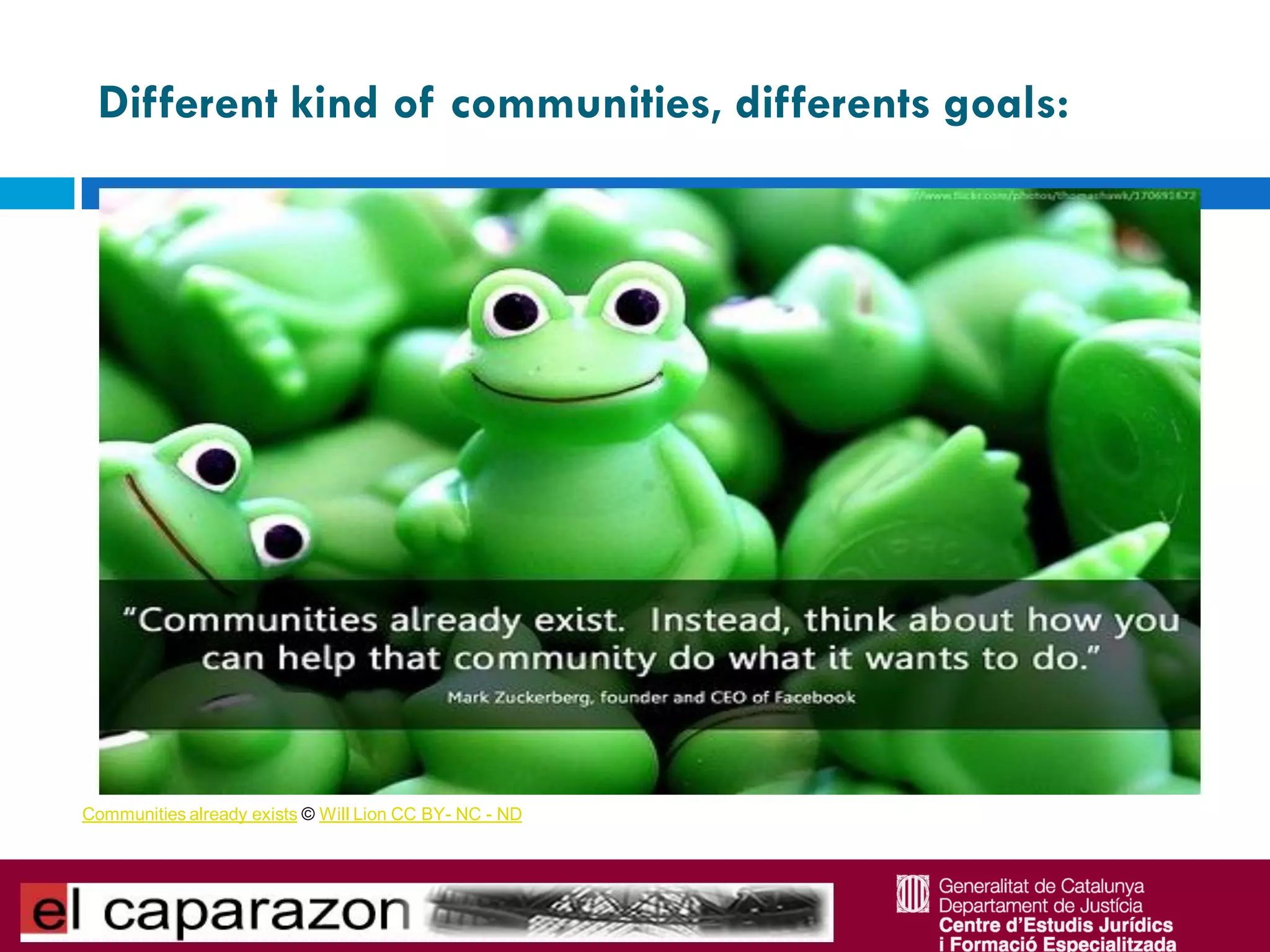
Different kind of communities, differents goals:


Communities already exists © Will Lion CC BY- NC - ND
Communication - Conversation

A community can born wherever
    it occurs a conversatoin


                             EASY, ABUNDANT

             It was never so easy to create
             groups (community concept is
                 not scarce yet) Clay Shirky
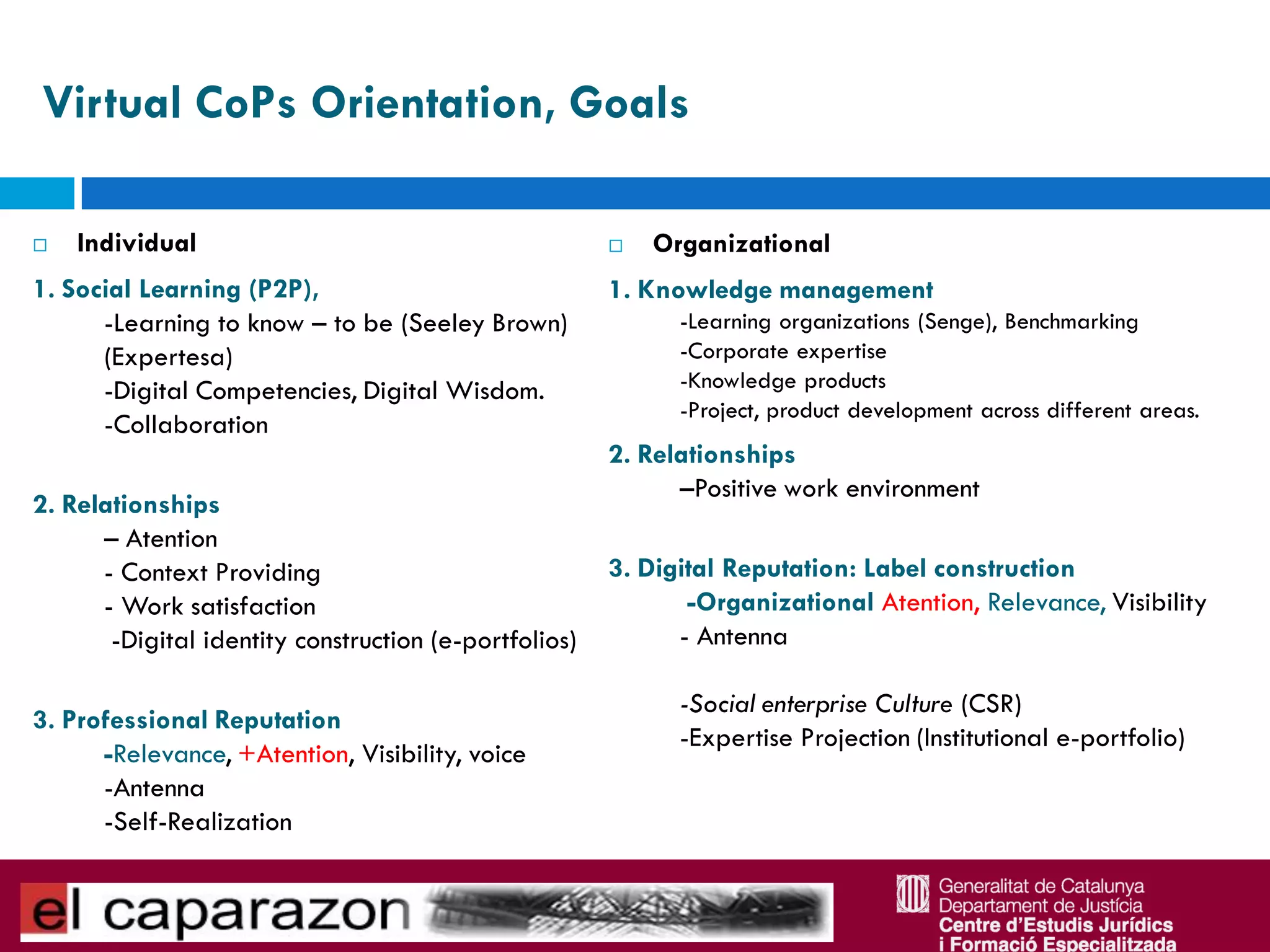
Virtual CoPs Orientation, Goals

   Individual                                            Organizational
1. Social Learning (P2P),                              1. Knowledge management
      -Learning to know – to be (Seeley Brown)               -Learning organizations (Senge), Benchmarking
      (Expertesa)                                            -Corporate expertise
      -Digital Competencies, Digital Wisdom.                 -Knowledge products
                                                             -Project, product development across different areas.
      -Collaboration
                                                       2. Relationships
                                                             –Positive work environment
2. Relationships
      – Atention
      - Context Providing                              3. Digital Reputation: Label construction
      - Work satisfaction                                     -Organizational Atention, Relevance, Visibility
       -Digital identity construction (e-portfolios)         - Antenna

                                                             -Social enterprise Culture (CSR)
3. Professional Reputation
                                                             -Expertise Projection (Institutional e-portfolio)
      -Relevance, +Atention, Visibility, voice
      -Antenna
      -Self-Realization
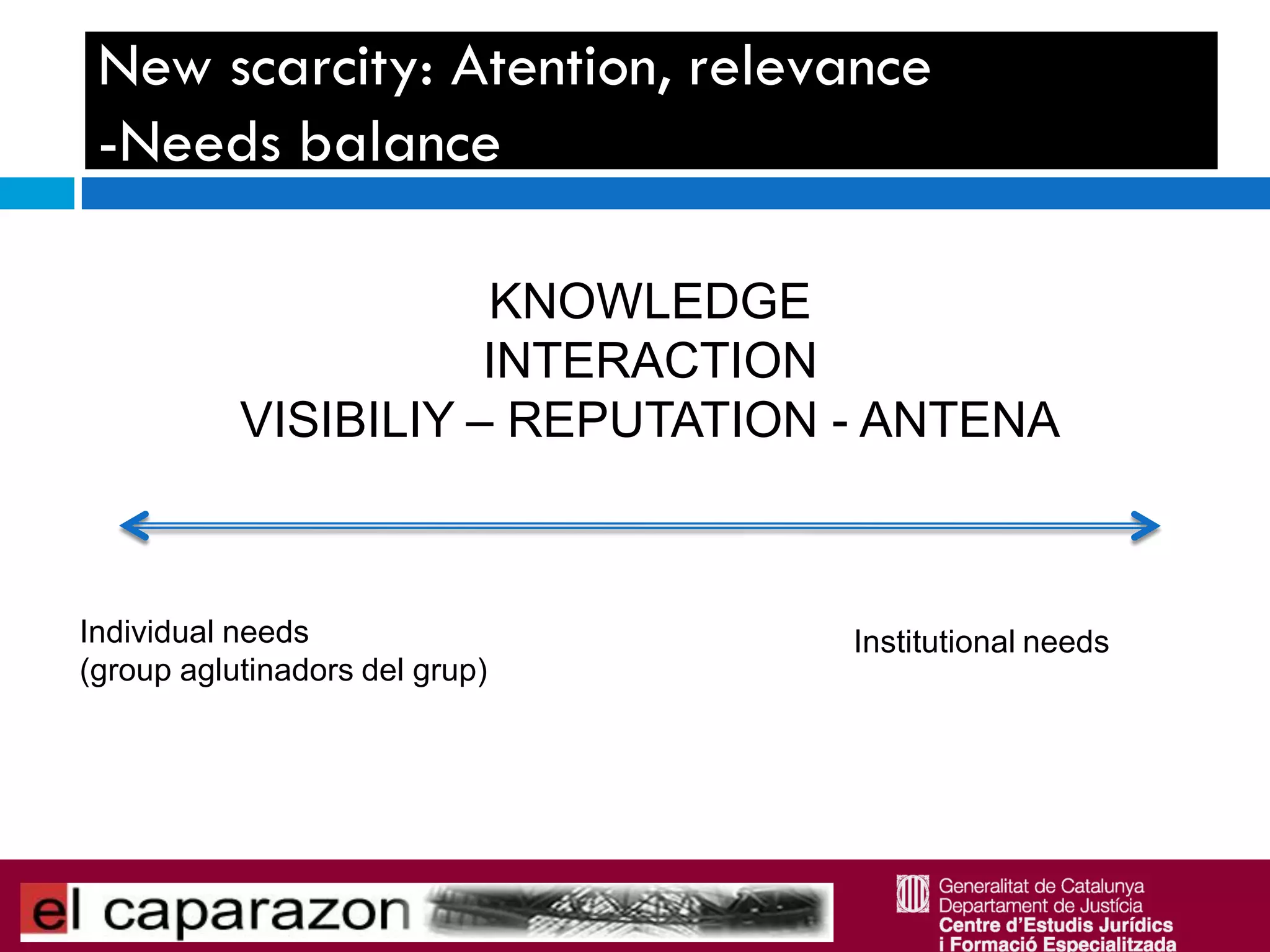
New scarcity: Atention, relevance
 -Needs balance

                      KNOWLEDGE
                      INTERACTION
           VISIBILIY – REPUTATION - ANTENA


Individual needs                  Institutional needs
(group aglutinadors del grup)
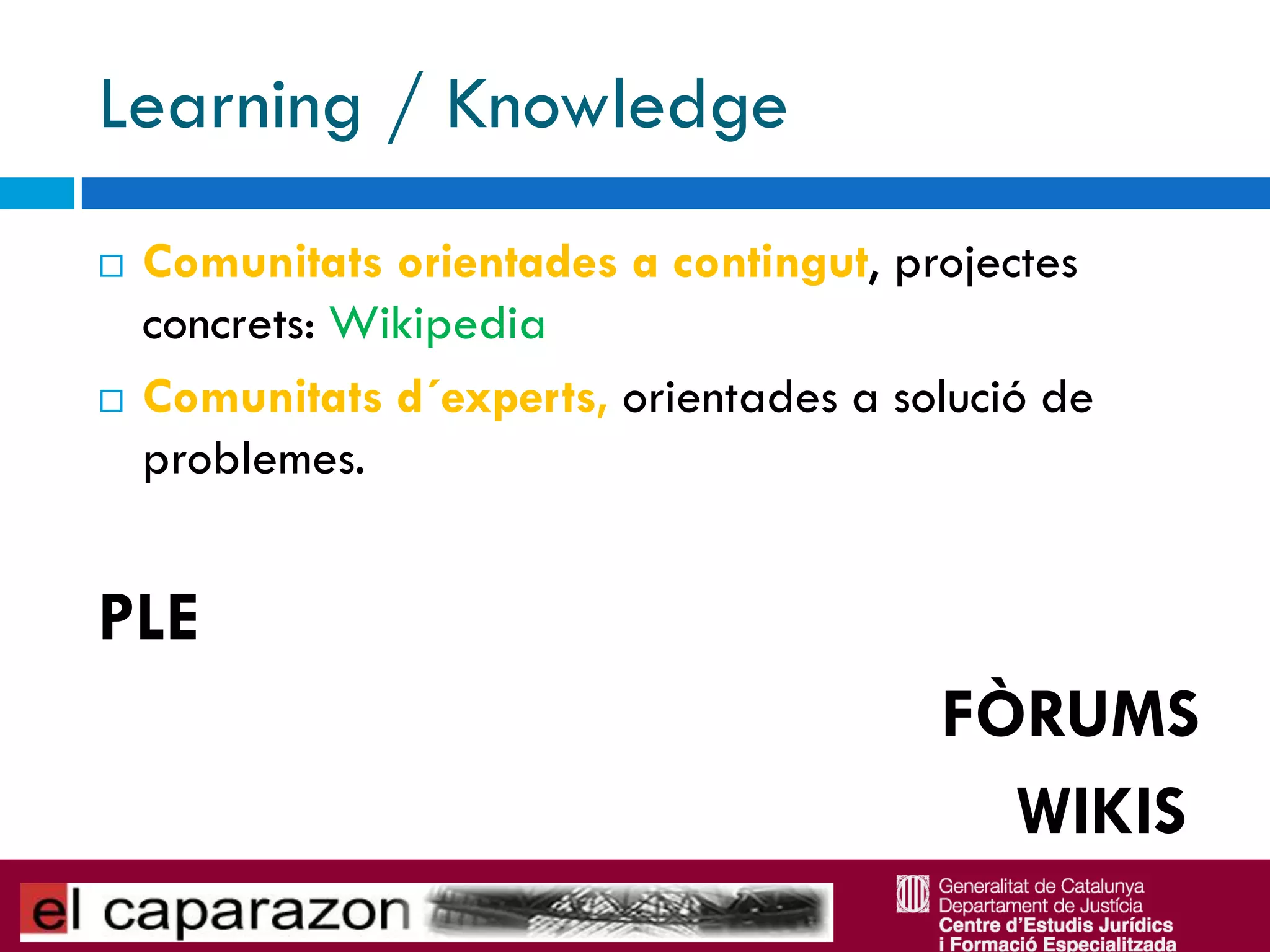
Learning / Knowledge
   Comunitats orientades a contingut, projectes
    concrets: Wikipedia
   Comunitats d´experts, orientades a solució de
    problemes.


PLE
                                         FÒRUMS
                                           WIKIS
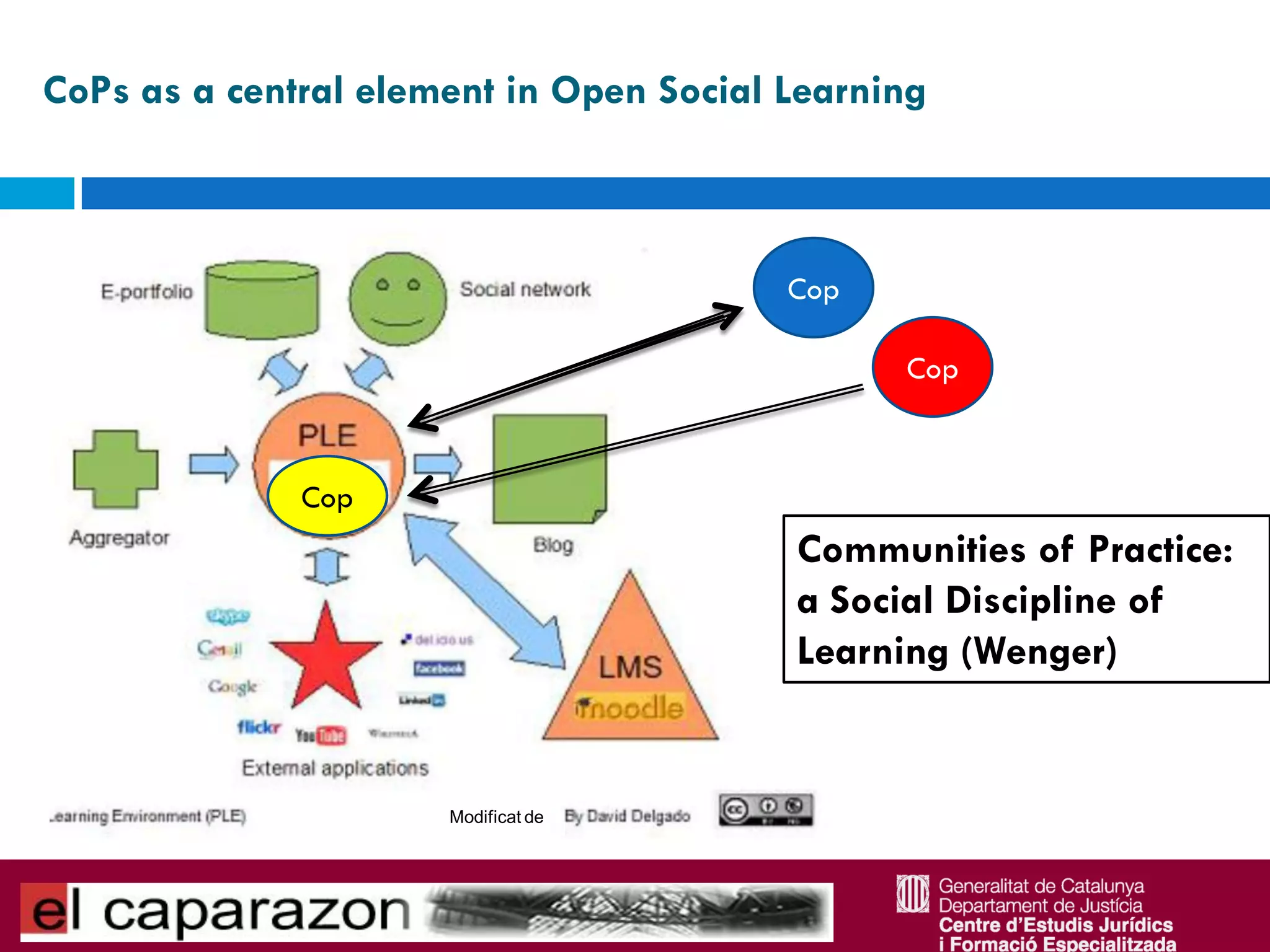
CoPs as a central element in Open Social Learning


                                         Cop

                                               Cop


              Cop
                                         Communities of Practice:
                                         a Social Discipline of
                                         Learning (Wenger)


                      Modificat de
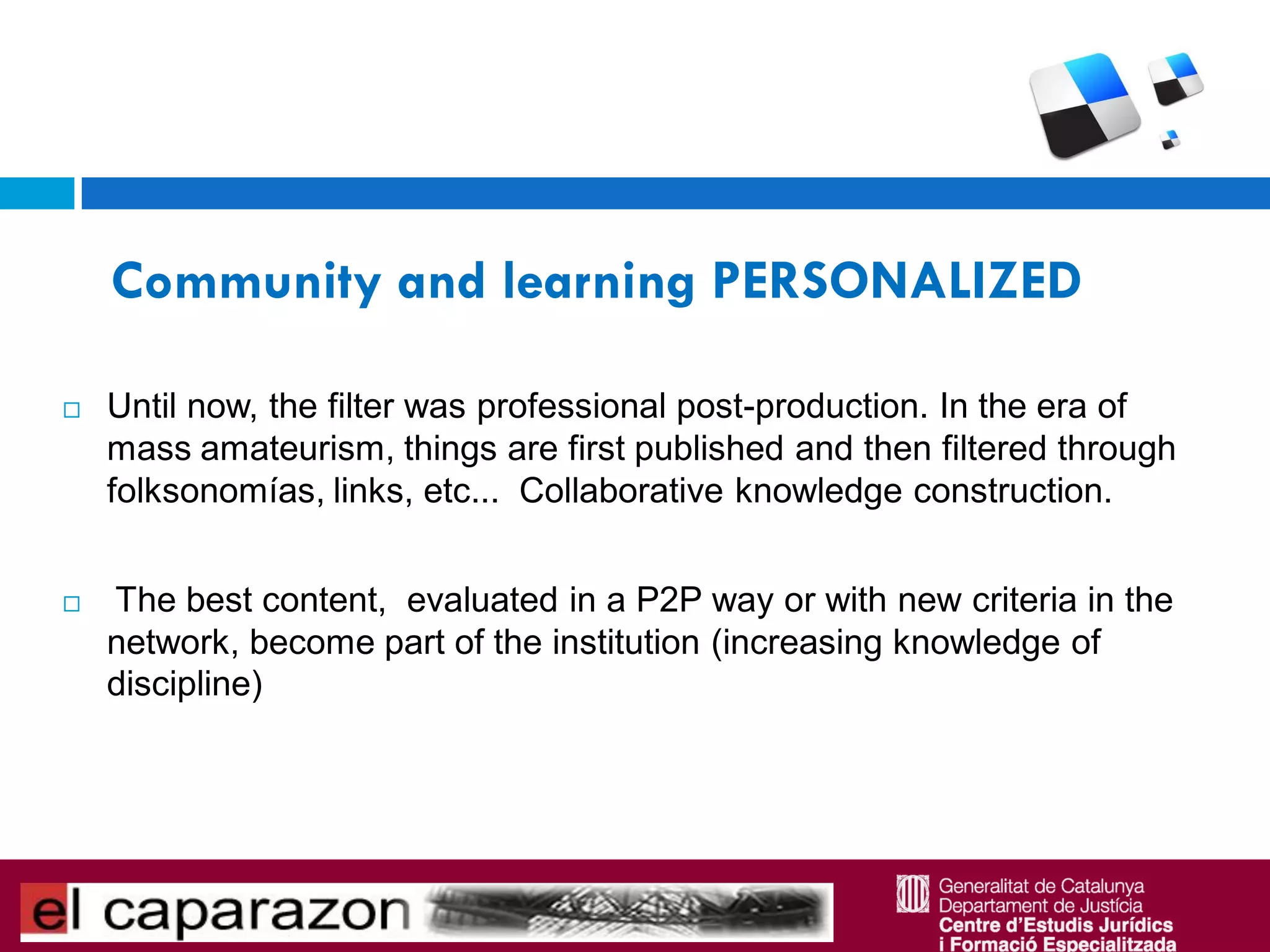
Community and learning PERSONALIZED

   Until now, the filter was professional post-production. In the era of
    mass amateurism, things are first published and then filtered through
    folksonomías, links, etc... Collaborative knowledge construction.


   The best content, evaluated in a P2P way or with new criteria in the
    network, become part of the institution (increasing knowledge of
    discipline)
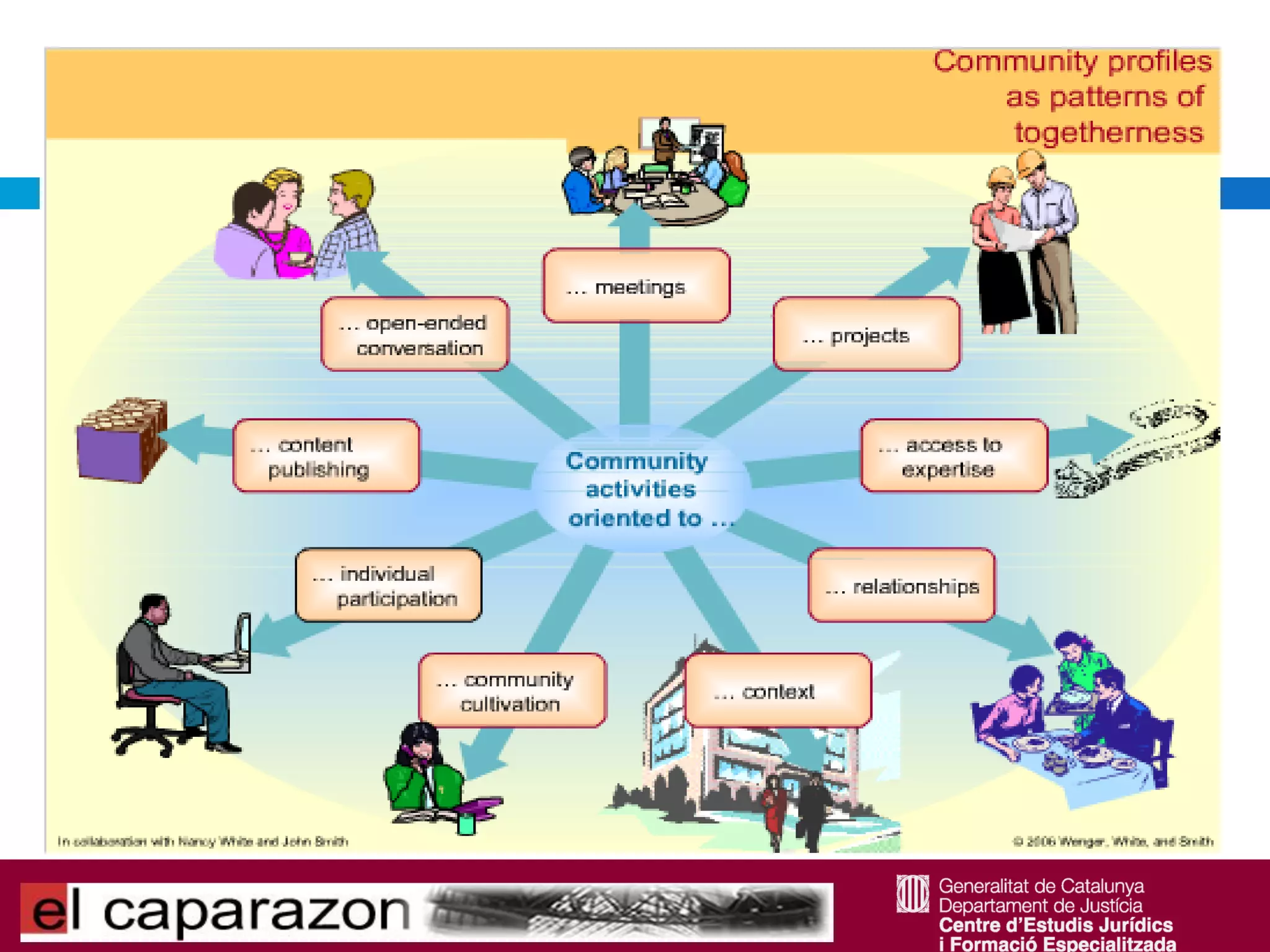
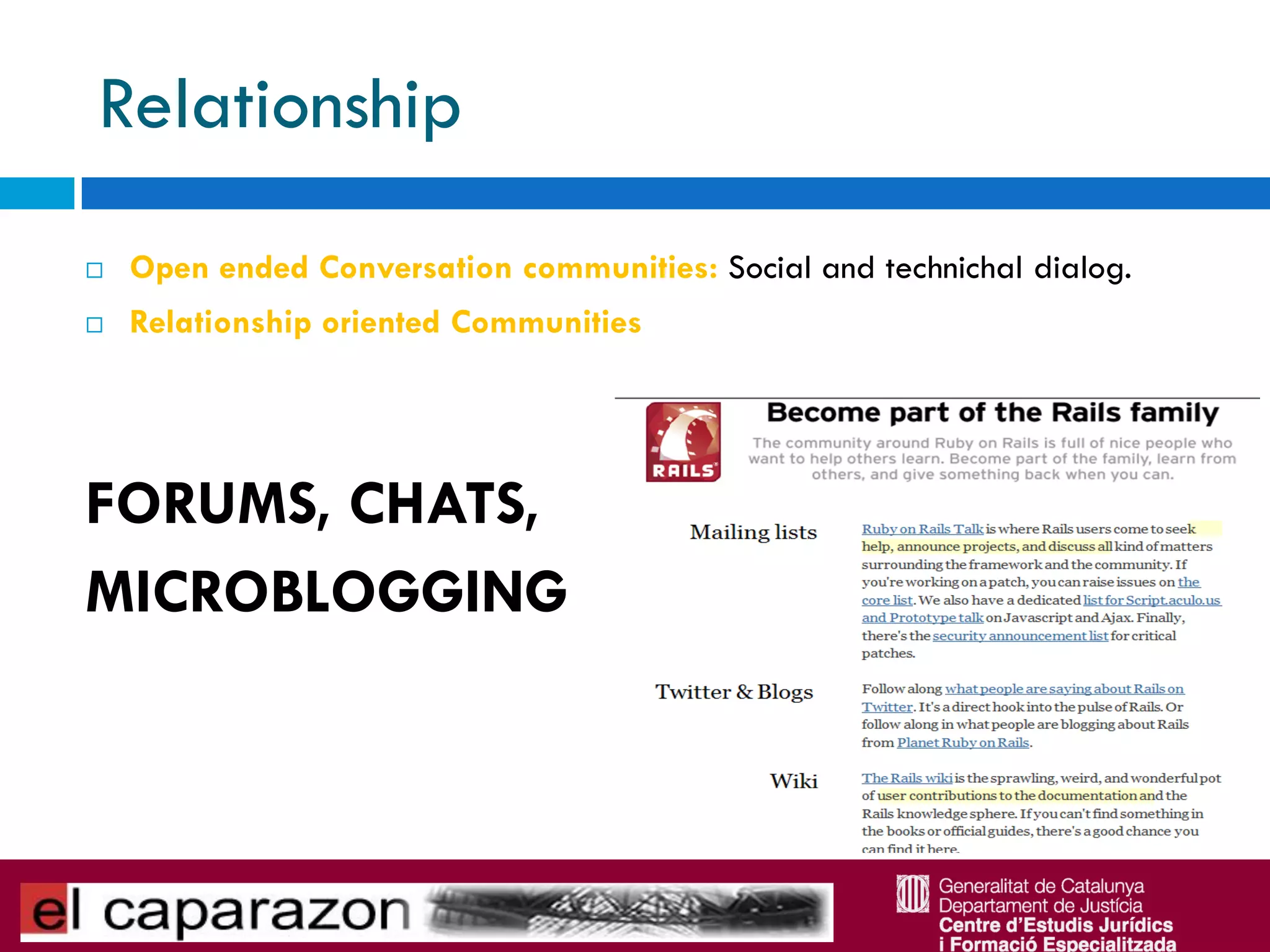
Relationship
   Open ended Conversation communities: Social and technichal dialog.
   Relationship oriented Communities


FORUMS, CHATS,
MICROBLOGGING
Visibility, Reputation
    Individual Participation oriented Communities


                         Corporative Blogs
                         Social, Interest networks

                              Blog Planets
               Mashups – Institutional e-portfolios
BLOGS (microsoft)
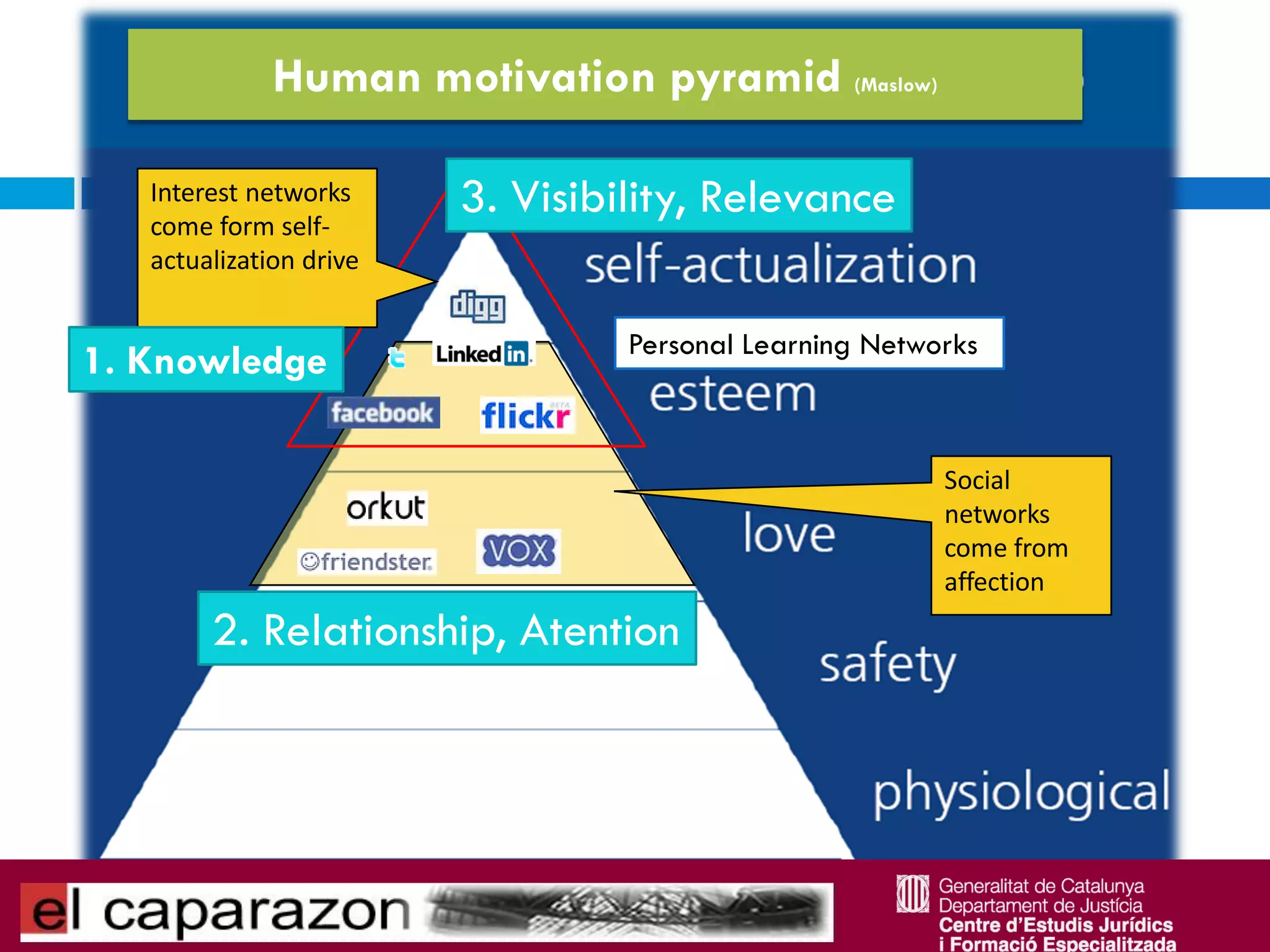
Human motivation pyramid (Maslow)

   Interest networks
   come form self-
                         3. Visibility, Relevance
   actualization drive

                                  Personal Learning Networks
1. Knowledge

                                                         Social
                                                         networks
                                                         come from
                                                         affection
        2. Relationship, Atention
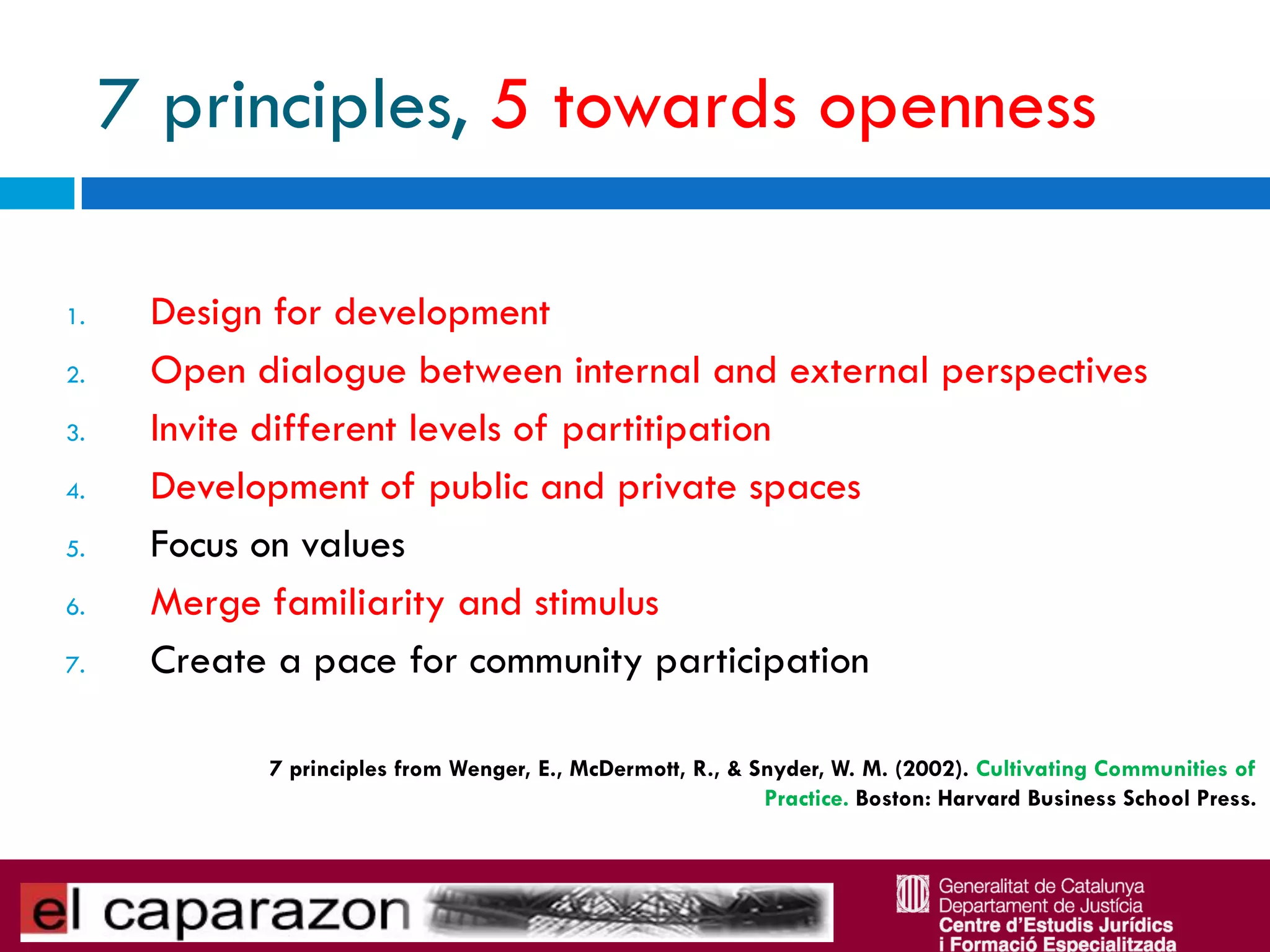
7 principles, 5 towards openness

1.    Design for development
2.    Open dialogue between internal and external perspectives
3.    Invite different levels of partitipation
4.    Development of public and private spaces
5.    Focus on values
6.    Merge familiarity and stimulus
7.    Create a pace for community participation

            7 principles from Wenger, E., McDermott, R., & Snyder, W. M. (2002). Cultivating Communities of
                                                            Practice. Boston: Harvard Business School Press.
Openness as a success key


   street  exit © [phil H] CC BY – NC ND
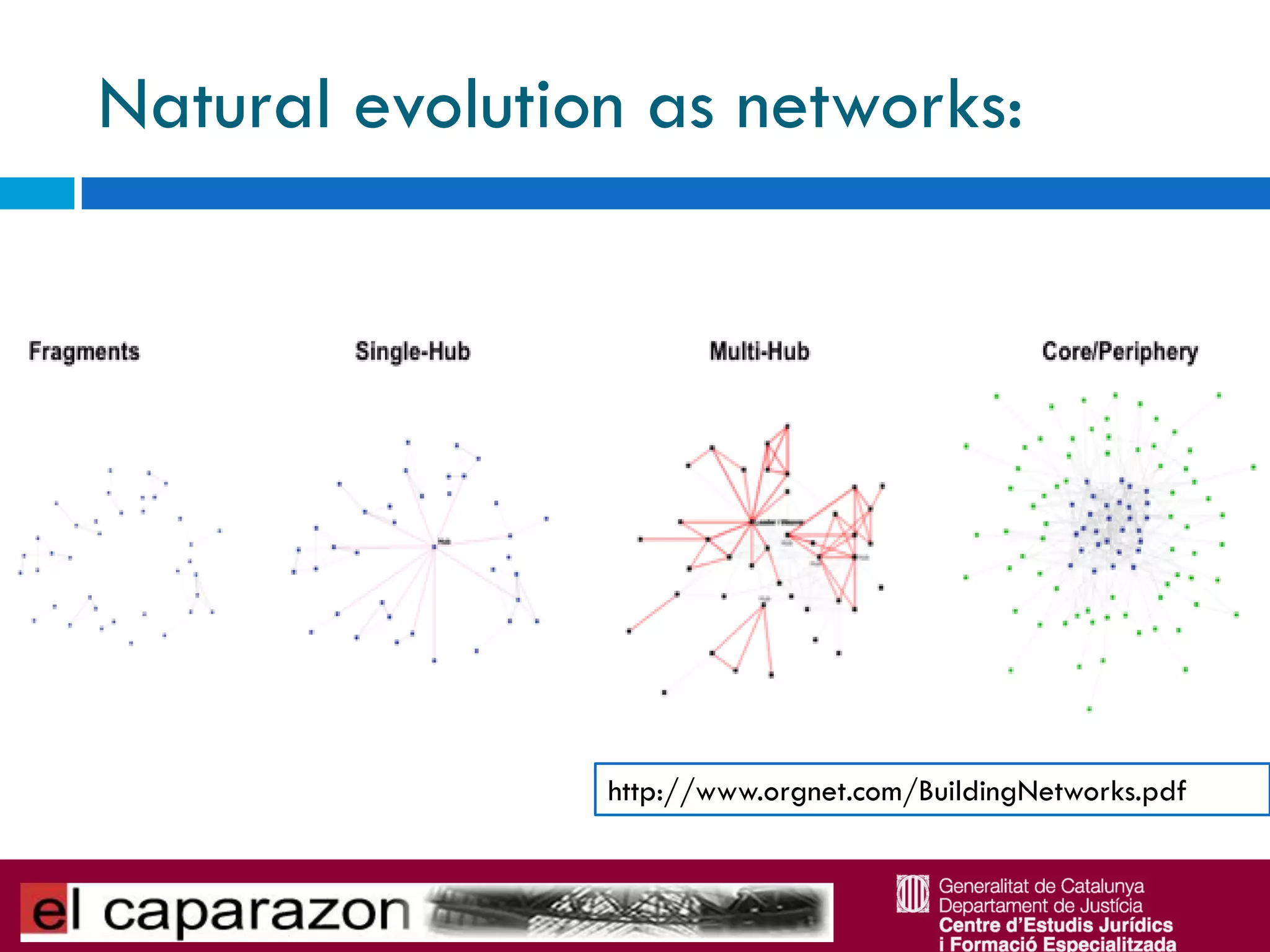
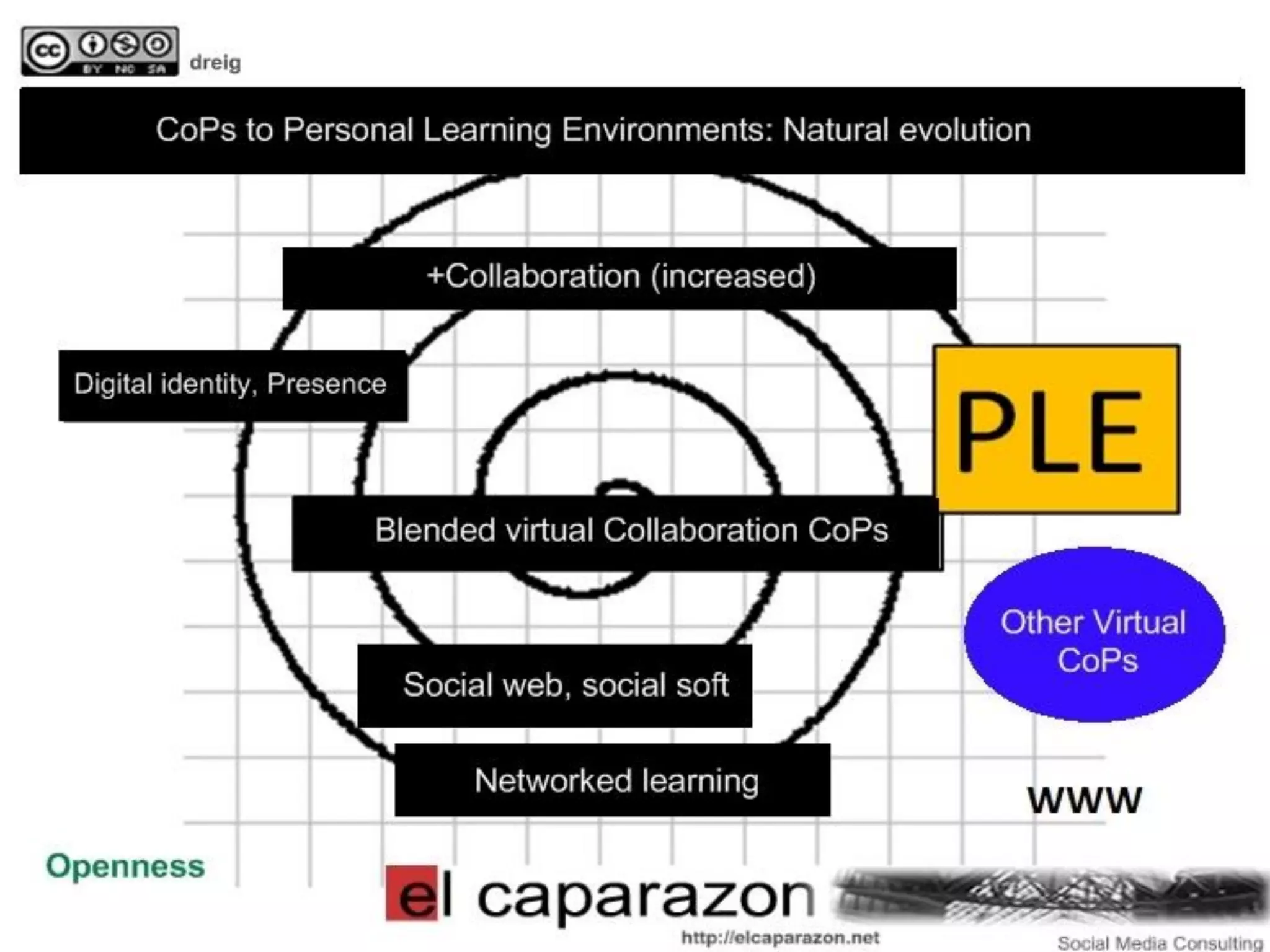
Natural evolution as networks:


                http://www.orgnet.com/BuildingNetworks.pdf
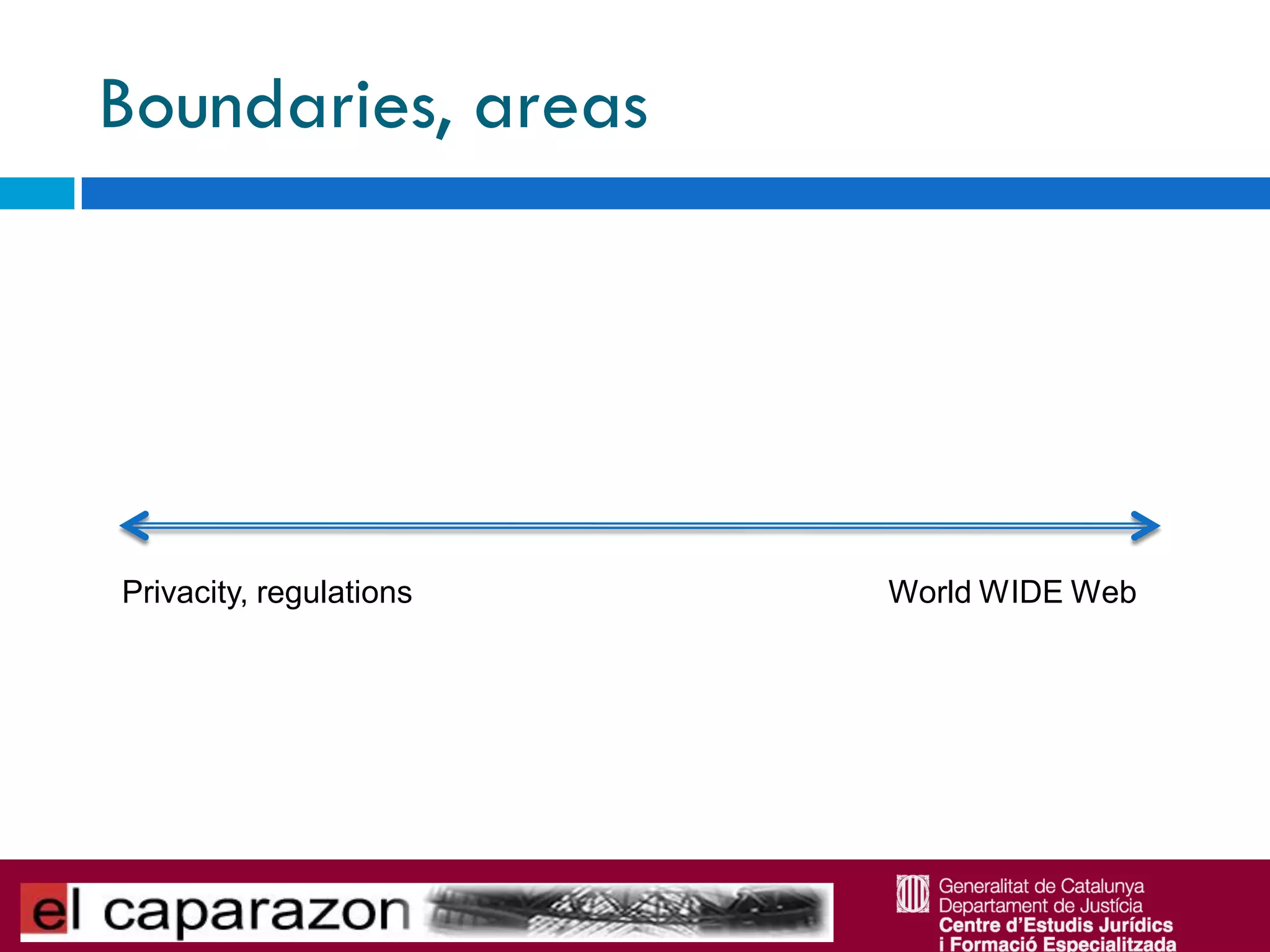
Boundaries, areas


Privacity, regulations   World WIDE Web
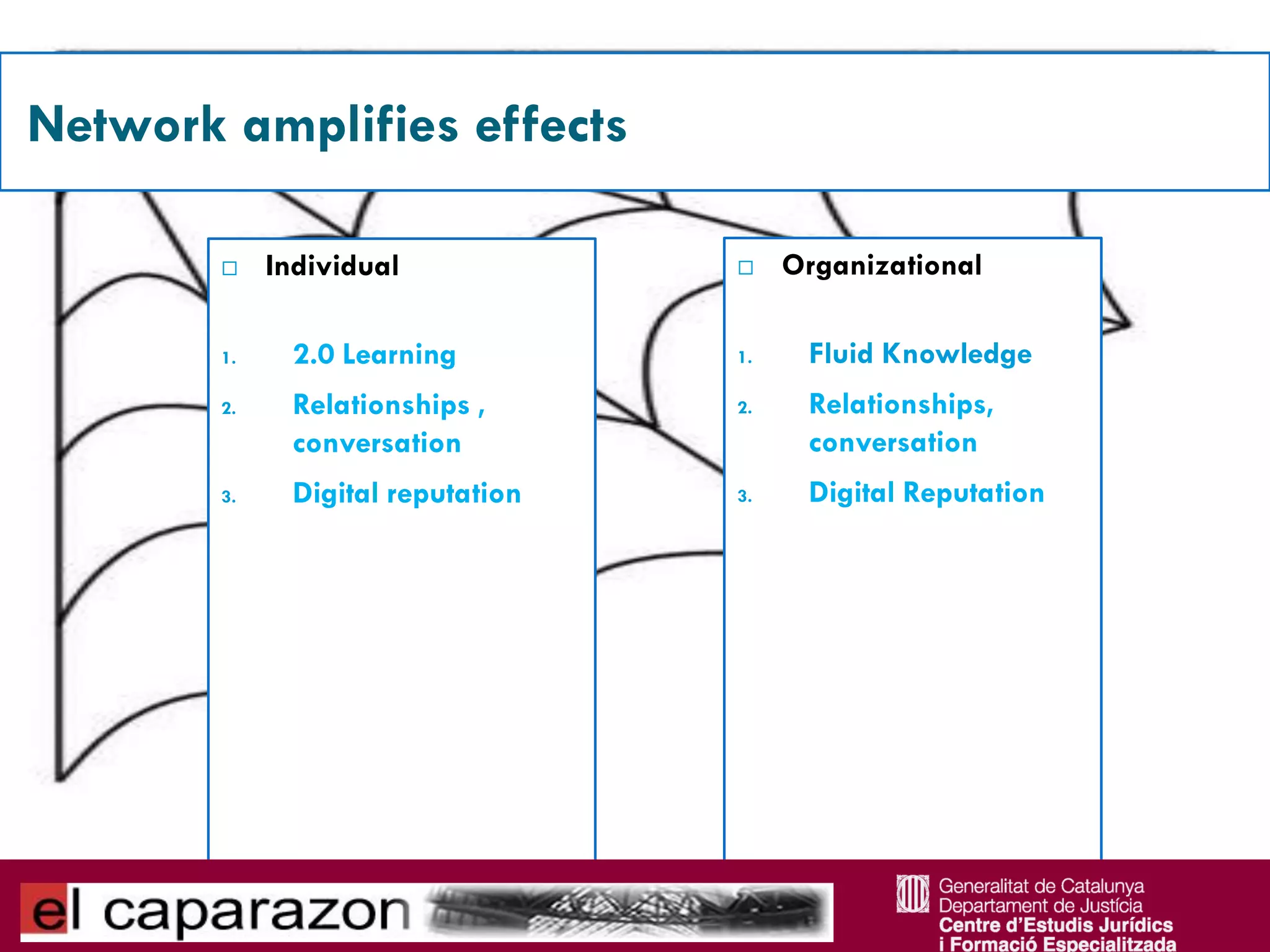
Network amplifies effects

            Individual                 Organizational

        1.     2.0 Learning         1.    Fluid Knowledge
        2.     Relationships ,      2.    Relationships,
               conversation               conversation
        3.     Digital reputation   3.    Digital Reputation
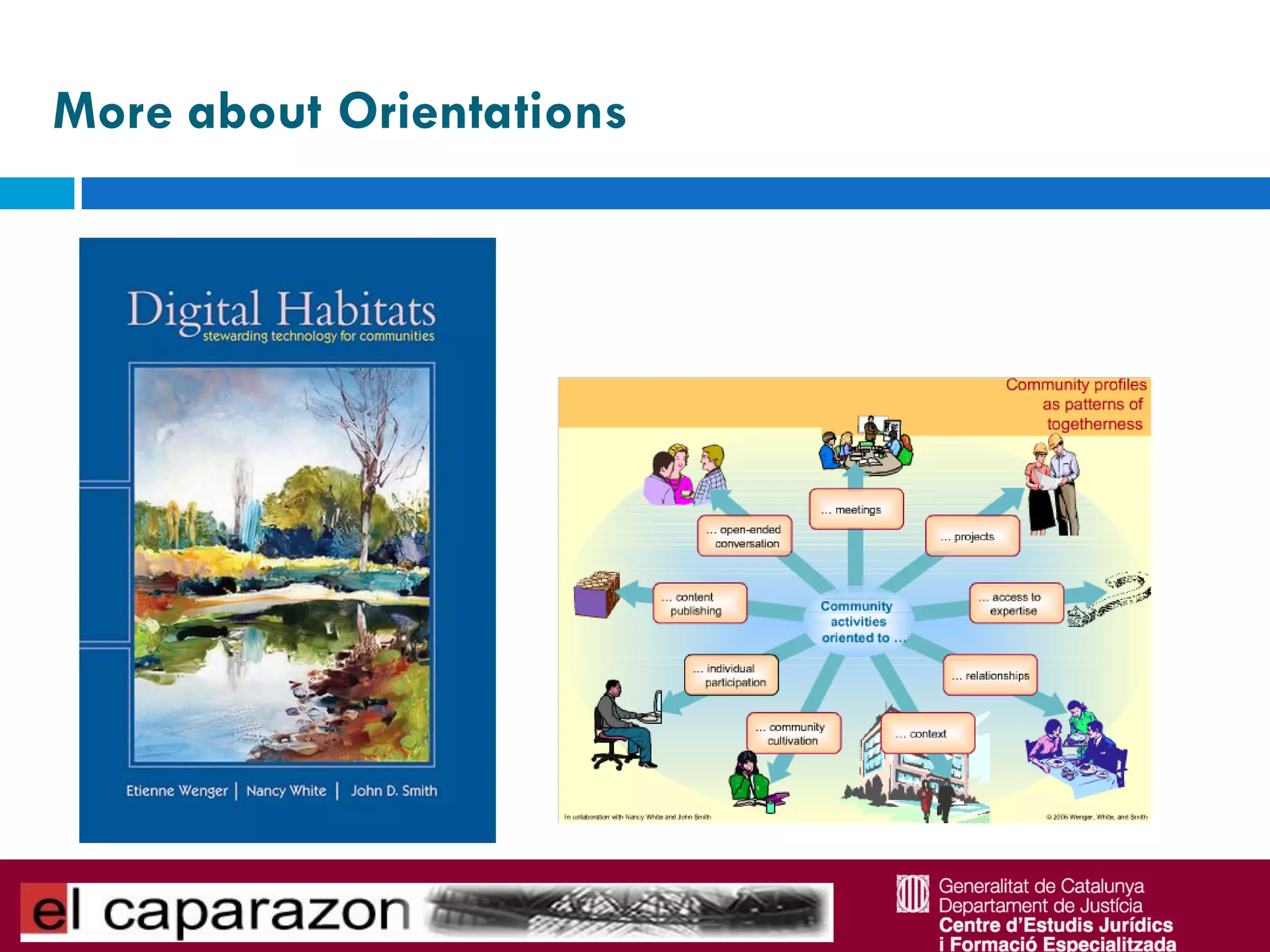
More about Orientations
Thanks!

Communities, Orientation

  • 1.
    Knowledge Management VIII specialized seminar All about Virtual Communities on Public Administrations Why CoP? How to improve it? Balance, Openess, Community profiles Dolors Reig, El caparazón
  • 2.
    Different kind ofcommunities, differents goals: Communities already exists © Will Lion CC BY- NC - ND
  • 3.
    Communication - Conversation Acommunity can born wherever it occurs a conversatoin EASY, ABUNDANT It was never so easy to create groups (community concept is not scarce yet) Clay Shirky
  • 4.
    Virtual CoPs Orientation,Goals  Individual  Organizational 1. Social Learning (P2P), 1. Knowledge management -Learning to know – to be (Seeley Brown) -Learning organizations (Senge), Benchmarking (Expertesa) -Corporate expertise -Digital Competencies, Digital Wisdom. -Knowledge products -Project, product development across different areas. -Collaboration 2. Relationships –Positive work environment 2. Relationships – Atention - Context Providing 3. Digital Reputation: Label construction - Work satisfaction -Organizational Atention, Relevance, Visibility -Digital identity construction (e-portfolios) - Antenna -Social enterprise Culture (CSR) 3. Professional Reputation -Expertise Projection (Institutional e-portfolio) -Relevance, +Atention, Visibility, voice -Antenna -Self-Realization
  • 5.
    New scarcity: Atention,relevance -Needs balance KNOWLEDGE INTERACTION VISIBILIY – REPUTATION - ANTENA Individual needs Institutional needs (group aglutinadors del grup)
  • 7.
    Learning / Knowledge  Comunitats orientades a contingut, projectes concrets: Wikipedia  Comunitats d´experts, orientades a solució de problemes. PLE FÒRUMS WIKIS
  • 8.
    CoPs as acentral element in Open Social Learning Cop Cop Cop Communities of Practice: a Social Discipline of Learning (Wenger) Modificat de
  • 9.
    Community and learningPERSONALIZED  Until now, the filter was professional post-production. In the era of mass amateurism, things are first published and then filtered through folksonomías, links, etc... Collaborative knowledge construction.  The best content, evaluated in a P2P way or with new criteria in the network, become part of the institution (increasing knowledge of discipline)
  • 10.
    Relationship  Open ended Conversation communities: Social and technichal dialog.  Relationship oriented Communities FORUMS, CHATS, MICROBLOGGING
  • 11.
    Visibility, Reputation  Individual Participation oriented Communities Corporative Blogs Social, Interest networks Blog Planets Mashups – Institutional e-portfolios BLOGS (microsoft)
  • 12.
    Human motivation pyramid(Maslow) Interest networks come form self- 3. Visibility, Relevance actualization drive Personal Learning Networks 1. Knowledge Social networks come from affection 2. Relationship, Atention
  • 13.
    7 principles, 5towards openness 1. Design for development 2. Open dialogue between internal and external perspectives 3. Invite different levels of partitipation 4. Development of public and private spaces 5. Focus on values 6. Merge familiarity and stimulus 7. Create a pace for community participation 7 principles from Wenger, E., McDermott, R., & Snyder, W. M. (2002). Cultivating Communities of Practice. Boston: Harvard Business School Press.
  • 15.
    Openness as asuccess key street exit © [phil H] CC BY – NC ND
  • 16.
    Natural evolution asnetworks: http://www.orgnet.com/BuildingNetworks.pdf
  • 17.
  • 18.
    Network amplifies effects  Individual  Organizational 1. 2.0 Learning 1. Fluid Knowledge 2. Relationships , 2. Relationships, conversation conversation 3. Digital reputation 3. Digital Reputation
  • 19.
  • 20.