Use it or lose it:
A hybrid model for sustaining e-infrastructures
A case study from the ViBRANT project
Vincent S. Smith
Biodiversity Informatics Group | Department of Life Sciences
Natural History Museum, London
Pro-iBiosphere final conference
Meise, Brussels, June 12 2014
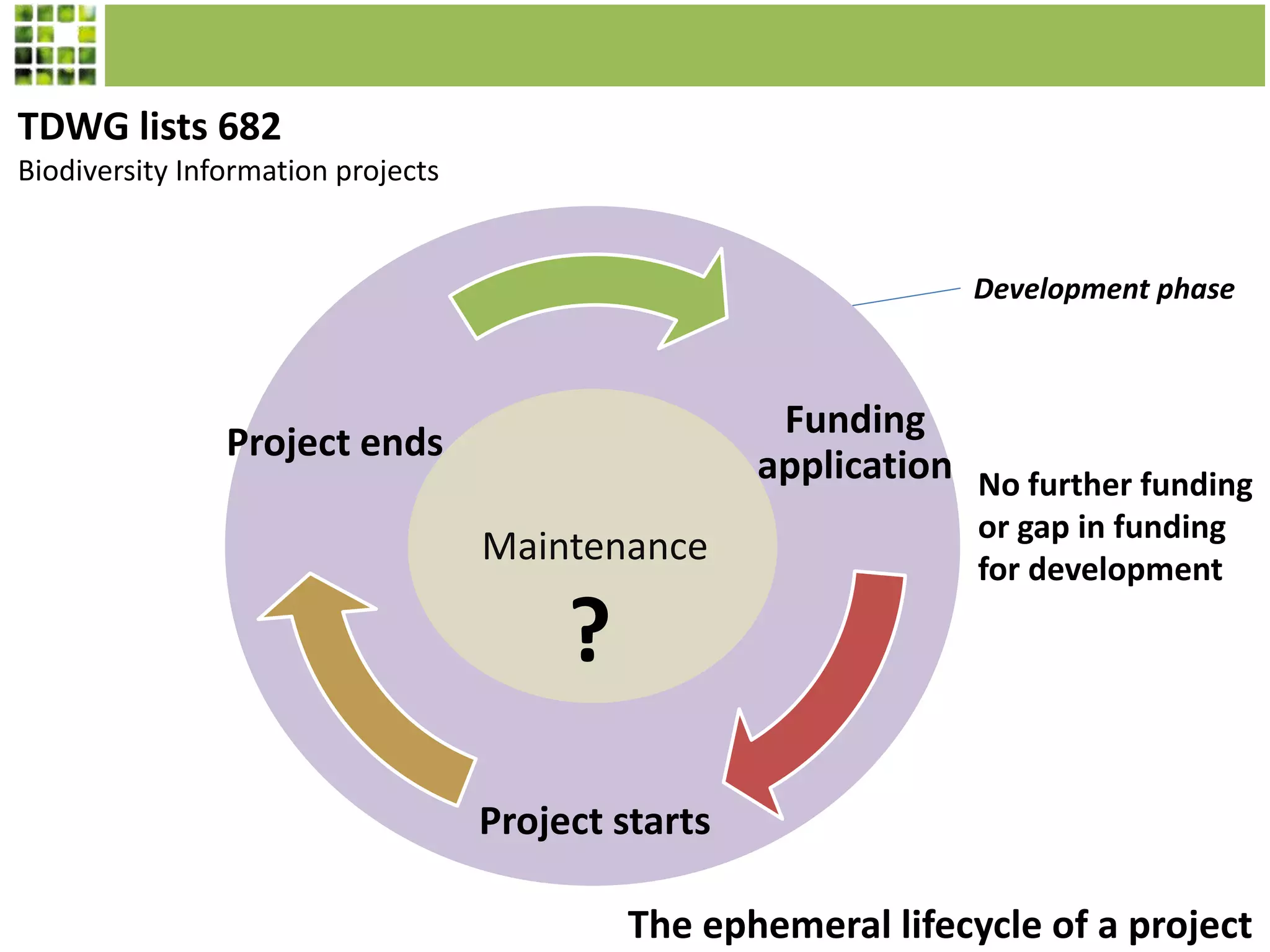
Maintenance
Funding
application
Project starts
Project ends
Development phase
No further funding
or gap in funding
for development
?
The ephemeral lifecycle of a project
TDWG lists 682
Biodiversity Information projects
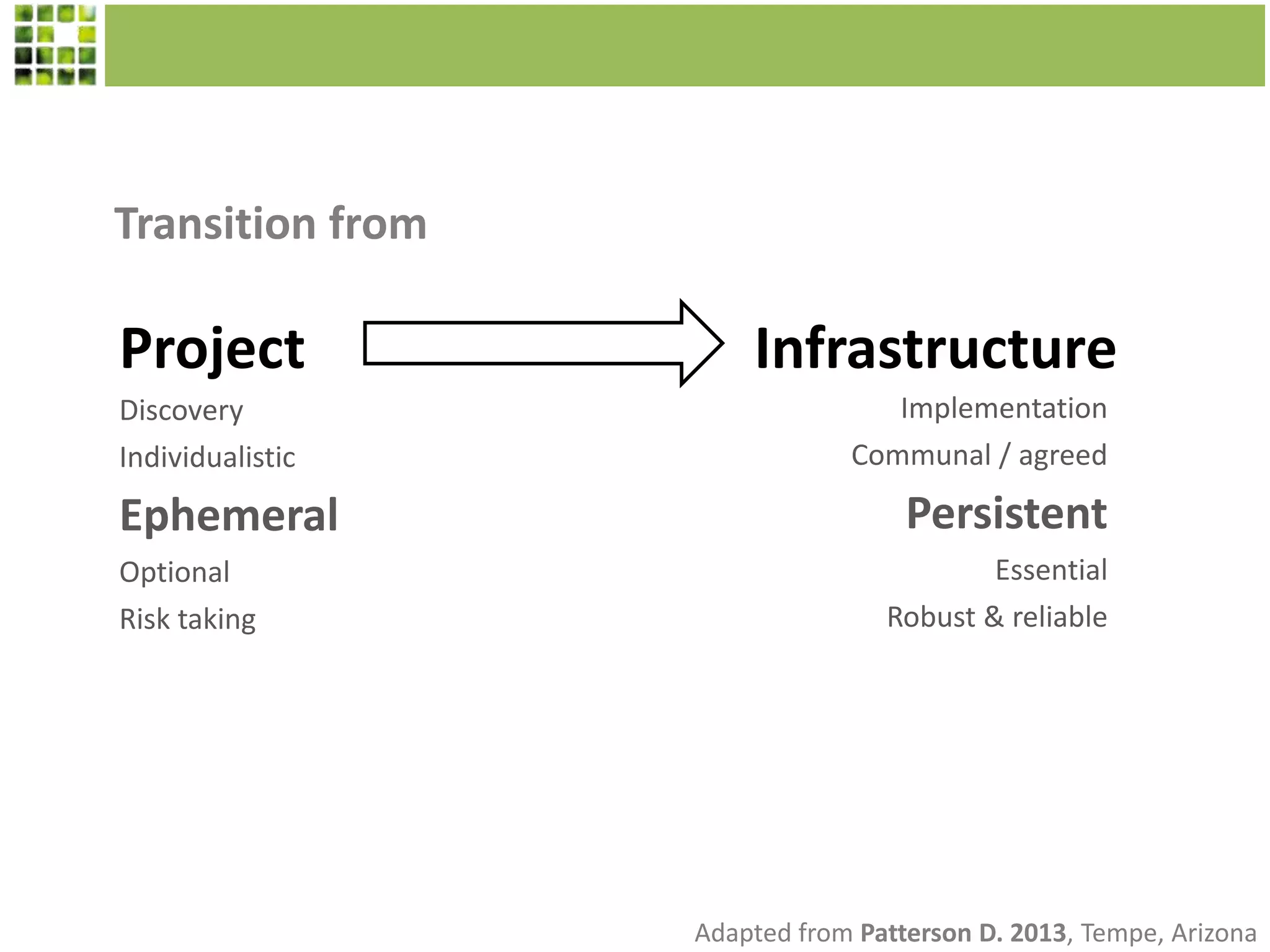
Project Infrastructure
Discovery
Individualistic
Ephemeral
Optional
Risk taking
Implementation
Communal / agreed
Persistent
Essential
Robust & reliable
Adapted from Patterson D. 2013, Tempe, Arizona
Transition from
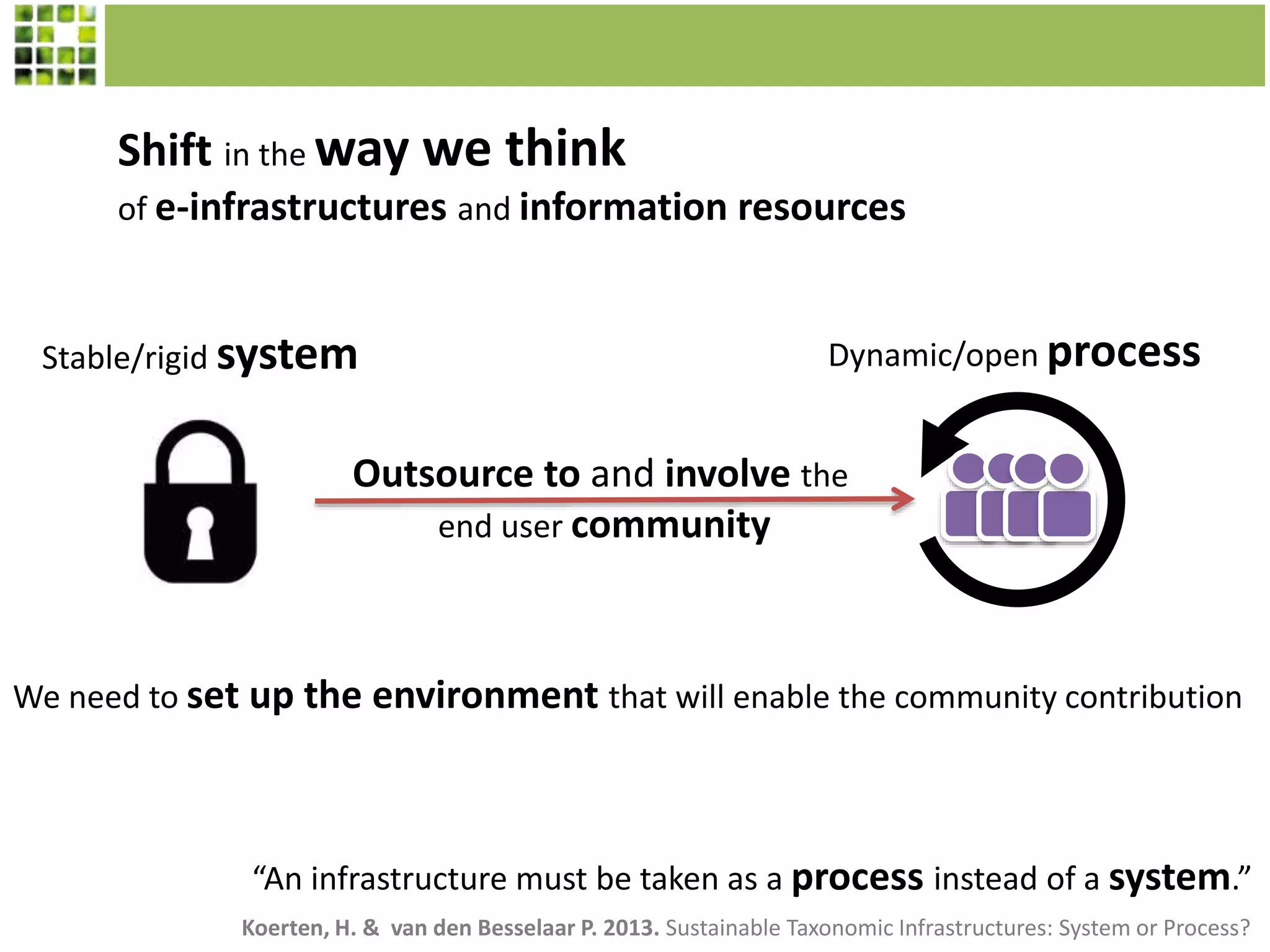
“An infrastructure must be taken as a process instead of a system.”
Shift in the way we think
of e-infrastructures and information resources
Stable/rigid system Dynamic/open process
Outsource to and involve the
end user community
We need to set up the environment that will enable the community contribution
Koerten, H. & van den Besselaar P. 2013. Sustainable Taxonomic Infrastructures: System or Process?
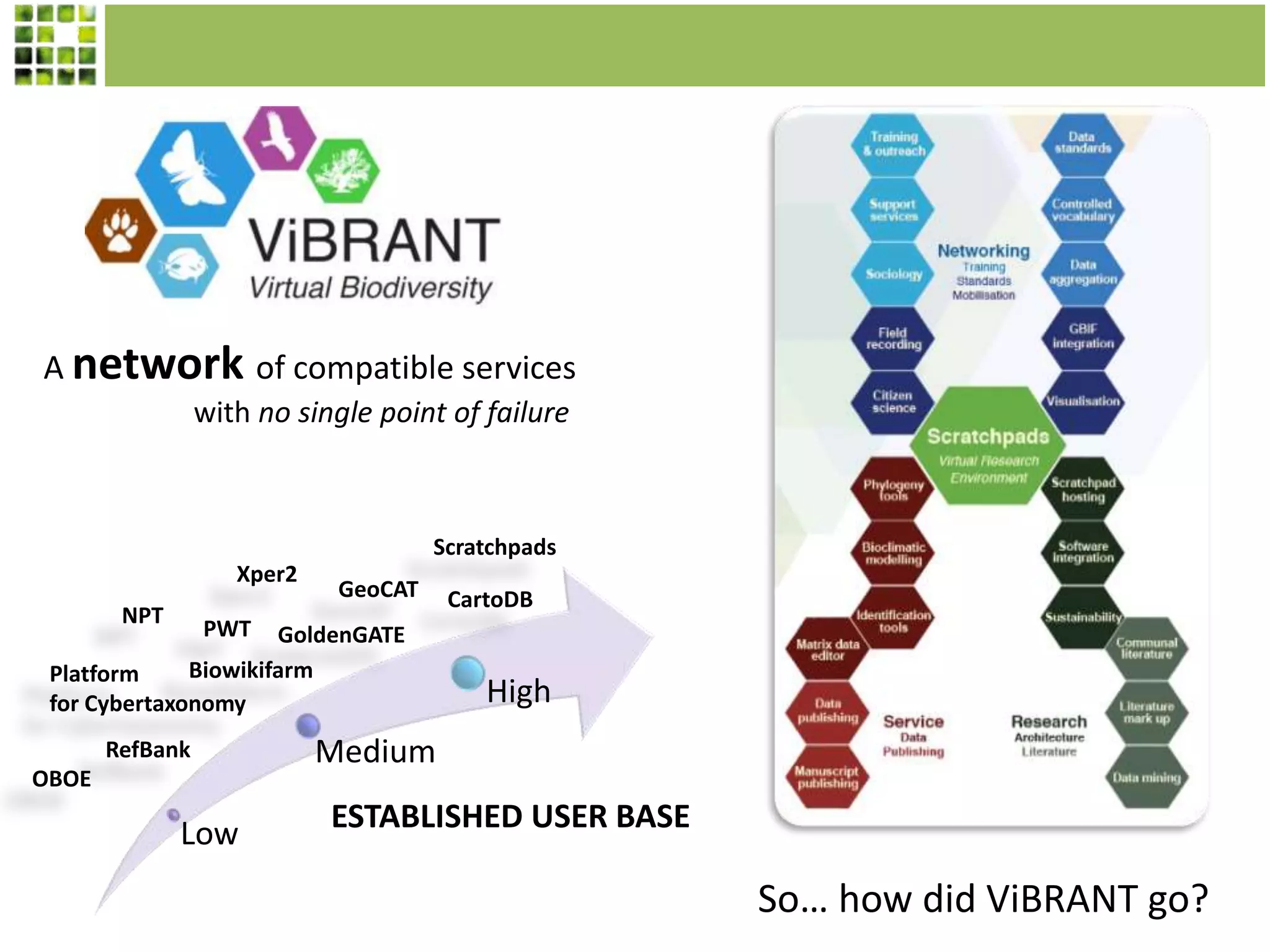
A network of compatible services
with no single point of failure
So… how did ViBRANT go?
Low
Medium
High
Scratchpads
Platform
for Cybertaxonomy
Biowikifarm
PWT
NPT
OBOE
RefBank
GoldenGATE
Xper2
GeoCAT CartoDB
ESTABLISHED USER BASE
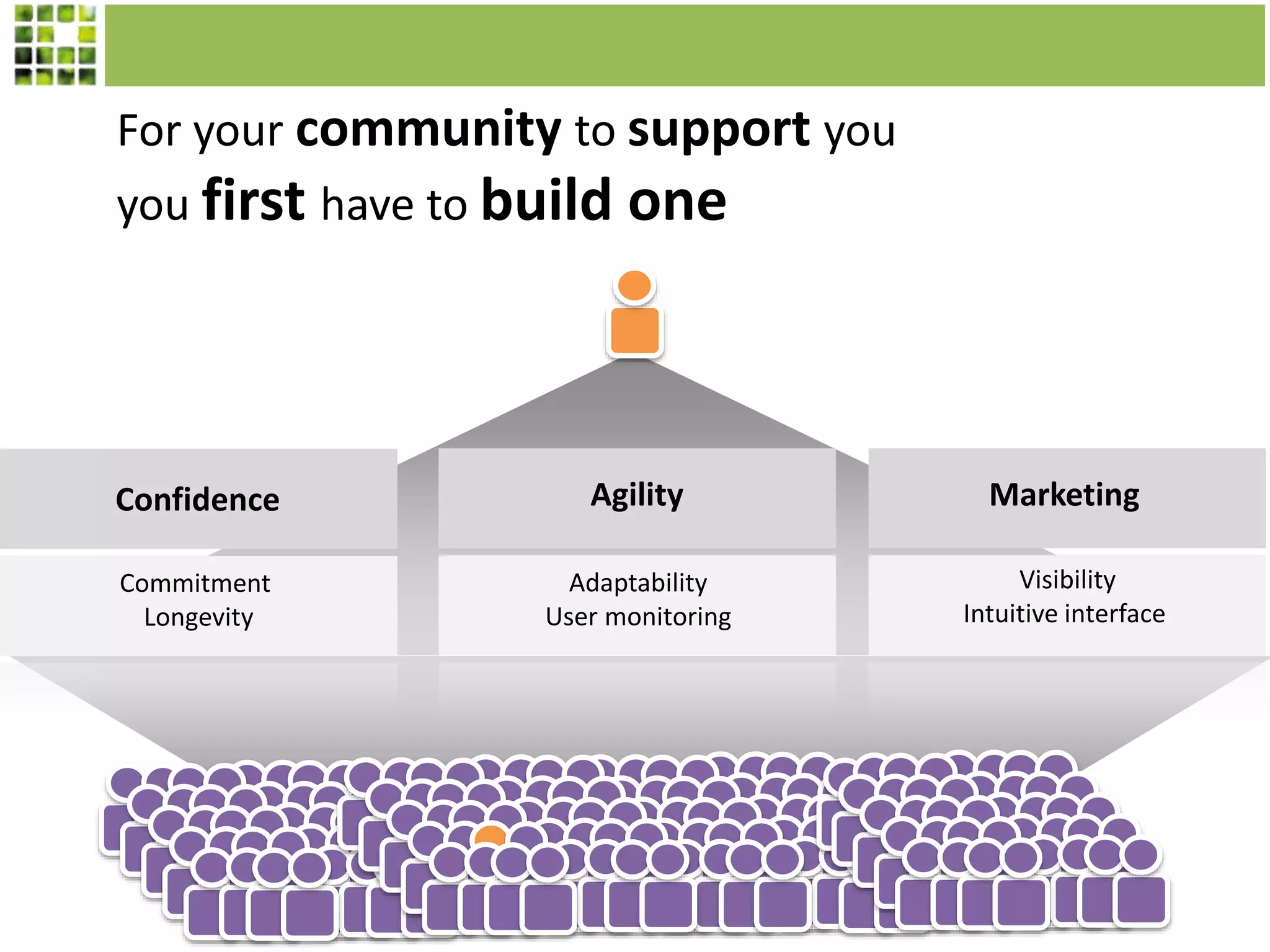
For your community to support you
you first have to build one
Confidence
Commitment
Longevity
Agility
Adaptability
User monitoring
Marketing
Visibility
Intuitive interface
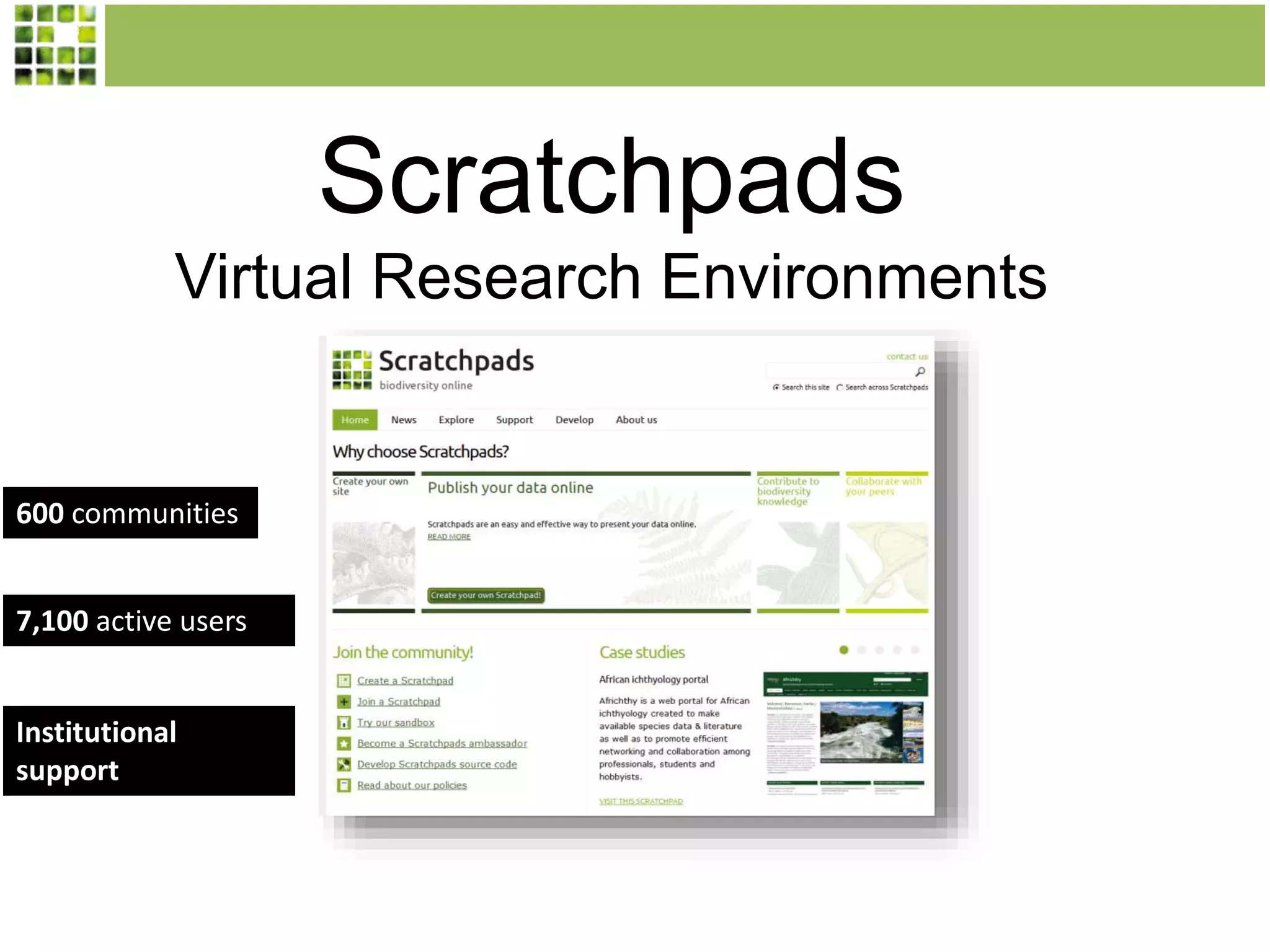
Scratchpads
Virtual Research Environments
600 communities
7,100 active users
Institutional
support
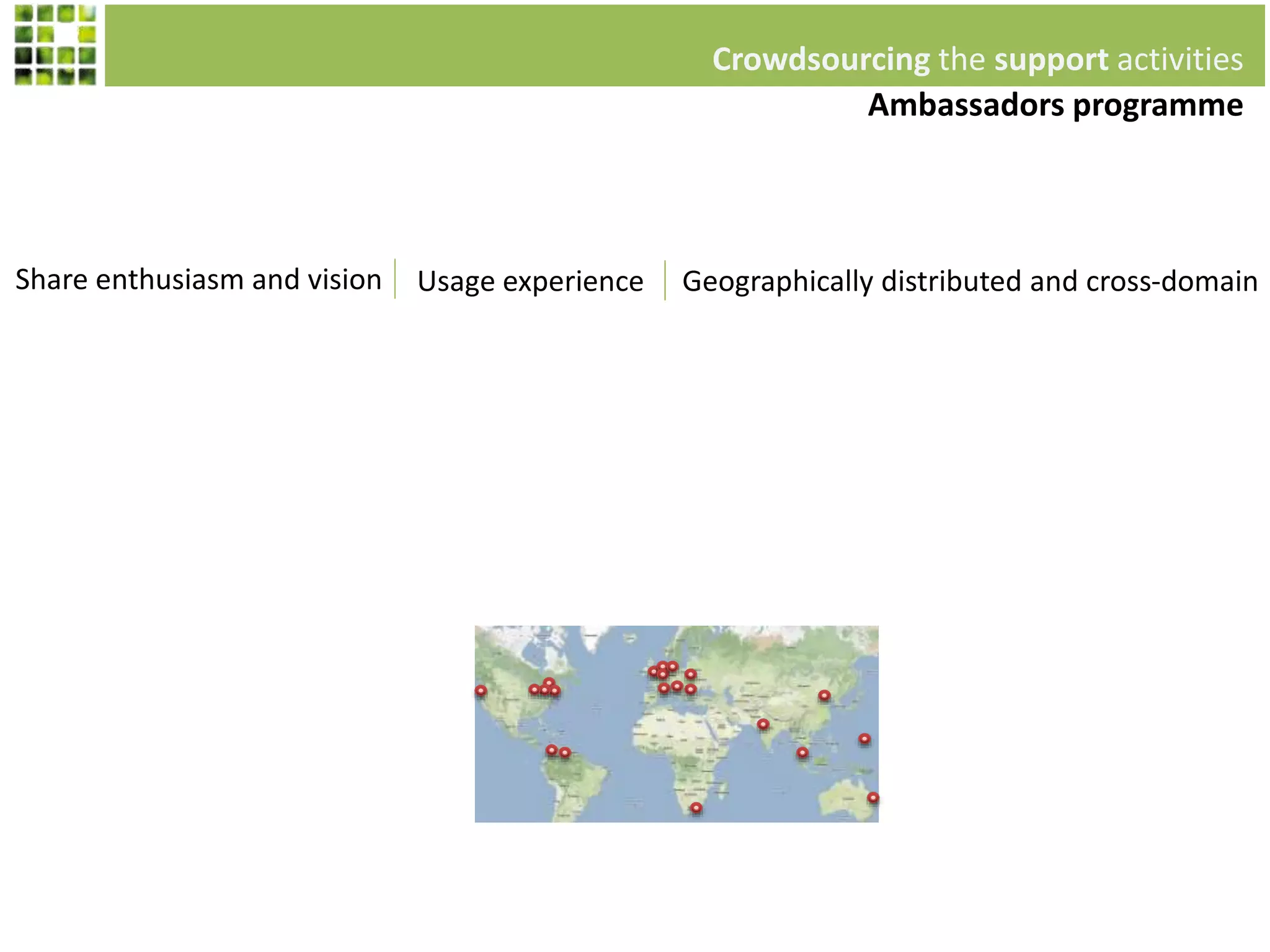
Ambassadors programme
Share enthusiasm and vision Usage experience Geographically distributed and cross-domain
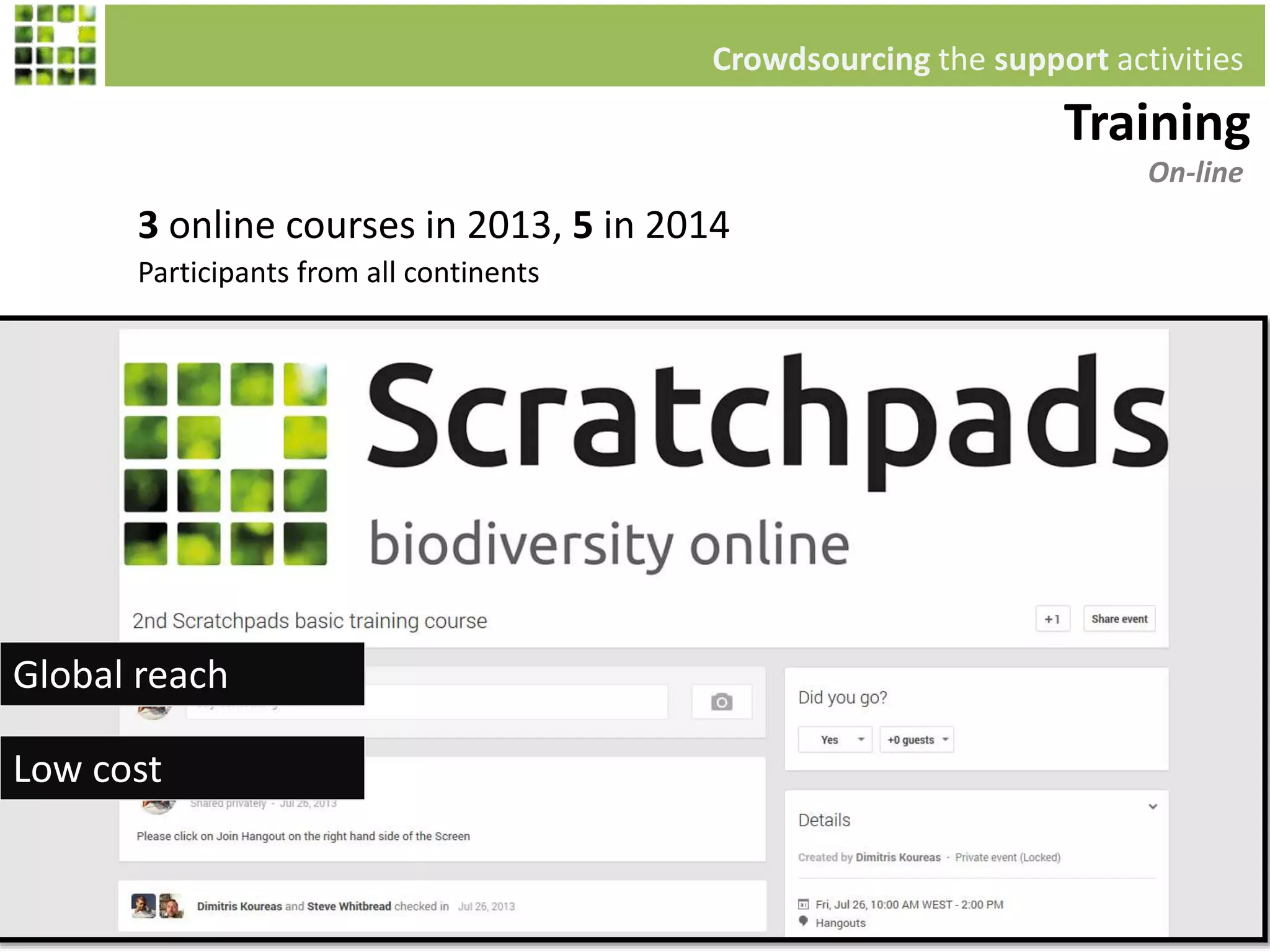
Crowdsourcing the support activities
On-line
3 online courses in 2013, 5 in 2014
Global reach
Low cost
Participants from all continents
Training
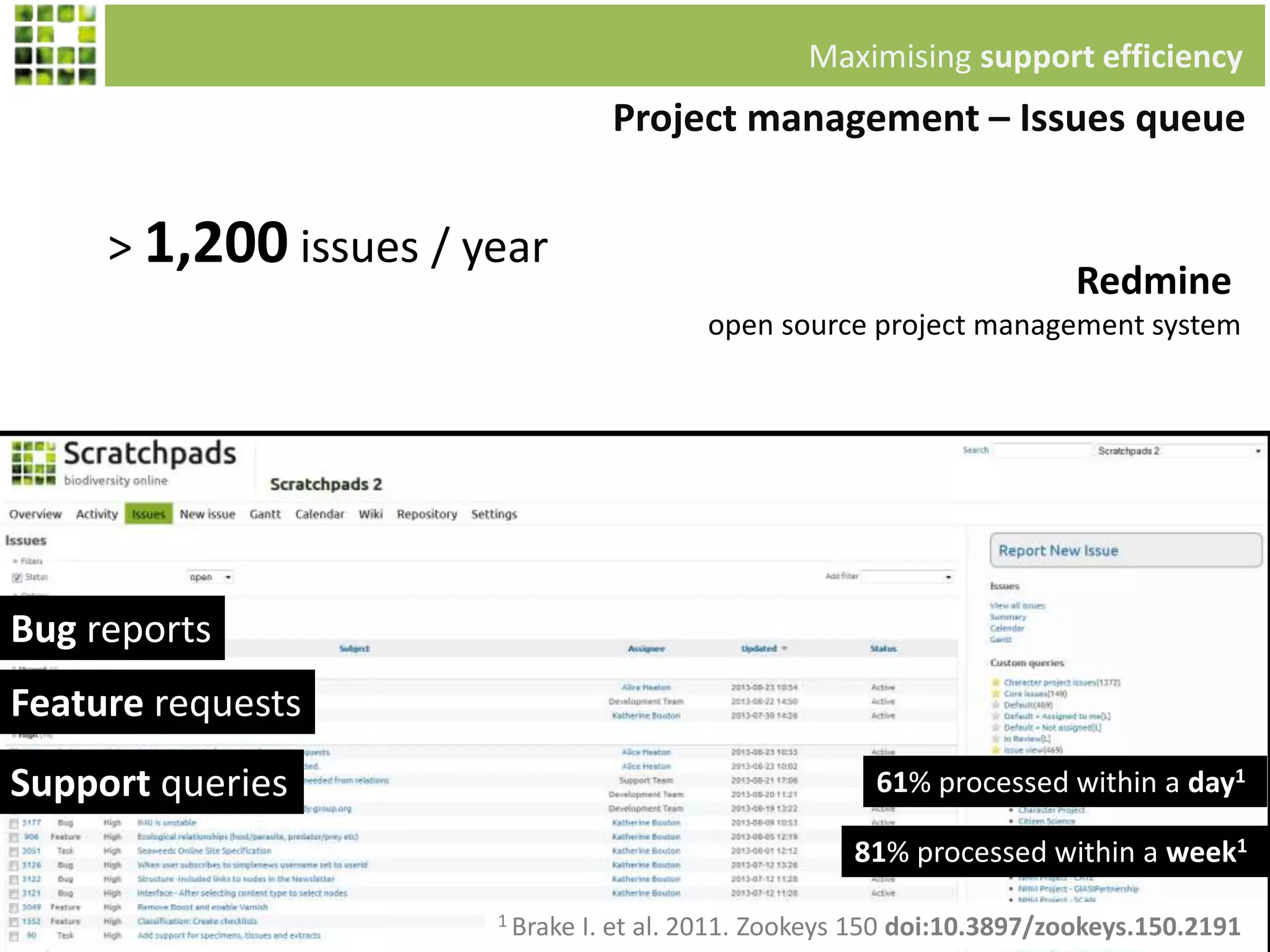
Project management – Issues queue
Bug reports
Feature requests
Support queries
Redmine
open source project management system
> 1,200 issues / year
Maximising support efficiency
61% processed within a day1
81% processed within a week1
1 Brake I. et al. 2011. Zookeys 150 doi:10.3897/zookeys.150.2191
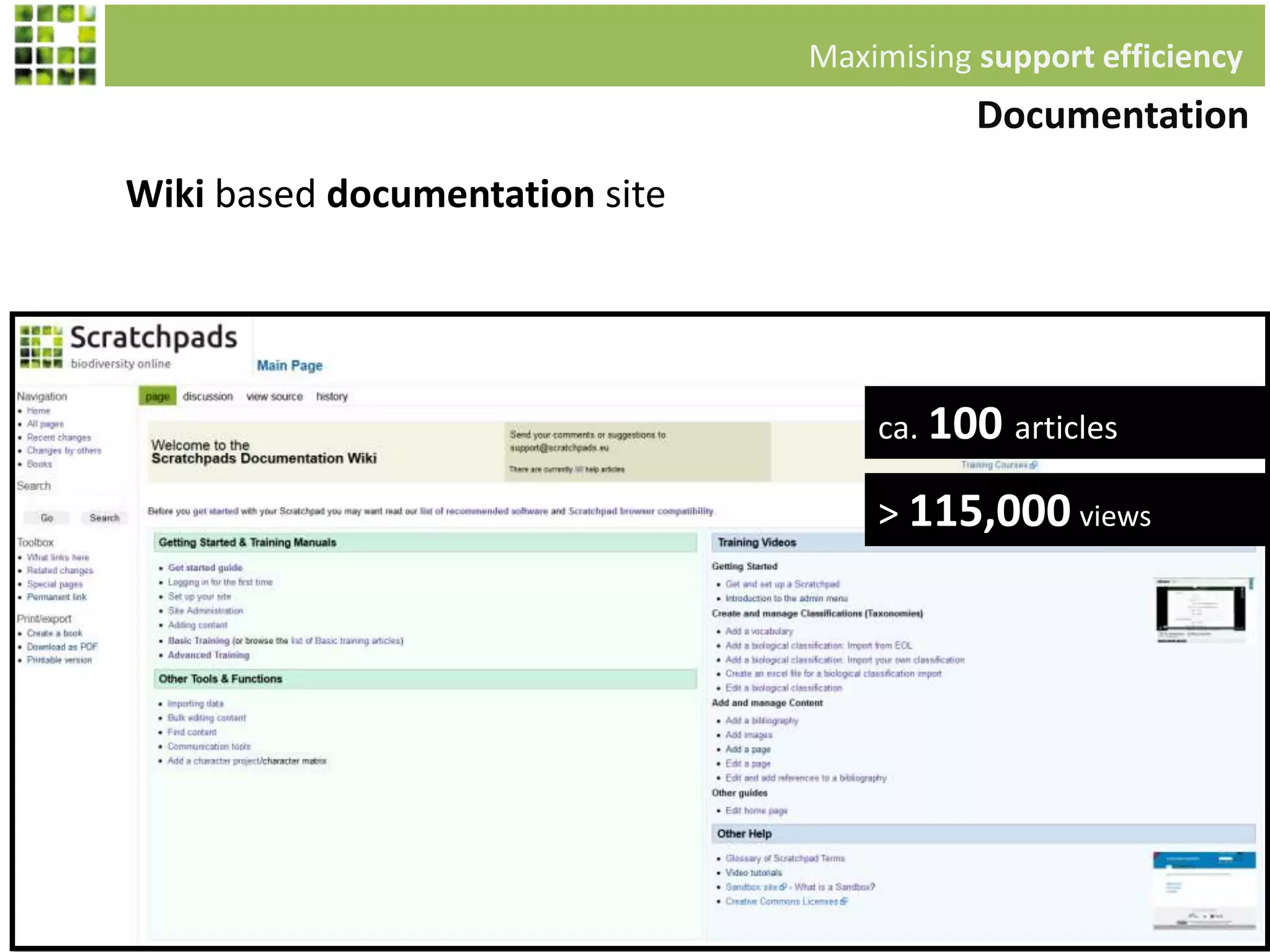
Wiki based documentation site
Documentation
Maximising support efficiency
> 115,000 views
ca. 100 articles
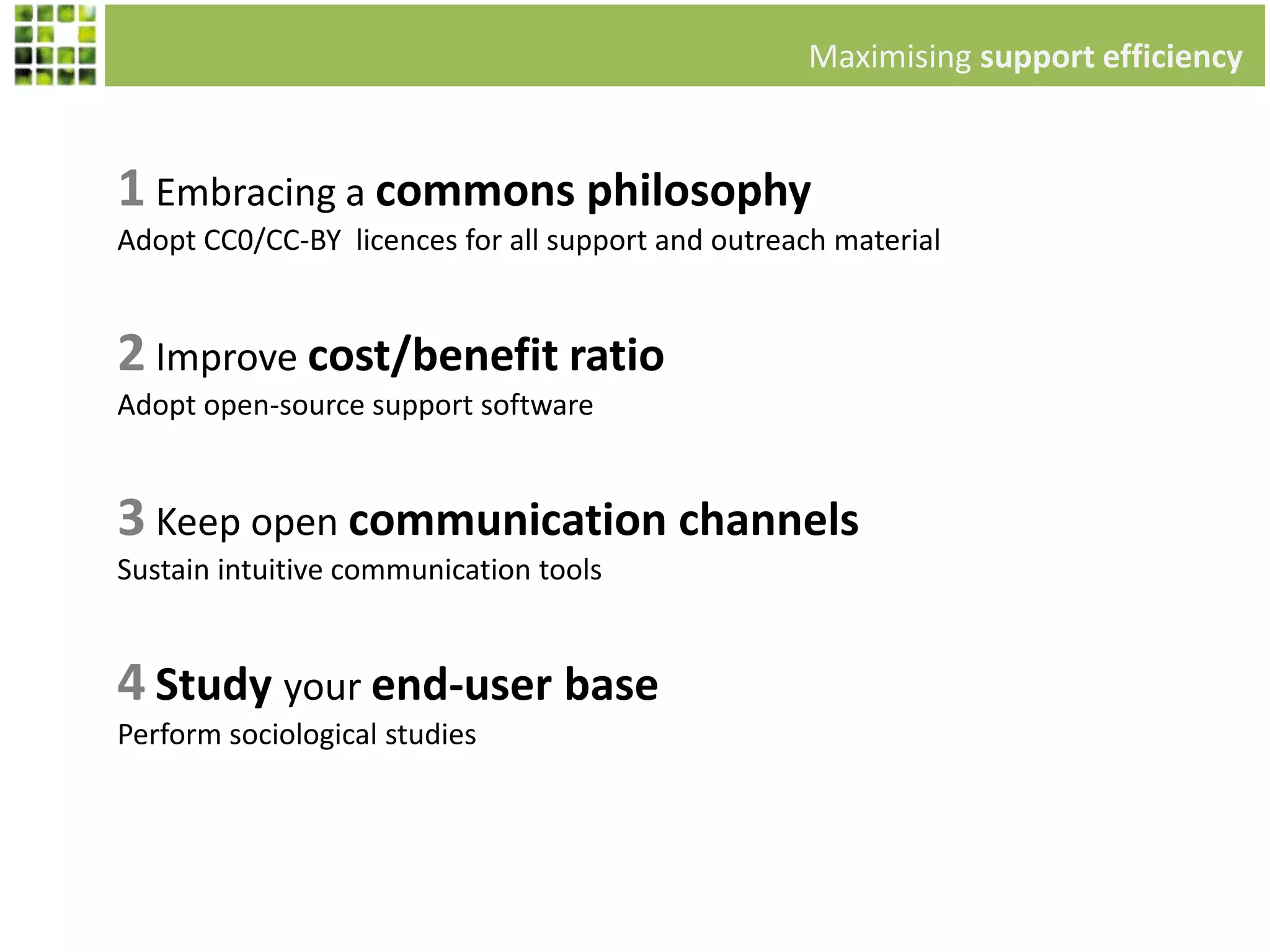
1 Embracing a commons philosophy
Adopt CC0/CC-BY licences for all support and outreach material
Maximising support efficiency
2 Improve cost/benefit ratio
Adopt open-source support software
3 Keep open communication channels
Sustain intuitive communication tools
4 Study your end-user base
Perform sociological studies
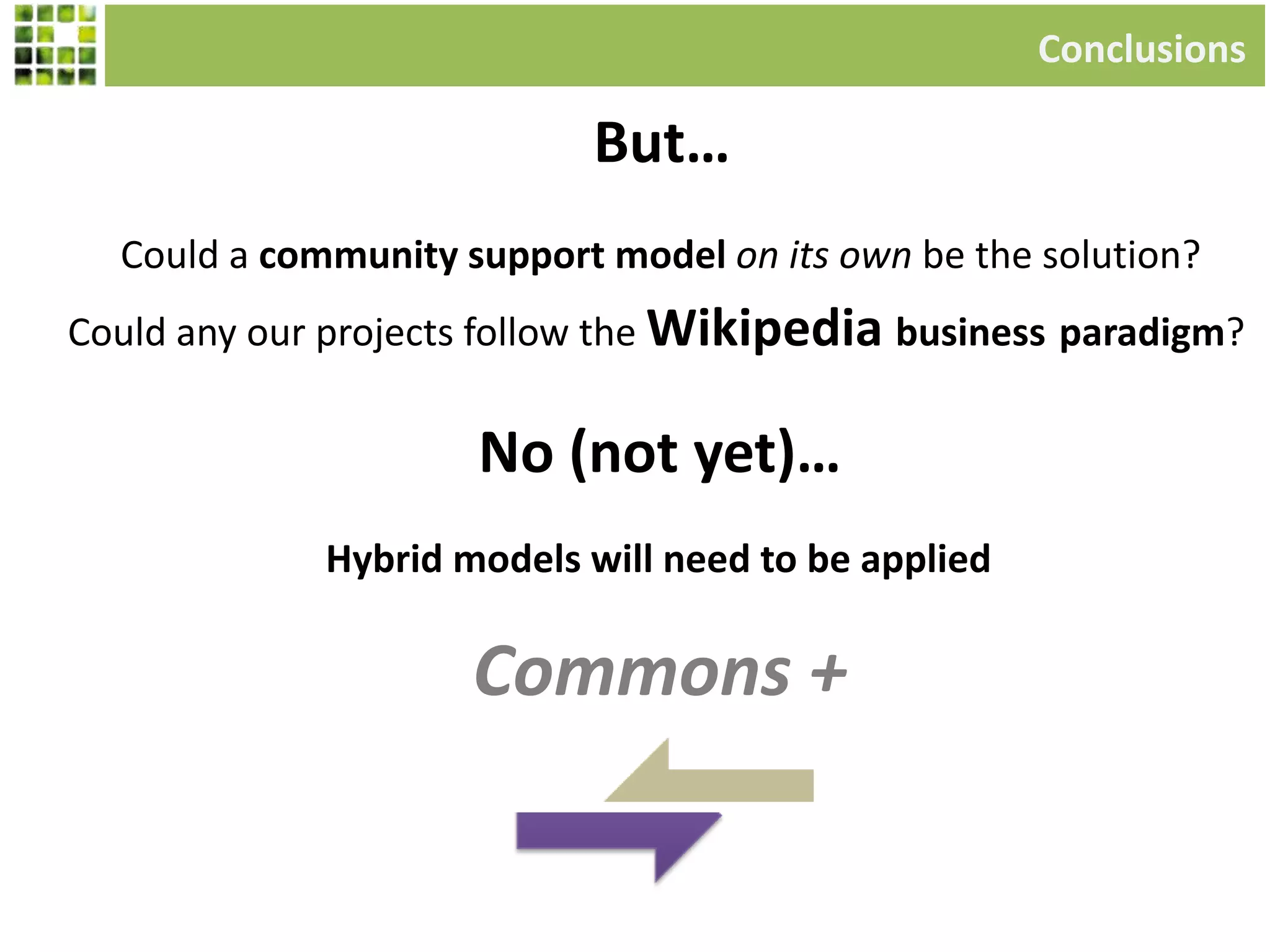
Could a community support model on its own be the solution?
Could any our projects follow the Wikipedia business paradigm?
Conclusions
But…
Hybrid models will need to be applied
Commons +
No (not yet)…

Use it or lose it: a hybrid model for sustaining e-infrastructures

  • 1.
    Use it orlose it: A hybrid model for sustaining e-infrastructures A case study from the ViBRANT project Vincent S. Smith Biodiversity Informatics Group | Department of Life Sciences Natural History Museum, London Pro-iBiosphere final conference Meise, Brussels, June 12 2014
  • 2.
    Maintenance Funding application Project starts Project ends Developmentphase No further funding or gap in funding for development ? The ephemeral lifecycle of a project TDWG lists 682 Biodiversity Information projects
  • 3.
    Project Infrastructure Discovery Individualistic Ephemeral Optional Risk taking Implementation Communal/ agreed Persistent Essential Robust & reliable Adapted from Patterson D. 2013, Tempe, Arizona Transition from
  • 4.
    “An infrastructure mustbe taken as a process instead of a system.” Shift in the way we think of e-infrastructures and information resources Stable/rigid system Dynamic/open process Outsource to and involve the end user community We need to set up the environment that will enable the community contribution Koerten, H. & van den Besselaar P. 2013. Sustainable Taxonomic Infrastructures: System or Process?
  • 5.
    A network ofcompatible services with no single point of failure So… how did ViBRANT go? Low Medium High Scratchpads Platform for Cybertaxonomy Biowikifarm PWT NPT OBOE RefBank GoldenGATE Xper2 GeoCAT CartoDB ESTABLISHED USER BASE
  • 6.
    For your communityto support you you first have to build one Confidence Commitment Longevity Agility Adaptability User monitoring Marketing Visibility Intuitive interface
  • 7.
    Scratchpads Virtual Research Environments 600communities 7,100 active users Institutional support
  • 8.
    Ambassadors programme Share enthusiasmand vision Usage experience Geographically distributed and cross-domain Crowdsourcing the support activities
  • 9.
    Crowdsourcing the supportactivities On-line 3 online courses in 2013, 5 in 2014 Global reach Low cost Participants from all continents Training
  • 10.
    Project management –Issues queue Bug reports Feature requests Support queries Redmine open source project management system > 1,200 issues / year Maximising support efficiency 61% processed within a day1 81% processed within a week1 1 Brake I. et al. 2011. Zookeys 150 doi:10.3897/zookeys.150.2191
  • 11.
    Wiki based documentationsite Documentation Maximising support efficiency > 115,000 views ca. 100 articles
  • 12.
    1 Embracing acommons philosophy Adopt CC0/CC-BY licences for all support and outreach material Maximising support efficiency 2 Improve cost/benefit ratio Adopt open-source support software 3 Keep open communication channels Sustain intuitive communication tools 4 Study your end-user base Perform sociological studies
  • 13.
    Could a communitysupport model on its own be the solution? Could any our projects follow the Wikipedia business paradigm? Conclusions But… Hybrid models will need to be applied Commons + No (not yet)…