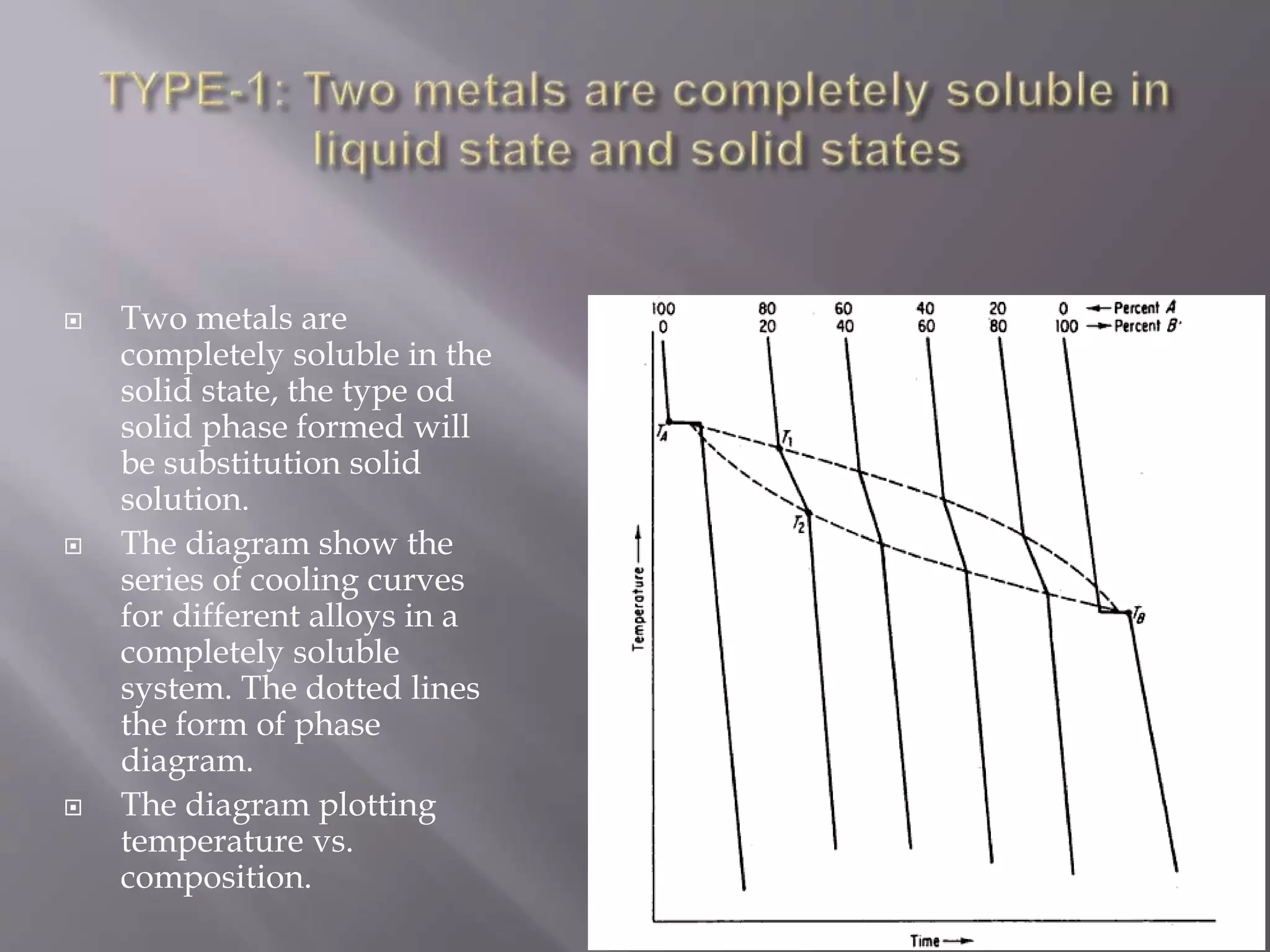
 Two metals are
completely soluble in the
solid state, the type od
solid phase formed will
be substitution solid
solution.
 The diagram show the
series of cooling curves
for different alloys in a
completely soluble
system. The dotted lines
the form of phase
diagram.
 The diagram plotting
temperature vs.
composition.
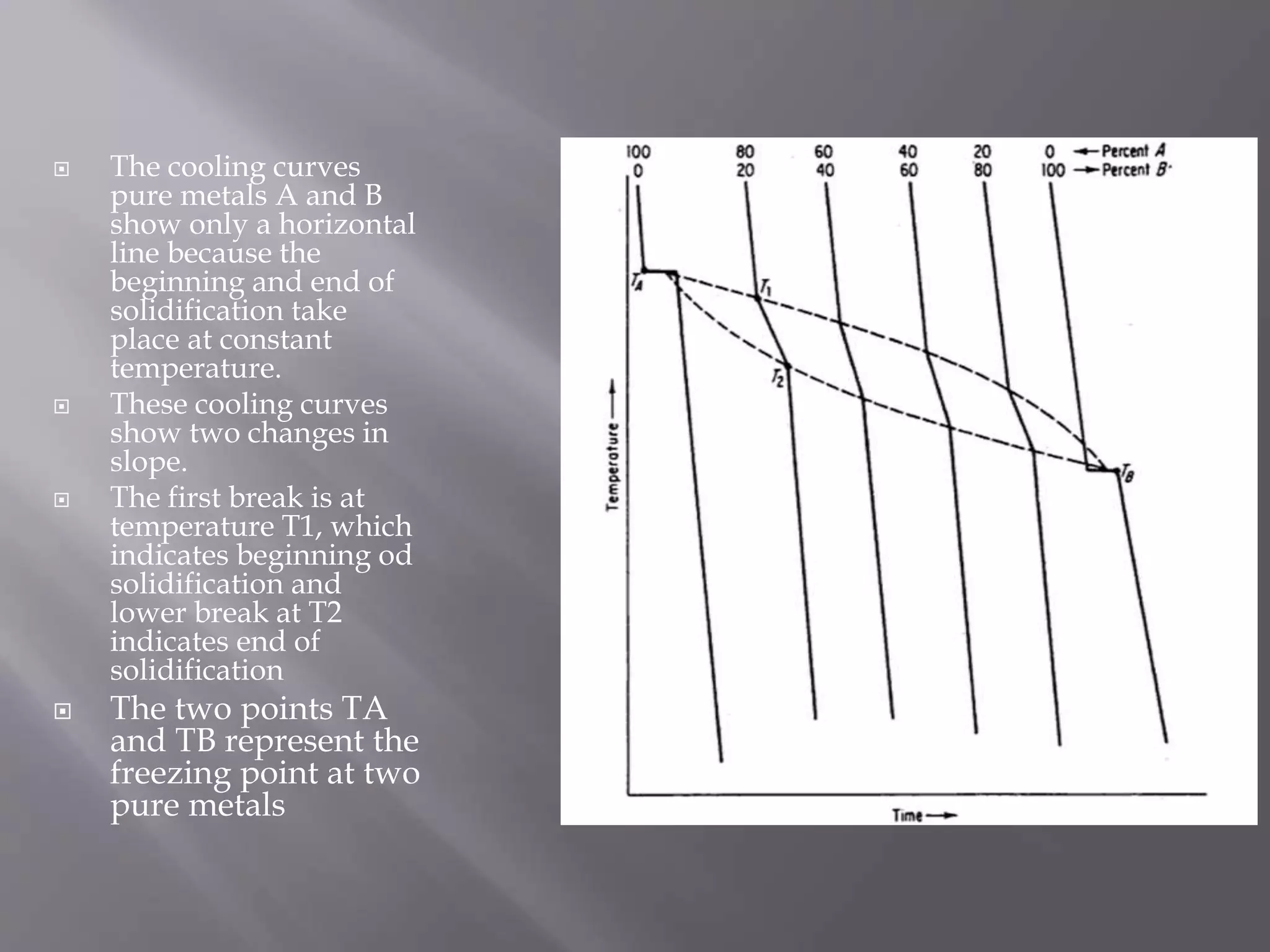
 The cooling curves
pure metals A and B
show only a horizontal
line because the
beginning and end of
solidification take
place at constant
temperature.
 These cooling curves
show two changes in
slope.
 The first break is at
temperature T1, which
indicates beginning od
solidification and
lower break at T2
indicates end of
solidification
 The two points TA
and TB represent the
freezing point at two
pure metals
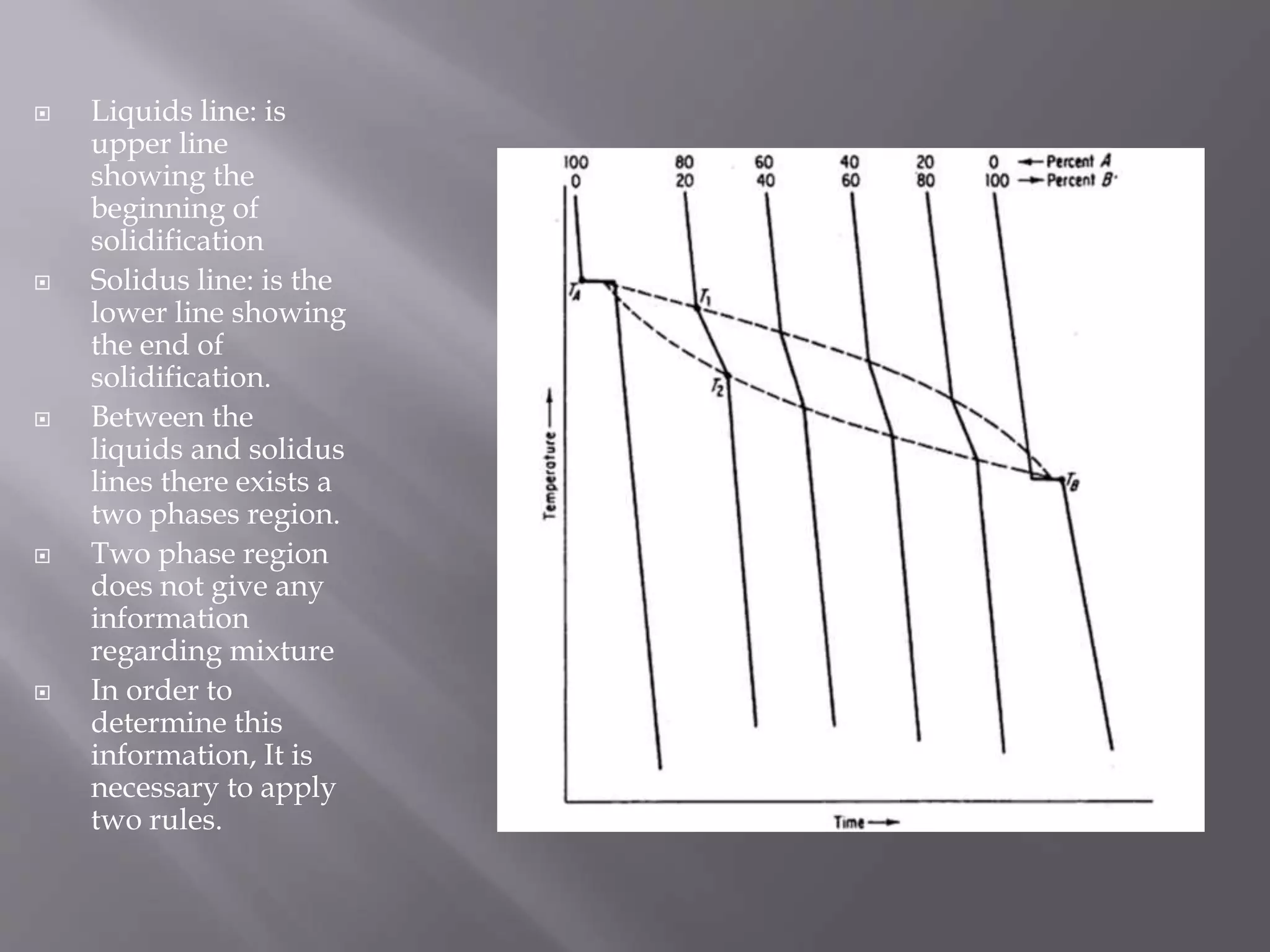
 Liquids line: is
upper line
showing the
beginning of
solidification
 Solidus line: is the
lower line showing
the end of
solidification.
 Between the
liquids and solidus
lines there exists a
two phases region.
 Two phase region
does not give any
information
regarding mixture
 In order to
determine this
information, It is
necessary to apply
two rules.
 Rule-1: Chemical
composition of phases
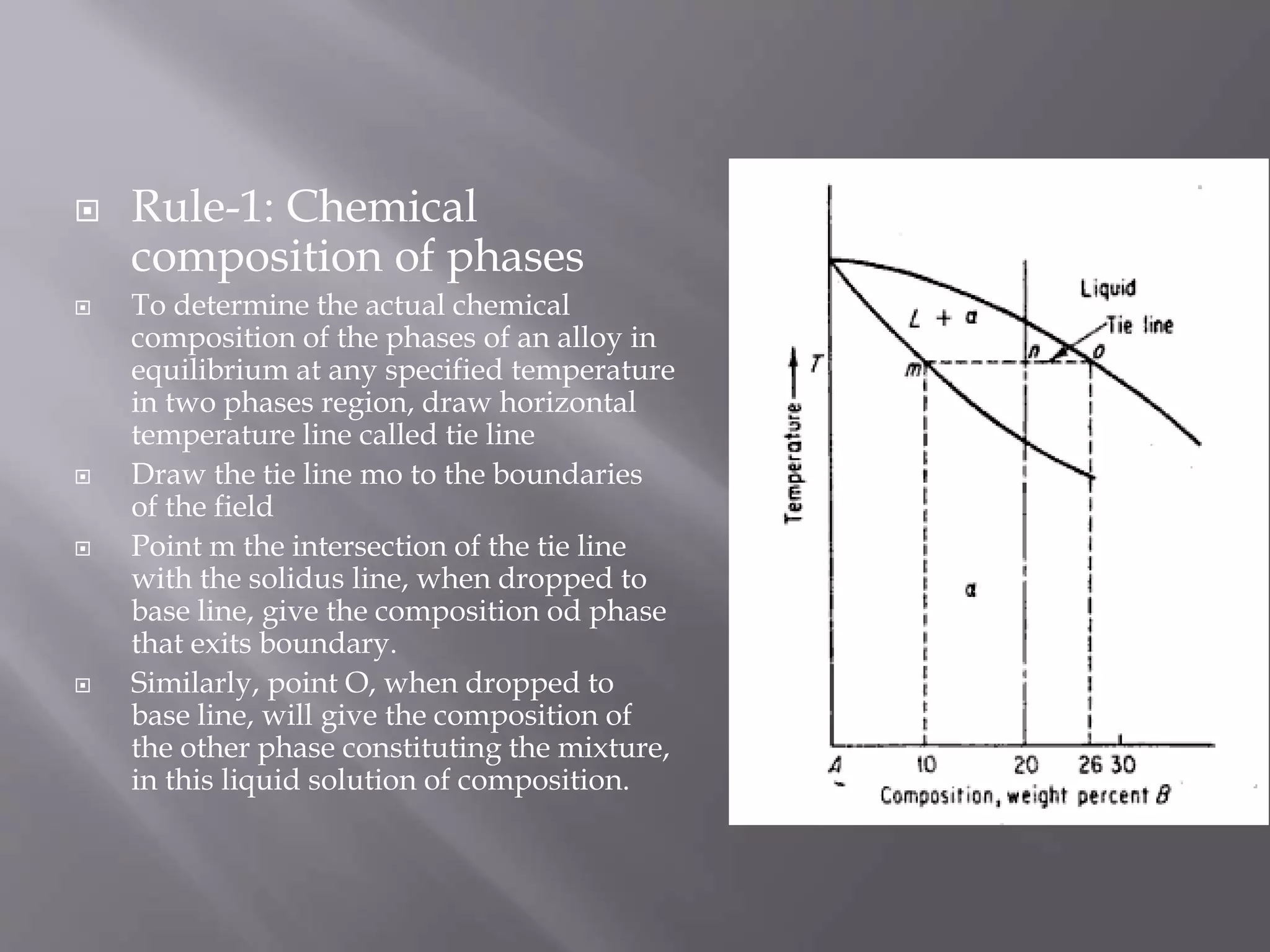
 To determine the actual chemical
composition of the phases of an alloy in
equilibrium at any specified temperature
in two phases region, draw horizontal
temperature line called tie line
 Draw the tie line mo to the boundaries
of the field
 Point m the intersection of the tie line
with the solidus line, when dropped to
base line, give the composition od phase
that exits boundary.
 Similarly, point O, when dropped to
base line, will give the composition of
the other phase constituting the mixture,
in this liquid solution of composition.
 Rule-2: Relative
amount of each phases
 To determine the relative amounts of the
two phases in equilibrium at specified
temperature in a two phase region
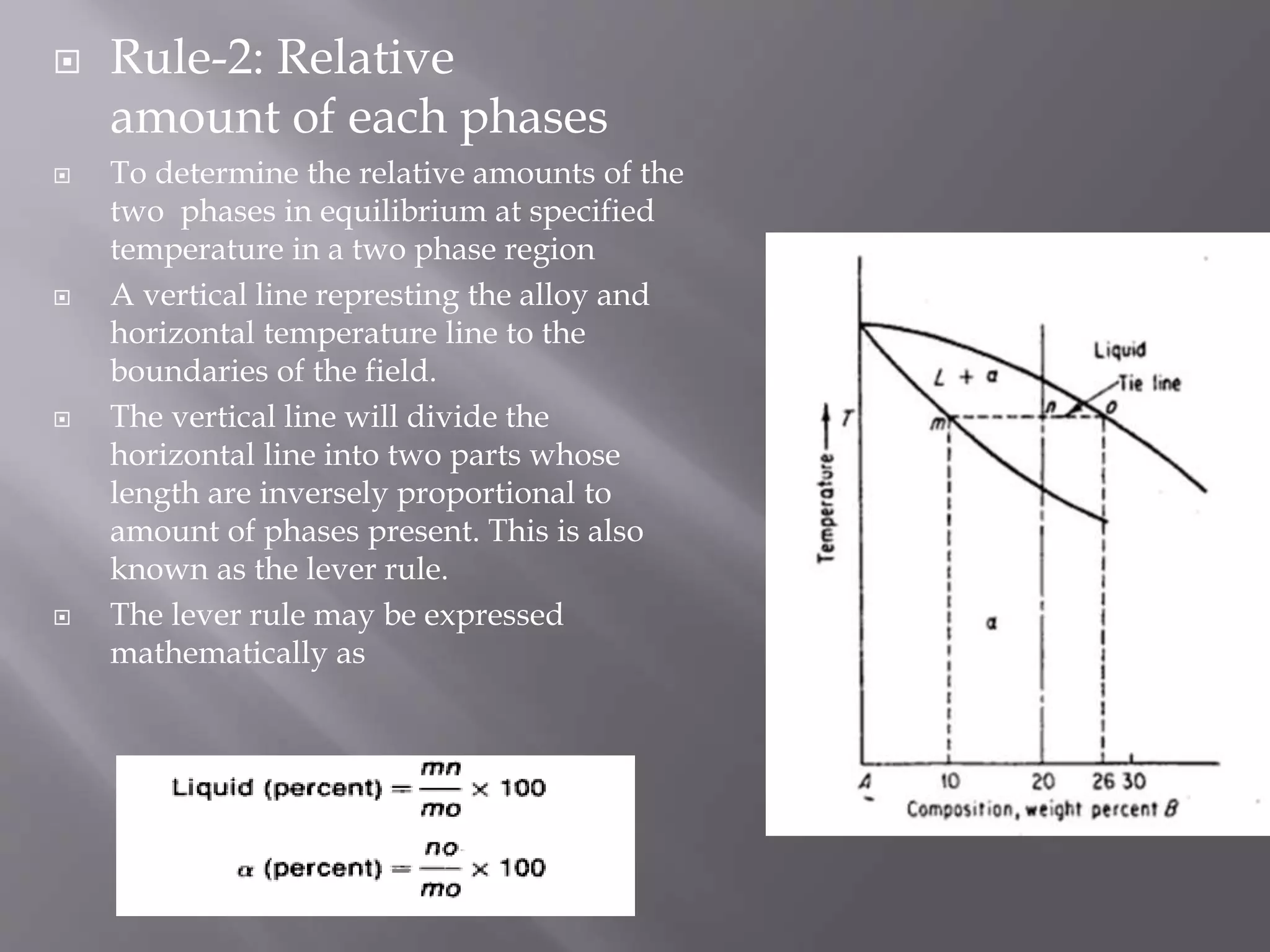
 A vertical line represting the alloy and
horizontal temperature line to the
boundaries of the field.
 The vertical line will divide the
horizontal line into two parts whose
length are inversely proportional to
amount of phases present. This is also
known as the lever rule.
 The lever rule may be expressed
mathematically as
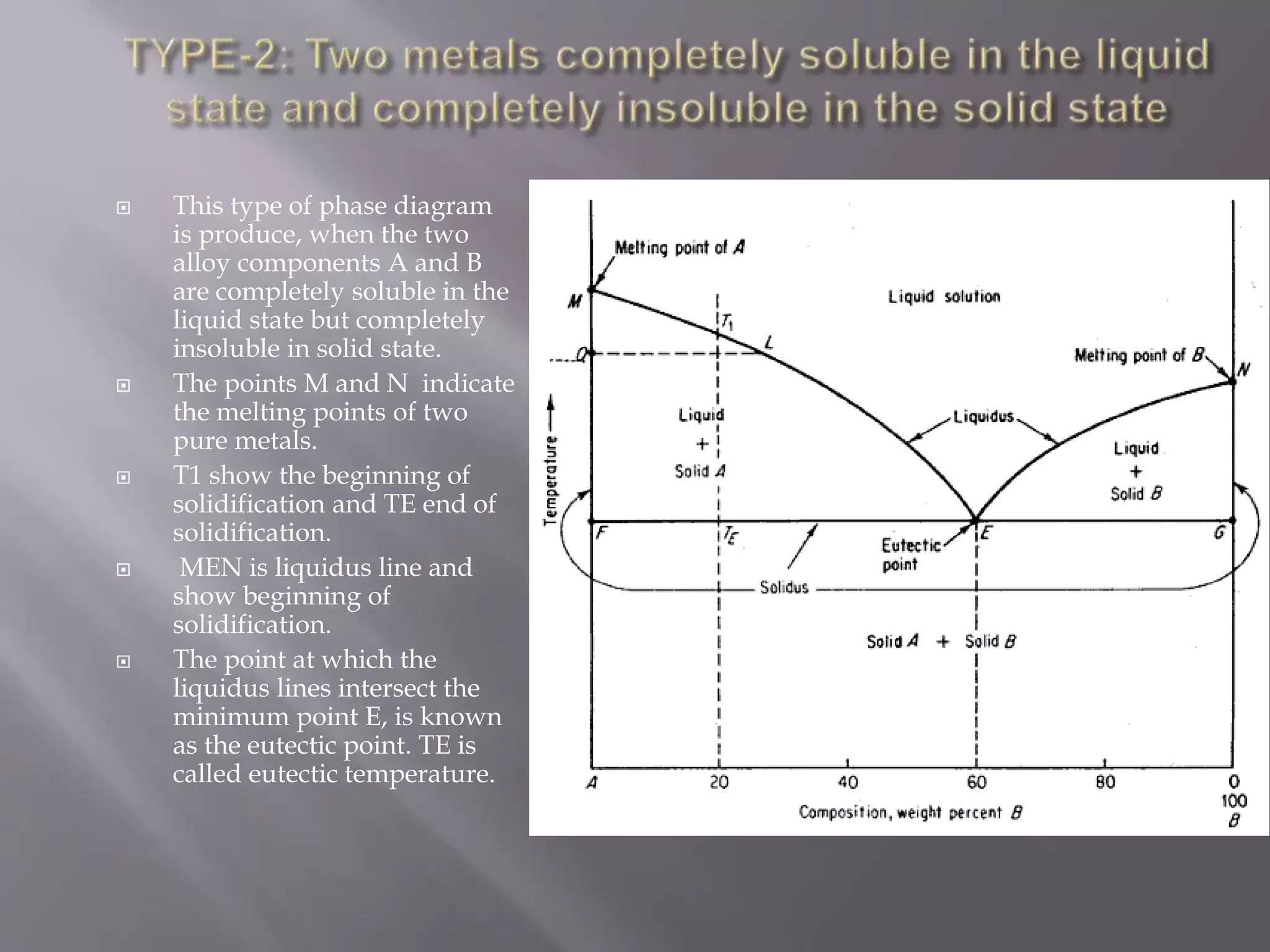
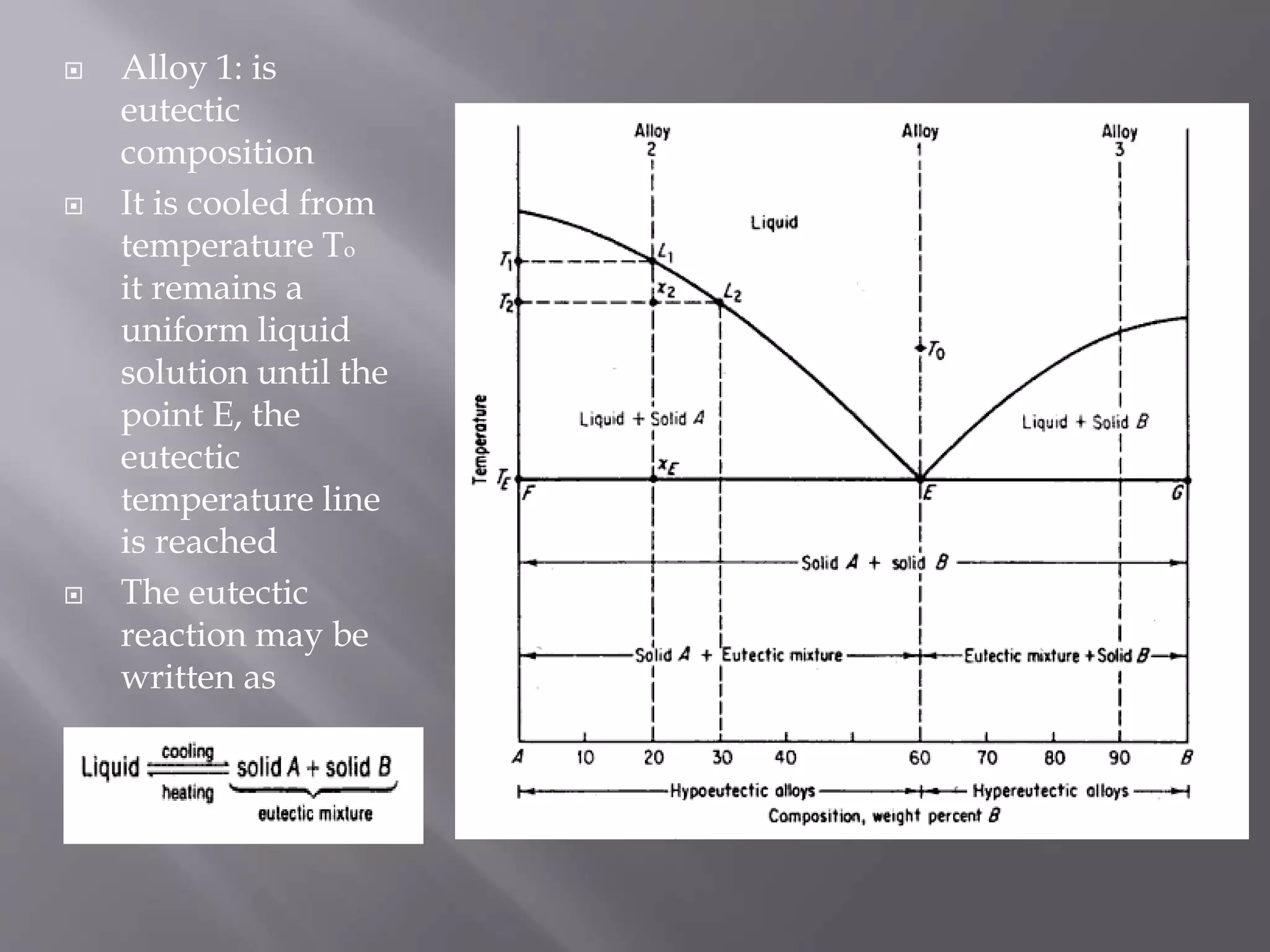
 This type of phase diagram
is produce, when the two
alloy components A and B
are completely soluble in the
liquid state but completely
insoluble in solid state.
 The points M and N indicate
the melting points of two
pure metals.
 T1 show the beginning of
solidification and TE end of
solidification.
 MEN is liquidus line and
show beginning of
solidification.
 The point at which the
liquidus lines intersect the
minimum point E, is known
as the eutectic point. TE is
called eutectic temperature.
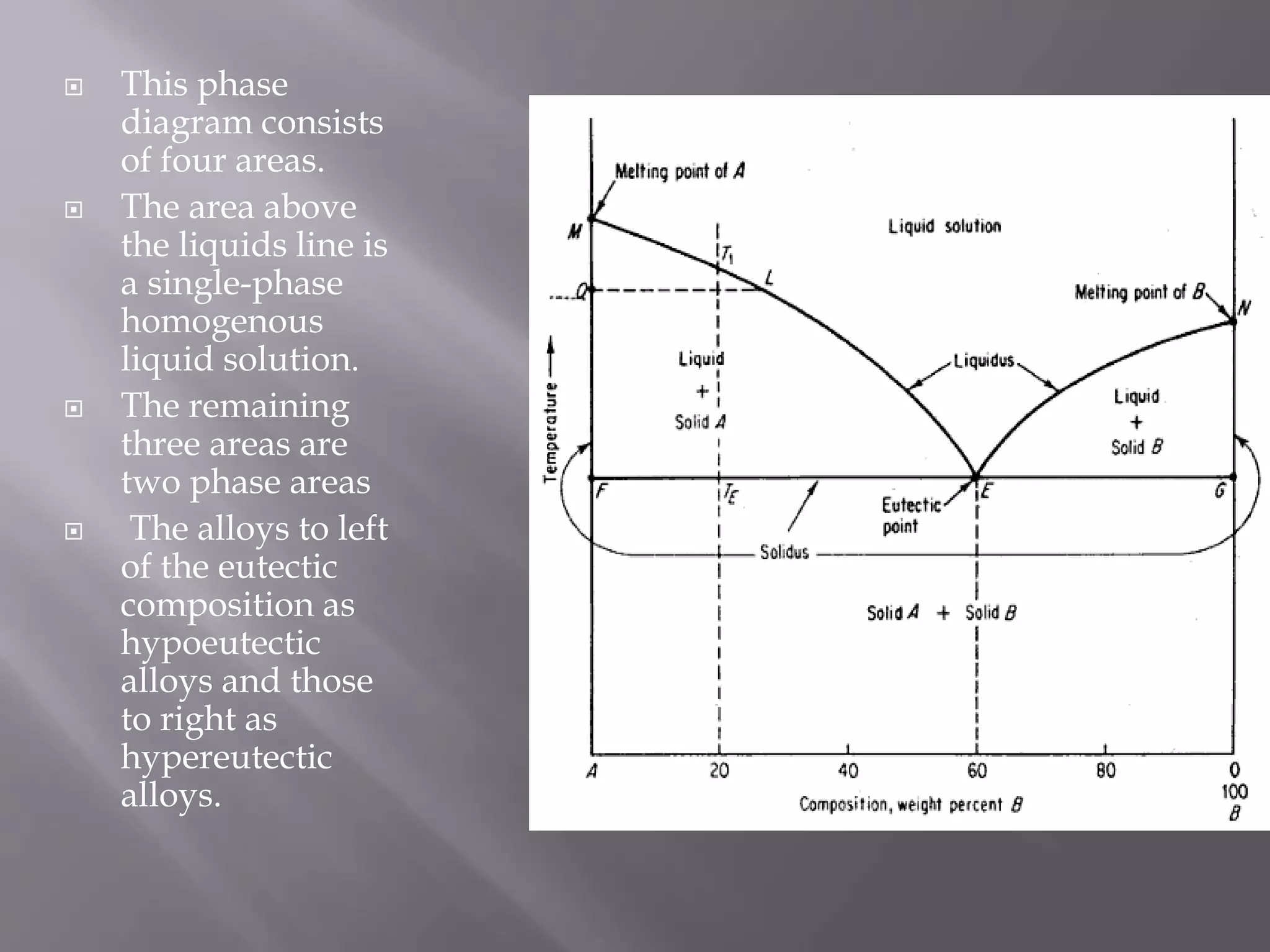
 This phase
diagram consists
of four areas.
 The area above
the liquids line is
a single-phase
homogenous
liquid solution.
 The remaining
three areas are
two phase areas
 The alloys to left
of the eutectic
composition as
hypoeutectic
alloys and those
to right as
hypereutectic
alloys.
 Alloy 1: is
eutectic
composition
 It is cooled from
temperature To
it remains a
uniform liquid
solution until the
point E, the
eutectic
temperature line
is reached
 The eutectic
reaction may be
written as
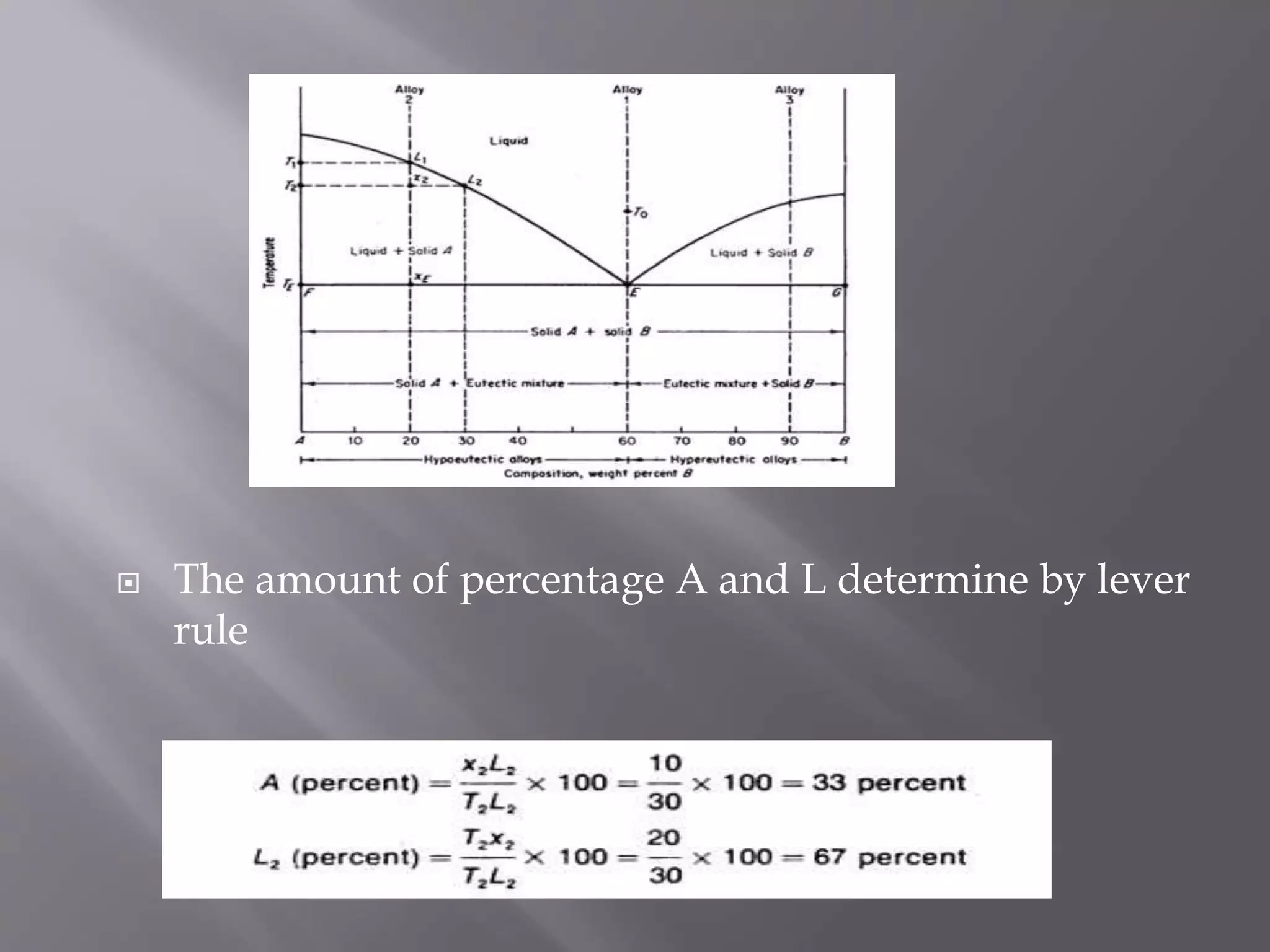
 The amount of percentage A and L determine by lever
rule
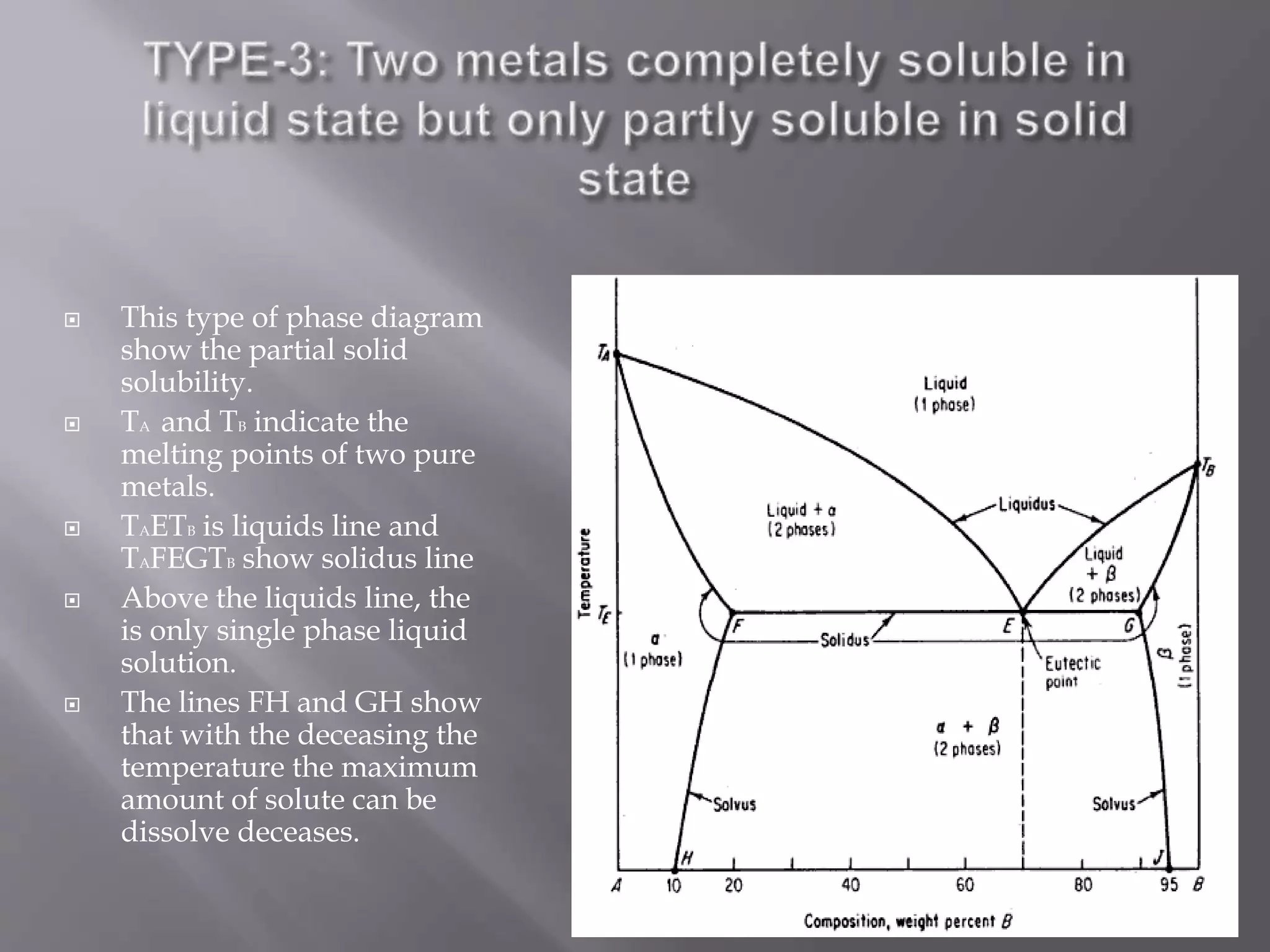
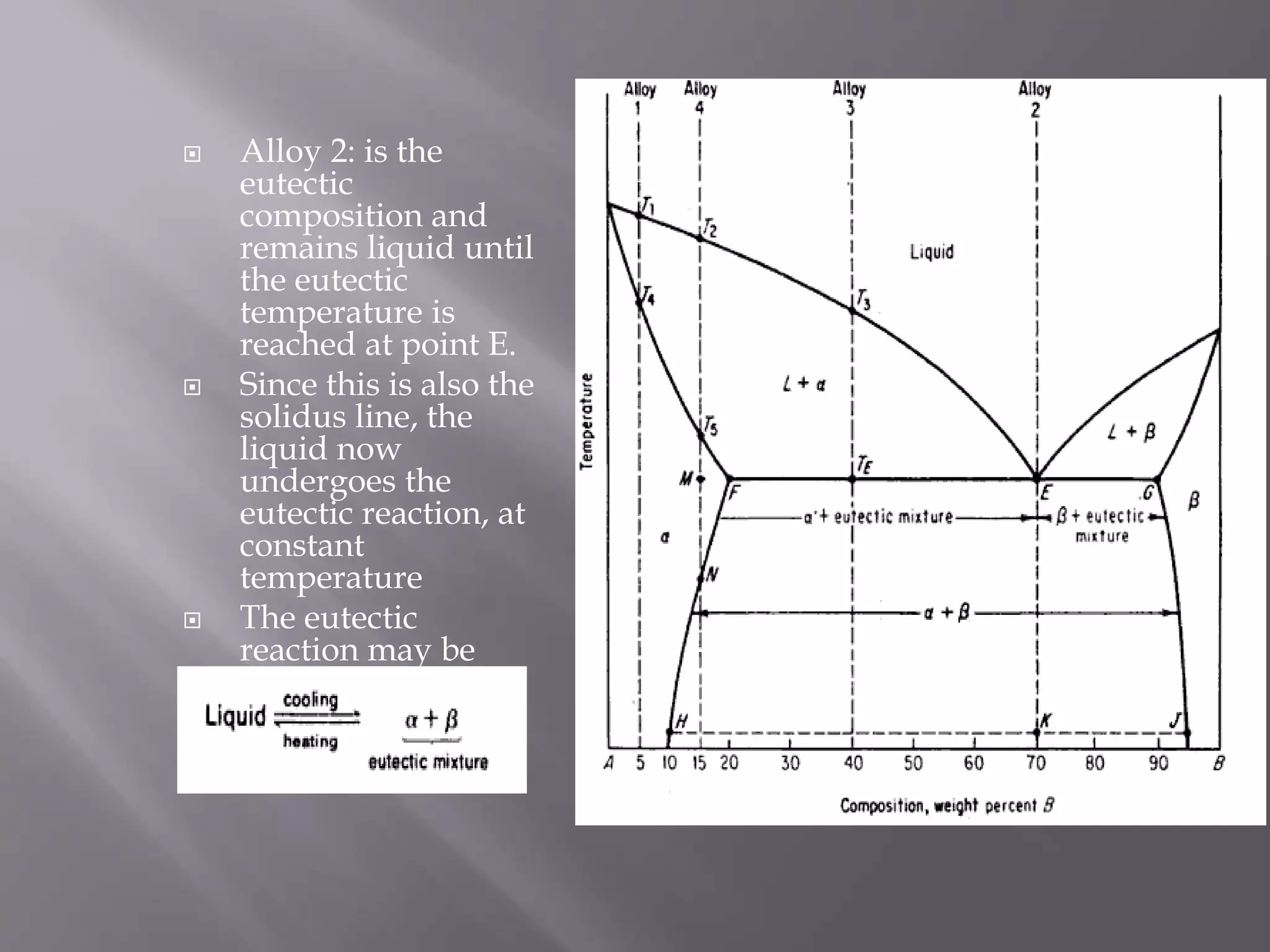
 This type of phase diagram
show the partial solid
solubility.
 TA and TB indicate the
melting points of two pure
metals.
 TAETB is liquids line and
TAFEGTB show solidus line
 Above the liquids line, the
is only single phase liquid
solution.
 The lines FH and GH show
that with the deceasing the
temperature the maximum
amount of solute can be
dissolve deceases.
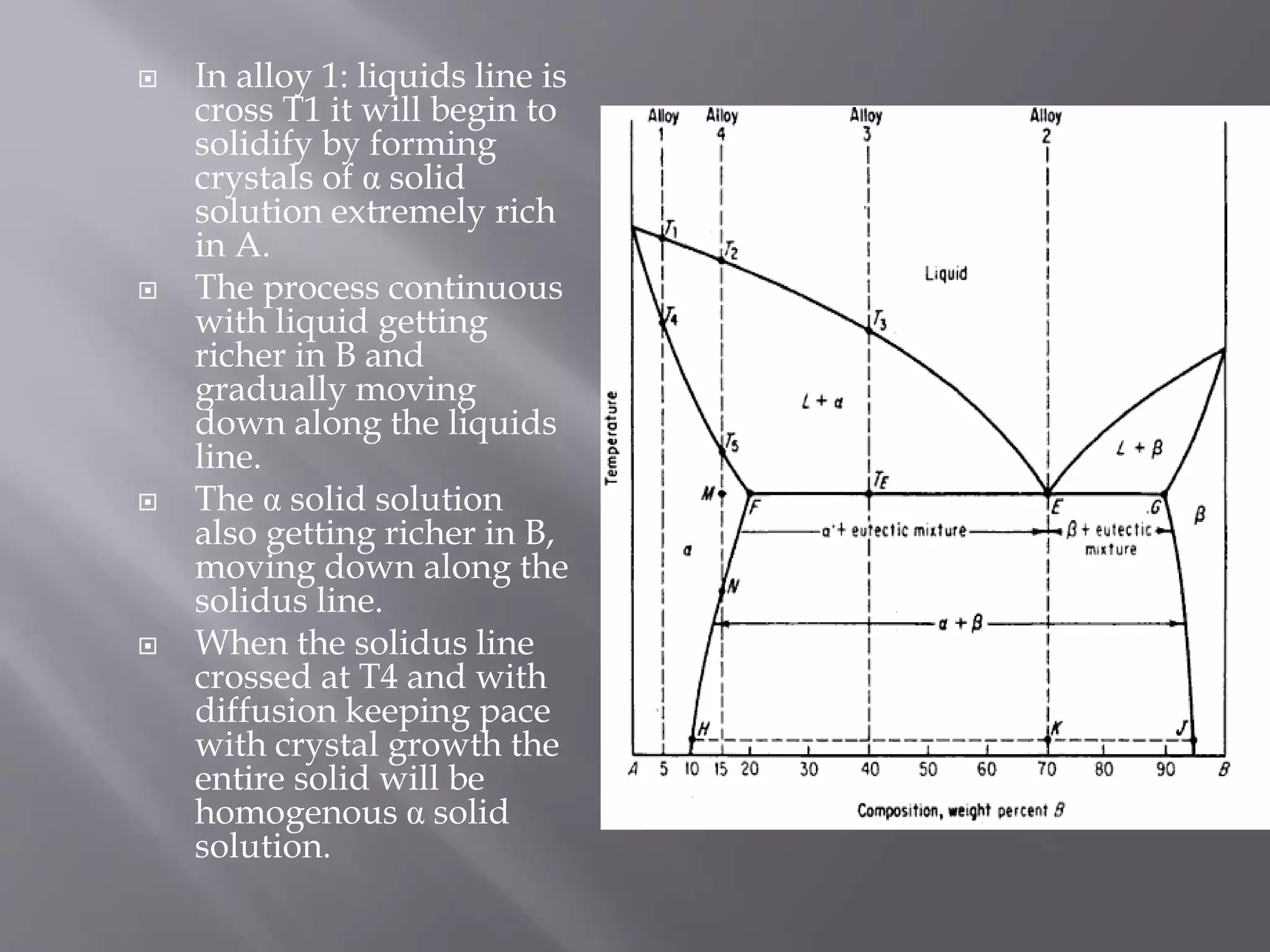
 In alloy 1: liquids line is
cross T1 it will begin to
solidify by forming
crystals of α solid
solution extremely rich
in A.
 The process continuous
with liquid getting
richer in B and
gradually moving
down along the liquids
line.
 The α solid solution
also getting richer in B,
moving down along the
solidus line.
 When the solidus line
crossed at T4 and with
diffusion keeping pace
with crystal growth the
entire solid will be
homogenous α solid
solution.
 Alloy 2: is the
eutectic
composition and
remains liquid until
the eutectic
temperature is
reached at point E.
 Since this is also the
solidus line, the
liquid now
undergoes the
eutectic reaction, at
constant
temperature
 The eutectic
reaction may be
written as
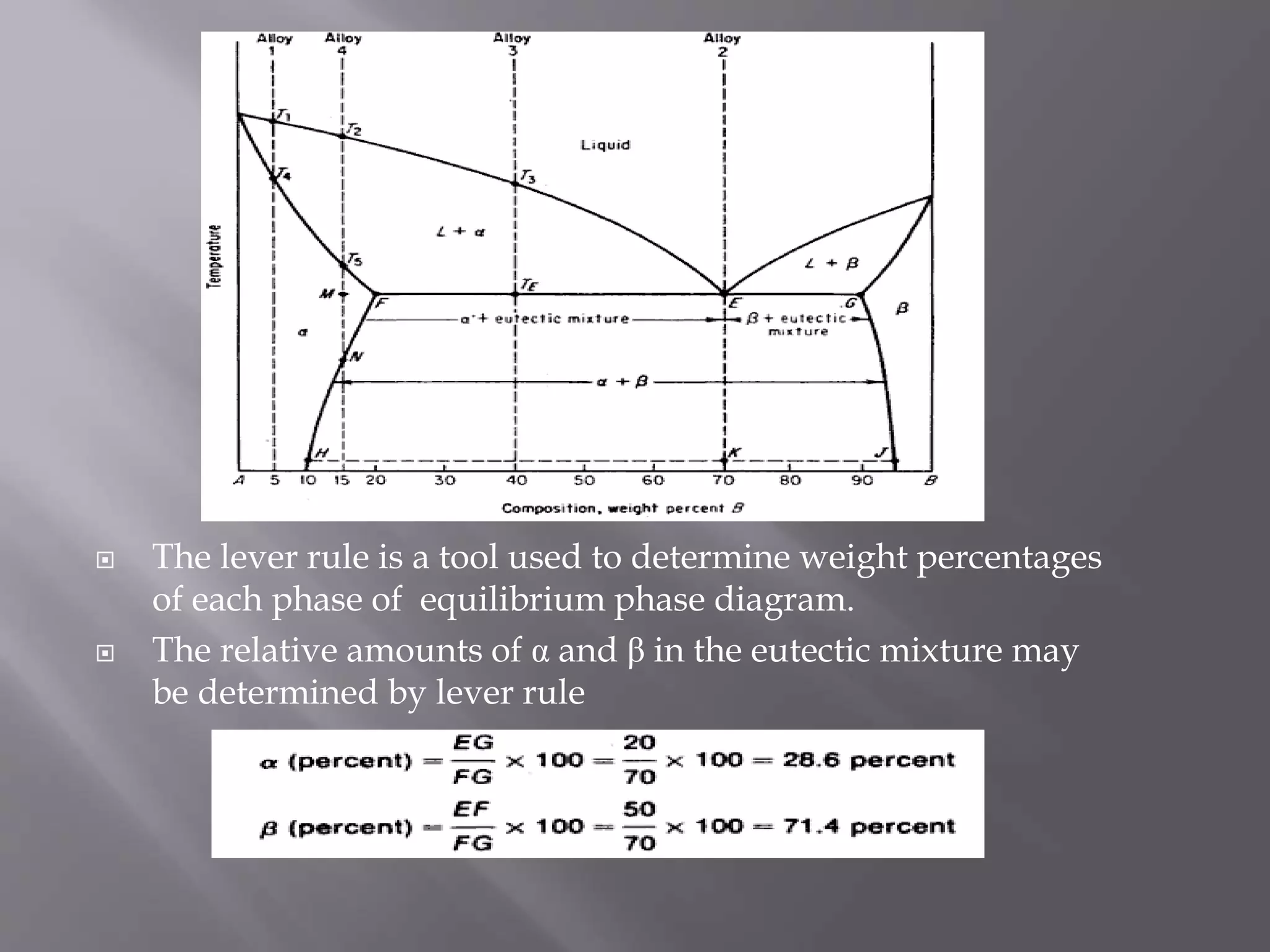
 The lever rule is a tool used to determine weight percentages
of each phase of equilibrium phase diagram.
 The relative amounts of α and β in the eutectic mixture may
be determined by lever rule

Types of phase diagrams

  • 2.
     Two metalsare completely soluble in the solid state, the type od solid phase formed will be substitution solid solution.  The diagram show the series of cooling curves for different alloys in a completely soluble system. The dotted lines the form of phase diagram.  The diagram plotting temperature vs. composition.
  • 3.
     The coolingcurves pure metals A and B show only a horizontal line because the beginning and end of solidification take place at constant temperature.  These cooling curves show two changes in slope.  The first break is at temperature T1, which indicates beginning od solidification and lower break at T2 indicates end of solidification  The two points TA and TB represent the freezing point at two pure metals
  • 4.
     Liquids line:is upper line showing the beginning of solidification  Solidus line: is the lower line showing the end of solidification.  Between the liquids and solidus lines there exists a two phases region.  Two phase region does not give any information regarding mixture  In order to determine this information, It is necessary to apply two rules.
  • 5.
     Rule-1: Chemical compositionof phases  To determine the actual chemical composition of the phases of an alloy in equilibrium at any specified temperature in two phases region, draw horizontal temperature line called tie line  Draw the tie line mo to the boundaries of the field  Point m the intersection of the tie line with the solidus line, when dropped to base line, give the composition od phase that exits boundary.  Similarly, point O, when dropped to base line, will give the composition of the other phase constituting the mixture, in this liquid solution of composition.
  • 6.
     Rule-2: Relative amountof each phases  To determine the relative amounts of the two phases in equilibrium at specified temperature in a two phase region  A vertical line represting the alloy and horizontal temperature line to the boundaries of the field.  The vertical line will divide the horizontal line into two parts whose length are inversely proportional to amount of phases present. This is also known as the lever rule.  The lever rule may be expressed mathematically as
  • 7.
     This typeof phase diagram is produce, when the two alloy components A and B are completely soluble in the liquid state but completely insoluble in solid state.  The points M and N indicate the melting points of two pure metals.  T1 show the beginning of solidification and TE end of solidification.  MEN is liquidus line and show beginning of solidification.  The point at which the liquidus lines intersect the minimum point E, is known as the eutectic point. TE is called eutectic temperature.
  • 8.
     This phase diagramconsists of four areas.  The area above the liquids line is a single-phase homogenous liquid solution.  The remaining three areas are two phase areas  The alloys to left of the eutectic composition as hypoeutectic alloys and those to right as hypereutectic alloys.
  • 9.
     Alloy 1:is eutectic composition  It is cooled from temperature To it remains a uniform liquid solution until the point E, the eutectic temperature line is reached  The eutectic reaction may be written as
  • 10.
     The amountof percentage A and L determine by lever rule
  • 11.
     This typeof phase diagram show the partial solid solubility.  TA and TB indicate the melting points of two pure metals.  TAETB is liquids line and TAFEGTB show solidus line  Above the liquids line, the is only single phase liquid solution.  The lines FH and GH show that with the deceasing the temperature the maximum amount of solute can be dissolve deceases.
  • 12.
     In alloy1: liquids line is cross T1 it will begin to solidify by forming crystals of α solid solution extremely rich in A.  The process continuous with liquid getting richer in B and gradually moving down along the liquids line.  The α solid solution also getting richer in B, moving down along the solidus line.  When the solidus line crossed at T4 and with diffusion keeping pace with crystal growth the entire solid will be homogenous α solid solution.
  • 13.
     Alloy 2:is the eutectic composition and remains liquid until the eutectic temperature is reached at point E.  Since this is also the solidus line, the liquid now undergoes the eutectic reaction, at constant temperature  The eutectic reaction may be written as
  • 14.
     The leverrule is a tool used to determine weight percentages of each phase of equilibrium phase diagram.  The relative amounts of α and β in the eutectic mixture may be determined by lever rule