1
b
b
www.know-center.at
The Student's and Researcher's Guide to Discovery:
Exploring Scientific Fields with Open Data and Tools
Mozfest 2015
London, November 7
Peter Kraker
2
First things first
2Know-Center GmbH • Research Center for Data-Driven Business and Big Data Analytics
Introduction:
Please say your name and add three hashtags that
describe you:
#1: Your occupation (student, researcher, activist…)
#2: Your current field of interest (biology, open peer
review…)
#3: Of your own choosing
If you can, please also add this to:
http://is.gd/mozfest
3
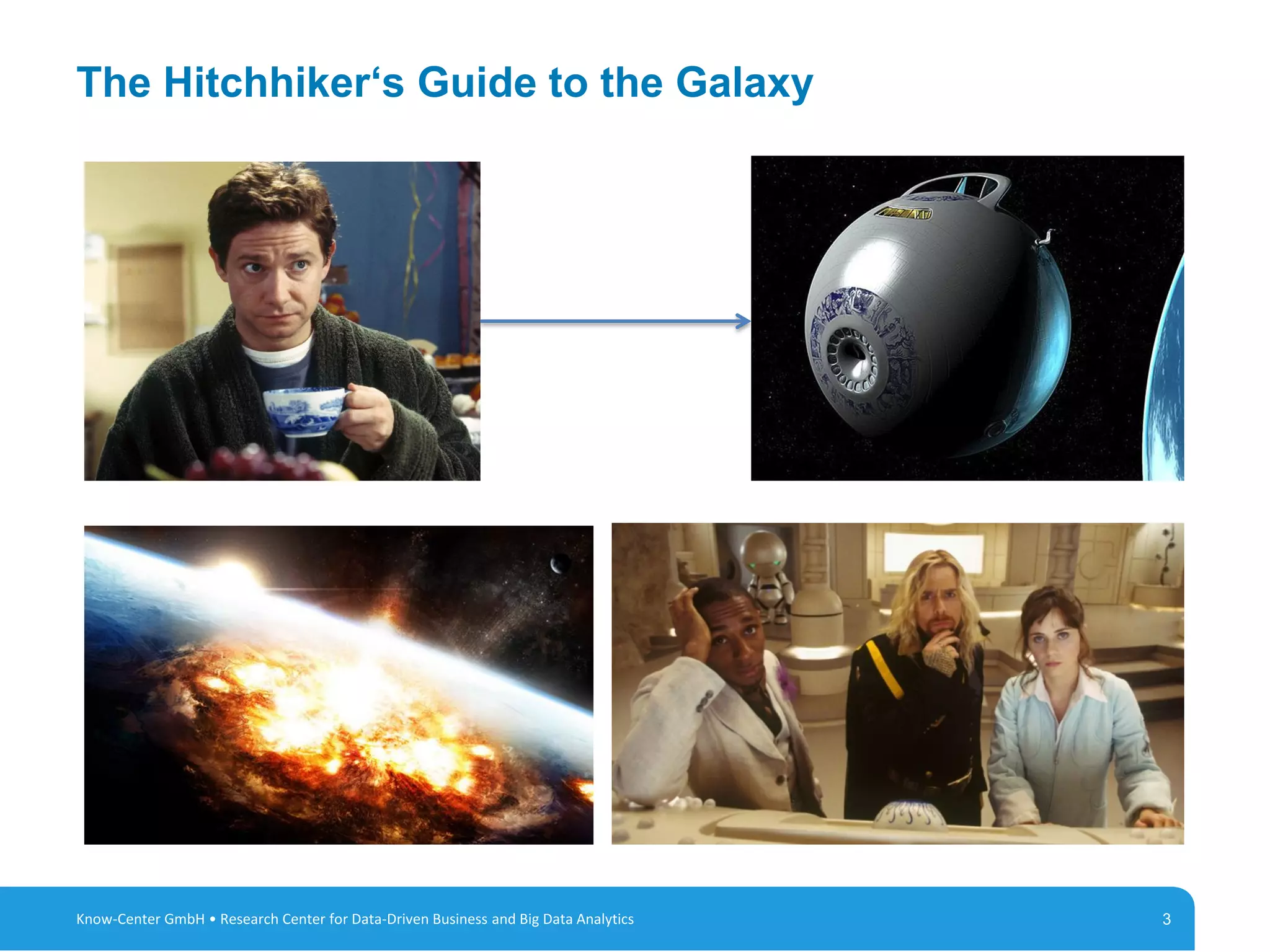
The Hitchhiker‘s Guide to the Galaxy
3Know-Center GmbH • Research Center for Data-Driven Business and Big Data Analytics
4
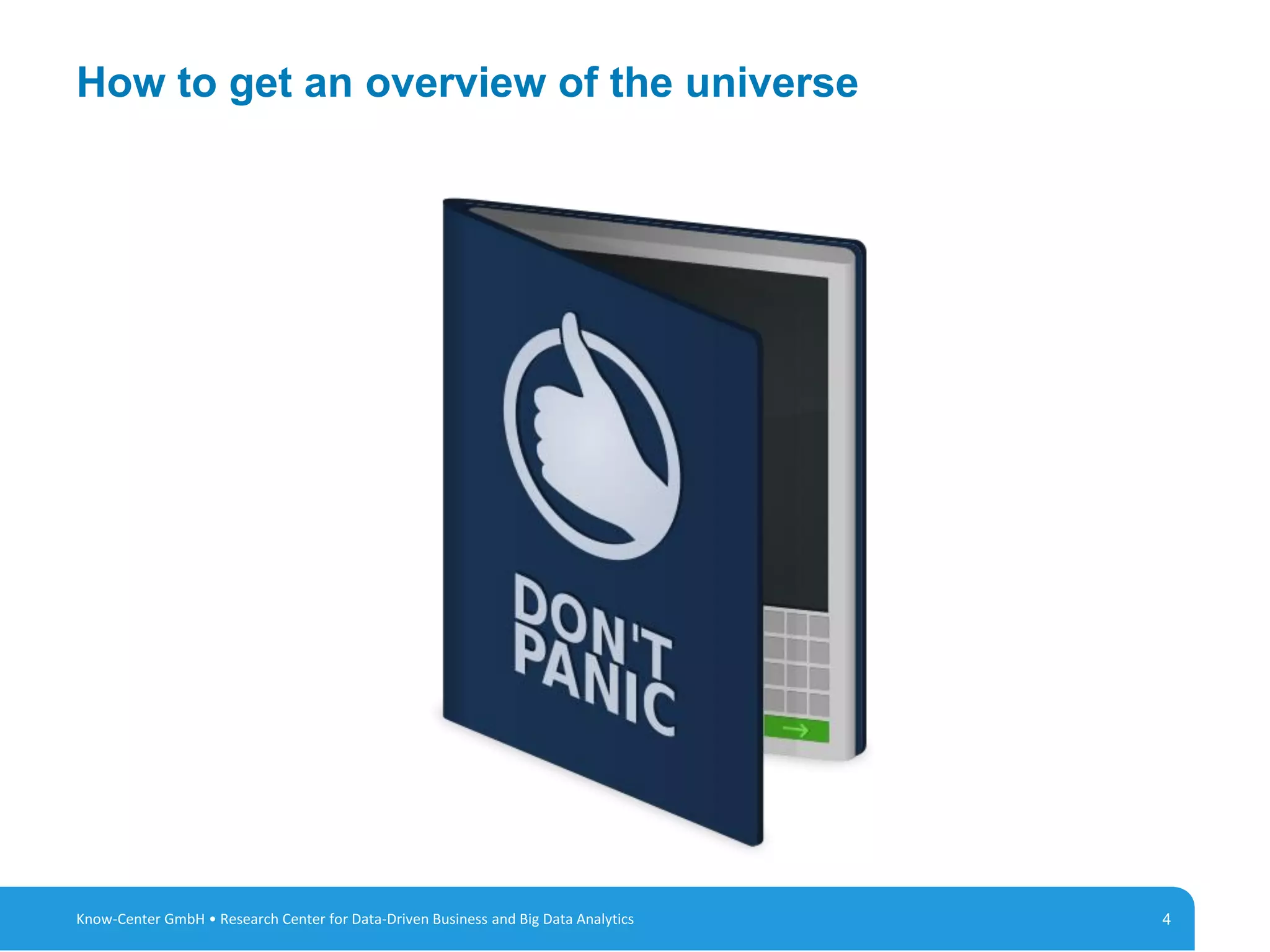
How to get an overview of the universe
4Know-Center GmbH • Research Center for Data-Driven Business and Big Data Analytics
5
How to get an overview of a research field
5Know-Center GmbH • Research Center for Data-Driven Business and Big Data Analytics
Discussion:
How do you get an overview of an unknown field?
Discuss with your neighbour(s)
Report back to the plenum
6
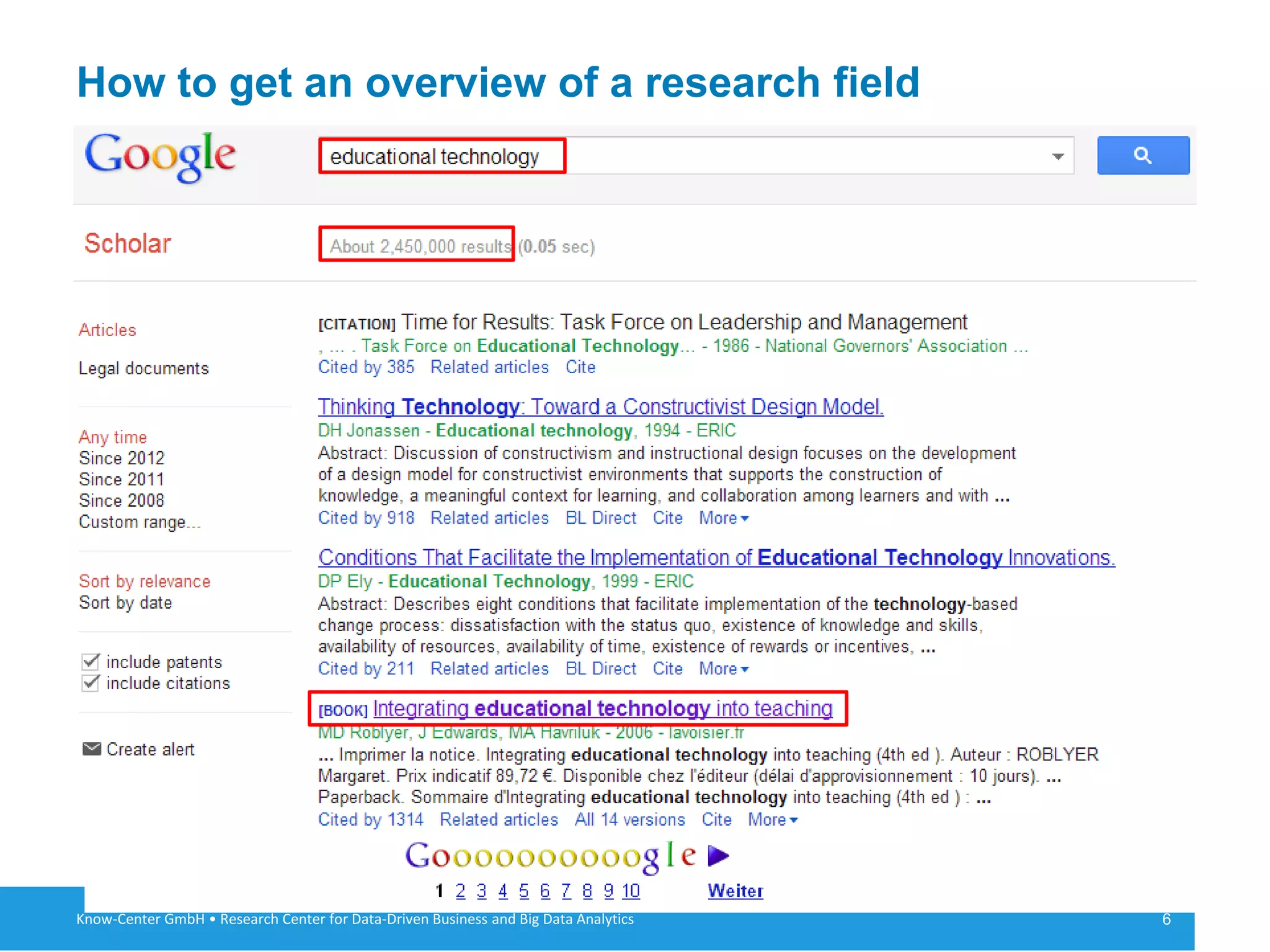
How to get an overview of a research field
6Know-Center GmbH • Research Center for Data-Driven Business and Big Data Analytics
7
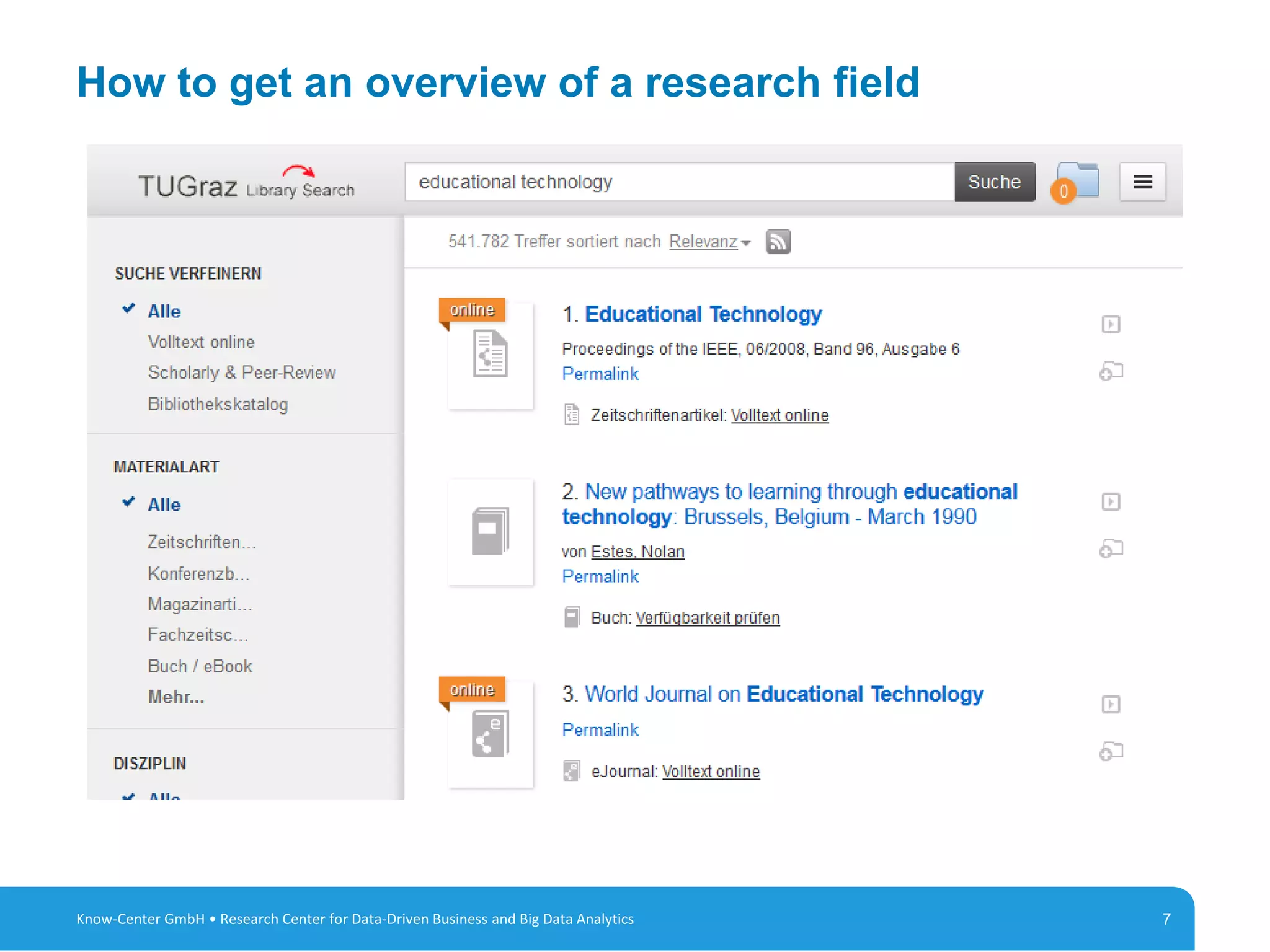
How to get an overview of a research field
7Know-Center GmbH • Research Center for Data-Driven Business and Big Data Analytics
8
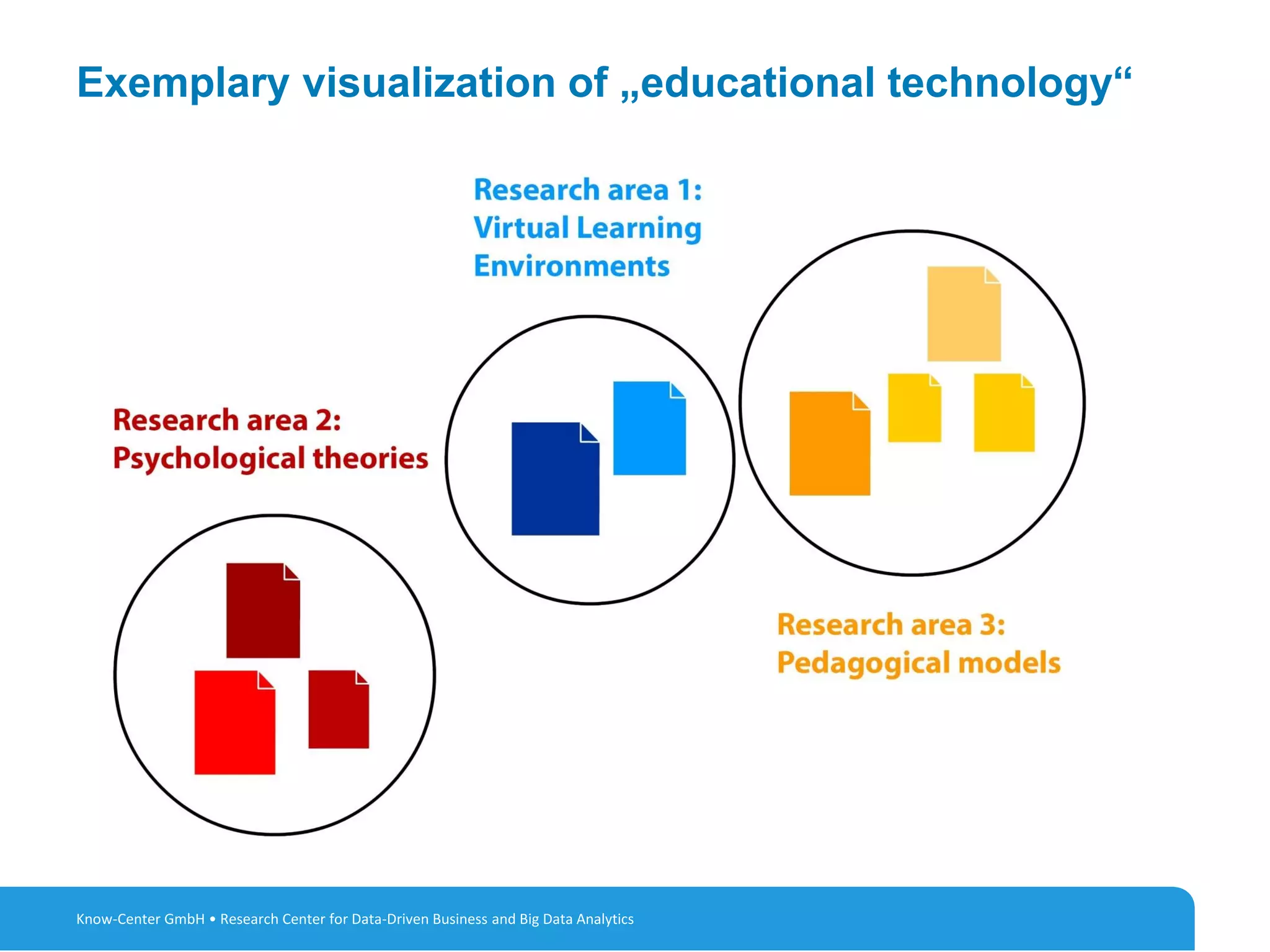
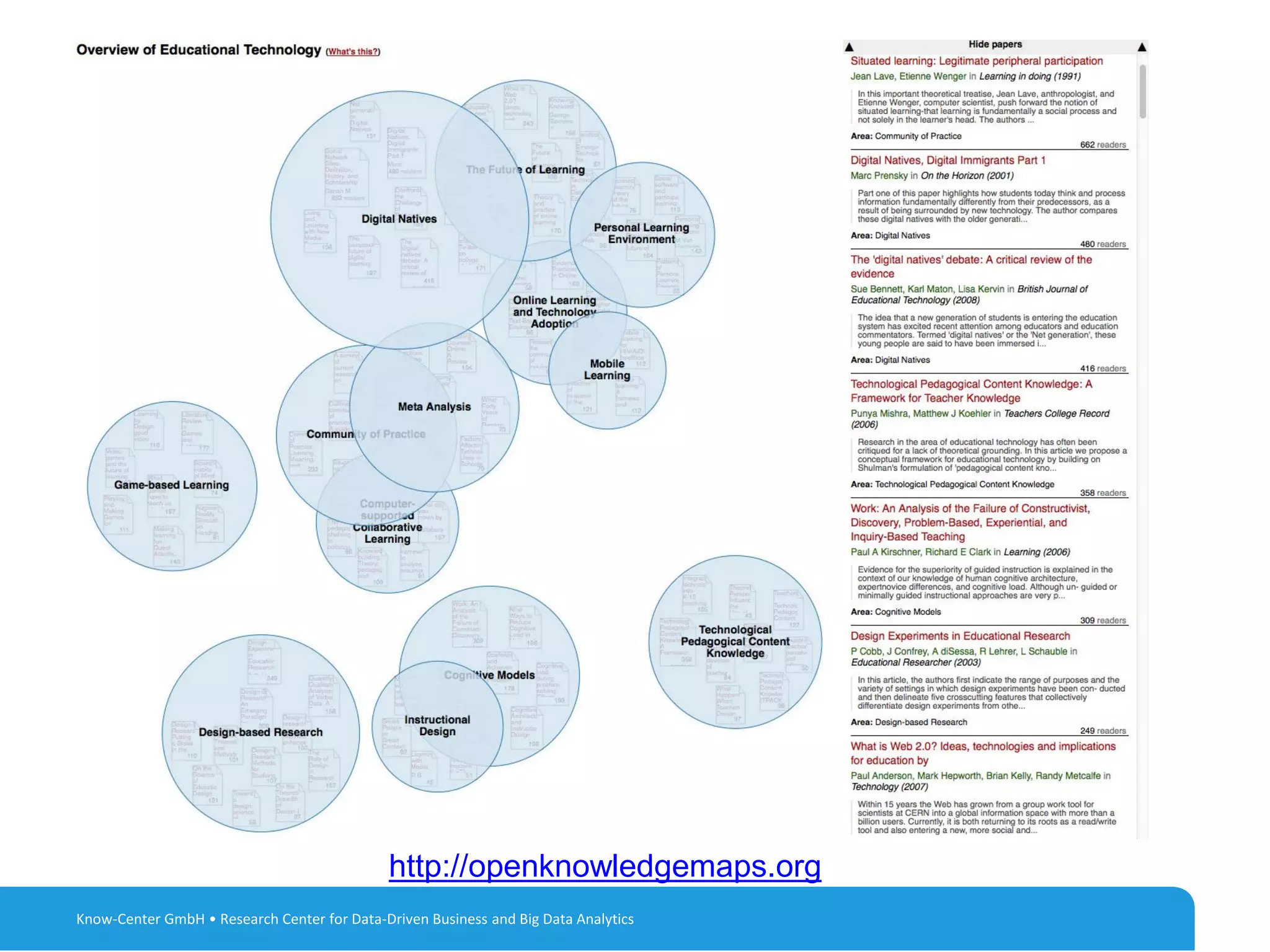
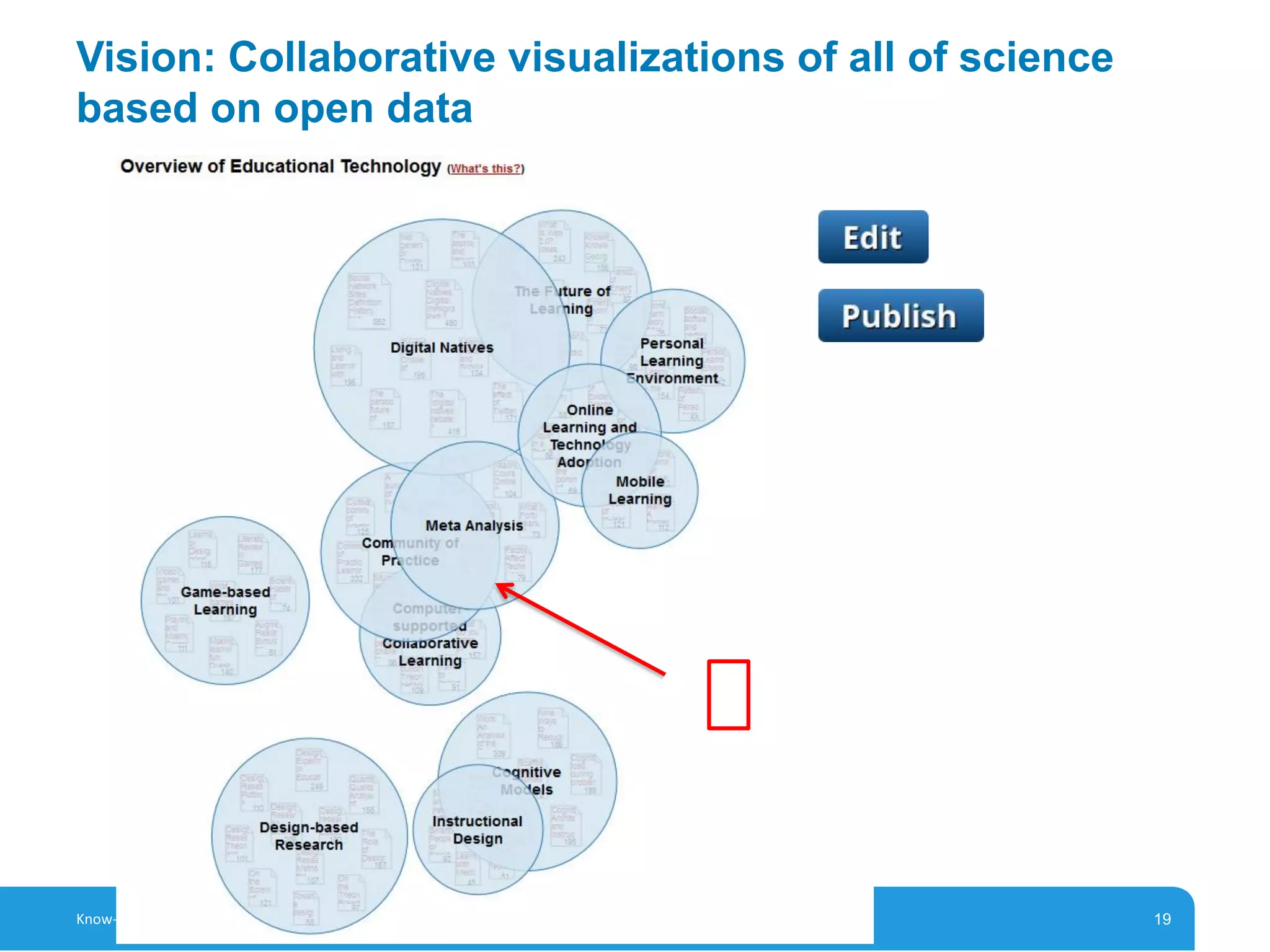
Exemplary visualization of „educational technology“
Know-Center GmbH • Research Center for Data-Driven Business and Big Data Analytics
9
http://openknowledgemaps.org
Know-Center GmbH • Research Center for Data-Driven Business and Big Data Analytics
10
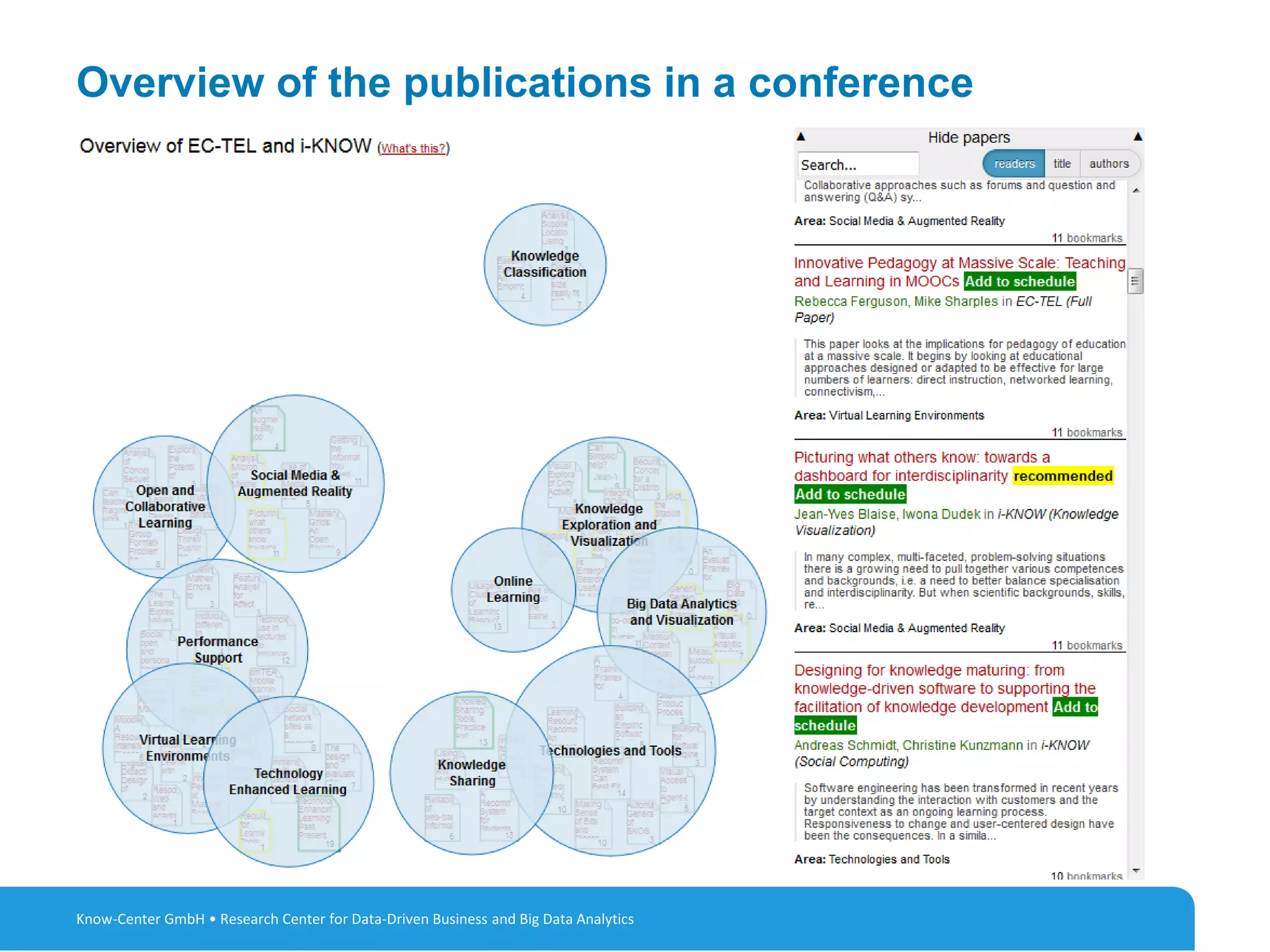
Overview of the publications in a conference
Know-Center GmbH • Research Center for Data-Driven Business and Big Data Analytics
11
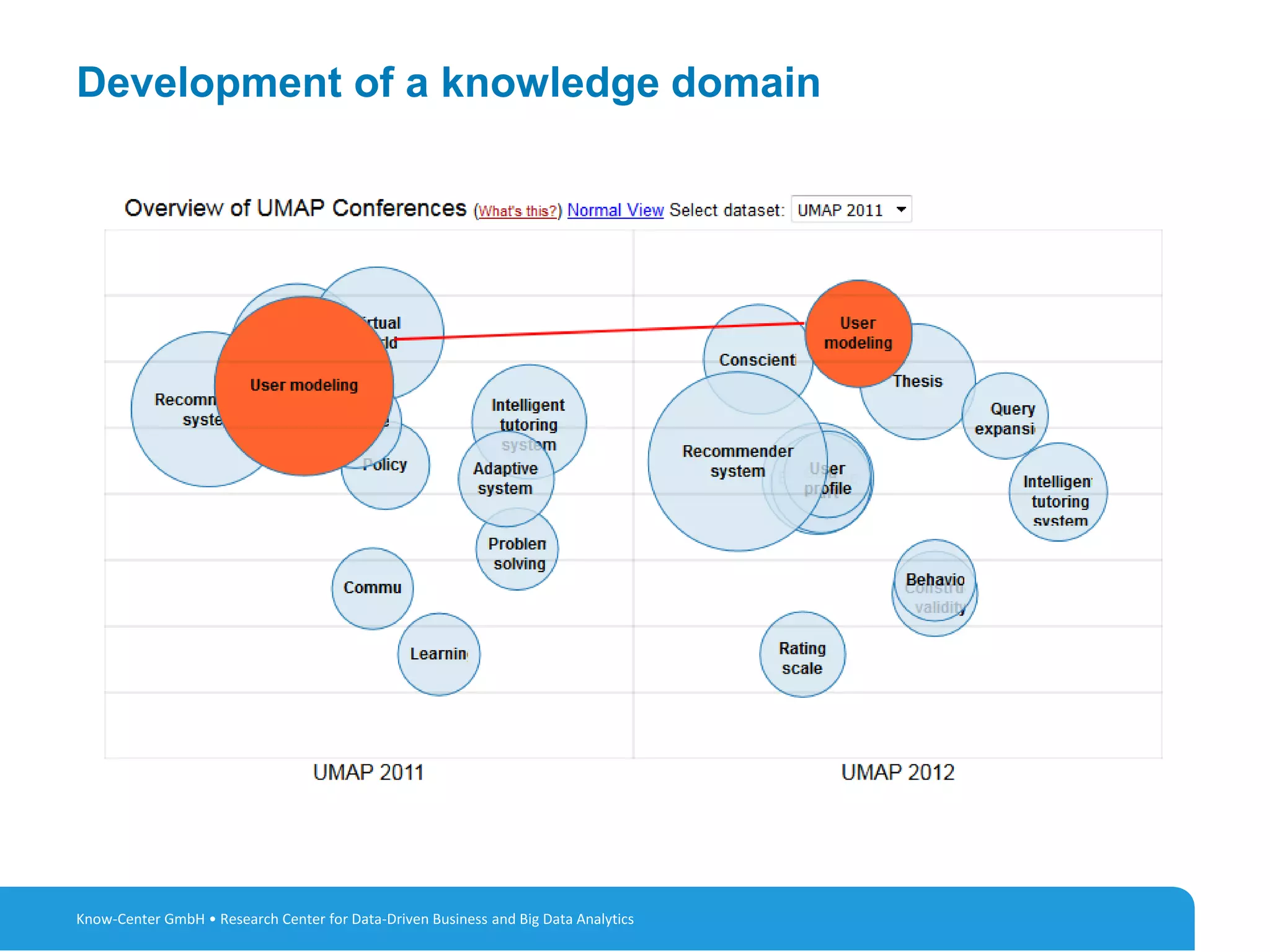
Development of a knowledge domain
Know-Center GmbH • Research Center for Data-Driven Business and Big Data Analytics
12
Try it yourself!
12Know-Center GmbH • Research Center for Data-Driven Business and Big Data Analytics
Group exploration:
Get together in groups of three (similar field of interest
preferred)
Go to http://openknowledgemaps.org/mozfest
and visualize a PLOS search!
Discuss the results that you got
Report back to the plenum
13
Static visualization of all of science
[Bollen et al. 2009]
14
What‘s needed for a knowledge domain
visualization?
14Know-Center GmbH • Research Center for Data-Driven Business and Big Data Analytics
Bibliographic data of the works in a domain
Bibliometric data/full text of items to find interesting/important
works
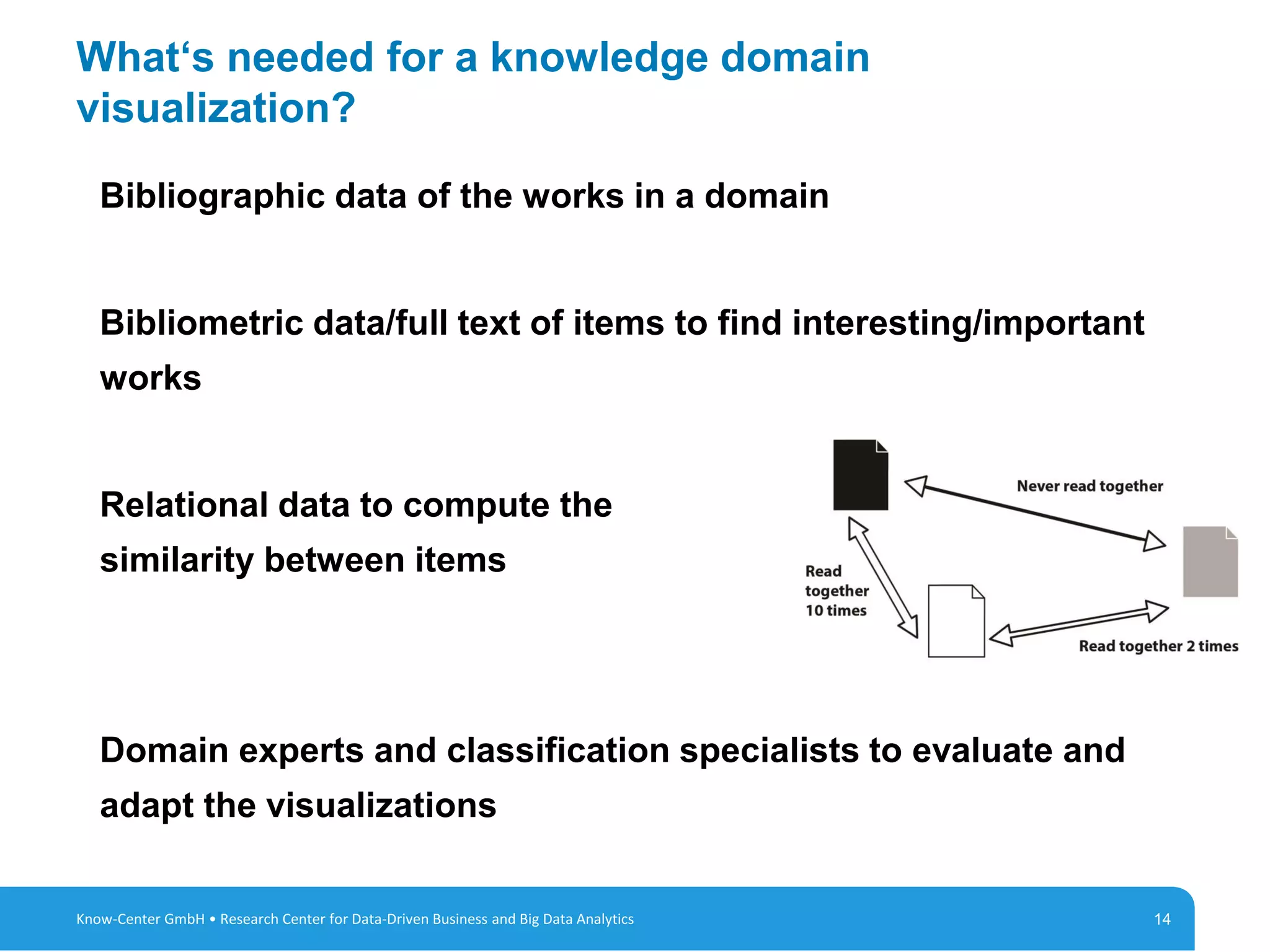
Relational data to compute the
similarity between items
Domain experts and classification specialists to evaluate and
adapt the visualizations
15
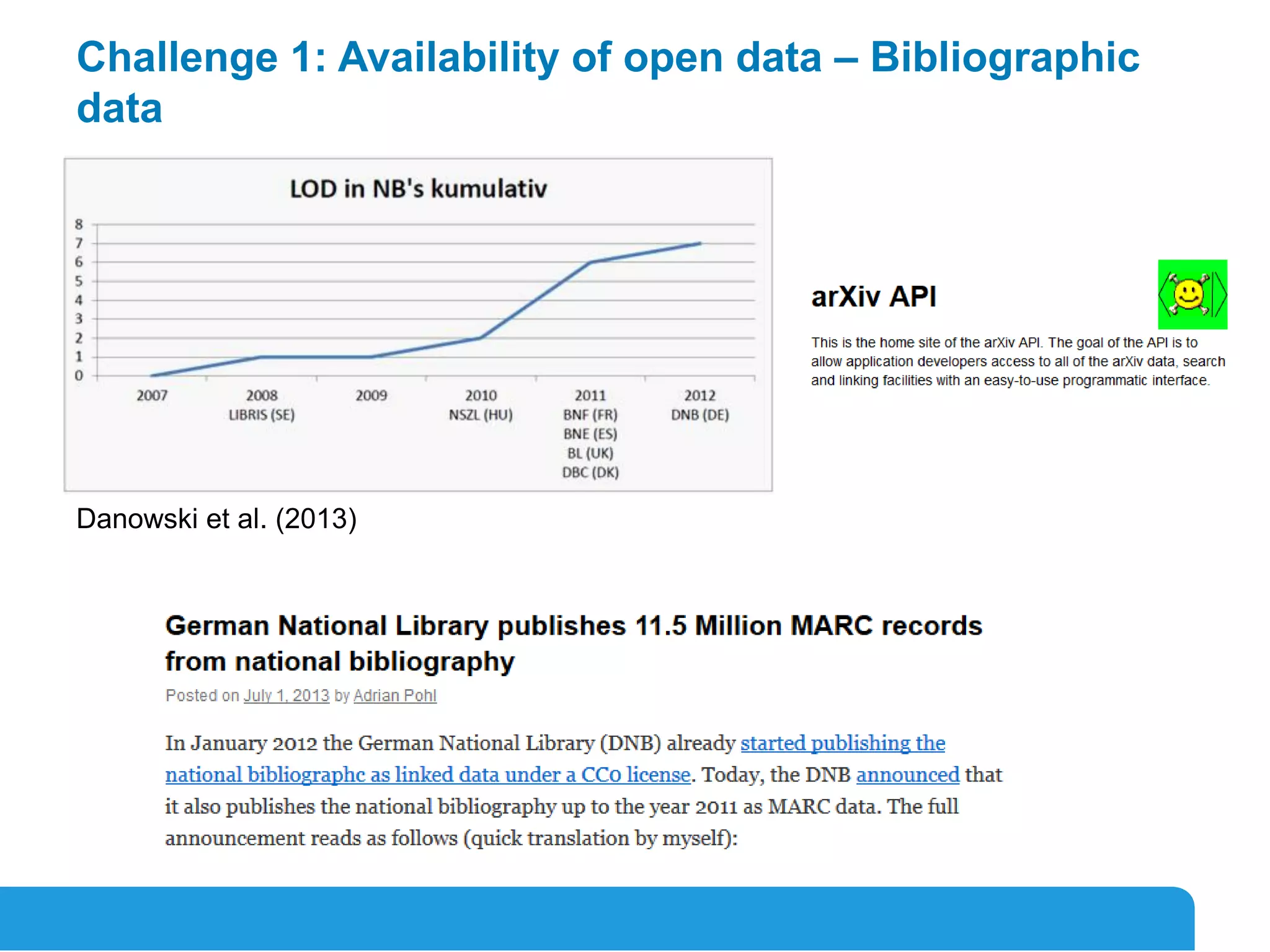
Challenge 1: Availability of open data – Bibliographic
data
Danowski et al. (2013)
16
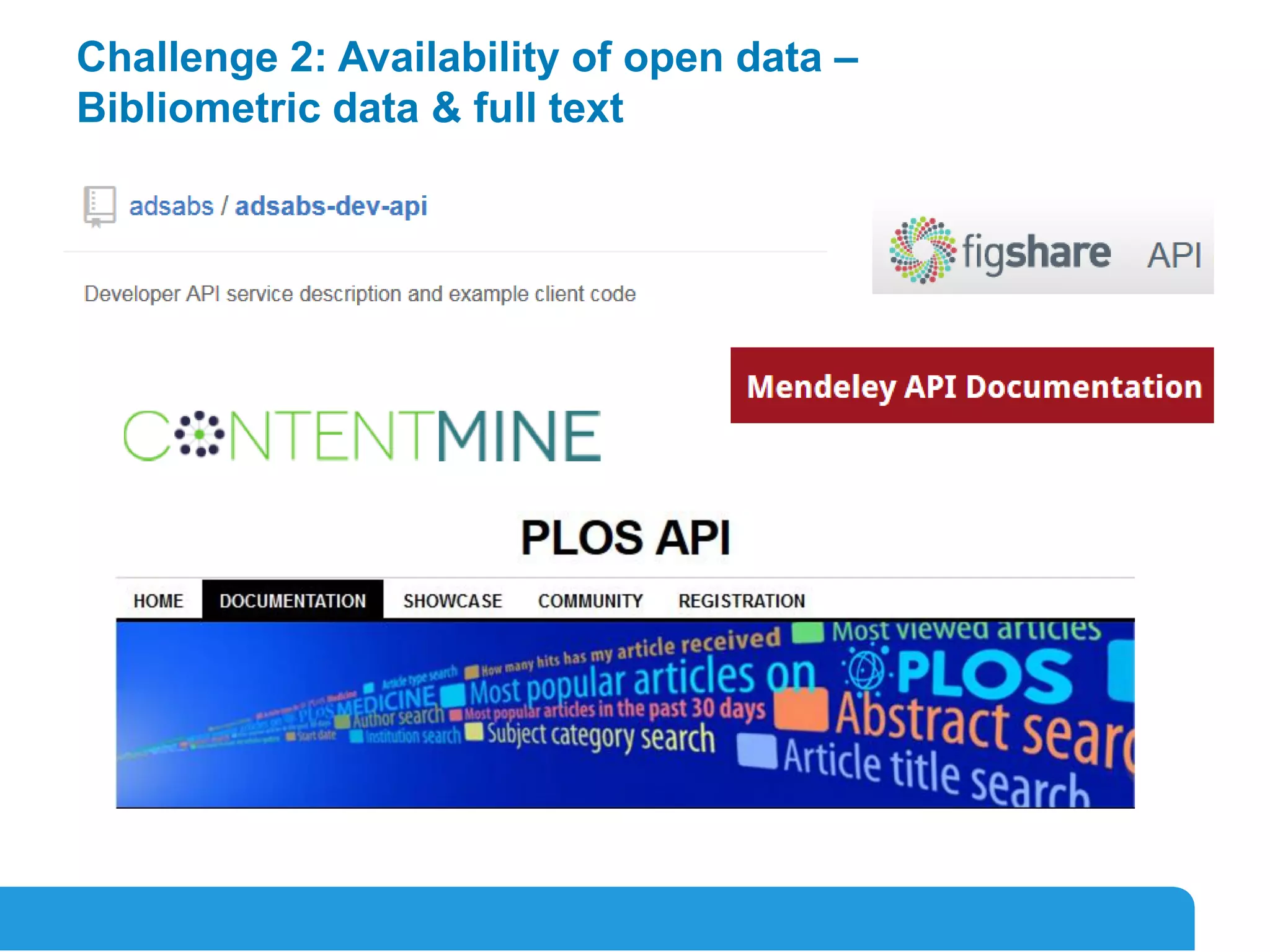
Challenge 2: Availability of open data –
Bibliometric data & full text
17
Challenge 3: Usability and usefulness
Most static visualizations are useful to understand the
structure of science, but not in researchers‘ daily work
A lot of the existing tools are made for experts and they
are based on closed data (Web of Science, PubMed)
18
Challenge 4: Systematic bias and algorithmic errors
Characteristics of the underlying dataset influence the
visualizations (Bollen et al. 2008, Kraker et al. 2014)
Algorithmic errors cannot be avoided in automated
systems
 Dedicated community of domain experts,
classification specialists, programmers … (think
Wikipedia)
19
Vision: Collaborative visualizations of all of science
based on open data
19Know-Center GmbH • Research Center for Data-Driven Business and Big Data Analytics
20
If you‘d like to know more
Blog:
http://blogs.lse.ac.uk/impactofsocialsciences/2015/02/16/crowd-
sourced-overview-visualizations-of-knowledge-domains/
Publikation: Kraker, P., Schlögl, C., Jack, K., & Lindstaedt, S.
(2015). Visualization of Co-Readership Patterns from an Online
Reference Management System. Journal of Informetrics, 9(1),
169–182. http://arxiv.org/abs/1409.0348
Source Code: https://github.com/pkraker/Headstart
21
b
Thank you for your attention!
Peter Kraker
pkraker@know-center.at
Twitter: @PeterKraker

The Student's and Researcher's Guide to Discovery: Exploring Scientific Fields with Open Data and Tools

  • 1.
    1 b b www.know-center.at The Student's andResearcher's Guide to Discovery: Exploring Scientific Fields with Open Data and Tools Mozfest 2015 London, November 7 Peter Kraker
  • 2.
    2 First things first 2Know-CenterGmbH • Research Center for Data-Driven Business and Big Data Analytics Introduction: Please say your name and add three hashtags that describe you: #1: Your occupation (student, researcher, activist…) #2: Your current field of interest (biology, open peer review…) #3: Of your own choosing If you can, please also add this to: http://is.gd/mozfest
  • 3.
    3 The Hitchhiker‘s Guideto the Galaxy 3Know-Center GmbH • Research Center for Data-Driven Business and Big Data Analytics
  • 4.
    4 How to getan overview of the universe 4Know-Center GmbH • Research Center for Data-Driven Business and Big Data Analytics
  • 5.
    5 How to getan overview of a research field 5Know-Center GmbH • Research Center for Data-Driven Business and Big Data Analytics Discussion: How do you get an overview of an unknown field? Discuss with your neighbour(s) Report back to the plenum
  • 6.
    6 How to getan overview of a research field 6Know-Center GmbH • Research Center for Data-Driven Business and Big Data Analytics
  • 7.
    7 How to getan overview of a research field 7Know-Center GmbH • Research Center for Data-Driven Business and Big Data Analytics
  • 8.
    8 Exemplary visualization of„educational technology“ Know-Center GmbH • Research Center for Data-Driven Business and Big Data Analytics
  • 9.
    9 http://openknowledgemaps.org Know-Center GmbH •Research Center for Data-Driven Business and Big Data Analytics
  • 10.
    10 Overview of thepublications in a conference Know-Center GmbH • Research Center for Data-Driven Business and Big Data Analytics
  • 11.
    11 Development of aknowledge domain Know-Center GmbH • Research Center for Data-Driven Business and Big Data Analytics
  • 12.
    12 Try it yourself! 12Know-CenterGmbH • Research Center for Data-Driven Business and Big Data Analytics Group exploration: Get together in groups of three (similar field of interest preferred) Go to http://openknowledgemaps.org/mozfest and visualize a PLOS search! Discuss the results that you got Report back to the plenum
  • 13.
    13 Static visualization ofall of science [Bollen et al. 2009]
  • 14.
    14 What‘s needed fora knowledge domain visualization? 14Know-Center GmbH • Research Center for Data-Driven Business and Big Data Analytics Bibliographic data of the works in a domain Bibliometric data/full text of items to find interesting/important works Relational data to compute the similarity between items Domain experts and classification specialists to evaluate and adapt the visualizations
  • 15.
    15 Challenge 1: Availabilityof open data – Bibliographic data Danowski et al. (2013)
  • 16.
    16 Challenge 2: Availabilityof open data – Bibliometric data & full text
  • 17.
    17 Challenge 3: Usabilityand usefulness Most static visualizations are useful to understand the structure of science, but not in researchers‘ daily work A lot of the existing tools are made for experts and they are based on closed data (Web of Science, PubMed)
  • 18.
    18 Challenge 4: Systematicbias and algorithmic errors Characteristics of the underlying dataset influence the visualizations (Bollen et al. 2008, Kraker et al. 2014) Algorithmic errors cannot be avoided in automated systems  Dedicated community of domain experts, classification specialists, programmers … (think Wikipedia)
  • 19.
    19 Vision: Collaborative visualizationsof all of science based on open data 19Know-Center GmbH • Research Center for Data-Driven Business and Big Data Analytics
  • 20.
    20 If you‘d liketo know more Blog: http://blogs.lse.ac.uk/impactofsocialsciences/2015/02/16/crowd- sourced-overview-visualizations-of-knowledge-domains/ Publikation: Kraker, P., Schlögl, C., Jack, K., & Lindstaedt, S. (2015). Visualization of Co-Readership Patterns from an Online Reference Management System. Journal of Informetrics, 9(1), 169–182. http://arxiv.org/abs/1409.0348 Source Code: https://github.com/pkraker/Headstart
  • 21.
    21 b Thank you foryour attention! Peter Kraker pkraker@know-center.at Twitter: @PeterKraker