Dr. Emmanuel Garcia and Rebekah Chojnacki, M.A. University of
Texas at Arlington
October 21, 2016
Beyond Retention, Helping Build Resilience
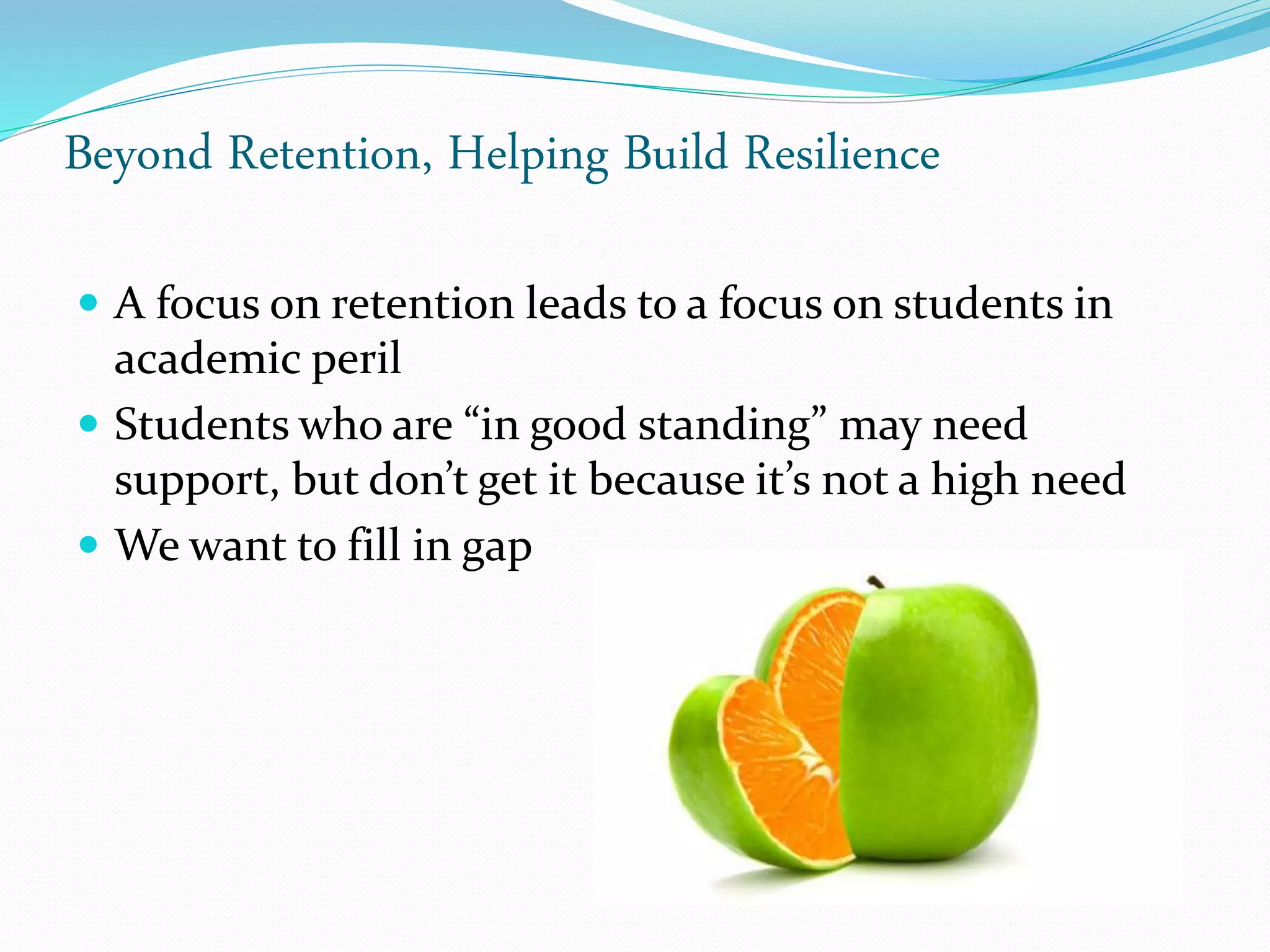
 A focus on retention leads to a focus on students in
academic peril
 Students who are “in good standing” may need
support, but don’t get it because it’s not a high need
 We want to fill in gap
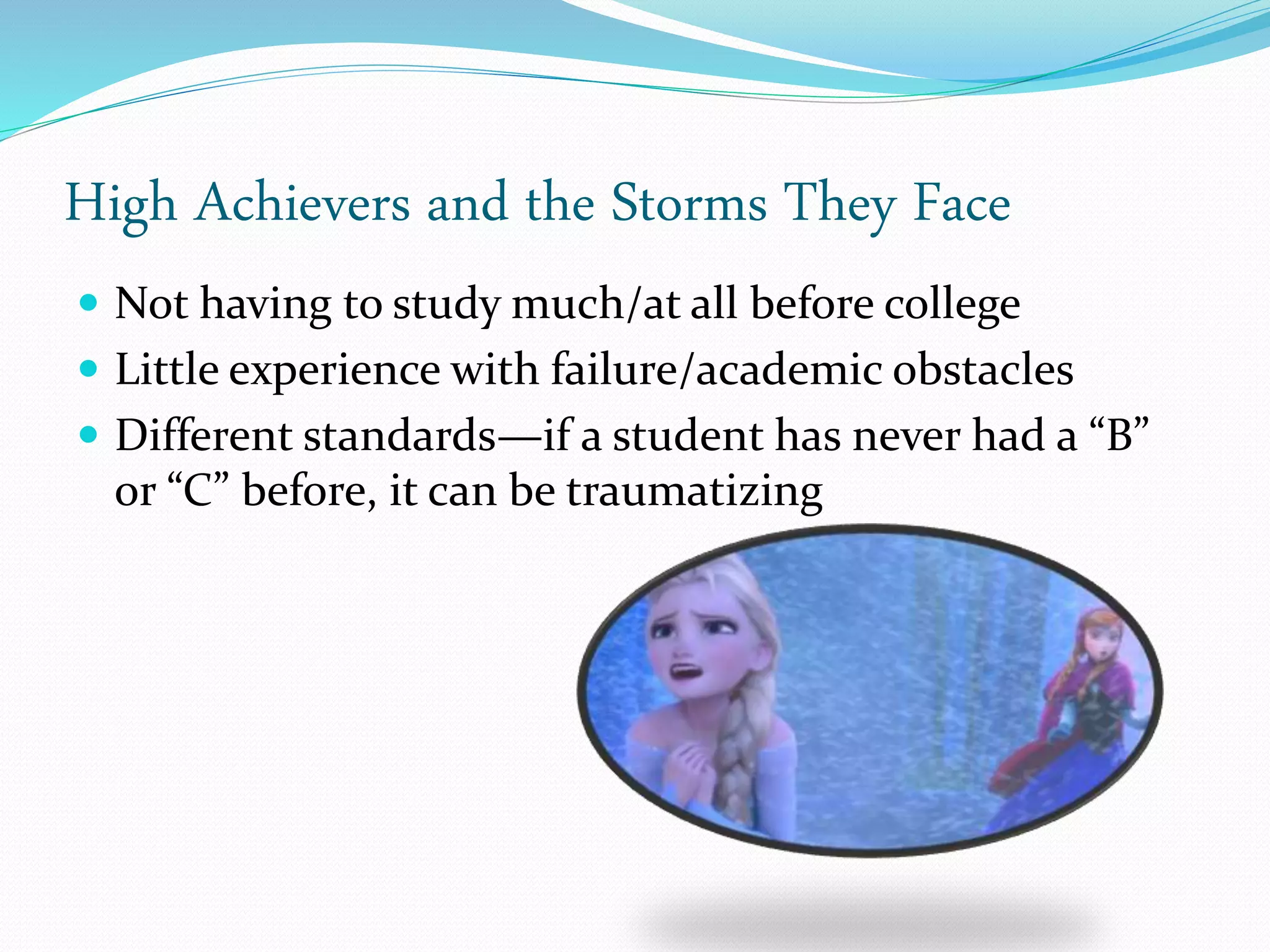
High Achievers and the Storms They Face
 Not having to study much/at all before college
 Little experience with failure/academic obstacles
 Different standards—if a student has never had a “B”
or “C” before, it can be traumatizing
Perfectionism
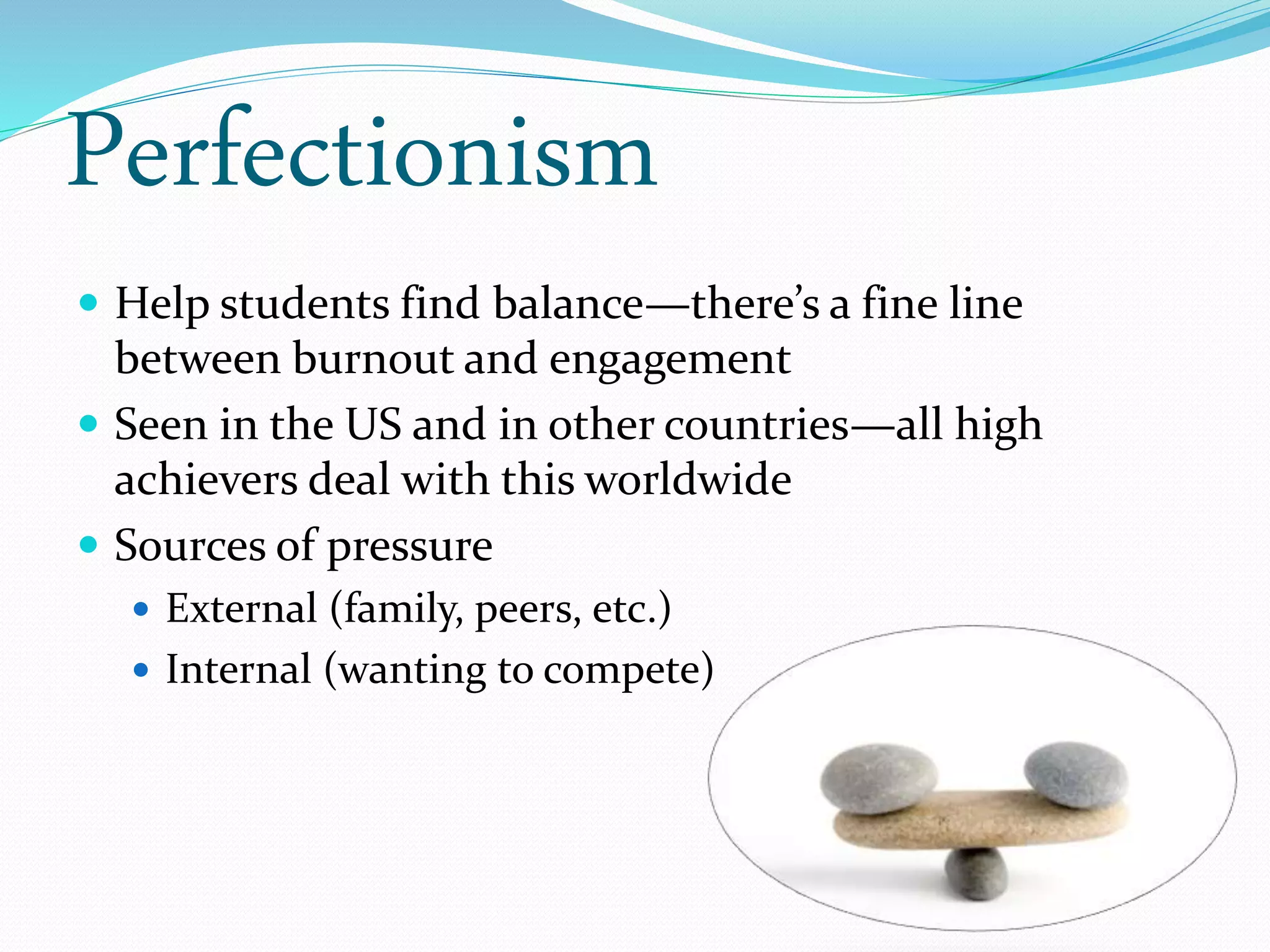
 Help students find balance—there’s a fine line
between burnout and engagement
 Seen in the US and in other countries—all high
achievers deal with this worldwide
 Sources of pressure
 External (family, peers, etc.)
 Internal (wanting to compete)
Invisible Challengers
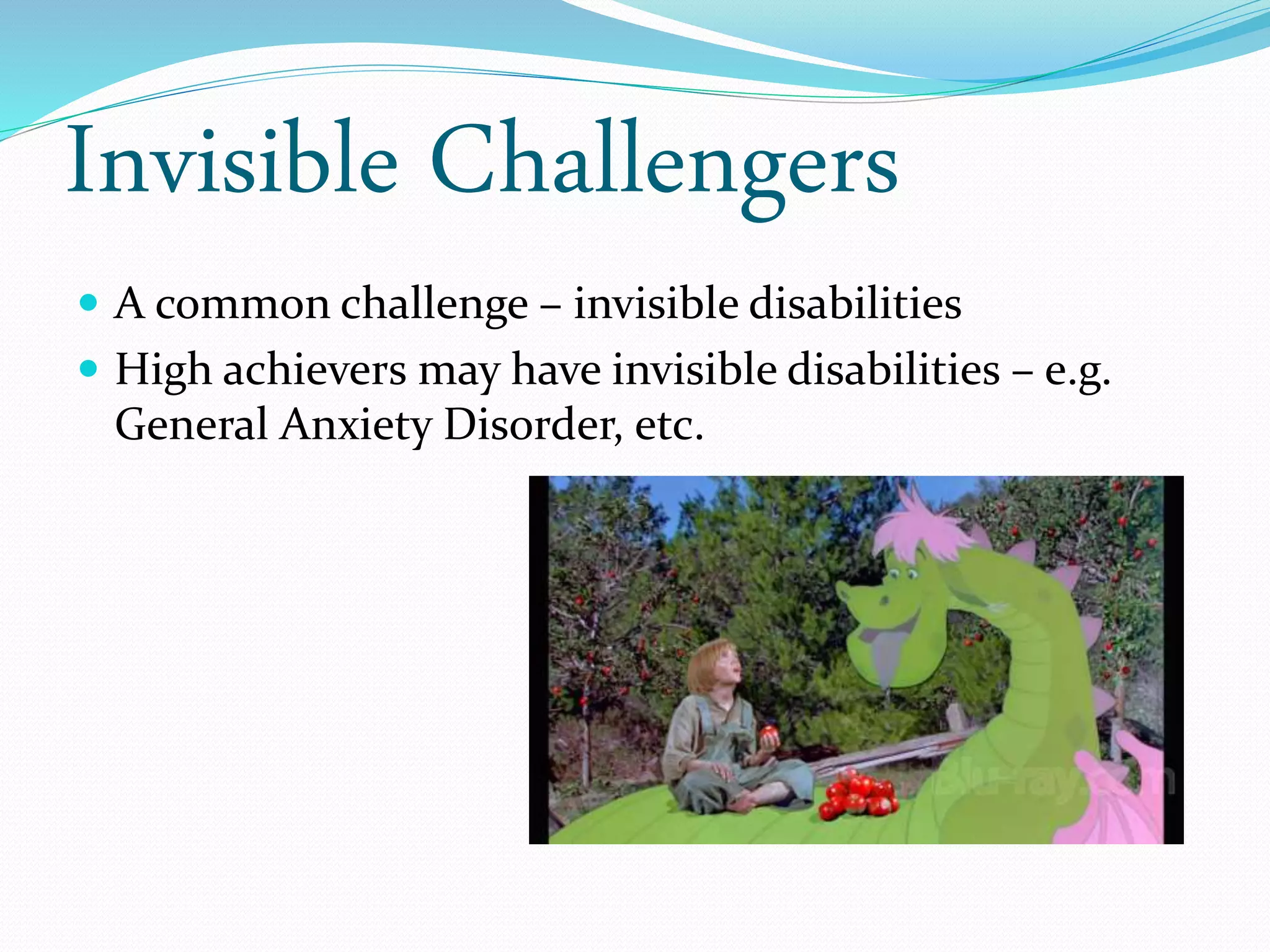
 A common challenge – invisible disabilities
 High achievers may have invisible disabilities – e.g.
General Anxiety Disorder, etc.
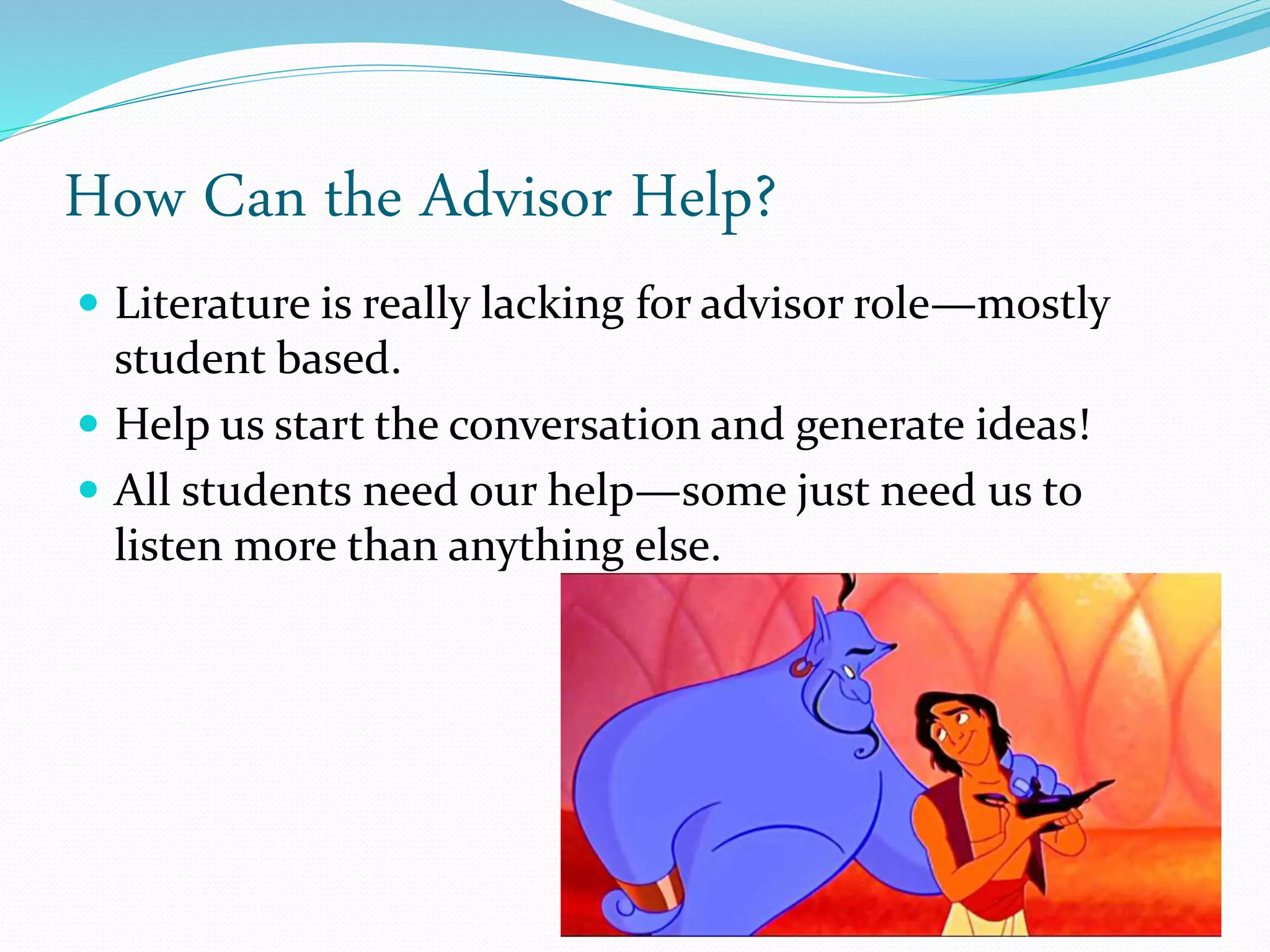
How Can the Advisor Help?
 Literature is really lacking for advisor role—mostly
student based.
 Help us start the conversation and generate ideas!
 All students need our help—some just need us to
listen more than anything else.
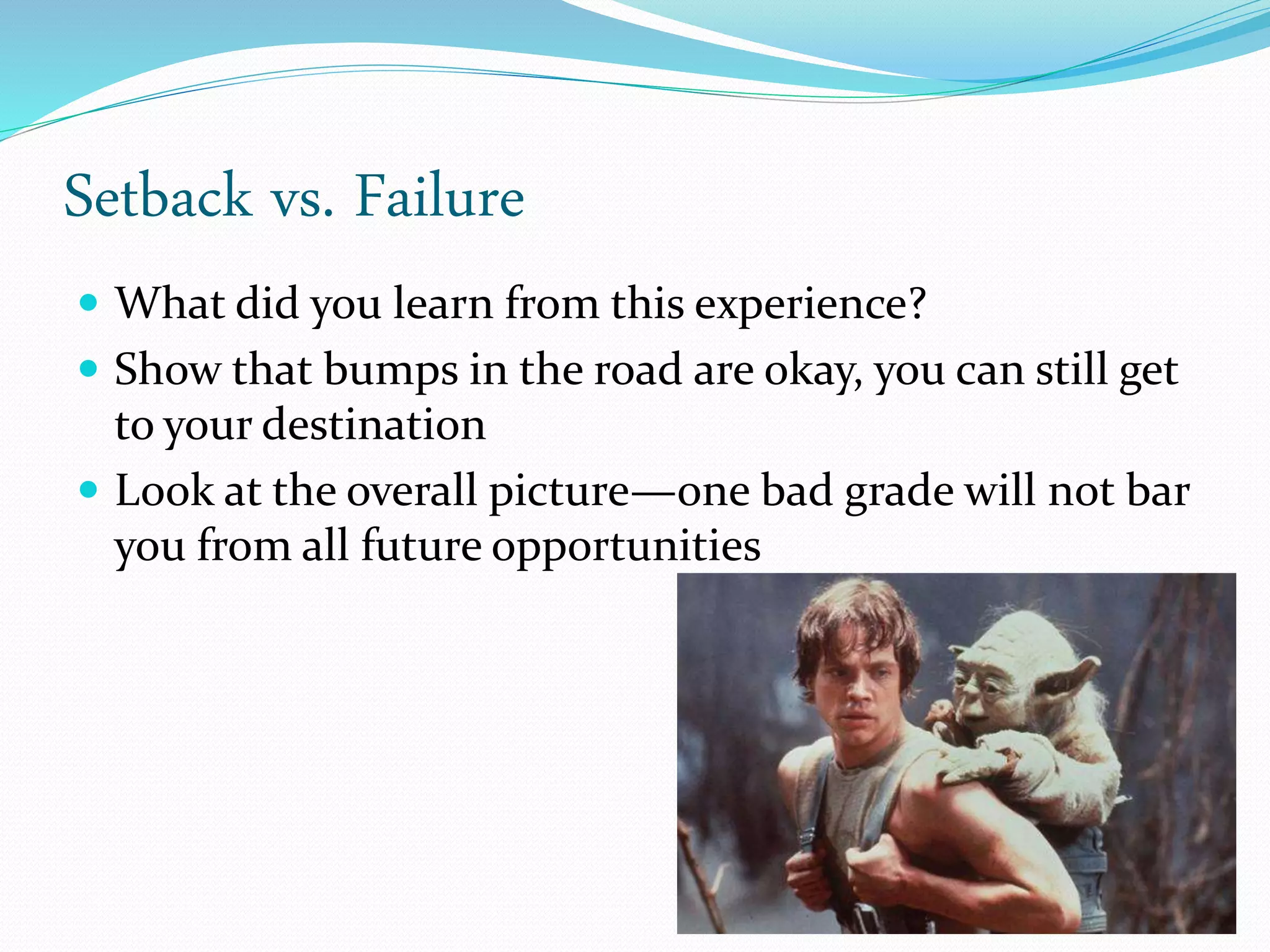
Setback vs. Failure
 What did you learn from this experience?
 Show that bumps in the road are okay, you can still get
to your destination
 Look at the overall picture—one bad grade will not bar
you from all future opportunities
Sometimes Life Does Not Go as Expected
 Calm down with math – show them they will still
graduate
 Show what they have accomplished so far – AP, dual
credit, etc.
 High-achievers like to see a plan written down
 Re-assure plans can change
College is a Whole New World AP/Dual/IB Is Not the Same as
College Level
 AP – to claim or not to claim
 Discuss the cost/benefits of not claiming AP credit to
be more prepared for other classes
 Dealing with stress when realization hits…
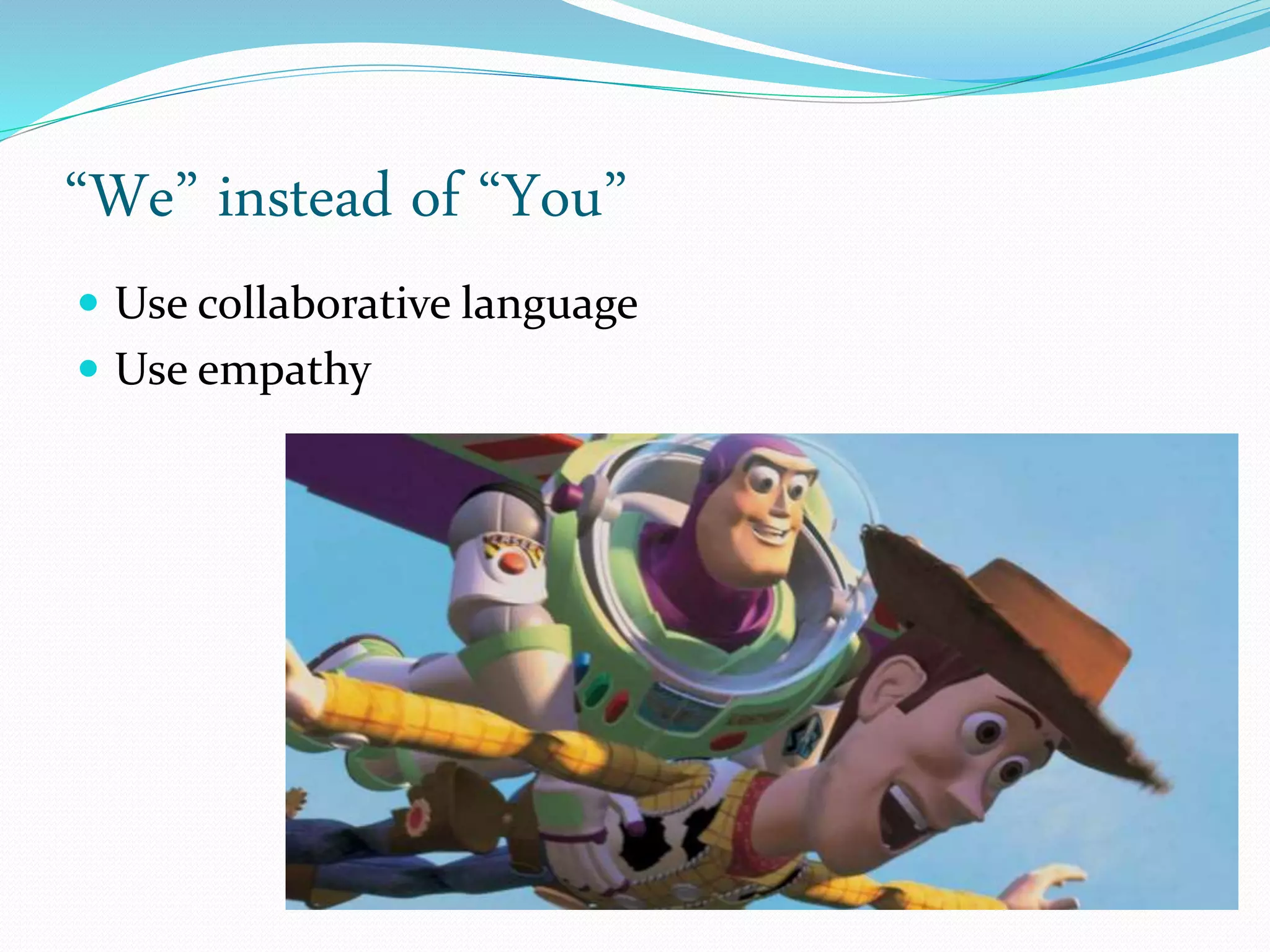
“We” instead of “You”
 Use collaborative language
 Use empathy
Discussion
 What have you seen when working with high-
achievers?
 Discuss…
Dealing with Family Pressure
 Family Pressure
 Planning to confront parents
 Give major some more effort/mentors/research/tutoring
 Let parents know that you’ve tried—show them
 Don’t jump ship right away
 Send student to career center (strengths quest & career
planning)
 Knowing what they are good at vs. passion
 Hobbies vs. career
How to be Supportive
 Be supportive and listen
 What makes it important to the student
 Let the student talk it through to help guide them to a
solution
 Help the student see the bigger picture
 Let them have support to have venting time
 Know when to send them to counseling
 Help students build strategies for success
“I want more…”
 Achievers have internal drive…
 Introducing: University College Scholars
References
 Salanova, M., Schaufeli, W., Martínez, I., & Bresó, E. (2010). How obstacles and
facilitators predict academic performance: The mediating role of study
burnout and engagement. Anxiety, Stress & Coping, 23(1), 53-70.
 Dickinson, M. J., & Dickinson, D. A. (2014). Practically perfect in every way: can
reframing perfectionism for high-achieving undergraduates impact academic
resilience?. Studies in Higher Education, (ahead-of-print), 1-15.
 Rice, K. G., Leever, B. A., Christopher, J., & Porter, J. D. (2006). Perfectionism,
stress, and social (dis) connection: A short-term study of hopelessness,
depression, and academic adjustment among honors students. Journal of
Counseling Psychology, 53(4), 524.
 Siegle, D., Rubenstein, L. D., Pollard, E., & Romey, E. (2009). Exploring the
relationship of college freshmen honors students’ effort and ability attribution,
interest, and implicit theory of intelligence with perceived ability. Gifted Child
Quarterly.
 Neumeister, K. L. S. (2004). Understanding the relationship between
perfectionism and achievement motivation in gifted college students. Gifted
child quarterly, 48(3), 219-231.

Helping High Achievers Find the Magic Within

  • 1.
    Dr. Emmanuel Garciaand Rebekah Chojnacki, M.A. University of Texas at Arlington October 21, 2016
  • 2.
    Beyond Retention, HelpingBuild Resilience  A focus on retention leads to a focus on students in academic peril  Students who are “in good standing” may need support, but don’t get it because it’s not a high need  We want to fill in gap
  • 3.
    High Achievers andthe Storms They Face  Not having to study much/at all before college  Little experience with failure/academic obstacles  Different standards—if a student has never had a “B” or “C” before, it can be traumatizing
  • 4.
    Perfectionism  Help studentsfind balance—there’s a fine line between burnout and engagement  Seen in the US and in other countries—all high achievers deal with this worldwide  Sources of pressure  External (family, peers, etc.)  Internal (wanting to compete)
  • 5.
    Invisible Challengers  Acommon challenge – invisible disabilities  High achievers may have invisible disabilities – e.g. General Anxiety Disorder, etc.
  • 6.
    How Can theAdvisor Help?  Literature is really lacking for advisor role—mostly student based.  Help us start the conversation and generate ideas!  All students need our help—some just need us to listen more than anything else.
  • 7.
    Setback vs. Failure What did you learn from this experience?  Show that bumps in the road are okay, you can still get to your destination  Look at the overall picture—one bad grade will not bar you from all future opportunities
  • 8.
    Sometimes Life DoesNot Go as Expected  Calm down with math – show them they will still graduate  Show what they have accomplished so far – AP, dual credit, etc.  High-achievers like to see a plan written down  Re-assure plans can change
  • 9.
    College is aWhole New World AP/Dual/IB Is Not the Same as College Level  AP – to claim or not to claim  Discuss the cost/benefits of not claiming AP credit to be more prepared for other classes  Dealing with stress when realization hits…
  • 10.
    “We” instead of“You”  Use collaborative language  Use empathy
  • 11.
    Discussion  What haveyou seen when working with high- achievers?  Discuss…
  • 12.
    Dealing with FamilyPressure  Family Pressure  Planning to confront parents  Give major some more effort/mentors/research/tutoring  Let parents know that you’ve tried—show them  Don’t jump ship right away  Send student to career center (strengths quest & career planning)  Knowing what they are good at vs. passion  Hobbies vs. career
  • 13.
    How to beSupportive  Be supportive and listen  What makes it important to the student  Let the student talk it through to help guide them to a solution  Help the student see the bigger picture  Let them have support to have venting time  Know when to send them to counseling  Help students build strategies for success
  • 14.
    “I want more…” Achievers have internal drive…  Introducing: University College Scholars
  • 15.
    References  Salanova, M.,Schaufeli, W., Martínez, I., & Bresó, E. (2010). How obstacles and facilitators predict academic performance: The mediating role of study burnout and engagement. Anxiety, Stress & Coping, 23(1), 53-70.  Dickinson, M. J., & Dickinson, D. A. (2014). Practically perfect in every way: can reframing perfectionism for high-achieving undergraduates impact academic resilience?. Studies in Higher Education, (ahead-of-print), 1-15.  Rice, K. G., Leever, B. A., Christopher, J., & Porter, J. D. (2006). Perfectionism, stress, and social (dis) connection: A short-term study of hopelessness, depression, and academic adjustment among honors students. Journal of Counseling Psychology, 53(4), 524.  Siegle, D., Rubenstein, L. D., Pollard, E., & Romey, E. (2009). Exploring the relationship of college freshmen honors students’ effort and ability attribution, interest, and implicit theory of intelligence with perceived ability. Gifted Child Quarterly.  Neumeister, K. L. S. (2004). Understanding the relationship between perfectionism and achievement motivation in gifted college students. Gifted child quarterly, 48(3), 219-231.