PRESENTED BY:
MRS. M.LASKHMI, M.SC (N)
OBSTETRIC & GYNECOLOGICAL
NURSING
ECTOPIC PREGNANCY
Introduction
 The term ectopic comes from the greek “ ektopis”
meaning displacement.
 ek-out of + topos- Place = out of place.
 The first person to use “ectopic” was obstetrician
Robert Barnes (1817-1907) who applied it to an extra
uterine pregnancy: an ectopic pregnancy.
DEFINITION
 Any pregnancy where the fertilized ovum gets
implanted & develops in a site other than normal
uterine cavity.
 Ectopic pregnancy: fertilized embryo implanted
outside the uterine cavity.
INCIDENCE
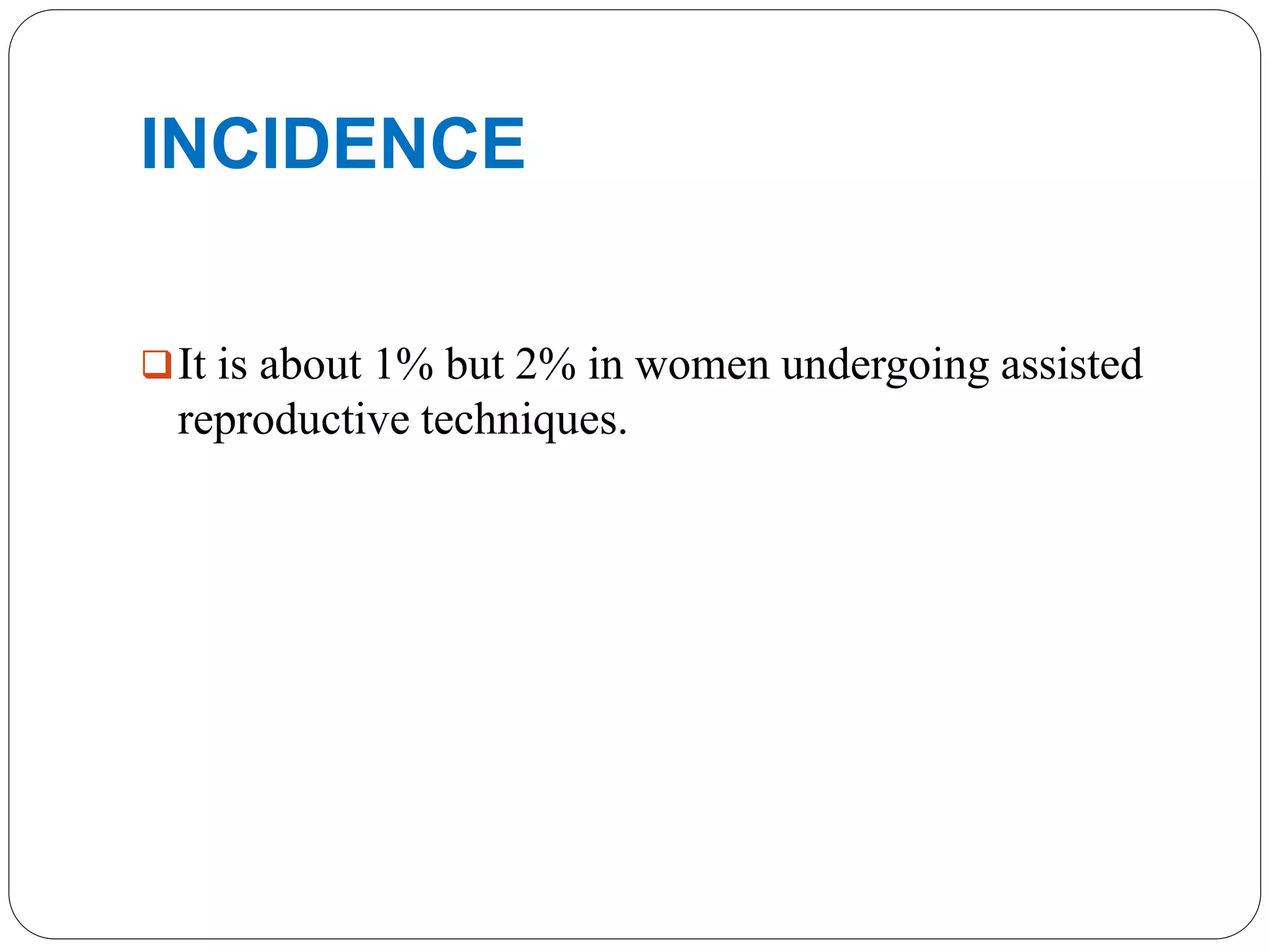
It is about 1% but 2% in women undergoing assisted
reproductive techniques.
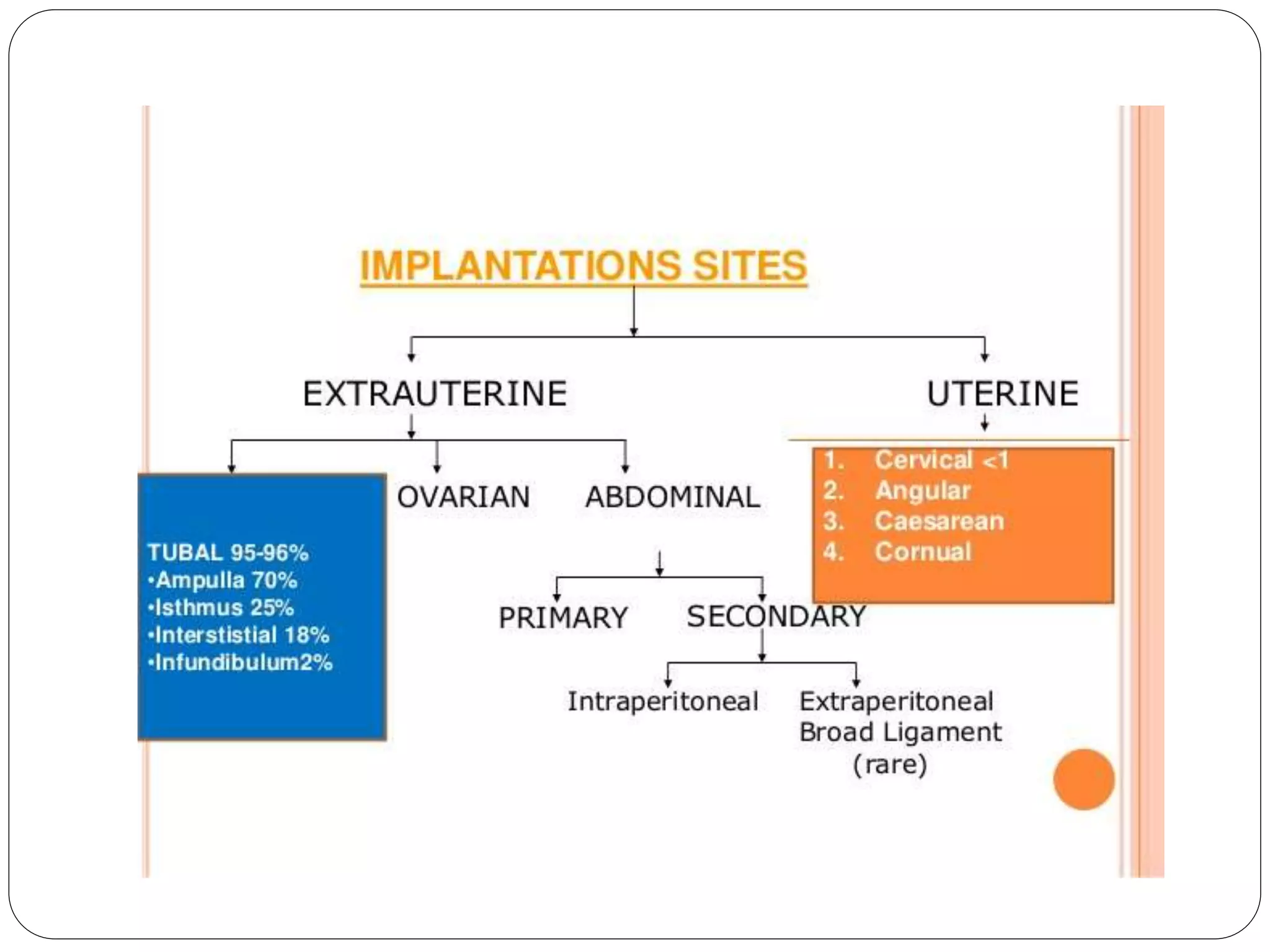
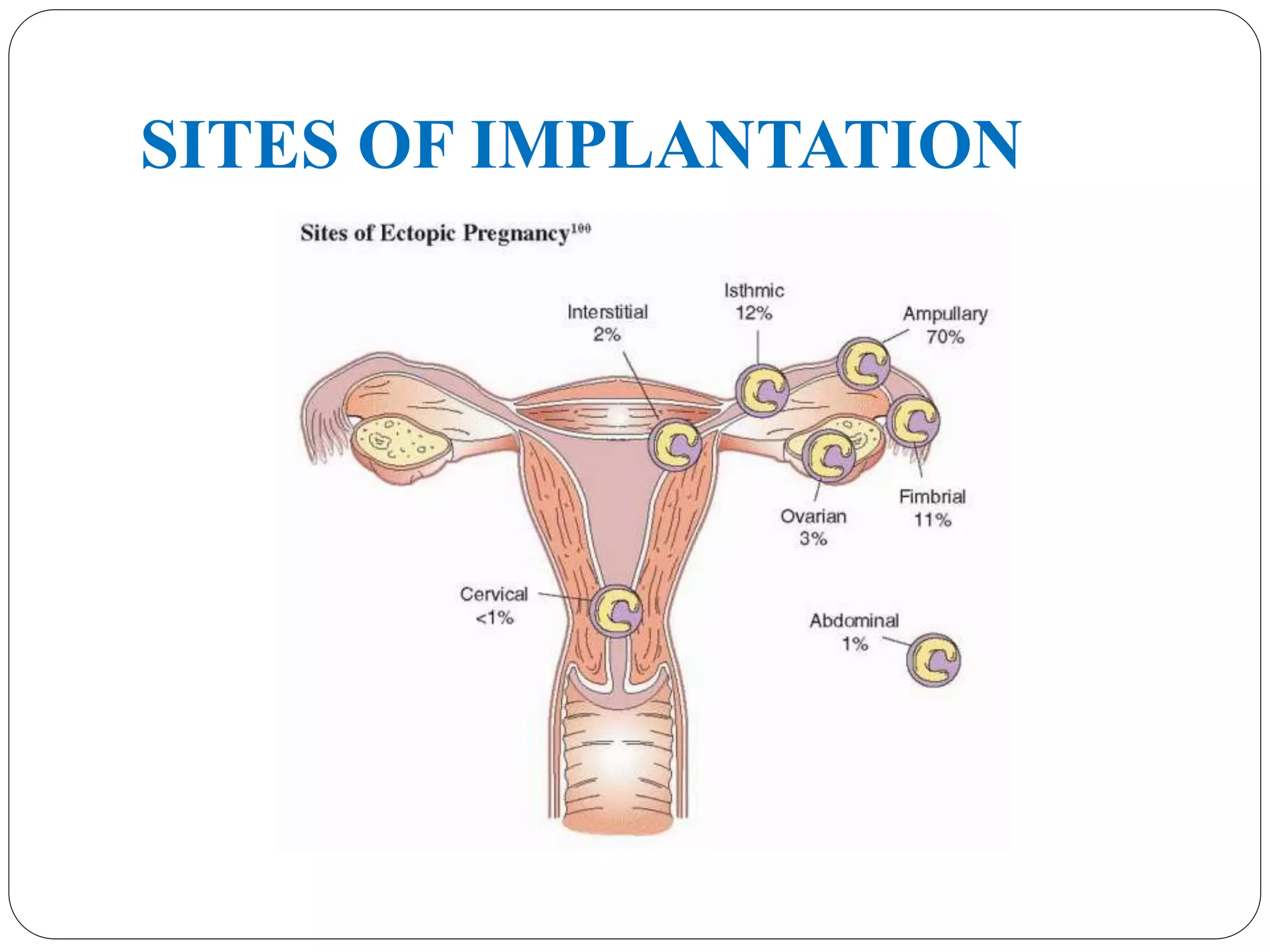
SITES OF IMPLANTATION
ETIOLOGY
 Any factor that causes delayed transport of the
fertilized ovum through the tube.
 Fallopian tube favors implantation in the tubal mucosa
itself thus giving rise to a tubal ectopic pregnancy.
 These factors may be Congenital or Acquired.
ETIOLOGY
CONGENITAL
 Tubal Hypoplasia
Tortuosity
Congenital diverticuli
Accessory ostia
 Partial stenosis
 Elongation
 Intamural polyp
ETIOLOGY
ACQUIRED
1. Infections
 STIs & Pelvic Inflammatory disease (6-10 times)
Chlamydia trachomatis is most common
 post abortal sepsis, puerperal sepsis & appendicitis
Genital TB is an important cause in India.
ETIOLOGY
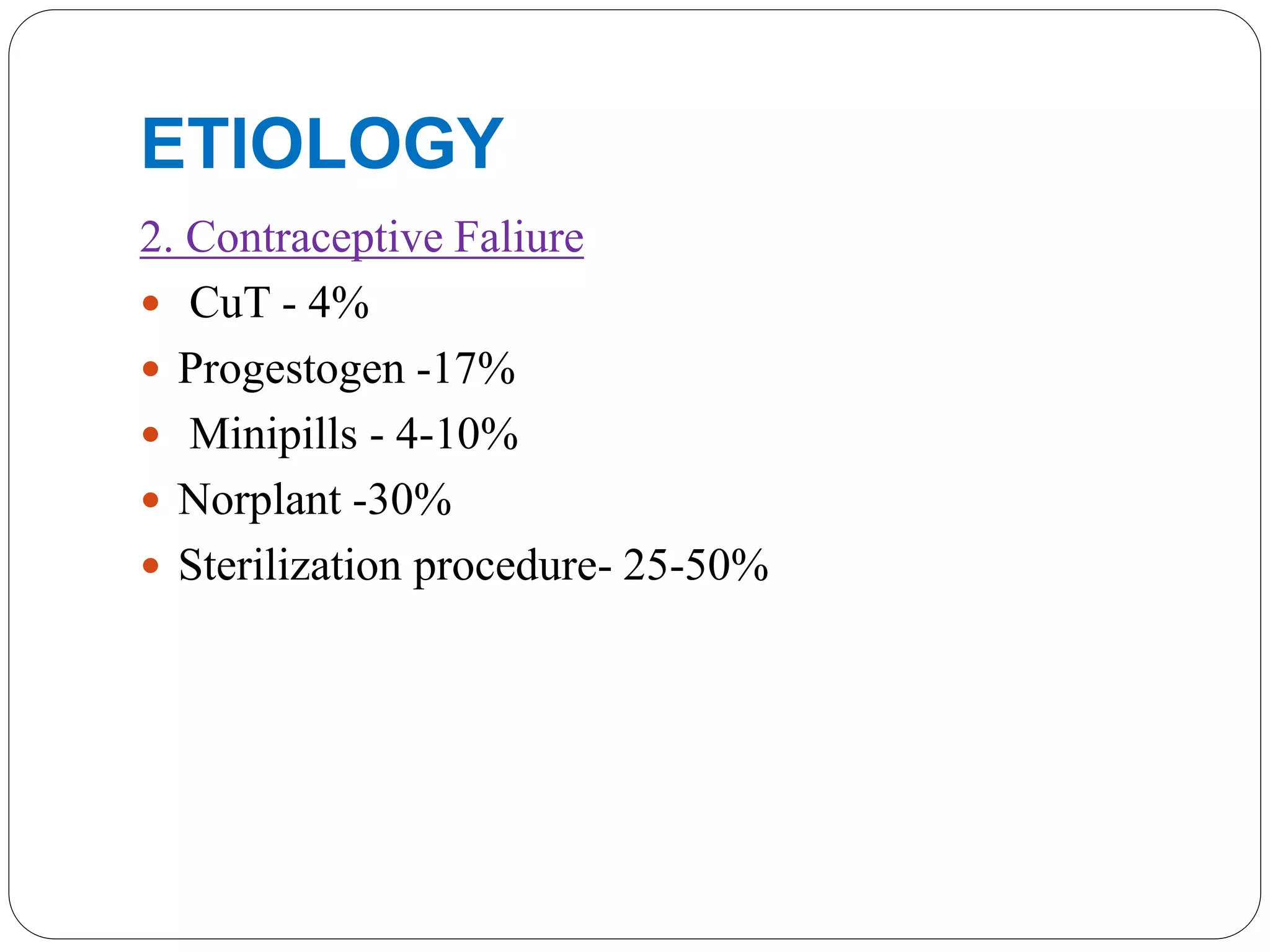
2. Contraceptive Faliure
 CuT - 4%
 Progestogen -17%
 Minipills - 4-10%
 Norplant -30%
 Sterilization procedure- 25-50%
ETIOLOGY
3.Tubal suregry
Tubal reconstructive surgery (4-5 times), tuboplasty,
salpingotomy.
4. Assisted Reproductive technique
Ovulation induction, IVF-ET and GIFT (4-7%) –
Risk of heterotopic pregnancy(1%)
5.Previous Ectopic Pregnancy - 7-15% chances of repeat
ectopic pregnancy
Other Risk factors
 Age 35-45 yrs
 Previous induced abortion
 Previous pelvic surgeries
 Cigarette smoking
 DES Exposure in Utero
 Infertility
Other Risk factors
 Salpingitis Isthmica Nodosa
 Genital Tuberculosis
 Fundal Fibroid
 Adenomyosis of tube
 Transperitoneal migration of ovum
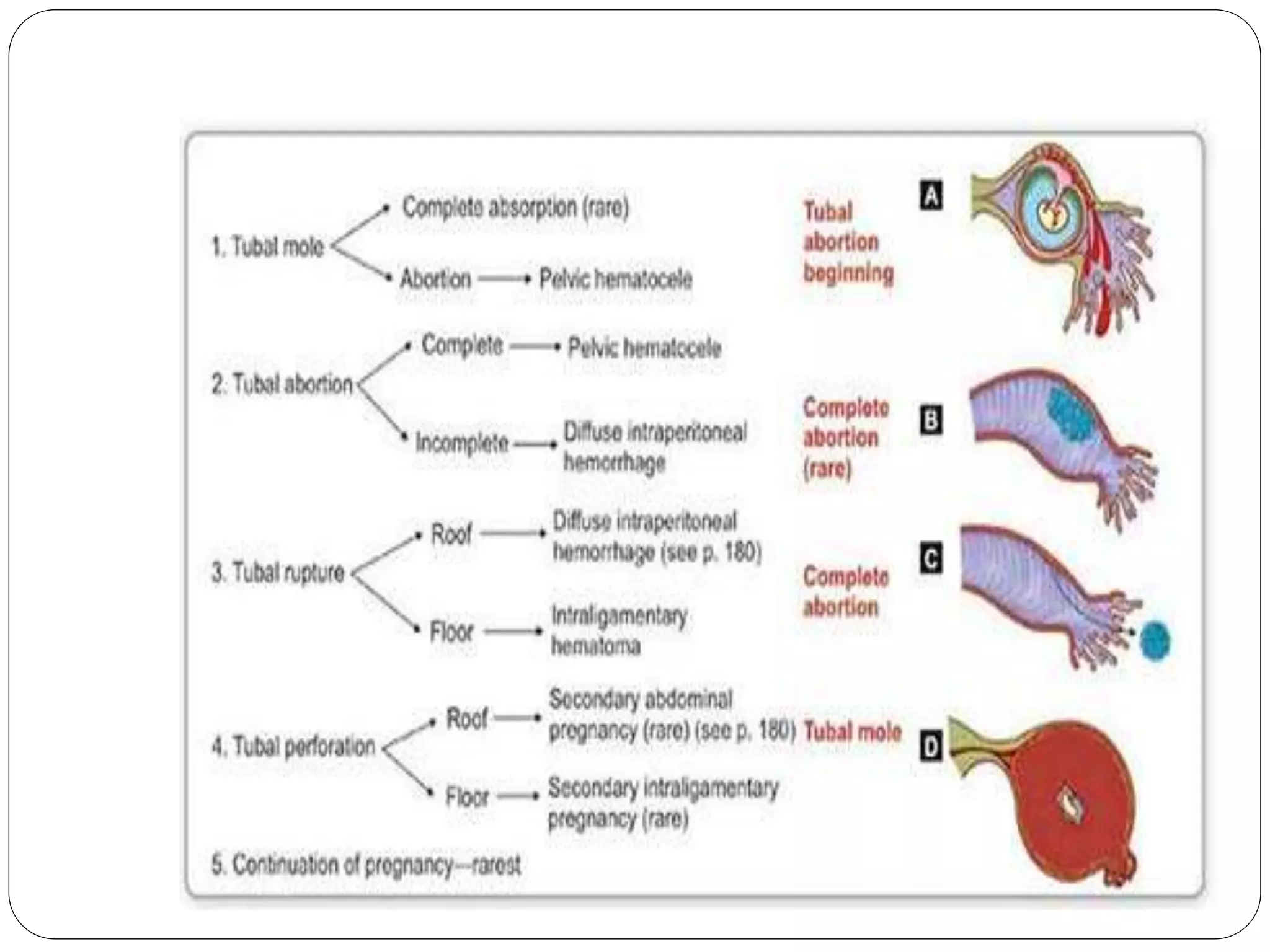
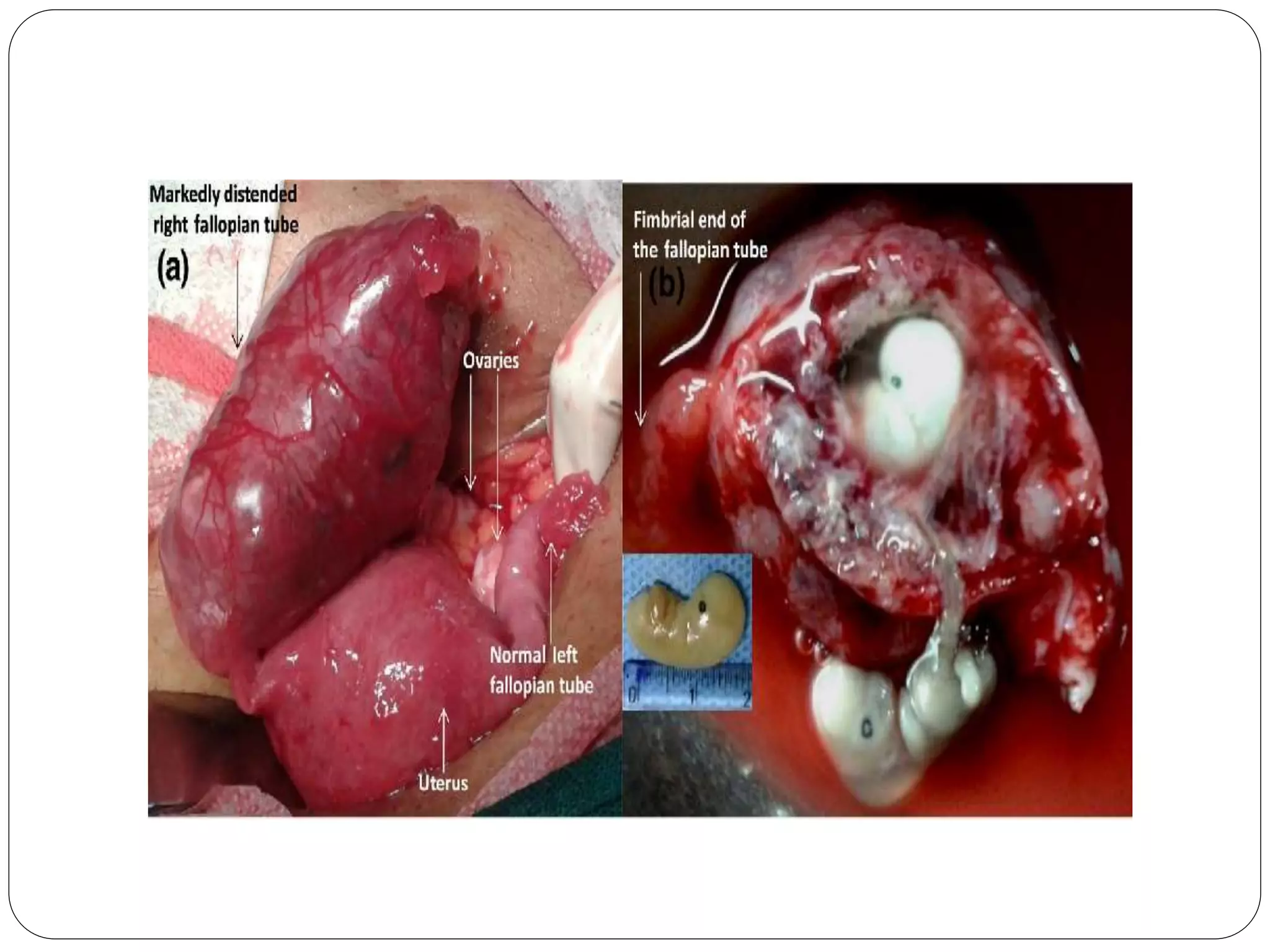
MORBID ANATOMY
Implantation- intercolumnar or between mucosal folds
 Decidual change minimal
Muscle hyperplasia & Hypertrophy min.
 Intramuscular implantation
Pseudo capsule formation
Trophoblast invasion-erosion of blood vessel
The pregnancy is unable to survive owing to its poor
blood supply, thus resulting in a tubal abortion and
resorption, (rare), Tubal Rupture
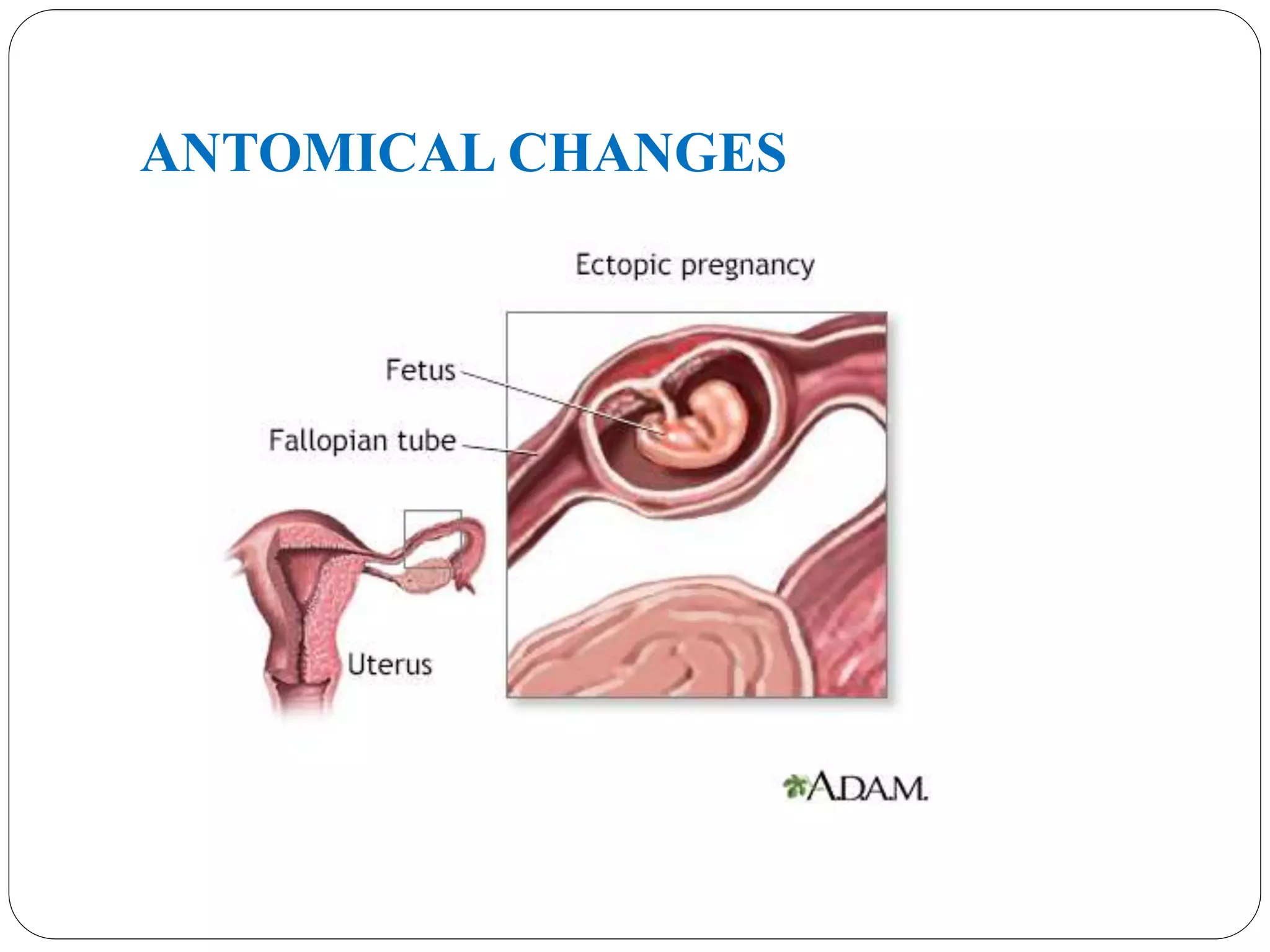
ANTOMICAL CHANGES
ACUTE ECTOPIC PREGNANCY
Classical triad is present in 50% of pt with rupture
ectopic.
 PAIN:- most constant feature in 95% pt. Pain may be
sharp, stabbing or tearing in nature.
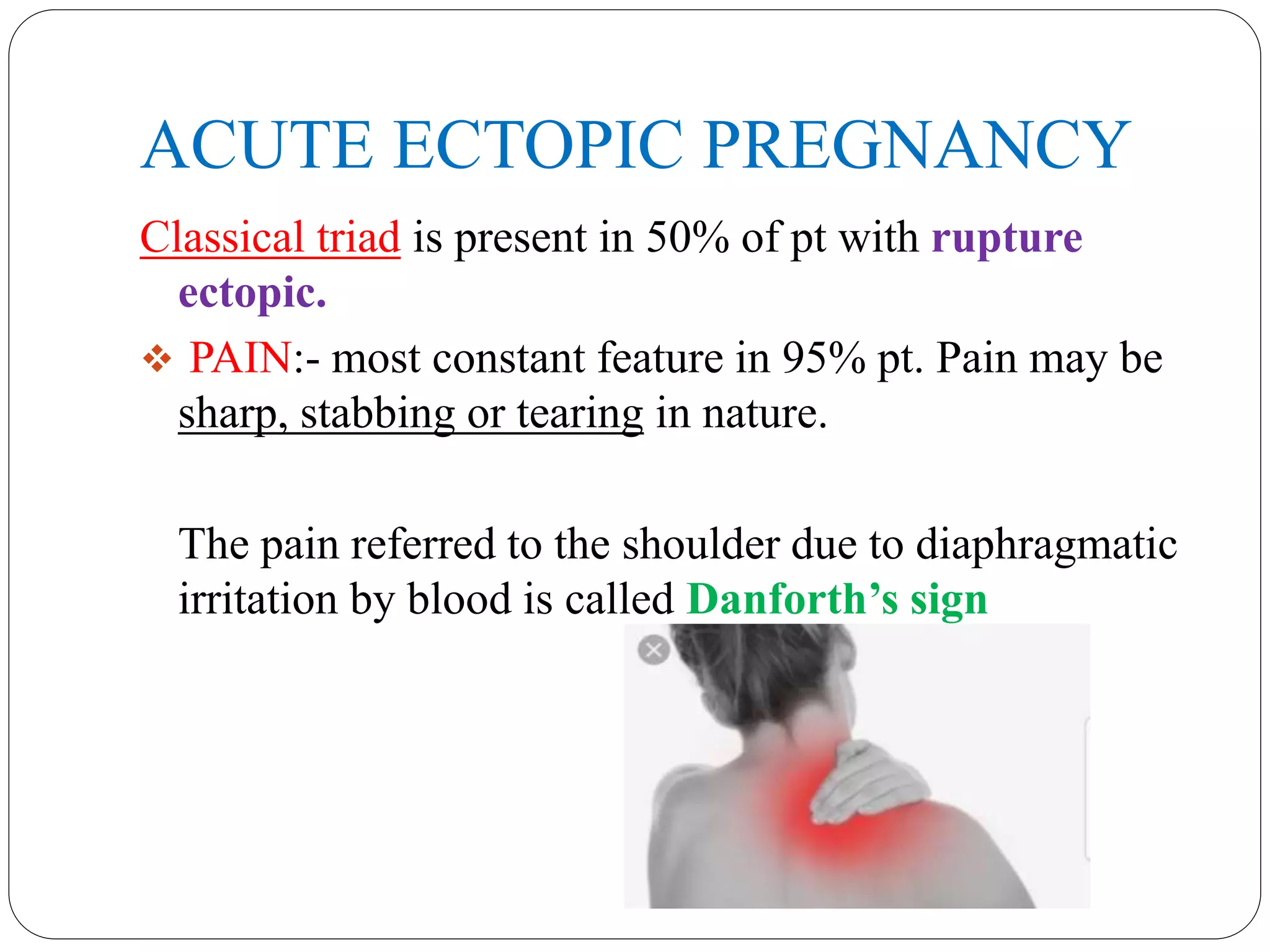
The pain referred to the shoulder due to diaphragmatic
irritation by blood is called Danforth’s sign
ACUTE ECTOPIC PREGNANCY
 AMENORRHOEA:- 60-80% of pt - there may be
delayed period or slight spotting at the time of
expected menses.
 VAGINAL BLEEDING: - scanty dark brown, history
of passage of a fleshy mass vaginally.
 Feeling of nausea, vomiting, fainting attack, syncope
attack(10%) due to reflex vasomotor disturbance.
 Dysuria, frequency or retention of urine
 Rectal tenesmus
EXAMINATION
O/E:- patient is restless in agony, looks blanched, pale,
sweating with cold clammy skin. Features of shock,
tachycardia, hypotension
 P/A:- abdomen tense, tender mostly in lower
abdomen, shifting dullness, rigidity may be present.
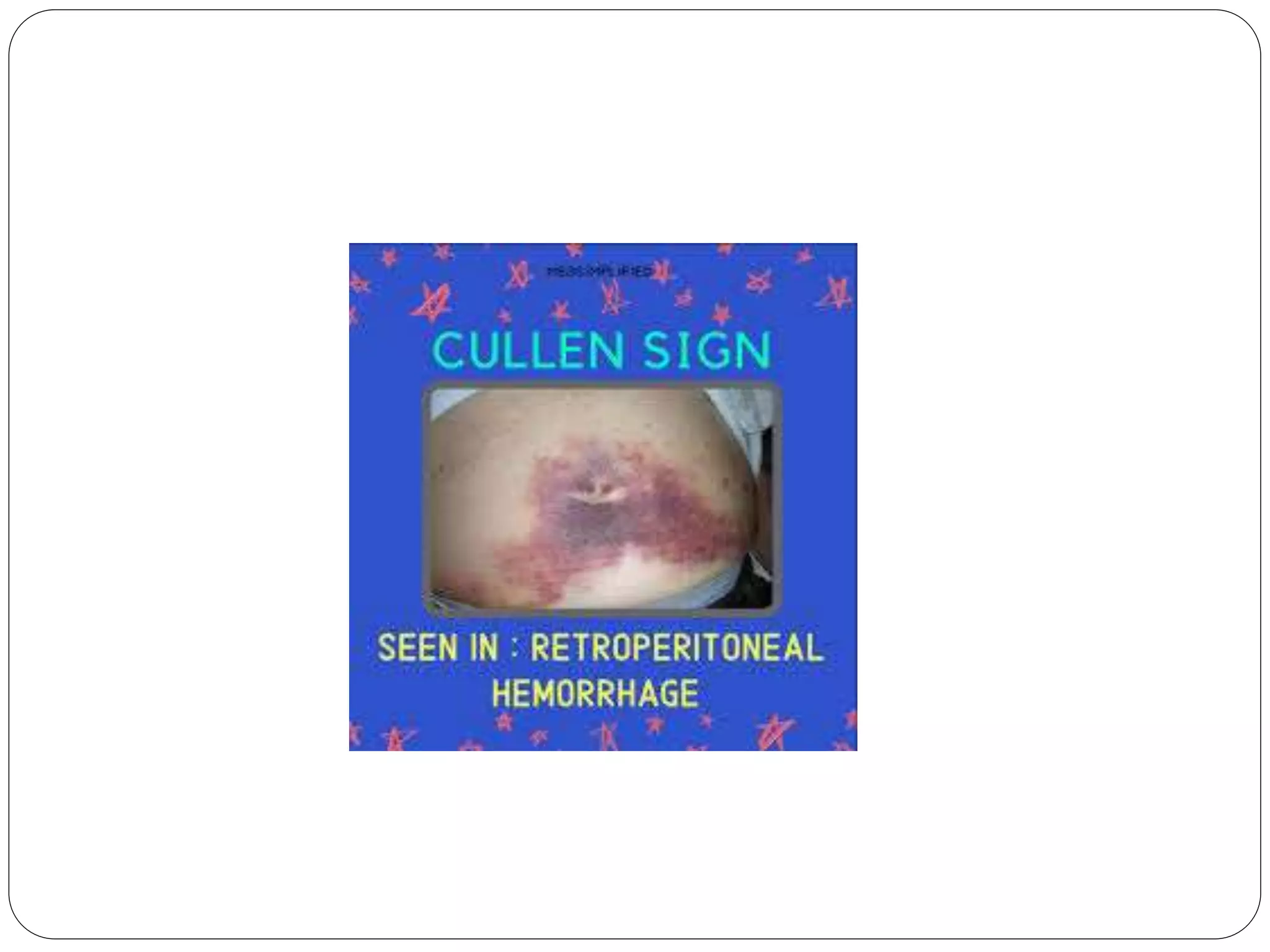
Cullen’s sign: periumbilical bluish discoloration due to
intraperitoneal bleeding.
Cont…
 P/S:- minimal bleeding may be present
P/V:- uterus may be bulky, deviated to opposite side,
fornix is tender, excitation pain on movement of
cervix. POD may be full, uterus floats as if in water.
UNRUPTURED ECTOPIC
Diagnosed accidentally in Laparoscopy or Laparotomy
C/F – delayed period, spotting with discomfort in
lower abdomen.
P/A - tenderness in lower abdomen
P/V - should be done gently
 uterus is normal size, firm
 small tender mass may be felt in the fornix
Investigations- TVS, radioimmunoassay of β-HCG and
Laparoscopy
DIAGNOSIS
 Patient with acute ectopic can be diagnosed clinically.
 Blood should be drawn for Hb%, CBC, blood
grouping and cross matching, Serology and
Coagulation profile.ESR high, leucocytosis up to
30,000/ml.
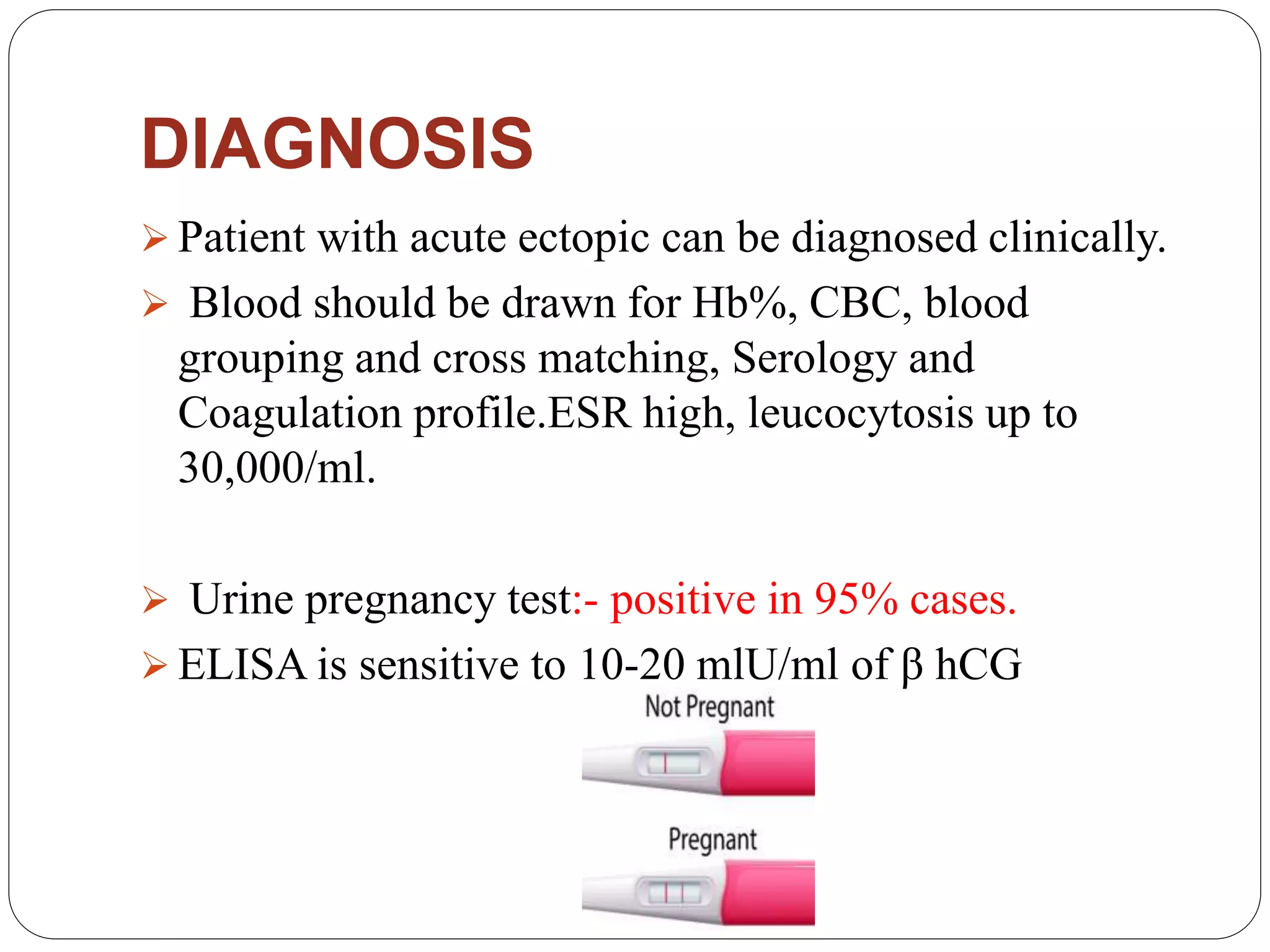
 Urine pregnancy test:- positive in 95% cases.
 ELISA is sensitive to 10-20 mlU/ml of β hCG
DIAGNOSIS
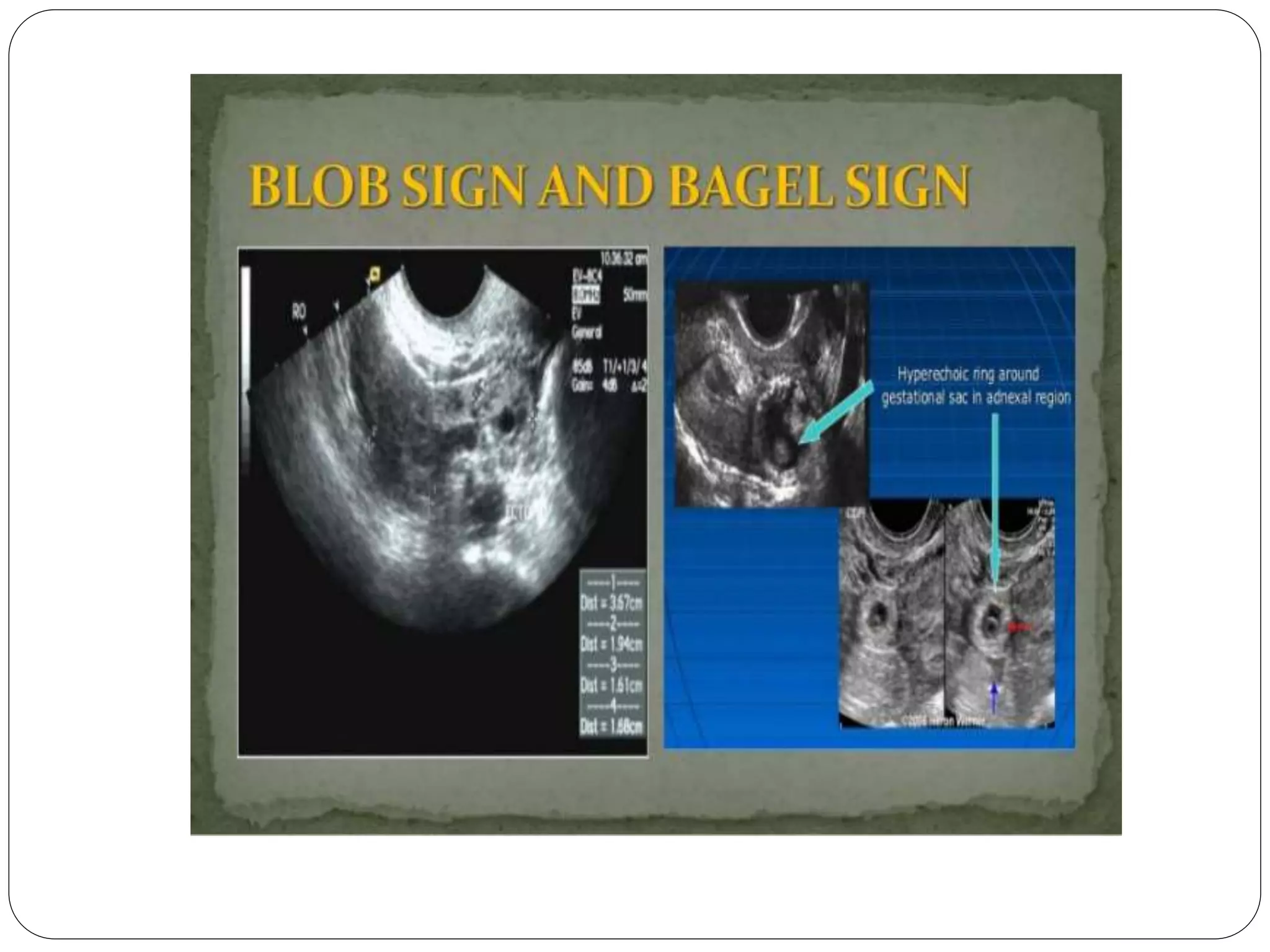
Transvaginal Sonography (TVS):
 Is more sensitive
 It detect intrauterine gestational sac at 4-5wks
 ‘Bagel’ sign – Hyperechoic ring around gestational sac
in adnexal region
 ‘Blob’ sign – Seen as small inconglomerate mass next
to ovary with no evidence of sac or embryo.
 color doppler by showing increased vascularity (ring-
of-fire pattern)
DIAGNOSIS
Serum Progesterone –
 level >25 ngm/ml is suggestive of normal intrauterine
pregnancy.
 level <15 ngm/ml is suggestive of Extrauterine
pregnancy.
 <5 ngm/ml is suggestive nonviable pregnancy.
DIAGNOSIS
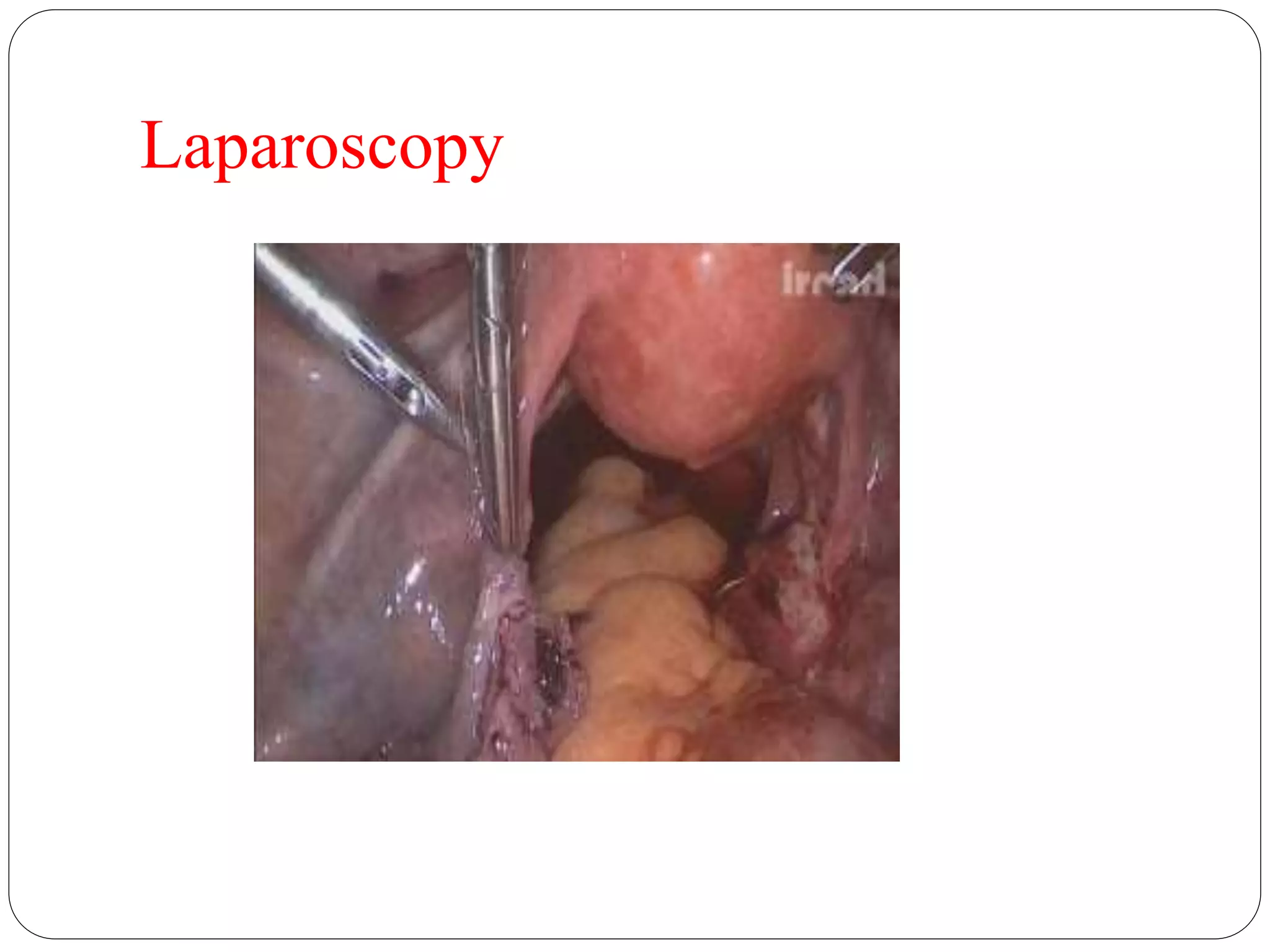
 Diagnostic Laparoscopy (Gold standard)– Can be done
only when patient is haemodynamically stable.
 It confirms the diagnosis and removal of ectopic mass
can be done at the same time.
Laparoscopy
D/D CHRONIC (SUB ACUTE)
ECTOPIC
 Pelvic abscess
Pyosalpinx
Subserous uterine fibroid
Salpingintis
 Retroverted gravid uterus
Appendicular lump
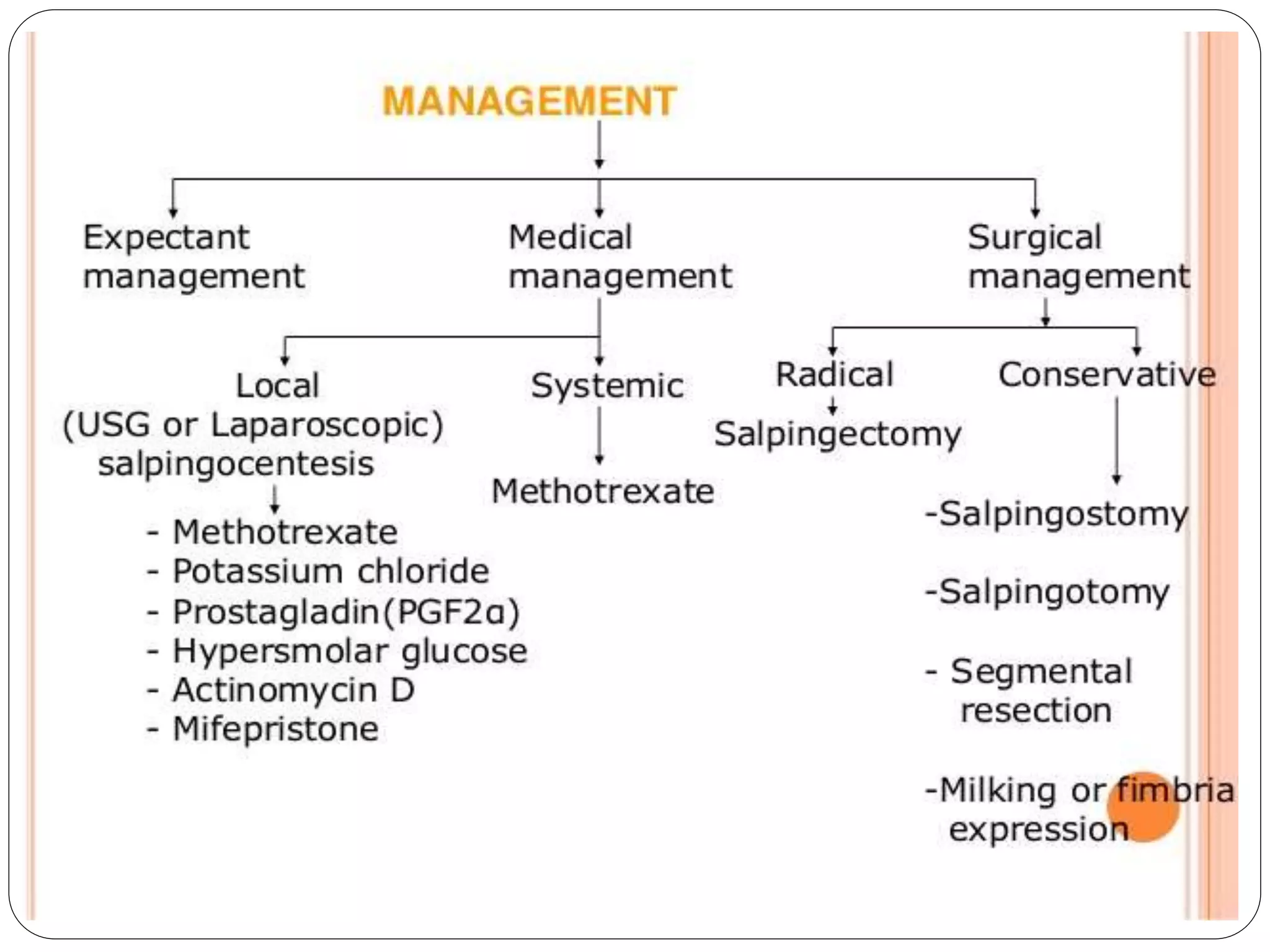
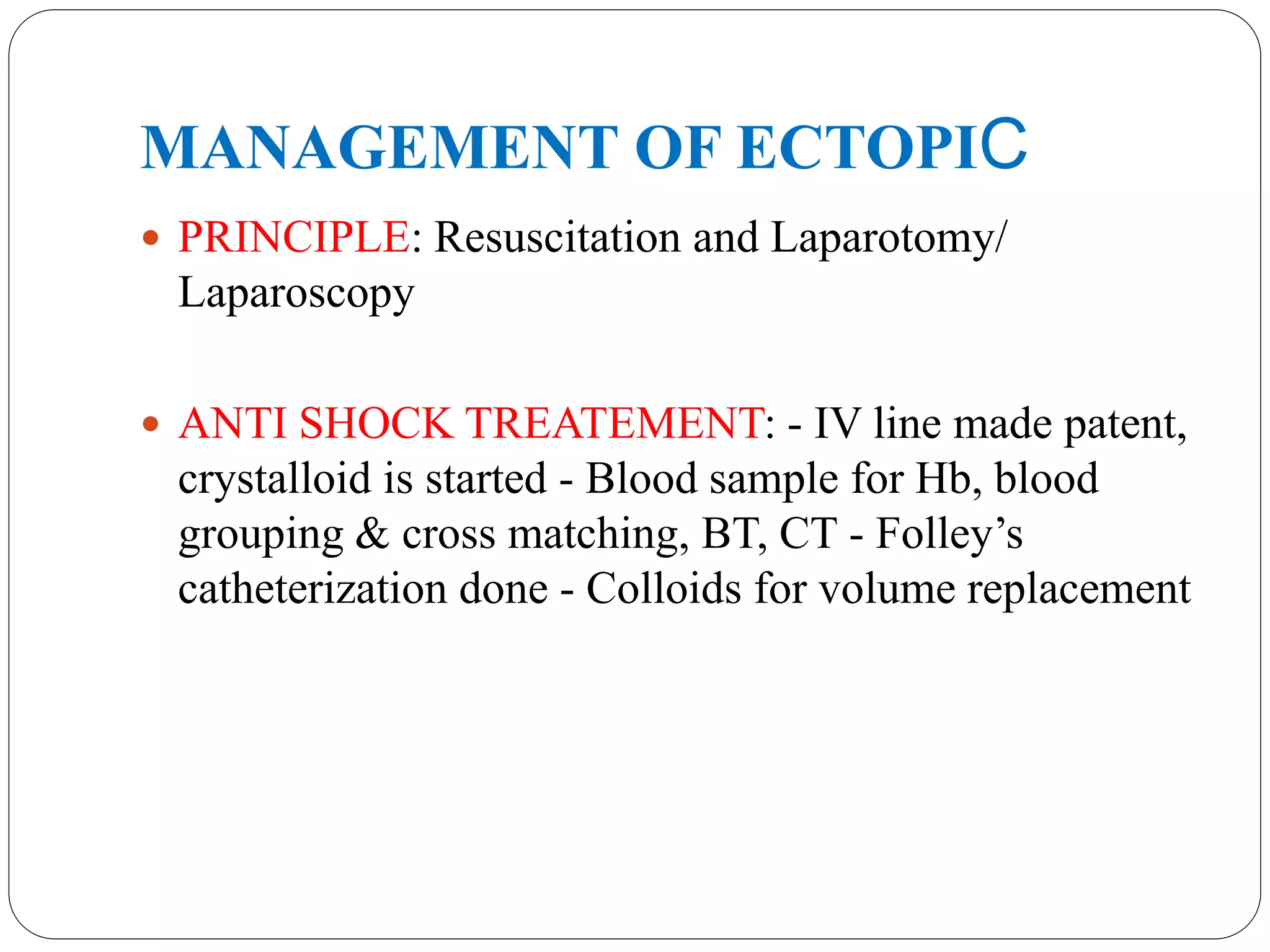
MANAGEMENT OF ECTOPIC
 PRINCIPLE: Resuscitation and Laparotomy/
Laparoscopy
 ANTI SHOCK TREATEMENT: - IV line made patent,
crystalloid is started - Blood sample for Hb, blood
grouping & cross matching, BT, CT - Folley’s
catheterization done - Colloids for volume replacement
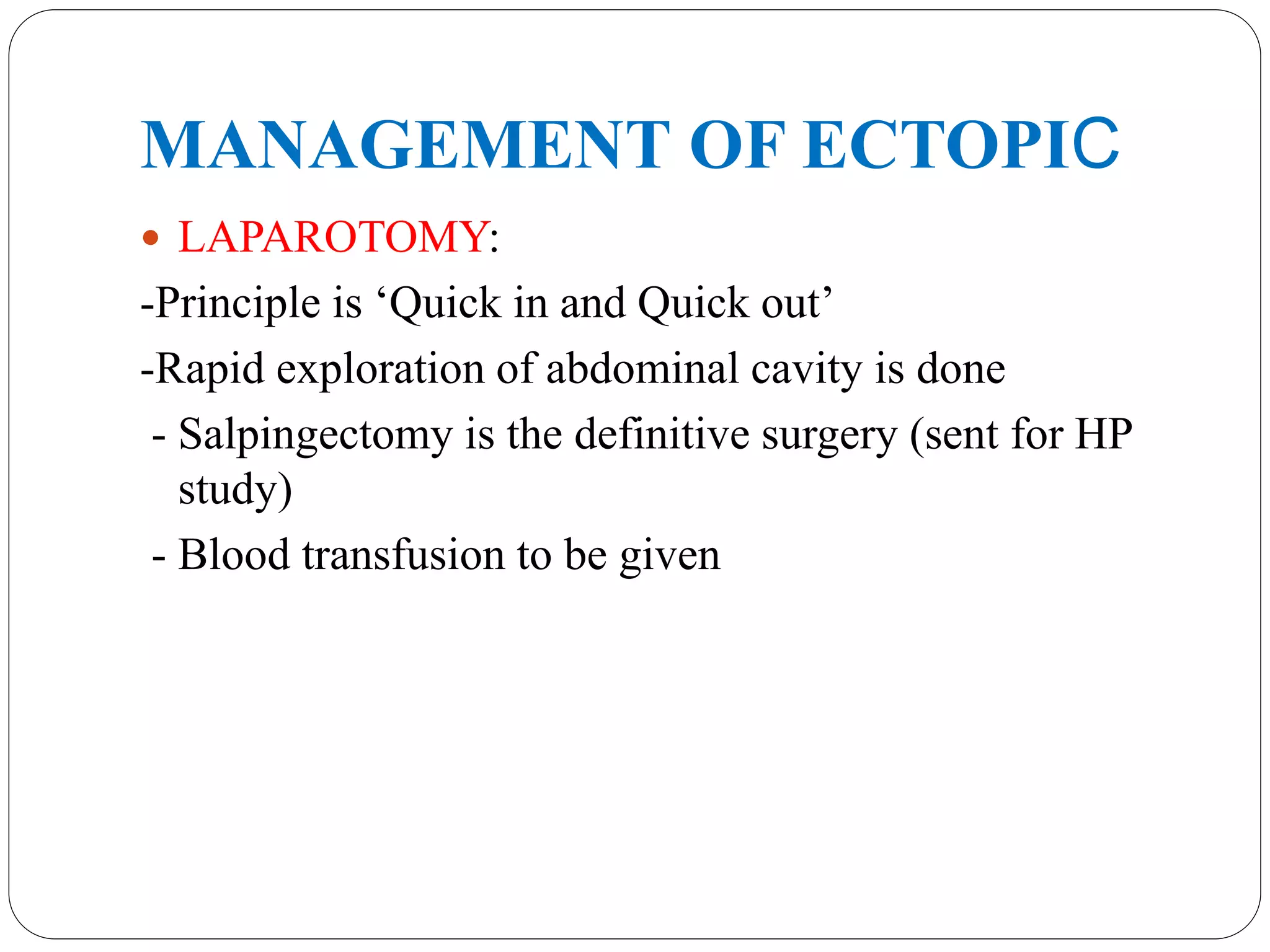
MANAGEMENT OF ECTOPIC
 LAPAROTOMY:
-Principle is ‘Quick in and Quick out’
-Rapid exploration of abdominal cavity is done
- Salpingectomy is the definitive surgery (sent for HP
study)
- Blood transfusion to be given
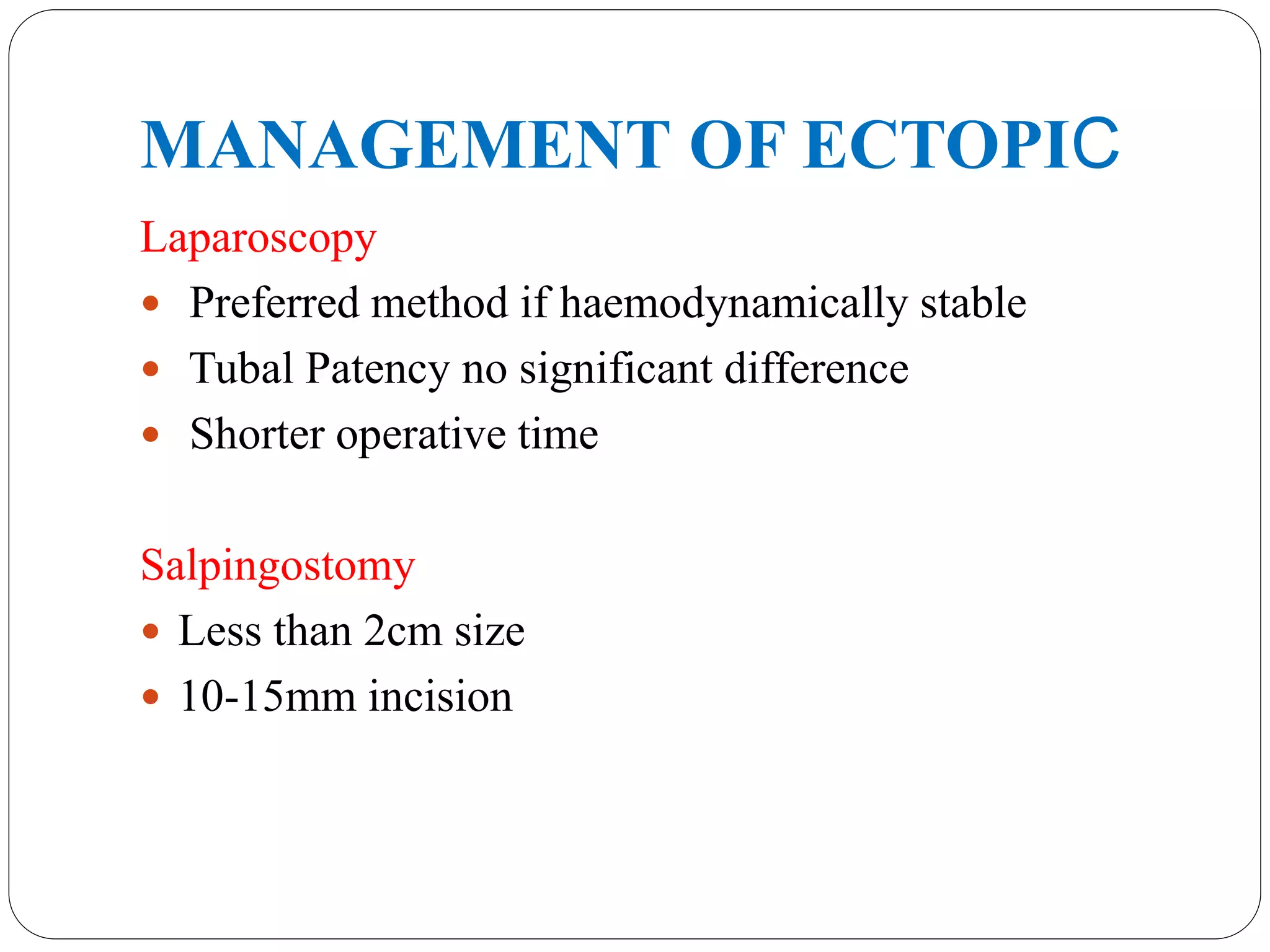
MANAGEMENT OF ECTOPIC
Laparoscopy
 Preferred method if haemodynamically stable
 Tubal Patency no significant difference
 Shorter operative time
Salpingostomy
 Less than 2cm size
 10-15mm incision
MANAGEMENT OF UNRUPTURED
ECTOPIC PREGNANCY
 MEDICAL MANAGEMENT:
METHOTREXATE (MTX) single dose 50 mg per m2
body surface (1mg per kg body weight) IM.
Conservative Surgery : Can be done Laparoscopically or
by microsurgical laparotomy
VARIOUS CONSERVATIVE
SURGERIES
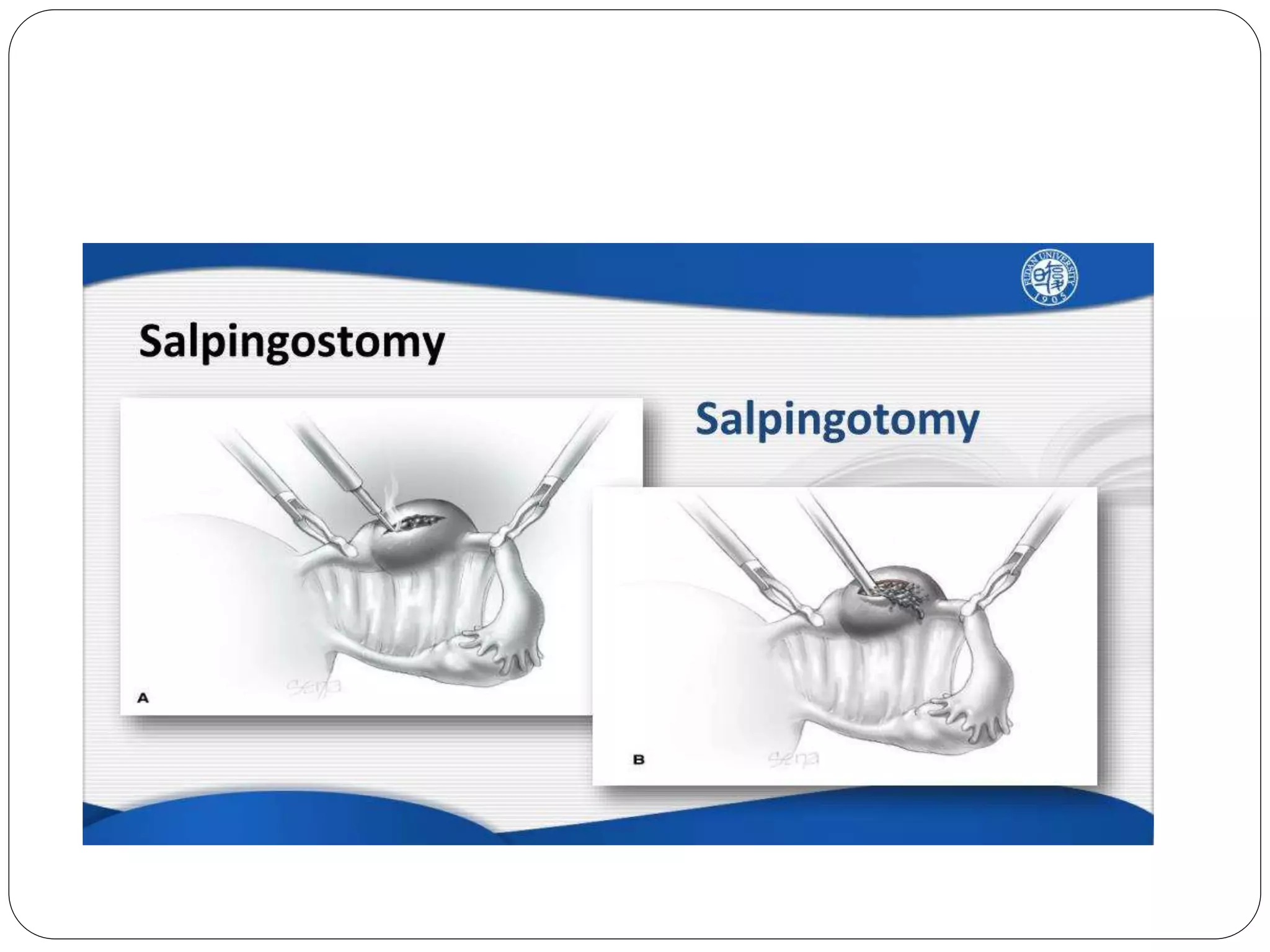
1.Linear Salpingostomy: - Indicated in unruptured
ectopic. Linear incision given on antimesentric border
over the site and product removed by fingers, scalpel
handle or gentle suction and irrigation.
 Incision line kept open (heals by secondary intention)
2. Linear Salpingotomy : - Incision line is closed in two
layers with 7-0 interrupted vicryl sutures.
VARIOUS CONSERVATIVE
SURGERIES
3. Segmental Resection & Anastomosis: - Indicated in
unruptured isthmic pregnancy
End to end anastomosis is done immediately or at later
date
4. Milking or fimbrial Expression: - This is ideal in distal
ampullary or infundibular pregnancy.
It has got increased risk of persistent ectopic pregnancy.
OVARIAN ECTOPIC PREGNANCY
 Incidence: 1:40,000 Risk factor
 Cause: IUCD - Endometriosis on surface of ovary
 C/F are same as tubal pregnancy, ruptures within 2-3 wks
 Diagnosis: On Laparotomy
Spiegelberg’s Criteria
1. tube in affected side must be intact and separate from sac
2. Sac occupies the position of the ovary
3. Connected to uterus by ovarian ligament
4. Ovarian tissue found on its wall on HP study
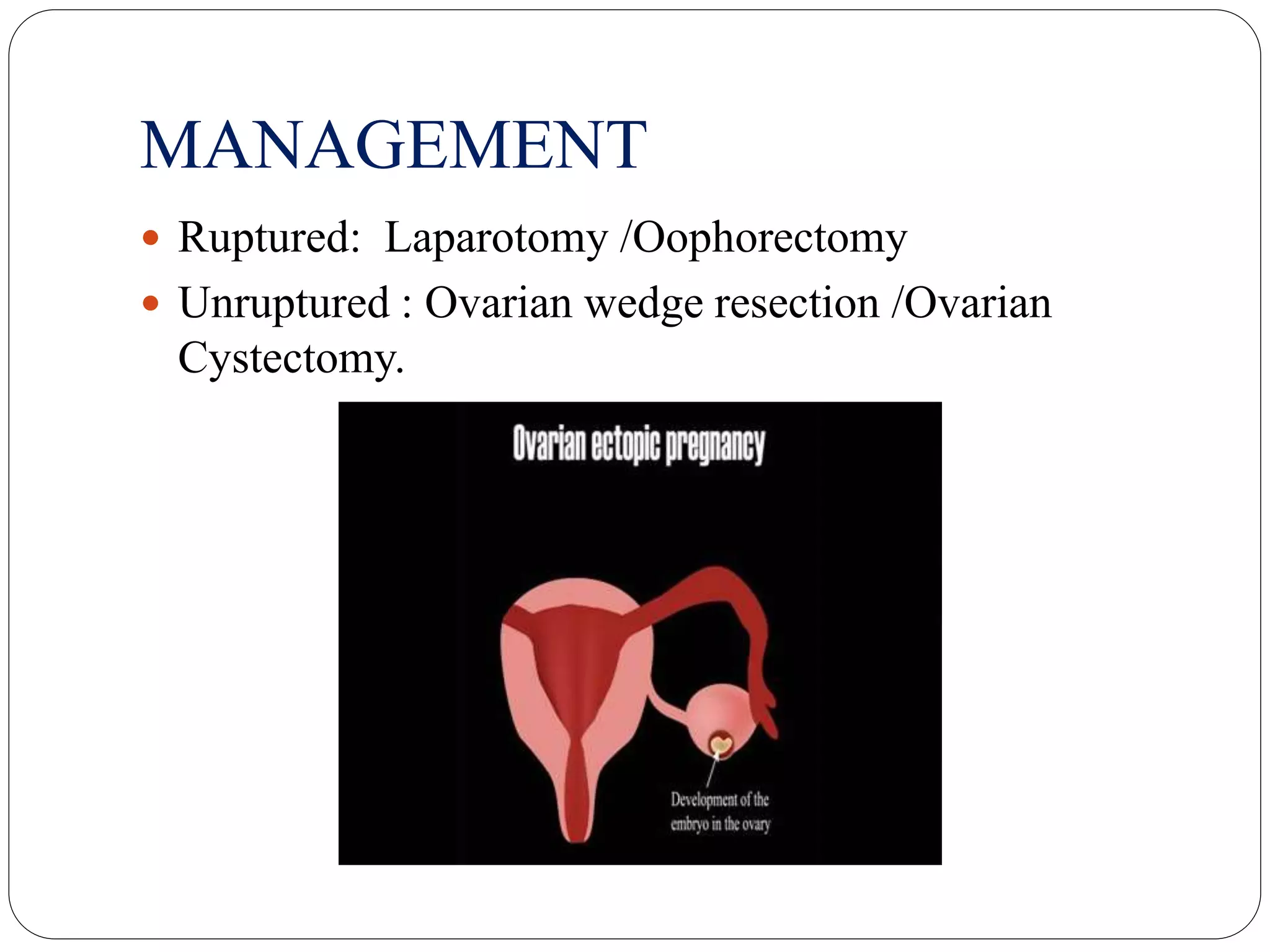
MANAGEMENT
 Ruptured: Laparotomy /Oophorectomy
 Unruptured : Ovarian wedge resection /Ovarian
Cystectomy.
ABDOMINAL PREGNANCY
 Incidence: Rarest
 H/O : - Irregular bleeding, spotting - Nausea, vomiting,
flatulence, constipation, diarrhoea, abdominal pain. -
Fetal movement may be painful and high in the
abdomen
 O/E : - Abnormal fetal position, easy in palpating fetal
parts. - uterus palpated separate from sac - no uterine
contraction after oxytocin infusion
Abdominal pregnancy
 Diagnosis: Confirmed by USG, CT scan, MRI,
Radiography
 Studiford’s criteria 1. Both tubes and ovaries normal 2.
Absence of Uteroperitonal fistula 3. Pregnancy related
to Peritoneal surface & young enough to rule out
possibility of secondary implantation
Management
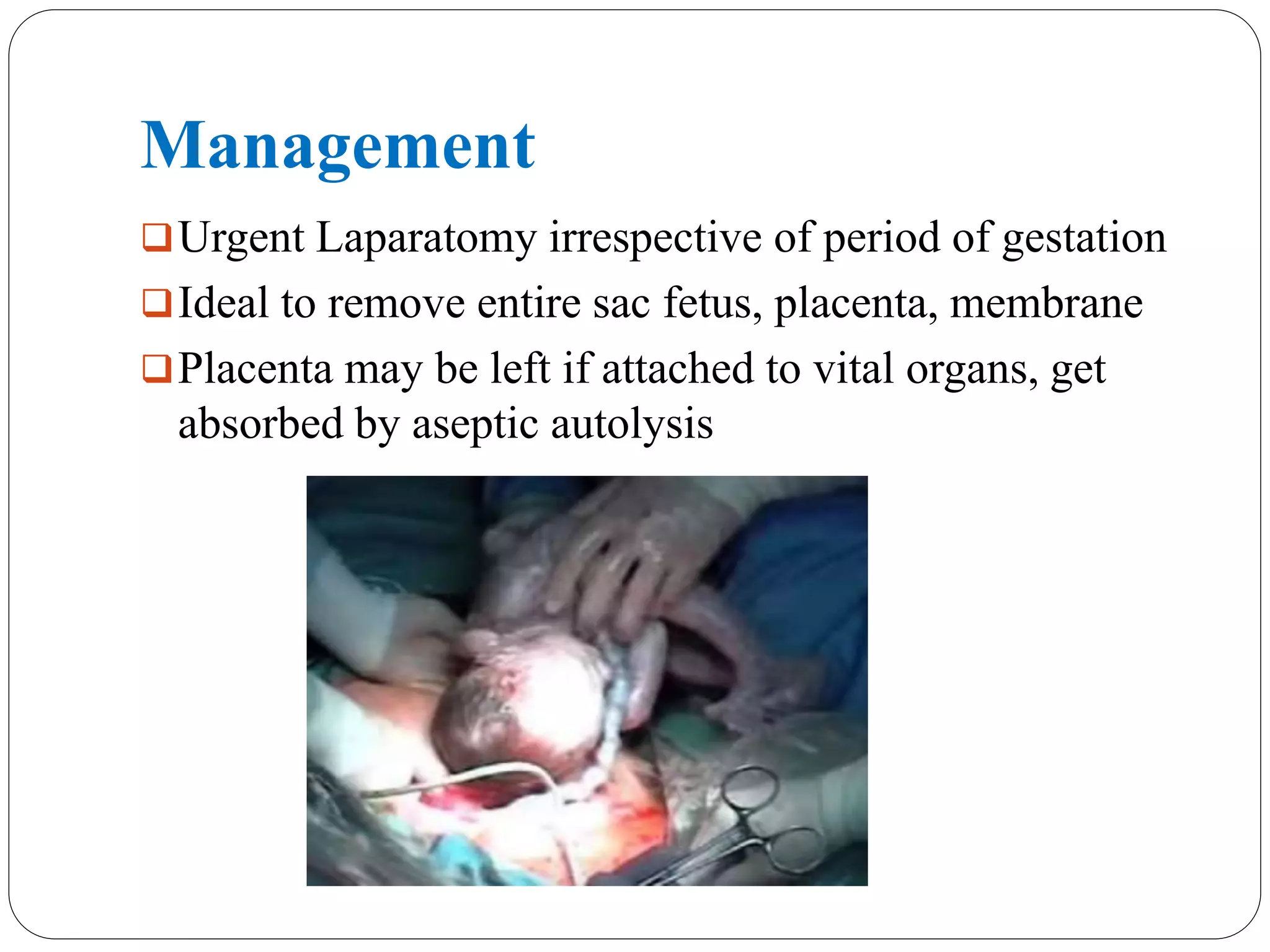
Urgent Laparatomy irrespective of period of gestation
Ideal to remove entire sac fetus, placenta, membrane
Placenta may be left if attached to vital organs, get
absorbed by aseptic autolysis
CERVICAL PREGNANCY
 Implantation occurs in cervical canal at or below
internal Os.
 Incidence: 1 in 18,000
 RISK FACTORS : - Previous induced abortion
- Previous caesarean delivery
- Asherman’s syndrome
- IVF
- DES exposure
- Leiomyoma
CERVICAL PREGNANCY
CLINICAL CRITERIA: Paulman & McEllin
1. Uterine bleeding, no cramping, following
amenorrhoea
2. Cervix distended,thin walled,soft consistency
3. Enlarged uterine fundus may be palpated.
4. Internal Os is closed
5. External Os is partially opened
MANAGEMENT
Hysterectomy
Cerclage :Mc Donald’s Wharton ≈ Shirodkar’s –
Transvaginal ligation of Cx branch of uterine artery
Angiographic uterine A embolisation
Intracervical vasopressin inj
 Foley’s catheter as tamponade
Medical Recently proposed Single or Combination OR
Adjunct to surgery - Methotrexate - Actinomycin
HETEROTYPIC PREGNANCY
Co-existing intrauterine and extra uterine Pregnancies
Incidence: 1 : 30,000
 With ART – 1:7000 –
 With ovulation induction – 1:900
M/M : Depends on the site. Ectopic site may be removed with
continuation of IU pregnancy
conclusion
 Incidence of ectopic pregnancy is rising while maternal
mortality from it is falling.
 Ectopic pregnancy can be diagnosed early (before it
ruptures) with recent advances in Immunoassay to detect β-
hCG , high resolution USG, and diagnostic Laparoscopy.
 Laparotomy should be done when in doubt
 The choice today is Laparoscopic treatment of un-ruptured
ectopic pregnancy.
 Careful monitoring and proper counselling of patients is
mandatory
THANK YOU

Ectopic pregnancy

  • 1.
    PRESENTED BY: MRS. M.LASKHMI,M.SC (N) OBSTETRIC & GYNECOLOGICAL NURSING ECTOPIC PREGNANCY
  • 2.
    Introduction  The termectopic comes from the greek “ ektopis” meaning displacement.  ek-out of + topos- Place = out of place.  The first person to use “ectopic” was obstetrician Robert Barnes (1817-1907) who applied it to an extra uterine pregnancy: an ectopic pregnancy.
  • 3.
    DEFINITION  Any pregnancywhere the fertilized ovum gets implanted & develops in a site other than normal uterine cavity.  Ectopic pregnancy: fertilized embryo implanted outside the uterine cavity.
  • 4.
    INCIDENCE It is about1% but 2% in women undergoing assisted reproductive techniques.
  • 6.
  • 7.
    ETIOLOGY  Any factorthat causes delayed transport of the fertilized ovum through the tube.  Fallopian tube favors implantation in the tubal mucosa itself thus giving rise to a tubal ectopic pregnancy.  These factors may be Congenital or Acquired.
  • 8.
    ETIOLOGY CONGENITAL  Tubal Hypoplasia Tortuosity Congenitaldiverticuli Accessory ostia  Partial stenosis  Elongation  Intamural polyp
  • 9.
    ETIOLOGY ACQUIRED 1. Infections  STIs& Pelvic Inflammatory disease (6-10 times) Chlamydia trachomatis is most common  post abortal sepsis, puerperal sepsis & appendicitis Genital TB is an important cause in India.
  • 10.
    ETIOLOGY 2. Contraceptive Faliure CuT - 4%  Progestogen -17%  Minipills - 4-10%  Norplant -30%  Sterilization procedure- 25-50%
  • 11.
    ETIOLOGY 3.Tubal suregry Tubal reconstructivesurgery (4-5 times), tuboplasty, salpingotomy. 4. Assisted Reproductive technique Ovulation induction, IVF-ET and GIFT (4-7%) – Risk of heterotopic pregnancy(1%) 5.Previous Ectopic Pregnancy - 7-15% chances of repeat ectopic pregnancy
  • 12.
    Other Risk factors Age 35-45 yrs  Previous induced abortion  Previous pelvic surgeries  Cigarette smoking  DES Exposure in Utero  Infertility
  • 13.
    Other Risk factors Salpingitis Isthmica Nodosa  Genital Tuberculosis  Fundal Fibroid  Adenomyosis of tube  Transperitoneal migration of ovum
  • 14.
    MORBID ANATOMY Implantation- intercolumnaror between mucosal folds  Decidual change minimal Muscle hyperplasia & Hypertrophy min.  Intramuscular implantation Pseudo capsule formation Trophoblast invasion-erosion of blood vessel The pregnancy is unable to survive owing to its poor blood supply, thus resulting in a tubal abortion and resorption, (rare), Tubal Rupture
  • 15.
  • 17.
    ACUTE ECTOPIC PREGNANCY Classicaltriad is present in 50% of pt with rupture ectopic.  PAIN:- most constant feature in 95% pt. Pain may be sharp, stabbing or tearing in nature. The pain referred to the shoulder due to diaphragmatic irritation by blood is called Danforth’s sign
  • 18.
    ACUTE ECTOPIC PREGNANCY AMENORRHOEA:- 60-80% of pt - there may be delayed period or slight spotting at the time of expected menses.  VAGINAL BLEEDING: - scanty dark brown, history of passage of a fleshy mass vaginally.  Feeling of nausea, vomiting, fainting attack, syncope attack(10%) due to reflex vasomotor disturbance.  Dysuria, frequency or retention of urine  Rectal tenesmus
  • 19.
    EXAMINATION O/E:- patient isrestless in agony, looks blanched, pale, sweating with cold clammy skin. Features of shock, tachycardia, hypotension  P/A:- abdomen tense, tender mostly in lower abdomen, shifting dullness, rigidity may be present. Cullen’s sign: periumbilical bluish discoloration due to intraperitoneal bleeding.
  • 21.
    Cont…  P/S:- minimalbleeding may be present P/V:- uterus may be bulky, deviated to opposite side, fornix is tender, excitation pain on movement of cervix. POD may be full, uterus floats as if in water.
  • 22.
    UNRUPTURED ECTOPIC Diagnosed accidentallyin Laparoscopy or Laparotomy C/F – delayed period, spotting with discomfort in lower abdomen. P/A - tenderness in lower abdomen P/V - should be done gently  uterus is normal size, firm  small tender mass may be felt in the fornix Investigations- TVS, radioimmunoassay of β-HCG and Laparoscopy
  • 24.
    DIAGNOSIS  Patient withacute ectopic can be diagnosed clinically.  Blood should be drawn for Hb%, CBC, blood grouping and cross matching, Serology and Coagulation profile.ESR high, leucocytosis up to 30,000/ml.  Urine pregnancy test:- positive in 95% cases.  ELISA is sensitive to 10-20 mlU/ml of β hCG
  • 25.
    DIAGNOSIS Transvaginal Sonography (TVS): Is more sensitive  It detect intrauterine gestational sac at 4-5wks  ‘Bagel’ sign – Hyperechoic ring around gestational sac in adnexal region  ‘Blob’ sign – Seen as small inconglomerate mass next to ovary with no evidence of sac or embryo.  color doppler by showing increased vascularity (ring- of-fire pattern)
  • 27.
    DIAGNOSIS Serum Progesterone – level >25 ngm/ml is suggestive of normal intrauterine pregnancy.  level <15 ngm/ml is suggestive of Extrauterine pregnancy.  <5 ngm/ml is suggestive nonviable pregnancy.
  • 28.
    DIAGNOSIS  Diagnostic Laparoscopy(Gold standard)– Can be done only when patient is haemodynamically stable.  It confirms the diagnosis and removal of ectopic mass can be done at the same time.
  • 29.
  • 30.
    D/D CHRONIC (SUBACUTE) ECTOPIC  Pelvic abscess Pyosalpinx Subserous uterine fibroid Salpingintis  Retroverted gravid uterus Appendicular lump
  • 32.
    MANAGEMENT OF ECTOPIC PRINCIPLE: Resuscitation and Laparotomy/ Laparoscopy  ANTI SHOCK TREATEMENT: - IV line made patent, crystalloid is started - Blood sample for Hb, blood grouping & cross matching, BT, CT - Folley’s catheterization done - Colloids for volume replacement
  • 33.
    MANAGEMENT OF ECTOPIC LAPAROTOMY: -Principle is ‘Quick in and Quick out’ -Rapid exploration of abdominal cavity is done - Salpingectomy is the definitive surgery (sent for HP study) - Blood transfusion to be given
  • 34.
    MANAGEMENT OF ECTOPIC Laparoscopy Preferred method if haemodynamically stable  Tubal Patency no significant difference  Shorter operative time Salpingostomy  Less than 2cm size  10-15mm incision
  • 35.
    MANAGEMENT OF UNRUPTURED ECTOPICPREGNANCY  MEDICAL MANAGEMENT: METHOTREXATE (MTX) single dose 50 mg per m2 body surface (1mg per kg body weight) IM. Conservative Surgery : Can be done Laparoscopically or by microsurgical laparotomy
  • 36.
    VARIOUS CONSERVATIVE SURGERIES 1.Linear Salpingostomy:- Indicated in unruptured ectopic. Linear incision given on antimesentric border over the site and product removed by fingers, scalpel handle or gentle suction and irrigation.  Incision line kept open (heals by secondary intention) 2. Linear Salpingotomy : - Incision line is closed in two layers with 7-0 interrupted vicryl sutures.
  • 38.
    VARIOUS CONSERVATIVE SURGERIES 3. SegmentalResection & Anastomosis: - Indicated in unruptured isthmic pregnancy End to end anastomosis is done immediately or at later date 4. Milking or fimbrial Expression: - This is ideal in distal ampullary or infundibular pregnancy. It has got increased risk of persistent ectopic pregnancy.
  • 39.
    OVARIAN ECTOPIC PREGNANCY Incidence: 1:40,000 Risk factor  Cause: IUCD - Endometriosis on surface of ovary  C/F are same as tubal pregnancy, ruptures within 2-3 wks  Diagnosis: On Laparotomy Spiegelberg’s Criteria 1. tube in affected side must be intact and separate from sac 2. Sac occupies the position of the ovary 3. Connected to uterus by ovarian ligament 4. Ovarian tissue found on its wall on HP study
  • 40.
    MANAGEMENT  Ruptured: Laparotomy/Oophorectomy  Unruptured : Ovarian wedge resection /Ovarian Cystectomy.
  • 41.
    ABDOMINAL PREGNANCY  Incidence:Rarest  H/O : - Irregular bleeding, spotting - Nausea, vomiting, flatulence, constipation, diarrhoea, abdominal pain. - Fetal movement may be painful and high in the abdomen  O/E : - Abnormal fetal position, easy in palpating fetal parts. - uterus palpated separate from sac - no uterine contraction after oxytocin infusion
  • 42.
    Abdominal pregnancy  Diagnosis:Confirmed by USG, CT scan, MRI, Radiography  Studiford’s criteria 1. Both tubes and ovaries normal 2. Absence of Uteroperitonal fistula 3. Pregnancy related to Peritoneal surface & young enough to rule out possibility of secondary implantation
  • 43.
    Management Urgent Laparatomy irrespectiveof period of gestation Ideal to remove entire sac fetus, placenta, membrane Placenta may be left if attached to vital organs, get absorbed by aseptic autolysis
  • 44.
    CERVICAL PREGNANCY  Implantationoccurs in cervical canal at or below internal Os.  Incidence: 1 in 18,000  RISK FACTORS : - Previous induced abortion - Previous caesarean delivery - Asherman’s syndrome - IVF - DES exposure - Leiomyoma
  • 45.
    CERVICAL PREGNANCY CLINICAL CRITERIA:Paulman & McEllin 1. Uterine bleeding, no cramping, following amenorrhoea 2. Cervix distended,thin walled,soft consistency 3. Enlarged uterine fundus may be palpated. 4. Internal Os is closed 5. External Os is partially opened
  • 46.
    MANAGEMENT Hysterectomy Cerclage :Mc Donald’sWharton ≈ Shirodkar’s – Transvaginal ligation of Cx branch of uterine artery Angiographic uterine A embolisation Intracervical vasopressin inj  Foley’s catheter as tamponade Medical Recently proposed Single or Combination OR Adjunct to surgery - Methotrexate - Actinomycin
  • 47.
    HETEROTYPIC PREGNANCY Co-existing intrauterineand extra uterine Pregnancies Incidence: 1 : 30,000  With ART – 1:7000 –  With ovulation induction – 1:900 M/M : Depends on the site. Ectopic site may be removed with continuation of IU pregnancy
  • 48.
    conclusion  Incidence ofectopic pregnancy is rising while maternal mortality from it is falling.  Ectopic pregnancy can be diagnosed early (before it ruptures) with recent advances in Immunoassay to detect β- hCG , high resolution USG, and diagnostic Laparoscopy.  Laparotomy should be done when in doubt  The choice today is Laparoscopic treatment of un-ruptured ectopic pregnancy.  Careful monitoring and proper counselling of patients is mandatory
  • 49.