© SuperDataScienceDeep Learning A-Z
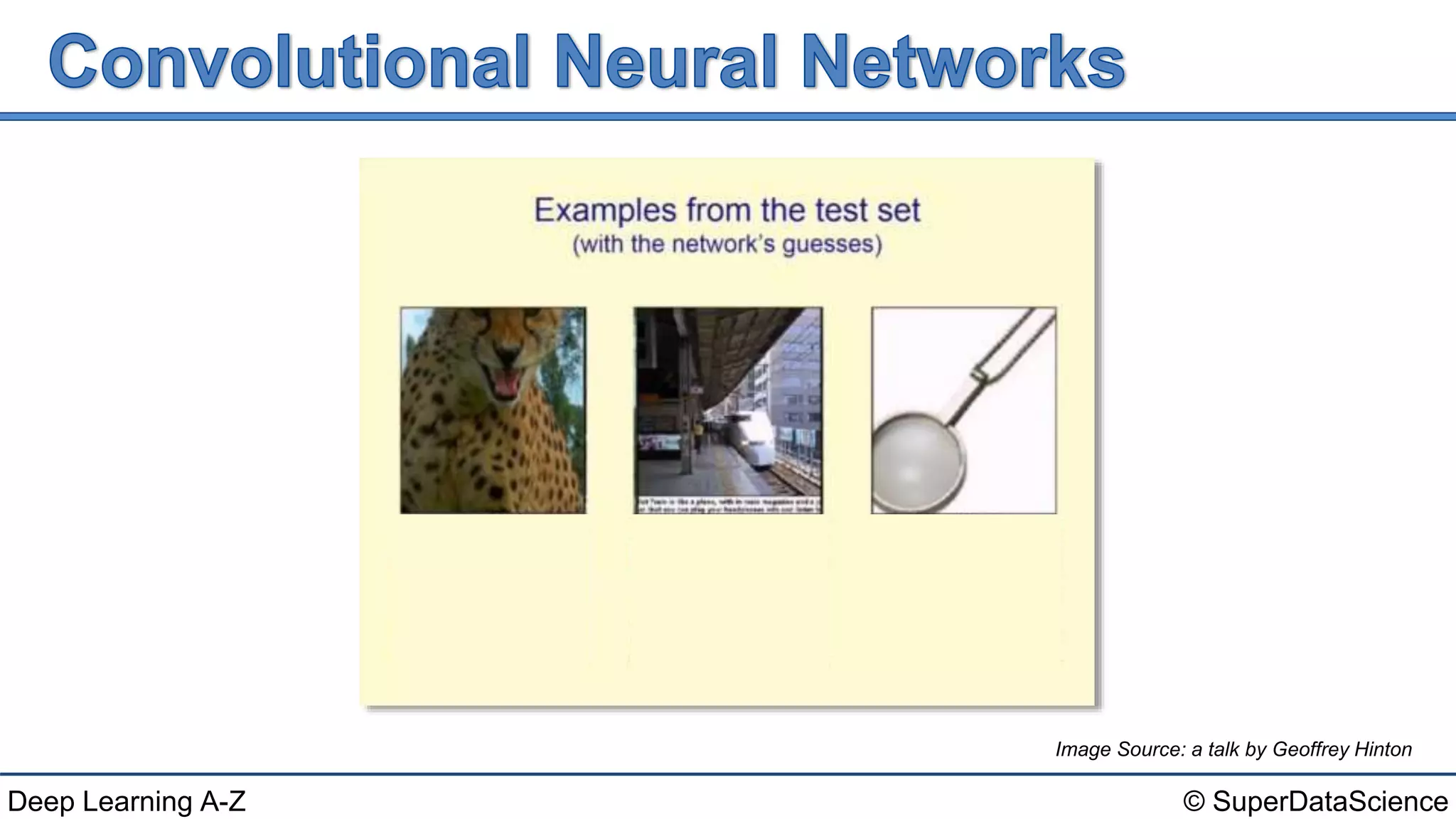
Image Source: a talk by Geoffrey Hinton
© SuperDataScienceDeep Learning A-Z
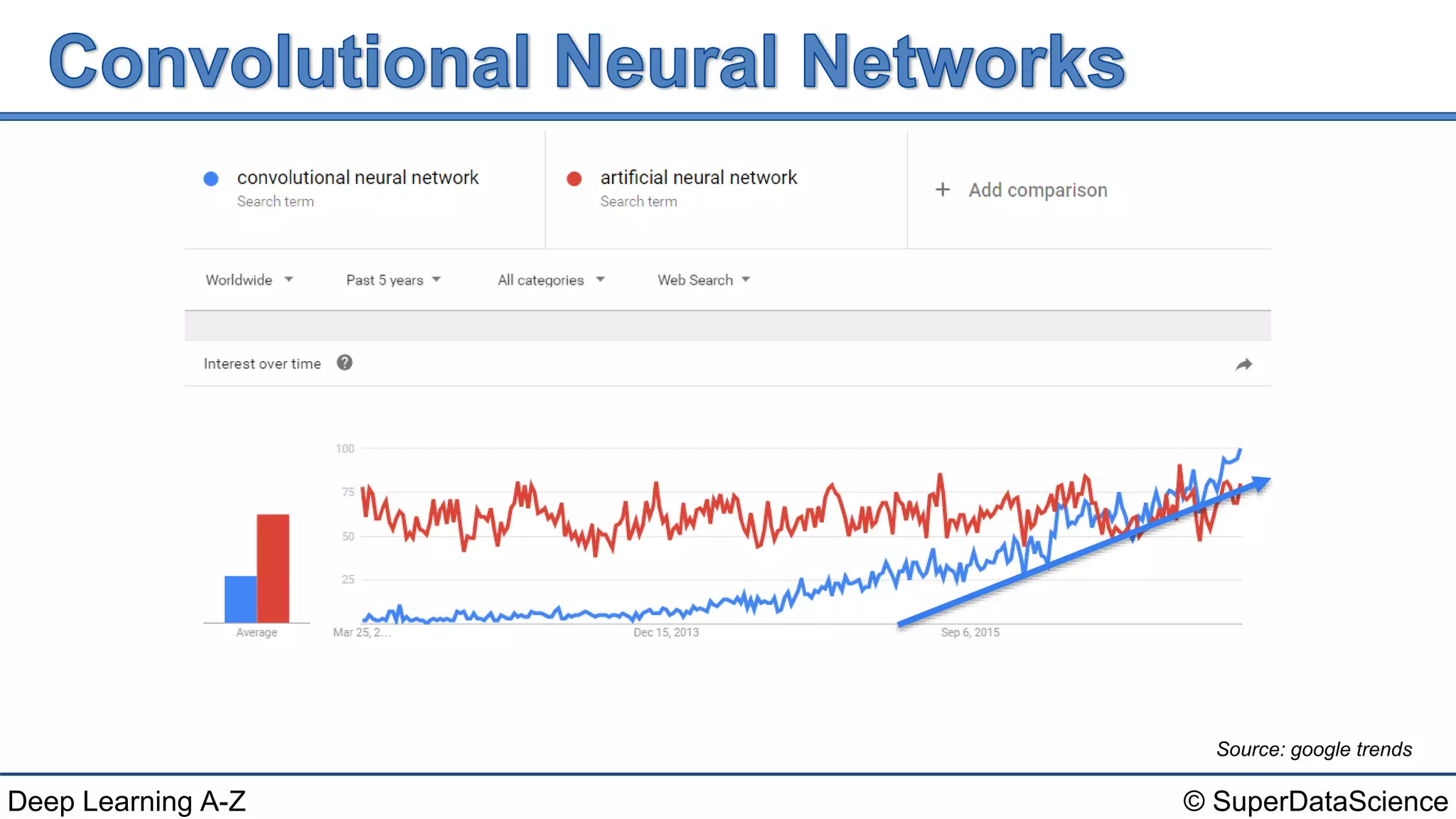
Source: google trends
© SuperDataScienceDeep Learning A-Z
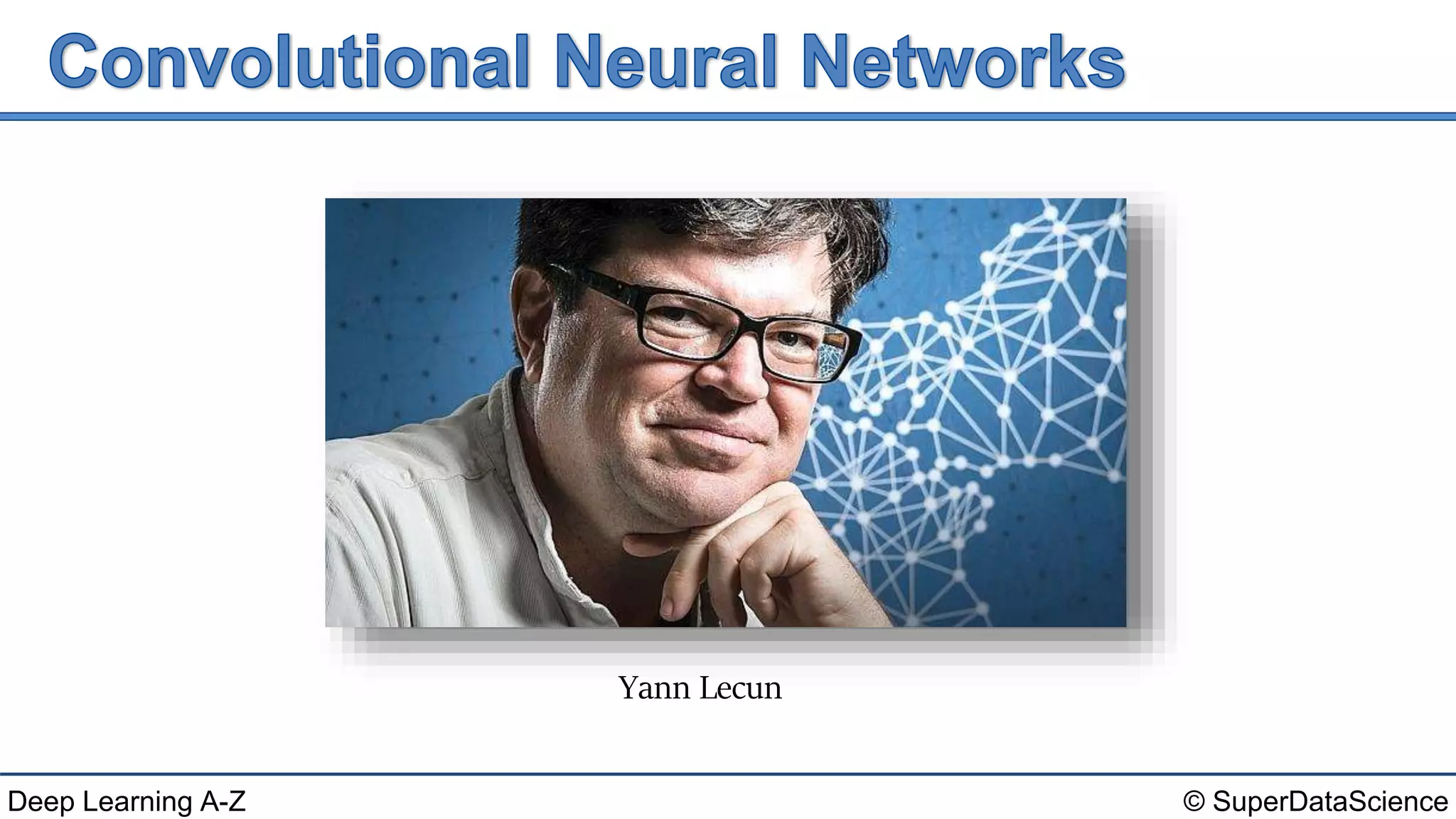
Yann Lecun
© SuperDataScienceDeep Learning A-Z
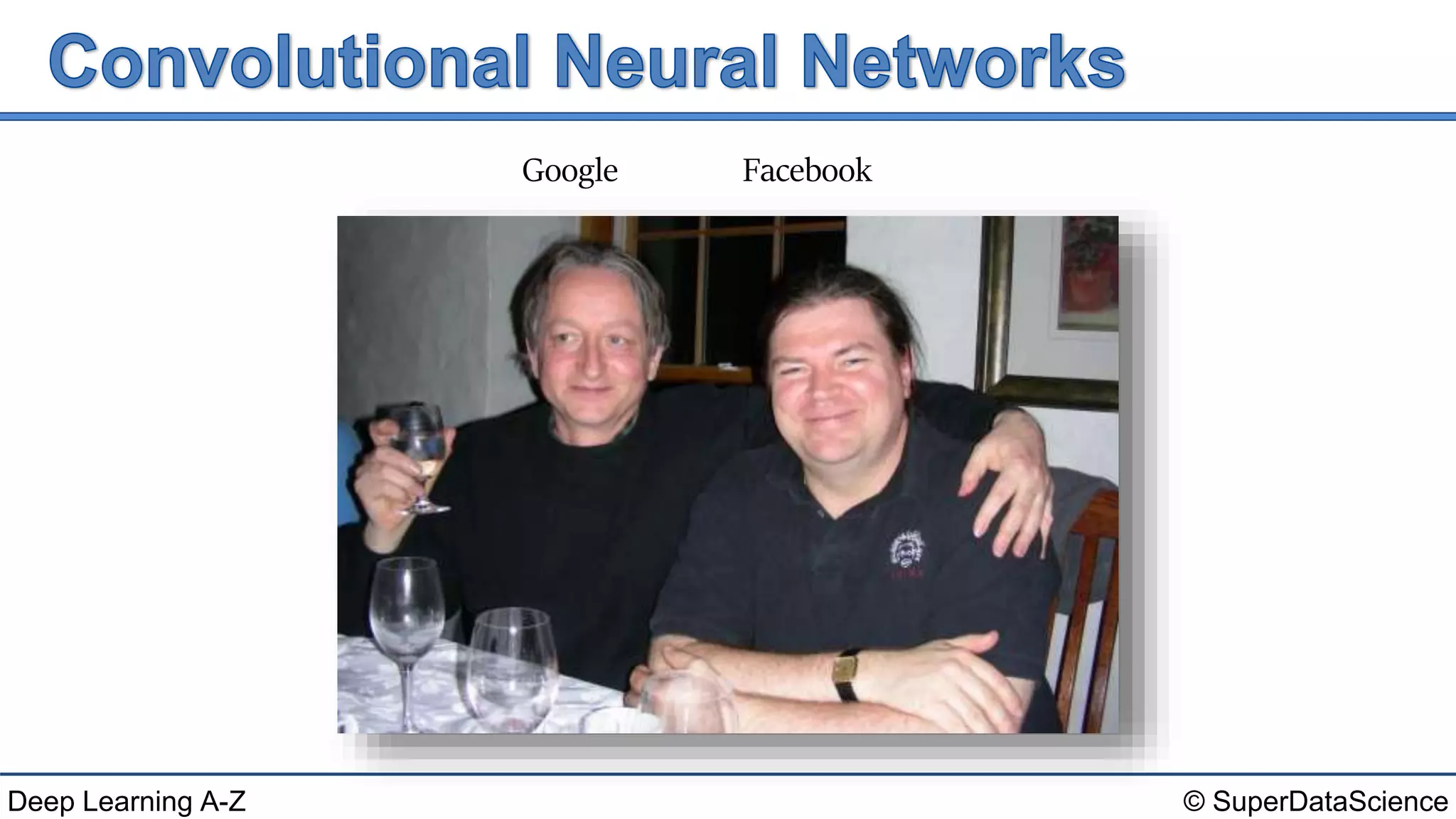
Google Facebook
© SuperDataScienceDeep Learning A-Z
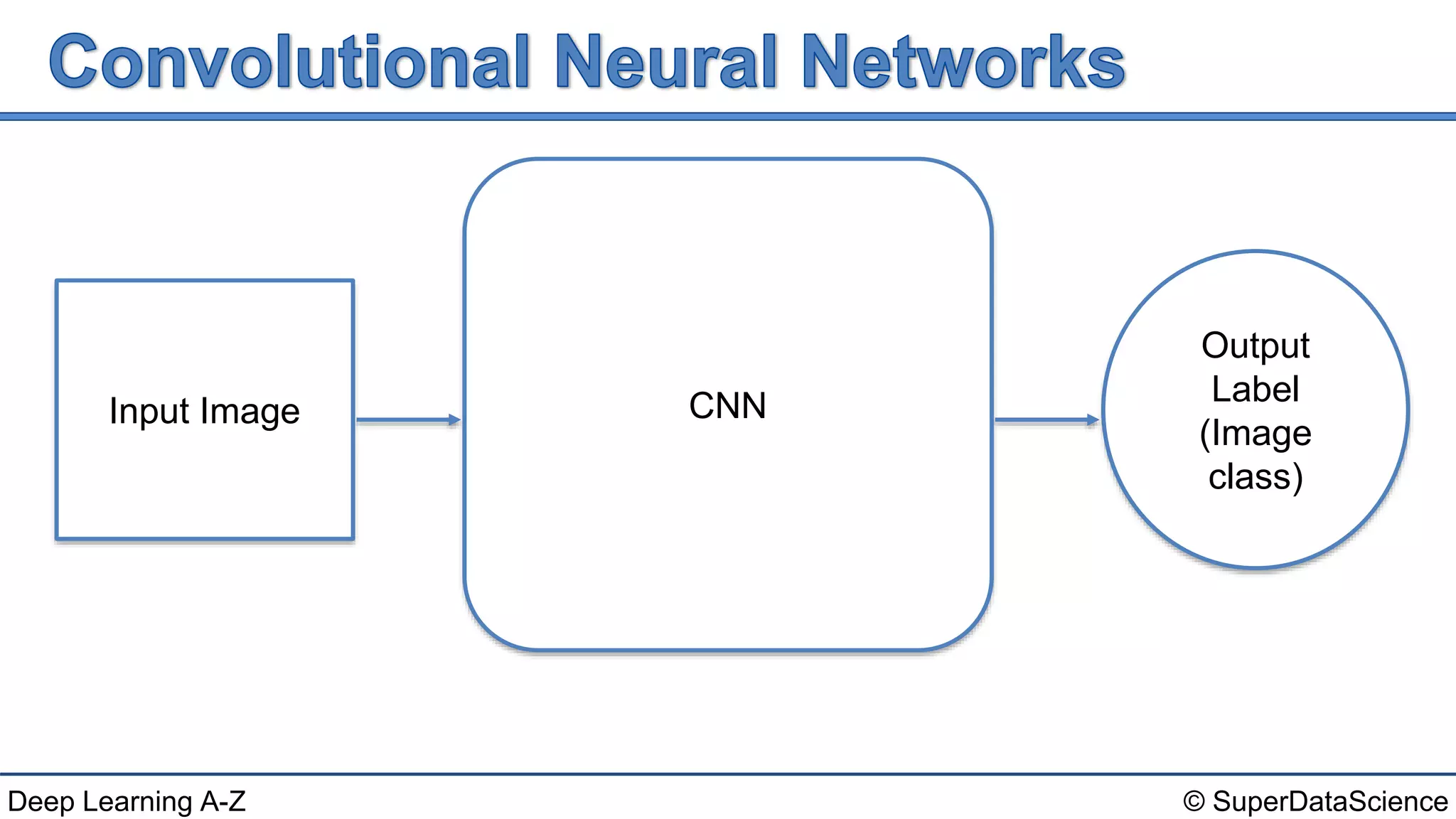
Input Image CNN
Output
Label
(Image
class)
© SuperDataScienceDeep Learning A-Z
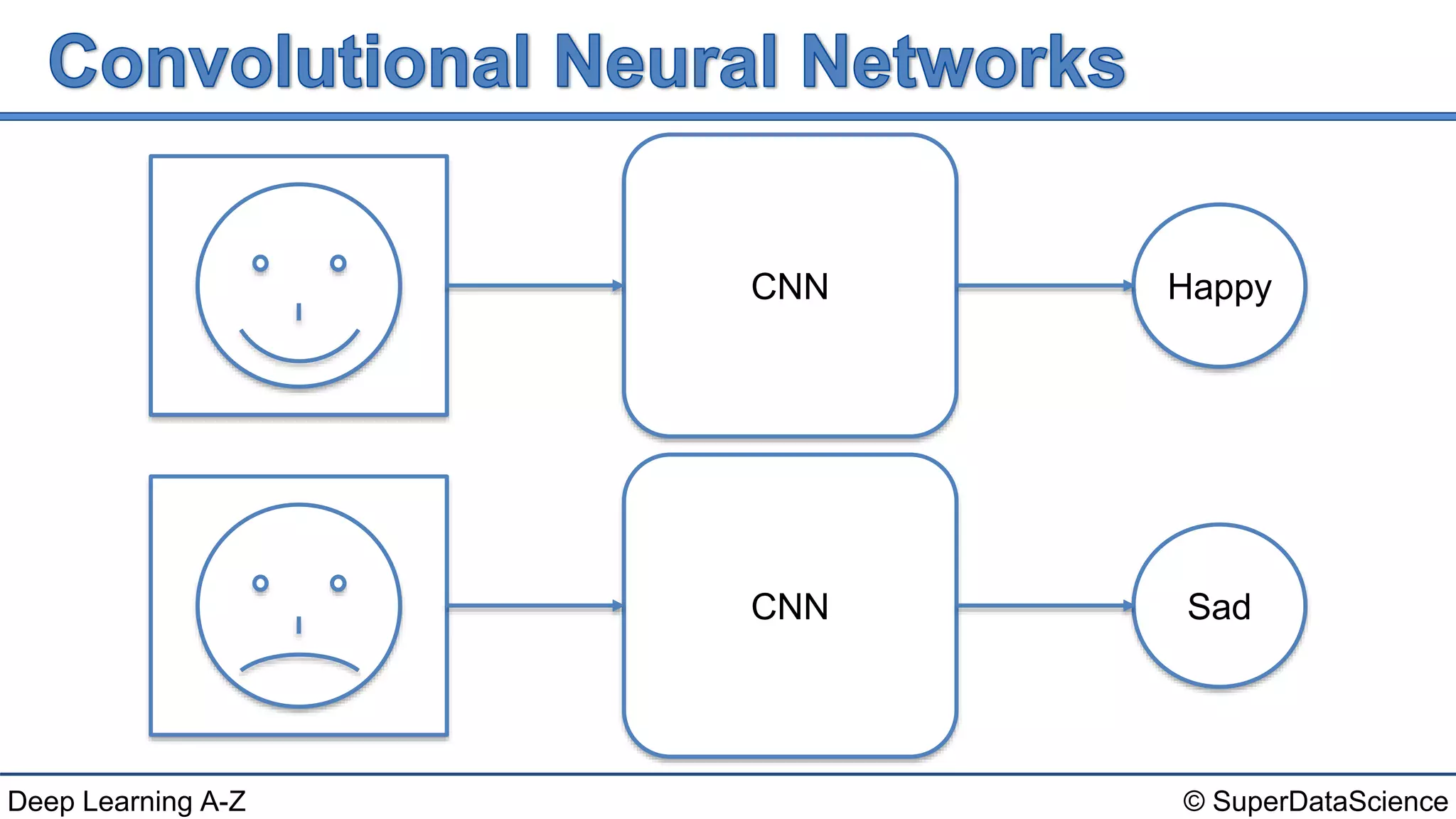
CNN Happy
CNN Sad
© SuperDataScienceDeep Learning A-Z
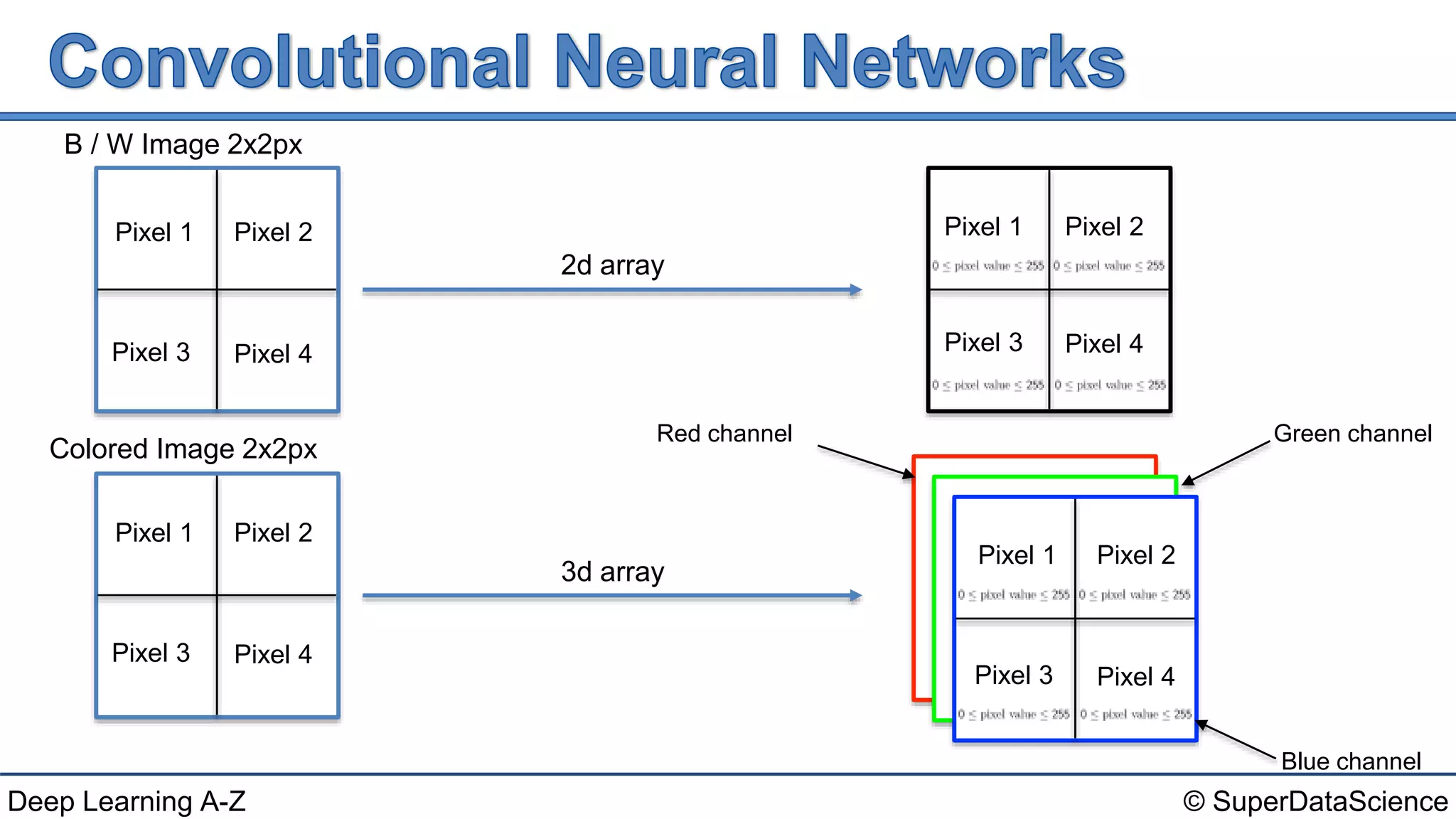
Pixel 1 Pixel 2
Pixel 3 Pixel 4
2d array
B / W Image 2x2px
Pixel 1 Pixel 2
Pixel 3 Pixel 4
Colored
Image
Colored
Image
Pixel 1 Pixel 2
Pixel 3 Pixel 4
Red channel Green channel
Blue channel
3d array
Colored Image 2x2px
Pixel 1 Pixel 2
Pixel 3 Pixel 4
© SuperDataScienceDeep Learning A-Z
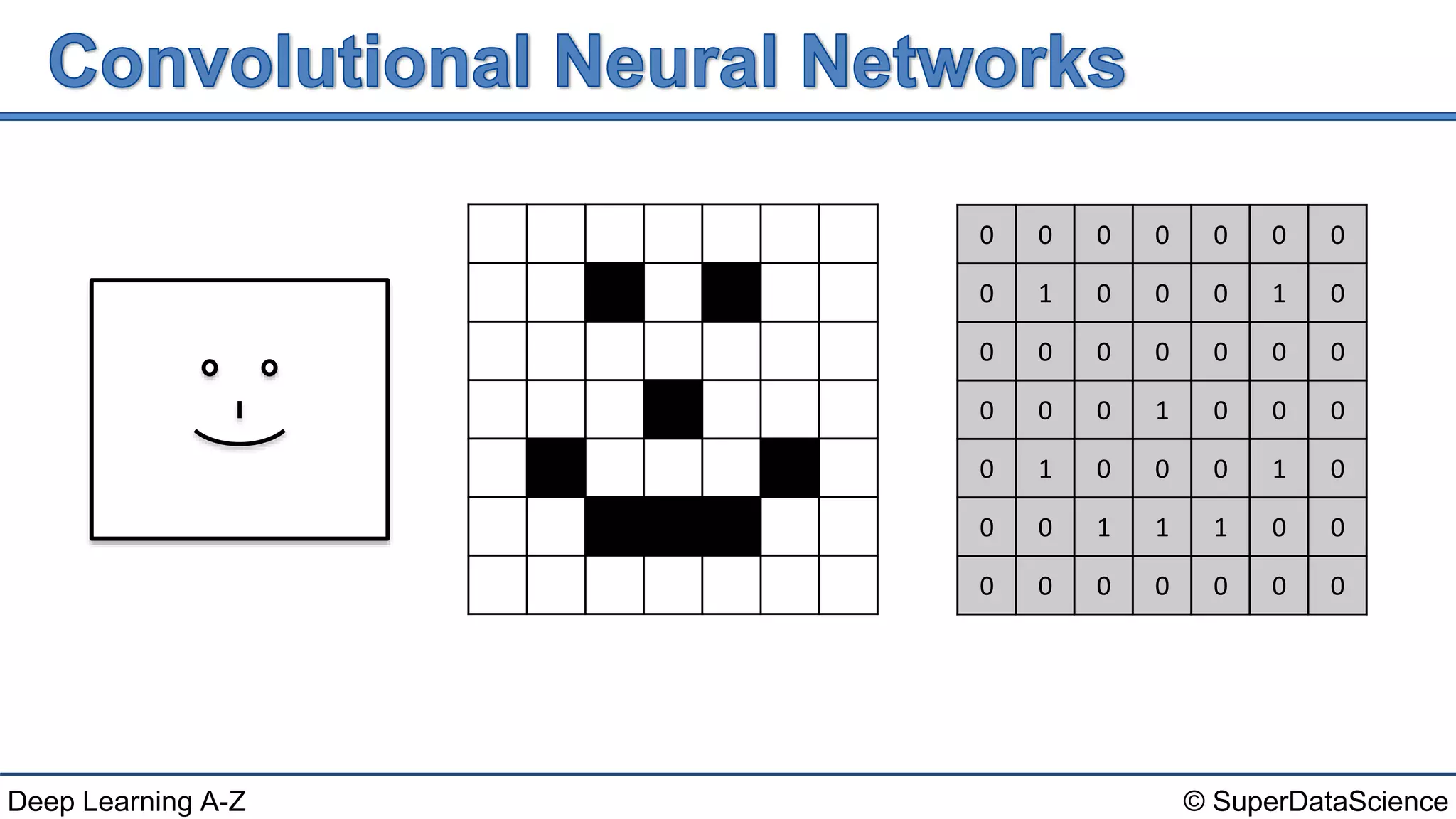
0 0 0 0 0 0 0
0 1 0 0 0 1 0
0 0 0 0 0 0 0
0 0 0 1 0 0 0
0 1 0 0 0 1 0
0 0 1 1 1 0 0
0 0 0 0 0 0 0
© SuperDataScienceDeep Learning A-Z
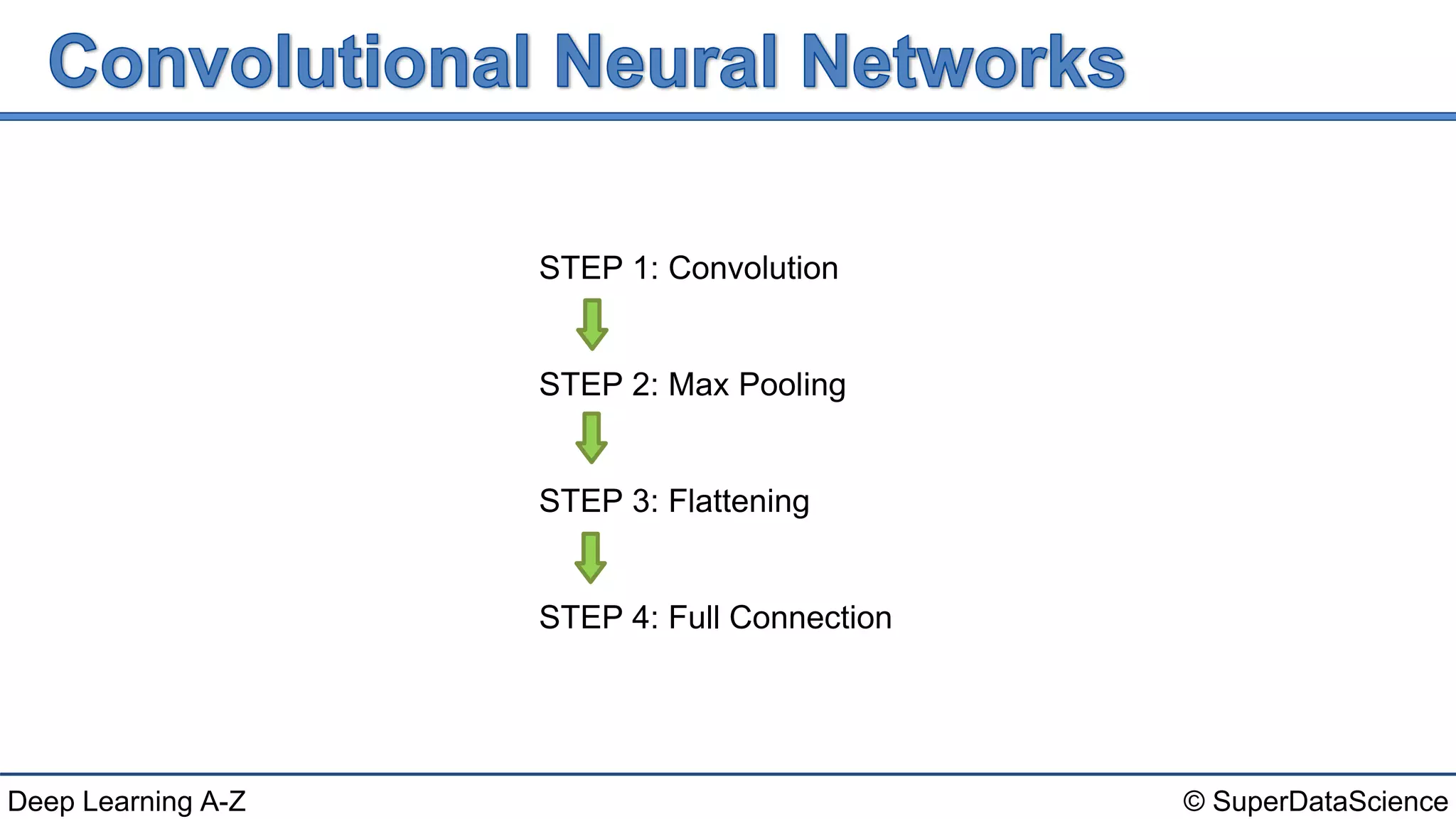
STEP 1: Convolution
STEP 2: Max Pooling
STEP 3: Flattening
STEP 4: Full Connection
© SuperDataScienceDeep Learning A-Z
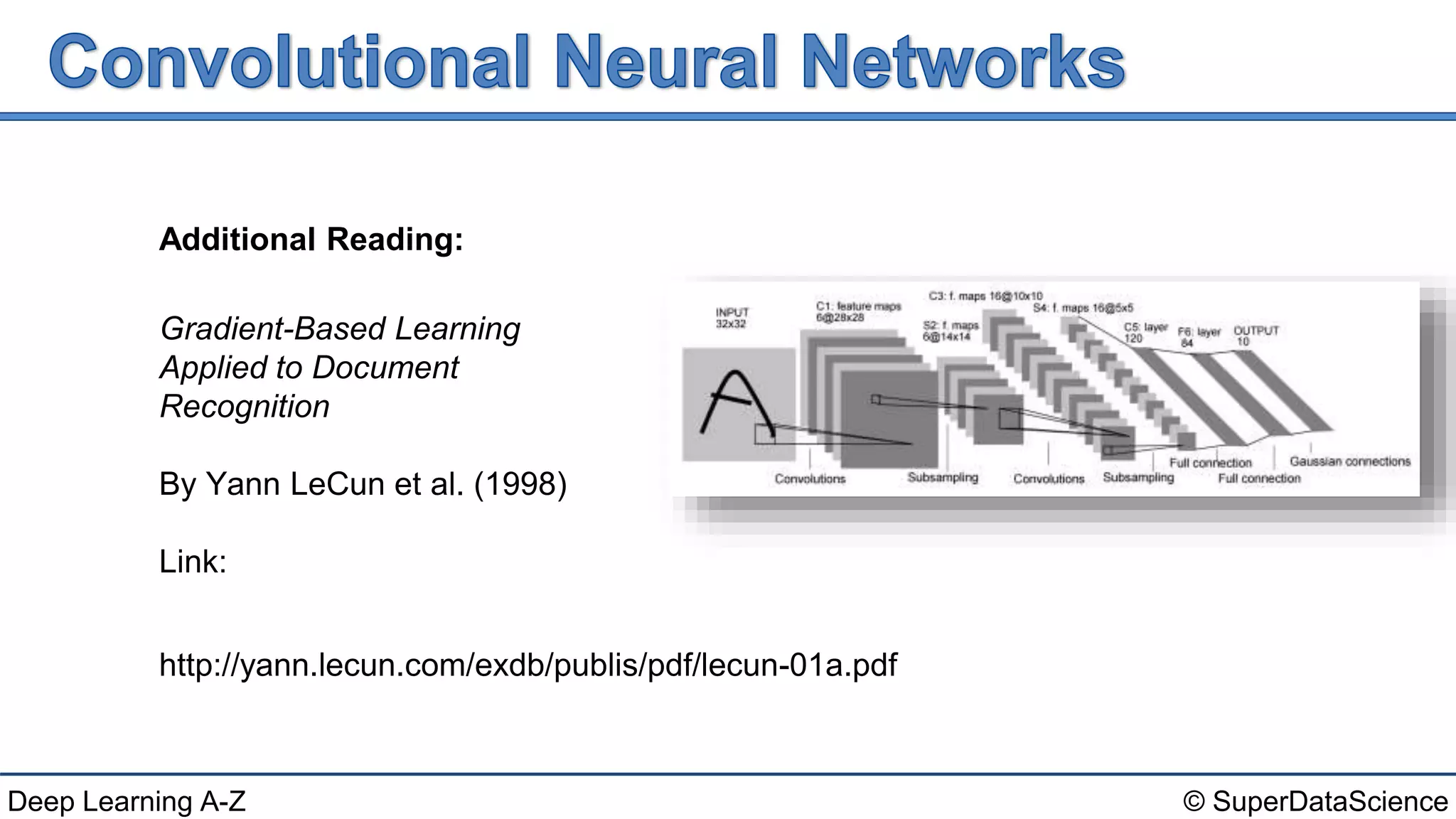
Gradient-Based Learning
Applied to Document
Recognition
By Yann LeCun et al. (1998)
Link:
http://yann.lecun.com/exdb/publis/pdf/lecun-01a.pdf
Additional Reading:

Deep Learning A-Z™: Convolutional Neural Networks (CNN) - What Are Convolutional Neural Networks