Methodologies and
Approaches in
Community Action
Week 4 - Quarter 2,
Module 4
At the end of the lesson, learners are expected
to:
1. Identify different methods and approaches
in community action.
2. Analyze the systematic methods of
community action in understanding
community.
3. Develop community action plan and project
applying various methodologies and
approaches.
Do you engage or involve in a
project being implemented in your
community? As a member of the
community we should and must
participate in the different
activities and projects in our own
 Thus, the member and the
leader of the community should
work hand in hand and should
have the qualities of the ff:
initiative,cooperation,
communication and planning.
Titingnan natin kung ano ang ibat ibang methodologies and approaches kung paano planuhin
ang isang action plan
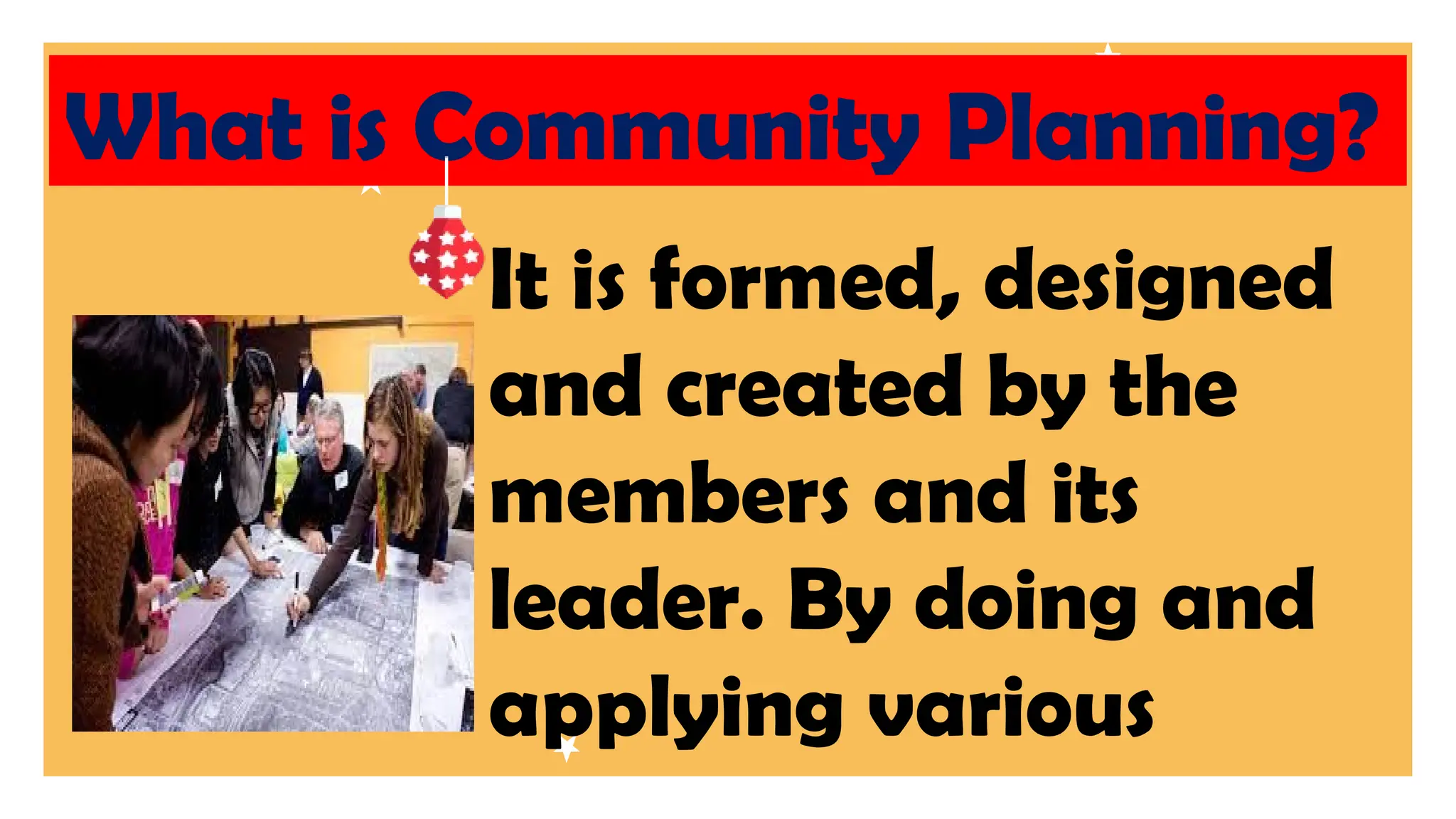
What is Community Planning?
It is formed, designed
and created by the
members and its
leader. By doing and
applying various
various methodologies and
approaches in community action
will help to improve the status quo
of your own community.
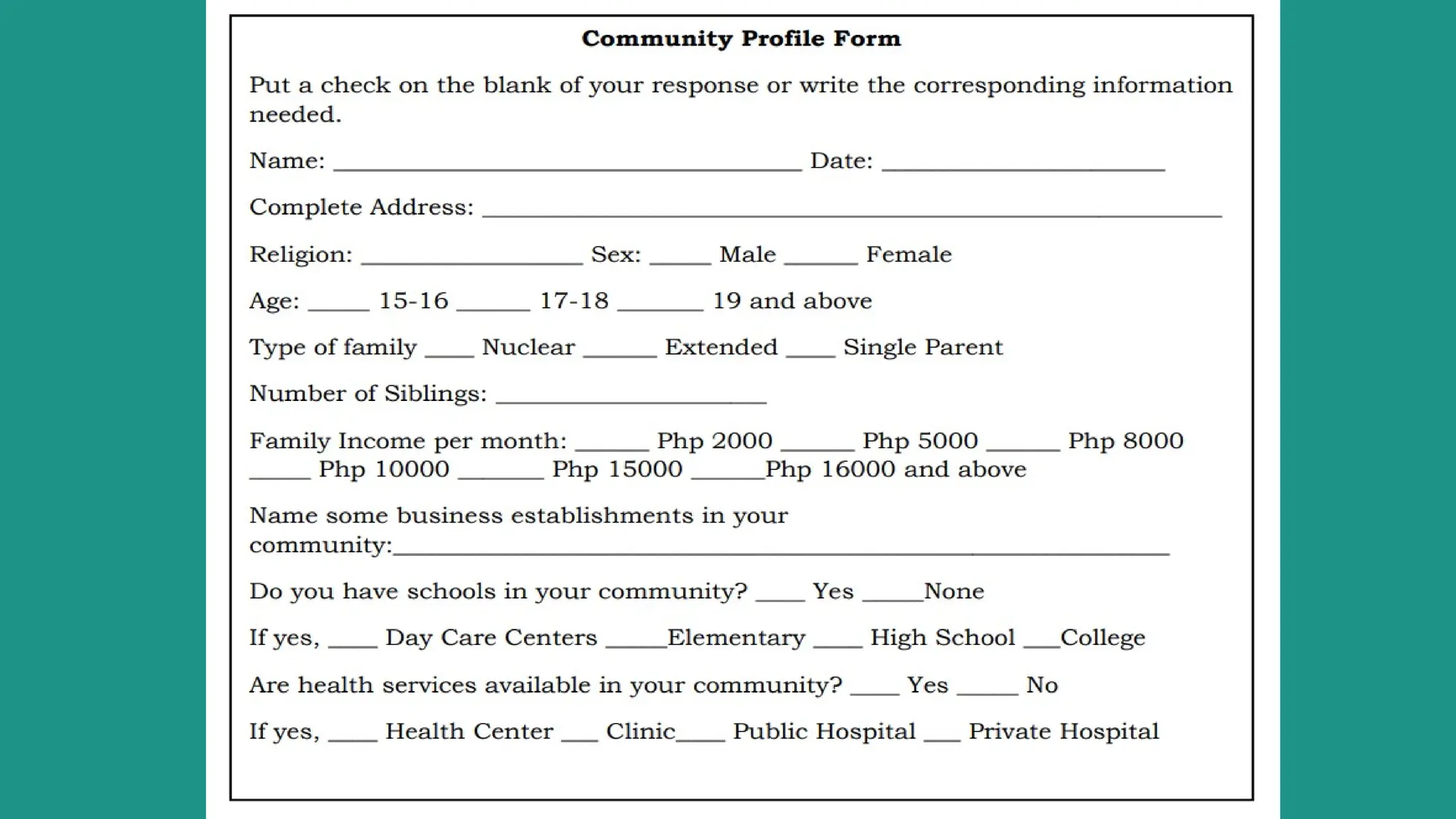
1. COMMUNITY PROFILE is the
process of developing understanding
of the people and describing the
detailed picture of the target com-
munity.
On the next slide is an example
2. COMMUNITY NEEDS ASSESSMENT
is a systematic process for determi-
ning and addressing needs or gaps
between current conditions or wants.
It also measures the strengths
and resources available in the
community to meet the needs of
the children, youth, and families.
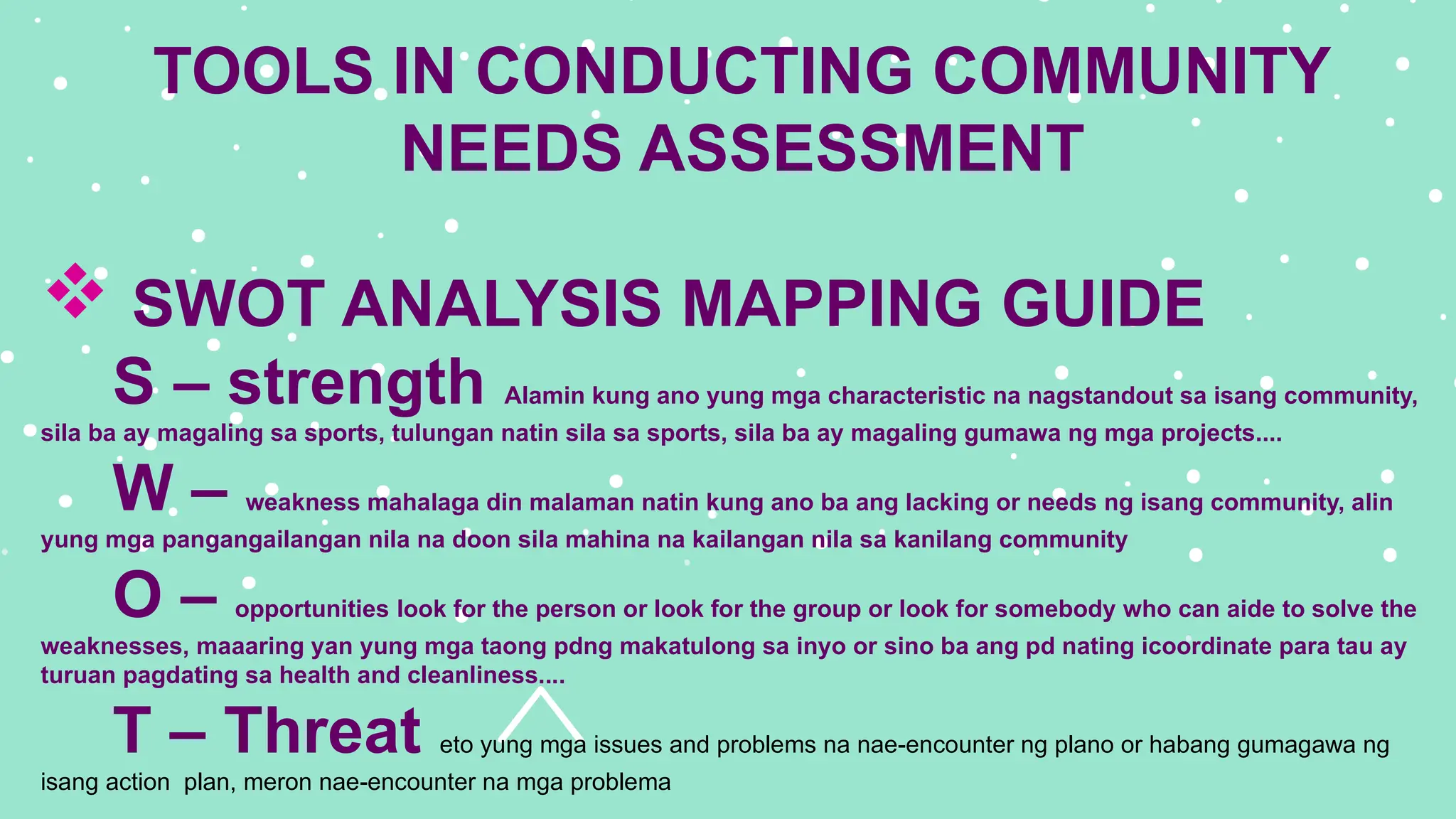
TOOLS IN CONDUCTING COMMUNITY
NEEDS ASSESSMENT
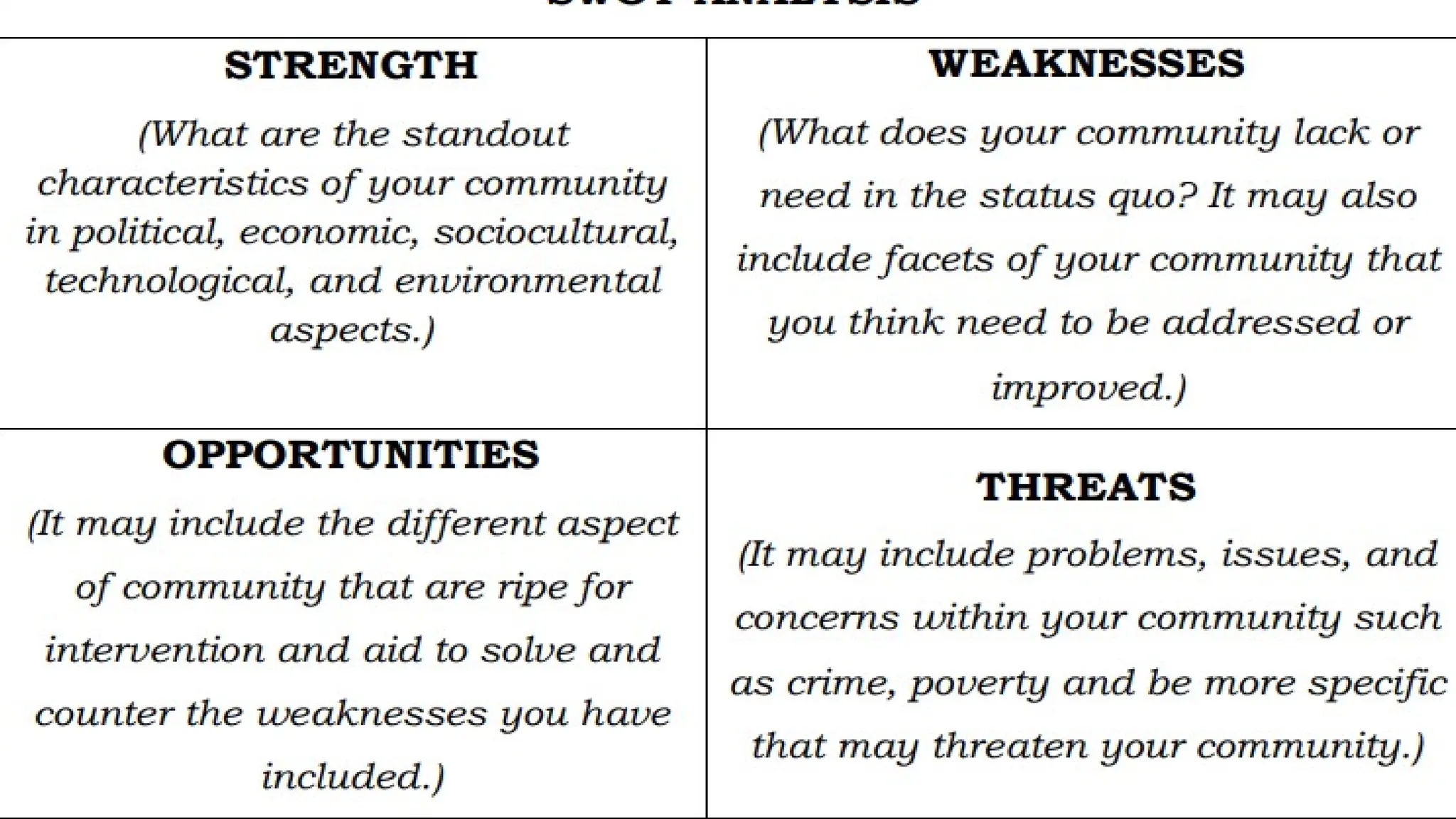
 SWOT ANALYSIS MAPPING GUIDE
S – strength Alamin kung ano yung mga characteristic na nagstandout sa isang community,
sila ba ay magaling sa sports, tulungan natin sila sa sports, sila ba ay magaling gumawa ng mga projects....
W – weakness mahalaga din malaman natin kung ano ba ang lacking or needs ng isang community, alin
yung mga pangangailangan nila na doon sila mahina na kailangan nila sa kanilang community
O – opportunities look for the person or look for the group or look for somebody who can aide to solve the
weaknesses, maaaring yan yung mga taong pdng makatulong sa inyo or sino ba ang pd nating icoordinate para tau ay
turuan pagdating sa health and cleanliness....
T – Threat eto yung mga issues and problems na nae-encounter ng plano or habang gumagawa ng
isang action plan, meron nae-encounter na mga problema
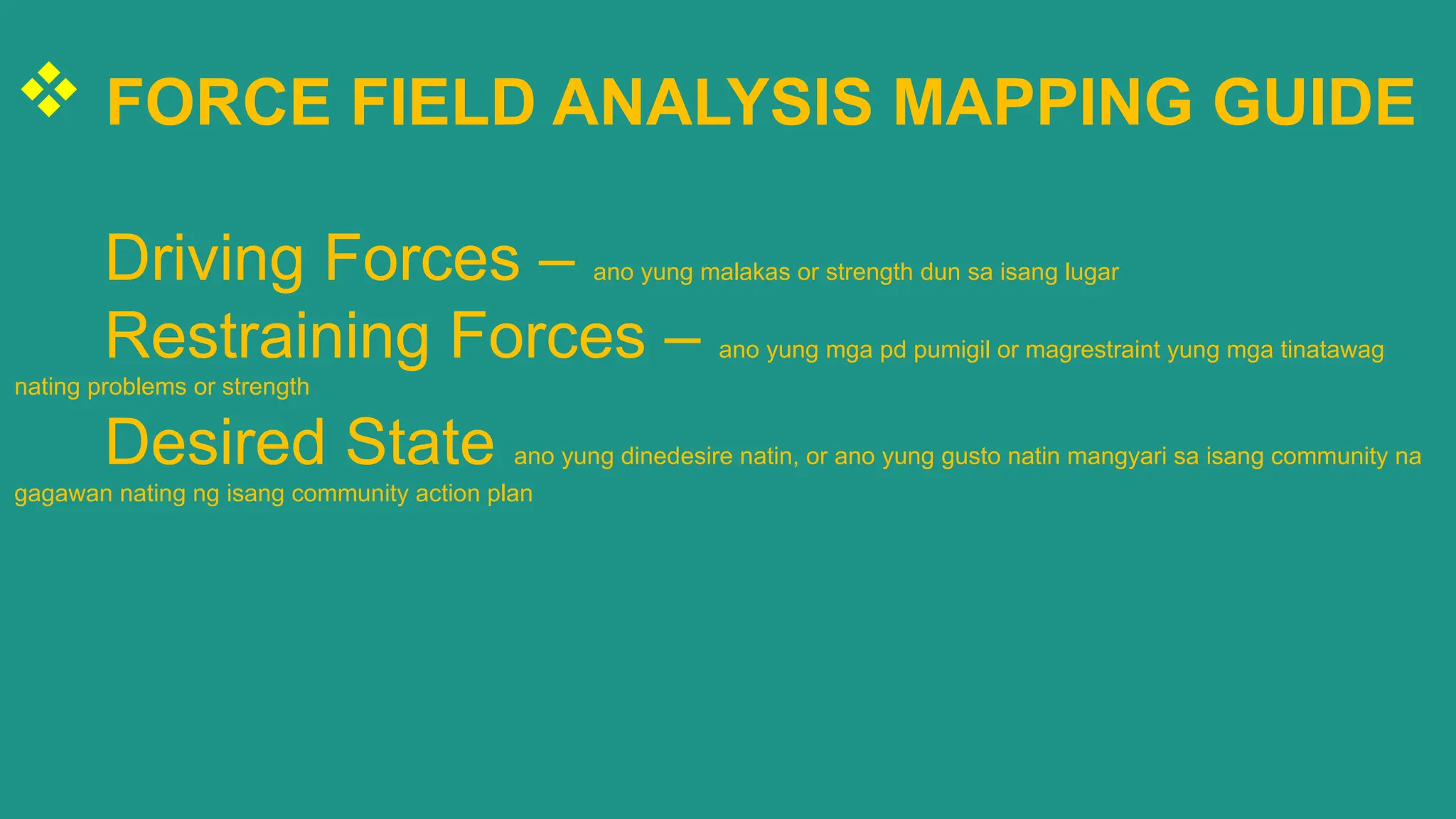
 FORCE FIELD ANALYSIS MAPPING GUIDE
Driving Forces – ano yung malakas or strength dun sa isang lugar
Restraining Forces – ano yung mga pd pumigil or magrestraint yung mga tinatawag
nating problems or strength
Desired State ano yung dinedesire natin, or ano yung gusto natin mangyari sa isang community na
gagawan nating ng isang community action plan
3. BUILDING PARTNERSHIP- based on
the study of Snow, partnership is
related to other terms such as
collaboration, coalition, network,
task group, work group,cooperation
and others which are used to describe
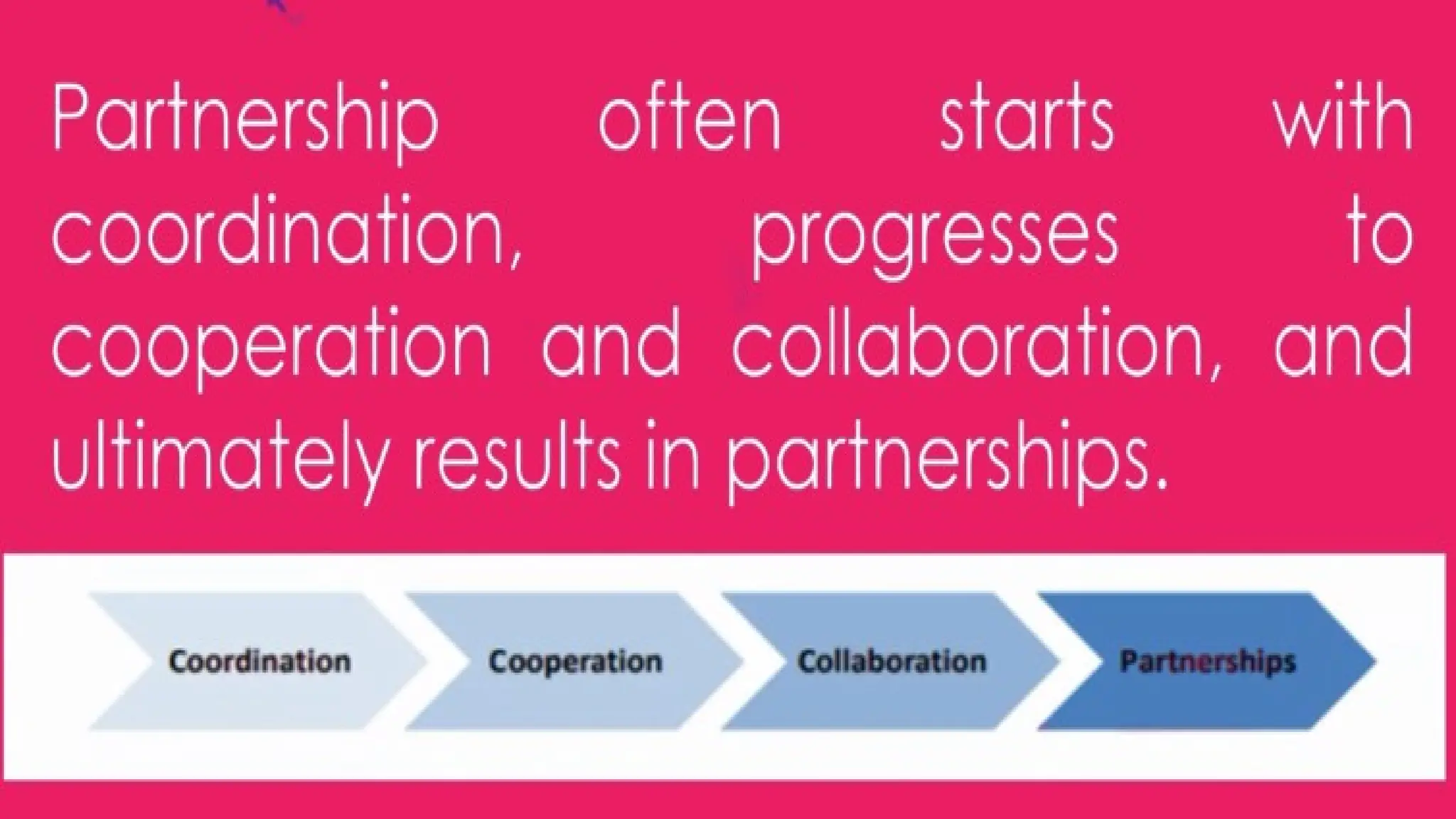
However, partnership refers to a group of
organizations with a common goal
Interest, who agree to work together
towards a common goal.
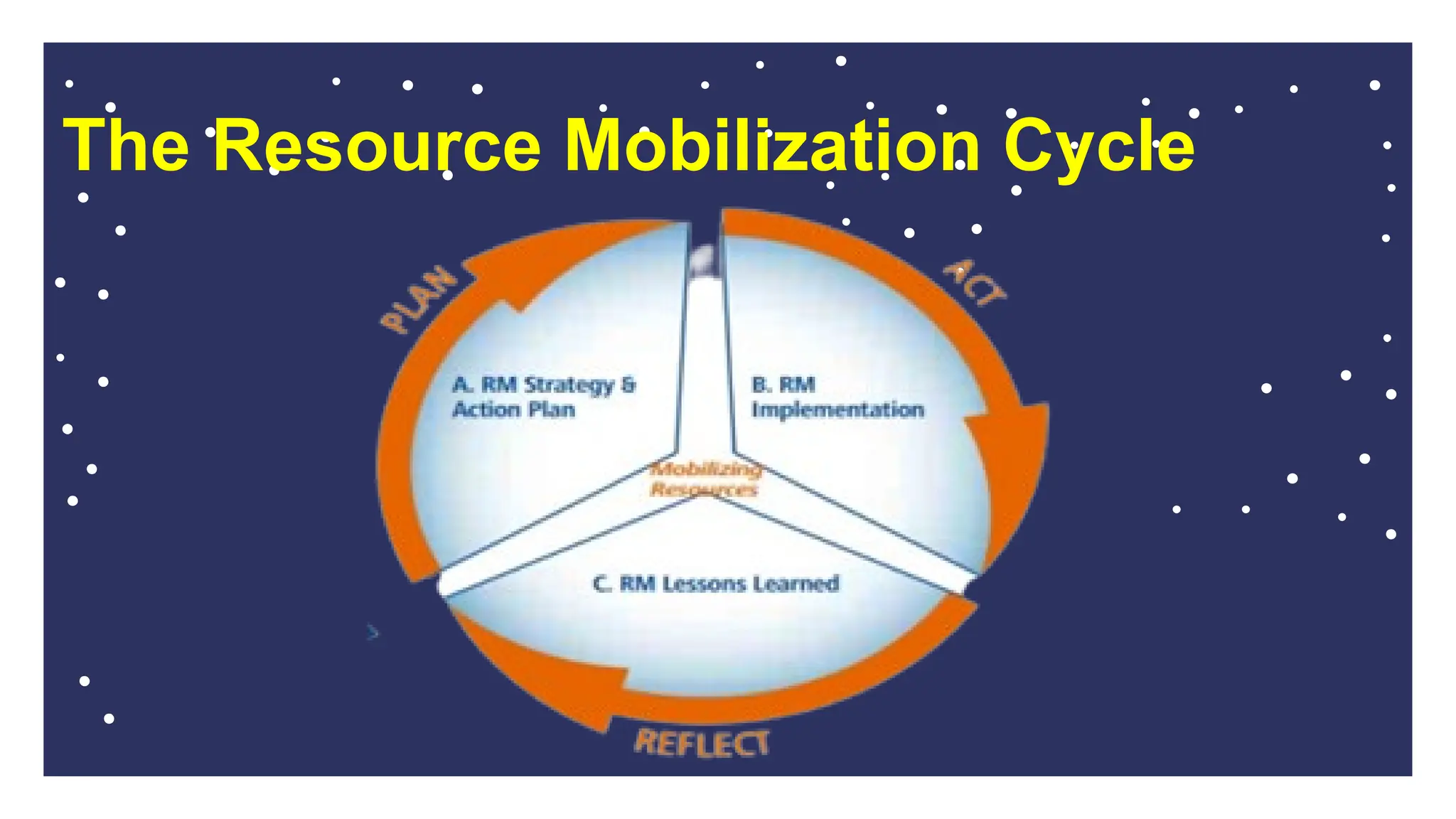
4. RESOURCE MOBILIZATION
is a process where we identify the
resources essential for the
development, implementation, and
continuation of works for achieving
the organization’s mission.
The Resource Mobilization Cycle
5. LEADERSHIP DEVELOPMENT and
PARTICIPATORY PLANNING - Leaders
emanate from selected group, volunteers,
or individuals known as the core working
group.
On the other hand, participatory
planning is an approach to designing
active, livable cities, which makes
urban planning accessible, community-
driven, and fun.
6. SOCIAL ACTION - it can be done by
one or more persons in such a manner
that his/her action is intended to
influence others and perform the action
to act or face some social situation.
ELEMENTS OF SOCIAL ACTION BY TALCOTT
PARSONS
a. The Actor – It is the individual who performs the act.
b. The Goal – These are the aims or objectives for
which the action was done.
c. Social Situation – The actor performs his/her role in
the presence of some social situation.
d. Normative Orientation - It is performed on some
social pattern, custom. All these forms are called
norms of society.
e. Energy - This requires energy for its performance.
Physical energy and training are essential for an act.
7. EVALUATION
It is conducted in the middle and at the end of
the scheduled completion of the community
action plan to evaluate the effectivity and
success of the project. Hence, the entire above
stated methodologies and approaches must be
our guiding light in making and preparing our
own community action plan and project.
Write the Possible effects of
your community action plan
proposal using ‘SWOT
ANALYSIS”

CESC Q2 Module 4 Week4.powerpoint pptarr

  • 1.
    Methodologies and Approaches in CommunityAction Week 4 - Quarter 2, Module 4
  • 2.
    At the endof the lesson, learners are expected to: 1. Identify different methods and approaches in community action. 2. Analyze the systematic methods of community action in understanding community. 3. Develop community action plan and project applying various methodologies and approaches.
  • 6.
    Do you engageor involve in a project being implemented in your community? As a member of the community we should and must participate in the different activities and projects in our own
  • 7.
     Thus, themember and the leader of the community should work hand in hand and should have the qualities of the ff: initiative,cooperation, communication and planning. Titingnan natin kung ano ang ibat ibang methodologies and approaches kung paano planuhin ang isang action plan
  • 8.
    What is CommunityPlanning? It is formed, designed and created by the members and its leader. By doing and applying various
  • 9.
    various methodologies and approachesin community action will help to improve the status quo of your own community.
  • 11.
    1. COMMUNITY PROFILEis the process of developing understanding of the people and describing the detailed picture of the target com- munity. On the next slide is an example
  • 13.
    2. COMMUNITY NEEDSASSESSMENT is a systematic process for determi- ning and addressing needs or gaps between current conditions or wants.
  • 14.
    It also measuresthe strengths and resources available in the community to meet the needs of the children, youth, and families.
  • 16.
    TOOLS IN CONDUCTINGCOMMUNITY NEEDS ASSESSMENT  SWOT ANALYSIS MAPPING GUIDE S – strength Alamin kung ano yung mga characteristic na nagstandout sa isang community, sila ba ay magaling sa sports, tulungan natin sila sa sports, sila ba ay magaling gumawa ng mga projects.... W – weakness mahalaga din malaman natin kung ano ba ang lacking or needs ng isang community, alin yung mga pangangailangan nila na doon sila mahina na kailangan nila sa kanilang community O – opportunities look for the person or look for the group or look for somebody who can aide to solve the weaknesses, maaaring yan yung mga taong pdng makatulong sa inyo or sino ba ang pd nating icoordinate para tau ay turuan pagdating sa health and cleanliness.... T – Threat eto yung mga issues and problems na nae-encounter ng plano or habang gumagawa ng isang action plan, meron nae-encounter na mga problema
  • 17.
     FORCE FIELDANALYSIS MAPPING GUIDE Driving Forces – ano yung malakas or strength dun sa isang lugar Restraining Forces – ano yung mga pd pumigil or magrestraint yung mga tinatawag nating problems or strength Desired State ano yung dinedesire natin, or ano yung gusto natin mangyari sa isang community na gagawan nating ng isang community action plan
  • 18.
    3. BUILDING PARTNERSHIP-based on the study of Snow, partnership is related to other terms such as collaboration, coalition, network, task group, work group,cooperation and others which are used to describe
  • 19.
    However, partnership refersto a group of organizations with a common goal Interest, who agree to work together towards a common goal.
  • 21.
    4. RESOURCE MOBILIZATION isa process where we identify the resources essential for the development, implementation, and continuation of works for achieving the organization’s mission.
  • 22.
  • 23.
    5. LEADERSHIP DEVELOPMENTand PARTICIPATORY PLANNING - Leaders emanate from selected group, volunteers, or individuals known as the core working group.
  • 24.
    On the otherhand, participatory planning is an approach to designing active, livable cities, which makes urban planning accessible, community- driven, and fun.
  • 25.
    6. SOCIAL ACTION- it can be done by one or more persons in such a manner that his/her action is intended to influence others and perform the action to act or face some social situation.
  • 26.
    ELEMENTS OF SOCIALACTION BY TALCOTT PARSONS a. The Actor – It is the individual who performs the act. b. The Goal – These are the aims or objectives for which the action was done. c. Social Situation – The actor performs his/her role in the presence of some social situation. d. Normative Orientation - It is performed on some social pattern, custom. All these forms are called norms of society. e. Energy - This requires energy for its performance. Physical energy and training are essential for an act.
  • 27.
    7. EVALUATION It isconducted in the middle and at the end of the scheduled completion of the community action plan to evaluate the effectivity and success of the project. Hence, the entire above stated methodologies and approaches must be our guiding light in making and preparing our own community action plan and project.
  • 28.
    Write the Possibleeffects of your community action plan proposal using ‘SWOT ANALYSIS”

Editor's Notes

  • #7 Titingnan natin kung ano ang
  • #8 It is formed
  • #9 arious methodologies
  • #16 Alamin kung ano yung mga characteristic
  • #18 FORCE FIELD ANALYSIS MAPPING GUIDE
  • #19 However,
  • #21 4.
  • #22 The Resource Mobilization Cycle
  • #27 7. EVALUATION