Typography
What is Typography ?
Is the art and technique of arranging type to make written language legible, readable, and
visually appealing.
It plays a crucial role in communication, whether in print or digital media, by impacting how the
text is perceived and understood by the audience.
It Involves selecting fonts, adjusting their size and spacing, and arranging them on a page or
screen
To enhance readability and convey the intended message.
Components of Typography
Fonts and Typefaces
Size and Scale
Spacing
Components of Typography
1- Fonts and Typefaces
Typeface: A typeface is a design of lettering, such as Arial, Times New Roman, or Comic Sans.
Each typeface has a unique style and personality.
Font: A font is a specific version of a typeface, including its size and weight (e.g., Arial Bold,
12pt).
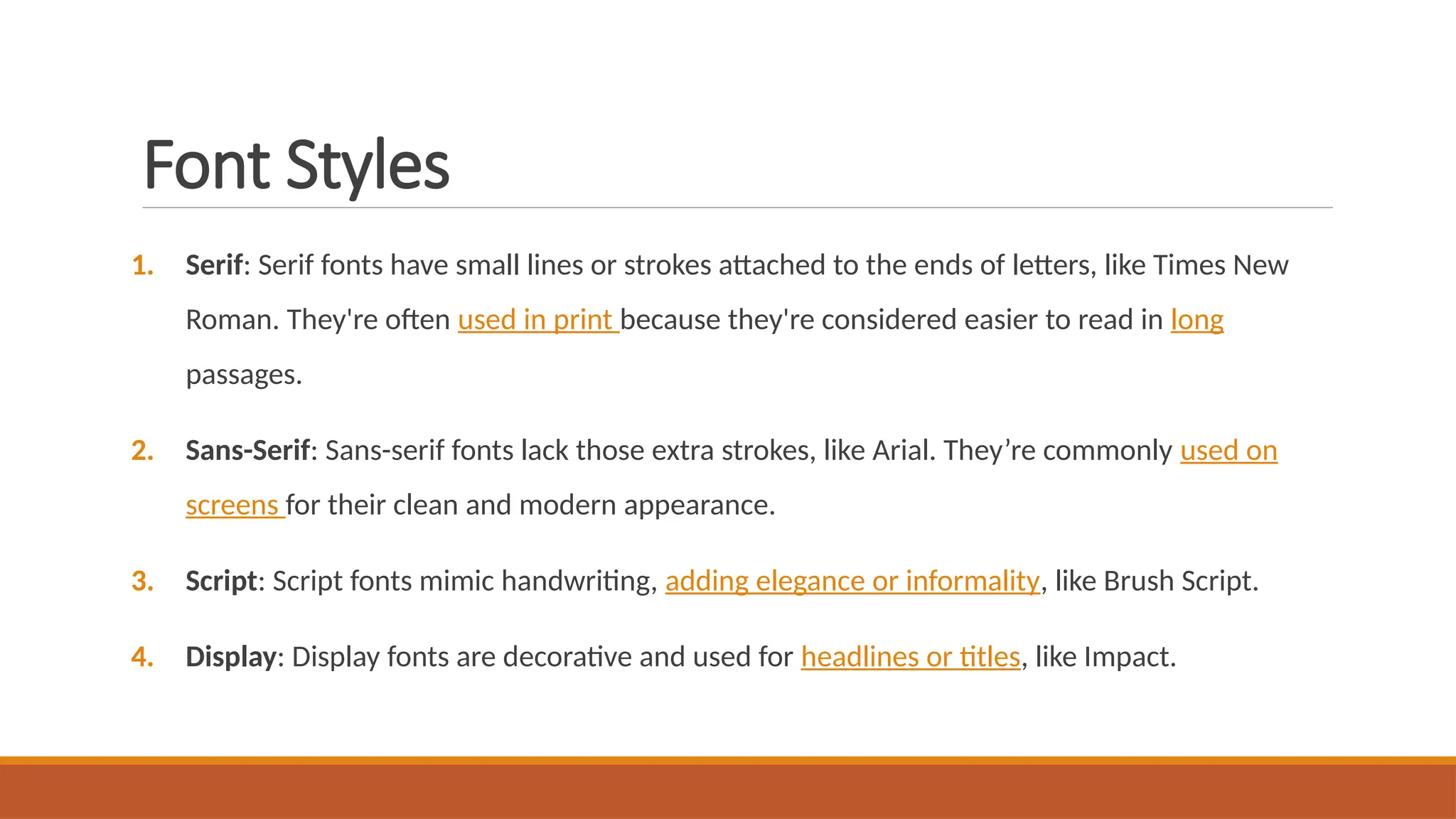
Font Styles
1. Serif: Serif fonts have small lines or strokes attached to the ends of letters, like Times New
Roman. They're often used in print because they're considered easier to read in long
passages.
2. Sans-Serif: Sans-serif fonts lack those extra strokes, like Arial. They’re commonly used on
screens for their clean and modern appearance.
3. Script: Script fonts mimic handwriting, adding elegance or informality, like Brush Script.
4. Display: Display fonts are decorative and used for headlines or titles, like Impact.
Components of Typography
2- Size and Scale
Typeface: A typeface is a design of lettering, such as Arial, Times New Roman, or Comic Sans.
Each typeface has a unique style and personality.
Font: A font is a specific version of a typeface, including its size and weight (e.g., Arial Bold,
12pt).
Components of Typography
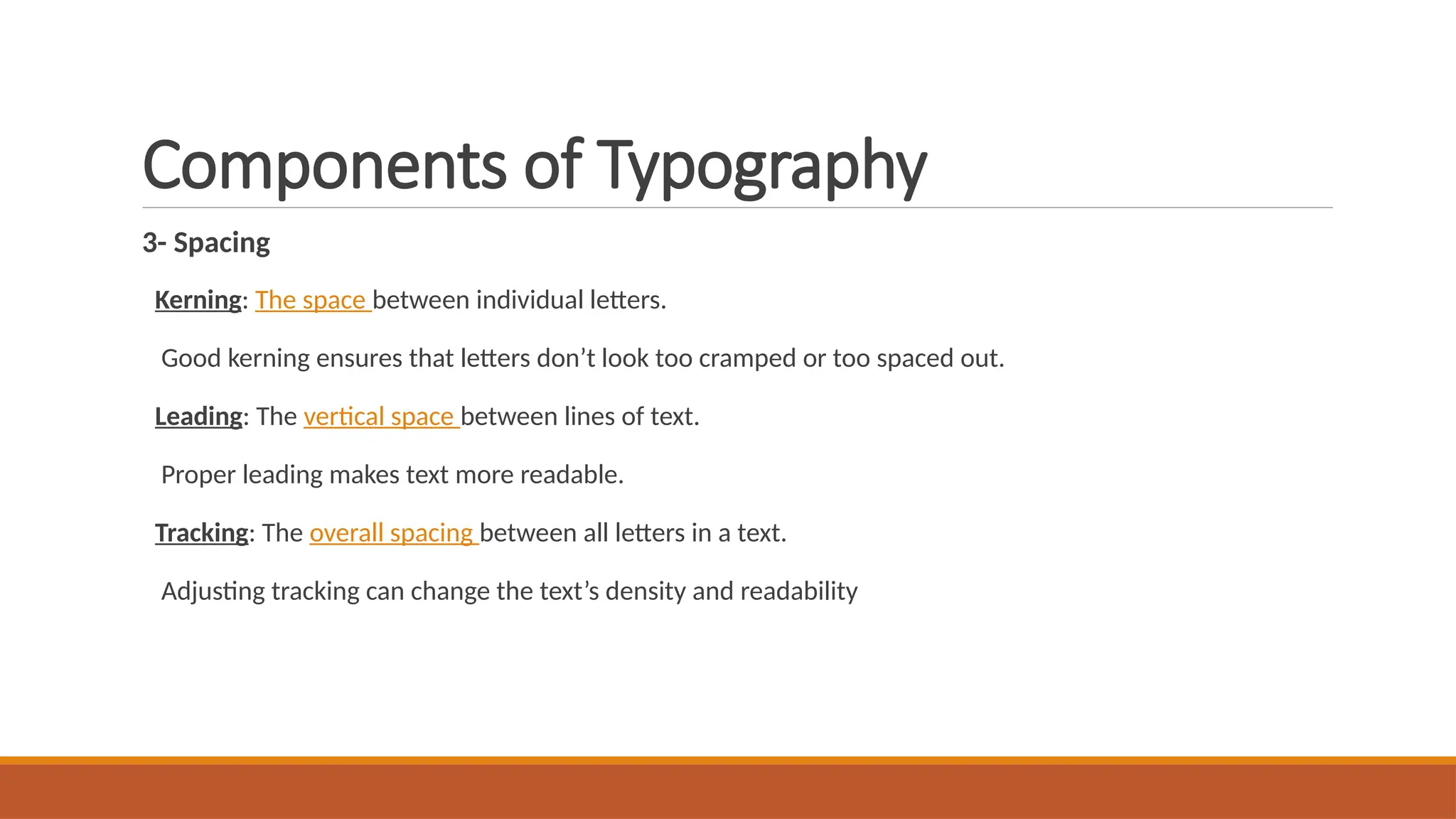
3- Spacing
Kerning: The space between individual letters.
Good kerning ensures that letters don’t look too cramped or too spaced out.
Leading: The vertical space between lines of text.
Proper leading makes text more readable.
Tracking: The overall spacing between all letters in a text.
Adjusting tracking can change the text’s density and readability
Understanding typography in web design is essential because it significantly affects user
experience (UX) and readability. Well-chosen typography enhances the visual appeal of a
website and ensures that content is accessible and easy to read
The Importance of Typography in Web Design
Typography is not just about selecting a font; it's about how text is arranged and displayed to
convey meaning and create an engaging experience for users.
Good typography can improve readability, draw attention to important content, and establish a
clear visual hierarchy.
affects user experience (UX) and readability
Key Principles of Typography in Web
Design
Font Selection
Hierarchy and Structure
Spacing and Layout
Font Selection
Readability: Fonts must be legible across different devices and screen sizes. Sans-serif fonts like
Arial and Helvetica are often preferred for body text on screens due to their clean lines.
Brand Identity: Fonts should align with the brand’s identity. For example, a luxury brand might
use a classic serif font like Times New Roman, while a tech startup might opt for a modern sans-
serif font.
Web-Safe Fonts: Using web-safe fonts ensures that text appears consistently across all browsers
and devices. Google Fonts and Adobe Fonts offer a wide range of options that are optimized for
web use
Hierarchy and Structure
Visual Hierarchy: Typography establishes a visual hierarchy that guides users through content.
Headings, subheadings, and body text should have distinct font sizes and weights to indicate
their importance.
Consistent Structure: Using a consistent typographic structure helps users navigate content
more efficiently. This includes maintaining uniform spacing, alignment, and line length.
Spacing and Layout
Line Spacing: Appropriate line spacing (leading) improves readability by making text easier to
scan. A general rule of thumb is to use 1.5 to 2 times the font size for line spacing.
White Space: Effective use of white space around text elements helps reduce visual clutter and
focuses attention on the content.
Alignment: Text alignment affects how users read content. Left-aligned text is generally easier to
read in Western cultures, while justified text can create uneven spacing and should be used
cautiously.
Color and Contrast
Color Schemes: Typography should work with the overall color scheme of the website. High
contrast between text and background improves legibility.
Accessibility: Ensuring sufficient contrast between text and background colors is crucial for
accessibility, particularly for users with visual impairments
Responsive Typography
Flexible Design: Typography should be responsive, adapting to different screen sizes and
resolutions. This often involves using relative units like ems or rems instead of fixed pixel sizes.
Media Queries: Implementing CSS media queries allows designers to adjust font sizes and line
spacing for various devices, ensuring optimal readability on mobile and desktop screens.
Impact on User Experience
1. Readability and Comprehension
◦ Clear typography enhances readability, making it easier for users to absorb information quickly. Poor
typography can lead to frustration and increased bounce rates.
2. Brand Perception
◦ Typography influences how users perceive a brand. Consistent and well-designed typography can
enhance brand credibility and trustworthiness.
Impact on User Experience
3. User Engagement
◦ Engaging typography keeps users on the site longer and encourages interaction. Creative use
of typography can capture users' attention and highlight key messages.
4. Navigation and Usability
◦ Good typographic hierarchy aids navigation by directing users to important sections of a
website, improving overall usability

TypographyTypography ? Is the art and technique of arranging letters and text to make written language.

  • 1.
  • 2.
    What is Typography? Is the art and technique of arranging type to make written language legible, readable, and visually appealing. It plays a crucial role in communication, whether in print or digital media, by impacting how the text is perceived and understood by the audience. It Involves selecting fonts, adjusting their size and spacing, and arranging them on a page or screen To enhance readability and convey the intended message.
  • 3.
    Components of Typography Fontsand Typefaces Size and Scale Spacing
  • 4.
    Components of Typography 1-Fonts and Typefaces Typeface: A typeface is a design of lettering, such as Arial, Times New Roman, or Comic Sans. Each typeface has a unique style and personality. Font: A font is a specific version of a typeface, including its size and weight (e.g., Arial Bold, 12pt).
  • 5.
    Font Styles 1. Serif:Serif fonts have small lines or strokes attached to the ends of letters, like Times New Roman. They're often used in print because they're considered easier to read in long passages. 2. Sans-Serif: Sans-serif fonts lack those extra strokes, like Arial. They’re commonly used on screens for their clean and modern appearance. 3. Script: Script fonts mimic handwriting, adding elegance or informality, like Brush Script. 4. Display: Display fonts are decorative and used for headlines or titles, like Impact.
  • 6.
    Components of Typography 2-Size and Scale Typeface: A typeface is a design of lettering, such as Arial, Times New Roman, or Comic Sans. Each typeface has a unique style and personality. Font: A font is a specific version of a typeface, including its size and weight (e.g., Arial Bold, 12pt).
  • 7.
    Components of Typography 3-Spacing Kerning: The space between individual letters. Good kerning ensures that letters don’t look too cramped or too spaced out. Leading: The vertical space between lines of text. Proper leading makes text more readable. Tracking: The overall spacing between all letters in a text. Adjusting tracking can change the text’s density and readability
  • 9.
    Understanding typography inweb design is essential because it significantly affects user experience (UX) and readability. Well-chosen typography enhances the visual appeal of a website and ensures that content is accessible and easy to read
  • 10.
    The Importance ofTypography in Web Design Typography is not just about selecting a font; it's about how text is arranged and displayed to convey meaning and create an engaging experience for users. Good typography can improve readability, draw attention to important content, and establish a clear visual hierarchy. affects user experience (UX) and readability
  • 11.
    Key Principles ofTypography in Web Design Font Selection Hierarchy and Structure Spacing and Layout
  • 12.
    Font Selection Readability: Fontsmust be legible across different devices and screen sizes. Sans-serif fonts like Arial and Helvetica are often preferred for body text on screens due to their clean lines. Brand Identity: Fonts should align with the brand’s identity. For example, a luxury brand might use a classic serif font like Times New Roman, while a tech startup might opt for a modern sans- serif font. Web-Safe Fonts: Using web-safe fonts ensures that text appears consistently across all browsers and devices. Google Fonts and Adobe Fonts offer a wide range of options that are optimized for web use
  • 13.
    Hierarchy and Structure VisualHierarchy: Typography establishes a visual hierarchy that guides users through content. Headings, subheadings, and body text should have distinct font sizes and weights to indicate their importance. Consistent Structure: Using a consistent typographic structure helps users navigate content more efficiently. This includes maintaining uniform spacing, alignment, and line length.
  • 14.
    Spacing and Layout LineSpacing: Appropriate line spacing (leading) improves readability by making text easier to scan. A general rule of thumb is to use 1.5 to 2 times the font size for line spacing. White Space: Effective use of white space around text elements helps reduce visual clutter and focuses attention on the content. Alignment: Text alignment affects how users read content. Left-aligned text is generally easier to read in Western cultures, while justified text can create uneven spacing and should be used cautiously.
  • 15.
    Color and Contrast ColorSchemes: Typography should work with the overall color scheme of the website. High contrast between text and background improves legibility. Accessibility: Ensuring sufficient contrast between text and background colors is crucial for accessibility, particularly for users with visual impairments
  • 16.
    Responsive Typography Flexible Design:Typography should be responsive, adapting to different screen sizes and resolutions. This often involves using relative units like ems or rems instead of fixed pixel sizes. Media Queries: Implementing CSS media queries allows designers to adjust font sizes and line spacing for various devices, ensuring optimal readability on mobile and desktop screens.
  • 17.
    Impact on UserExperience 1. Readability and Comprehension ◦ Clear typography enhances readability, making it easier for users to absorb information quickly. Poor typography can lead to frustration and increased bounce rates. 2. Brand Perception ◦ Typography influences how users perceive a brand. Consistent and well-designed typography can enhance brand credibility and trustworthiness.
  • 18.
    Impact on UserExperience 3. User Engagement ◦ Engaging typography keeps users on the site longer and encourages interaction. Creative use of typography can capture users' attention and highlight key messages. 4. Navigation and Usability ◦ Good typographic hierarchy aids navigation by directing users to important sections of a website, improving overall usability