AN INTRODUCTION TO QUANTITATIVE RESEARCH
EDF 7486: Topic 1
Quantitative Research
What is quantitative research?
 Quantitative research collects and uses numerical data to
explore, describe, explain, or predict trends or phenomena.
 Quantitative research emphasizes objectivity and the control of
contextual factors that may impact the results.
 Quantitative research states hypotheses and relies on statistical
analysis to support conclusions made regarding the
hypotheses.
Reasons for Quantitative Research
Exploratory
 Investigates issues with the goal of providing insight and information to
the researcher
 Use pilot studies to test feasibility or value of working in an area; focus
groups to guide survey design
Description
 Describe the current situation or classify situations, events or groups.
 Often use large scale data sets -NELS, High School and Beyond, etc.
 Surveys; correlational studies
Reasons for Quantitative Research
Explanation
 Build, enrich and explain theories
 Test theories using quantitative methods
Prediction
 Establish predictors of some behavior
 Two types of variables – predictor and criterion (outcome)
 Regression analysis is one statistical procedure used for prediction
Evaluation
 Evaluates programs for their efficacy
 Come in different forms and serve different functions
Types of Quantitative Research
Survey Research
 Collect quantitative data to address questions about the
current state of a population or phenomena.
 Can address preferences, attitudes, opinions, concerns,
interests
Correlational Research
 Determines if a relationship exists between two quantitative
variables
 Measure the strength of the relationship
Types of Quantitative Research
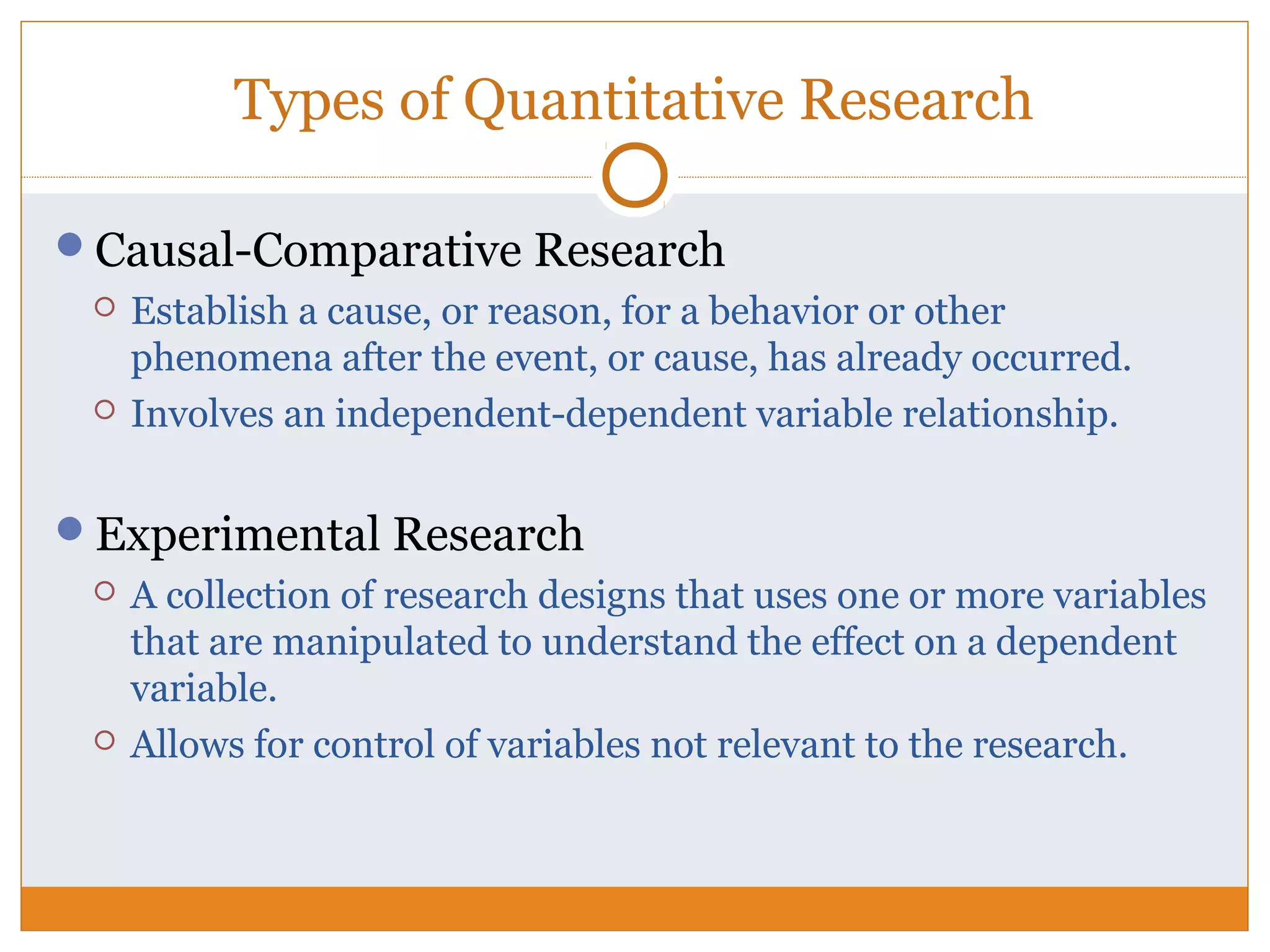
Causal-Comparative Research
 Establish a cause, or reason, for a behavior or other
phenomena after the event, or cause, has already occurred.
 Involves an independent-dependent variable relationship.
Experimental Research
 A collection of research designs that uses one or more variables
that are manipulated to understand the effect on a dependent
variable.
 Allows for control of variables not relevant to the research.
Types of Quantitative Research
Action Research
 Conducted by school administrators, teachers, or any other
stakeholder in the teaching-learning environment
 Primary focus is on the way schools operate, teachers teach
and students learn
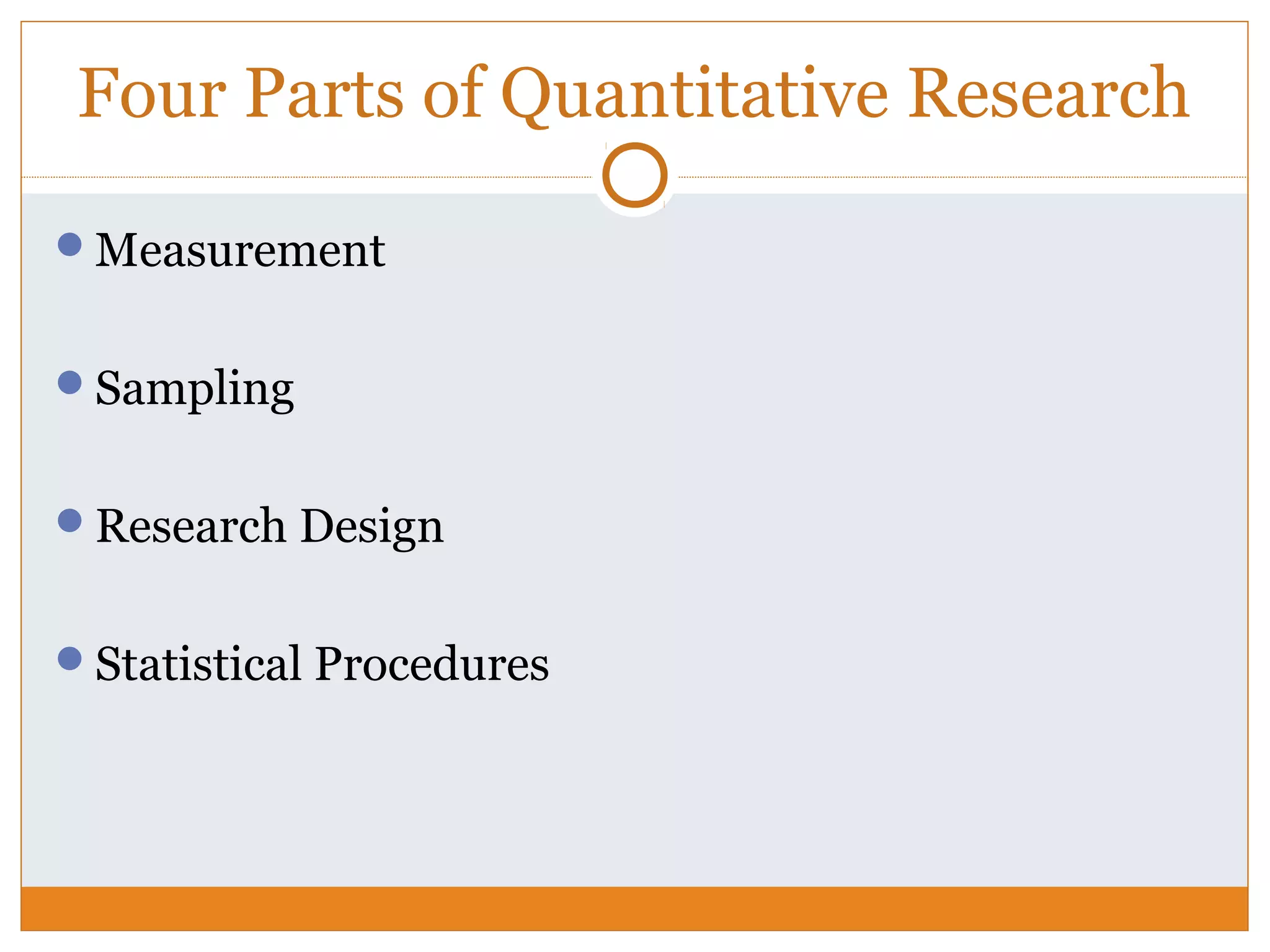
Four Parts of Quantitative Research
Measurement
Sampling
Research Design
Statistical Procedures
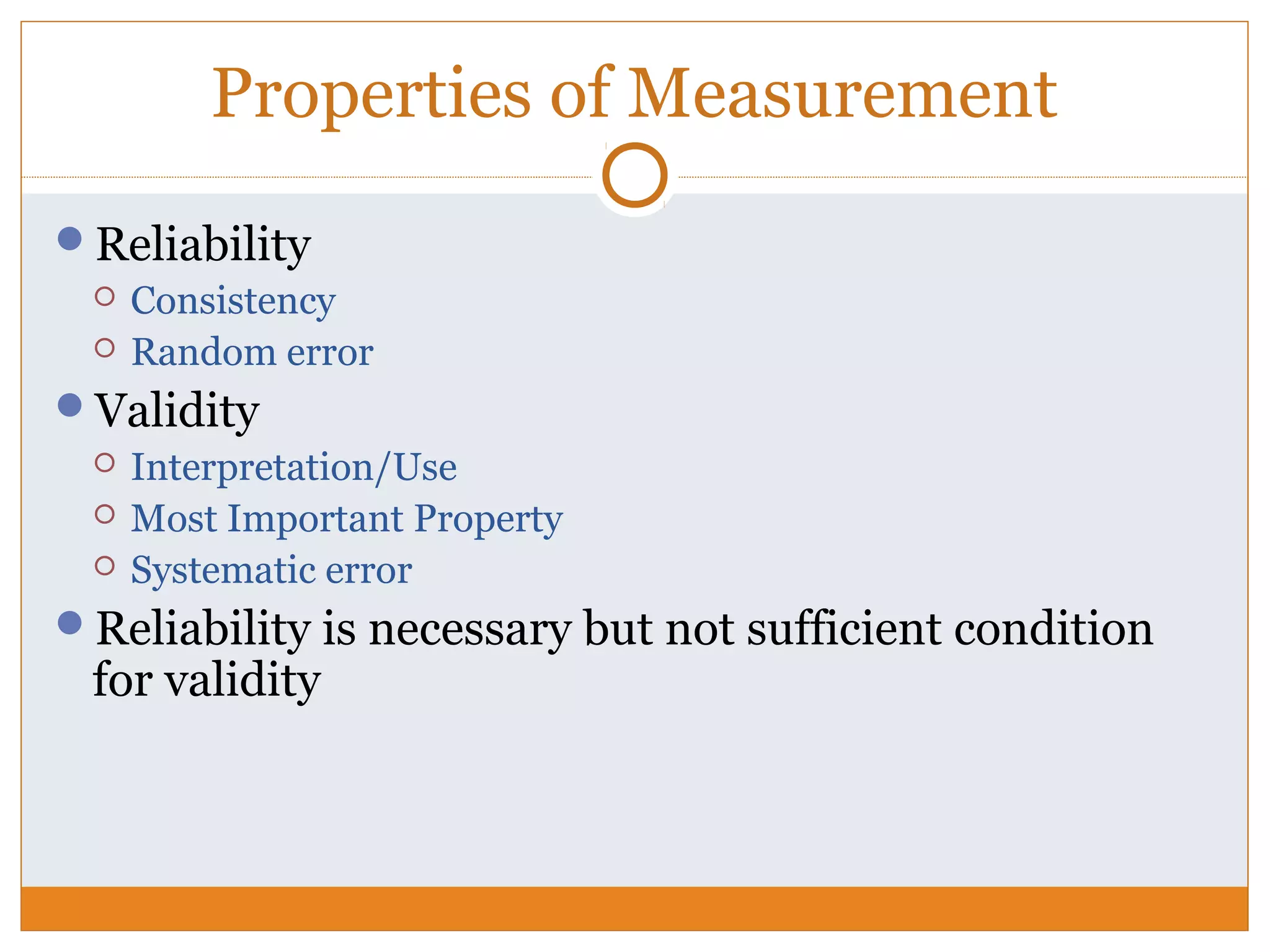
Properties of Measurement
Reliability
 Consistency
 Random error
Validity
 Interpretation/Use
 Most Important Property
 Systematic error
Reliability is necessary but not sufficient condition
for validity
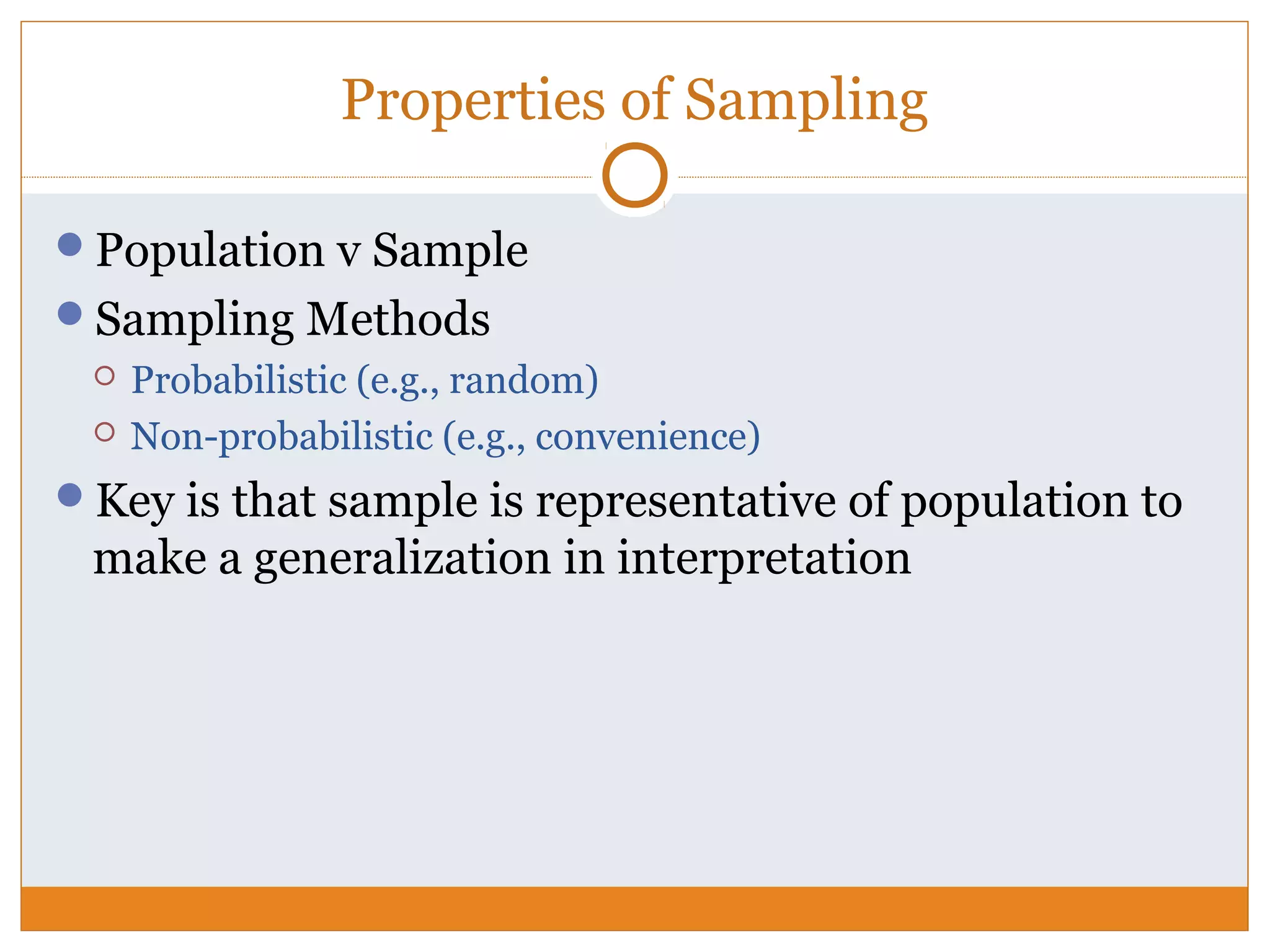
Properties of Sampling
Population v Sample
Sampling Methods
 Probabilistic (e.g., random)
 Non-probabilistic (e.g., convenience)
Key is that sample is representative of population to
make a generalization in interpretation
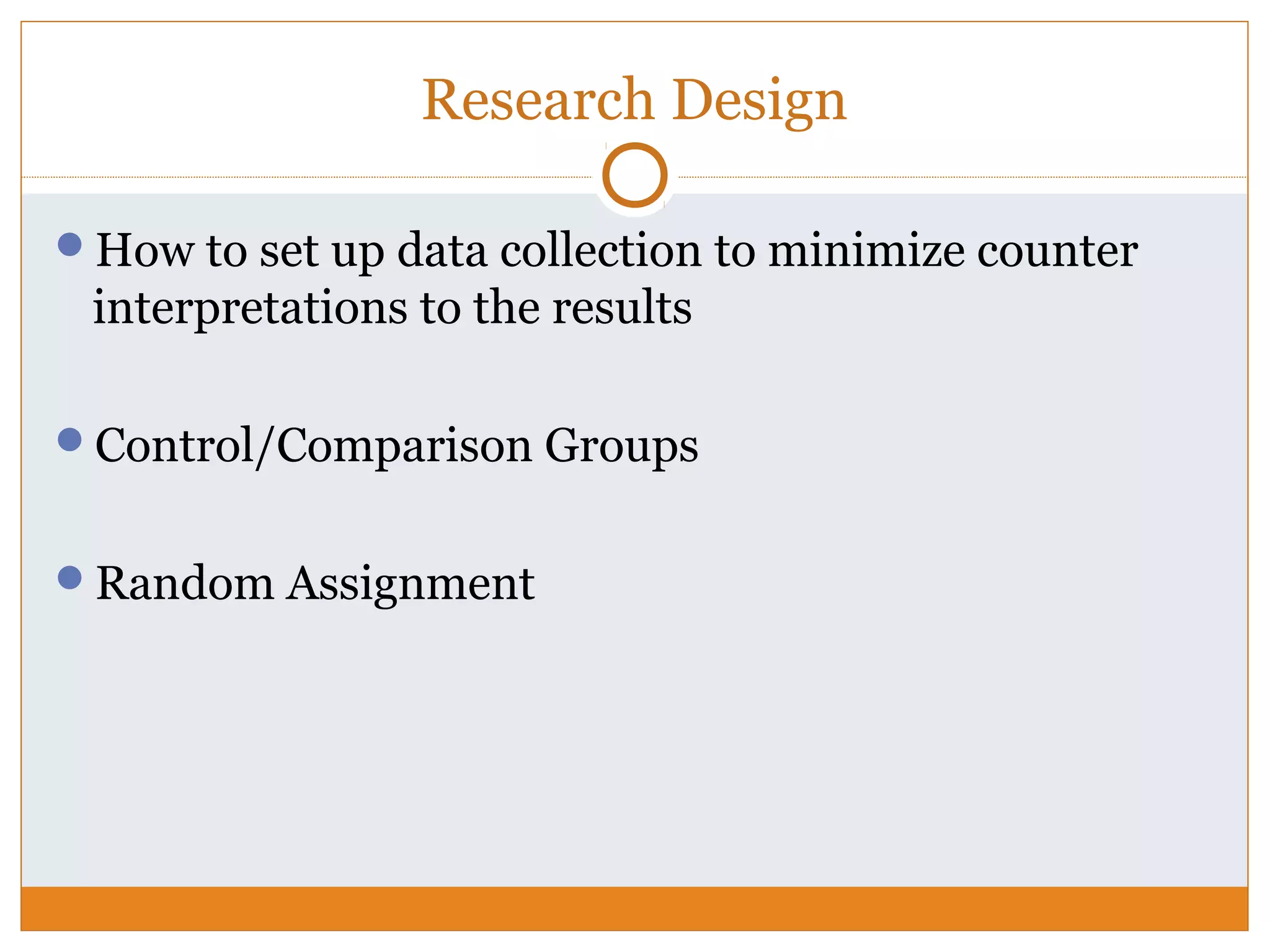
Research Design
How to set up data collection to minimize counter
interpretations to the results
Control/Comparison Groups
Random Assignment
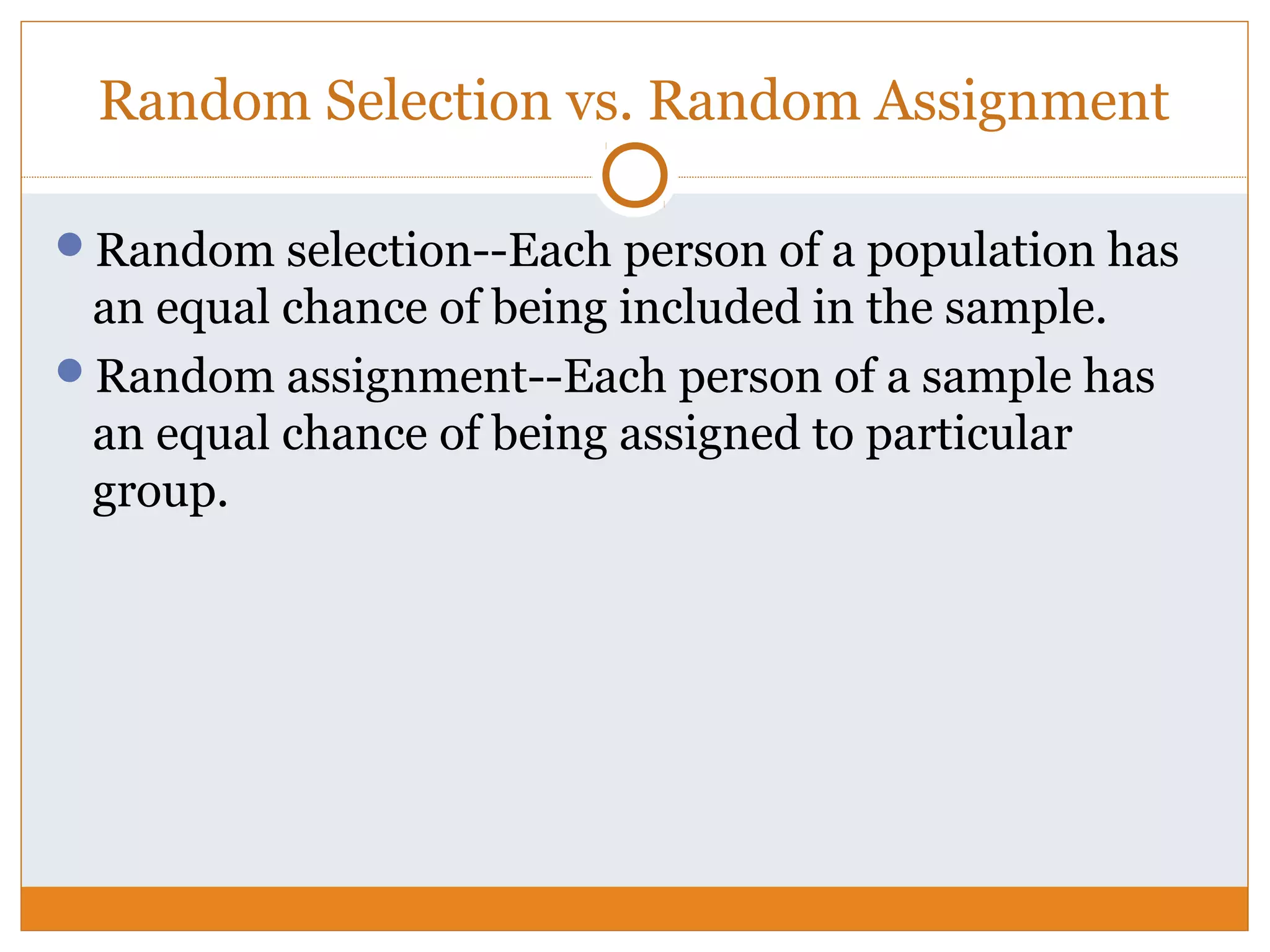
Random Selection vs. Random Assignment
Random selection--Each person of a population has
an equal chance of being included in the sample.
Random assignment--Each person of a sample has
an equal chance of being assigned to particular
group.
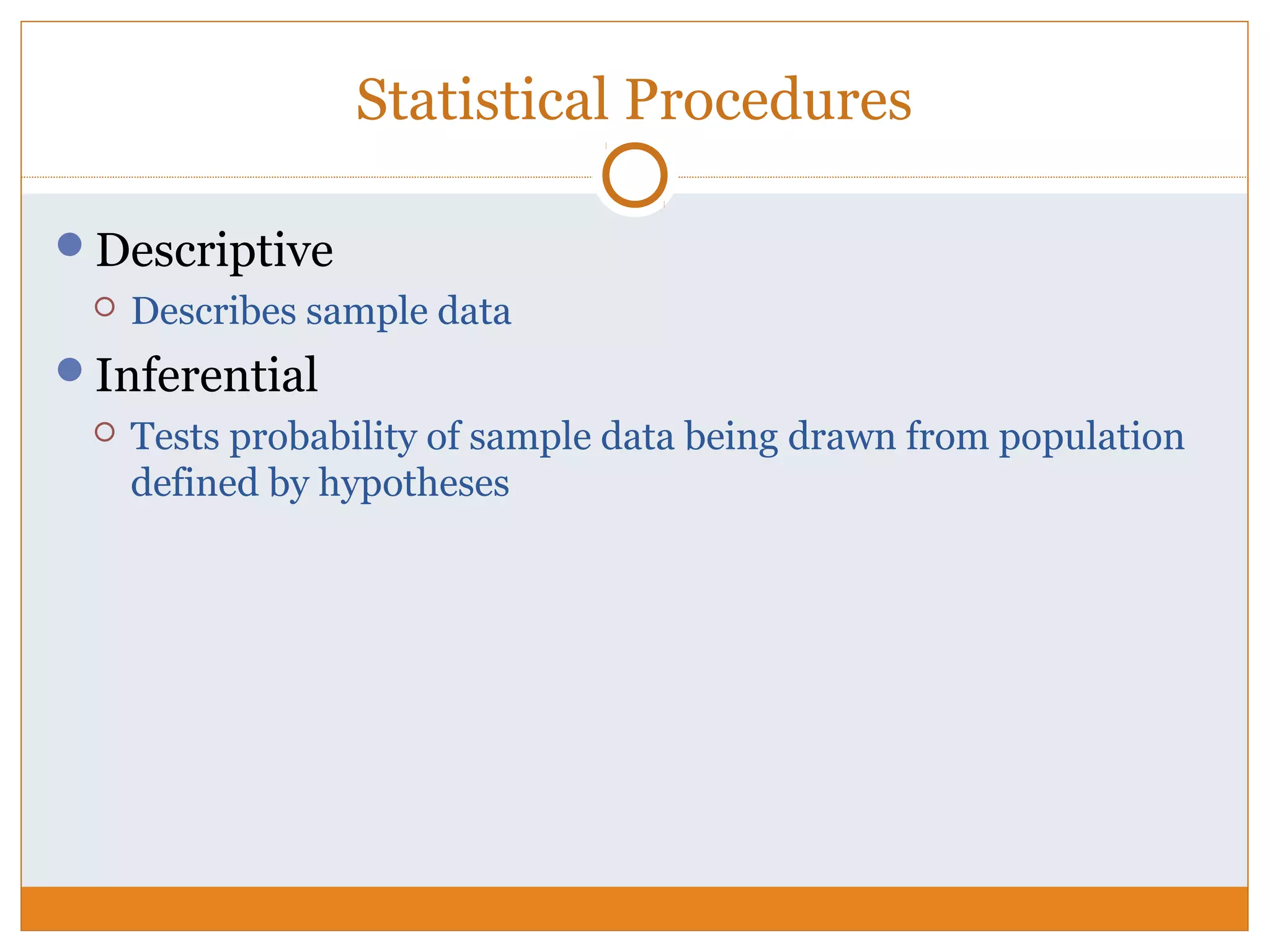
Statistical Procedures
Descriptive
 Describes sample data
Inferential
 Tests probability of sample data being drawn from population
defined by hypotheses
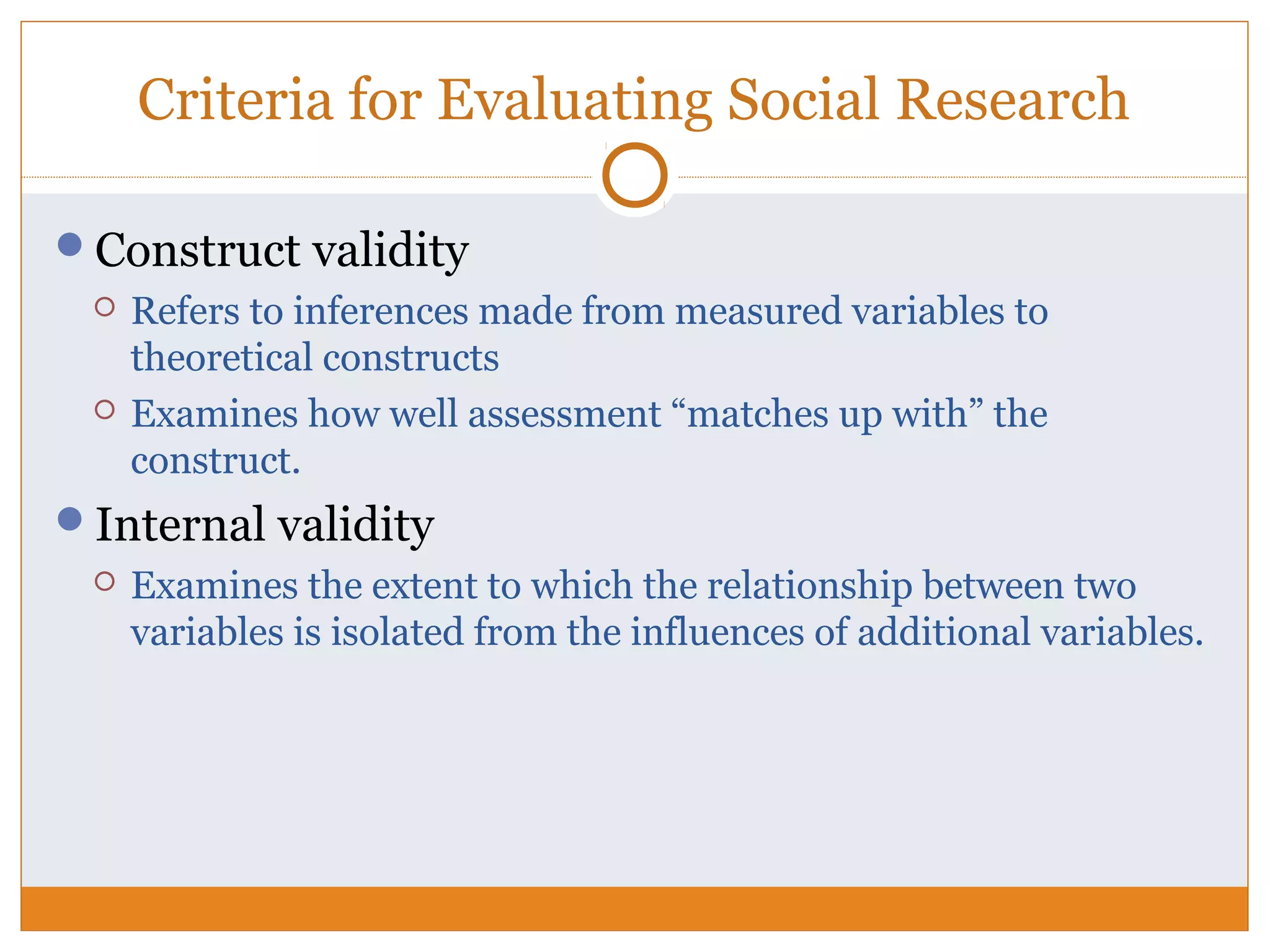
Criteria for Evaluating Social Research
Construct validity
 Refers to inferences made from measured variables to
theoretical constructs
 Examines how well assessment “matches up with” the
construct.
Internal validity
 Examines the extent to which the relationship between two
variables is isolated from the influences of additional variables.
Criteria for Evaluating Social Research
External validity
 Addresses the concern of how well does the relationship
between two variables generalize across settings, samples, and
times.
Statistical conclusion validity
 Addresses issue of how the use of statistics shape inferences
and interpretations

Topic 1 introduction to quantitative research

  • 1.
    AN INTRODUCTION TOQUANTITATIVE RESEARCH EDF 7486: Topic 1
  • 2.
    Quantitative Research What isquantitative research?  Quantitative research collects and uses numerical data to explore, describe, explain, or predict trends or phenomena.  Quantitative research emphasizes objectivity and the control of contextual factors that may impact the results.  Quantitative research states hypotheses and relies on statistical analysis to support conclusions made regarding the hypotheses.
  • 3.
    Reasons for QuantitativeResearch Exploratory  Investigates issues with the goal of providing insight and information to the researcher  Use pilot studies to test feasibility or value of working in an area; focus groups to guide survey design Description  Describe the current situation or classify situations, events or groups.  Often use large scale data sets -NELS, High School and Beyond, etc.  Surveys; correlational studies
  • 4.
    Reasons for QuantitativeResearch Explanation  Build, enrich and explain theories  Test theories using quantitative methods Prediction  Establish predictors of some behavior  Two types of variables – predictor and criterion (outcome)  Regression analysis is one statistical procedure used for prediction Evaluation  Evaluates programs for their efficacy  Come in different forms and serve different functions
  • 5.
    Types of QuantitativeResearch Survey Research  Collect quantitative data to address questions about the current state of a population or phenomena.  Can address preferences, attitudes, opinions, concerns, interests Correlational Research  Determines if a relationship exists between two quantitative variables  Measure the strength of the relationship
  • 6.
    Types of QuantitativeResearch Causal-Comparative Research  Establish a cause, or reason, for a behavior or other phenomena after the event, or cause, has already occurred.  Involves an independent-dependent variable relationship. Experimental Research  A collection of research designs that uses one or more variables that are manipulated to understand the effect on a dependent variable.  Allows for control of variables not relevant to the research.
  • 7.
    Types of QuantitativeResearch Action Research  Conducted by school administrators, teachers, or any other stakeholder in the teaching-learning environment  Primary focus is on the way schools operate, teachers teach and students learn
  • 8.
    Four Parts ofQuantitative Research Measurement Sampling Research Design Statistical Procedures
  • 9.
    Properties of Measurement Reliability Consistency  Random error Validity  Interpretation/Use  Most Important Property  Systematic error Reliability is necessary but not sufficient condition for validity
  • 10.
    Properties of Sampling Populationv Sample Sampling Methods  Probabilistic (e.g., random)  Non-probabilistic (e.g., convenience) Key is that sample is representative of population to make a generalization in interpretation
  • 11.
    Research Design How toset up data collection to minimize counter interpretations to the results Control/Comparison Groups Random Assignment
  • 12.
    Random Selection vs.Random Assignment Random selection--Each person of a population has an equal chance of being included in the sample. Random assignment--Each person of a sample has an equal chance of being assigned to particular group.
  • 13.
    Statistical Procedures Descriptive  Describessample data Inferential  Tests probability of sample data being drawn from population defined by hypotheses
  • 14.
    Criteria for EvaluatingSocial Research Construct validity  Refers to inferences made from measured variables to theoretical constructs  Examines how well assessment “matches up with” the construct. Internal validity  Examines the extent to which the relationship between two variables is isolated from the influences of additional variables.
  • 15.
    Criteria for EvaluatingSocial Research External validity  Addresses the concern of how well does the relationship between two variables generalize across settings, samples, and times. Statistical conclusion validity  Addresses issue of how the use of statistics shape inferences and interpretations