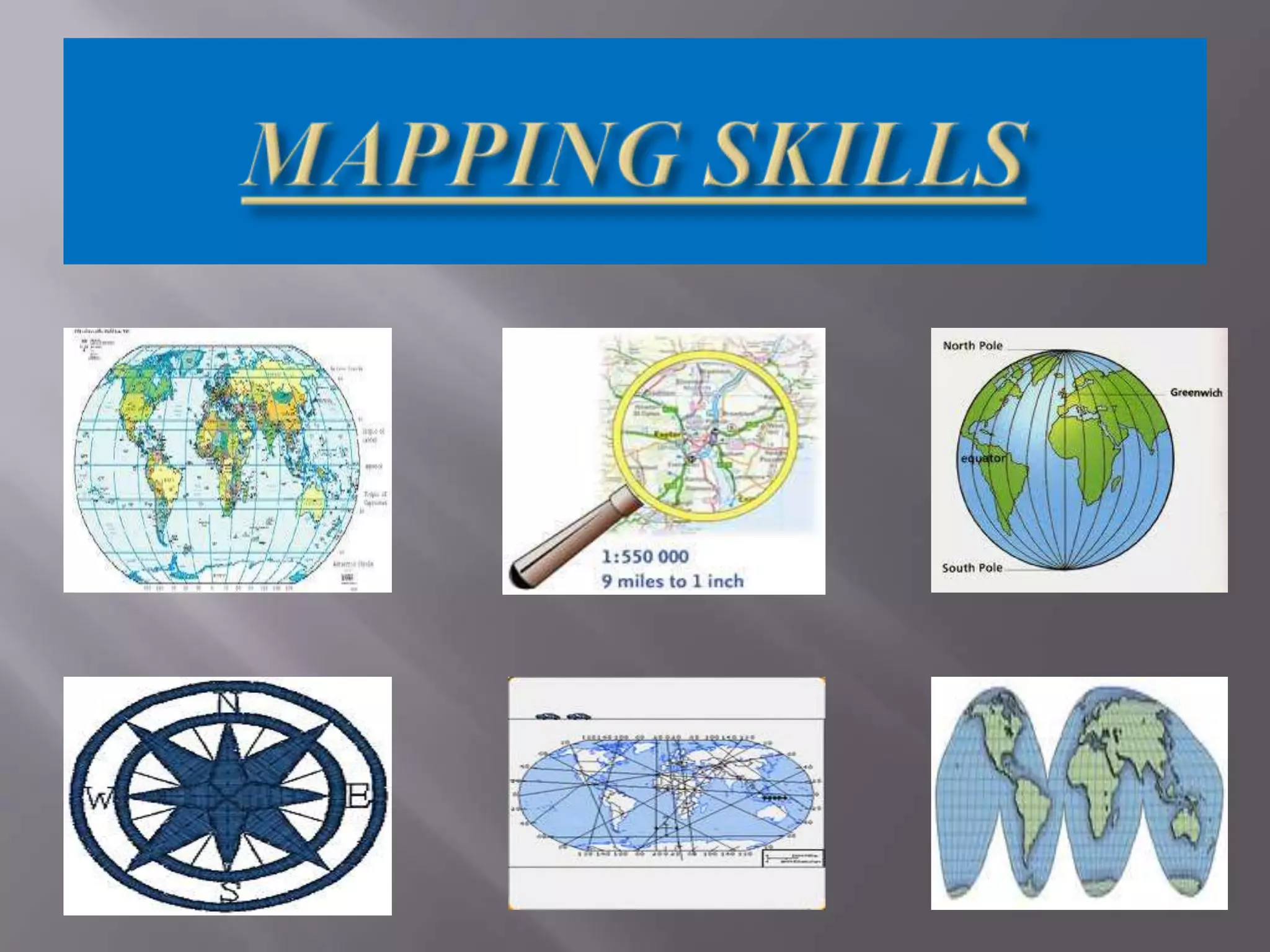
Maps are visual representations of the Earth’s surface as seen
vertically from above. Maps show how things on the Earth’s
surface are related to one another in terms of distance, direction
and size.
With the invention of printing in the 15th century, maps became
widely available.
The first world map came about in the 16th century following the
voyages of Christopher Columbus and other explorers.
People have been using maps for a long time. The
Ancient Egyptians used maps that were drawn based
on descriptions which travelers gave.
In ancient China, maps were used to plan battles.
Maps were used for the very purposes that they are

used today.
•A map provides information such as where a

place is in relation to another. For example, the
city you live in is north of a river.
•The distance from the city to the river can be

estimated from the scale given on the map.
•With such information, you will be able to find
your way around the city.
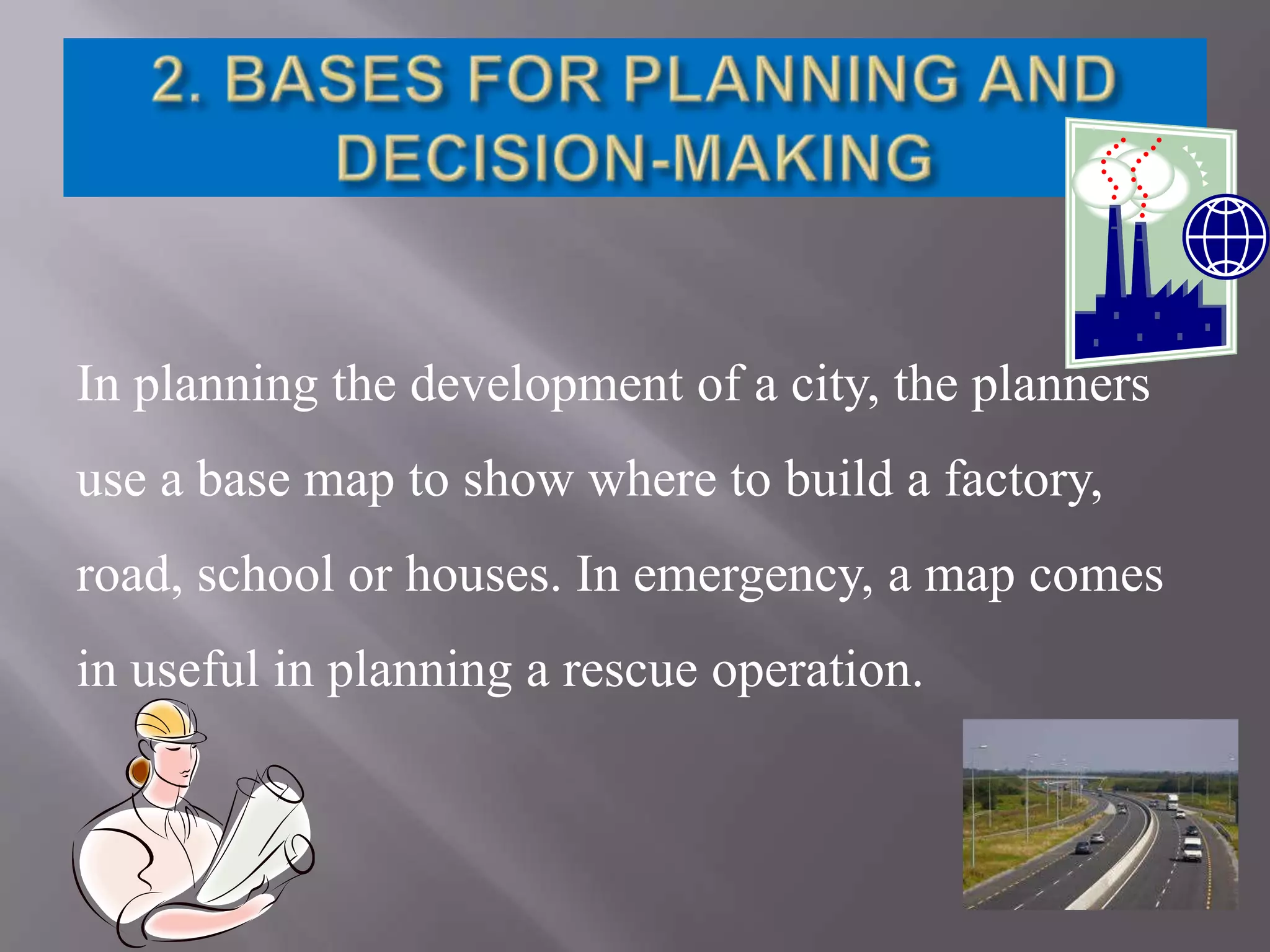
In planning the development of a city, the planners
use a base map to show where to build a factory,
road, school or houses. In emergency, a map comes
in useful in planning a rescue operation.
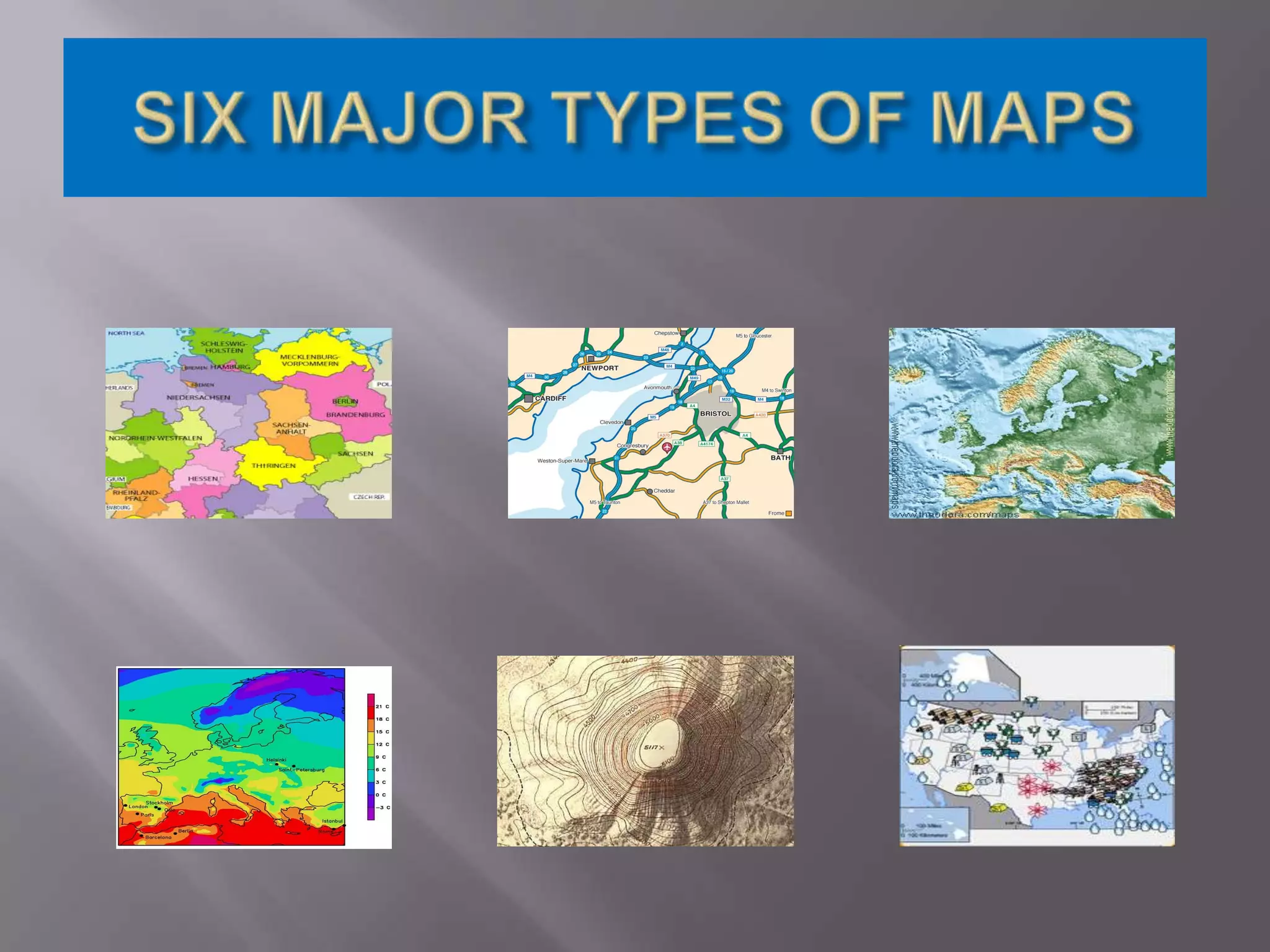
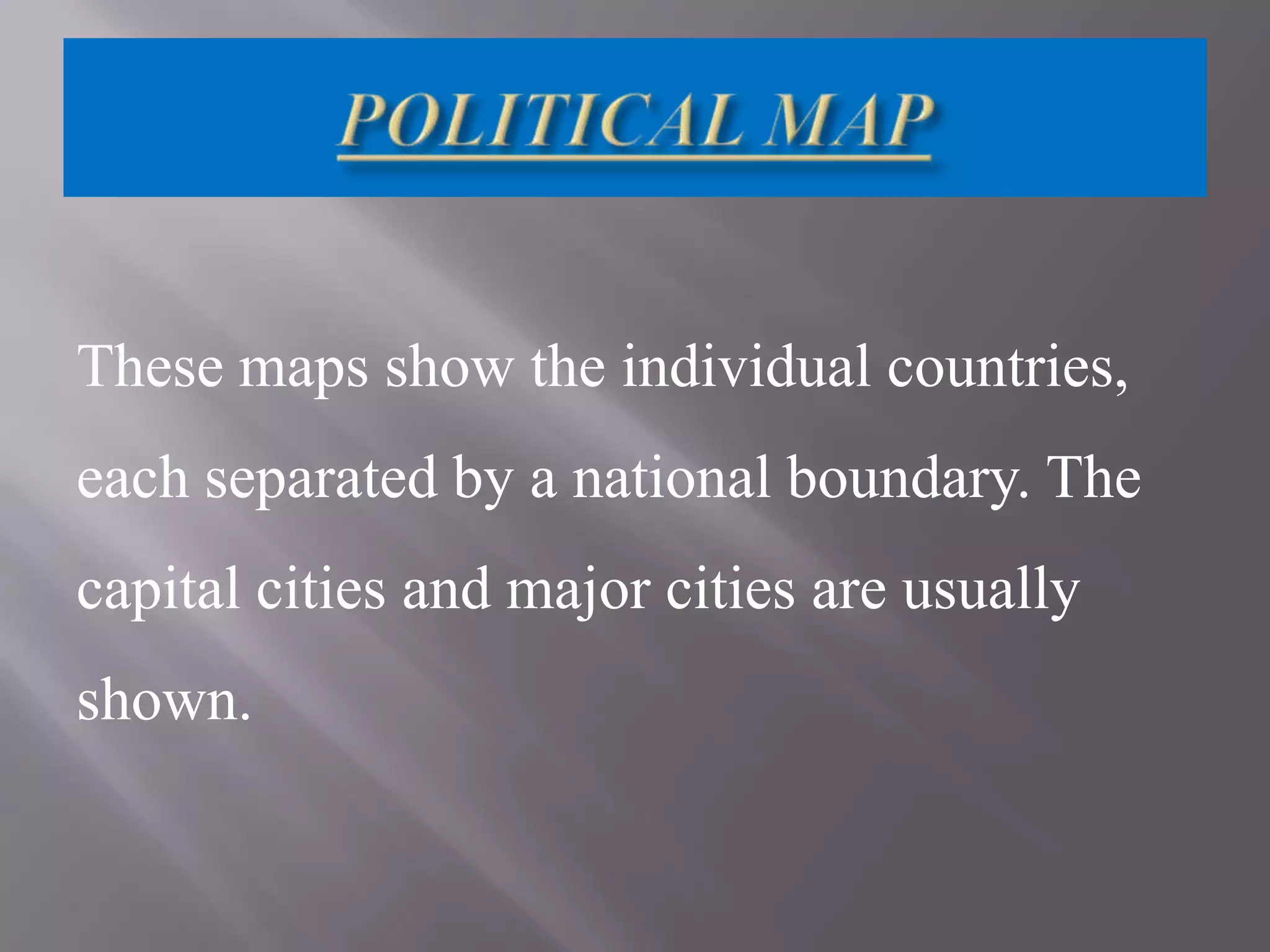
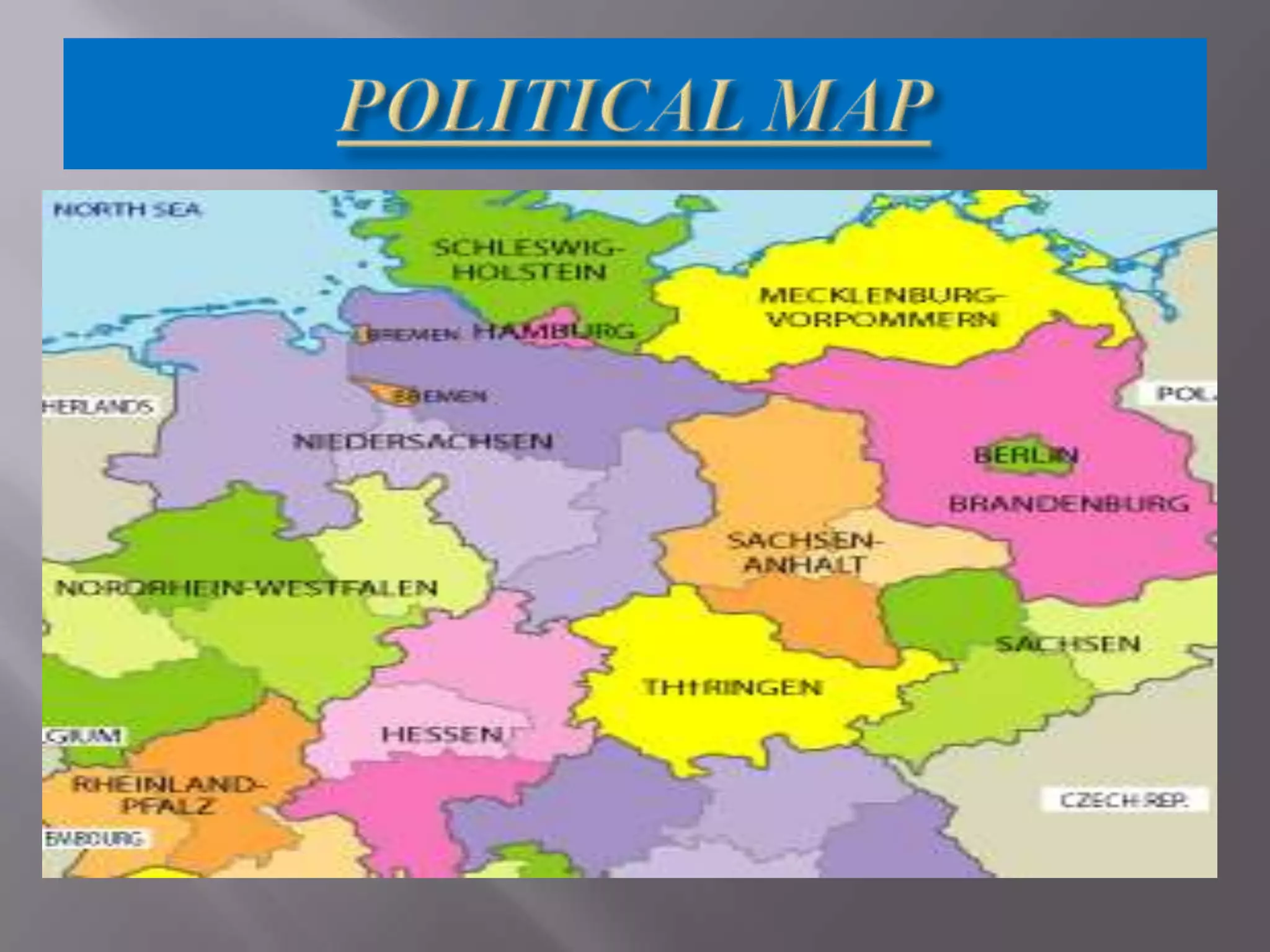
These maps show the individual countries,
each separated by a national boundary. The

capital cities and major cities are usually
shown.
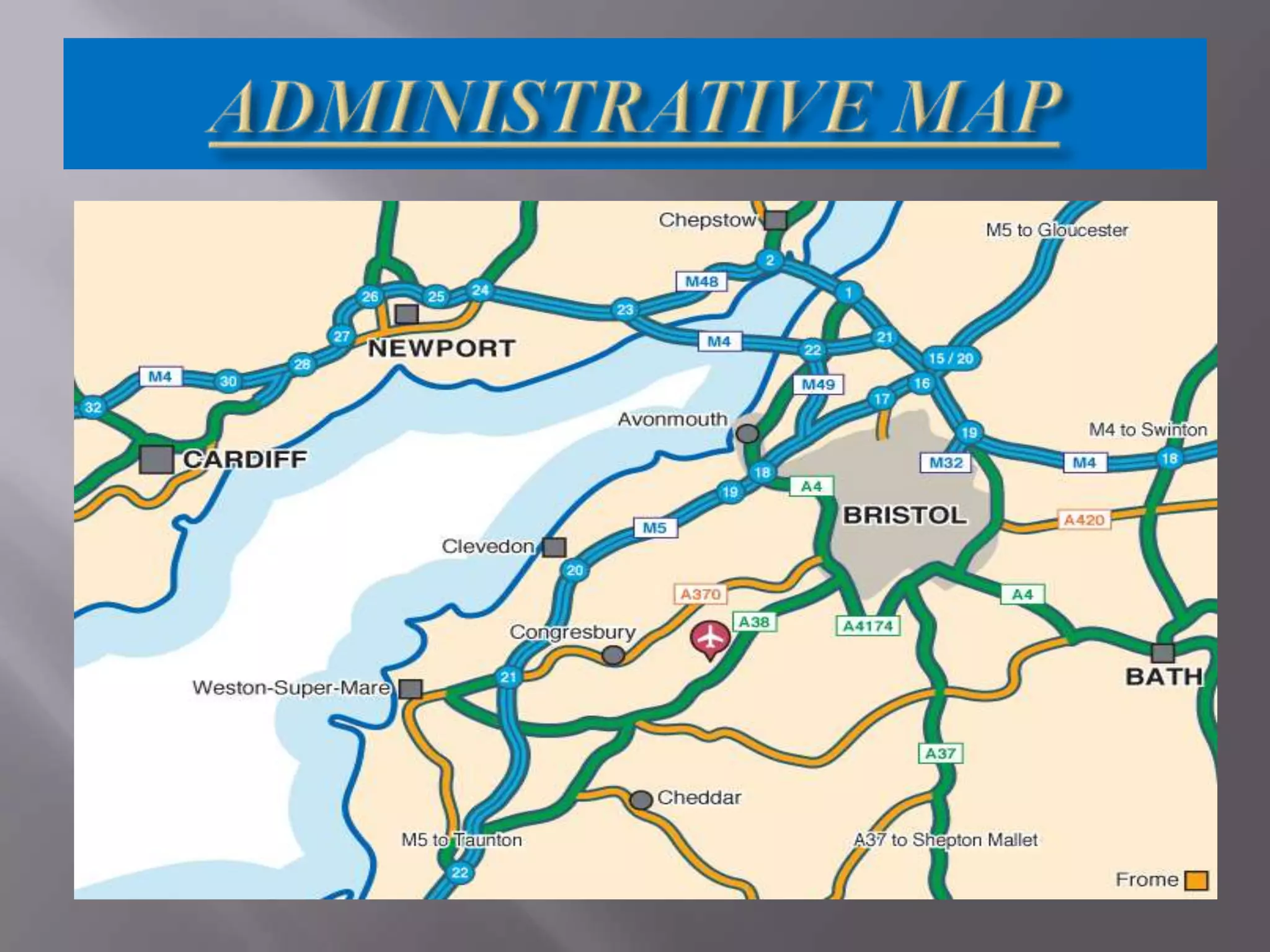
Administrative/Road maps show the roads,
highways, railroad tracks and points of interest

of a place. These maps are used by people to
find their way around a town, city or country.
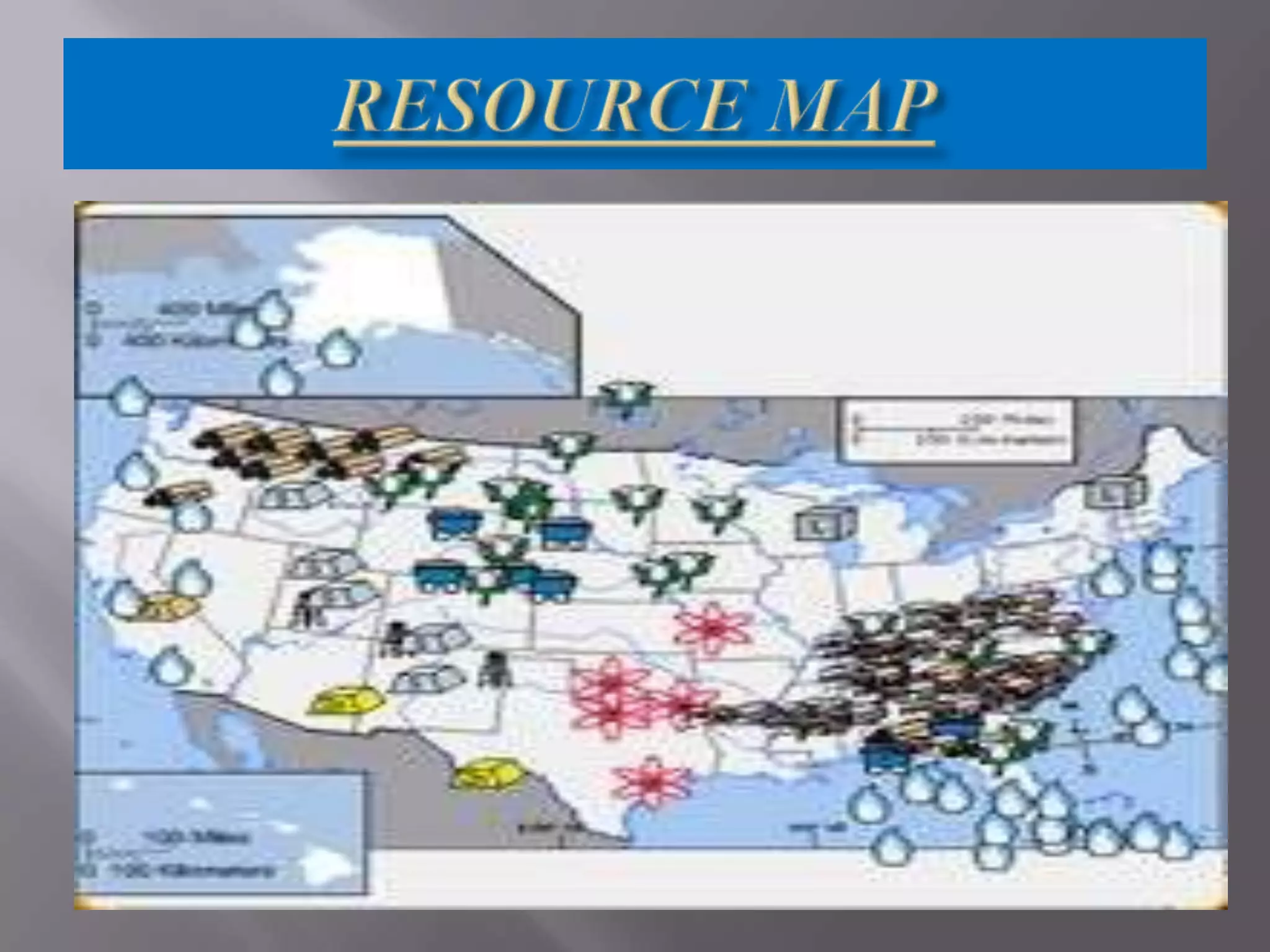
Resource/Economic maps show the different types
of natural resources or economic activities that are
found in an area. Symbols are used to show the
resource or the economic activity.
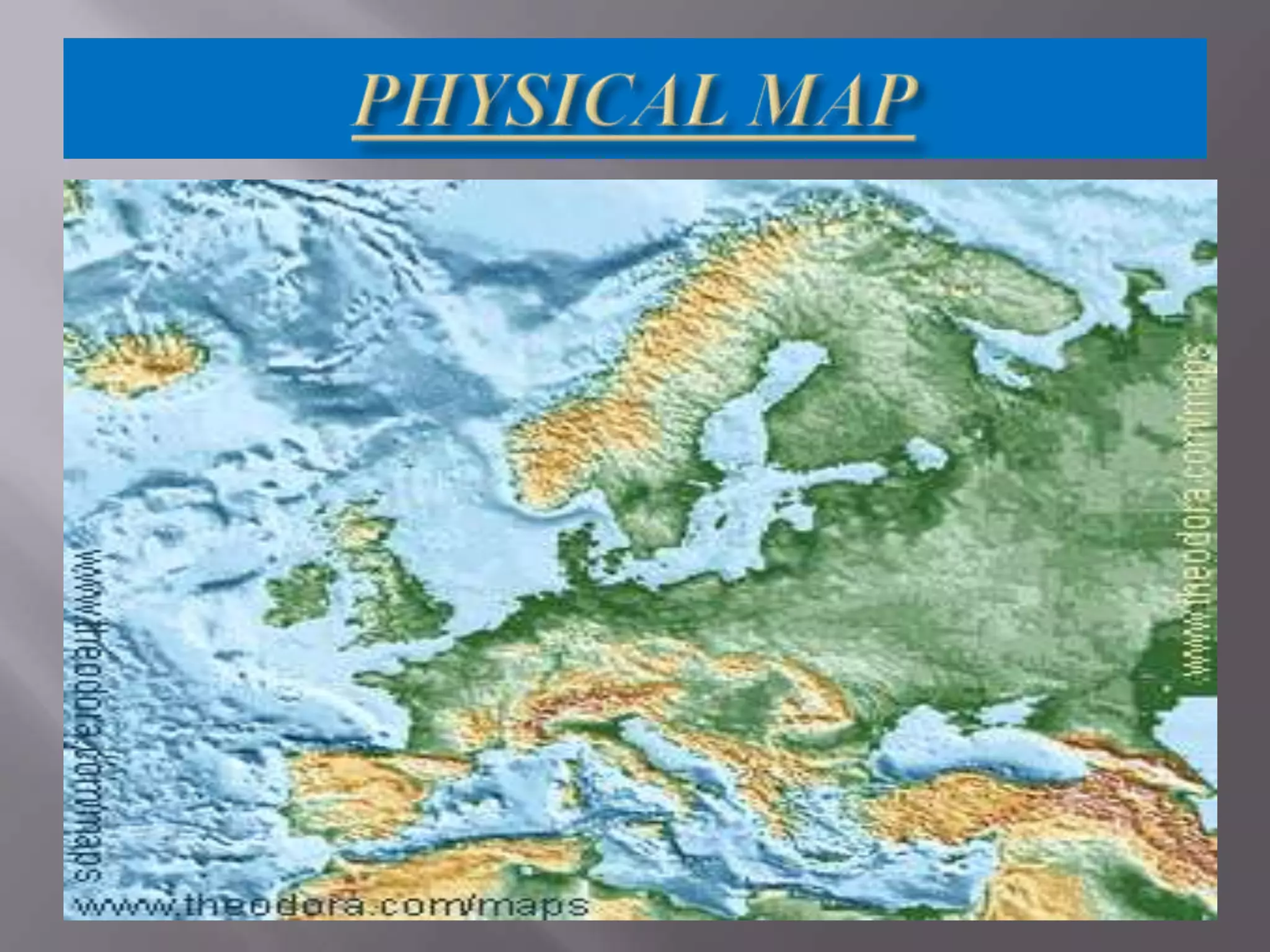
A typical physical map shows the physical
features such as mountains, plains and rivers.
Different colors are used to show land of
different heights.
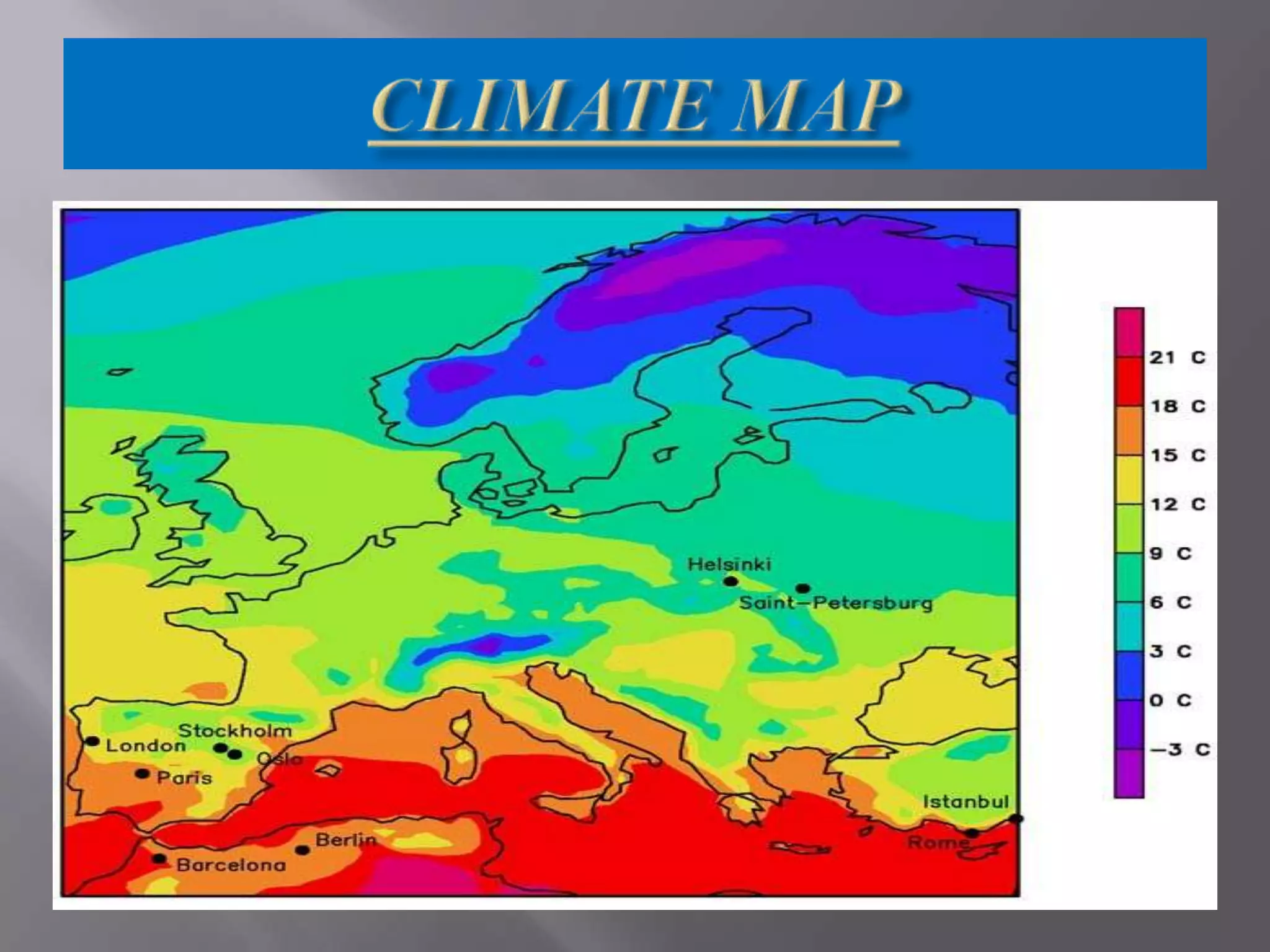
Thematic /Climate maps have specific themes. For
example, climatic maps give information about the
temperature, rainfall and atmospheric pressure of a
place, a country, a region or the world. Different
colors are used to show the different temperature
range.
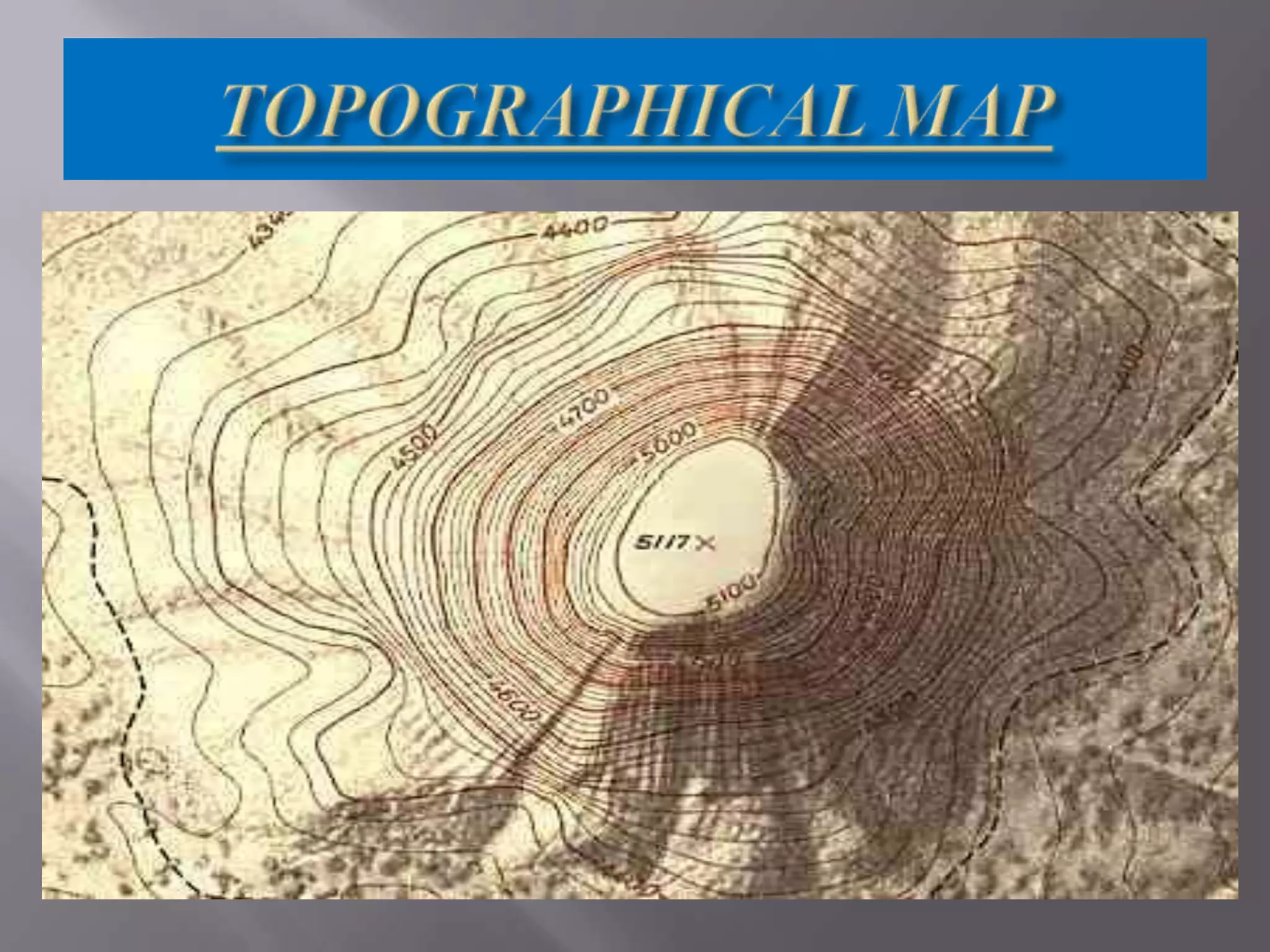
Topographical maps show the physical features of a
place. Unlike in the physical maps, the physical
features are shown in greater detail. Details such as
the shape and height of each feature are shown with
the help of contour lines. Human features such as

buildings, roads and farms are show
using symbols.
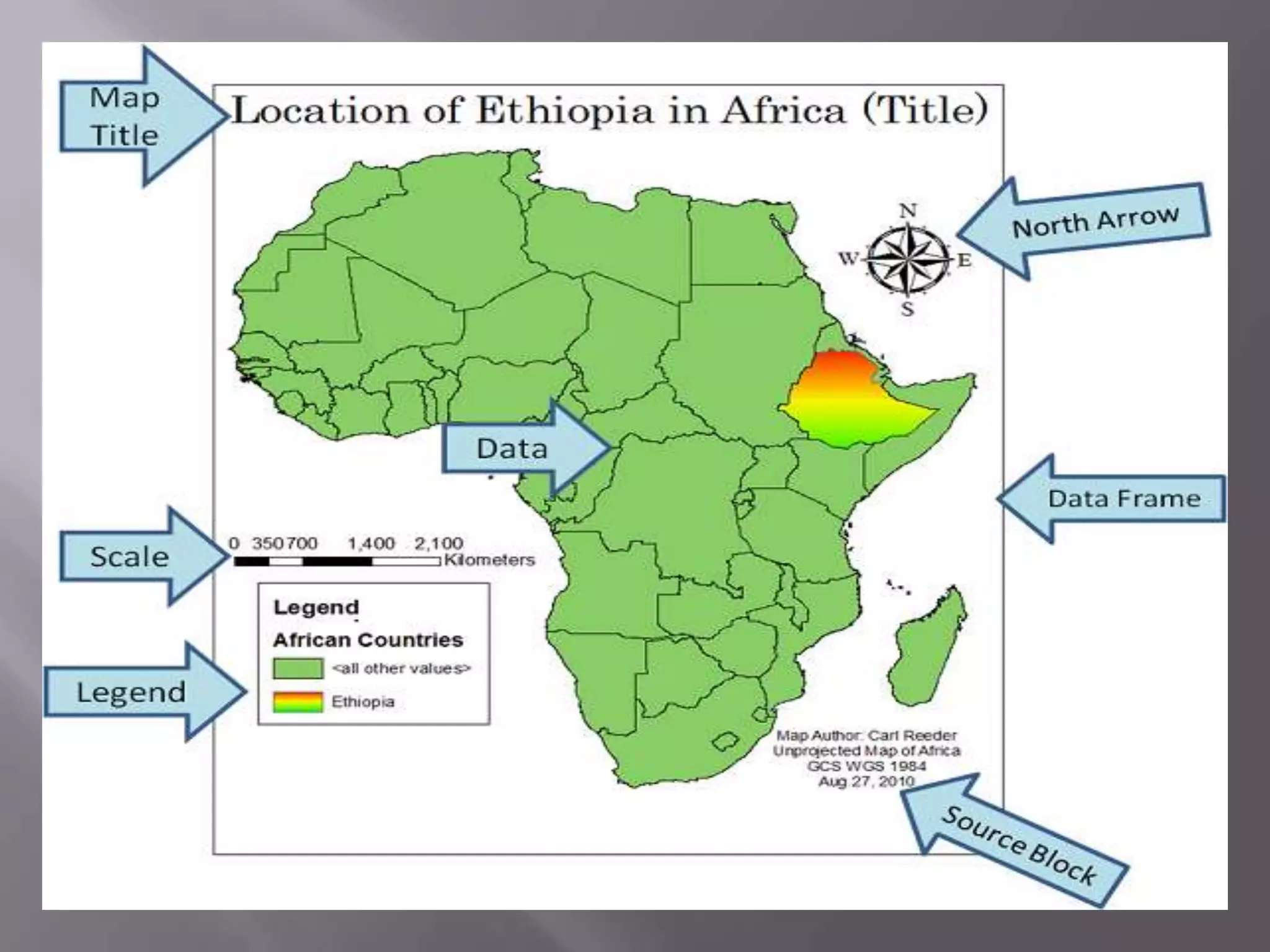
ELEMENTS OF MAPS

There are six basic elements of maps
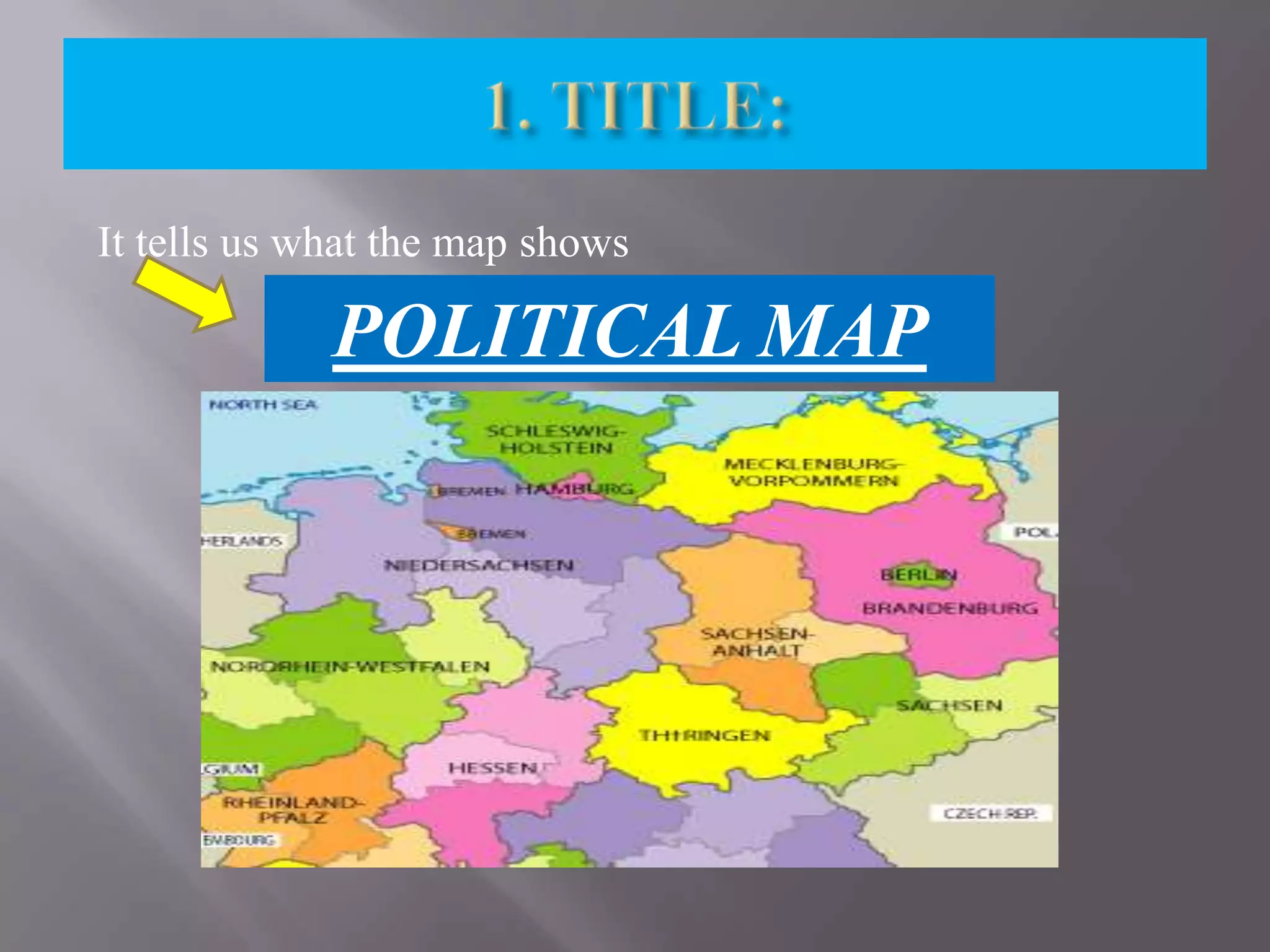
It tells us what the map shows

POLITICAL MAP
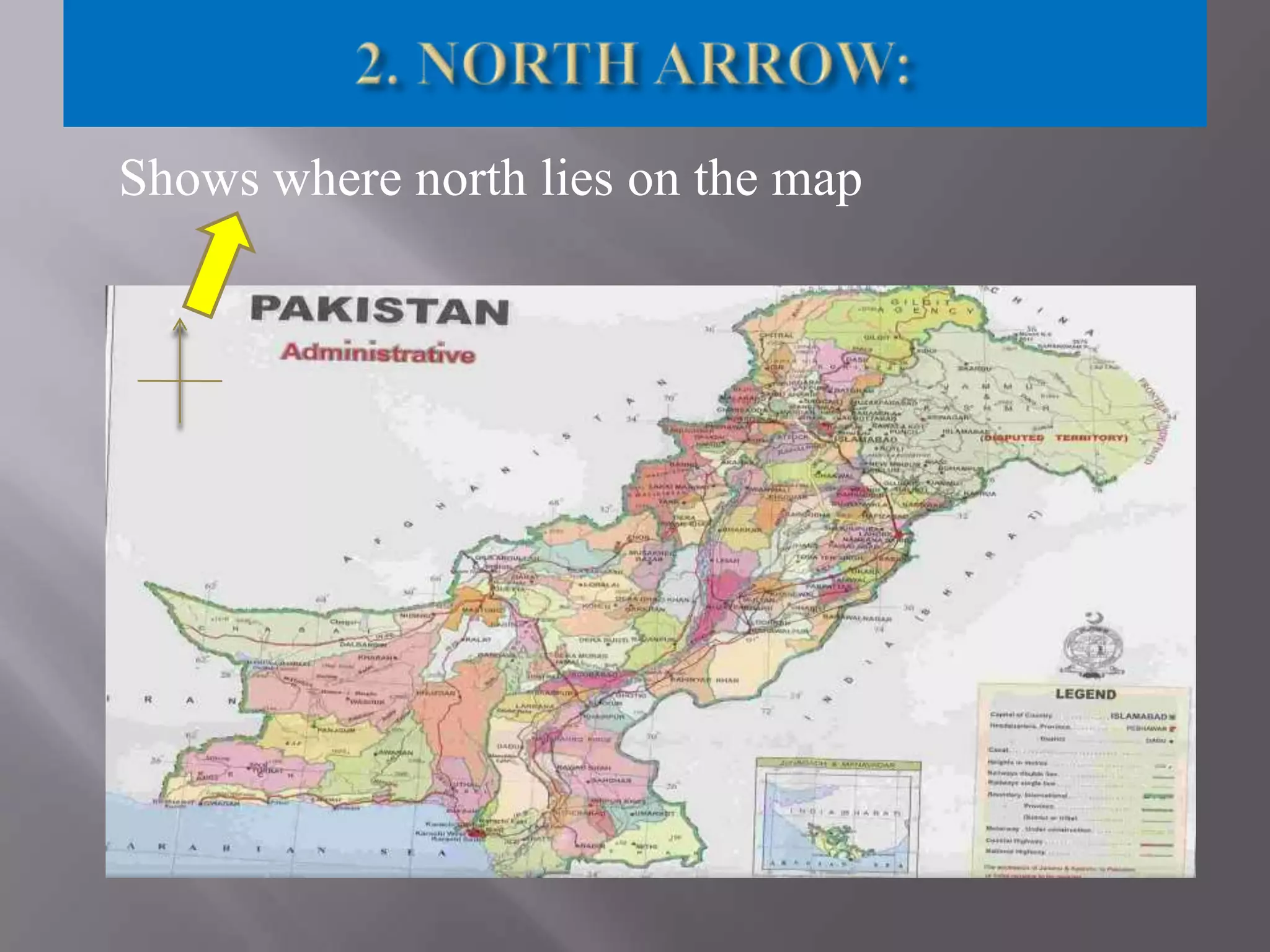
Shows where north lies on the map
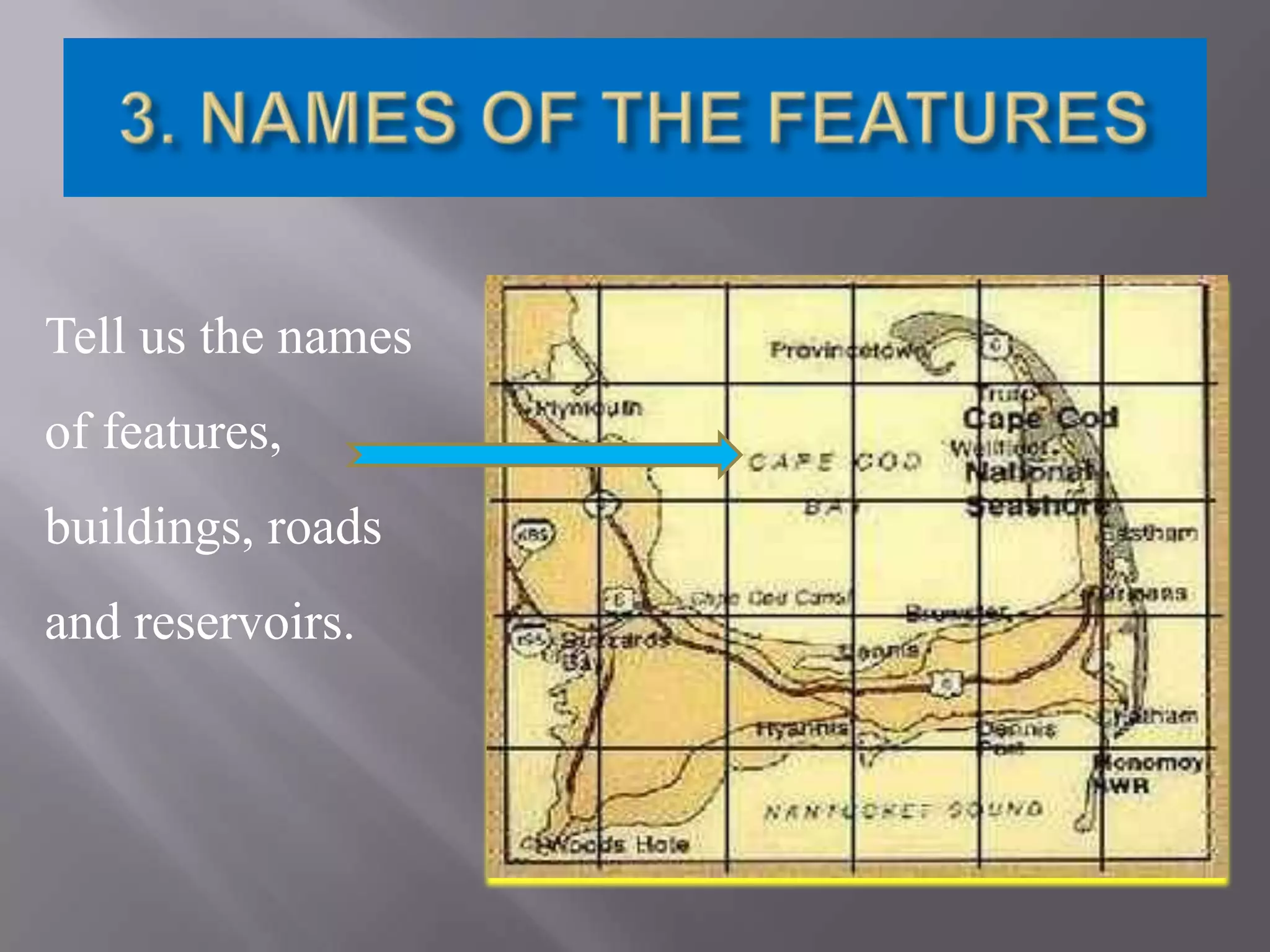
Tell us the names
of features,
buildings, roads
and reservoirs.
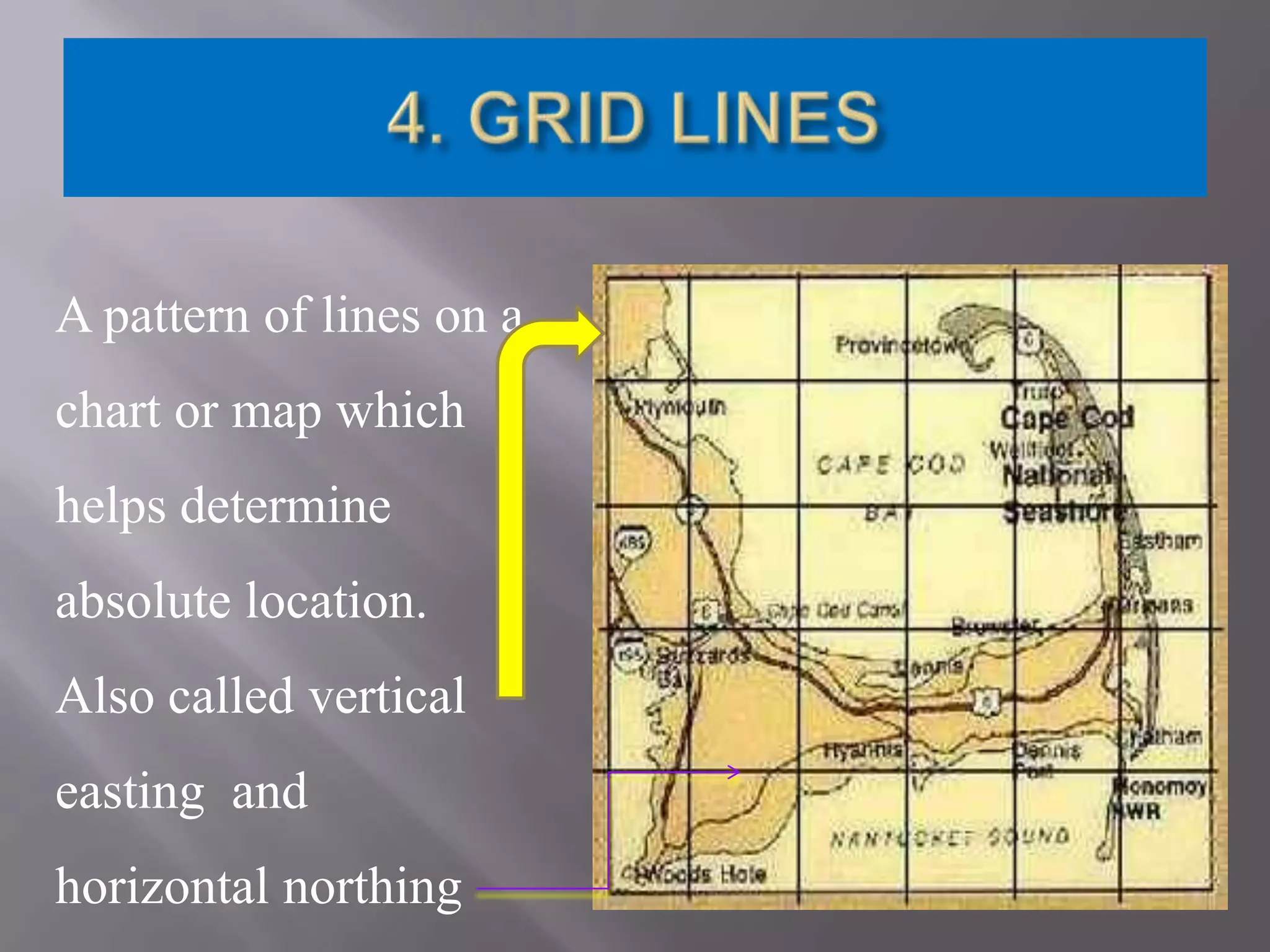
A pattern of lines on a
chart or map which
helps determine
absolute location.
Also called vertical

easting and
horizontal northing
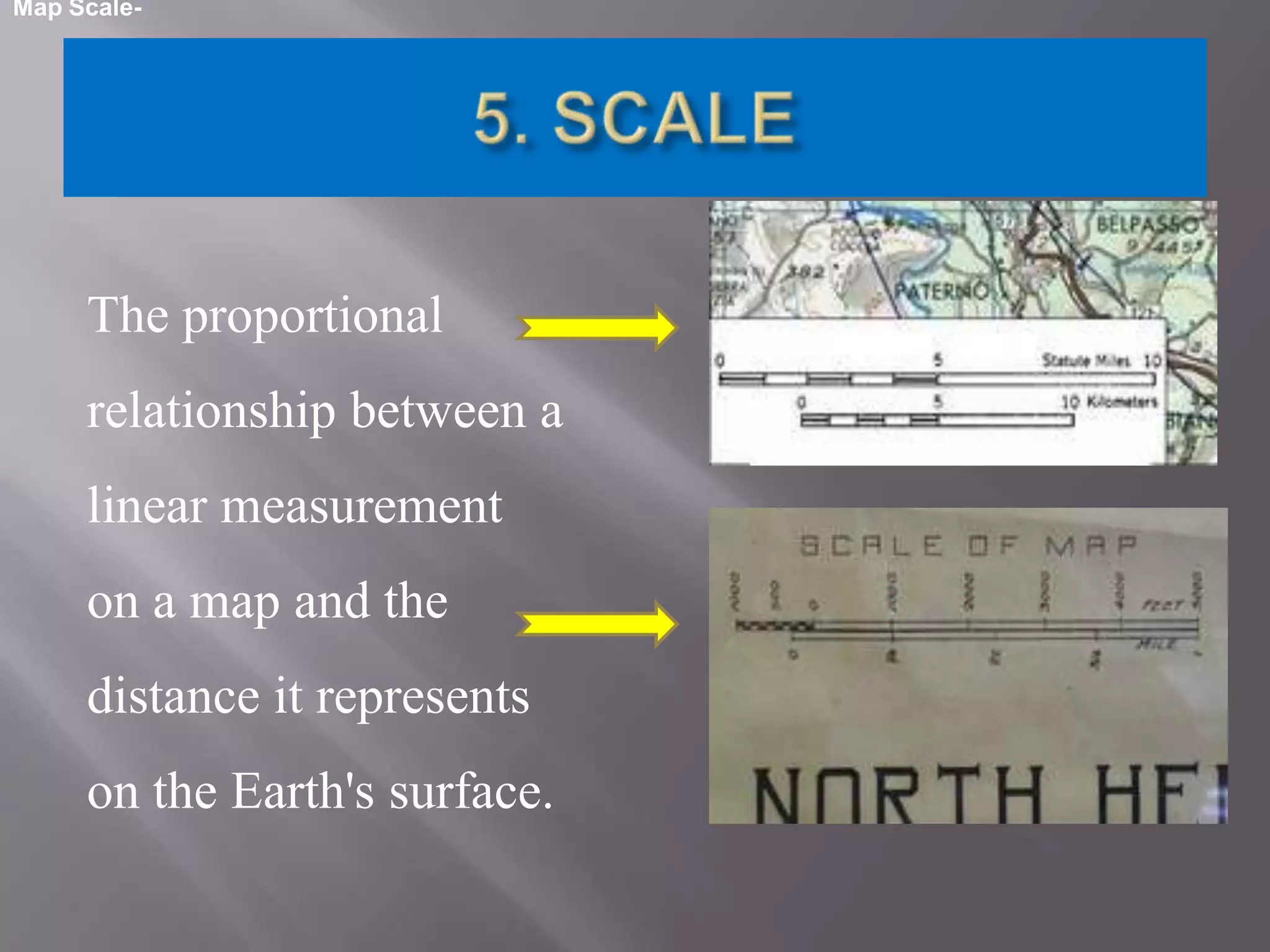
Map Scale-

The proportional
relationship between a
linear measurement
on a map and the
distance it represents

on the Earth's surface.
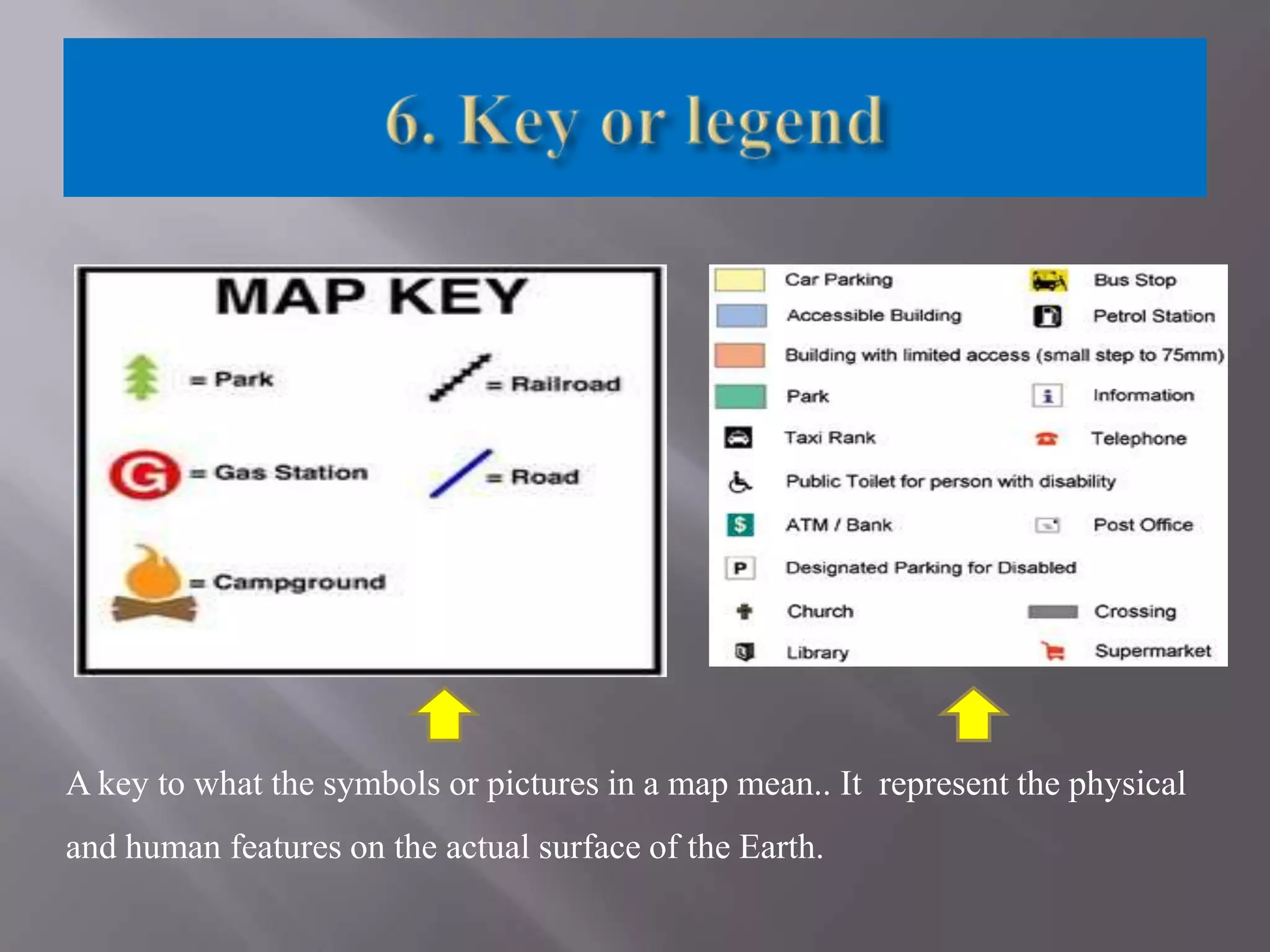
A key to what the symbols or pictures in a map mean.. It represent the physical
and human features on the actual surface of the Earth.
•
•

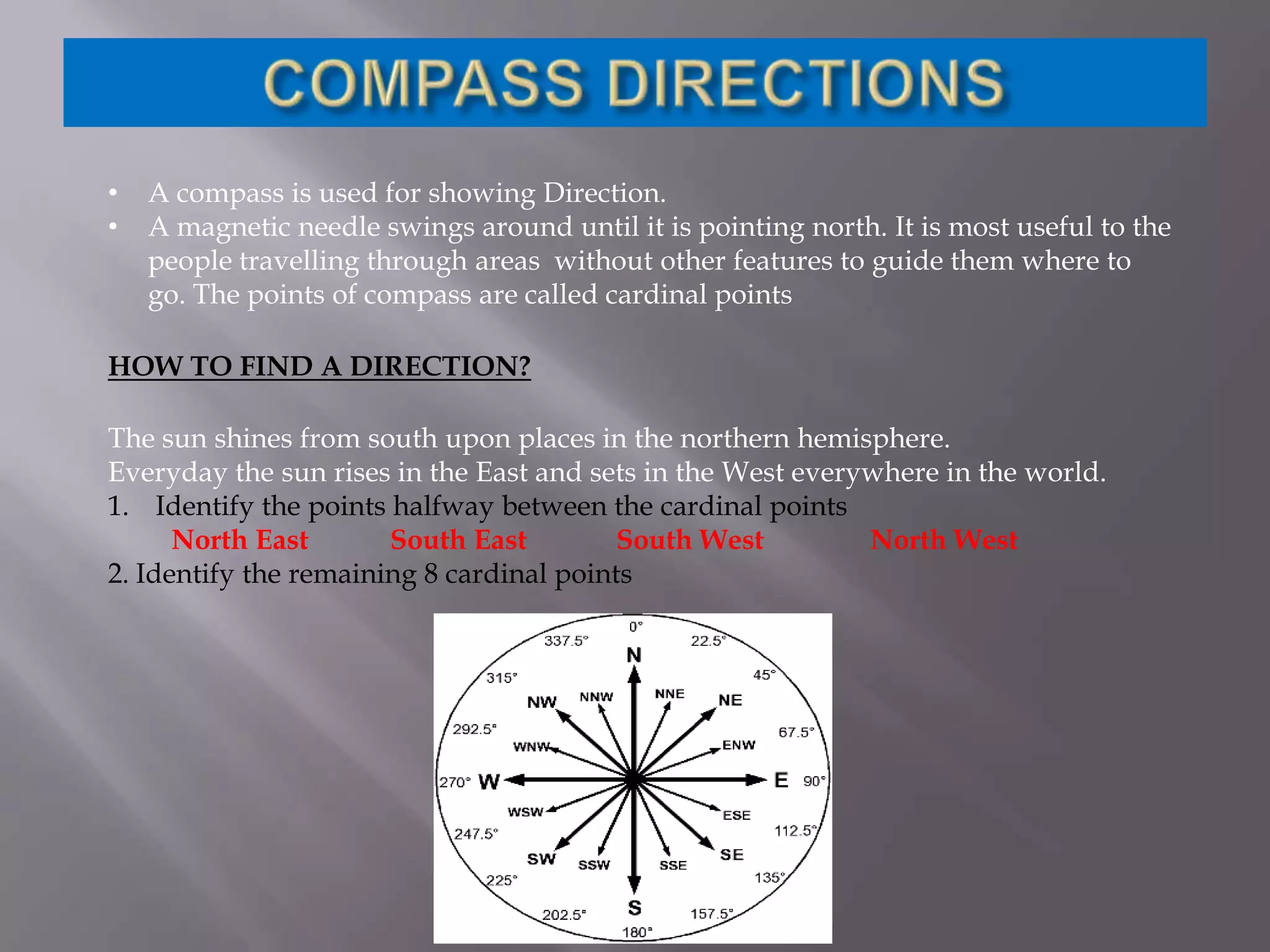
A compass is used for showing Direction.
A magnetic needle swings around until it is pointing north. It is most useful to the
people travelling through areas without other features to guide them where to
go. The points of compass are called cardinal points

HOW TO FIND A DIRECTION?
The sun shines from south upon places in the northern hemisphere.
Everyday the sun rises in the East and sets in the West everywhere in the world.
1. Identify the points halfway between the cardinal points
North East
South East
South West
North West
2. Identify the remaining 8 cardinal points
They are used to represent the different physical and human
features found on the Earth’s surface.
By using symbols map makers are able to fit in a lot of

information on a map.
There are certain standard colours or shapes that are used in
symbols. For example, blue is used to represent water or water
features such as streams and lakes, and green is used for
vegetation
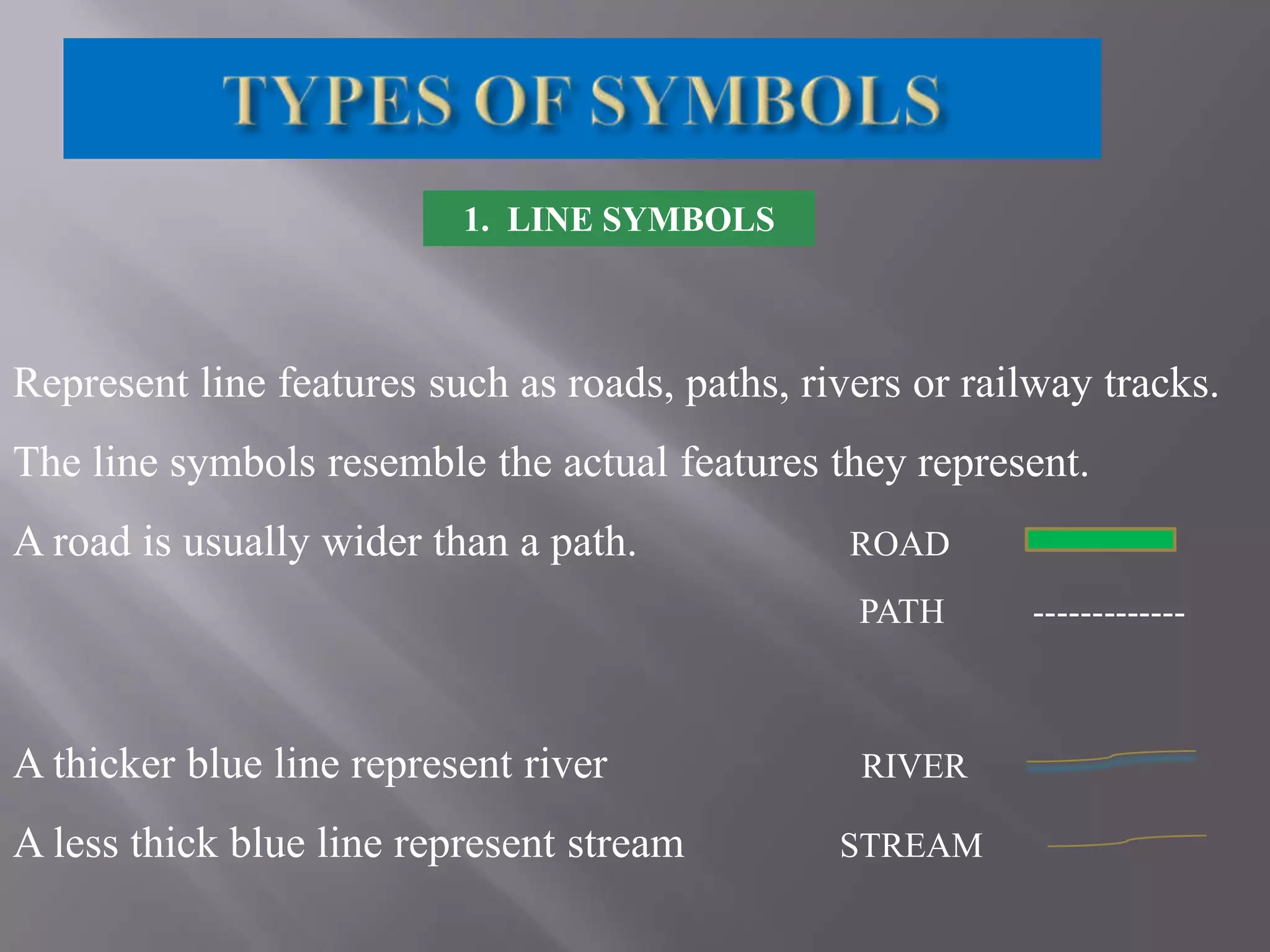
1. LINE SYMBOLS

Represent line features such as roads, paths, rivers or railway tracks.
The line symbols resemble the actual features they represent.

A road is usually wider than a path.

ROAD
PATH

A thicker blue line represent river
A less thick blue line represent stream

RIVER
STREAM

-------------
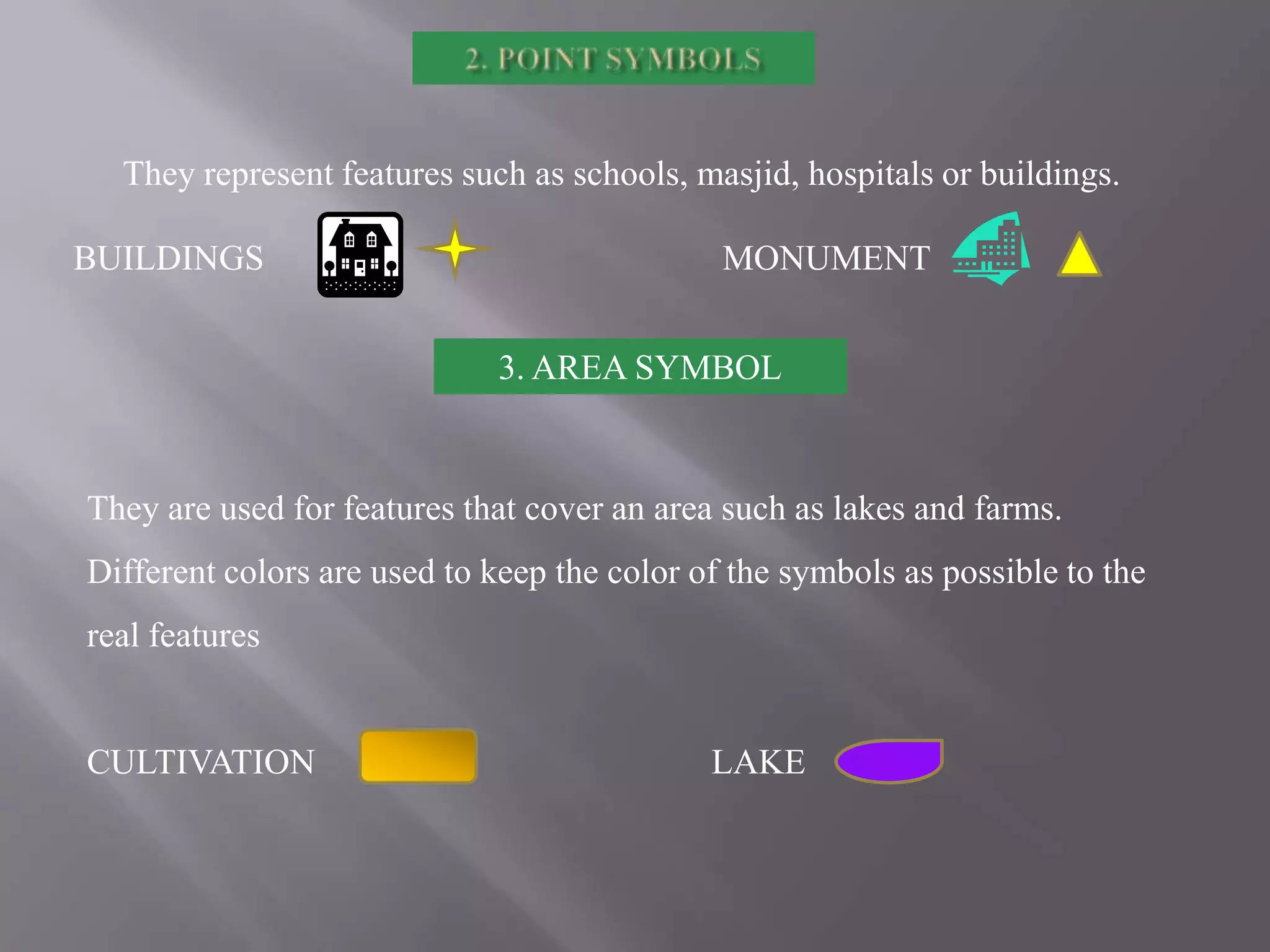
They represent features such as schools, masjid, hospitals or buildings.
BUILDINGS

MONUMENT
3. AREA SYMBOL

They are used for features that cover an area such as lakes and farms.
Different colors are used to keep the color of the symbols as possible to the
real features

CULTIVATION

LAKE
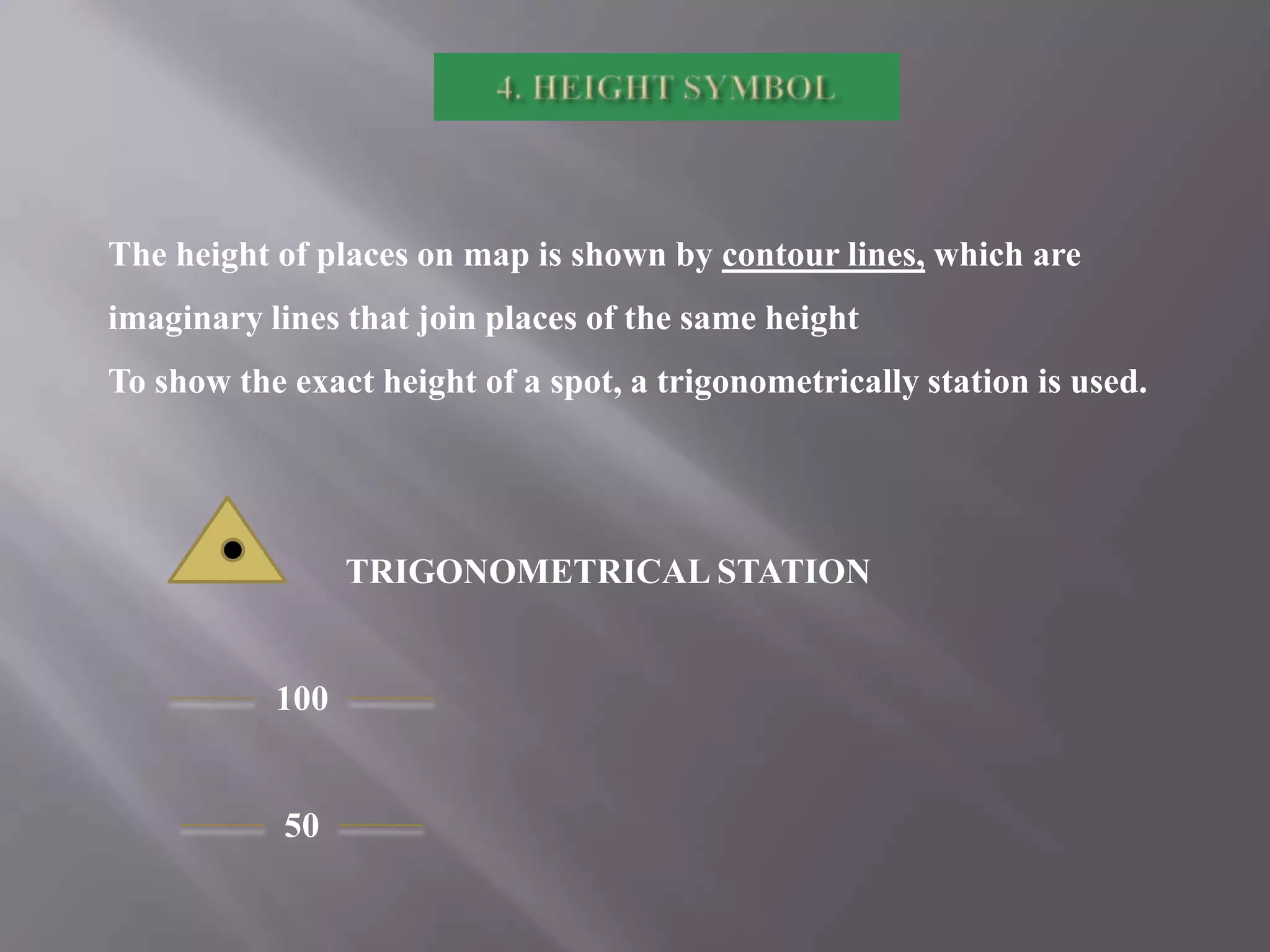
The height of places on map is shown by contour lines, which are
imaginary lines that join places of the same height
To show the exact height of a spot, a trigonometrically station is used.

TRIGONOMETRICAL STATION

100

50
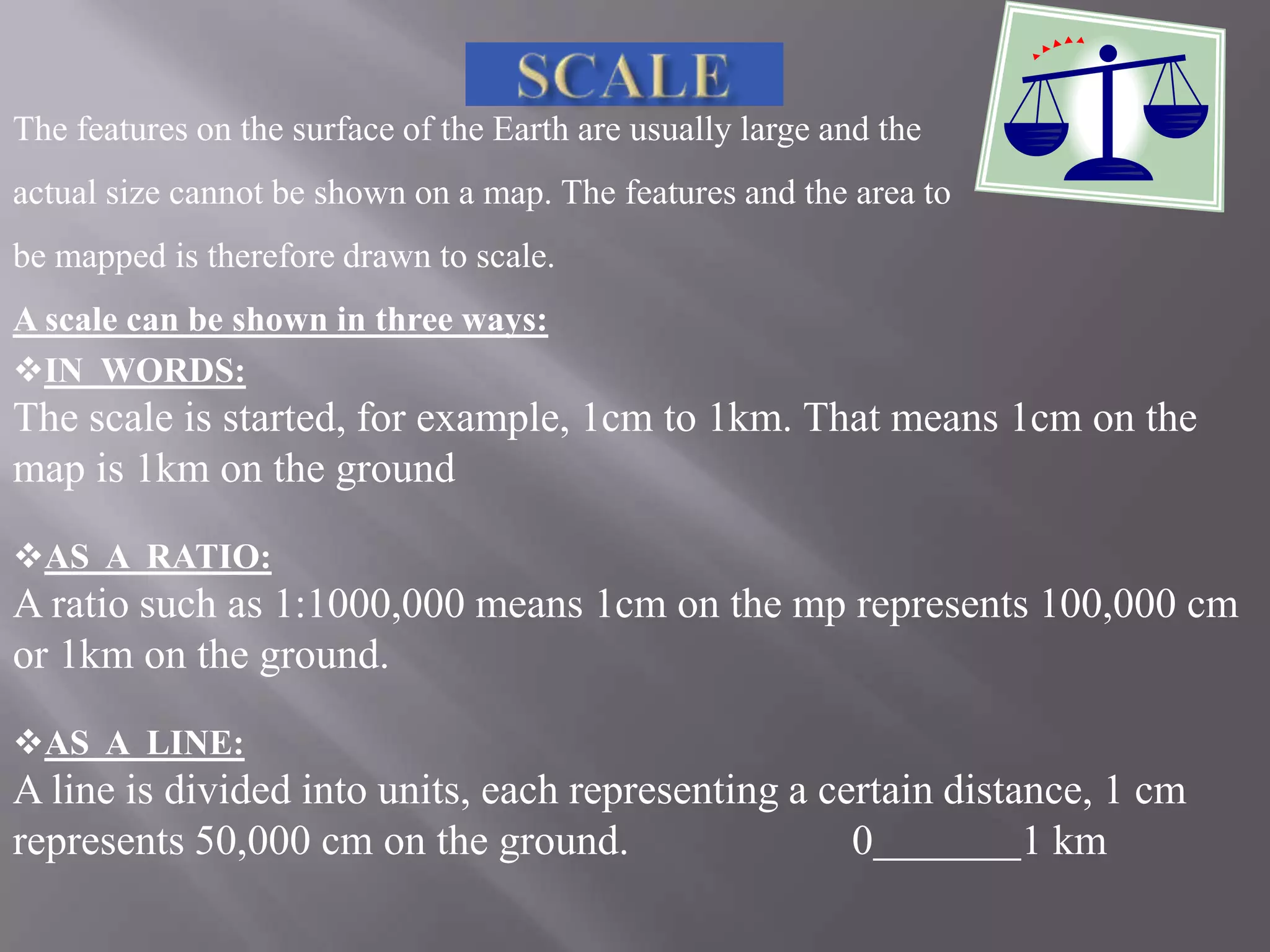
The features on the surface of the Earth are usually large and the
actual size cannot be shown on a map. The features and the area to
be mapped is therefore drawn to scale.

A scale can be shown in three ways:
IN WORDS:

The scale is started, for example, 1cm to 1km. That means 1cm on the
map is 1km on the ground
AS A RATIO:

A ratio such as 1:1000,000 means 1cm on the mp represents 100,000 cm
or 1km on the ground.
AS A LINE:

A line is divided into units, each representing a certain distance, 1 cm
represents 50,000 cm on the ground.
0
1 km
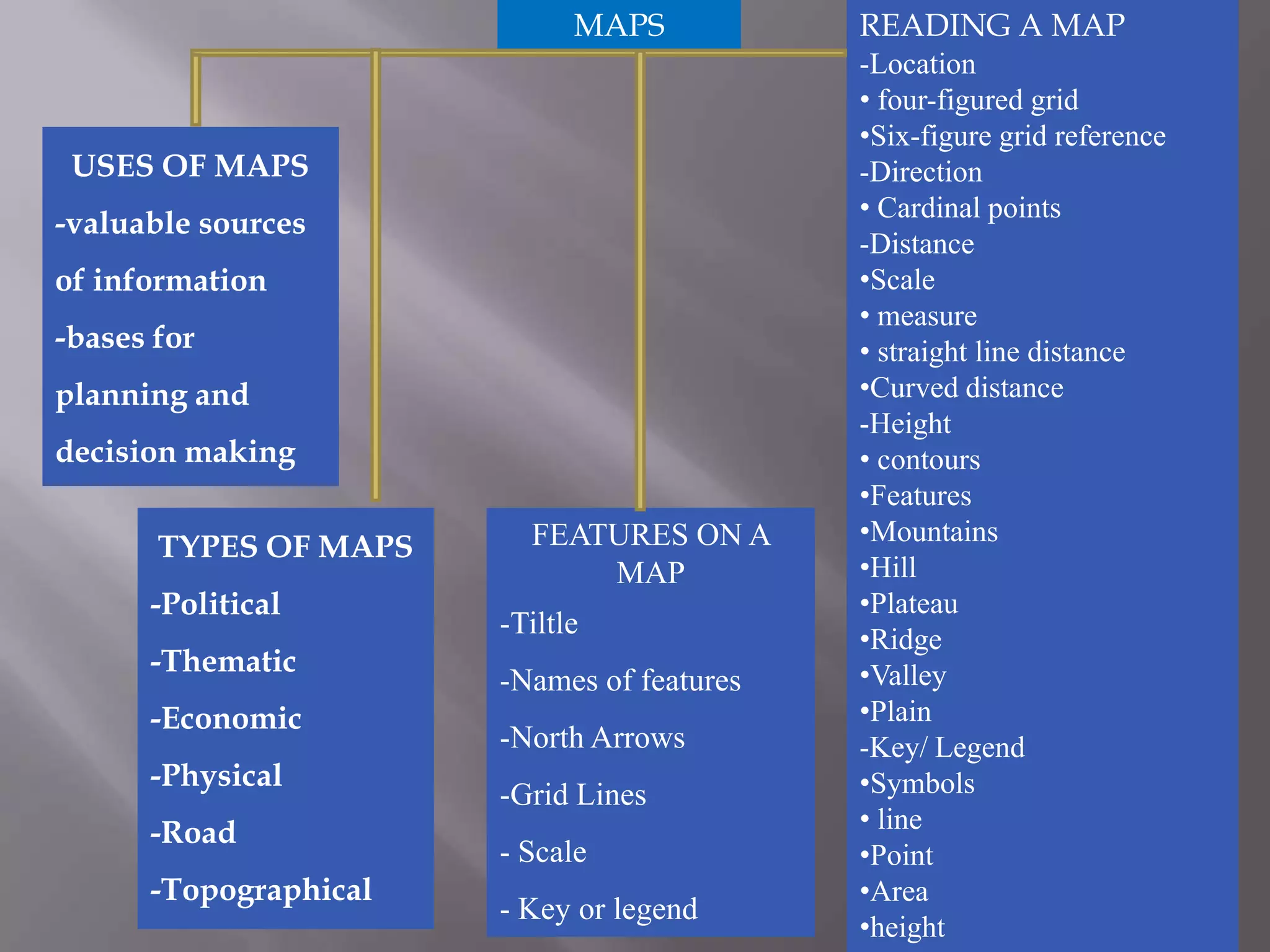
MAPS

USES OF MAPS
-valuable sources
of information

-bases for
planning and
decision making

TYPES OF MAPS
-Political
-Thematic
-Economic

-Physical
-Road
-Topographical

FEATURES ON A
MAP
-Tiltle
-Names of features
-North Arrows
-Grid Lines
- Scale
- Key or legend

READING A MAP
-Location
• four-figured grid
•Six-figure grid reference
-Direction
• Cardinal points
-Distance
•Scale
• measure
• straight line distance
•Curved distance
-Height
• contours
•Features
•Mountains
•Hill
•Plateau
•Ridge
•Valley
•Plain
-Key/ Legend
•Symbols
• line
•Point
•Area
•height
Q1. What are maps?
Q2. What are the uses of maps?
Q3. What do you know about political and climate map?
Q4. What is an economic map?
Q5. What is a road map?
Q6. What does Physical map show?

Q7. What is a Topographical map?
Q8. What are the elements of map?
Q9. Why do we use symbol on maps?
Q10. Define
•Line symbol
•Point symbol
•Area symbol
•Height symbol
Q11. What does a scale show on the map?
Q12. In how many ways a scale can be shown on the map?
Q13. How can we show height on a map?

The Mapping Skills

  • 2.
    Maps are visualrepresentations of the Earth’s surface as seen vertically from above. Maps show how things on the Earth’s surface are related to one another in terms of distance, direction and size. With the invention of printing in the 15th century, maps became widely available. The first world map came about in the 16th century following the voyages of Christopher Columbus and other explorers.
  • 3.
    People have beenusing maps for a long time. The Ancient Egyptians used maps that were drawn based on descriptions which travelers gave. In ancient China, maps were used to plan battles. Maps were used for the very purposes that they are used today.
  • 4.
    •A map providesinformation such as where a place is in relation to another. For example, the city you live in is north of a river. •The distance from the city to the river can be estimated from the scale given on the map. •With such information, you will be able to find your way around the city.
  • 5.
    In planning thedevelopment of a city, the planners use a base map to show where to build a factory, road, school or houses. In emergency, a map comes in useful in planning a rescue operation.
  • 7.
    These maps showthe individual countries, each separated by a national boundary. The capital cities and major cities are usually shown.
  • 9.
    Administrative/Road maps showthe roads, highways, railroad tracks and points of interest of a place. These maps are used by people to find their way around a town, city or country.
  • 11.
    Resource/Economic maps showthe different types of natural resources or economic activities that are found in an area. Symbols are used to show the resource or the economic activity.
  • 13.
    A typical physicalmap shows the physical features such as mountains, plains and rivers. Different colors are used to show land of different heights.
  • 15.
    Thematic /Climate mapshave specific themes. For example, climatic maps give information about the temperature, rainfall and atmospheric pressure of a place, a country, a region or the world. Different colors are used to show the different temperature range.
  • 17.
    Topographical maps showthe physical features of a place. Unlike in the physical maps, the physical features are shown in greater detail. Details such as the shape and height of each feature are shown with the help of contour lines. Human features such as buildings, roads and farms are show using symbols.
  • 19.
    ELEMENTS OF MAPS Thereare six basic elements of maps
  • 20.
    It tells uswhat the map shows POLITICAL MAP
  • 21.
    Shows where northlies on the map
  • 22.
    Tell us thenames of features, buildings, roads and reservoirs.
  • 23.
    A pattern oflines on a chart or map which helps determine absolute location. Also called vertical easting and horizontal northing
  • 24.
    Map Scale- The proportional relationshipbetween a linear measurement on a map and the distance it represents on the Earth's surface.
  • 25.
    A key towhat the symbols or pictures in a map mean.. It represent the physical and human features on the actual surface of the Earth.
  • 27.
    • • A compass isused for showing Direction. A magnetic needle swings around until it is pointing north. It is most useful to the people travelling through areas without other features to guide them where to go. The points of compass are called cardinal points HOW TO FIND A DIRECTION? The sun shines from south upon places in the northern hemisphere. Everyday the sun rises in the East and sets in the West everywhere in the world. 1. Identify the points halfway between the cardinal points North East South East South West North West 2. Identify the remaining 8 cardinal points
  • 28.
    They are usedto represent the different physical and human features found on the Earth’s surface. By using symbols map makers are able to fit in a lot of information on a map. There are certain standard colours or shapes that are used in symbols. For example, blue is used to represent water or water features such as streams and lakes, and green is used for vegetation
  • 29.
    1. LINE SYMBOLS Representline features such as roads, paths, rivers or railway tracks. The line symbols resemble the actual features they represent. A road is usually wider than a path. ROAD PATH A thicker blue line represent river A less thick blue line represent stream RIVER STREAM -------------
  • 30.
    They represent featuressuch as schools, masjid, hospitals or buildings. BUILDINGS MONUMENT 3. AREA SYMBOL They are used for features that cover an area such as lakes and farms. Different colors are used to keep the color of the symbols as possible to the real features CULTIVATION LAKE
  • 31.
    The height ofplaces on map is shown by contour lines, which are imaginary lines that join places of the same height To show the exact height of a spot, a trigonometrically station is used. TRIGONOMETRICAL STATION 100 50
  • 32.
    The features onthe surface of the Earth are usually large and the actual size cannot be shown on a map. The features and the area to be mapped is therefore drawn to scale. A scale can be shown in three ways: IN WORDS: The scale is started, for example, 1cm to 1km. That means 1cm on the map is 1km on the ground AS A RATIO: A ratio such as 1:1000,000 means 1cm on the mp represents 100,000 cm or 1km on the ground. AS A LINE: A line is divided into units, each representing a certain distance, 1 cm represents 50,000 cm on the ground. 0 1 km
  • 33.
    MAPS USES OF MAPS -valuablesources of information -bases for planning and decision making TYPES OF MAPS -Political -Thematic -Economic -Physical -Road -Topographical FEATURES ON A MAP -Tiltle -Names of features -North Arrows -Grid Lines - Scale - Key or legend READING A MAP -Location • four-figured grid •Six-figure grid reference -Direction • Cardinal points -Distance •Scale • measure • straight line distance •Curved distance -Height • contours •Features •Mountains •Hill •Plateau •Ridge •Valley •Plain -Key/ Legend •Symbols • line •Point •Area •height
  • 34.
    Q1. What aremaps? Q2. What are the uses of maps? Q3. What do you know about political and climate map? Q4. What is an economic map? Q5. What is a road map? Q6. What does Physical map show? Q7. What is a Topographical map? Q8. What are the elements of map? Q9. Why do we use symbol on maps? Q10. Define •Line symbol •Point symbol •Area symbol •Height symbol
  • 35.
    Q11. What doesa scale show on the map? Q12. In how many ways a scale can be shown on the map? Q13. How can we show height on a map?