SCIENCE
• What is Science?


• Different kinds of science
  – Physics
  – Biology
  – Chemistry
  – Make your definition broad!
Science: A Way of Knowing

              Chapter 1

                Great Idea:
 Science is a way of asking and answering
  questions about the physical universe
The Role of Science
• Making Choices
  – Ask questions, make observations, form
    conclusions
  – Applied in a more formal, quantitative
    way equals science

  – Science is a process
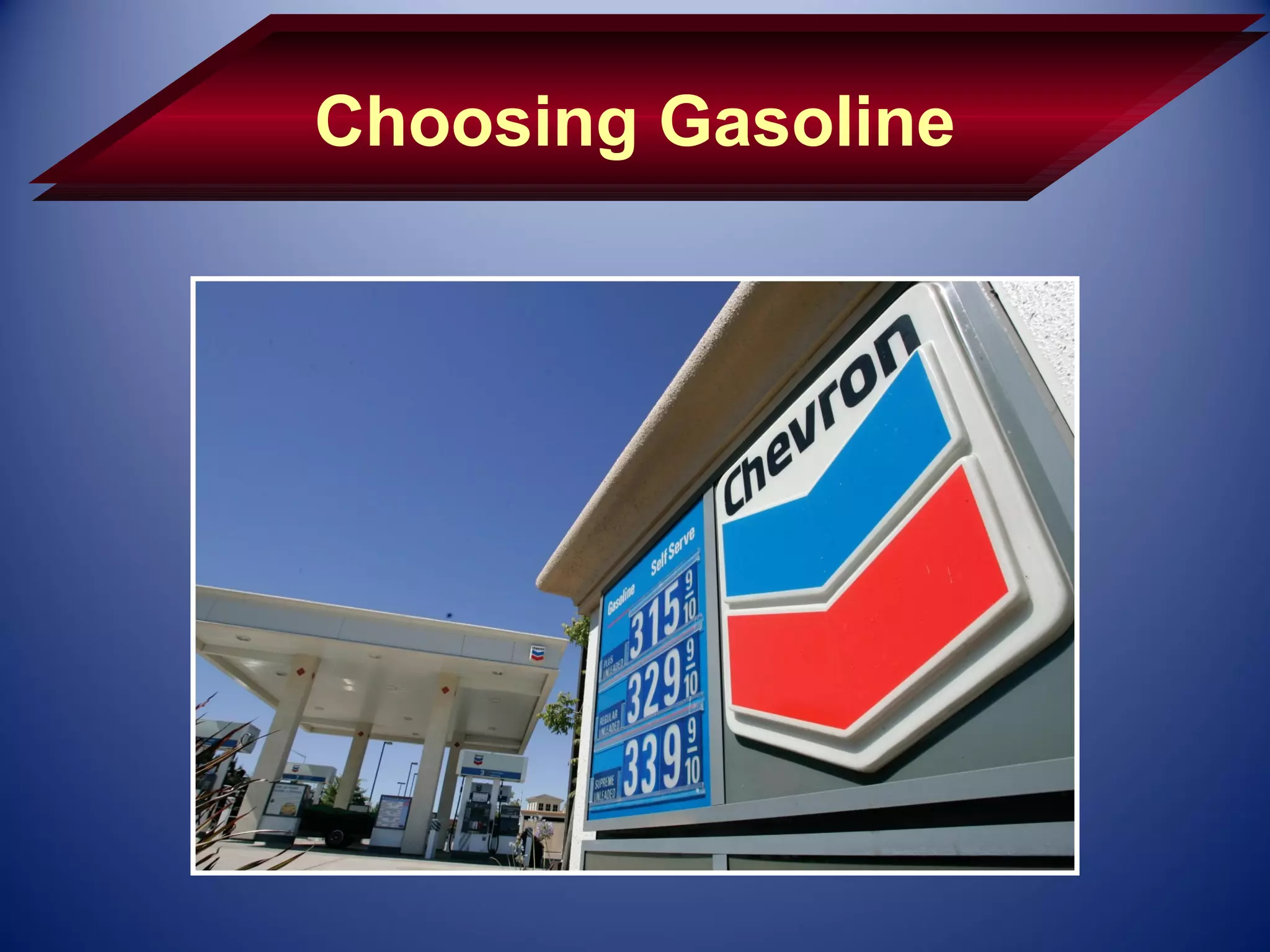
Choosing Gasoline
Why Study Science?
• Most powerful tool for understanding
• Incorporates basic ideas and theories
• Provides framework for new
  questions
• Provides unparalleled view of order
  and symmetry of the universe and its
  workings
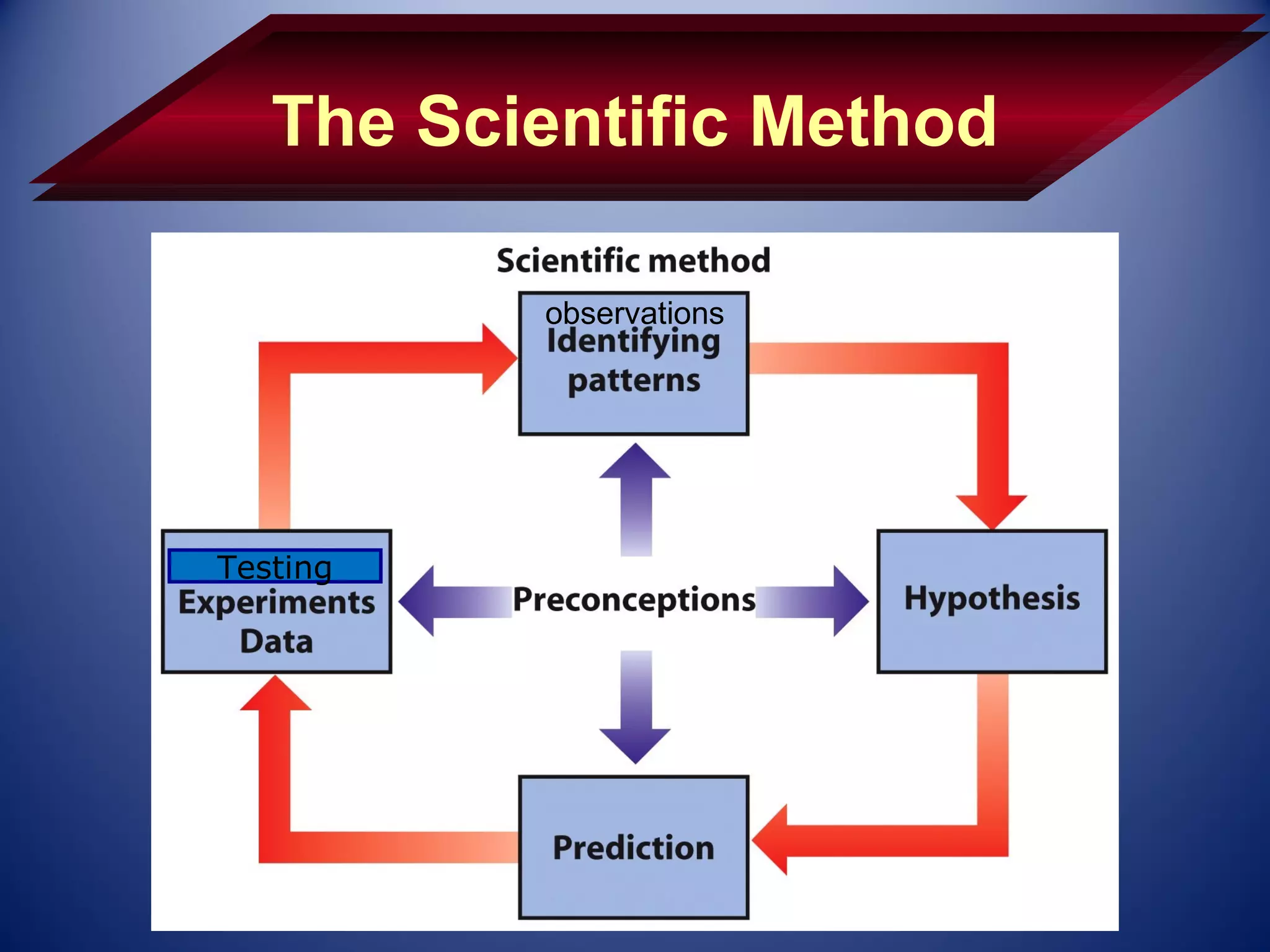
The Scientific Method
Observation
• History
  – Greek Philosophers
  – Middle Ages
• Observation – no manipulation
• Experiment – manipulation
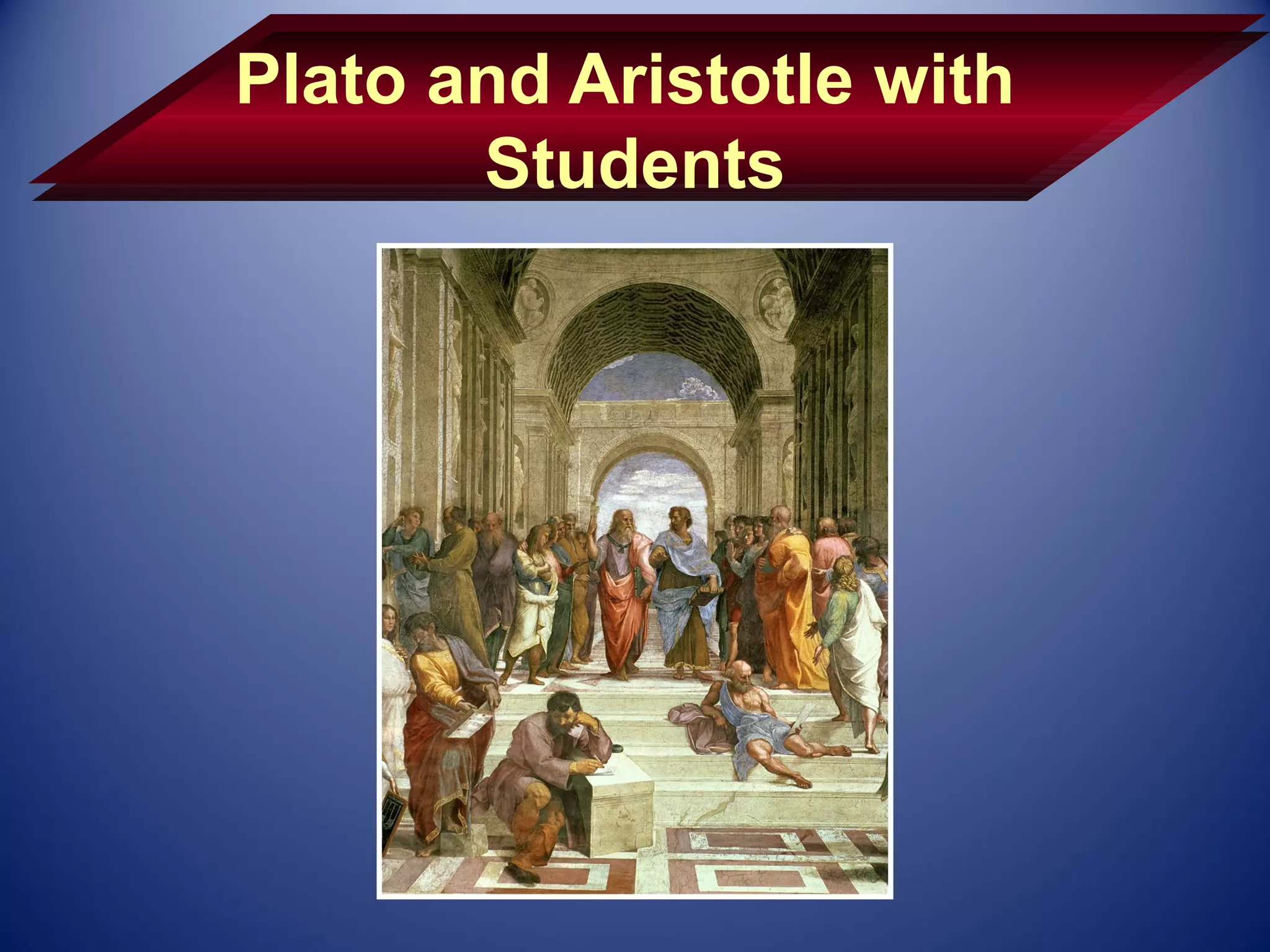
Plato and Aristotle with
       Students
Observation: Identifying Patterns
• First step in scientific method

• Regularity

• Recognize patterns
Development of a Hypothesis
• Second step of Scientific method

• Establish regularity
  – Why is this happening?
  – Hypothesis is an explanation, educated
    guess
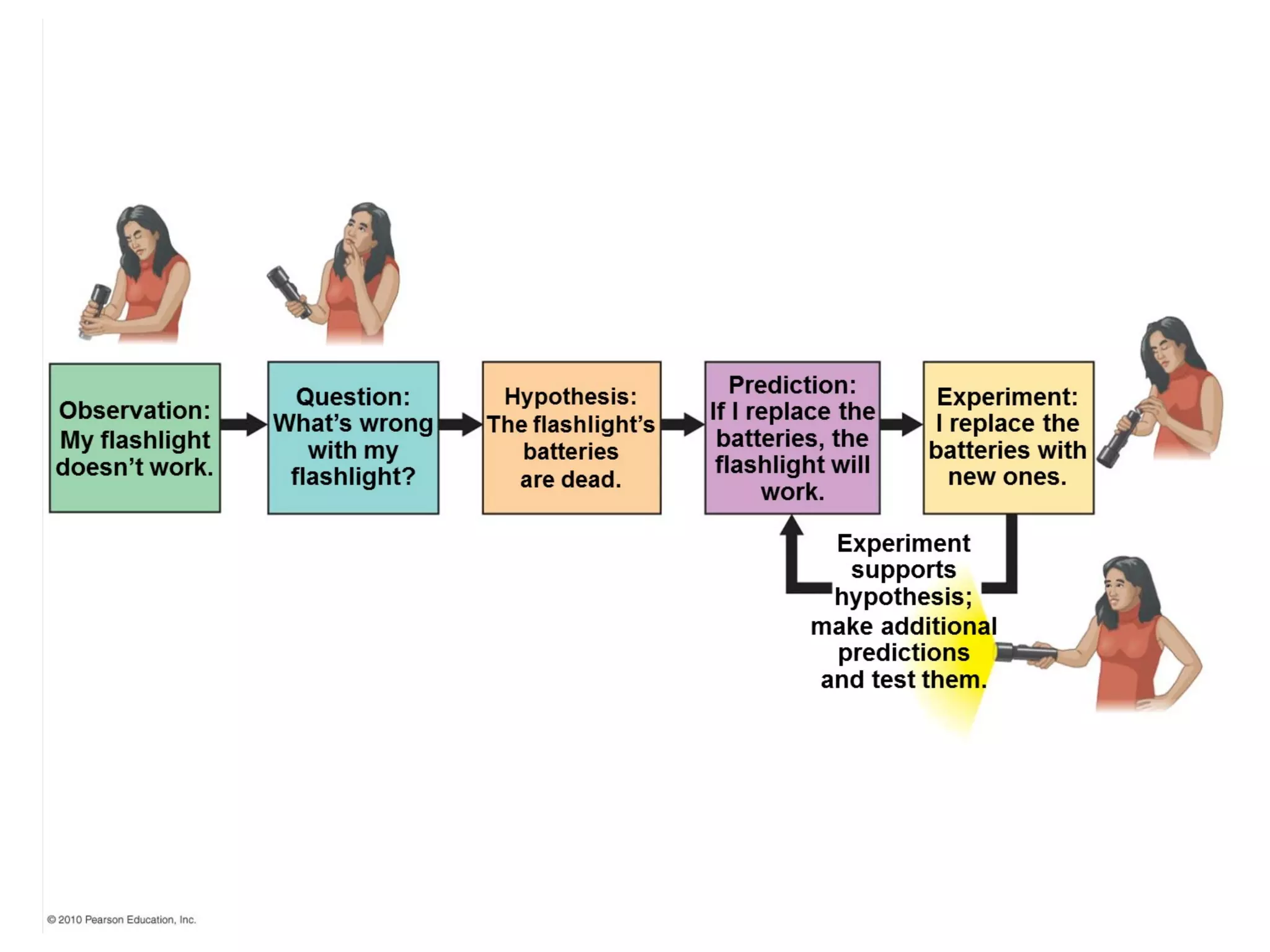
    • “If I drop my keys, they will fall”
Prediction
• Predictions
  – Hypothesis, Theory, Law

  – Must be quantitatively testable
Testing
• Final step of Scientific Method

• Testing
  – Do not prove or disprove
  – Define range of validity
• Every law and theory of nature is subject
  to change, based on new observations
Testing: Collecting data
• Measurement-better description
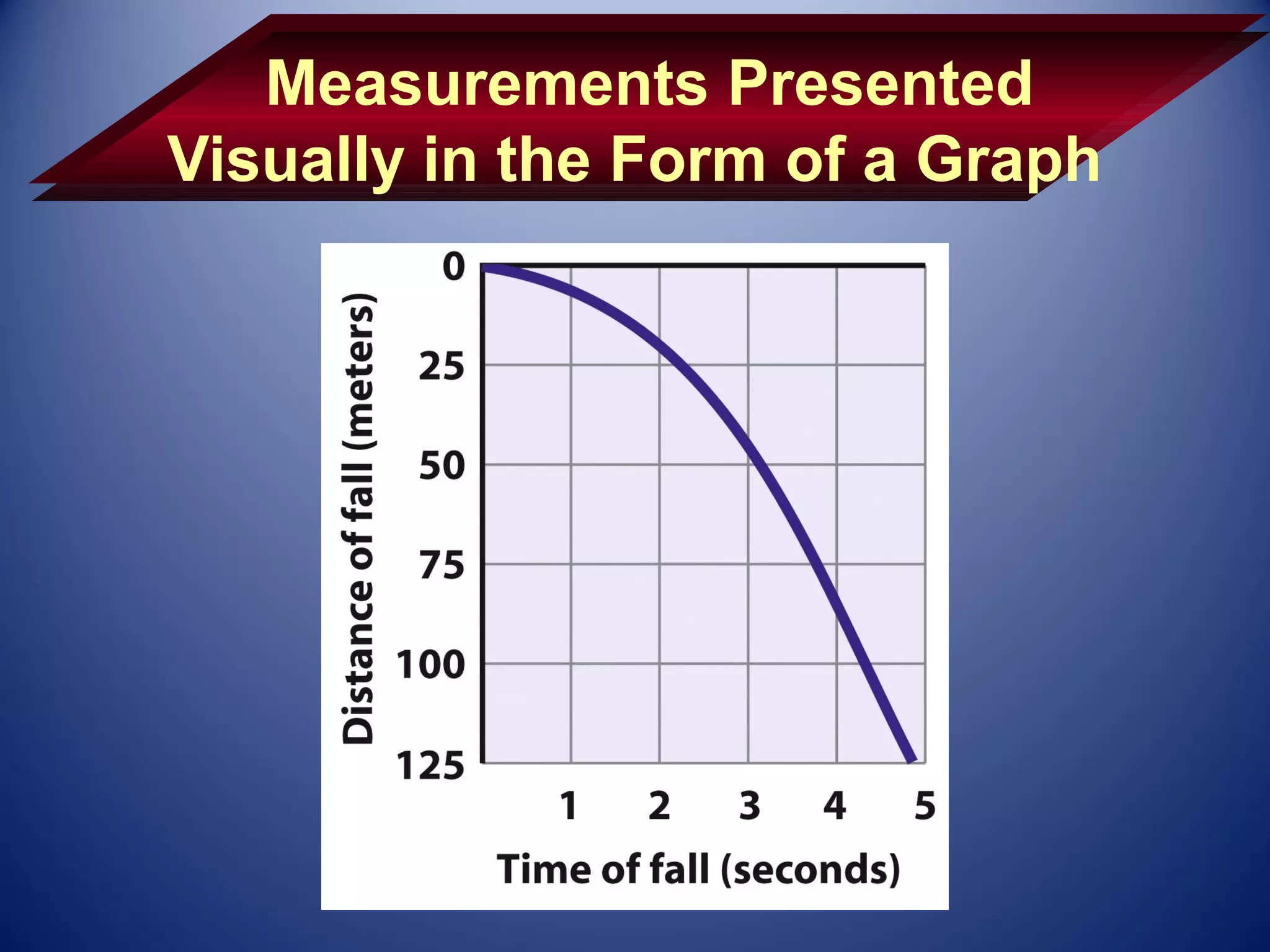
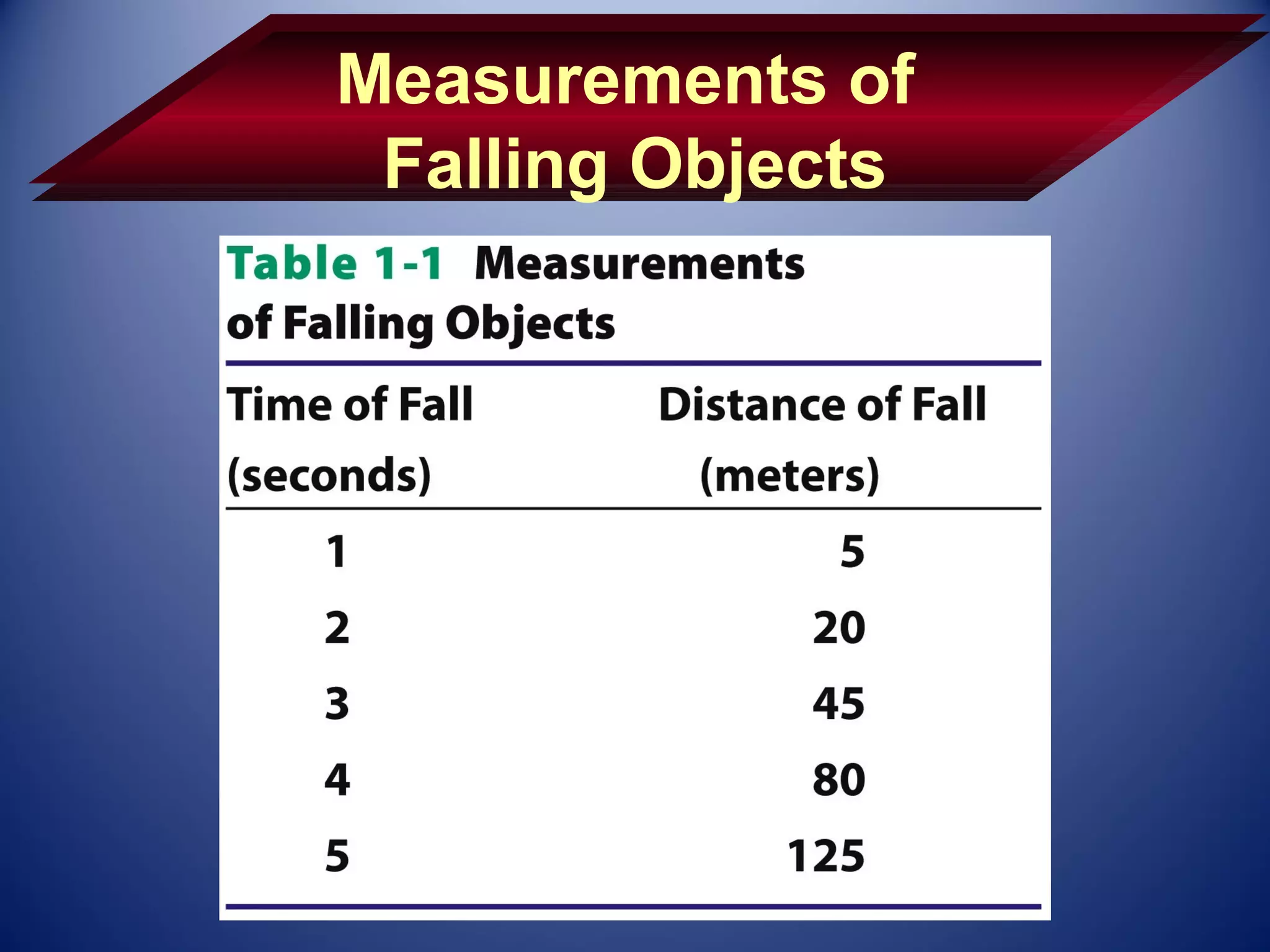
• Data-table or graph
• Patterns emerge
• Describe:
  – In words
  – In equation form
  – In symbols
Measurements Presented
Visually in the Form of a Graph
Measurements of
 Falling Objects
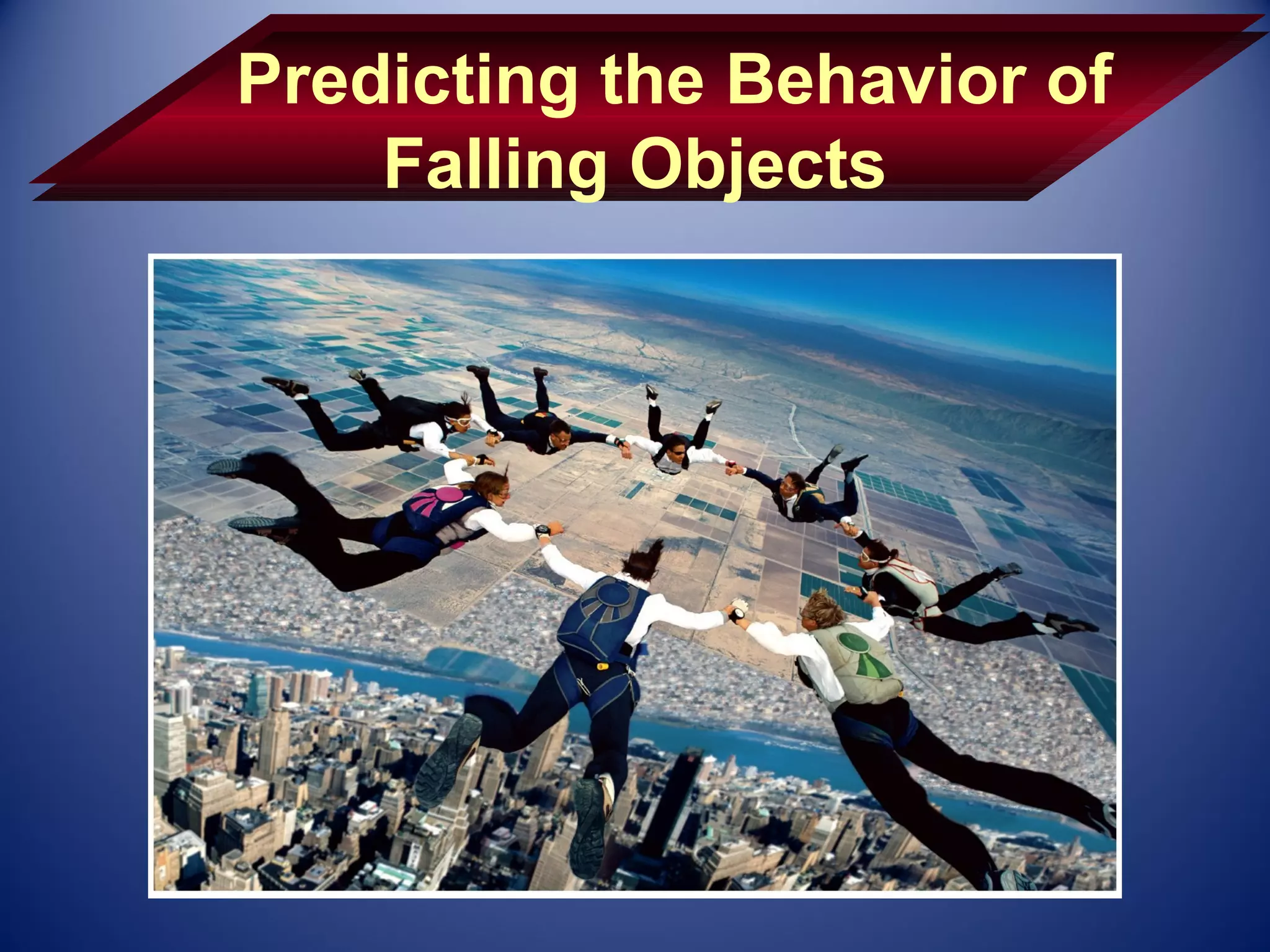
Predicting the Behavior of
    Falling Objects
The Scientific Method
           in Operation
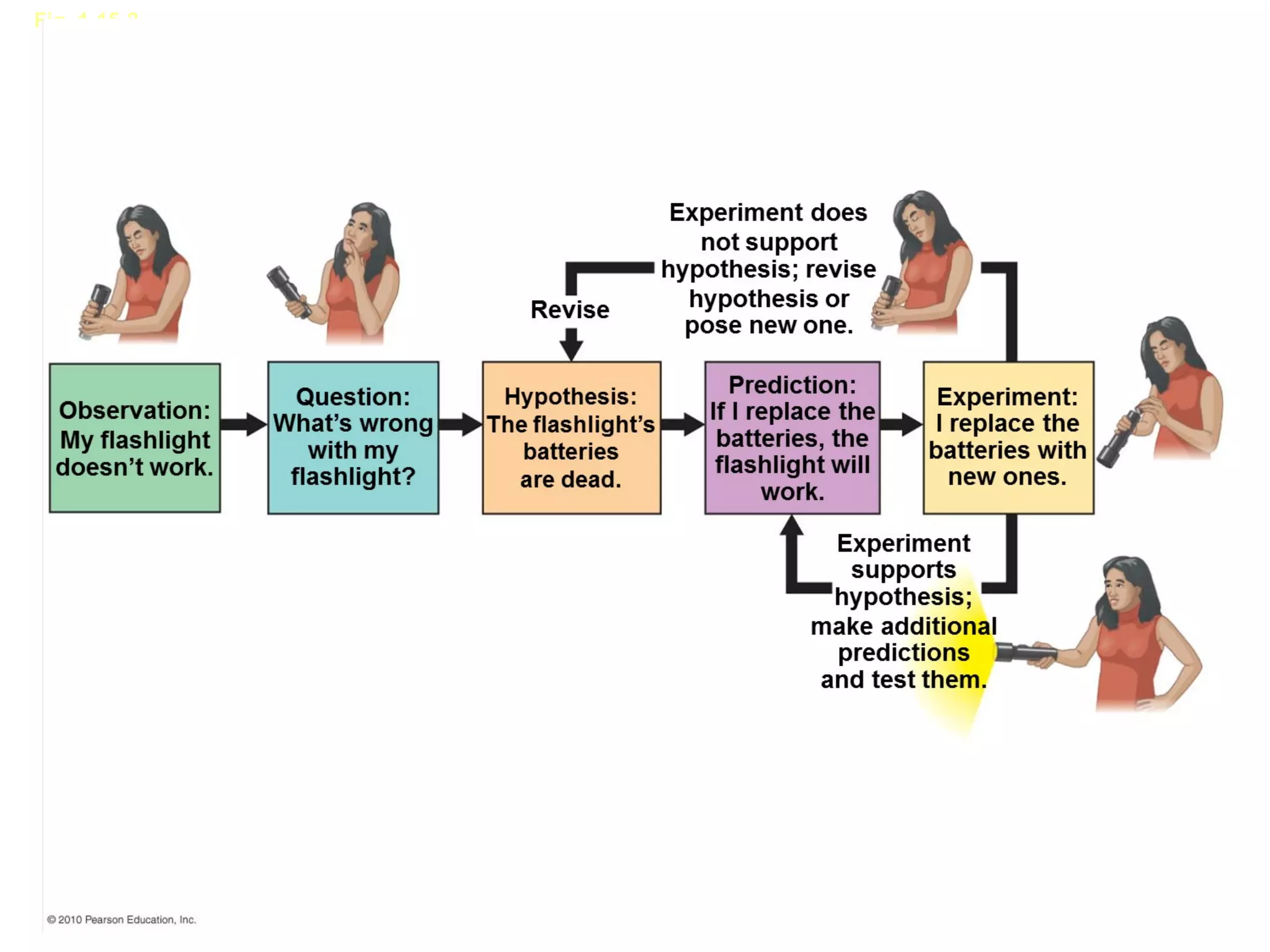
• Cycle
  – Not rigid
• Results must be reproducible

• Cycle is continuous
  – Test one hypothesis at a time
Fig. 1-15-2
Facts, Hypotheses,
        Laws, and Theories
• Test many hypotheses, can lead to
  theory or law
  – Hypothesis: educated guess
• Theory
  – Well-substantiated description or
    explanation
  – Broad
• Law
  – Numerous tests point to pattern
  – Statement
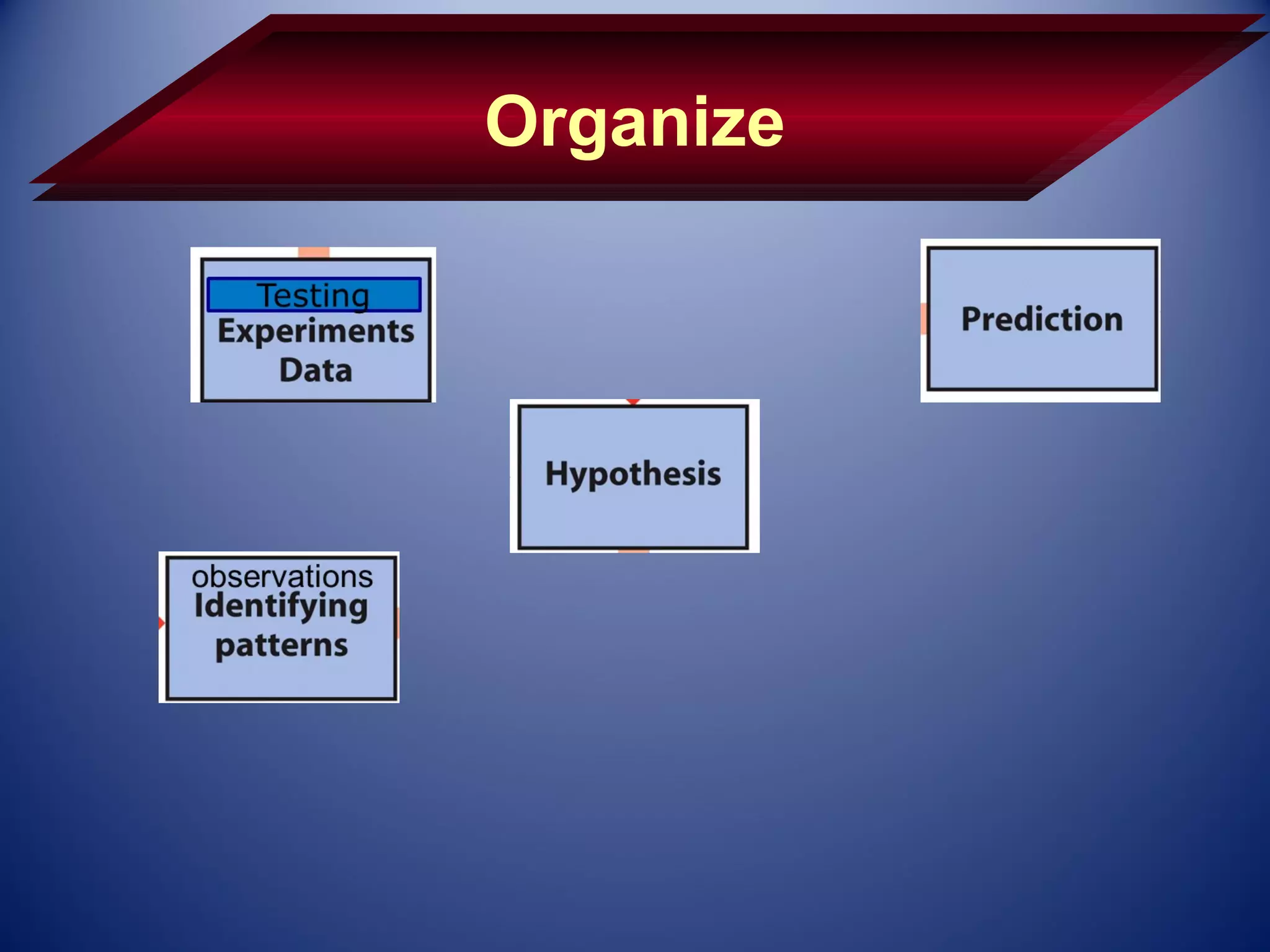
Organize
The Scientific Method

          observations


Testing
How does science relate to me?
• Make a list of 10 different things
you have done in last 24 hours
  Describe each item (Briefly)

● Circle items related to science
Science in daily life
• Chemistry: chemicals to clean
  clothes

• Physics: electricity, cars (automotive
  engine), television, computers

• Biology: medicine
Unit 1. Exercise 1: Solving a
        Real-Life Problem
• Your task this week is to identify a
  problem in your field that we can
  tackle using the scientific method.

• Do internet search
  – Current problems in your field
Unit 1. Exercise 1: Solving a
        Real-Life Problem
• What is the problem/question?
• What have you observed that gives
  you clues as to what might be
  happening?
• What is a feasible hypothesis to
  explain what you have observed?
• How could you test this hypothesis?
  What is your prediction about the
  outcome of the test?
Unit 1. Exercise 1: Solving a
        Real-Life Problem
• 1-2 page report

• Describe the problem and
• How the scientific method could be
  applied to come up with a solution.
• Answer the questions
• Due 12/17/12
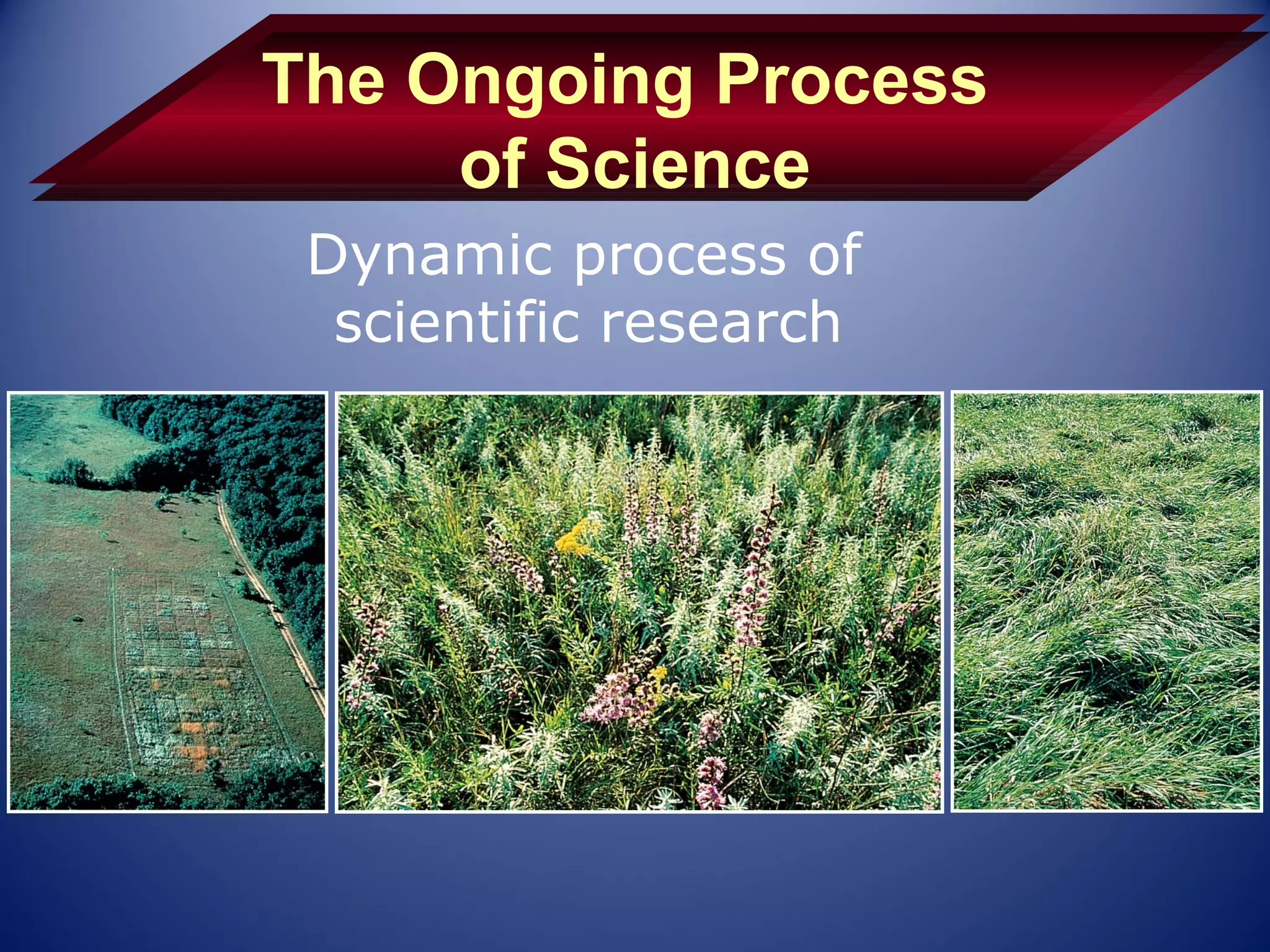
The Ongoing Process
     of Science
 Dynamic process of
  scientific research
Science is ongoing
• There are still many questions to be
  answered by science
• Why scientists still conduct science

• Advancements in modern medicine
  – Vaccines, prosthetic limbs
  – http://www.pbs.org/newshour/bb/science/ja
Science in daily life
• Take those items you circled

• Brief explanation on how those items
work in relation to science

  Are there other things in daily life
that science could solve?
Other Ways of Knowing
Different Kinds of Questions
• Cannot always use scientific method
• Art
  – Use to address age of painting
  – Not for beauty, etc.
• Religion
  – No conflict between science and religion
  – Faith vs. experiment
Pseudoscience
• Pseudoscience
  – Belief, dogma
  – Ideas not testable
• Evaluation of a claim
  1.   Are the ‘facts’ true as stated?
  2.   Is there an alternative explanation?
  3.   Is the claim falsifiable?
  4.   Have claims been tested?
  5.   Do claims require unreasonable
       changes in accepted ideas?
Writing Assignment 1
• Science in the Media

• List of TV and movies that portray
  science

• Is the work of the scientists
  glorified? Are the results of
  experiments realistic or
  exaggerated?
Science in the Media
• Do the TV/movie characters follow
  the steps of the scientific method?

• How does the science you see on TV
  and movies compare to the science
  you read about in the news?

• www.nytimes.com
Writing assignment 1: Due 12/17
• Look at the website of a newspaper
     2-3 news articles
• controversial scientific issues like
  climate change, stem cell research,
  or evolution.
• Summarize how each article
  demonstrates that science makes a
  difference in our lives.
• Discuss how news articles differ from
  scientific articles.
Language Barrier
• Technical language versus ‘everyday’
  speech

• Climate change
  – Scientists focus on future
  – Public wants to know in relation to
    present day
  – http://www.washingtonpost.com/blogs/capital-weather-gang/post/n
The Organization of Science
Divisions of Science
• What does a scientist do?
• Imagine what a scientist would look
  like

• Approach
  – Field researcher
  – Experimentalists
  – Theorists
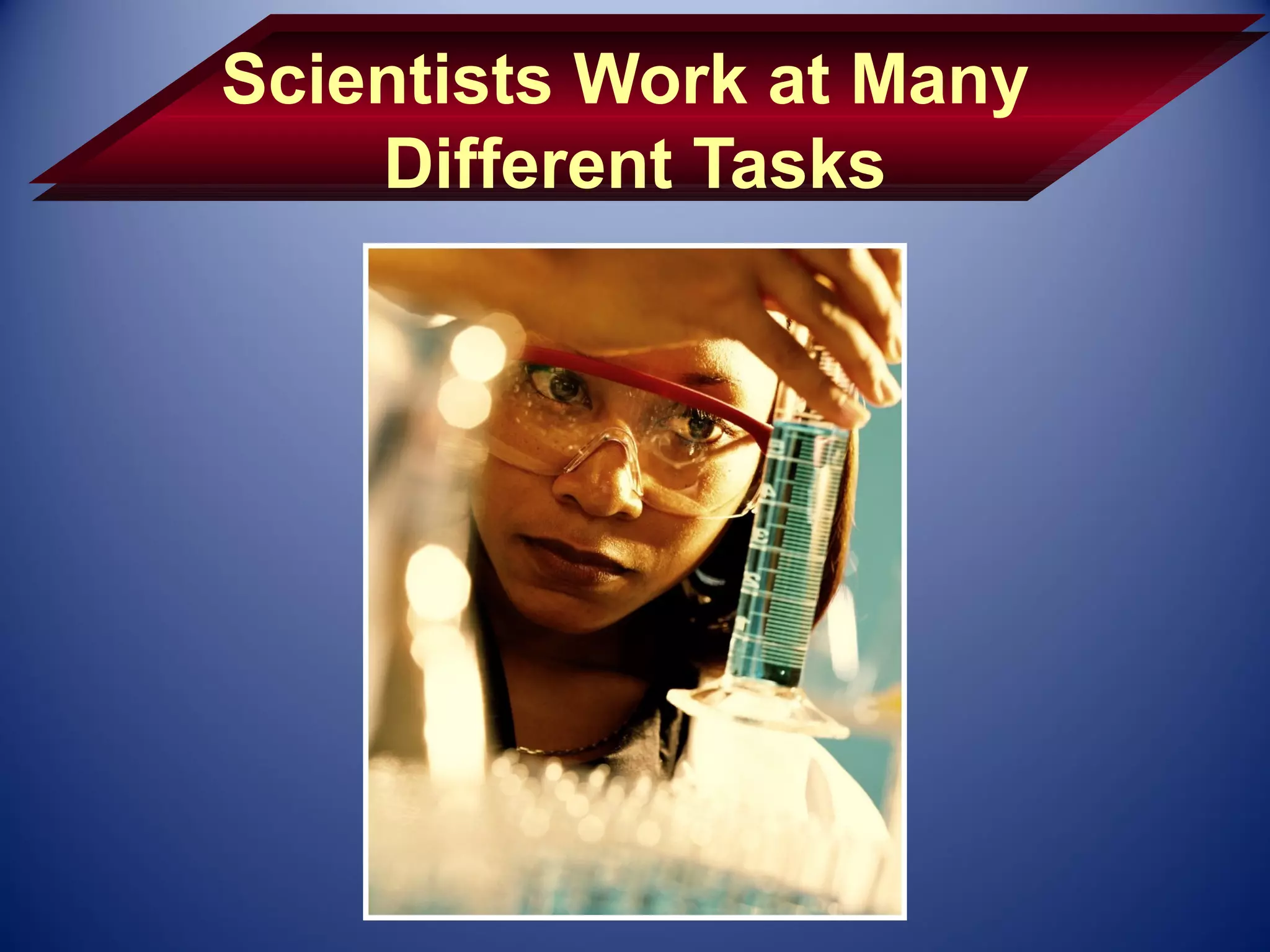
Scientists Work at Many
    Different Tasks
The Branches of Science
• Physics
  – Fundamental aspects of nature
• Chemistry
  – Atoms in combination
• Biology
  – Living systems
• Astronomy
  – Objects in space
• Geology
  – Earth
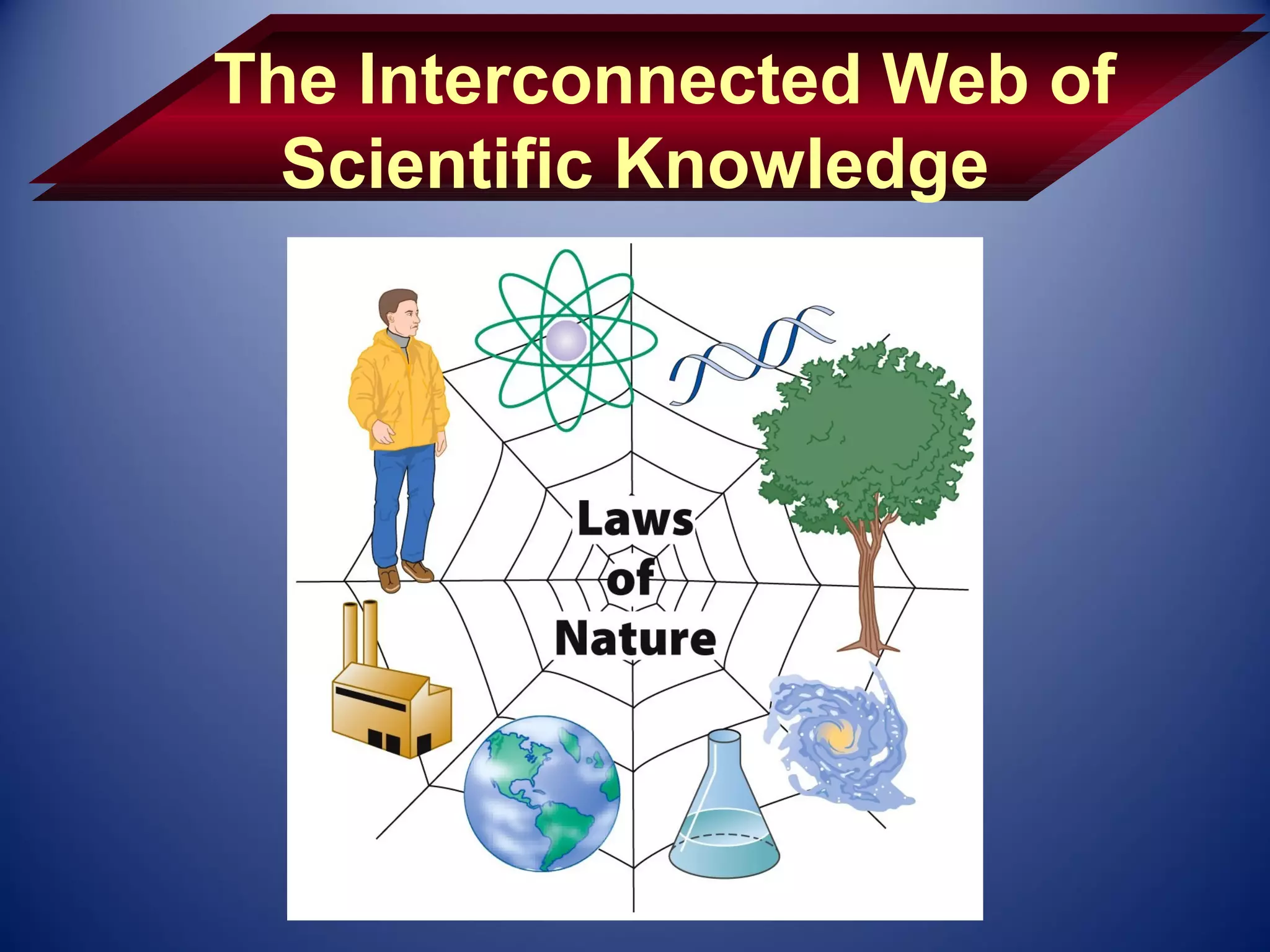
The Web of Knowledge
• Center
  – Laws of nature
  – Apply to all areas
• Areas Interconnected
  – All branches integrated
The Interconnected Web of
  Scientific Knowledge
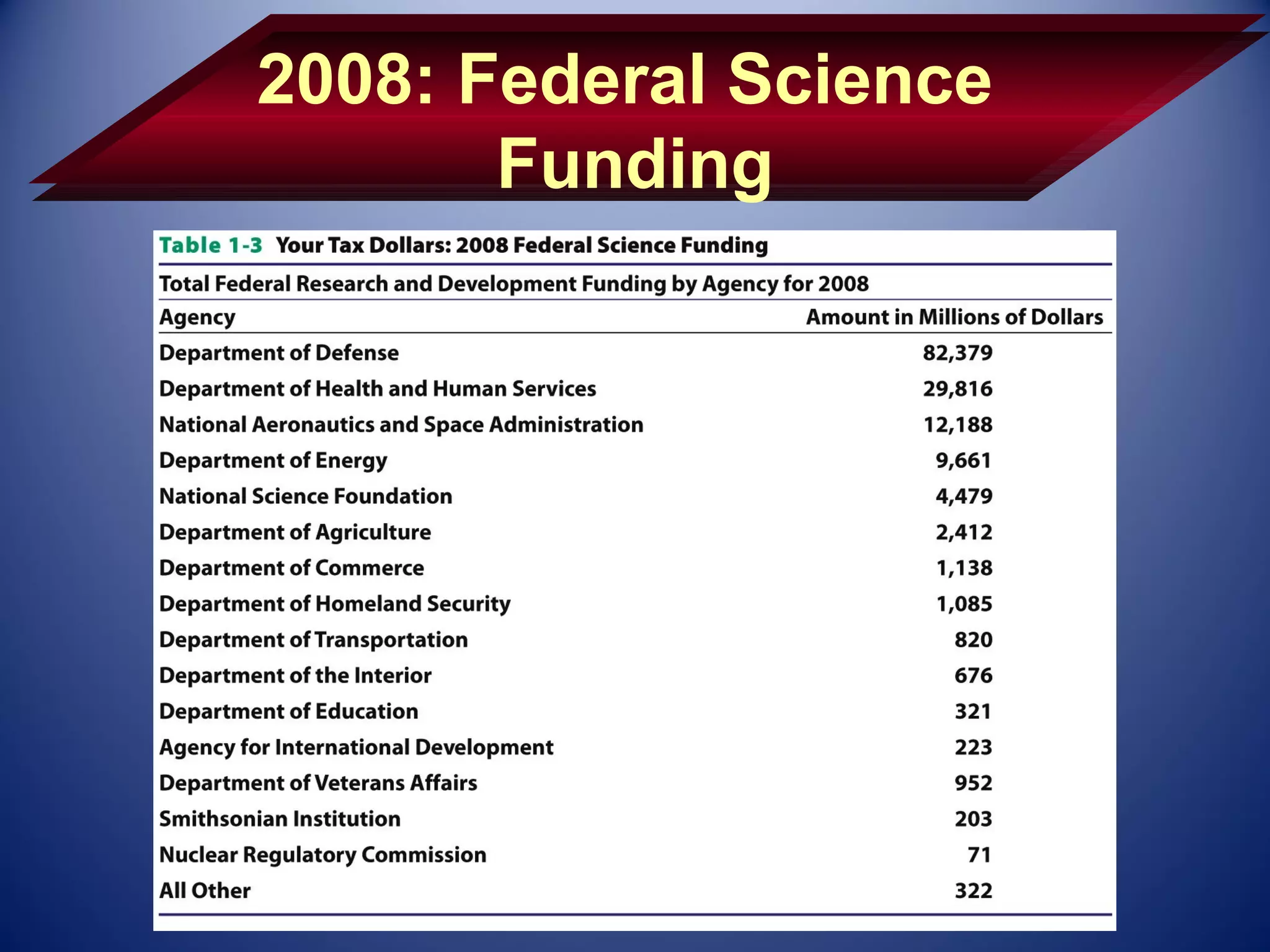
Funding for Science
• US Government
  – $130 billion
  – NSF, NIH, DOE, DOD, EPA, NASA,
    NOAA
• Apply for funds
  – Grant proposal
    • Ranked by independent scientists
    • Highly competitive
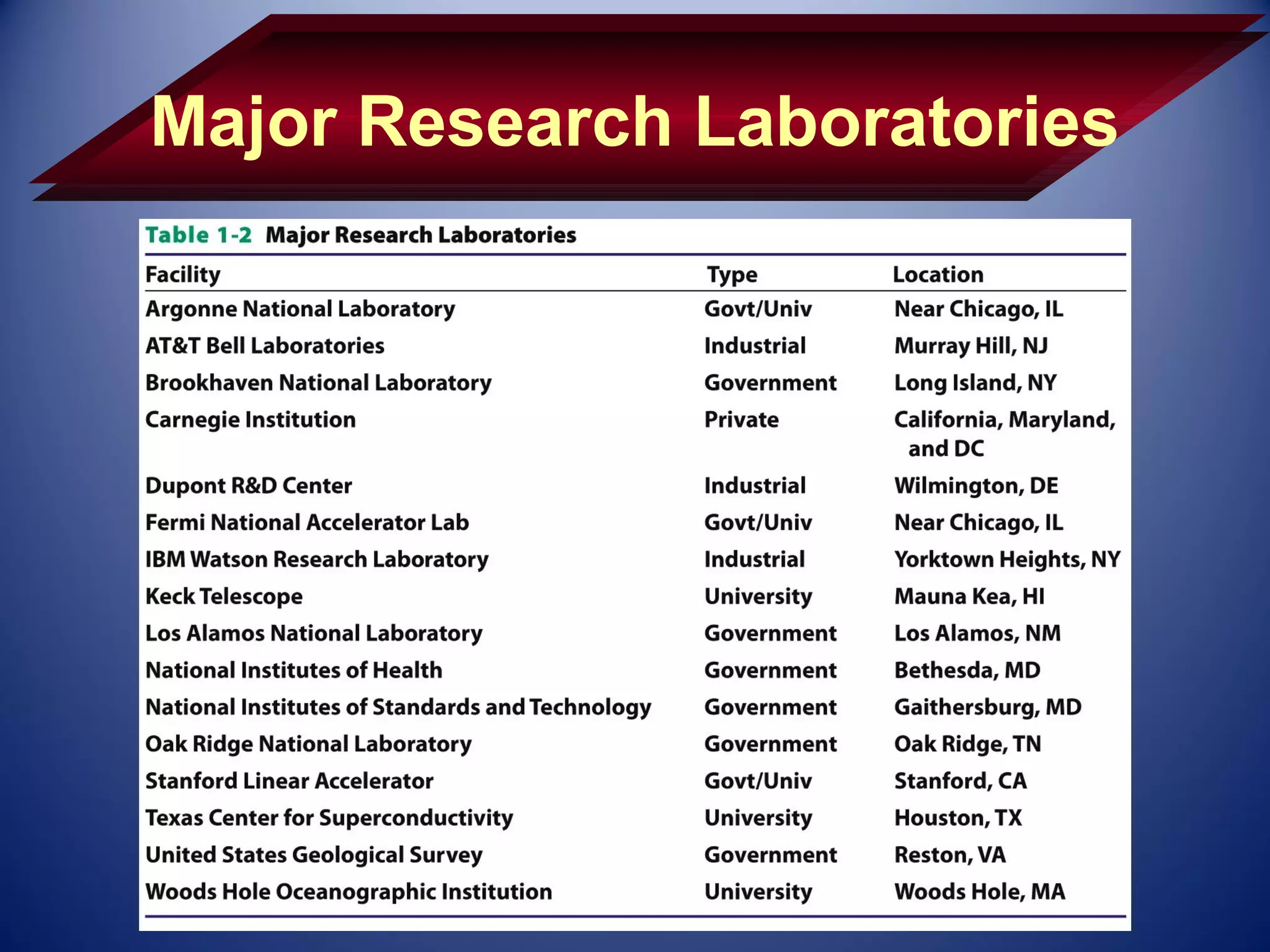
Major Research Laboratories
2008: Federal Science
       Funding
Communication Among
         Scientists
• Collaboration
• Scientific Meetings
• Peer reviewed Journals
  – Cornerstone of science
Writing Assignment 2
• Process of science
• Find article on scientific research
  found on the ITT Tech Virtual Library
• Read the abstract and pay attention
  to figures as you skim the rest of the
  article.
• Identify the general area of science
  that is being studied (biology,
  chemistry, physics, earth science,
  astronomy)
Writing Assignment 2
• Summarize and explain in your own
  words how/why the researchers
  working on this project are “doing
  science “?

• Due 1/7/13
Writing Assignment 2
• Does this article make sense to you?
• Is it easy or difficult to understand?
• Can you identify the steps of the
  scientific method in this article,
• and can you get a good idea of what
  the scientist did?
• Discuss the importance of
  communication in science and
  difficulties of conveying scientific
  content to the general public.
Virtual Library
• ITT Virtual Library
  – EBSCO host, citations (APA)

    • Earth Science


    • Chemistry


    • Biology
Scientific Articles
• Peer reviewed
• Introduction
  – Observations and Hypotheses
  – Predictions
• Methods/Materials
  – Testing, experiments, data
• Results
• Discussion
  – Summarize your findings and what others have
    found

Survey of sciences chapter 1

  • 1.
    SCIENCE • What isScience? • Different kinds of science – Physics – Biology – Chemistry – Make your definition broad!
  • 2.
    Science: A Wayof Knowing Chapter 1 Great Idea: Science is a way of asking and answering questions about the physical universe
  • 3.
    The Role ofScience • Making Choices – Ask questions, make observations, form conclusions – Applied in a more formal, quantitative way equals science – Science is a process
  • 4.
  • 5.
    Why Study Science? •Most powerful tool for understanding • Incorporates basic ideas and theories • Provides framework for new questions • Provides unparalleled view of order and symmetry of the universe and its workings
  • 6.
  • 7.
    Observation • History – Greek Philosophers – Middle Ages • Observation – no manipulation • Experiment – manipulation
  • 8.
    Plato and Aristotlewith Students
  • 9.
    Observation: Identifying Patterns •First step in scientific method • Regularity • Recognize patterns
  • 10.
    Development of aHypothesis • Second step of Scientific method • Establish regularity – Why is this happening? – Hypothesis is an explanation, educated guess • “If I drop my keys, they will fall”
  • 11.
    Prediction • Predictions – Hypothesis, Theory, Law – Must be quantitatively testable
  • 12.
    Testing • Final stepof Scientific Method • Testing – Do not prove or disprove – Define range of validity • Every law and theory of nature is subject to change, based on new observations
  • 13.
    Testing: Collecting data •Measurement-better description • Data-table or graph • Patterns emerge • Describe: – In words – In equation form – In symbols
  • 14.
  • 15.
  • 16.
    Predicting the Behaviorof Falling Objects
  • 17.
    The Scientific Method in Operation • Cycle – Not rigid • Results must be reproducible • Cycle is continuous – Test one hypothesis at a time
  • 19.
  • 20.
    Facts, Hypotheses, Laws, and Theories • Test many hypotheses, can lead to theory or law – Hypothesis: educated guess • Theory – Well-substantiated description or explanation – Broad • Law – Numerous tests point to pattern – Statement
  • 21.
  • 22.
    The Scientific Method observations Testing
  • 23.
    How does sciencerelate to me? • Make a list of 10 different things you have done in last 24 hours Describe each item (Briefly) ● Circle items related to science
  • 24.
    Science in dailylife • Chemistry: chemicals to clean clothes • Physics: electricity, cars (automotive engine), television, computers • Biology: medicine
  • 25.
    Unit 1. Exercise1: Solving a Real-Life Problem • Your task this week is to identify a problem in your field that we can tackle using the scientific method. • Do internet search – Current problems in your field
  • 26.
    Unit 1. Exercise1: Solving a Real-Life Problem • What is the problem/question? • What have you observed that gives you clues as to what might be happening? • What is a feasible hypothesis to explain what you have observed? • How could you test this hypothesis? What is your prediction about the outcome of the test?
  • 27.
    Unit 1. Exercise1: Solving a Real-Life Problem • 1-2 page report • Describe the problem and • How the scientific method could be applied to come up with a solution. • Answer the questions • Due 12/17/12
  • 28.
    The Ongoing Process of Science Dynamic process of scientific research
  • 29.
    Science is ongoing •There are still many questions to be answered by science • Why scientists still conduct science • Advancements in modern medicine – Vaccines, prosthetic limbs – http://www.pbs.org/newshour/bb/science/ja
  • 30.
    Science in dailylife • Take those items you circled • Brief explanation on how those items work in relation to science Are there other things in daily life that science could solve?
  • 31.
  • 32.
    Different Kinds ofQuestions • Cannot always use scientific method • Art – Use to address age of painting – Not for beauty, etc. • Religion – No conflict between science and religion – Faith vs. experiment
  • 33.
    Pseudoscience • Pseudoscience – Belief, dogma – Ideas not testable • Evaluation of a claim 1. Are the ‘facts’ true as stated? 2. Is there an alternative explanation? 3. Is the claim falsifiable? 4. Have claims been tested? 5. Do claims require unreasonable changes in accepted ideas?
  • 34.
    Writing Assignment 1 •Science in the Media • List of TV and movies that portray science • Is the work of the scientists glorified? Are the results of experiments realistic or exaggerated?
  • 35.
    Science in theMedia • Do the TV/movie characters follow the steps of the scientific method? • How does the science you see on TV and movies compare to the science you read about in the news? • www.nytimes.com
  • 36.
    Writing assignment 1:Due 12/17 • Look at the website of a newspaper 2-3 news articles • controversial scientific issues like climate change, stem cell research, or evolution. • Summarize how each article demonstrates that science makes a difference in our lives. • Discuss how news articles differ from scientific articles.
  • 37.
    Language Barrier • Technicallanguage versus ‘everyday’ speech • Climate change – Scientists focus on future – Public wants to know in relation to present day – http://www.washingtonpost.com/blogs/capital-weather-gang/post/n
  • 38.
  • 39.
    Divisions of Science •What does a scientist do? • Imagine what a scientist would look like • Approach – Field researcher – Experimentalists – Theorists
  • 40.
    Scientists Work atMany Different Tasks
  • 41.
    The Branches ofScience • Physics – Fundamental aspects of nature • Chemistry – Atoms in combination • Biology – Living systems • Astronomy – Objects in space • Geology – Earth
  • 42.
    The Web ofKnowledge • Center – Laws of nature – Apply to all areas • Areas Interconnected – All branches integrated
  • 43.
    The Interconnected Webof Scientific Knowledge
  • 44.
    Funding for Science •US Government – $130 billion – NSF, NIH, DOE, DOD, EPA, NASA, NOAA • Apply for funds – Grant proposal • Ranked by independent scientists • Highly competitive
  • 45.
  • 46.
  • 47.
    Communication Among Scientists • Collaboration • Scientific Meetings • Peer reviewed Journals – Cornerstone of science
  • 48.
    Writing Assignment 2 •Process of science • Find article on scientific research found on the ITT Tech Virtual Library • Read the abstract and pay attention to figures as you skim the rest of the article. • Identify the general area of science that is being studied (biology, chemistry, physics, earth science, astronomy)
  • 49.
    Writing Assignment 2 •Summarize and explain in your own words how/why the researchers working on this project are “doing science “? • Due 1/7/13
  • 50.
    Writing Assignment 2 •Does this article make sense to you? • Is it easy or difficult to understand? • Can you identify the steps of the scientific method in this article, • and can you get a good idea of what the scientist did? • Discuss the importance of communication in science and difficulties of conveying scientific content to the general public.
  • 51.
    Virtual Library • ITTVirtual Library – EBSCO host, citations (APA) • Earth Science • Chemistry • Biology
  • 52.
    Scientific Articles • Peerreviewed • Introduction – Observations and Hypotheses – Predictions • Methods/Materials – Testing, experiments, data • Results • Discussion – Summarize your findings and what others have found