When To Use DSP vs. PPC
But First! What Are The Main Differences Between
The Two?
DSP
โ— Cost - Paid for upfront and has a set
budget
โ— Targeting - Big inventory of audiences to
pull from - EXCEPT keywords. Retargeting,
off Amazon audiences, In Market and
Lifestyle
โ— Off Amazon Advertising - Can Pixel
websites to create lookalike audiences
based on existing .com traf๏ฌc
โ— Dynamic Creative - DSP has access to
what is called โ€œresponsive e-commerceโ€
creatives which can dynamically change
the ASINs that show
PPC
โ— Cost - You pay when someone clicks on
your ad
โ— Targeting - Keyword, category,
product, retargeting. On Amazon
โ— Off Amazon Advertising - With
streaming TV there is more
opportunity but no opportunity to
pixel existing websites
โ— Dynamic Creative - Static creative
When Is One Option Better Than
The Other?
The Answer mainly revolves around three things:
โ— Budget of Client
โ— Size of catalog
โ— Goals for Campaigns
Budget
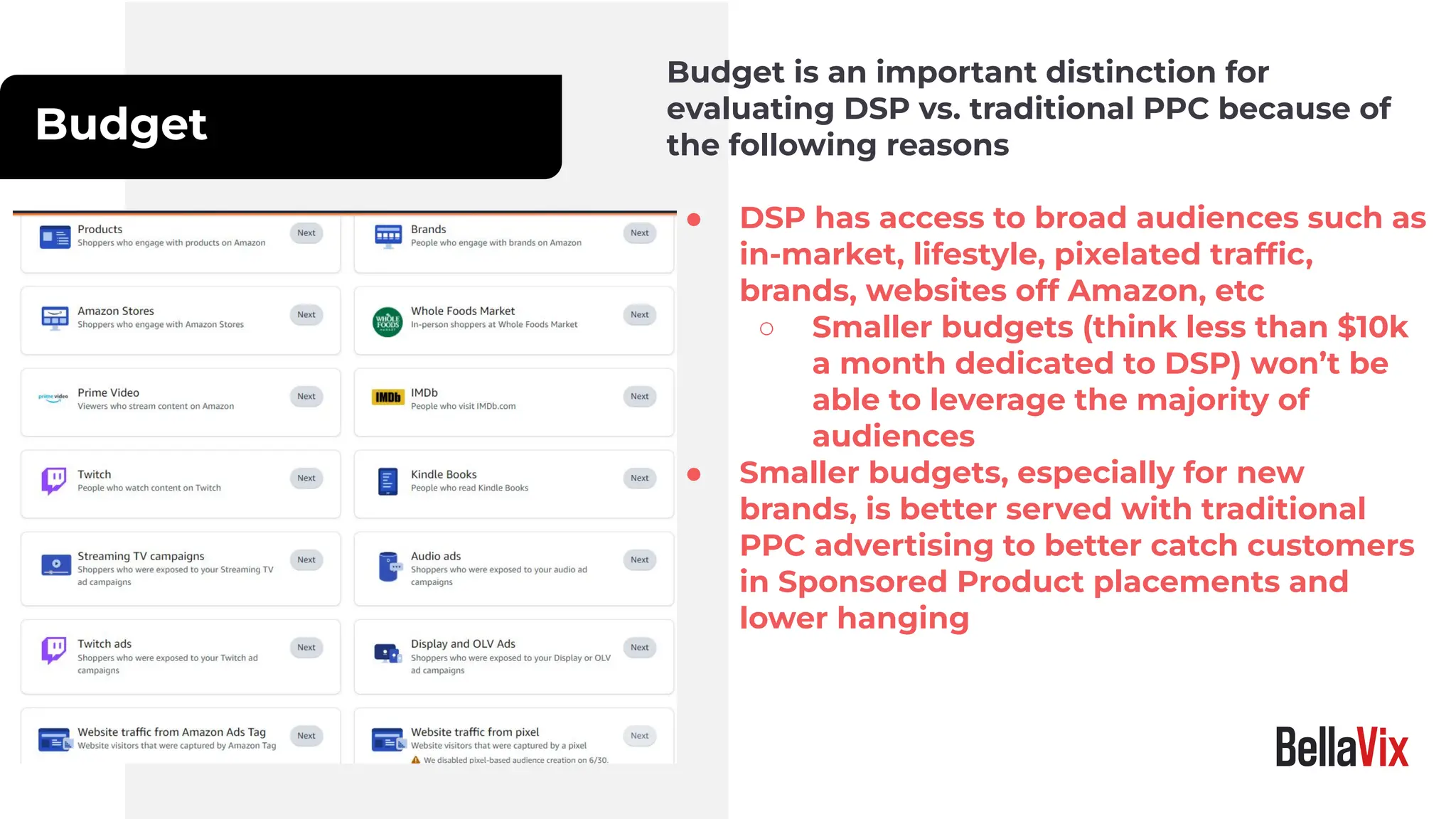
Budget is an important distinction for
evaluating DSP vs. traditional PPC because of
the following reasons
โ— DSP has access to broad audiences such as
in-market, lifestyle, pixelated traf๏ฌc,
brands, websites off Amazon, etc
โ—‹ Smaller budgets (think less than $10k
a month dedicated to DSP) wonโ€™t be
able to leverage the majority of
audiences
โ— Smaller budgets, especially for new
brands, is better served with traditional
PPC advertising to better catch customers
in Sponsored Product placements and
lower hanging
Size of Catalog
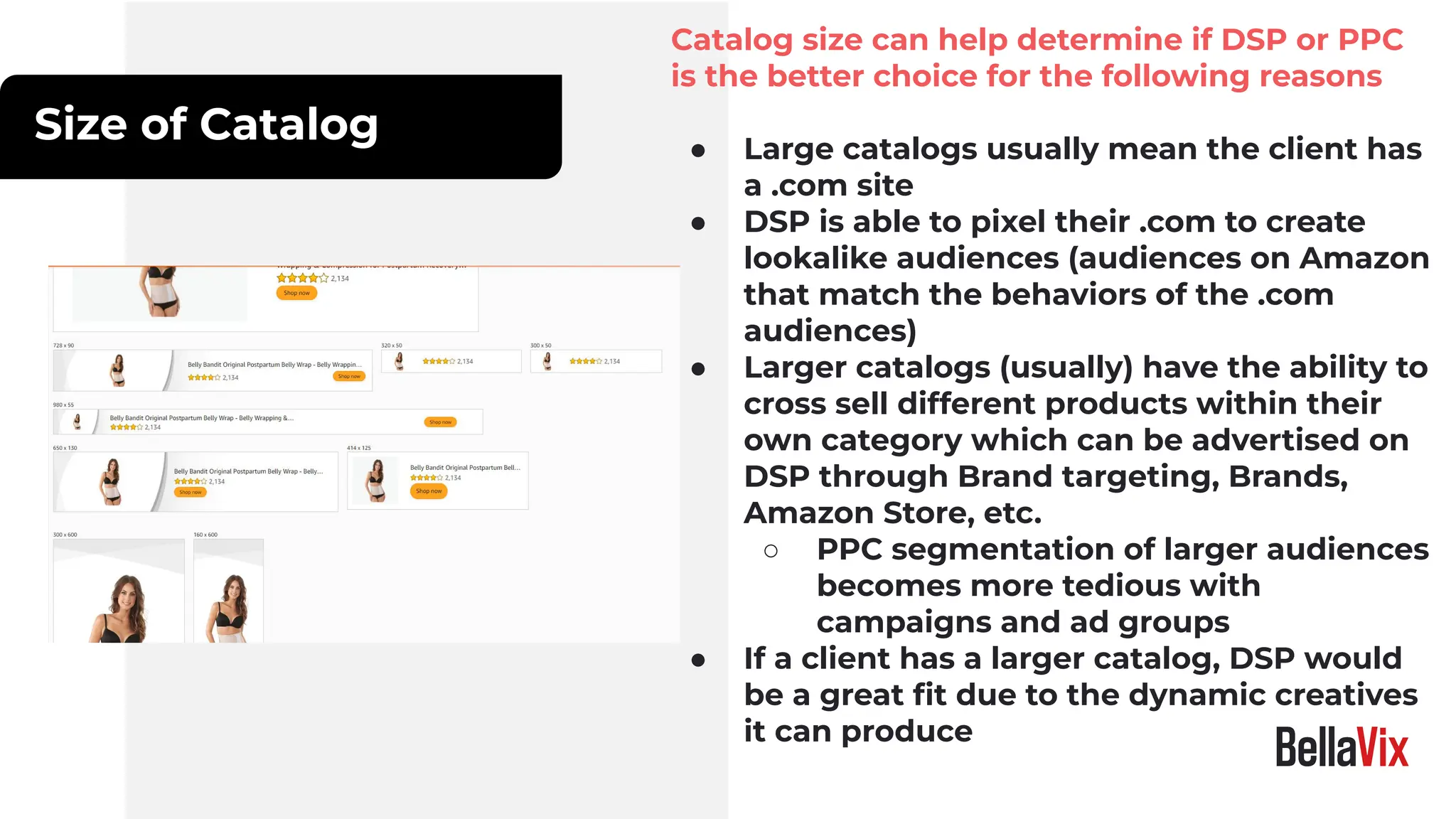
Catalog size can help determine if DSP or PPC
is the better choice for the following reasons
โ— Large catalogs usually mean the client has
a .com site
โ— DSP is able to pixel their .com to create
lookalike audiences (audiences on Amazon
that match the behaviors of the .com
audiences)
โ— Larger catalogs (usually) have the ability to
cross sell different products within their
own category which can be advertised on
DSP through Brand targeting, Brands,
Amazon Store, etc.
โ—‹ PPC segmentation of larger audiences
becomes more tedious with
campaigns and ad groups
โ— If a client has a larger catalog, DSP would
be a great ๏ฌt due to the dynamic creatives
it can produce
Goals for Campaigns
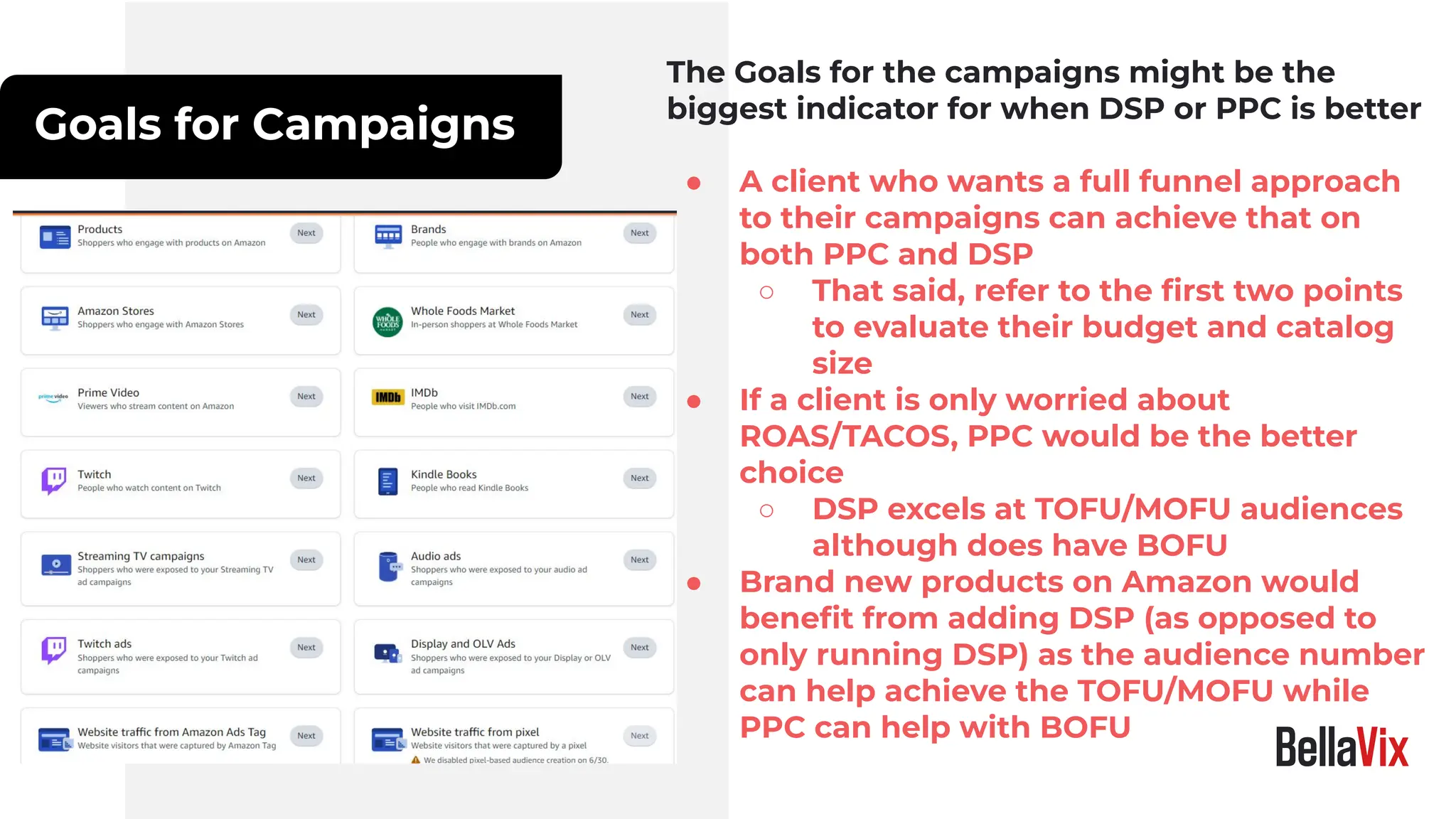
The Goals for the campaigns might be the
biggest indicator for when DSP or PPC is better
โ— A client who wants a full funnel approach
to their campaigns can achieve that on
both PPC and DSP
โ—‹ That said, refer to the ๏ฌrst two points
to evaluate their budget and catalog
size
โ— If a client is only worried about
ROAS/TACOS, PPC would be the better
choice
โ—‹ DSP excels at TOFU/MOFU audiences
although does have BOFU
โ— Brand new products on Amazon would
bene๏ฌt from adding DSP (as opposed to
only running DSP) as the audience number
can help achieve the TOFU/MOFU while
PPC can help with BOFU
Other Resources
The truth about when to make the choice between PPC and
DSP is its all client dependent. A client could have a large
budget, large catalog and big goals for their campaign and still
not want DSP. Other clients will have a small budget, small
catalog and a narrow focus and want to try it. DSP is best
served with PPC in the beginning unless itโ€™s been run before.
Subtitle
Final text/thoughts
THANK YOU!

๐ƒ๐’๐ ๐ฏ๐ฌ. ๐๐๐‚: ๐–๐ก๐ข๐œ๐ก ๐Ž๐ง๐ž ๐’๐ก๐จ๐ฎ๐ฅ๐ ๐˜๐จ๐ฎ ๐‚๐ก๐จ๐จ๐ฌ๐ž?

  • 2.
    When To UseDSP vs. PPC
  • 3.
    But First! WhatAre The Main Differences Between The Two? DSP โ— Cost - Paid for upfront and has a set budget โ— Targeting - Big inventory of audiences to pull from - EXCEPT keywords. Retargeting, off Amazon audiences, In Market and Lifestyle โ— Off Amazon Advertising - Can Pixel websites to create lookalike audiences based on existing .com traf๏ฌc โ— Dynamic Creative - DSP has access to what is called โ€œresponsive e-commerceโ€ creatives which can dynamically change the ASINs that show PPC โ— Cost - You pay when someone clicks on your ad โ— Targeting - Keyword, category, product, retargeting. On Amazon โ— Off Amazon Advertising - With streaming TV there is more opportunity but no opportunity to pixel existing websites โ— Dynamic Creative - Static creative
  • 4.
    When Is OneOption Better Than The Other? The Answer mainly revolves around three things: โ— Budget of Client โ— Size of catalog โ— Goals for Campaigns
  • 5.
    Budget Budget is animportant distinction for evaluating DSP vs. traditional PPC because of the following reasons โ— DSP has access to broad audiences such as in-market, lifestyle, pixelated traf๏ฌc, brands, websites off Amazon, etc โ—‹ Smaller budgets (think less than $10k a month dedicated to DSP) wonโ€™t be able to leverage the majority of audiences โ— Smaller budgets, especially for new brands, is better served with traditional PPC advertising to better catch customers in Sponsored Product placements and lower hanging
  • 6.
    Size of Catalog Catalogsize can help determine if DSP or PPC is the better choice for the following reasons โ— Large catalogs usually mean the client has a .com site โ— DSP is able to pixel their .com to create lookalike audiences (audiences on Amazon that match the behaviors of the .com audiences) โ— Larger catalogs (usually) have the ability to cross sell different products within their own category which can be advertised on DSP through Brand targeting, Brands, Amazon Store, etc. โ—‹ PPC segmentation of larger audiences becomes more tedious with campaigns and ad groups โ— If a client has a larger catalog, DSP would be a great ๏ฌt due to the dynamic creatives it can produce
  • 7.
    Goals for Campaigns TheGoals for the campaigns might be the biggest indicator for when DSP or PPC is better โ— A client who wants a full funnel approach to their campaigns can achieve that on both PPC and DSP โ—‹ That said, refer to the ๏ฌrst two points to evaluate their budget and catalog size โ— If a client is only worried about ROAS/TACOS, PPC would be the better choice โ—‹ DSP excels at TOFU/MOFU audiences although does have BOFU โ— Brand new products on Amazon would bene๏ฌt from adding DSP (as opposed to only running DSP) as the audience number can help achieve the TOFU/MOFU while PPC can help with BOFU
  • 8.
    Other Resources The truthabout when to make the choice between PPC and DSP is its all client dependent. A client could have a large budget, large catalog and big goals for their campaign and still not want DSP. Other clients will have a small budget, small catalog and a narrow focus and want to try it. DSP is best served with PPC in the beginning unless itโ€™s been run before.
  • 9.