WELCOME
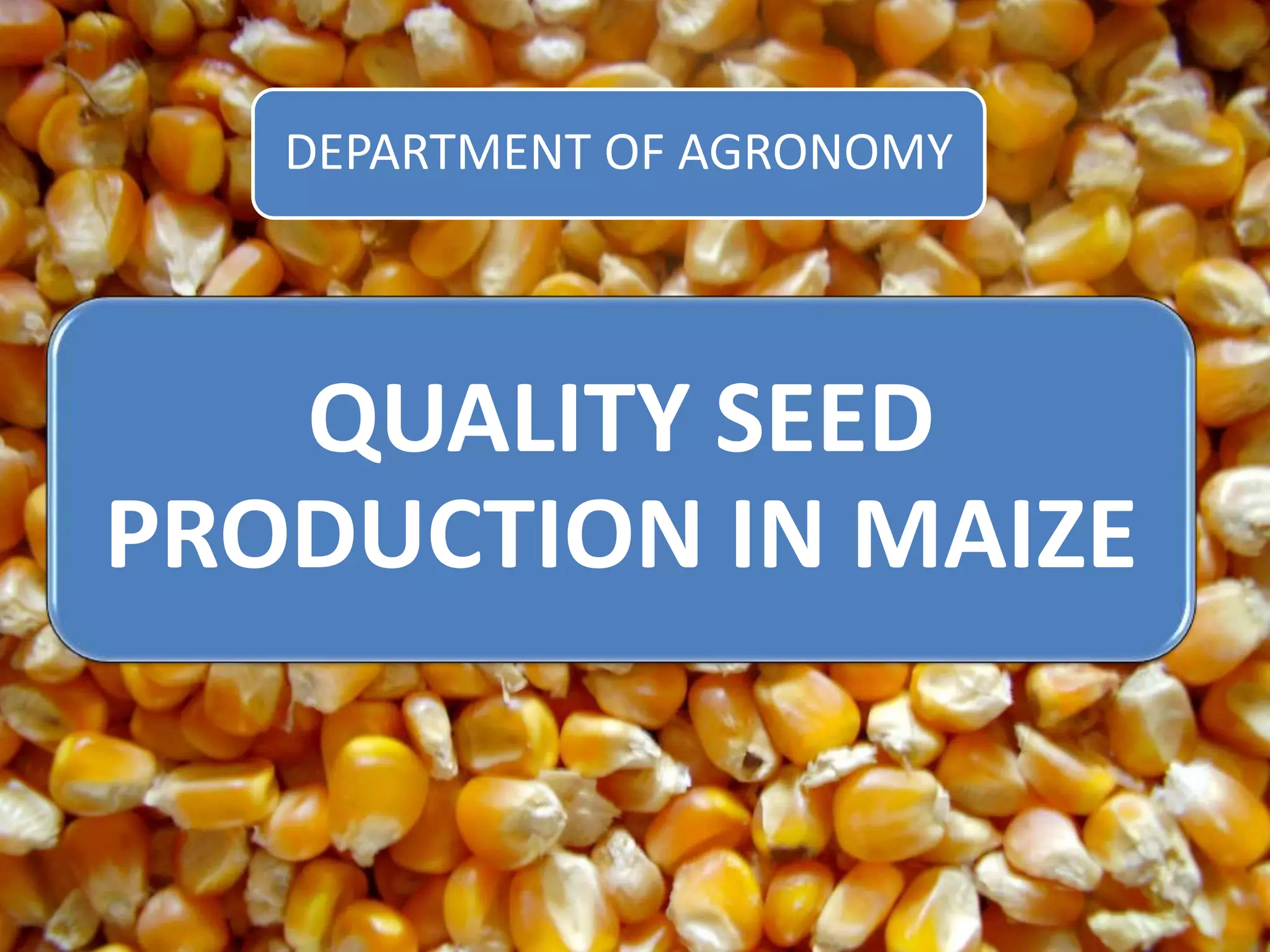
QUALITY SEED
PRODUCTION IN MAIZE
DEPARTMENT OF AGRONOMY
Presented By
Shantanu Jadhav
Registration No.
AKN-2011/37
Prof. Incharge
Prof. S. Sonawane
Credit Distrubution of Exeperiential
Learning Programme
AEL-AGRO-4813
 Sr. No. Name of the Discipline Alloted Credit Teacher Name
 1 Agronomy 0+14 Prof. Sonawane S. V.
 2 Agril Botany 0+1 Prof. Bornare S.
 3 Agril Engg 0+1 Prof. Gadge
 4 Agril Entomology 0+1 Prof. Ugale T. B.
 5 Plant Pathology 0+1 Prof Deshmukh H.V.
 6 Agril Econ 0+1
 7 Extension Education 0+1 Prof Hadole S.M.
DEPARTMENT OF
AGRONOMY
INTRODUCTION
Scientific Name – Zea mays
Family – Poaceae
Maize is one of the important cereal crop in the
world grown over an area of 132 Mha with a
production of 570 m.t. It is the crop with the highest
productivity.
Maize is serving as staple food for vulnerable
segment of the population as feed crop and also
important source of raw material used in numerous
industrial material.
Suitable climate
 Maize is cultivated during June – July, September-
October and January - February seasons
Sowing during November – December is suitable for
seed production, since seed maturity stage will not
coincide with rainfall
During early stage of this crop, water stagnation
should be avoided.
Isolation Distance
Since maize is a cross pollinated crop, it is
necessary to isolate seed field from maize
crops of any other variety.
The seed field must be isolated at least by 400
meters for foundation seed class, and 200
metres for certified class seed from seed of
other varieties of maize
Field Preparation
After pre-sowing irrigation, prepare the land
as soon as it is ploughable to a good tilth.
Usually one ploughing , two to three
harrowings followed by leveling, is sufficient
to prepare the field to the desired tilth.
Sowing operation
Time of Sowing
The best time for sowing maize is two
weeks prior to the onset of the monsoon.
Maize is usually sown from the second week
of June to mid- July.
Source of seed
Obtain nucleus/breeders/foundation seed
from a source by a seed certification agency.
Method of Sowing
Maize is sown in rows with the help of a maize
planter, or is dibbed by hand in furrows. The
depth of seeding should be from five to six cm.
Spacing
Row to row 60to 75 cm, plant to plant 20to 22.5
cm
Seed rate
16 to 18 kg per hectare
Seed treatment
To control the fungal disease treat the seed with
thiram at 2g/kg seed.
One day after treat the seeds with 600 g of
Azospirillum and shade dry for 15 minutes.
Sowing
Sow the seeds at 1/3rd of ridge from the bottom
Adopt a spacing of 10 cm from plant to plant and
sow two seeds per hill.
Irrigation
Up to 30 days, less irrigation is given.
Then it is necessary to irrigate once in 10 days.
Smooth silk will emerge out from the cob after
fertilization.
Fertilizer application
Apply 25 tonnes of FYM per ha.
At time of sowing apply 40 kg N, 60 kg P and 40
kg K per ha as basal dose.
After 40-45 days of sowing apply 40 kg N per ha.
Micronutrient deficiency
Zn and Mg deficiency occurs - leaves.
 Apply ZnSO4 @ 20 kg/ha as basal fertilizer.
Apply micronutrient mixture @ 62.5/ha mixed
with 40 kg sand, after sowing the seeds.
Weed management
Take two hand weedings on 25 and 45 days after
sowing.
After weeding, apply fertilizer as top dressing and do
the earthing up operation.
Herbicides can also be applied. Spraying of Atrazin
500 g mixed in 1000 lit water and life irrigation on
third day controls the weeds in maize fields..
ROUGING
Generally rouging is done three times in maize.
First rouging should be done during vegetative stage,
based on the height of the plant, colour of petiole and
colour of leaf.
During flowering stage, second rouging is done based on
colour of tassel and silk.
Finally, before harvest, based on colour of seed and cob
characteristics, rouging can be done.
During drying of the cobs, rouging of cob based on seed
colour and seed row will maintain the genetic purity.
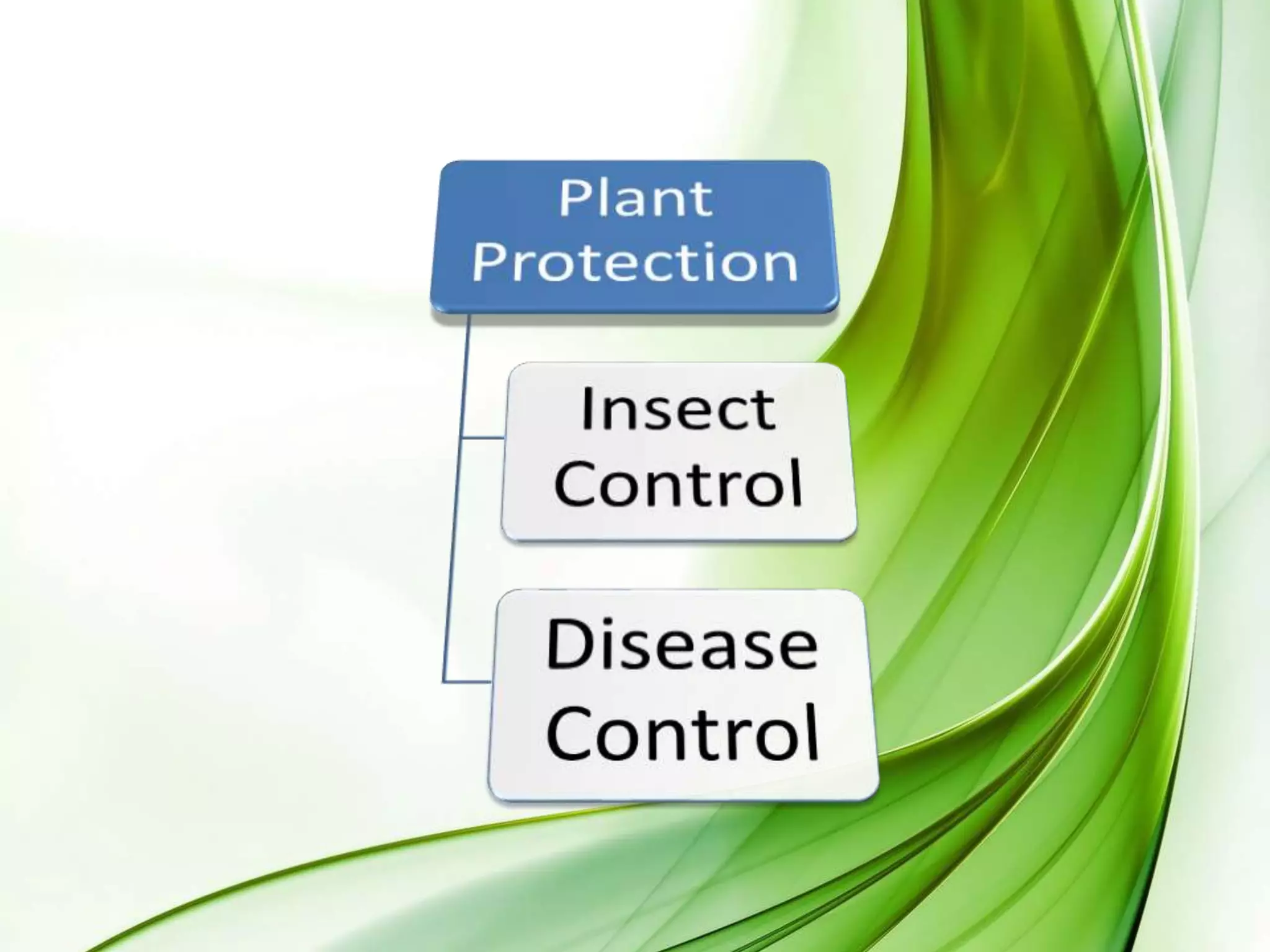
Insect Control
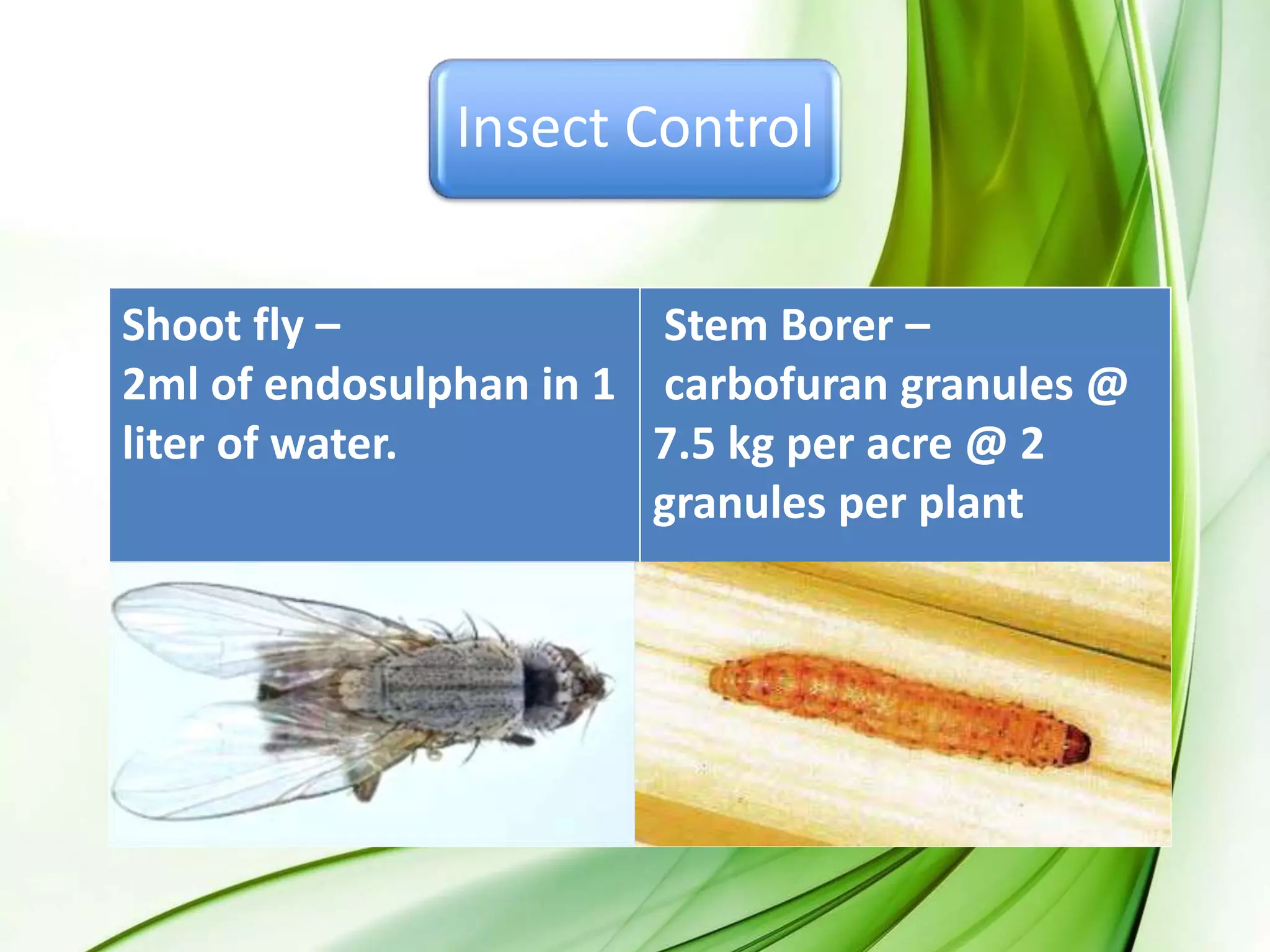
 Shoot fly - 2ml of endosulphan in 1l of H2O.
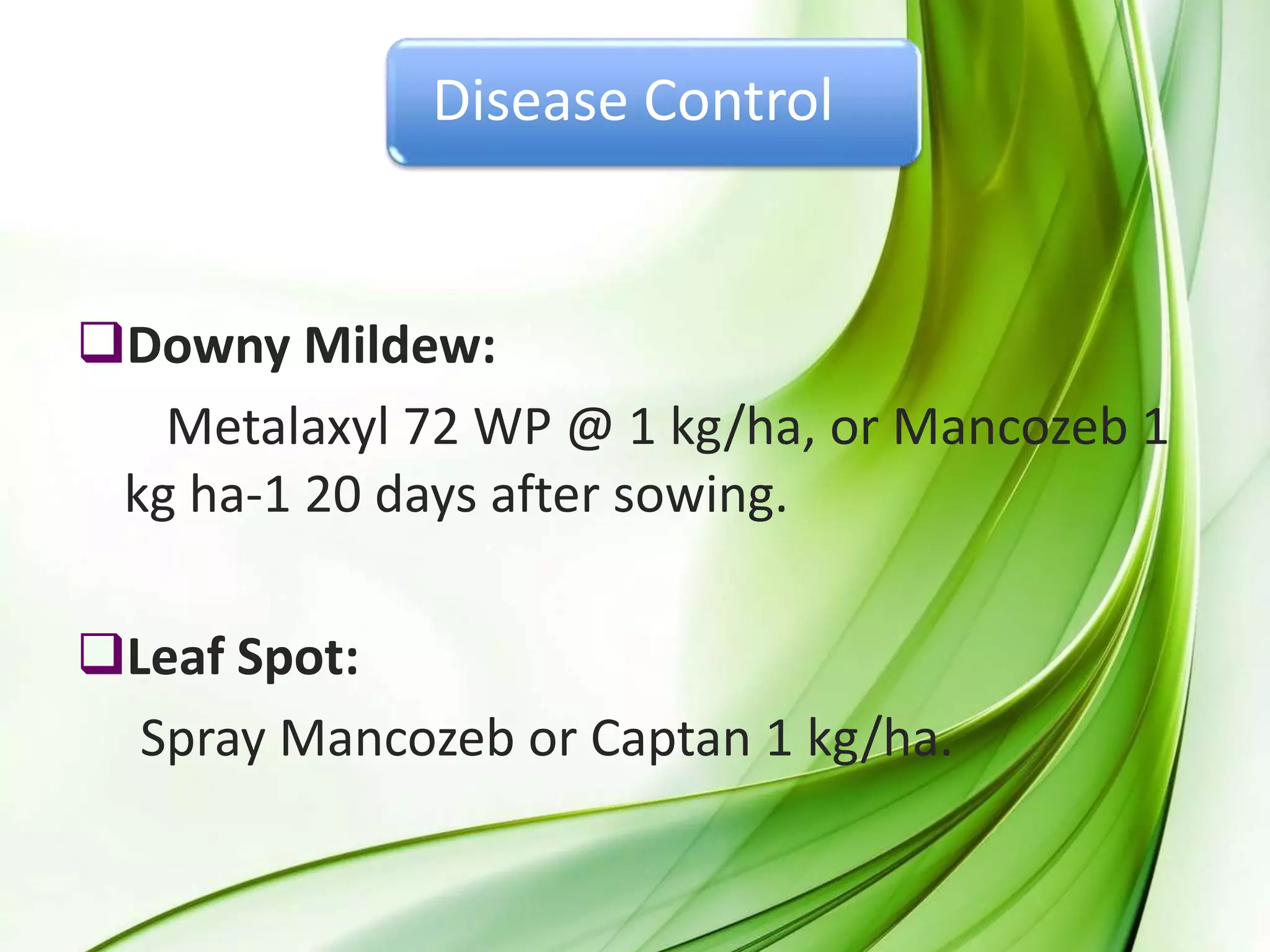
 Stem Borer - carbofuran granules @ 7.5 kg per
acre @ 2 granules per plant
Shoot fly –
2ml of endosulphan in 1
liter of water.
Stem Borer –
carbofuran granules @
7.5 kg per acre @ 2
granules per plant
Disease Control
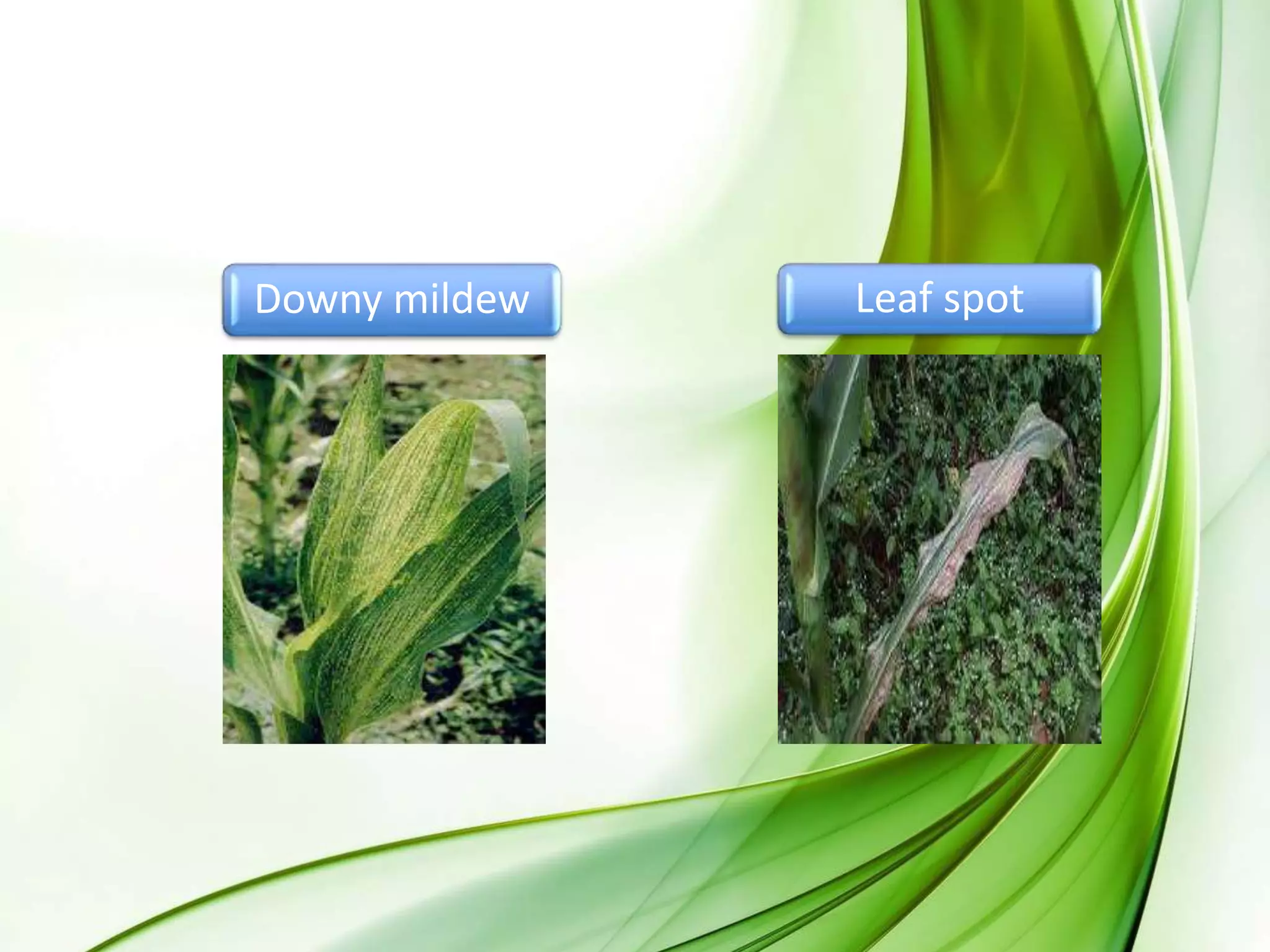
Downy Mildew:
Metalaxyl 72 WP @ 1 kg/ha, or Mancozeb 1
kg ha-1 20 days after sowing.
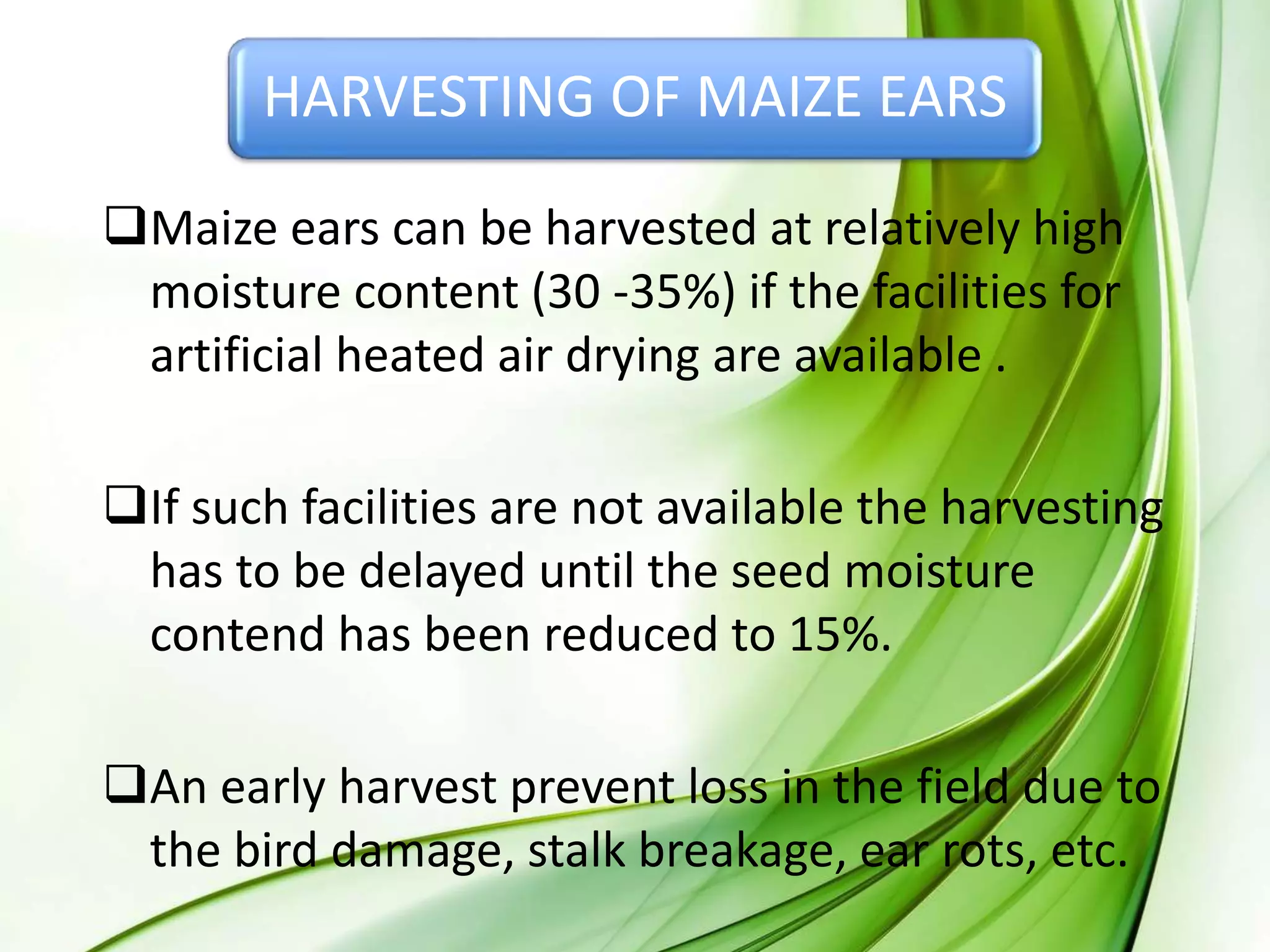
Leaf Spot:
Spray Mancozeb or Captan 1 kg/ha.
Downy mildew Leaf spot
HARVESTING OF MAIZE EARS
Maize ears can be harvested at relatively high
moisture content (30 -35%) if the facilities for
artificial heated air drying are available .
If such facilities are not available the harvesting
has to be delayed until the seed moisture
contend has been reduced to 15%.
An early harvest prevent loss in the field due to
the bird damage, stalk breakage, ear rots, etc.
Sorting and drying of Maize Ears
After harvest, sort out all off type maize ears ,
particularly thoes showing different colour and
texture, and diseased ears, before placing them in
bin to dry.
A good sorting at this time considerably reduced
task of sorting after the maize ears have been
dried to the desired extent (10-12%moisture
content )
SHELLING
Seeds can be separated by mechanical means. For
this operation, moisture content should be around
15 per cent for seed and 25 per cent for cob
By maintaining the moisture at this level, mechanical
damage can be avoided. Seeds can also be separated
from cob by beating with sticks
If the seeds are not in appropriate moisture content,
occurrence of mechanical damage may occur to an
extent of 48 per cent. Seeds with mechanical
damage may invite fungal attack.
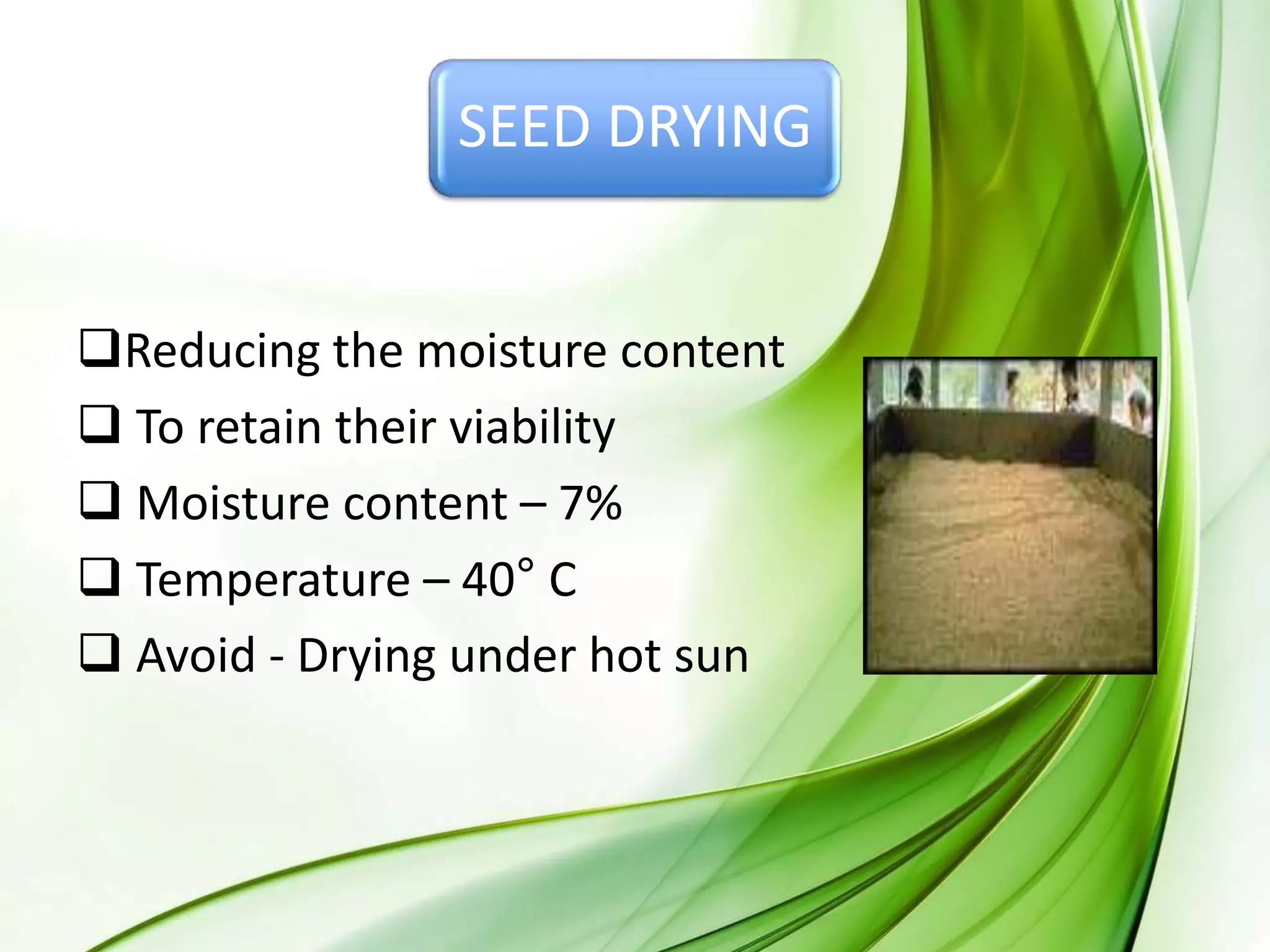
SEED DRYING
Reducing the moisture content
 To retain their viability
 Moisture content – 7%
 Temperature – 40° C
 Avoid - Drying under hot sun
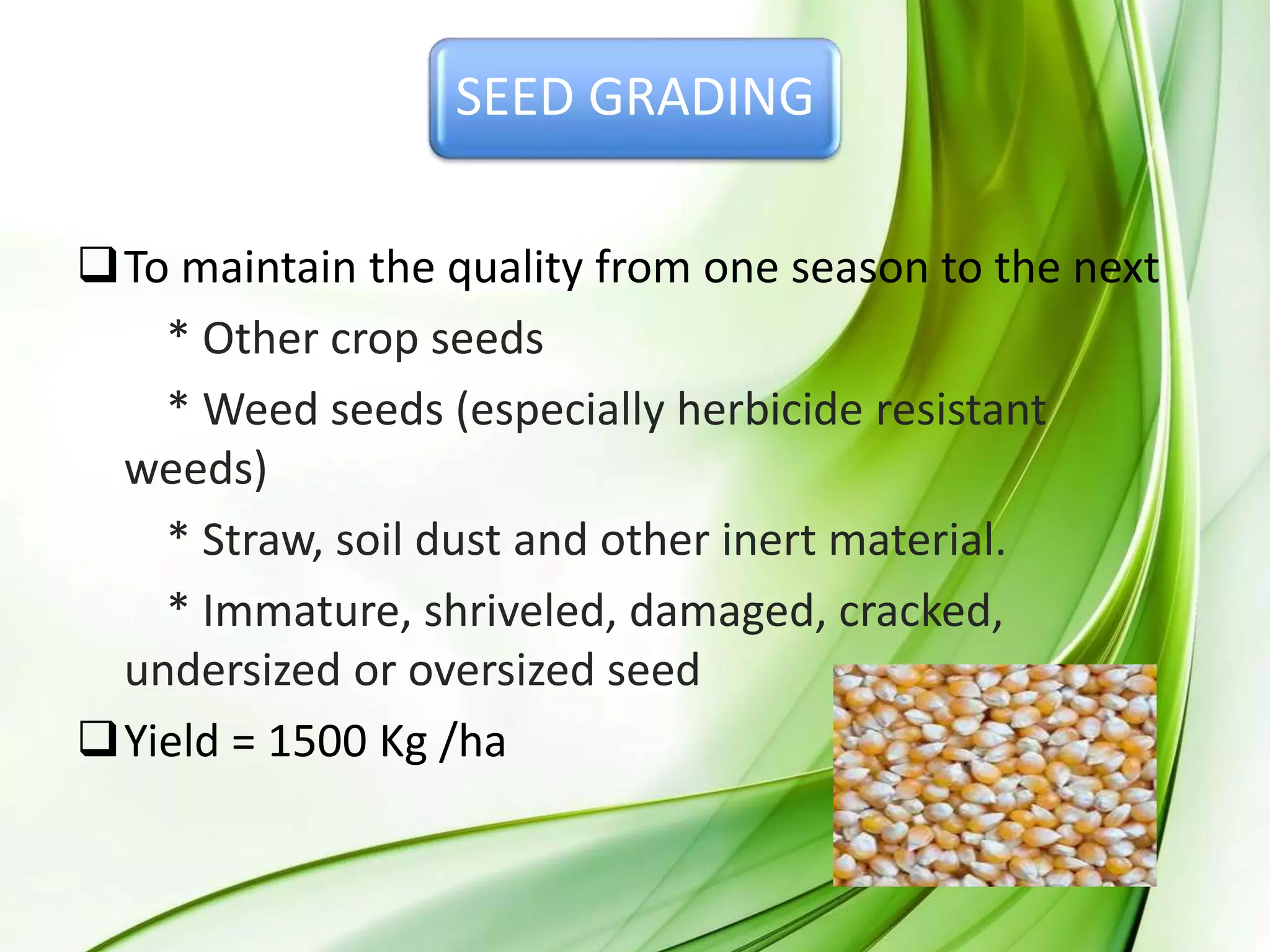
SEED GRADING
To maintain the quality from one season to the next
* Other crop seeds
* Weed seeds (especially herbicide resistant
weeds)
* Straw, soil dust and other inert material.
* Immature, shriveled, damaged, cracked,
undersized or oversized seed
Yield = 1500 Kg /ha
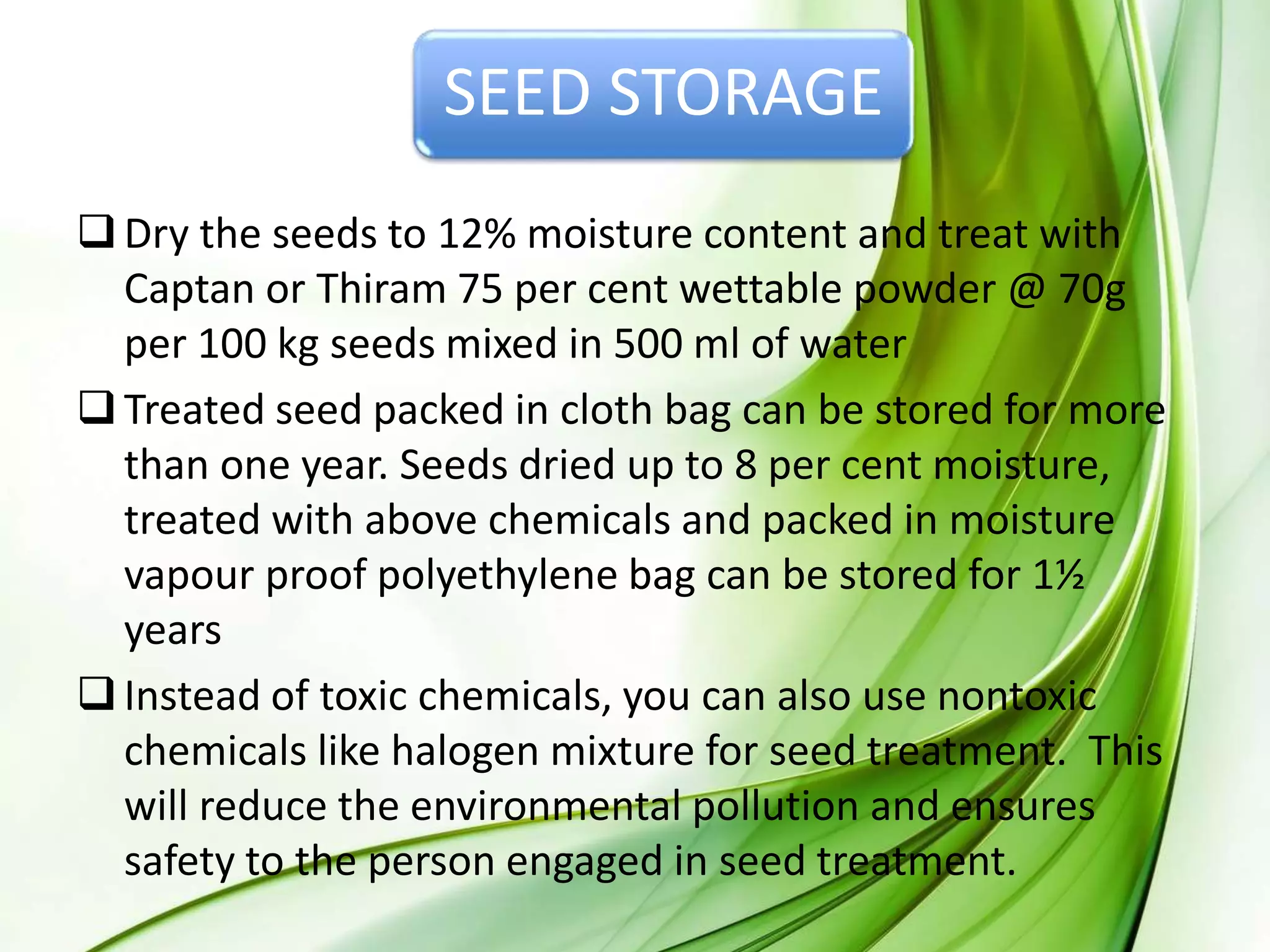
SEED STORAGE
Dry the seeds to 12% moisture content and treat with
Captan or Thiram 75 per cent wettable powder @ 70g
per 100 kg seeds mixed in 500 ml of water
Treated seed packed in cloth bag can be stored for more
than one year. Seeds dried up to 8 per cent moisture,
treated with above chemicals and packed in moisture
vapour proof polyethylene bag can be stored for 1½
years
Instead of toxic chemicals, you can also use nontoxic
chemicals like halogen mixture for seed treatment. This
will reduce the environmental pollution and ensures
safety to the person engaged in seed treatment.
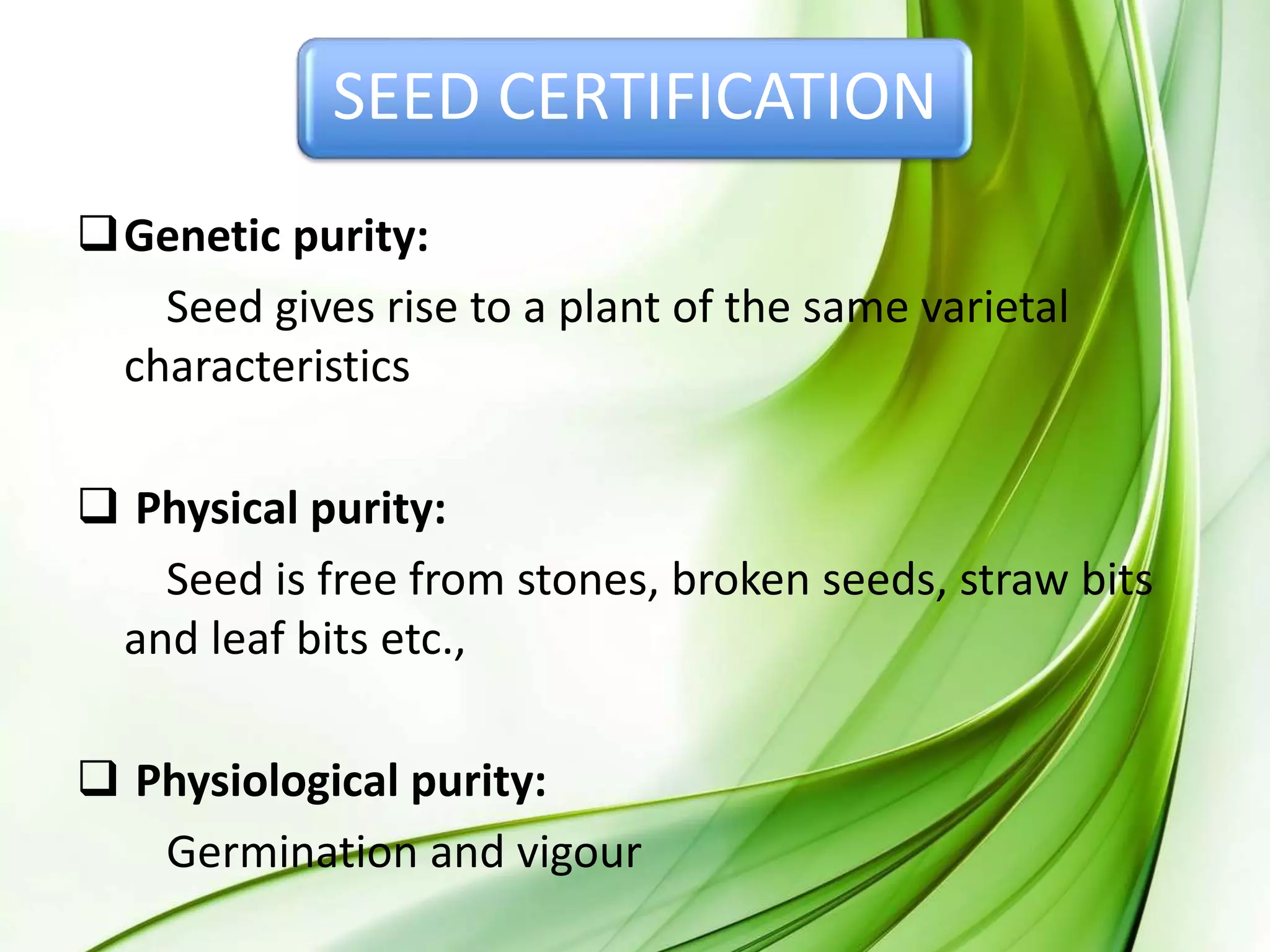
SEED CERTIFICATION
Genetic purity:
Seed gives rise to a plant of the same varietal
characteristics
 Physical purity:
Seed is free from stones, broken seeds, straw bits
and leaf bits etc.,
 Physiological purity:
Germination and vigour
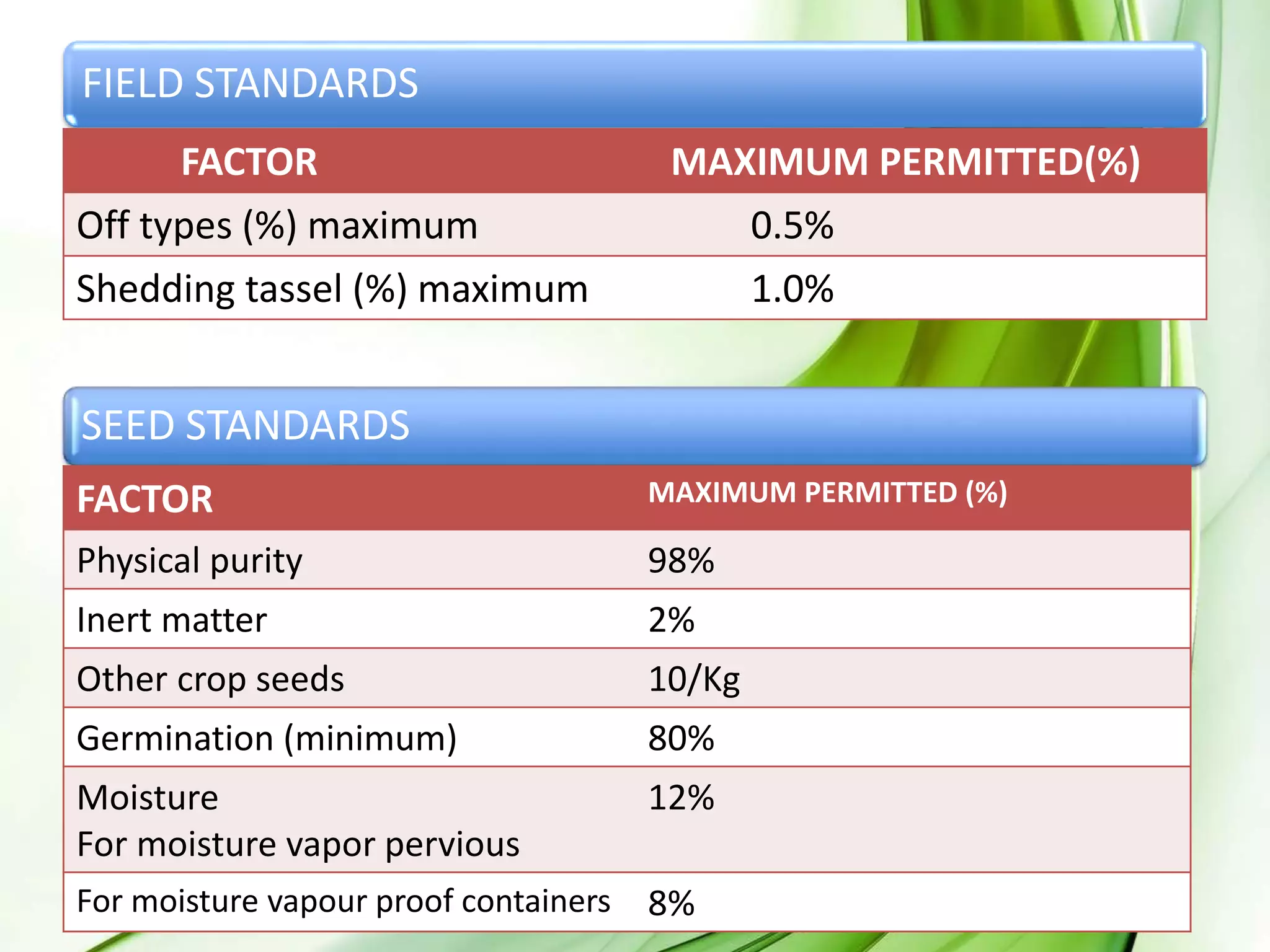
SEED STANDARDS
FACTOR MAXIMUM PERMITTED (%)
Physical purity 98%
Inert matter 2%
Other crop seeds 10/Kg
Germination (minimum) 80%
Moisture
For moisture vapor pervious
12%
For moisture vapour proof containers 8%
FIELD STANDARDS
FACTOR MAXIMUM PERMITTED(%)
Off types (%) maximum 0.5%
Shedding tassel (%) maximum 1.0%
Seed production of maize

Seed production of maize

  • 1.
  • 2.
    QUALITY SEED PRODUCTION INMAIZE DEPARTMENT OF AGRONOMY
  • 3.
    Presented By Shantanu Jadhav RegistrationNo. AKN-2011/37 Prof. Incharge Prof. S. Sonawane
  • 4.
    Credit Distrubution ofExeperiential Learning Programme AEL-AGRO-4813  Sr. No. Name of the Discipline Alloted Credit Teacher Name  1 Agronomy 0+14 Prof. Sonawane S. V.  2 Agril Botany 0+1 Prof. Bornare S.  3 Agril Engg 0+1 Prof. Gadge  4 Agril Entomology 0+1 Prof. Ugale T. B.  5 Plant Pathology 0+1 Prof Deshmukh H.V.  6 Agril Econ 0+1  7 Extension Education 0+1 Prof Hadole S.M.
  • 5.
  • 6.
    INTRODUCTION Scientific Name –Zea mays Family – Poaceae Maize is one of the important cereal crop in the world grown over an area of 132 Mha with a production of 570 m.t. It is the crop with the highest productivity. Maize is serving as staple food for vulnerable segment of the population as feed crop and also important source of raw material used in numerous industrial material.
  • 7.
    Suitable climate  Maizeis cultivated during June – July, September- October and January - February seasons Sowing during November – December is suitable for seed production, since seed maturity stage will not coincide with rainfall During early stage of this crop, water stagnation should be avoided.
  • 8.
    Isolation Distance Since maizeis a cross pollinated crop, it is necessary to isolate seed field from maize crops of any other variety. The seed field must be isolated at least by 400 meters for foundation seed class, and 200 metres for certified class seed from seed of other varieties of maize
  • 9.
    Field Preparation After pre-sowingirrigation, prepare the land as soon as it is ploughable to a good tilth. Usually one ploughing , two to three harrowings followed by leveling, is sufficient to prepare the field to the desired tilth.
  • 10.
    Sowing operation Time ofSowing The best time for sowing maize is two weeks prior to the onset of the monsoon. Maize is usually sown from the second week of June to mid- July. Source of seed Obtain nucleus/breeders/foundation seed from a source by a seed certification agency.
  • 11.
    Method of Sowing Maizeis sown in rows with the help of a maize planter, or is dibbed by hand in furrows. The depth of seeding should be from five to six cm. Spacing Row to row 60to 75 cm, plant to plant 20to 22.5 cm Seed rate 16 to 18 kg per hectare
  • 12.
    Seed treatment To controlthe fungal disease treat the seed with thiram at 2g/kg seed. One day after treat the seeds with 600 g of Azospirillum and shade dry for 15 minutes. Sowing Sow the seeds at 1/3rd of ridge from the bottom Adopt a spacing of 10 cm from plant to plant and sow two seeds per hill.
  • 13.
    Irrigation Up to 30days, less irrigation is given. Then it is necessary to irrigate once in 10 days. Smooth silk will emerge out from the cob after fertilization.
  • 14.
    Fertilizer application Apply 25tonnes of FYM per ha. At time of sowing apply 40 kg N, 60 kg P and 40 kg K per ha as basal dose. After 40-45 days of sowing apply 40 kg N per ha.
  • 15.
    Micronutrient deficiency Zn andMg deficiency occurs - leaves.  Apply ZnSO4 @ 20 kg/ha as basal fertilizer. Apply micronutrient mixture @ 62.5/ha mixed with 40 kg sand, after sowing the seeds.
  • 16.
    Weed management Take twohand weedings on 25 and 45 days after sowing. After weeding, apply fertilizer as top dressing and do the earthing up operation. Herbicides can also be applied. Spraying of Atrazin 500 g mixed in 1000 lit water and life irrigation on third day controls the weeds in maize fields..
  • 17.
    ROUGING Generally rouging isdone three times in maize. First rouging should be done during vegetative stage, based on the height of the plant, colour of petiole and colour of leaf. During flowering stage, second rouging is done based on colour of tassel and silk. Finally, before harvest, based on colour of seed and cob characteristics, rouging can be done. During drying of the cobs, rouging of cob based on seed colour and seed row will maintain the genetic purity.
  • 19.
    Insect Control  Shootfly - 2ml of endosulphan in 1l of H2O.  Stem Borer - carbofuran granules @ 7.5 kg per acre @ 2 granules per plant Shoot fly – 2ml of endosulphan in 1 liter of water. Stem Borer – carbofuran granules @ 7.5 kg per acre @ 2 granules per plant
  • 20.
    Disease Control Downy Mildew: Metalaxyl72 WP @ 1 kg/ha, or Mancozeb 1 kg ha-1 20 days after sowing. Leaf Spot: Spray Mancozeb or Captan 1 kg/ha.
  • 21.
  • 22.
    HARVESTING OF MAIZEEARS Maize ears can be harvested at relatively high moisture content (30 -35%) if the facilities for artificial heated air drying are available . If such facilities are not available the harvesting has to be delayed until the seed moisture contend has been reduced to 15%. An early harvest prevent loss in the field due to the bird damage, stalk breakage, ear rots, etc.
  • 23.
    Sorting and dryingof Maize Ears After harvest, sort out all off type maize ears , particularly thoes showing different colour and texture, and diseased ears, before placing them in bin to dry. A good sorting at this time considerably reduced task of sorting after the maize ears have been dried to the desired extent (10-12%moisture content )
  • 24.
    SHELLING Seeds can beseparated by mechanical means. For this operation, moisture content should be around 15 per cent for seed and 25 per cent for cob By maintaining the moisture at this level, mechanical damage can be avoided. Seeds can also be separated from cob by beating with sticks If the seeds are not in appropriate moisture content, occurrence of mechanical damage may occur to an extent of 48 per cent. Seeds with mechanical damage may invite fungal attack.
  • 25.
    SEED DRYING Reducing themoisture content  To retain their viability  Moisture content – 7%  Temperature – 40° C  Avoid - Drying under hot sun
  • 26.
    SEED GRADING To maintainthe quality from one season to the next * Other crop seeds * Weed seeds (especially herbicide resistant weeds) * Straw, soil dust and other inert material. * Immature, shriveled, damaged, cracked, undersized or oversized seed Yield = 1500 Kg /ha
  • 27.
    SEED STORAGE Dry theseeds to 12% moisture content and treat with Captan or Thiram 75 per cent wettable powder @ 70g per 100 kg seeds mixed in 500 ml of water Treated seed packed in cloth bag can be stored for more than one year. Seeds dried up to 8 per cent moisture, treated with above chemicals and packed in moisture vapour proof polyethylene bag can be stored for 1½ years Instead of toxic chemicals, you can also use nontoxic chemicals like halogen mixture for seed treatment. This will reduce the environmental pollution and ensures safety to the person engaged in seed treatment.
  • 28.
    SEED CERTIFICATION Genetic purity: Seedgives rise to a plant of the same varietal characteristics  Physical purity: Seed is free from stones, broken seeds, straw bits and leaf bits etc.,  Physiological purity: Germination and vigour
  • 29.
    SEED STANDARDS FACTOR MAXIMUMPERMITTED (%) Physical purity 98% Inert matter 2% Other crop seeds 10/Kg Germination (minimum) 80% Moisture For moisture vapor pervious 12% For moisture vapour proof containers 8% FIELD STANDARDS FACTOR MAXIMUM PERMITTED(%) Off types (%) maximum 0.5% Shedding tassel (%) maximum 1.0%