Exponential Creativity Fund
PITCH DECK
GUIDE
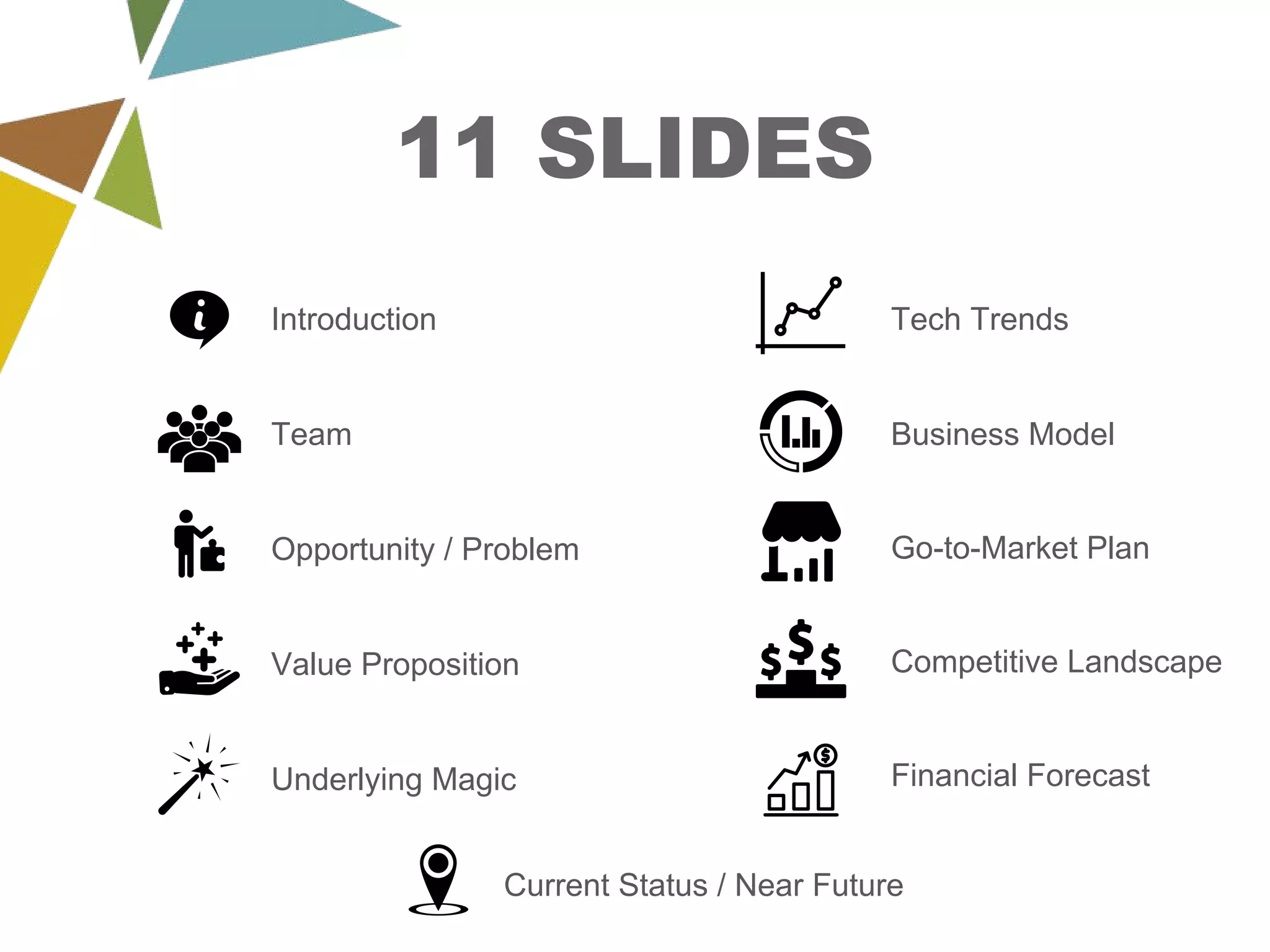
Introduction
Team
Opportunity / Problem
Value Proposition
Underlying Magic
Tech Trends
Business Model
Go-to-Market Plan
Competitive Landscape
Financial Forecast
Current Status / Near Future
11 SLIDES
Company name, founder name(s), email,
mobile phone, company url.
INTRODUCTION
TEAM
List key team members for your company and
partnerships. Include photos
and areas of expertise.
OPPORTUNITY /
PROBLEM
Describe the creativity you are
unlocking or the barrier to creativity
you are removing.
VALUE
PROPOSITION
Describe the customer value
(financial and otherwise) of the
opportunity you’re creating or the
barrier you’re removing.
UNDERLYING
MAGIC
What is special or unique about your solution? If you
have a prototype, this is a good time to demo it.
TECH TRENDS
What core technologies underlie your solution? How
are you positioned to benefit from continued
improvement in those technologies?
BUSINESS MODEL
Who are your customers, what will they pay you
for, and how much will they pay you? What are
your costs? How quickly must your expenses
grow to keep pace with sales growth?
GO-TO-MARKET PLAN
Where is your target audience and how will you
reach them? (Is your team connected to target audience?
If so, share story to illustrate your insight.)
COMPETITIVE
LANDSCAPE
What are your customers currently doing to address the
opportunity / problem? Who are existing or potential competitors
for your customers’ dollars and attention? (Does your team have lived
experience with competitors’ approaches or limitations? Give examples.)
FINANCIAL
FORECAST
Make your best, informed guesses about revenue,
expenses, and any key metrics for at least the next 3
years. Highlight any critical underlying assumptions.
(Don’t make a “conservative” forecast or a “best case” forecast;
make the most realistic one you can.)
CURRENT STATUS
NEAR FUTURE
Where are you in your journey today? What’s in store for
the near future? What investments (if any) have you
already secured? (What can you do with Fractured Atlas’s support,
financial and otherwise, that you can’t do without it?)
Note about this pitch deck guide:
Our guide is inspired by industry leader pitch templates such as
Guy Kawasaki “The Only 10 Slides You Need in Your Pitch” and Startup Weekend Pitch Deck 101.
We added essential elements we see missing from traditional VC pitches, such as a value
propositions that include the impact & mission tied to creativity (not just profit). As well as making
space for the value creative founders bring in terms of understanding a customer that is a creative,
or how competitors are failing creatives. Because we only invest in companies that are using
exponential technologies, we specify tech trends in ways that other pitch decks do not.
To learn more about how Fractured Atlas’ Exponential Creativity Fund is unique from
traditional VC investment, follow our journey here.
FracturedAtlas.org

Pitch Deck Guide for Arts Entrepreneurs

  • 1.
  • 2.
    Introduction Team Opportunity / Problem ValueProposition Underlying Magic Tech Trends Business Model Go-to-Market Plan Competitive Landscape Financial Forecast Current Status / Near Future 11 SLIDES
  • 3.
    Company name, foundername(s), email, mobile phone, company url. INTRODUCTION
  • 4.
    TEAM List key teammembers for your company and partnerships. Include photos and areas of expertise.
  • 5.
    OPPORTUNITY / PROBLEM Describe thecreativity you are unlocking or the barrier to creativity you are removing.
  • 6.
    VALUE PROPOSITION Describe the customervalue (financial and otherwise) of the opportunity you’re creating or the barrier you’re removing.
  • 7.
    UNDERLYING MAGIC What is specialor unique about your solution? If you have a prototype, this is a good time to demo it.
  • 8.
    TECH TRENDS What coretechnologies underlie your solution? How are you positioned to benefit from continued improvement in those technologies?
  • 9.
    BUSINESS MODEL Who areyour customers, what will they pay you for, and how much will they pay you? What are your costs? How quickly must your expenses grow to keep pace with sales growth?
  • 10.
    GO-TO-MARKET PLAN Where isyour target audience and how will you reach them? (Is your team connected to target audience? If so, share story to illustrate your insight.)
  • 11.
    COMPETITIVE LANDSCAPE What are yourcustomers currently doing to address the opportunity / problem? Who are existing or potential competitors for your customers’ dollars and attention? (Does your team have lived experience with competitors’ approaches or limitations? Give examples.)
  • 12.
    FINANCIAL FORECAST Make your best,informed guesses about revenue, expenses, and any key metrics for at least the next 3 years. Highlight any critical underlying assumptions. (Don’t make a “conservative” forecast or a “best case” forecast; make the most realistic one you can.)
  • 13.
    CURRENT STATUS NEAR FUTURE Whereare you in your journey today? What’s in store for the near future? What investments (if any) have you already secured? (What can you do with Fractured Atlas’s support, financial and otherwise, that you can’t do without it?)
  • 14.
    Note about thispitch deck guide: Our guide is inspired by industry leader pitch templates such as Guy Kawasaki “The Only 10 Slides You Need in Your Pitch” and Startup Weekend Pitch Deck 101. We added essential elements we see missing from traditional VC pitches, such as a value propositions that include the impact & mission tied to creativity (not just profit). As well as making space for the value creative founders bring in terms of understanding a customer that is a creative, or how competitors are failing creatives. Because we only invest in companies that are using exponential technologies, we specify tech trends in ways that other pitch decks do not. To learn more about how Fractured Atlas’ Exponential Creativity Fund is unique from traditional VC investment, follow our journey here. FracturedAtlas.org