MSWord is not limited to text, you can also create tables. A table is made up of rows and
columns that are divided into boxes called cells. Rows and columns can be inserted into
or deleted from a table at any time. Use tables to display data in table format in MSWord.
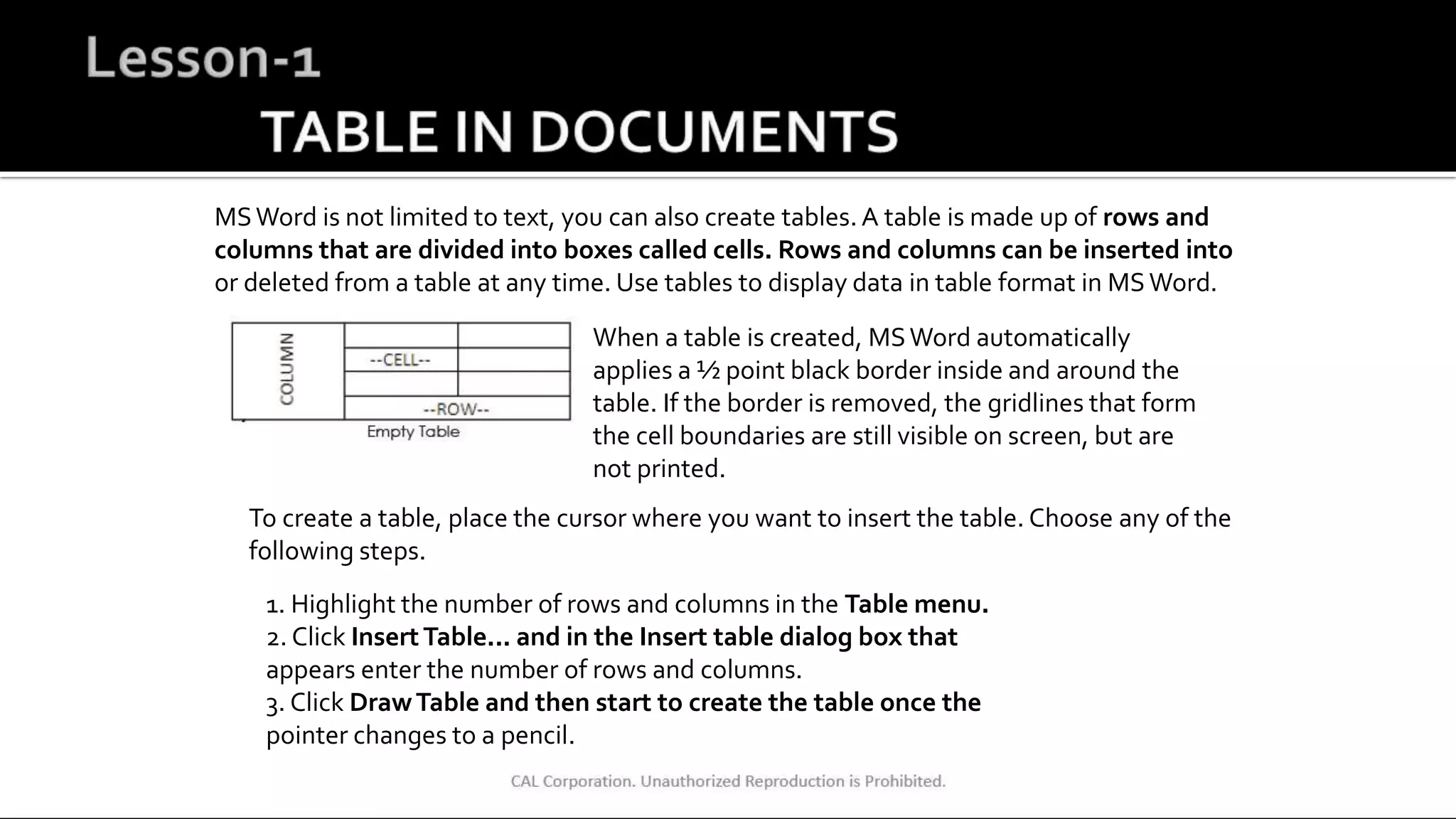
When a table is created, MSWord automatically
applies a ½ point black border inside and around the
table. If the border is removed, the gridlines that form
the cell boundaries are still visible on screen, but are
not printed.
To create a table, place the cursor where you want to insert the table. Choose any of the
following steps.
1. Highlight the number of rows and columns in the Table menu.
2. Click InsertTable... and in the Insert table dialog box that
appears enter the number of rows and columns.
3. Click DrawTable and then start to create the table once the
pointer changes to a pencil.
a. Draw a rectangle to define the outer boundaries.
b. Create the column and row lines within the rectangle.
4. Click Quick Tables and then select a table template.
Pressing the [Tab] key when the insertion point is in the last cell of a table will
automatically create a new row inserted at the end of that table.
To Move Around Cells in a Table
1. Press the [Tab] key to move the cursor to the next cell.
2. Press an arrow key (up, down, left, or right) to move the cursor to any
cell in any direction.
3. Use the mouse to click the appropriate cell.
4. Press [Shift] + [Tab] to move the cursor to the previous cell.
To Select Cells, Columns, or Rows in a Table Using the Mouse
1. Click and drag over cells, columns or rows to select
multiple cells, rows and columns.
2. Click in the left margin to select an entire row
and then drag mouse down to select multiple
rows.
3. Click the top border of a column to select an
entire column.
Using the Keyboard
1. Press the [Shift] + an arrow key (up, down, left, or right) to select multiple cells,
rows or columns in any direction.
2. With Num Lock function switched off, press [Alt] + [5] on the numeric keypad to
select the entire table.
To Move a Table
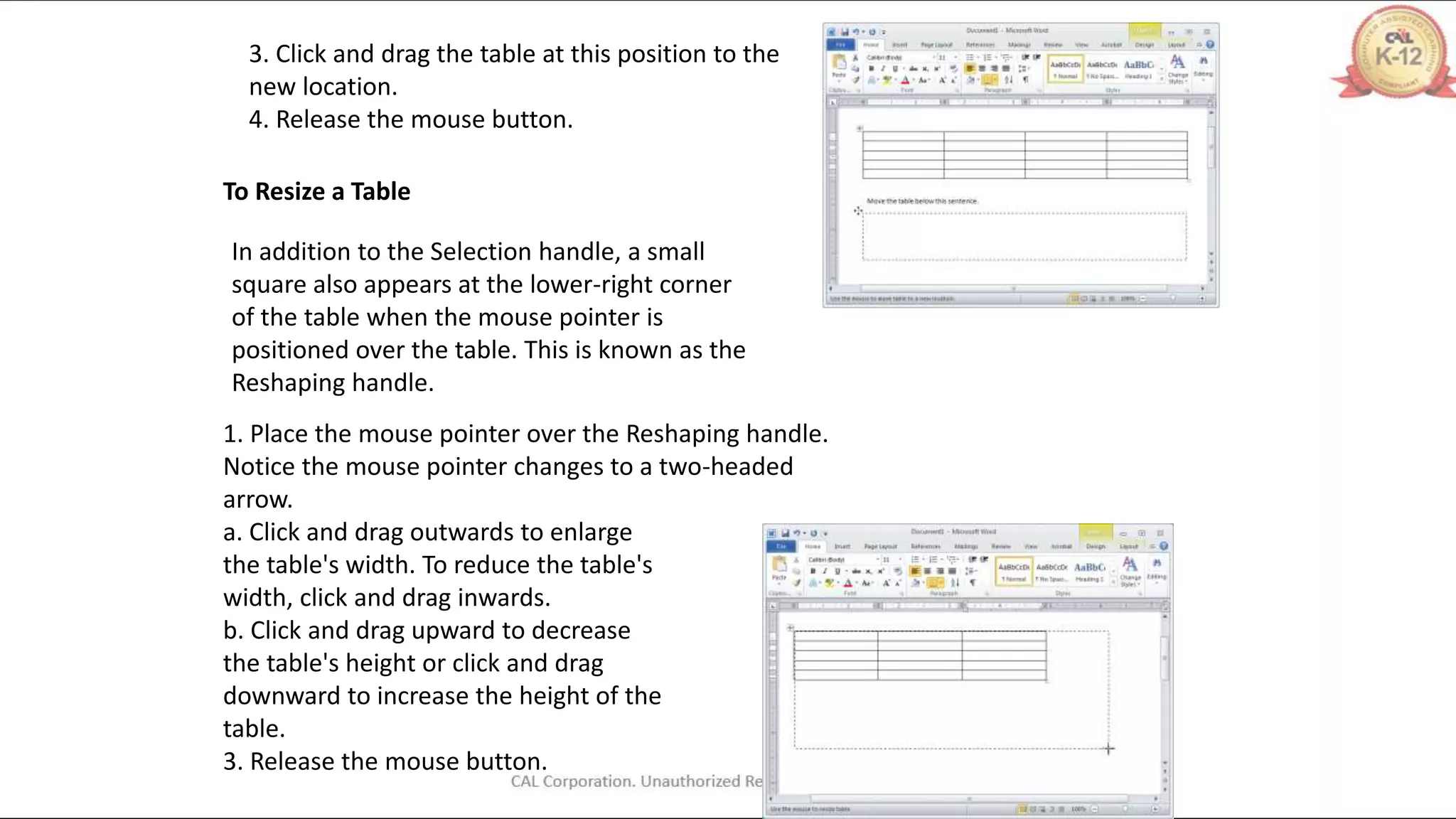
1. When the mouse pointer is positioned over the table. The Selection handle will appear.
2. Place the mouse pointer over the Selection handle, .
Notice the mouse pointer changes to a
four-headed arrow.
3. Click and drag the table at this position to the
new location.
4. Release the mouse button.
To Resize a Table
In addition to the Selection handle, a small
square also appears at the lower-right corner
of the table when the mouse pointer is
positioned over the table. This is known as the
Reshaping handle.
1. Place the mouse pointer over the Reshaping handle.
Notice the mouse pointer changes to a two-headed
arrow.
a. Click and drag outwards to enlarge
the table's width. To reduce the table's
width, click and drag inwards.
b. Click and drag upward to decrease
the table's height or click and drag
downward to increase the height of the
table.
3. Release the mouse button.
Using the Design Tab To Modify a Table's Appearance
The Design Tab under Table tools can be used to modify the look of a table by
changing table lines, colors, and shading. The Design tab offers Table Style Options,
Table Styles, and the Draw Borders function.
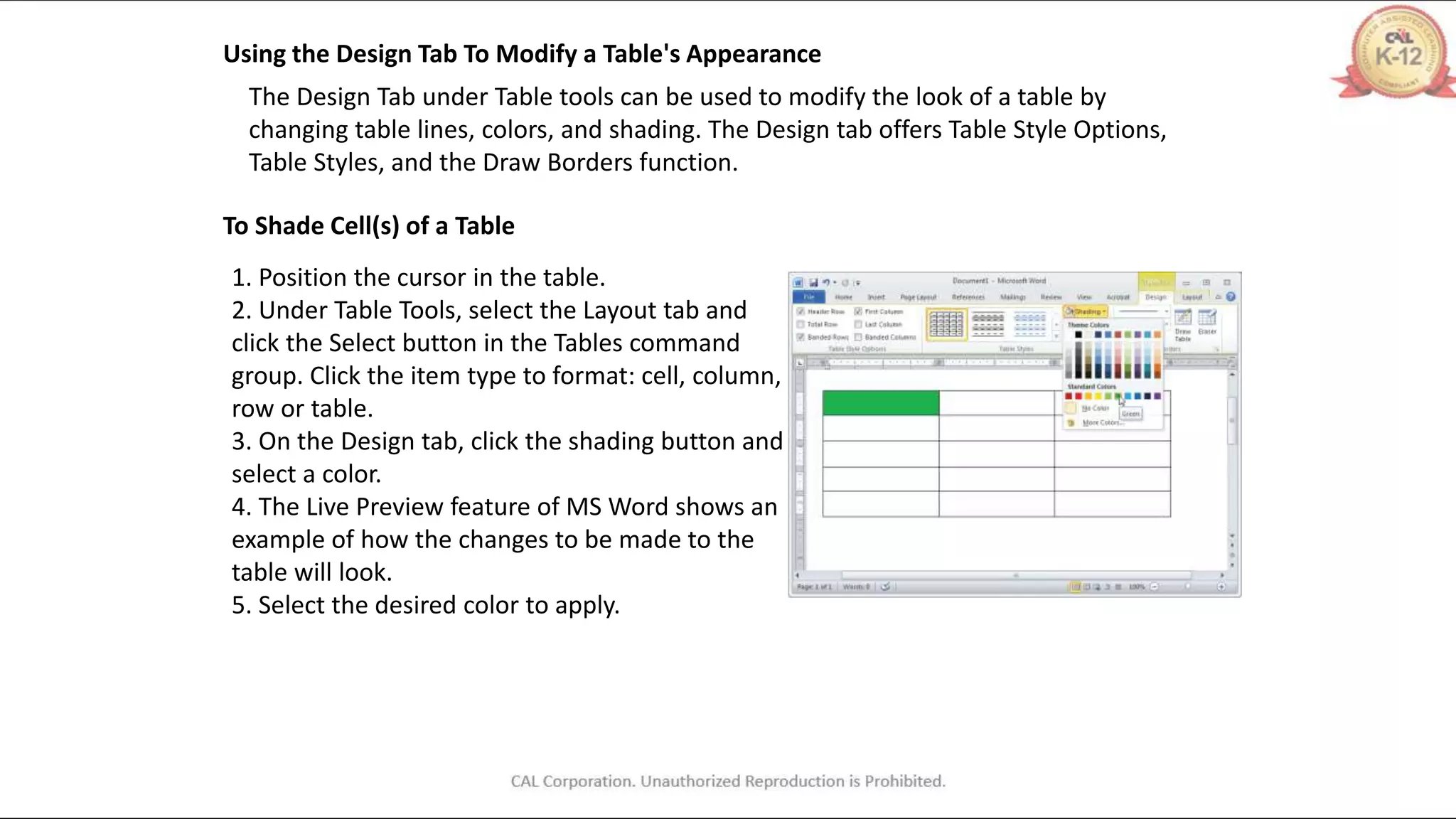
To Shade Cell(s) of a Table
1. Position the cursor in the table.
2. Under Table Tools, select the Layout tab and
click the Select button in the Tables command
group. Click the item type to format: cell, column,
row or table.
3. On the Design tab, click the shading button and
select a color.
4. The Live Preview feature of MS Word shows an
example of how the changes to be made to the
table will look.
5. Select the desired color to apply.
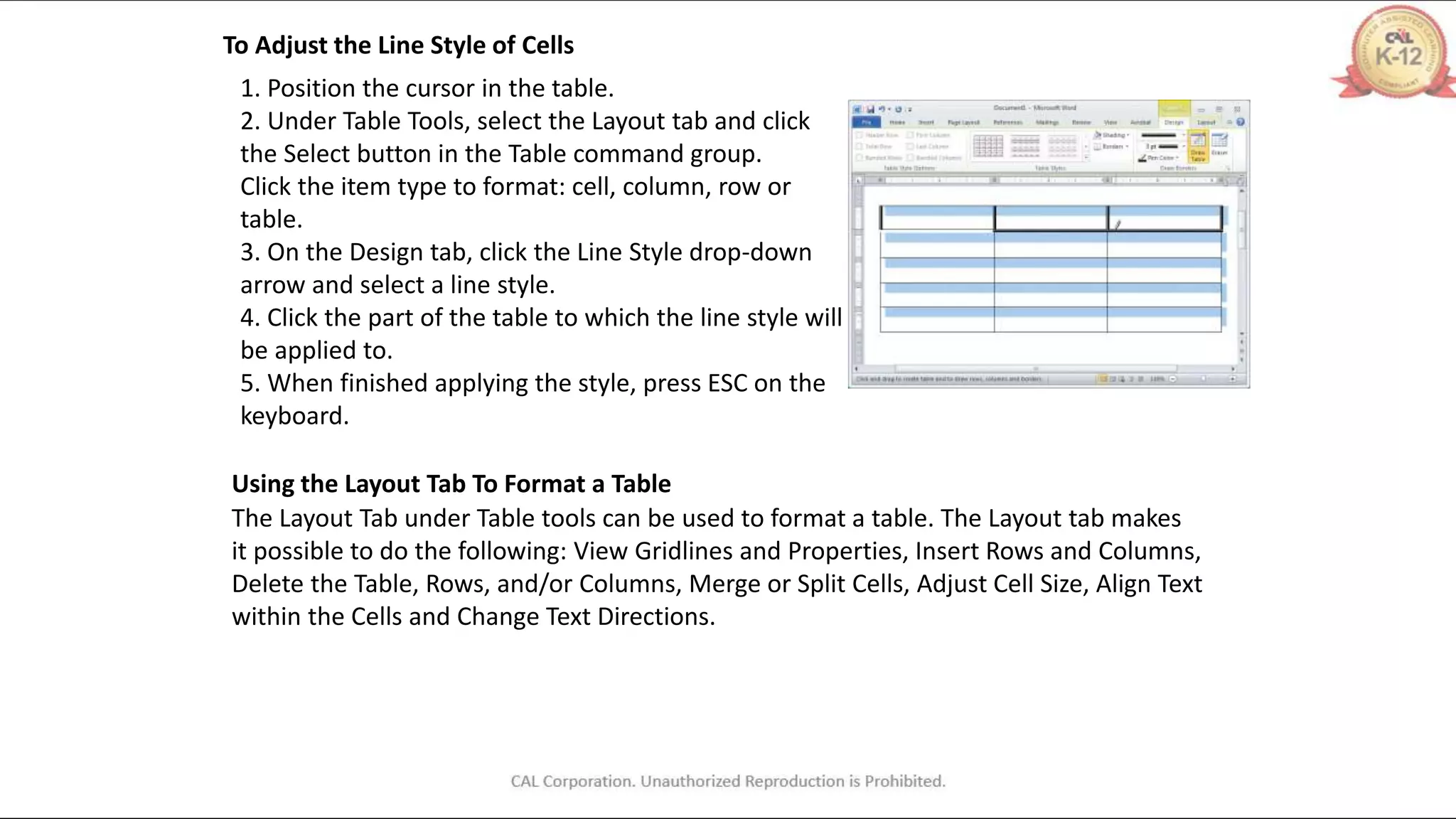
To Adjust the Line Style of Cells
1. Position the cursor in the table.
2. Under Table Tools, select the Layout tab and click
the Select button in the Table command group.
Click the item type to format: cell, column, row or
table.
3. On the Design tab, click the Line Style drop-down
arrow and select a line style.
4. Click the part of the table to which the line style will
be applied to.
5. When finished applying the style, press ESC on the
keyboard.
Using the Layout Tab To Format a Table
The Layout Tab under Table tools can be used to format a table. The Layout tab makes
it possible to do the following: View Gridlines and Properties, Insert Rows and Columns,
Delete the Table, Rows, and/or Columns, Merge or Split Cells, Adjust Cell Size, Align Text
within the Cells and Change Text Directions.
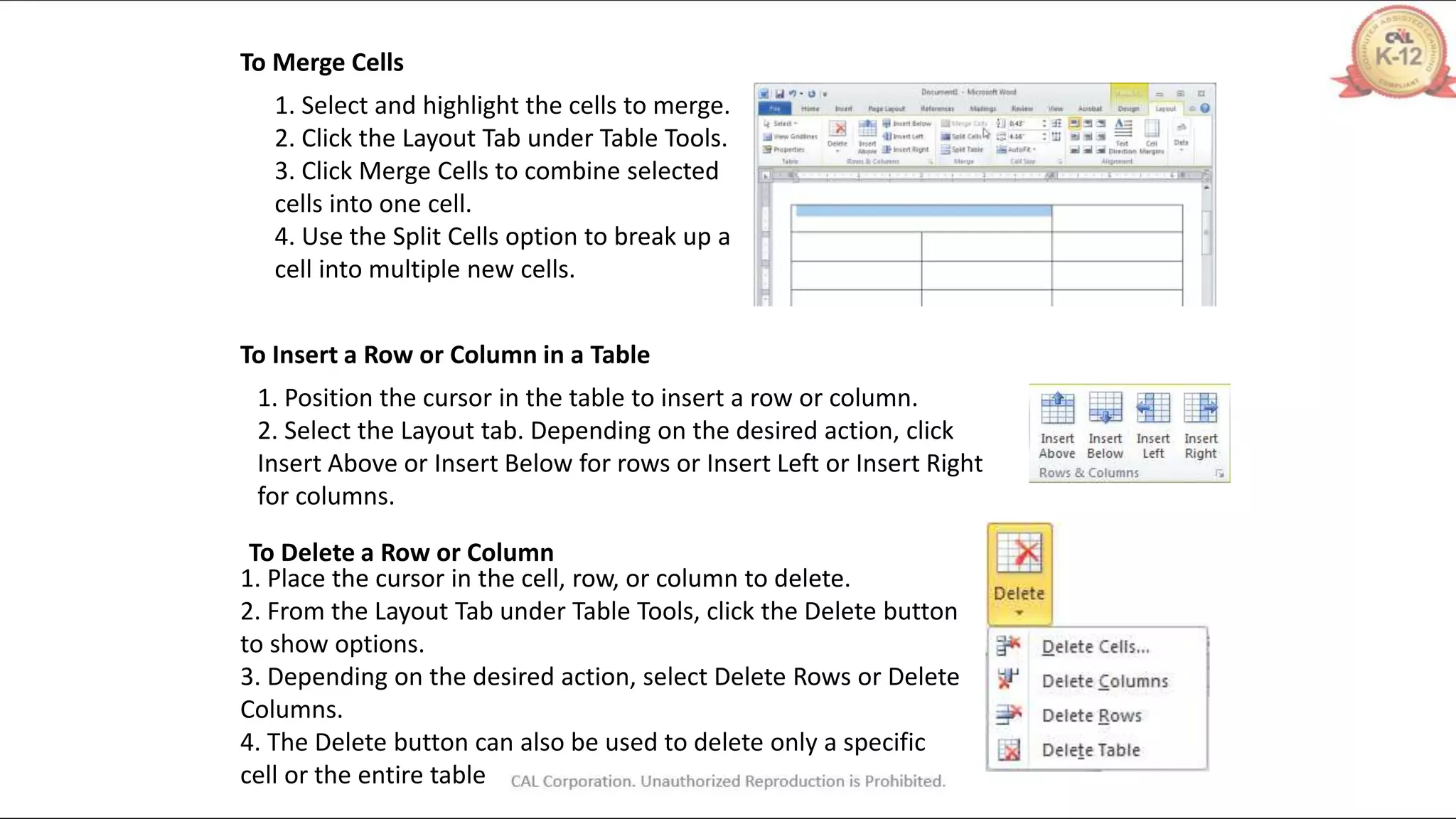
To Merge Cells
1. Select and highlight the cells to merge.
2. Click the Layout Tab under Table Tools.
3. Click Merge Cells to combine selected
cells into one cell.
4. Use the Split Cells option to break up a
cell into multiple new cells.
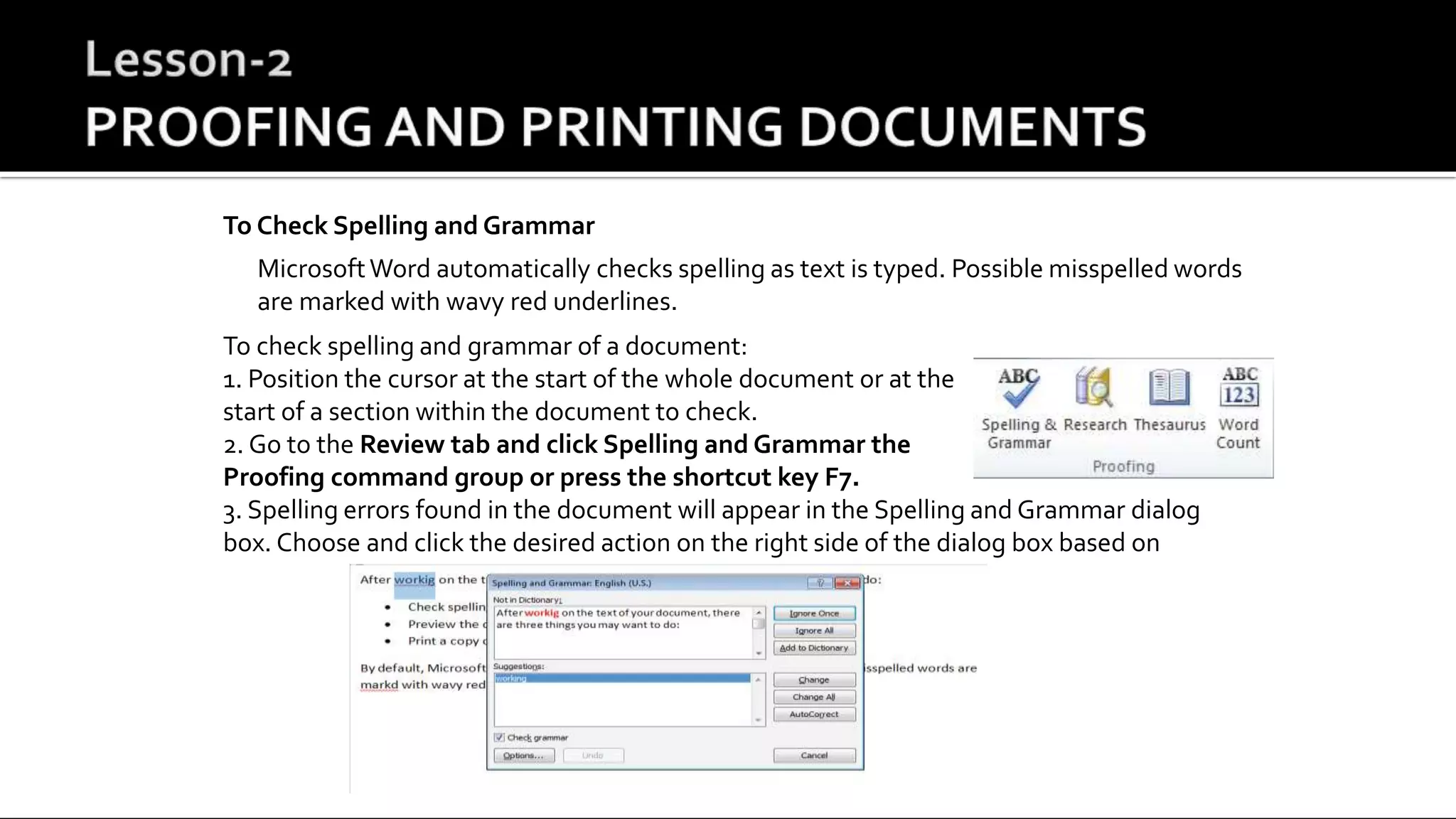
To Insert a Row or Column in a Table
1. Position the cursor in the table to insert a row or column.
2. Select the Layout tab. Depending on the desired action, click
Insert Above or Insert Below for rows or Insert Left or Insert Right
for columns.
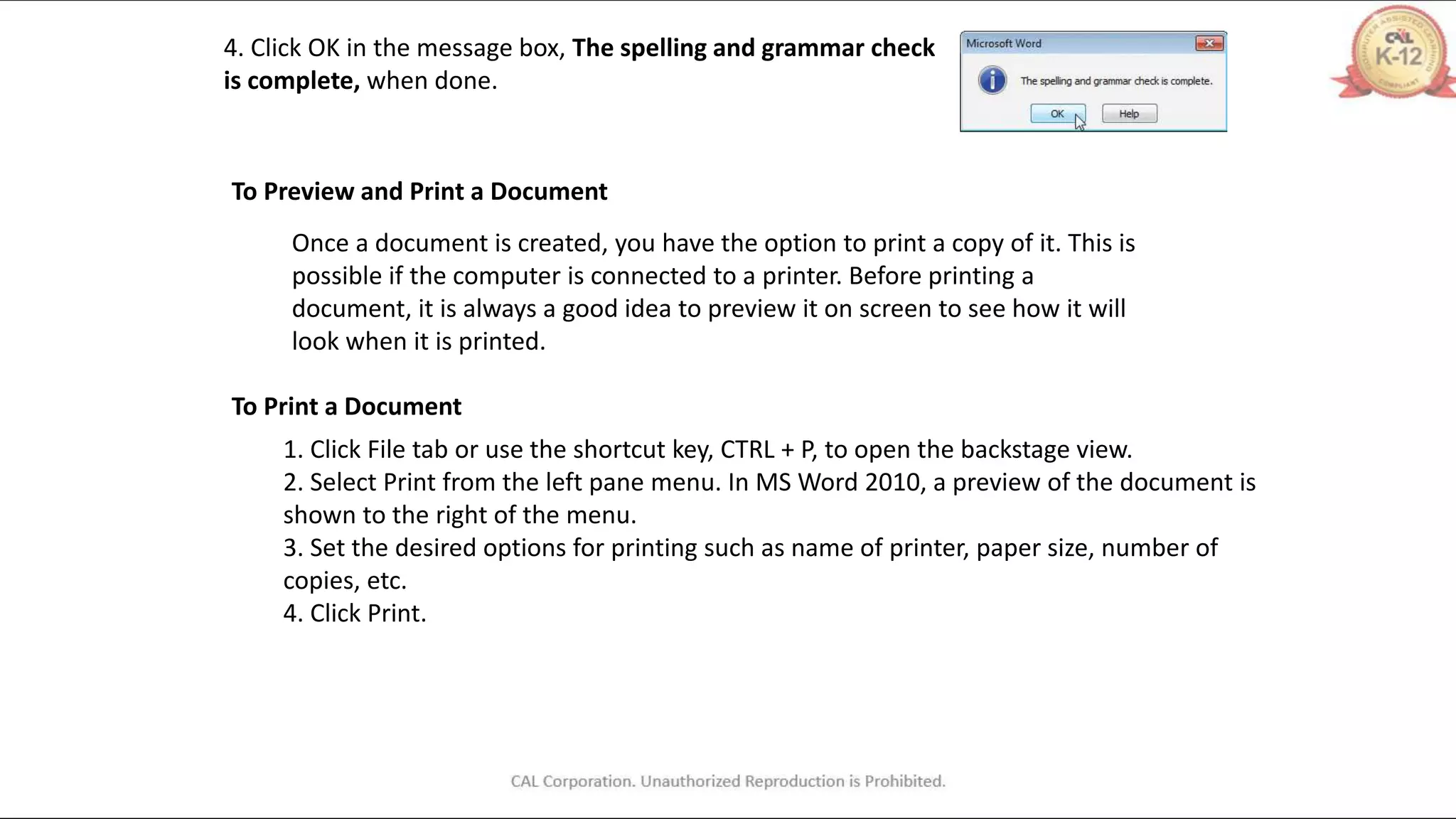
To Delete a Row or Column
1. Place the cursor in the cell, row, or column to delete.
2. From the Layout Tab under Table Tools, click the Delete button
to show options.
3. Depending on the desired action, select Delete Rows or Delete
Columns.
4. The Delete button can also be used to delete only a specific
cell or the entire table
To Convert Text to a Table
Use this feature to convert text such a list into a table.
1. Select the text to convert into a table.
2. Click the Insert tab. Click the Table button in the Tables Command group.
3. Choose Convert Text to Table. Choose the settings in the Convert Text to
Table dialog box, then click OK to create the table.
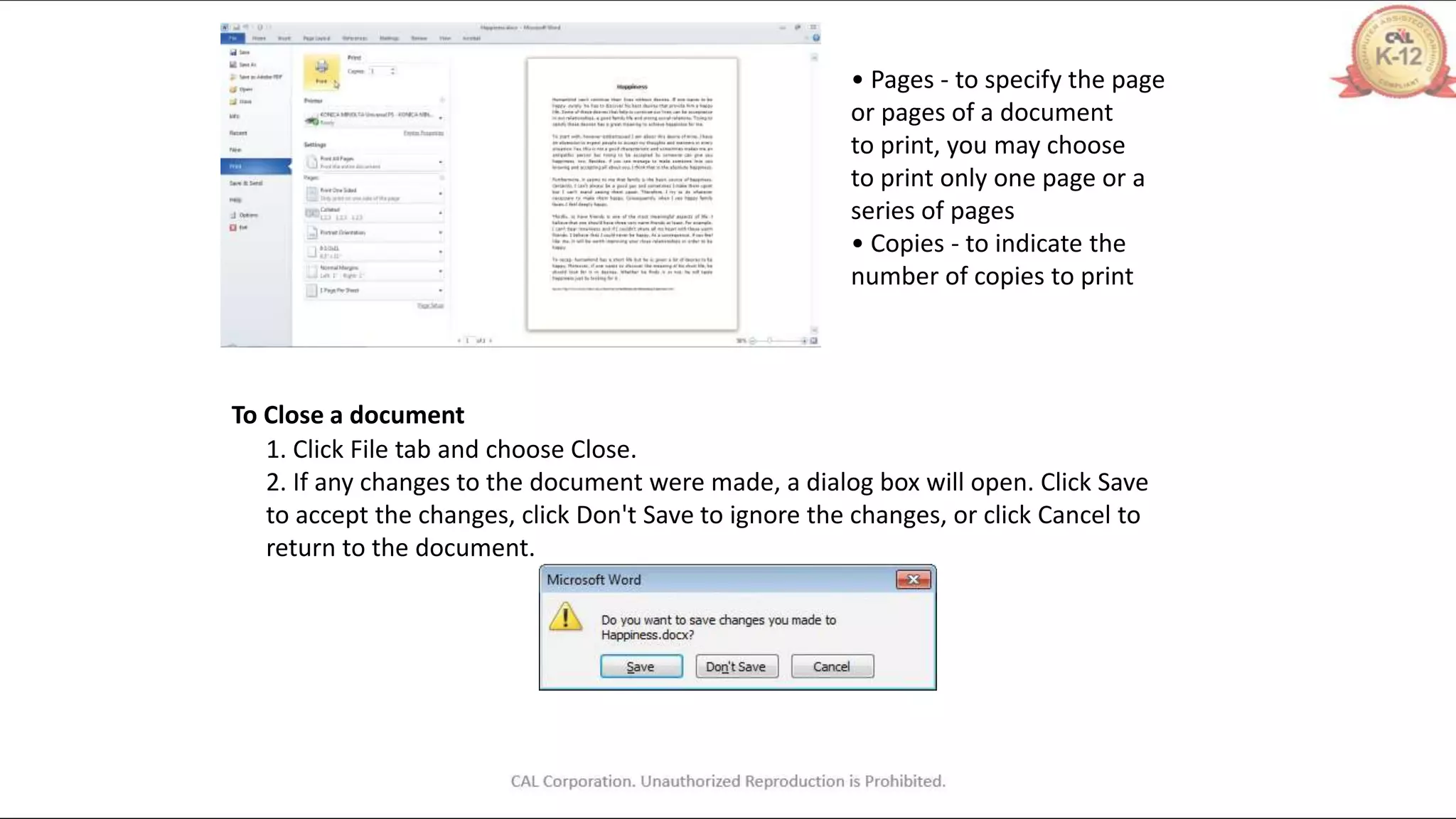
To Check Spelling and Grammar
MicrosoftWord automatically checks spelling as text is typed. Possible misspelled words
are marked with wavy red underlines.
To check spelling and grammar of a document:
1. Position the cursor at the start of the whole document or at the
start of a section within the document to check.
2. Go to the Review tab and click Spelling and Grammar the
Proofing command group or press the shortcut key F7.
3. Spelling errors found in the document will appear in the Spelling and Grammar dialog
box. Choose and click the desired action on the right side of the dialog box based on
4. Click OK in the message box, The spelling and grammar check
is complete, when done.
To Preview and Print a Document
Once a document is created, you have the option to print a copy of it. This is
possible if the computer is connected to a printer. Before printing a
document, it is always a good idea to preview it on screen to see how it will
look when it is printed.
To Print a Document
1. Click File tab or use the shortcut key, CTRL + P, to open the backstage view.
2. Select Print from the left pane menu. In MS Word 2010, a preview of the document is
shown to the right of the menu.
3. Set the desired options for printing such as name of printer, paper size, number of
copies, etc.
4. Click Print.
• Pages - to specify the page
or pages of a document
to print, you may choose
to print only one page or a
series of pages
• Copies - to indicate the
number of copies to print
To Close a document
1. Click File tab and choose Close.
2. If any changes to the document were made, a dialog box will open. Click Save
to accept the changes, click Don't Save to ignore the changes, or click Cancel to
return to the document.
To Exit Word
1. Click File tab and choose Exit.
2. To exit Word, you can also click the Close button at the upper right corner of the
MS Word screen.
3. If a document is open and changes to the document were made upon exit, a
dialog box will open. Click Save to accept the changes, click Don't Save to ignore
the changes, or click Cancel to return to the document.

MS Word Tables

  • 1.
    MSWord is notlimited to text, you can also create tables. A table is made up of rows and columns that are divided into boxes called cells. Rows and columns can be inserted into or deleted from a table at any time. Use tables to display data in table format in MSWord. When a table is created, MSWord automatically applies a ½ point black border inside and around the table. If the border is removed, the gridlines that form the cell boundaries are still visible on screen, but are not printed. To create a table, place the cursor where you want to insert the table. Choose any of the following steps. 1. Highlight the number of rows and columns in the Table menu. 2. Click InsertTable... and in the Insert table dialog box that appears enter the number of rows and columns. 3. Click DrawTable and then start to create the table once the pointer changes to a pencil.
  • 2.
    a. Draw arectangle to define the outer boundaries. b. Create the column and row lines within the rectangle. 4. Click Quick Tables and then select a table template. Pressing the [Tab] key when the insertion point is in the last cell of a table will automatically create a new row inserted at the end of that table. To Move Around Cells in a Table 1. Press the [Tab] key to move the cursor to the next cell. 2. Press an arrow key (up, down, left, or right) to move the cursor to any cell in any direction. 3. Use the mouse to click the appropriate cell. 4. Press [Shift] + [Tab] to move the cursor to the previous cell. To Select Cells, Columns, or Rows in a Table Using the Mouse 1. Click and drag over cells, columns or rows to select multiple cells, rows and columns.
  • 3.
    2. Click inthe left margin to select an entire row and then drag mouse down to select multiple rows. 3. Click the top border of a column to select an entire column. Using the Keyboard 1. Press the [Shift] + an arrow key (up, down, left, or right) to select multiple cells, rows or columns in any direction. 2. With Num Lock function switched off, press [Alt] + [5] on the numeric keypad to select the entire table. To Move a Table 1. When the mouse pointer is positioned over the table. The Selection handle will appear. 2. Place the mouse pointer over the Selection handle, . Notice the mouse pointer changes to a four-headed arrow.
  • 4.
    3. Click anddrag the table at this position to the new location. 4. Release the mouse button. To Resize a Table In addition to the Selection handle, a small square also appears at the lower-right corner of the table when the mouse pointer is positioned over the table. This is known as the Reshaping handle. 1. Place the mouse pointer over the Reshaping handle. Notice the mouse pointer changes to a two-headed arrow. a. Click and drag outwards to enlarge the table's width. To reduce the table's width, click and drag inwards. b. Click and drag upward to decrease the table's height or click and drag downward to increase the height of the table. 3. Release the mouse button.
  • 5.
    Using the DesignTab To Modify a Table's Appearance The Design Tab under Table tools can be used to modify the look of a table by changing table lines, colors, and shading. The Design tab offers Table Style Options, Table Styles, and the Draw Borders function. To Shade Cell(s) of a Table 1. Position the cursor in the table. 2. Under Table Tools, select the Layout tab and click the Select button in the Tables command group. Click the item type to format: cell, column, row or table. 3. On the Design tab, click the shading button and select a color. 4. The Live Preview feature of MS Word shows an example of how the changes to be made to the table will look. 5. Select the desired color to apply.
  • 6.
    To Adjust theLine Style of Cells 1. Position the cursor in the table. 2. Under Table Tools, select the Layout tab and click the Select button in the Table command group. Click the item type to format: cell, column, row or table. 3. On the Design tab, click the Line Style drop-down arrow and select a line style. 4. Click the part of the table to which the line style will be applied to. 5. When finished applying the style, press ESC on the keyboard. Using the Layout Tab To Format a Table The Layout Tab under Table tools can be used to format a table. The Layout tab makes it possible to do the following: View Gridlines and Properties, Insert Rows and Columns, Delete the Table, Rows, and/or Columns, Merge or Split Cells, Adjust Cell Size, Align Text within the Cells and Change Text Directions.
  • 7.
    To Merge Cells 1.Select and highlight the cells to merge. 2. Click the Layout Tab under Table Tools. 3. Click Merge Cells to combine selected cells into one cell. 4. Use the Split Cells option to break up a cell into multiple new cells. To Insert a Row or Column in a Table 1. Position the cursor in the table to insert a row or column. 2. Select the Layout tab. Depending on the desired action, click Insert Above or Insert Below for rows or Insert Left or Insert Right for columns. To Delete a Row or Column 1. Place the cursor in the cell, row, or column to delete. 2. From the Layout Tab under Table Tools, click the Delete button to show options. 3. Depending on the desired action, select Delete Rows or Delete Columns. 4. The Delete button can also be used to delete only a specific cell or the entire table
  • 8.
    To Convert Textto a Table Use this feature to convert text such a list into a table. 1. Select the text to convert into a table. 2. Click the Insert tab. Click the Table button in the Tables Command group. 3. Choose Convert Text to Table. Choose the settings in the Convert Text to Table dialog box, then click OK to create the table.
  • 9.
    To Check Spellingand Grammar MicrosoftWord automatically checks spelling as text is typed. Possible misspelled words are marked with wavy red underlines. To check spelling and grammar of a document: 1. Position the cursor at the start of the whole document or at the start of a section within the document to check. 2. Go to the Review tab and click Spelling and Grammar the Proofing command group or press the shortcut key F7. 3. Spelling errors found in the document will appear in the Spelling and Grammar dialog box. Choose and click the desired action on the right side of the dialog box based on
  • 10.
    4. Click OKin the message box, The spelling and grammar check is complete, when done. To Preview and Print a Document Once a document is created, you have the option to print a copy of it. This is possible if the computer is connected to a printer. Before printing a document, it is always a good idea to preview it on screen to see how it will look when it is printed. To Print a Document 1. Click File tab or use the shortcut key, CTRL + P, to open the backstage view. 2. Select Print from the left pane menu. In MS Word 2010, a preview of the document is shown to the right of the menu. 3. Set the desired options for printing such as name of printer, paper size, number of copies, etc. 4. Click Print.
  • 11.
    • Pages -to specify the page or pages of a document to print, you may choose to print only one page or a series of pages • Copies - to indicate the number of copies to print To Close a document 1. Click File tab and choose Close. 2. If any changes to the document were made, a dialog box will open. Click Save to accept the changes, click Don't Save to ignore the changes, or click Cancel to return to the document.
  • 12.
    To Exit Word 1.Click File tab and choose Exit. 2. To exit Word, you can also click the Close button at the upper right corner of the MS Word screen. 3. If a document is open and changes to the document were made upon exit, a dialog box will open. Click Save to accept the changes, click Don't Save to ignore the changes, or click Cancel to return to the document.