How Are Cells Specialized?

    Chapter 8, Lesson 2
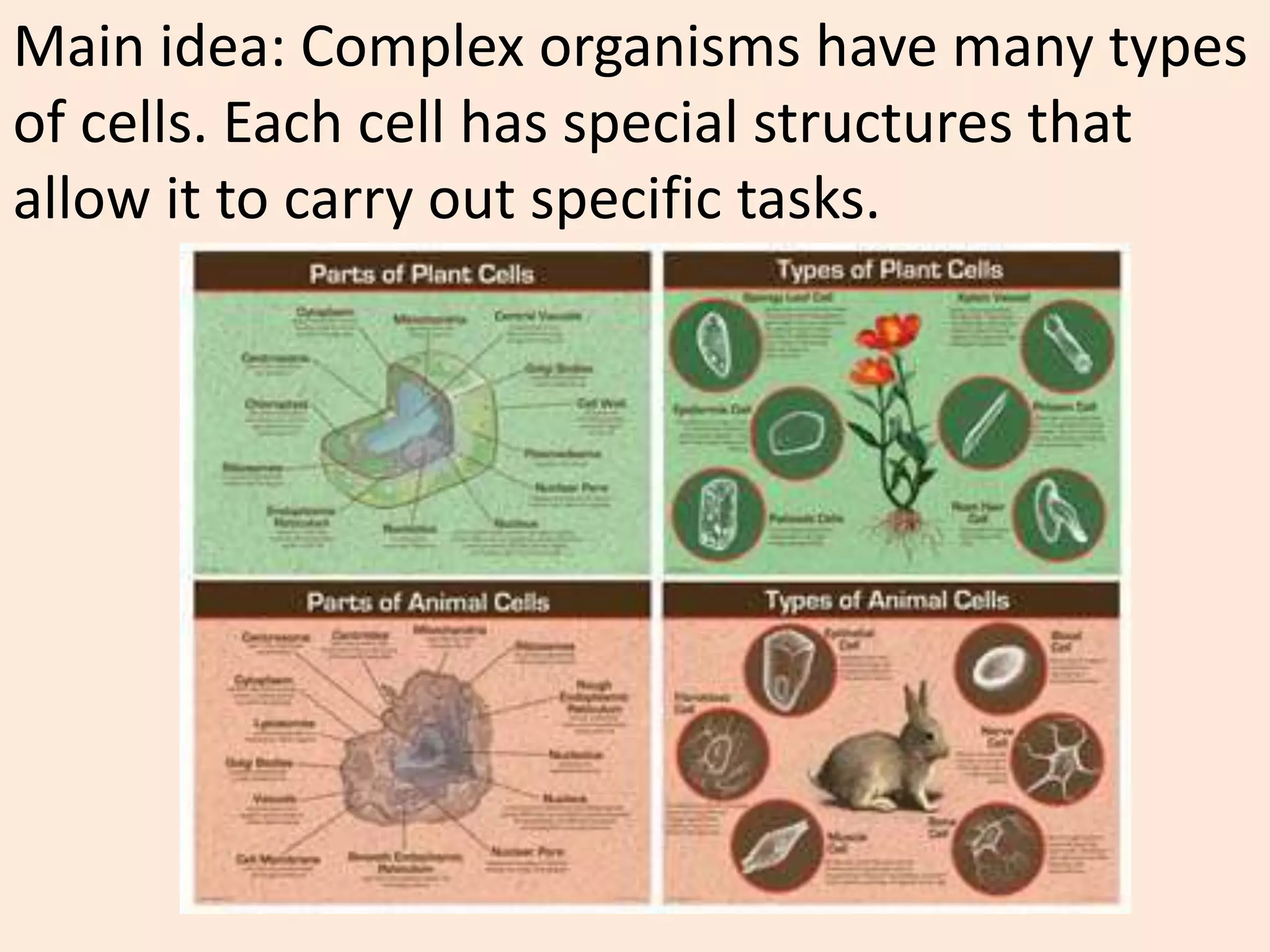
Main idea: Complex organisms have many types
of cells. Each cell has special structures that
allow it to carry out specific tasks.
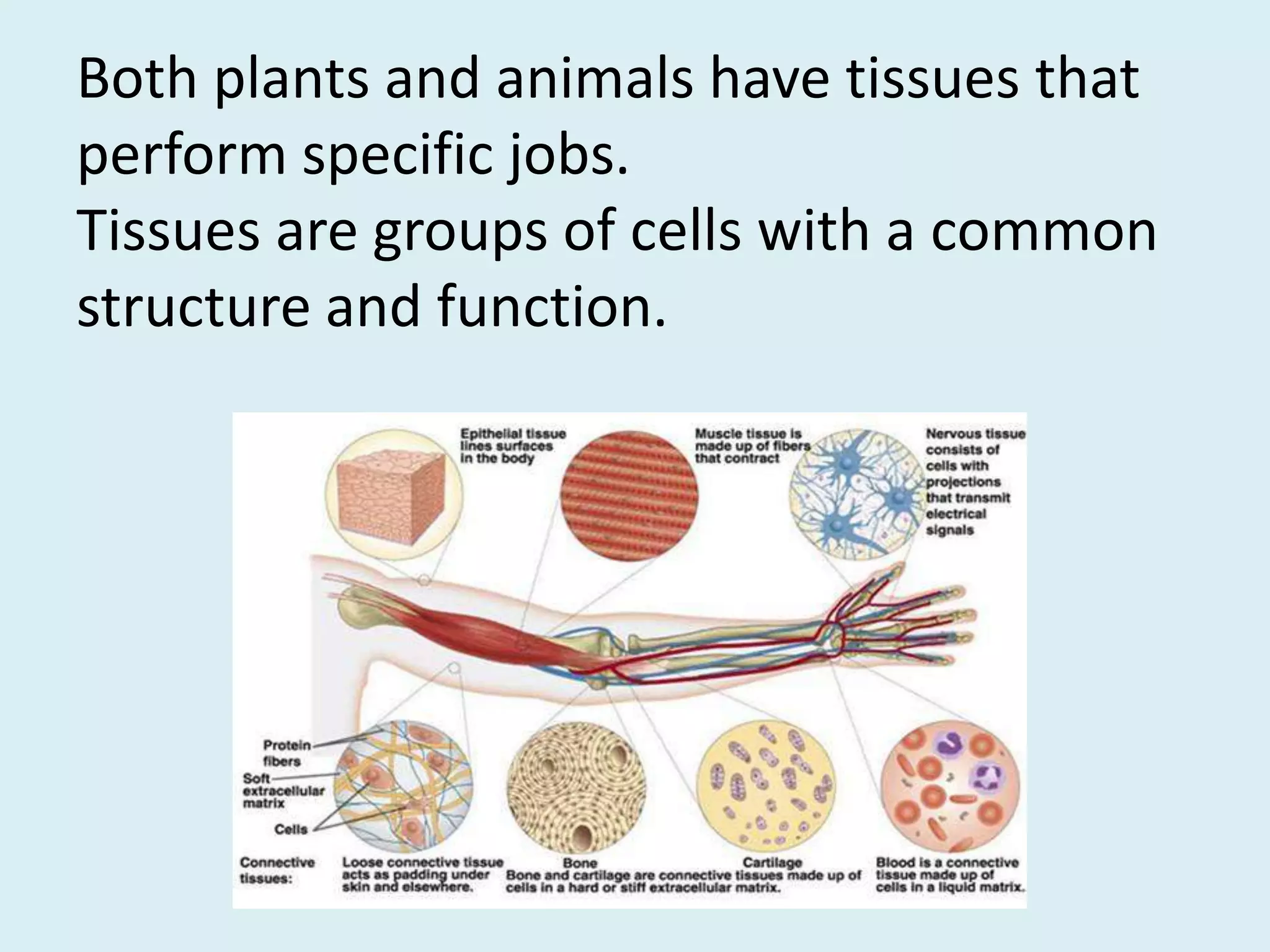
Both plants and animals have tissues that
perform specific jobs.
Tissues are groups of cells with a common
structure and function.
Types of Tissues
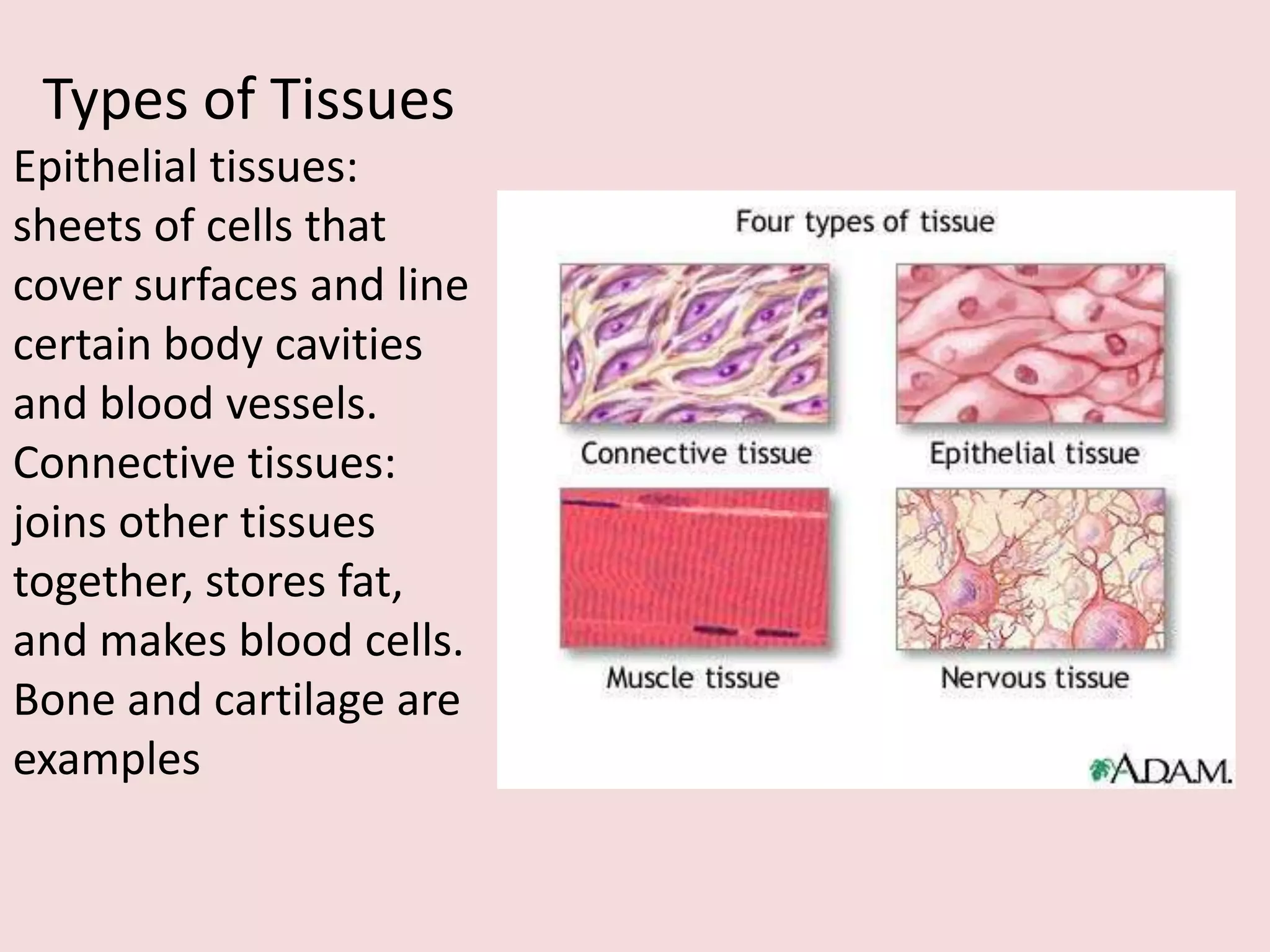
Epithelial tissues:
sheets of cells that
cover surfaces and line
certain body cavities
and blood vessels.
Connective tissues:
joins other tissues
together, stores fat,
and makes blood cells.
Bone and cartilage are
examples
Types of Tissues
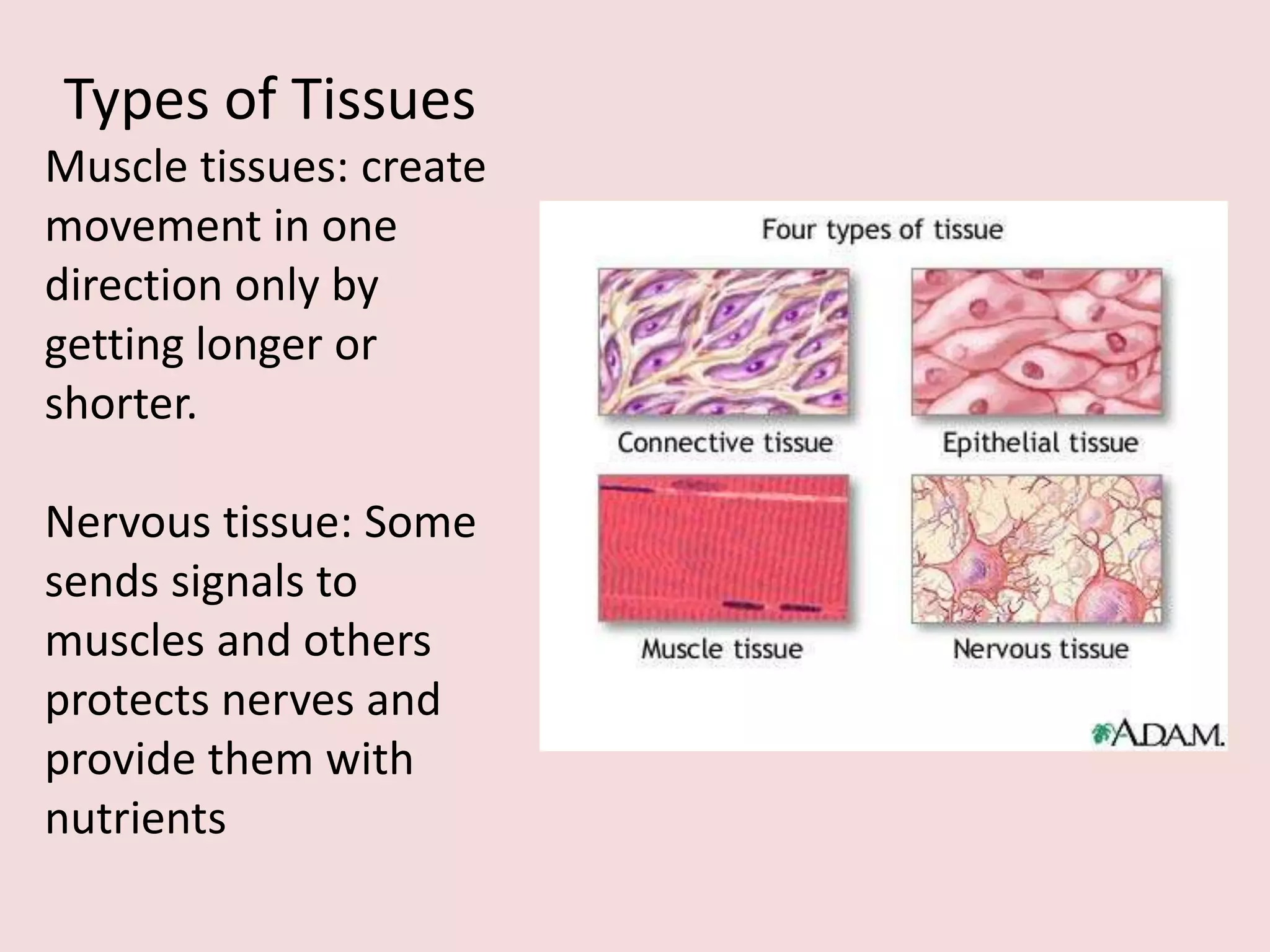
Muscle tissues: create
movement in one
direction only by
getting longer or
shorter.

Nervous tissue: Some
sends signals to
muscles and others
protects nerves and
provide them with
nutrients
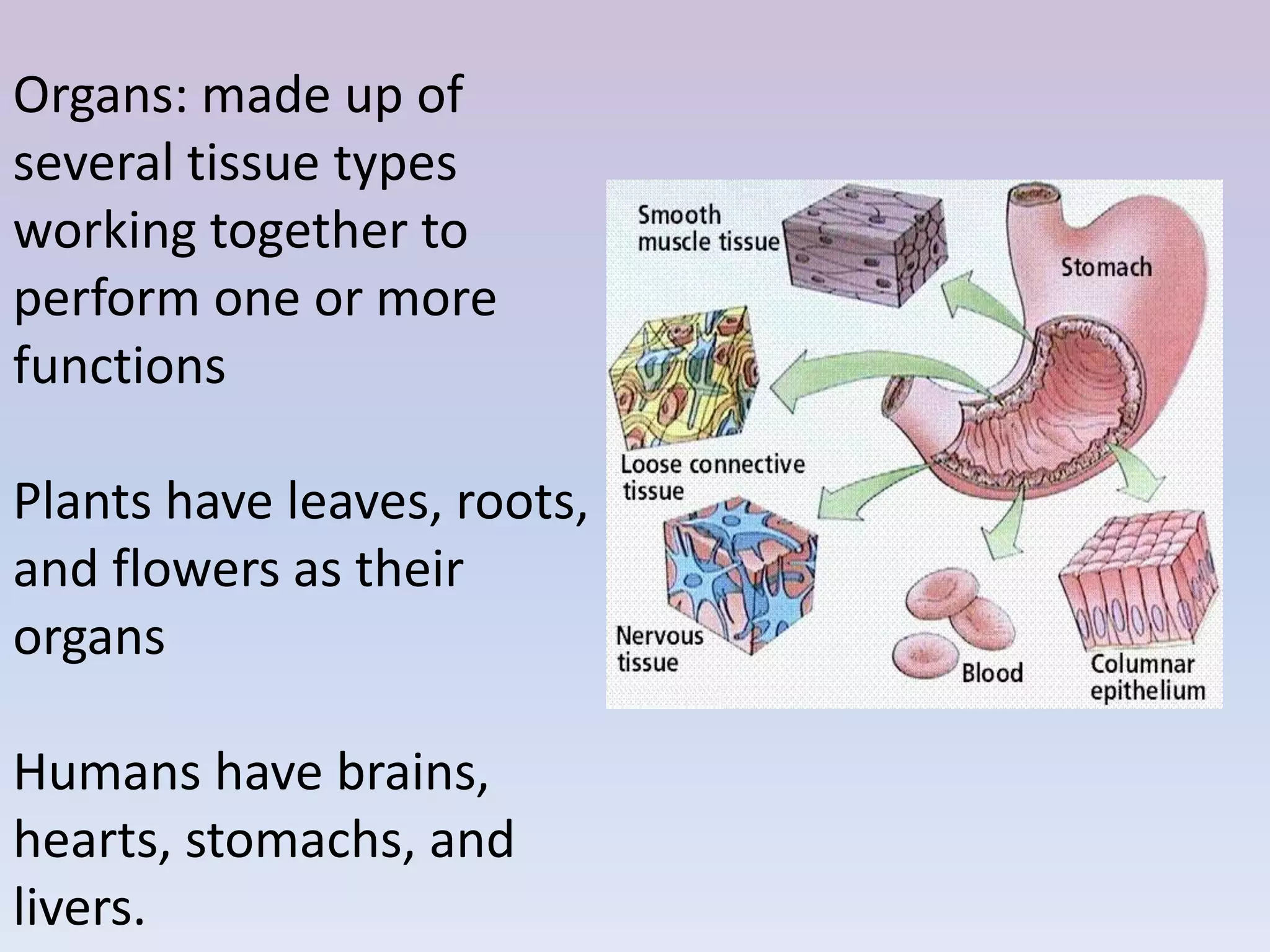
Organs: made up of
several tissue types
working together to
perform one or more
functions

Plants have leaves, roots,
and flowers as their
organs

Humans have brains,
hearts, stomachs, and
livers.
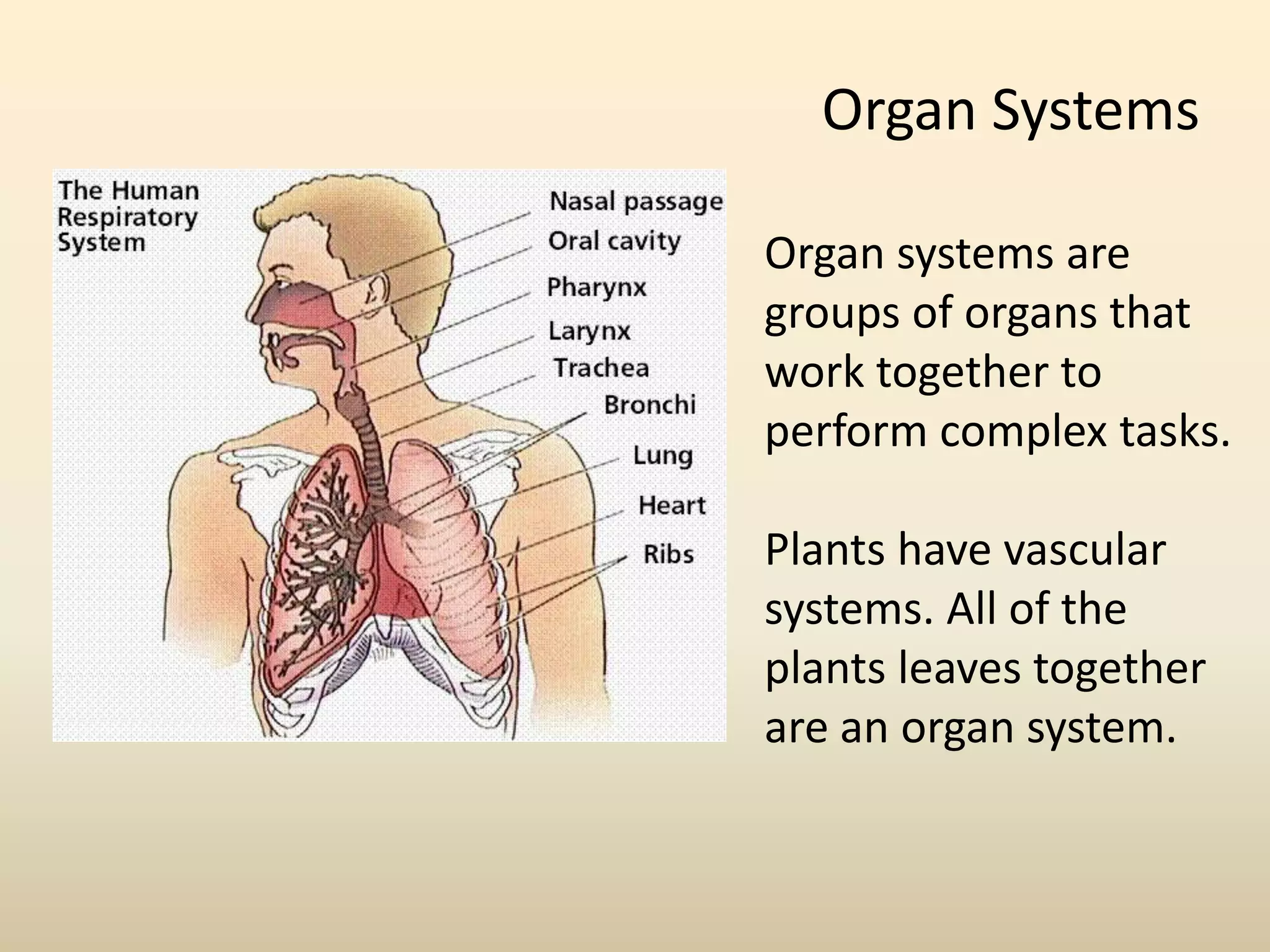
Organ Systems

Organ systems are
groups of organs that
work together to
perform complex tasks.

Plants have vascular
systems. All of the
plants leaves together
are an organ system.
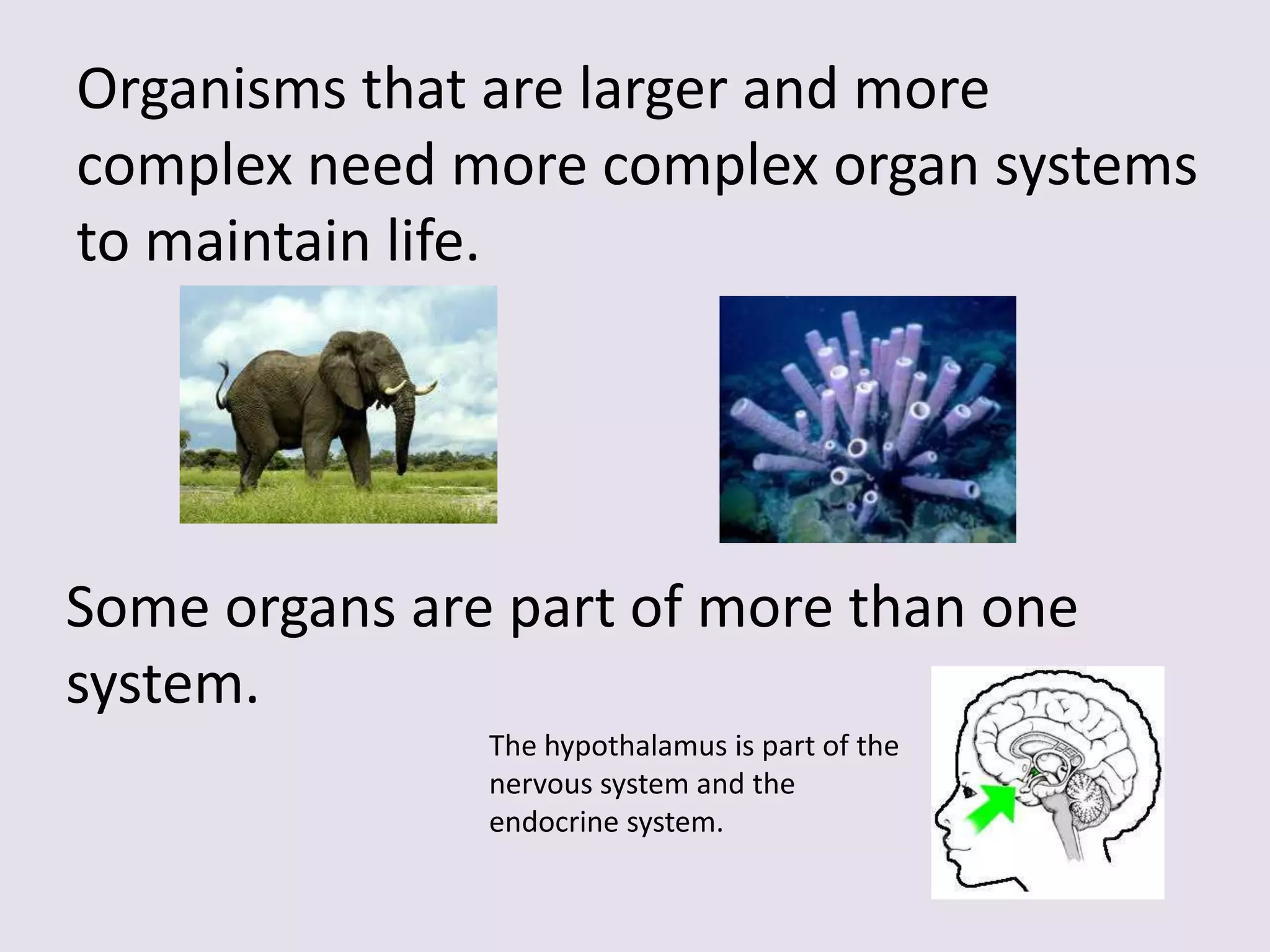
Organisms that are larger and more
complex need more complex organ systems
to maintain life.


Some organs are part of more than one
system.
               The hypothalamus is part of the
               nervous system and the
               endocrine system.
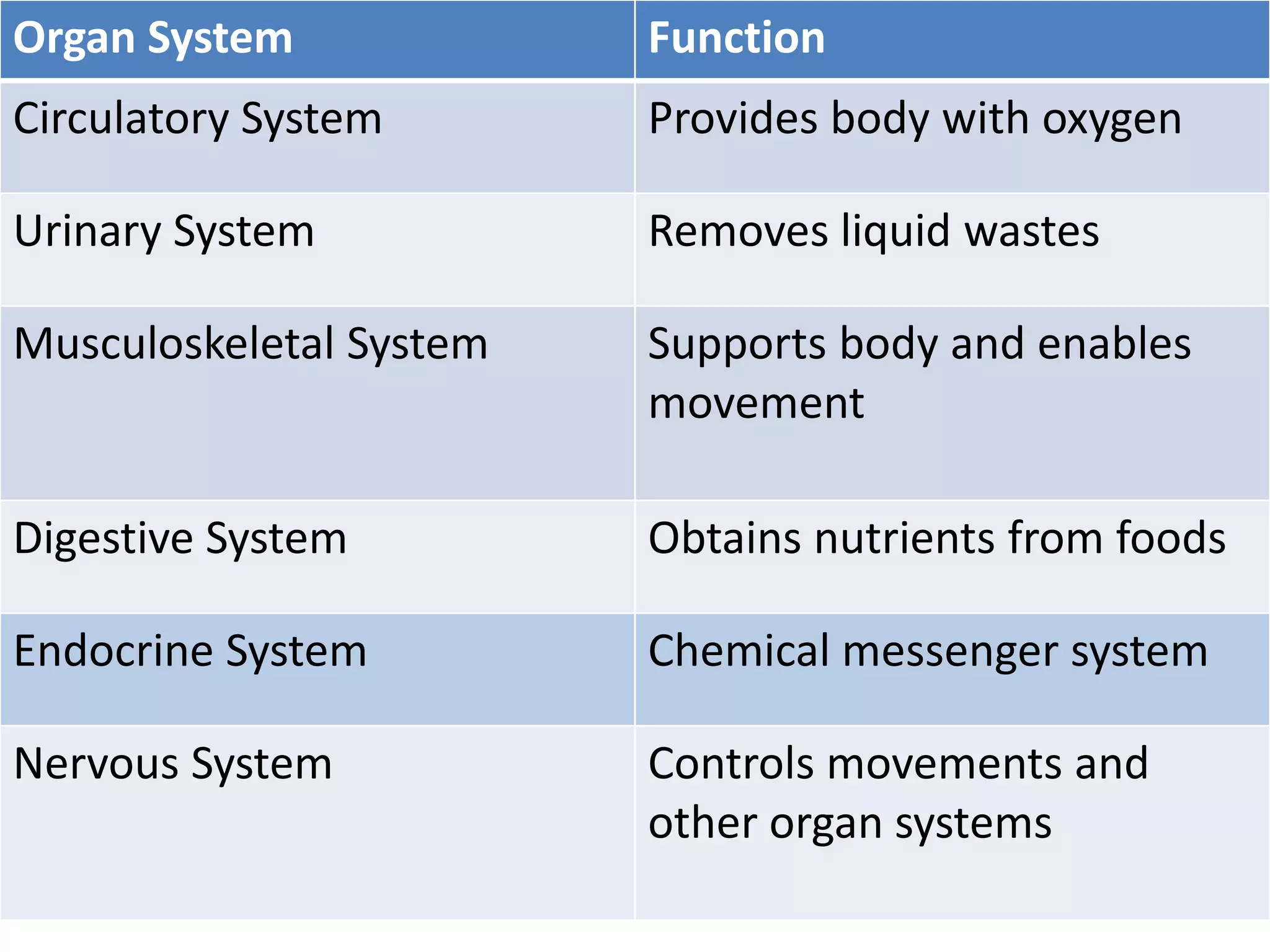
Organ System             Function
Circulatory System       Provides body with oxygen

Urinary System           Removes liquid wastes

Musculoskeletal System   Supports body and enables
                         movement

Digestive System         Obtains nutrients from foods

Endocrine System         Chemical messenger system

Nervous System           Controls movements and
                         other organ systems
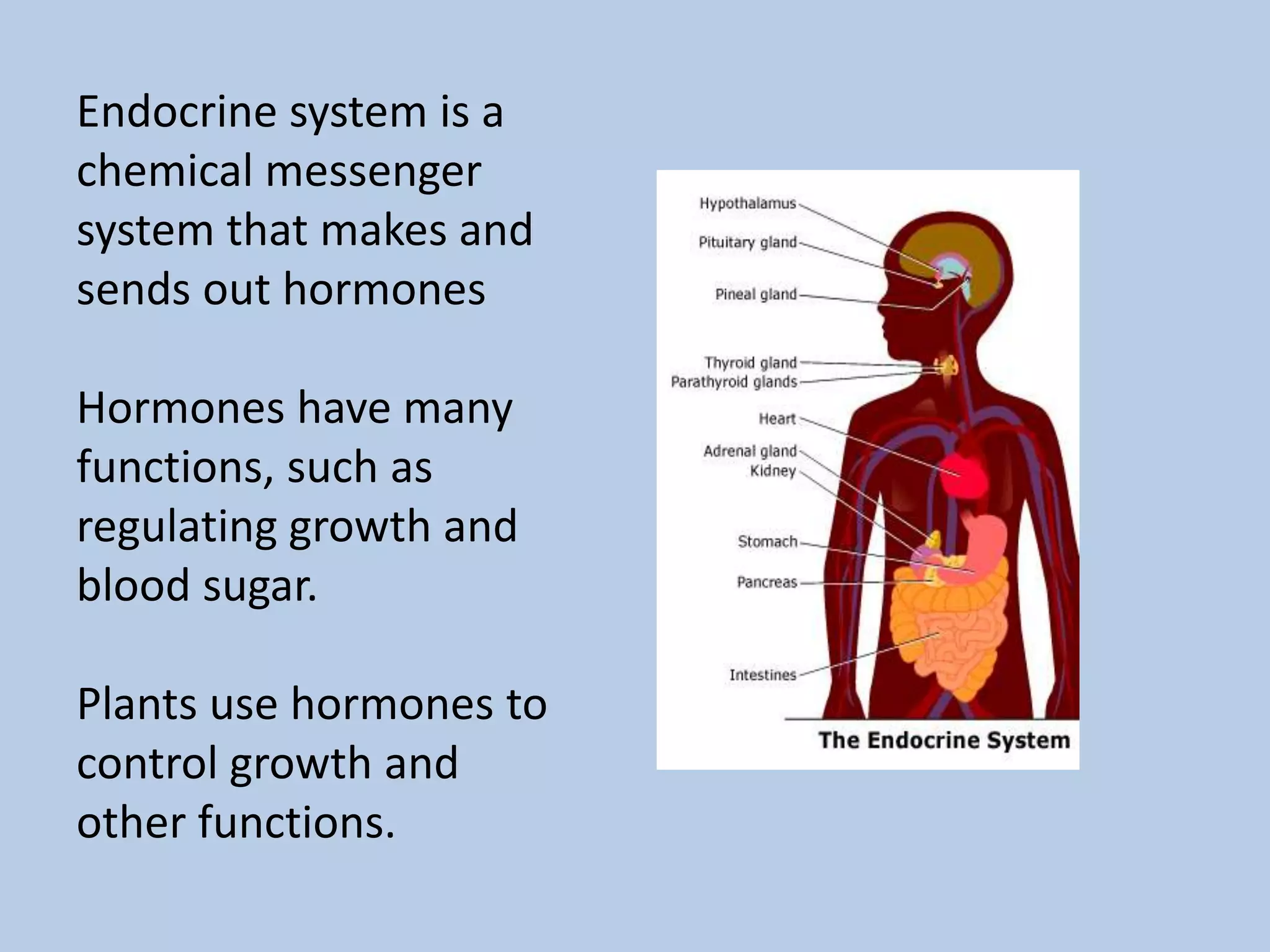
Endocrine system is a
chemical messenger
system that makes and
sends out hormones

Hormones have many
functions, such as
regulating growth and
blood sugar.

Plants use hormones to
control growth and
other functions.

How are cells_specialized_chapter_8_lesson_2

  • 1.
    How Are CellsSpecialized? Chapter 8, Lesson 2
  • 2.
    Main idea: Complexorganisms have many types of cells. Each cell has special structures that allow it to carry out specific tasks.
  • 4.
    Both plants andanimals have tissues that perform specific jobs. Tissues are groups of cells with a common structure and function.
  • 5.
    Types of Tissues Epithelialtissues: sheets of cells that cover surfaces and line certain body cavities and blood vessels. Connective tissues: joins other tissues together, stores fat, and makes blood cells. Bone and cartilage are examples
  • 6.
    Types of Tissues Muscletissues: create movement in one direction only by getting longer or shorter. Nervous tissue: Some sends signals to muscles and others protects nerves and provide them with nutrients
  • 7.
    Organs: made upof several tissue types working together to perform one or more functions Plants have leaves, roots, and flowers as their organs Humans have brains, hearts, stomachs, and livers.
  • 8.
    Organ Systems Organ systemsare groups of organs that work together to perform complex tasks. Plants have vascular systems. All of the plants leaves together are an organ system.
  • 9.
    Organisms that arelarger and more complex need more complex organ systems to maintain life. Some organs are part of more than one system. The hypothalamus is part of the nervous system and the endocrine system.
  • 10.
    Organ System Function Circulatory System Provides body with oxygen Urinary System Removes liquid wastes Musculoskeletal System Supports body and enables movement Digestive System Obtains nutrients from foods Endocrine System Chemical messenger system Nervous System Controls movements and other organ systems
  • 11.
    Endocrine system isa chemical messenger system that makes and sends out hormones Hormones have many functions, such as regulating growth and blood sugar. Plants use hormones to control growth and other functions.