Social Media and Youth Mentoring                                                                TIP SHEET


  Overview:
  Social media and networking offer numerous ways to professionally engage with
  youth and volunteers, serving both program needs, like recruitment, and youth
  adaptability, to aid in areas like communication. This Tip Sheet is designed to guide
  you in the process and is not intended as official guidance.


With 96% of Millennials joining a social network and the rise of connecting through Facebook, LinkedIn, Twitter,
and YouTube, presence on these sites is mandatory. For youth mentoring programs, the usual issues of
security,productivity, return on investment, apply. However, technology can also bring up questions about
safety, boundaries, appropriateness, confidentiality, relationship ethics, technology and generational gaps, and
communication between mentors, mentees, and program staff. Luckily, there is room for experimentation and
organizations can learn from other nonprofits that have taken the leap and become socially networked.

Strategize

Before you begin, reviewthese questions at all levels of your organization:
        Is it beneficial for your agency or program to dive in?
        Do you have staff and/or volunteer resources to maintain presence?
        Should you have individual as well as agency voice?
        What specific goals can you reach using social media?

Prepare

And before you engage in social media, be aware of safety concerns involved with social media, like spammers
and hackers using false Facebookor Twitter accounts to gain personal or agency information and access to
accounts. Follow the same guildelines for email security: set secure passwords, check the default settings of
platforms, update security and firewall systems, and beware unsolicited or unknown messages.

Engage

Now that you’ve assessed your agency’s capabilities (including having the staff or volunteer time to be
consistent and ensuring that your messaging is consistent with your program’s mission and vision),set goals, and
created your accounts, it’s time to engage! To know where to start, follow this formula using these tools from
Beth Kanter(read more on how to use the tools in the Resources section):


Created by MCP Support Center
Technical Assistance Note: Recruiting MCP Eligible Children
April 2011
Social Media and Youth Mentoring                                                                 TIP SHEET


 Listen                 Engage               Create Social Content        Generate Buzz   Build Community,
                                                                                          Network Socially
 Google Alerts,         Yelp,                Facebook, Blogger,           Twitter, Digg   Facebook, LinkedIn,
 Technorati, RSS        Backtype,            WordPress, YouTube, iTunes                   Ning, Foursquare,
 Feeds, Twitter         Facebook,            podcasts, Flickr, MySpace                    hi5, MySpace, wikis


Policies

Adopting a separate social media policy is necessary for both program staff and participants. Agencies need to
be proactive in setting parameters for how their program, their “brand,” is discussed in one of the largest
conversations on the planet, as well as consider the ethical implications of another form of communication
between mentors and mentees. Be clear from the beginning whether or not mentors and mentees may connect
or “friend” each other and communicate directly without monitoring by program staff. Expand or amend your
current policies and procedures to include specific social media provisions, including:
         Purpose: encourage positive use and discourage inappropriate use
         Responsibility: be fair, ethical, accurate, honest
         Authenticity: share expertise, be transparent
         Audience: avoid alienation, have sensitivity
         Good Judgment and Common Sense: avoid disrespectful comments, maintain professionalism
         Community: be aware of linking as endorsement, handling disagreements
         Copyrights and Fair Use: respect legal guidelines and give others credit for their work
         Privacy, Confidentiality, Proprietary Information: includes photos, identifying information
         Value: be active, timely, thought-provoking
         Productivity: don’t neglect your job
         Protocol for Non-staff: sharing information about mentee/family, embarrassing stories, activity details;
         detailing process for conflicts (i.e., not online)

Measure and Monitor

As with any other strategy you undertake, don’t forget to assess your impact. Are you reaching your goals? Do
you need to adjust the amount of staff time devoted to social media? What are some other ways you can use
influencers, ambassadors, and other supporters to continue to spread your message? Beth Kanter recommends
measuring your social impact through the four I’s: Return on Insight (how people feel about your program),
Return on Interaction (how you engage with people), Return on Investment (how many people you convert into
supporters, both financial and as volunteers), and Return on Impact (tracking the results online and in
person).Monitor use by continually checking platforms for postings by staff, volunteers, program participants,
and general community members. Remind influencers to continue to advance your message to their networks.


Created by MCP Support Center
Technical Assistance Note: Recruiting MCP Eligible Children
April 2011
Social Media and Youth Mentoring                                                            TIP SHEET


Resources

Beth Kanterwww.bethkanter.org
Beth’s Blog: How Networked Nonprofits are Using Social Media to Power Change
Beth’s Tweets: @kanter
Beth’s book: The Networked Nonprofit

Network for Good Learning Centerwww.networkforgood.org10 Things You Need to Do Prior to Diving into Social
Media and 11 Steps to Success with Social Networking(under Learning Center)

TechSoup Learning Centerwww.techsoup.orgShould Your Organization Use Social Networking Sites?andEight
Secrets of Effective Online Networking(under Using the Internet)

Diosa Communications www.diosacommunications.comand bloghttp://nonprofitorgs.wordpress.com/

Nonprofit Technology Networkwww.nten.orgCan Social Media Marketing and Traditional Marketing
Coexist?andFive Free Tools for Social Media Listening (And How to Start Responding)(under Learn)

Idealwarewww.idealware.orgThe Nonprofit Social Media Decision Guideand Measuring the Effectiveness of Your
Online Communications(under Articles)

Social Fishwww.socialfish.orgSocial Media, Risk, and Policies for Associations

Friends for Youth, Inc.sample social media policies for youth mentoring
programshttp://www.friendsforyouth.org//files/MIpdfs/FriendsforYouth_SocialMediaPolicy_forSFs.pdf (for
mentors) and http://www.friendsforyouth.org/files/MIpdfs/FriendsforYouth_SocialMediaPolicy_forStaff.pdf (for
staff)


Created by MCP Support Center
Technical Assistance Note: Recruiting MCP Eligible Children
April 2011

Friends for Youth's Social Media Tip Sheet for MANY

  • 1.
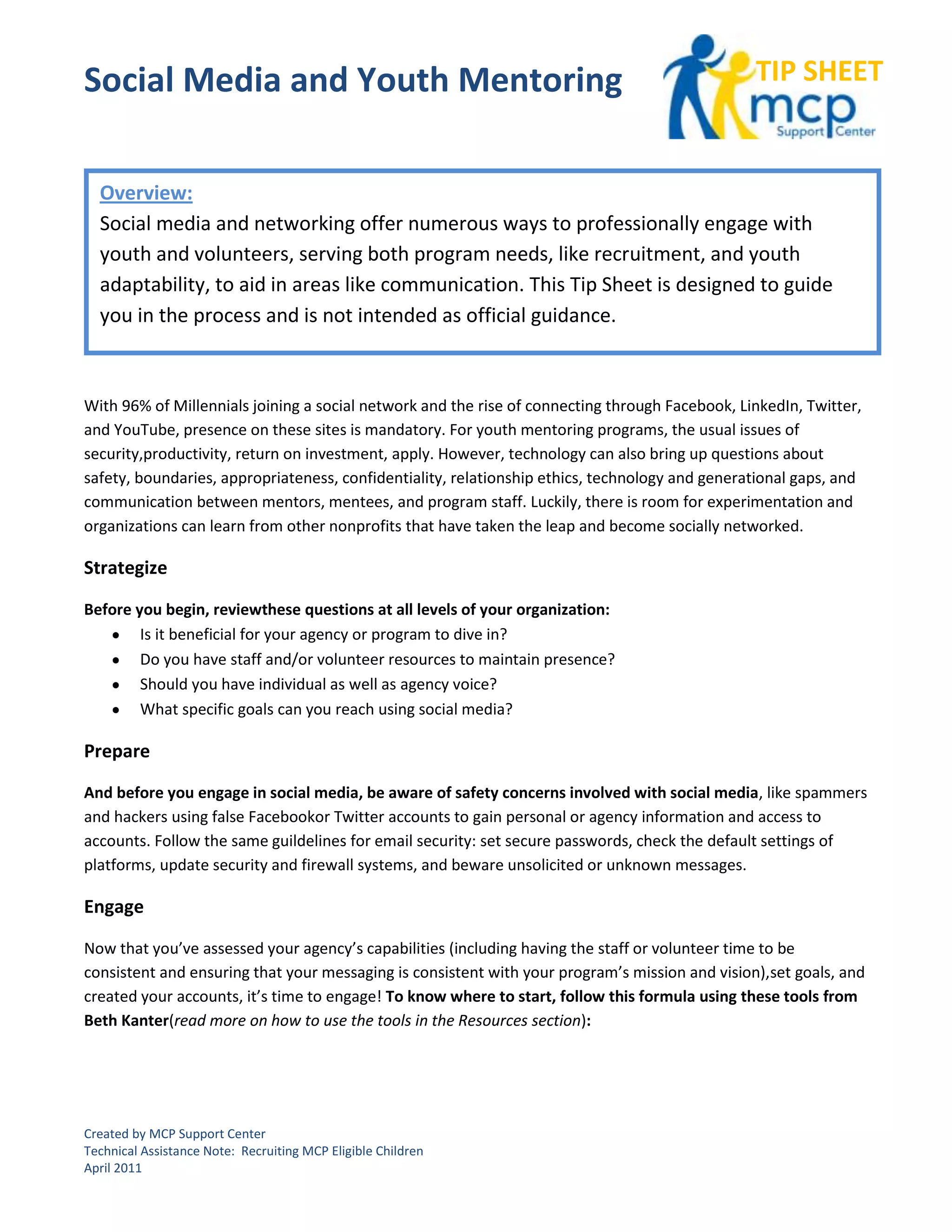
    Social Media andYouth Mentoring TIP SHEET Overview: Social media and networking offer numerous ways to professionally engage with youth and volunteers, serving both program needs, like recruitment, and youth adaptability, to aid in areas like communication. This Tip Sheet is designed to guide you in the process and is not intended as official guidance. With 96% of Millennials joining a social network and the rise of connecting through Facebook, LinkedIn, Twitter, and YouTube, presence on these sites is mandatory. For youth mentoring programs, the usual issues of security,productivity, return on investment, apply. However, technology can also bring up questions about safety, boundaries, appropriateness, confidentiality, relationship ethics, technology and generational gaps, and communication between mentors, mentees, and program staff. Luckily, there is room for experimentation and organizations can learn from other nonprofits that have taken the leap and become socially networked. Strategize Before you begin, reviewthese questions at all levels of your organization: Is it beneficial for your agency or program to dive in? Do you have staff and/or volunteer resources to maintain presence? Should you have individual as well as agency voice? What specific goals can you reach using social media? Prepare And before you engage in social media, be aware of safety concerns involved with social media, like spammers and hackers using false Facebookor Twitter accounts to gain personal or agency information and access to accounts. Follow the same guildelines for email security: set secure passwords, check the default settings of platforms, update security and firewall systems, and beware unsolicited or unknown messages. Engage Now that you’ve assessed your agency’s capabilities (including having the staff or volunteer time to be consistent and ensuring that your messaging is consistent with your program’s mission and vision),set goals, and created your accounts, it’s time to engage! To know where to start, follow this formula using these tools from Beth Kanter(read more on how to use the tools in the Resources section): Created by MCP Support Center Technical Assistance Note: Recruiting MCP Eligible Children April 2011
  • 2.
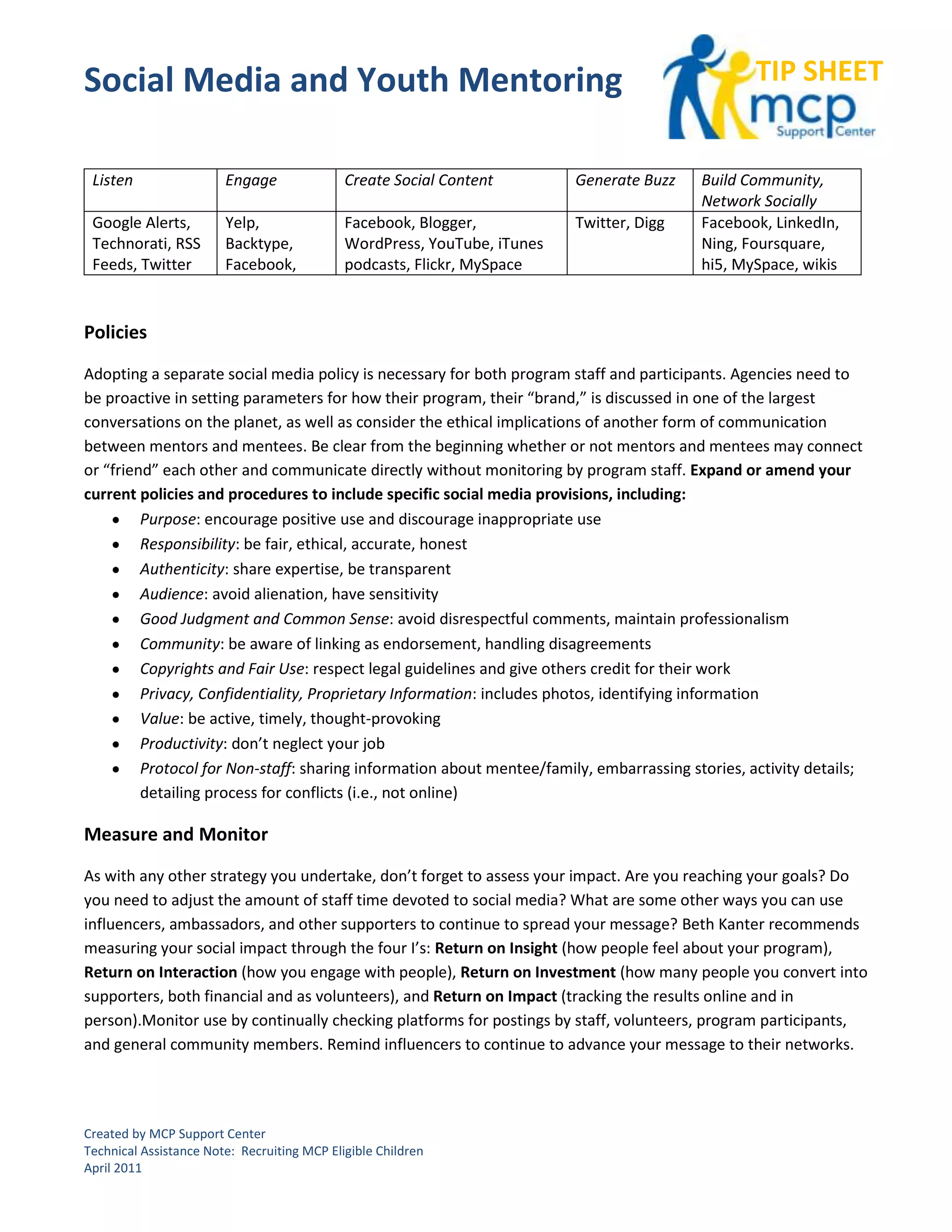
    Social Media andYouth Mentoring TIP SHEET Listen Engage Create Social Content Generate Buzz Build Community, Network Socially Google Alerts, Yelp, Facebook, Blogger, Twitter, Digg Facebook, LinkedIn, Technorati, RSS Backtype, WordPress, YouTube, iTunes Ning, Foursquare, Feeds, Twitter Facebook, podcasts, Flickr, MySpace hi5, MySpace, wikis Policies Adopting a separate social media policy is necessary for both program staff and participants. Agencies need to be proactive in setting parameters for how their program, their “brand,” is discussed in one of the largest conversations on the planet, as well as consider the ethical implications of another form of communication between mentors and mentees. Be clear from the beginning whether or not mentors and mentees may connect or “friend” each other and communicate directly without monitoring by program staff. Expand or amend your current policies and procedures to include specific social media provisions, including: Purpose: encourage positive use and discourage inappropriate use Responsibility: be fair, ethical, accurate, honest Authenticity: share expertise, be transparent Audience: avoid alienation, have sensitivity Good Judgment and Common Sense: avoid disrespectful comments, maintain professionalism Community: be aware of linking as endorsement, handling disagreements Copyrights and Fair Use: respect legal guidelines and give others credit for their work Privacy, Confidentiality, Proprietary Information: includes photos, identifying information Value: be active, timely, thought-provoking Productivity: don’t neglect your job Protocol for Non-staff: sharing information about mentee/family, embarrassing stories, activity details; detailing process for conflicts (i.e., not online) Measure and Monitor As with any other strategy you undertake, don’t forget to assess your impact. Are you reaching your goals? Do you need to adjust the amount of staff time devoted to social media? What are some other ways you can use influencers, ambassadors, and other supporters to continue to spread your message? Beth Kanter recommends measuring your social impact through the four I’s: Return on Insight (how people feel about your program), Return on Interaction (how you engage with people), Return on Investment (how many people you convert into supporters, both financial and as volunteers), and Return on Impact (tracking the results online and in person).Monitor use by continually checking platforms for postings by staff, volunteers, program participants, and general community members. Remind influencers to continue to advance your message to their networks. Created by MCP Support Center Technical Assistance Note: Recruiting MCP Eligible Children April 2011
  • 3.
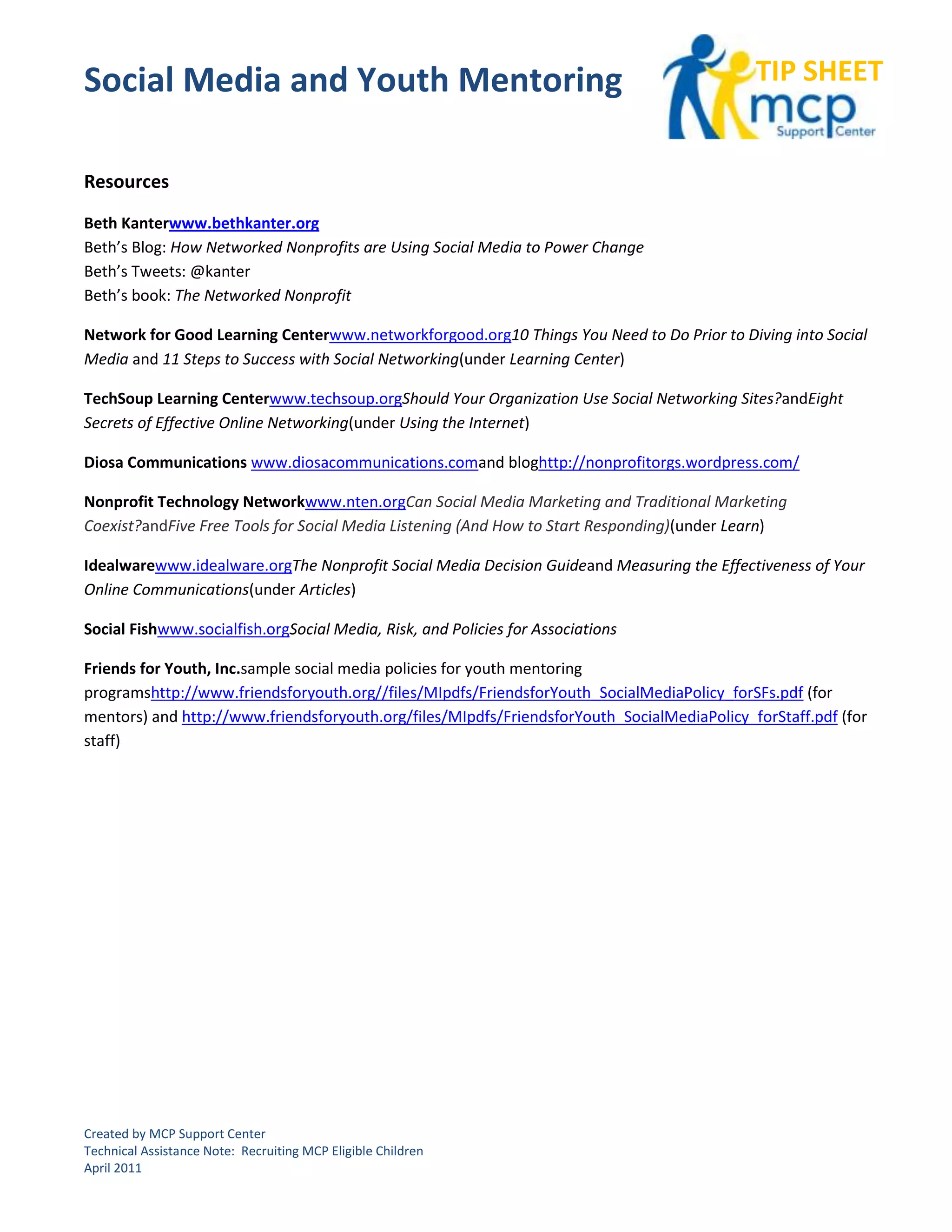
    Social Media andYouth Mentoring TIP SHEET Resources Beth Kanterwww.bethkanter.org Beth’s Blog: How Networked Nonprofits are Using Social Media to Power Change Beth’s Tweets: @kanter Beth’s book: The Networked Nonprofit Network for Good Learning Centerwww.networkforgood.org10 Things You Need to Do Prior to Diving into Social Media and 11 Steps to Success with Social Networking(under Learning Center) TechSoup Learning Centerwww.techsoup.orgShould Your Organization Use Social Networking Sites?andEight Secrets of Effective Online Networking(under Using the Internet) Diosa Communications www.diosacommunications.comand bloghttp://nonprofitorgs.wordpress.com/ Nonprofit Technology Networkwww.nten.orgCan Social Media Marketing and Traditional Marketing Coexist?andFive Free Tools for Social Media Listening (And How to Start Responding)(under Learn) Idealwarewww.idealware.orgThe Nonprofit Social Media Decision Guideand Measuring the Effectiveness of Your Online Communications(under Articles) Social Fishwww.socialfish.orgSocial Media, Risk, and Policies for Associations Friends for Youth, Inc.sample social media policies for youth mentoring programshttp://www.friendsforyouth.org//files/MIpdfs/FriendsforYouth_SocialMediaPolicy_forSFs.pdf (for mentors) and http://www.friendsforyouth.org/files/MIpdfs/FriendsforYouth_SocialMediaPolicy_forStaff.pdf (for staff) Created by MCP Support Center Technical Assistance Note: Recruiting MCP Eligible Children April 2011