Yet Another Experiment By
           Tushar Somaiya
Tushar is founder, director of ShuHaRiAgile, a premium agile
training / coaching partner and coachingdojo, a unique
community for agile leaders, executive coaches, agile coaches
and agile practitioners to share, learn & network.

Tushar has 13 years of IT experience and over 6 years of agile
experience. He is known for his fun-filled, hands-on interactive
trainings & speeches at prestigious conferences. His blogs
have been re-published on ScrumAlliance, AgileAtlas & PMHut.
He is an active volunteer at ScrumAlliance & PMI Mumbai
Chapter.

Tushar Somaiya is a passionate certified professional coach
who helps executives & teams discover and unleash their true
potential. He believes in a democratic organization & self-
organizing teams. He calls himself a servant leader. Through
his NueroScience based coaching & consulting, he has helped
projects and organizations turn agile and become truly high
performing teams.

He is Results Certified Coach, Certified Transformational
Coach, Certified Scrum Master, Certified Scrum Professional,
Certified System Business Analysts & one of the first 500 PMI-
Agile Certified Professional.
ž Changing   business scenario
ž Work is changing too
ž The ask from executives
ž Doing & being agile
ž Live agile?
ž Q & A
As if we don’t know it
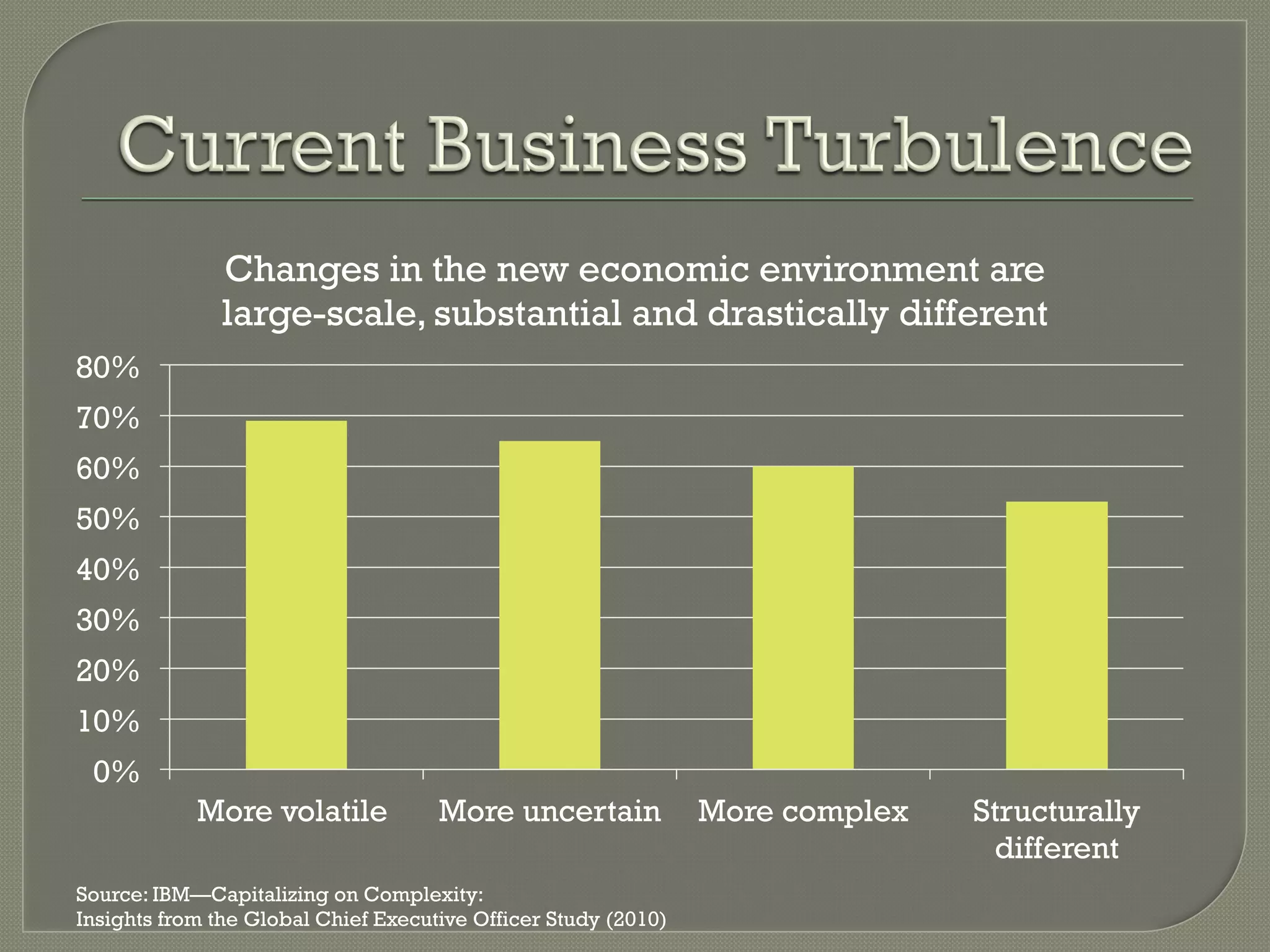
Changes in the new economic environment are
               large-scale, substantial and drastically different
80%
70%
60%
50%
40%
30%
20%
10%
 0%
            More volatile            More uncertain             More complex   Structurally
                                                                                different
Source: IBM—Capitalizing on Complexity:
Insights from the Global Chief Executive Officer Study (2010)
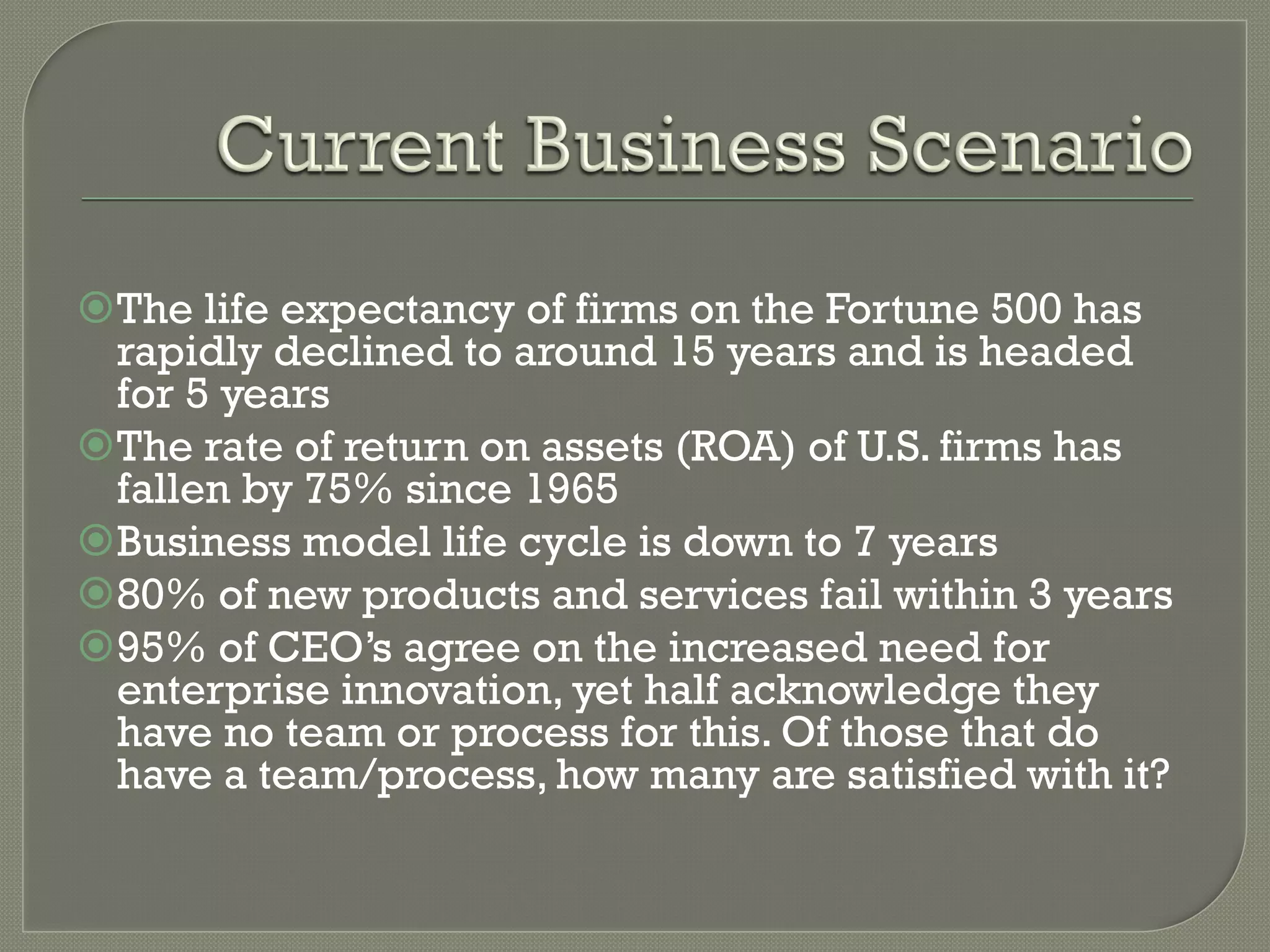
ž The life expectancy of firms on the Fortune 500 has
   rapidly declined to around 15 years and is headed
   for 5 years
ž The rate of return on assets (ROA) of U.S. firms has
   fallen by 75% since 1965
ž Business model life cycle is down to 7 years
ž 80% of new products and services fail within 3 years
ž 95% of CEO’s agree on the increased need for
   enterprise innovation, yet half acknowledge they
   have no team or process for this. Of those that do
   have a team/process, how many are satisfied with it?
“Without exception, all of
my biggest mistakes
occurred because I moved
too slowly.”
--John Chambers, Cisco CEO,


“He [Chambers] also radically changed
    the way he managed, turning a
 command-and-control hierarchy into a
   more democratic organizational
              structure.”
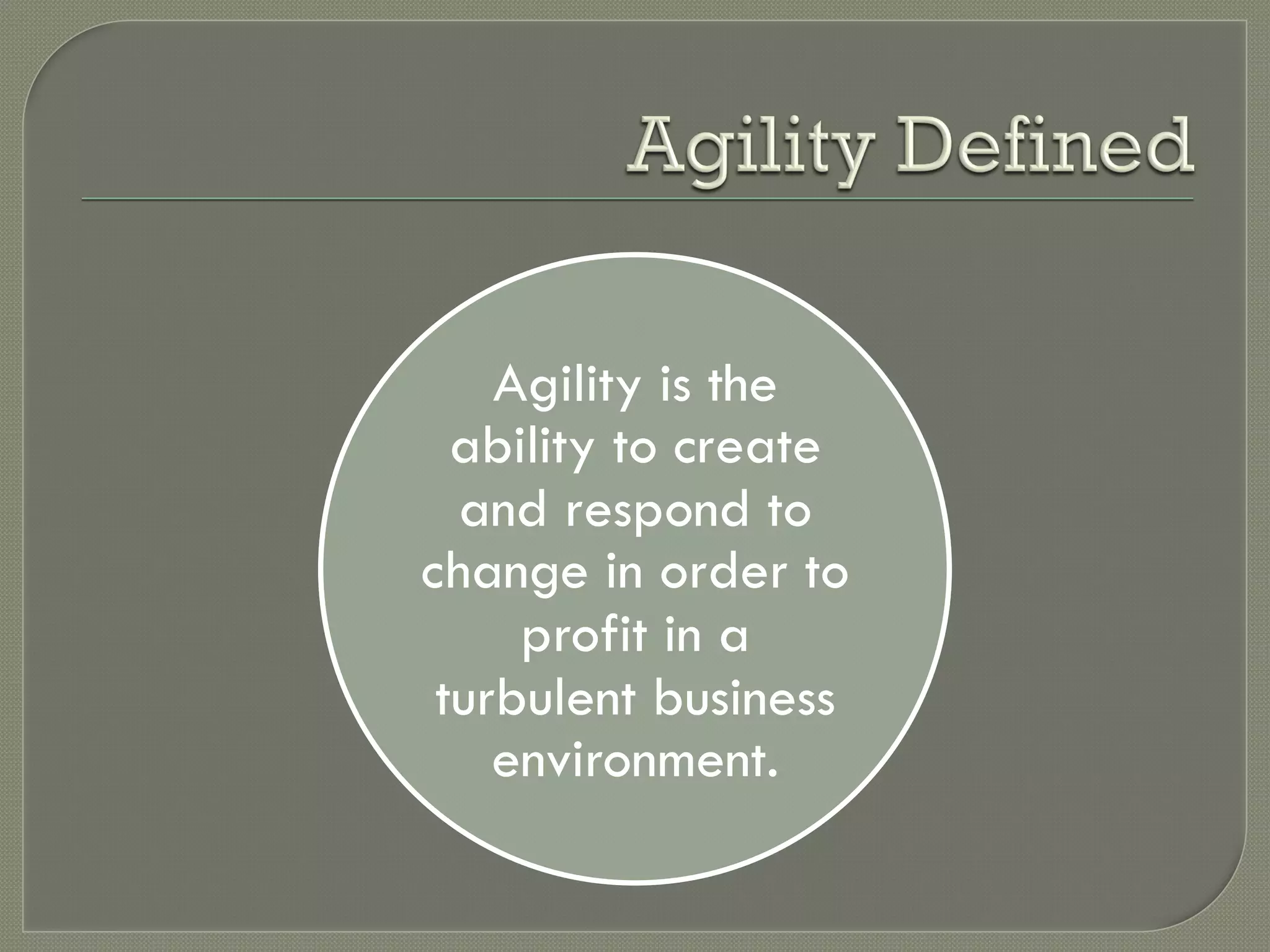
Agility is the
  ability to create
  and respond to
change in order to
     profit in a
 turbulent business
    environment.
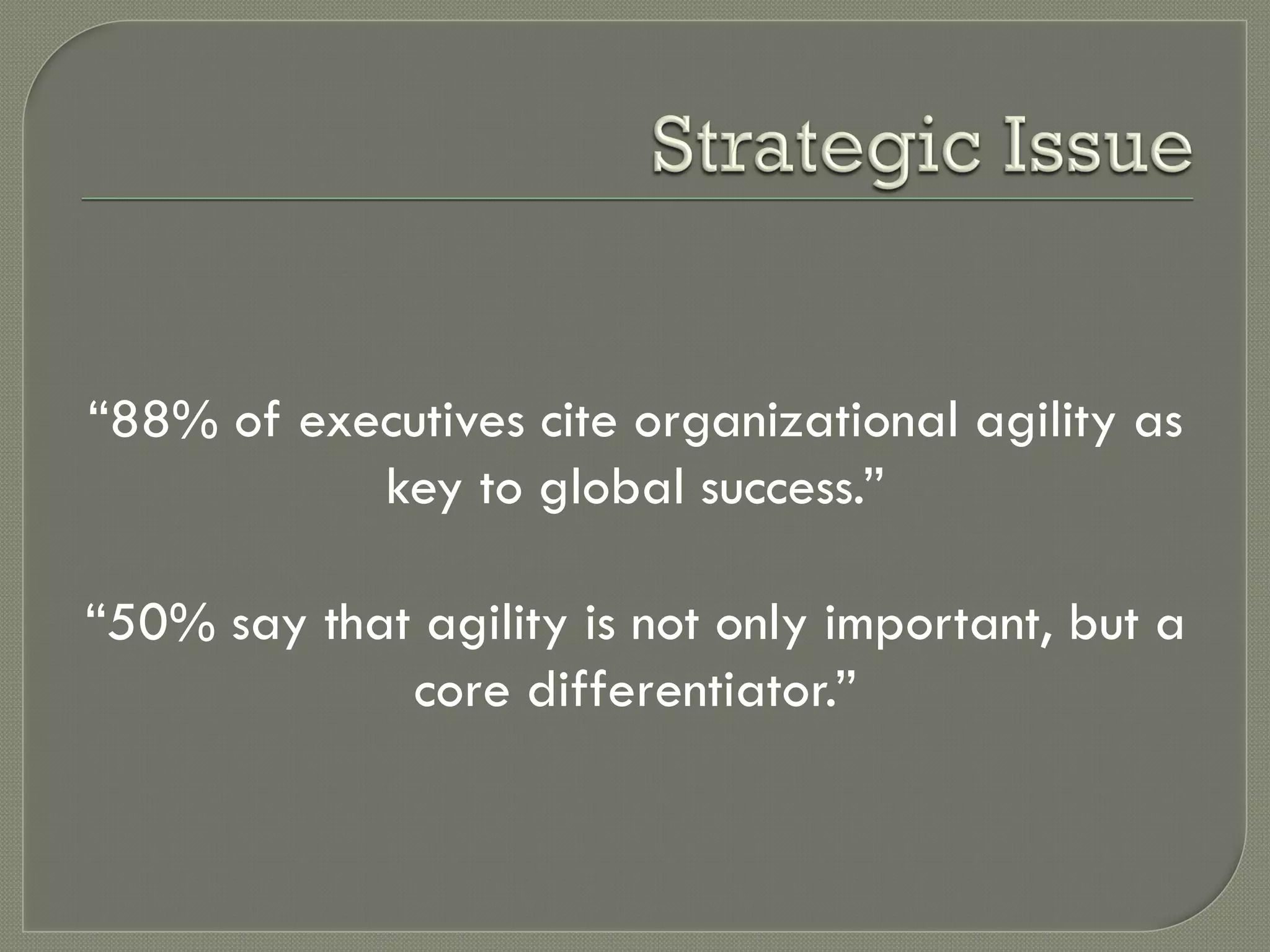
“88% of executives cite organizational agility as
           key to global success.”

“50% say that agility is not only important, but a
             core differentiator.”
Did you notice?
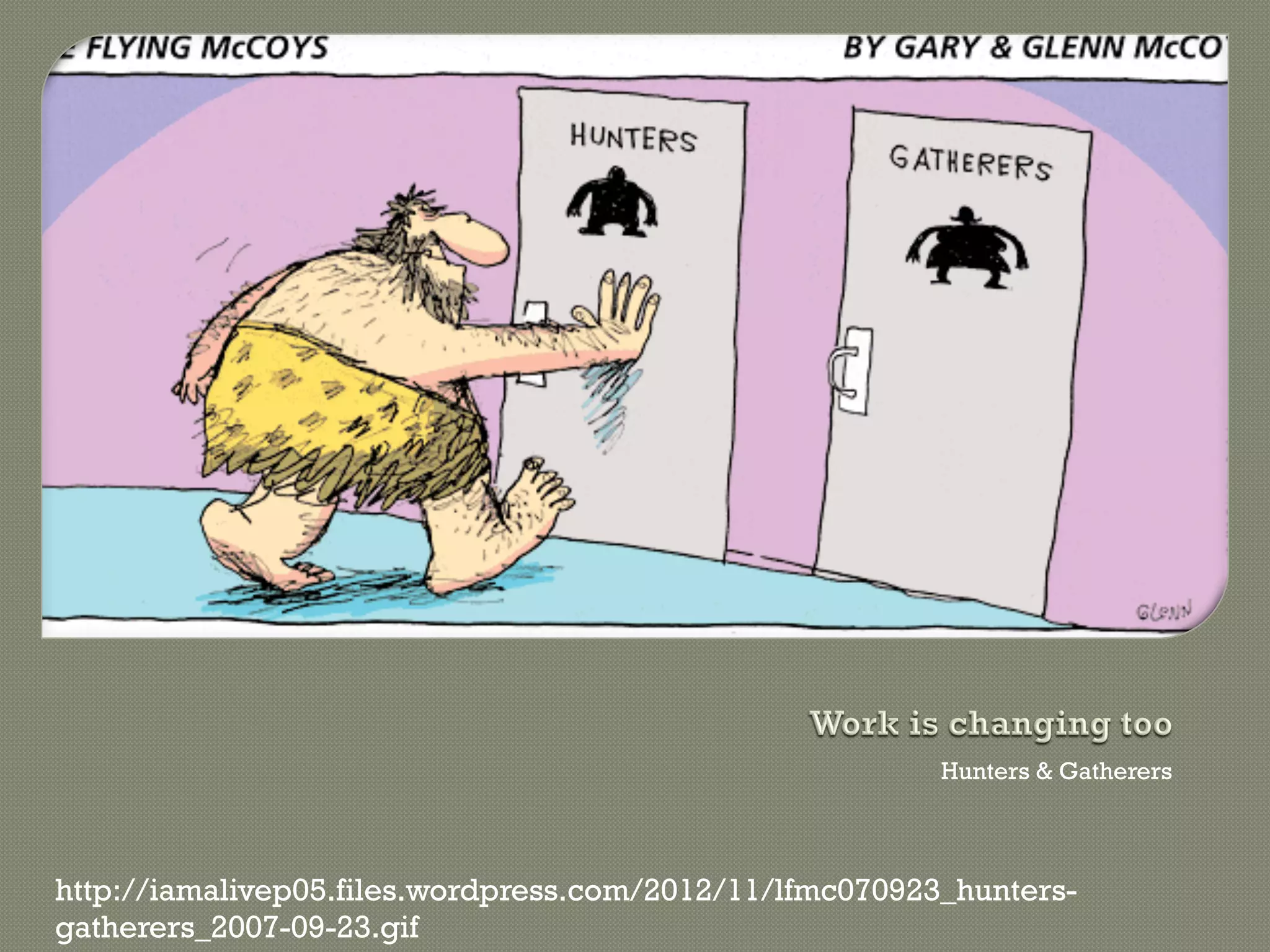
Hunters & Gatherers


http://iamalivep05.files.wordpress.com/2012/11/lfmc070923_hunters-
gatherers_2007-09-23.gif
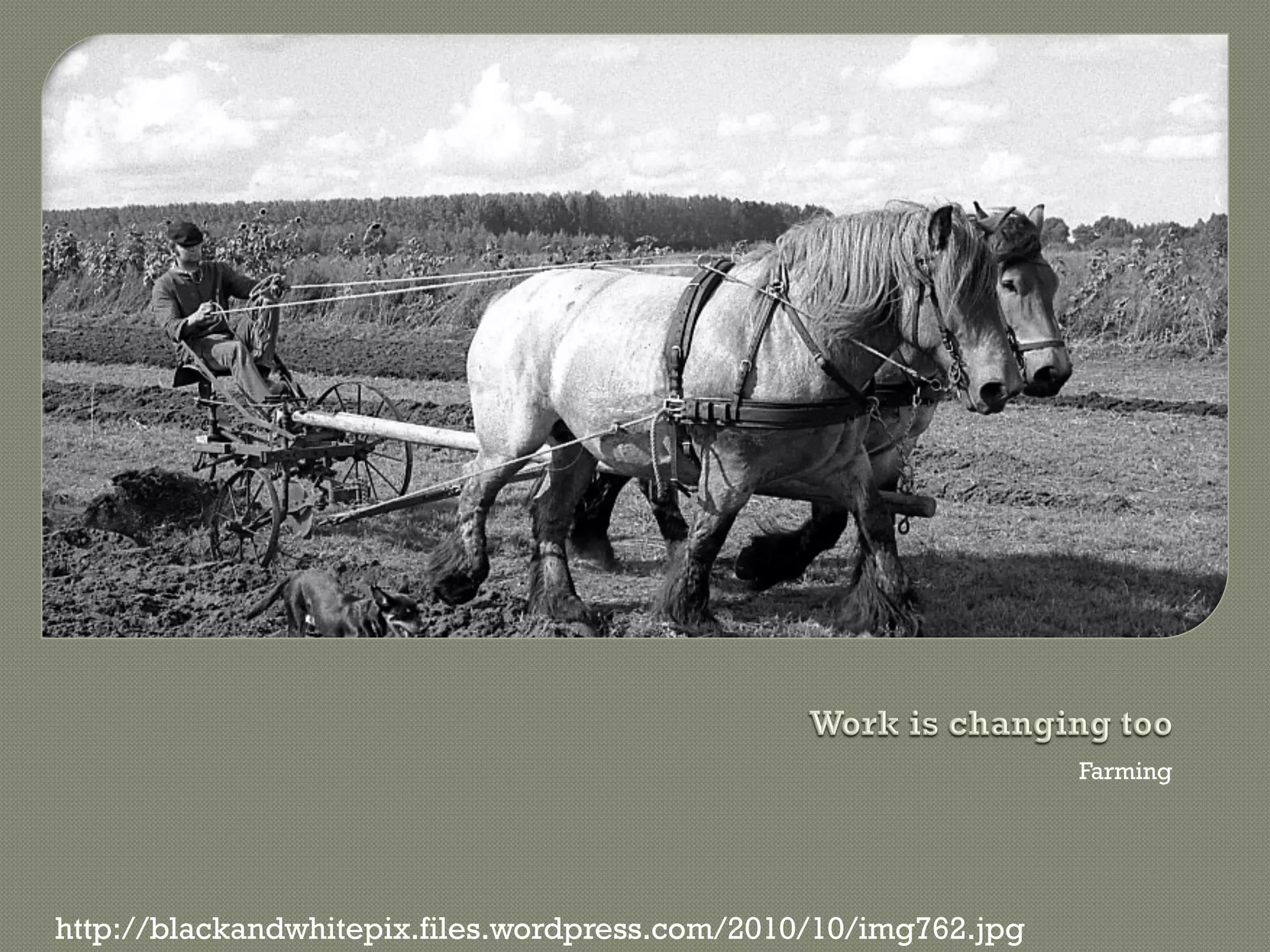
Farming


http://blackandwhitepix.files.wordpress.com/2010/10/img762.jpg
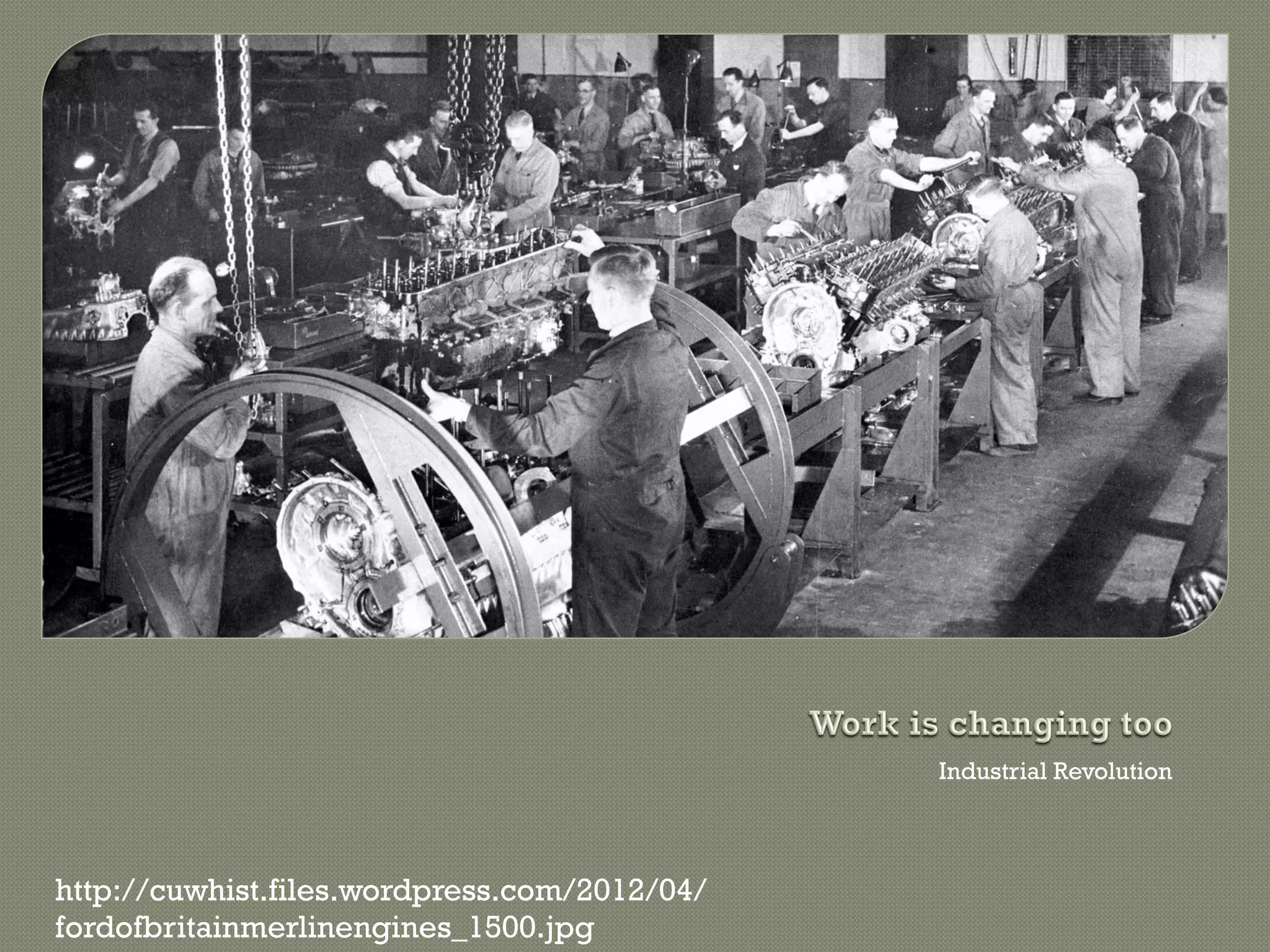
Industrial Revolution


http://cuwhist.files.wordpress.com/2012/04/
fordofbritainmerlinengines_1500.jpg
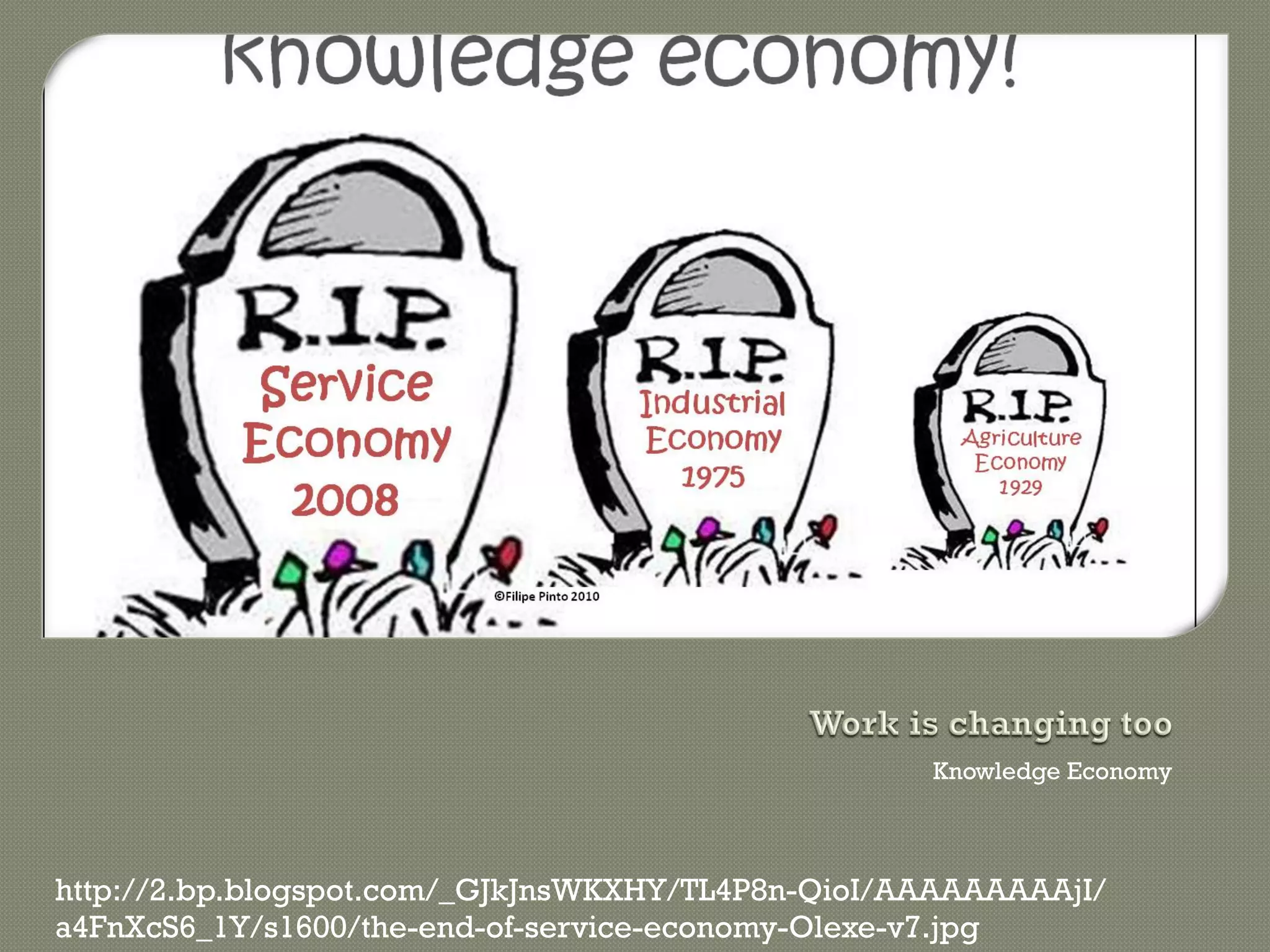
Knowledge Economy


http://2.bp.blogspot.com/_GJkJnsWKXHY/TL4P8n-QioI/AAAAAAAAAjI/
a4FnXcS6_1Y/s1600/the-end-of-service-economy-Olexe-v7.jpg
Missing in agenda. Hopefully only in my presentation.
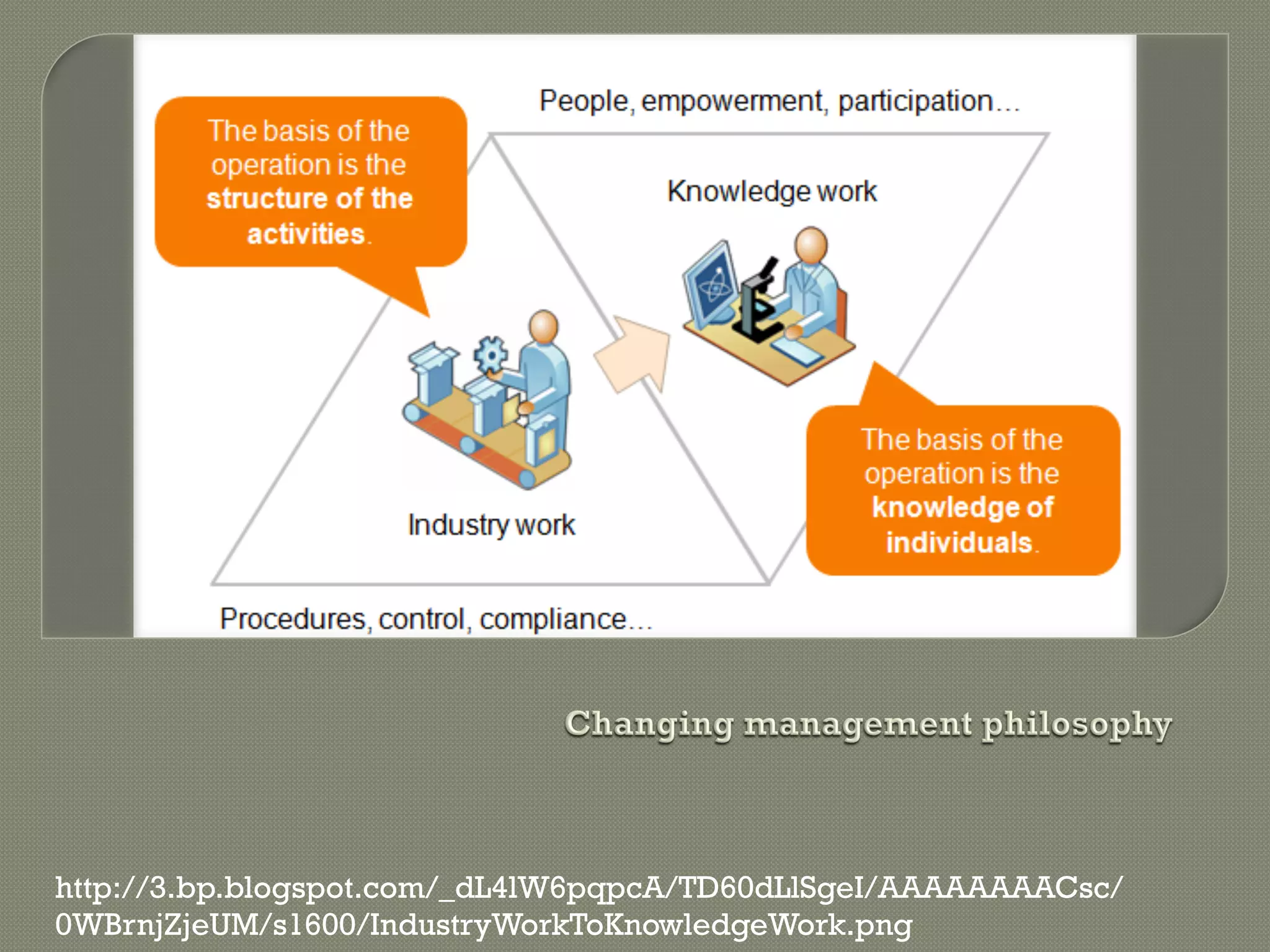
http://3.bp.blogspot.com/_dL4lW6pqpcA/TD60dLlSgeI/AAAAAAAACsc/
0WBrnjZjeUM/s1600/IndustryWorkToKnowledgeWork.png
Missing in agenda. Hopefully only of my presentation.
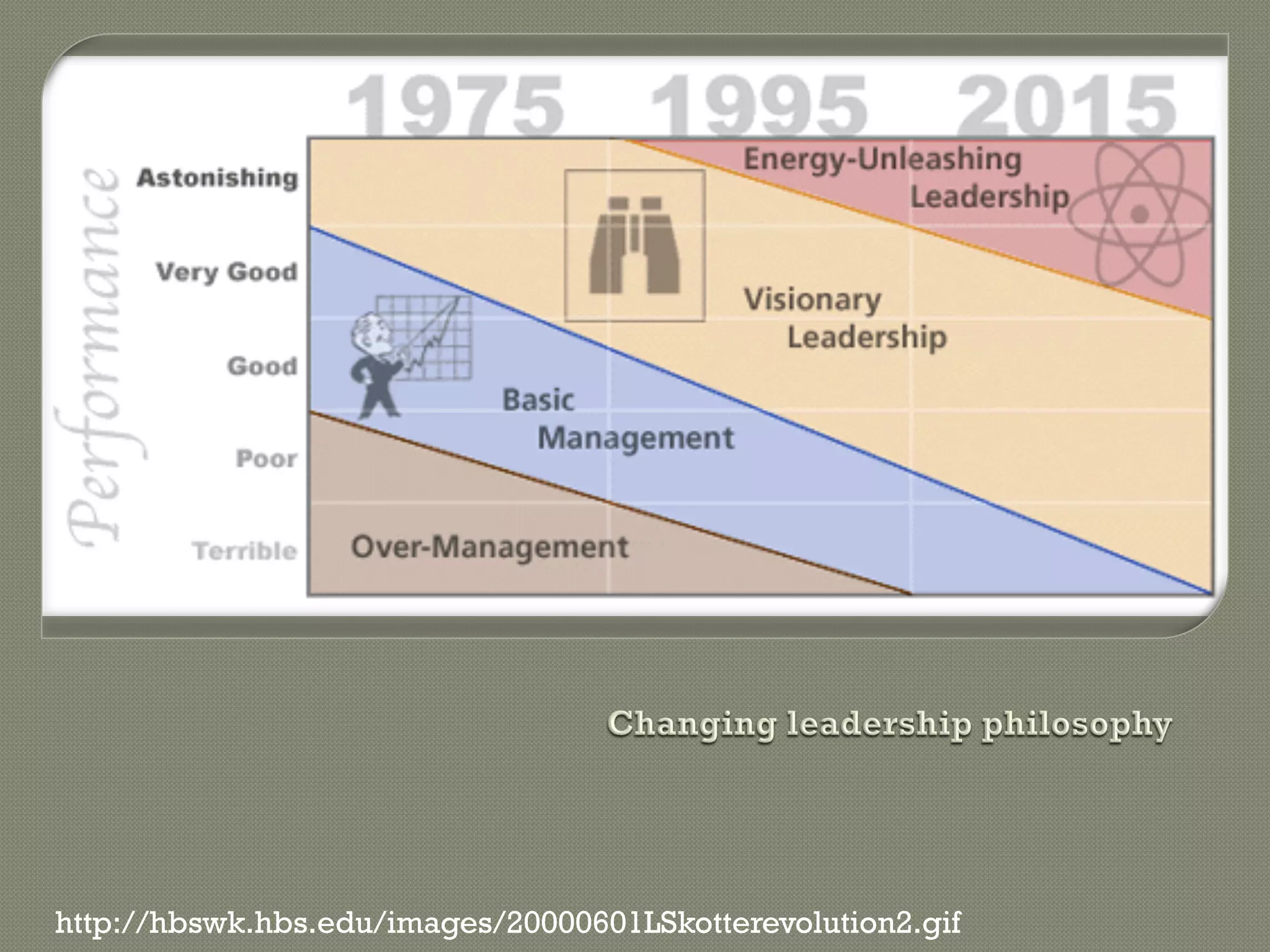
http://hbswk.hbs.edu/images/20000601LSkotterevolution2.gif
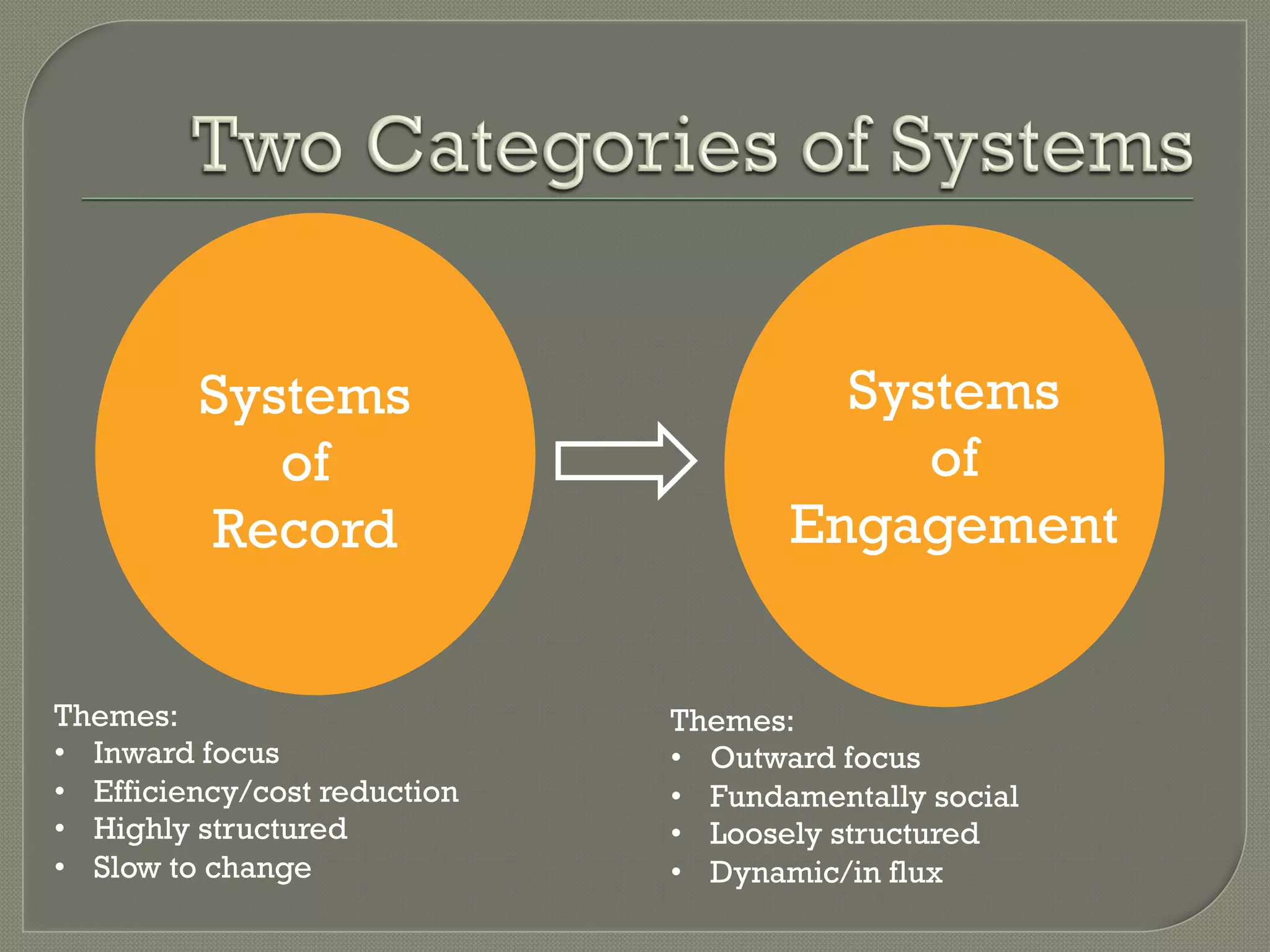
Systems                       Systems
             of                            of
          Record                      Engagement


Themes:                        Themes:
•  Inward focus                •  Outward focus
•  Efficiency/cost reduction   •  Fundamentally social
•  Highly structured           •  Loosely structured
•  Slow to change              •  Dynamic/in flux
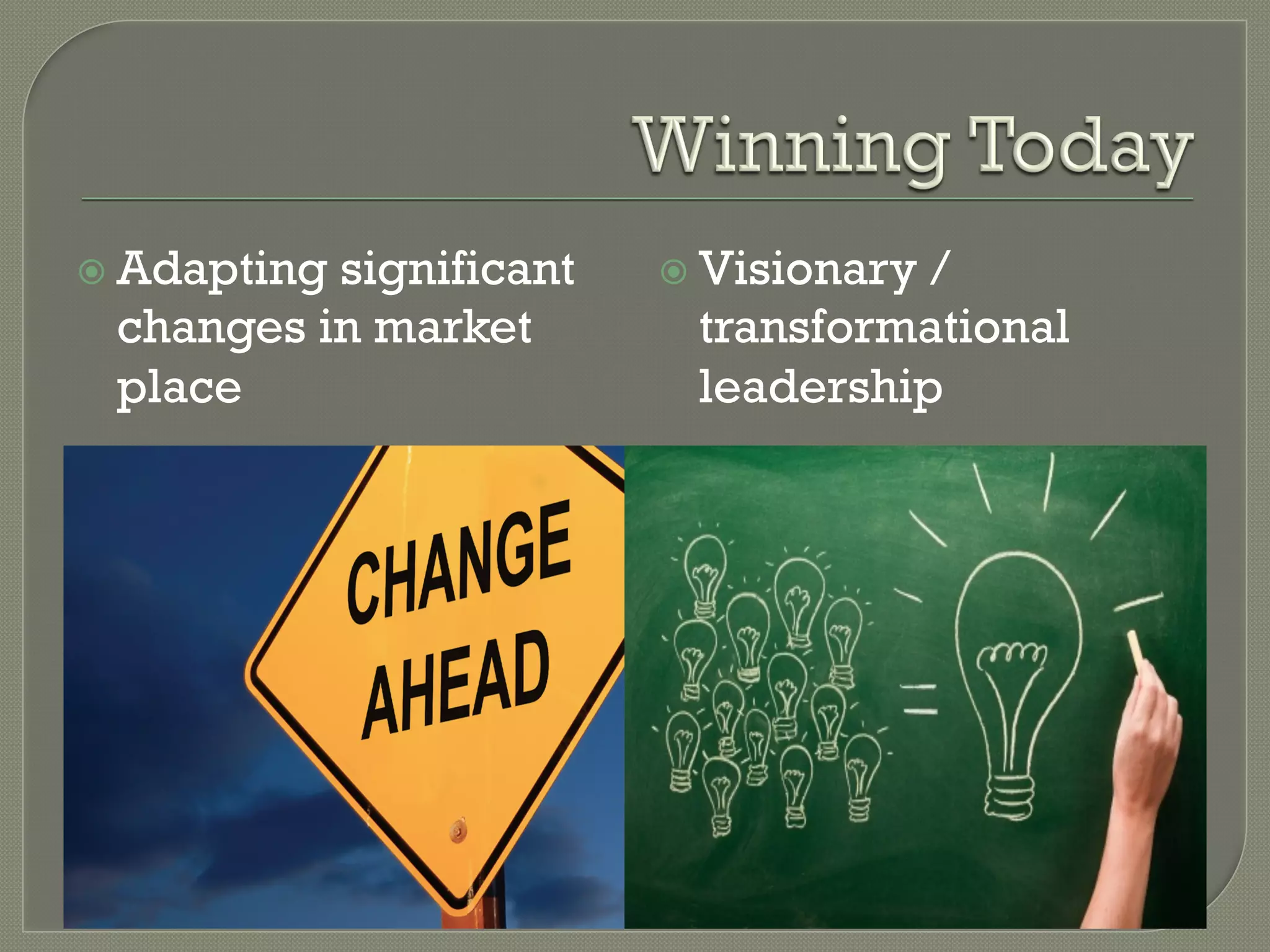
ž  Adapting
          significant   ž  Visionary
                                    /
 changes in market        transformational
 place                    leadership
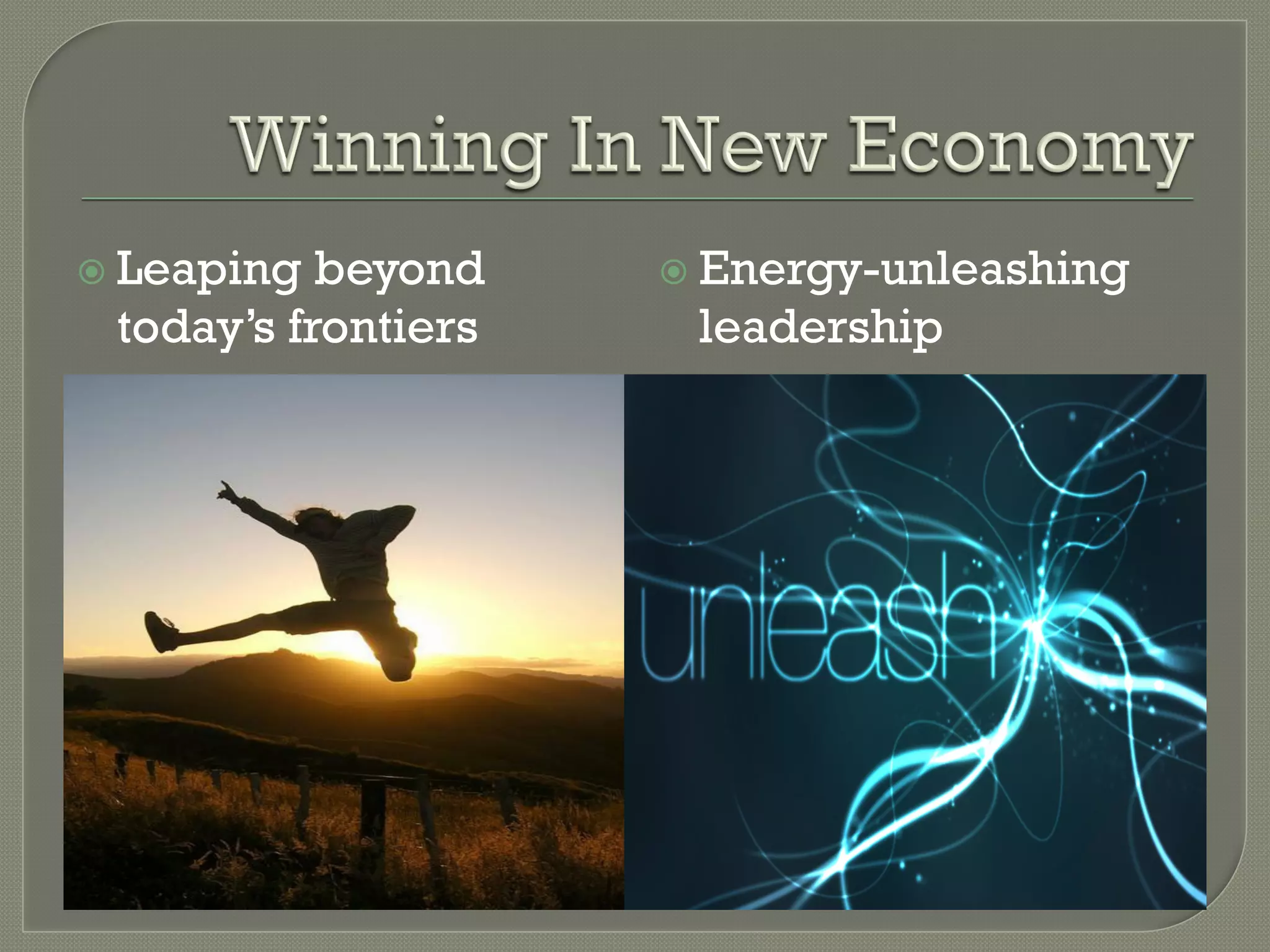
ž  Leapingbeyond    ž  Energy-unleashing
 today’s frontiers    leadership
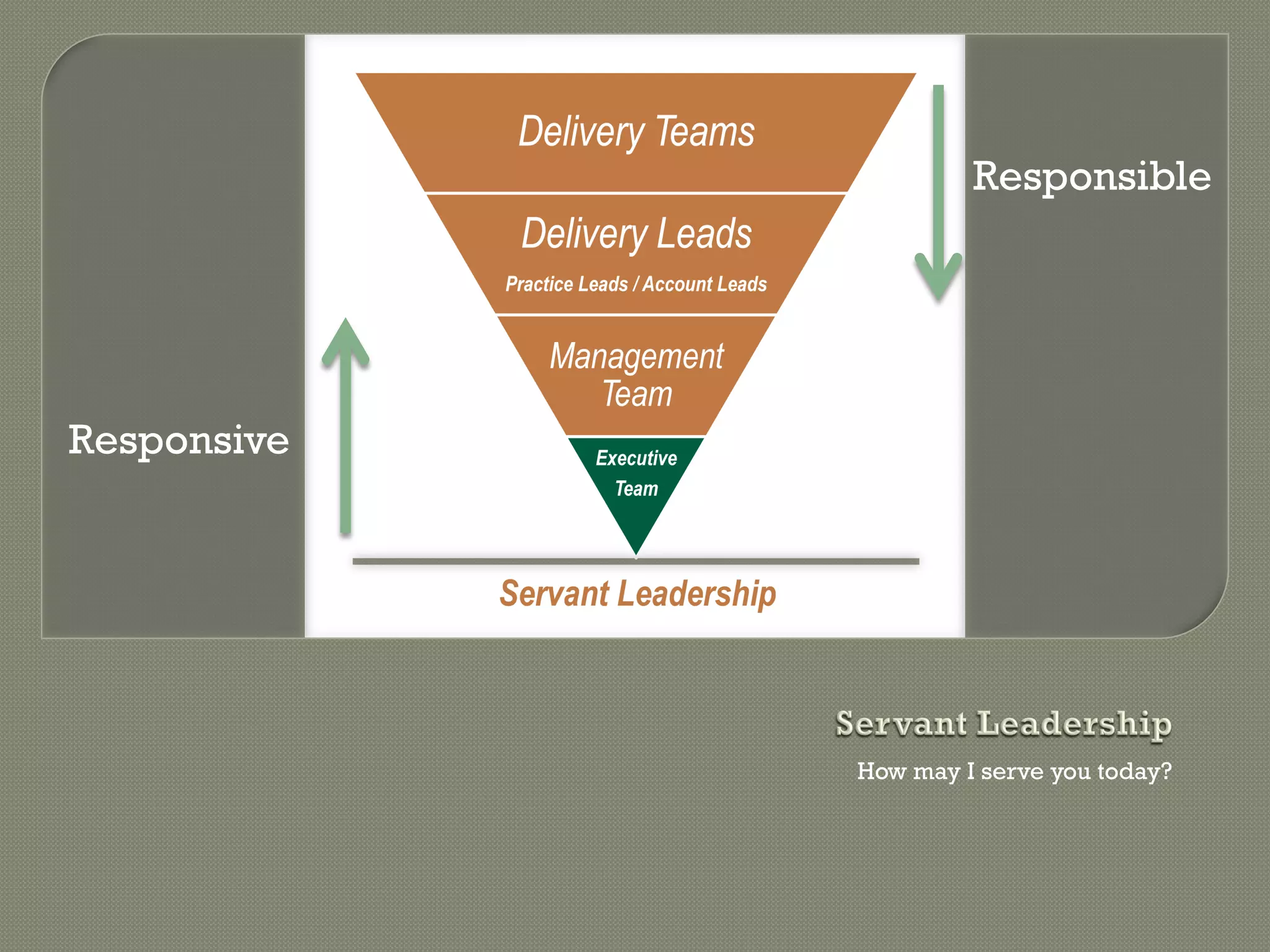
Responsible


Responsive


             How may I serve you today?
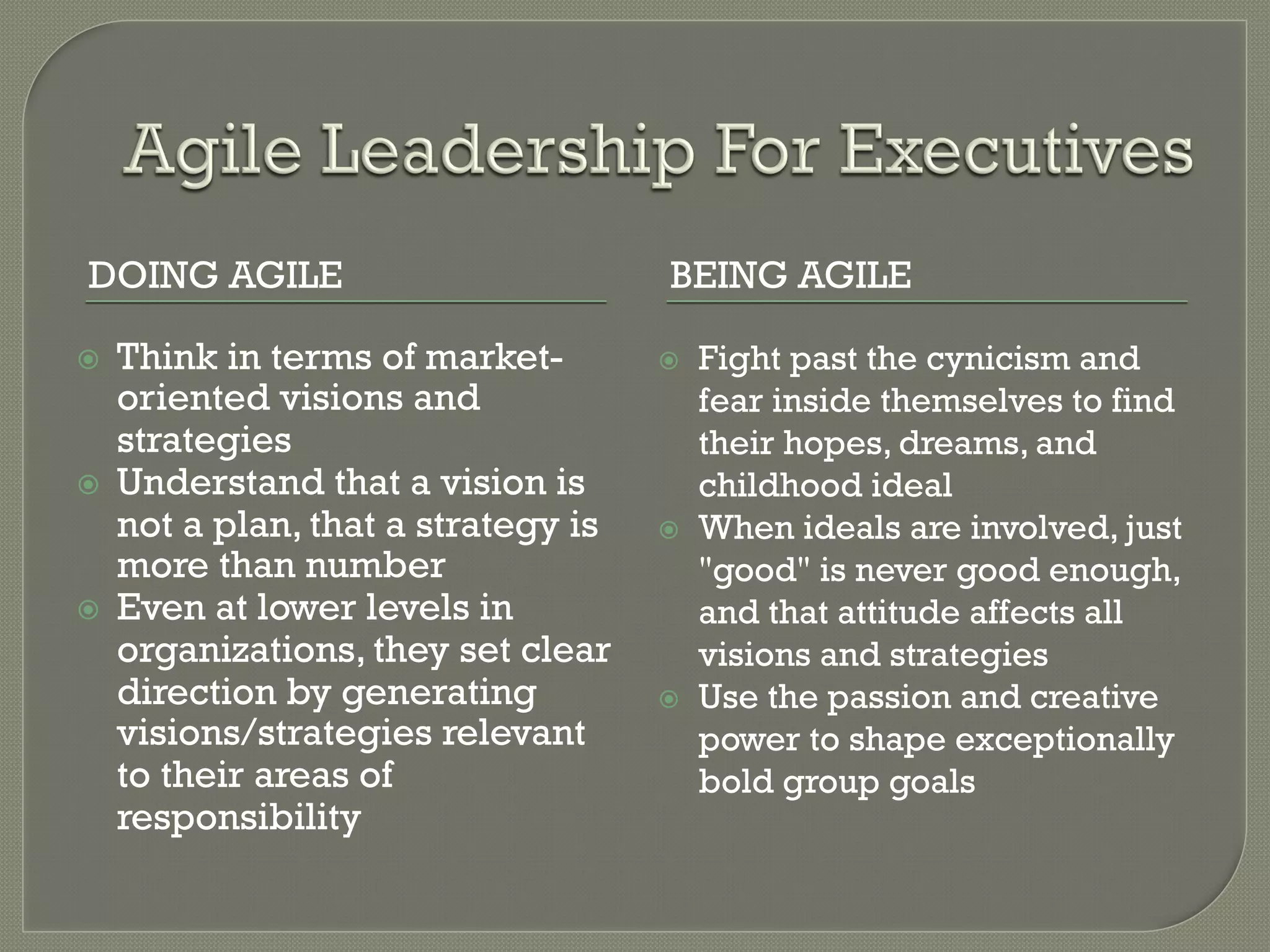
DOING AGILE                            BEING AGILE

ž    Think in terms of market-        ž    Fight past the cynicism and
      oriented visions and                   fear inside themselves to find
      strategies                             their hopes, dreams, and
ž    Understand that a vision is            childhood ideal
      not a plan, that a strategy is   ž    When ideals are involved, just
      more than number                       "good" is never good enough,
ž    Even at lower levels in                and that attitude affects all
      organizations, they set clear          visions and strategies
      direction by generating          ž    Use the passion and creative
      visions/strategies relevant            power to shape exceptionally
      to their areas of                      bold group goals
      responsibility
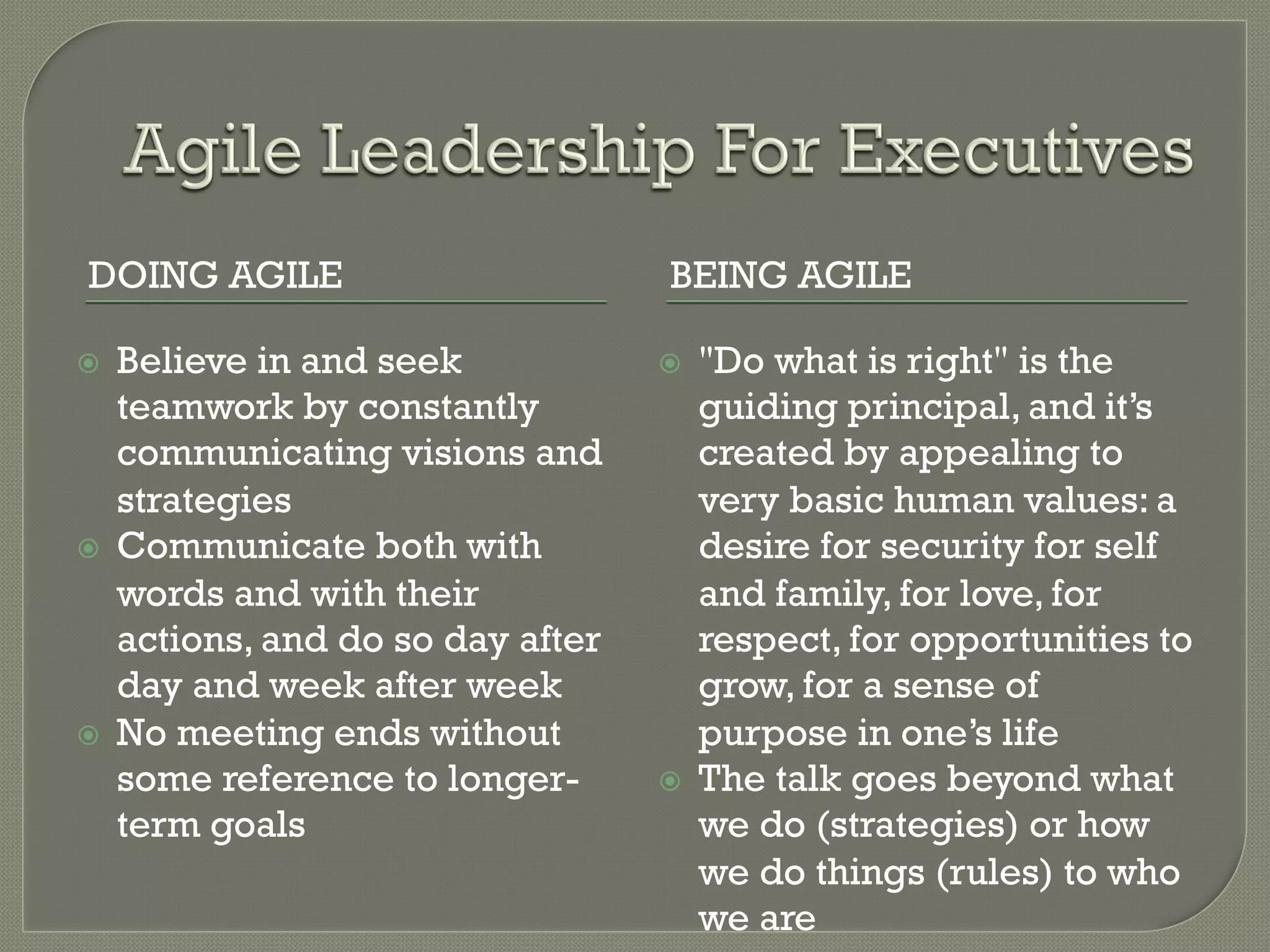
DOING AGILE                          BEING AGILE

ž    Believe in and seek            ž    "Do what is right" is the
      teamwork by constantly               guiding principal, and it’s
      communicating visions and            created by appealing to
      strategies                           very basic human values: a
ž    Communicate both with                desire for security for self
      words and with their                 and family, for love, for
      actions, and do so day after         respect, for opportunities to
      day and week after week              grow, for a sense of
ž    No meeting ends without              purpose in one’s life
      some reference to longer-      ž    The talk goes beyond what
      term goals                           we do (strategies) or how
                                           we do things (rules) to who
                                           we are
DOING AGILE                               BEING AGILE

ž    Motivate action with positive       ž    Help people unleash
      incentives of all sorts: a pat on         untapped energies in
      the back, public recognition,             pursuit of the tough group
      extra money in the paycheck;              goals by creating work that
ž    Tend to attack, sometimes
                                                has true meaning; even
      courageously, that which can
      de-motivate employees, no                 spiritual;
      matter the source;                  ž    Always address the
ž    Dealing with these leaders,               unasked (and very difficult)
      one senses the enthusiasm,                questions of: so what?; why
      even from introverted                     are we here?; what
      individuals;                              difference can we make?;
                                                what difference should we
                                                make?
Shall we please?
Ok but HOW?


http://utilityweekcouk.s3.amazonaws.com/news/images/197113.jpg
Live Agile Passionately!
Is all of this practical?
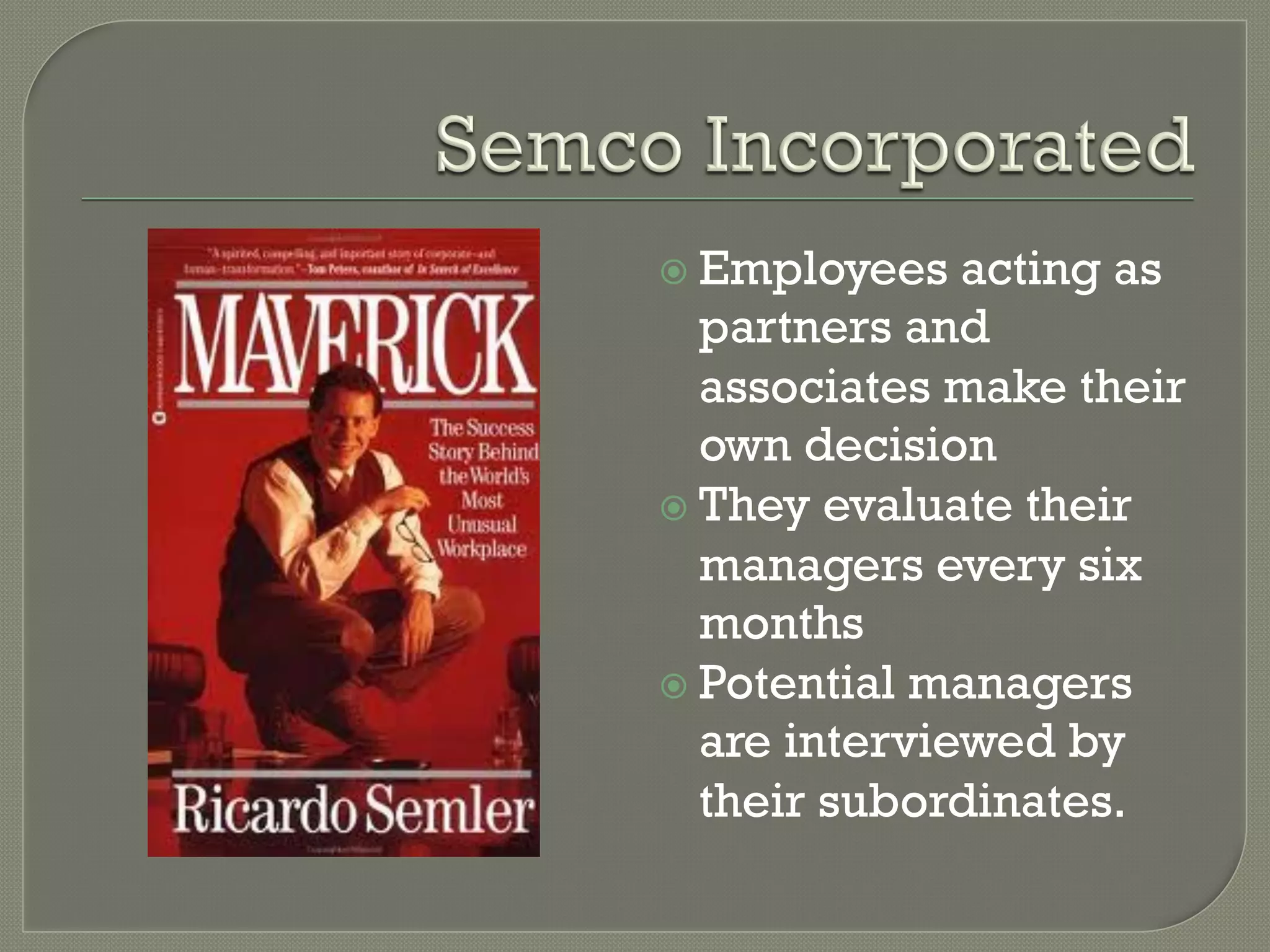
ž  Employees   acting as
    partners and
    associates make their
    own decision
ž  They evaluate their
    managers every six
    months
ž  Potential managers
    are interviewed by
    their subordinates.
ž  Small  teams
ž  Belief in the
    individual
ž  No titles
ž  People choose their
    own work
ž  All in the same boat
ž  Focus on long term
    value based view
    rather than short term
    benefits
ž  No  managers
ž  Personal mission
ž  “Collaborative letters
    of understanding”
ž  Conflict resolved by
    jury
ž  No  formal
    management
    hierarchy
ž  People choose their
    own projects
ž  No one tells what to
    do, no fixed roles, no
    reviews, no such
    thing like promotion
ž  No  positions
ž  No support functions
ž  Decide your own time
ž  Self-managing teams
    who owns their P&L
ž Ihaven’t created images in this PPT.
   References and credits provided at the
   end
ž Ideas and words in the presentation are
   referred and inspired from various
   sources listed at the end
ž Does this have to do anything with agile?
ž Are we ready? What does it take? When
   do we start?
Tushar Somaiya
     ShuHaRiAgile.com
     CoachingDojo.org

      +91-9869209689
 Tushar.somaiya@gmail.com

Agile NCR 2013-Tushar Soimya - Executives role in agile

  • 1.
    Yet Another ExperimentBy Tushar Somaiya
  • 2.
    Tushar is founder,director of ShuHaRiAgile, a premium agile training / coaching partner and coachingdojo, a unique community for agile leaders, executive coaches, agile coaches and agile practitioners to share, learn & network. Tushar has 13 years of IT experience and over 6 years of agile experience. He is known for his fun-filled, hands-on interactive trainings & speeches at prestigious conferences. His blogs have been re-published on ScrumAlliance, AgileAtlas & PMHut. He is an active volunteer at ScrumAlliance & PMI Mumbai Chapter. Tushar Somaiya is a passionate certified professional coach who helps executives & teams discover and unleash their true potential. He believes in a democratic organization & self- organizing teams. He calls himself a servant leader. Through his NueroScience based coaching & consulting, he has helped projects and organizations turn agile and become truly high performing teams. He is Results Certified Coach, Certified Transformational Coach, Certified Scrum Master, Certified Scrum Professional, Certified System Business Analysts & one of the first 500 PMI- Agile Certified Professional.
  • 3.
    ž Changing business scenario ž Work is changing too ž The ask from executives ž Doing & being agile ž Live agile? ž Q & A
  • 4.
    As if wedon’t know it
  • 5.
    Changes in thenew economic environment are large-scale, substantial and drastically different 80% 70% 60% 50% 40% 30% 20% 10% 0% More volatile More uncertain More complex Structurally different Source: IBM—Capitalizing on Complexity: Insights from the Global Chief Executive Officer Study (2010)
  • 6.
    ž The life expectancyof firms on the Fortune 500 has rapidly declined to around 15 years and is headed for 5 years ž The rate of return on assets (ROA) of U.S. firms has fallen by 75% since 1965 ž Business model life cycle is down to 7 years ž 80% of new products and services fail within 3 years ž 95% of CEO’s agree on the increased need for enterprise innovation, yet half acknowledge they have no team or process for this. Of those that do have a team/process, how many are satisfied with it?
  • 7.
    “Without exception, allof my biggest mistakes occurred because I moved too slowly.” --John Chambers, Cisco CEO, “He [Chambers] also radically changed the way he managed, turning a command-and-control hierarchy into a more democratic organizational structure.”
  • 8.
    Agility is the ability to create and respond to change in order to profit in a turbulent business environment.
  • 9.
    “88% of executivescite organizational agility as key to global success.” “50% say that agility is not only important, but a core differentiator.”
  • 10.
  • 11.
  • 12.
  • 13.
  • 14.
  • 15.
    Missing in agenda.Hopefully only in my presentation.
  • 16.
  • 17.
    Missing in agenda.Hopefully only of my presentation.
  • 18.
  • 20.
    Systems Systems of of Record Engagement Themes: Themes: •  Inward focus •  Outward focus •  Efficiency/cost reduction •  Fundamentally social •  Highly structured •  Loosely structured •  Slow to change •  Dynamic/in flux
  • 22.
    ž  Adapting significant ž  Visionary / changes in market transformational place leadership
  • 23.
    ž  Leapingbeyond ž  Energy-unleashing today’s frontiers leadership
  • 24.
    Responsible Responsive How may I serve you today?
  • 26.
    DOING AGILE BEING AGILE ž  Think in terms of market- ž  Fight past the cynicism and oriented visions and fear inside themselves to find strategies their hopes, dreams, and ž  Understand that a vision is childhood ideal not a plan, that a strategy is ž  When ideals are involved, just more than number "good" is never good enough, ž  Even at lower levels in and that attitude affects all organizations, they set clear visions and strategies direction by generating ž  Use the passion and creative visions/strategies relevant power to shape exceptionally to their areas of bold group goals responsibility
  • 27.
    DOING AGILE BEING AGILE ž  Believe in and seek ž  "Do what is right" is the teamwork by constantly guiding principal, and it’s communicating visions and created by appealing to strategies very basic human values: a ž  Communicate both with desire for security for self words and with their and family, for love, for actions, and do so day after respect, for opportunities to day and week after week grow, for a sense of ž  No meeting ends without purpose in one’s life some reference to longer- ž  The talk goes beyond what term goals we do (strategies) or how we do things (rules) to who we are
  • 28.
    DOING AGILE BEING AGILE ž  Motivate action with positive ž  Help people unleash incentives of all sorts: a pat on untapped energies in the back, public recognition, pursuit of the tough group extra money in the paycheck; goals by creating work that ž  Tend to attack, sometimes has true meaning; even courageously, that which can de-motivate employees, no spiritual; matter the source; ž  Always address the ž  Dealing with these leaders, unasked (and very difficult) one senses the enthusiasm, questions of: so what?; why even from introverted are we here?; what individuals; difference can we make?; what difference should we make?
  • 29.
  • 30.
  • 31.
  • 32.
    Is all ofthis practical?
  • 33.
    ž  Employees acting as partners and associates make their own decision ž  They evaluate their managers every six months ž  Potential managers are interviewed by their subordinates.
  • 34.
    ž  Small teams ž  Belief in the individual ž  No titles ž  People choose their own work ž  All in the same boat ž  Focus on long term value based view rather than short term benefits
  • 35.
    ž  No managers ž  Personal mission ž  “Collaborative letters of understanding” ž  Conflict resolved by jury
  • 36.
    ž  No formal management hierarchy ž  People choose their own projects ž  No one tells what to do, no fixed roles, no reviews, no such thing like promotion
  • 37.
    ž  No positions ž  No support functions ž  Decide your own time ž  Self-managing teams who owns their P&L
  • 39.
    ž Ihaven’t created imagesin this PPT. References and credits provided at the end ž Ideas and words in the presentation are referred and inspired from various sources listed at the end ž Does this have to do anything with agile? ž Are we ready? What does it take? When do we start?
  • 40.
    Tushar Somaiya ShuHaRiAgile.com CoachingDojo.org +91-9869209689 Tushar.somaiya@gmail.com