DEVELOPING POSITIVE RELATIONSHIP WITH
STUDENTS
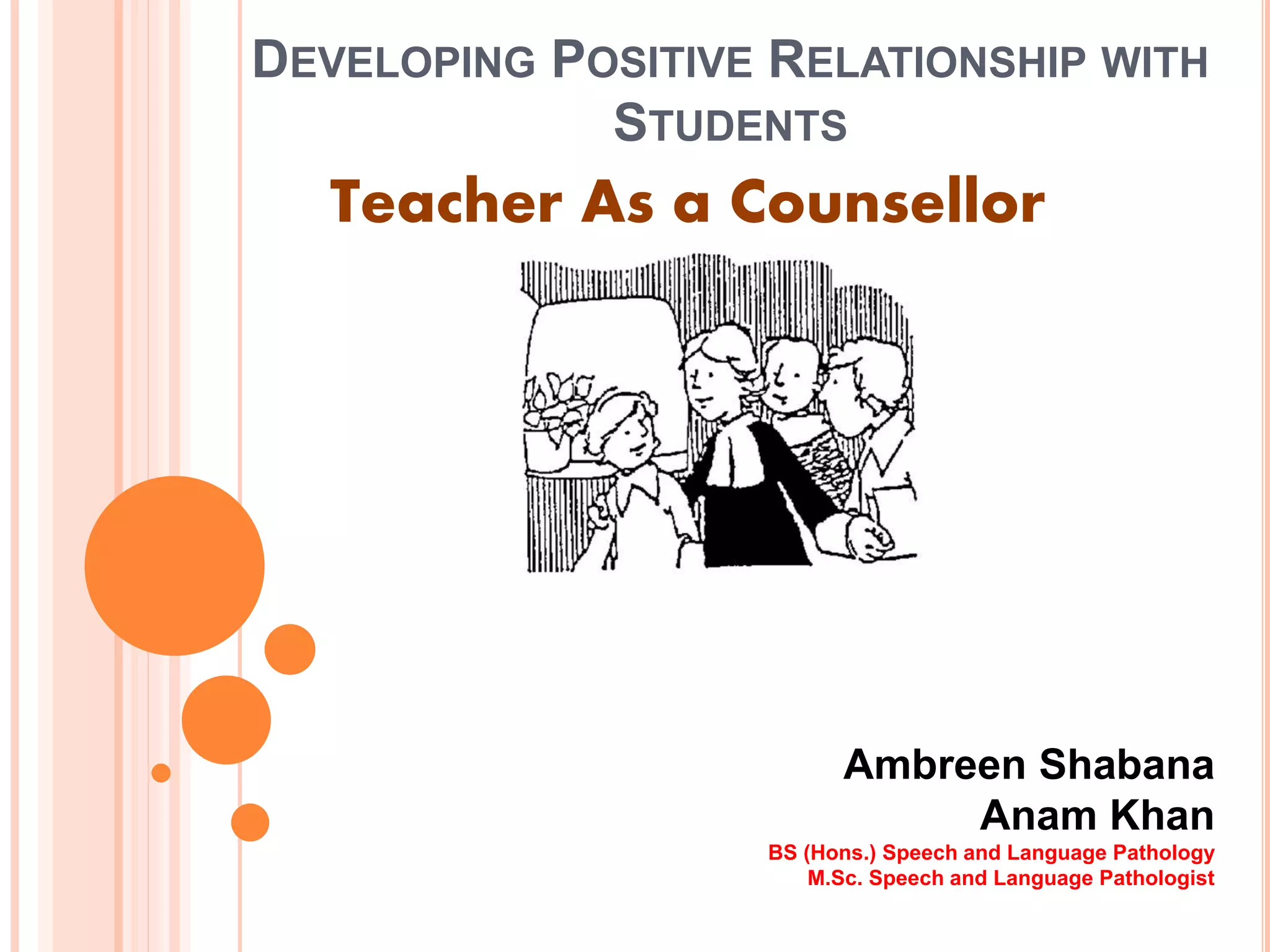
Teacher As a Counsellor
Ambreen Shabana
Anam Khan
BS (Hons.) Speech and Language Pathology
M.Sc. Speech and Language Pathologist
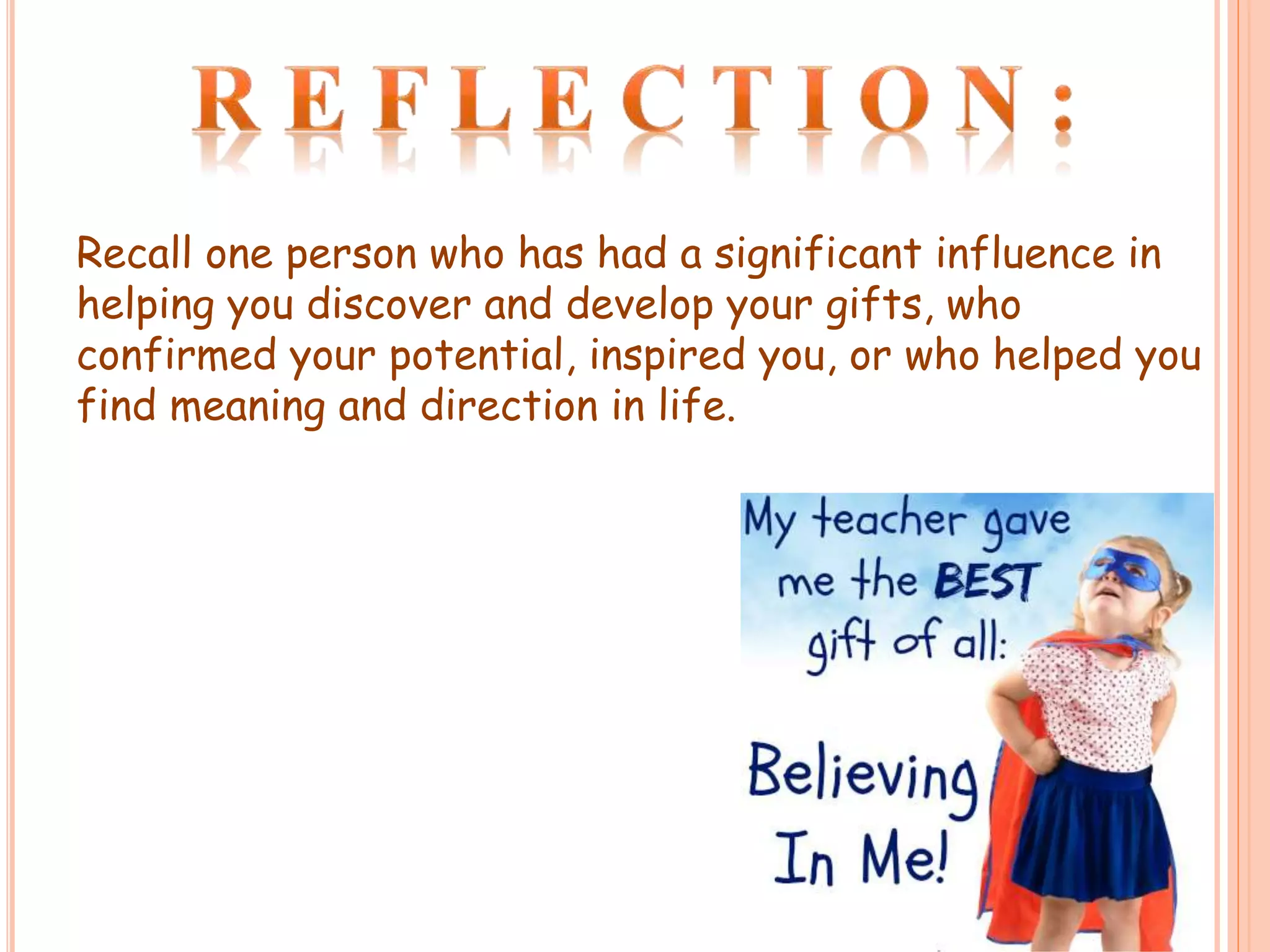
Recall one person who has had a significant influence in
helping you discover and develop your gifts, who
confirmed your potential, inspired you, or who helped you
find meaning and direction in life.
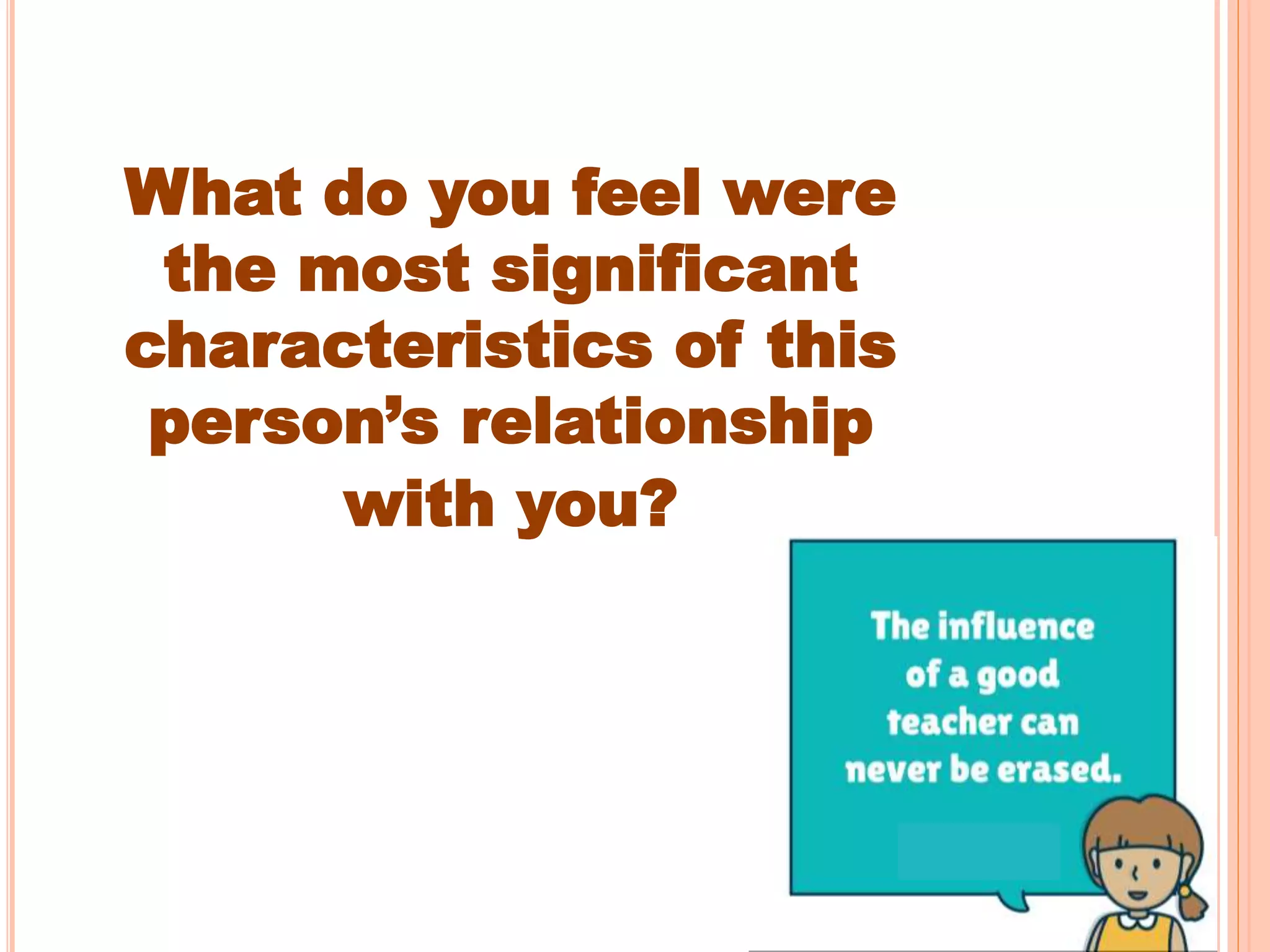
What do you feel were
the most significant
characteristics of this
person’s relationship
with you?
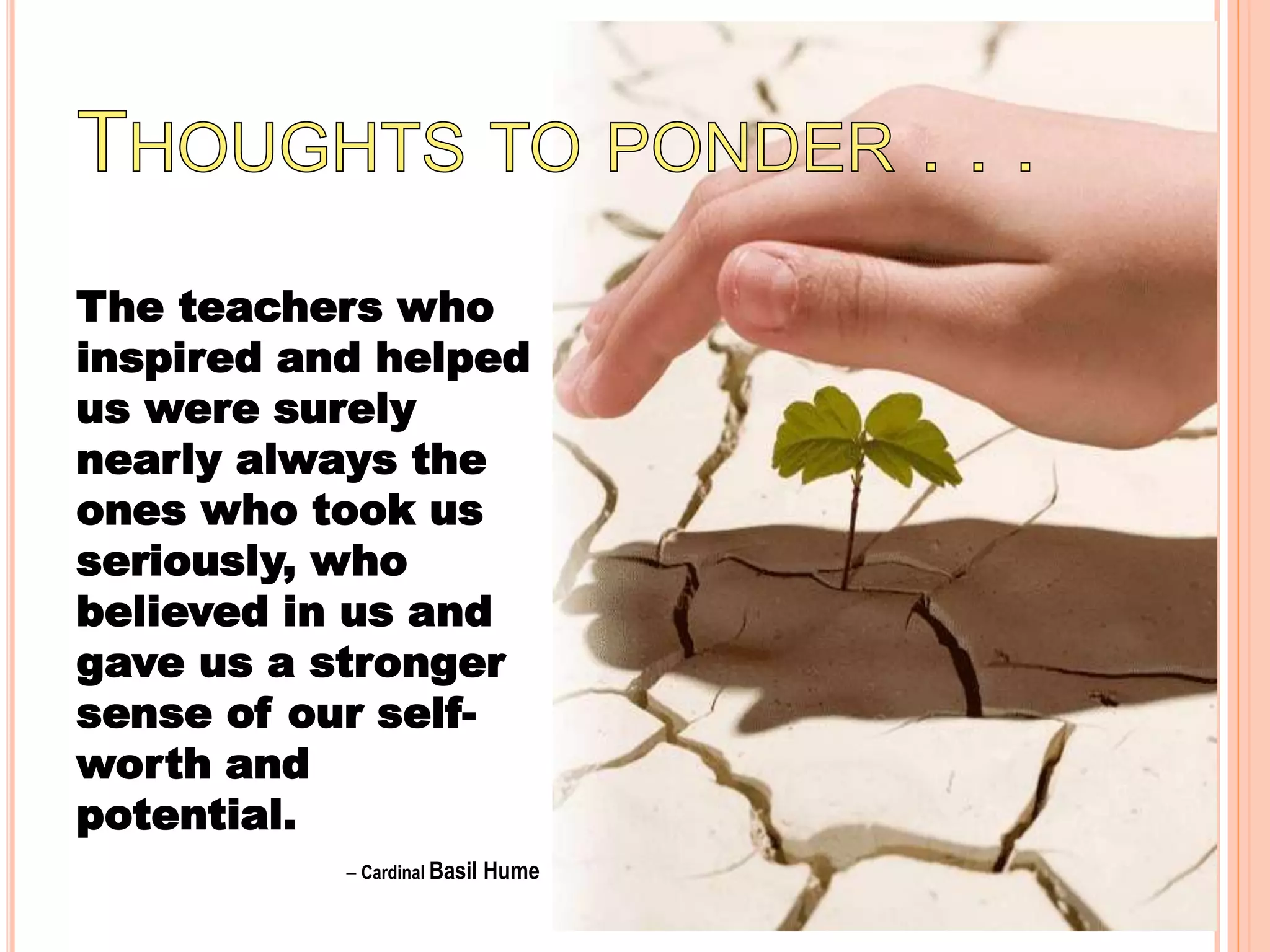
The teachers who
inspired and helped
us were surely
nearly always the
ones who took us
seriously, who
believed in us and
gave us a stronger
sense of our self-
worth and
potential.
– Cardinal Basil Hume
COUNSELING
 Counseling provides an opportunity to talk with a
person to discuss issues, conflicts with friends,
relationship breakdown, domestic violence, anxiety,
depression, grief, sexual problems, childhood
sexual abuse, stress and classroom related
tensions and disputes.
 Counseling is designed to facilitate student
achievement, improve student behavior and
attendance, and help students develop socially
MISCONCEPTIONS
 Counseling only deals with disciplinary and
serious mental and emotional problems.
 Seeking for counseling help means the person
is weak.
 It is awkward to talk to the counselor/teacher
about my personal issues.
 Other people/students will know if I’m going to
talk to teacher separately or teacher is giving
me extra attention after school.
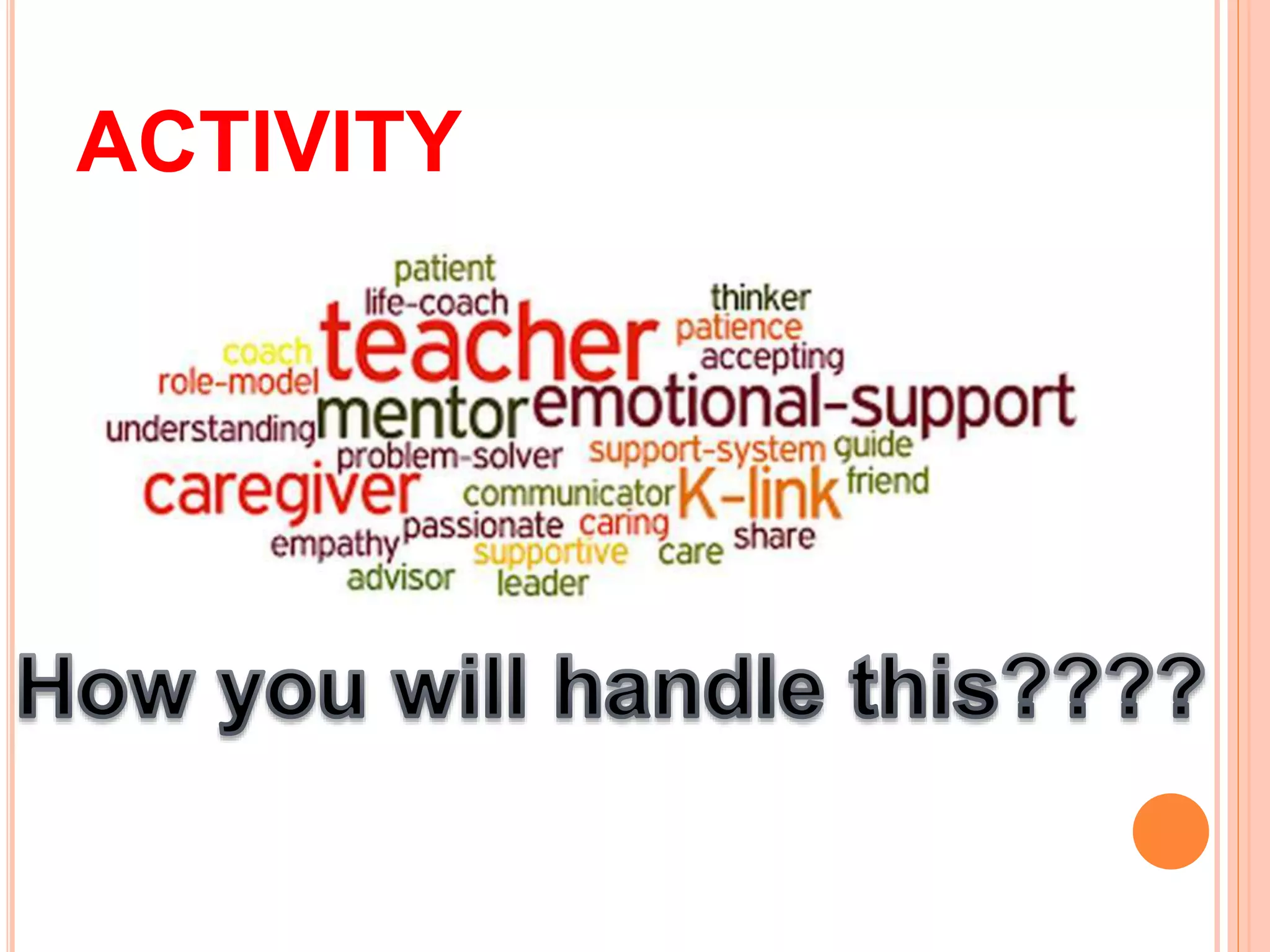
ACTIVITY
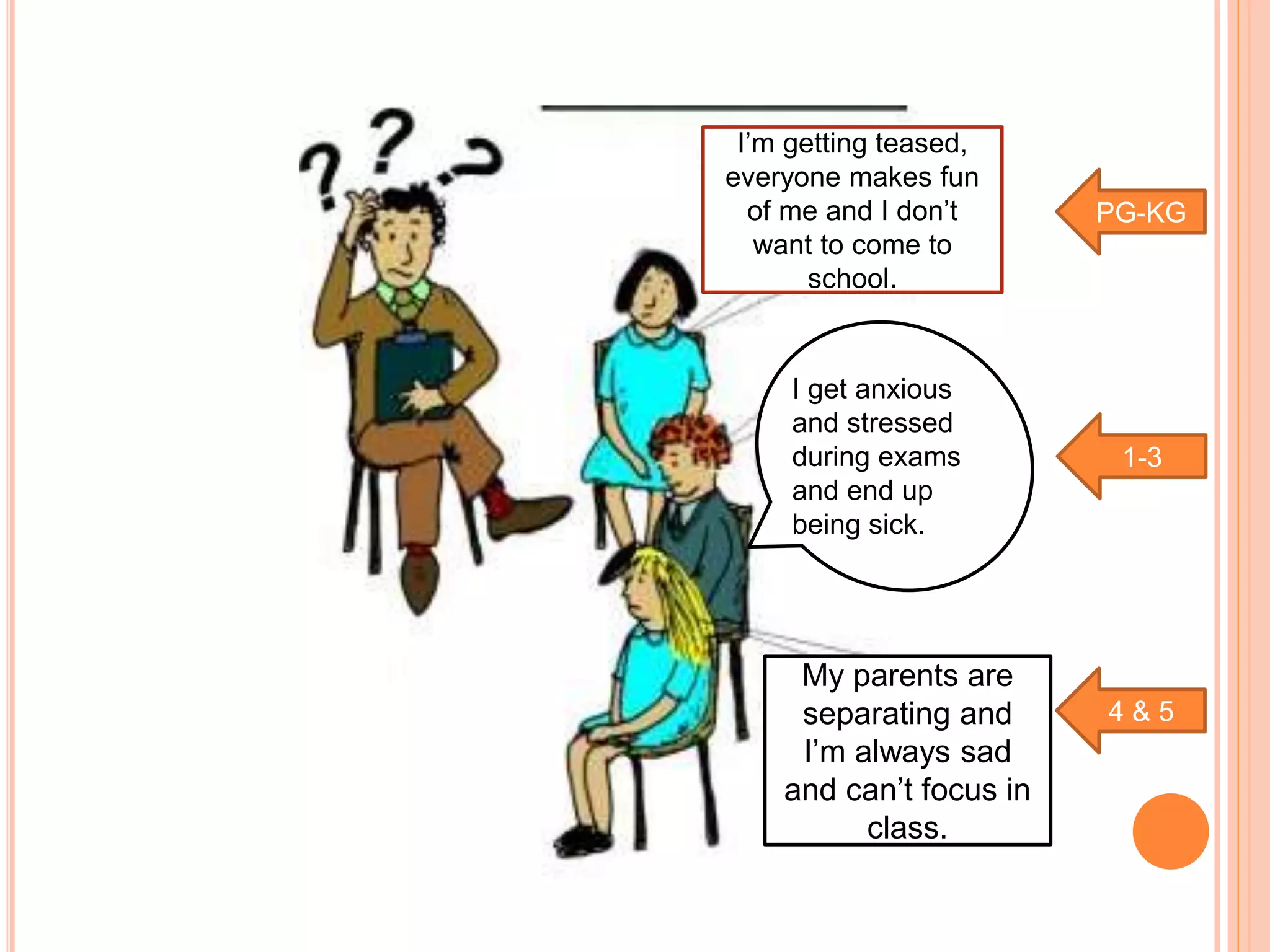
My parents are
separating and
I’m always sad
and can’t focus in
class.
I’m getting teased,
everyone makes fun
of me and I don’t
want to come to
school.
PG-KG
1-3
4 & 5
I get anxious
and stressed
during exams
and end up
being sick.
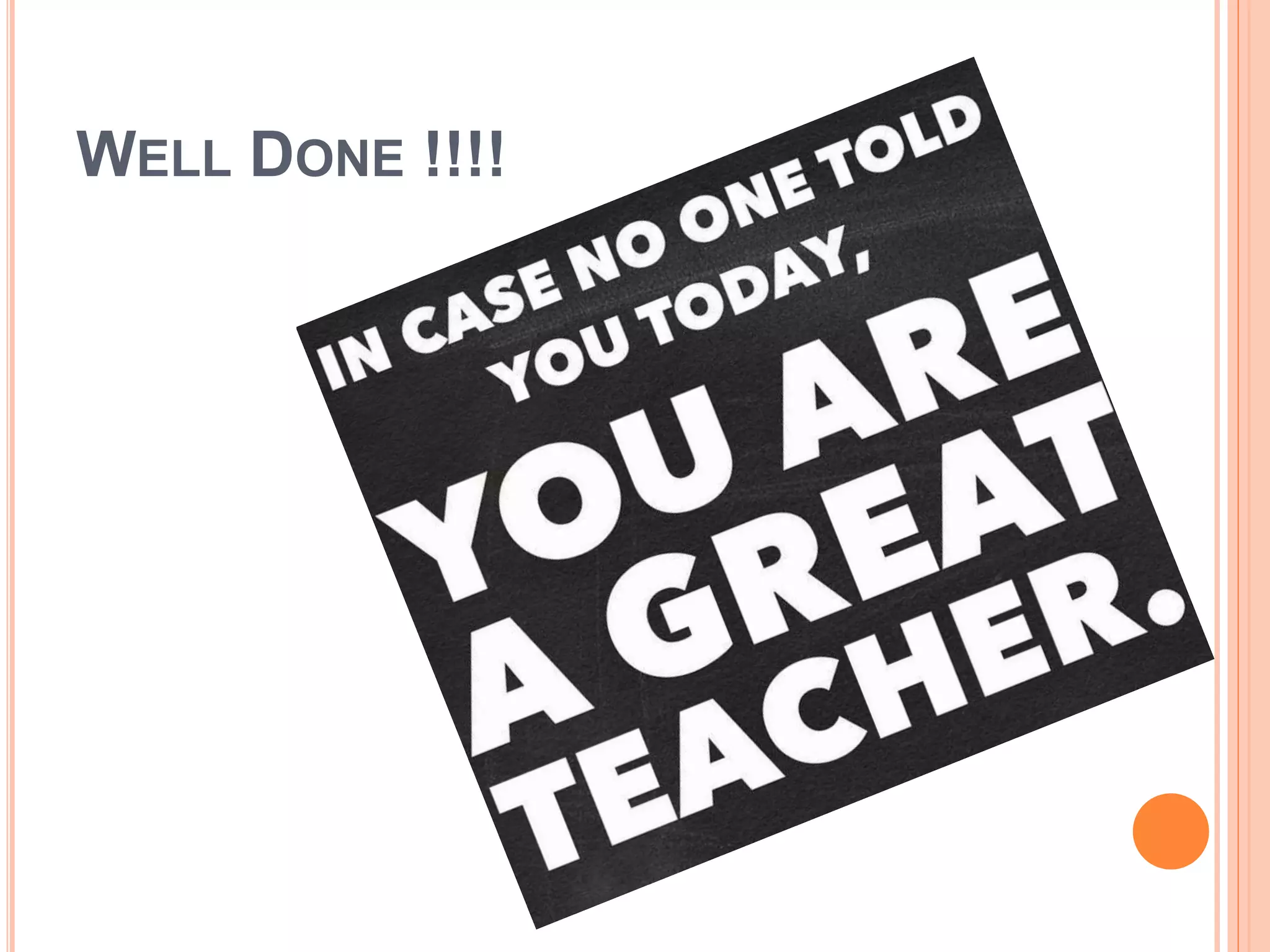
WELL DONE !!!!
WHAT DO GOOD TEACHER-STUDENT
RELATIONSHIPS LOOK LIKE AND WHY DO THESE
RELATIONSHIPS MATTER?
 Teachers who foster positive relationships with their
students create classroom environments more
conducive to learning and meet students'
developmental, emotional and academic needs.
 Successful teachers are those that have the ability
to maximise the learning potential of all students in
their class and focus on the well being of students.
 Developing positive relationships between a
teacher and student is a fundamental aspect of
quality teaching and student learning.
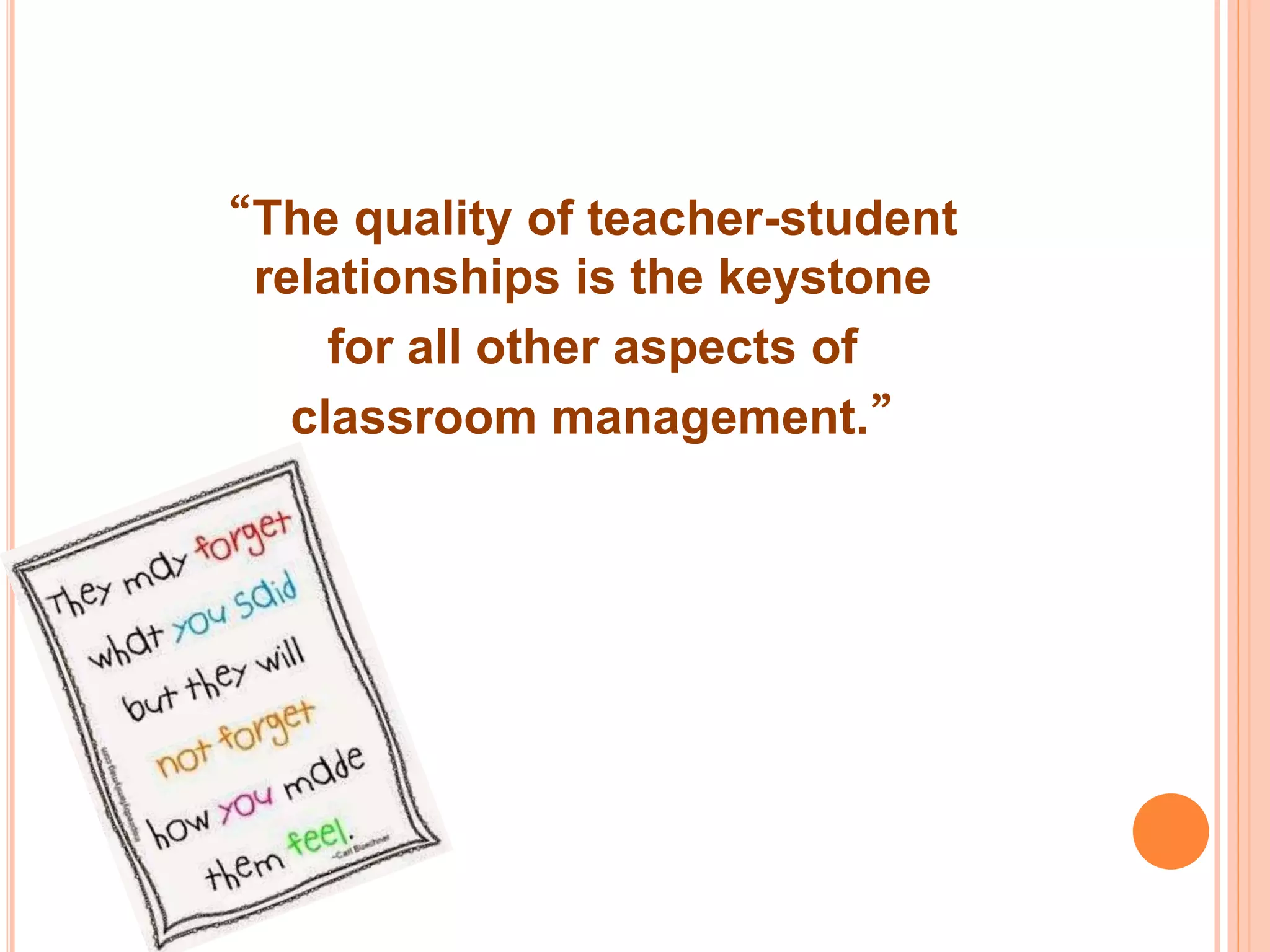
“The quality of teacher-student
relationships is the keystone
for all other aspects of
classroom management.”
SIGNS OF POSITIVE
TEACHER-STUDENT
RELATIONSHIPS
 Assess yourself
1. They provide structured environment
2. They teach with enthusiasm and passion
3. They display a positive attitude
4. They make learning fun
5. They show an interest in your student’s lives
outside the classroom
6. They treat students with respect.
7. They create a secure and safe environment
for students.
8.They keep themselves calm and have plenty of
patients even after a tiresome day.
And many many more…
HERE ARE SOME CONCRETE EXAMPLES OF
CLOSENESS BETWEEN A TEACHER AND A STUDENT:
 A fourth grade boy who is struggling in math shows
comfort in admitting to his teacher that he needs
help with multiplying and dividing fractions even if
most of the students in the class have moved
beyond this work.
 A middle school girl experiences bullying from other
students and approaches her social studies teacher
to discuss it because she trusts that the teacher will
listen and help without making her feel socially
inept.
ACTIVITY
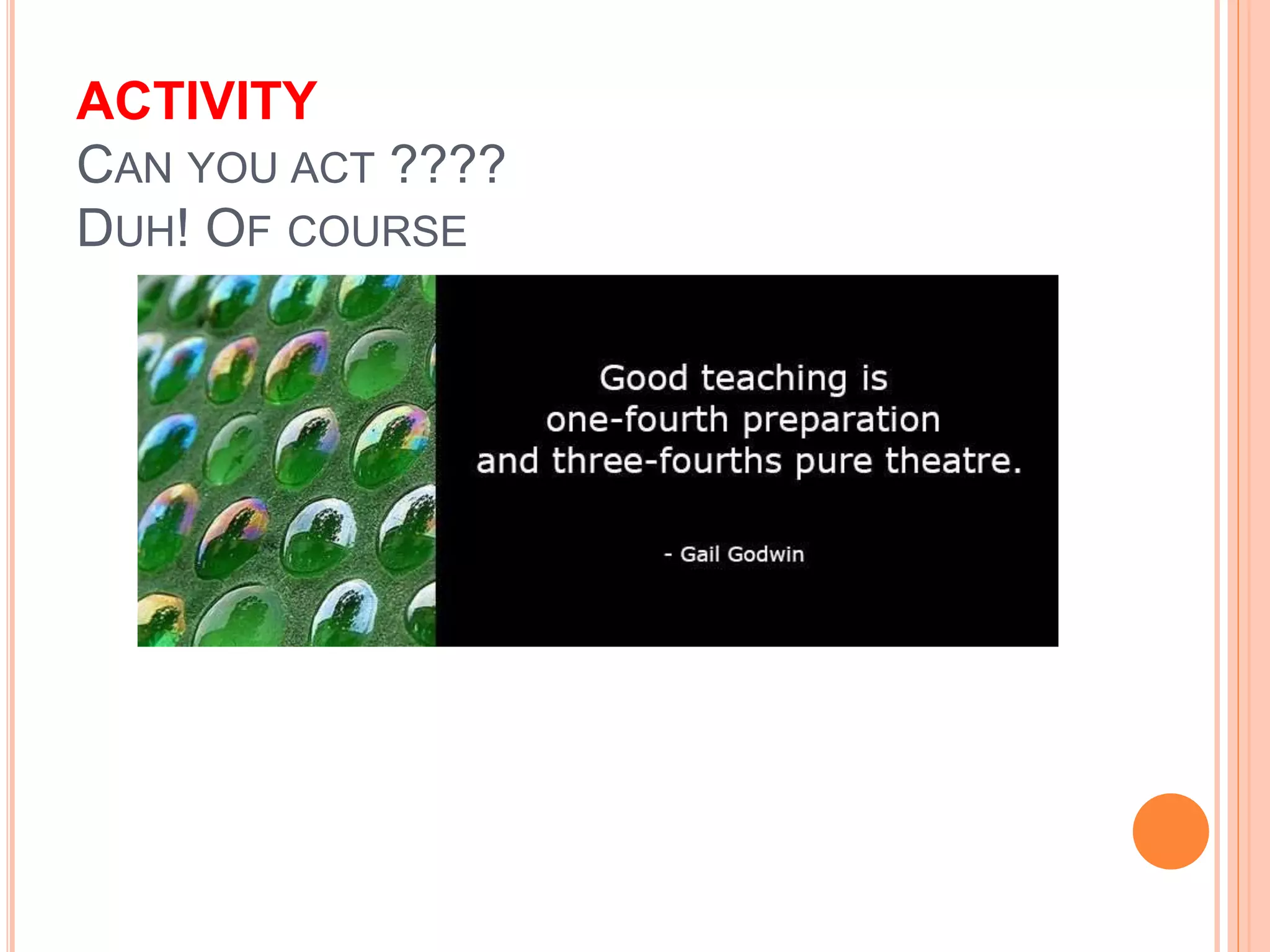
CAN YOU ACT ????
DUH! OF COURSE
IMPROVING STUDENTS' RELATIONSHIPS WITH
TEACHERS TO PROVIDE ESSENTIAL SUPPORTS
FOR LEARNING
 Improving students' relationships with teachers has
important, positive and long-lasting implications
for both students' academic and social
development.
 Solely improving students' relationships with their
teachers will not produce gains in achievement.
However, those students who have close, positive
and supportive relationships with their teachers will
attain higher levels of achievement than those
students with more conflict in their
relationships.
WHAT DO YOU EXPECT FROM YOUR
STUDENTS
 Let’s see what they expect from you
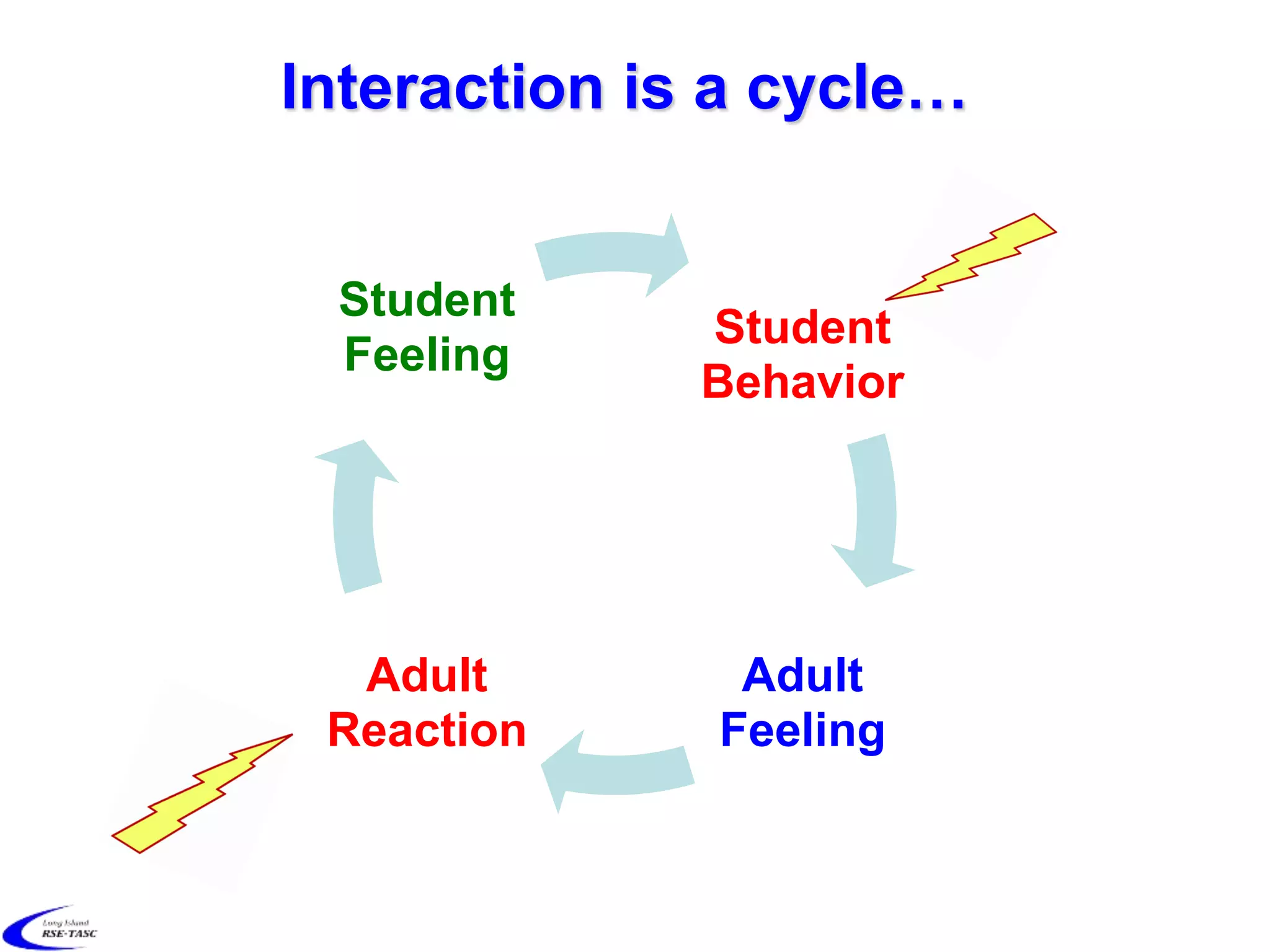
Interaction is a cycle…
Student
Behavior
Adult
Feeling
Adult
Reaction
Student
Feeling
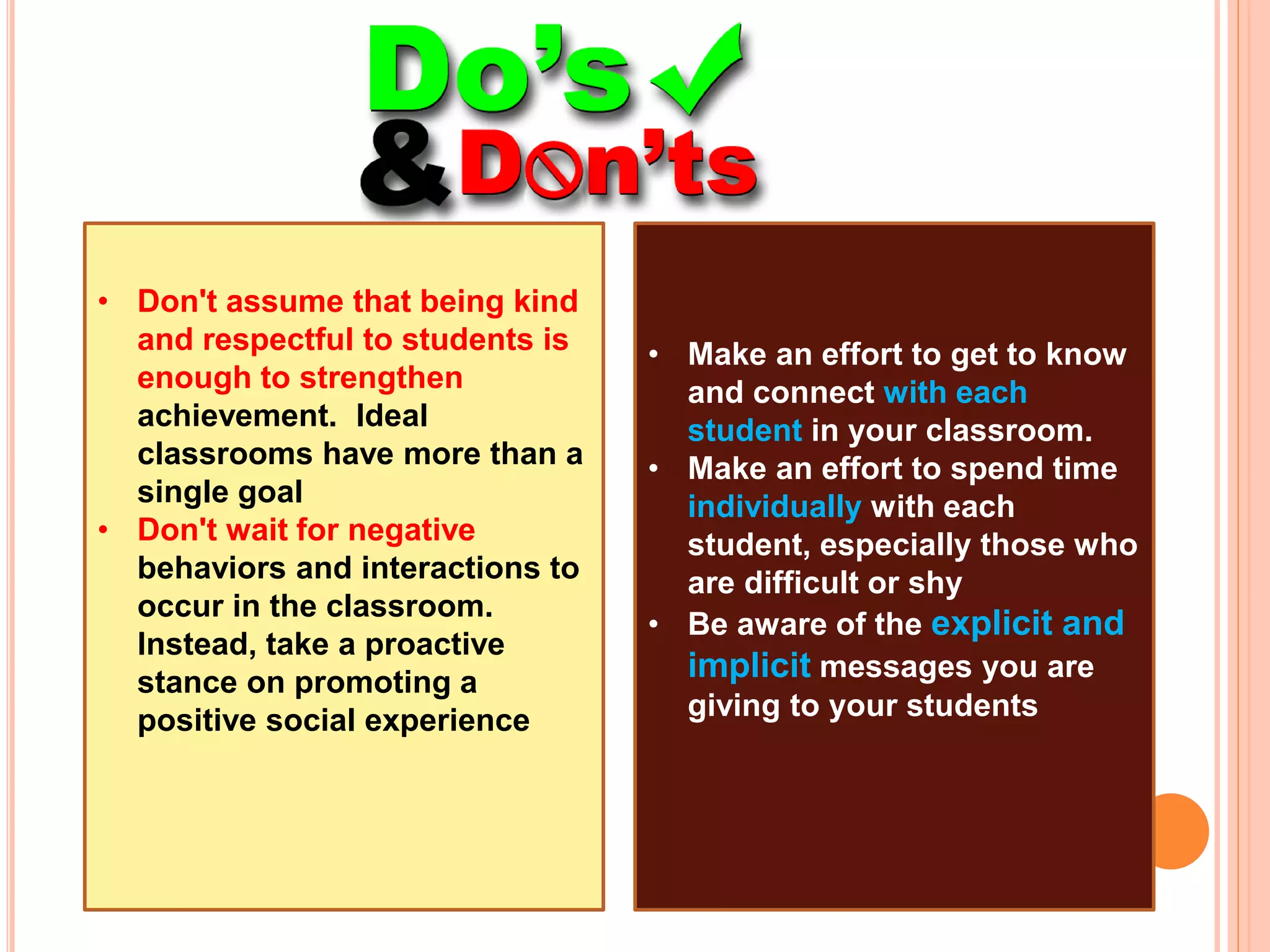
• Don't assume that being kind
and respectful to students is
enough to strengthen
achievement. Ideal
classrooms have more than a
single goal
• Don't wait for negative
behaviors and interactions to
occur in the classroom.
Instead, take a proactive
stance on promoting a
positive social experience
• Make an effort to get to know
and connect with each
student in your classroom.
• Make an effort to spend time
individually with each
student, especially those who
are difficult or shy
• Be aware of the explicit and
implicit messages you are
giving to your students
WELL BEING – STRATEGY
 video
• Don't assume that
relationships are
inconsequential/insignificant.
• Be aware that students will
often adopt the strategies
that you use. They notice
negative strategies, too, such
as yelling at students or
making mean or disrespectful
jokes about colleagues
• Create a positive
climate in your classroom
by focusing not only on
improving your
relationships with your
students, but also on
enhancing the
relationships among your
students
• show genuine care for
your students – both as
learners and as people.
HOW TO DEVELOP POSITIVE RELATIONSHIPS WITH
YOUR STUDENTS:
 Show your pleasure and enjoyment of students.
Example : PG+KG
 Interact with students in a responsive and
respectful manner.
Example: Nursery T+PG
 Offer students help (e.g., answering questions in
timely manner, offering support that matches
students' needs) in achieving academic and
social objectives.
Example: Nursery C+ Class 3
 Help students reflect (self assess) on their
thinking and learning skills.
Example: KG + II- T/C
 Know and demonstrate knowledge about
individual students' backgrounds, interests,
emotional strengths and academic levels.
Example: Class I-T/C
 Avoid showing irritability or aggravation
toward students.
Example: Class IV
 Acknowledge the importance of peers in schools
by encouraging students to be caring and
respectful to one another.
Example: Class V
AMAZING 
“I’ve come to the conclusion that I am the
decisive element in my classroom. It is my
personal approach that creates the climate.
It is my daily mood that makes the weather. I
possess tremendous power to make my students
lives miserable or joyous. I can be a tool of torture
or an instrument of inspiration. I can humiliate or
humor, hurt or heal. In all situations, it is MY
response that decides whether a crisis will be
escalated or de-escalated and a person
humanized or dehumanized.”
Dr. Haim Ginott
THANKYOU
Developing positive relationship with the students

Developing positive relationship with the students

  • 1.
    DEVELOPING POSITIVE RELATIONSHIPWITH STUDENTS Teacher As a Counsellor Ambreen Shabana Anam Khan BS (Hons.) Speech and Language Pathology M.Sc. Speech and Language Pathologist
  • 2.
    Recall one personwho has had a significant influence in helping you discover and develop your gifts, who confirmed your potential, inspired you, or who helped you find meaning and direction in life.
  • 3.
    What do youfeel were the most significant characteristics of this person’s relationship with you?
  • 4.
    The teachers who inspiredand helped us were surely nearly always the ones who took us seriously, who believed in us and gave us a stronger sense of our self- worth and potential. – Cardinal Basil Hume
  • 5.
    COUNSELING  Counseling providesan opportunity to talk with a person to discuss issues, conflicts with friends, relationship breakdown, domestic violence, anxiety, depression, grief, sexual problems, childhood sexual abuse, stress and classroom related tensions and disputes.  Counseling is designed to facilitate student achievement, improve student behavior and attendance, and help students develop socially
  • 6.
    MISCONCEPTIONS  Counseling onlydeals with disciplinary and serious mental and emotional problems.  Seeking for counseling help means the person is weak.  It is awkward to talk to the counselor/teacher about my personal issues.  Other people/students will know if I’m going to talk to teacher separately or teacher is giving me extra attention after school.
  • 7.
  • 8.
    My parents are separatingand I’m always sad and can’t focus in class. I’m getting teased, everyone makes fun of me and I don’t want to come to school. PG-KG 1-3 4 & 5 I get anxious and stressed during exams and end up being sick.
  • 9.
  • 10.
    WHAT DO GOODTEACHER-STUDENT RELATIONSHIPS LOOK LIKE AND WHY DO THESE RELATIONSHIPS MATTER?  Teachers who foster positive relationships with their students create classroom environments more conducive to learning and meet students' developmental, emotional and academic needs.
  • 11.
     Successful teachersare those that have the ability to maximise the learning potential of all students in their class and focus on the well being of students.  Developing positive relationships between a teacher and student is a fundamental aspect of quality teaching and student learning.
  • 12.
    “The quality ofteacher-student relationships is the keystone for all other aspects of classroom management.”
  • 13.
  • 14.
    1. They providestructured environment 2. They teach with enthusiasm and passion 3. They display a positive attitude 4. They make learning fun 5. They show an interest in your student’s lives outside the classroom 6. They treat students with respect. 7. They create a secure and safe environment for students. 8.They keep themselves calm and have plenty of patients even after a tiresome day. And many many more…
  • 15.
    HERE ARE SOMECONCRETE EXAMPLES OF CLOSENESS BETWEEN A TEACHER AND A STUDENT:
  • 16.
     A fourthgrade boy who is struggling in math shows comfort in admitting to his teacher that he needs help with multiplying and dividing fractions even if most of the students in the class have moved beyond this work.
  • 17.
     A middleschool girl experiences bullying from other students and approaches her social studies teacher to discuss it because she trusts that the teacher will listen and help without making her feel socially inept.
  • 18.
    ACTIVITY CAN YOU ACT???? DUH! OF COURSE
  • 19.
    IMPROVING STUDENTS' RELATIONSHIPSWITH TEACHERS TO PROVIDE ESSENTIAL SUPPORTS FOR LEARNING  Improving students' relationships with teachers has important, positive and long-lasting implications for both students' academic and social development.  Solely improving students' relationships with their teachers will not produce gains in achievement. However, those students who have close, positive and supportive relationships with their teachers will attain higher levels of achievement than those students with more conflict in their relationships.
  • 21.
    WHAT DO YOUEXPECT FROM YOUR STUDENTS  Let’s see what they expect from you
  • 22.
    Interaction is acycle… Student Behavior Adult Feeling Adult Reaction Student Feeling
  • 23.
    • Don't assumethat being kind and respectful to students is enough to strengthen achievement. Ideal classrooms have more than a single goal • Don't wait for negative behaviors and interactions to occur in the classroom. Instead, take a proactive stance on promoting a positive social experience • Make an effort to get to know and connect with each student in your classroom. • Make an effort to spend time individually with each student, especially those who are difficult or shy • Be aware of the explicit and implicit messages you are giving to your students
  • 24.
    WELL BEING –STRATEGY  video
  • 25.
    • Don't assumethat relationships are inconsequential/insignificant. • Be aware that students will often adopt the strategies that you use. They notice negative strategies, too, such as yelling at students or making mean or disrespectful jokes about colleagues • Create a positive climate in your classroom by focusing not only on improving your relationships with your students, but also on enhancing the relationships among your students • show genuine care for your students – both as learners and as people.
  • 26.
    HOW TO DEVELOPPOSITIVE RELATIONSHIPS WITH YOUR STUDENTS:  Show your pleasure and enjoyment of students. Example : PG+KG  Interact with students in a responsive and respectful manner. Example: Nursery T+PG  Offer students help (e.g., answering questions in timely manner, offering support that matches students' needs) in achieving academic and social objectives. Example: Nursery C+ Class 3
  • 27.
     Help studentsreflect (self assess) on their thinking and learning skills. Example: KG + II- T/C  Know and demonstrate knowledge about individual students' backgrounds, interests, emotional strengths and academic levels. Example: Class I-T/C
  • 28.
     Avoid showingirritability or aggravation toward students. Example: Class IV  Acknowledge the importance of peers in schools by encouraging students to be caring and respectful to one another. Example: Class V
  • 29.
  • 30.
    “I’ve come tothe conclusion that I am the decisive element in my classroom. It is my personal approach that creates the climate. It is my daily mood that makes the weather. I possess tremendous power to make my students lives miserable or joyous. I can be a tool of torture or an instrument of inspiration. I can humiliate or humor, hurt or heal. In all situations, it is MY response that decides whether a crisis will be escalated or de-escalated and a person humanized or dehumanized.” Dr. Haim Ginott
  • 31.

Editor's Notes

  • #11 A helping environment that promotes learning
  • #18 Inept-Having no skill